
Harry Targ : ‘Right to Work (for Less)’ in Indiana

Workers in Indiana opposing HB 1104. Image from PR Watch.

‘Right to Work (for Less)’ in Indiana:
The historic battle against workers

By Harry Targ / The Rag Blog / January 17, 2012

WEST LAFAYETTE, Indiana — Fifty working people assembled at a town hall meeting in West Lafayette, Indiana, on Saturday, January 14, to share information about the latest phase of Indiana’s battle over a new “Right-to-Work-for-Less” bill. The bill will be voted upon some time in the coming week.

One of the minority Democrats in the State House, Sheila Klinker, described the Republicans’ fast-track effort to get their Right-to-Work bill through the legislature and signed by Governor Mitch Daniels well before the National Football League Super Bowl game on February 5. The NFL players union has strongly condemned the bill.

Labor activists had attended the Governor’s State-of-the-State address three days earlier and booed him loudly as he made claims about how Right-to-Work would bring jobs to Indiana (even though he has already praised himself for alleged increases in new investors and jobs in the state during the first seven years of his reign without being a Right-to-Work state).

The Klinker update included reference to the upcoming meeting of the Indiana House of Representatives at which time that body will vote for and probably endorse the bill. Republicans have a 60-to-40 vote majority in that body (and an even bigger majority in the State Senate). Despite the odds, she and her Democratic colleagues support an amendment to the bill which would bring the issue to voters next fall in a referendum.

Although chances of blocking the national reactionary big money juggernaut and the state Chamber of Commerce from getting their way are slim, those for the referendum argue that, because the issue is not well-understood, many Hoosiers remain undecided about it. Since the bill would have such great consequences for workers, union and non-union alike, time to get educated and discuss it is desirable. Also, from the standpoint of most Democrats, a referendum would defuse the escalating political conflict around the state.

Most Indiana Republicans and the big money outside interests represented by such groups as the National Right to Work Committee and the America Legislative Exchange Council (ALEC), want to move as quickly as possible. For them Indiana is a bellwether state in the former industrial heartland where unions have been historically strong, wages and benefits were good, and workers had a greater voice in the work place and the voting booth.

Generally, worker rights of all kinds have been superior in the Midwest compared with the 22 states of the South and Southwest where Right to Work is the law. After the 2010 election these national organizations increased efforts to apply their own “domino theory” to destroy worker rights.

With the victories of reactionary candidates in Wisconsin, Ohio, Michigan, and Indiana reestablishing Right to Work in one state would lead, like a series of falling dominoes, to victories in the rest. (They have already suffered setbacks in this plan in Wisconsin and Ohio.) Indiana, the most conservative of these would be the best place to start. Reestablish Right to Work in Indiana (for a short time in the 60s, Indiana was a RTW state), and the other states would follow.

The Klinker update was followed by two impressive presentations by Tippecanoe County Building and Construction Trade Council President Eric Clawson and Treasurer James Ogden. Clawson gave an impassioned description of what unions meant to all workers. With both heart and intellect he made it clear that the quality of life and work would be made immeasurably worse if union rights were weakened by the Right-To-Work bill.

Ogden referred to numerous studies as he meticulously challenged each claim made by the bill’s supporters. These studies, often based on comparative data between the 22 Right-to-Work states and the rest, have overwhelmingly shown that the 22 have had less job creation, lower wages, worsened health and safety standards, and lowered public school graduation rates.

Even though factors other than Right-to-Work status are also causally connected to these negative worker outcomes, Ogden and Clawson made it clear that the basic standard of living of most workers is hurt by any weakening of the right of workers to form and participate in unions.

It is important to understand that the struggle today in Indiana is part of a 250 year struggle waged off and on between capital and labor in the United States. From the formation of craft unions during the 1780s to the battle for the eight-hour day in the 1880s, to the use of police power, public and private, to destroy railroad and steel workers unions in the 1890s, to the massive general strikes, sit-ins, and other occupy movements of the 1930s, to the PATCO and Pittston strikes of the 1980s, workers have sought to defend their rights and their very survival.

Capitalists have set out to make labor cheaper, more pliable, and vulnerable to shifts in profit-making from investments in factories to stocks, bonds and derivatives.

This latest phase of the struggle has its roots in the passage of the National Labor Relations (or Wagner) Act in 1935. This Act, based on efforts by Congress and President Roosevelt to mollify workers, who were striking all over the country, established the machinery for workers to form unions and procedures for collective bargaining.

From the time of the Unemployment Councils in big cities in 1931, to general strikes in 1934, to factory sit-ins, to the establishment of 40 unions of industrial workers, four million workers strong, in the Congress of Industrial Organizations (CIO) in 1936, labor became a force to be reckoned with in national politics.

The peak of labor strength was reflected in the 1946 strike wave, the largest in U.S. labor history. Four million workers walked off the job in electronics, steel, auto, meat packing, mining, and the railroads. Workers wanted wartime caps on wages lifted, continuation of wartime price controls, greater union recognition at the workplace, health and pension systems, and the creation of a political system in which the political power of labor would be as strong as capital.

However, in the 1946 elections, Republicans gained control of both houses of Congress. A first order of business (much as in the 2012 Indiana legislature) was to destroy the power of organized labor. They passed the odious Taft-Hartley Act which was designed to defend the rights of capital in opposition to the National Labor Relations Act which was seen as special interest labor legislation.

Taft-Hartley banned the closed shop, wildcat strikes, strikes in solidarity with other workers, secondary boycotts, and picketing, and gave the federal government the right to order striking workers to abandon strikes and return to work for 80 days. The act also established rules regarding reporting of finances and constricted the rights of unions to support political campaigns.

Taft-Hartley also required union leaders to sign affidavits proclaiming that they were not members of the Communist Party. Refusal to sign such statements could allow workers to challenge the authority of their unions to continue to represent them. Anti-Communist unions, it was hoped, would replace unions in which leaders failed to sign the affidavits.

Since labor radicals played an instrumental role in organizing the CIO, Taft-Hartley saw undercutting labor militancy as central to winning the battle for capital against labor in post-war America.

To further limit the power of unions to represent the interests of all workers, Taft Hartley included Section 14b. This section allowed states to establish so-called Right-to-Work provisions. These provisions would allow workers to not join the unions that existed in their work sites. Unions were required to represent all workers in unionized work places, even those workers who refused to join their union.

This meant that workers might take a “free ride” by getting important services, including negotiation of contracts and defense in grievances against bosses, without paying for them. The long-term impact, it was hoped, was to reduce the size and resources of organized labor.

In 1947, when Taft-Hartley was passed, powerful economic actors such as the National Association of Manufacturers, the Chamber of Commerce, and huge auto, electronics, and meat packing corporations wanted to achieve several inter-connected goals.

They wanted to destroy the power of organized labor which had grown from the streets and the workplaces to the Democratic Party.

They wanted to launch an anti-Communist crusade to convince a skeptical American public that the United States needed to launch a Cold War against the Soviet Union, and alleged “communist” surrogates at home.

And, Southern politicians, particularly, wanted to defeat “Operation Dixie,” a CIO campaign to organize integrated trade unions in the South.

And, for sure, these economic interests wanted to disabuse American workers, unionized or not, of the idea that they had the right to participate in the political process equal to the wealthy and powerful.

So listening to Hoosier union brothers and sisters speak out now at rallies, before television cameras, at town hall meetings, and in their communities and family gatherings, one feels pride and inspiration from the campaign to defeat Right to Work in Indiana.

And any kind of historical reflection has to lead to the conclusion that today’s struggle is part of the same struggles that go back years and years. These struggles, dare to say, are class struggles. But today the occupy movement has made it clear that this historic battle is one between the 99 percent, for all its variation and the one percent. “Right-To-Work for Less” may pass in Indiana in 2012, but with odds like 99 percent versus one percent, it is clear which side will achieve lasting victory in the years ahead.

[Harry Targ is a professor of political science at Purdue University who lives in West Lafayette, Indiana. He blogs at Diary of a Heartland Radical — and that’s also the name of his new book which can be found at Lulu.com. Read more of Harry Targ’s articles on The Rag Blog.]

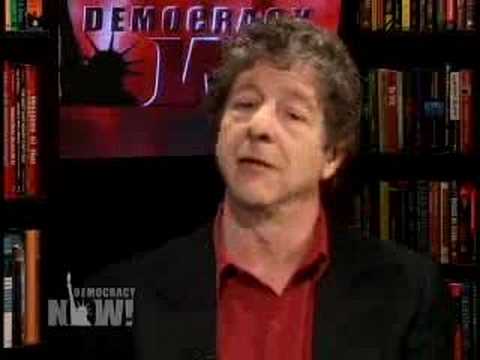
Harry Targ interviewed about ‘Right to Work’

The Rag Blog

Posted in Rag Bloggers | Tagged , , , , | Leave a comment

William Rogers : Austin Workers Rally to Recall Scott Walker

At the Recall Walker rally in Austin: Travis Donoho, left, organizer for Education Austin (American Federation of Teachers) and Steve Rossignol, Texas State Association of Electrical Workers. Photo by Carlos Lowry / The Rag Blog.

As Scott Walker speaks in Austin:
Unions rally to support recall
efforts of Wisconsin workers

By William Rogers / The Rag Blog / January 16, 2012

See more photos, Below.

AUSTIN — They carried “Recall Walker” signs, but they weren’t in Wisconsin. They were standing across the street from the Hilton Hotel in downtown Austin, Texas, where Wisconsin Gov. Scott Walker had come to address a gathering of conservative Texas lawmakers hosted by the Texas Public Policy Foundation on Thursday, January 12.

They were numerous — as many as 150 — and they were loud. They chanted “Recall Walker” and “Do you like the unions? YES! Do you like Scott Walker? NO!”

“We’re here today,” said Becky Moeller, Texas AFL-CIO president. “To support our brothers and sisters in Wisconsin in their effort to recall Gov. Walker.”

Moeller went on to say that what happened last year in Wisconsin when Gov. Walker led the charge to roll back collective bargaining rights for public sector workers is happening all across the US. Right-wing billionaires like the Koch brothers and the organizations that they support like the Texas Public Policy Foundation (TPPF) and the American Legislative Exchange Council (ALEC) are working in unison with politicians like Gov. Walker to take back gains won by unions that have made possible a decent middle-class life for millions of workers in both the public and private sector.

It happened in Ohio where last year lawmakers passed at the governor’s request a law restricting collective bargaining for public workers. (The law was subsequently overturned in November by a popular vote in a referendum.) It’s happening now in Indiana where the governor and lawmakers are trying to make Indiana a right-to-work-for-less state.

They’re inside planning how to make it happen in Texas next year when the Legislature meets. That’s why, today, We are Wisconsin, Moeller said.

The reality is that for the last 30 years, the rich have been waging class war on working people, said Snehal Shengavi, a member of the Texas State Employees Union CWA Local 6186 and the labor magnet for Occupy Austin. They have eroded our standard of living, frozen and cut our wages, taken away our jobs, cut our health care benefits, and made our retirement less secure.

“The rich have gotten richer while the rest of us suffer,” Shengavi said. “It’s time to put them on notice that we know what class warfare is, and we’re going to take it to them. We’re putting class warfare on the agenda, and it’s going to be on our own terms. Occupy everything!”

While demonstrators on the outside expressed their ire, TPPF welcomed Texas lawmakers and Gov. Walker to a luncheon at its annual forum where they discussed TPPF’s legislative agenda for the session that begins next year. Foremost on the agenda is a proposal to eliminate public pensions in Texas.

Last summer a group of Houston millionaires led by hedge fund operator Bill King announced that they were kicking off a campaign to eliminate public pensions for Texas’ teachers, public safety employees, and other local and state government workers.

In October, TPPF announced a plan for implementing King’s proposal. The plan would require legislative action, but if it passed, newly hired public employees would be diverted away from the state’s two public pension funds the Employee Retirement System for state employees and the Teacher Retirement System for teachers and into 401(k) type savings plans.

Local government new hires would also be diverted from their traditional pension plans. People already working in the public sector would have their pensions frozen. With the severe cut in state contributions envisioned in this plan, it would be difficult to maintain benefits for retirees at their current levels.

In the past, TPPF has supported legislation to privatize public services and give tax breaks to corporations. It also supports maintaining Texas’ right-to-work for less laws.

A long list of unions were represented at the demonstration: American Postal Workers Union, National Letter Carriers Union, AFSCME, Teamsters, Texas State Employees Union, Machinist, IBEW, CWA, Stagehands (IATSE), Transport Communications Union, Texas Federation of Teachers, Education Austin, Texas State Teachers Association, Screen Actors Guild, Steelworkers, and IWW all had members there. Members of Occupy Austin were also on hand.

As demonstrators chanted “We are the 99 percent,” a group of construction workers wearing their hardhats walked across the park next to the sidewalk where demonstrators gathered, stopped at the back edge of the demonstration, unfurled their banner that read Iron Workers Local 462, and began chanting.

[William Rogers is a member of the Texas State Employees Union/CWA Local 6186. He blogs at Left Labor Reporter where this article also appears.]

Above, The Rag Blog‘s Alice Embree, Texas State Employees Union, with Steve Rossignol of the electrical workers. Photos by Carlos Lowry / The Rag Blog.

The Rag Blog

Posted in Rag Bloggers | Tagged , , , , , | 1 Comment

Kate Braun : Dark Moon Magick

Dark Moon. Image from The Sage Grove.

Moon Musings:
Dark Moon
(January 20 – 22, 2012)

By Kate Braun | The Rag Blog | January 16, 2012

10 a.m. is the best time to perform Dark Moon magick for the garden. This moon-phase is excellent for removing what’s not needed, as gardening lore states that whatever is pruned, trimmed, weeded out, etc. during the moon’s fourth quarter and dark phases will not grow back.

As you tidy your outside spaces, keep in mind that not only can you use this moon phase to create physical changes to your garden beds, you can also set forces in motion to effect change in your life on many levels.

Whatever the area is that requires change (addiction, divorce, enemies, justice, obstacles, quarrels, removal, separation, stopping stalkers and theft are but some examples), a Dark Moon phase is when negative energies can be uprooted, removed, put into the spiritual compost pile and allowed to naturally decompose.

While outdoor magicking is best done earlier in the day, the dark night is an excellent time to access Spirit via a scrying mirror or bowl because there will be no moon to reflect in the mirror or water. Be sure to have a notepad and pen nearby to record whatever you see in your scrying.

To use a scrying mirror (which should be made of black glass, not glass painted black), prop the mirror up in a position where you will not see either your source of illumination or your reflection it in, using enough light to be able to see your hand in front of your face.

Keep your focus soft as you contemplate the mirror’s inky surface. Relax. Do seven easy yoga-breaths (in through the nose, out through the mouth, breathing slowly and gently so that each inhalation fills all the empty spaces in the body and each exhalation empties those spaces; no gasping, no huffing and puffing) to settle into an Alpha-rhythm.

Notice the mirror’s surface. You are likely to notice a change from black to smoky, rather like fog over a pond. You may see images form in the fog, you may see the fog clear to let you see images in the mirror. Make a note of what you see as the meaning may not be clear at the time you see the image.

Scrying may also be done using a bowl of water instead of a mirror. It is best to use a dark-colored bowl, not a pale one. Position the bowl of water as you would the mirror: set it so that you can see the surface but not your face reflected in the surface or the light-source reflected on the surface. Then proceed as if you were using a mirror and see what visions come.

If Friday, 1/20/12 is the best day for you to work with Dark Moon energies, the planetary influence will come from Venus, and rituals for love and attraction will work best. Use the color Green, touch the elements Earth and Water, and repeat your incantations seven times. Remember that you are working to manifest positive changes in your life; this is likely to mean that you should be prepared to release unwanted/unneeded things so as to make room for the newness you are seeking.

If Saturday, 1/21/12, is a better day for this work, Saturn is the planet to invoke. Saturn’s color is black, appropriate for dark-moon magick; Saturn energy is helpful in rituals designed to control and focus your attention in ways that generate changes for the better. Ideally, let your bare feet make contact with Mother Earth, and recite your incantations three times.

If Sunday, 1/21/12, is your choice for honoring this month’s Dark Moon, use the color yellow (for Lord Sun), use rituals that promote opportunities for money, health, and positive friendship-related matters. Use candles for the Fire element Lord Sun requires as well as to illuminate your scrying efforts. Repeat your incantations six times.

There is no right or wrong way to celebrate the various moon phases. Remember that intent is the most important part of any ritual. From this choice of days to honor the Dark Moon, the best day is Saturday, 1/21/12; that does not mean that to perform Dark Moon ceremonies on either of the other two days would generate results different from what you intend, only that your focus will need to be sharper and stronger on Friday and Sunday than on Saturday. The choice is always yours.

[Kate Braun‘s website is www.tarotbykatebraun.com. She can be reached at kate_braun2000@yahoo.com. Read more of Kate Braun’s writing on The Rag Blog.]

The Rag Blog

Posted in Rag Bloggers | Tagged , , , , , | Leave a comment

Ted McLaughlin : Class Conflict and the Disappearance of the Middle Class


Class conflict rises
as middle class disappears

The growing inequality of wealth and income in this country has reached a point where it is now causing a conflict between the rich (the 1%) and the vast majority of Americans.

By Ted McLaughlin / The Rag Blog / January 16, 2012

The graphic above (from Think Progress) shows what has been happening to the American middle class in the last 40 years. To put it bluntly, it is disappearing. While the rich continue to get much richer (with their income growing by over 240% since 1980), the loss of millions of jobs and the stagnant non-growth of wages for most Americans has shrunk the middle class and thrown many more Americans into working class status (if they’re lucky) or even worse, into abject poverty.

The Republican “trickle-down” economic policies, instituted by Ronald Reagan and accelerated by George W. Bush, deregulated financial institutions and encouraged Wall Street to play dangerous games with investor funds — culminating in the loss of trillions of dollars, many millions of jobs, and the start of the most serious recession since the Great Depression. In addition, these same politicians encouraged corporations to outsource millions more American jobs by rewarding them with tax breaks.

The idea was that when the rich and corporations had a lot of money they would use that money to create jobs and the growing wealth would be shared by everyone. It didn’t work, because the wealthy aren’t the real job creators — no matter how much money they have. This is clearly illustrated by our current situation — where the rich have a larger share of the country’s wealth and income since before the Great Depression and American corporations are sitting on trillions of dollars in cash. And yet only a pitiful handful of jobs are being created.

There is only one thing that creates jobs — demand for goods and services. When the working and middle classes have money to spend demand is created, and jobs are created to meet that demand — and all classes in society benefit (including the rich). But Republican policies have taken money from the working and middle classes and given it to the rich. Since the mass of our society no longer has much money to spend, demand is depressed and the recession continues with little or no job creation.

The chairman of the President’s Council of Economic Advisors, Alan Krueger, says the shift in income over the last three decades is the equivalent of moving $1.1 trillion from the 99% to the 1% every single year of those three decades. Is it any wonder that the middle class is disappearing, and we look more like a banana republic every day?

Class distinctions were not important when our economy was working for everyone. But in this current economy, where the rich get richer and everyone else becomes poorer, class is again becoming an issue. It’s become an issue because the gap between the “haves” and “have-nots” is huge, and growing larger all the time.

The Republicans and the 1% call this “class warfare,” but the truth is that the class war has been going on for the last 30 years — and it has been waged by the rich against the rest of America. But Americans are finally waking to realize what has been done to them over the last three decades by the rich (and their Republican lackeys).

A recent survey by the Pew Research Center shows that a full two thirds of the population (66%) now believe there are “strong” or “very strong” class conflicts between the rich and the poor. That’s a jump of 19% over just two years ago, in 2009, when only 47% believed that. And this increased belief in this strong class conflict cuts across all ethnic, political, income, age, and education demographics. In the following list, I give the current percentage who believe this (followed by the 2009 percentage in parentheses):

Total population……………66% (47%)

Whites……………65% (43%)
African-Americans……………74% (66%)
Hispanics……………61% (55%)

Republicans……………55% (38%)
Democrats……………73% (55%)
Independents……………68% (45%)

Less than $20k……………64% (47%)
$20k to $40k……………66% (46%)
$40k to $75k……………71% (47%)
Over $75k……………67% (49%)

Age 18 to 34……………71% (54%)
Age 35 to 49……………64% (48%)
Age 50 to 64……………67% (45%)
Over age 65……………55% (36%)

College grad……………66% (48%)
Some college……………70% (50%)
High school or less……………64% (44%)

The growing inequality of wealth and income in this country has reached a point where it is now causing a conflict between the rich (the 1%) and the vast majority of Americans. And it has also caused an erosion of the American dream.

Many no longer believe the old canard that anyone can get rich in America because America has a vibrant class mobility. About 72% of those who say there is a strong class conflict, also say the rich got that way either because they were born into it or because they knew the right people — not because they earned it by working for it.

The rich, through their Republican cohorts, may have started the class war back in 1980, but the rest of America is waking up and starting to fight back. It will be a long and tough fight though, because the rich and the corporations own far too many members of Congress. But that fight can be won — it must be won if democracy is to survive in America.

[Ted McLaughlin also posts at jobsanger. Read more articles by Ted McLaughlin on The Rag Blog.]

The Rag Blog

Posted in Rag Bloggers | Tagged , , , , , | Leave a comment

Paul Krassner : Predictions for 2012

Lessee here: Paul Krassner will bring The Realist out of retirement, resurrect cartoonist Wally Wood, and publish a Republican Party Orgy centerfold. The Republican Party will not be amused.

Predictions for 2012

Ron Paul will unite with Ru Paul and they’ll perform on Dancing With the Stars.

By Paul Krassner /The Rag Blog / January 12, 2012

Politics: The electoral college will be replaced by a system where voters will choose the polling firm they trust the most. Barack Obama will be reelected because his vice-presidential running mate Joe Biden will be replaced by Hillary Clinton, thereby gaining the women’s vote. Failed Republican campaigners will all take other jobs. Mitt Romney will start smoking a pipe and portray the character Bob Dobbs in a movie about the cultish Church of the Subgenius. Newt Gingrich and Herman Cain will launch the bipartisan Adultery Party in 2016, joined by Democrats John Edwards and Bill Clinton.

Ron Paul will unite with Ru Paul and they’ll perform on Dancing With the Stars. Rick Santorum will be caught in an airport bathroom stall enjoying a gay encounter. Michelle Bachmann will launch a lie-detector company. Rick Perry will copyright the word “Oops.” And it will be revealed that Donald Trump was actually born on Mars; he will have a birth certificate to prove it, along with a photo of him as a typical Martian baby with a comb-over.

Show Business: Vegetarian converts will include Lady Gaga, who will wear a dress made entirely of heirloom tomatoes, and Meatloaf will change his name to Tofuloaf. Kermit the Frog and Miss Piggy will win Academy Awards for best male and female actors. Angelina Jolie will legally adopt Brad Pitt. Kim Kardashian will get married and divorced on the same day. The Tea Party will become a popular sitcom.

Capital-punishment executions will become a top-rated reality-TV series. The Second Coming of Jesus Christ will occur live on a three-hour special to be telecast on every single channel simultaneously, with an offstage voiceover narration by God. Atheists and agnostics will picket the production, only to be struck by lightning. Howard Stern will expose himself on America’s Got Talent. The Taliban and al-Quaeda will be the final competitors on The Biggest Terrorists. Hulu and Netflix will merge as Huflix.

Fashion Trends: Square Hitler-style mustaches will finally become stylish after decades of ridicule. Botox will become a soft drink that will get rid of unwanted wrinkles from the inside. Pornography will be allowed in public libraries, but moaning out loud will definitely not be permitted. Fetus transplants from poor pregnant girls to wealthy anti-abortion women will become a controversial new fad.

Arizona, Mississippi, and Tennessee will refuse to recognize Leap Year. Lottery winners will be fingerprinted. Private prisons will be turned into ashrams. Inspired by Steve Jobs, many industries will continue his legacy by transforming planned obsolescence into a virtue. Prescription drugs will become children’s names, such as Ambien and Lipitor. Travel agents will begin arranging guilt trips for clients who have given up on airplanes.

Combination vibrators and insomnia cures will be invented, trademarked as Dildoze. Pope Benedict XVI will permit condoms to be marketed if there are tiny pinhole pricks in the reservoir tips in order to ensure a fighting chance for spermatozoa to get through. Serial pedophiles, gay bashers, and Internet hackers will form unions.

The Economy: The Department of Energy will release a report concluding that so-called “clean coal” is, in point of fact, “filthy dirty.” The Bank of America will stop doing business with Verizon and switch to Credo. The largest protest in history will take place by ongoing Occupy-the-Federal-Reserve-System demonstrations.

The recession will evolve into a depression, which will end quickly as the war on drugs morphs into the legalization of every single strain of cannabis which will be designated as medical marijuana. Facebook members will be taxed for every friend, Twitter users will be taxed for every tweet, Monsanto will be taxed for every genetically modified food, and masturbators will be taxed for every ejaculation. The Supreme Court will download all corporations into embryos. Several million jobs will be created as Unemployment Insurance clerks.

International Relations: North Korea’s new Beloved Leader will be caught cheating on his SAT examination, but he will redeem himself when he
allows almost 70 McDonalds restaurants to open all over his dictatorial realm; however, in keeping with his father’s policies, he won’t allow them to sell any food. Saudi-Arabia will outlaw laughter. Iraq will become our 51st state. Afghanistan will require all men to wear burkas. Iran will develop a nuclear bomb, than drop it by accident on Libya and Syria.

World War III will be fought entirely by drone planes attempting to destroy each other in the air. Products made in China will be increasingly pirated by American entrepreneurs. Global warming will continue to melt icebergs as well as Sarah Palin’s cold heart. The world will end on December 21st, but will begin all over again on December 23rd, just in time for last-minute Christmas shopping. The most popular gift will be cans of pepper-spray in a variety of flavors. Pakistan will continue to be bribed by us. And the Nobel Peace Prize will be secretly awarded to Anonymous.

[These predictions for 2012 were originally published in Metro Newspapers. Paul Krassner publishes the infamous Disneyland Memorial Orgy poster. His latest book is an expanded and updated edition of his autobiography, Confessions of a Raving, Unconfined Nut: Misadventures in the Counterculture, available at paulkrassner.com and as a Kindle e-book. Read more articles by Paul Krassner on The Rag Blog.]

The Rag Blog

Posted in Rag Bloggers | Tagged , , , | 2 Comments

Tony Platt : Remembering Alex Haley and Mario Savio

Alex Haley. Image from Gather.

A Better Day:
Remembering Alex Haley and Mario Savio

By Tony Platt / The Rag Blog / January 12, 2012

Let me drink from the waters
where the mountain streams flood
Let the smell of wildflowers
flow free through my blood
Let me sleep in your meadows
with the green grassy leaves
Let me walk down the highway
with my brother in peace
Let me die in my footsteps

Before I go down under the ground

— Bob Dylan, “Let Me Die in My Footsteps,” 1963

In 1963 I moved from England to California, in part to get as far away as possible from my father’s overbearing influence. The political divide between us had deepened as I embraced Marxism and the New Left, while he shunned anything smacking of isms, except capitalism.

As he soured on politics, I was ready to be inspired by Mario Savio standing on a police car in Berkeley’s Sproul Plaza, urging us to put our bodies on the gears and wheels of the machine in order to make it stop; and by Malcolm X, as channeled by Alex Haley, saying it was possible for black and white to unite and fight. “In our mutual sincerity we might be able to show a road to the salvation of America’s very soul.”

My father and I, as it turns out, shared a very similar political trajectory: unrealistic optimism followed by pessimistic realism. For Monty, the 30s promised global socialism. For me, the 60s was a vibrant and hopeful era, with socialism spreading throughout the world, social democracy coming to the West, and colonialism on the run in the Third World.

The collapse of utopian dreams is always rupturing, and always unexpected. The rise and fall of Alex Haley, and the spirit and untimely death of Mario Savio epitomize for me the hope and demise of the New Left.

Alex Haley was an unlikely hero. Without any formal training in history, not even a college degree, he wrote two bestsellers that more than any other books written about the United States in the twentieth century changed the public conversation about race.

In The Autobiography of Malcolm X (1965), he made a black revolutionary into a popular, cultural icon and a model of redemption. And his book Roots: The Saga of an American Family (1976) – and, more important, the television mini-series on which it was based — are credited with generating an unprecedented black-white dialogue, as well as a compelling origins story.

Six million copies of Malcolm X were sold by 1977 and 130 million viewers watched Roots.

Haley wasn’t a particularly good historian. He lifted whole sections from another author’s book for Roots; his ties to his supposed African ancestor, Kunta Kinte, are likely fictional; and recent research on Malcolm X has blown huge holes in Haley’s hagiography. But he was a hell of a good storyteller and the stories he told resonated with millions of people.

I got a sense of his rock-star popularity in 1989 when he visited Sacramento State University, where I was teaching at the time. Nobody seemed to care about his oddly Republican politics, or the plagiarism charges, or sloppy scholarship. “You are the answer to the prayer of our ancestors who hoped during uncertain, terrible times that there would be a better day,” was his upbeat message spoken to a large, mostly youthful crowd on a crisp, fall day.

He seemed to look each of us directly in the eye, urging us to find common ground, telling us what we had come to hear. He was on the road, giving his stump speech, the talk that he had delivered so many times since Roots that the only notes he needed were the ones reminding him where he was and to whom he was speaking.

Some of my friends were disappointed because they expected something new or different. But most people there wanted to hear the familiar speech, delivered in his unpretentious style, a message of reassurance and comfort. He told us the story about how he came to write Roots. Like all good folk tales, we wanted to hear the ending that we already knew.

Although Haley’s speech seemed to ramble from anecdote to anecdote, it was in fact finely honed and crafted, a mosaic of disparate threads. Constructed around a narrative that traced his life from childhood to the present, his story was crammed full of moral lessons, biographies, autobiography, motherwit, and parables.

Haley’s message was relentless: a people whose voice has been long silenced and whose vision has been long hidden from history in fact possess a wondrous past that can’t be denied. The crowd listened closely, imagining the untold stories of our individual pasts and the unexplored potentiality of our collective futures. And in case we missed the point, the motif on his stationary proclaims: “Find The Good – And Praise It.”

Haley’s stories moved easily between experience and imagination, a talent that upset critics who prefer writers to come packaged in appropriate boxes — fictional or non-fictional. By this time, Haley probably wasn’t sure which was which. In Roots, he invented dialogue. Malcolm X wanted Haley to serve as his recorder and clean up his grammar, but Haley engaged his subject in a passionate dialogue that resulted in a memorable book of many voices.

Haley left the Coast Guard in 1959 after a 21-year enlistment. He was 38 years old, searching for a new career. He was an outsider to academia — he had quit college after two unsuccessful years, despite the advice of his professorial father — and regarded as an interloper by the Negro literati who, with one notable exception, had no time for a writer who had learned his craft writing love letters for illiterate sailors and public relations pieces for Uncle Sam.

When C. Eric Lincoln, a fellow writer and authority on black Muslims, proposed Haley’s membership in an African American academic group in the early 1960s, years before he became a celebrity, he was voted down because he lacked proper credentials. In response to his inquiry to leading black writers, asking for their advice about how to make it as a freelance journalist, James Baldwin, fresh from his success with Go Tell It On The Mountain and Notes of a Native Son, was the only who took time to see Haley and give him tips about how to survive in New York’s cutthroat literary circles.

Years later, the tables were turned: Haley’s books were selling in the millions and Baldwin was struggling to survive, economically and physically. When Baldwin called, asking for advice and a “loan,” Haley quickly wrote him the first of many checks, “never more than just a few thousand.” Haley told me that he would never forget the “thin-as-a-willow-reed” writer whose generosity defied the snobbish intellectuals who had turned their backs on a struggling writer without status. Later, when Roots made Haley a rich man, he turned over the royalties of The Autobiography to Malcolm X’s widow, Betty Shabazz.

Though he got paid well to visit Sacramento State for half a day, there was no show-biz glamour or phalanx of security guards. He walked slowly through the campus, portly and easy-going, stopping to greet the constant stream of admirers who let out squeals usually reserved for movie stars. They came up asking for autographs or to shake his hand, but quickly found themselves answering his questions about their roots.

Still, he was never really comfortable in the public spotlight or around intellectuals. He preferred writing about legends than being one. And so every year, once in the summer and once in the winter for two months at a time, he would retreat to the “fruitful writing isolation of a cargo ship,” crisscrossing the Atlantic and Pacific just as he had done in the Coast Guard.

“It is my impression,” Haley wrote to me during a slow trip to Australia, “that academia contains some of the more grudging folk in this world. With no respect whatever to the institution of academia, I counted one of my luckier things that I did not become a scholar, as my professor father very strongly intended. In fact, there were three sons of us for whom he had this intention, and we turned out to be writer, lawyer, and architect. Dad, bless his heart, was still nonetheless proud of us.”

When Haley finished his talk in Sacramento and the audience rose to give him a standing ovation, I realized that this was the first time I had ever been part of a truly multicultural audience on campus. For a brief moment, the university actually reflected the diversity of our community.

Hundreds of black high school kids, most of whom will never make it to any university under our current system, had come to witness the rare spectacle of an African American as an American hero. They were loud and boisterous during Haley’s speech and, after it was over, they had a purposeful gleam in their eyes, a renewed determination to envision a better day.

Mario Savio on the steps of Sproul Hall, Berkeley, December 2, 1964. Image from WSU Libraries.

Alex Haley’s ability to reach and move a crowd reminded me of the time that 22-year-old Mario Savio reached and moved me. I was in my second year as a graduate student in Berkeley in 1964 when Savio, in protest of the university’s ban on political speech, told a campus crowd on December 2nd that “there’s a time when the operation of the machine becomes so odious — makes you so sick at heart — that you can’t take part.” Drawing upon imagery from Thoreau, he called upon to us practice civil disobedience and to jam the gears of the machine.

That day, Savio and 800 others were arrested in Sproul Plaza. I supported the Free Speech Movement, but avoided arrest then since I was nervous about my immigration status. (About a decade later, I’d make amends by getting arrested twice during People’s Park protests at the same site.)

The FSM was a defining moment for activism in the 1960s and for my own political development. Poised between the civil rights struggles of the previous decade and the promise of the antiwar and feminist movements ahead, it offered our generation of students the opportunity to participate in history, to be activists in our own right rather than vicarious participants in other people’s struggles.

It was a joy to feel that we might be part of an emergent majority, with the moral authority of justice on our side for once. Savio was not the only leader of the student movement, but his example of self-sacrifice moved many people like myself to deeply consider our political commitments and to put our beliefs into practice. Also, it helped that we were on the winning side: the university revoked its ban on political speech.

Thirty years later, in 1994, I was back in Sproul Plaza for the Free Speech Movement’s reunion. In the intervening years, my political activism cost me my job at Berkeley, but I was lucky to get a tenure-track job at Sacramento State. Mario had not been as lucky. It took him until 1984 to get a science degree and until 1989 to get his master’s degree.

He was nearly 50 years old when he started teaching math and philosophy as a lecturer at Sonoma State University. By then the boom years in academia were over and part-time jobs were the norm.

There was a large crowd on hand at the reunion, including a new generation of activists who were eager to witness a slice of history and hear old-timers justify our pasts. Mario Savio — now graying, balding, and pony-tailed, like many of us in the crowd — spoke with vigor and eloquence about our legacy, likening us in the words of T.S. Eliot to “the hidden laughter of children in the foliage.” There we had been, in the margins and shadows of political power, but still alive and kicking, “sudden in a shaft of sunlight even while the dust moves.”

Mario was not there that December day in 1994 to sentimentalize or bury our movement. If it had been hard on him to live with fame and notoriety in the aftermath of the 1960s, it was even harder to be treated in the 1990s as an icon of a long-gone past. He insistently spoke to the present, of the growing boldness of an increasingly reactionary political system, attacks on immigrant and women’s rights, and the rollback of civil rights gains. Be vigilant, don’t mourn, and get organized, he told us.

A few months later, Mario and I worked together in the Campus Coalitions for Human Rights and Social Justice, a loose-knit organization of campus activists in northern California. Our challenge, no less, was to go against the tide of immigrant bashing, prison building, and welfare cutting. In particular, we focused our efforts on opposing the so-called California Civil Rights Initiative, which as Proposition 209 on the 1996 ballot asked voters to go beyond even the most conservative Supreme Court decisions to end all forms of state-supported affirmative action.

It was an uphill battle. Mario had been more hopeful than most of us that the attack on affirmative action would generate a political revival by combining youthful idealism with wise experience, creating the basis for a new, vibrant, cross-generational movement. Pity he didn’t live to see the rise of the Occupy movement; he would have been out there on the front lines.

It was difficult for him to accept the degree to which universities had by the 1990s become sites of demobilization and cynicism. When his health, already a problem for many years, got worse, his friends urged him to slow down and take it easy, which, for a short while, he did. “Obviously I needed to pull back,” he wrote me in May of 1996. “In the past I have not had the good sense to read my own signals right. Guess I’m growing up — at last, and just in time!”

But, quickly, he was back in the fray, compelled by the news that the anti-affirmative action forces were in disarray and that, with enough effort and work, we had a chance to defeat Proposition 209. Mario worked with his son Nadav day and night to produce a pamphlet, “In Defense of Affirmative Action,” which was used widely on campuses in the last few weeks of the campaign. It helped to close the gap in the polls, but with insufficient money, the damning of faint support by the National Democratic Party, and a low voter turnout, our anti-209 campaign failed by eight points.

Mario suffered a heart attack and went into a coma a few days before the elections, and died the day after without regaining consciousness. He left life as he lived it, intensely committed and passionate in his public politics, gracious in private to his friends. I miss his shaft of sunlight.

  • Alex Haley (1921-1992)
  • Mario Savio (1942-1996)

[Tony Platt is the author of 10 books and 150 essays and articles dealing with issues of race, inequality, and social justice in American history. He has written for the Los Angeles Times, San Francisco Chronicle, Truthdig, History News Network, Z Magazine, Monthly Review, and the Guardian. Platt, now an emeritus professor living in Berkeley, California, taught at the University of Chicago, University of California (Berkeley), and California State University (Sacramento). This article was also posted to his blog, GoodToGo. Read more articles by Tony Platt on The Rag Blog.]

The Rag Blog

Posted in Rag Bloggers | Tagged , , , , , , , | Leave a comment

Alan Waldman : My 10 Favorite Films of 2011

Octavia Spencer in The Help.

The Help is powerful, complex:
My 10 favorite films of 2011

By Alan Waldman / The Rag Blog / January 11, 2012

As was the case last year, some of the films I was most anticipating (The King’s Speech then, The Descendants now) hadn’t played in my hometown of Corvallis, Oregon, by the time I was compiling my list, so they will be eligible for next year’s list.

In addition to those 2011 films listed below (in order of preference) my wife Sharon and I also really enjoyed these slightly older films that we saw via Netflix: the 2007 French film Farewell, the 1998 Australian film 15 Amore and the 2007 American film Honeydripper; we strongly recommend all of them to you.

Years ago my list of favorite films numbered as many as 30, but it has gotten shorter as more stupid films are made for teenagers and fewer good, smart films for adults make it to U.S. screens. And this year, as for each of the past dozen or so, we have seen many more excellent TV series (including foreign ones, via Netflix) than we have feature films, because TV writers are given more creative freedom and are constrained much less by studio executives who are trying to replicate what worked previously with audiences.

(Most of the listed films are currently available on DVD and Netflix.)

  1. THE HELP, justifiably nominated for more than 60 awards — many of them for stunning newcomer Jessica Chastain — is a powerful, complex, wonderfully detailed period drama about middle-class racism in the 1960s in Jackson, Mississippi. Viola Davis and Octavia Spencer were outstanding and also have numerous award nominations for their performances as maids who reveal their mistreatment by their white employers to a young book writer. This film is extremely moving, but it also has humor, drama, surprise, and lots of fascinating characters. This topic has been covered many times before, but this film brought a fresh take to it that makes it especially satisfying.
  2. THE KING’S SPEECH was nominated for 12 Oscars last year, winning Best Picture, Best Screenplay, Best Director, and Best Actor (Colin Firth). It should also have won for best supporting actor (Geoffrey Rush), who took the top two British acting awards for it. Fully 95% of the 215 critics polled at rottentomatoes.com gave it thumbs up. It wonderfully dramatizes the true story of England’s King George VI, who went to an eccentric speech therapist in order to overcome a terrible stutter and be able to powerfully address his nation on the radio at the brink of World War II. Outstanding and not to be missed.
  3. THE GUARD is a hilarious Irish film, brilliantly written and directed by John Michael McDonagh (whose brother Martin McDonagh wrote and helmed the great 2008 film In Bruges). In both films, the dialogue is unexpected, fresh, intelligent and very, very funny. The Guard stars Irish treasure Brendan Gleeson as a rural Western Ireland cop who is partnered with an American FBI agent (Don Cheadle — terrific as usual) in pursuing international drug dealers. This comedy thriller is satisfying on many levels and is constantly surprising. It was a hit with 95% of critics and has been nominated for 18 awards in six countries so far. (I recommend watching the DVD with the English subtitles, because the jokes come fast and are sometimes a little difficult to catch in the Irish accent.)
  4. TINKER, TAILOR, SOLDIER, SPY is a terrific, smart, gripping remake of the classic John Le Carré novel and miniseries about the Cold War search for a mole near the top of Britain’s MI-6 spy agency. Gary Oldman, one of Britain’s finest actors, leads a strong cast, including Colin Firth, John Hurt, Toby Jones, Ciarán Hinds, and Mark Strong. The script is wonderfully twisty and suspenseful, and everything about the production is first-class.
  5. P0TICHE (TROPHY WIFE) is an excellent French comedy starring Catherine Deneuve as the woman who is forced to replace her tyrannical umbrella factory owner husband when the workers strike and take him hostage. Gérard Depardieu, France’s greatest actor for the past 37 years, is superb, as always. This is a zestful production with a witty script and fine performances.
  6. Michael Nyqvist stars in As It Is in Heaven.

  7. AS IT IS IN HEAVEN is a charming, Oscar-nominated Swedish film about a symphony conductor, well played by Michael Nyqvist (co-star of the Girl With the Dragon Tatoo trilogy and villain of the latest Mission Impossible) who retires to his small hometown in northern Sweden and is lured into listening to his church choir and giving them suggestions. Great characters; great fun.
  8. THE CONCERT is a highly enjoyable Russian/French film about a Bolshoi Orchestra conductor who was fired years before for using Jewish musicians, but who now intercepts an invitation to perform in Paris and who puts his old orchestra back together. This film is full of quirky characters, great music and charming surprises.
  9. HUGO is another monumental film from America’s greatest filmmaker, Martin Scorsese. In 3-D or the 2-D version, it is visually stunning, emotionally stirring, and very well played by a diverse cast including Ben Kingsley, Sasha Baron Cohen, and Emily Mortimer. It tells the story of an orphan who secretly winds the clocks at a Paris railroad station and who meets an eccentric toy shop owner who turns out to be the legendary French filmmaker Georges Méliés. Among the many, many delights in this masterwork are the recreations of Melies’s pioneering movies. Hugo was loved by 94% of critics.
  10. THE LINCOLN LAWYER is a sharp, suspenseful, beautifully realized treatment of an outstanding Michael Connelly novel. Matthew McConaughey is very good as a lawyer who works out of his car and who seeks to defend a realtor (Ryan Phillipe) who is accused of rape, but who may not be innocent.
  11. BRIDESMAIDS is one of the funniest movies of the year, starring and wonderfully co-scripted by SNL’s Kristin Wiig. A Canadian critic called it “touching and funny and a little bit sickening — just like a real wedding.” Contains some outrageous comedy bits.

We saw and loved lots of top TV series (mostly British) via Netflix, including episodes of Poirot, Law & Order: UK, Identity, The Robinsons, Reggie Perrin, Kavanagh QC, Murder Investigation Team, Gavin & Stacey, Inspector Lynley, Midsomer Murders, Murderland, Damages, Justified, Leverage, Inspector Morse, Inspector Lewis, Treme, Boardwalk Empire, New Street Law, MI-5, Boomtown, Life, Nurse Jackie, Luther, The Hour, The Pillars of the Earth, and The Tudors.

[Houston native Alan Waldman is a former editor at Honolulu Magazine and The Hollywood Reporter.]

The Rag Blog

Posted in Rag Bloggers | Tagged , , , | 5 Comments

Bruce Melton : What Can Be Done About Climate Change in Texas?

What a mess. Even without the fires, our natural environment has been devastated by these droughts. This scene was taken in late August just around the corner from my house in southwest Austin. Fortunately I have only lost a handful of immature trees and a few 12-foot shrubs. — B.M. Photo by Bruce Melton / The Rag Blog.

What is to be done?
Welcome to climate change in Texas / 3

By Bruce Melton / The Rag Blog / January 11, 2012

[This is the third in a three-part series.]

AUSTIN — The Texas Forest Service tells us that a half billion trees are dead across Texas. The drought and heat that killed them was similar to the heat wave in Moscow (central western Russia) in 2010 that killed 56,000 and created $15 billion (US dollars) in damages. Academic evaluation of the (Russian) event shows it was 80 percent caused by climate change.

Damage to agriculture and from the drought tops $10 billion here in Texas with another billion and a half in fire damages. Thankfully, the deaths were not nearly as high here because of the predominance of air conditioning in the drought area in Texas and the Southwest.

As I have been saying in the first two installments of this series, climate change is already much more extreme than most scientists have been predicting. This is mainly because the majority of predictions are based on the “most likely” emissions scenario and because we have not reduced our emissions like climate scientists told us to do we are now on the worst-case emissions scenario path.

The bad comes with good though. The solutions to climate change are going to be much less difficult and costly than have been popularized. I will get to the cost and difficulty aspect in a minute but first: one of the biggest reasons that climate change is much more extreme than we thought it would be is that almost all of the predictions have been based on the “most likely scenario.” This “most likely scenario” is just one of about 28 computer scenarios that climate scientists use in dozens of different climate models to look into the future.

The “most likely scenario” — sometimes known as the “middle of the road scenario” — is roughly based on Kyoto. In other words, if we would have started reducing our greenhouse gas emissions when the consensus of scientific knowledge said we should, these droughts and heat waves would not have happened.

Climate scientists began warning us in the mid-1970s about dangerous climate changes if we don’t control our emissions levels. By the time the Rio Earth Summit happened, the modelers knew that the safe zone was likely one with a carbon dioxide concentration similar to that of
the 1980s at the most.

Instead of listening and acting though, our emissions have grown 50 percent greater than 1990 levels. And unexpectedly, in 2011 (climate scientists warn us that these unexpected things will happen more frequently) annual global emissions rose to six percent — a level not seen since 1970. This is why we are on the worst-case scenario path.

Along this path we should expect weather to be much more extreme. We are nearing the point where our already-changed climate could be considered dangerous; maybe we have passed it.

The links to climate change are being made in the scholarly findings at an increasing rate. A summary of such works prepared by Kevin Trenberth and a roster of distinguished colleagues summarizes 61 scholarly findings since the turn of the 21st century. The conclusion of the paper reads:

Human-induced climate change has contributed to changing patterns of extreme weather across the globe, from longer and hotter heat waves to heavier rains. From a broad perspective, all weather events are now connected to climate change. While natural variability continues to play a key role in extreme weather, climate change has shifted the odds and changed the natural limits, making certain types of extreme weather more frequent and more intense.

It is no longer valid to say that we cannot blame any one individual weather event on climate change. From statistical evaluation of historic weather events to the results projected from computer climate models our scientists can now say that climate change is to blame for the ultra-extreme weather we have been having.

The models show that without our climate having changed already, the costly snowtastrophes in the Northeast and northern Europe would not have happened; billions of trees would not have died in the Rockies because of a native beetle infestation gone berserk; billions of trees would not have died in the Alaskan boreal forest because of extreme fires caused by warming; and billions of trees would not have died in the Amazon because of drought — the results being annual greenhouse gas emissions from the Amazon alone equal to three-quarters of annual U.S. emissions.

Part of the reason that climate scientists can say this with certainty is that their computer models include these unprecedented events, whereas when they run the models without the extra greenhouse gases emitted by our civilization, these unprecedented events do not appear.

How do the scientists know their models are accurate when weather forecasting models so often fail after only four or five days? Climate models show us that they are much more accurate than weather models because climate scientists can start them up in the ancient past and recreate climate faithfully according to evidence from ocean and lake sediments, ice cores, stalagmites, tree rings, pollen records, fossil shells, soil carbon.

But climate models and weather models are basically the same aren’t they? Yes they are, but climate modelers run dozens of models for hundreds or thousands of years with varying input criteria and average the results all together to get climate. (These are called ensembles.)

The key here is that climate modelers average their results of many different model runs together. Weather forecasting models used by meteorologists in what is in reality a very different field of science than climate, only run one or a few models and then hope that by the fifth day the chaos has not left their seven day forecast in shambles. The two modeling techniques could hardly be more different. For climate, the averaging of so many different model running together makes the chaos (or inaccuracy) of weather models moot.

Our climate scientists have known since the beginning that climate change could certainly be as bad as it is now; this was evident from the results of their worst-case scenario model runs as well as the vast amount of evidence of radically abrupt climate changes in ancient history. To prevent these worst-case impacts from happening though, climate scientists expected us to take their sage advice and do something.

Instead we have done almost nothing. But with this realization we must understand that our innocence in this affair is real. The counterintuitiveness of climate change alone is enough to create a great debate, never mind the doubt spread by vested interests in the form of negative false propaganda about climate science, and even personal attacks against individual scientists.

These tactics are virtually identical to past deceitful propaganda campaigns concerning acid rain, ozone-depleting chemicals, pesticide reform, and smoking. In many cases these campaigns were perpetrated by the same institutions and individuals who are attacking climate science today.

So our climate scientists said that if we did nothing, things would be much worse, that our bread basket regions would change to deserts, that wildland fires would increase dramatically, deaths from heat would skyrocket, insect infestations would cripple ecosystems, feedback mechanisms would kick in and there would be war over resources. They told us these things would happen much sooner if we did nothing, whereas if we reduced our emissions we could likely forego these things altogether.

Surprise! All of this has now happened or is in progress. We did nothing and our emissions path is along the worst-case scenario. Civil war in Somalia has been the latest to be added to the lists of things that have been caused by climate change; so said the head of the African Development Bank last August.

Climate scientists have been telling us for a long time, and they continue to warn today, that it will get worse faster. They are now telling us that the threshold to dangerous climate change is no longer 2 degrees C of warming, but 1 degree C. Two degrees should now be considered the threshold to extremely dangerous climate change.

The 2001 IPCC report told us that 550 ppm CO2 was the safe limit in our atmosphere to hold our temperature down to 2 degrees C of warming. The 2007 IPCC report pushed that down to 450 ppm. Since the 2007 IPCC report, some of the most distinguished scientists in the world have been telling us that 350 ppm CO2 is the safe limit and now, the latest papers from the scholarly journals tell us that 300 ppm may be the safe limit. (We are currently at about 392 ppm and in preindustrial times it was about 280 ppm.)

Why? Because we didn’t do what the climate scientists told us we should do. We are on the wrong path.

What we are seeing across the globe today with these unprecedented and extreme weather events is the beginning of dangerous climate change. It is now indisputable and if we do not act fast, impacts will be unimaginable. Which leads me to my second message from the world of academia:


Fixing our climate will be no more difficult than installing toilets across the world like we have done over about the last 100 years. It will cost no more, and in what is becoming an indisputable truth, it will be vastly profitable for our society.

Why is this message so different from the one we have all heard? The answer rolls back to those moneyed interests and their propaganda. A few simple statements explain this conundrum clearly: The same voices that simultaneously bring us the radically different and designed to be confusing talking points — that climate change is not real, that it is all just a natural cycle, that it is a scientific conspiracy and that it will be good for us — are the same voices that tell us that the solutions to climate change will ruin our economies.

It is very simple. Not only are these voices telling us all of these vastly conflicting things at the same time, but they were wrong about the causes and effects of climate change. So given the conflict, and the accuracy of these voices and their “beliefs” about the sciences of climate, why would their “beliefs” about the solutions to the climate crisis be any less wrong?

Climate scientists are saying nothing about the solutions ruining our economies. The academic evaluations of the economics of the solutions to climate change do not tell us anything like what is so prevalent in the public’s understanding.

All of this darned propaganda and counterintuitivity is blotting out the truth. The climate scientists do not have the resources to mount an outreach campaign anywhere close to the size and extent needed to counter the efforts by the “voices.”

The most current assessments of the cost and scope of fixing our out-of-control climate tell us that it will take about one percent of global Gross Domestic Product (GDP) per year for a hundred years to create the infrastructure needed to clean up our greenhouse gas pollution. This is very similar to the installed costs of toilets and wastewater collection and treatment systems around the world today.

Now listen up: it took me weeks for the reality of this statement to set in. Climate scientists are telling us that the solutions to the climate crisis are not really so different from the solutions to the toilet crisis.

Another excellent example of the scope of the challenge ahead is the Great Wall of China. Our civilization has built many things of the scope of what needs to be built to remove our greenhouse gas pollutants from our atmosphere. If it is hard to visualize all of the toilets, pipes and treatment plants, it is not too hard to visualize the Great Wall of China.

Willie Nelson’s Biodiesel Plant at Kline’s Corners, 80 miles south of Dallas. Biodiesel will play a role, just as solar concentrators, algae, tidewater generators, wind, hot/dry geothermal, wave power, photovoltaic, fuel cells, and goodness knows what else. — B.M. Photo by Bruce Melton / The Rag Blog.

A few simple chemical processes, based on those that are widespread in industry today and simpler than that used to create biodiesel, would be all that is needed. The technology is officially called air capture and mineral sequestration and it is really nothing more than mining carbon from the sky.

Think of thousands and thousands of railroad boxcars lined up end to end, something the size of the Great Wall of China (which was built by hand, over several different periods, totaling much less than a hundred years). Each one of these boxcar-sized processes would capture CO2 directly from the atmosphere.

A couple of scientists from Columbia University, and Gary Comer’s foundation (Gary Comer was the founder of Land’s End), have developed and scale-tested a process to do just this. Another outfit called Carbon Engineering has done the same thing. Another called Global Thermostat has done the same. What’s more, these technologies can very easily be retrofitted onto existing coal-fired power plants or industrial processes creating a sequestration solution much less expensive than what ongoing developments in the energy industry suggest.

Global Thermostat is another start up that uses a proprietary fluid to create a more efficient process than traditionally has been available. The feasibility of these processes is certain. It is the motivation of our leaders that is uncertain. — B.M.

All of these individual boxcar-sized processes, in another example, are probably no larger than the size of all of the chemical plant installations at the Ship Channel complex in Houston. These facilities could remove half of the total carbon dioxide emissions created by all of us earthlings every year.

(Why half? Efficiency gains and carbon source capture at power plants can be done, but point source capture from all transportation sources, or energy lost due to inefficient buildings, cannot yet be done on this planet. We must use air capture if we are to get our CO2 emissions down anywhere below about 50 percent of what we emit. This is a very simple piece of the puzzle that is taken into consideration almost exclusively by the politics of climate science.)

The final costs would be far, far less than the cost of building all of the coal-fired power plants on Earth alone, much less the vast network of hundreds of thousands of miles of power lines used to distribute the energy that we needed to achieve the greatness of our civilization.

Another comparison would be that the total disposal costs of all of this CO2 pollution would be far, far less than what were required to build all of our roads and gas stations.

But, what about that two-year study by the American Physical Society (APS) last summer? The press release, not typical of the Massachusetts Institute of Technology, called our air capture scientists “snake-oil salesman.” The APS’s widely publicized findings appear to show that air capture is actually 20 times more expensive than the air capture “snake-oil salesman” would have us believe (the press release actually said that.)

So the public now understands that air capture snake-oil salesman now have no more credibility than some product on the shopping network that promises to be both a floor polish and desert topping. At least, this is the reporting we get from the conservatively controlled megamedia conglomerates and from the “voices” that would have us believe that climate change is simultaneously “not real,” a “conspiracy,” and “good for the planet.”

What “voices” and the media do not tell us however is that the APS study simply did not look at any processes other than traditional ones — and the authors of the study tell us so. The study also falsely leads us to believe that there are no current pilot processes in existence, an observation easily countered with a quick Googling of the subject.

What the study should possibly have said is that there are no pilot study processes in existence that use the traditional costly process that they evaluated. The traditional processes use giant fans to move air, highly caustic lye or expensive synthetic chemicals to capture CO2 and 350 to 800 degrees of heat to regenerate the capture chemicals.

The alternatives used in the actual pilot processes already constructed and proven in the field often use the wind for moving air, require chemicals that are much less caustic and use room temperature reactions, or temperatures less than the boiling point of water to regenerate the absorbing materials.

The Lackner model, being developed by Kilimanjaro Energy, uses a simple everyday plastic material to absorb carbon dioxide and water to release the carbon dioxide from the plastic. These are all very simple ideas and they have been proven with scale tests to be affordable. The Lackner model for example costs about $30 to remove a ton of CO2 and this cost will likely fall drastically with massive industrialization.

So, just to be clear, why does this big two-year study tell us that the costs are $600 a ton? It is because the new air capture technologies have not been published in the peer review literature. The developers of these technologies are concerned that this would compromise their secret processes. The APS study simply looked at using the old highly caustic lye process, using big fans and 800 degree regeneration temperatures. But did the media tell us this? No. Did the “voices” tell us this? Certainly not!

There will be billions of dollars to be made from these processes in the very near future. Statoil in the North Sea has spent $80 million to build a plant to capture and inject supercooled quasi-liquid CO2 deep beneath the sediments of the North Sea to avoid a $50-a-ton carbon tax in Norway.

The CO2 is coming from natural gas Statoil is producing. The process sequesters a million tons of CO2 per year and its development and installation cost was paid back in less than two years. Another very important thing to remember is that Statoil uses the traditional expensive air capture process and 800 degree regeneration temperatures.

Once the CO2 is captured from the air it must be disposed of. How does one dispose of 10 gigatons of carbon every year? One of the best ways takes the solid carbonates collected with the new air capture techniques and piles them up in mountains at the collection site. This is an immense job, but one that is done every year at a coal mine near you.

In a little more detail, 10 gigatons of carbon turns into 30 gigatons of calcium carbonate or limestone. Changing carbon dioxide into limestone is also a much more permanent way to solve the problem than disposing of (or storing) the gas underground.

We mine seven gigatons of coal to feed our power plants every year. Much of this mining is from pits or mountaintops. The amount of rock and soil that must be removed to get to the coal is usually much more than the amount of coal mined itself, so the total amount of material moved is far larger than the seven gigatons that we mine. We would be coal unmining on a scale that at the most, is as large as the coal mining industry today.

A big job this certainly is, but comparing it to something known really gives us a sense that somewhere, somebody has been getting their facts confused. Another comparison is even simpler: Why don’t we visualize all of the CO2 pollution emitted by humans every year and compare it to all of the human waste pollution created every year? I am talking about those wastes from human bodily functions that go into our sinks and toilets and then miraculously and thankfully vanish from our lives.

The amount of carbon dioxide, converted to liquid that we emit globally every year would cover the island of Manhattan to the 85th floor of the Empire State Building. If we collected all of the toilet and other wastes that flow into our wastewater collection systems every year, just in the United States, the amount would be far above the top of the antenna on the Empire State building (eeeewe).

Real costs are hard to determine, sort-of like predicting the cost of wastewater treatment today as we sat in our outhouses a hundred years ago (eeeewe). The best knowledge we have though tells us that 25 to 50 cents per gallon of gas would do the trick. This would be $20 to $30 per ton of carbon. In the North Sea, Statoil has proven the feasibility and profitability of disposing of a million tons of CO2 a year to avoid Norway’s $50 a ton carbon tax which is equal to about 50 cents per gallon of gasoline.

Yet another example comes from one of the most important climate scientists of our times: Wallace Broecker at Columbia University. Broecker has been instrumental in explaining ocean current processes and their relationships to past abrupt climate changes.

Broecker is a great proponent of this process of mountaintop reinstallation called atmospheric capture and mineral sequestration. He says that if we used wind energy to substitute for coal, it would take an area of wind the size of a barn to provide enough electricity for the average family for a year.

Compare this to the cost of burning coal and then removing the carbon dioxide from the atmosphere. The amount of energy needed could be thought of as being the same as the wind can generate through a barn window! The cost is something near 170 times less!

My story has strayed a bit from the current climate change impacts in Texas, but the solutions to the climate change challenge are just as important as understanding that climate change is real, that it is happening now, and that it is happening along the lines of the worst-case scenario. The reason the solutions are so important is the broad assumption that the solutions will ruin our economies.

To understand why the propaganda has been able to so heavily influence society is a topic that I have barely skimmed, but is well documented in many books (see references) and articles (my own and many, many others) citing public tax records from the Internal Revenue Service showing who donated how much to what institutes supporting beliefs contrary to the consensus of climate scientists.

And once again, understand that the vast majority of folks supporting the non-climate change position base their beliefs on the positions of their authority figures. These good folks, including most of their authority figures, are innocent.

Our great innocence in this matter does not change reality though. We are polluting, but we are not paying. One percent of global GDP per year is what the scientists and economists are focusing on as the cost of fixing climate pollution.

Professor Richard Alley of Penn State and one of the coolest ice science geeks on the planet tells us there are about 100 economic assessments of the solutions now. One percent of GDP is about $600 billion a year, or about as much as the annual U.S. military budget — without wars. We simply need to help our leaders understand that the risks from climate change are at least as high as the risks from war. Having the courage to spend the money is easy once the real risks are known.

So make those calls and write those letters and talk with your friends and neighbors and get downtown and stand with the Occupy Movement. The only way to beat the propaganda, the counterintuitiveness, and the pure innocence of ignorance is through a groundswell of activism and a transfer of knowledge.

This is real, we are responsible, we must provide the solutions, the solutions are already devised and waiting for industrialization, and the costs and difficulty will be no greater than many other things our civilization has accomplished.

And always remember that these “easy” solutions to the climate change challenge do not give us the right to emit more pollution, any more than toilets and wastewater treatment systems give us the right to make more of that kind of pollution. One more thing: greenhouse gas pollution is very much like that “other” type of pollution. It is an intimate part of our lives and it will not go away by itself.

[Bruce Melton is a professional engineer, environmental researcher, filmmaker, writer, and front man for the band Climate Change. Information on Melton’s new book, Climate Discovery Chronicles, can be found, along with more climate change writing and outreach, critical environmental issue films, and the band’s original blues, rock, and folk music tuned to climate change lyrics at his website. Read more articles by Bruce Melton on The Rag Blog.]


Austin drought and fires, 2011:

Bruce’s summer vacation with climate change


References:

Moscow and European Heat Wave:
Rhamstorf and Coumou, Increase of extreme events in a warming world,
PNAS, October 24, 2011.
http://www.pik-potsdam.de/~stefan/Publications/Nature/rahmstorf_coumou_2011.pdf
Worst-case scenario:
Synthesis Report, Climate Change, Global Risks, Challenges and Decisions, Climate Change Congress, International Alliance of Research Universities, University of Copenhagen, March 2009. http://climatecongress.ku.dk/pdf/synthesisreport
Raupach, et. al., Global and regional drivers of accelerating CO2 emissions,
PNAS, April 2007.
http://www.pnas.org/content/104/24/10288.full.pdf+html
IPCC Special Report on Emissions Scenarios, http://www.ipcc.ch/ipccreports/sres/emission/index.htm
Six percent CO2 growth in 2010…
Carbon Dioxide Analysis Center. http://cdiac.ornl.gov/ftp/ndp030/global.1751_2008.ems
Sixty-one examples of climate changes already happening…
Trenberth et al., Current Extreme Weather and Climate Change, Climate Communication.org, Science and Outreach, September 2011. http://climatecommunication.org/new/articles/extreme-weather/overview/
Deceitful propaganda campaigns similar to acid rain, smoking, pesticides and ozone depleting chemicals…
Oreskes and Conway,
Merchants of Doubt, Bloomsbury 2010.
Billion dollar U.S. weather disasters 2011, National Climatic Data Center
http://www.ncdc.noaa.gov/oa/reports/billionz.html
The cost of burning coal and removing the CO2 is 170 times less than wind energy…
Broecker and Wang,
Fixing Climate: What Past Climate Changes Reveal About the Current Threat–and How to Counter It, Hill and Wang, 2009.
Snowtastrophes, beetle infestations, Alaskan fires, The Amazon:
References are too numerous to mention here but can be seen in individual discussions of these topics at my Climate Discoveries Chronicles webpage on www.meltonengineering.com
Vested interest propaganda:
Powell, The Inquisition of Climate Science, Columbia University Press, 2011.
Oreskes,
Merchants of Doubt, Blomsbury, 2010.
Washington and Cook,
Climate Change Denial, Rutledge, 2011.
Bradley,
Global Warming and Political Intimidation: How Politicians Cracked Down on Scientists As the Earth Heated Up, University of Massachusetts Press, 2011.
Hoggan and Littlemore,
Climate Cover-Up: The Crusade to Deny Global Warming, Greystone, 2009.
CO2 emissions are worse than the worst-case scenario developed by the IPCC:
Synthesis Report, Climate Change, Global Risks, Challenges and Decisions, Climate Change Congress, International Alliance of Research Universities, University of Copenhagen, March 2009. http://climatecongress.ku.dk/pdf/synthesisreport
Raupach, et. al., Global and regional drivers of accelrating CO2 emissions,
PNAS, April 2007.
http://www.pnas.org/content/104/24/10288.full.pdf+html
IPCC Special Report on Emissions Scenarios
http://www.ipcc.ch/ipccreports/sres/emission/index.htm
Regions would change to deserts, wildland fires would increase dramatically, deaths from heat skyrocket, insect infestations would cripple ecosystems, feedback mechanisms would kick in and there would be war over resources: References are too numerous to mention here but can be seen in individual discussions of these topics at my Climate Discoveries Chronicles webpage on www.meltonengineering.com
2 Degrees C, 550, 450, 350 and 300 ppm CO2, Extremely dangerous climate change:
IPCC 2007, Contribution of Working Group III to the Fourth Assessment Report of the Intergovernmental Panel on Climate Change,, B. Metz, O.R. Davidson, P.R. Bosch, R. Dave, L.A. Meyer (eds), Cambridge University Press, Cambridge, United Kingdom and New York, NY, USA, Chapter 13, Policies, Instruments and Co-operative Arrangements.
Morrigan, Target Atmospheric GHG Concentrations Why Humanity Should Aim for 350 ppm CO2e, University of California Santa Barbara, 2010. http://www.global.ucsb.edu/climateproject/papers/
IPCC 2001, Intergovernmental Panel on Climate Change, Third Assessment Report, Climate Change 2001: The Scientific Basis, Technical Summary. http://www.grida.no/publications/other/ipcc_tar/
Ramanthan, On avoiding dangerous anthropogenic interference with the climate system: Formidable challenges ahead, Proceedings of the National Academy of Science of the Untied States of America, 2008. http://www.pnas.org/content/105/38/14245.full.pdf+html
Hansen et al., Target Atmospheric CO2 Where Should Humanity Aim,
Open Atmospheric Science Journal, NASA, November 2008. http://pubs.giss.nasa.gov/abstracts/2008/Hansen_etal.html
The Toilet Crisis:
Alley,
Earth: The Operators Manual, WW Norton, 2011.
Broecker and Wang,
Fixing Climate: What Past Climate Changes Reveal About the Current Threat–and How to Counter It, Hill and Wang, 2009.
The costs of solutions to the climate crisis:
ibid.
American Physical Society Study:
Direct Air Capture of CO2 with Chemicals, The American Physical Society, June 2011.
http://www.aps.org/policy/reports/assessments/upload/dac2011.pdf
Evaluation of APS study by Nature:
http://blogs.nature.com/news/2011/05/sucking_carbon_dioxide_from_ai.html
Disposal of 10 gigatons of carbon:
Broecker and Wang,
Fixing Climate: What Past Climate Changes Reveal About the Current Threat–and How to Counter It Hill and Wang, 2009.
Atmospheric capture, mineral sequestration and the barn:
ibid.
Additional research and development costs:
ibid.
About 100 economic assessments of the solutions to climate change:
Alley,
Earth: The Operators Manual, WW Norton, 2011.

The Rag Blog

Posted in Rag Bloggers | Tagged , , , , , , | Leave a comment

Paul Robbins : Switching on the Sunshine

Flipping the switch at solar farm near Austin, Texas. Rag Blog photo.

Let the sunshine in:
On being young and crazy in Austin

They say that victory has 1,000 parents, but defeat is an orphan.

By Paul Robbins | The Rag Blog | January 11, 2012

AUSTIN — On Friday, Jan. 6, Austin officially commissioned its new 30-megawatt solar plant. It is one of the largest solar installations in the U.S. Austin and the environmental community in particular should be proud of this accomplishment.

Located near the small town of Webberville at the eastern edge of Travis County, the “solar farm” consists of 127,780 photovoltaic panels mounted on tracking axes covering a site of 380 acres. It will provide electricity equal to that used in 5,500 average Austin homes. Ironically the site, owned by Austin Energy, the City’s municipal public utility, was originally purchased in 1984 for a coal plant that was never built.

They say that victory has 1,000 parents, but defeat is an orphan. Many people will claim credit for this achievement. Many of them deserve it. However, the people left out of the celebration were the ones who had the original idea: the anti-nuclear activists of the 1970s.

Solar array at massive new solar farm in Webberville, Texas. Rag Blog photo.

We were mostly 20- and 30-somethings with the sun in our eyes, activists who wanted an alternative to a future of dangerous nuclear and coal plants. To the power structure of that generation, we were “crazy.” We were sometimes ignored, other times ridiculed, occasionally even blacklisted or persecuted.

Our attempts to keep Austin out of the South Texas Nuclear Project — ultimately unsuccessful when the City power structure stabbed student voters in the back — were both epic struggles and advanced courses in political organizing.

And last Friday we won. Of about 200 people there, including all manner of press, I was the only member of the “original cast.” It was a sunny winter day and people seemed festive. There were various props, including a yellow ribbon to cut and an official “light switch” to turn on, powering a (compact fluorescent) bulb.

The utility even had a special ride for attendees, who could don hardhats and safety harnesses to get an aerial view of the field from the bucket of a “cherry picker” electric line maintenance truck. We had to sign a release form.

Austin environmentalist and Rag Blog contributor Paul Robbins, shown with Shannon Halley, aide to Austin City Councilmember Kathy Tovo. Rag Blog photo.

I am including a few photos, like the one [above] of me in a hardhat next to Council aide Shannon Halley, who accompanied me in the bucket.

On the bus ride back, I thought about all the people I worked with in that era, the people who had the original vision, the people who went unrecognized. This was their victory too.

[Paul Robbins is an environmental activist and consumer advocate based in Austin, Texas. Read more articles by Paul Robbins on The Rag Blog.]

Links to news stories, with video:

http://www.kxan.com/dpp/news/local/austin/380-acre-solar-farm-goes-online
http://www.kvue.com/news/local/Officials-flip-switch-at-Webberville-Solar-Project-136845053.html
http://austin.ynn.com/content/top_stories/282332/new-massive-solar-farm-to-feed-power-to-austin-homes

The Rag Blog

Posted in Rag Bloggers | Tagged , , , , | 3 Comments

Richard D. Jehn : Moving Through the End of Growth

Transformation time. Image from Fluxed Up World.

Moving through the end of growth
and the collapse of the U.S. as we know it

Welcome to the New World.

By Richard D. Jehn | The Rag Blog | January 10, 2012

Although my headline implies catastrophe, and I firmly believe that there are now factors beyond our control that strongly suggest we are in for an unprecedented hard time, this article is actually one of hope and a call to action for those who are inclined.

First I will discuss briefly those things I think are conspiring to bring on the collapse of U.S. society. I will conclude the article with things that I believe every one of us should become involved in to make the end of growth easier and the transition to a steady-state economy less painful.

It is now five years since Richard Heinberg published The Party’s Over (2nd edition), a chronicle of peak oil and why there are few strategies that will help us come up with the shortage in energy as oil production truly begins to fall. He just published a more encompassing undertaking titled The End of Growth that provides some concrete evidence for things I have begun saying in the past two years.

I believe there are four prime factors which may bring us to economic and social collapse: (1) peak oil (which has just begun to have its effects; gasoline prices will never fall again); (2) climate change (which I now suspect cannot be reversed even if every nation world-wide adopted the equivalent of the Kyoto Protocol to the United Nations Framework Convention on Climate Change tomorrow); (3) the financial crisis (which is far from over; signs are that the U.S. is even closer to bankruptcy than previously believed); and (4) the crisis of industrial agriculture (which is slowly killing us off, despite its best intentions).

There are related factors which are of equal importance that I won’t discuss, such as “peak water” and “peak food” (see The End of Growth).

I am not an expert on petroleum extraction or any of its related activities. Nonetheless, it is apparent from even casual reading that we have passed the point known as peak oil (where world oil production begins to decline), probably about five years ago. Alternative meaningful sources of energy have not seen the level of development that will be necessary to make a smooth transition from oil to something else (although China is pouring significant resources into the development of renewable energy).

No matter what we do in the next 20 years, peak oil will have a profound impact on everything about our present-day lives. Remember that a typical grocery store will empty within three days with no truck deliveries, 80% of our electricity is supplied by generation plants that use some form of hydrocarbons, the source of all plastic goods is oil, and a myriad of other things too numerous to list.

Global warming is now a fait accompli in the eyes of most climate scientists world-wide. The polar ice caps are melting, California, Texas, Arizona, and New Mexico are burning, storms are becoming more intense with each passing season, and we have really just begun to see the first impacts of this new climate regime.

I believe that each passing season we will witness more intense storms and greater climate chaos across the globe. I also believe that there is exactly one solution available to us: adaptation. We are no longer capable of reversing the effects of what has begun in earnest, and the impact, particularly on agriculture, will be devastating.

The financial crisis of 2008 was precipitated by a corrupt capitalist system in the U.S. driven by greed, but it was dramatically accelerated by a largely unsupervised financial sector’s activities that emulated gambling. The Financial Crisis Inquiry Commission report provides a large number of reasons for what happened, but what they fail to do adequately is summarize the structural issues that remain and will likely lead to the financial collapse that I believe is imminent.

There are now numerous publications (see Reinventing Collapse, The Myth of Endless Growth: Exposing Capitalism’s Insustainability, Collapse: How Societies Choose to Fail or Succeed) suggesting that capitalism is really at fault.

Do you remember the advertising from the 1950s where some fellow with a deep, resonant voice reminds us that we will achieve “Better Living Through Chemistry”? Industrial agriculture is one of the results of that perspective, as are our toxic bodies and surroundings, numerous poisons used in war, and an endless reliance on unhealthy, unnatural solutions to our problems.

Industrial agriculture is frequently touted as the solution to the imminent food shortages world-wide, but in Diet for a Hot Planet, Anna Lappé argues that industrial agriculture may not be necessary to feed a hungry world. Regardless, the use of poisonous substances on our food supply to control pests, weeds, and diseases is counterintuitive at best, sheer stupidity at worst.

In more recent years, growth hormones and antibiotics used in raising our meat have yielded horrible results — antibiotic-resistant bacteria, MRSA in hospitals, and the proliferation of truly dangerous diseases that require ever-stronger drugs to combat.

All these negatives do not have to give us a catastrophic outcome; however, we really cannot waste time and we must personally start with concrete positive actions. What I believe has happened is that we have completely disconnected from a large number of the things that actually matter, such as ensuring we have a healthy food supply, expressing compassion for each other, cooperating to achieve common goals.

The first obvious step we all should be taking is to grow our own gardens including preserving the food produced to last the winter. We should all make every effort to reject industrial agriculture completely, refusing to purchase processed foods, rejecting fruits and vegetables that are treated with chemical herbicides and pesticides (that are mostly based on chemicals left over from previous military research efforts into nasty things like nerve gas) and fertilizers that are based on petroleum products, and also rejecting meats that contain antibiotics and other drug or chemical treatments.

Failing to do so could have quite negative impacts personally — cancer or other diseases such as asthma related to poisons in our immediate environment, or less obvious illnesses such as chronic allergies.

The second clear step is to reduce energy usage to the greatest extent possible. This is really not a trivial proposition, since it entails eliminating car travel from your life if you mean it. There is no realistic way that North America is going to keep up its oil/car habit at present levels for very long.

The likelihood is that pricing will drive some to stop driving, but for others, it will take more to change their priorities. If you want to be realistic about what is coming, the time to do it is now — get cars out of your life to the extent possible.

Other energy conservation steps would be to install solar panels, or a wind or water power generator for your home, eliminating the purchase of plastics, and taking daily concrete steps to eliminate your reliance on hydrocarbons.

Another necessary step is to recycle everything. In today’s world, there is not much excuse for failing to recycle as much as humanly possible, and laziness does not qualify as a good reason. Especially non-renewable natural resources such as mined metals and minerals, and hydrocarbons should be maximally recycled.

Finally, get involved in the Transition movement. Taken from the Transition Whatcom website, “The goal of […] all Transition Initiatives is to create a long term Energy Descent Action Pathway, a blueprint — by the community, for the community — of how to significantly reduce energy use and yet provide for our basic needs in times of energy scarcity.”

There are other similar organizations that are moving toward a different world, for example Business Alliance for Local Living Economies and all its myriad local organization members such as Bellingham, Washington’s Sustainable Connections. Get involved as it is very likely that you have a local organization that is doing remarkably good works to turn this planet around.

There are myriad examples of remarkable things happening around the country and around the world. For example, a New England town recently enacted “food sovereignty” legislation that rejects federal and state overview of the production and distribution of local food. In Diet for a Hot Planet, Anna Lappé relates cases of replacing industrial agriculture with sustainable organic farming with comparable yields and much higher quality produce.

We must reject the status quo capitalist approach and build a new society. Welcome to the New World.

[Richard Jehn, who lives in Bellingham, Washington, was the founder and first editor of The Rag Blog in May 2006. His work and education have been in horticulture, linguistics, and computer technologies.]

References:

Diamond, Jared. 2005, 2011. Collapse: How Societies Choose to Fail or Succeed. Penguin.
Flannery, Tim. 2010.
Here on Earth: A Natural History of the Planet. Atlantic Monthly Press.
Heinberg, Richard. 2005.
The Party’s Over: Oil, War and the Fate of Industrial Societies, 2nd edition. New Society Publishers.
Heinberg, Richard. 2011.
The End of Growth: Adapting to Our New Economic Reality. New Society Publishers.
Lappé, Anna. 2010.
Diet for a Hot Planet: The climate crisis at the end of your fork and what you can do about it. Bloomsbury.
Orlov, Dmitry. 2008.
Reinventing Collapse: The Soviet Example and American Prospects. New Society Publishers.
Strauss, William. 2010. The Myth of Endless Growth: Exposing Capitalism’s Insustainability. Lulu Press.

The Rag Blog

Posted in Rag Bloggers | Tagged , , , , , , , , , | 2 Comments

Welcome to Climate Change Texas: Part Three
Bruce Melton PE
[Caption: What a mess. Even without the fires, our natural environment has been devastated by these droughts. This scene was taken in late August just around the corner from my house in southwest Austin. Fortunately I have only lost a handful of immature trees and a few 12 foot shrubs.]

Austin — The Texas Forest Service tells us that a half a billion trees are dead across Texas. The drought and heat that killed them was similar to the heat wave in Moscow (central western Russia) in 2010 that killed 56,000 and created $15 billion (US$) in damages. Academic evaluation of the (Russian) event shows it was 80 percent caused by climate change.
Damage to agriculture and from the drought tops $10 billion here in Texas with another billion and a half in fire damages. Thankfully, the deaths were not near as high here because of the predominance of air conditioning in the drought area in Texas and the Southwest.
As I have been saying in the first two installments of this series, climate change is already much more extreme than most scientists have been predicting. This is mainly because the majority of predictions are based on the “most likely” emissions scenario and because we have not reduced our emissions like climate scientists told us to do we are now on the worst-case emissions scenario path. The bad comes with good though. The solutions to climate change are going to be much less difficult and costly than have been popularized. I will get to the cost and difficulty aspect in a minute but first; one of the biggest reasons that climate change is much more extreme than we thought would be that almost all of the predictions have been based on the “most likely scenario. This “most likely scenario” is just one of about 28 computer scenarios that climate scientists use in dozens of different climate models to look into the future.
The “most likely scenario” sometimes known as the “middle of the road scenario” is roughly based on Kyoto. In other words, if we would have started reducing our greenhouse gas emissions when the consensus of scientific knowledge said we should, these droughts and heat waves would not have happened. Climate scientists began warning us about dangerous climate changes if we control our emissions levels in the mid 1970s. By the time the Rio Earth Summit happened, the modelers knew that the safe zone was likely one with a carbon dioxide concentration similar to that of the 1980s at the most.
Instead of listening and acting though, our emissions have grown fifty percent greater than 1990 levels. And unexpectedly in 2011 (climate scientist warn us that these unexpected things will happen more frequently) annual global emissions rose to six percent–a level not seen since 1970. This is why we are on the worst-case scenario path. Along this path we should expect weather to be much more extreme. We are nearing the point where our already changed climate could be considered dangerous, maybe we have passed it.
The links to climate change are being made in the scholarly findings at an increasing rate. A summary of such works prepared by Kevin Trenberth and a roster of distinguished colleagues summarizes 61 scholarly findings since the turn of the 21st century. The conclusion of the paper reads:
Human-induced climate change has contributed to changing patterns of extreme weather across the globe, from longer and hotter heat waves to heavier rains. From a broad perspective, all weather events are now connected to climate change. While natural variability continues to play a key role in extreme weather, climate change has shifted the odds and changed the natural limits, making certain types of extreme weather more frequent and more intense.

It is no longer valid to say that we cannot blame any one individual weather event on climate change. From statistical evaluation of historic weather events to the results projected from computer climate models our scientists can now say that climate change is to blame for the ultra-extreme weather we have been having. The models show that without our climate having changed already, the costly snowtastrophes in the Northeast and northern Europe would not have happened; billions of trees would not have died in the Rockies because of a native beetle infestation gone berserk; billions of trees would not have died in the Alaskan boreal forest because of extreme fires caused by warming; and billions of trees would not have died in the Amazon because of drought—the results being annual greenhouse gas emissions from the Amazon alone equal to three-quarters of annual U.S. emissions.
Part of the reason that climate scientists can say this with certainty is that their computer models include these unprecedented events, whereas when they run the models without the extra greenhouse gases emitted by our civilization, these unprecedented events do not appear.
How do the scientists know their models are accurate when weather forecasting models so often fail after only four or five days? Climate models show us that they are much more accurate than weather models because climate scientists can start them up in the ancient past and recreate climate faithfully according to evidence from ocean and lake sediments, ice cores, stalagmites, tree rings, pollen records, fossil shells, soil carbon.
But climate models and weather models are basically the same aren’t they? Yes they are, but climate modelers run dozens of models for hundreds or thousands of years with varying input criteria and average the results all together to get climate. (These are called ensembles.) The key here is that climate modelers average their results of many different model runs together. Weather forecasting models used by meteorologists in what is in reality a very different field of science than climate, only run one or a few models and then hope that by the fifth day the chaos has not left their seven day forecast in shambles. The two modeling techniques could hardly be more different. For climate, the averaging of so many different model runs together makes the chaos (or inaccuracy) of weather models moot.
Our climate scientists have known since the beginning that climate change could certainly be as bad as it is now, this was evident by the results of their worst-case scenario model runs as well as the vast amount of evidence of radically abrupt climate changes in ancient history. To prevent these worst-case impacts from happening though, climate scientists expected us to take their sage advice and do something.
Instead we have done almost nothing. But in this realization we must understand that our innocence in this affair is real. The counterituitiveness of climate change alone is enough to create a great debate, never mind the doubt spread by vested interest in the form of negative false propaganda about climate science, and even personal attacks against individual scientists. These tactics are virtually identical to past deceitful propaganda campaigns concerning acid rain, ozone depleting chemicals, pesticide reform and smoking. In many cases these campaigns were perpetrated by the same institutions and individuals who are attacking climate science today.
So our climate scientists said that if we did nothing, things would be much worse, that our bread basket regions would change to deserts, that wildland fires would increase dramatically, deaths from heat skyrocket, insect infestations would cripple ecosystems, feedback mechanisms would kick in and there would be war over resources. They told us these things would happen much sooner if we did nothing whereas if we reduced our emissions we could likely forego these things altogether.
Surprise! All of this has now happened or is in progress. We did nothing and our emissions path is along the worst-case scenario. Civil war in Somalia has been the latest to be added to the lists of things that have been caused by climate change, so said the head of the African Development Bank last August.
Climate scientists have been telling us for a long time and they continue to warn today, that it will get worse faster. They are now telling us that the threshold to dangerous climate change is no longer 2 degrees C of warming, but one degree C. Two degrees should now be considered the threshold to extremely dangerous climate change. The 2001 IPCC repot told us that 550 ppm CO2 was the safe limit in our atmosphere to hold our temperature down to 2 degrees C of warming. The 2007 IPCC report pushed that down to 450 ppm. Since the 2007 IPCC report, some of the most distinguished scientists in the world have been telling us that 350 ppm CO2 is the safe limit and now, the latest papers from the scholarly journals tell us that 300 ppm may be the safe limit. (We are current at about 392 ppm and in preindustrial times it was about 280 ppm.)
Why? Because we didn’t do what the climate scientists told us we should do. We are on the wrong path.
What we are seeing across the globe today with these unprecedented and extreme weather events is the beginning of dangerous climate change. It is now indisputable and if we do not act fast, impacts will be unimaginable. Which leads me to my second message from the world of academia:

Fixing our climate will be no more difficult than installing toilets across the world like we have done over about the last 100 years. It will cost no more, and in what is becoming an indisputable truth, it will be vastly profitable for our society.
Why is this message so different than the one we have all heard? The answer rolls back to those moneyed interests and their propaganda. A few simple statements explain this conundrum clearly: The same voices that simultaneously bring us the radically different and designed to be confusing talking points that: climate change is not real, it is all just a natural cycle, it is a scientific conspiracy and that it will be good for us are the same voices that tell us that the solutions to climate change will ruin our economies.
It is very simple. Not only are these voices telling us all of these vastly conflicting things at the same time, but they were wrong about the causes and effects of climate change. So given the conflict, and the accuracy of these voices and their “beliefs” about the sciences of climate, why would their “beliefs” about the solutions to the climate crisis be any less wrong?
Climate scientists are saying nothing about the solutions ruining our economies. The academic evaluations of the economics of the solutions to climate change do not tell us anything like what is so prevalent in the public’s understanding. All of this darned propaganda and counterintuitivity is blotting out the truth. The climate scientists do not have the resources to mount an outreach campaign anywhere close to the size and extent needed to counter the efforts by the “voices.”
The most current assessments of the cost and scope of fixing our out of control climate tell us that it will take about one percent of global Gross Domestic Product (GDP) per year for a hundred years to create the infrastructure needed to clean up our greenhouse gas pollution. This is a very similar to the installed costs of toilets and wastewater collection and treatment systems around the world today. Now listen up, it took me weeks for the reality of this statement to set in; Climate scientists are telling us that the solutions to the climate crisis are not really so different from the solutions to the toilet crisis.
Another excellent example of the scope of the challenge ahead is the Great Wall of China. Our civilization has built many things of the scope of what needs to be built to remove our greenhouse gas pollutants from our atmosphere. If it is hard to visualize all of the toilets, pipes and treatment plants, it is not too hard to visualize the Great Wall of China.

[Willie Nelson’s Biodiesel Plant at Kline’s Corners, 80 miles south of Dallas. Biodiesel will play a roll, just as solar concentrators, algae, tidewater generators, wind, hot/dry geothermal, wave power, photovoltaic, fuel cells and goodness knows what else.]
A few simple chemical processes, based on those that are widespread in industry today and simpler than that used to create biodiesel would be all that are needed. The technology is officially called air capture and mineral sequestration and it is really nothing more than mining carbon from the sky.
Think of thousands and thousands of railroad boxcars lined up end to end, something the size of the Great Wall of China (which was built by hand, over several different periods totaling much less than a hundred years). Each one of these boxcar sized processes would capture CO2 directly from the atmosphere. A couple of scientists from Columbia University, and Gary Comer’s foundation (Gary Comer was the founder of Land’s End), have developed and scale tested a process to do just this. Another outfit called Carbon Engineering has done the same thing. Another called Global Thermostat has done the same. What’s more, these technologies can very easily be retrofitted onto existing coal fired power plants or industrial processes creating a sequestration solution much less expensive than what ongoing developments in the energy industry suggest.
All of these individual boxcar sized processes, in another example, are probably no larger than the size of all of the chemical plant installations at the Ship Channel complex in Houston. These facilities could remove half of the total carbon dioxide emissions created by all of us earthlings every year. (Why half? Efficiency gains and carbon source capture at power plants can be done, but point source capture from all transportation sources, or energy lost due to inefficient buildings cannot yet be done on this planet. We must use air capture if we are to get our CO2 emissions down anywhere below about 50 percent of what we emit. This is a very simple piece of the puzzle that is not taken into consideration almost exclusively by the politics of climate science.)
The final costs would be far, far less than the cost of building all of the coal fired power plants on Earth alone, much less the vast network of hundreds of thousands of miles of power lines used to distribute the energy that we needed to achieve the greatness of our civilization. Another comparison would be that the total disposal costs of all of this CO2 pollution would be far, far less than what were required to build all of our roads and gas stations.
But, what about that two-year study by the American Physical Society (APS) last summer? The press release, not typical of the Massachusetts Institute of Technology, called our air capture scientists “snake-oil salesman.” The APS’s widely publicized findings appear to show that air capture is actually 20 times more expensive than the air capture “snake-oil salesman” would have us believe (the press release actually said that.) So the public now understands that air capture snake-oil salesman now have no more credibility than some product on the shopping network that promises to be both a floor polish and desert topping. At least, this is the reporting we get from the conservatively controlled megamedia conglomerates and from the “voices” that would have us believe that climate change is simultaneously “not real”, a “conspiracy” and “good for the planet.”
What “the voices” and the media do not tell us however is the APS study simply did not look at any processes other than traditional ones—and the authors of the study tell us so. The study also falsely leads us to believe that there are no current pilot processes in existence, an observation easily argued with a quick Googling of the subject. What the study should possibly have said is that there are no pilot study processes in existence that use the traditional costly process that they evaluated. The traditional processes use giant fans to move air, highly caustic lye or expensive synthetic chemicals to capture CO2 and 350 to 800 degrees of heat to regenerate the capture chemicals. The alternatives used in the actual pilot processes already constructed and proven in the field often use the wind for moving air, require chemicals that are much less caustic and use room temperature reactions, or temperatures less than the boiling point of water to regenerate the absorbing materials. The Lackner model, being developed by Kilimanjaro Energy, uses a simple everyday plastic material to absorb carbon dioxide and water to release the carbon dioxide from the plastic. These are all very simple ideas and they have been proven with scale tests to be affordable. The Lackner model for example costs about $30 to remove a ton of CO2 and this cost will likely fall drastically with massive industrialization.
So just to be clear, why does this big two-year study tell us that the costs are $600 a ton? It is because the new air capture technologies have not been published in the peer review literature. The developers of these technologies are concerned that this would compromise their secret processes. The APS study simply looked at using the old highly caustic lye process, using big fans and 800 degree regeneration temperatures. But did the media tell us this? No. Did the “voices” tell us this? Certainly not!
There will be billions of dollars to be made from these processes in the very near future. Statoil in the North Sea has spent $80 million to build a plant to capture and inject supercooled quasi-liquid CO2 deep beneath the sediments of the North Sea to avoid a $50 a ton carbon tax in Norway. The CO2 is coming from natural gas Statoil is producing. The process sequesters a million tons of CO2 per year and its development and installation cost was paid back in less than two years. Another very important thing to remember is that Statoil uses the traditional expensive air capture process and 800 degree regeneration temperatures.
Once the CO2 is captured from the air it must be disposed of. How does one dispose of 10 gigatons of carbon every year? One of the best ways takes the solid carbonates collected with the new air capture techniques and piles them up in mountains at the collection site. This is an immense job, but one that is done every year at a coal mine near you.
In a little more detail, 10 gigatons of carbon turns into 30 gigatons of calcium carbonate or limestone. Changing carbon dioxide into limestone is also a much more permanent way to solve the problem than disposing of (or storing) the gas underground. We mine 7 gigatons of coal to feed our power plants every year. Much of this mining is from pits or mountaintops. The amount of rock and soil that must be removed to get to the coal is usually much more than the amount of coal mined itself, so the total amount of material moved is far larger than the 7 gigatons that we mine. We would be coal unmining on a scale that at the most, is as large as the coal mining industry today.
A big job this certainly is, but comparing it to something known really gives us a sense that somewhere, somebody has been getting their facts confused. Another comparison is even simpler: Why don’t we visualize all of the CO2 pollution emitted by humans every year and compare it to all of the human waste pollution created every year? I am talking about those wastes from human bodily functions that go into our sinks and toilets and then miraculously and thankfully vanish from our lives.
The amount of carbon dioxide, converted to liquid that we emit globally every year would cover the island of Manhattan to the 85th floor of the Empire State Building. If we collected all of the toilet and other wastes that flow into our wastewater collection systems every year, just in the United States, the amount would be far above the top of the antenna on the Empire State building (eeeewe.)
Real costs are hard to say, sort-of like predicting the cost of wastewater treatment today as we sat in our outhouses a hundred years ago (eeeewe.) The best knowledge we have though tells us that $0.25 to $0.50 per gallon of gas would do the trick. This would be $20 to $30 per ton of carbon. In the North Sea, Statoil has proven the feasibility and profitability of disposing of a million tons of CO2 a year to avoid Norway’s $50 a ton carbon tax which is equal to about $0.50 per gallon of gasoline.
Yet another example comes from one of the most important climate scientists of our times: Wallace Broecker at Columbia University. Broecker has been instrumental in explaining ocean current processes and their relationships to past abrupt climate changes. Broecker is a great proponent of this process of mountaintop reinstallation called atmospheric capture and mineral sequestration. He says that if we used wind energy to substitute for coal, it would take an area of wind the size of a barn to provide enough electricity for the average family for a year. Compare this to the cost of burning coal and then removing the carbon dioxide from the atmosphere. The amount of energy needed could be thought of as being the same as the wind can generate through a barn window! The cost is something near 170 times less!
My story has strayed a bit from the current climate change impacts in Texas, but the solutions to the climate change challenge are just as important as understanding that climate change is real, it is happening now and it happening along the lines of the worst-case scenario. The reason the solutions are so important is the broad understanding that the solutions will ruin our economies. To understand why the propaganda has been able to so heavily influence society is a topic that I have barely skimmed, but is well documented in many books (see references) and articles (my own and many, many others) citing public tax records from the Internal Revenue Service showing who donated how much to what institutes supporting beliefs contrary to the consensus of climate scientists. And once again, understand that the vast majority of folks supporting the non-climate change position base their beliefs on the positions of their authority figures. These good folks, including most of their authority figures, are innocent.
Our great innocence in this matter does not change reality though. We are polluting, but we are not paying. One percent of global GDP per year is what the scientists and economists are focusing on as the cost of fixing climate pollution. Professor Richard Alley of Penn State and one of the coolest ice science geeks on the planet tells us there are about 100 economic assessments of the solutions now. One percent of GDP is about $600 billion a year, or about as much as the annual U.S. military budget—without wars. We simply need to help our leaders understand that the risks from climate change are at least as high as the risks from war. Having the courage to spend the money is easy once the real risks are known.
So make those calls and write those letters and talk with your friends and neighbors and get downtown and stand with the Occupy Movement. The only way to beat the propaganda, the counterintuitiveness and the pure innocence of ignorance is through a groundswell of activism and a transfer of knowledge. This is real, we are responsible, we must provide the solutions, the solutions are already devised and waiting for industrialization and the costs and difficulty will be no greater than many other things our civilization has accomplished.
And always remember that these “easy” solutions to the climate change challenge do not give us the right to emit more pollution, any more than toilets and wastewater treatment systems give us the right to make more of that kind of pollution. One more thing: greenhouse gas pollution is very much like that “other” type of pollution. It is an intimate part of our lives and it will not go away by itself.

Bruce Melton is a professional engineer, environmental researcher, filmmaker, writer and front man for the band Climate Change. You can see his latest climate change outreach, films, writing and music at www.meltonengineering.com Bruce’s new book, Climate Discovery Chronicles, detailing 41 recent discoveries in climate science with 100 color photos, was published in November and is available from Amazon or Barnes and Noble’s website. It can also be ordered from any bookstore through Ingram Publishing. For more information go to: http://www.meltonengineering.com/Climate%20Discovery%20Chronicles%20Book%20Series.html

References

Moscow and European Heat Wave:
Rhamstorf and Coumou, Increase of extreme events in a warming world, PNAS, October 24, 2011.
http://www.pik-potsdam.de/~stefan/Publications/Nature/rahmstorf_coumou_2011.pdf
Worst-case scenario:
Synthesis Report, Climate Change, Global Risks, Challenges and Decisions, Climate Change Congress, International Alliance of Research Universities, University of Copenhagen, March 2009. http://climatecongress.ku.dk/pdf/synthesisreport
Raupach, et. al., Global and regional drivers of accelrating CO2 emissions, PNAS, April 2007.
http://www.pnas.org/content/104/24/10288.full.pdf+html
IPCC Special Report on Emissions Scenarios, http://www.ipcc.ch/ipccreports/sres/emission/index.htm
Six percent CO2 growth in 2010…
Carbon Dioxide Analysis Center. http://cdiac.ornl.gov/ftp/ndp030/global.1751_2008.ems
Sixty-one examples of climate changes already happening…
Trenberth et al., Current Extreme Weather and Climate Change, Climate Communication.org, Science and Outreach, September 2011. http://climatecommunication.org/new/articles/extreme-weather/overview/
Deceitful propaganda campaigns similar to acid rain, smoking, pesticides and ozone depleting chemicals…
Oreskes and Conway, Merchants of Doubt, Bloomsbury 2010.
Billion dollar U.S. weather disasters 2011, National Climatic Data Center:
http://www.ncdc.noaa.gov/oa/reports/billionz.html
The cost of burning coal and removing the CO2 is 170 times less than wind energy…
Broecker and Wang, Fixing Climate: What Past Climate Changes Reveal About the Current Threat–and How to Counter It Hill and Wang, 2009.
Snowtastrophes, beetle infestations, Alaskan fires, The Amazon:
References are too numerous to mention here but can be seen in individual discussions of these topics at my Climate Discoveries Chronicles webpage on www.meltonengineering.com
Vested interest propaganda:
Powell, The Inquisition of Climate Science, Columbia University Press, 2011.
Oreskes, Merchants of Doubt, Blomsbury, 2010.
Washington and Cook, Climate Change Denial, Rutledge, 2011.
Bradley, Global Warming and Political Intimidation: How Politicians Cracked Down on Scientists As the Earth Heated Up, University of Massachusetts Press, 2011.
Hoggan and Littlemore, Climate Cover-Up: The Crusade to Deny Global Warming, Greystone, 2009.
CO2 emissions are worse than the worst-case scenario developed by the IPCC:
Synthesis Report, Climate Change, Global Risks, Challenges and Decisions, Climate Change Congress, International Alliance of Research Universities, University of Copenhagen, March 2009. http://climatecongress.ku.dk/pdf/synthesisreport
Raupach, et. al., Global and regional drivers of accelrating CO2 emissions, PNAS, April 2007.
http://www.pnas.org/content/104/24/10288.full.pdf+html
IPCC Special Report on Emissions Scenarios
http://www.ipcc.ch/ipccreports/sres/emission/index.htm
Regions would change to deserts, wildland fires would increase dramatically, deaths from heat skyrocket, insect infestations would cripple ecosystems, feedback mechanisms would kick in and there would be war over resources: References are too numerous to mention here but can be seen in individual discussions of these topics at my Climate Discoveries Chronicles webpage on www.meltonengineering.com
2 Degrees C, 550, 450, 350 and 300 ppm CO2, Extremely dangerous climate change:
IPCC 2007, Contribution of Working Group III to the Fourth Assessment Report of the Intergovernmental Panel on Climate Change,, B. Metz, O.R. Davidson, P.R. Bosch, R. Dave, L.A. Meyer (eds), Cambridge University Press, Cambridge, United Kingdom and New York, NY, USA, Chapter 13, Policies, Instruments and Co-operative Arrangements.
Morrigan, Target Atmospheric GHG Concentrations Why Humanity Should Aim for 350 ppm CO2e, University of California Santa Barbara, 2010. http://www.global.ucsb.edu/climateproject/papers/
IPCC 2001, Intergovernmental Panel on Climate Change, Third Assessment Report, Climate Change 2001: The Scientific Basis, Technical Summary. http://www.grida.no/publications/other/ipcc_tar/
Ramanthan, On avoiding dangerous anthropogenic interference with the climate system: Formidable challenges ahead, Proceedings of the National Academy of Science of the Untied States of America, 2008. http://www.pnas.org/content/105/38/14245.full.pdf+html
Hansen et al., Target Atmospheric CO2 Where Should Humanity Aim, Open Atmospheric Science Journal, NASA, November 2008. http://pubs.giss.nasa.gov/abstracts/2008/Hansen_etal.html
The Toilet Crisis:
Alley, Earth: The Operators Manual, WW Norton, 2011.
Broecker and Wang, Fixing Climate: What Past Climate Changes Reveal About the Current Threat–and How to Counter It Hill and Wang, 2009.
The costs of solutions to the climate crisis:
ibid.
American Physical Society Study:
Direct Air Capture of CO2 with Chemicals, The American Physical Society, June 2011.
http://www.aps.org/policy/reports/assessments/upload/dac2011.pdf
Evaluation of APS study by Nature:
http://blogs.nature.com/news/2011/05/sucking_carbon_dioxide_from_ai.html
Disposal of 10 gigatons of carbon:
Broecker and Wang, Fixing Climate: What Past Climate Changes Reveal About the Current Threat–and How to Counter It Hill and Wang, 2009.
Atmospheric capture, mineral sequestration and the barn:
ibid.
Additional research and development costs:
ibid.
About 100 economic assessments of the solutions to climate change:
Alley, Earth: The Operators Manual, WW Norton, 2011.


Type rest of the post here

Source /

The Rag Blog

Posted in RagBlog | Leave a comment


Let the sunshine in
On being young and crazy

By Paul Robbins / The Rag Blog / January 9,2012

AUSTIN — On Friday, January 6, Austin officially commissioned its new 30 Megawatt Solar plant. It is one of the largest solar installations in the U.S. Austin and the environmental community in particular should be proud of this accomplishment.

Located near the small town of Webberville at the eastern edge of Travis County, the “solar farm” consists of 127,780 photovoltaic panels mounted on tracking axes covering a site of 380 acres. It will provide electricity equal to that used in 5500 average Austin homes. Ironically the site, owned by Austin Energy, the City’s municipal public utility, was originally purchased in 1984 for a coal plant that was never built.

They say that victory has 1,000 parents, but defeat is an orphan. Many people will claim credit for this achievement. Many of them deserve it. However, the people left out of the celebration were the ones who had the original idea: the anti-nuclear activists of the 1970s.

We were mostly 20- and 30-somethings with the sun in our eyes, activists who wanted an alternative to a future of dangerous nuclear and coal plants. To the power structure of that generation, we were “crazy.” We were sometimes ignored, other times ridiculed, occasionally even blacklisted or persecuted.

Our attempts to keep Austin out of the South Texas Nuclear Project — ultimately unsuccessful when the City power structure stabbed student voters in the back — were both epic struggles and advanced courses in political organizing.

And last Friday we won. Of about 200 people there, including all manner of press, I was the only member of the “original cast.” It was a sunny winter day and people seemed festive. There were various props, including a yellow ribbon to cut and an official “light switch” to turn on, powering a (compact fluorescent) bulb.

The utility even had a special ride for attendees, who could don hardhats and safety harnesses to get an aerial view of the field from the bucket of a “cherry picker” electric line maintenance truck. We had to sign a release form.

I am attaching a few photos, including one of me in a hardhat next to Council aide Shannon Halley, who accompanied me in the bucket.

The sun in my eyes on this occasion felt very good indeed!

[Paul Robbins is an environmental activist and consumer advocate based in Austin.]

http://www.kxan.com/dpp/news/local/austin/380-acre-solar-farm-goes-online

http://www.kvue.com/news/local/Officials-flip-switch-at-Webberville-Solar-Project-136845053.html

http://austin.ynn.com/content/top_stories/282332/new-massive-solar-farm-to-feed-power-to-austin-homes


Type rest of the post here

Source /

The Rag Blog

Posted in RagBlog | Leave a comment