FILM / Jonah Raskin : Eastwood’s Biopic of Kinky Hoover

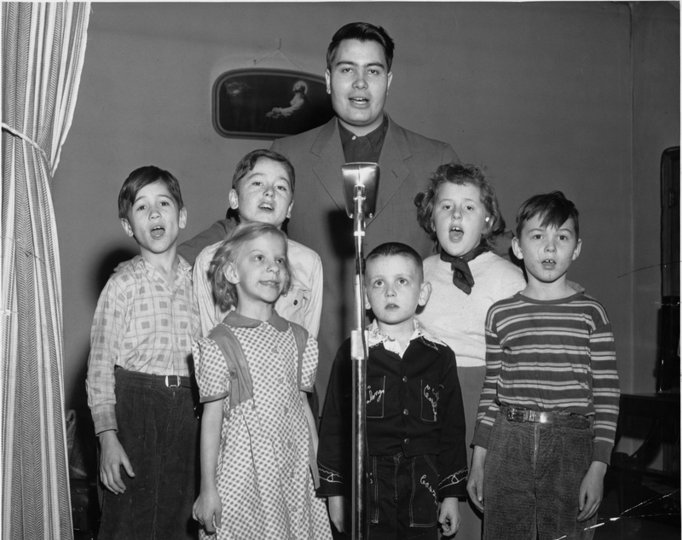
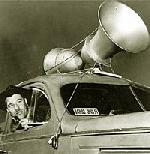
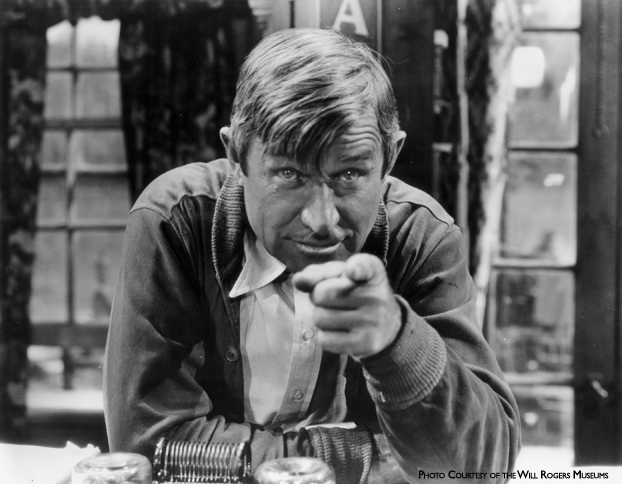
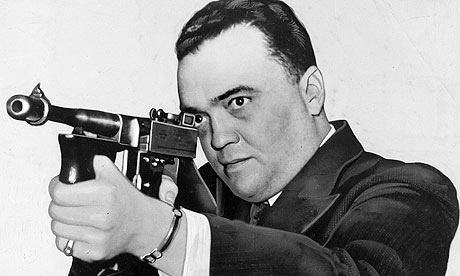
Former FBI director J. Edgar Hoover, the subject of Clint Eastwood’s new biopic, is shown here in a still from a 1936 documentary, You Can’t Get Away With It.

Kinky Hoover:
Clint Eastwood’s biopic of the FBI director

Eastwood presents Hoover as a crusader who protected the nation against the bomb throwers of the 1920s… What J. Edgar doesn’t show is how out-of-control Hoover and his band of thugs really were.

By Jonah Raskin / The Rag Blog / November 22, 2011

[This is the second of two Rag Blog reviews of Clint Eastwood’s new film, J. Edgar. Also see “Clint Eastwood’s ‘J. Edgar’” by David McReynolds.]

By calling his new biopic about the long-time director of the FBI, J. Edgar, rather than Hoover, or even J. Edgar Hoover, Clint Eastwood announces from the start that his picture will offer a personal look at the man behind the badge and the newspaper headlines. The audience is invited to be on a first-name basis with the hero or anti-hero of the film, as the case may be.

Indeed, Eastwood provides plenty of behind-the-scenes images of J. Edgar Hoover, as the world knew him for decades, and as I have always thought of him.

Eastwood shows Hoover with his long-time companion and devoted friend, Clyde Tolson, as well as with his over-protective mother. He shows Hoover alone before a mirror after his mother’s death trying on her clothes and jewelry. And there’s a very brief scene in which he stutters. All of these glimpses into the private life of the head of the FBI surely would have been regarded as libelous and as invasions of privacy during Hoover’s lifetime. (He died in 1972 at the age of 77.)

Moreover, he surely would have made life extremely difficult if not downright miserable for any movie director or book author who denigrated his image as a gang-buster and super-patriot in much the same way that he made life difficult for communists, anarchists, liberals, and “pinkos,” as anyone left of center was called during the Red Scare which lasted from about 1917 and the outbreak of the Russian Revolution to the fall of the Soviet Union and Russian communism in 1989.

Hoover held sway for much of that time, serving under Herbert Hoover, FDR, Truman, Eisenhower, JFK, LBJ, and Nixon, which suggests that beneath their differences, American presidents whether Republican or Democrat shared a fear, hatred, and also a basic ignorance of communists, communism and the Soviet Union. The FBI — America’s secret police — operated for most of the twentieth century under Hoover’s thumb and without much oversight and public scrutiny. What J. Edgar doesn’t show is how out-of-control Hoover and his band of thugs really were.

I first learned about Hoover and about his FBI in the late 1940s when I was a boy and when Truman was President. I learned more about him as I grew up and began to protest segregation and the testing of nuclear weapons and at the same time urged integration and peace.

Early on, I was intimidated by the name J. Edgar Hoover itself and by the image of him and the FBI. My parents — who had been Communist Party members for much of the 1930s and 1940s — told me never to talk to an agent, and I never did. I never thought of the FBI as a protective force but as a menace — akin to Big Brother in George Orwell’s 1949 novel 1984 — who watched everyone constantly and created a police state.

It wasn’t until the 1970s, with help from the Freedom of Information Act, that I learned that the FBI had started to monitor my own political activity in 1962 when I, along with classmates at Columbia College, called for the abolition of the House Committee on Un-American Activities (HUAC), which worked in tandem with Hoover. I learned, too, that the agency continued to monitor me all through the 1960s and 1970s, with a little help on occasion from the CIA, especially when I went to Algeria to meet with Eldridge Cleaver of the Black Panther Party and Timothy Leary, the apostle of LSD.

By 1968 or 1969, I — and a whole generation — ceased for the most part to be fearful of Hoover. I even began to issue my own Yippie “Wanted Posters,” including one for Richard Nixon, whom I described as a “war criminal,” a poster that Abbie Hoffman reprinted in Steal This Book.

In the 1990s, while conducting research on Hoffman at FBI headquarters in Washington, D.C., I had to walk in front of a statue of Hoover every day, and I found it ironical that he was still keeping an eye on me. Of course, a flesh-and-blood FBI agent sat alongside of me in the library and watched as I turned some 17,000 pages of text about Abbie.

That was characteristic of the agency — that it watched and maintained surveillance of citizens even when they posed no real threat to the government, the state, or its institutions. At FBI Headquarters in Washington, D.C., I sat next to Taylor Branch, the historian and biographer of Dr. Martin Luther King, Jr., whose bedroom trysts were monitored by the FBI. Those scenes appear briefly in Eastwood’s movie and suggest that the director was a voyeur and kinky.

J. Edgar does not present the FBI director as a saint; it shows him as a human with incredible strength of character and with a profound need for love and admiration. Eastwood’s Hoover is a “mother’s boy” unable to have a mature sexual or romantic relationship with an adult man or woman, though he did inspire great loyalty in both men and women.

Naomi Watts, who played the role of the beautiful blond in the remake of King Kong, plays the role of Helen Gandy, Hoover’s real life private secretary who shreds his secret files after his death, rather than allow them to fall into the hands of Richard Nixon, the only character in the film who uses real obscenities and who serves as Eastwood’s arch villain.

By comparison with Richard Nixon, Eastwood’s J. Edgar is a loving beast and a misunderstood king with noble intentions and a clean mouth. If he maintains files on presidents and on ordinary citizens, it’s for a good cause. He wants to protect America — American freedom, democracy and happiness — from internal and external enemies.

Some of those enemies were indeed real, though real enemies such as the Nazis and KKK members didn’t seem to trouble Hoover. A great many others were figments of his own vivid imagination, though he hounded them nonetheless, persecuted them, and ensured that they were prosecuted, jailed, and deported.

These included Emma Goldman, the Russian-born anarchist who appears early in the film wearing granny glasses just before she’s booted out of the country. Goldman the feminist, environmentalist, defender of the working class, and the rights of women just doesn’t appear at all in J. Edgar. For Eastwood, she’s a dangerous anarchist who deserved to be deported.

In Eastwood’s eyes, Hoover really did love his country and sought to defend it, and, while he also shows that Hoover falsified his role in fighting crime and criminals, he does not show how he falsified, distorted, and, lied about the role of anarchists, communists, union organizers, civil rights activists, peaceniks, and artists and musicians who happened to smoke marijuana and didn’t conform to middle class values and conventions.

In the 1950s, Hoover said that the Beats and the Beatniks were as big a threat to America as communism itself. Using all the resources of the Counter Intelligence Program (COINTELPRO), which was formed in the 1950s and that lasted well into the 1970s, the FBI actively aimed to destroy legitimate political organizations that opposed the war in Vietnam and advocated social and political justice. At the same time, Hoover and the FBI failed to combat the Mafia and “organized crime.” In fact, for decades Hoover insisted that organized crime wasn’t his concern.

During the Red Scare of the 1950s, Hoover and his agency ruined the lives of hundreds of thousands and perhaps millions of ordinary citizens, much as the KGB ruined the lives of Soviet citizens during the Stalin era. Eastwood doesn’t see the similarities between their secret police and ours. He presents the FBI director as a crusader who protected the nation against the bomb throwers and the terrorists of the 1920s, and in so doing he makes Hoover into a hero for today’s war against terrorists and terrorism, and as an honorable predecessor to the authors of the Patriot Act.

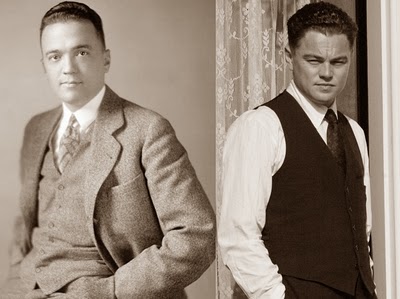
Leonardo DiCaprio plays Hoover as a man tightly wound, with repressed sexual desires, and little if any overt ideology. Much of the time, he seems to be trying to look and act like Orson Wells in Citizen Kane. At times, it appears as though Eastwood meant his movie to be a kind of “Citizen Hoover.” DiCaprio spends a lot of time on screen in elegant suits, talking to reporters, and to members of Congress.

The single case that’s dissected in the movie is the kidnapping of Charles Lindberg’s baby, which allows Eastwood to make J. Edgar into a likeable cop rather than a monomaniacal anti-communist. Indeed, the film whitewashes Hoover’s war on communism and communists and that’s whitewashing a huge chapter in twentieth-century American history.

George Orwell, who noted that “all art is propaganda,” but that “not all propaganda is art,” might call Eastwood’s J. Edgar “artful propaganda.” Orson Wells just might find it all too comical. Kinky Hoover doesn’t seem destined to join the cavalcade of immortal Hollywood movie images.

[Jonah Raskin is a professor at Sonoma State University and the author of For the Hell of It: The Life and Times of Abbie Hoffman and American Scream: Allen Ginsberg’s Howl and the Making of the Beat Generation. Read more articles by Jonah Raskin on The Rag Blog.]

The Rag Blog

Posted in Rag Bloggers | Tagged , , , , , , | 3 Comments


Occupy Fringe: Occupy Austin Reading Group

By Nicole Berland / Fringe Magazine / November 22, 2011

AUSTIN — When I first heard about the Occupy Wall Street movement, I regarded it with the same attitude I reserve for my fantasies about other important moments in history; it felt distant and impenetrable—a story available only for my passive, albeit passionate, consumption.

So, when I learned that Austin was about to begin its very own occupation, I eagerly took an inventory of which of my skills and interests I could contribute to the cause. I went to a few preliminary general assemblies and sat quietly in the back, understanding that my presence mattered, but feeling nonetheless like dead weight. Here were energetic people who collected donations, organized childcare, and drafted mission statements, but, despite my best efforts, I couldn’t envision myself filling any of these roles.

Then, during one meeting, my mind wandered to a text I had recently taught to a group of college students. In the first book of Gulliver’s Travels, Jonathan Swift maroons his titular character on an island full of tiny people (called Lilliputians), who signify their political affiliations by modifying the height of their shoe heels — a difference that, imperceptible to the comparably gigantic Gulliver, limits each Lilliputian to choosing either one or the other political party, lest he walk with a limp.

I won’t analyze this episode here because I am less interested in telling people what to think than in helping to create environments in which they can explore their own ideas. What my internal digression helped me realize, however, was that I did have one potentially valuable resource that I could easily share with the occupation: my experience teaching literature at the high school and college levels.

At the general assembly that night, an impressive young man named Jorge made a proposal to initiate “discussion circles” starting the first day of Austin’s occupation. I thought these discussion circles could provide a unique opportunity for open dialogue — a space where we didn’t have to follow the common educational model in which experts transmit their knowledge to mostly passive groups of students.

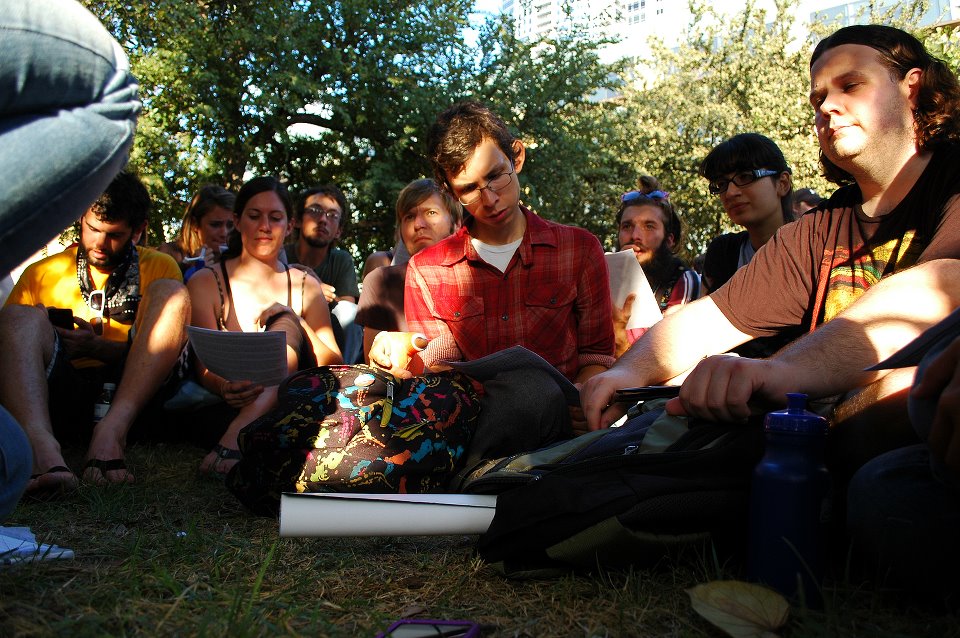
So, with Jorge’s help, I started the Occupy Austin Reading Group, which meets three times a week now. Each meeting features a new discussion leader, who chooses what we will read that day and sometimes poses discussion questions. So far, we’ve read poetry, fiction, theory, iconic speeches, news articles, and an assortment of other texts.

During one meeting, a group member brought in excerpts from Saul Alinsky’s Rules for Radicals, in which Alinsky contends that an organizer should be “sensitive to any opportunities, any handles to grab on to, even though they involve other issues than those he may have in mind at that particular time.” One of the many resources that Austin lacks in comparison to, say, New York, is size, but, true to Alinsky’s model, our little group struggles to turn this seeming disadvantage into an opportunity.

Austin’s occupation is intimate. Sometimes this intimacy generates conflict; political differences can lead to personal differences, which can then lead to people feeling attacked or underappreciated. Other times, the intimacy helps us unify around our tasks or come together to support a community member in need. The reading group tries to tap into this intimacy and use it the best we can.

By pinning our conversations to texts, we are often able to step outside of our immediate frustrations to focus on the greater implications of the movement. This, I believe, helps us to deescalate tension and promote positive dialogue — not only with each other, but also with the great thinkers who authored our texts. With some few, and short-lived, exceptions, participants generally respect each other’s opinions, whether or not the opinions square with their own. At this point, many of us have also become friends.

In my few years as a teacher, I learned not to assume that I could predict what would happen in any given discussion. Despite my early dreams of leading classrooms full of eager minds to feel and understand the things I felt and understood, I found a much more enriching reality in which I came to appreciate how defied expectations can sometimes yield the most rewarding results.

Like my first classes, the reading group also continually defies my expectations. At first, I imagined we would spend our time talking about how art informs and is informed by social movements, and, actually, sometimes we do that. More often than not, however, my fellow readers bring in texts that surprise me — speeches by people I’ve never heard of, poems about forgotten massacres, even some old union songs (which we, together, sang). The more and more the group has moved outside of my vision, the happier I’ve become.

This is not to say that the group is perfect. In many ways, I view the reading group as a microcosm of the larger movement. Despite our difficulties, we are growing and adapting because we have the intelligence and motivation to do so. We’ve come together with a common purpose, and we will remain as democratic, flexible, and dynamic as we can.

My hope is not that we keep doing what we’re doing — in the reading group or the movement as a whole. My hope is rather that what we’re doing helps us to create a foundation for a system in which we can listen to each other, educate ourselves, and constantly self-improve.

(Editor’s note: For as long as it takes, Fringe is giving over its blog to original work inspired by the Occupy protests. Send your essays, poetry, short stories, artwork, photography and whatever else you’ve got, including questions, to FringeTheMagazine@gmail.com. See guidelines here, and catch up with previous posts.)

[Nicole Berland recently moved back to Austin after several years living, studying, and teaching in Chicago, IL. She currently organizes the Occupy Austin Reading Group and watches lots of Star Trek (TNG). She wrote this for the Fringe Blog (Fringe: The noun that verbs your world.) Fringe is currently giving over its blog to the Occupy Movement; they can be reached at FringeTheMagazine@gmail.com.]


Type rest of the post here

Source

The Rag Blog

Posted in RagBlog | Leave a comment

Harvey Wasserman : Stop the Attack on Iran

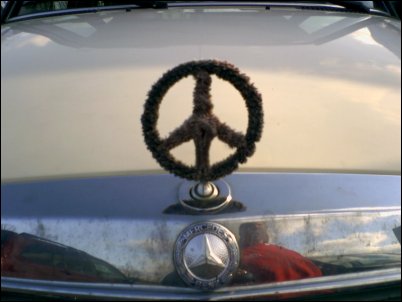
Bumper sticker on a car in Texas. Photo by Zereshk / Wikimedia Commons.

Our future depends on
stopping an attack on Iran

By Harvey Wasserman / The Rag Blog / November 21, 2011

The global Occupy Movement has come to life just in time.

War is the health of the corporate state. The 1% needs its endless cash flow to stay in power.

As the slaughters in Iraq and Afghanistan transform into something less visible, the 1% war machine must have a new profit center. The pretext for this latest war is the spectre of a nuclear-armed Iran. It’s a tawdry rerun of the lies George W. Bush used to sell the 2003 attack on Iraq. It’s no surprise those “weapons of mass destruction” were never found — or that Bush could later joke about it.

The hypocrisy of the 1% railing against bombs allegedly flowing from Iran’s “Peaceful Atom” program comes in unholy tandem with the corporate push for a “nuclear renaissance” peddling these same reactors all over the world. (It helps to remember that the nuclear industry once tried to sell 36 “peaceful” reactors to the Shah).

Stopping the attack on Iran is absolutely vital to our hopes for social justice and democracy. The occupy movement holds the key.

The slaughter in Iraq and Afghanistan has been horrific, but pales beside the bloodshed that could come next. Iran is a far more advanced country, with 76 million people. It’s powerful, diverse, and sophisticated, with significant ties to Russia, China, India, and throughout the mideast. In the 1980s it fought a land war with Iraq that killed a million people. Does the 1% expect us to embrace a rerun?

It’s up to our newly energized grassroots movement to stop this madness before it happens.

Remember that peace movements have been critical in shaping the course of history. For example, Richard Nixon’s “secret plan” to beat Southeast Asia into submission included the use of nuclear weapons. But he refrained, in part because of his well-justified fear of a national upheaval.

Global demonstrations failed to stop George W. Bush from attacking Iraq. Today the GOP wannabes are again howling for war. There are certainly advisors within the Obama Administration arguing — as they did for Bush in 2003 — that an ongoing war might be a ticket to re-election.

We must find nonviolent ways to stop this war in Iran. Old tactics and new — time-tested strategies and ones not yet imagined — will surface and resurface in the coming months. The de facto universities, debating societies, strategizing collectives, and action groups that help define the Occupy Movement will give birth to a new generation’s means of making social change. If we work hard enough at it, one or more of them will hold the key to our future. Somewhere, somehow, the means for stopping the next war must emerge.

The truly great news is that we all are now party to every organizer’s dream: a spontaneous eruption of the global dispossessed. It is a thoughtful, sophisticated, diverse, energized populace, ready to change the world — and compelled to find the nonviolent means for doing it.

Step one is to cut off the endless military spending that is the lifeblood of the 1%, and to begin starving out the warfare state.

It’s the only way to a world built on social justice and ecological survival.

So let’s find that fork in the road… and take it. See you in the streets.

[Harvey Wasserman’s Solartopia! Our Green-Powered Earth is at www.harveywasserman.com. His “Solartopia! Green-Power Hour” is podcast from www.talktainmentradio.com. Read more of Harvey Wasserman’s writing on The Rag Blog.]

The Rag Blog

Posted in Rag Bloggers | Tagged , , , | 1 Comment

SPORT / Dave Zirin : The Redemption of Tim Tebow?

One of the hottest items on the sports marketing scene is the Tebow number 15 jersey with “Jesus” on the back.

Tebow redeemed?
Tim Tebow is awful,
but he finds a way to win

He’s not awful in the turgid unwatchable way that, say, a Kate Hudson movie is awful. He’s fascinating/awful. He’s Reefer Madness awful. He’s old Nic Cage in Vampire’s Kiss awful.

By Dave Zirin / The Rag Blog / November 21, 2011

“You are what your record says you are.” It’s a classic lunch pail NFL phrase, courtesy of retired coach Bill Parcells. It means forget how good you or your team think you are. Forget your stats. Forget all the ways you came up just short. The end results define the entire journey.

It’s the amoral slogan of the sports world’s soul. It allows us to cheer for unsavory individuals and root for teams that vacuum our wallets clean. You are what your record says you are and winning excuses all.

But this consecrated commandment of sports is being challenged like never before. If you are what your record says you are, what does that possibly tell us about the man with the top jersey sales in the NFL, Tim Tebow?

The Broncos quarterback is 4-1. His presence has undeniably revived a moribund team. He has led the Broncos on winning fourth quarter drives in all four of his victories. If you are what your record says you are, then Tebow at 4-1 must be considered at this moment, one of the best.

And yet… he’s just awful. I don’t write that because Tebow is a Focus on the Family spokesperson who has a series of religiously-tinged political views I find abhorrent. I write it because I have been watching football since I was sucking a bottle, and I have two working eyes.

Tim Tebow’s completion percentage is 44.8%. Take away his magical fourth quarters and the number is closer to 30%. This kind of awful is in the “Shaq free throw percentage, Mario Mendoza batting average” sports hall of fame.

But he’s not awful in the turgid unwatchable way that, say, a Kate Hudson movie is awful. He’s fascinating/awful. He’s Reefer Madness awful. He’s old Nic Cage in Vampire’s Kiss awful. Tim Tebow throws a football like someone heaving a ham-shaped grenade. It needs to be seen to be believed. I’ve never used this phrase to describe an NFL quarterback, and hope I never have to again, but he’s “thrillingly campy.”

Watching him is like watching Sarah Palin be interviewed by someone off the Murdoch payroll. Disaster lurks, but the prurient/erotic ardor of their admirers fills the air around them and you cannot look away. The National Review’s Rich Lowery once said, presumably while crossing and re-crossing his legs, that Sarah Palin “sent little Starbursts through the screen.”

Tebow’s fans shake with the same puritanical spasms, as they wear number 15 jerseys with Jesus, instead of Tebow, stitched on the back. He’s the promise ring of NFL quarterbacks and I see a spectacle from which I cannot avert my eyes.

Thrilling and campy. In the last three games, he’s gone 9-20, 10-21, and a simply unreal 2-8 passing the ball. He’s inspired sentences like this one from ESPN’s Ian O’Connor:

As a professional football player, Tim Tebow makes no sense. He is among the most unartful dodgers in NFL history, a god-awful quarterback for about nine-tenths of your average game before voila, just like that, he is magical enough to make a New York Jets season go poof in the night.

The Denver coaching staff, who turned to Tebow after a listless 1-4 start, have turned their playbook into an index card. It’s the offensive equivalent of the flat tax. And like the flat tax, it fails miserably for the great majority.

The Broncos punted eight straight times vs. the Jets. Tebow started 6-15 passing. Yet their defense is stalwart and, more important, they believe in Tebow. In other words, they feel that if they can keep the game close, Tebow will find a way to pull it out for them in the fourth quarter. He hasn’t let them down. But how?

Denver coach John Fox has broken with decades of NFL orthodoxy by allowing Tebow to use a system that gives the quarterback the option to run the ball. Here he looks in his element, playing with purpose. Tebow is hardly a Michael Vick, but he’s big, strong, and hits an open hole as well as most running backs. He’s rushed for almost 400 yards at about seven yards a carry.

That Tebow has been given the chance to run the option is testament to his coach. It’s also a testament to the racial double standards that have historically defined the quarterback position. The best option QB’s over the decades — like Oklahoma’s Jamelle Holieway or Nebraska’s Tommy Frazier — were terrific runners and NCAA national champions, albeit with questionable arm strength. They were also African American and NFL opportunities were non-existent. If they did get a chance, like the great Brian Mitchell who was a star college quarterback, they were told to change positions.

This stereotype of what makes a good “field general” affected white option quarterbacks as well, like Heisman winner Eric Crouch of Nebraska. Despite having a set of unorthodox talents, they were told they didn’t fit the mold. When running quarterbacks showed up with the proper arm strength — like Donovan McNabb or Michael Vick — the player would be harangued by the press and coaching staff, told that they had to change their style top-to-bottom if they wanted to succeed in the NFL. They were informed that they had to drop back and run only as a last resort.

It’s good to be Tim Tebow. You get to be adored while going 2-8 passing. You get a playbook simplified and tailored to your strengths. You get to prove all your haters wrong.

But it’s not Tim Tebow who’s been redeemed. Not yet, anyway. Not after five games. Its every option QB — black or white — told that the NFL wasn’t for them. You are what your record says you are and Tim Tebow is 4-1. Let’s see, if nothing else, if this provides more opportunities for quarterbacks who in the past didn’t fit the mold and were blocked at the door.

[Dave Zirin is the author of The John Carlos Story (Haymarket) and just made the new documentary Not Just a Game. Receive his column every week by emailing dave@edgeofsports.com. Contact him at edgeofsports@gmail.com. This article was also posted to The Nation. Read more articles by Dave Zirin on The Rag Blog.]

The Rag Blog

Posted in Rag Bloggers | Tagged , , , , | 1 Comment


Type your summary here

Type rest of the post here

Source /

The Rag Blog

Posted in RagBlog | Leave a comment

Harry Targ : Higher Education, Capitalism, and the ‘Paterno Effect’

Virtual Penn State Nittany Lion by Avatar Sculptor Cheen Pitney / Cheen Pitney’s Peacefools.

The ‘Paterno effect’:
Thinking about capitalism,
higher education, and moral repugnance

By Harry Targ / The Rag Blog / November 21, 2011

“And when I think of all the talent and energy which daily go into devising ways and means of making their torment worse, all in the name of efficiency and productivity but really for the greater glory of the great god Capital, my wonder at humanity’s ability to create such a monstrous system is surpassed only by amazement at its willingness to tolerate the continuance of an arrangement so obviously destructive of the well-being and happiness of human beings.”

Paul Sweezy in Harry Braverman, Labor and Monopoly Capital, 1974, xii-xiii.

The scurrilous news about Penn State University has led me to reflect upon the context in which higher education, sports, popular culture more broadly, and political, economic, and cultural institutions are created, flower and grow, and in Paul Sweezy’s view destroy “the well-being and happiness of human beings.”

Numerous political economists have described capitalism as an economic system that has its roots in global trade, enslavement, and expropriating commodities produced in the “new world” and then processed in Europe into finished goods that were traded on the world stage.

Capitalism emerged out of rudimentary trade and production into the most productive, innovative, and technologically creative economic system in the world. The 500 year journey, from an early capitalist stage in which the transport of natural resources and commodities took months or years to a transnational global system that has obliterated differences in space and time, has truly transformed what it means to be human.

The positive features of capitalist development that Paul Sweezy and others recount also are grounded in analyses of the pain and suffering that has been caused by the unbridled pursuit of profit and capital accumulation.

The growth, development, transcendence of natural barriers (again ultimately space and time) has come with a price, as millions were enslaved and slaughtered. In addition, capitalism brought wars, starvation, the tearing up of the natural environment and the perpetuation of human misery on a massive scale.

This is a story about the political economy of world history that came to mind while observing the evolving scandal at a major university in November 2011. The rape and molestation of numerous boys over many years on the campus of Penn State University has been discussed in the context of sociopathic coaches, iconic sports figures, negligent university administrators, bought-off government officials, thoughtless students, and the exigencies of public relations.

Are there connections between the “political economy of world history” and rape on one college campus? I think so. And these connections that have inspired my thinking I am calling “the Paterno effect.”

First, reflections on the capitalist system must include an historical sense of the 500 year struggle to overcome any and all barriers to the pursuit of profit. Words like genocide, massacre, plunder, while not used in polite and proper academic company, are important to jar the conscience of humankind.

Second, the rise of capitalism necessitated the construction of political, economic, cultural, social, and religious institutions that supported it. These institutions stimulated scientific discovery, the organization of production, the facilitation of consumption, the creation of entertainment and culture, and the invention of political/spiritual systems of myths, symbols, and rituals that legitimized the global pursuit of profit.

Third, systems of education have played vital roles in training workers, organizing discovery, and convincing the young of the virtues of the system in which they live. In short, education at all levels is the institution that links the “needs” of the system to the generation of talent and the legitimating of its perpetuation.

Fourth, since the industrial revolution institutions of higher education have served the capitalist system in important ways. Early universities trained clerics or lawyers. By the dawn of the twentieth century, the modern university was constructed to meet the needs of capitalism: for inventors, accountants, engineers, and those who would transmit sanitized histories and cultural artifacts from generation to generation.

Fifth, as the “golden age” of U.S. capitalism developed, 1945 to the 1970s, higher education expanded. Whole university systems were constructed in states such as New York and California. Growing percentages of young people entered college. Job credentials increasingly required college degrees.

Sixth, university campuses began to reflect more the characteristics of parallel institutions and evolved even more directly into instrumentalities of corporations, banks, and the state. Major universities became businesses in their own right.

Today universities produce the human resources for the capitalist system. They collaborate with monopolies in agribusiness, technology, food service, and tourist industries, and every other industrial and financial sector of the society. It has been suggested that former President Eisenhower was considering addressing the “military/industrial/academic complex” in his famous farewell address. Although he did not include the “academic,” the connection is clear.

Universities are also big businesses themselves. They regard their students as “customers” and their corporate friends as their “investors.” On campuses and in host communities they sell products. University administrations and campus towns are beholden to corporate and government dollars. The university systems of modern America parallel the quest for profit and capital accumulation characteristic of the corporate and finance institutions of the society at large.

Therefore, a reading of the political economy of world history would lead the observer of higher education to realize that the cover-up of grotesque violence against young boys in one major university occurred in the context of a capitalist institution that craves profit and funding, investors, the celebration of star power in athletics, and the creation of icons in the sports and/or “educational” spaces of the college campus. Scandals that reduce the legitimacy, and hence the profitability, of the total institution must be ignored, explained away, or excused.

Perhaps the Paterno effect can encourage a progressive turn in higher education. There exists a principle of academic freedom that is solemnly defended by most academic administrators and faculty. There is also a legacy of debate and discovery in the history and mythology of higher education.

And, finally, in various places in the academy there exist traditions of advocacy research and teaching that engage students and communities in discussions of alternatives to the brutalities of the present order. Advocacy research and teaching is based on the proposition that the validity of ideas comes in part from whether they improve or harm “the well-being and happiness of human beings.”

The tragedy of Penn State University should stimulate a reexamination of the purposes, functions, goals of the modern university that addresses how it can participate in the dramatic changes humankind desperately needs.

[Harry Targ is a professor of political science at Purdue University who lives in West Lafayette, Indiana. He blogs at Diary of a Heartland Radical — and that’s also the name of his new book which can be found at Lulu.com. Read more of Harry Targ’s articles on The Rag Blog.]

The Rag Blog

Posted in Rag Bloggers | Tagged , , , , , , , | Leave a comment

The Paterno Effect:
Thinking about capitalism,
higher education, and moral repugnance

By Harry Targ / The Rag Blog / November 20, 2011

“And when I think of all the talent and energy which daily go into devising ways and means of making their torment worse, all in the name of efficiency and productivity but really for the greater glory of the great god Capital, my wonder at humanity’s ability to create such a monstrous system is surpassed only by amazement at its willingness to tolerate the continuance of an arrangement so obviously destructive of the well-being and happiness of human beings.” — Paul Sweezy in Harry Braverman, Labor and Monopoly Capital, 1974, xii-xiii.

The scurrilous news about Penn State University has led me to reflect upon the context in which higher education, sports, popular culture more broadly, and political, economic, and cultural institutions are created, flower, and grow, and in Paul Sweezy’s view destroy “the well-being and happiness of human beings.”

Numerous political economists have described capitalism as an economic system that has its roots in global trade, enslavement, and expropriating commodities produced in the “new world” and then processed in Europe into finished goods that were traded on the world stage. Capitalism emerged out of rudimentary trade and production into the most productive, innovative, and technologically creative economic system in the world.

The 500 year journey, from an early capitalist stage in which the transport of natural resources and commodities took months or years to a transnational global system that has obliterated differences in space and time, has truly transformed what it means to be human.

The positive features of capitalist development that Paul Sweezy and others recount also are grounded in analyses of the pain and suffering that has been caused by the unbridled pursuit of profit and capital accumulation. The growth, development, transcendence of natural barriers (again ultimately space and time) has come with a price, as millions were enslaved and slaughtered. In addition, capitalism brought wars, starvation, the tearing up of the natural environment and the perpetuation of human misery on a massive scale.

This is a story about the political economy of world history that came to mind while observing the evolving scandal at a major university in November, 2011. The rape and molestation of numerous boys over many years on the campus of Penn State University has been discussed in the context of sociopathic coaches, iconic sports figures, negligent university administrators, bought-off government officials, thoughtless students, and the exigencies of public relations.

Are there connections between the “political economy of world history” and rape on one college campus? I think so. And these connections that have inspired my thinking I am calling “the Paterno effect.”

First, reflections on the capitalist system must include an historical sense of the 500 year struggle to overcome any and all barriers to the pursuit of profit. Words like genocide, massacre, plunder, while not used in polite and proper academic company, are important to jar the conscience of humankind.

Second, the rise of capitalism necessitated the construction of political, economic, cultural, social, and religious institutions that supported it. These institutions stimulated scientific discovery, the organization of production, the facilitation of consumption, the creation of entertainment and culture, and the invention of political/spiritual systems of myths, symbols, and rituals that legitimized the global pursuit of profit.

Third, systems of education have played vital roles in training workers, organizing discovery, and convincing the young of the virtues of the system in which they live. In short, education at all levels is the institution that links the “needs” of the system to the generation of talent and the legitimating of its perpetuation.

Fourth, since the industrial revolution institutions of higher education have served the capitalist system in important ways. Early universities trained clerics or lawyers. By the dawn of the twentieth century, the modern university was constructed to meet the needs of capitalism: for inventors, accountants, engineers, and those who would transmit sanitized histories and cultural artifacts from generation to generation.

Fifth, as the “golden age” of U.S. capitalism developed, 1945 to the 1970s, higher education expanded. Whole university systems were constructed in states such as New York and California. Growing percentages of young people entered college. Job credentials increasingly required college degrees.

Sixth, university campuses began to reflect more the characteristics of parallel institutions and evolved even more directly into instrumentalities of corporations, banks, and the state. Major universities became businesses in their own right.

Today universities produce the human resources for the capitalist system. They collaborate with monopolies in agribusiness, technology, food service and tourist industries, and every other industrial and financial sector of the society. It has been suggested that former President Eisenhower was considering addressing the “military/industrial/academic complex” in his famous farewell address. Although he did not include the “academic,” the connection is clear.

Universities are also big businesses themselves. They regard their students as “customers” and their corporate friends as their “investors.” On campuses and in host communities they sell products. University administrations and campus towns are beholden to corporate and government dollars. The university systems of modern America parallel the quest for profit and capital accumulation characteristic of the corporate and finance institutions of the society at large.

Therefore, a reading of the political economy of world history would lead the observer of higher education to realize that the cover-up of grotesque violence against young boys in one major university occurred in the context of a capitalist institution that craves profit and funding, investors, the celebration of star power in athletics, and the creation of icons in the sports and/or “educational” spaces of the college campus. Scandals that reduce the legitimacy, and hence the profitability, of the total institution must be ignored, explained away, or excused.

Perhaps the Paterno effect can encourage a progressive turn in higher education. There exists a principle of academic freedom that is solemnly defended by most academic administrators and faculty. There is also a legacy of debate and discovery in the history and mythology of higher education. And, finally, in various places in the academy there exist traditions of advocacy research and teaching that engage students and communities in discussions of alternatives to the brutalities of the present order. Advocacy research and teaching is based on the proposition that the validity of ideas comes in part from whether they improve or harm “the well-being and happiness of human beings.”

The tragedy of Penn State University should stimulate a reexamination of the purposes, functions, goals of the modern university that addresses how it can participate in the dramatic changes humankind desperately needs.

[Harry Targ is a professor of political science at Purdue University who lives in West Lafayette, Indiana. He blogs at Diary of a Heartland Radical — and that’s also the name of his new book which can be found at Lulu.com. Read more of Harry Targ’s articles on The Rag Blog.]

The Rag Blog

Posted in RagBlog | Leave a comment

Ted McLaughlin : Playing the Debt Blame Game

Chart from brillig.com.

With forgetful elephants…
Playing the debt blame game

By Ted McLaughlin / The Rag Blog / November 20, 2011

The Treasury Department admitted this week that the national debt of this country has, for the first time, topped $15 trillion. That’s an incredibly large figure, and just about equals the entire Gross Domestic Product (GDP) of the country for one year. And the Republicans are trying to blame one person for the entire debt — President Obama. They act like they had nothing to do with creating any of that debt.

Obviously the old canard about elephants never forgetting is not true — at least for political elephants. The GOP elephants have had to forget the economic history of the last 30 years to arrive at their ludicrous conclusion.

Let’s take a look at the history of the national debt. First of all, the fact that some national debt exists is not necessarily a bad thing. In fact, there has never been a time in this country’s history when there was not some level of national debt — from the presidency of George Washington to the present — and yet the nation and it’s citizens have prospered.

As the chart above shows, the national debt reached about $2.5 trillion during World War II, which was understandable since large sums of money had to be spent to arm ourselves and our allies and fight the war. And the national debt stayed around or just below $2 trillion through the next seven presidencies (Truman, Eisenhower, Kennedy, Johnson, Nixon, Ford, and Carter). And generally, the economy was very good during this stretch — both for workers and entrepreneurs.

Then Ronald Reagan was elected president and things changed. He tossed out the Keynesian economics followed by previous presidents and instituted a supply-side “trickle-down” theory of economics. This trickle-down economics favored the rich, and the gap in wealth and income between the rich and the rest of America began to widen — and the national debt began to grow much larger.

By the time Reagan left office, he had increased the national debt from the $2 trillion he had inherited to nearly $4 trillion. George Bush I continued the trickle-down policies and grew the national debt to $5 trillion.

After assuming office, it took Bill Clinton a few years to bring the deficit under control. But by the time he left office, the nation was actually enjoying a surplus each year (of a little more than $200 million) and the national debt was starting to be paid down. He left the next president with a national debt of about $5.6 trillion and a small yearly surplus.

Then George Bush II was elected president, and he quickly kicked Reagan’s trickle-down economics into high gear. This created a deficit and started to balloon the national debt. He instituted huge tax cuts for the rich (which added about $400 billion a year to the deficit and national debt), increased military spending (adding about $180 billion a year to the deficit and national debt), and started two unnecessary wars (adding more than $100 billion a year to the deficit and national debt) among other things.

By the time Bush left office at the end of 2008, the gap in wealth and income between the rich and the rest of America was the biggest it had been since the 1920’s — and the national debt stood at about $10 trillion. And the nation was thrown into a serious recession that cost many millions of jobs. The economy was a mess and Bush had laid the groundwork for the deficit and national debt to continue climbing.

But even though President Obama inherited an economy that was a horrible mess, he cannot be completely absolved from any part in further increasing both the deficit and the national debt. That’s because he continued many of Bush’s worst mistakes. He didn’t end the wars, he increased the military budgets more, and he extended the Bush tax cuts for the rich. If he had stopped all of those things, the national debt would not stand at over $15 trillion today — but he didn’t.

So now the Republicans want to blame President Obama for the deficit. But that is hogwash. The dirtiest hands are those of Republicans. Obama’s sins are not of commission, but omission (for not stopping the trickle-down madness initiated by the Republicans). But regardless of who is to blame, the fact is that we have a national debt of $15 trillion.

What can we do about it? Republicans tell us that it can be controlled by doing nothing but making cuts to education and social programs and Medicare. That’s ridiculous. Even completely eliminating all of those would not pay off the national debt.

They also want to cut Social Security benefits (or abolish or privatize it). That’s also ridiculous. Social Security did not cause even one penny of the deficit or the national debt. They just want to get rid of it because they’ve never liked it.

So, what can be done to control the deficit and pay down the national debt to a reasonable level? There are some sensible solutions. Here’s what I would suggest:

  • Stop both foreign wars. They are accomplishing nothing except to bleed our national treasury.
  • Make serious cuts to the military budget. The military budget accounts for more than 54% of all government discretionary spending, and there are many cuts that could be made (waste, unworkable and expensive programs, closing of foreign bases, etc.). In fact, we could cut the military budget in half and still be spending several times as much as any other country in the world is spending.
  • Let the Bush tax cuts expire. This is a $400 billion a year drain on the budget that we can no longer afford.
  • Abolish the special 15% tax on capital gains. Then tax capital gains at the same rate that all other income is taxed at. Income is income, and the income of the rich should not be taxed at a lower rate than the income of everyone else.
  • Establish a small tax on Wall Street trading of stocks and other financial instruments.
  • Continue the estate tax, and consider lowering it to include estates of only one or two million dollars.

That’s where I would start. Maybe you have some other suggestions. But one thing I don’t believe should be done in the middle of this recession is to cut social programs or education. The social programs are the only thing keeping millions of Americans’ heads above water, and education is the only way for millions more to better themselves.

The Republicans like to say we are passing our debt on to our children and grandchildren. That will only be true if we fail to act right now.

[Ted McLaughlin also posts at jobsanger. Read more articles by Ted McLaughlin on The Rag Blog.]

The Rag Blog

Posted in Rag Bloggers | Tagged , , , | Leave a comment

When Mike Davis — the noted author, historian, and veteran of the Sixties — was asked if he had any important lessons to pass on to the Occupy movement from his 45 years as an activist, he repeated his “fervent vow never to age into an old fart with lessons to pass on.” In blatant violation of his vow, however, he shares with us a highly personal and very relevant “Ten Immodest Commandments.”

Posted in RagBlog | Leave a comment

Bobby Bridger

Bobby Bridger began work on his epic trilogy A Ballad of the West over four decades ago. Since 1974 Bridger has traveled the globe performing this historical epic as a one-man show to audiences in America, Canada, Europe, Australia and Russia.

Bridger began his professional recording career in 1967 in Nashville recording for Monument and Nugget Records before signing with RCA Records in Hollywood in 1970. Bridger recorded two albums for RCA -Merging Of Our Minds, and, And I Wanted To Sing For The People- before departing the label in 1973. Since the early 1980s Bridger has produced Heal in the Wisdom, Songs from A Ballad of the West, and the four-disc boxed set, A Ballad of the West, on his own Golden Egg Records.

Bridger has performed twice on PBS’s Austin City Limits, on PBS’s American Experience, twice on C-Span/Booknotes, once on ABC’s Good Morning America, on CNN, on A & E, on National Public Radio and on the Australian Broadcasting Company. Bridger performed on twenty-eight consecutive Kerrville Folk Festival’s, served on the festival’s board of directors from 1976-2002 and on the board of advisors since 2002. Bridger suggested the popular “Ballad Tree” to Kerrville Folk Festival founder/director, Rod Kennedy, and wrote the festival’s anthem, Heal in the Wisdom.

Bridger has been an artist-in-residence at Yellowstone and Grand Teton National Parks, and was the first poet/balladeer-in-residence at the Buffalo Bill Historical Center in Cody, Wyoming, the Eugene O’Neill Theater Center in Waterford, Connecticut, and the John G. Neihardt Center in Bancroft, Nebraska. Under the tutelage of Broadway and Hollywood legend, Dale Wasserman (Man of LaMancha, One Flew Over The Cuckoo’s Nest), Bridger created the role of “the Drifter” in Wasserman’s musical comedy Shakespeare and The Indians, and from 1982-‘83 appeared in over 100 performances of the renown playwright’s show.

Working with the production team developing the American Indian classic, Black Elk Speaks for stage and film, Bridger served on the board of directors of the American Indian Theater Company from 1982-1987, and was featured with David Carradine and Will Sampson in an American Indian production of Black Elk Speaks in Tulsa in 1984. Bridger was on the National Theater Institute faculty from 1984-’87, and in 1984 and 1985 N.T.I. produced an unprecedented two consecutive workshop productions of Bridger’s epic space fantasy Aldebaran and The Falling Star. Returning from landmark tours of Australia in 1986 and the Soviet Union in 1987,

Bridger was invited to Oxford University in 1988 to perform Heal in the Wisdom for closing ceremonies of the First Global Forum of Spiritual and Parliamentary Leaders On Human Survival; featured presenters were Nobel Prize winners, the 14th Dali Lama, Mother Teresa, and Wangari Maathai, as well as the Archbishop of Canterbury, and Carl Sagan. From 1988-1995 full-company outdoor musical productions of Part One of A Ballad of the West, Seekers of the Fleece, featuring many stars such as Tony-nominated, Joe Sears (playwright/star of the Greater Tuna trilogy of comedies) and Wes Studi (Dances With Wolves, Last of the Mohicans, and Geronimo) were produced in Wyoming.

In 1996 Bridger returned his focus to performing his one-man shows around the American west. Bridger’s trilogy of one man shows of A Ballad of the West ran in repertory each summer at Old Trail Town in Cody, Wyoming from 2000-2004.

Bridger is the author of a hardback and paperback edition of A Ballad of the West, the award-winning, Buffalo Bill and Sitting Bull: Inventing The Wild West, an autobiography, Bridger, and he contributed essays to anthologies on American western literary giants John G. Neihardt (A Sender of Words) and Frank Waters
(Frank Waters: Man and Mystic ). From 2003-04 Bridger served as a poetry judge for the Western Writers of America’s prestigious “Silver Spur” award and from 2004-2010 helped the organization create a “Best Song” category and then served as a judge for submissions competing for the “Silver Spur” award. In 2009 Bridger released of a five-disc DVD production of his one-man shows of A Ballad of the West in which he is accompanied by a stellar four-piece ensemble of renowned studio musicians.

Bridger’s script for the DVD production was a Silver Spur finalist for the Western Writers of America’s 2009 “Best Documentary Script”. The DVD production also features a documentary based on Bridger’s life and work (Quest of an Epic Balladeer) and a host of other special features. Bridger’s book Where the Tall Grass Grows: the Mythological Legacy of the American West is due for publication in autumn, 2011. Bridger is currently writing, painting, sculpting, and touring.
More at www.bobbybridger.com

Posted in RagBlog | Leave a comment

David McReynolds, who — as a socialist and a pacifist — had extensive dealings with J. Edgar’s FBI, provides a revealing take on Eastwood’s new biopic. Though praising the performances of Leonardo DiCaprio and Judi Dench, David says the film’s real power comes from Eastwood’s humanizing Hoover “as a sad, sexually frustrated, deeply insecure man who tried to rearrange facts to help insure his place in history.”

Posted in RagBlog | Leave a comment

FILM / David McReynolds : Clint Eastwood’s ‘J. Edgar’


Clint Eastwood’s J. Edgar

It is precisely because Eastwood has made the sexual angle central to the film, without playing games with it, that the film is so powerful.

By David McReynolds / The Rag Blog / November 17, 2011

[This is the first of two Rag Blog reviews of Clint Eastwood’s new film, J. Edgar. Also see “Eastwood’s Biopic of Kinky Hoover” by Jonah Raskin.]

J. Edgar Hoover (1895-1972) who, depending on your politics, looked much like a toad… or a bulldog… was without question a monster of American political life. Since his life is now so distant to those younger than 40, the film, J. Edgar, has great value as an historical “look back” at the life and career of a deeply flawed, remarkably powerful man.

As a fan of the work of Clint Eastwood I wish I could give the film unqualified praise, but my praise, while real enough, is limited by two regrets.

First — while I’d credit the actors with filling their roles so that we soon enough forget Leonardo DiCaprio was so recently the golden boy of youth, as he ages toward the stout, balding figure of Hoover, and that it takes some time to realize Hoover’s mother is played by that most accomplished of actors, Judi Dench — makeup and acting cannot always accomplish miracles.

In the case of Armie Hammer, who plays Clyde Tolson (Hammer played the double role of the Winklevoss twins in The Social Network), his acting skills do not make him believable as an elderly Tolson, crippled by a stroke. Sadly, the makeup leaves him looking as if he were headed for a Halloween party.

Second, I quarrel with Clint Eastwood’s approach in which past and present shift throughout the film. But that was his decision and the film works despite my quibble.

There are some things which might have been covered in the film. Younger viewers will not know that Hoover persisted in denying the existence of the Mafia — so much so that it became a kind of joke (to which passing reference is made in one of the Hercule Poirot TV mysteries). There were suggestions that the Mafia might have had something on Hoover. It is just as likely that Hoover felt the Mafia too big a challenge.

Hoover’s role began in 1924, when he was appointed the first director of the Bureau of Investigation, which later became the FBI. His role was to combat “subversion.” In the wake of the Russian Revolution, and the folly of some acts of violence by American radicals (to which I’ll return later), there was widespread fear of a “Bolshevik Revolution.” Hoover played a key role in the Palmer Raids, the deportation of hundreds of aliens.

Then, in the early 1930’s, in part linked to the conditions of the Depression, criminal gangs held up a number of banks in the Midwest and John Dillinger became a kind of national folk hero. The FBI played a key role in jailing the gangsters.

On the eve of the Second World War, the FBI investigated German agents and had the key role in counterespionage. With the rise of the Cold War, Hoover became obsessed with the danger of Soviet spies and “un-American” groups. There are few of us who were politically active in that time who do not have FBI files.

(Mine was about 300 pages, when I got it under the Freedom of Information Act, and it was for the most part accurate — though I was amused that the FBI agent assigned to my case wrote that I was a Trotskyist, basing his conclusion on his access to the documents of the Communist Party’s “Control Commission” in Southern California!)

Pacifists often met with FBI agents in the course of routine checks being made on men who had applied for status as conscientious objectors. I met with agents on several occasions when they were asking if certain men were, in fact, members of the War Resisters League. (I always said yes, whether I knew them or not, as it might help get them a CO status and keep them out of jail.)

I remember one such meeting in the early Sixties when I was serving a 25-day jail term on Hart’s Island for taking part in a Civil Defense protest. I was on a work crew, dirty from digging. I smoked then, and was very short of cigarettes. A guard came down to the work crew and called me out, saying the FBI wanted to see me.

Grimy and in need of a smoke (which the agent generously offered), I was asked some routine questions about someone applying for CO status. When I got back to the work crew my prestige had, I soon found out, risen greatly, as the men assumed I was involved in some major crime to merit an FBI visit.

A month or two after I finished that short term, I was in my office at 5 Beekman Street when the same agent came in with similar questions — and, in clean clothes, I was happy to offer him a cigarette.

There are other areas the film might have covered. (I’m not faulting Eastwood for choosing to focus on the personal life of Hoover — only noting areas younger people wouldn’t be aware of.) During the Vietnam War Hoover chose to ignore the Supreme Court limits on his power and set up a “dirty tricks” program called COINTELPRO which sought to disrupt the Black Panthers, Martin Luther King Jr., SCLC, the Communist Party — and the War Resisters League.

While we at WRL were never able to prove it, it was our assumption that the raid on our offices in 1968, when the office machinery was wrecked, the office badly messed up, and the membership files stolen, was a COINTELPRO project.

This only touches on the dirty world of J. Edgar Hoover, a man so powerful, with his vast secret files, that no president dared to fire him. A man who could destroy careers, drive people of talent, but of left-wing views, to seek new lives in Europe. (One interesting act of defiance — remarkable at the time — was the detective story The Doorbell Rang by Rex Stout, author of the Nero Wolfe series. Written in 1965, when Hoover was in full power and no one could safely criticize him, Stout ends the story with Hoover ringing the bell on Wolfe’s West 35th St. home — and Wolfe left it unanswered).

J. Edgar Hoover.

However, J. Edgar does what perhaps most needed doing — humanizing Hoover as a sad, sexually frustrated, deeply insecure man who tried to rearrange facts to help insure his place in history. A man whom Presidents feared, never liked, and never dared to fire.

There had been rumors for years that Hoover was homosexual. His relationship with Clyde Tolson certainly provided the needed grist for the mill.

Hoover had been at his job for several years before he was introduced to Clyde Tolson. There are surely few of us who have not had that electric moment when we met a person to whom we were instantly drawn. In most cases those electric moments never light a real fire, but when Tolson turns up in Hoover’s office, having applied for a job, there is absolute clarity about the relationship. Tolson “takes charge of the scene,” moving to open an office window, handing Hoover a handkerchief to mop his face, which had broken into a sweat.

Tolson is hired. Hoover soon makes him his second in command — a post Tolson accepts “only if you will agree we will always have lunch and dinner together.” It is clear that Tolson is in love with Hoover, and quite aware of that. It isn’t clear whether Hoover is ever able to really come to terms with the fact he has a lover.

It is, I think, quite possible the two men never had an actual sexual encounter. But in a remarkable scene, which homosexuals will recognize as valid, when Hoover tells Tolson he is thinking of marriage there is a sharp sudden physical encounter, breaking glass, and the two fight, hitting each other, tumbling and wrestling together until Tolson, on top, says “I love you” and kisses Hoover.

Hoover says “Never do that again,” but it seemed to me that scene was solid, that Eastwood caught the truth of the relationship.

There is a chilling moment when Hoover’s mother, Judi Dench, tells him she will teach him how to dance, and that — referring to a school boy who had been outed for crossdressing (and had then committed suicide) — she would rather have a dead son than a “daffodil son.” One hears, in the mother’s words, the most ancient of primitive demands that the race must reproduce itself.

While Tolson never gives a sense of having political views of his own, he does, near the end of the film, as Hoover has completed his autobiographical notes, tell Hoover the truth. He tells him that he has read the book, that the notes are a fiction, that Hoover hadn’t personally made the arrests he had claimed, that it was not Hoover, but special agent Melvin Purvis who had tracked down Dillinger. (Hoover, jealous of Purvis’ role, had exiled him to a distant post).

It is a devastating but not vindictive setting straight of the record.

It is precisely because Clint Eastwood has made the sexual angle central to the film, without playing games with it, that the film is so powerful. We are able to see the corruption of Hoover (who loved playing the horses, and accepted the arrangements with the tracks that his bets always paid off), the racism, the fanatic fear of subversion, and yet to see the haunted man behind the throne of power.

This generation cannot easily conceive of the power the FBI held on the imaginations of the American public. And it was, to some extent, justified.

In 1954, as the U.S. was considering getting involved in the French disaster in Indochina, Maggie Phair and I, from the Socialist Party, had gone down to the boardwalk in Ocean Park late at night to stencil the slogan “Send Dulles, Not Troops, to Indochina.” (Dulles was then Secretary of State.) I had with me a slim folder containing the layout for a leaflet on Vern Davidson, a Socialist Party member then in prison for draft resistance, and some addresses of local contacts, and finally some totally non-political family snapshots, which were of personal value.

When Maggie and I were done, and I went to pick up my manila folder, it was gone. Clearly a theft, but one with few rewards. The next morning I called the FBI office in Los Angeles, and said that someone had stolen something of mine which, if the thief was patriotic, he would turn over to the FBI. The FBI (of course) denied any knowledge of the matter.

However a year or two later the photos that had been in the folder were mailed to me at my parent’s address — an address which hadn’t been on the folder. Score one for the FBI.

Two final points. I said earlier that I’d remark on the folly of the occasional acts of radical violence. The casual radical, the young radical “here on vacation,” can talk about using violence, bombs, sabotage, in resistance, ignoring that the history of such acts (which helped provide the basis for setting up the FBI) is always to give greater power to the State.

There is surely no one to whom radicals should pay more heed than Lenin, who warned against the “propaganda of the deed,” the folly of thinking the force of the State could be overturned by random acts of violence. All of history has shown that there is nothing easier to penetrate than a secret organization. Secrecy and violence play into the hands of Hoover and those like him.

The second final point is troubling and I offer it uneasily. No modern state can afford to be without some security apparatus. We can condemn the FBI, but we were also furious that it did not send its agents into the Ku Klux Klan. We know that the problems of organized crime and of irrational violence which can come as easily from the right as from the left (remember the Oklahoma bombing) require some agency of investigation.

The problem is how to maintain control over such agencies. I pose the problem; I do not have the answer.

Meanwhile, catch J. Edgar and see how dangerous the secret police can be, and how deeply they threatened our freedoms within very recent memory.

[David McReynolds is a former chair of War Resisters International, and was the Socialist Party candidate for President in 1980 and 2000. He is retired and lives with two cats on the Lower East Side of Manhattan. He posts at Edge Left and can be reached at dmcreynolds@nyc.rr.com. Read more articles by David McReynolds on The Rag Blog.]

The Rag Blog

Posted in Rag Bloggers | Tagged , , , , | 4 Comments