Type your summary here
Type rest of the post here
Source /
By Harry Targ / The Rag Blog / November 21, 2011
“And when I think of all the talent and energy which daily go into devising ways and means of making their torment worse, all in the name of efficiency and productivity but really for the greater glory of the great god Capital, my wonder at humanity’s ability to create such a monstrous system is surpassed only by amazement at its willingness to tolerate the continuance of an arrangement so obviously destructive of the well-being and happiness of human beings.”
— Paul Sweezy in Harry Braverman, Labor and Monopoly Capital, 1974, xii-xiii.
The scurrilous news about Penn State University has led me to reflect upon the context in which higher education, sports, popular culture more broadly, and political, economic, and cultural institutions are created, flower and grow, and in Paul Sweezy’s view destroy “the well-being and happiness of human beings.”
Numerous political economists have described capitalism as an economic system that has its roots in global trade, enslavement, and expropriating commodities produced in the “new world” and then processed in Europe into finished goods that were traded on the world stage.
Capitalism emerged out of rudimentary trade and production into the most productive, innovative, and technologically creative economic system in the world. The 500 year journey, from an early capitalist stage in which the transport of natural resources and commodities took months or years to a transnational global system that has obliterated differences in space and time, has truly transformed what it means to be human.
The positive features of capitalist development that Paul Sweezy and others recount also are grounded in analyses of the pain and suffering that has been caused by the unbridled pursuit of profit and capital accumulation.
The growth, development, transcendence of natural barriers (again ultimately space and time) has come with a price, as millions were enslaved and slaughtered. In addition, capitalism brought wars, starvation, the tearing up of the natural environment and the perpetuation of human misery on a massive scale.
This is a story about the political economy of world history that came to mind while observing the evolving scandal at a major university in November 2011. The rape and molestation of numerous boys over many years on the campus of Penn State University has been discussed in the context of sociopathic coaches, iconic sports figures, negligent university administrators, bought-off government officials, thoughtless students, and the exigencies of public relations.
Are there connections between the “political economy of world history” and rape on one college campus? I think so. And these connections that have inspired my thinking I am calling “the Paterno effect.”
First, reflections on the capitalist system must include an historical sense of the 500 year struggle to overcome any and all barriers to the pursuit of profit. Words like genocide, massacre, plunder, while not used in polite and proper academic company, are important to jar the conscience of humankind.
Second, the rise of capitalism necessitated the construction of political, economic, cultural, social, and religious institutions that supported it. These institutions stimulated scientific discovery, the organization of production, the facilitation of consumption, the creation of entertainment and culture, and the invention of political/spiritual systems of myths, symbols, and rituals that legitimized the global pursuit of profit.
Third, systems of education have played vital roles in training workers, organizing discovery, and convincing the young of the virtues of the system in which they live. In short, education at all levels is the institution that links the “needs” of the system to the generation of talent and the legitimating of its perpetuation.
Fourth, since the industrial revolution institutions of higher education have served the capitalist system in important ways. Early universities trained clerics or lawyers. By the dawn of the twentieth century, the modern university was constructed to meet the needs of capitalism: for inventors, accountants, engineers, and those who would transmit sanitized histories and cultural artifacts from generation to generation.
Fifth, as the “golden age” of U.S. capitalism developed, 1945 to the 1970s, higher education expanded. Whole university systems were constructed in states such as New York and California. Growing percentages of young people entered college. Job credentials increasingly required college degrees.
Sixth, university campuses began to reflect more the characteristics of parallel institutions and evolved even more directly into instrumentalities of corporations, banks, and the state. Major universities became businesses in their own right.
Today universities produce the human resources for the capitalist system. They collaborate with monopolies in agribusiness, technology, food service, and tourist industries, and every other industrial and financial sector of the society. It has been suggested that former President Eisenhower was considering addressing the “military/industrial/academic complex” in his famous farewell address. Although he did not include the “academic,” the connection is clear.
Universities are also big businesses themselves. They regard their students as “customers” and their corporate friends as their “investors.” On campuses and in host communities they sell products. University administrations and campus towns are beholden to corporate and government dollars. The university systems of modern America parallel the quest for profit and capital accumulation characteristic of the corporate and finance institutions of the society at large.
Therefore, a reading of the political economy of world history would lead the observer of higher education to realize that the cover-up of grotesque violence against young boys in one major university occurred in the context of a capitalist institution that craves profit and funding, investors, the celebration of star power in athletics, and the creation of icons in the sports and/or “educational” spaces of the college campus. Scandals that reduce the legitimacy, and hence the profitability, of the total institution must be ignored, explained away, or excused.
Perhaps the Paterno effect can encourage a progressive turn in higher education. There exists a principle of academic freedom that is solemnly defended by most academic administrators and faculty. There is also a legacy of debate and discovery in the history and mythology of higher education.
And, finally, in various places in the academy there exist traditions of advocacy research and teaching that engage students and communities in discussions of alternatives to the brutalities of the present order. Advocacy research and teaching is based on the proposition that the validity of ideas comes in part from whether they improve or harm “the well-being and happiness of human beings.”
The tragedy of Penn State University should stimulate a reexamination of the purposes, functions, goals of the modern university that addresses how it can participate in the dramatic changes humankind desperately needs.
[Harry Targ is a professor of political science at Purdue University who lives in West Lafayette, Indiana. He blogs at Diary of a Heartland Radical — and that’s also the name of his new book which can be found at Lulu.com. Read more of Harry Targ’s articles on The Rag Blog.]
The Paterno Effect:
Thinking about capitalism,
higher education, and moral repugnance
By Harry Targ / The Rag Blog / November 20, 2011
“And when I think of all the talent and energy which daily go into devising ways and means of making their torment worse, all in the name of efficiency and productivity but really for the greater glory of the great god Capital, my wonder at humanity’s ability to create such a monstrous system is surpassed only by amazement at its willingness to tolerate the continuance of an arrangement so obviously destructive of the well-being and happiness of human beings.” — Paul Sweezy in Harry Braverman, Labor and Monopoly Capital, 1974, xii-xiii.
The scurrilous news about Penn State University has led me to reflect upon the context in which higher education, sports, popular culture more broadly, and political, economic, and cultural institutions are created, flower, and grow, and in Paul Sweezy’s view destroy “the well-being and happiness of human beings.”
Numerous political economists have described capitalism as an economic system that has its roots in global trade, enslavement, and expropriating commodities produced in the “new world” and then processed in Europe into finished goods that were traded on the world stage. Capitalism emerged out of rudimentary trade and production into the most productive, innovative, and technologically creative economic system in the world.
The 500 year journey, from an early capitalist stage in which the transport of natural resources and commodities took months or years to a transnational global system that has obliterated differences in space and time, has truly transformed what it means to be human.
The positive features of capitalist development that Paul Sweezy and others recount also are grounded in analyses of the pain and suffering that has been caused by the unbridled pursuit of profit and capital accumulation. The growth, development, transcendence of natural barriers (again ultimately space and time) has come with a price, as millions were enslaved and slaughtered. In addition, capitalism brought wars, starvation, the tearing up of the natural environment and the perpetuation of human misery on a massive scale.
This is a story about the political economy of world history that came to mind while observing the evolving scandal at a major university in November, 2011. The rape and molestation of numerous boys over many years on the campus of Penn State University has been discussed in the context of sociopathic coaches, iconic sports figures, negligent university administrators, bought-off government officials, thoughtless students, and the exigencies of public relations.
Are there connections between the “political economy of world history” and rape on one college campus? I think so. And these connections that have inspired my thinking I am calling “the Paterno effect.”
First, reflections on the capitalist system must include an historical sense of the 500 year struggle to overcome any and all barriers to the pursuit of profit. Words like genocide, massacre, plunder, while not used in polite and proper academic company, are important to jar the conscience of humankind.
Second, the rise of capitalism necessitated the construction of political, economic, cultural, social, and religious institutions that supported it. These institutions stimulated scientific discovery, the organization of production, the facilitation of consumption, the creation of entertainment and culture, and the invention of political/spiritual systems of myths, symbols, and rituals that legitimized the global pursuit of profit.
Third, systems of education have played vital roles in training workers, organizing discovery, and convincing the young of the virtues of the system in which they live. In short, education at all levels is the institution that links the “needs” of the system to the generation of talent and the legitimating of its perpetuation.
Fourth, since the industrial revolution institutions of higher education have served the capitalist system in important ways. Early universities trained clerics or lawyers. By the dawn of the twentieth century, the modern university was constructed to meet the needs of capitalism: for inventors, accountants, engineers, and those who would transmit sanitized histories and cultural artifacts from generation to generation.
Fifth, as the “golden age” of U.S. capitalism developed, 1945 to the 1970s, higher education expanded. Whole university systems were constructed in states such as New York and California. Growing percentages of young people entered college. Job credentials increasingly required college degrees.
Sixth, university campuses began to reflect more the characteristics of parallel institutions and evolved even more directly into instrumentalities of corporations, banks, and the state. Major universities became businesses in their own right.
Today universities produce the human resources for the capitalist system. They collaborate with monopolies in agribusiness, technology, food service and tourist industries, and every other industrial and financial sector of the society. It has been suggested that former President Eisenhower was considering addressing the “military/industrial/academic complex” in his famous farewell address. Although he did not include the “academic,” the connection is clear.
Universities are also big businesses themselves. They regard their students as “customers” and their corporate friends as their “investors.” On campuses and in host communities they sell products. University administrations and campus towns are beholden to corporate and government dollars. The university systems of modern America parallel the quest for profit and capital accumulation characteristic of the corporate and finance institutions of the society at large.
Therefore, a reading of the political economy of world history would lead the observer of higher education to realize that the cover-up of grotesque violence against young boys in one major university occurred in the context of a capitalist institution that craves profit and funding, investors, the celebration of star power in athletics, and the creation of icons in the sports and/or “educational” spaces of the college campus. Scandals that reduce the legitimacy, and hence the profitability, of the total institution must be ignored, explained away, or excused.
Perhaps the Paterno effect can encourage a progressive turn in higher education. There exists a principle of academic freedom that is solemnly defended by most academic administrators and faculty. There is also a legacy of debate and discovery in the history and mythology of higher education. And, finally, in various places in the academy there exist traditions of advocacy research and teaching that engage students and communities in discussions of alternatives to the brutalities of the present order. Advocacy research and teaching is based on the proposition that the validity of ideas comes in part from whether they improve or harm “the well-being and happiness of human beings.”
The tragedy of Penn State University should stimulate a reexamination of the purposes, functions, goals of the modern university that addresses how it can participate in the dramatic changes humankind desperately needs.
[Harry Targ is a professor of political science at Purdue University who lives in West Lafayette, Indiana. He blogs at Diary of a Heartland Radical — and that’s also the name of his new book which can be found at Lulu.com. Read more of Harry Targ’s articles on The Rag Blog.]
By Ted McLaughlin / The Rag Blog / November 20, 2011
The Treasury Department admitted this week that the national debt of this country has, for the first time, topped $15 trillion. That’s an incredibly large figure, and just about equals the entire Gross Domestic Product (GDP) of the country for one year. And the Republicans are trying to blame one person for the entire debt — President Obama. They act like they had nothing to do with creating any of that debt.
Obviously the old canard about elephants never forgetting is not true — at least for political elephants. The GOP elephants have had to forget the economic history of the last 30 years to arrive at their ludicrous conclusion.
Let’s take a look at the history of the national debt. First of all, the fact that some national debt exists is not necessarily a bad thing. In fact, there has never been a time in this country’s history when there was not some level of national debt — from the presidency of George Washington to the present — and yet the nation and it’s citizens have prospered.
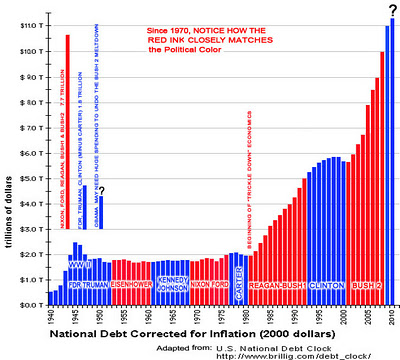
As the chart above shows, the national debt reached about $2.5 trillion during World War II, which was understandable since large sums of money had to be spent to arm ourselves and our allies and fight the war. And the national debt stayed around or just below $2 trillion through the next seven presidencies (Truman, Eisenhower, Kennedy, Johnson, Nixon, Ford, and Carter). And generally, the economy was very good during this stretch — both for workers and entrepreneurs.
Then Ronald Reagan was elected president and things changed. He tossed out the Keynesian economics followed by previous presidents and instituted a supply-side “trickle-down” theory of economics. This trickle-down economics favored the rich, and the gap in wealth and income between the rich and the rest of America began to widen — and the national debt began to grow much larger.
By the time Reagan left office, he had increased the national debt from the $2 trillion he had inherited to nearly $4 trillion. George Bush I continued the trickle-down policies and grew the national debt to $5 trillion.
After assuming office, it took Bill Clinton a few years to bring the deficit under control. But by the time he left office, the nation was actually enjoying a surplus each year (of a little more than $200 million) and the national debt was starting to be paid down. He left the next president with a national debt of about $5.6 trillion and a small yearly surplus.
Then George Bush II was elected president, and he quickly kicked Reagan’s trickle-down economics into high gear. This created a deficit and started to balloon the national debt. He instituted huge tax cuts for the rich (which added about $400 billion a year to the deficit and national debt), increased military spending (adding about $180 billion a year to the deficit and national debt), and started two unnecessary wars (adding more than $100 billion a year to the deficit and national debt) among other things.
By the time Bush left office at the end of 2008, the gap in wealth and income between the rich and the rest of America was the biggest it had been since the 1920’s — and the national debt stood at about $10 trillion. And the nation was thrown into a serious recession that cost many millions of jobs. The economy was a mess and Bush had laid the groundwork for the deficit and national debt to continue climbing.
But even though President Obama inherited an economy that was a horrible mess, he cannot be completely absolved from any part in further increasing both the deficit and the national debt. That’s because he continued many of Bush’s worst mistakes. He didn’t end the wars, he increased the military budgets more, and he extended the Bush tax cuts for the rich. If he had stopped all of those things, the national debt would not stand at over $15 trillion today — but he didn’t.
So now the Republicans want to blame President Obama for the deficit. But that is hogwash. The dirtiest hands are those of Republicans. Obama’s sins are not of commission, but omission (for not stopping the trickle-down madness initiated by the Republicans). But regardless of who is to blame, the fact is that we have a national debt of $15 trillion.
What can we do about it? Republicans tell us that it can be controlled by doing nothing but making cuts to education and social programs and Medicare. That’s ridiculous. Even completely eliminating all of those would not pay off the national debt.
They also want to cut Social Security benefits (or abolish or privatize it). That’s also ridiculous. Social Security did not cause even one penny of the deficit or the national debt. They just want to get rid of it because they’ve never liked it.
So, what can be done to control the deficit and pay down the national debt to a reasonable level? There are some sensible solutions. Here’s what I would suggest:
That’s where I would start. Maybe you have some other suggestions. But one thing I don’t believe should be done in the middle of this recession is to cut social programs or education. The social programs are the only thing keeping millions of Americans’ heads above water, and education is the only way for millions more to better themselves.
The Republicans like to say we are passing our debt on to our children and grandchildren. That will only be true if we fail to act right now.
[Ted McLaughlin also posts at jobsanger. Read more articles by Ted McLaughlin on The Rag Blog.]
When Mike Davis — the noted author, historian, and veteran of the Sixties — was asked if he had any important lessons to pass on to the Occupy movement from his 45 years as an activist, he repeated his “fervent vow never to age into an old fart with lessons to pass on.” In blatant violation of his vow, however, he shares with us a highly personal and very relevant “Ten Immodest Commandments.”
Bobby Bridger
Bobby Bridger began work on his epic trilogy A Ballad of the West over four decades ago. Since 1974 Bridger has traveled the globe performing this historical epic as a one-man show to audiences in America, Canada, Europe, Australia and Russia.
Bridger began his professional recording career in 1967 in Nashville recording for Monument and Nugget Records before signing with RCA Records in Hollywood in 1970. Bridger recorded two albums for RCA -Merging Of Our Minds, and, And I Wanted To Sing For The People- before departing the label in 1973. Since the early 1980s Bridger has produced Heal in the Wisdom, Songs from A Ballad of the West, and the four-disc boxed set, A Ballad of the West, on his own Golden Egg Records.
Bridger has performed twice on PBS’s Austin City Limits, on PBS’s American Experience, twice on C-Span/Booknotes, once on ABC’s Good Morning America, on CNN, on A & E, on National Public Radio and on the Australian Broadcasting Company. Bridger performed on twenty-eight consecutive Kerrville Folk Festival’s, served on the festival’s board of directors from 1976-2002 and on the board of advisors since 2002. Bridger suggested the popular “Ballad Tree” to Kerrville Folk Festival founder/director, Rod Kennedy, and wrote the festival’s anthem, Heal in the Wisdom.
Bridger has been an artist-in-residence at Yellowstone and Grand Teton National Parks, and was the first poet/balladeer-in-residence at the Buffalo Bill Historical Center in Cody, Wyoming, the Eugene O’Neill Theater Center in Waterford, Connecticut, and the John G. Neihardt Center in Bancroft, Nebraska. Under the tutelage of Broadway and Hollywood legend, Dale Wasserman (Man of LaMancha, One Flew Over The Cuckoo’s Nest), Bridger created the role of “the Drifter” in Wasserman’s musical comedy Shakespeare and The Indians, and from 1982-‘83 appeared in over 100 performances of the renown playwright’s show.
Working with the production team developing the American Indian classic, Black Elk Speaks for stage and film, Bridger served on the board of directors of the American Indian Theater Company from 1982-1987, and was featured with David Carradine and Will Sampson in an American Indian production of Black Elk Speaks in Tulsa in 1984. Bridger was on the National Theater Institute faculty from 1984-’87, and in 1984 and 1985 N.T.I. produced an unprecedented two consecutive workshop productions of Bridger’s epic space fantasy Aldebaran and The Falling Star. Returning from landmark tours of Australia in 1986 and the Soviet Union in 1987,
Bridger was invited to Oxford University in 1988 to perform Heal in the Wisdom for closing ceremonies of the First Global Forum of Spiritual and Parliamentary Leaders On Human Survival; featured presenters were Nobel Prize winners, the 14th Dali Lama, Mother Teresa, and Wangari Maathai, as well as the Archbishop of Canterbury, and Carl Sagan. From 1988-1995 full-company outdoor musical productions of Part One of A Ballad of the West, Seekers of the Fleece, featuring many stars such as Tony-nominated, Joe Sears (playwright/star of the Greater Tuna trilogy of comedies) and Wes Studi (Dances With Wolves, Last of the Mohicans, and Geronimo) were produced in Wyoming.
In 1996 Bridger returned his focus to performing his one-man shows around the American west. Bridger’s trilogy of one man shows of A Ballad of the West ran in repertory each summer at Old Trail Town in Cody, Wyoming from 2000-2004.
Bridger is the author of a hardback and paperback edition of A Ballad of the West, the award-winning, Buffalo Bill and Sitting Bull: Inventing The Wild West, an autobiography, Bridger, and he contributed essays to anthologies on American western literary giants John G. Neihardt (A Sender of Words) and Frank Waters
(Frank Waters: Man and Mystic ). From 2003-04 Bridger served as a poetry judge for the Western Writers of America’s prestigious “Silver Spur” award and from 2004-2010 helped the organization create a “Best Song” category and then served as a judge for submissions competing for the “Silver Spur” award. In 2009 Bridger released of a five-disc DVD production of his one-man shows of A Ballad of the West in which he is accompanied by a stellar four-piece ensemble of renowned studio musicians.
Bridger’s script for the DVD production was a Silver Spur finalist for the Western Writers of America’s 2009 “Best Documentary Script”. The DVD production also features a documentary based on Bridger’s life and work (Quest of an Epic Balladeer) and a host of other special features. Bridger’s book Where the Tall Grass Grows: the Mythological Legacy of the American West is due for publication in autumn, 2011. Bridger is currently writing, painting, sculpting, and touring.
More at www.bobbybridger.com
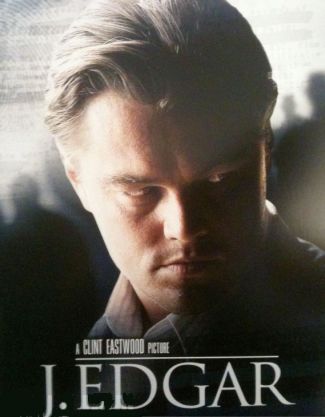
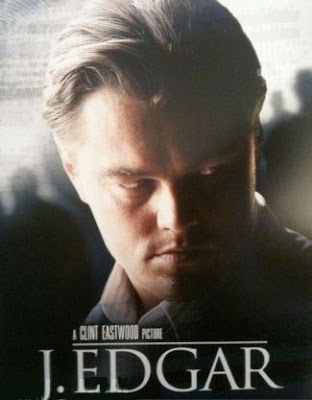
David McReynolds, who — as a socialist and a pacifist — had extensive dealings with J. Edgar’s FBI, provides a revealing take on Eastwood’s new biopic. Though praising the performances of Leonardo DiCaprio and Judi Dench, David says the film’s real power comes from Eastwood’s humanizing Hoover “as a sad, sexually frustrated, deeply insecure man who tried to rearrange facts to help insure his place in history.”
It is precisely because Eastwood has made the sexual angle central to the film, without playing games with it, that the film is so powerful.
By David McReynolds / The Rag Blog / November 17, 2011
[This is the first of two Rag Blog reviews of Clint Eastwood’s new film, J. Edgar. Also see “Eastwood’s Biopic of Kinky Hoover” by Jonah Raskin.]
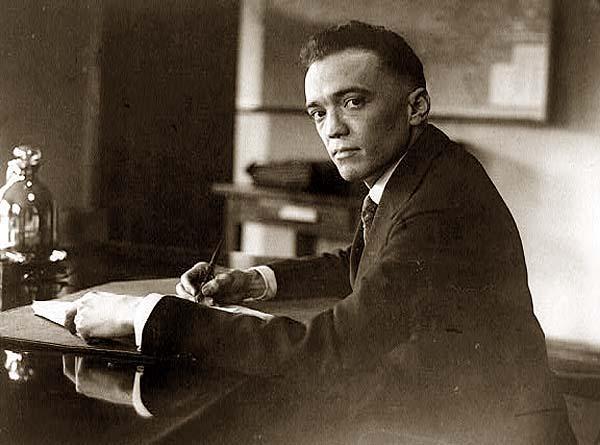
J. Edgar Hoover (1895-1972) who, depending on your politics, looked much like a toad… or a bulldog… was without question a monster of American political life. Since his life is now so distant to those younger than 40, the film, J. Edgar, has great value as an historical “look back” at the life and career of a deeply flawed, remarkably powerful man.
As a fan of the work of Clint Eastwood I wish I could give the film unqualified praise, but my praise, while real enough, is limited by two regrets.
First — while I’d credit the actors with filling their roles so that we soon enough forget Leonardo DiCaprio was so recently the golden boy of youth, as he ages toward the stout, balding figure of Hoover, and that it takes some time to realize Hoover’s mother is played by that most accomplished of actors, Judi Dench — makeup and acting cannot always accomplish miracles.
In the case of Armie Hammer, who plays Clyde Tolson (Hammer played the double role of the Winklevoss twins in The Social Network), his acting skills do not make him believable as an elderly Tolson, crippled by a stroke. Sadly, the makeup leaves him looking as if he were headed for a Halloween party.
Second, I quarrel with Clint Eastwood’s approach in which past and present shift throughout the film. But that was his decision and the film works despite my quibble.
There are some things which might have been covered in the film. Younger viewers will not know that Hoover persisted in denying the existence of the Mafia — so much so that it became a kind of joke (to which passing reference is made in one of the Hercule Poirot TV mysteries). There were suggestions that the Mafia might have had something on Hoover. It is just as likely that Hoover felt the Mafia too big a challenge.
Hoover’s role began in 1924, when he was appointed the first director of the Bureau of Investigation, which later became the FBI. His role was to combat “subversion.” In the wake of the Russian Revolution, and the folly of some acts of violence by American radicals (to which I’ll return later), there was widespread fear of a “Bolshevik Revolution.” Hoover played a key role in the Palmer Raids, the deportation of hundreds of aliens.
Then, in the early 1930’s, in part linked to the conditions of the Depression, criminal gangs held up a number of banks in the Midwest and John Dillinger became a kind of national folk hero. The FBI played a key role in jailing the gangsters.
On the eve of the Second World War, the FBI investigated German agents and had the key role in counterespionage. With the rise of the Cold War, Hoover became obsessed with the danger of Soviet spies and “un-American” groups. There are few of us who were politically active in that time who do not have FBI files.
(Mine was about 300 pages, when I got it under the Freedom of Information Act, and it was for the most part accurate — though I was amused that the FBI agent assigned to my case wrote that I was a Trotskyist, basing his conclusion on his access to the documents of the Communist Party’s “Control Commission” in Southern California!)
Pacifists often met with FBI agents in the course of routine checks being made on men who had applied for status as conscientious objectors. I met with agents on several occasions when they were asking if certain men were, in fact, members of the War Resisters League. (I always said yes, whether I knew them or not, as it might help get them a CO status and keep them out of jail.)
I remember one such meeting in the early Sixties when I was serving a 25-day jail term on Hart’s Island for taking part in a Civil Defense protest. I was on a work crew, dirty from digging. I smoked then, and was very short of cigarettes. A guard came down to the work crew and called me out, saying the FBI wanted to see me.
Grimy and in need of a smoke (which the agent generously offered), I was asked some routine questions about someone applying for CO status. When I got back to the work crew my prestige had, I soon found out, risen greatly, as the men assumed I was involved in some major crime to merit an FBI visit.
A month or two after I finished that short term, I was in my office at 5 Beekman Street when the same agent came in with similar questions — and, in clean clothes, I was happy to offer him a cigarette.
There are other areas the film might have covered. (I’m not faulting Eastwood for choosing to focus on the personal life of Hoover — only noting areas younger people wouldn’t be aware of.) During the Vietnam War Hoover chose to ignore the Supreme Court limits on his power and set up a “dirty tricks” program called COINTELPRO which sought to disrupt the Black Panthers, Martin Luther King Jr., SCLC, the Communist Party — and the War Resisters League.
While we at WRL were never able to prove it, it was our assumption that the raid on our offices in 1968, when the office machinery was wrecked, the office badly messed up, and the membership files stolen, was a COINTELPRO project.
This only touches on the dirty world of J. Edgar Hoover, a man so powerful, with his vast secret files, that no president dared to fire him. A man who could destroy careers, drive people of talent, but of left-wing views, to seek new lives in Europe. (One interesting act of defiance — remarkable at the time — was the detective story The Doorbell Rang by Rex Stout, author of the Nero Wolfe series. Written in 1965, when Hoover was in full power and no one could safely criticize him, Stout ends the story with Hoover ringing the bell on Wolfe’s West 35th St. home — and Wolfe left it unanswered).
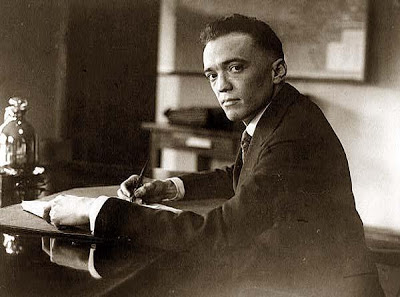
There had been rumors for years that Hoover was homosexual. His relationship with Clyde Tolson certainly provided the needed grist for the mill.
Hoover had been at his job for several years before he was introduced to Clyde Tolson. There are surely few of us who have not had that electric moment when we met a person to whom we were instantly drawn. In most cases those electric moments never light a real fire, but when Tolson turns up in Hoover’s office, having applied for a job, there is absolute clarity about the relationship. Tolson “takes charge of the scene,” moving to open an office window, handing Hoover a handkerchief to mop his face, which had broken into a sweat.
Tolson is hired. Hoover soon makes him his second in command — a post Tolson accepts “only if you will agree we will always have lunch and dinner together.” It is clear that Tolson is in love with Hoover, and quite aware of that. It isn’t clear whether Hoover is ever able to really come to terms with the fact he has a lover.
It is, I think, quite possible the two men never had an actual sexual encounter. But in a remarkable scene, which homosexuals will recognize as valid, when Hoover tells Tolson he is thinking of marriage there is a sharp sudden physical encounter, breaking glass, and the two fight, hitting each other, tumbling and wrestling together until Tolson, on top, says “I love you” and kisses Hoover.
Hoover says “Never do that again,” but it seemed to me that scene was solid, that Eastwood caught the truth of the relationship.
There is a chilling moment when Hoover’s mother, Judi Dench, tells him she will teach him how to dance, and that — referring to a school boy who had been outed for crossdressing (and had then committed suicide) — she would rather have a dead son than a “daffodil son.” One hears, in the mother’s words, the most ancient of primitive demands that the race must reproduce itself.
While Tolson never gives a sense of having political views of his own, he does, near the end of the film, as Hoover has completed his autobiographical notes, tell Hoover the truth. He tells him that he has read the book, that the notes are a fiction, that Hoover hadn’t personally made the arrests he had claimed, that it was not Hoover, but special agent Melvin Purvis who had tracked down Dillinger. (Hoover, jealous of Purvis’ role, had exiled him to a distant post).
It is a devastating but not vindictive setting straight of the record.
It is precisely because Clint Eastwood has made the sexual angle central to the film, without playing games with it, that the film is so powerful. We are able to see the corruption of Hoover (who loved playing the horses, and accepted the arrangements with the tracks that his bets always paid off), the racism, the fanatic fear of subversion, and yet to see the haunted man behind the throne of power.
This generation cannot easily conceive of the power the FBI held on the imaginations of the American public. And it was, to some extent, justified.
In 1954, as the U.S. was considering getting involved in the French disaster in Indochina, Maggie Phair and I, from the Socialist Party, had gone down to the boardwalk in Ocean Park late at night to stencil the slogan “Send Dulles, Not Troops, to Indochina.” (Dulles was then Secretary of State.) I had with me a slim folder containing the layout for a leaflet on Vern Davidson, a Socialist Party member then in prison for draft resistance, and some addresses of local contacts, and finally some totally non-political family snapshots, which were of personal value.
When Maggie and I were done, and I went to pick up my manila folder, it was gone. Clearly a theft, but one with few rewards. The next morning I called the FBI office in Los Angeles, and said that someone had stolen something of mine which, if the thief was patriotic, he would turn over to the FBI. The FBI (of course) denied any knowledge of the matter.
However a year or two later the photos that had been in the folder were mailed to me at my parent’s address — an address which hadn’t been on the folder. Score one for the FBI.
Two final points. I said earlier that I’d remark on the folly of the occasional acts of radical violence. The casual radical, the young radical “here on vacation,” can talk about using violence, bombs, sabotage, in resistance, ignoring that the history of such acts (which helped provide the basis for setting up the FBI) is always to give greater power to the State.
There is surely no one to whom radicals should pay more heed than Lenin, who warned against the “propaganda of the deed,” the folly of thinking the force of the State could be overturned by random acts of violence. All of history has shown that there is nothing easier to penetrate than a secret organization. Secrecy and violence play into the hands of Hoover and those like him.
The second final point is troubling and I offer it uneasily. No modern state can afford to be without some security apparatus. We can condemn the FBI, but we were also furious that it did not send its agents into the Ku Klux Klan. We know that the problems of organized crime and of irrational violence which can come as easily from the right as from the left (remember the Oklahoma bombing) require some agency of investigation.
The problem is how to maintain control over such agencies. I pose the problem; I do not have the answer.
Meanwhile, catch J. Edgar and see how dangerous the secret police can be, and how deeply they threatened our freedoms within very recent memory.
[David McReynolds is a former chair of War Resisters International, and was the Socialist Party candidate for President in 1980 and 2000. He is retired and lives with two cats on the Lower East Side of Manhattan. He posts at Edge Left and can be reached at dmcreynolds@nyc.rr.com. Read more articles by David McReynolds on The Rag Blog.]
What, indeed, have I learned from my fumbling-and-bungling lifetime of activism?
By Mike Davis / The Rag Blog / November 17, 2011
A friend in Canada recently asked me if the Sixties’ protests had any important lessons to pass on to the Occupy movement.
I told her that one of the few clear memories that I retain from 45 years ago was a fervent vow never to age into an old fart with lessons to pass on.
But she persisted and the question ultimately aroused my own curiosity. What, indeed, have I learned from my fumbling-and-bungling lifetime of activism?
Well, unequivocally I am a pro at coaxing 1,000 copies of a flyer from a delicate mimeograph stencil before it disintegrates. (I’ve promised my kids to take them to the Smithsonian someday to see one of these infernal devices that powered the civil rights and anti-war movements.)
Other than that, I mainly recall injunctions from older or more experienced comrades that I’ve put to memory as a personal Ten Commandments (like you might find in a diet book or inspirational tract). For what it’s worth:
First, the categorical imperative is to organize or rather to facilitate other peoples’ self-organization. Catalyst is good, but organization is better.
Second, leadership must be temporary and subject to recall. The job of a good organizer, as it was often said in the civil rights movement, is to organize herself out of a job, not to become indispensable.
Third, protesters must subvert the media’s constant tendency toward metonymy — the designation of the whole by a part, the group by an individual. (Consider how bizarre it is, for instance, that we have “Martin Luther King Day” rather than “Civil Rights Movement Day.”) Spokespeople should regularly be rotated and when necessary, shot.
Fourth, the same warning applies to the relationship between a movement and individuals who participate as an organized bloc. I very much believe in the necessity of an organic revolutionary left, but groups can only claim authenticity if they give priority to building the struggle and keep no secret agenda from other participants.
Fifth, as we learned the hard way in the 1960s, consensual democracy is not identical to participatory democracy. For affinity groups and communes, consensus decision-making may work admirably, but for any large or long-term protest, some form of representative democracy is essential to allow the broadest and most equal participation. The devil, as always, is in the details: ensuring that any delegate can be recalled, formalizing rights of political minorities, guaranteeing affirmative representation, and so on.
I know it’s heretical to say so but good anarchists, who believe in grassroots self-government and concerted action, will find much of value in Roberts’ Rules of Order (simply a useful technology for organized discussion and decision-making).
Sixth, an “organizing strategy” is not only a plan for enlarging participation in protest but also a concept for aligning protest with the constituencies that bear the brunt of exploitation and oppression.
For example, one of the most brilliant strategic moves of the Black liberation movement in the late 1960s was to take the struggle inside the auto plants in Detroit to form the League of Revolutionary Black Workers.
Today, “Occupying the Hood” is a similar challenge and opportunity. And the troops occupying the plutocrats’ front yard need to respond unequivocally to the human-rights crisis in working-class immigrant communities.
The immigrant rights protests five years ago were amongst the largest mass demonstrations in U.S. history. Perhaps next May Day we will see a convergence of all movements against inequality on a single day of action.
Seventh, building movements that are genuinely inclusive of unemployed and poor people requires infrastructures to provide for basic survival needs like food, shelter, and healthcare. To enable lives of struggle we must create sharing collectives and redistribute our own resources toward young frontline fighters.
Similarly we must renew the apparatus of movement-committed legal professionals (like the National Lawyers Guild) that played such a vital role in sustaining protest in face of mass repression in the 1960s.
Eighth, the future of the Occupy movement will be determined less by the numbers in Liberty Park (although its survival is a sine qua non of the future) than by the boots on the ground in Dayton, Cheyenne, Omaha, and El Paso. The geographical spread of the protests in many cases equals a diversifying involvement of people of color and trade unionists.
The advent of social media, of course, has created unprecedented opportunities for horizontal dialogue among non-elite activists all over the country and the world. But the Occupy Main Streets still need more support from the better resourced and mediagenic groups in the major urban and academic centers. A self-financed national speakers and performers bureau would be invaluable.
Conversely, it is essential to bring the stories from the heartlands and borders to national audiences. The narrative of protest needs to become a mural of what ordinary people are fighting for across the country, e.g., stopping strip-mining in West Virginia; reopening hospitals in Laredo; supporting dockworkers in Longview, Washington; fighting a fascist sheriffs’ department in Tucson; protesting death squads in Tijuana; or global warming in Saskatoon; and so on.
Ninth, the increasing participation of unions in Occupy protests — including the dramatic mobilization that forced the NYPD to temporarily back down from its attempt to evict OWC — is mutually transformative and raises the hope that the uprising can become a genuine class struggle.
Yet at the same time, we should remember that union leaderships, in their majority, remain hopelessly committed to a disastrous marriage with the Democratic Party, as well as to unprincipled inter-union wars that have squandered much of the promise of a new beginning for labor.
Anti-capitalist protesters thus need to more effectively hook up with rank-and-file opposition groups and progressive caucuses within the unions.
Tenth, one of the simplest but most abiding lessons from dissident generations past is the need to speak in the vernacular. The moral urgency of change acquires its greatest grandeur when expressed in a shared language.
Indeed the greatest radical voices — Tom Paine, Sojourner Truth, Frederick Douglas, Gene Debs, Upton Sinclair, Martin Luther King, Malcolm X, and Mario Savio — have always known how to appeal to Americans in the powerful, familiar words of their major traditions of conscience.
One extraordinary example was Sinclair’s nearly successful campaign for Governor of California in 1934. His manifesto, “End Poverty in California Now,” was essentially the program of the Socialist Party translated in New Testament parables. It won millions of supporters.
Today, as the Occupy movements debate whether or not they need more concrete political definition, we need to understand what demands have the broadest appeal while remaining radical in an anti-systemic sense.
Some young activists might put their Bakunin, Lenin, or Slavoj Zizek temporarily aside and dust off a copy of FDR’s 1944 campaign platform: an Economic Bill of Rights.
It was a clarion call to social citizenship and a declaration of inalienable rights to employment, housing, healthcare, and a happy life — about as far away from the timid concessionary Please-Just-Kill-Half-the-Jews politics of the Obama administration as might be envisioned.
The fourth-term platform (whatever opportunistic motivations existed in the White House) used the language of Jefferson to advance the core demands of the CIO and the social-democratic wing of the New Deal.
It was not the maximum program of the Left (i.e., democratic social ownership of the banks and large corporations), but certainly the most advanced progressive position ever espoused by a major political party or U.S. president.
Today, of course, an Economic Bill of Rights is both an utterly utopian idea and a simple definition of what most Americans existentially need.
But the new movements, like the old, must at all cost occupy the terrain of fundamental needs, not of short-term political “realism.”
In doing so, why not accept the gift of FDR’s endorsement.
[Mike Davis is a Distinguished Professor in the Department of Creative Writing at the University of California, Riverside. An urban theorist, historian, and social activist, Davis is the author of City of Quartz: Excavating the Future in Los Angeles and In Praise of Barbarians: Essays against Empire. Read more articles by Mike Davis on The Rag Blog.]
By Bill Freeland / The Rag Blog / November 17, 2011
The “Occupy” movement, which began as a small gathering in a private park near Wall Street in New York City in September, has already swept across America and into another dozen countries around the world.
While these gatherings are local, their concerns are global. They are responding to economic and social trends that have been developing for decades. But the catalyst was the financial collapse of 2008.
In the aftermath of that collapse, what has become clear to many Americans — following aggressive bailouts for the banks but inaction on lost jobs and homes — is that the nation’s economic system functions differently depending on which side of this divide you are on.
People in the top 1%, for example, according to the Congressional Budget Office (CBO), between 1979 and 2007 saw their pretax income grow by an average of 275%. That’s an average increase of $700,000. People in the lower 90%, however, saw their pre-tax income actually fall by $900 for the same period.
As a result the CBO reports that now 1% of Americans control 35% of the nation’s wealth, which is the highest level of wealth disparity since 1929, the last great financial crash.
Occupy supporters advocate for the “99%ers,” their now-famous shorthand for the majority of Americans. These are the people who increasingly find themselves with under-water mortgages and dangerously depleted savings. And with persistent 9% unemployment, they are just as likely to be out of work as out of their homes.
But when they look to Washington, what they find is gridlock. Most solutions include severe spending cuts, which many economists warn will likely result in a replay of the Hoover Administration’s policies of the early 1930s that only deepened that generation’s Depression.
And lawmakers are not the only bad actors. While the financial fallout continues to be borne by the victims of the crisis, those on Wall Street and elsewhere who created the mess have kept their profits without ever being held to account.
Unlike with the savings and loan crisis of the 1980s, today — after three years and hundreds of investigations — not a single criminal charge has been filed by the Justice Department, the SEC, or any state Attorney General against a major figure in the financial industry.
For the Occupy movement, all of these developments are interrelated.
Financial and corporate interests hold the money and the influence they buy. That influence has produced the kind of tax code and financial deregulation that, over time, have lead directly to the huge economic imbalances which Occupy exposes.
Critics charge that the movement to date has no agenda to address all it decries. The Occupiers respond that, since the movement is barely 60 days old, the criticism is premature. But more than that, with their bottom-up approach, the process by which solutions are arrived at, they believe, is equally important as the solutions themselves.
It’s impossible to know now how public opinion will ultimately judge this effort. From my perspective, however, the movement at this early stage is similar to the lunch-counter-sit-in stage of the 1960s protests in the South. Except this time the demonstrators are fighting for economic, rather than civil, rights.
The loud turmoil and resulting media scrutiny is similar to those days 50 years ago, but it is also likely that someone is already at work on his or her own “I Have a Dream” speech.
[In the Sixties, Bill Freeland was a contributor to The Rag in Austin and Liberation News Service in New York. Read more articles by Bill Freeland on The Rag Blog.]
By Eric Newhouse / Truthout / November 16, 2011
More than half of America’s former warriors are returning home from Iraq and Afghanistan with medical and mental problems that need treatment, according to new statistics from the Department of Veterans Affairs (VA).
“These are unprecedented numbers,” said Dr. Sonja Batten, assistant deputy chief of patient services care for the VA Mental Health Division.
But they’re surprising numbers, in some ways.
While they bear out the controversial 2008 Rand Report that one soldier in three will return home with post-traumatic stress disorder (PTSD), major depression and/or traumatic brain injury (TBI), the TBI component is dramatically less than predicted.
By last June, Batten said, 1.3 million of the two million-plus soldiers serving in Iraq and Afghanistan since 2002 had left military service and were eligible for VA health care. About 700,000 of them (53 percent) have sought health care from the VA.
While this reflects the difficulties facing today’s vets after 24-7 combat and multiple tours of duty, it also reflects the new resources provided the VA by the Obama administration. The president’s 2012 budget request for the VA was $132.2 billion, a 23 percent increase since he took office in 2009. That’s even more remarkable, considering the collapse of the economy in that period.
But it’s still not enough, according to Mike Zacchea, a Marine Corps lieutenant colonel now retired on a medical disability after serving in Iraq, and a staunch member of Veterans for Common Sense.
“Wait times for VA treatment are still way too long,” Zacchea said last week. “And this is just the beginning. The VA is going to be overwhelmed by vets from Iraq and Afghanistan for health care, and if the VA can’t handle the demand it has now, it’s going to be powerless against the tsunami that’s yet to come.”
Among the returning soldiers, the main complaint was joint pain (neck, back, hips, and knees), all consistent with the kinds of injuries you would expect to find among soldiers with heavy packs jumping in and out of big trucks, said Batten. The VA has treated 396,552 vets for musculoskeletal complaints, about 30.5 percent of the returning soldiers.
But the second largest complaint has been with mental health issues.
According to the VA’s not-yet-published statistics, 367,749 Iraqi and Afghan vets have sought mental health care treatment. That’s 51.7 percent of the total caseload — and also 28.2 percent of the returning 1.3 million vets — a number that’s sure to grow larger as those who returned home recently begin acknowledging cases of delayed PTSD. It’s common for vets not to begin experiencing combat stress until after the euphoria of being home has waned, typically six months to a year or more.
PTSD was the most common mental health complaint with 197,074 vets receiving treatment, which is about 15 percent of the returning vets. The second most common complaint was depression, with VA treatment provided to 147,659 vets, 11.3 percent of the total returning. Third was anxiety disorder, with treatment provided to 126,673 vets, 9.7 percent of those returning. There’s some overlap, with some vets being treated for more than one disorder.
The VA’s real surprise is the low number of diagnoses for traumatic brain injury (TBI), which has become one of the signature injuries in the Iraqi/Afghanistan conflict due to the large number of roadside bombs, mortars and rocket-propelled grenades.
Four years ago, the Rand Corporation interviewed 1,965 vets and projected that 19 percent (about 320,000 soldiers at that time) would experience a probable TBI while overseas. But the VA says only 54,070 vets (a little over 4 percent of the returning vets) qualified for that diagnosis.
“That’s absurd, preposterous, erroneous,” snorted Zacchea, who survived a bomb in a mess hall, almost daily sniper attacks, mortar attacks on his unit’s convoy, and a rocket wound during intense combat in Fallujah in 2004/2005. All of those took a huge physical and emotional toll on Zacchea.
As of last June, the VA had data on 544,481 vets whose brains might have been affected by battlefield explosions, according to Dr. David Cifu, national director of the VA’s Physical Medicine and Rehabilitation program. Of that number, he said, “19.8 percent have screened positive for a mild TBI (concussion), that is were exposed to explosions that might have caused traumatic brain injury.
“When those 19.8 percent of veterans were evaluated by one of the 100 TBI specialty teams across the nation, approximately one third (or 7.8 percent of the original 544,481) tested positive for TBI with persistent symptoms,” said Cifu. “Another approximately 2 percent were found to have a TBI that pre-dated their military service. Those two figures (the 7.8 percent plus the 2 percent) add up to 54,070 veterans.”
The difference, said Cifu, is that the Rand Report used the total number of injuries as its TBI figure, while the VA used only the number of vets still showing TBI symptoms a year after their injuries.
“The Rand Report was pretty accurate on the number of those who may have had injuries due to a blast, but didn’t take into consideration that many of those may have injuries that will fairly quickly get better over time,” said Cifu. “We know that up to 97 percent of those who experience concussions are normal without symptoms within a year. So we’re tracking just the people who continue to have difficulties.”
But Zacchea charged that the VA is trying hard to deny this disability. “Today’s cutting-edge neurology is that any symptoms that last longer than two weeks indicate traumatic brain injury,” said Zacchea. “They’re using the one-year time frame because that benefits them, but that’s just medieval.”
Zacchea said he was quickly diagnosed with PTSD after returning from combat, but that he had to fight for his TBI diagnosis. “They wouldn’t even let me see a neurologist,” he said. So, he took his case to the Yale Medical School, got a private diagnosis of TBI and challenged the VA to disprove it. After a number of verification tests, he was finally granted a TBI diagnosis by the VA in 2008.
His ongoing symptoms include migraine headaches, sensitivity to light and noise, and loss of fine motor skills. “My fingers are numb, and I’m always dropping things,” he said. “I have difficulty tying my shoes so I usually wear slip-on shoes.” He also has a distinct taste in his mouth. “I’ve lost most of my taste sensation,” he explained, “so I put hot sauce on pretty much everything.”
A new book, The Concussion Crisis, concludes that even minor concussions repeated regularly can be harmful, leading to impaired cognition and, ultimately, early-onset dementia among athletes such as boxers and football players, as well as among soldiers. In reviewing the book, Connie Goldsmith wrote:
There is no such thing as a minor concussion. Every concussion is a potentially devastating injury. These stories focus on concussions among athletes of all ages, as well as concussions among soldiers and victims of auto accidents. Some of the stories are heartbreaking: adolescents who suddenly die after what appear to be minor head injuries; boxers and football players with early-onset Alzheimer’s disease and dementia; and returning veterans left to wander through the medical system seeking treatment for their unrecognized or misdiagnosed concussions.
Dr. Allen Brown, head of the Mayo Clinic’s Brain Injury Unit, defines a TBI as an external mechanical force impacting a body and creating a brain injury. Thus, by definition, every concussion is a TBI and should be part of the medical record.
But in the civilian world, he said, only about 8 percent of brain injuries are severe enough to be labeled a “definite TBI,” as opposed to a “probable TBI,” which is milder, or a “possible TBI,” which is symptomatic. A “definite TBI” involves any of the following: loss of consciousness for more than 30 minutes, post-traumatic amnesia for more than 24 hours, significant loss of motor skills as measured on the Glasgow Coma Scale, or intracranial bruising or bleeding.
Brown agreed with Cifu that “an overwhelming majority” of brain injuries resolve themselves, although repeated injuries increase the risk of significant damage. “It’s pretty clear to me that the cumulative effect of any injury increases the risk for secondary problems, including repeated TBIs that could lead to loss of cognition later in life,” he said last week. “It may not happen in every case, but the risk is whoppingly high.”
And he called the disparity between the Rand Report and the VA’s definitions of TBI “one of the most argued-over controversies in medicine.”
[Pulitzer Prize-winning journalist Eric Newhouse is the author of Faces of Combat. His blog, “Invisible Wounds,” on vets’ mental health issues, is at Psychology Today. This article was published and distributed by Truthout.]