Rick Perry and the Texas
death penalty smokescreen

By Lamar W. Hankins / The Rag Blog / October 11, 2011

The new documentary Incendiary: The Willingham Case works at two levels. It focuses on what happens when supposedly expert witnesses in a criminal case get the forensic science wrong, and what happens when politicians pretend that the criminal justice system works well. If you are interested in either topic, it is a worthwhile film to see. It is both riveting and sickening at the same time to watch how, in Texas, we execute people on false evidence.

Those who follow the news will recognize the name of Cameron Todd Willingham. He was accused in 1991 of killing his three young children in a fire he deliberately set at their home in Corsicana, Texas. Willingham was convicted and executed for the deaths in 2004. While no one knows how the fire that killed the three young Willingham children started, what seems certain is that Cameron Todd Willingham was convicted and executed based on evidence that does not meet the standard of reliable science. To state this another way: There was and is no reliable scientific evidence to show that Willingham started the fire that killed his three children.

Once the fire investigators began focusing on Willingham as an arsonist, they ceased looking for other explanations for the fire’s origin. While we don’t know how it started, some evidence suggests that it could have started from poor electrical wiring or from a gas heater. These causes were not properly investigated and we will never know the fire’s origin because the investigators allowed the evidence to be compromised or destroyed. No court ever considered the sufficiency of the arson evidence. They focused on whether the trial judge made a mistake in his trial rulings, not the quality of the evidence offered against Willingham.

Missing from the film are interviews with the original fire investigators, the DA, and the defense expert, and an interview with Governor Rick Perry made just for the film. But there are comments from Perry that reveal the closest thing to callous indifference that can be imagined as he was questioned about the case at occasional press conferences and during interviews on a range of topics.

Not once has Rick Perry ever shown any interest in looking at the forensic evidence that was used to convict Willingham, comparing it with the conclusions of fire investigators with unquestioned scientific credentials, and drawing from that comparison a reasoned conclusion about whether the testimony used to convict Willingham was worthy of belief. Had he done so, Perry would have realized that the death penalty system in Texas has serious, fatal flaws.

While my disdain for Rick Perry knows few bounds, I reserve my harshest criticism for the criminal defense attorney who represented Cameron Todd Willingham at his trial — Robert Dunn. Criminal defense lawyers owe their clients, at a minimum, what one of my law school professors called “warm zeal.” Renowned defense attorney Clarence Darrow, as described by writer Joelle Farrell, “defended both the righteous and the despised with the same vigor.” Willingham’s defense attorney lacked both warm zeal and vigor. To this day, he harbors nothing but contempt and loathing, if not hatred, for his now dead client.

I reserve special contempt for Dunn because I have been in his position representing a despised defendant charged with capital murder in a small East Texas town. I doubt that my skills as a trial lawyer were any better than Dunn’s, but what I lacked in experience I tried to make up for with hard work, research, and investigation. There is little evidence that Dunn tried to represent Willingham diligently.

Dunn failed to get the best expert witness available to help him analyze the fire investigation conclusions that were key to Willingham’s conviction. My impression is that Dunn was a hack attorney, cozy with the judges in Corsicana, and unwilling to make waves to provide the best representation possible.

At the time of Dunn’s representation of Willingham there were valuable resources available to him from a Texas death penalty project. I had those resources 12 years earlier. They were enormously helpful in the legal work I did on behalf of my client. They would have saved Willingham’s life had his attorney used them.

The key to Willingham’s case is the inadequate and fictitious fire investigation done by two investigators who had learned on the job. What they learned was not science but folk lore. Their testimony bore all the hallmarks of witchcraft, a point suggested by the comments of renowned fire expert Gerald Hurst, a former chief scientist for explosives companies with a doctorate in chemistry from Cambridge University, who has studied fire science for 40 years.

Hurst filed a report of his findings just before Willingham was executed. Rick Perry received a copy of the report, but there is no evidence that anyone on Rick Perry’s staff bothered to read it. The governor could not be bothered to even glance at it.

More than a half dozen nationally acknowledged experts in fire investigation have confirmed Hurst’s findings in the Willingham case, but Rick Perry was unwilling to delay the execution by 30 days so that the matter could be thoroughly vetted. Perry preferred to dismiss such findings as interference in the Texas capital punishment system by “latter-day supposed experts.” Science doesn’t matter to Perry. He cares about the political implications of what he does.

The two fire investigators in Willingham’s case cited 20 indications that the fire was arson, yet not one of those indications stood up to the fire science known at the time they did their investigation. The investigators were not scientists, but amateur sleuths who saw their work as more art than science. They reached conclusions based on hunches, guesswork, and speculation, which they characterized as faultless conclusions drawn from years of experience.

While the investigation of the Willingham fire was irredeemably flawed, Perry himself, as governor, is one of the greatest flaws in the Texas death penalty scheme. He exercises no independent thought about death penalty matters that come before him, nor does he seem to want to do so. In reviewing the extensive files of the Innocence Project about the Willingham case — perhaps the most complete publicly accessible record of any capital murder case — there is no evidence that either Perry or his staff even looked at the report of Hurst.

Perry referred to Willingham as a monster more than once — a statement intended to close off rational consideration of the facts in the case. After Willingham’s execution, Perry continued to thwart attempts by the Texas Forensic Science Commission to determine the validity of the fire evidence. This is not a man that reasonable people would want to have caring for their dog while they are on vacation. He has not demonstrated the capacity to make rational, intelligent, and wise decisions about mundane matters, let alone matters of life and death.

Incendiary: The Willingham Case documents the deadly folly of the Texas death penalty scheme. It is a system in which no one likes to admit mistakes. This is especially true of politicians — governors, district attorneys, judges, investigators. For those who accept science, the Willingham case is conclusive proof that Texas has executed a legally innocent man. But for Perry, for the district attorney, and even for Willingham’s defense attorney, the execution of Cameron Todd Willingham was the politically expedient thing to do

[Lamar W. Hankins, a former San Marcos, Texas, city attorney, is also a columnist for the San Marcos Mercury. This article © Freethought San Marcos, Lamar W. Hankins. Read more articles by Lamar W. Hankins on The Rag Blog.]

Source

The Rag Blog

Posted in RagBlog | Leave a comment

Harry Targ : Drones, Banks, and Multitudes

The multitudes: “Cry of the Masses” by Josef Vachal. Image from Express Tribune blogs.

Sound bites:
Drones, banks, and multitudes

By Harry Targ / The Rag Blog / October 11, 2011

In this age of tweets, sound bites, and shorthand references to broad and complicated swaths of history, what political scientist Murray Edelman called “symbolic” politics becomes “real” politics. Three symbols represent politics today: “drones,” “banks,” and “multitudes.”

Drones refer metaphorically to state-directed murder, often using the latest technology to target and assassinate those who have been defined by officials as the enemy or as threats to society, or just plain criminals.

Based on recommendations by key decision makers, civilian, military, and police, the U.S. has increasingly relied on new high-tech instruments of murder. Drones, smart bombs, and chemicals are used to kill, maim, and disable people abroad and at home with little or no threat to the safety of the personnel pushing the buttons, dropping the bombs, or spraying the victims.

These newer forms of murder continue to be paralleled by a variety of police beatings and shootings and executions sanctified by governments attributing crime to the poor and people of color. The 21st century nation-state, to paraphrase sociologist Max Weber’s original definition, is the organization that holds the monopoly of the “legitimate” implementation of murder.

Banks are real but as symbols refer to a capitalist economic system that organizes workers to generate wealth which is increasingly appropriated by the few. In reality, the industrial revolution of the nineteenth century saw huge manufacturing corporations mobilizing working classes and stealing the wealth that they produced. When rates of profit began to decline the corporate elites collaborated with the heads of banks, institutions which at one time served as the accountants and vaults for accumulated profits.

Great mergers of manufacturing and banking capital in the early twentieth century and more so since the 1970s contributed to a new kind of capitalist economy based on finance. Most transactions now are speculative: buying and selling stocks and bonds, the creation of hedge funds, and real estate and insurance investments.

Banks and investment houses are global. They produce enormous profit without creating useful products for people to use or consume. And, the banking metaphor represents a vision of an economic system that has become grotesquely unequal.

The third metaphor, the multitudes (borrowed from abstract formulations by Italian theorist Antonio Negri) refers to the rising up of masses of people — the traditional working class, the unemployed, youth without hope, youth with vision, women long oppressed, people of all races, and people who clean streets or live on them, serve coffee at Starbucks, and even write software programs for big corporations.

The multitudes, Negri suggests, represent the underside of a new global order, an economic empire that traverses the earth bursting out of its national and sovereign boundaries.

Drones and banks represent both the coercive and the manipulative power of capitalism. Americans see examples of each on television or computer screens every day. In recent weeks U.S. drones killed U.S. citizen Anwar Al-Awlaki in Yemen. Troy Davis, despite evidence raising reasonable doubt that he was guilty of a murder, was executed by the state of Georgia. And, the Bureau of the Census reported the rise of rates of poverty not seen in the United States since the 1990s and numbers of persons living in poverty larger than any time since the 1960s.

What is also becoming a regular feature of our electronic experience is resistance, anger, and collective mobilization. This is occurring all across the globe — Arab spring; student protest in Santiago, Chile; angry Israeli citizens; workers in Athens, Greece; students and public workers in Madison, Wisconsin, Columbus, Ohio, and Indianapolis, Indiana — and now undifferentiated groups occupying Wall Street and metaphorical Wall Streets around the United States.

It is unclear what will come of all of this except that the contradictions between drones and banks versus the multitudes is becoming more clear and that the transformation of society that is so desperately needed just might be emerging. Hope so.

[Harry Targ is a professor of political science at Purdue University who lives in West Lafayette, Indiana. He blogs at Diary of a Heartland Radical — and that’s also the name of his new book which can be found at Lulu.com. Read more of Harry Targ’s articles on The Rag Blog.]

The Rag Blog

Posted in Rag Bloggers | Tagged , , | 1 Comment

Born on Death Row

By Steve Russell

Capital punishment, the saying goes, means that those without the capital get the punishment, and over 35 years of labor in criminal law has yet to show me a case that disproves it.

Capital cases are usually defended by court-appointed lawyers, because prosecutors do not typically choose to seek the death penalty against defendants who can afford the stratospheric legal fees of a capital defense. The only capital case I defended in private practice was one of the very few I’ve seen where the lawyers were hired rather than appointed, and we won — victory being defined in that instance as the government was not allowed to kill our client.

Death row, like most poor neighborhoods, has a disproportionate number of minority residents. Those of us who come from poor neighborhoods know that there are mean people there, and plenty of conditions that make even good people mean. We also know that the vast majority of poor people survive those conditions without becoming mean.

Good or mean, the hearty survival rate of poor people justifies in the minds of some what they call “putting down the mad dogs,” in spite of the fact that it is much more expensive to kill sociopaths than it is to lock them up without the possibility of parole. Those are the two choices for dealing with the people who have become too dangerous to live among us, and such people do exist — in all my years of practice, I have had contact with three of them; three out of the thousands of criminal defendants with whom I have dealt.

Based on my many years in the legal system, I do not trust it to pick those three sociopaths out of a crowd. Sociopaths, you see, are not always poor people — some of them are even white. Back in the days (within my lifetime) when we had the death penalty for rape, those executed were most often dark-skinned men accused of raping white women, and thanks to DNA exonerations we now understand that cross-racial identification is highly unreliable.

Even utterly certain eyewitnesses make mistakes, and confessions are so notoriously unreliable that everyone understands why police investigators withhold some details of every crime that makes the newspaper. The more publicity the crime gets, the more disturbed people will line up to confess.

Making things even more confusing is that confessions by persons actually involved in a crime are often given to shift blame, leading to the perverse outcome in some capital cases that the more experienced criminal is able to make a deal to escape the death penalty by testifying against a less savvy co-defendant, without regard to which defendant was more culpable.

Since eyewitness identifications and confessions can be unreliable, it’s easy to see why there are very few trials where everybody agrees on what happened. What may appear crystal clear in the newspapers can only be seen in the courtroom as through a glass, darkly.

A lawyer’s first duty in a capital case is to tell the best story that can be told with the facts as they stand. If you are a juror in such a case, you have buckets of messy facts brought into the courtroom and must listen to lawyers who assemble stories from those facts — often without regard to what they may believe to be the truth.

A lawyer’s second duty in a capital case, should the first not be discharged successfully, is to make absolutely sure that the jury fully understands the life they are being asked to end. Jurors are introduced to a man by way of the worst thing he’s done in his life, a circumstance that would be a mighty challenge to any of us, even if the task were less vital than to befriend 12 strangers who have nothing in common but their sworn willingness to kill you if the government gives them a good enough reason.
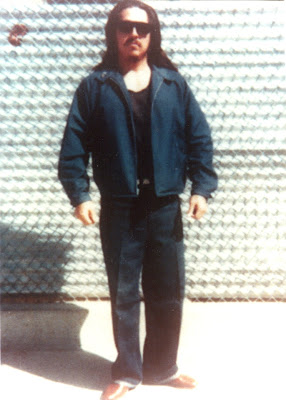
Douglas Ray ‘Chief’ Stankewitz

All this brings me to an Indian I want you to know better than his jury did — Douglas Ray Stankewitz, the longest tenured inmate on California’s death row. Like most Indians who find themselves in a group of non-Indians, he is currently known as “Chief,” but unlike many Indians, he is proud of the nickname.

The government wants to kill Chief because Theresa Greybeal was shot dead in the course of a robbery by a group of people high on heroin, and there is no question that Chief was one of them. There is a serious question about who pulled the trigger, and juries are reluctant to kill individuals who did not pull the trigger. But as far as his jury knew, Douglas Stankewitz pulled the trigger, and he might have, but we will never know, based on his trial.

Just as you can’t discuss federal Indian policy without recourse to history, it’s hard to understand Douglas Stankewitz and his crimes outside of his historical context, which includes the spectacular destruction of California Indians.

Douglas Ray “Chief” Stankewitz is a citizen of the Big Sandy Rancheria, as they call reservations in California. He was born on May 31, 1958, to Marion Sample Stankewitz, the sixth of her eleven children. She was the fifth of seven children. Her father, Sam Jack Sample, was Mono and Chukchansi, and her mother was Mono. She met Douglas’s father, a truck driver of Polish descent, when she was picking grapes and he was her supervisor. They were both practicing drunks.

Douglas was born the year the Big Sandy Rancheria was terminated as part of the national policy to force Indians to assimilate. In other words, for most of the time that the young Douglas was being let down by the adults around him, the Big Sandy Rancheria did not exist in the eyes of the federal government.

His mother had also been raised on the Big Sandy Rancheria, a place until recently blighted by poverty, alcohol abuse, and hopelessness. Marion drank beer by the case while pregnant, and when Douglas was born his father was in jail for beating his mother. His mother had no prenatal care — she first saw a doctor regarding her pregnancy when she was in labor.

Douglas was beaten regularly by both of his parents and was taken to the emergency room three times before his first birthday. At age six, he was found injured and wandering on the streets. The police took him home, where his mother admitted to having beaten him. The police did not remove him from the home, apparently because they decided that the process would have been too complicated. There were nine children in the home at the time, and Douglas’s father was in jail.

Less than three months later, Douglas was brought to the police station by a neighbor who found the boy on his doorstep, again injured. This time, all the children were taken away and Marion was jailed.

After two unsuccessful foster home placements — the foster parents were unable to deal with Douglas’s violent emotional eruptions — the seven-year-old was committed to Napa State Psychiatric Hospital for 90 days. While he received no treatment there (beyond being diagnosed with a severe emotional disturbance), this placement was extended twice, for a total of nine months. This child trapped in an adult institution became easy prey for sexual assault, and that became an unfortunate part of his “education.”

He was then placed in a foster home, where he stayed for nearly four years, the second longest stay at one address he has had in his life. The longest was in is his current address: San Quentin’s death row. He received no visits from his natural family during that placement with the foster family. His foster mother had to make a personal plea to get Douglas into the third grade:

The day I went to pick him up, I’ll never forget. He went down on all fours in a corner, growling and snorting at me. On the way home, he jumped over into the back seat and clawed all the stuffing out of the upholstery. When we walked into the kitchen of my home, he shuffled over to the dish rack, full of dry dishes, and threw the whole thing across the room.

I had been told not to physically restrain or punish him because he would go berserk if touched, but I figured he was already berserk, so being as big as I am, I just grabbed him from behind, wrapped my whole self around him, down we went and I just held on for dear life until he calmed down.

It’s taken me all this time to tame him. I’ve taught him to talk instead of grunt, to use the toilet, to dress himself, to use silverware, to take care of animals without hurting them, to ask instead of grab… He’s been begging me to teach him to read and write and do numbers like the other foster kids, so I think he’s ready for school… Will you take him in your class? If he’s any trouble, just call and I’ll come pick him up.

It is unclear how this foster placement ended, and Chief is in no position to know because of his age at the time. Apparently, the state was motivated by a bureaucratic imperative to keep families together when possible, regardless of the circumstances. What is clear is that from 1970 until his first commitment to the California Youth Authority in 1972, Douglas had at least 13 placements. The longest was for five months. The first was back with his mother, where he learned to sniff paint.

For a short period, he was placed with an aunt back on the reservation, where he lived until her children were taken away because of her drunkenness. The aunt said that before Douglas came to live with her, “a lot of times there was no food in the house. Sometimes we’d save our oatmeal for [the children] because they had nothing.” While Douglas was living with his aunt, his mother was sent to prison for manslaughter.

At age 13, Douglas got his first criminal referral to juvenile court. His earlier visits to juvenile court had been as what the state called a “child in need of supervision.” Douglas had apparently been running with some adults, and when they showed up too late to get fed at a Fresno soup kitchen one day, the adults decided to rob someone to get money for food. Douglas involved himself in this crime by going though the victim’s pockets.

Between 1972 and 1977, Douglas spent all but eight months in either Youth Authority lockups or the Sacramento County Jail. In a little over two months from the time he was released until the arrest that landed him on death row, Douglas Stankewitz consumed (according to the individuals around him) massive quantities of marijuana, alcohol, methamphetamine, and heroin. At the time of the killing that brought him to death row, he had not slept for at least two days.

The fearsome responsibility

Chief has now spent 33 years of his life on California’s death row, but virtually all of his life before arriving there was spent under the “supervision” of the state of California in one guise or another. We don’t know what the jury on his trial would have made of this, but we do know that Chief’s American Indian identity made their decision to kill him inevitable. That statement may seem shocking, but so are the actions of Douglas Stankewitz’s court-appointed lawyer, the ex-judge Hugh Goodwin.

Since I am a retired judge and know something of the work, I was prepared to think an ex-judge from a criminal court might make a good defense attorney in a capital case, if he had the stomach for it. The problem is that Goodwin became an ex-judge because of his predilection for sentencing criminal defendants to go to church. He was convinced that his job as a judge was to bring people to Jesus. It is clear from reviewing the Stankewitz case that he saw his duty as a criminal defense lawyer the same way.

The fearsome responsibility of a capital defense can keep a lawyer awake at night, but Mr. Goodwin’s sleep was apparently less troubled than mine, because he took the attitude that his client’s life was in God’s hands rather than his own.

Because there was no question that his client was involved in the killing — only whether he pulled the trigger — Mr. Goodwin had ample notice that the main business of this trial would be in the penalty phase. There was much that the jury should have been told in the penalty phase, but Mr. Goodwin did not deem it important to inform them that his client had been born with fetal alcohol syndrome, beaten, starved, sexually assaulted, and deprived of any loving relationship with an adult.

Instead, he called to the stand a jailer and an assistant district attorney to give their opinions that anybody can reform if they allow the Christian God to come into their life. Predictably, the cross-examination of these witnesses bored in on whether they had any reason to believe Douglas Stankewitz had invited God into his life. They did not.

Errors by a lawyer do not require reversal if the lawyer had a tactical reason for making the errors. Hugh Goodwin swore to this statement about his tactics in that trial:

I have never believed in the separation of church and state, as I made clear when I was a judge. I recognize that this is a controversial view which is not widely shared. When I presented the testimony of a Deputy District Attorney and the Fresno County Jail chaplain that they believed people could be transformed by the power of God if they let God into their lives, I knew that it was likely that on cross-examination they would state that there was no evidence that Mr. Stankewitz would let God into his life. Nonetheless, I believed that by presenting this testimony, God’s will would be done, and accordingly I did so.

As idiotic as the “power of God” defense was in a capital murder case, it would have had a prayer of swaying a jury against death if there were a shred of evidence that Douglas Stankewitz had a Christian bone in his body.

But Douglas “Chief” Stankewitz is a Mono Indian, born on the Big Sandy Rancheria, raised by the State of California in a parade of incompetent foster homes, mental hospitals and juvenile facilities. His grandfather, Sam Jack Sample, was a ceremonial singer and medicine man who died singing in the roundhouse when Douglas was a small boy. Goodwin might as well have entrusted his client’s life to Zoroaster for all the chance his client had of grabbing hold of that lifeline.

The defense in a capital case must compel the jury to understand the life they are being asked to end. In this case, the jury was told that goodness is linked to being Christian, and the defense lawyer might as well have said plainly that the only good Indians he ever saw were dead.

At this writing, the Big Sandy Rancheria has regained federal recognition and has opened a casino. Using those casino funds, they finally have an office to enforce the Indian Child Welfare Act; they also have a Head Start program.

In another case of poor timing, the name of Sam Jack Sample, Douglas’s grandfather, has turned up on the list of persons for whom the Department of the Interior is holding property in trust. Since Stankewitz’s mother is deceased, he may actually inherit that property, thereby acquiring the funds to pay for his funeral — if he had anyone to attend it.

Chief Stankewitz has no execution date set and the litigation to get him a new trial continues. Until he does get a fair trial, we won’t have any basis to say whether he is among the worst of the worst who deserve the death penalty or whether he is just another man without the capital getting the punishment.

Type rest of the post here

Source /

The Rag Blog

Posted in RagBlog | Leave a comment

West Coast-based journalist/activist Jonah Raskin reports on the first day of Occupy Austin, where “1,500 youthful demonstrators, aging protesters, and ageless rabble-rousers” gathered outside Austin City Hall to voice their anger about Wall Street greed and a variety of social and political issues. Pointing out that Austin has a “long history of radicalism,” and countercultural activity, Raskin says Occupy Austin “had some of the flavor of a 1960s protest.” One 22-year-old woman — who carried a sign saying “Wake Up, Austin” — said she had given up on her generation until the recent Occupy Wall street protests but now had a renewed sense of hope about the future. This post includes a gallery of photos from the event.

Posted in RagBlog | Leave a comment

Jonah Raskin : Occupy Austin: This is Just the Beginning

Occupy Austin, Friday, Oct. 6, 2011. Photo from Occupy Austin.

Occupy Austin:
This is just the beginning

By Jonah Raskin / The Rag Blog / October 10, 2011

See photo gallery below.

[West Coast writer, activist, and Rag Blog contributor Jonah Raskin attended the first day of Occupy Austin, held outside Austin City Hall, October 6, 2011, and shared the following impressions.]

AUSTIN — Occupy Austin attracted the young, who found it new and wonderful, and the old, who found it familiar and wonderful, too. On October 6, 2011, about 1,500 youthful demonstrators, aging protesters, and ageless rabble-rousers gathered outside Austin City Hall to voice their anger about Wall Street greed and about a variety of social and political issues. There were hundreds of signs, almost all of them handmade, that practically shouted views and opinions such as “Decolonize Wall Street” and “Love America Enough to Protest America.”

There were tie-dyed T-shirts, tattoos galore, pierced noses, ears, and more, and a marching band that played the old standby “Ain’t Gonna Study War No More” that the crowd recognized immediately and sang the lyrics to loudly. Yes, it was called “Occupy Austin” but a more apt phrase might have been “Liberate Austin.”

It certainly felt liberating to old and young, students and retirees, union folks and the unemployed. I was in town to talk about the cause of marijuana law reform and couldn’t keep away, not with my 1960s roots still showing, and not after a heart-felt invitation to join the rally from Rag Bloggers Thorne Dreyer and Jim Retherford who introduced me to their friends and to friends of their friends.

By the end of the afternoon, I felt initiated into radical Austin, a city with a long history of radicalism, countercultures, underground newspapers, and resistance to all forms of what we used to call “oppression,” a word that’s once again on the lips of the young and the restless — along with cellphones, Facebook, and Twitter, all of which helped to launch Occupy Austin and, which, according to Gary Chason, will make this movement impossible for the government to stop.

Ashley — who is 22 and who wore bright red leather boots — carried a sign that read “Wake Up, Austin!” How long had she been awake? “Only a few weeks,” she told me. “I woke up after I heard about the protests on Wall Street. I had given up on my generation because they seemed to me to be lazy, selfish, and didn’t care about the larger world. I thought ‘nothing will ever change,’ and I felt so small and insignificant. Now, there’s a sense of hope, a feeling that things might begin to become unstuck and move again.”

Her comments sounded familiar. I had heard them — or at least words very similar to them — 50 years earlier at the start of the 1960s, when the United States was wrapped up in the Cold War and just about everything — except for the civil rights movement — felt frozen and dead. America needed awakening then, too.

The Rag Blog‘s Jonah Raskin at Occupy Austin, Friday, Oct. 6, 2011. Photo by James Retherford / The Rag Blog.

Occupy Austin had some of the flavor of a 1960s protest, though most of the signs had little or nothing to do with 1960s issues such as war and racism. The signs and the slogans were mostly about corporations, social and economic inequalities, and greed. “Not so fast you greedy bastards,” one large sign with bright red letters read.

Many of the signs proclaimed, “We’re part of the 99%,” a figure that nearly everyone seemed to understand. The police officers in the crowd understood the reference to the 1% of the population who own 99% of the wealth. African-American city manager Mark Ott understood, as did police chief Art Acevedo, who praised the protesters for peacefully demonstrating. Fire Chief Rhoda Mae Kerr, in a bright white uniform, asked everyone in the crowd to put out lit cigarettes. The Texas drought and the danger of fire were on her mind and on the minds of many others.

Yes, the city showed its face at Occupy Austin. The local news media showed up, too, and the event was at the top of the evening news and made the front page of the Austin American-Statesman in a story that lauded protesters and the police for good behavior.

The old-timers mostly kept to themselves and didn’t interact with the 20-somethings, though there were conversations that crossed the generational divide. When Bob Cash, a former SDS member who now lobbies for fair trade, was asked for advice from a young protester, he thought a moment and said, “Don’t trust anyone over the age of 30.”

Katherine, an ex-New Yorker in her 60s who had just retired, said that Occupy Austin was her first ever demonstration. That didn’t seem plausible to me. “Really?,” I asked incredulously. She paused a moment, went down memory lane, and remembered that she had protested once before, in 1970. “I went out into the streets after the students were shot and killed at Kent State,” she said. “That was an outrage. Now I’m outraged at New York Mayor Bloomberg and all his money on the stock market.”

After a few hours outside City Hall the bongo drums seemed to grow louder and louder. I was ready to leave with Dreyer, Retherford, and my new found Austin friends and, yes, comrades too, if you’ll pardon the expression. We crossed the street. I looked back at the crowd. My eye caught one sign that read, “You are breaking my balls,” and another that said, “This is just the beginning.” That seemed about right. It was a beginning, and the protesters did feel a sense of hurt — deep down hurt that only real social change could alleviate.

[Regular Rag Blog contributor Jonah Raskin, a communications professor at Sonoma State University in northern California, was active with SDS and the Yippies in the Sixties. His most recent book is Marijuanaland: Dispatches from an American War (High Times). Read more articles by Jonah Raskin on The Rag Blog.]

Photo by James Retherford / The Rag Blog.

Photo by James Retherford / The Rag Blog.

Photo by James Retherford /The Rag Blog.

Photo by Terry DuBose / The Rag Blog.

Photo by James Retherford / The Rag Blog.

Austin police chief Art Acevedo signs a petition for Leslie Cunningham of the Texas State Employees Union. The petition calls for restored funding for higher education in Texas. Photo by Jose Orta / The Rag Blog.

Photo by Jose Orta / The Rag Blog.

Photo by Terry DuBose / The Rag Blog.

Photo by Terry DuBose / The Rag Blog.

Photo from Occupy Austin.

Austin’s Minor Mishap Marching Band leads group at Occupy Austin. Photo from Occupy Austin.

Iraq vet John Buhler, a former U.S. Marine Corps sergeant, in full dress uniform at Occupy Austin, Oct. 6, 2011. Photo from Occupy Austin.

The Rag Blog

Posted in Rag Bloggers | Tagged , , , , , | 3 Comments

he New Anti-Corporate Movement Comes to Austin, Texas

By Jonah Raskin / The Rag Blog / October 8, 2011

AUSTIN — Occupy Austin attracted the young who found it new and wonderful, and the old who found it familiar and wonderful, too. On October 6, 2011, at least 1,300 youthful demonstrators, aging protestors, along with ageless rabble-rousers gathered outside City Hall to voice their anger about Wall Street greed, and about a variety of social and political issues. There were hundreds of signs, almost all of them handmade, that practically shouted views and opinions such as “Decolonize Wall Street” and “Love America Enough to Protest America.”

There were tie-dyed T-shirts, tattoos galore, pierced noses, ears and more, cell phones and a marching band that played the old standby “Ain’t Gonna Study War No More” that the crowd recognized immediately and sang the lyrics loudly. Yes, it was called “Occupy Austin” but a more apt phrase might have been “Liberate Austin.”

It certainly felt liberating to old and young, students and retirees, union folks and the unemployed. I was in town to talk about the cause of marijuana law reform and couldn’t keep away, not with my 1960s roots still showing, and not after a heart-felt invitation to join the rally from Rag Bloggers Thorne Dreyer and Jim Retherford who introduced me to their friends and to friends of their friends.

By the end of the afternoon, I felt initiated into radical Austin, a city with a long history of radicalism, countercultures, underground newspapers, and resistance to all forms of what once was called “oppression” and that’s now on the lips of the young and the restless along with cellphones, Facebook and Twitte, all of which helped to launch Occupy Austin and that Gary Chason said would make the demonstrations impossible for the government to stop.

Ashley — who is 22 and who wore bright red leather boots — carried a sign that read, “Wake Up, Austin!” How long had she been awake? “Only a few weeks,” she told me. “I woke up after I heard about the protests on Wall Street. I had given up on my generation because they seemed to me to be lazy, selfish, and didn’t care about the larger world. I thought ‘nothing will ever change,’ and I felt so small and insignificant. Now, there’s a sense of hope, a feeling that things might begin to become unstuck and move again.”

Her comments sounded familiar. I had heard them — or at least words very similar to them — 50 years earlier at the start of the 1960s, when the United States was wrapped up in the Cold War and just about everything — except for the civil rights movement — felt frozen and dead. America needed awakening then, too. Occupy Austin had some of the flavor of a 1960s protest, though most of the signs had little or nothing to do with 1960s issues such as war and racism. The signs and the slogans mostly had to with corporations, social and economic inequalities, and greed. “Not so fast you greedy bastards,” one large sign with bright red letters read. Moreover, many of the signs proclaimed, “We’re part of the 99%,” a figure that nearly everyone seemed to understood and that needed little or no explanation. The police officers in the crowd understood the reference to the 1% of the population who own 99% of the wealth. African American city manager, Mark Ott, understood, as did police chief Art Acevedo, who praised the protestors for peacefully demonstrating. The fire chief, Rhoda Mae Kerr in a bright white uniform asked everyone in the crowd to put out lit cigarettes. The Texas drought and the danger of fire were on her mind and on the minds of many others. Yes, the city showed its face at Occupy Austin. The local news media showed up, too, and the event made the front pages of the Austin American-Statesman in a story that lauded protesters and the police for good behavior.

The old timers mostly kept to themselves and didn’t interact with the 20-something year olds, though there were conversations that crossed the generational divide. When Bob Cash, a former SDS member who now lobbies for fair trade, was asked for advice from a young protestor, he thought a moment and said, “Don’t trust anyone over the age of 30.” Katherine, an ex-New Yorker in her 60s who had just retired, said that Occupy Austin was her first ever demonstration. That didn’t seem plausible to me. “Really?,” I asked incredulously. She paused a moment, went down memory lane, and remember that she had protested once before in 1970. “I went out into the streets after the students were shot and killed at Kent State,” she said. “That was an outrage. Now I’m outraged at New York Mayor Bloomberg and all his money on the stock market.”

After a few hours outside city hall the bongo drums seemed to grow louder and louder. I was ready to leave with Dreyer, Retherford and my new found Austin friends and yes comrades, too, if you’ll pardon the expression. We crossed the street. I looked back at the crowd. My eye caught one sign that read, “You are breaking my balls,” and another that said, “This is just the beginning.” That seemed about right. It was a beginning, and the protesters did feel a sense of hurt – deep down hurt that only social change could alleviate.

Jonah Raskin is a regular contributor to the Rag Blog and the author most recently of Marijuanaland: Dispatches from an American War. (High Times.)

Type rest of the post here

Source /

The Rag Blog

Posted in RagBlog | Leave a comment

he New Anti-Corporate Movement Comes to Austin, Texas

By Jonah Raskin / The Rag Blog / October 8, 2011

[West Coast author, journalist, and Rag Blog contributor Jonah Raskin attended the first day of Occupy Austin, held outside Austin City Hall October 6, 2011, and filed the following report.]

AUSTIN — Occupy Austin attracted the young who found it new and wonderful, and the old who found it familiar and wonderful, too.

On October 6, 2011 about 1,500 youthful demonstrators, aging protestors, and ageless rabble-rousers gathered outside City Hall to voice their anger about Wall Street greed, and about a variety of social and political issues. There were hundreds of signs, almost all of them handmade, that practically shouted views and opinions such as “Decolonize Wall Street” and “Love America Enough to Protest America.”

There were tie-dyed T-shirts, tattoos galore, pierced noses, ears and more, and a marching band that played the old standby, “Ain’t Gonna Study War No More,” that the crowd recognized immediately and sang the lyrics loudly. Yes, it was called “Occupy Austin” but a more apt phrase might have been “Liberate Austin.”

It certainly felt liberating to old and young, students and retirees, union folks and the unemployed. I was in town to talk about the cause of marijuana law reform, and couldn’t keep away, not with my 1960s roots still showing, and not after a heart-felt invitation to join the rally from Rag Bloggers Thorne Dreyer and Jim Retherford who introduced me to their friends and to friends of their friends.

By the end of the afternoon, I felt initiated into radical Austin, a city with a long history of radicalism, countercultures, underground newspapers, and resistance to all forms of what once was called “oppression” and that’s now on the lips of the young and the restless along with cellphones, Facebook, and Twitter, all of which helped to launch Occupy Austin and that Gary Chasson said would make it impossible for the government to stop.

Ashley – who is 22 and who wore bright red leather boots — carried a sign that read “Wake Up, Austin!” How long had she been awake? “Only a few weeks,” she told me. “I woke up after I heard about the protests on Wall Street. I had given up on my generation because they seemed to me to be lazy, selfish, and didn’t care about the larger world. I thought ‘nothing will ever change,’ and I felt so small and insignificant. Now, there’s a sense of hope, a feeling that things might begin to become unstuck and move again.”

Her comments sounded familiar. I had heard them — or at least words very similar to them — 50 years earlier at the start of the 1960s, when the United States was wrapped up in the Cold War and just about everything — except for the civil rights movement — felt frozen and dead. America needed awakening then, too.

Occupy Austin had some of the flavor of a 1960s protest, though most of the signs had little or nothing to do with 1960s issues such as war and racism. The signs and the slogans mostly talked about corporations, social and economic inequalities, and greed. “Not so fast you greedy bastards,” one large sign with bright red letters read.

Moreover, many of the signs proclaimed, “We’re part of the 99%,” a figure that nearly everyone seemed to understood. Even the many police officers in the crowd understood the reference to the 1% of the population who own 99% of the wealth. African American City Manager Mark Ott, understood, as did police chief Art Acevedo, who praised the protestors for peacefully demonstrating.

The fire chief, Rhoda Mae Kerr in a bright white uniform, asked everyone in the crowd to put out lit cigarettes. The Texas drought and the danger of fire were on her mind and on the minds of many others. Yes, the city showed its face at Occupy Austin. The local news media showed up, too, and the event made the front pages of the Austin American-Statesman in a story that lauded protesters and the police for good behavior.

The old timers mostly kept to themselves and didn’t interact with the 20-something year olds, though there were conversations that crossed the generational divide. When Bob Cash, a former SDS member who now lobbies for fair trade, was asked for advice from a young protestor, he thought a moment and said, “Don’t trust anyone over the age of 30.”

Katherine, an ex-New Yorker in her 60s who had just retired, said that Occupy Austin was her first ever demonstration. That didn’t seem plausible to me. “Really?,” I asked incredulously. She paused a moment, went down memory lane, and remembered that she had protested once before, in 1970. “I went out into the streets after the students were shot and killed at Kent State,” she said. “That was an outrage. Now I’m outraged at New York Mayor Bloomberg and all his money on the stock market.”

After a few hours outside city hall the bongo drums seemed to grow louder and louder. I was ready to leave with Dreyer, Retherford, and my new found Austin friends and yes, comrades, too, if you’ll pardon the expression. We crossed the street. I looked back at the crowd. My eye caught one sign that read, “You are breaking my balls,” and another that said, “This is just the beginning.”

That seemed about right. It was a beginning, and the protesters did feel a sense of hurt — deep down hurt that only real social change could alleviate.

Jonah Raskin is a regular contributor to the Rag Blog and the author most recently of Marijuanaland: Dispatches from an American War. (High Times.)

Type rest of the post here

Source /

The Rag Blog

Posted in RagBlog | Leave a comment

Bill Meacham : Mondragon: Reinventing Humanity

The Mondragon Corporation. “The present, however splendid it may be, bears the seeds of its own ruin if it becomes separated from the future.” — José María Arizmendiarrieta.

Mondragon: Reinventing humanity

It is a striking vision, and a welcome alternative to the dog-eat-dog competition that is rampant both within and between conventional enterprises.

By Bill Meacham / The Rag Blog / October 6, 2011

The human capacity for second-order mentation — the ability we have to consider in thought and imagination not just the world around us but ourselves as well — has led existentialists such as Jean-Paul Sartre and Simone deBeauvoir to say that the human being is always free to recreate himself or herself, that we have no fixed essence, but are what we make of ourselves.

There is certainly a germ of truth in this assertion. If you suffer from some behavioral or psychological problem, the first step in fixing it is to admit that you have a problem; that is, to be conscious enough of yourself to know that there is something you are doing or feeling or thinking that is causing trouble. Then you can mentally step back, reassess the situation, and start doing something different.

In practice, of course, this is often more easily said than done, and there is in fact quite a bit that is fixed about human nature. But within that fixity we have the freedom to reinvent ourselves. By virtue of second-order mentation, we are not fully constrained by the past.

In the individualistic West we tend to think of this freedom in purely personal terms. A young man asks whether he should leave his ailing mother to join the resistance or stay and take care of her, and Sarte’s answer is that the only answer is the young man’s freedom to choose: “You are free, therefore choose, that is to say, invent.”[1] But a more powerful form of self-invention is to be found in the social realm. Case in point: The Mondragon cooperatives.

The Mondragon cooperatives are a federation of worker-owned cooperatives based in the Basque region of Spain. Founded in 1956 through the efforts of a visionary Catholic priest, Father José María Arizmendiarrieta, Mondragon started as a small, worker-owned enterprise making kerosene stoves in 1956. It has since grown to become the seventh-largest business group in Spain, with annual sales of 14 billion Euros and over 100,000 workers. It comprises over 260 affiliated enterprises, including 120 core cooperatives, and has affiliates not just in Europe but around the globe.

The worker-owned cooperative is the core Mondragon social institution and the most ingenious reinvention of what it is to be human. In the cooperative, the workers themselves own the enterprise. There is no outside owner, unlike the capitalist corporation or the communist state-owned collective.

Each worker-owner has one vote, and decisions are made by democratic vote of all owners. Structurally, it is like a sole-proprietorship, except that there are many proprietors, the workers. Nobody gets a wage; instead each is paid a monthly advance on his or her share of the year’s projected profit.

The worker cooperative is a fundamental inversion of the corporate model we take for granted in the capitalist world. In a conventional company, the owners of capital have ultimate authority, and the laborers are subservient. In a worker-owned cooperative, labor has ultimate authority, and capital is subservient, a principle known as Sovereignty of Labor.

What it means in practice is that the workers, being the owners, run the enterprise for their own benefit, not for the benefit of a separate class of people who own it but do not do the work. No outside owner can shut down a factory, fire the workers, and move production somewhere else. No outside owner can mandate overtime, reduced pay, or hazardous working conditions.

The objective is not to make as much profit as possible for a few, but to make a good living for all. And in fact the worker-owners make, on average, 10 percent more than their counterparts in neighboring non-cooperative businesses.

Sovereignty of labor has several implications:

  • Democratic control: one worker, one share, one vote.
  • Distribution of profits only to workers, the cooperative, or the local community, not to outside investors.
  • Egalitarian income spread. On average, the highest-paid worker in a Mondragon enterprise makes four to five times as much as the lowest. The maximum is nine times as much. (Contrast this to many big corporations, whose ratio may be as much as several hundred to one.)
  • Participation in decision making. Each cooperative elects its own management team and has an annual meeting at which the worker-owners make strategic decisions about the enterprise. And there is a general council consisting of representatives from all the member cooperatives that makes decisions about the corporation as a whole.

Three things were of crucial importance from the very start: school, credit union, and factory. In 1943, well before the first manufacturing enterprise, Father Arizmendiarrieta started a trade school, so students would have necessary skills to make a living and to form and run a cooperative. He also started a credit union, so people could pool their savings to provide start-up capital. Only when these were in place did the first manufacturing operation begin. A factory alone would lack ongoing sources of credit and new innovative skills.

In addition, the Mondragon cooperatives correct a fatal flaw that has historically led to the demise of worker-owned enterprises. In the Mondragon co-ops, a retiring worker’s share cannot be sold to just anyone, not even another co-op member, but only to a new incoming worker or back to the co-op. This prevents external stock buyers, speculative capitalists, from taking over successful co-ops.

Many an ESOP (Employee Stock Ownership Plan) enterprise has collapsed because shares were sold to non-employees who, after acquiring enough of them, terminated or radically changed the business. In the Mondragon cooperatives, capital and ownership of the business stays with the workers.

Sovereignty of labor is only one of the 10 core principles of the enterprise. The complete list includes such things as a ban on discrimination for religious, political, ethnic, or sexual reasons; democratic and participatory management; cooperation among member co-ops and with other cooperative movements world-wide; and a commitment to social transformation and education.

Visionary Catholic Priest José María Arizmendiarrieta, founder of Mondragon, shown at age 70.

It is a striking vision, and a welcome alternative to the dog-eat-dog competition that is rampant both within and between conventional enterprises.

Certainly the worker-owners think so. Even if offered more pay somewhere else, most would not leave. They like the job security and the fact that they have a vote. The cooperative meets fundamental human needs: not just the needs for sustenance and social contact, but for self-determination as well.

The cooperative model is promising for a sustainable future, because it is not driven to grow in the same way as the capitalist model and because it allows its worker-owners benefits other than increased material consumption.

Democratically-controlled firms do not have the same drive for growth as capitalist firms. Capitalist firms aim at maximizing total profit, while cooperative firms aim at maximizing profit per worker. If a capitalist firm grows, doubles its workforce and doubles its profit, the owners get richer. If a cooperative firm grows, doubles its workforce and doubles its profit, each worker-owner gets the same amount of money. There is no internal motivation to grow.[2]

There are external motivations to grow, of course. Growth can provide economies of scale, driving costs down. Growth can provide more share of the market, so the firm is more assured of continued operation. The Mondragon cooperatives are enterprises in a market economy, subject to the same constraints and imperatives of competition that capitalist enterprises are.

But there is an important difference. When innovation brings about a productivity gain, worker-owners are free, if they wish, to opt for more leisure or investment in other market opportunities instead of higher pay, which would lead to increased consumption. Reduced consumption makes for reduced environmental impact.

In a world of vast but limited resources, an expanding population and more and more pollution, it is crucial to find ways of satisfying human needs without degrading the environment. Over-consumption — buying stuff we don’t really need – is a threat to the environment because it uses up more resources and produces more waste than necessary.

A capitalist owner would be unlikely to allow workers to work less because they have become more productive. There’s no profit in that. But worker-owners, once they reach a certain level of income, might well opt for such a solution, preferring time with family and friends to the means to buy more goods.[3]

The success of the Mondragon co-ops is undeniable, so it is natural to want to replicate it elsewhere. One wonders how much that success is due to factors unique to the Basque country where it started. Perhaps there is something special about the Basque culture. Mondragon is the best known but not the only cooperative enterprise there. The area is rife with producer co-ops (where farm owners, but not their workers, are members), marketing co-ops, consumer co-ops, transport co-ops, housing co-ops and cooperative schools.[4]

The Basque people have a strong sense of ethnic, linguistic, and cultural identity, and they were an oppressed minority under Franco, leading to an even stronger internal cohesion. They have a tradition of equitable land distribution. The first business produced a much-needed product at a good price; and the area is strategically located, with easy access to large ports like Bilbao, and short distances to major export markets.[5]

Which of these factors is most important for a successful worker’s co-op? Beyond the ability to make and sell a product, which is essential to any economic enterprise, my guess is that in-group cooperation in the face of external hostility had a lot to do with it in the Basque country.

Cooperation, of course, is an inherent human ability and activity. We are most cooperative in the face of an external threat, but we have the ability, in common with our bonobo cousins, to cooperate among groups as well. If we want to replicate Mondragon’s success, we need to foster a sense of empathy, solidarity, and compassion among all humans, a sense that we are all members of one tribe, one family, the human family.

Can we do that? Can we emulate the vision and drive of Father Arizmendiarrieta, without whom the Mondragon co-ops would not have begun? A journalist once remarked that Arizmendiarrieta had created a progressive economic movement anchored in an educational institution. He replied “No, it is just the reverse. We are creating an educational movement for social change, but with anchors in economic institutions.”[6]

It is the whole of humanity that matters most. Perhaps we can form a more cooperative society if we take as our common enemy ignorance, rather than some other group of humans.

Notes

[1] Sarte, Existentialism is a Humanism.
[2] Schweickart,
Is Sustainable Capitalism Possible? p. 112.
[3] Idem., p. 113.
[4] Davidson,
New Paths to Socialism, p. 26.
[5] Long,
The Mondragon Co-operative Federation.
[6] Davidson,
New Paths to Socialism, p. 25.

References

Davidson, Carl. New Paths to Socialism: Essays on the Mondragon Cooperatives. Pittsburgh, PA: Changemaker Publications, 2011.
Long, Mike.
The Mondragon Co-operative Federation: A Model for our Time? On-line publication, http://www.cooperativeindividualism.org/long_mondragon.html as of 18 September, 2011.
Mondragon Corporation. Corporate website. On-line publication, http://www.mcc.es/ENG.aspx as of 17 September 2011.
Sartre, Jean-Paul.
Existentialism is a Humanism. On-line publication, http://www.marxists.org/reference/archive/sartre/works/exist/sartre.htm as of 17 September 2011.
Schweickart, David.
Is Sustainable Capitalism Possible? In Davidson, New Paths to Socialism, pp. 103 – 126.
Wikipedia. “Mondragon Corporation.” On-line publication, http://en.wikipedia.org/wiki/Mondragon_Corporation as of 17 September 2011.

[Bill Meacham is an independent scholar in philosophy. A former staffer at Austin’s 60s underground paper, The Rag, Bill received his Ph.D. in philosophy from the University of Texas at Austin. Meacham spent many years working as a computer programmer, systems analyst, and project manager. He posts at BillMeacham.com, where this article also appears. Read more articles by Bill Meacham on The Rag Blog]

Also:

The Rag Blog

Posted in Rag Bloggers | Tagged , , , , , , | 2 Comments

Mark Naison : Wall Street and the Making of a Global Counterculture

Photo by Robert Johnson / Business Insider.

The Wall Street occupations and the
making of a global counterculture

The emergence of a global youth counterculture should be seen as a powerful complement to a global movement for freedom, democracy, and economic justice.

By Mark Naison / The Rag Blog / October 6, 2011

NEW YORK — On Monday, October 3, I spent about an hour in Liberty Plaza, sitting, walking around, and talking to people before the event I had come for — a “Grade-In” organized by teacher activists — finally began, and was stunned by how different the occupation was from any demonstration I had attended recently.

First of all, in contrast to the last two protests I had participated in — a Wisconsin Solidarity rally at City Hall, and the Save Our Schools March on Washington — I saw few people my own age and no one I recognized — at least until the “Grade-In” started

When I arrived at 11 a.m., most of the people in Liberty Plaza were the ones who had slept there overnight, and the vast majority were in their 20’s and 30’s — a half to a third my age. They were drumming, sweeping the sidewalk, talking to curious visitors — who were still few in number — eating or chilling with one another, and their relaxed demeanor blew me away given the tumultuous events of the day before when more than 700 protesters had been arrested by the NYPD after marching onto the Brooklyn Bridge.

They were also, to my surprise, thoroughly international. Many of the people I met at the information desk, or who spontaneously started conversations with me, had accents which indicated they had been born in, or had recently come from, countries outside the United States.

I felt like I was in Berlin or Barcelona, where you could always count on meeting young people from all over the world at any music performance or cultural event, only this was a political action in the heart of New York’s financial district. I felt like I was in the midst of a global youth community, one I had certainly seen emerging during my travels and teaching — after all, I had helped organize a “Bronx Berlin Youth Exchange” — but that I had not expected to see at this particular protest.

But it was there, no doubt. And definitely made the discipline, determination, and camaraderie of the protesters that much more impressive. But, as much as the age cohort and global character of the occupation seemed strange, it also seemed oddly familiar, though it took a while for that familiarity to sink in.

The longer I stayed at Liberty Plaza, the more it felt like the countercultural communities I had spent time in during the late 60’s, from Maine to Madison to Portland, Oregon, where discontent with war and a corrupt social system had bred a communal spirit marked by incredible generosity and openness to strangers.

During the years when I traveled the country regularly as a political organizer and revolutionary — 1968 to 1971 — I never had to stay in a hotel or pay for a meal in the more than 20 cities I visited. Every one of these cities had a countercultural community and I was always able to “crash” with people I knew or with people whose names I had been given by friends.

And I did the same for people in NYC. My apartment on West 99th Street was a crash pad for people from around the country who had come to New York for demonstrations, or for revolutionaries from other countries who had somehow gotten my name. I still remember making huge pots of chili for anyone who showed up — with Goya chili beans, canned tomatoes, chopped meat, bay leaves, and chili powder. And it was not unusual for 20 or 30 to show up.

I had feared those days would never return — erased by decades of consumerism, materialism, and cheap electronic devices — but when I visited Liberty Plaza, I realized that the global economic crisis had recreated something which I often thought of as an artifact of my own nostalgia. Because right here in New York were hundreds of representatives of a whole generation of educated young people from around the world, numbering tens if not hundreds of millions of young people, who might never land in the secure professional jobs they had been promised or experience the cornucopia of material goods that came with them.

Described as a “lost generation” by economists, a critical mass of these young people, in cities throughout Europe and Latin America — and now right here in the United States — had decided to build community in the midst of scarcity, challenge consumerism and the profit motive, and call out the powerful financial interests whose speculation and greed had helped put them in the economic predicament they were in.

Serious questions remain about the long-term significance of this global movement. Would these middle class (or ex-middle class) protesters connect with the even larger group of people in their own countries — workers, immigrants, minorities — who had been living in poverty well before the current crash?

Would their community survive even a modest revival of the world economy, sending them back into a lifestyle of acquisitive individualism which the global consumer market depends on to yield profits? Could they connect with people in poor or working class neighborhoods who were already practicing communalism and mutual aid to create a truly multiracial, multi-class movement?

The jury is still out on all of those issues. But there are some promising signs. The chants of “We are all Troy Davis” during several of the movement’s marches. The increasing participation of labor unions in the protest. The involvement of more and more activists from the city’s Black and Latino neighborhoods in support of the Occupation.

And those who lived through the 60’s should remember this. Oppositional cultures of all kinds — ranging from hippie communities to the Black arts movement — represented the soil in which political protest flourished during those heady years.

And the same is true in this era. The emergence of a global youth counterculture should be be seen as a powerful complement to, if not an actual component of, a global movement for freedom, democracy, and economic justice.

[Mark Naison is Professor of History and African American Studies at Fordham University and is principal investigator of the Bronx African American History Project. Naison, who was active with CORE and SDS in the 1960s, is the author of Communists in Harlem During the Great Depression and White Boy: A Memoir, and is co-editor of The Tenant Movement in New York City, and has written over 100 articles on African American politics, social movements, and American culture and sports. This article was also posted at With a Brooklyn Accent and Progressive America Rising.]

The Rag Blog

Posted in Rag Bloggers | Tagged , , , , , , | 2 Comments

Rag Radio : Progressive Texas State Legislator Elliott Naishtat

Texas State. Rep. Elliott Naishtat (D-Austin) on Rag Radio at the KOOP studios in Austin, Friday, Sept. 30, 2011. Photos by Alan Pogue / The Rag Blog.

Progressive Texas legislator Elliott Naishtat on Rag Radio
with Thorne Dreyer. Listen to it here:


Progressive Democratic State Rep. Elliott Naishtat of Austin was Thorne Dreyer’s guest on Rag Radio, Friday, September 30, 2011.

Naishtat, who is Jewish and a native New Yorker, was elected to the District 49 seat in the Texas House of Representatives in 1990 and has been reelected 10 times. Naishtat, who has lived in Texas for 39 years, served as a VISTA volunteer in Lyndon Johnson’s War on Poverty in Queens, New York, and then in Eagle Pass, Texas, before moving to Austin and earning a Masters in Social Work and a law degree from The University of Texas.

Elliott — who was a protégé of liberal Texas State Representative and Senator Gonzalo Barrientos — was a founding board member of the House Progressive Caucus and now serves on the House Services Committee and as Vice Chair of the Public Health Committee. Naishtat, who has focused his legislative work in the areas of health and human services, has passed more than 200 bills and has been recognized for his service by numerous citizens groups.

On the program, we discuss Naishtat’s unique journey from Queens, New York, to the Texas Legislature. VISTA told Elliott they were sending him to San Francisco, but instead he ended up in Eagle Pass (“You know the government. They lied.”) where he worked as a grassroots community organizer in a Mexican-American barrio, helping to set up a Head Start program.

Later, in Austin, when Naishtat first ran for the Texas legislature, his opponent, a three-time Republican incumbent, ran a television ad that was a takeoff on the famed Pace Picante Sauce commercial. A group of cowboys are sitting around a campfire and a voice asks, “Do you want a liberal social worker from New York City? Get a rope!” Naishtat won by 10 percentage points.

Elliott also shares with us the tale of the Texas House “Killer D’s” — 51 Democrats who in 2003 hid out in Ardmore, Oklahoma, in an attempt to halt the Tom Delay-engineered Republican redistricting putsch — with the Texas Rangers and Homeland Security trying to track them down (a tactic that was repeated by Wisconsin Democrats in 2011 when they tried to block legislation limiting collective bargaining for public workers).

We also discuss the 82nd Legislature’s slash-and-burn session and the sad state of health and human services in Texas, and Rick Perry (“Governor Goodhair”) and his campaign for the Republican presidential nomination. And we learn about the late Molly Ivins’ cherished stuffed armadillo, which now resides on a perch in Elliott’s legislative office, “always looking down at me to make sure that I never forget anything I learned from Molly Ivins.”

From left, Rag Radio’s Tracey Schulz and Thorne Dreyer, and Texas State Rep. Elliott Naishtat. Photo by Alan Pogue / The Rag Blog.

Rag Radio — hosted and produced by Rag Blog editor Thorne Dreyer — is broadcast every Friday from 2-3 p.m. (CDT) on KOOP 91.7-FM in Austin, and streamed live on the web. KOOP is a cooperatively-run community radio station in Austin.

Rag Radio, which has been aired since September 2009, features hour-long in-depth interviews and discussion about issues of progressive politics, culture, and history. After broadcast, all episodes are posted as podcasts and can be downloaded at the Internet Archive. Tracey Schulz is the show’s engineer and co-producer.

Rag Radio is also rebroadcast on Sundays at 10 a.m. (Eastern) on WFTE, 90.3-FM in Mt. Cobb, PA, and 105.7-FM in Scranton, PA. Rag Radio is produced in the KOOP studios, in association with The Rag Blog, a progressive internet newsmagazine, and the New Journalism Project, a Texas 501(c)(3) nonprofit corporation.

The running time for this interview, with music and underwriting announcements removed, is 54:23.

The Rag Blog

Posted in RagBlog | Tagged , , , , , , , | Leave a comment

Bill Meacham : Mondragon: Reinventing Humanity

The Mondragon Corporation. “The present, however splendid it may be, bears the seeds of its own ruin if it becomes separated from the future.” — José María Arizmendiarrieta.

Mondragon: Reinventing Humanity

By Bill Meacham / The Rag Blog / October 6, 2011

The human capacity for second-order mentation — the ability we have to consider in thought and imagination not just the world around us but ourselves as well — has led existentialists such as Jean-Paul Sartre and Simone deBeauvoir to say that the human being is always free to recreate himself or herself, that we have no fixed essence, but are what we make of ourselves.

There is certainly a germ of truth in this assertion. If you suffer from some behavioral or psychological problem, the first step in fixing it is to admit that you have a problem; that is, to be conscious enough of yourself to know that there is something you are doing or feeling or thinking that is causing trouble. Then you can mentally step back, reassess the situation and start doing something different.

In practice, of course, this is often more easily said than done, and there is in fact quite a bit that is fixed about human nature. But within that fixity we have the freedom to reinvent ourselves. By virtue of second-order mentation, we are not fully constrained by the past.

In the individualistic West we tend to think of this freedom in purely personal terms. A young man asks whether he should leave his ailing mother to join the resistance or stay and take care of her, and Sarte’s answer is that the only answer is the young man’s freedom to choose: “You are free, therefore choose, that is to say, invent.”[1] But a more powerful form of self-invention is to be found in the social realm. Case in point: The Mondragon cooperatives.

The Mondragon cooperatives are a federation of worker-owned cooperatives based in the Basque region of Spain. Founded in 1956 through the efforts of a visionary Catholic priest, Father José María Arizmendiarrieta, Mondragon started as a small, worker-owned enterprise making kerosene stoves in 1956. It has since grown to become the seventh-largest business group in Spain, with annual sales of 14 billion Euros and over 100,000 workers. It comprises over 260 affiliated enterprises, including 120 core cooperatives, and has affiliates not just in Europe but around the globe.

The worker-owned cooperative is the core Mondragon social institution and the most ingenious reinvention of what it is to be human. In the cooperative, the workers themselves own the enterprise. There is no outside owner, unlike the capitalist corporation or the communist state-owned collective.

Each worker-owner has one vote, and decisions are made by democratic vote of all owners. Structurally, it is like a sole-proprietorship, except that there are many proprietors, the workers. Nobody gets a wage; instead each is paid a monthly advance on his or her share of the year’s projected profit.

The worker cooperative is a fundamental inversion of the corporate model we take for granted in the capitalist world. In a conventional company, the owners of capital have ultimate authority, and the laborers are subservient. In a worker-owned cooperative, labor has ultimate authority, and capital is subservient, a principle known as Sovereignty of Labor.

What it means in practice is that the workers, being the owners, run the enterprise for their own benefit, not for the benefit of a separate class of people who own it but do not do the work. No outside owner can shut down a factory, fire the workers, and move production somewhere else. No outside owner can mandate overtime, reduced pay, or hazardous working conditions.

The objective is not to make as much profit as possible for a few, but to make a good living for all. And in fact the worker-owners make, on average, 10 percent more than their counterparts in neighboring non-cooperative businesses.

Sovereignty of labor has several implications:

  • Democratic control: one worker, one share, one vote.
  • Distribution of profits only to workers, the cooperative, or the local community, not to outside investors.
  • Egalitarian income spread. On average, the highest-paid worker in a Mondragon enterprise makes four to five times as much as the lowest. The maximum is nine times as much. (Contrast this to many big corporations, whose ratio may be as much as several hundred to one.)
  • Participation in decision making. Each cooperative elects its own management team and has an annual meeting at which the worker-owners make strategic decisions about the enterprise. And there is a general council consisting of representatives from all the member cooperatives that makes decisions about the corporation as a whole.

Three things were of crucial importance from the very start: school, credit union, and factory. In 1943, well before the first manufacturing enterprise, Father Arizmendiarrieta started a trade school, so students would have necessary skills to make a living and to form and run a cooperative. He also started a credit union, so people could pool their savings to provide start-up capital. Only when these were in place did the first manufacturing operation begin. A factory alone would lack ongoing sources of credit and new innovative skills.

In addition, the Mondragon cooperatives correct a fatal flaw that has historically led to the demise of worker-owned enterprises. In the Mondragon co-ops, a retiring worker’s share cannot be sold to just anyone, not even another co-op member, but only to a new incoming worker or back to the co-op. This prevents external stock buyers, speculative capitalists, from taking over successful co-ops.

Many an ESOP (Employee Stock Ownership Plan) enterprise has collapsed because shares were sold to non-employees who, after acquiring enough of them, terminated or radically changed the business. In the Mondragon cooperatives, capital and ownership of the business stays with the workers.

Sovereignty of labor is only one of the 10 core principles of the enterprise. The complete list includes such things as a ban on discrimination for religious, political, ethnic, or sexual reasons; democratic and participatory management; cooperation among member co-ops and with other cooperative movements world-wide; and a commitment to social transformation and education.

It is a striking vision, and a welcome alternative to the dog-eat-dog competition that is rampant both within and between conventional enterprises.

Certainly the worker-owners think so. Even if offered more pay somewhere else, most would not leave. They like the job security and the fact that they have a vote. The cooperative meets fundamental human needs: not just the needs for sustenance and social contact, but for self-determination as well.

The cooperative model is promising for a sustainable future, because it is not driven to grow in the same way as the capitalist model and because it allows its worker-owners benefits other than increased material consumption.

Democratically-controlled firms do not have the same drive for growth as capitalist firms. Capitalist firms aim at maximizing total profit, while cooperative firms aim at maximizing profit per worker. If a capitalist firm grows, doubles its workforce and doubles its profit, the owners get richer. If a cooperative firm grows, doubles its workforce and doubles its profit, each worker-owner gets the same amount of money. There is no internal motivation to grow.[2]

There are external motivations to grow, of course. Growth can provide economies of scale, driving costs down. Growth can provide more share of the market, so the firm is more assured of continued operation. The Mondragon cooperatives are enterprises in a market economy, subject to the same constraints and imperatives of competition that capitalist enterprises are.

But there is an important difference. When innovation brings about a productivity gain, worker-owners are free, if they wish, to opt for more leisure or investment in other market opportunities instead of higher pay, which would lead to increased consumption. Reduced consumption makes for reduced environmental impact.

In a world of vast but limited resources, an expanding population and more and more pollution, it is crucial to find ways of satisfying human needs without degrading the environment. Over-consumption — buying stuff we don’t really need – is a threat to the environment because it uses up more resources and produces more waste than necessary.

A capitalist owner would be unlikely to allow workers to work less because they have become more productive. There’s no profit in that. But worker-owners, once they reach a certain level of income, might well opt for such a solution, preferring time with family and friends to the means to buy more goods.[3]

The success of the Mondragon co-ops is undeniable, so it is natural to want to replicate it elsewhere. One wonders how much that success is due to factors unique to the Basque country where it started. Perhaps there is something special about the Basque culture. Mondragon is the best known but not the only cooperative enterprise there. The area is rife with producer co-ops (where farm owners, but not their workers, are members), marketing co-ops, consumer co-ops, transport co-ops, housing co-ops and cooperative schools.[4]

The Basque people have a strong sense of ethnic, linguistic, and cultural identity, and they were an oppressed minority under Franco, leading to an even stronger internal cohesion. They have a tradition of equitable land distribution. The first business produced a much-needed product at a good price; and the area is strategically located, with easy access to large ports like Bilbao, and short distances to major export markets.[5]

Which of these factors is most important for a successful worker’s co-op? Beyond the ability to make and sell a product, which is essential to any economic enterprise, my guess is that in-group cooperation in the face of external hostility had a lot to do with it in the Basque country.

Cooperation, of course, is an inherent human ability and activity. We are most cooperative in the face of an external threat, but we have the ability, in common with our bonobo cousins, to cooperate among groups as well. If we want to replicate Mondragon’s success, we need to foster a sense of empathy, solidarity, and compassion among all humans, a sense that we are all members of one tribe, one family, the human family.

Can we do that? Can we emulate the vision and drive of Father Arizmendiarrieta, without whom the Mondragon co-ops would not have begun? A journalist once remarked that Arizmendiarrieta had created a progressive economic movement anchored in an educational institution. He replied “No, it is just the reverse. We are creating an educational movement for social change, but with anchors in economic institutions.”[6]

It is the whole of humanity that matters most. Perhaps we can form a more cooperative society if we take as our common enemy ignorance, rather than some other group of humans.

Notes

[1] Sarte, Existentialism is a Humanism.
[2] Schweickart, Is Sustainable Capitalism Possible? p. 112.
[3] Idem., p. 113.
[4] Davidson, New Paths to Socialism, p. 26.
[5] Long, The Mondragon Co-operative Federation.
[6] Davidson, New Paths to Socialism, p. 25.

References

Davidson, Carl. New Paths to Socialism: Essays on the Mondragon Cooperatives. Pittsburgh, PA: Changemaker Publications, 2011.
Long, Mike. The Mondragon Co-operative Federation: A Model for our Time? On-line publication, http://www.cooperativeindividualism.org/long_mondragon.html as of 18 September, 2011.
Mondragon Corporation. Corporate website. On-line publication, http://www.mcc.es/ENG.aspx as of 17 September 2011.
Sartre, Jean-Paul. Existentialism is a Humanism. On-line publication, http://www.marxists.org/reference/archive/sartre/works/exist/sartre.htm as of 17 September 2011.
Schweickart, David. Is Sustainable Capitalism Possible? In Davidson, New Paths to Socialism, pp. 103 – 126.
Wikipedia. “Mondragon Corporation.” On-line publication, http://en.wikipedia.org/wiki/Mondragon_Corporation as of 17 September 2011.

[Bill Meacham is an independent scholar in philosophy. A former staffer at Austin’s 60s underground paper, The Rag, Bill received his Ph.D. in philosophy from the University of Texas at Austin. Meacham spent many years working as a computer programmer, systems analyst, and project manager. He posts at BillMeacham.com, where this article also appears. Read more articles by Bill Meacham on The Rag Blog]

Also:

The Rag Blog

Posted in Rag Bloggers | Tagged , , , , , , | Leave a comment

Mark Naison : Wall Street and the Making of a Global Counterculture

Photo by Robert Johnson / Business Insider.

The Wall Street occupations and the
making of a global counterculture

The emergence of a global youth counterculture should be seen as a powerful complement to a global movement for freedom, democracy, and economic justice.

By Mark Naison / The Rag Blog / October 5, 2011

NEW YORK — On Monday, October 3, I spent about an hour in Liberty Plaza, sitting, walking around, and talking to people before the event I had come for — a “Grade-In” organized by teacher activists — finally began, and was stunned by how different the occupation was from any demonstration I had attended recently.

First of all, in contrast to the last two protests I had participated in — a Wisconsin Solidarity rally at City Hall, and the Save Our Schools March on Washington — I saw few people my own age and no one I recognized at — least until the “Grade-In” started

When I arrived, at 11 a.m., most of the people in Liberty Plaza were the ones who had slept there overnight, and the vast majority were in their 20’s and 30’s — a half to a third my age. They were drumming, sweeping the sidewalk, talking to curious visitors — who were still few in number — eating or chilling with one another, and their relaxed demeanor blew me away given the tumultuous events of the day before when more than 700 protesters had been arrested by the NYPD after marching onto the Brooklyn Bridge.

They were also, to my surprise, thoroughly international. Many of the people I met at the information desk, or who spontaneously started conversations with me, had accents which indicated they had been born in, or had recently come from, countries outside the United States.

I felt like I was in Berlin or Barcelona, where you could always count on meeting young people from all over the world at any music performance or cultural event, only this was a political action in the heart of New York’s financial district. I felt like I was in the midst of a global youth community, one I had certainly seen emerging during my travels and teaching — after all, I had helped organize a “Bronx Berlin Youth Exchange” — but that I had not expected to see at this particular protest.

But it was there, no doubt. And definitely made the discipline, determination, and camaraderie of the protesters that more impressive. But, as much as the age cohort and global character of the occupation seemed strange, it also seemed oddly familiar, though it took a while for that familiarity to sink in.

The longer I stayed at Liberty Plaza, the more it felt like the countercultural communities I had spent time in during the late 60’s, from Maine to Madison to Portland, Oregon, where discontent with war and a corrupt social system had bred a communal spirit marked by incredible generosity and openness to strangers.

During the years when I traveled the country regularly as a political organizer and revolutionary — 1968 to 1971 — I never had to stay in a hotel or pay for a meal in the more than 20 cities I visited. Every one of these cities had a countercultural community and I was always able to “crash” with people I knew or with people whose names I had been given by friends.

And I did the same for people in NYC. My apartment on West 99th Street was a crash pad for people from around the country who had come to New York for demonstrations, or for revolutionaries from other countries who had somehow gotten my name. I still remember making huge pots of chili for anyone who showed up — with Goya chili beans, canned tomatoes, chop mean, bay leaves, and chili powder. And it was not unusual for 20 or 30 to show up.

I had feared those days would never return — erased by decades of consumerism, materialism, and cheap electronic devices — but when I visited Liberty Plaza, I realized that the global economic crisis had recreated something which I often thought of as an artifact of my own nostalgia. Because right here in New York were hundreds of representatives of a whole generation of educated young people from around the world, numbering tens if not hundreds of millions of young people, who might never land in the secure professional jobs they had been promised or experience the cornucopia of material goods that came with them.

Described as a “lost generation” by economists, a critical mass of these young people, in cities throughout Europe and Latin America — and now right here in the United States — had decided to build community in the midst of scarcity, challenge consumerism and the profit motive, and call out the powerful financial interests whose speculation and greed had helped put them in the economic predicament they were in.

Serious questions remain about the long-term significance of this global movement. Would these middle class (or ex-middle class) protesters connect with the even larger group of people in their own countries — workers, immigrants, minorities — who had been living in poverty well before the current crash?

Would their community survive even a modest revival of the world economy, sending them back into a lifestyle of acquisitive individualism which the global consumer market depends on to yield profits? Could they connect with people in poor or working class neighborhoods who were already practicing communalism and mutual aid to create a truly multiracial, multi-class movement?

The jury is still out on all of those issues. But there are some promising signs. The chants of “We are all Troy Davis” during several of the movement’s marches. The increasing participation of labor unions in the protest. The involvement of more and more activists from the city’s Black and Latino neighborhoods in support of the Occupation.

And those who lived through the 60’s should remember this. Oppositional cultures of all kinds — ranging from hippie communities to the Black arts movement — represented the soil in which political protest flourished during those heady years.

And the same is true in this era. The emergence of a global youth counterculture should be seen as a powerful complement to, if not an actual component of, a global movement for freedom, democracy, and economic justice.

[Mark Naison is Professor of History and African American Studies at Fordham University and is principal investigator of the Bronx African American History Project. Naison, who was active with CORE and SDS in the 1960s, is the author of Communists in Harlem During the Great Depression and White Boy: A Memoir, and is co-editor of The Tenant Movement in New York City, and has written over 100 articles on African American politics, social movements, and American culture and sports. This article was also posted at With a Brooklyn Accent and Progressive America Rising.]

The Rag Blog

Posted in Rag Bloggers | Tagged , , , , , , | Leave a comment