Five books with radical critiques:
The Mondragon Cooperatives
and twenty-first century socialism
By Carl Davidson / The Rag Blog / March 23, 2011
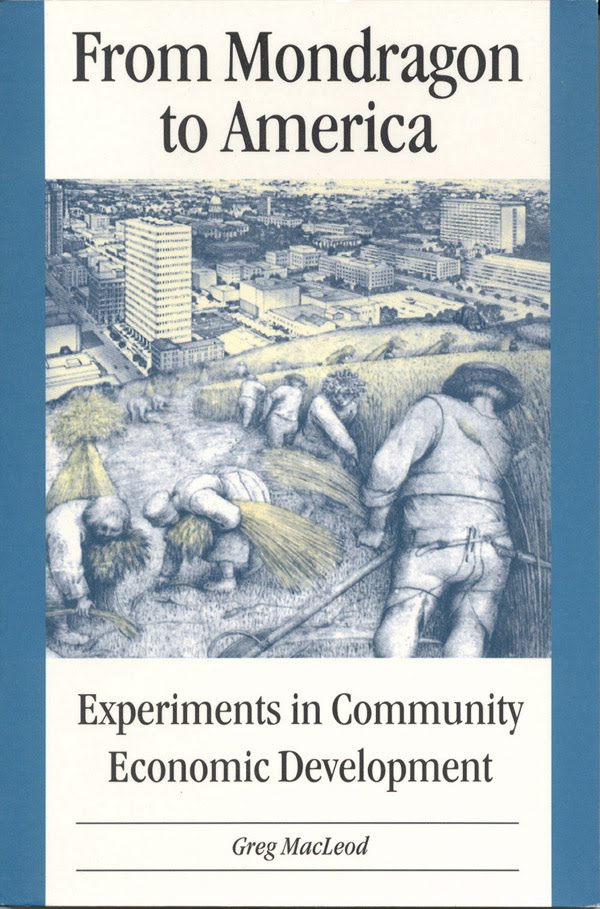
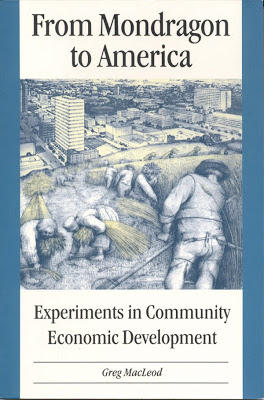
- From Mondragon to America: Experiments in Community Economic Development by Greg MacLeod (UCCB Press, 1997)
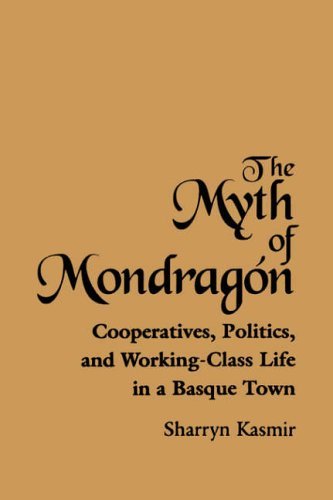
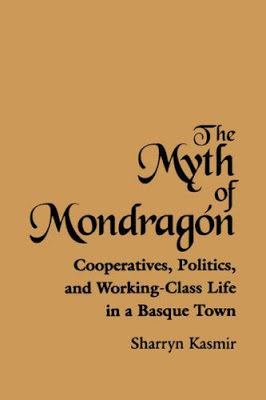
- The Myth of Mondragon: Cooperatives, Politics and Working-Class Life in a Basque Town by Sharryn Kasmir (State University of New York Press, 1996)
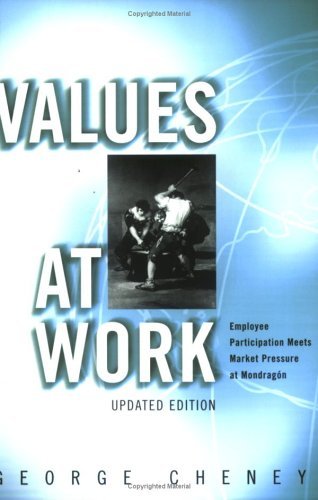
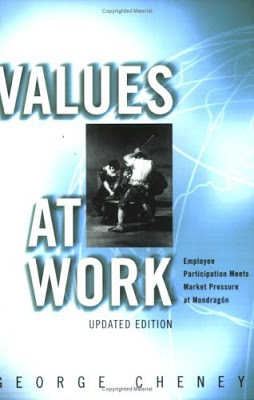
- Values at Work: Employee Participation Meets Market Pressure at Mondragon by George Cheney (Cornell University Press, 1999)
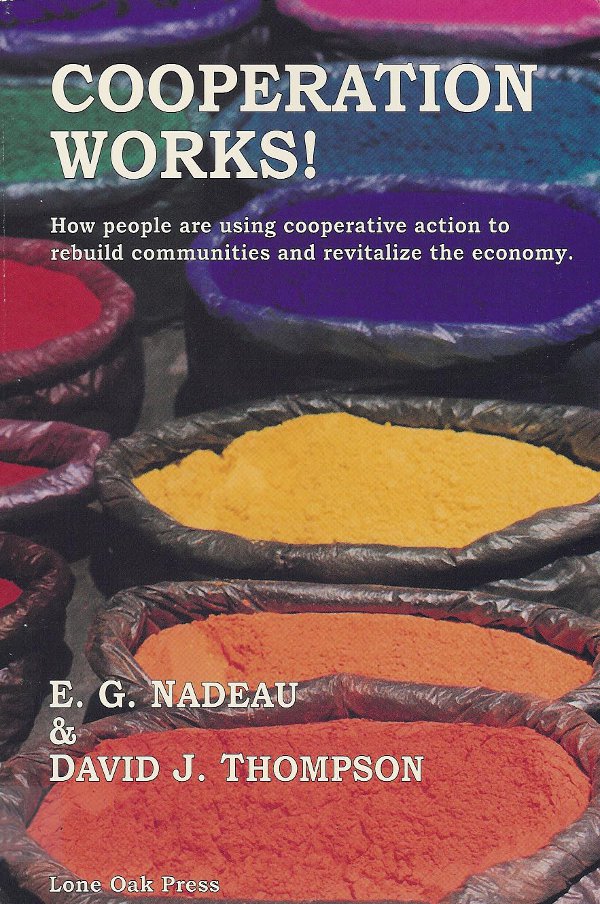
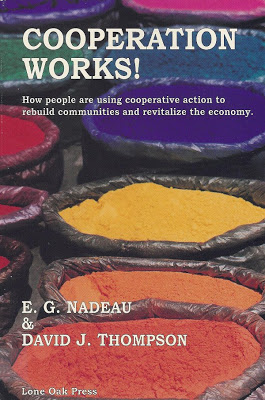
- Cooperation Works! How People Are Using Cooperative Action to Rebuild Communities and Revitalize the Economy by E.G. Nadeau and David J. Thompson (Lone Oak Press, 1996)
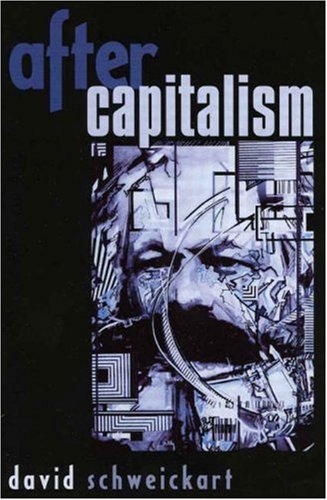
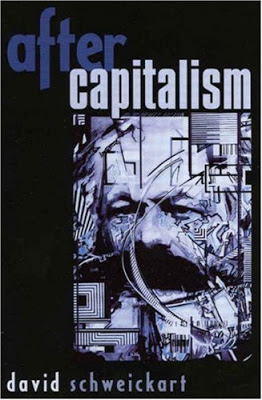
- After Capitalism by David Schweickart (Rowman & Littlefield, 2002)
Something important for both socialist theory and working-class alternatives has been steadily growing in Spain’s Basque country over the past 50 years, and is now spreading slowly across Spain, Europe, and the rest of the globe.
It’s an experiment, at once radical and practical, in how the working class can become the masters of their workplaces and surrounding communities, growing steadily and successfully competing with the capitalism of the old order and laying the foundation for something new — it’s known as the Mondragon Cooperative Corporation (MCC).
Just what that “something new” adds up to is often contested. Some see the experiment as a major new advance in a centuries-old cooperative tradition, while a few go further and see it as a contribution to a new socialism for our time. Some see it both as clever refinement of capitalism and as a reformist diversion likely to fail. And still others see it as a “third way,” full of utopian promise simply to be replicated anywhere in whatever way makes sense to those concerned.
The reality of an experiment on the scale of Mondragon, involving more than 100,000 workers in 120 core industrial, service, and educational coops, is necessarily complex. It can contain all these features contending within itself at once.
That’s what makes MCC a fascinating story where the final chapters are still being written. But one thing is clear: it continues to grow and provide a quality of life for its participants that is unique in its moral benefits and above average in its material standards. Hardly any concerned would give up their position in the project today for the options of the society around them, even if they are skeptical or dubious about various aspects of MCC’s current practices or future prospects.
One MCC worker, for example recently expressed some cynicism about the coops. “People once took them seriously, but not anymore,” she remarked. “You mean it doesn’t matter to you whether you work here or at a private company?” she was asked. “Of course it matters,” she replied. “Here I have job security, and here I can vote.”
If I had to single out one of the five books listed above to tell MCC’s story, it would be the first one, From Mondragon to America by Greg MacLeod, even if its title is a little misleading and its facts 15 years out of date. The reason? It goes deeply into the structures and values at the core of MCC, as well as discussing the philosophical thinking of its founder, Father Jose Maria Arizmendiarrieta, or known more simply as Father Arizmendi.
A priest with a philosophy
The story of Mondragon begins with Father Arizmendi’s arrival in the Basque country of Spain in 1941 following the defeat of the Republicans in the Spanish Civil War. The Basques had been a center of resistance to Franco and the area was devastated by the conflict. Most widely known was the bombing of the Basque city of Guernica, immortalized in the mural masterpiece painted by Pablo Picasso. Father Arizmendi himself had fought with the Republicans, was imprisoned, and barely escaped execution.
As a young priest, he was assigned to the Arrasate-Mondragon region, which was suffering from high unemployment and other serious problems in the war’s aftermath. Arrasate is the Basque name for the area, while Mondragon is the Spanish name; in any case, the industrial mountain valley received little or no help from the Franco regime and was the target of ongoing repression against the Basques, with the fascists trying to stamp out their language and culture as well as their political organizations.
In reorganizing his new parish, Arizmendi thus had to find a way for the Basques to help themselves. He started by forming a small technical school, and helped finance his efforts by convincing the local Basques with meager funds to form a small credit union. He also formed sports and other family-related organizations that could still allow people to gather under the legal restrictions of the fascists.
In addition to being an organizer, Arizmendi was also a deep-thinking intellectual — all the while he was doing a thorough study of Catholic social theory, Marx’s political economy, and the cooperative theories of Robert Owen, the British utopian socialist.
In a few years, armed with these ideas, he selected five graduating students from his technical school and with donations and borrowed funds from the credit union, his team of young workers formed a small cooperative workshop, ULGOR, named from one initial of each of the five students’ names.
It brought in about 20 more workers and started to produce a small but very practical kerosene stoves for cooking and heating. The single-burner stoves were much in demand and the coop thus thrived and grew. Today it’s called FAGOR, and its 8,000 current employee-owners in several divisions produce a wide range of high-quality household appliances sold across the world.
But this small startup in 1956 contained the first secret of MCC’s success — the three-in-one combination of school, credit union, and factory, all owned and controlled by the workers and the community. Starting a coop factory or workshop alone wouldn’t work; a startup also required a reliable source of credit and a source of skills and innovation.
Typically, an MCC coop is entirely owned by its workers — one worker, one share, one vote. Worker-owners get a salary that is a draw against their share of the firm’s annual profit, and is adjusted upward or downward at the end of the year. By Spanish cooperative law, a portion of the profits has to be turned over to the local community for schools, parks, and other common projects, The remainder is set aside for the repair and depreciation of plant and equipment, health care and pensions, and emergency reserves, as well as the workers’ salaries.
Technically, MCC worker-owners are thus not wage labor, but associated producers. There is an income spread, according to skill and seniority, but this is set and modified by the workers themselves meeting in an annual assembly. The assembly also elects a governing council, which in turn hires a CEO and management team.
Managers can be removed from their posts but worker-owners cannot be fired. New hires however, can be fired or laid off during their trial period — about six months. But when their trial period ends, they can buy into the coop. If they don’t have the funds for the value of their share — today about 3,000 Euros — it’s lent to them by the coop bank, and they repay in small amounts over a few years. MCC coops typically have relatively flat hierarchies, and a much smaller number of supervisors compared to similar non-coop firms.
The Ten Principles
Father Arizmendi’s most important intellectual contribution to MCC, however, was the wider formulation of this structure into ten governing principles, which are firmly held and practiced throughout MCC. There is some flexibility around the edges, but not much. Here’s a brief description:
- Open Admission: This means non-discrimination, that all are invited to join the coops — men or women, Basque or non-Basque, religious or non-religious, or from any political party or nonpartisan.
- Democratic Organization. The principle of “one worker, one vote” is the core here, but it also entails a wider participatory democracy in the workplace and engagement with the management team.
- Sovereignty of Labor. This is the underlying core belief describing the overall relation between capital and labor, primarily that labor is the dominant power over capital, at least within the coops, if not fully in the wider local community.
- Capital as Instrument. This is a corollary of the point above. It defines capital as an instrument or tool to be used, deployed and governed by labor, rather than the other way around.
- Self-Management. This stresses the importance of training worker-owners not only to better manage their work on the assembly line, but also to train those elected to the governing councils or selected for management teams to have the wider educational background to steer the cooperatives strategically in the wider society and its markets.
- Pay Solidarity. Here is where the worker-owners themselves determine the spread between the lowest-paid new hires and the top managers, with various skill and seniority levels in between. Originally it was set at 3-to-1, but that was adjusted because it was too difficult to retain good managers. Today the average is 4.5-to-1, compared to 350-to-1 as the average for U.S. firms. The highest single coop’s range is 9-to-1, and only exists at Caja Laboral, MCC’s worker-owned bank.
- Inter-Cooperation. This encourages the various coops to cooperate with each other, forming common sectoral strategies, or for transferring members among coops when some firms’ orders are temporarily too low to provide enough work.
- Social Transformation. The coops are not to look inward and operate in isolation from the community around them. They are to make use of cooperative values to help transform the wider society. For many in the Basque Country this means seeing MCC’s growth as developing a progressive economy for Basque national autonomy and independence.
- Universal Solidarity. The coops are not only to practice solidarity within themselves, but also with the entire labor movement — and not only in Spain, but across the globe as well. MCC has several projects abroad providing assistance in remote areas of Third World nations.
- Education. Just as the first coop was preceded by the establishment of a school and the formation of a cadre with a cooperative consciousness, MCC continues to hold education as its core value, seeing knowledge as power — and the socialization of knowledge as the key to the democratization of power in both the economy and the society.
In shaping these principles, Father Arizmendi also discovered what he believed was a fatal flaw in the cooperative theory of Robert Owen, which was the ability of an Owenite worker-owner to sell his or her share to anyone. This permitted external financiers to buy up the shares of the better firms while starving others.
Thus in MCC, this is forbidden; a retiring worker may “cash out” on leaving the coop, but he or she is not allowed to sell the share to anyone but a new incoming worker, or to the coop itself to hold until it does. This keeps MCC’s capital subordinate to its workers, and is a second secret to its success.
Most of all, these principles have meant that the MCC workers retain control over their own surplus value, using it to provide themselves a modest but above-average standard of living while using their resources for measured and planned growth.
Mondragon has come a long way from ULGOR, the small workshop making the little single-burner kerosene stove. Today MCC unites 122 industrial companies, six financial organizations, 14 retailers (including the Eroski chain with over 200 hypermarkets, supermarkets and convenience stores), plus seven research centers, one university and 14 insurance companies and international trade services. Its total sales in 2009 were 13.9 billion Euros it had a workforce of nearly 100,000 people.
Less than six of the 120 coops have failed over 50 years. In the most recent economic crisis, MCC weathered the storm fairly well. No coop failed, salary reductions were modest, and the only workers laid off were the trial-period new hires. Now things are picking up again. MCC remains a dominant force in the Basque economy, is the leading force in Spain overall, and is now making waves in high-tech manufacturing worldwide.
Cooperativism and trade unionism
What about Mondragon’s wider connections with the Basque and Spanish trade union movement outside the coops? Where do the various parties of the Spanish and Basque left come in?
For some answers to those questions, at least as things were in the mid-1990s, the best treatment is in Sharryn Kasmir’s The Myth of Mondragon. As a sociologist who spent some time in the Basque country, she took great pains to try to discern how workers themselves, inside and outside the coops, viewed MCC.
At bottom, she would agree that the MCC workers, whatever criticisms they may have, would not readily trade places with their counterparts outside. She would also agree that the coops have become a powerful and progressive economic force in the Basque country. But in the end, these “pragmatic” concerns are not hers; she wants to view MCC through the more traditional “ideological” lens of the left.
Kasmir places high priority, for example, on trade union militancy and solidarity and examines and celebrates its history in the area in some detail. The Basque are best known for their high-mountain shepherds but they have a long industrial tradition in the valleys and coastal towns, especially in iron and metalworking.
The workers in these areas — like the Arrasate-Mondragon Valley — formed trade unions early on and have a tradition of solidarity across industries and trades, often shaped in a lively night life in bars involving entire families.
Kasmir does an excellent job digging out this history and showing how it continues. She also reveals, however, that some of its traditional expression has dropped off in the areas where the Mondragon Coops are prevalent. The MCC worker-owners, she notes, are viewed by other workers as “working too hard” and spending less time in the bars in political discussion. Moreover, when strikes are called and other workers are asked to strike in solidarity, the MCC workers only offer a token presence, or don’t show up at all.
“Ekintza, the Basque concept of ‘taking action,’ is a core cultural value,” Kasmir argues. “Basque towns are centers of political activity. In Mondragon, political discussion takes place in bars, demonstrations are frequent, and town walls are covered with posters, murals, and graffiti, making them dynamic arenas for political debate. Far from generating ekintza among workers, however, cooperativism appears to engender apathy.” (p. 195)
Finally, Kasmir gives an example of a small group of young Maoist workers in the ULGOR plant that tried to strike the coop in the 1970s, but failed to win much support. They were expelled from the coop by the other worker-owners, although, after a few years, a good number were brought back in. It was the only strike in all of MCC’s 50-year history, although there have been other conflicts over regionalism and inter-cooperation where a few coops split off.
Kasmir seems to hold to a traditional left view that the task of the left is to organize increasing on-the-job militancy while building one’s strength in the political area with socialist political parties, and to work both the arenas of elections and other mass action campaigns. And as she correctly observes, MCC doesn’t fit this mold.
Class: Looking forward, looking back
What Kasmir glosses over or misunderstands, however, is that there is indeed a critical difference between the workers in MCC coops and workers in other firms. The most important, already mentioned, is that MCC worker-owners are not wage-labor, but associated small producers. Most MCC firms are under 500 workers and many quite smaller.
Second, the MCC firms are not owned by an external force alien to their production process. The managerial strata and the workers’ representatives in the governing councils have the same single ownership share and vote as everyone else.
In other words, when workers in a regular firm go on a sympathy strike, they hurt or pressure the interest of external bosses; but when MCC workers go out, they only subtract from their own material interest. They may do so anyway as a matter of solidarity, much as a small store owner may close for the day of a political strike, but the structure of interest is clearly different from that of the wage-laborer.
Likewise, when MCC worker-owners spend more time at work, or attending school or training sessions after work, subtracting from time spent in the bars — they are contributing directly to their coop’s growth and their own benefit as well, where on the other hand, being forced to work overtime in a regular firm primarily benefits an external owner.
So the interesting question Kasmir leaves unanswered is whether the class position of the MCC worker-owner is a step backward to a petit-bourgeois past or a step forward to a worker-controlled mode of production of a socialist future. Given the overall picture of MCC’s successful growth since the time of her writing, the latter seems the better answer.
Democracy: Representative and participatory
But do the MCC firms’ internal practices still stand as well-functioning examples of direct and participatory democracy in the workplace? Kasmir suggests they are not; that they are simply run by the managers and the rest is pro forma. But her ideological presumptions miss a great deal here that is much better treated in George Cheney’s book, Values at Work: Employee Participation Meets Market Pressure at Mondragon.
Cheney is both more in solidarity with the Mondragon project and in some ways, more critical of it at the same time. His criticisms, however, come largely from within. He holds up MCC’s own values as a mirror to its practice, and then examines the realities.
During a recent study tour of MCC, for example, my group had a session with Fred Freundlich, an American who had been living in the Basque Country for more than a decade and teaching economic theory at MCC’s Mondragon University. We asked for his opinion on how involved the younger MCC workers were with their own governance in the coops.
Frankly, Basque youth aren’t all that active inside the coops. They’re into Third World global justice issues, environmentalism in general, and Basque nationalism. About the coop managers, I’d say a strong minority, maybe 30 percent, have solid cooperative values at heart, another small minority pays lip service to them, and the rest are somewhere in between. We clearly need a new surge of activism to spread cooperativism beyond the factories.
The highest governing body of each coop, and MCC overall, is its General Assembly or Congress. The average participation is around 70 percent, and attendance is required. (One absence results in a warning; a second results in a fine.) Issues decided are important, such as overall salary spreads, strategic direction of products and the election of leadership.
“The General Assembly of worker-members is the highest authority in each company,” explains Freundlich in his 1998 paper, “MCC: An Introduction.” “It must meet at least once a year to address company-wide concerns (though it often meets twice). The General Assembly also elects the company’s Board of Directors and a President of the Board for four-year terms, based on the principle of one-member one-vote. The Board appoints the chief executive and must approve his or her choices for division directors.
“A Social Council,” Freundlich continues, “is elected by departments to represent front line workers’ interests and to help promote two-way communication between management and workers.” Pay solidarity and the distribution of profits to all worker-members, as described previously, are other important cooperative policies.
“While the MCC has its share of workforce controversy and apathy,” he concludes, “and perhaps more today than 30 years ago — these structures and policies have contributed to fairly high levels of commitment to the business and to the cooperative idea, which in turn, many believe, has provided Mondragon firms with a difficult to measure, but nonetheless real, competitive advantage over its conventional competitors.”
Other studies of various MCC components, such as Eroski, have placed the average quantifiable advantage self-management has given MCC coops over non-MCC firms in the marketplace at 15 percent.
“If one enters a Mondragon factory,” writes George Benello in the magazine Reinventing Anarchy Again, “one of the more obvious features is a European-style coffee bar, occupied by members taking a break. It is emblematic of the work style, which is serious but relaxed. Mondragon productivity is very high — higher than in its capitalist counterparts. Efficiency, measured as the ratio of utilized resources (capital and labor) to output, is far higher than in comparable capitalist factories.”
Changes, large and small
As for shifting attitudes, Basque society itself has seen major changes over the past 30 years. “Such changes are revealed, for example,” says Cheney, “in the dramatic drop in attendance at Mass in the Basque country, from about 75 percent in 1975 to less than 25 percent today.” (p. 56). What this shows is that the Basques have not been immune to a weakening of traditional ties and the growing secularism and consumerism prevalent in Europe.
Even so, there is still a considerable degree of participation and debate at the base of the MCC coops, even if it doesn’t take the forms or rise to the level those on the governing councils or management teams would like to see. One ongoing debate is over the salary spread between managers and production workers. According to Wikipedia:
At Mondragon, there are agreed-upon wage ratios between the worker-owners who do executive work and those who work in the field or factory and earn a minimum wage. These ratios range from 3:1 to 9:1 in different cooperatives and average 5:1. That is, the general manager of an average Mondragon cooperative earns 5 times as much as the theoretical minimum wage paid in his/her cooperative. This ratio is in reality smaller because there are few Mondragon worker-owners that earn minimum wages, their jobs being somewhat specialized and classified at higher wage levels.[10]
Although the ratio for each cooperative varies, it is worker-owners within that cooperative who decide through a democratic vote what these ratios should be. Thus, if a general manager of a cooperative has a ratio of 9:1, it is because its worker-owners decided it was a fair ratio to maintain.[10]
In general, wages at Mondragon, as compared to similar jobs in local industries, are 30% or less at the management levels and equivalent at the middle management, technical, and professional levels. As a result, Mondragon worker-owners at the lower wage levels earn an average of 13% higher wages than workers in similar businesses. In addition, the ratios are further diminished because Spain uses a progressive tax rate, so those with higher wages pay higher taxes.[10]
Another key tension and debate arose in the 1990s, when Mondragon transformed itself from a federation of coops loosely connected through their “second degree” coops — the bank, the social insurance agencies, the university and research institutes — into MCC with its “sectoral” structures — industrial, financial, retail distribution, and knowledge. The more centralized and unified structure enabled Mondragon’s management teams to develop and pursue common strategies to better compete collectively with their rivals in the marketplace.
While this relatively greater degree of centralization proved very successful, it also increased market pressures on the individual coops in the form of intensity of work and speed of innovation. “Finding the balance,” explains Cheney, is the key term used to resolve differences.
Prospects for coops in the U.S.
Can an experiment like Mondragon find fertile ground in the U.S.? This is a topic addressed in Cooperation Works! How People Are Using Cooperatives to Rebuild Communities and Revitalize the Economy by E.G. Nadeau and David J. Thompson. This work offers a survey of some 50 cooperative ventures in 12 different areas of the U.S. society, both historical and current — including agriculture, housing, business purchasing coops, credit unions, social services, and power utilities — as well as worker-owned industrial coops.
The authors reveal two key points. The first is that cooperatives have a long, rich, and varied history across the U.S, ranging from wheat farmers banding together to manufacture and market their own pasta products, to home health care providers building their own company to provide decent wages and benefits in an occupation that often suffers from poor conditions.
The second is that none of these 50 case studies, successful or unsuccessful, has followed the Mondragon model of a three-in-one combination of school, credit union, and factory — even though in a number of areas these three components exist nearby each other. (The book’s appendix lists the top 100 coops in the U.S., which is quite useful.)
That doesn’t mean some of these coop ventures aren’t doing well or breaking new ground. The Cooperative Home Care Associates, based in The Bronx, New York, has grown to include more than 1,600 worker-owners, and has vastly improved the lives of the mainly Black and Latino women workers involved.
“By transforming part-time home care jobs into full-time positions,” states board member Kim Alleyne,
CHCA differentiates itself from other firms in New York City’s home care industry. Specifically, we invest significant capacity in scheduling our home care workers for at least 30 hours each week… We also allocate 80 percent of our total revenue to the wage and fringe benefits costs of our home care workers — including a comprehensive health and dental insurance benefit that does not require a financial contribution from employees.
We also offer our home care continuing education with many opportunities to accumulate assets, including worker-ownership, through which employees can accumulate a $1,000 equity stake in CHCA and receive dividends based on our annual profits, an employer-contribution to their 401(k) account in profitable years; and as an alternative to predatory payday loans, CHCA offers no-interest loans that average $250. We also encourage workers to create savings and checking accounts, instead of relying on expensive check cashing services.
For another interesting example, one can look to California’s Bay Area. Here Cheeseboard Pizza and five other bakeries have formed a networked cooperative of Arizmendi Bakeries. With some 200 worker-owners, they produce baked goods combined with retail eateries that keep winning prizes for the best food and best places to eat in the area. Even though the scale is small compared to MCC in Spain, they also include in their network one “second degree” coop that helps them all with financial services.
In North Carolina, however, a project called the Center for Community Self-Help, started by Martin Eakes and Bonnie Wright, highlighted a core problem. They retrained workers displaced by plant shutdowns, and hoped to help them form coops. Cooperation Works! explains:
Eakes and Wright discovered that the engine that gave Mondragon its power was missing in North Carolina and was stalling the development of worker coops. That element was access to capital. For the Mondragon Cooperatives, the Caja Laboral (or “Workers Bank”) furnished the necessary capital to launch successful ventures. Thus Eakes and Wright concluded their next step was to create a Caja for North Carolina.
So that’s exactly what the couple did. Starting with a bake sale, within three years they formed the Self-Help Credit Union with several million dollars in deposits from area churches and government grants. In another seven years, this had launched new businesses with some 4,000 jobs and 2,000 child care spaces.
Cleveland, Ohio has a similar story. For years the Cleveland Foundation and other nonprofits had been repeatedly funding job training programs for the long-term unemployed in low-income neighborhoods, only to find that their newly certified workers still couldn’t find employment. Finally, a core group of funders and allies made the trek to Mondragon, and they were inspired on their return to form the Evergreen Cooperatives, with local colleges serving as schools and the foundations serving as sources of startup capital.
Three businesses are now underway: Evergreen Cooperative Laundry, an industrial-scale operation doing laundry for major medical centers nearby; Ohio Cooperative Solar, which leases urban business rooftops and installs solar arrays, providing electric power to the region’s grid; and Green City Growers, an industrial-scale urban agriculture venture producing fresh produce for local markets and restaurants. A dozen more coop businesses are on the drawing boards.
Another project, in Chicago decided to follow Father Arizmendi’s model closely, and started with the design and organization of a new public school in a low-income neighborhood, Austin Polytechnical Academy. With ideas of worker participation and worker ownership built into the school’s mission and curriculum, it will graduate its first class of students with high-tech manufacturing skills in 2011. The school was developed with partners from area trade unions and some 20 high-tech manufacturing firms. A number of the students have gone to Mondragon on study tours.
Agreement with the steelworkers
What gave a national focus to all these efforts was a recent decision by the United Steel Workers, one of the largest industrial unions in the U.S, to declare a formal partnership with MCC to try to establish worker-owned enterprises in depressed Rust Belt regions. This was soon followed by a similar partnership declaration between MCC and the City of Richmond in the Bay Area to launch a similar effort.
The U.S., of course, continues to face dire economic conditions. Bank credit is difficult to obtain and unemployment is near 10 percent. Government at every level, blocked by a neoliberal budget-cutting resurgence, is slashing funds for community and small business development in favor of tax breaks for the super-rich.
This manufactured austerity is a two-edged sword as far as coops are concerned. One edge is that there is little help coming from government, which makes new ventures very tough. The other edge is that the solidarity economy, of which MCC is a mother lode of ideas and experience, emerges precisely when government fails and people have only each other to turn to for mutual aid. The harsh conditions become a spur to radical experiments and strategies for structural change.
This is where the last of these five books takes center stage, David Schweickart’s After Capitalism. In this short but lucid book, Schweickart draws on his earlier studies of workers’ control in Yugoslavia and his own experiences in Mondragon and elsewhere, and raises all of these to a wider working hypothesis for a new socialism for the 21st century. He calls his effort “successor-system theory” and names its project “Economic Democracy.”
The core idea is that the workers themselves democratically elect the managers of their firms, which are either leased from the government collectively or owned cooperatively outright. They also share the wealth they create by sharing the profits among themselves. They make their money the old-fashioned way: by finding consumer needs, meeting those needs with decent products, and selling them to satisfied customers at reasonable prices.
We can see the Mondragon model here, but painted on a much wider canvas of an entire nation’s economy. Schweickart’s theory is one of the main variants of what is called “worker controlled market socialism,” and his task in this work is not so much to tell us how to get there, but to show how it can work once we do get there.
The heart of his argument rests on dividing markets into three — capital markets, labor markets, and markets in goods and services. Capital markets he would abolish or at least severely restrict by government buyouts or takeovers of major banks and corporations in a time of crisis and turning them into public asset funds.
Labor markets he would drastically change or restrict by vastly reducing wage labor, turning most workers into owners or leaseholders of their factories. Workers each have one equal vote, and elect their managers.
Markets in goods and services, however, would remain, although regulated for ecological sustainability and other matters related to the common good.
Mondragon as a bridge to socialism
Even if the Mondragon cooperators themselves don’t speak directly of wider socialist theory, Schweickart does it for them in this work. “The Mondragon complex did not develop as a purely pragmatic response to local conditions,” he explains.
Arizmendiarrieta was deeply concerned about social justice and explicitly critical of capitalism, basing his critique on progressive Catholic social doctrine, the socialist tradition, and the philosophy of “personalism” developed by Monier, Maritain, and other French Catholic philosophers. He was critical of Soviet state socialism and certain elements of the cooperative movement itself. He was particularly sensitive to the danger of a cooperative becoming simply a “collective egoist,” concerned only with the well-being of its membership.
Schweickart goes on to note the problems of conflict, tension, and abstention from participation within the MCC coops mentioned by both Kasmir and Cheney. But he draws this conclusion:
The presence of worker alienation and of certain practices that cut against the grain of Arizmendiarrieta’s vision should not blind us to two striking lessons that can be drawn from the economic success of Mondragon. First, enterprises, even when highly sophisticated, can be structured democratically without any loss of efficiency. Even a large enterprise, comparable in size to a multinational corporation, can be given a democratic structure.
Second, an efficient and economically dynamic sector can flourish without capitalists. Capitalists do not manage the Mondragon cooperatives. Capitalists do not provide entrepreneurial talent. Capitalists do not supply the capital for the development of new enterprises or the expansion of existing ones. But these three functions — managing enterprises, engaging in entrepreneurial activities, and supplying capital — are the only functions the capitalist class has ever performed. The Mondragon record strongly suggests that we don’t need capitalists anymore — which, of course, is the central thesis of this book.
What Schweickart is doing, of course, is dispensing with all the usual arguments capitalist apologists circulate among average workers as to why socialism can’t work. In addition to the intellectual arguments, he simply points to Mondragon, which continues to move forward as the living example of another path.
In this sense, what the MCC worker-owners have established is a bridge to a small fortress that serves as a foothold in the future, a powerful example of one not-so-small victory in a Gramscian “war of position.”
To a certain extent, many of the MCC workers and managers would agree. MCC itself is officially “nonpartisan,” meaning that it’s not tied to any particular Basque or Spanish political party.
But this does not mean “anti-partisan.” MCC works with a number of socialist and Basque nationalist parties and officials to build up the economy and educational planning infrastructure of Euskadi, the Basque name for their “Basque Country,” for which they are working for a high degree of regional autonomy, if not national independence.
In the MCC coops, the workers belong to a range of socialist, communist, and Basque nationalist groups ranging from left to center. There have been sharp differences between socialists and some of the more militant nationalist groups in the recent past, but today, the trend is for a wider popular unity and a cessation of any violence.
Not all cooperatives are on the left, of course, and not only in Spain, but elsewhere, including in the U.S. Nor are those that do have progressive politics at their core the only examples of strongholds that can be won in the “war of position.”
There are many other “strong points” in need of multiplying and growing — progressive trade unions and labor councils, community-driven schools and civic organizations and coalitions, and, naturally, progressive political organizations and parties rooted in working-class communities. These are all organizational instruments for a range of tactics that will be required in different phases and a variety of fronts in class struggle and popular democratic campaigns.
What Mondragon has done for us, however, is to make a major breakthrough in both theory and practice and bring it to scale as a powerful example of what can begin to happen when “labor is sovereign” in a new socialism for a new century.
[Carl Davidson is a national co-chair of the Committees of Correspondence for Democracy and Socialism, a national board member of the Solidarity Economy Network, and a member of Steelworker Associates. He is also the co-author, with Jerry Harris, of CyberRadicalism: A New Left for a Global Age. His email is carld717@gmail, and he is available to speak on Mondragon.]
The Rag Blog