U.S. in Afghanistan : 1979-2009

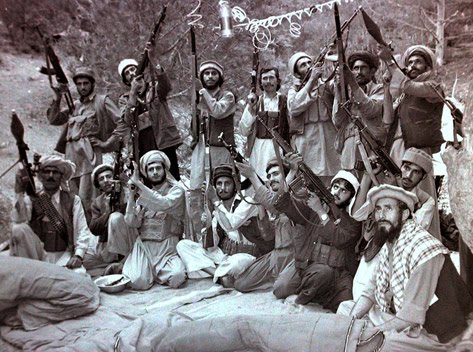
Afghanistan: Mujahedin in 1984. Photo from U.S. Foreign Policy in Perspective.

The thirty years war:
The United States in Afghanistan

By Harry Targ / The Rag Blog / December 27, 2009

When the Soviet Union sent 85,000 of its troops to Afghanistan in late December 1979 President Carter declared that the United States was forced to return to Cold War military preparedness. But, in fact, the Carter administration had been escalating military commitments and operations throughout 1979, months before the Soviet action.

In a brief televised address two weeks after the Soviet invasion, the President denounced it as “a deliberate effort by a powerful atheistic government to subjugate an independent Islamic people.” He said it threatened “both Iran and Pakistan” and was “a stepping-stone” for the Soviets’ possible control “over much of the world’s oil supplies.”

The President followed his brief condemnation with a lengthy State of the Union address to the American people on January 21, 1980. In it he announced some extraordinary changes in United States foreign policy that constituted a decisive return to Cold War with the Soviet Union.

The changes Carter initiated included the following: reduction of grain sales to the Soviet Union; curtailment of high technology trade with them; postponement of ratification of the SALT II arms control agreement; enlarging strategic forces; beefing up NATO forces; establishing a Caribbean Joint Task Force Headquarters; unleashing the CIA; installing a program of draft registration; and providing more military assistance to Pakistan, South Korea, and Thailand.

Perhaps the most important policy change was the establishment of a 100,000 person military “rapid deployment force” which could be instantly mobilized in crisis situations. And he proclaimed that the Persian Gulf was vital to U.S. security interests and would be protected; this became known as the Carter Doctrine.

All these announced changes were billed by administration spokespersons as a response to the duplicitous Soviet invasion of Afghanistan. Ultimately, the Soviets wanted to invade Iran, secure Persian Gulf oil, secure warm water ports, and expand their Asian empire. The U.S., they said, had to respond to this expansion of the Cold War.

But a careful examination of the events of 1979 prior to the Soviet invasion suggests a different timeline and interpretation. In January 1979 the Shah of Iran, the closest of U.S. allies, was toppled in a revolution. Carter’s aides initially had urged him to send troops to Teheran to save our Persian Gulf cop from ouster but the revolution came too fast to save the Shah.

After Iran, in the Caribbean and Central America revolutions occurred in tiny Grenada (March 1979) and historically anti-Communist Nicaragua (July 1979). There was a coup by military reformers in El Salvador (October 1979). In early November 1979 Iranian students took approximately 70 U.S. government representatives hostage.

The administration perceived itself as being threatened by the spread of hostile regimes and movements and the collapse of the vital ally in Iran was deemed the most critical to U.S. interests. As a result of all these crises, Carter began military rearmament, secured new bases, tried to undermine the changes occurring in Nicaragua and El Salvador, and allowed the Shah of Iran to enter the United States in October 1979 for medical treatment.

Inside the Carter administration, foreign policy decision makers feared the collapse of U.S. power around the world. However, they felt the United States could not respond because of the so-called “Vietnam Syndrome.” That is, decision makers believed that most Americans opposed a return to militarism and interventionism.

Then, fortunately for the Carter team, the Soviet Union, fearful of the collapse of an allied regime in Kabul and increasingly seeing itself as encircled by China in the East and a beefed up NATO in the West, sent troops into Afghanistan. The Soviet Union fell into a trap set by the Carter Administration.

What was the nature of this trap? Well, Jimmy Carter’s National Security Advisor, Zbigniew Brzezinski, in an interview given to the French newspaper Le Nouvel Observateur in January 1998, said that official CIA accounts which say the United States began to support rebels in Afghanistan after the Soviet invasion were lies. In fact, he said, “…it was July 3, 1979 that President Carter signed the first directive for secret aid to the opponents of the pro-Soviet regime in Kabul.” The National Security advisor said he wrote the President “…that in my opinion this aid was going to induce a Soviet military intervention.”

Brzezinski told Carter that the Soviets would probably intervene in Afghanistan if we funded rebels and that they, the Soviets, would then be buried in their own Vietnam. In retrospect, he said, the Soviet incursion led to the collapse of the Soviet Union and its “empire.” He suggested that the rise of Islamic fundamentalism was of minor concern compared to the threat of international communism.

Reflecting back 30 years, the following conclusions seem justified. First the United States returned to an aggressive Cold War policy not after the Soviet invasion of Afghanistan but before it.

Second, President Carter announced a broad array of aggressive policies toward the Soviet Union after the Soviet invasion but these were in place or in the process of development before the Soviet moves of December 1979.

Third, the United States began funding the various fundamentalist groups to fight against the secular and modernizing regime in Kabul before the Soviets sent troops. And that led subsequently, as the Center for Defense Information estimated, to the United States funneling $2 billion to rebel forces in Afghanistan in the 1980s.

Fourth, the war on the pro-Soviet regime in Kabul destroyed efforts to modernize the tradition-bound country. Women, who had become active participants in public life and the economy in the 1980s lost control of their lives after the pro-Soviet regime collapsed. In general, an estimated one million Afghans died in the 1980s from war and repression and some five million fled the country.

We know about what happened after the troubled 1980s in Afghanistan. The Soviet troops withdrew. After a time, the secular regime in Kabul was ousted from power. Competing fundamentalist militias vied for control of the state. The Taliban consolidated their power by 1996. Then the United States launched its public war on Afghanistan in October 2001. But, the record suggests, the United States initiated its war on the country as far back as July 1979.

The pain and suffering of the peoples of Afghanistan has a long history before and since the United States intervened in their political lives in 1979. Many outside powers share responsibility for their plight. But today’s situation directly relates to the covert war the United States encouraged and funded from the summer of 1979.

[Harry Tarq is a professor in American Studies who lives in West Lafayette, Indiana. He blogs at Diary of a Heartland Radical, where this article also appears.]

The Rag Blog

Posted in Rag Bloggers | Tagged , , , , , , | 5 Comments

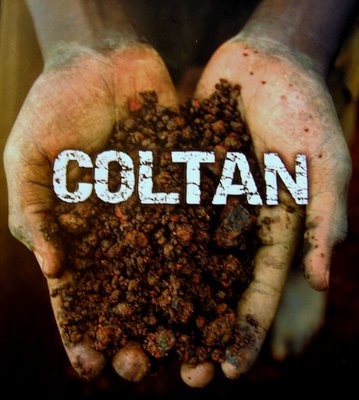
Coltan in Venezuela : Chavez Putting Chips on War?

Above, image from Intimidad Violada. Below, capacitor made with coltan.

Valuable electronics ore mixes with oil
To produce rumbles of war with Colombia

By Marion Delgado / The Rag Blog / December 26, 2009

WARS. There are so many of them that foreign correspondent and world traveler Marion Delgado runs into them from time to time as he wanders the earth.

He was in Nicaragua during the Contra war, survived a Guatemalan coup, and was living in San Cristobol de la Casas that New Year’s Eve when the Zapatistas came to town to issue their declaration of war against the corrupt government of President Carlos Salinas in Mexico. He was briefly a prisoner of some sort of renegade armed group in El Salvador. When Colombia invaded Ecuador Marion and his companera Sylvia Avery were on the last plane out before the borders were closed.

Now, once again, he is uniquely positioned to watch the beginnings of a South American war up close. In Colombia he has had face-to-face encounters with Colombian Army (COLAR) anti-guerrilla units, the Fuerzas Armadas Revolucionarias de Colombia – Ejército del Pueblo, (FARC-EP,) and some paramilitary (paracos) each of which usually costs him a few thousand pesos. So, what is coltan and why might it interest Delgado, American taxpayers, and anti-war activists?]

CARTAGENA DE INDIES, Colombia — Coltan is the industrial name for columbite — tantalite, a dull black metallic ore containing the elements niobium (formerly “columbium”) and tantalum. The niobium-bearing mineral is columbite, hence the “col” half of the term. The mineral concentrates dominated by tantalum are called tantalite.

Tantalum from coltan is used in consumer electronics products such as cell phones, DVD players, video game systems and computers; in hearing aids and pacemakers, airbags, GPS, ignition systems and anti-lock braking systems in automobiles; in laptop computers, mobile phones, video game consoles, video cameras and digital cameras.

Niobium is used mostly in alloys, the largest part in special steel such as is used in gas pipelines. Although alloys contain a maximum of 0.1% niobium, that small amount improves the strength of the steel. The temperature stability of niobium-containing super alloys is important in jet and rocket engines.

Export of coltan from the eastern Democratic Republic of the Congo to European and American markets has been cited by experts as helping to finance the present-day conflict in the Congo. An estimated 5.4 million people have died since 1998 in the Congo conflict.

The upsurge in electronic products over the past decade resulted in a price peak in late 2000 with inflated high demand and price increases for the mineral, which lasted a few months. In 2005, the price was still at early 2000 levels.

Thanks to this mineral, the world has witnessed a reduction in size of all electronic devices. Tantalum is an ideal high-temperature superconductor, can temporarily store an electrical charge and release it when needed, and resists corrosion.

What does that have to do with a South American War? Well, a significant reserve of coltan was discovered in 2009 in western Venezuela. In 2009, the Colombian government announced that coltan reserves had been found in eastern provinces of Colombia.

In the minds of most Colombians, coltan came into existence only a couple of weeks ago, when the president of Venezuela, Hugo Chávez, announced the discovery of a giant coltan field near Venezuela’s border with Colombia. On Nov. 5, Chavez ordered a militarization of the Orinoco region to protect this strategic mineral because, he said, Colombian traffickers continue to cross the border, running through the Orinoco River basin, to extract the mineral. In what is titled Operation Blue Gold, 15,000 Air Force, Army, and Navy personnel will protect the coltan reserve, which straddles the Venezuelan states of Bolivar and Amazonas.

Vice President and Defense Minister Ramon Carrizalez visited the site of the reserve in an indigenous community called El Paloma, and said the troops would help combat drug trafficking and illegal armed groups in the region, in addition to protecting the reserve. “

We have more than 15,000 men deployed along our western border, combating all the crimes that occur along the border, as you know, crimes which come from another country and are not ours.

It is a mineral of strategic character, and therefore it stimulates the imperial appetite and the appetite of the business people who seek to obtain maximum profit without giving importance to environmental damage or the destabilization of countries.

He made specific reference to the civil war-plagued Democratic Republic of the Congo, where the world’s largest known coltan reserves lie, and where Belgium and the U.S. Central Intelligence Agency (CIA) collaborated to overthrow the first democratically elected prime minister, Patrice Lumumba, in 1964.

Called “blue gold,” “oil from the mud,” or “the new manna,” coltan has been found, besides in the Congo, in Australia, Brazil, China, and, more recently, Venezuela, Bolivia, and Colombia. Evidence of coltan deposits in the Orinoco region, especially in the Departments of Vichada, Guainía, and Vaupés, has generated a wave of traders, speculators, and armed groups around a business that this year alone could move more than $40 million USD. And that is only the tip of the iceberg.

For four years, coltan has been mined in eastern Colombia for export to international traders. A couple of months ago it was leaked to news media that a company had asked permission (licenses) to remove coltan in 35,000 hectares between Vichada and Guainía. Another four licenses are underway.

Coltan’s downside is violence spawned by greed. In Africa, the coltan bonanza — the mineral can bring between $60,000 and $100,000 USD a ton — has become fuel for multilateral conflict (often called the “world war of Africa”) which has killed hundreds of thousands of people. As many more have been displaced, and the accompanying environmental disaster of strip mining also involves the water sources of neighboring countries. Warring militias fight each other for control of coltan and other minerals in an endless spiral of violence.

There has been so much bleeding that for three years it has been prohibited to buy coltan from the Congo. However, Congo ore smuggled out from countries such as Rwanda and Uganda finds anxious buyers, especially in the U.S., Germany, Holland, Belgium, and Kazakhstan.

About three years ago, a handful of traders came to Vichada and Guainía to promote the exploitation of coltan near the Orinoco River and its tributaries. Mining of coltan is not regulated, and traders used false records to disguise the fact that some extraction sites are on Indian reservations. By the rivers and hillsides, traders collect the mineral, which is taken to Bogotá and sold. Some say traders pay a tax of $2,000–2,500 per ton to the Autodefensas Unidas de Colombia, (AUC) or to the rebel guerrillas in some coltan mining areas.

While Chavez has ordered militarization of Venezuela’s coltan area and declared it a national resource, authorities in Colombia just know theirs exists.

Meanwhile, in Venezuela, reserves of coltan and other strategic minerals were found south of the Orinoco River — in eastern Venezuela — as part of an aerial survey carried out with Iranian cooperation. Iranians, oh no, in Venezuela, what is that crazy Chavez up to now? Venezuelan Industries and Mining Minister Rodolfo Sanz didn’t reveal the amount of the coltan reserves spotted or their precise location, but added that diamond, phosphate, titanium, and lead deposits also were found.

Separately, Science and Technology Minister Jesse Chacon, who accompanied Sanz at a press conference on November 13. 2009, confirmed that important deposits of kaolinite have been found and are being developed with assistance from Russia. The Russians, too, ¡O dios mio! He said Russia will also provide technological assistance to treat Venezuela’s recently discovered uranium deposits. Chacon, who said uranium will be used for energy production “because oil will run out,” ruled out using the mineral for military purposes. Do I smell “weapons of mass destruction”?

There’s nothing particularly evil about coltan the substance itself, of course, it’s just this decade’s whale oil, and woe betide the cavorting cetaceans who might get in the way of the harpoons, as the corporate greed fest sends out its Ahabs. Venezuela, where there is not only oil in abundance but a new-found supply of coltan, is simply a bigger Moby Dick.

Forcible annexation of the Venezuelan people into corporate serfdom has therefore been marked onto PowerPoint agendas and is proceeding apace. Annoyingly, the Venezuelans are the difficult sort, and have yet to succumb to a pro-corporate dictator, at least for the past few years.

To make things worse, they’ve diverted some of the profits from the oil industry as it drains away their subsoil bonanza, and have bought tanks and planes. This means that a quick takeover by, say, Aegis, Executive Outcomes, or Xe is quite a bit more difficult; the coltan industry will have to get together with the oil industry, and hire the Big Dog to get the job done.

That’s Uncle Sam, of course, and though he is already drooling with bloodlust to crush the life out of those unprofitable humans there in Caracas, he can’t be properly unleashed without a lengthy and expensive propaganda campaign directing the U.S. population to snarl with hatred and fear at Venezuela.

That’s where you and I come in, and some of the cue-cards are already available, so let’s get cracking with our chants, to be delivered at every television-led Hate Minute:

“Chavez is a dictator!” “Chavez is in league with Ahmedinajahad!” “Chavez is a Communist in league with FARC!”

Of course the pros will come out with shorter versions of these chants, as they currently have too many syllables for Fox news watchers. Have no doubt that it will be done, however, because we’re talking about oil and coltan, and that means profits. No, not profits for you, silly, profits for our betters, who have the sense to put those profits into Euros and gold and hide them in the Cayman Islands or the Lesser Antilles, brass plate operations generally. Otherwise they’d turn into tax money and the blood — I mean profit — would get spread around rather than properly piling up with the super-rich.

For you and I, the blood can only spill from our children’s bodies as we send them in uniform to get the job done. The worse the horror, the more the corporate media polls will show we approve. The more who die pointlessly, the more we will support the troops. Support the troops! Support the troops! You support the troops, don’t you? What kind of un-American monster wouldn’t support the troops?

In Mérida, on Nov. 10, 2009, President Chavez declared that Venezuela is prepared to defend itself against an act of aggression from Colombia or the United States, countries which recently signed a military pact to allow the U.S. to use Colombian bases to increase its military and intelligence operations across Latin America.

[Colombia and the U.S. signed a military pact on October 30th to expand U.S. military presence at seven Colombian air, naval, and army bases, grant U.S. personnel diplomatic immunity for crimes they commit in Colombia, and facilitate the movement of the U.S. military throughout the country.]

Chavez called on commanders of the Venezuelan Armed Forces to “lose no time; we are going to form militias of revolutionary students, workers, women, everyone ready to defend this sacred homeland.

“Don’t make the mistake, President Obama, of ordering an overt aggression against Venezuela utilizing Colombia,” Chavez continued. “We are ready for anything, and Venezuela will never, never be a Yankee colony again.”

If the U.S. and Colombia start a war with Venezuela, he warned later on his weekly television talk show, “It would be the start of a hundred year war, and this war would extend across this entire continent.”

At the United Nations on Nov. 11, Colombia brought what it called threats of war from Venezuela to the Security Council. A letter to all members of the Security Council was seen as a move to gain U.N. approval for war on Venezuela. However, Chavez spoke of a defensive war, not invading Colombia. For months he has warned that a military pact between Bogotá and Washington could set the stage for a U.S. invasion of Venezuela from Colombia.

The U.S. and Colombia dismiss the charge, saying the pact will combat drug traffickers and Marxist insurgents in Colombia. Meanwhile, however, the U.S. is setting up the same armed drone capability that is currently bombing Afghanistan and Pakistan.

Recriminations have increased recently, with Colombia accusing Chavez of not helping combat drug-running rebels hiding on Venezuela’s side of the border and Chavez calling Colombia a lap-dog of the U.S. Empire.

  • For previous reports from Colombia by Marion Delgado, go here.

.The Rag Blog

Posted in Rag Bloggers | Tagged , , , , , , , , | 2 Comments

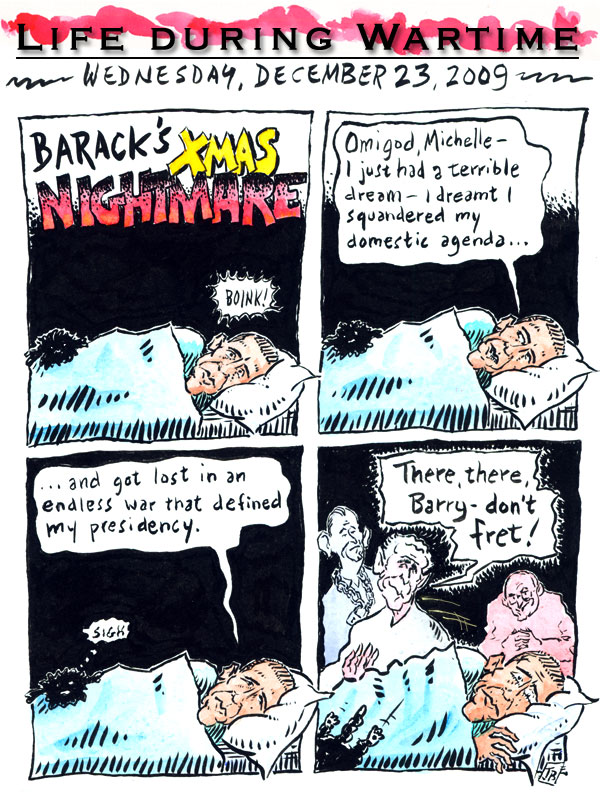
Life During Wartime : Barack’s Xmas Nightmare

CLICK ON IMAGE TO ENLARGE

Political cartoon by Joshua Brown / Historians Against the War / The Rag Blog

Thanks to Dr. S.R. Keister /The Rag Blog

Posted in RagBlog | Tagged , , , , | Leave a comment

Lester ‘Red’ Rodney : The Sportswriter Who Helped Break Baseball’s Color Line

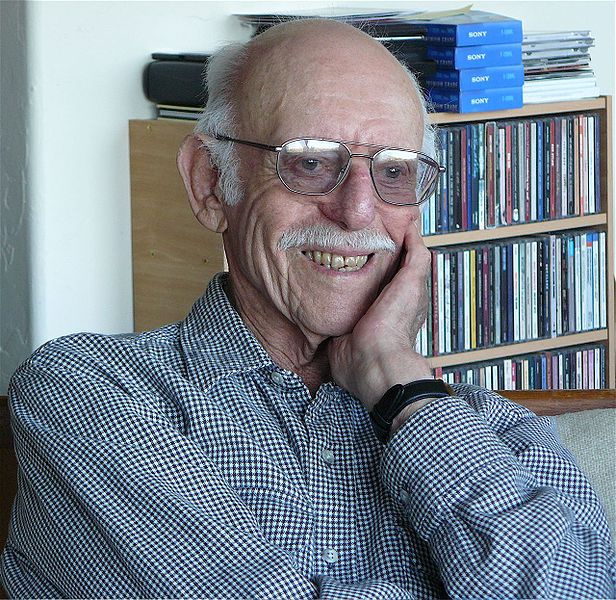
Sportswriter Lester “Red” Rodney, September 2007. Photograph by Byron LaGoy / Wikipedia Commons.

More than a sportswriter:
Lester ‘Red’ Rodney: 1911-2009

By Dave Zirin / December 24, 2009

It didn’t make SportsCenter, but one of history’s most influential sportswriters died this week at the age of 98. His name was Lester Rodney.

Lester was one of the first people to write about a young Negro League prospect named Jackie Robinson. He was the last living journalist to cover the famous 1938 fight at Yankee Stadium between “The Brown Bomber” Joe Louis and Hitler favorite, Max Schmeling. He crusaded against baseball’s color line when almost every other journalist pretended it didn’t exist. He edited a political sports page that engaged his audience in how to fight for a more just sports world.

His writing, which could describe the beauty of a well-turned double play in one sentence and blast injustice in the next, is still bracing and ahead of its time. He should be in the Baseball Hall of Fame. Instead he was largely erased from the books.

If you have never heard of Lester Rodney, there is a very simple reason why: the newspaper he worked at from 1936-1958 was the Daily Worker, the party press of the U.S. Communist Party. Lester used his paper to launch the first campaign to end the color line in Major League Baseball. I spoke to Lester about this in 2004 and he said to me,

It’s amazing. You go back and you read the great newspapers in the thirties, you’ll find no editorials saying, ‘What’s going on here? This is America, land of the free and people with the wrong pigmentation of skin can’t play baseball?’ Nothing like that. No challenges to the league, to the commissioner, no talking about Satchel Paige and Josh Gibson, who were obviously of superstar caliber. So it was this tremendous vacuum waiting.

I spoke to the leaders of the YCL [the Young Communist League]. We talked about circulating the paper [at ballparks]. It just evolved as we talked about the color line and some kids in the YCL suggested, ‘Why don’t we go to the ballparks — to Yankee Stadium, Ebbets Field, the Polo Grounds — with petitions?’ We wound up with at least a million and a half signatures that we delivered straight to the desk of [baseball commissioner] Judge Landis.

As Lester fought to end the color ban, he also never stopped highlighting and covering the Negro League teams, giving them press at a time when they were invisible men outside of the African American press.

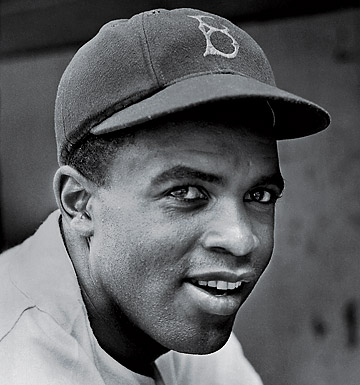
Jackie Robinson.

But it was Jackie Robinson who captured Lester’s imagination. Armed with a press pass to the Ebbets Field locker room, he saw up close the way Robinson was told to “just shut up and play” despite the constant harassment during his inaugural 1947 campaign. “Jackie was suppressing his very being, his personality,” said Lester. “He was a fiercely intelligent man. He knew his role and he accepted it. And the black players who followed him knew what he meant too.”

Lester saw the way their play — and their courage — helped inspire the struggle for civil rights, especially in the South. Lester told me about a dramatic exhibition game in Atlanta where all the dynamics of the Black freedom struggle were on display.

This exhibition game wound up with the Black fans being allowed in because they had overflowed the segregated stands, they had poured in from outlying districts to see the first integrated game in Georgia history. The Klan had said, ‘This must not happen.’

That night there was this tremendous sight of Robinson, [Dodgers African American players] Don Newcombe, and Roy Campanella coming out and the black fans behind the ropes and in the stands standing and roaring their greeting. A large sector of whites were just sitting and booing. Then other white people, hesitantly at first, stood up and consciously differentiated themselves from the booers and clapped. This was an amazing spectacle.

This was the Deep South many years before the words civil rights were widely known. So it had its impact… Roy Campanella, once said to me something like, ‘Without the Brooklyn Dodgers you don’t have Brown v. Board of Education.’ I laughed, I thought he was joking but he was stubborn. He said, ‘All I know is we were the first ones on the trains, we were the first ones down South not to go around the back of the restaurant, first ones in the hotels.’ He said, ‘We were like the teachers of the whole integration thing.’

Lester would still become emotional when he recalls Jackie Robinson and his impact.

There are very few people of whom you can say with certainty that they made this a somewhat better country. Without doubt you can say that about Jackie Robinson. His legacy was not, ‘Hooray, we did it,’ but ‘Buddy, there’s still unfinished work out there’

He was a continuing militant, and that’s why the Dodgers never considered this brilliant baseball man as a manager or coach. It’s because he was outspoken and unafraid. That’s the kind of person he was. In fact, the first time he was asked to play at an old-timers’ game at Yankee Stadium, he said ‘I must sorrowfully refuse until I see more progress being made off the playing field on the coaching lines and in the managerial departments.’

He made people uncomfortable. In fact it was that very quality which made him something special. He always made you feel that ‘Buddy, there’s still unfinished work out there.’

We can absolutely say the same about Lester Rodney, albeit with a twist. Yes, Lester made you feel like there was unfinished work out there. But he also made you feel like the great fun in life was in trying to get it done. That and seeing a perfectly turned 6-4-3 double play.

[Dave Zirin is The Nation‘s sports editor. His column, Edge of Sports, appears on Sports Illustrated‘s website and he is the host of a weekly show on XM satellite radio. He is the author of Welcome to the Terrordome: the Pain, Politics and Promise of Sports (Haymarket) and A People’s History of Sports in the United States (The New Press). He was named one of Utne Reader‘s 50 Visionaries who are Changing Your World for 2009.]

Source / Smirking Chimp

Thanks to Jeffrey Segal / The Rag Blog

Posted in RagBlog | Tagged , , , , , , , , | Leave a comment

Colombia : Rebels Accused in High Profile Political Assassination

Above, Governor Luis Francisco Cuellar of Caquetá state in Colombia, who was kidnapped Monday and killed by alleged rebels. Below, relatives and friends carry coffin containing his body as people wave white flags during his funeral service in Florencia, southwestern Colombia, Wednesday. Photo by William Fernando Martinez / AP.

Assassination of Governor Cuellar Carvajal
Believed to be work of Colombian rebels

By Marion Delgado / The Rag Blog / December 24,2009

CARTAGENA DE INDIES, Colombia — Armed men kidnapped and killed the governor of the south Colombian Departamento (state) of Caquetá on Monday evening. Authorities think the rebel group Fuerzas Armadas Revolucionarias de Colombia (FARC; Revolutionary Armed Forces of Colombia) is behind the most high-profile political assassination in many years.

According to local media reports, a group of 10 heavily armed men attacked Governor Luis Francisco Cuellar Carvajal’s home in the center of Florencia, the capital of Caquetá. Cuellar was taken out of his home and pushed into a car.

Late Tuesday, the getaway vehicle was found in an isolated area a few miles from Florencia. It had been driven off the road and burned. In a nearby field the body of the Governor was found, his throat cut. There was some delay in recovering the body as the field had been mined with explosive devices.

One policeman, part of the governor’s security detail, was also killed, in the initial attack at Cuellar’s home, authorities say.

The state’s Secretary of Government, Edilberto Ramon Endo, told reporters that the governor had felt threatened by the FARC, and had requested increased government protection against possible attempts to kidnap or kill him. Although no group has yet to take responsibility for the attack, Endo was quick to blame the FARC. “There is no other group active here but the FARC, it is highly likely it was they who kidnapped him,” he told newspaper El Tiempo.

According to television station Caracol, President Alvaro Uribe has sent National Police director Oscar Naranjo to Caquetá to coordinate the kidnapping investigation. The national government had offered a reward of $500,000 (U.S. dollars) for information leading to his safe return before the grim discovery on Tuesday.

According to Defense Minister Gabriel Silva, the army sent 300 troops to look for the kidnapped governor. Silva also told the press on Tuesday that the kidnapping seems to be the work of the FARC, specifically the mobile Teofilio Forero column. “This illustrates how narco-terrorists are looking to show their strength and how they want to disturb democracy, but the state is ready to confront them,” Silva said. There were unconfirmed reports that “heavy fighting” had broken out between state troops and guerrillas in Caquetá.

Assassinations are commonplace in Colombia. Just this year 25 union leaders have been killed, as have human rights activists and indigenous leaders, and there have even been wholesale massacres of suspected FARC sympathizer. However, this is the highest profile murder in recent history. The assassinations and massacres are carried out by all sides, paracos, police, Colombian Army (COLAR), FARC, M-19 and others.

The FARC had not kidnapped any high-profile politicians since 2002, when they were able to kidnap presidential candidate Ingrid Betancourt, former Defense minister Gilberto Echeverri, and twelve deputies from the state of Valle del Cauca. The rebels had released the last politician in their captivity, Sigifredo Lopez, exactly one year ago.

Caquetá is in the Amazonas region of Colombia. The capital, Florencia, is in the north, bordering on the state of Huila. It lies on the steppes of the Cordillera Oriental mountain range, part of the Andean chain. To the south of the city lie the Amazon jungle and the departmentos of Putumayo and Amazonas.

The FARC’s Southern bloc operates about 16 fronts along the borders with Ecuador and Peru it. It covers the Colombian departments of Caquetá, Huila, Putumayo, and parts of Cauca.

Up to 90 specialized Southern bloc militants form the Teofilio Forero Mobile Column, operating mostly in Huila and Caquetá, with a lot of urban activity. In the FARC organization, a column consists of two or more companies, commanded by a Captain, in this case by “El Paisa” (the raisin), whose real name is Oscar Montero. A front is two or more columns and is commanded by a Lt. Colonel.

Oddly, the Teofilio Forero Mobile Column had been reported as dismantled by the previous Minister of Defense, Juan Santos, in 2005, as a result of Plan Patriota.

At the same time the 3rd and 14th Fronts were also reported as dismantled.

It has been believed that the remnants of the Column were later melded into the 3rd and 14th Fronts to become the Yesid Ortiz Mobile Column. The 14th Front was a command Front, and included the Southern Bloc commander, a Brigadier General. Why the Teofilio Forero Mobile Column has been named as the perpetrator of Monday’s assassination is unclear at this time.

Uribe vows state troops will continue to fight the FARC and find those who are responsible for the kidnapping and death of Cuellar.

The governor’s son, Luis Fernando Cuellar, told Caracol Radio he also believes the FARC is guilty of his father’s assassination, criticizing the government for failing to protect him, despite his already having been kidnapped four times since 1987. He was held for 2-7 months on each of those occasions and released when a ransom was paid. Cuellar’s wife, Himelda Galindo, claimed she couldn’t remember the amount of the ransoms paid. According to the governor’s son, the victim was protected by only three policemen when he was kidnapped.

  • For previous reports from Colombia by Marion Delgado, go here.

.The Rag Blog

Posted in Rag Bloggers | Tagged , , , , | 1 Comment

FILM / Cheap Thrills? ‘Avatar’ Kicks Butt


Avatar is shallow, predictable
And totally awesome!

By Pollyanna O’Possum / The Rag Blog / December 24, 2009

Avatar, the new, multi-million dollar James Cameron’s 3-D sci-fi flick, opened to mixed reviews on Dec. 18, with some criticizing the film’s length (2 hours and 45 minutes with pre-show trailer at the Bob Bullock Museum of Texas IMAX Theater in Austin) and its shallow, predictable plot, while allowing that the special effects are pretty awesome.

Well, reviewers get paid to find fault, don’t they? Pretty decent??? This is the most fun movie in decades, see it, and by all means see it in 3-D!

The plot is shallow and predictable; guess what, the good guys win; sorry if I ruined the suspense! What the reviewers aren’t saying, largely, and what Cameron, director of Titanic, Alien, and other mega-hits, is apparently denying, is that the plot is based pretty firmly on a 1957 Poul Anderson short story, “Call Me Joe.”

Patterson has been quoted as saying that his movie is based on “every science fiction story I ever read as a child”; well, Polly bets a cracker “Call Me Joe” was one of ’em! (To be fair, my viewing companion said Avatar also has the same plot as the Western classic A Man Called Horse; there are similarities, but Pollyanna is unconvinced. Still, if you’re a fan of Star Wars‘ adorable little Ewoks and their forest world of Endora, you’ll feel right at home at Hometree!)

In Anderson’s tale, a paraplegic future space Marine is offered the chance to “drive” a genetically linked “avatar” on a distant planet being mined to benefit Earth’s still-rapacious industry. Avatars are artificially grown beings, physically the same as the planet’s indigenous “humanoids,” intended to survive in an environment inhospitable to earthlings, and to gain the confidence of (and “study”) the natives.

While the operator is at work, his “real” body is in a kind of suspended animation; when the “real” Marine is awake — he must record his experiences for the expedition’s egghead scientists and confer with its military leader, played to gung-ho perfection in Cameron’s film by Stephen Lang — his avatar is unconscious on the planet, Pandora. Inhabiting his avatar, 10 feet tall and perfectly physically developed, is the big attraction for the sidelined Marine, an action-type guy.

Anderson’s story and Cameron’s movie diverge there, with the film offering, for example, a plummy role for Alien star Sigourney Weaver, now a still-stunning 60-something who looks good with and without her avatar suit. But you can probably figure it out anyway, from the ubiquitous trailers being shown on the tube; again, the movie really isn’t rocket science.

Trust me: it’s going to win a lot of prizes and be seen on television for decades to come.

Why see it in the theater, then?

Cheap thrills, first and foremost: for flying through mist and floating rocks on the back of a prehistoric raptor that might also be a butterfly. Until you have a 30 foot high screen and home 3-D? Oh, baby!

For a phosphorescent forest, Chihuly-like ferns, and seed pods like aerial jellyfish that float before your eyes, just out of reach.

For a gigantic, inhabited, multi-trunked tree, the World Trade Center of trees.

For butt-kicking action involving a variety of fast, fanged, furry, finned, flying, and/or fortified creatures. Many things about the Marines remain the same in this Future as in our day: Boo-rah!!

This is, in fact, a Future that seems as hauntingly near as the floating embers you’ll want to brush away, to snuff — there’s reference to a “past war” in Venezuela, and its “mean bush” — and of a valuable mineral, “unobtanium,” whose presence drives the destruction of paradise and its “terrorist” inhabitants. (Read Marion Delgado’s article on coltan in the Rag Blog, about a similar Present Day “terror”!)

See Avatar, too, for the fierce jungle creatures and the almost Disney-esque web of life linking them with Pandora’s people, trees, and ancestral wisdom. Listen to hero Jake Sully’s description of his home planet, where the people killed the earth, their Mother, and nothing green remains. Have we, today, any ancestral wisdom left in us? Listen to the sighs of the people sitting with you in the theater; there’s not one of them who doesn’t recognize that this is a Future near enough, indeed, to feel, as thoroughly as Jake feels his avatar’s powerful legs, and his toes digging into Pandora’s earth. We are the web of life here.

For the film, Cameron had an actual language, Nav’it, developed, as was the case years ago with Star Trek‘s Klingon. Nav’it’s use in Avatar is limited, and subtitles but sparingly required. As Jake learns the ways of Pandora’s people, he finds that there is really only one important thing to say: “I see you.

Added extra attraction: Johnny Depp as the Mad Hatter.

An added attraction to this screening of Avatar was the trailer for the upcoming Tim Burton 3-D version of Lewis Carroll’s Alice in Wonderland, with Johnny Depp as the marvelous Mad Hatter. My companion pointed out that with both of these films, we have entered our own Wonderland: the technology now exists to bring the most imaginative author’s vision directly to the screen, no adaptation or compromise necessary. When Alice falls down that rabbit hole, honey, you will grab your seat!

BTW, if you, like Pollyanna, were disappointed in the recent AMC miniseries re-make of Patrick McGoohan’s classic 70s British television series The Prisoner, do check out Sy Fy Channel’s Alice! I had never before realized how similar these stories are, and Sy Fy’s Alice is much more faithful to the original Prisoner‘s ongoing ambiguities than the stiffly conclusive mini-series. (Well, “They” do say there are only a few actual plots; everything else is in the variations!) Even without 3-D, Alice‘s effects are pretty awesome.

For photos and trailers from Avatar, go here.

The Rag Blog

Posted in RagBlog | Tagged , , , , | Leave a comment

Some ‘Renaissance’ : Big Win for ‘No Nukes’

Nine Mile Point nuclear facilities in Oswago, New York, near the shore of Lake Ontario, at sunset . A new facility, to be built by UniStar, has been delayed. Photo by Mike Greenlar / The Post-Standard.

Success for grassroots movement:
Nuclear power biz suffers another big blow

Throughout the U.S., while the corporate media hypes a ‘renaissance’ of new nukes, facts on the ground say the opposite is happening.

By Harvey Wasserman / The Rag Blog / December 24, 2009

In the wake of Copenhagen, an unheralded but hard-fought “No Nukes” victory has moved us closer to a green-powered Earth.

It has happened in upstate New York, where the UniStar Nuclear Energy front group asked the Nuclear Regulatory Commission to delay its application to build a reactor at Oswego, near Syracuse.

Meanwhile, in Texas, the San Antonio city council’s deliberations over building two new reactors have disintegrated into recriminations, resignations, and firings over a multi-billion-dollar price jump in projected cost estimates, a furor that could doom reactor construction there as well. And in Vermont, Entergy has threatened to shut its Yankee reactor if the legislature does not approve a complex maneuver that would allow its owners to escape certain financial liabilities.

Throughout the U.S., while the corporate media hypes a “renaissance” of new nukes, facts on the ground say the opposite is happening. The longer that trend continues, the more likely we are to win a world powered by the Solartopian technologies that really work, including wind, solar, geothermal, sustainable bio-fuels, increased efficiency/conservation, and more.

The Oswego postponement stems from the successful national grassroots campaign sparked by NukeFree.org and others dating to late 2007. When the Bush Administration asked for $50 billion in loan guarantees to build new reactors, a well coordinated campaign rose up, complete with a music video from Bonnie Raitt, Jackson Browne, Graham Nash, K’eb Mo and Ben Harper.

With help from key Congressional Democrats, a wide range of organizations and individuals rallied to get the $50 billion package out of proposed energy legislation. Grassroots opposition has since beaten the proposed guarantees two more times.

It is as yet unclear what new reactor funding will come from Washington in the near future. There is still an $18.5 billion loan guarantee fund left over from the Bush era. But the Department of Energy has run into serious political and procedural problems in administering the money. It may soon announce one or more new reactor projects designated to get the money, possibly including one in Georgia, where ratepayers have been put on the line to underwrite construction even if the plant never opens.

Republican proposals for virtually unlimited future loan guarantees are now being targeted for a Climate Bill and other legislation that may or may not make it through Congress in the coming months. Sen. John McCain (R-AZ) and other industry supporters are pushing hard for major federal financing. The Obama Administration has made some pro-nuclear rumblings, but remains elusive in terms of firm commitments.

Because the reactor industry cannot get private financing for new reactors, all the pro-nuke rhetoric in the world will mean nothing without federal subsidies. After 50 years, the industry doesn’t have Wall Street’s backing. Nor can it get private liability insurance in case of a major disaster. And it still lacks a solution for its radioactive waste problem.

Most critically of all, the longer new construction is delayed the less competitive the industry becomes. Cost estimates are literally all over the map, with $7-9 billion for a 1000 megawatt reactor being current used as a benchmark. But even that is not expected to last.

The Oswego project involves a design financed by the French government. This latest setback indicates even they may not be as bullish on reactors as the hype would indicate. As Michael Mariotte of the Nuclear Information and Resource Service puts it, “Unistar’s postponement is just another indicator that new reactors will not be built unless American taxpayers are forced to take the financial risk.”

Thus as the dust settles from the failures in Copenhagen, the U.S. might look to the conference’s host country. In the 1970s a powerful Green movement stopped the Danes from going nuclear. Instead, as even the New York Times’s pro-nuclear Thomas Friedman has recently acknowledged, Denmark successfully focused on wind power. Today the wind industry is one of Denmark’s top employers, and is a major source of both clean green energy and significant financial profit.

Throughout the world, the cost of renewables is plummeting while reactor prices soar. So if America’s thus-far successful grassroots campaign against massive federal loan guarantees and other nuclear bailouts can continue, we just might find ourselves on a parallel path to a green-powered Earth.

[Harvey Wasserman’s Solartopia! Our Green-Powered Earth is at www.harveywasserman.com , as is Harvey Wasserman’s History of the United States. Wasserman is senior advisor to Greenpeace U.S., and senior editor of www.freepress.org]

The Rag Blog

Posted in RagBlog | Tagged , , , , , | Leave a comment

2010 : A New Year and New Hope for Social Change

“Solidarity.” Pastel by genevievemc / photobucket

After 2009’s dashed hopes:
A progressive movement in motion

By Jack A. Smith / The Rag Blog / December 23, 2009

With a new year around the corner, let’s look at the year now ending, and then the year ahead.

The year 2009 began with great hopes by many Americans with liberal, progressive or left views. Republican George W. Bush and his neoconservative clique were finally gone after eight dreadful years of right wing governance at home and rampant imperialism abroad.

Many people with hopes for substantial change thought that despite the recession important political and social progress would accompany the new Democratic administration led by President Barack Obama and a Democratic Congress with large majorities in the House and Senate.

Many hoped for an end to the unjust wars, militarism and ever increasing war budgets; the replacement of economic teams that favored the wealthy, the banks and Wall Street; a reversal of the growing gap between rich and poor and the disproportionate economic inequality experienced by African Americans, Latinos, and Native Americans; implementation of adequate measures to mitigate foreclosures and create jobs for the swelling ranks of the unemployed; a halt to erosions of civil liberties; no more cover-ups of the Bush Administration’s war crimes; and serious advances on climate change.

Now, as we are about to enter 2010, many of the high hopes entertained last January have been dashed. President Obama, with his political caution and penchant for compromising with the right wing, hasn’t lived up to his advance billing. The Democratic Congress has terribly few accomplishments to its credit because of the large number of Blue Dogs and other conservatives in its own ranks, determined to undermine progressive legislation.

We understood from the beginning that the optimistic talk about the new administration governing from the center/center-left or even from dead center was political daydreaming. Much of what is emanating today from the White House and Congress isn’t even from the center but the center-right. This was not the change many people believed in and voted for.

So what about 2010? There will be more of the same unless the liberals, the progressives and the left — and there are many millions of us in America — begin to make a lot of noise. We need democracy in action to bring about social change — and that comes first from the people, not the politicians.

Nothing beats mass movements in motion for pushing political parameters toward the left, after decades of having them moved toward the right. There are scores of people’s movements, independent of the ruling parties, that need more people behind them in order to make an impact on the political system.

We think every liberal, progressive and leftist who is disappointed with the way things are going should join up with one or another of the mass movements and left organizations in 2010 and push for real change — for peace, or climate change, or single-payer/public option, or protection of civil liberties, or economic justice, or a score or so of additional categories where the power of the people can make a real difference.

That’s our wish for the new year — a wish for many more people and movements in motion for progressive social change. Happy new year, friends.

Iraq veteran Ryan Endicott protests against the escalation of the War in Afghanistan in Los Angeles December 2, 2009. Photo by Jim Ruyman / UPI.

New movements for social change

The widening war, economic recession, and serious policy disappointments from the White House and Congress are negative developments, but this situation also creates opportunities for the growth of progressive oppositional movements.

True, the political life of the country remains enveloped in a choking fog of conservatism emanating from the right-to-center “consensus” of the two ruling parties. The positive aspect of this situation is that social movements are growing in America, and are demanding fairly substantive change — not the vague “change” articulated by centrist politicians during last year’s elections.

We speak largely of the new citizen’s movement for single-payer/public option healthcare reform, and the regenerated people’s environmental movement demanding significant progress in countering climate change, though each has a way to go organizationally, politically and in demonstrating they have staying power.

These movements are specifically challenging the inadequate, half-way measures emanating from the White House and Congress in response to the demand for severe reductions in greenhouse gas emissions and for building a healthcare system that finally puts people before profits. Working in concert with existing health-related and environmental movements, these newer forces have the potential to transform into energetic mass movements.

Photo by Casey Bisson / All American Patriots.

Obviously, given the Obama Administration’s continuation of America’s aggressive military posture, its glorification of the military, and an international perspective based upon extending Washington’s hegemony wherever possible, the antiwar movement is of exceptional importance.

All three of these large movements are articulating demands that go beyond what the present powers in Washington will accept, much less the neoconservative yahoos of the previous administration. And they are joined by other grassroots organizations growing around such pressing needs as jobs and foreclosures, financial regulation and progressive immigration reform, to name a few.

These movements will be strengthened by the gradual shedding of political illusions by millions of progressives and liberals who assumed the Obama Administration would pursue a center-left reformist agenda. A process of political awakening is gradually taking place.

We think the progressive healthcare and climate change movements have the potential for real growth because their goals — public healthcare for all, and the survival of our planet — are irrefutably essential for the well being of society. As it becomes evident that Washington disdains their demands, participants will learn valuable lessons that advance their political consciousness — namely, that insurance companies rule the healthcare debate, big business controls the climate change agenda, and many American politicians are in liege to corporate and financial interests.

The antiwar movement has experienced hard times in the last couple of years, largely because the movement’s main constituency by far — Democratic voters — began drifting away when their party gained Congress in the 2006 elections. This process accelerated when Obama was elected last year. A majority of Democrats told opinion polls they opposed the Afghan adventure, but now that it’s Obama’s war a great many have not yet returned to the peace movement.

But this is changing, not least because of Obama’s decision to significantly escalate the Afghan war.

We think the antiwar movement is going to bounce back, especially as the Obama Administration increases the violence and the financial costs in Afghanistan while expanding the war into Pakistan. The protests set for the seventh anniversary of the Iraq war on March 20 in Washington, San Francisco, Los Angeles, Chicago and other cities will help determine the movement’s future.

A stronger antiwar movement, combined with growing movements for healthcare, climate change and, hopefully a movement dedicated to the welfare of the working people of our country, can become an important factor in American politics. The combination of several movements in action for different progressive objectives is quite powerful. We had that during the 1960s and early 1970s, and it produced many important reforms — so many, in fact, that a conservative backlash against them still reverberates today.

Photo from Cinie’s World.

This struggle between right and left views has been brewing for a long time, but it is growing more intense now that the Republicans are out of power and increasingly tilting to the far right. Who’s going to prevail? Will it be the right/far right, with its reactionary anti-government populism, religious-right social/cultural views and neoconservative imperialism? The nation got a taste of some of this during the summer at the town hall confrontations. Will it be the vacillating center now in power, the first instinct of which is to compromise with the right? Or the center-left and left with their people-first policies and far more rational international views?

Influencing this outcome are the very progressives and liberals who played an important role in electing Obama because they thought he’d govern from the center-left. Many now are distressed because their candidate is actually doing so from the center-right — a major political difference. What will they do now?

At the same time the needs of the majority of American people have been coldly ignored by both ruling parties for 40 years, and this majority is today experiencing the most extreme ravages of the current recession. These people are situated in the working class, the lower to mid-sector of the middle class, the poverty caste, and the African American, Latino and Native American minorities who suffer cruelly disproportionate hardships.

The political duopoly has done nothing of significance to improve the lot of the masses of people in the years before and during the Great Recession, and it will do nothing when the economic crisis is declared over in a year or two. Both left and right are contending to provide leadership for this marginalized majority of the American people. So what is to be done?

We need big social, political and economic reforms in America that will attend to the needs of working families. We certainly need solid healthcare and climate change policies. And we need to end these endless wars — almost seven years in Iraq and over eight years in Afghanistan. And much more.

This can only happen if the center-left and left are stronger. Clearly, their clout within the two-party system is negligible. Progressive power, and the power of the American people, today resides in the social and activist and alternative political movements for progressive change, most certainly including the peace movement.

One way of becoming stronger is for the progressives and liberals who are dismayed by the shortcomings of the Congress and president they elected to join in these center-left social movements and fight hard for social change from an activist — as opposed to an almost entirely electoral — orientation. This will simultaneously put pressure for change on the Obama government, stand in strong opposition to the active right wing, and build for a progressive future.

[Jack A. Smith was editor of the Guardian — for decades the nation’s preeminent leftist newsweekly — that closed shop in 1992. Smith now edits the Hudson Valley Activist Newsletter, where a version of this article also appears.]

The Rag Blog

Posted in Rag Bloggers | Tagged , , , , , , , , | 3 Comments

Yes, Virginia : The Truth About Santa Claus

Does Santa exist? Coke thinks so.

The truth about Santa Claus

The hope of us all is not that children will finally learn that Santa Claus is not real but rather that adults will finally realize that he is very real.

By Carl R. Hultberg / The Rag Blog / December 23, 2009

Now they tell me.

But what, exactly, is the truth? Is it true that something we believe in doesn’t actually exist? What about the belief itself? Isn’t that a reality? What about religion? What about faith in the goodness of humanity? Are these just wishful thinking projections upon a hardcore downbeat materialist reality? If that is really true, then how did we get this far as humanity?

Cynicism may be a good defense in today’s competitive male dominant human environment, but if you can feel secure enough dropping your guard momentarily, consider for a minute with me, somewhat objectively, a few of the myths that have sustained us so far.

Like, Christmas, for example. Everyone knows that this day in December is the day that the baby Jesus was born miraculously in Bethlehem some 2,000 years ago. The Wise Men, one of whom is traditionally portrayed as a Black man, came from the East bearing gifts. Obviously the gifts had some special significance. Never mind that the historical Jesus, if (H)he existed at all, wasn’t born in December according to the New Testament.

You can add that to the fact that he also was never chosen to be the Messiah by the Jewish people (Bob Dylan and Jews for Jesus excepted), and that the whole scope of Christianity is an attempt to assume the identity of the historical Jews to usurp their place in “Heaven,” a concept totally alien to Judaism to begin with.

If you can get beyond all those factual problems, then the Christian faith may work for you. Most “God” fearing folk concede some or all of these inconsistencies but see local spirituality held in common and the teachings and good works of the Christian churches as adequate compensation. So is the fact that Christmas is in reality an ancient Pagan holiday an embarrassing anachronism or is it really the essence of the matter?

Like for example, why is it that in our materialist culture the only two days you are expected to give gifts are Christmas and on someone’s birthday? Isn’t it true that in many so called “primitive” cultures, gift giving is pretty much universal? You wouldn’t dare fall out of the gifting cycle in one of these communities for fear of social stigmatization. Who do these people think we all are? Santa Claus?

This gift giving thing can be just about as oppressive as our system of selfish self gain, but the social benefits in terms of personal and familial intertwining ties are immeasurable. Maybe this is why Christmas is both so important and so seemingly alien and hypocritical in our society. The tokenism of a single day of generosity stands out like an ancient monument. This is the day we are to behave like Christians for once, like the Wise Men, like Jesus (H)himself. Like Santa Claus for Christ’s sake.

So maybe like a day of fasting, of abstinence from eating flesh, or the vestiges of the Kosher Laws proscribing cruelty towards animals, Christmas is just that ancient monument. Like Stonehenge we ponder what its significance might have been. All the while we try to maintain our respective competitive advantages in the present day rat race, perhaps put aside for the day, perhaps not. But what if we were to ponder the true meaning of Christmas, ignoring for a moment the religious and commercial overtones, what are we left with?

The food, the family reunion, the delight of children, the sacred tree. The tradition of gift giving, though buried under layers of familial obligations, useless throwaway items, capitalistic “Yankee Swaps,” etc., is still there. Children and, potentially, even jaded often defrauded adults can see the glimmer of hope, for a day, maybe just for a second.

Still such a vision may be hard to shake. The hope of us all is not that children will finally learn that Santa Claus is not real but rather that adults will finally realize that he is very real. He is one of the Wise Men who once carried the knowledge forward to us. He has a gift to give and in that gift we learn to give ourselves.

Of course the man with the beard in the red suit exists. It is the rest of humanity whose future existence is questionable. The sooner we all start believing in Santa Claus the better.

[Carl R. Hultberg’s grandfather, Rudi Blesh, was a noted jazz critic and music historian, and Carl was raised in that tradition. After spending many years as a music archivist and social activist in New York’s Greenwich Village, he now lives in an old abandoned foundry in Danbury, New Hampshire, where he runs the Ragtime Society.]

The Rag Blog

Posted in Rag Bloggers | Tagged , , , , , | 2 Comments

UT’s InCite : Documenting a Diverse Community

Patience and attention to detail go into producing a fine quilt. See story about Austin’s Blackland Quilting Group, below. Photo by Priscilla Villarreal / InCite.

InCite into Austin:
Online publication kicks UT journalism up a notch

By James Retherford / The Rag Blog / December 23, 2009

See ‘Binding the community: Austin’s Blackland Quilting Group,’ by Patricia Villarreal, Below.

If you have had the misfortune to be exposed to University of Texas student journalism on a daily basis — as I was during my 17 years at UT — you probably learned to downsize your level of expectation. Day in, day out, Daily Texan editorials and Letters to the Editor — the editors and the readers — locked horns in spirited competition to achieve new depths of banality, and the university spends mega-bucks on a slick 48-page four-color magazine called burntORANGE in which to showcase student writers offering advice on “the best place to catch a nap on campus” or “how not to look like a freshman.”

Is this what Walter Cronkite means when he says about UT: “What starts here changes the world?”

Therefore it is an unexpected surprise to find that UT students are indeed capable of producing thoughtful, mature, and probing reporting and then packaging it in a compelling and highly readable format. Students of Mercedes Lynn de Uriarte’s Alternative Journalism (J349) class currently are putting the finishing touches on the second issue of InCite, an exceptional web publication researched, written, and produced by students.

Below the website’s masthead is a short mission statement stating: “InCite seeks to provide another dimension to news by exploring the complexities of events. To do so, InCite draws across perspective and upon intellectual diversity for contextualization while anchored within independent thought.”

The course syllabus further describes J349 as an “interdisciplinary survey course for graduate and undergraduate students” exploring “the journalistic, sociological and historical role of the alternative press.” Students are challenged to bring to the publication of InCite the same kind of intellectual diversity which drives the truth-seeking traditions of The Nation, In These Times, The Progressive, Mother Jones and other similar independent publications.

Obviously the concept of “intellectual diversity” is important here, and the work featured in the two issues of InCite so far produced indicates a maturity and depth of understanding that transcends various “diversities du jour” occupying so much discussion in academic and governmental circles these days.

In addition to The Rag Blog’s featuring of Priscilla Villareal’s extraordinary photo essay about a group of elderly East Austin quiltmakers, the current issue of InCite has Mary Tuma’s well-researched and sensitively written report of the social effect of a digital inequality separating gender, race, and class demographics in Austin; a timely piece by Jazmine Ulloa on how credit card companies prey on students; Gregory Brandt’s in-depth report on the May 2 Global Marijuana March in Austin; and DC Tedrow’s gripping narrative of Iraq and Afghan veterans reliving the horrors of war.

Both issues of InCite can be found here.

Friendship and caring were part and parcel of the quilting process for this circle of friends. Photo by Priscilla Villarreal / InCite.

Binding the community:
Austin’s Blackland Quilting Group

By Priscilla Villarreal

The eight women who spend their Tuesdays and Thursdays at the Blackland Neighborhood Center enter full of purpose. One flips on the CD player that produces the familiar tunes of gospel artists Kirk Franklin and Chester D.T. Baldwin. Up goes the large quilting frame to hold the coverlet they work on together. Another relaxing session begins.

The Center at 2005 Salina Street in East Austin serves a number of community purposes. Neighborhood residents turn there for food, transportation services, employment information and even entertainment such as bingo.

But the quilters — Martha Coleman, Bessie Futrell, Willie Mercer, Carrie Henderson, Royce Pryor, Annie Watrous, Patsy Dearborn and Hazel Weathersby — are steady Center participants, ranging in age from 62 to 104, who have outgrown the back room space where they meet. They crowd into the room already jammed with boxes of fans, stacks of chairs, and filing cabinets. A full bookcase clings to one wall. Located next to the food pantry, the room also stores surplus food. The women can barely gather around the frame which is supported by two carpenter horses.

To ease the crush, volunteers are renovating the Stewart House, a nearby dwelling that will serve as a center annex. The quilters expect to move into it later this year. Carrie Henderson, one of the younger women says they don’t really want to go, but will if they must. She worried about handicap access to the “rescued” home. But Bo McCarver, organizer of the non-profit Blackland Neighborhood Group, said that the house will definitely be outfitted for use by the disabled. Neighborhood activites, he added, now need more space.

The women work steadily while workers stop by to chat or to tease.

“Oh is that the drunkards’ path?” asks Sandra Taylor Harris, an administrative assistant at the Center, while she sneaks a peek at Henderson’s sheet of patterns. “Yeah I know that pattern,” she jokes. Harris likes to tease them saying that the reason their quilts are completed so quickly is because she comes in after they’ve left and sews for them — like the shoemaker’s elves in the classic Grimm Brothers’ fairy tale.

She admires the quilters efforts. “You really have to have patience to do that, and these women have patience,” she says.

Binding the community: Austin’s Blackland Quilting Group at work (and play). Photo by Priscilla Villarreal.

At lunchtime, they share food from home. These women enjoy each other’s company, never running out of conversation or jokes. They know each other well — five are related either by blood or marriage.

Sometimes, concentration on the quilt brings periods of silence before they return to discussing current news, church events, family happenings, and even pop culture, like who was eliminated the night before from American Idol. When they begin to “roll” (folding the completed outer portions of the coverlet and working closer to the quilt’s middle ) laughter erupts if someone lets the frame fall.

These gatherings provide gratifying pastime and the comfort of community. Watrous, one of the newest members, says it’s the best thing that has happened to her, because everyone is so congenial. “It’s nice to have somewhere to go and to be around such pleasant people,” she says. Watrous is one of two in the group who is not related to any of the other members, but that does not mean she is an outsider. She says she has made pretty good friends and they “treat her like a relative.” Like Watrous, Weathersby says the other quilters have also “adopted” her into their family.

The ladies don’t sell their quilts, but give them to family members and old friends. Watrous gave one of the most recently completed works to a church friend.

The quilts also go to a select few organizations, like the George Washington Carver Museum, which once exhibited the ladies’ collection. The museum’s biannual exhibit, “By Bits and Pieces,” showcases African-American quilters. It displayed these women’s quilts from October to December 2006. Bernadette Phifer, Carver Museum curator, contacted them and collected their patchworks. Faith Weaver, former exhibit coordinator for the museum, says they chose them because “they demonstrated the functionality, creativity, and the ability to serve to record family history that quilts were in the black community.”

Weathersby, another newcomer to the group, says that quilts were used during the times of the Underground Railroad in coded ways that gave directions to those who fled. Henderson even made one on display at the museum that told the story of Railroad’s escape system.

Not only did the community enjoy seeing these coverlets, but Weaver believes the women got something else out of it. “It was an intimate celebration and self-appreciation of their work,” she says.

The exhibit also brought some unwanted commercial attention. “After the exhibit ended, people came by the Center and had lists of requests to make quilts and would ask how much,” says Pryor.

Bob Jones, the current exhibit coordinator for the Carver Museum, said they are thinking of displaying the ladies’ handiwork again next fall.

The women have set guidelines for quilt requests. The person who wants a quilt made must bring the top (pattern), batting (cotton filling), lining (bottom sheet of quilt), needles and thread. When that’s done, the effort becomes one of community building. They invite the petitioner to stay to help make the quilt — and then to agree to stay long enough to help others with theirs.

Five years ago, Center workers asked if they could display the quilts for Juneteenth. Since, they cheerfully drape their quilts around their workspaces.

Susie McDonald, Georgia Medlock, Rena Martin Leonard, and Henrietta Jackson were among the group’s organizers during the Civil Rights era. Martha Coleman, who turned 104 in July, is McDonald’s sister, and joined the group in 1971 after their mother passed away.

Once the Blackland Neighborhood Center opened in 1984, Pryor, Coleman, and two of her sisters joined the group. Henderson estimates that since 1971 they have steadily made two quilts per week, or almost 4,000 quilts total.

“Anyone is invited to come and sew with us,” said Royce, “it just happened that it’s the same ones that stick with us.”

Source / InCite / Volume I, Issue 2

Go here for photo gallery.

The Rag Blog

Posted in Rag Bloggers | Tagged , , , , , , , | 1 Comment

New Years Wish List : Forrest Gump Congressional Reform

First Continental Congress.

Serving in Congress is an honor, not a career. The Founding Fathers envisioned citizen legislators who serve their term(s) and then go home and back to work.

New Year’s wish list:
Forrest Gump’s Congressional Reform Act of 2010

By Larry Ray / The Rag Blog / December 23, 2009

A friend sent me an email containing the idea below and instead of reading and deleting it, it occurred to me that, since all our long-serving career politicians in both houses up in Washington would see this as simplistic folly, fraught with potential problems for the “good of the American people,” and on and on, I would therefore post it for all to read.

It is sort of a Forrest Gump wish list for the New Year, unhampered by the reality of today’s political madness. It is a back to basics call for a housecleaning in the nation’s capital. Things have gotten so incestuous in national politics over the past century or so that these eight new laws would, of course, never be passed today. But use your imagination… like Forrest.

Our founding fathers certainly did not intend “representative government” to mean representation by the same folks decade after decade. Today’s congressmen and senators spend a goodly portion of their time in office away from the office traveling all over fundraising from moneyed interests so they can campaign to stay in office. So “representative government” more and more means politicians representing big business and wealthy contributors, not necessarily their constituents back home.

We as Americans have also gotten used to our rich uncles or aunts up in Washington. Especially those who have gotten us to vote for them year after year and who have become pompous and powerful. They use their tenure and positions on various committees to sneak in obscure, tailor made bills like one that would only apply to building a billion dollar bridge in our hometown, onto the coat tails of a major piece of legislation. These are the shameless stealth appropriations, not voted upon based on their merits. The habit-forming “earmarks” of course, which have become a Congressional ATM.

Try, for a moment, to imagine an America operating under the eight laws below. Certainly there would have to be an accompanying set of elaborate qualifiers that would retain a continuity and strict oversight of the various departments of government.

This would probably reduce top-end white collar crime and crowding in Federal prisons too!

Congressional Reform Act of 2010

1. Term Limits: 12 years only, one of the possible options below.

A. Two Six year Senate terms
B. Six Two year House terms
C. One Six year Senate term and three Two Year House terms

Serving in Congress is an honor, not a career. The Founding Fathers envisioned citizen legislators who serve their term(s) and then go home and back to work.

2. No Tenure / No Pension:

A congressman collects a salary while in office and receives no pay when out of office.

Serving in Congress is an honor, not a career. The Founding Fathers envisioned citizen legislators who serve their term(s) and then go home and back to work.

3. Congress (past, present & future) participates in Social Security:

All funds in the Congressional retirement fund move to the Social Security system immediately. All future funds flow into the Social Security system. Congress participates with the American people.

Serving in Congress is an honor, not a career. The Founding Fathers envisioned citizen legislators who serve their term(s) and then go home and back to work.

4. Members of Congress can purchase their own retirement plan just as average Americans do.

Serving in Congress is an honor, not a career. The Founding Fathers envisioned citizen legislators who serve their term(s) and then go home and back to work.

5. Members of Congress will no longer vote themselves a pay raise. Congressional pay will be tied to the lower end of the Consumer Price Index or 3%.

Serving in Congress is an honor, not a career. The Founding Fathers envisioned citizen legislators who serve their term(s) and then go home and back to work.

6. Congress loses its current health care system and members participate in the same health care system as the American people.

Serving in Congress is an honor, not a career. The Founding Fathers envisioned citizen legislators who serve their term(s) and then go home and back to work.

7. Members of Congress must equally abide by all laws they impose on the American people.

Serving in Congress is an honor, not a career. The Founding Fathers envisioned citizen legislators who serve their term(s) and then go home and back to work.

8. All contracts with past and present congressmen are void effective 1/1/11.

The American people did not make this contract with congressmen, congressmen made all these contracts for themselves.

Serving in Congress is an honor, not a career. The Founding Fathers envisioned citizen legislators who serve their term(s) and then go home and back to work.

[Retired journalist Larry Ray is a Texas native and former Austin television news anchor. He also posts at The iHandbill.]

The Rag Blog

Posted in Rag Bloggers | Tagged , , , | Leave a comment

Health Care Reform : Framing the Issue

FDR signs the Social Security Act. Photo from Felton M. Johnston Collection / University of Mississippi Libraries.

Historical thumbnail:
Insurance reform and social security

By Dick J. Reavis / The Rag Blog / December 22, 2009

For the past few weeks Americans who consider themselves leftists have been arguing among ourselves about whether we should declare any support for the medical insurance reform bill that the Senate passed early Monday.

I have nothing to add to the dispute, except 133 words from the January 1937 issue of the Southern Worker, a newspaper published by the Communist Party, USA with a Birmingham, Alabama dateline from 1930-37:

Already… workers are beginning to realize that the Roosevelt social security program does not offer them real security and to demand something better. The old-age pensions offered under the present act are inadequate. They are based on wages and would run as low in some cases as $10 a month. And they will not begin to be paid until January 1, 1942.

No pensions are provided for persons who are already 65, or who will be 65 by 1942. To be eligible a person must have earned at least $2,000 during that time. Thus the very neediest cases will be among those who will not get pensions. No pensions are provided for agricultural workers, domestic servants, casual laborers, marine workers, government employees… and employees of charitable, educational or other non-profit organizations.

[Dick J. Reavis — a former Austin activist and journalist who wrote for The Rag in the Sixties — is an assistant professor at North Carolina State University. His latest book, Catching Out: The Secret World of Day Laborers, will be published in February by Simon and Schuster. He can be reached at dickjreavis@yahoo.com dickjreavis@yahoo.com.

The Rag Blog

Posted in Rag Bloggers | Tagged , , , , , | Leave a comment