Alyce Guynn : Blue, Black and In Between

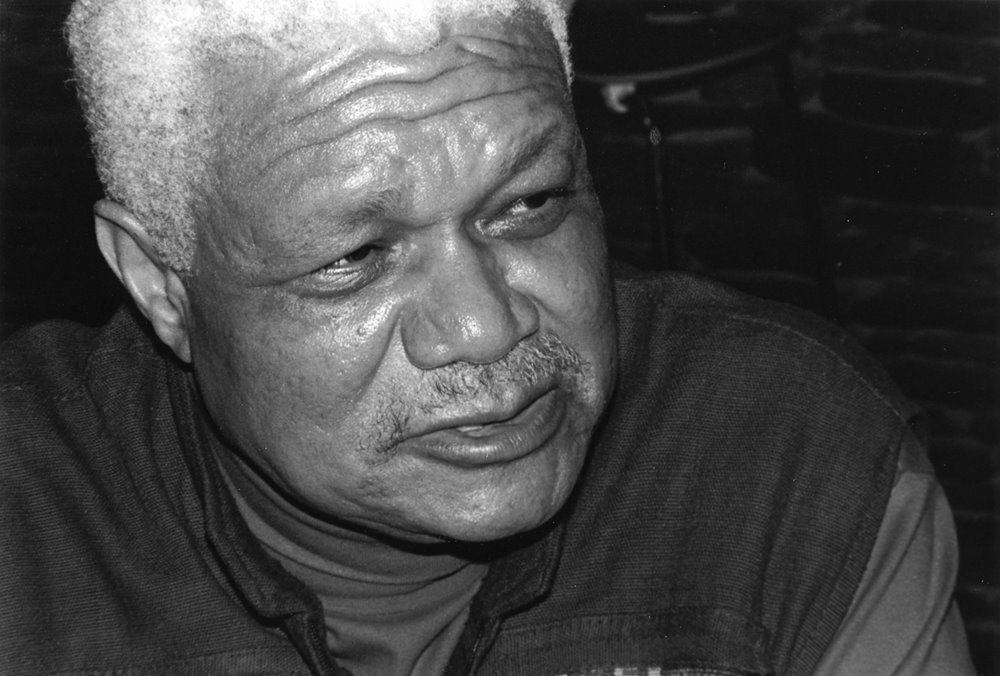
Poet and novelist Al Young. Photo courtesy of Gabrielle Motta-Passajou / Appalachian State University News.

Blue, Black and In Between

Have you seen her dressed in blue? ….
She comes in colors everywhere
She combs her hair; she’s like a rainbow
Coming, colors in the air
Rolling Stones

I’ve been contemplating the color blue
cultivating it, humming a Rolling Stones’ tune
reading Al Young’s Something About the Blues.
I love his take on the blues; I love his blackness.
More alluring, his kind of story-telling poetry.
More alluring for this whitey, honky Hillsboro hick,
than Elizabeth Bishop’s – don’t get me wrong –
I enjoy Bishop in small doses, very small doses.
With Young, I can put away the teaspoon,
pick up the oversized cup, drink and drink his words,
steeped in music. The music of which he writes is part
of the poetry he makes. The blues.

Blues don’t make you mean; they leave you moved.
The blues can move you to music, move you to poetry.
They can move you to wiggle your bottom, shake your booty,
dance naked, alone in your living room while a full moon
waxes just enough so the man in it looks at you a little lopsided.
That being not the once-in-a-blue moon, but the big ole’
yellow one that invokes images of veaudeaux magic
and humid nights listening to a jazz saxophone.

Can a white girl call him Trane? I think not. It is far too intimate, a term of endearment reserved for his peers. To me, he will remain Coltrane. Just as it would be despicable for me to express the same intimacy two black people can share when they fondly refer to each other as nigger. Even Charlie Mingus and Dizzy Gillespie said jazz was nigger music.
That’s okay.

It was not okay when my uncle would reach over, turn the dial from my favorite radio show, saying I’m not going to listen to that nigger music.
That was not okay.

And it wasn’t even jazz. Probably not even the blues. More ’n likely it was early rock ’n’ roll; quite likely it was from a musician of color, for those were my favorites then: Little Richard, Chuck Berry, The Coasters, The Platters, The El Dorados, Hank Ballard.
Oh, Hank Ballard.

Those songs weren’t what you’d call blues. Howlin’ Wolf, Muddy Waters, Jimmy Reed – those were blue. They were all black. It wasn’t until later I learned to appreciate the mind bending Miles, the cool, cool Coltrane, the crazy chaos of Charlie Mingus. But they knew the blues, long before they called it jazz. It was Duke Ellington who said,
Jazz is just a word.

It was much more than that for me in my late teens. For us, my group at college, it was a way of life. They (not we) called us The Jazzers. We disdained the sorority girls and fraternity boys while we formed our own. We didn’t wear any Alice Blue gowns, I guarantee you. It was black tights for the girls, fruit boots for the guys. We had our own dress code just as surely as did the penny loafer and pleated skirt crowd. It’s no longer black tights for me.
Now I running toward the blues.

Recently, I bought a straw hat, mostly for the wide headband and gargantuan bow in one of the most beautiful shades of blue silk shantung I have ever seen. I went searching for a way to call it. On the Internet I found a palette of blues where the one nearest to white was called “Alice Blue” named after Teddy Roosevelt’s daughter Alice, for whom in 1919 the song “Sweet Little Alice Blue Gown” was penned. Presumably the “Alice Blue” was the shade of her gown memorialized in song. People in my home town had long memories, for even though the song was popular in the twenties, they still quoted it when, in the late forties, they encountered sweet little me. I didn’t want to be Sweet Alyce then or later as a teen. I wanted to be tough – Camel-smoking, boot-stomping, whiskey- drinking tough.
I never was.

I am and always have been Sweet Alyce to the core. It is my nature to be more sweet than tough, which is not to say I can’t pitch a fit and break a lot of glass.

I love it now: my sweetness, my pastelness
that goes better with grey hair.

And while I don’t like to have the blues,
I love to listen.

I’ve been pondering blues.
Expanding the palette: a head band here,
a dangling blue opal there,
a carved blue agate cameo ring
dishing up a huge helping of Young,
slicing out a sultry evening with Coltrane
Seriously Reconsidering with Lowell Folsom
and Hiding Away with Freddie King.

Blues don’t make me mean or even melancholy.
They make me move, they melt me, bring me to a boil,
simmer, shimmer and shake, curl my hair.
They rattle my bones, ease my mind.

They reveal colors
coming everywhere.

© Alyce Guynn

Alyce Guynn / The Rag Blog
Austin, Texas
February 7, 2009

The Rag Blog

Posted in Rag Bloggers | Tagged , , , , | Leave a comment

Israeli Assault on Gaza: Not Even the Zoo Animals Were Spared

Frankly, it is no stretch to claim that this incident is a metaphor for the Israeli assault on Gaza. The Israeli Defense Forces exhibited the same callous disregard for human life during the entire period of the conflict. The government of Israel and the people who sat quietly by as this crime occurred should be deeply ashamed. I can only hope that justice is served by the International Criminal Court.

Richard Jehn / The Rag Blog

Visitors look at 30-month-old lioness Sabrina at the Gaza Zoo July 8 ,2007 in Gaza Strip, Gaza. Photo: Getty Images.

At the Zoo: A Nation of Animal Lovers Closes Its Eyes to the Massacre at the Gaza Zoo
By Missy Comley Beattie / February 6, 2009

For days, the mainstream media talked endlessly about it. Michael Vick. Dogfighting. Blood sport. Killing animals that underperformed. Many defended the professional athlete. Others thought Vick should receive the maximum sentence after his conviction.

Some of us shook our heads, repulsed by the cruelty, but we were utterly dismayed that so many people who expressed outrage over Vick’s crime, seemed to pay little or no attention to the killing of civilians in Iraq and Afghanistan.

Yes, we’re a nation of animal lovers. And, we’re enamored of our sports heroes. Certainly, the Michael Vick/dog abuse narrative was a juicy plate of filet mignon for infotainment peddlers to place upon our television trays. These are the same “reporters” who seldom mention US troop deaths and who never talk about the estimated million plus Iraqi civilians who have died since the occupation of Iraq.

So, why, then, given our attraction to animal stories, were news anchors silent on the massacre at the Gaza Zoo by Israeli troops who shot and killed caged animals during Israel’s recent assault on Gaza?

The answer, of course, is that we’re supposed to believe that Israeli troops are the good guys. Palestinians are “militants.” Israeli soldiers are, well, soldiers.

An article at www.palestinechronicle.com by Ashraf Helmi and Megan Hirons provides the chilling details. Here is an excerpt from their piece and their interview with zookeeper Emad Jameel Qasim:

The zoo opened in late 2005, with money from local and international NGOs. There were 40 types of animals, a children’s library, a playground and cultural centre housed at the facility.

Inside the main building, soldiers defaced the walls, ripped out one of the toilets and removed all of the hard drives from the office computers. We asked him why they targeted the zoo. He laughs. ‘I don’t know. You have to go and ask the Israelis. This is a place where people come to relax and enjoy themselves. It’s not a place of politics.’

Israel has accused Hamas of firing rockets from civilian areas. Qasim reacts angrily when we raise the subject.

‘Let me answer that with a question. We are under attack. There was not a single person in this zoo. Just the animals. We all fled before they came. What purpose does it serve to walk around shooting animals and destroying the place?’

Inside one cage lie three dead monkeys and another two in the cage beside them. Two more escaped and have yet to return. He points to a clay pot. ‘They tried to hide,’ he says of a mother and baby half-tucked inside.

Qasim says that his main two priorities at the moment are rebuilding the zoo and taking the Israeli army to court.

The gruesome attack must have posed a true dilemma when our mainstream media got wind of it: A tragic tale of dead animals vs. exposing the brutality of Israeli troops. Wolf, Anderson, Campbell, Suzanne, Chris, Norah, Contessa, Rachel, Joe, David, Sean, Bill, Megan, and Shephard are probably working on a way to spin this to suit AIPAC. Perhaps, something like convincing us that a Gaza Zoo animal might be used as a shield by Hamas “terrorists.”

[Missy Beattie lives in New York City. She’s written for National Public Radio and Nashville Life Magazine. An outspoken critic of the Bush Administration and the war in Iraq, she’s a member of Gold Star Families for Peace. She completed a novel last year, but since the death of her nephew, Marine Lance Cpl. Chase J. Comley, in Iraq on August 6,’05, she has been writing political articles. She can be reached at: Missybeat@aol.com.]

Source / CounterPunch

The Rag Blog

Posted in RagBlog | Tagged , , | 2 Comments

Bill Ayers : Lawmaker Calls for His Ouster; Graphic Memoir to be Published

University of Illinois at Chicago professor Bill Ayers talks to a reporter in 2008. Illinois State Sen. Larry Bomke wants Ayers removed from his university post under a proposal that says anyone who has committed an act of violence against the governments of the United States or Illinois cannot work at a public university. Photo by Candice C. Cusic / Chicago Tribune.

Bill Ayers in the news. The Chicago educator and former SDS activist later associated with the Weatherman faction, called a proposal by an Illinois state senator to have him fired “absurd.”

Meanwhile Publishers Weekly, referring to Ayers as a “lauded educational theorist,” announced that the scholarly Teachers College Press will publish a graphic novel adaptation of Ayers’ critically acclaimed memoir, “To Teach: The Journey.”

Ayers is a highly regarded professor at the University of Chicago at Illinois. The right wing attempted to make Ayers’ alleged association with Barack Obama an issue during the 2008 presidential campaign.

Thorne Dreyer / The Rag Blog / February 7, 2009

William Ayers calls push for his firing by Illinois state senator ‘frivolous’

By Steve Brosinski / February 6, 2009

See ‘Teachers College Press to Publish Graphic Adaptation of Bill Ayers Memoir’ by Calvin Reid, Below.

Calling a state senator’s push to get him axed from his public university job “frivolous,” William Ayers on Thursday said lawmakers have more important things to do than to go after him.

Ayers, a former member of the radical Weather Underground and a topic of heated discussion during the 2008 presidential and primary campaigns, was responding to a Downstate Republican’s proposal to forbid a public university from employing someone who has “committed a violent act” against the United States or Illinois.

“This is absurd,” Ayers, 64, said in a speech at Riverside-Brookfield High School. “It’s a waste of time.”

The Weather Underground set off bombs at government buildings in protest of the Vietnam War. In a 2001 book, Ayers said he participated but never hurt anyone. Charges were filed against him but were dropped in 1973.

Ayers, a professor at the University of Illinois at Chicago, said the proposal by state Sen. Larry Bomke of Springfield is “working off of a Fox News paradigm.”

Ayers defended his controversial past, and said it would have been wrong to not take a stance against the Vietnam War.

Copyright © 2009, Chicago Tribune

Source / Chicago Tribune

Teachers College Press to publish graphic adaptation of Bill Ayers memoir
By Calvin Reid / February 5, 2009

Teachers College Press, a scholarly, professional and trade publisher focused on the theory and practice of teacher education, has reached agreement on a two-book deal with William Ayers, the University of Illinois at Chicago professor, lauded educational theorist and former leader of the radical 1960s Weather Underground. And, yes, Ayers is indeed the same figure dragooned into the 2008 presidential race in a controversial attempt to use his background in radical politics and a minor acquaintance with Barack Obama to undermine Obama’s presidential run.

In spring 2010, TCP will publish a graphic novel adaptation of To Teach: The Journey, a much-praised memoir of Ayers’s life as a teacher, tentatively to be called To Teach: The Graphic Memoir with art by Xeric Award-winner Ryan Alexander-Tanner. More than a simple memoir, To Teach is also a peer-reviewed work of scholarship on Ayers’s teaching precepts as well as a vivid recollection of his adventures in the classroom. At the same time, TCP will publish a new and revised third edition of the original prose To Teach: The Journey. One of TCP’s all-time bestselling titles, To Teach was originally published in 1993 and has sold more than 75,000 copies over three printings, the last one released in 2001.

“For an academic/scholarly press, that’s a major bestseller,” noted TCP acquisitions editor Meg Lemke, who “co-acquired” the book with TCP director Carol Saltz, who will edit the new prose edition. Lemke will oversee the production of the graphic edition. Despite the media hoopla over his radical past, Ayers is a serious and much respected Chicago-based educational activist and theorist who has been with TCP for years and published at least five books at the house. Ayers is also the series editor of TCP’s Teaching Social Justice series of titles. (Fugitive Days, Ayers’s memoir of his past as a radical political activist is published by Beacon Press.). The idea to produce a graphic novel version of Ayers’s classic education title came after TCP contacted him about an updated edition of To Teach, which was lasted revised in 2001. “It was a collaborative idea among Carol, myself and Bill,” Lemke said.

The artist for the project, Alexander-Tanner, has won a Xeric Award (a grant presented in support of self-published comics). A former student of Ayers’s brother Rick, Alexander-Tanner had done interviews with William Ayers for a series of cartoons about him and was an easy pick to illustrate the project. Alexander-Tanner, who lives in Portland, Ore., even moved to Chicago to live in Ayers’s house for five months to fully collaborate on the adaptation.

Lemke called the graphic novel adaptation “well-written and drawn, serious but still funny and inspiring” and compared it to such graphic nonfiction works as Marjane Satrapi’s Persepolis. She said To Teach is “a popular course adoption text and we think the graphic adaptation will pair with this for courses at the high school as well as college level, and become an even more widely loved ‘gift book’ for aspiring progressive teachers and anyone working with youth.”

Source / Publishers Weekly

The Rag Blog

Posted in RagBlog | Tagged , , , , , | 1 Comment

Wall Street Madam : Bankers Used Corporate Credit Cards for Sex

Shown here at a court appearance last fall, Kristin Davis pleaded guilty to charges of running a prostitution business that used more than 100 women. In an ABC interview Feb. 6, 2009, she tells how Wall Street CEO’s paid her with corporate credit cards. Photo from ABC.

“Some of these guys, I was invoicing on corporate credit cards,” she said. “I was writing up monthly bills for computer consulting, construction expenses, all of these things, I was invoicing them monthly so they could get it by their accountants,” Davis said.

Client list of 9,800:
CEOs, bankers spent hundreds of thousands with credit cards, says New York madam

By Anna Schecter, Rhonda Schwartz and Brian Ross / February 6, 2009

Wall street lawyers, investment bankers, CEOs and media executives often used corporate credit cards to pay for $2,000 an hour prostitutes, according to the madam who ran one of New York’s biggest and most expensive escort services until it was busted last year.

But prosecutors in the Manhattan District Attorney’s office chose not to pursue any of the corporate titans, says Kristin Davis, who pleaded guilty last year to charges of running a prostitution business that used more than a hundred women.

“They showed no interest,” said Davis in an interview for broadcast Friday on the ABC News program 20/20.

“Some of these guys, I was invoicing on corporate credit cards,” she said. “I was writing up monthly bills for computer consulting, construction expenses, all of these things, I was invoicing them monthly so they could get it by their accountants,” Davis said.

A spokesperson said district attorney Robert Morgenthau had “no comment” on the handling of Davis’ case or her allegations.

Davis provided ABC News with a print-out of her computerized client list, the same one she says that was offered to the district attorney.

The document shows Davis kept meticulous notes about her clients, their credit card numbers and mobile phone numbers.

The Clients

Among the names ABC News was able to confirm on the list:

  • a vice president of NBC Universal
  • the part owner of a Major League Baseball team who “loves Kelsey”
  • the CEO of one of the country’s largest private equity firms who met “Cameron” at the Peninsula Hotel
  • a major New York real estate developer who, according to the list, “will come to the door wearing women’s panties,” and who spent nearly $100,000
  • a partner at the Wall Street law firm Cravath Swaine Moore “looking for a party girl to come fully equipped” and spent a total of $20,000
  • an investment banker from Lehman Brothers who saw “Kelsey and Keely together” and later saw “Aria and Skyler at the same time”
  • an investment banker at JP Morgan Securities who “loves Brooke” and spent $41,600
  • an investment banker at Goldman Sachs who “only wanted all-American girls” and spent $27,000
  • a managing director from Merrill Lynch who saw “Lana” using the name “Nataly”
  • a managing director from Deutsche Bank “who called about seeing Nataly again”

Credit card receipts Kristin Davis collected from her list of about 9,800 clients, many of whom spent hundreds of thousands of dollars a year to have sex with prostitutes. Photo from ABC.

A spokesman for JP Morgan said the company is looking into the matter.

Manhattan Madam Says Clients Had Payments Disguised

Some of the men contacted by ABC News denied they used their corporate cards, and ABC News could not independently confirm if the credit card numbers listed were corporate accounts.

Davis says one CEO ordered her to send him invoices for “roof repair on a warehouse” to disguise the payment for prostitutes from corporate funds.

“That is fraud,” said former New York prosecutor Sid Baumgarten, who told 20/20 the district attorney should have investigated the men.

“Not necessarily just for the patronizing but for the use of these business records and credit cards to see what kind of fraud or tax fraud was being used. And if so, that is a major offense,” Baumgarten said.

When ABC News contacted that CEO, he said he used his corporate card to pay for the escort service to entertain clients, but that there was no sex involved.

Brought Down After Revelation of Client #9

Davis operated her escort service as a prostitution conglomerate, with five different “brands” over a four year period, each with its own “price point” and websites.

At the high end was an escort service called Carlyle Trust, mimicking the name, but not connected in any way, to a prestigious investment firm. Davis said she recruited top fashion models who charged up to $2,000 an hour for clients of Carlyle Trust.

Her lower cost services charged $400 an hour for a “body rub,” she said.

The “best little whorehouse on Wall Street” was located just a few blocks from the New York Stock Exchange, in apartment 3A at 136 William Street.

Davis operated three other “in-call” locations in the mid-town area of Manhattan.

The escort business took in as much as $200,000 a week, Davis estimated.

But it came to a screeching halt last year in the crackdown that followed the revelation that then-New York Governor Eliot Spitzer was client #9 of a rival escort service.

In a book to be released Feb. 6, “Manhattan Madam,” Davis claims Spitzer had earlier been a client of her service but was banned because of his aggressive behavior trying to get girls to have unprotected sex with him.

Manhattan psychotherapist Jonathan Alpert, who works with many Wall Street clients, told ABC News that many of his clients who patronize escort services are accustomed to high risks and high stakes on the job, and seeing a prostitute, especially if one is married, provides the same rush. “You’re playing with fire…it’s part of the culture of Wall Street. A lot of drugs, cocaine use, fast times, sex–it’s part of the culture.”

Alpert said people also use adult sexual service as a way to cope with stress in much the same way that one may use alcohol or drugs. “It’s a way to escape,” said Alpert, adding that “A lot of clients I see tell me they simply want someone to speak to, someone to listen to them.”

Treatment Not Fair, Madam Says

In a plea arrangement, Davis pleaded guilty to promoting prostitution and was sentenced to three-months time served. She forfeited about $500,000 in profits as part of the deal, according to court documents.

“I, as the proprietor of a business get arrested and lose everything, when no one that was frequenting my business, spending $200,000, $300,000 a year, has been punished in any way or even looked into.”

Patricia Pileggi, a defense attorney who has represented a Madam, said that targeting the Madam and not the clients does nothing to deter prostitution.

“The DA’s office has some ability to prosecute the clients,” said Pileggi. “If there’s a real interest in deterring this kind of conduct you don’t simply target the Madam, you make an effort to target the clients as well.”

Pileggi added that there is a provision for the different degrees of culpability in the NY statutes: “[Davis] was prosecuted for a felony and the clients would be guilty of misdemeanors.”

She says she has not yet decided whether to release the full client list to the public.

[Kate McCarthy and Andrew Sullivan contributed to this report.]

Copyright © 2009 ABC News Internet Ventures

Source / ABC News

Thanks to S. M. Wilhelm / The Rag Blog

Posted in RagBlog | Tagged , , | 1 Comment

Corn Flakes and the Phelps Flap : Just Say No

Garbage in, garbage out. Photo by Bill Narum / The Rag Blog.

I support freedom of choice, Kellogg’s doesn’t have to sponsor Phelps and I don’t have to eat their products.

By Bill Narum / The Rag Blog / February 6, 2009

As I was about to open a new box of cereal I bought yesterday it struck me that this cereal was produced by the same company that dropped sponsorship of Michael Phelps over his marijuana smoking photo incident. In good conscience I just could not open the box so I threw it out.

Phelps has not been charged with any crime and possession of less than an once of marijuana in South Carolina is only a misdemeanor offense. I support freedom of choice, they don’t have to sponsor Phelps and I don’t have to eat their products. I tried to find an email address to send a complaint to Kellogg but they do not post any email addresses on their site.

Kellogg’s is bailing on Michael Phelps. This is from The Huffington Post,

Cereal and snack maker Kellogg Co. said it won’t renew its sponsorship contract with Olympic swimming star Michael Phelps because of a photo that showed him inhaling from a marijuana pipe.

The Battle Creek, Mich.-based company said Thursday that Phelps’s behavior _ caught on camera and published Sunday in the British tabloid News of the World _ is “not consistent with the image of Kellogg.”
[…]
Among those standing by [Phelps], even if they don’t condone his behavior, are Visa Inc., Speedo, luxury Swiss watchmaker Omega and sports beverage PureSport’s maker Human Performance Labs.

Here, from NORML, is the dope, as it were, on South Carolina Drug Laws:

Action: Possession of 1 ounce or less of marijuana – misdemeanor.

Penalty: Possession of one ounce or less is punishable by up to 30 days in jail and a fine of $100 – $200 for a first offense. Convictions for a first offense are eligible for conditional discharges.

Conditional release: The state allows conditional release or alternative or diversion sentencing for people facing their first prosecutions. Usually, conditional release lets a person opt for probation rather than trial. After successfully completing probation, the individual’s criminal record does not reflect the charge.

Now, a look at who’s calling the kettle black. David Mackay, president and chief executive of Kellogg Co. is one of those $10 million corporate executives. From a an AP story in San Diego.com:

David Mackay, president and chief executive of Kellogg Co., received compensation valued at about $9.08 million for 2007…

Mackay’s package included a salary of $1.1 million, performance-based pay of $2.13 million and $249,230 in other compensation, according to Kellogg’s proxy statement filed Wednesday with the Securities and Exchange Commission.

In addition, Mackay received stock options worth an estimated $5.6 million when granted in February 2007.
[…]
The company also reported that it granted Mackay stock options initially approved from 1998 through 2002 that Kellogg valued at $1.37 million last year. That figure is not included in this compensation total for 2007, however.
[…]
Mackay, 52, took over as Kellogg’s CEO on Dec. 31, 2006. He owns 273,710 shares of company stock and has options for another 1,340,703 shares, for a total beneficial ownership of 1,614,413 shares. Based on Wednesday’s opening price of $50.87 for Kellogg’s stock, his shares and options are worth $82.13 million.

Want to let Kellogg know how you feel? Here’s how:

There are several ways you can make your opinion known to the company.

You can call Kellogg’s main telephone number during east coast business hours, Monday through Friday, at: (269) 961-2000 or toll free at: 1 (800) 962-1413.

You can e-mail Kellogg’s consumer services department by visiting here.

You can contact Kellogg’s media relation department at: 269-961-3799 or via e-mail at mailto:media.hotline@kellogg.com

You can e-mail Kellogg’s investor relations department at: mailto:investor.relations@kellogg.com.

Or finally, you can write the Kellogg Company a letter at:

One Kellogg Square
P.O. Box 3599
Battle Creek, MI 49016-3599

Of course, if you’re going to boycott Kellogg’s, you might want to check this out: Kellogg’s Boycott for Michael Phelps? What You’ll Give up by Brian Childs from Asylum.com.

The Rag Blog

Posted in Rag Bloggers | Tagged , , , | 8 Comments

This Is How the US Conducts Foreign Policy

Binyam Mohamed

See video below.

Letters prove US warning
By Paola Totaro / February 7, 2009

A FLURRY of letters between the British Foreign Office and the US State Department has revealed that Washington did threaten to withdraw intelligence-sharing with Britain if documents related to the alleged torture of a British terrorism detainee in Guantanamo Bay were made public.

The High Court in London said on Wednesday the Foreign Office had refused to allow the torture documents to be revealed because of a “threat” from Washington to stop sharing intelligence with Britain.

The US warning, related to the case of British detainee Binyam Mohamed, was promptly denied by British Foreign Secretary David Miliband, who insisted that there had been no threat from the US to “break off intelligence co-operation”.

But on Thursday night British broadcaster Channel 4 revealed that a letter dated August 21, 2008, from the US State Department, stated the consequences if a British court published American documents on the capture and interrogation of Mohamed.

“I write with respect to proceedings … regarding Mr Binyam Mohamed,” the letter said. “We note the classified documents identified in your letters of June 16 and August 1, 2008, to the acting general counsel of the Department of Defence … the public disclosure of these documents or of the information contained therein is likely to result in serious damage to US national security and could harm … intelligence information sharing arrangements between our two governments.”

Channel 4 revealed that a week later the State Department wrote again to the Foreign Office to make clear the consequences if British courts released the paperwork detailing allegations of torture by US and British intelligence services.

“To the extent the UK proceedings are currently aimed at ensuring that the documents at issue will be before the convening authority before she makes her referral decision, this development further demonstrates the relief sought through these proceedings has been otherwise accomplished and no further action by the court is required,” the letter said.

“Ordering the disclosure of the US intelligence information now would have only the marginal effects of serious and lasting damage to the US-UK intelligence sharing relationship, and thus the national security of the UK …”

The threat has sparked an angry reaction in London after Lord Justice John Thomas and Mr Justice Lloyd Jones told the court lawyers for Mr Miliband had made clear the threat represented too great a risk to national security to be ignored.

The court was also told that Mr Mohamed’s lawyers had tested the new administration of President Barack Obama and that the warning stood.

British newspapers highlighted the hypocrisy of the statement, particularly as it emerged just 24 hours after US Secretary of State Hillary Clinton made much of the “special relationship” between the two countries.

The judges’ statements reveal that top-secret documents that form the linchpin of the case argue “torture or cruel, inhuman or degrading treatment”. In an echo of the Australian case brought by Mamdouh Habib, the paperwork suggests the presence of a British intelligence official at the time Mr Mohamed alleged he was tortured.

Mr Mohamed was born in Ethiopia and sought political asylum in Britain in 1994. He was granted leave to remain, but was captured in Pakistan in 2002 attempting to re-enter the UK on a false British passport.

He was passed to the Americans and was held incommunicado, first in Pakistan and then in a series of secret locations for more than two years. He has alleged he was subject to “extraordinary rendition to Morocco where torture continued in a severe form”.

Between May and September 2004, Mr Mohamed confessed to an involvement with al-Qaeda and plotting terrorist attacks, leading to his being charged with terrorist crimes, including a plot to detonate a dirty bomb. These charges were dropped.

Source / The Age (Australia)

The Rag Blog

Posted in RagBlog | Tagged , , | Leave a comment

Consumer Culture and an Insane Society


Fundamentalist Consumerism and an Insane Society
By Bruce E. Levine / February 2009

At a giant Ikea store in Saudi Arabia in 2004, three people were killed by a stampede of shoppers fighting for one of a limited number of $150 credit vouchers. Similarly, in November 2008, a worker at a New York Wal-Mart was trampled to death by shoppers intent on buying one of a limited number of 50-inch plasma HDTVs.

Jdiniytai Damour, a temporary maintenance worker was killed on “Black Friday.” In the predawn darkness, approximately 2,000 shoppers waited impatiently outside Wal-Mart, chanting, “Push the doors in.” According to Damour’s fellow worker Jimmy Overby, “He was bum-rushed by 200 people. They took the doors off the hinges. He was trampled and killed in front of me.” Witnesses reported that Damour, 34 years old, gasped for air as shoppers continued to surge over him. When police instructed shoppers to leave the store after Damour’s death, many refused, some yelling, “I’ve been in line since yesterday morning.”

The mainstream press covering Damour’s death focused on the mob of crazed shoppers and, to a lesser extent, irresponsible Wal-Mart executives who failed to provide security. However, absent in the corporate press was anything about a consumer culture and an insane society in which marketers, advertisers, and media promote the worship of cheap stuff.

Along with journalists, my fellow mental health professionals have also covered up societal insanity. An exception is the democratic-socialist psychoanalyst Erich Fromm (1900-1980). Fromm, in The Sane Society (1955), wrote: “Yet many psychiatrists and psychologists refuse to entertain the idea that society as a whole may be lacking in sanity. They hold that the problem of mental health in a society is only that of the number of ‘unadjusted’ individuals, and not of a possible unadjustment of the culture itself.”

While people can resist the cheap-stuff propaganda and not worship at Wal-Mart, Ikea, and other big-box cathedrals—and stay out of the path of a mob of fundamentalist consumers—it is difficult to protect oneself from the slow death caused by consumer culture. Human beings are every day and in numerous ways psychologically, socially, and spiritually assaulted by a culture which:

* creates increasing material expectations
* devalues human connectedness
* socializes people to be self-absorbed
* obliterates self-reliance
* alienates people from normal human emotional reactions
* sells false hope that creates more pain

Increasing material expectations. These expectations often go unmet and create pain, which fuels emotional difficulties and destructive behaviors. In a now classic 1998 study examining changes in the mental health of Mexican immigrants who came to the United States, public policy researcher William Vega found that assimilation to U.S. society meant three times the rate of depressive episodes for these immigrants. Vega also found major increases in substance abuse and other harmful behaviors. Many of these immigrants found themselves with the pain of increased material expectations that went dissatisfied and they also reported the pain of diminished social support.

Devaluing of human connectedness. A 2006 study in the American Sociological Review noted that the percentage of Americans who reported being without a single close friend to confide in rose in the last 20 years from 10 percent to almost 25 percent. Social isolation is highly associated with depression and other emotional problems. Increasing loneliness, however, is good news for a consumer economy that thrives on increasing numbers of “buying units”—more lonely people means selling more televisions, DVDs, psychiatric drugs, etc.

Promotes selfishness. Self-absorption is one of many reasons for U.S. skyrocketing rates of depression and other emotional difficulties—and self-absorption is exactly what a consumer culture demands. The Buddha, 2,500 years ago, recognized the relationship between selfish craving and emotional difficulties, and many observers of human beings, from Spinoza to Erich Fromm, have come to similar conclusions.

Obliterates self-reliance. The loss of self-reliance can create painful anxiety, which fuels depression and other problematic behaviors. In modern society, an increasing number of people—women as well as men—cannot cook a simple meal. They will never know the anti-anxiety effects of being secure in their ability to prepare their own food, grow their own vegetables, hunt, fish, or gather food for survival. In a consumer culture, such self-reliance makes no sense. At some level, people know that should they lose their incomes—not impossibilities these days—they have no ability to survive.

Alienation from humanity. The priests of consumer culture — advertisers and marketers — know that fundamentalist consumers will buy more if they are alienated from such normal reactions as boredom, frustration, sadness, and anxiety. If these priests can convince us that a given emotional state is shameful or evidence of a disease, then we will be more likely to buy not only psychiatric drugs, but also all kinds of products to make ourselves feel better. When we become frightened and alienated from a natural human reaction, this “pain over pain” creates more fuel for depression and other self-destructive behaviors and harmful actions.

Pain of false hope. The false hope of fundamentalist consumerism is that we will one day discover a product that can predictably manipulate moods without any downsides. Modern psychiatry is a full member of consumer culture. Its “Holy Grail” is a search for the antidepressant that can take away the pain of despair, but not destroy life. In the late 19th century, Freud thought he had found it with cocaine. In the middle of the 20th century, psychiatrists thought they had found it with amphetamines, and later with tricyclic antidepressants like Tofranil and Elavil. At the end of the 20th century, there were the SSRIs, such as Prozac, Paxil, and Zoloft, which were ultimately found to create dependency and painful withdrawal and to be no more effective than placebos. Whatever the antidepressant drug, it is introduced as taking away depression without destroying life. Time after time, it is then discovered that when one tinkers with neurotransmitters, there is—as there is with electroshock and psycho-surgery—damage to life.

Fundamentalists reject both reason and experience. Fundamentalists are attached to dogma and if their dogma fails, they don’t give it up, but instead resolve to deepen their faith and double down on their dogma.

Erich Fromm, 54 years ago, concluded: “Man [sic] today is confronted with the most fundamental choice; not that between Capitalism or Communism, but that between robotism (of both the capitalist and the communist variety), or Humanistic Communitarian Socialism. Most facts seem to indicate that he is choosing robotism and that means, in the long run, insanity and destruction. But all these facts are not strong enough to destroy faith in man’s reason, good will, and sanity. As long as we can think of other alternatives, we are not lost.”

Breaking free of fundamentalist consumerism means thinking of alternatives and it also means an active defiance: choosing to experience the various dimensions of life that have been excluded by the dogma.

[Bruce E. Levine is a clinical psychologist and author of Surviving America’s Depression Epidemic: How to Find Morale, Energy, and Community in a World Gone Crazy (Chelsea Green Publishing, 2007).]

Source / Z-Mag

The Rag Blog

Posted in RagBlog | Tagged , , | 2 Comments

Jonah Raskin : Outsiders in El Norte

Undocumented Mexican immigrant awaits deportation. Photo by Los Angeles Times / Calisphere.

This is an except from my new, forthcoming book about farmers, farm workers, the environment, food for the Rag Blog. — Jonah.

Field Days:
Outsiders in El Norte

By Jonah Raskin / February 6, 2009

[Jonah Raskin is a prominent author, poet, educator and political activist. His newest book, from which the following is excerpted, is Field Days. It is to be published May, 2009, by the University of California Press. Go here to learn more about the book.]

Over the past century, the plight of migrant Mexican farm laborers in California has been documented, photographed, studied, and analyzed as thoroughly as that of any other group of workers in the Americas. “What about the farmworkers?” people ask, even if they have never actually known a real farmworker. “Who are they?” “Why do they come here, and what do they want?” These are fair questions. Some of the answers to these questions are available in popular movies such as El Norte, A Day Without a Mexican, and Under the Same Moon. Steven Street’s monumental and moving Beasts of the Field: A Narrative History of California Farm Workers, 1769–1913 covers the subject magnificently. TV documentaries that expose atrocious living and working conditions provoke shock, outrage, and condemnation. Yet worker exploitation and oppression has often remained largely unchanged for decades, especially in California’s Great Central Valley.

Refugees from the so-called underdeveloped world who live and labor in the shadow of immense wealth and power, farmworkers are indispensable to the political economy of two nations. Again and again they have been pushed back and forth across borders and forced to work in mechanized agriculture and toxic environments. Perhaps this will sound melodramatic and even grotesque, but they strike me as living skeletons haunting the American Dream. Jorge Posada, the Mexican artist who saw skeletons everywhere, would certainly view them this way and depict skeletons holding hoes and planting crops. Indeed, farmwork has exposed migrants to deadly poisons.

That’s the big picture. Now, what about the lives Mexican farmworkers lead today? Could we perhaps learn something about the subject by looking at one life? I think so. Let me, therefore, introduce you to Uriel, who was born in the 1960s in the village of Chamacuaro, in the state of Guanajuato, and who now lives in Santa Rosa, California, in a multiracial working- class neighborhood. His house looks like every other house on the street, though the Obama sign on the front lawn makes it stand out. It’s the only sign in the whole neighborhood. Uriel’s story is dramatic and reflects much beyond the arc of his own immediate experience.

I’ve known Uriel and his wife, Molly, a native-born Californian, for more than a decade. I attended their wedding, and I’m an unofficial uncle to their daughter, Maya, who is bilingual and perhaps a sign of things to come in our multicultural future. Uriel and Molly exemplify the ways in which the Anglo and Latino worlds have come together to create something new and exciting. But the two worlds continue to be deeply divided. I’ve attended celebrations, for example, where Latinos, at once proud and subservient, praised their Anglo bosses, after which the same bosses, sometimes paternalistic but usually genuinely caring, praised the Latinos. And then the Anglos and the Latinos sit at opposite ends of the fiesta without any further contact. Speeches are one thing, behavior another. I’ve also been to fiestas with Uriel where one group spoke English, the other Spanish, and no one from either group reached out to the other.

It takes real effort to bridge the gulf between the two cultures, and I’ve worked at it for decades in the United States and Mexico. I’ve watched Uriel work as a mason and a tile setter, and I’ve seen him make woodcuts of César Chávez, one of which hangs on the wall above my computer. He taught me to make salsa and use words like tejolate and molcajete. Uriel is a good storyteller, too. I especially like his story about the time he tried to walk across the border on a crowded street by pretending to be a paperboy but gave himself away by forgetting to collect the money owed him. On another occasion, he and an ex-girlfriend pretended to be cachondos, two people lusting for each other. The police wouldn’t notice them, they thought, if they were kissing passionately. But they weren’t good enough at faking lust, and two California police officers sent them back across the border. Uriel made it across by climbing a chain-link fence that separated Mexico from the United States.

I’ve heard Uriel talk about his life: poverty and unemployment; hunger and loneliness; deadly rattlesnakes in vineyards where he picked grapes. But was he complaining? Maybe he was simply describing what he had experienced. In fact, Mexicans—and especially farmworkers who are illegal—rarely complain, and it can be a fault. They collude with the system that exploits them. Uriel is unique. He expresses himself and complains loudly. What I find most vivid are his accounts of his own feelings, which can be as significant and revealing as actual facts. “From the moment I arrived in El Norte, I felt like an outsider,” he told me. “I still feel that way. For years, I lived in fear of arrest and deportation. I knew that everything about me gave me away—the way I walked and talked, the clothes I wore, the expression on my face.” More than anyone else I know, Uriel helped me to understand that Mexicans often feel—and are made to feel, too—like aliens in the United States. They are the proverbial strangers in a strange land.

One warm spring afternoon I sat with him behind the house that he didn’t yet own. Possibly he never would own it, for his mortgage payment is $2,200 a month, and he hadn’t had a decent paying job in months. But he wasn’t panicking. As always he seemed cool and self-confident; having come this far in life, he wasn’t about to accept a return to poverty and homelessness, especially with another child on the way. “I feel as if I’ve struggled my whole life,” he said. “I’m struggling right now. The reason I came here—the reason every single one of us has come to El Norte—is because we have to come here to survive. We don’t want to starve to death. It’s all about work, work, work. Before I came here I was naive. I thought you could pick up mounds of money with a shovel on a street. I was rudely awakened. I jumped from job to job, and from trade to trade, to get out of the hole I was in. For years I had no steady job or work, no home, no car, no support system, and no legal status. In the eyes of America I was a nobody. Almost everyone I know has been in the same place.”

Uriel saw a lot of injustices, and he also saw that Mexicans often seemed to contribute to perpetuating the inequality between them and the Anglo establishment. They live and work largely outside the American dream, but at the same time they are living advertisements for that dream. It is ingrained in them not to dwell on their exploitation, alienation, and homesickness but instead to be positive and upbeat. “People in my village would always talk about the wonders of El Norte,” Uriel said. “They came home and boasted about the car, the TV, and the cell phone they bought. I never heard anyone say, ‘I’m killing myself in the fields’ or ‘I’m dying every day I’m at work in California.’ This was after I’d been in the United States. I had gone back to my village to visit. I would ask, ‘What about the time you were cut and bleeding from the knife you were using to harvest grapes? What about the fact that the bank owns the car you drove?’ ”

Uriel came to the United States for the first time in the late 1970s and became an American citizen in 1996. While he has made something of himself here and adapted well, he doesn’t want to end his days here, where time and money seem to drive everyone. He wants to go back to Chamacuaro in Guanajuato, where, as he put it, “never have to wear a watch or use a cell phone. I can sit and look at the church on the hill, visit with my mother, and drink a beer without having to rush off.” That Sunday, when we spoke in his backyard, I heard the longing in his voice. But of course he won’t be going home for a while. He has to find work and pay his mortgage or be out on the street.

The closest we could get to Mexico that day was a taqueria, that ubiquitous Mexican institution that can be found from Texas to Maine, California to New York. I like to think that Uriel finds solace in eating genuine Mexican food at El Patio, just a few minutes from his Santa Rosa home, but perhaps it only makes the distance from Chamacuaro feel all the greater. Eating our tacos at a table surrounded by murals of traditional Mexican scenes, Uriel remembered that as a teenager he was hungry, alone, and without a car. “I had to go miles on foot to a fast food restaurant to eat, then walk back to the apartment in the darkness,” he said. “That was a lonely time.”

The Rag Blog

Posted in Rag Bloggers | Tagged , , , , | 1 Comment

RAGBLOGAPALOOZA! Benefit Party a Great Success

Ragblogapaloozers. Photo by Cindy Bloom / The Rag Blog.

See more photos from the Ragblogapalooza, Below.

The Ragblogapalooza was a blast

The Rag Blog threw a benefit bash Tuesday night, Feb. 3, at Scholz Garten in Austin. The wonderful folk band The Melancholy Ramblers performed and some 100 friends hobbed and nobbed. The event raised $1,200 for the New Journalism Project, the Texas nonprofit corporation that publishes The Rag Blog.

The response of our friends has been heartwarming, but we still need the financial help of our online community. We take no advertising and have no source of support other than your contributions. The money you give goes to our operating expenses and to much needed upgrades and, in the future, to expanding The Rag Blog’s online presence.

We want to thank those who attended the Ragblogapalooza and all of you who have sent in donations. We also want to acknowledge our followers around the world; it’s your support that provides us with our inspiration. We consider all of you to be part of our community and we encourage you to send us your feedback and ideas.

Contact Thorne Dreyer at tdreyer@austin.rr.com or Richard D. Jehn at RDJehn@aol.com.

If you are able to help, please send us $10, $20 or $50 — or whatever you can. Use the “DONATE” button on the sidebar or make out a check to “The New Journalism Project” and send it to:

The New Journalism Project
P.O. Box 14672
Austin, TX 78761-4672

The Melancholy Ramblers performed at the Ragblogapalooza, Tues, Feb. 3, 2009. Photo by Cindy Bloom / The Rag Blog.

Thorne Dreyer, co-editor of The Rag Blog and founding editor of the Austin Sixties underground paper The Rag, speaks to the benefit crowd. Photo by Carlos Lowry / The Rag Blog.

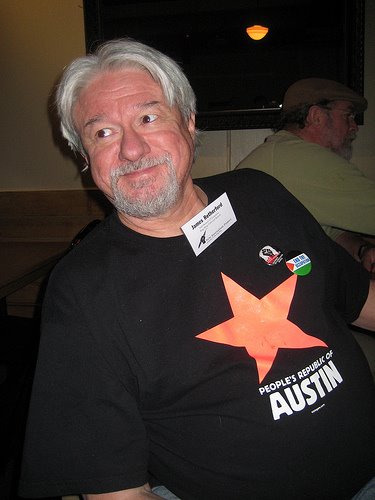
Writer, graphic designer and activist Jim Retherford, member of the editorial board of the New Journalism Project. Photo by Carlos Lowry / The Rag Blog.

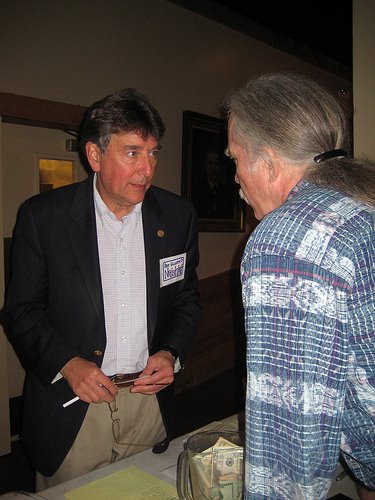
Texas state Rep. Elliot Naishtat talks with New Journalism Project president David Hamilton at the Ragblogapalooza. Photo by Carlos Lowry/ The Rag Blog.

The Rag Blog

Posted in RagBlog | Tagged , | Leave a comment

The Ethanol Alternative: Still Highly Questionable

Ethanol Production Process. The process of converting corn into ethanol results in approximately 2.8 gallons of denatured ethanol and 18 lbs. of Distillers Grains from every bushel of corn. Graphic: Verasun Energy.

The Unraveling of the Ethanol Scam: 15 Studies Have Exposed the High Cost of Ethanol and Biofuels
By Robert Bryce / February 5, 2009

On its website, Wisconsin-based Renew Energy says it is the “biofuels industry leader for innovation and efficiency.” It goes on, saying that its new 130 million gallon per year ethanol plant in Jefferson, Wisconsin is “the largest dry mill corn fractionation facility in the world” which uses 35 percent less energy and 33 percent less water than similar ethanol plants.

That would be impressive but for one fact: Renew Energy just filed for bankruptcy.

The failure of Renew is the latest bankruptcy in the corn ethanol industry, a sector that despite billions of dollars in federal subsidies, hasn’t been able to prove its long-term economic viability. About 9 percent of all the ethanol plants in the US have now filed for bankruptcy and some analysts believe the numbers could go as high as 20 percent.

Even if the 20 percent figure is never reached, it’s readily apparent that billions of investment dollars will be lost on the corn ethanol scam, a darling of farm state legislators. Today, about four years after Congress increased the mandates on the use of corn ethanol in gasoline, the US is nowhere close to the much-promised goal of “energy independence.” Instead, the increasing use of corn to make motor fuel has caused a myriad of problems. Chief among them: increased food prices.

While it’s true that other factors have helped inflate food prices, including rising energy prices and increased grain demand in other countries, it’s also abundantly obvious that the corn ethanol industry has had a major effect on food prices. The reason is obvious: in 2008, some 4.1 billion bushels of corn – fully one-third of the US crop – was used to make motor fuel. And the results are being seen in the supermarket.

In mid-January, the Bureau of Labor Statistics reported that in 2008, food prices jumped by nearly 6 percent. That comes on the heels of food price increases of 4.8 percent in 2007. Some agricultural economists are now predicting that food prices could increase by as much as 10 percent in 2009. Worse still, those increases are coming at the same time that the global economy is foundering and U.S. unemployment rates are soaring.

Some of that unemployment is happening within the ethanol sector itself. Renew, which had $184.2 million in revenue in 2008, filed Chapter 11 papers on January 30, just nine days after it posted an article on its website from Ethanol Producer Magazine which touted their new ethanol production process as one that “adds up to higher profitability and sustainability.”

The failure of Renew occurred just two days after Oregon-based Cascade Grain Products filed for Chapter 11. Cascade began operating its 108 million gallon per year distillery in Clatskanie, Oregon last June. Another distiller, New York-based Northeast Biofuels, filed for bankruptcy on January 14. That company’s plant, a $200 million facility with 100 million gallons per year of capacity, began operating last August. In October, VeraSun Energy, the second-largest ethanol producer in the country, declared bankruptcy. Other recent failures in the sector include Greater Ohio Ethanol and Gateway Ethanol.

It may be unkind to kick the ethanol industry while it is circling the drain, but little of this financial news is overly surprising. The corn ethanol industry has always depended on federal handouts for its existence. And given this string of bankruptcies, it’s worth reviewing the many studies produced over the past two years that have shown the high costs of ethanol and biofuels. Thus far, I’ve found 15 of them. If readers find more, please send them along.

1. In May 2007, the Center for Agricultural and Rural Development at Iowa State University released a report saying the ethanol mandates have increased the food bill for every American by about $47 per year due to grain price increases for corn, soybeans, wheat, and others. The Iowa State researchers concluded that American consumers face a “total cost of ethanol of about $14 billion.” And that figure does not include the cost of federal subsidies to corn growers or the $0.51 per gallon tax credit to ethanol producers.

2. In September 2007, Corinne Alexander and Chris Hurt, agricultural economists at Purdue University, found that “about two-thirds of the increase” in food price increases from 2005 to 2007 was “related to biofuels.” The report also says, “Based on expected 2007 farm level crop prices, that additional food cost is estimated to be $22 billion for U.S. consumers compared to farm prices for the crops produced in 2005. A rough estimate is that about $15 billion of this increase is related to the recent surge in demand to use crops for fuel.”

3. October 2007, the International Monetary Fund said, “Higher biofuel demand in the United States and the European Union (EU) has not only led to higher corn and soybean prices, it has also resulted in price increases on substitution crops and increased the cost of livestock feed by providing incentives to switch away from other crops.”

4. In March 2008, a report commissioned by the Coalition for Balanced Food and Fuel Policy (a coalition based in Washington, D.C. of eight meat, dairy, and egg producers’ associations), estimated that the biofuels mandates passed by Congress will cost the U.S. economy more than $100 billion from 2006 to 2009. The report declared that “The policy favoring ethanol and other biofuels over food uses of grains and other crops acts as a regressive tax on the poor.” It went on to estimate that the total cost of the U.S. biofuels mandates will total some $32.8 billion this year, or about $108 for every American citizen.

5. An April 8 internal report by the World Bank found that grain prices increased by 140 percent between January 2002 and February 2008.
“This increase was caused by a confluence of factors but the most important was the large increase in biofuels production in the U.S. and E.U. Without the increase in biofuels, global wheat and maize [corn] stocks would not have declined appreciably and price increases due to other factors would have been moderate.” Robert Zoellick, president of the Bank, acknowledged those facts, saying that biofuels are “no doubt a significant contributor” to high food costs. And he said that “it is clearly the case that programs in Europe and the United States that have increased biofuel production have contributed to the added demand for food.”

6. In May, the Congressional Research Service blamed recent increases in global food prices on two factors: increased grain demand for meat production, and the biofuels mandates. The agency said that the recent “rapid, ‘permanent’ increase in corn demand has directly sparked substantially higher corn prices to bid available supplies away from other uses – primarily livestock feed. Higher corn prices, in turn, have forced soybean, wheat, and other grain prices higher in a bidding war for available crop land.”

7. Also in May, Mark W. Rosegrant of the International Food Policy Research Institute, testified before the U.S. Senate on biofuels and grain prices. Rosegrant said that the ethanol scam has caused the price of corn to increase by 29 percent, rice to increase by 21 percent and wheat by 22 percent. Rosegrant estimated that if the global biofuels mandates were eliminated altogether, corn prices would drop by 20 percent, while sugar and wheat prices would drop by 11 percent and 8 percent, respectively, by 2010. Rosegrant said that “If the current biofuel expansion continues, calorie availability in developing countries is expected to grow more slowly; and the number of malnourished children is projected to increase.” He continued, saying “It is therefore important to find ways to keep biofuels from worsening the food-price crisis. In the short run, removal of ethanol blending mandates and subsidies and ethanol import tariffs, and in the United States—together with removal of policies in Europe promoting biofuels—would contribute to lower food prices.”

8. In mid-June, Kraft Foods Global sponsored a report by Keith Collins, the former chief economist for the U.S. Department of Agriculture economist. In his 34-page analysis of grain prices, Collins concluded the ethanol scam “may account for up to 60 percent of the increase in corn prices between 2006/07 and 2008/09.

9. In late June, Oxfam, the non-profit group that fights global hunger, released a report declaring that biofuels are responsible for about 30 percent of the recent increases in global food prices, and are pushing 30 million people into poverty. Rob Bailey, Oxfam’s biofuel policy adviser, summarized the report: “Rich countries’ demands for more biofuels in their transport fuels are causing spiraling production and food inflation.”

10. In early July, Britain’s Renewable Fuels Agency concluded, “Biofuels contribute to rising food prices that adversely affect the poorest.” The report, known as the Gallagher Review, also said that demand for “[biofuels] production must avoid agricultural land that would otherwise be used for food production. This is because the displacement of existing agricultural production, due to biofuel demand, is accelerating land-use change and, if left unchecked, will reduce biodiversity and may even cause greenhouse gas emissions rather than savings. The introduction of biofuels should be significantly slowed.”

11. On July 16, the Organization for Economic Cooperation and Development (O.E.C.D.) issued its report on biofuels that concluded: “Further development and expansion of the biofuels sector will contribute to higher food prices over the medium term and to food insecurity for the most vulnerable population groups in developing countries.”

12. Also in July, the U.S.D.A., the federal agency that has long been one of the corn ethanol sector’s biggest boosters, admitted that corn ethanol is driving up food prices. That’s somewhat remarkable given that the agency’s leaders have consistently downplayed the link. Nevertheless, in July 2008, the department released a report called “Food Security Assessment, 2007,” which states very clearly that the biofuels mandates are pushing up food prices. The first page of the report says:

…the persistence of higher oil prices deepens global energy security concerns and heightens the incentives to expand production of other sources of energy including biofuels. The use of food crops for producing biofuels, growing demand for food in emerging Asian and Latin American countries, and unfavorable weather in some of the largest food-exporting countries in 2006-07 all contributed to growth in food prices in recent years.

While that admission is noteworthy, the July 2008 report’s importance lies with its projections about the growing numbers of people around the world who are facing food insecurity. And while the U.S.D.A. report does not correlate this increasing food insecurity with soaring ethanol production, the connections are abundantly clear: As the U.S. uses more corn to make motor fuel, there is less grain available on the market. That means higher prices. And that’s a key factor for residents of poor countries who generally spend a higher percentage of their income on food than their counterparts in the developed world.

For instance, in the U.S. only about 6.5 percent of disposable income is spent on food. By contrast, in India, about 40 percent of personal disposable income is spent on food. In the Philippines, it’s about 47.5 percent. In some sub-Saharan Africa, consumers spend about 50 percent of the household budget on food. And according to the U.S.D.A., “In some of the poorest countries in the region such as Madagascar, Tanzania, Sierra Leone, and Zambia, this ratio is more than 60 percent.”

The July 2008 U.S.D.A. report goes on saying that the number of people facing food insecurity jumped from 849 million in 2006 to 982 million in 2007. And those numbers are expected to continue rising. By 2017, the number of food-insecure people is expected to hit 1.2 billion. And, says the U.S.D.A., “short-term shocks, natural as well as economic” could make the problem even worse.

13. In September 2008, the International Monetary Fund estimated that 70 percent of the recent increase in corn prices was due to the ethanol scam. In a report to the United Nations, Olivier de Schutter, a Belgian academic, said “Policies aimed at promoting the use of agrofuels from feedstock, having an inflationary impact on staple foods, could only be justified under international law if very strong arguments are offered.”

14. On October 7, 2008 the United Nations Food and Agriculture Organization weighed into the debate with a 138-page report called “Biofuels: prospects, risks and opportunities.” In the section on food, the report concludes that “Rapidly growing demand for biofuel feedstocks has contributed to higher food prices, which pose an immediate threat to the food security of poor net food buyers (in value terms) in both urban and rural areas.”

15. On January 30, the University of Minnesota announced the results of a new study which compared the overall cost of corn ethanol with that of gasoline. “Total environmental and health costs of gasoline are about 71 cents per gallon, while an equivalent amount of corn-ethanol fuel costs from 72 cents to about $1.45, depending on the technology used to produce it,” said the university. Stephen Polasky, a professor in the university’s applied economics department, said that “These costs are not paid for by those who produce, sell and buy gasoline or ethanol. The public pays these costs.”

[Robert Bryce is the author of Gusher of Lies: The Dangerous Delusions of “Energy Independence.”]

Source / CounterPunch

The Rag Blog

Posted in RagBlog | Tagged , , | 5 Comments

Behind the Daschle Headlines : Blacklisting of Progressive Economists


Progressive left out of the picture: Portrait of Leo Hindery from the July 14, 2007 New York Times. Photo by Damon Winter / NYT.

‘Leo Hindery, one of the few business leaders to use his wealth to challenge deregulation, corporate trade deals and anti-worker policies was blacklisted by the Obama administration well before the Daschle flap ever happened…’

By David Sirota / February 5, 2009

Amid the swirling headlines about Tom Daschle withdrawing his nomination for Health and Human Service Secretary is a very dark, very foreboding story that tells us a lot more about what to expect from the Obama administration than a single nomination fight. It is a story that every single voter who supported Barack Obama because of his progressive economic platform should know about – and worry about.

As every newspaper in America has been happy to report, Daschle worked with venture capitalist Leo Hindery after he left the Senate. Hindery was a top economic adviser to John Edwards and later to Barack Obama, and many had floated his name for U.S. Trade Representative or Commerce Secretary. Now, though, that won’t be happening, as anyone mentioned near the Daschle flap is being shunned by the Obama administration.

But is that really why someone as accomplished as Hindery was never seriously considered for a top economic post in the administration? The media and the Obama administration would like us to believe yes – but the answer is no. It has far less to do with the Daschle situation and far more to do with Hindery’s progressive economic ideology.

Buried in a Politico dispatch , we get the real story:

Hindery did his best to carve out his own public profile, with generous contributions to a range of Democratic-leaning organizations and a 2005 book, “It Takes a CEO,” decrying outsourcing, Wal-Mart, and “an ethical and aesthetic ‘race to the bottom'” in the media industry.

He also hoped to land a job in the Obama administration, and he had a close Obama adviser – Daschle — in his corner, the two Democrats said. United Steeelworkers union officials also backed him.

But while Hindery complained that he “waited for the phone to ring,” a source said, Obama’s aides appear never to have taken his bid seriously. One possible source of friction: Hindery had set himself up in opposition to Obama’s top economic advisors, many of whom were associated with The Hamilton Project, an economic think tank that was the inheritor of former Treasury Secretary Rubin’s generally pro-trade position.

In the same story, of course, we get hedge fund shark Steve Rattner – a huge Democratic fundraiser on Wall Street – bashing Hindery for backing populist Democratic candidates for local and national office.

And that’s the big story here: Leo Hindery, one of the few business leaders to use his wealth to challenge deregulation, corporate trade deals and anti-worker policies was blacklisted by the Obama administration well before the Daschle flap ever happened – and he was blacklisted because he dared to clash with the same Wall Street Democrats whose corporate-backed policies destroyed the economy.

You can go ahead and tell yourself that this is just theory – just a single example. But that’s willful ignorance, as the Hindrey scalping is only one chapter in what has been one long narrative arc whereby economic progressives have been deliberately shut out of top administration jobs. Just step back and think about it for a minute: Amid a stable of eminently qualified and well-respected progressives like James Galbraith, Joseph Stiglitz, Dean Baker, Robert Reich, Paul Krugman and Larry Mishel, Obama has chosen Rubin sycophants like Larry Summers and Tim Geithner to run the economy – the same Larry Summers who pushed the repeal of the Glass-Steagal Act, the same Geithner who masterminded the kleptocratic bank bailout, the same duo whose claim to fame is their personal connections to Rubin, a disgraced Citigroup executive at the center of the current meltdown. And the list of Rubin sycophants keeps getting longer, from Peter Orszag to Jason Furman.

As the Nation’s Chris Hayes shows, its the same in other key regulatory positions, as free market fundamentalists who created the problem take the helm of the regulatory agencies they tried to destroy. Indeed, the only movement progressive in a top economic position is Jared Bernstein, and he was relegated to an amorphous job in the Vice President’s office.

And now we see that’s not an accident. Though Obama won states like Ohio, Pennsylvania and Indiana on promises to challenge Wall Street and reform our trade policies, there has been a deliberate and calculated effort to stack the administration with the very Wall Street Democrats who created the problems he lamented, and shun those who have been fighting the good fight.

© 2009 Open Left

[David Sirota is a bestselling author whose newest book is “The Uprising.” He is a fellow at the Campaign for America’s Future and a board member of the Progressive States Network-both nonpartisan organizations. His blog is here..]

Source / Open Left

Thanks to Roger Baker / The Rag Blog

Posted in RagBlog | Tagged , , | 1 Comment

Steven Chu : Energy Chief Says Family Farms an Endangered Species

“I don’t think the American public has gripped in its gut what could happen,” says Nobel winner Steven Chu.” Photo by Jose Luis Magana / AP.

Agricultural diversity can soften the blow of global warming.

By Janet Gilles / The Rag Blog / February 5, 2009

See ‘California farms, vineyards in peril from warming’ by Jim Tankersley, Below.

Now looks like the time to reconsider our agriculture subsidy, which funds Midwestern crops to make high calorie zero nutrient foods (corn oil, soy oil, high fructose corn syrup, white flour) and drives health costs up and the family farmers who actually grow food off the land. If we take the $50 billion annual subsidy and divide it up, cities of a million would be getting $100 million a year to subsidize local wholesome foods!

Diversity can soften the blow as major agricultural areas disappear with climate change.

California farms, vineyards in peril from warming, U.S. energy secretary warns:

‘We’re looking at a scenario where there’s no more agriculture in California,’ Steven Chu says. He sees education as a means to combat threat.

By Jim Tankersley / February 4, 2009

WASHINGTON — California’s farms and vineyards could vanish by the end of the century, and its major cities could be in jeopardy, if Americans do not act to slow the advance of global warming, Secretary of Energy Steven Chu said Tuesday.

In his first interview since taking office last month, the Nobel-prize-winning physicist offered some of the starkest comments yet on how seriously President Obama’s cabinet views the threat of climate change, along with a detailed assessment of the administration’s plans to combat it.

Chu warned of water shortages plaguing the West and Upper Midwest and particularly dire consequences for California, his home state, the nation’s leading agricultural producer.

In a worst case, Chu said, up to 90% of the Sierra snowpack could disappear, all but eliminating a natural storage system for water vital to agriculture.

“I don’t think the American public has gripped in its gut what could happen,” he said. “We’re looking at a scenario where there’s no more agriculture in California.” And, he added, “I don’t actually see how they can keep their cities going” either.

A pair of recent studies raise similar warnings. One, published in January in the journal Science, raised the specter of worldwide crop shortages as temperatures rise. Another, penned by UC Berkeley researchers last year, estimated California has about $2.5 trillion in real estate assets — including agriculture — endangered by warming.

Chu is not a climate scientist. He won his Nobel for work trapping atoms with laser light. He taught at Stanford University and directed the Lawrence Berkeley National Laboratory, where he reoriented researchers to pursue “clean energy” technologies to help reduce the use of greenhouse-gas-emitting fossil fuels in the U.S., before Obama tapped him to head the Energy Department.

He stressed the threat of climate change in his Senate confirmation hearings and in a video clip posted on Obama’s transition website, but not as bluntly, nor in as dire terms, as he did Tuesday.

In the course of a half-hour interview, Chu made clear that he sees public education as a key part of the administration’s strategy to fight global warming — along with billions of dollars for alternative energy research and infrastructure, a national standard for electricity from renewable sources and cap-and-trade legislation to limit greenhouse gas emissions.

He said the threat of warming is keeping policymakers focused on alternatives to fossil fuel, even though gasoline prices have fallen over the last six months from historic highs. But he said public awareness needs to catch up. He compared the situation to a family buying an old house and being told by an inspector that it must pay a hefty sum to rewire it or risk an electrical fire that could burn everything down.

“I’m hoping that the American people will wake up,” Chu said, and pay the cost of rewiring.

Environmentalists welcomed the comments as a sharp break from the Bush administration, which often minimized research about global warming.

“To say the least, it’s a breath of fresh air,” said Bernadette Del Chiaro, who directs the clean air and global warming program for Environment California. “We’ve been worried about the impacts of global warming for years, even decades. He’s absolutely right — California stands to lose so much in our way of life.”

Global warming skeptics were not swayed. “I am hopeful Secretary Chu will take note of the real-world data, new studies and the growing chorus of international scientists that question his climate claims,” Sen. James Inhofe (R-Okla.), the top Republican on the Environment and Public Works Committee, said in a statement. “Computer model predictions of the year 2100 are simply not evidence of a looming climate catastrophe.”

Source / The Los Angeles Times

The Rag Blog

Posted in Rag Bloggers | Tagged , , | 1 Comment