Singin’ on Sunday: James McMurtry

We Can’t Make It Here

Thanks to Rabbit’s Illusions / The Rag Blog

Posted in RagBlog | Tagged , , | 2 Comments

Cleaning Up the Guantanamo Mess: Worthington Provides Some Valuable Details


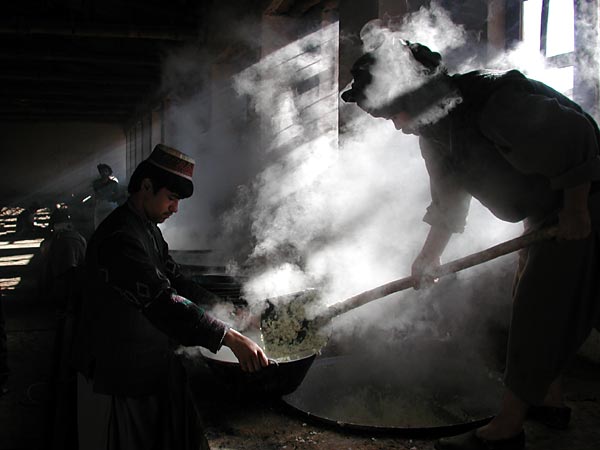
How Cooking For The Taliban Gets You Life In Guantánamo
By Andy Worthington / February 01, 2009

Those of us who prefer justice to arbitrary and unaccountable detention without charge or trial were delighted when, last week, Barack Obama fulfilled a long-stated promise and issued a presidential order stating that Guantánamo will be closed “as soon as practicable, and no later than one year from the date of this order,” and establishing an immediate review of the cases of the remaining 242 prisoners to work out whether they can be released.

A year is a long time, of course, if you’re unfortunate enough to have been imprisoned in Guantánamo for up to seven years with no way of asking why you’re being held, but some of us were prepared to give the new President the benefit of the doubt, and to consider that perhaps he didn’t want to make a rash promise that he might find himself unable to fulfill, such as pledging to close the wretched place in a matter of months.

Recent events, however, have demonstrated that, although President Obama has set in motion a policy that addresses the prisoners’ future, their long desire to have an opportunity to question the basis of their detention is currently being addressed not in the White House but in the District Courts, following an epic, four-year struggle between the Supreme Court and Congress to grant them their wish. Since the justices of the Supreme Court decisively ended this struggle last June, by ruling that Congress had acted unconstitutionally when it stripped the prisoners of the habeas corpus rights that the Supreme Court had granted them in June 2004, a raft of previously marooned habeas cases has been making its way through the District Courts.

Justice and the habeas reviews

Although frequently becalmed by pleas from the Justice Department, whose lawyers have had the nerve to claim, after seven years, that they are having trouble rustling up any evidence, a handful of these cases have actually made it to the point where a judge has ruled on their merits. The results have been a vindication for those who have struggled for years to get the prisoners a day in court, and, of course, for the prisoners themselves, because in 23 of the 27 cases reviewed to date, the judges have dismissed the government’s evidence for being empty and unsubstantiated — in one case comparing it to a nonsense poem by Lewis Carroll, the author of Alice’s Adventures in Wonderland — and have ordered the prisoners to be released.

Sadly, the impact on the prisoners has so far failed, for the most part, to match the significance of the rulings. In the case that drew comparisons with Lewis Carroll — that of Huzaifa Parhat, a Uighur from China’s oppressed Xinjiang province — the government lodged a miserable and unprincipled appeal to stop Parhat and his 16 compatriots from settling in the United States, after District Court Judge Ricardo Urbina ruled in October that their continued detention in Guantánamo was unconstitutional. In November, Judge Richard Leon, an appointee of George W. Bush, ordered the release of five Bosnians of Algerian origin, after he concluded that the government had failed to establish that, as alleged, they had intended to travel to Afghanistan to fight U.S. forces, but to date only three of the men have been repatriated, and the other two still languish in Guantánamo, as the Bosnian government wrangles over their status. The last case is that of Mohammed El-Gharani, a Chadian national and Saudi resident who was just 14 years old when he was seized in a raid on a mosque in Pakistan. Two weeks ago, Leon comprehensively demolished the government’s supposed evidence against El-Gharani, but he too remains stranded, pending a possible appeal.

To be or not to be (an enemy combatant)

In many ways, however, these prisoners are the lucky ones. In four other cases, the scales of justice have tipped the other way, into an alarming arena in which it has become apparent that the Supreme Court failed to address whether, in cases where the government is judged to have produced sufficient evidence to indicate that prisoners were “enemy combatants,” it is justifiable to continue holding them indefinitely.

The problem, as these other four cases have revealed, is that, according to the definition accepted by Judge Leon, an “enemy combatant” does not have to be someone who actually engaged in terrorism or in combat against the United States, but rather someone who was “part of or supporting Taliban or al-Qaeda forces, or associated forces that are engaged in hostilities against the U.S. or its coalition partners,” which “includes any person who has committed a belligerent act or has directly supported hostilities in aid of enemy armed forces” (emphasis added).

What this means in reality is that Judge Leon ruled in November that Belkacem Bensayah, the sixth Bosnian Algerian, was an “enemy combatant” not because he had been involved in a specific al-Qaeda plot, and not because he had raised arms against the United States in Afghanistan or anywhere else, but because the government provided what Leon regarded as “credible and reliable evidence,” establishing that he “planned to go to Afghanistan to both take up arms against US and allied forces and to facilitate the travel of unnamed others to Afghanistan and elsewhere,” and that he was “link[ed]” to a senior al-Qaeda operative (identified elsewhere as the mentally troubled training camp facilitator Abu Zubaydah, whose specific links to al-Qaeda have been questioned by the FBI).

This may be sufficient evidence to put Bensayah on trial, although it is surely not adequate to warrant his indefinite detention in Guantánamo, but in the cases of the other three men the noose-like nature of the “enemy combatant” definition was even more pronounced. On December 30, Judge Leon ruled that two more prisoners — the Tunisian Hisham Sliti and the Yemeni Muaz al-Alawi — were also correctly detained as “enemy combatants;” in Sliti’s case because, despite being a cynical and dissolute drug addict, he was associated with individuals connected to al-Qaeda, and, in al-Alawi’s case, because, although he had traveled to Afghanistan before the 9/11 attacks and was not alleged to have raised arms against U.S. forces, he “stayed at guest houses associated with the Taliban and al-Qaeda … received military training at two separate camps closely associated with al-Qaeda and the Taliban and supported Taliban fighting forces on two different fronts in the Taliban’s war against the Northern Alliance.”

Cooking for the Taliban

This ruling in particular cried out for an immediate overhaul of the “enemy combatant” definition, but yesterday the absurdity of holding prisoners as “enemy combatants” who were associated with the Taliban before the 9/11 attacks but never raised a finger against the United States was highlighted even more forcefully when Judge Leon ruled, in the case of the Yemeni Ghaleb Nasser al-Bihani, that he too was an “enemy combatant.”

Leon based his ruling on the fact that the government had established, primarily through interrogation, that al-Bihani had worked as a cook for the Taliban. Concluding that it was “not necessary” for the government to prove that he “actually fire[d] a weapon against the U.S. or coalition forces in order for him to be classified as an enemy combatant,” Leon declared, “Simply stated, faithfully serving in an al-Qaeda-affiliated fighting unit that is directly supporting the Taliban by helping prepare the meals of its entire fighting force is more than sufficient to meet this Court’s definition of ‘support.'” He added, “After all, as Napoleon was fond of pointing out, ‘An army marches on its stomach.'”

Al-Bihani listened to Leon’s ruling in a teleconference call from Guantánamo, but was cut off before hearing Leon’s line about Napoleon. His lawyers, Shereen J. Chalick and Reuben Camper Cahn, of the Federal Defenders of San Diego, said that they would take a rush transcript of the ruling to al-Bihani, adding that he would be “disappointed” with the decision, but the reality, I can reveal, is that al-Bihani gave up on U.S. justice many years ago.

“I am definitely an enemy combatant”

In 2004, at his Combatant Status Review Tribunal at Guantánamo — a toothless administrative review that was designed, essentially, to confirm that, on capture, he had been correctly designated an “enemy combatant” — al-Bihani was acutely aware of Guantánamo’s failings, and addressed all the issues raised yesterday by Judge Leon. Firstly, he admitted that he had traveled to Afghanistan in April or May 2001 “to fight the jihad with the Taliban” against Ahmed Shah Massoud (the leader of the Northern Alliance), and added, “There is nothing wrong with that in our religion. Is it acceptable for Americans and not for us?”

He then disputed an allegation that he “was an associate of the Taliban and/or al-Qaeda,” pointing out that he had admitted “many times” that he was with the Taliban, but that the statement as it stood “suggests that you are [not] giving me a choice between Taliban and al-Qaeda,” and also denied an allegation that he participated in hostilities against the United States, explaining, “I went to Afghanistan before the Americans. If I wanted to fight the Americans I would have gone there after the Americans arrived.”

It was, however, at the conclusion of his hearing that he demonstrated what can now be seen as a prescient awareness of the inescapable bind in which he found himself. With evident sarcasm, he stated, “I am definitely an enemy combatant. There is no question about that. I am sure that you will find me as an enemy combatant. Nobody has been found to not be an enemy combatant. Everybody has been found to be an enemy combatant. I am certain that I will be found to be an enemy combatant.”

If you want a final demonstration of the ongoing absurdity of Guantánamo, compare the case of Salim Hamdan to that of Ghaleb al-Bihani. Last August, Hamdan, a driver for Osama bin Laden, was tried at Guantánamo in the Military Commissions conceived by Vice President Dick Cheney and his advisers, sentenced and sent home in November to serve the last few weeks of a five-month sentence delivered by a military jury. Hamdan is now a free man, whereas al-Bihani, a man who never met Osama bin Laden, let alone driving him around, has just been told, by a judge in a U.S. federal court, that the government is entitled to hold him forever because he cooked dinner for the Taliban.

If President Obama is genuinely concerned with justice, he needs to act fast to tackle this squalid state of affairs, which does nothing to undo the previous administration’s disdain for and mockery of the laws on which the United States was founded.

[Andy is the author of The Guantánamo Files: The Stories of the 774 Detainees in America’s Illegal Prison. His website is: www.andyworthington.co.uk.]

Source / ZNet

The Rag Blog

Posted in RagBlog | Tagged , , , | Leave a comment

Turkish PM Calls Gaza What It Was : ‘Killing’

Turkish Prime Minister Recep Tayyip Erdogan is seen during a session at the World Economic Forum in Davos, Switzerland, on Thursday, Jan. 29, 2009. Photo: AP Photo/Michel Euler.

See video of Erdogan’s remarks below.

Turkish PM greeted by cheers after Israel debate clash
By Robert Tait / 30 January 2009

Recep Tayyip Erdogan argued with Israeli president over Gaza offensive, before storming out

Turkey’s prime minister, Recep Tayyip Erdogan, arrived home to a tumultuous reception of cheering crowds early today after storming out of a debate in Davos over Israel’s recent offensive in Gaza.

Hours after clashing with the Israeli president, Shimon Peres, in angry scenes at the normally sedate world economic forum, he was welcomed at Istanbul’s Ataturk airport by thousands of supporters waving Turkish and Palestinian flags and chanting “Turkey is proud of you”. Sympathisers also left bouquets of flowers at his official residence.

The outpouring of support displayed the domestic political capital Erdogan gained from his performance at the Swiss resort, where he told Peres: “When it comes to killing, you know very well how to kill.” He then walked off the stage, declaring that he would never return to Davos, after claiming he had not been allowed to speak by the debate moderator, the Washington Post columnist David Ignatius.

Erdogan also accused Peres of raising his voice and claimed the Israeli statesman had been allowed more speaking time than himself and the panel discussion’s two other participants, the UN secretary general Ban Ki-moon, and Amr Moussa, secretary general of the Arab League.

Peres had earlier made an impassioned defence of Israeli actions in Gaza, asking Erdogan: “What would you do if you were to have in Istanbul every night a hundred rockets?” Erdogan responded by saying: “President Peres, you are older than me and your voice is very loud. The reason for you raising your voice is the psychology of guilt … I know very well how you hit and killed children on the beaches.”

The prime minister’s wife, Emine – who this month organised a Women For Peace In Palestine lunch for the wives of Islamic dignitaries – also became involved, bursting into tears after telling reporters that “everything Peres said was a lie”.

Erdogan’s outburst was his most high-profile in a series of outspoken attacks on Israel’s Gaza operations. He had previously called the offensive – in which around 1,300 Palestinians died – a “crime against humanity” and demanded Israel’s expulsion from the UN.

His stance has shocked Israeli officials — used to considering Turkey as their closest regional ally — but played to the pro-Palestinian sentiments of the overwhelmingly Muslim Turkish public. Mass demonstrations in favour of Hamas have been staged in Istanbul and other cities.

Such sympathies have prompted suggestions that Erdogan’s rhetoric has been mainly for domestic political consumption and aimed at wooing voters at forthcoming municipal elections in March. Jewish groups have also voiced fears that the government’s fierce anti-Israeli criticism is fuelling antisemitism The row with Peres overshadowed a dispute between the government and the International Montetary Fund that had seen Erdgoan accuse the fund of setting unacceptable conditions, after negotiations were suspended over a proposed loan to help Turkey weather the economic recession.

On arriving at Ataturk airport, he depicted his Davos walk-out in nationalist terms, telling journalists: “This was a matter of the esteem and prestige of my country. I could not have allowed anyone to poison the prestige and in particular the honour of my country.”

He also denied his comments were aimed at the Israeli people or Jews in general. A world economic forum spokesman said Peres spoke with Erdogan on the phone after the debate and expressed his respect for Turkey.

However, some observers believe Erdogan has sacrificed Turkish foreign policy, especially Turkey’s self-appointed role as a regional mediator.

Before the Gaza hostilities Turkey had been mediating in negotiations between Israel and Syria. There are also fears that the pro-Israel lobby in the US will back moves to recognise the massacres of Armenians by Ottoman forces in the first world war as genocide, a move Turkey vehemently opposes.


Turkish prime minister in angry clash with Israeli president Shimon Peres over ‘very wrong’ offensive against Palestinian territory

Source / The Guardian

The Rag Blog

Posted in RagBlog | Tagged , , , | 1 Comment

Loving’s Take on the Wall Street Bailouts

Cartoon by Charlie Loving / The Rag Blog

Posted in RagBlog | Tagged , , | Leave a comment

Iraq Elections May Change the Political Landscape

ON ALERT: An Iraqi soldier checks security at a polling station in the southern city of Basra. Photo: Matt Cardy/Getty Images.

Iraq elections: Security tight for provincial vote
By Tina Susman / January 31, 2009

There is a curfew on cars in cities, and Baghdad’s airport is shut as officials prepare for Saturday’s vote, which many hope will redress sectarian grievances by giving Sunni Arabs seats on councils.

Reporting from Baghdad — In elections expected to significantly alter the country’s political equation, Iraqis today began choosing new provincial councils to replace the current ones, blamed for fueling years of sectarian strife.

Late Friday, vehicular curfews took effect in cities, Baghdad’s airport was closed and borders were sealed, signs of security concerns that remain high despite a major drop in violence in recent months. Polling stations were ringed with razor wire and under 24-hour police guard. At one site, police Lt. Dhia Khadim bragged that voters had to undergo six searches before casting their ballots.

“It’s essential,” Khadim said as a rooster crowed nearby and wind sent dust swirling about the courtyard of the school serving as polling place.

Saad Hassan was the first in line to vote at a polling station in east Baghdad’s Sadr City, the Shiite stronghold of anti-U.S. cleric Muqtada Sadr. He woke up at 6 a.m., prayed, and brought his family with him, walking in the dim and dusty light of the early morning through an area that less than a year ago was engulfed in fighting between Shiite militiamen and U.S. and Iraqi security forces.

“We are sick of the religious figures, which brought only chaos to our country,” Hassan said after voting for a secular party.

Koudir Oudah Kahdum voted at the same station, but for the Islamic Dawa Party of Prime Minister Nouri Maliki. As with many Iraqis, memories of Saddam Hussein’s dictatorship swayed his decision. “It was Maliki who implemented his execution,” Kahdum said, referring to Hussein’s hanging in 2006. Maliki “is a brave man and our hero,” he said. “He deserves that we vote for him again and again.”

At stake are 440 seats on 14 provincial councils, the equivalent of U.S. state legislatures.

The current councils are dominated by Shiites and ethnic Kurds, even in areas where Sunni Arabs dominate, a result of a boycott of the 2005 elections by Sunni Arab parties. The lopsided councils and Sunnis’ lack of power served to exacerbate sectarian and ethnic tensions that had boiled over into violence and have continued to hinder political progress.

The elections are seen as a barometer of Iraq’s ability to remain relatively calm as U.S. military forces scale back their presence. A smooth process could also boost President Obama’s desire to accelerate the U.S. troop withdrawal, something he has said he wants to achieve within 16 months. That places U.S. military commanders in Iraq in a delicate situation. They are eager to highlight Iraq’s improved security and point to the elections as a milestone, but they also warn against a hasty withdrawal of the 140,000 American troops here.

“I think over-focus on a single event is always dangerous, be it positive or negative,” said Army Brig. Gen. Daniel B. Allyn, one of the top U.S. commanders in Iraq, speaking of the elections as a measure of Iraq’s future stability.

“Iraq is on a journey. It’s on a journey toward sovereign nationhood,” he said, noting that with nearly 14,500 candidates vying for council seats, most would lose. “That’s a lot of disappointed people, like about 14,000 of them.”

U.N. Special Envoy Staffan De Mistura said he was confident that there would not be a return to violence as occurred after the 2005 elections, because this time Sunni Arab parties are taking part. In addition, he said, Iraq has overcome what he called the Samarra syndrome — the eruption of sectarian violence after a major attack, such as the 2006 bombing of a Shiite shrine in Samarra. The attack led to a steep rise in Shiite-Sunni violence that displaced hundreds of thousands of people and left the capital carved into sectarian-based neighborhoods.

For that reason, Abu Walid Jabouri said Friday, he did not trust any of the more than 300 parties in the fray to overcome the perils of sectarianism.

“I will go to the poll, but I will not write anything. I will just draw a line across the ballot,” said Jabouri, out for an afternoon stroll with his wife and young daughter.

In 2005, Mohammed Hussein supported the Iraqi National Accord, a secular party headed by former Prime Minister Iyad Allawi. With security his main concern now, Hussein wasn’t sure which way to vote. He planned to decide at the last minute, at the booth.

“We want whoever rules us to be secular, but we also want security,” he said, acknowledging that Maliki had impressed him with his crackdown on Shiite militias.

Maliki is hoping the crackdown will help seal a Dawa victory in Baghdad and the southern provinces, where the rival Supreme Islamic Iraqi Council holds sway. Strong showings would help Maliki consolidate power across the country before national elections this year that will determine whether he remains prime minister.

[Times staff writers Ned Parker in Najaf and Monte Morin in Baghdad and a special correspondent in Baghdad contributed to this report.]

Source / Los Angeles Times

H/t Juan Cole / The Rag Blog

Posted in RagBlog | Tagged , , | Leave a comment

So Far: Obama Has Defied the Odds On Palestine

Palestinian Presidident Mahmoud Abbas: Obama called him first. Photo by Mohammed Omer / Rafah Today.

Obama and the Oddsmakers:

‘Obama — to offer yet again one of my favorite quotes from Lenin — has to become as radical as reality itself.’

By Alexander Cockburn / January 31, 2009

A betting man, the morning after Obama’s inauguration, would surely have found odds-on stakes that the new president’s first daring cavalry charge would be an assault on the economic crisis, worsening day by day. Our Wednesday-morning gambler would have found much longer odds being offered on any surprising moves in that graveyard of presidential initiatives sign-posted “Israel-Palestine.

[….] In his inaugural speech Obama proclaimed that “We are a nation of Christians and Muslims, Jews and Hindus – and nonbelievers.” Muslims were ahead of Jews in that line, which caused some eyebrows to twitch. The next morning, in his opening round of phone calls to Middle Eastern leaders Obama placed the first call to Mahmoud Abbas, and only the next to Olmert. Uri Avnery pointed out on this site that Ha’aretz twice adjusted reality, reporting wrongly that Olmert was first in line. Hardly had Obama settled in before he appointed a fellow Democrat and former US Senator, George Mitchell, as his peace broker between Israel and the Palestinians. Mitchell’s mother came to America from Lebanon at the age of 18, and Mitchell’s father, orphaned from his Irish father, was brought up in a Maronite Christian Lebanese family.

Then Obama gave his first formal tv interview to the Dubai-based cable station Al Arabiya, where he remarked at the outset that “I think it is possible for us to see a Palestinian state — I’m not going to put a time frame on it — that is contiguous, that allows freedom of movement for its people…” Contiguous? You can read that a number of ways, bad and good, including the possibility that Obama is obliquely criticizing Israel’s strategy of corralling Palestinians into mini-Bantustans on the West Bank, divided by military roads, walls and Jewish settlements.

As Avnery, whose biography stretches back to Israel’s earliest days, remarked, “These are not good tidings for the Israeli leaders. For the last 42 years, they have pursued a policy of expansion, occupation and settlements in close cooperation with Washington. They have relied on unlimited American support, from the massive supply of money and arms to the use of the veto in the Security Council. This support was essential to their policy. This support may now be reaching its limits.”

As buttress for Avnery’s claim that US “support may be reaching its limits,” we can instance a report on CBS’ “60 Minutes,” the most widely watched news show on US television. CBS’ reporter Bob Simon’s filmed report of the arrogance and brutality of Israelli soldiers and settlers was, at least in the memory of your CounterPunch editors, the single most savage indictment of Israel ever broadcast on U.S. network television (which of course has avoided any such indictments like the plague). At one point Simon’s crew got footage of a Palestinian home in Nablus, seized by the IDF, for use as as a lookout post. They kicked the family downstairs, while the Israeli soldiers took over the kids’ bedrooms. When the kids came home from school, they couldn’t get into the house. The piece also featured a fanatical settler leader, Daniella Weiss, pledging that never again will any settlement be dismantled by the IDF.

Simon concluded this fierce report as follows: “Demographers predict that, within ten years, Arabs will outnumber Jews in Israel, the West Bank, and Gaza. Without a separate Palestinian state, the Israelis would have three options. They could try ethnic cleansing, drive the Palestinians out of the West Bank. They could give Palestinians the vote. That would be the democratic option, but it would mean the end of the Jewish state. Or they could try apartheid, have the minority Israelis rule the majority Palestinians. But apartheid regimes don’t have a very long life.”

Newsweek’s current edition has a story titled: “Israel Has Fewer Friends than Ever.” Huge numbers of people here can tune into Jon Stewart’s Daily Show or go on line and visit sites such as CounterPunch [and The Rag Blog] and get fierce reporting on Israel’s monstrous conduct.

So the media context has changed, and this change has to be factored in to overall assessments of what is possible politically. Of course the range of options entertained in Washington and in the tottering official media remains mostly, and obdurately, tilted to Israeli rejectionism. There are endless instances, cited recently on this site in the interview of Noam Chomsky by Afshin Rattansi of Press TV and by Norman Finkelstein, of Israel’s successful sabotage of peace initiatives, decade after decade.

Obama may well be smarting from the criticism across the world he incurred from keeping his mouth shut about Israel’s bloody rampages in Gaza. The furious public letter denouncing US-Israeli conduct from Prince Turki al-Faisal, Saudi Arabia’s ambassador to the United States and former intelligence chief probably also prompted Obama to “reach out”, as they say, to the Arab world – particularly since the US needs all the customers for its Treasury bonds that it can get.

So far the Israel lobby here has held its peace. The Jewish Forward newspaper, a useful bellwether, has editorialized positively about Obama’s moves.

“But time is running out. Most Israelis know that if Israel doesn’t reach a peace agreement and leave the West Bank very soon, it will find in another decade that it is no longer a Jewish democracy. Israel’s pro-Western Arab neighbors, led by Egypt and Saudi Arabia, fear that if Israel and the Palestinians don’t settle their differences soon, then anger on the Arab street will boil over and force those moderates to abandon the peace option.

“Total victory is no longer an option, if it ever was. This is a time to put war aside and give diplomacy a chance. Friends of Israel, those who care about Israel’s future, need to cast off their doubts and give full-throated support to George Mitchell.”

But the minute Mitchell comes up with a concrete proposal discomfiting to Israel and to its likely new leader, Benjamin Netanyahu, then the atmosphere could become sulphurous with blinding speed. That will be the testing time for Obama and a true test of leadership and hard-nosed cunning. If he is going to get anywhere constructive, his position has to evolve beyond ongoing efforts to write Hamas out of the picture and stick with the utterly discredited Abbas. That will be Mitchell’s hardest negotiating job, reconciling his president with the facts on the ground.

In other words, Obama – to offer yet again one of my favorite quotes from Lenin – has to become as radical as reality itself. The economy, if not the Middle East, may force him willy-nilly in that direction. It will take further disasters to force Obama and his economic advisors to kick the corpse of the present banking mess into the grave and push towards the creation of a rational system under public control. It will take resources of political cunning and courage that Obama has yet to evince, for him to shape US policy towards Israel/Palestine in a positive direction.

A prudent bettor would still have to wager that Obama simply won’t want to spend that kind of political capital. But a prudent bettor wouldn’t have predicted the moves he’s made so far.

Source / CounterPunch

Thanks to David Hamilton / The Rag Blog

Posted in RagBlog | Tagged , , , , | Leave a comment

Medical Mistakes Kill 100,000 Per Year in the US

See related John Rockefeller Op-ed below.

Health Care in America
By Janet Gilles / The Rag Blog / January 31, 2009

In this video, Tom Daschle analyzes our health care system, not the best in the world. In the US, medical mistakes kill the equivalent of a 747 crashing every other day, but no agency is looking into this. One-hundred thousand die annually from medical mistakes, yet we don’t have a board looking into why.

All the other countries start at the bottom of the health pyramid, maintaining wellness, and then work their way up to the top, expensive interventions, until the money runs out.

In the US, we spend the money at the top on expensive procedures and don’t do the cheap stuff that will get us a lot more bang for the buck.

“I would call it a myth that we have the best healthcare system in the world,” says Daschle.

Source / FORA TV

And there’s this related editorial:

Final piece in our economic collapse
By John Rockefeller / January 31, 2009

Letting the health care market segment wither by lack of public support will do no one any good.

Having campaigned on a broadly sketched platform of hope for those on the fringes of economic and physical viability, President Obama is watching the ticker line expand to the point where half of the U.S. population considers itself either underemployed or underserved.

An expanding percentage of this group – 43.6 million by the Centers for Disease Control’s 2006 pre-recession count – are without health care.

This number has certainly burgeoned well beyond the 50 million mark given the fresh round of layoffs, financial failures and re-budgeting by the recently unemployed.

My concern, and the concern of many, surrounds the disappearance of Obama’s commitment to health care provision for the uninsured and underserved members of our population.

We are about to ignore our single functional economic engine – that of the health care sector – by prioritizing long-dead sectors of finance and auto manufacturing.

FACING A FISCAL TROUGH

If we fail to rescue health care and public health itself as we move forward, we will be entering a fiscal trough that may take decades to rebuild.

Now would be the perfect time to pick the sector with most viability to fuel our recovery. Later will be far too late.

As we pour countless, and lightly accounted for, billions into bailouts and tax cuts for those having sufficient income to avail themselves of such stimulus measures, we are leaving an ever larger proportion of our country behind, and in the most dire state of need.

Health has been largely commoditized and subjected to profit-focused market efficiencies for the past quarter century, leaving more and more Americans behind in the eternal rush to the margin.

As this process unfolded, and despite the loss of millions on the health care coverage rolls, there were ample dollars to ensure the profitability of health as a commodity.

This will not be the case moving into the near and distant future. Health care is, like so much else, heading into its own meltdown, and it will make the financial collapse of 2008 look like a mere blip on the Bloomberg screen.

With the U.S. economy claiming more and more members of the middle class for transition toward the poverty line, we are about to enter a period in our history defined by a statistical majority in the U.S. population having little or no access to health care – at a time when health care is acting as one of the few profit-making sectors in our economy.

With a spiking unemployment rate in the health care sector and a dilapidated pharmaceutical industry that continues its merger mentality to control costs no longer borne by a viable financial sector, we are heading into an uncharted abyss of social disaster.

TURN THE TIDE AROUND

The only way to stem the tide on this decline – and its accompanying fiscal and public health consequences – is to fund health care as the fiscal engine it has recently become amidst the financial sector collapse.

Had the health care sector been given half of the recent financial and auto manufacturing bailout funding, we would have been able to expand and extend health care coverage.

We would thereby be capturing the remaining stability of this sector as an engine of economic and public health recovery.

It surprises me that the economists and health care consultants working in the Obama administration have not taken this opportunity to the bank.

They could have made a difference by diverting meaningless cash dumps from non-functional industries into the single most viable and necessary industry in the country.

I am sad to say that the crash of the health care economy will be heard in a very different way than the crashes that recently preceded it.

It will take our final breath economically, and literally with the disappearance of greatly diminished health care services to all economic classes in the United States.

Copyright 2009 by The Portland Press Herald/Maine Sunday Telegram.

[John Rockefeller of Camden is CEO of a management consulting firm, Zero Consult Ltd., based in Boston.]

Source / Portland Press Herald

The Rag Blog

Posted in RagBlog | Tagged , , | 1 Comment

Texas and the Killing Chamber

‘At the execution facility in Texas, there is seating for people who have come to take their satisfaction from seeing an act of death.’

By Greg Moses / The Rag Blog / January 31, 2009

I don’t know much about death. I’ve seen very little of it up close, and I’d like to see less of it on TV. But I have this idea that the less death we cause each other, the better.

However, the death penalty seems to be based on another kind of idea. The world will be better, says the death penalty, if we all get together and make one death more.

At the execution facility in Texas, there is seating for people who have come to take their satisfaction from seeing an act of death.

I think I understand what satisfaction they are taking from the scene as they watch a person die who has killed one or two or three or more people. I think I understand what it must be like to live with a killed friend, daughter, or child while the killer lives. I think I understand the sense of how that state of things would seem absolutely unfair.

Why should any thief be allowed to keep what he has stolen? Has the killer not stolen life itself?

On another side of the killing chamber, Texas provides seats for the family and guests of the executee. Now it must be terrible enough to be told that your loved one has been killed. But to mark on your calendar a date and then travel to Huntsville and take a seat at some appointed time and watch? I have trouble seeing how that can seem like a fair thing to put somebody through.

At least three times recently in Texas, the people who watched the death act did not see a killer killed, because the executee was later discovered to be innocent. In those three cases, what would we call what the witnesses to death are going through today as they think about watching the killing of an innocent man?

We live in an age of pop probabilities. People who hate statistics most of the time can argue pretty quickly that the percentage of wrongful killings on death row is acceptable. It’s like the way we average the news of collateral damage. In the effort to kill rightly we sometimes kill wrongly. Doesn’t make right wrong, does it?

Last week in Texas they held two scheduled killings. One was filled with witnesses and a real, last-minute act. The executee accused one of the victims of at least two of the killings as the victims’ families looked on.

The other execution was silent, apparently. Nobody came to watch. Nothing was said.

Will Texas next week be a better state thanks to last week’s two killings? Have two thieves been forced to return what they had stolen?

There is no returning a stolen life.

[Greg Moses edits the Texas Civil Rights Review.]

The Rag Blog

Posted in Rag Bloggers | Tagged , , | 2 Comments

Boehner : Lighten Up Already


‘Boehner is like a talking toy that repeats the same thing over and over when you pull its string.’

By Larry Ray / The Rag Blog / January 30, 2009

There is great speculation that GOP house minority leader John Boehner is getting progressively darker and darker because he spends so much time on his hidden Capitol office tanning bed. But others opine that his conservative rhetoric is getting so burned out he has become a walking, nay-saying human rotisserie.

Boehner is like a talking toy that repeats the same thing over and over when you pull its string. His string became more available for regular pulling after he campaigned to clean things up after the Jack Abramoff lobbying scandal hastened Tom DeLay’s departure. In spite of Boehner’s own links to Abramoff, he became House Majority Leader in 2006. And he has used his higher profile position to oppose anything not ultraconservative ever since. Some typical examples:

  • Voted NO on regulating the subprime mortgage industry. (Nov 2007)
  • Voted YES on restricting bankruptcy rules. (Jan 2004)
  • Voted NO on tax incentives for energy production and conservation. (May 2008)
  • Voted YES on passage of the Bush Administration national energy policy. (Jun 2004)>
  • Rated 0% by the Campaign for America’s Future, indicating opposition to energy independence. (Dec 2006)
  • Voted NO on assisting workers who lose jobs due to globalization. (Oct 2007)
  • Voted NO on protecting whistleblowers from employer recrimination. (Mar 2007)
  • Voted YES on limited prescription drug benefit for Medicare recipients. (Nov 2003)

And these examples are just a quick skim off the top of Boehner’s “to hell with the average working American” vision for our nation. Now that he and his conservative cohorts have been forced to pull back from the private trough from which they have gorged themselves for the past eight years, Boehner still doesn’t get it.

His strident opposition to “spending taxpayer dollars for a trillion dollar bailout” suggests he has no knowledge of the crippling recession and subsequent damage Japan suffered in the 1990’s. Their conservative leaders opposed vigorous, massive and immediate governmental action after their spectacular market crash. Japan learned too late that conservative tight-fisted refusal to act aggressively and immediately with massive governmental cash infusions would lead to a grinding recession so severe that it would take more than a decade to recover.

Boehner represents a dwindling base of conservative Republicans now mostly concentrated in a block of Southern States. The Republican National Committee now clearly seeks to change and expand that base after an historic election of their own. The new RNC has just elected their first ever African American chairman. Michael Steele, after six grueling ballots, beat out top white contenders, including Katon Dawson, who even quit his whites-only country club membership for a shot at the position.

The RNC’s first black chairman was elected though he was not even a RNC committee member, which almost never happens. The mood for change was so strong that Tennessee Republican Party Chairman, Chip Saltsman, the boob who mailed out the “Barack the Magic Negro” music CD’s to fellow Republicans for Christmas, didn’t even make the ballot.

So maybe Chairman Steele will have John Boehner in for a private sit-down real soon and a chat about a wider Republican vision for all of America that could actually allow true civil, bipartisan political discussion. And who knows, maybe Boehner will unplug his tanning bed and no longer think he has to be the darkest-skinned Republican mouthpiece. Chairman Steele is now the real deal.

[Retired journalist Larry Ray is a Texas native and former Austin television news anchor. He also posts at The iHandbill.]

The Rag Blog

Posted in Rag Bloggers | Tagged , , , | Leave a comment

Foreclosed On? Congresswoman Says: Stay and Fight

Rep. Marcy Kaptur, D-Ohio, wants those losing their homes to stay and fight. Photo by Rick Bowmer / AP.

‘So I say to the American people, you be squatters in your own homes,’ said Congresswoman Kaptur before the House of Representatives. ‘Don’t you leave.’

By David Edwards and Stephen C. Webster / January 30, 2009

If you’re poor and the bank is coming for your home, Congresswoman Marcy Kaptur has a plan for you.

Just squat, she says.

Yes, this Ohio Democrat is actually encouraging her financially distressed constituents whose homes have been foreclosed upon, to simply stay put.

In a Friday report, CNN’s Drew Griffin explored the case of Ohioan Andrea Geiss, whose home was foreclosed upon in April.

“Behind in payments, out of work, a husband sick, she had nowhere to go,” said Griffin. “So, she decided to follow the advice of her Congresswoman and go nowhere.”

In Lucas County, Ohio, over 4,000 properties were foreclosed upon in 2008, reports CNN.

“So I say to the American people, you be squatters in your own homes,” said Congresswoman Kaptur before the House of Representatives. “Don’t you leave.”

She’s called on all of her foreclosed-upon constituents to stay in their homes and refuse to leave without “an attorney and a fight,” said CNN.

“If they’ve had no legal representation of a high quality, I tell them stay in their homes,” Kaptur told Griffin.

Kaptur is a high-profile advocate of an increasingly popular mode of fighting foreclosures best known for it’s key phrase: “Produce the note.”

By telling a bank to “produce the note,” a homeowner can delay foreclosure by forcing the lender to prove the suing institution is actually the same which owns the debt.

“During the lending boom, most mortgages were flipped and sold to another lender or servicer or sliced up and sold to investors as securitized packages on Wall Street,” explains the Consumer Warning Network. “In the rush to turn these over as fast as possible to make the most money, many of the new lenders did not get the proper paperwork to show they own the note and mortgage. This is the key to the produce the note strategy.”

And Friday’s segment on this growing foreclosure fighting “movement” was not the network’s first. Earlier in January, CNN explored one person’s strategy in demanding her bank “produce the note,” only to find that the lender had “lost or destroyed” the evidence of debt ownership. Such a revelation can significantly strengthen a homeowner’s position when asking to renegotiate a mortgage.

That these banks, many of which received billions of dollars in government bailout funds, continue to boot defaulted owners from their homes, makes them “vultures” says Kaptur.

“They prey on our property assets,” she said. “I guess the reason I’m so adamant on this is because I know property law and its power to protect the individual homeowner. And I believe that 99.9 percent of our people have not had good legal representation in this.”

Source / therawstory

Thanks to Karen Lee Wald / The Rag Blog

Posted in RagBlog | Tagged , , , , | 2 Comments

Hurricane Watch : Texas-Cuba Alliance?

Galveston Mayor Lyda Ann Thomas, who will lead a delegation to Cuba, is shown with Shreveport, La. Mayor Cedric Glover, testifying on Capitol Hill Sept. 23, 2008, before a Senate hearing on disaster recovery. Photo by Jose Luis Magana / AP.

‘Mayor Lyda Ann Thomas will lead a delegation of regional officials to Cuba to find out if Galveston could improve its hurricane response by emulating any part of the Cuban plan.’

By Leigh Jones / January 28, 2009

GALVESTON — Hurricane Ike smacked the Caribbean island of Cuba twice before rolling on to Galveston.

Although seven Cubans died during the storm, 2.6 million people — 23 percent of the island’s population — evacuated out of harm’s way.

Just three days later, 40 percent of Galveston’s 57,000 residents prepared to weather Ike’s wrath in their homes.

Across Texas, Louisiana and Arkansas, 20 people died during the storm.

Despite the national policy of silence toward the tiny communist nation, America’s coastal communities have something to learn from the Cubans, some say.

Later this year, Mayor Lyda Ann Thomas will lead a delegation of regional officials to Cuba to find out if Galveston could improve its hurricane response by emulating any part of the Cuban plan.

The Washington, D.C.-based Center for International Policy, which is organizing the trip, asked Thomas to join the delegation because Galveston and Cuba were twin victims of Ike, said Wayne Smith, a senior fellow at the center and director of its Cuba program.

“We have our differences to be sure,” he said, alluding to the ongoing tensions between the United States and Cuba. “But both of us are in the path of these hurricanes that seem to be increasing in size, intensity and number. How can we cooperate? How can we better help one another in these circumstances?”

This year’s trip is the third in a series of meetings between Cuban and American officials the center has organized. In 2007, Cuban officials joined political leaders from Louisiana, Mississippi and Alabama in Monterey, Mexico.

In 2008, the group made its first visit to Cuba to visit the country’s meteorological service and meet with medical response teams.

Thomas, who has never been to Cuba, said she was interested to see what Cuba’s hurricane experts had to say.

Cuba’s expertise in dealing with hurricanes dates back to around 1900, when the country established the first hurricane observation network.

The Cubans could have helped warn Galveston about the 1900 Storm, but three weeks before it made landfall, the federal government banned all meteorological information coming from the island.

Thomas and her fellow delegates will publish a report on their findings when they return to the United States.

Although the trip’s dates have not been finalized, it likely will take place in April, she said.

The trip is being funded by the The Atlantic Philanthropies, a New York-based organization that provides grants to groups that work with disadvantaged and vulnerable people.

Source / Galveston Daily News

Thanks to Karen Lee Wald / The Rag Blog

Posted in RagBlog | Tagged , , , , | 1 Comment

Unions and the Left : A Million March in France Against Sarkozy

An anti-government demonstration in Bordeaux Jan. 29, 2009. Photo by Getty Images.

The US mainstream media did not even approach this kind of coverage. Of course the left-center European press — like The Independent and Le Monde — is much less subservient to the powers-that-be.

I sadly feel that we will never see anything akin to this in the USA. There IS a French tradition, dating back to 1793, of turning to the street and by and large, over the years, the French establishment has been much more tolerant and insightful. Furthermore, the European system of education and the secularist society give the average French Citizen better insight into affairs politic.

–Dr. Stephen R. Keister / The Rag Blog / January 30, 2009

French demonstrations: Sarkozy vs the street

More than a million people in a dozen French cities protest the government’s handling of the economy.

By John Lichfield / January 30, 2009

PARIS — In the biggest demonstrations seen in France for more than a decade, hundreds of thousands of people took to the streets yesterday to protest against everything from the global economic crisis to President Nicolas Sarkozy’s efforts to shrink the French state.

About 300,000 people – mostly representing the many tribes of a rejuvenated left-wing movement – marched raucously through the centre of Paris to demand higher wages, more job protection and greater government efforts to stop the country from tipping into a deep recession.

In a carnival atmosphere – one of political defiance, rather than deep popular anger – the trades union and left-wing sympathisers marched to a chanted refrain, in English, of “Yes, yes, yes, we can”. This must be the first time that any left-wing French demonstration has invoked the absent spirit of an American president.

A 24-hour nationwide strike, mostly observed by public sector employees, was less effective than predicted but rail and bus services, airports, schools and postal services were disrupted, especially outside Paris.

More worryingly for M. Sarkozy, a poll found that 69 per cent of voters supported the protests – a figure which embraced not just the traditional left and centre, but a large number of right-wing respondents. The President may be further disturbed by the fact that yesterday’s demonstrations were held before the recession has begun to bite savagely into the real economy. With France’s manufacturing and luxury industries – from cars and aircraft to wine and leather goods – beginning to feel the squeeze, far deeper and angrier unrest may lie ahead.

About 1.5 million people in a dozen cities were said to have joined the rallies, which were called by the eight rival trade union federations. Union leaders said it was the largest social protest since a wave of demonstrations forced President Jacques Chirac to back down on state reforms in 1995.

The marches were the most powerful challenge so far to M. Sarkozy’s authority. Police estimated the number of demonstrators in Paris at 65,000 but this was manifestly too low. A dense crowd more than a mile long blocked the Grands Boulevards in the east of the city centre, from the Bastille to La République and beyond, suggesting a turnout of at least 300,000.

The placards carried by marchers were anti-recession, anti-banker, anti-capitalist and anti-reform but most of all, anti-Sarkozy. The parade was led by people carrying an effigy of the President as a green-skinned vampire, with the slogan “Black Death” pinned on his back. Alongside him was an effigy of a donkey in a dunce’s cap with the slogan “€36bn for the bankers and we get screwed”. The protests, following similar unrest in Greece, the Baltic states and even Iceland, will be closely followed by other European governments. EU leaders have been concerned for weeks that popular anxiety about the recession – and anger and incomprehension at the scale of the banking bailouts – might spill over on to the streets.

Yesterday’s rallies across France were mostly good-natured and almost jubilant. The left was delighted to find a unifying issue after 20 months of being outmanoeuvred and humiliated by M. Sarkozy. Leading figures in the Socialist and Communist parties ostentatiously joined the Paris march. The danger for M. Sarkozy, however, is that he so weakened the credibility of the moderate left that social protest will jump to the extremes. Yesterday’s march was dotted with crude anti-capitalist images such as bankers in top hats, lighting cigars with €500 notes.

President Sarkozy has already unveiled a €26bn package to boost the economy, as well as special measures to shore up flagging sales of cars and aircraft. But even the most moderate union leaders say more must be done to boost people’s declining incomes (something M. Sarkozy repeatedly promised voters in 2007).

Bernard Thibault, the head of the largest union federation, the CGT, said the marches were a “social event of the utmost importance, not just a passing shout of anger”. He urged M. Sarkozy and his Prime Minister François Fillon to “re-examine their consciences” and reconsider the scale of their stimulus package. François Chérèque, of the moderate CFDT federation, called for “concrete measures for workers” – in other words pay rises.

M. Sarkozy remained deliberately and obstinately silent yesterday. Last year, he boasted that he had tamed the unions and that “when there is a strike in France, no one notices any more”. It appears that he spoke too soon. He may take comfort from the fact that yesterday’s strike was mostly observed by public-sector workers whose jobs are not directly threatened by recession. And he will note that the strikes were not as damaging as the unions had forecast: seven in 10 trains ran on the Paris Métro, while six in 10 high-speed TGV trains were operating normally.

Source / The Independent, U.K.

The Rag Blog

Posted in RagBlog | Tagged , , , , , | 1 Comment