Juan Cole: Abolish Puritanism in Government Policy


The Great Reagan Pyramid Scheme Comes Crashing Down
By Juan Cole / October 15, 2008

The Republican Party that Nixon invented melded the moneyed classes of the Northeast with the white evangelicals of the South. This odd couple went on to simultaneously steal from and oppress the rest of us. The moneyed classes were happy to let the New Puritans impose their stringent morality, since they could always just buy any licentiousness they wanted, regardless of the law. And the New Puritans were so consumed with cultural issues such as homosexuality, abortion, school prayer and (yes) fighting school desegregation that they were happy to let the northeastern Money Men waltz off with a lion’s share of the country’s resources, consigning most Americans to stagnant wages and increasing debt. The Reagan revolution consolidated this alliance and brought some conservative Catholic workers into it.

These domestic policies at home were complemented by wars and belligerence abroad, which further took the eye of the public off the epochal bank robbery being conducted by the American neo-Medicis, and which were a useful way of throwing billions in government tax revenue to the military-industrial complex, which in turn funded the think tanks and reelection campaigns of the right wing politicians. The Reagan fascination with private armies and funding anti-communist death squads contributed mightily to the creation of al-Qaeda, blowback from which fuelled even bigger Pentagon budgets, spiralling upward and feeding on itself. Terrorism is much better than Communism as a bogey man, since you can just intimate that there are a handful of dangerous people out there somewhere, and force the public to pay over $1 trillion to combat them. In fact, of course, less US interventionism abroad would create less blowback, and genuine threats are better addressed through good police work by multilingual FBI agents than by a $700 billion Pentagon budget.

As a result of the Second Gilded Age and its serf-like subservience to big capital, most corporations in the US don’t pay any income taxes, despite doing $2.5 trillion annually in business.

The Reagan Revolution included the stupid idea that you can cut taxes, starve government, abolish regulation of securities, banks, & etc., and still grow the economy. The irony is that capitalist markets need to be regulated to avoid periodically becoming chaotic (as in ‘chaos theory,’) but the people who most benefit from regulation are most zealous in attempting to abolish or blunt it.

What those policies did was create the preconditions for a long-term bubble or set of bubbles that benefited (for a while) the wealthiest 3 million Americans and harmed everyone else.

The average wage of the average worker is lower now than in 1973 and has been lower or flat for the past 35 years. That’s the condition of the 300 million or so Americans.

In the meantime, the top 1 percent has multiplied its wealth many times over and now takes home 20% of the national income, owning some 45 percent of the privately held wealth in the US.

The Right keeps promising us growth, but it turns out that “growth” is mainly for them, i.e. for the 3 million (and indeed mainly for about 100,000 within the 3 million).

Those 3 million are a new aristocracy, lords of the economy, who reward each other with tens of millions in bonuses for ceremonial reasons that have nothing to do with the jobs they actually perform. Bush has been trying to make them a hereditary aristocracy by getting rid of the estate tax.

That is why banks are refusing the government bailout if it restricts the salaries of the top officers — you don’t mess with the feudal lord’s prerogatives.

The enormous wealth of a thin sliver or people at the top of US society allows them to buy members of congress and to write the legislation that regulates their industries.

Congress capitulates to this ‘regulatory capture’ because its members have to buy hugely expensive television ads to remain competitive in elections. So they fundraise from the rich, and the rich have expectations (as Keating did of McCain).

These problems could be fixed with a graduated income tax and a closing of tax loopholes (after we get out of the recession or crash or whatever this is); by legislation criminalizing regulatory capture; by requiring mass media to run political ads for free as a public service (the public owns the airwaves); and by much shortening the election season (please).

A lot of America’s fiscal and educational problems were caused by congressionally mandated fixed sentences imposed on judges with regard to marijuana possession, as a sop to the New Puritans that make up 1/3 of the Republican Party. You have a lot of people serving 5 years in jail for having small amounts of pot. The states had to build new prisons to hold them all. They took the money out of the budget for higher education, abolishing the whole idea of state universities and causing tuitions to rise.

So you’ve got more ignorant people (because people can’t afford even “state” college), and fewer high-tech firms are founded; and you’re feeding and housing large numbers of harmless potheads with your tax dollars instead. The US maintains a vast gulag of nearly 2 million prisoners, putting us in the same league as Putin’s Russia. No country in Western Europe incarcerates a similar proportion of its population.

Mexico’s president wants to decriminalize the possession of small amounts of drugs such as marijuana, cocaine and heroin for personal use, though an arrest on possession charges would require entry into a program to kick addiction.

Decriminalizing possession of small amounts of drugs; decriminalizing marijuana altogether (and taxing the resulting industry); removing mandatory federal sentencing requirements; and letting states go back to educating their children instead of putting millions in jail; would solve another big batch of America’s problems.

So there you have it. Abolish puritanism in government policy; go back to using the government to regulate industries and finance and provide services; and fight terrorism with better public diplomacy and better police work instead of with militarization– and you might get out of this thing intact.

Source / Informed Comment

The Rag Blog

Posted in RagBlog | Tagged , , | Leave a comment

Dr. William H. Schubert : The Bill Ayers I Know

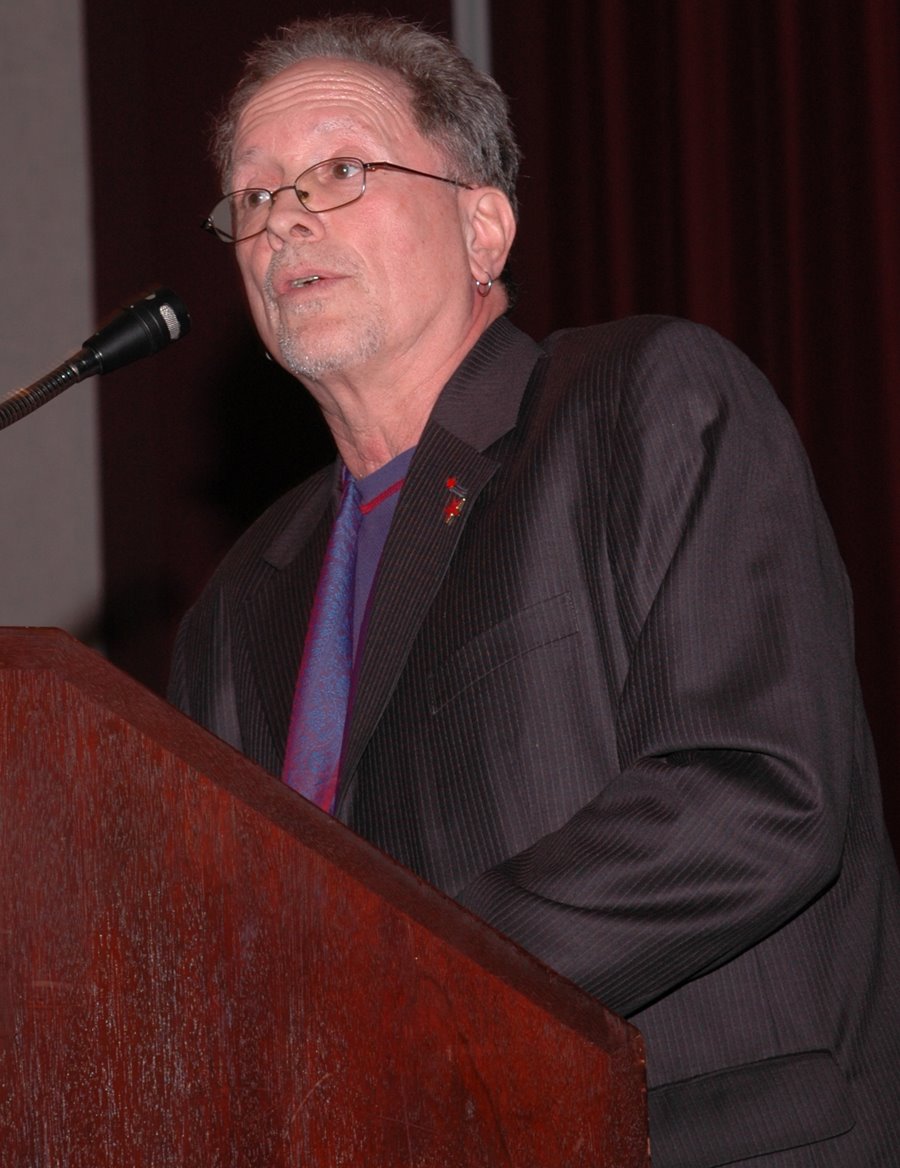
Bill Ayers

Those of us who care about education and what’s been done to it in the cruel, foolish, and profligate class war from above over the quarter-century that has been my entire adult life are likely to know Bill Ayers or his work as a scholar, teacher, activist, teacher educator, fixture in Illinois politics, and extraordinarily decent person.

Marc Bousquet / Santa Clara University

My friend and colleague, Bill Ayers
By William H. Schubert / October 13, 2008

William H. Schubert is Professor of Education and University Scholar at the University of Illinois at Chicago. Considering the way the McCain campaign has been using Bill Ayers and his alleged association with Barack Obama as a political football, The Rag Blog is pleased to present these words from a major scholar who has known and respected Ayers for years amd can speak with authority about his character and his accomplishments in the field of education.

Also see ‘My Friend Bill Ayers: Once wanted by the FBI, he’s since become a model citizen’ by Thomas Frank from the Oct. 15, 2008 Wall Street Journal, Below.

I feel compelled to comment on our friend and colleague, Bill Ayers, in view of the disappointing distortions and insinuations perpetrated against him. Here is the Bill Ayers I know.

I have known Bill Ayers as a colleague at the University of Illinois at Chicago (UIC) for over twenty years and know him as a good and just human being. I served on the search committee that selected him as the most outstanding applicant based on his scholarship, teaching capacity, and doctoral work at Columbia University.

I became Chair of Curriculum and Instruction at UIC (1990-94) shortly after Dr. Ayers was hired in 1987, and became Chair again (2003-2006) as he became a recognized scholar. Moreover, as a thirty–plus year member of the American Educational Research Association (AERA) and presidents of the Society of Professors of Education, the John Dewey Society, the Society for the Study of Curriculum History, and vice president for AERA’s Division B, I have had ample opportunities to observe the emergence of Dr. Ayers’ outstanding contributions to education. The fact that Dr. Ayers was elected this year as the vice president of AERA’s Division B is a testimony of such a stature and high esteem he holds in the field of education locally, regionally, nationally, and internationally.

Bill has written extensively about social justice, democracy, school contexts, and ethics regarding students, families, and educators. His has written more than 150 chapters and articles that have appeared in such journals as the Harvard Educational Review, the Journal of Teacher Education, Teachers College Record, Rethinking Schools, the Nation, Kappan, and the Cambridge Journal of Education. He has authored or edited sixteen books. His research and innovation based on it has been supported by the MacArthur Foundation, the Joyce Foundation, the Chicago Community Trust, the Annenberg Foundation, Readers Digest, and the Chicago Public Schools.

In many of his scholarly writings, Dr. Ayers has called attention to the role of teachers to demonstrate greater social responsibility in meeting the needs of children. In 1989, he wrote The Good Preschool Teacher, research on six exemplary, though quite different, preschool teachers. He also joined an on-going project that I had developed with graduate students, called the Teacher Lore Project, an endeavor that recognized and interpreted what teachers know from experience, and we mentored several dissertations that strove to understand the meanings of teaching for teachers, culminating in the publication of the book, Teacher Lore (1992, 1999). Over twenty-five dissertations have grown from this project and its offshoot, student lore, an attempt to understand the meanings students glean from their experiences. Several books have been published, based on these dissertations, to enhance perspectives of prospective and practicing teachers.

Social justice in lives of teachers and students was the major theme of another book by Dr. Ayers, To Teach: The Journey of a Teacher (1993, 2001 revised) which was one of Teachers College Press’s best selling books; it was named Book of the Year in 1993 by Kappa Delta Pi, and won the Witten Award for Distinguished Work in Biography and Autobiography in 1995. Dr. Ayers also edited the following noteworthy volumes: To Become a Teacher: Making a Difference in Children’s Lives (1995), a compendium of perspectives on teacher education and dilemmas in teachers’ early career experiences, and City Kids/City Teachers (1996, and recently revised and expanded in 2008), wherein the plight of oppression in our urban areas is portrayed along with imaginative ways to address such circumstances through education.

Bill served as Assistant Deputy Mayor for Education in Chicago in 1990, supported by UIC. Later he applied his concern for social justice in teachers’ lives by founding the Small Schools Workshop (SSW), to provide opportunities through UIC for teachers and students in some of Chicago’s most disadvantaged schools to create small, personal communities and more relevant curriculum and teaching, thus transforming large, impersonal schools with support from many corporate foundations. Over the years the SSW has created approximately 100 secondary and elementary schools, a venture that increased academic performance, attendance, graduation rates, and decreased violence in Chicago schools. Interest from many school systems throughout the U.S. has expanded the positive impact of the Small Schools Workshop as depicted in A Simple Justice: The Challenge of Small Schools (2000), a volume for which Ayers was senior editor. Dr. Ayers was named “Citizen of the Year” for this work by Business and Professional People in the Public Interest in 1994, an award presented by Chicago’s Mayor Richard Daley.

Bill Ayers, speaking at the University of South Carolina in 2006.

Dr. Ayers and I teamed in the late 1980s and early 1990s to create an alternative teacher education program at UIC wherein students learned theory and research through intensive experience in Chicago schools. This was a precursor to the GATE (Golden Apple Teacher Education) project developed by Dr. Ayers from 1999-2004, an alternative certification program that immersed students in urban school reform in their teacher preparation — emphasizing understanding and action to overcome societal factors that contribute to oppressive teaching and learning conditions. His book entitled Teaching for Social Justice (1998) continues Dr. Ayers’ deep concern for urban educational renewal and the project of democracy. To these ends, Dr. Ayers orchestrated the Chicago Annenberg Challenge (as grant writer and co-founder), a project that brought $49.2 million in a two-to-one matching award for the Chicago Public Schools — a multi-foundational endeavor that yielded approximately $150 million for the Chicago Public Schools.

In the midst of all this work, Dr. Ayers continued his critique of the oppression of people of color by studying youth and teachers in Juvenile Jail and Juvenile Court of Chicago, drawing metaphorically on pioneer social worker Jane Addams’ adage when she founded that institution, saying it should provide a kind and just parent for children in crisis. His book by that title (subtitled The Children of Juvenile Court, 1997) is a narrative based on a year-long ethnography of youth who are incarcerated.

The book led to Dr. Ayers’ nomination by business and community leaders in Chicago to the board of the Woods Fund. Subsequently, he became chair of this Board and helped to restructure it as the largest Chicago contributor to community organizing, granting three million dollars per year to that cause with heavy emphasis on education reform. Addressing racism and incarceration from another angle, he critiqued punishment of children and youth in contrast to their habilitation in Zero Tolerance, a practical and thoughtful handbook for parents, students, educators, and all concerned citizens. Dr. Ayers also founded the Center for Youth and Society in 1999, which studied and assisted urban young persons of color as they face discrimination or oppression based on race, class, or gender in our culture with special emphasis on education. Dr. Ayers’ 2003 book, On the Side of the Child, argues for child advocacy on behalf of educators. He elaborated his concern for freedom, justice, and democracy in two books of illuminating essays published in 2004: Teaching the Personal and the Political and Teaching Toward Freedom. Moreover, Dr. Ayers has created opportunity for other scholars to publish their ideas by developing a successful book series with Teachers College Press: Teaching for Social Justice.

Because of his scholarly work on and insights about social justice, Dr. Ayers is often called upon to speak and advise educators. I estimate that he has averaged a keynote address per week for the past several years. He reviews manuscripts regularly for many scholarly and professional journals, serves on editorial boards, and advises boards of many prominent educational concerns. Amidst all of this work, Dr. Ayers tirelessly serves students and the public. He strives to present fairly a diverse range of perspectives on issues he discusses and never compels students or others to adhere to his convictions. In fact, he relishes seeing students and colleagues soar to heights that surprise him with novel ideas, and then he works assiduously to enhance their ideas and research for publication or leadership opportunities. He has chaired over 40 Ph.D. dissertations and has been a member of more than 50 other dissertation committees, most at UIC, though several at other universities throughout the U.S. and in other nations. He reads students’ writing carefully and takes time to help students, other young authors, and beginning faculty members make the kinds of contributions they want to make.

Bill writes extensively in the public domain as well as in scholarly outlets, e.g., a frequent writer for major newspapers, magazines, and Internet sites. He travels nationally and internationally (e.g., South Africa, China, Korea, England, Netherlands, Germany, Egypt, France, Hong Kong, Venezuela, Canada) to speak and advise. His home is like an intellectual salon wherein he prepares wonderful dinners and hosts a constant flow of intellectuals, artists, concerned citizens, and activists with whom he and Bernardine Dohrn (Bill’s spouse, colleague, and internationally known activist law professor at Northwestern) collaborate. His devotion to his children and family is exemplary.

Bill’s contributions have been clearly recognized at UIC where he has been designated the President’s Distinguished Speaker of the University of Illinois, Distinguished Professor of Education, and University Scholar in perpetuity (normally a three year award). Notably, too, he has been named Randolph Distinguished Visiting Professor at Vassar College, Distinguished Scholar at the McKissick Museum of Education at the University of South Carolina, Visiting Scholar at Lesley College, received an honorary Doctor of Humane Letters from Nazareth College in Rochester, and has presented invited lectures or colloquia at such places as the American Educational Research Association, American Association of Curriculum and Teaching, Harvard University, Coalition of Essential Schools, University of Washington, the Detroit Institute of Art, University of Ottawa, University of Illinois at Urbana-Champaign, University Libraries Colloquia at Michigan State University, University of Wisconsin, University of Hawaii, Institute for Democracy and Education, Rethinking Schools, University of Michigan, University of Chicago, Los Angeles Public Library, Oregon State Bar, Purdue University, American Psychological Association, AATCE, State Prison of New York, The Gates Foundation, Indiana University, Columbia University, Bank Street College, Georgia Southern University, Colgate University, National Academy of Education, I Have a Dream Foundation, University of North Carolina, Children’s Law Center of Minnesota, Rice University, New York University, Yale University, and many other colleges, universities, public events, private and public schools. All of this bespeaks Bill’s work as a public intellectual based on his scholarly efforts for democracy and social justice, as does his service on several boards of directors, notably a founding member of the board of the Public Square, formerly the Center for Public Intellectuals, and his numerous radio and television appearances.

All of the above is informed by Dr. Ayers’ central concern — an unfaltering and tireless struggle of victims of socio-economic, political, national, and racial oppression.

It has been a pleasure to share over the past twenty years his weaving of tapestries of personal and political experience, teaching, scholarship, and service that inspire educational reformers to challenge oppression and injustice. Ayers has argued that social justice work demands not merely “service to” but “solidarity with” the oppressed. This turn of phrase aptly expresses the efforts of Bill Ayers to contribute to human betterment informed by scholarly work.

Dr. Ayers lives his commitment of concern for others at the interpersonal level. As busy as he is in all of the above and more, Bill is somehow always there for friends or colleagues at important junctures of their lives – for marriages, births, graduations, deaths – and in times of need he is not just a quick visitor, he remains in helpful contact for as long as needed. I have benefited from this immensely amid both tragic and joyful events of my own life.

So, when he has been heard to say, “We didn’t do enough,” it is emblematic of his philosophy that all of us, including himself, can do more to work for liberty and justice for all – a value that is deeply human and part of the best of the American creed.

This is the Bill Ayers I know!

William H. Schubert
Professor of Education and University Scholar
University of Illinois at Chicago
Coordinator, Ph.D. Program in Curriculum
Coordinator, M.Ed. Program in Educational Studies

Source / Chronicle of Higher Education
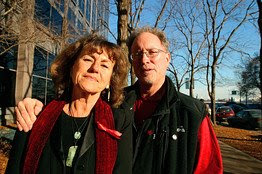
photo of Bill Ayers and Bernardine Dohrn

Bill Ayers and Bernardine Dohrn.
Photo by Corbis.

My Friend Bill Ayers
Once wanted by the FBI, he’s since become a model citizen.
By Thomas Frank
/ October 15, 2008

“Waving the bloody shirt” was the phrase once used to describe the standard demagogic tactic of the late 19th century, when memories of the Civil War were still vivid and loyalists of both parties could be moved to “vote as they shot.” As the years passed and the memories faded, the shirt got gorier, the waving more frantic.

In 1896 the Democrats chose William Jennings Bryan as their leader, a man who was born in 1860 and had thus missed the Civil War, but who seemed to threaten the consensus politics of the time. In response, Republican campaign masterminds organized a speaking tour of the Midwest by a handful of surviving Union generals. The veterans advanced through the battleground states in a special train adorned with patriotic bunting, pictures of their candidate, William McKinley, and a sign declaring, “We are Opposed to Anarchy and Repudiation.”

The culture wars are the familiar demagogic tactic of our own time, building monstrous offenses out of the tiniest slights. The fading rancor that each grievance is meant to revive, of course, dates to the 1960s and the antiwar protests, urban riots and annoying youth culture that originally triggered our great turn to the right.

This year the Democrats chose Barack Obama as their leader, a man who was born in 1961 and who largely missed our cultural civil war. In response, Republican campaign masterminds have sought to plunge him back into it in the most desperate and grotesque manner yet.

For days on end, the Republican presidential campaign has put nearly all of its remaining political capital on emphasizing Mr. Obama’s time on various foundation boards with Bill Ayers, a former member of the Weathermen, which planted bombs and issued preposterous statements in the Vietnam era. Some on the right seem to believe Mr. Ayers is Mr. Obama’s puppet-master, while others are content merely to insist that the association proves Mr. Obama to be soft on terrorism. Maybe he’s soft on anarchy and repudiation, too.

I can personally attest to the idiocy of it all because I am a friend of Mr. Ayers. In fact, I met him in the same way Mr. Obama says he did: 10 years ago, Mr. Ayers was a guy in my neighborhood in Chicago who knew something about fundraising. I knew nothing about it, I needed to learn, and a friend referred me to Bill.

Bill’s got lots of friends, and that’s because he is today a dedicated servant of those less fortunate than himself; because he is unfailingly generous to people who ask for his help; and because he is kind and affable and even humble. Moral qualities which, by the way, were celebrated boisterously on day one of the GOP convention in September.

Mr. Ayers is a professor of education at the University of Illinois at Chicago (UIC), where his work is esteemed by colleagues of different political viewpoints. Herbert Walberg, an advocate of school vouchers who is a visiting fellow at the Hoover Institution, told me he remembers Mr. Ayers as “a responsible colleague, in the professional sense of the word.” Bill Schubert, who served as the chairman of UIC’s Department of Curriculum and Instruction for many years, thinks so highly of Mr. Ayers that, in response to the current allegations, he compiled a lengthy résumé of the man’s books, journal articles, guest lectures and keynote speeches. Mr. Ayers has been involved with countless foundation efforts and has received various awards. He volunteers for everything. He may once have been wanted by the FBI, but in the intervening years the man has become such a good citizen he ought to be an honorary Eagle Scout.

I do not defend the things Mr. Ayers did in his Weatherman days. Nor will I quibble with those who find Mr. Ayers wanting in contrition. His 2001 memoir is shot through with regret, but it lacks the abject style our culture prefers.

Instead I want to note that, in its haste to convict a man merely for associating with Mr. Ayers, the GOP is effectively proposing to make the upcoming election into the largest mass trial in history, with all those professors and all those do-gooders on the hook for someone else’s deeds four decades ago. Also in the dock: the demonic city (Chicago) that once named Mr. Ayers its “Citizen of the Year.” Fire up Hurricane Katrina and point it toward Lake Michigan!

The McCain campaign has made much of its leader’s honor and bravery, but now it has chosen to mount its greatest attack against a man who poses no conceivable threat to the country, who has nothing to do with this year’s issues, and who cannot or will not defend himself. Apparently this makes him an irresistible target.

There are a lot of things to call this tactic, but “country first” isn’t one of them. The nation wants its hope and confidence restored, and Republican leaders have chosen instead to wave the bloody shirt. This is their vilest hour.

Source / Wall Street Journal

Thanks to Carl Davidson and Thomas Good / The Rag Blog

Posted in RagBlog | Tagged , , , , , , , , , , | 3 Comments

Casey Porter : Stop-Lossed in Iraq

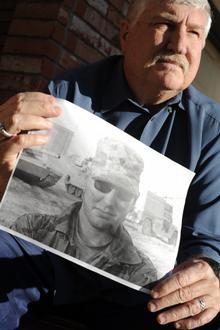
Eddy Porter holds a photo of his son, U.S. Army Spc. Casey Porter, who is returning for his second tour of duty in Iraq under the Department of Defense’s “Stop-Loss” program. Photo by Ronald W. Erdrich / Abiline Reporter-News.

Casey Porter : They’re selling us a bill of goods.
By Richard Whittaker / October 14, 2008

It’s always a good day at Newsdesk when Casey Porter calls, not least because it means that he’s still alive and in one piece. That’s not hyperbole, because Porter is currently in Iraq, one of the many US military personnel on the bad end of the bad deal known as stop-loss.

But in making the best of a bad day, Porter runs his own YouTube channel about his experiences in-country and what it’s really like on the ground.

The co-founder of Iraq Veterans Against The War’s Fort Hood ([near Kileen, Texas] branch called to give a heads-up about his latest video (which he’s still editing) about the remarkable world of commercial concessions on military bases. Troops coming back off combat missions are confronted by officially-sanctioned car dealers and jewelry firms that get them to part with their small salaries for pretty gewgaws.

“They don’t have any financial discipline and they’re not making good money, but it’s still better money than they’ve ever had,” said Porter, who once had a vendor try to sell him an $865 watch at a forward operating base. “We show the tricks and corruption in getting soldiers to spend their money.”

So why is this allowed to happen? Well, first off, the stores with the concessions are the same stores that supply the US military itself (“A mile away from open combat missions, there’s high-end stores,” said Porter. “If you walk into there, and you look at the video, you would think you were back in the states, except for the guys in miitary uniforms with guns.”) As for what the military gets, well, Porter put it bluntly: “A broke soldier is a re-enlisting soldier.”

Source / Austin Chronicle

Casey Porter and ‘Stop-Loss’

‘Critics of the policy have dubbed it a backdoor draft that forces service personnel into extending their service.’

By Celinda Emison

[The following article about Casey Porter of Austin — filmmaker and co-founder of Iraq Veterans Against the War at Fort Hood — and the army’s stop-loss program, first ran in the Abilene Reporter-News on March 22, 2008.]

U.S. Army Spc. Casey Porter is depressed and angry because he is on his way back to a war zone.

Porter, 28, of Austin, is embarking on his second tour of duty in Iraq and is one of tens of thousands of U.S. soldiers who have been ordered to continue their service in the Army due to a policy reinstated in 2001 after the Sept. 11 terrorist attacks called “Stop Loss.”

“I feel stabbed in the back,” Porter said in an e-mail message from Kuwait earlier this week.

Stop Loss is a program which allows the military to temporarily halt all voluntary separations and retirements during times of war, deployments or national emergencies. The Army has issued a Stop Loss in conjunction with wars in Iraq and Afghanistan.

“Stop-Loss” is also the name of a new fictional movie that opens Friday. But for Casey Porter and more than 81,000 other soldiers, the policy is all too real.

Porter signed up for a four-year stint in 2004, after which he planned to go to college. Porter’s stint was to end Jan. 21 of this year, but as the date approached, he started to worry.

“I thought Stop Loss would be coming, but didn’t get orders until two months before I was going to get out,” said Porter, who is now in Kuwait waiting to be sent back to Iraq within the week for another 15 months.

The Policy

Under the policy, soldiers who normally would leave when their commitments expire must remain in the Army, starting 90 days before their unit is scheduled to depart, through the end of their deployment and up to another 90 days after returning to their home base. The policy applies to all branches of the military, but currently is most used by the Army and National Guard.

“When a unit receives an alert order, we apply Stop Loss to that unit,” said Col. Bill Meehan of the Texas National Guard headquarters in Austin. “The No. 1 issue is whether the unit can do its mission. If you need 10 truck drivers for a mission, and you have 50, then there is some flexibility there. If it is the other way around, then there is obvious concern.”

Meehan said a number of units from the Texas National Guard are under Stop Loss orders. When a unit is under Stop Loss orders, there is an appeals process, he said.

“And it has been used occasionally over the past five years,” Meehan said. “We hear appeals on an individual basis. We want everyone to know we are concerned about the welfare of our soldiers and their families, and listening to our soldiers is what we are all about.”

Some military personnel say they are very aware that signing up for four years could mean eight years with reserve time and the possibility of Stop Loss orders.

Corp. Glynn Willson, 24, a Marine who is about go from Okinawa, Japan, to Iraq, said he knew about Stop Loss when he enlisted five years ago.

“When I enlisted, they (recruiters) made it very clear that I have eight years of obligated service,” Willson wrote in an e-mail from Japan. “If I serve that whole eight years active duty, then once I’m done, I’m done for good. But I am serving five years active duty. After I get out of the Marines in September, I’ll be a civilian, but they can still call me back up for up to 3 years. I know several people that this has happened to.”

Willson points out that so far, he is not under Stop Loss orders, but said if it does happen to his unit, he will fulfill his obligation.

“If I get Stop-Lossed in September, it means that I am still an active-duty Marine, and I am still a part of my current unit. I go back to work as usual, until the Stop Loss is revoked,” Willson said. “For someone to go AWOL (Absent Without Leave) over something so trivial is selfish. They are thinking about only themselves. It’s not about just you, it’s about the men and women standing next to you; that’s why you do what you need to do. Not for personal gain, but for your brothers and sisters in uniform. If a unit gets a Stop Loss and someone goes AWOL, think what that does for morale. Also, that person is not there doing his job, so everyone has to work harder to make that up.”

A father’s plight

Critics of the policy have dubbed it a backdoor draft that forces service personnel into extending their service at least 18 months after their contracts are up. And theoretically they could face Stop Loss orders again.

Casey Porter’s father, Eddy, 61, a Vietnam veteran drafted in 1966 who lives in Abilene, believes the Stop Loss policy is wrong, especially with volunteers.

“Back then, (during Vietnam) if more men were needed, they were drafted,” the elder Porter said. “This is what I call a ‘selective draft.'”

Eddy Porter, who retired from teaching high school in Austin three years ago, remembers when his son told him he wanted to serve in the military.

“He comes from a military family, and at the time I told him it would be a good start to his life,” he said. “Had I known about the policy, I would’ve suggested he do something else.”

For several years before Eddy Porter retired from teaching, he routinely encouraged his students to talk to recruiters who visited the school.

“Then I began to learn that they were promising these students training and scholarship money,” Porter said. “Then once they signed up, the commitment was one-sided, and the students felt they had been lied to. I quit allowing the recruiters in my classroom after that.”

Since Stop Loss was reinstated in 2001, numerous soldiers have challenged the policy in court, but in most cases, the military’s policy has been upheld.

When Eddy Porter found out about the policy, he began writing congressmen and senators, and pointed out that Casey was now his only son. (Another son died from complications from diabetes.)

“I got a letter back from the Inspector General which basically said due to the global war on terror, we have to manage our all-volunteer army differently than in other conflicts,” Eddy Porter said.

Eddy Porter also contacted the office of Sen. Kay Bailey Hutchison of Texas, a member of the Senate Military Construction and Veterans Affairs Appropriations Subcommittee.

“Sen. Hutchison is grateful for the dedication and sacrifice of our military personnel and their families,” Hutchison spokesman Matt Mackowiak said. “The Defense Department has assured Sen. Hutchison that they will review the need for Stop Loss restrictions on a monthly basis and only redeploy service members when it is absolutely necessary for our national security.”

Weeks before receiving his most recent orders to return to Iraq, Casey Porter formed a chapter of Iraq Veterans Against the War at Fort Hood.

“We want everyone to know, we are not against the soldiers at all,” Casey Porter says in a recent video on YouTube.

“We are against the war.”

Abilene Reporter-News

See Casey Porter interview on Democracy Now about the military’s policy of “Stop-Loss” / July 11, 2008

Also see Casey J Porter Breaks the Lob-Bomb Story! by Jimmy Higgins / Fire on the Mountain / July 12, 2008

Thanks to Debbie Russell / The Rag Blog

Posted in RagBlog | Tagged , , , , , , , | 2 Comments

Darrell Vandeveld Speaks About Guantanamo

Although we posted about this previously, this article adds more detail to the debacle that Guantanamo has become. We call on the Bush administration to own up to this failure, dismantle the mechanism of military tribunals, release the illegally held prisoners, and close down Guantanamo.

Richard Jehn / The Rag Blog

Lt. Col. Darrel J. Vandeveld is at least the fourth Guantanamo
Bay prosecutor to resign under protest
.

Guantanamo prosecutor who quit had ‘grave misgivings’ about fairness
By Josh Meyer / October 12, 2008
.
Convinced that key evidence was being withheld from the defense, Lt. Col. Darrel J. Vandeveld went from being a ‘true believer to someone who felt truly deceived’ by the tribunals.

WASHINGTON — Darrel J. Vandeveld was in despair. The hard-nosed lieutenant colonel in the Army Reserve, a self-described conformist praised by his superiors for his bravery in Iraq, had lost faith in the Guantanamo Bay war crimes tribunals in which he was a prosecutor.

His work was top secret, making it impossible to talk to family or friends. So the devout Catholic — working away from home — contacted a priest online.

Even if he had no doubt about the guilt of the accused, he wrote in an August e-mail, “I am beginning to have grave misgivings about what I am doing, and what we are doing as a country. . . .

“I no longer want to participate in the system, but I lack the courage to quit. I am married, with children, and not only will they suffer, I’ll lose a lot of friends.”

Two days later, he took the unusual step of reaching out for advice from his opposing counsel, a military defense lawyer.

“How do I get myself out of this office?” Vandeveld asked Major David J.R. Frakt of the Air Force Reserve, who represented the young Afghan Vandeveld was prosecuting for an attack on U.S. soldiers — despite Vandeveld’s doubts about whether Mohammed Jawad would get a fair trial. Vandeveld said he was seeking a “practical way of extricating myself from this mess.”

Last month, Vandeveld did just that, resigning from the Jawad case, the military commissions overall and, ultimately, active military duty. In doing so, he has become even more of a central figure in the “mess” he considers Guantanamo to be.

Vandeveld is at least the fourth prosecutor to resign under protest. Questions about the fairness of the tribunals have been raised by the very people charged with conducting them, according to legal experts, human rights observers and current and former military officials.

Vandeveld’s claims are particularly explosive.

In a declaration and subsequent testimony, he said the U.S. government was not providing defense lawyers with the evidence it had against their clients, including exculpatory information — material considered helpful to the defense.

Saying that the accused enemy combatants were more likely to be wrongly convicted without that evidence, Vandeveld testified that he went from being a “true believer to someone who felt truly deceived” by the tribunals. The system in place at the U.S. military facility in Cuba, he wrote in his declaration, was so dysfunctional that it deprived “the accused of basic due process and subject[ed] the well-intentioned prosecutor to claims of ethical misconduct.”

Army Col. Lawrence J. Morris, the chief prosecutor and Vandeveld’s boss, said the Office of Military Commissions provides “every scrap of paper and information” to the defense. Morris said that Vandeveld was disgruntled because his commanding officers disagreed with some of his legal tactics and that he “never once” raised substantive concerns.

Morris said last week that he had no idea why Vandeveld had become so antagonistic toward the tribunal process, adding that the lieutenant colonel’s outspokenness angered him because it was unfair and was a “broad blast at some very ethical and hardworking people whose performances are being smudged groundlessly.”

Vandeveld, who was prosecuting seven tribunal cases — nearly a third of pending cases — has declined to be interviewed about the particulars of the Jawad case. But he did engage in a series of e-mails with The Times about his general concerns, before being “reminded” last week that he could not talk to the press until his release from active duty was final. In the future, he said, he plans to speak out.

“I don’t know how else the creeping rot of the commissions and the politics that fostered and continued to surround them could be exposed to the curative powers of the sunlight,” he said. “I care not for myself; our enemies deserve nothing less than what we would expect from them were the situations reversed. More than anything, I hope we can rediscover some of our American values.”

Some tribunal defense lawyers are preparing to call Vandeveld as a witness, saying that his claims of systemic problems at Guantanamo, if true, could alter the outcome of every pending case there — and force the turnover of long-sought information on coercive interrogation tactics and other controversial measures used against their clients in the war on terrorism.

For years, defense lawyers and human rights organizations have raised similar concerns in individual cases. “But we never had anyone on the inside who could validate those claims,” said Michael J. Berrigan, the deputy chief defense counsel for the commissions.

Before the Sept. 11 terrorist attacks, Vandeveld led a relatively placid life outside Erie, Pa., with his wife and four children. He worked as a senior deputy state attorney general in charge of consumer protection in the region, and he served on his local school board in Millcreek Township.

Anyone who knows him, Vandeveld, 48, told The Times, “will probably tell you that I’ve been a conformist my entire life, and [that] to speak out against the injustice wrought upon our worst enemies entailed a weather shift in my worldview.”

Mark Tanenbaum, an English teacher whose children are friends with Vandeveld’s, remembers talking to him while sitting around campfires at high school gatherings. “We talked a lot about religion. I’m Jewish. We’d talk about faith, value-based philosophy. We were kindred spirits in this.

“With him, it is all about doing the right thing.”

Vandeveld, called to active duty after 9/11, received glowing evaluations as a Pentagon legal advisor and judge advocate in Bosnia, the Horn of Africa and Iraq. “An absolutely outstanding, first-class performance by an extraordinarily gifted, intelligent, knowledgeable and experienced judge advocate, whose potential is utterly unlimited,” his commanding officer, Gen. Charles J. Barr, wrote in his June 2006 evaluation. “One of the corps’ best and brightest. Save the very toughest jobs in the corps for him.”

From his Iraq assignment, Vandeveld went to Guantanamo, where he began locking horns over the Jawad case with Frakt — a law professor at Western State University in Fullerton and a former active-duty Air Force lawyer who volunteered for the tribunals.

Frakt believed that his Afghan client was, at worst, a confused teen who had been brainwashed and drugged by militant extremists who coerced him into participating in a grenade-throwing incident with other older — and more guilty — men. He insisted that the prosecution was withholding key information or not obtaining it from those at the Pentagon, CIA and other U.S. agencies that had investigated and interrogated Jawad.

Vandeveld believed that Jawad was a war criminal who had been taught by an Al Qaeda-linked group to kill American troops and, if caught, to make up claims he had been tortured and was underage. Vandeveld insisted that he had been providing all evidence to the defense.

But by July, Vandeveld told The Times, he had grown increasingly troubled. He kept finding sources of information and documents that appeared to bolster Frakt’s claims that evidence was being withheld — including some favorable to the defense, such as information suggesting that Jawad was underage, that he had been drugged before the incident and that he had been abused by U.S. forces afterward.

Vandeveld also was having difficulty obtaining authorization to release documents in his possession to the defense.

On Aug. 5, he e-mailed Father John Dear, a well-known Jesuit peace activist. Dear, who boasts of being arrested 75 times in protests, encouraged him to act, saying he might “save lives and change the direction of the entire policy.”

With Frakt pressing for the charges against Jawad to be dismissed due to “outrageous government misconduct,” Vandeveld proposed a plea agreement under which Jawad, now thought to be 22, could return to Afghanistan for rehabilitation. But his superiors rejected it, Vandeveld said.

By late August, he had told Frakt that there were other “disquieting” things about Guantanamo and that his superiors were refusing to address them or to let him quietly transfer out, Frakt said in an interview.

“Now might be a good time to take a courageous stand and expose some of the ‘disquieting’ things that you have alluded to, whatever they may be,” Frakt replied in a Sept. 2 e-mail, noting that there would soon be a change of administrations in Washington.

“It wouldn’t be a bad idea to distance yourself from a process that has become largely discredited, or at least distinguish yourself as one of the good guys, an ethical prosecutor trying to do the right thing,” Frakt wrote.

On Sept. 9, Vandeveld e-mailed Dear to say he had resigned from the Guantanamo military tribunals: “The reaction was the expected outrage and condemnation. I have and will maintain my equanimity and, while scared for me and for my family, know that Christ will watch over me.”

That, however, was only the beginning. In late September — after the military, according to Frakt, initially tried to block it — Vandeveld testified by video link for the defense, saying he believed that insurmountable problems with the tribunals might make them incapable of meting out justice fairly.

Morris said that Vandeveld is not qualified to speak about system-wide problems at Guantanamo. But Frakt said that he is and that Vandeveld’s testimony and declaration only scratched the surface of his concerns, judging by their extensive conversations and hundreds of e-mail exchanges.

“There is a lot more that he knows,” Frakt said.

Source / Los Angeles Times

The Rag Blog

Posted in RagBlog | Tagged , , , | 1 Comment

A Story of Dodging the Draft in Israel

Omer Goldman

Conscience of the Israeli spymaster’s daughter
By Igal Sarna / October 9, 2008

Igal Sarna meets a Mossad chief’s daughter who is in jail for refusing national service

Omer Goldman is a very pretty girl, slender as a model. Never still and very restless, the expected loss of her freedom fills her with anxiety. For months before she refused to be drafted into the Israel Defence Forces she went to a psychologist every week to prepare for what was to come: incarceration in a cell in a military prison. A narrow cage for a songbird.

I met her several times during September, in an apartment, with other girls who are conscientious objectors. Together they would hand out flyers against Israel’s occupation of the West Bank and Gaza at the gates of a high school like the one she completed a year ago.

On her last day of freedom as a civilian, I saw her at the gates of the intake base to which she had received orders to report for induction for a two-year stint with the Israel Defence Forces (IDF), like every Israeli girl. But she came to refuse the draft, to be tried and to be imprisoned immediately.

Several dozen supporters showed up – ­ members of Anarchists Against the Wall, her mother and a few girlfriends – and she stayed close to them as though she were trying to delay the end, the moment when she would clash all alone with the army.

For Omer, this transition is sharper and more surprising than for most conscientious objectors: she is the daughter of the outgoing deputy head of Mossad, the man who very nearly became head of the organisation.

Omer grew up all her life in the warm bosom of a huge security establishment that has now become an enemy rather than a friend. Her father appears in the newspapers as ‘N’. He was a senior intelligence officer and then transferred to Mossad and climbed to the top until in 2007 he became the deputy to Mossad chief Meir Dagan (below), now considered the most powerful mystery man in the Israeli security establishment.

Omer’s father was spoken of as Dagan’s successor.
But Dagan had no intention of retiring

‘N’, who specialises in the dilemma of Iran, was spoken of as Dagan’s designated successor, but Dagan had no intention of retiring. Differences of opinion developed between two strong bosses and ‘N’ resigned in June 2007.

This was the time when his daughter Omer, a pampered child of the wealthy suburb Ramat Hasharon, was beginning to move away from the usual high school-to-army trajectory.

Parallel to her father’s struggle and his resignation from Mossad, Omer rebelled against the way he had paved for her and went to have a look at Palestinian life on the other side of the wall. Call this an adolescent’s rebellion against her father or a battle for the heart of a father who had left home.

She is one of about 40 high school students who signed the 2008 12th-graders’ letter. Thirty-eight years ago, the first such letter caused a huge uproar. In April 1970 students from my final year in secondary school sent a letter to the prime minister, Golda Meir, against the occupation and the war of attrition. Since then there have been other letters and the uproar has died down. But in Israel conscientious objection still arouses cold, self-righteous wrath.

Omer told me that the crucial moment of her metamorphosis occurred this year when she went to a Palestinian village where the IDF had set up a roadblock. Someone she had considered her enemy all her life stood beside her and someone who was supposed to be defending her opened fire at her.

“We were sitting by the roadside talking and soldiers came along and after a few seconds they received an order and fired gas grenades and rubber bullets at us. Then it struck me, to my astonishment, that the soldiers were following an order without thinking. For the first time in my life an Israeli soldier raised his weapon and fired at me.”

And when you told your father?

“Dad was astonished and angry that I had been there and endangered my life. After that we had conversations. He supported me as his daughter and we have a good relationship, but he is decidedly opposed to what I do and even more to my refusal to serve in the army.

“At first he thought this was a passing phase of adolescence and later he understood that this is coming from a place deep inside me. He and I have very similar characters. I, too, fight to the end for what I believe in. But we are opposites ideologically.”

When I ask more about her father, Omer smiles and does not answer. A rare moment of silence. The beauty of her smile covers for everything.

On September 23 she refused to serve in the army, was tried and was sent to prison for 21 days. Next week she will be tried again – and again until the army tires or she tires.

In two weeks’ time, my own son Noam is due to join the army and I will be accompanying him to the same base where I last saw Omer Goldman. Unlike Omer, Noam intends to do his military service. I understand them both.

Source / The First Post

The Rag Blog

Posted in RagBlog | Tagged , , | Leave a comment

An Article V Convention Is Long Past Due

Ideal:

Reality:

When the Federal Government Fails the People: Our Constitution Has a Solution
By Joel Hirschhorn / October 14, 2008

The hardest thing for Americans to do right now in this presidential election season is to fight distraction and, instead, focus on the failure of all three branches of the federal government. And also to resist the propaganda masquerading as patriotic obligation that voting will fundamentally fix the federal government. The real lesson of American history is that things have turned so ugly that electing a new president and many new members of Congress will at best provide band-aids when what is needed is nothing less than what Thomas Jefferson wisely said our nation would need periodically: a political revolution.

The basis for this view is that the institutions of the three branches have been so corrupted and perverted that they no longer meet the hopes and aspirations embedded in our Constitution.

It is easy to condemn George W. Bush as the worst president in history. The larger truth is that the presidency has accumulated far too much power over the past half century. This has resulted from the weakening of the Congress that no longer, in any way, has the power of an equal branch of government, not that any recent Congress has shown any commitment or capability to execute its constitutional authorities. Concurrently, we have become accepting of a politicized Supreme Court that has not shown the courage to stop the unconstitutional grabbing of power by the presidency and in 2000 showed its own root failure in choosing to select the new president.

Worst of all, modern history has vividly shown Americans that the federal government has usurped the sovereignty of the “we the people” and of the states, and has even sold out national sovereignty to a set of international organizations and the greed of corporate-crazed globalization.

The current economic and financial sector meltdown is just another symptom of deep seated, cancerous disease of government that has sold out the public because of the moneyed influence of the corporate and wealthy classes of special interests. The serious disease is a long festering unraveling of the constitutional design of our government. Each of the three branches of the federal government is totally unequal to each other and completely incapable of ensuring the constitutional functioning of each other. Checks and balances have become a fiction.

These sad historic realities have been produced because of an all too powerful and corrupt two-party political machine that has prevented true political competition and real choices for voters. This two-party system has thrived because of corruption from money provided for Democrats and Republicans to maintain the status quo that is the ruination of our constitutional Republic.

Yet the hidden genius of the Founders and Framers was to anticipate how the Republic would most likely unravel under the pressures of money and corruption. Unknown to nearly all Americans is a part of the Constitution that all established political forces have worked hard to denigrate over our entire history. They fear using what is provided as a kind of escape clause in the Constitution, something to use when the three branches of the federal government fail their constitutional responsibilities. What is this ultimate solution that those who love and respect our Constitution should be clamoring for?

It is the provision in Article V to create a temporary fourth branch of the government – in the form of a convention of state delegates – that operates outside the control of Congress, the President and the Supreme Court, and that has only one single function: to consider proposals for constitutional amendments, just like Congress has done over our history, but that must also be ratified by three-quarters of the states. One of the most perplexing questions in American history that has received too little attention is simple: Why have we never had an Article V convention?

One possible answer might be that what the Constitution requires to launch a convention has never been satisfied. But this is not the case. The one and only requirement is that two-thirds of state legislatures apply to Congress for a convention. With over 600 such state applications from all 50 states that single requirement has long been satisfied. So why no convention?

Because Congress has refused to honor the exact constitutional mandate that it “shall” call a convention when that requirement has been met. Simply put, Congress has long broken the supreme law of the land by not calling a convention, and virtually every political force on the left and right likes it that way. Why? Because they have learned to corrupt the government and fear an independent convention of state delegates that could propose serious constitutional amendments that would truly reform our government and political system to remove the power of special interests and compel all three branches to follow the letter and spirit of the Constitution.

With great irony, the public has been brainwashed to fear an Article V convention despite many hundreds of state constitutional conventions that have never wrecked state governments, and that in countless cases have provided much needed forms of direct democracy that have empowered citizens and limited powers of state governments.

There is only one national, nonpartisan organization with the single mission of educating the public about the Article V convention option and building demand for Congress to convene a convention. It is the Friends of the Article V Convention group that has done something that neither the government nor any other group has ever done; it has been collecting all the hundreds of state applications for a convention and making them available to the public at www.foavc.org.

With a new president and many new members of Congress, now is the ideal time for Americans that see the need for obeying the Constitution and seek root reforms to rally behind this mission of obtaining the nation’s first Article V convention. The new Congress in 2009 should give the public what the Constitution says we have a right to have and what Congress has a legal obligation to provide. Always remember that the convention cannot by itself change the Constitution, but operating in the public limelight it could revitalize what has become our delusional and fake democracy. The main thing to fear is not a convention, but continuation of the two-party plutocracy status quo. Sadly, no presidential candidate, not even third-party ones, has spoken out in support of Congress obeying the Constitution and giving us the first Article V convention.

Joel S. Hirschhorn is a co-founder of Friends of the Article V Convention and can be reached through www.foavc.org.

Source / Associated Content

The Rag Blog

Posted in RagBlog | Tagged , , , | 1 Comment

Canary in the Mineshaft : Cautionary Tales of Suicide, Bigotry

Was this house worth dying for?
In this July 23, 2008 file photo, the Taunton, Mass. house This was the home of Carlene Balderrama, 53, who fatally shot herself soon after faxing a letter to her mortgage company July 22, saying that by the time they foreclosed on her house that day, she would be dead. Photo by Stephen Senne / AP.

House of horrors: but it’s not Halloween yet.
Los Angeles Police investigators walk to a news conference in front of the home where six bodies were found in a gated community in a San Fernando Valley neighborhood. Karthik Rajaram, 45, a former money manager, fatally shot his wife, three sons and his mother-in-law before killing himself. Photo by Damian Dovarganes / AP.

ONE: Bankruptcies, foreclosures bring rash of suicides
By Kelli Kennedy / Oct 14, 2008

Second tale, Below: Man terrorizes election office, wants to ‘keep the nigger out of office.’

An out-of-work money manager in California loses a fortune and wipes out his family in a murder-suicide. A 90-year-old Ohio widow shoots herself in the chest as authorities arrive to evict her from the modest house she called home for 38 years.

In Massachusetts, a housewife who had hidden her family’s mounting financial crisis from her husband sends a note to the mortgage company warning: “By the time you foreclose on my house, I’ll be dead.”

Then Carlene Balderrama shot herself to death, leaving an insurance policy and a suicide note on a table.

Across the country, authorities are becoming concerned that the nation’s financial woes could turn increasingly violent, and they are urging people to get help. In some places, mental-health hot lines are jammed, counseling services are in high demand and domestic-violence shelters are full.

“I’ve had a number of people say that this is the thing most reminiscent of 9/11 that’s happened here since then,” said the Rev. Canon Ann Malonee, vicar at Trinity Church in the heart of New York’s financial district. “It’s that sense of having the rug pulled out from under them.”

With nowhere else to turn, many people are calling suicide-prevention hot lines. The Samaritans of New York have seen calls rise more than 16 percent in the past year, many of them money-related. The Switchboard of Miami has recorded more than 500 foreclosure-related calls this year.

“A lot of people are telling us they are losing everything. They’re losing their homes, they’re going into foreclosure, they’ve lost their jobs,” said Virginia Cervasio, executive director of a suicide resource enter in southwest Florida’s Lee County.

But tragedies keep mounting:

• In Los Angeles last week, a former money manager fatally shot his wife, three sons and his mother-in-law before killing himself.

Karthik Rajaram, 45, left a suicide note saying he was in financial trouble and contemplated killing just himself. But he said he decided to kill his entire family because that was more honorable, police said.

Rajaram once worked for a major accounting firm and for Sony Pictures, and he had been part-owner of a financial holding company. But he had been out of work for several months, police said.

After the murder-suicide, police and mental-health officials in Los Angeles took the unusual step of urging people to seek help for themselves or loved ones if they feel overwhelmed by grim financial news. They said they were specifically afraid of the “copycat phenomenon.”

“This is a perfect American family behind me that has absolutely been destroyed, apparently because of a man who just got stuck in a rabbit hole, if you will, of absolute despair,” Deputy Police Chief Michel Moore said. “It is critical to step up and recognize we are in some pretty troubled times.”

• In Tennessee, a woman fatally shot herself last week as sheriff’s deputies went to evict her from her foreclosed home.

Pamela Ross, 57, and her husband were fighting foreclosure on their home when sheriff’s deputies in Sevierville came to serve an eviction notice. They were across the street when they heard a gunshot and found Ross dead from a wound to the chest. The case was even more tragic because the couple had recently been granted an extra 10 days to appeal.

• In Akron, Ohio, the 90-year-old widow who shot herself on Oct. 1 is recovering.

A congressman told Addie Polk’s story on the House floor before lawmakers voted to approve a $700 billion financial rescue package. Mortgage finance company Fannie Mae dropped the foreclosure, forgave her mortgage and said she could remain in the home.

• In Ocala, Fla., Roland Gore shot his wife and dog in March and then set fire to the couple’s home, which had been in foreclosure, before killing himself.

His case was one of several in which people killed spouses or pets, destroyed property or attacked police before taking their own lives.

“The financial stress builds up to the point the person feels they can’t go on, and the person believes their family is better off dead than left without a financial support,” said Kristen Rand, legislative director of the Washington D.C.-based Violence Policy Center.

Dr. Edward Charlesworth, a clinical psychologist in Houston, said the current crisis is breeding a sense of chronic anxiety among people who feel helpless and panic-stricken, as well as angry that their government has let them down.

“They feel like in this great society that we live in we should have more protection for the individuals rather than just the corporation,” he said.

It’s not yet clear there is a statistical link between suicides and the financial downturn since there is generally a two-year lag in national suicide figures. But historically, suicides increase in times of economic hardship. And the current financial crisis is already being called the worst since the Great Depression.

Rising mortgage defaults and falling home values are at the heart of it. More than 4 million Americans were at least one month behind on their mortgages at the end of June, according to the Mortgage Bankers Association.

A record 500,000 had entered the foreclosure process. And that trend is expected to continue through next year, despite the current programs from the government and the lending industry to refinance delinquent homeowners into more affordable loans.

Counselors at Catholic Charities USA report seeing a “significant increase” in the need for housing counseling.

One counselor said half of her clients were on some form of antidepressant or anti-anxiety medication. The agency has seen a decrease in overall funding, but it has expanded foreclosure counseling and received nearly $2 million for such services in late 2007.

Adding to financially tense households is an air of secrecy. Experts said it’s common for one spouse to blame the other for their financial mess or to hide it entirely, as Balderrama did.

After falling 3 1/2 years behind in payments, the Taunton, Mass., housewife had been intercepting letters from the mortgage company and shredding them before her husband saw them. She tried to refinance but was declined.

In July, on the day the house was to be auctioned, she faxed the note to the mortgage company. Then the 52-year-old walked outside, shot her three beloved cats and then herself with her husband’s rifle.

Notes left on the table revealed months of planning. She’d picked out her funeral home, laid out the insurance policy and left a note saying, “pay off the house with the insurance money.”

“She put in her suicide note that it got overwhelming for her,” said her husband, John Balderrama. “Apparently she didn’t have anyone to talk to. She didn’t come to me. I don’t know why. There’s gotta be some help out there for people that are hurting, (something better) than to see somebody lose a life over a stupid house.”

Source / AP / Yahoo News

TWO: ‘Keep the Nigger out of office’

Cops: Man threatened voter officials over tardy registration card

QUACHITA PARISH, La. — Angered by a delay in the receipt of his voter registration card, a Louisiana man today threatened election officials, claiming that he urgently needed to cast a ballot to “keep the nigger out of office,” according to police.

Wade Williams, 75, was arrested this morning on a felony terrorizing charge after allegedly calling the Registrar of Voters and warning that he would come to the state office and empty his shotgun unless he got his registration card. Using profanity and racial slurs, Williams told a state official “about needing to vote to ‘keep the nigger out of office,” according to an Ouachita Parish Sheriff’s Office affidavit, a copy of which you’ll find here. Though the document does not name the candidate to which Williams is so violently opposed, it seems likely he was referring to Democratic presidential candidate Barack Obama.

After being arrested at his Monroe home, Williams was booked into the Ouachita Correctional Center, where the mug shot [above] was snapped. En route to the jail, he “continued his ‘tirade’ about niggers and also stated that he had a shotgun, but had it hidden at his residence,” reported Lt. Michael Judd.

Source / The Smoking Gun / Oct. 8, 2008

[Editor’s note. The Smoking Gun site spelled the offending word “n*gger.” I choose not to soften the blow. –.td]

Thanks to Jesse James Retherford / The Rag Blog

Posted in RagBlog | Tagged , , , , , , | Leave a comment

El Salvador : Human Rights Abuses and the Role of the US Government

This mural of the “four churchwomen” is one of many in El Salvador that honors the martyrs who were killed while peacefully advocating for human rights during El Salvador’s violent Civil War. The churchwomen were asassinated by the National Guard on December 2, 1980. Human rights abuses, however, are not ancient history in El Salvador.

Report cites human rights violations and threat to 2009 elections.
By CISPES / October 14, 2008

A recently returned delegation to El Salvador has published a report on human rights abuses, the potential for fraud and intervention in the 2009 Salvadoran elections, and the role that the US government has played in the cited injustices.

The delegation was organized by the Committee in Solidarity with the People of El Salvador (CISPES) and was made up of 17 US citizens and residents. The introduction to the report explains its intended purpose of “offer[ing] elected officials, the media, and concerned citizens a description of the deterioration of human rights in El Salvador…[and] the potential impediments to true democracy faced by the Salvadoran people as they approach a crucial election period in their country.”

Callie Arnold, a delegate from Seattle, stated “We feel that US citizens and residents should be aware of and concerned by the injustices carried out in El Salvador — particularly the many that our government has a hand in — and we hope this report will get people talking, increase media coverage, and encourage elected officials to take action.” The Human Rights section of the report cites evidence that the existence of the International Law Enforcement Academy (ILEA) — a police training institution in San Salvador that is funded and administered by the US — has coincided with “an increase in repression, including arrest and torture of citizens involved in peaceful protests.”

The section of the report entitled “2009 Elections and the Electoral Process” further calls into question the role of the US government in the Central American country. It cites instances leading up to the 2004 presidential elections in El Salvador in which the US “interfered with the ability of Salvadorans to choose their preferred candidate.” It goes on to discuss “similar patterns of US political involvement in the period leading up to the 2009 elections.”

Andrew Kafel, a delegate from New York, says, “The current state of the economy in El Salvador is dire. The Central American Free Trade Agreement has devastated the country and the 2009 elections offer Salvadorans an opportunity to bring about democratic change that will better the state of their country. This is why it is so important that they be allowed to freely choose their next government.” On January 18, 2009, El Salvador will hold municipal and legislative elections; on March 15 presidential elections will take place. The leftist Farabundo Martí National Liberation Front (FMLN) holds a significant lead in presidential polls over the ruling right-wing Republican National Alliance (ARENA). Kafel went on, “It is clear the people of El Salvador want change and we believe it is of utmost importance that the US stay out of their elections and allow for self-determination.”

The report also describes a meeting with US Ambassador to El Salvador Charles Glazer as “a highly rhetorical and hostile propaganda exercise with the delegates.” Rosa Lozano, a delegate from Washington D.C., stated, “The Ambassador’s behavior and demeanor was troubling, but it was especially surprising that when directly asked about US involvement in the 2004 elections, he admitted that the US had intervened. That is why it is so important that this report be published and for US citizens and residents to pressure our government not to repeat this intervention in 2009.”

[CISPES is the Committee in Solidarity with the People of El Salvador.]

The complete report can be downloaded here.

For more information go here.

Source / Upside Down World

The Rag Blog

Posted in RagBlog | Tagged , , , | Leave a comment

Report from Nicaragua : Repression in the Revolution

Nicaraguan president Daniel Ortega when he was a leader of the Sandinistas

‘I met Martin Vega just after the Nicaraguan revolution when we all saw such promise there.’
By Mercedes Lynn de Uriarte / The Rag Blog / October 14, 2008

Below is a dispatch from Martin Vega about conditions in revolutionary Nicaragua followed by remarks by Rag Blog contributor Ron Ridenour.

I am lucky that Martin Vega has been a close friend for almost 30 years. He is a University of Texas alum with a MA in Business. I usually stay with him and his family when I visit New York. I have always admired his personal and political ethical life.

I met him just after the Nicaraguan revolution when we all saw such promise there. When I met him he was working to help Nicaragua realize that promise. He was in the Foreign Ministry, having gone there from his home in San Francisco to help in the Revolution. He was eventually a key staff member with the Nicaraguan Ambassador to the United States.

He recently spent several months there with a funder trying to bring some assistance to the nation. His news below is so disheartening that I pass this along with a hope you can help with his request to let others, especially press people and human rights advocates, know about these abuses.

Nicaraguan poet Ernesto Cardenal: Government has frozen his bank account and threatened to jail him.

Repressive tactics in revolutionary Nicaragua
By Martin Vega / The Rag Blog / October 14, 2008

I never thought I would see the day when the forces of the current Nicaraguan government would be used in such a coercive and repressive style as I have observed today. [As has been reported in El Nuevo Diaro and El Prensa], the judicial, fiscal bodies as well as the police forces of the state have been unleashed and are being instrumentalized for political ends to attack and denigrate members of civil society, the opposition press and political parties, the intelligentsia and cultural artists, etc. In the past few months the government has ostensibly closed most avenues of free expression while resorting to increased levels of intimidation and violence against those it deems its “enemies”.

Until today I had refrained from making any type of comment on the worsening situation in the country hoping that officials within the Nicaraguan government would reflect and seek some form of accommodation and dialogue with its growing opposition. But quite the contrary, the government has seen fit to falsely accuse persons of Carlos Fernando’s stature of “laundering” money; it has denigrated Nicaragua’s revered poet Ernesto Cardenal threatening to jail him and frozen his bank accounts; it has falsely accused one of Nicaragua’s most competent journalists, Sofia Montenegro of being a “CIA dupe” given her critical position towards the government’s corruption; it has declared Nicaragua’s main feminist organization, MAM to be “illegal” merely because it has advocated for women’s reproductive rights and taken a critical stand against the government’s prohibition on abortion rights; it has eliminated Nicaragua’s two main opposition parties via legal fiat and through the control of the Electoral Council; and just two weeks ago, it unleashed virulent attacks against a civic and political rally of the opposition, resorting to the use of mortars, machetes, clubs and the burning down cars.

Because of these and other untoward developments, I feel that I have a moral duty not to remain quiet but let all of you know of my serious concerns about the Nicaraguan situation and ask that you move your consciences in any way possible towards the alleviation of this aggression against the Nicaraguan people. I ask that if any of you have any contacts in human rights organization, press associations, etc. that you please make known your outrage at this type of behavior and request that the Nicaraguan government cease committing arbitrary acts such as those outlined above. I would also be important for you to express your solidarity towards Carlos Fernando Chamorro B. who is being threatened with jail for merely expressing his views as as a renown and widely-respected journalist and intellectual.

Daniel Ortega and his wife Rosario Murillo (in Gucci?) wave to the press Nov. 6, 2006, in Managua. Photo by AFP / Getty Images.

‘The problem is: Nicaragua is so divided into so many factions and not one of them is trustworthy.’
By Rod Ridenour / The Rag Blog / October 14, 2008

[Prominent writer Ron Ridenour, who wrote a series of articles on Venezuela for The Rag Blog, has expertise in Latin American politics. He provides these remarks as historical perspective.]

I was unaware of these events but they don’t surprise me too much. I know [Nicaraguan President] Daniel Ortega and his aristocratic wife, for whom I worked as PR director when she was head of the ASTC, cultural workers association, in 1984. I wrote the book, “Yankee Sandinistas” (Curbstone, 1986), about which Ernesto Cardenal, then cultural minister, wrote a lovely blurb. I knew Tomas Borge and thought he should have been president. The Ortegas have always been suspects in that they lie, love the wine and dining life, the fancy houses, etc.

Ortega lost the 1990 election, in part, because he offered a hand out to the rich one day and then another hand to the workers another day. He hired a New York political spin doctor firm to run his campaign and bought Gucci clothes and expensive sunglasses in NY while the Yankees were murdering his people. To re-win at all costs the high post of president, Ortega has stooped lower than any politician, at least on the left, that I know of. He hired a vice-president who had been a torturing-murdering contra; he kissed the ass of the worst cardinal in current times; he rejected the right of women to decide over their bodies.

The problem is: Nicaragua is so divided into so many factions and not one of them is trustworthy, as I see it from far far away now. The original FSLN, which had three main factions somewhat united for a good many years, broke into opposing groups and none of them — including the best of guerrilla leaders – ended up being revolutionary, rather they went towards the right. Ortega’s FSLN, what is left, was the “best” of evils. But I knew from the day he won that something rotten would occur in his regime.

The next problem is that Ortega is supported by Fidel and Chavez. He uses the rhetoric they use when he is with them and in context of ALBA etc.

And, all the three dailies are (were) run by the Chamorro family, which split into three factions. And when one of them, El Nuevo Diario (for which I did some writing), calls what is happening now “worse than Somocismo” so are we really down in the pits of bullshit and exaggeration. As I read the situation today no one has been tortured, jailed or murdered, and that was daily occurrence in Somoza’s time.

Of all the many original leaders very few remain by Ortega’s sleazy side, but Tomas Borge is his ambassador to Peru, I think. At least he was. He was one of the few I trusted. Martin Vega I do not know. He lives in New York. We need some voice(s) we can trust who is (are) in the struggle within Nicaragua to give validity to what is going on.

That will take some time. If I were you, I’d wait a bit and find some backup, find some balance. This is quite delicate but I am not recommending throttling the matter. This is the kind of situation where [activist, writer and Latin American expert] James Petras would have a strong argument.

The Rag Blog decided to publish Martin Vega’s dispatch, along with Rag Blog contributor Ron Ridenour’s comments, but we will also seek other input on the situation in Nicaragua. We do not believe in uncritical support, even for a revolutionary movement. We encourage the readers to add their comments to this post.

The Rag Blog

Posted in Rag Bloggers | Tagged , , , , , , , | 3 Comments

Playing With Fire : McCain and the Raging Right


‘McCain’s own campaign is playing with powerful extremist themes to denigrate Obama’
By E. J. Dionne Jr. / October 14, 2008

McCain pastor tells rally that non-Christians want Obama victory. Story and video, Below.

Are we witnessing the reemergence of the far right as a power in American politics? Has John McCain, inadvertently perhaps, become the midwife of a new movement built around fear, xenophobia, racism and anger?

McCain has clearly become uneasy with some of the forces that have gathered around him. He has begun to insist, against the sometimes loud protests from his crowds, that Barack Obama is, among things, a “decent person.”

Yet McCain’s own campaign is playing with powerful extremist themes to denigrate Obama. When his running mate, Sarah Palin, first brought up Obama’s association with 1960s radical Bill Ayers, who has become a centerpiece of McCain’s attacks, she accused Obama of “palling around with terrorists.” What other “terrorists” was she thinking about?

Since Obama was a child when Ayers was part of the Weather Underground, and since even Republicans have served on boards with Ayers, this is classic guilt by association.

Ayers has been dragged into this campaign because there is a deep frustration on the right with Obama’s enthusiasm for shutting down the culture wars of the 1960s.

Precisely because Obama is not a baby boomer, he carries none of that generation’s scars. Most Americans (including most boomers) are weary of living in the past and reprising the 1960s every four years.

Yet culture war politics is relatively mild compared with the far-right appeals that are emerging this year. It is as if McCain’s loyalists overshot the ’60s and went back to the ’50s or even the ’30s.

What we are witnessing is the mainstreaming of the far right, a phenomenon that began to take shape with some of the earliest attacks on Bill Clinton in the 1990s.

False claims that Obama is Muslim, that he trained to overthrow the government and that he was educated in Wahhabi schools are a standard part of the political discussion. These fake stories come from voices on the ultra right that have dabbled in other forms of conspiracy, including classic anti-Semitism. McCain and his campaign do not pick up the most extreme charges. They just fan the flames by suggesting that voters don’t really know who Obama is, hinting at a sinister back story without filling in the details. That is left to the voters’ imaginations.

The tragic irony here is that McCain was the victim of some of the very same extremist forces in the 2000 South Carolina primary.

To bring McCain down, some of George W. Bush’s supporters on the far right peddled all manner of falsehoods about McCain, raising despicable charges about his time as a POW and suggesting (again falsely) that he had fathered an illegitimate child of color. In the past, McCain publicly condemned some of the very people who are now going after Obama.

McCain cannot be blamed for all of the crazies who see in Obama a chance to earn fame and fortune by concocting lies about him. And yes, we should defend the speech rights even of those whose views we find abhorrent.

But the angry McCain-Palin crowds, and particularly those who threaten violence or shout racist epithets, should be a wake-up call to McCain. The dark hints about Obama that McCain’s campaign is dropping dovetail too nicely with the nasty trash floating around the Internet and the airwaves.

We are in the midst of what could become — and here’s hoping it doesn’t — the worst economic downturn in decades. The last thing we need is a campaign that strengthens fanaticism, tarnishes the authority of the next president and whips up the worst kinds of prejudice. This works both ways: Obama should not be delegitimized if he wins, and McCain should not want to win in a way that would undermine his own capacity to lead.

When Christopher Buckley, a novelist and former speechwriter for George H.W. Bush, announced last week that he would vote for Obama (his first vote ever for a Democrat), he referred to words once spoken to him by his late father. “You know,” the conservative hero William F. Buckley Jr. said, “I’ve spent my entire lifetime separating the right from the kooks.”

McCain has an obligation, to his own legacy and the country he has served, to separate himself and his campaign from the kooks. Extremism in defense of liberty may be no vice, but extremism in pursuit of the presidency is as dysfunctional as it is degrading.

Source / Washington Post

Rev. Arnold Conrad speaks before McCain rally : A Christian Crusade?.

Pastor at McCain rally says non-Christians want an Obama win
By Tasha Diakides / October 11, 2008

DAVENPORT, Iowa -– A minister delivering the invocation at John McCain’s rally in Davenport, Iowa Saturday told the crowd non-Christian religions around the world were praying for Barack Obama to win the U.S. presidential election.

“There are millions of people around this world praying to their god—whether it’s Hindu, Buddha, Allah—that his opponent wins, for a variety of reasons. And Lord, I pray that you will guard your own reputation, because they’re going to think that their God is bigger than you, if that happens,” said Arnold Conrad, the former pastor of Grace Evangelical Free Church in Davenport. . . .

Source / Political Ticker / CNN

Thanks to Roger Baker / The Rag Blog

Posted in RagBlog | Tagged , , , , , , , , | Leave a comment

Butcher Bloc Bingo

aztecskullvoodooonglue / Amazon painting by Giulio Baistrocchi.

(Once for a Thousand Years)

Once a long time ago things got so very slow
Went down to Guantanamo and built me an Alamo
Built me an Alamo down in Guantanamo
To stand for the status quo to Tierra del Fuego

Saw a land called Chile, a man named Pinochet
Who was dancing that way thanks to our CIA
Saw a ghost named Allende behaving so friendly
He was killing me gently ever so absently

Took one look at Brazil, the USA off the pill
Indigenous still to kill, still adding the bill
Saw Rio de Janeiro from the ground in a turbo
All the tinshack condos on Free Enterprise Row

Sailed to old Venezuela on the back of a white whale
Left a petroleum trail delivering the U.S. mail
Then dancing a cumbia went to Colombia
Quoting Rumi and creating Vietnamia

Cruised into Guyana on the back of a piranha
An unshaven bwana to gather the manna
Saw the old Amazon fight the personal liaison
From the side with the jam on for the battle with Mammon

Went to El Salvador found out what’s the dollar for
Fill the rich and kill the poor in a capitalist liquidating holy war
Inside new Honduras where our best people assure us
It’s safe for the tourists they’ll scarcely endure us

Just got back from new Grenada acted like the Marquis de Sade
Used tiny island for cannon fodder, killed a bunch of sons and daughters
Ran into St. Stanislaus on his way back from Panama
Reading George Bernard Shaw on his way to the Mardi Gras

Learned all about Cuba while watching the tube
A brainwashed boob sitting there in my cube
Tried to starve them out and poison their trout
That’s what we’re about since the rise of our Old South

Given a stick and carrot and forced then to bear it
Which one has more merit and which one would just tear it
Then consider it’s your mother with no choice and no druther
And the same for your brother would you choose the other

Out in the sideyard strolled the National Guard
Where the scenery is marred because justice is barred
Out in the sideyard do not let down your guard
Some Alabama wild card bayonet you real hard

Back in the frontyard all the media bards
Show you all the marked cards fill your head up with lard
Back in the front yard there are feathers and tar
Put your bod behind bar put your mind in a jar

Saw the gringos with guns fill up Greyhounds with nuns
Leave the land of the huns to sell hamburger buns
Met a man named Sam lost a gonad in Nam
Lost his nerve in Iran has a head like a frying pan

Met a great nation of sheep still fast asleep
Listening to some new creep up on top of the heap
Met a man named boy thought he was Tolstoy
Often mad and annoyed with some other paranoid

Met a history of lies of indivisible size
With footnotes and asides in whispers and cries
Met a humankind nearly out of its mind
Always out for behind taking what it can find

Met some fading dreams in some mixed-up schemes
heads dunked in a stream still trying to scream
Met an angry pacifist married to a happy fascist
Who together found bliss reading Reader’s Digest

Overheard an old gringo who’d been living as a dingo
Reinvent a war game and call it Butcher Bloc Bingo
Gringo gringo gringo all in the name of jingo
You butcher people anywhere you can learn the lingo
Uncle Sam is damned so damned for its Butcher Bloc Bingo

B is for the butchery. I is for the Ingles. N is for the Nihilism.
G is for the Gold. O is for the Oil we suck from Venezuela
Colombia and Mexico

Butcher Bloc Bingo
Soon you see where the young men go
Where they will get shot and get jungle rot
Where freedom is not there’s cheap coke and great pot
And to boot United Fruit’s corporate criminal roots
And muy mucho toot for the generals’ mucho loot

It’s colonial booty our imperial duty
It’s ready fire aim in a genocidal shame
It’s a freeze frame of guilt and sleazy blame
With specific events and specific names
It’s Butcher Bloc Bingo

It’s still cavalry versus Indians
And Calvary for peasants and nuns
A gift from the glorious pale nation
In its latest manifest dustbin mutation

It’s no wonder the peasants run
Here come the haughty free press puns
Bananas and nuns cocoa and the runs
There must be some other way to have fun
Than Butcher Bloc Bingo

Why the guaranteed calamity
and planned chaotic infamy
with zealous Christian infantry
so jealous of infinity
all counting each extremity
each with a banjo on each knee
while playing all the not-so-free
plain acting like a Yanqui

Yanqui, Yanqui, Yanqui
More stubborn than a donkey
You get the drools such able fools
And continue till you are the ghouls
Strangling your own freedom rules
And tearing down with all your tools
Gone to lengths that are so honky
Why are you like this Yanqui
Too fond of hanky panky?
Which are you Drac or Frankie
Have you lost the art or lost your heart
You’re leaving out the peaceful part
Why are you like this Yanqui
are you asking for a spanky
What makes you so blamed cranky

and not to shout but to leave no doubt
our path to war is a Southern states route
if you want to know what our wars are about
just hear the fears from a good ol boy’s mouth
it’s the enemy this and the hatreds they tout
if they don’t get wars soon just watch them all pout
peacetime for them is a long hard drought

and they’re not alone just pick up the phone
dial a number at random turn over that stone
most people believe what they most want to hear
especially the things that they most want to fear
they’ll listen all day to a rational voice
and later that night make irrational choice
and that’s how our own Confederate South
became Sherman’s Marching Yankees
that’s how our own Confederate South
became Sherman’s Marching Yankees

Butcher Bloc Bingo (Once for a Thousand Years)

Larry Piltz, 1984 & 2008
Indian Cove / Austin, Texas

The Rag Blog

Posted in Rag Bloggers | Tagged , , | Leave a comment

Memories of What Columbus Day Really Means


A Columbus Day Message
By Samuel Worcester / October 13, 2008

I know that many modern day people, even those from the Christian Right, like and or admire “Indians”, Native Americans. They think it is sad that the white people nearly killed every last one of them. There are other US citizens that believe the Indians were “savages” and the white man was just God’s hand eliminating a people that did not worship the one true God. One thing I know for sure is that at a critical moment in the Indian’s survival they were hated, without question, by the most powerful nation on earth. Some of us look back, as we read the accounts of the atrocities committed by the US upon the Indians, and shake our heads and think “how could our ancestors be so cruel?”

I do not find our ancestor’s cruelty very hard to imagine at all. All I have to do is listen to present day conservatives advocate the death and destruction of Muslims. They praise the destruction that the US has rained down upon Afghanistan and Iraq. I don’t have to step back in time to hear liberals denounced as “enemies of the State” for daring to think that killing civilians might be wrong. They are alive and well, front and center, both then and now, the conservatives are in a blind rage for the blood of “our enemies”.

Kurt Vonnegut mentioned Indian’s in an article he wrote called “Cold Turkey” in May, 2004. The article is about the US’s reaction to having to go off of oil dependency cold turkey. His comparison of Iraq and Native Americans is appropriate here:

“We’re spreading democracy [in Iraq], are we? Same way European explorers brought Christianity to the Indians, what we now call ‘Native Americans’. How ungrateful they were! How ungrateful are the people of Baghdad today. So let’s give another big tax cut to the super-rich. That’ll teach Bin Laden a lesson he won’t soon forget. Hail to the Chief.

That chief and his cohorts have as little to do with Democracy as the Europeans had to do with Christianity. We the people have absolutely no say in whatever they choose to do next. In case you haven’t noticed, they’ve already cleaned out the treasury, passing it out to pals in the war and national security rackets, leaving your generation and the next one with a perfectly enormous debt that you’ll be asked to repay.

Nobody let out a peep when they did that to you, because they have disconnected every burglar alarm in the Constitution: The House, the Senate, the Supreme Court, the FBI, the free press (which, having been embedded, has forsaken the First Amendment) and We the People” (Vonnegut 3).

We justified the killing-off of the Native American’s as “God’s will” even though the real motive was profit “Manifest Destiny”. There was money to be made by the handfuls if the Indians would just get out of the way! What better way to justify getting the Indians out of the way than by labeling them “savages” and killing them in the name of God? Now we are trying to kill off the Muslims for all of the same reasons and they know it. They know it better than the average US citizen. The US citizens are all glued to the Fox TV being taught that we are all hated by Muslims “for no reason”. I’m sure God is delighted with us all for using Him as an excuse to kill for profits.

The “Indian” nations lasted 20,000 years, or rather 19,500 years until the introduction of the Europeans. From the European’s perspective, a “new world” was opening up for profits, same as Iraq is being opened up for new profits. From the first moment that whites laid eyes upon the North American aborigines their thoughts were…, well, since we have them, let me reproduce them so the words can speak for themselves. From Christopher Columbus’ log:

“They…brought us parrots and balls of cotton and spears and many other things, which they exchanged for the glass beads and hawks’ bells. They willingly traded everything they owned… They were well-built, with good bodies and handsome features… They do not bear arms, and do not know them, for I showed them a sword, they took it by the edge and cut themselves out of ignorance. They have no iron. Their spears are made of cane… They would make fine servants… With fifty men we could subjugate them all and make them do whatever we want.” (Zinn 1).

Columbus saw a use for the “Indians”. However, by 1868, the same time that African-American’s were being lynched across the South due to their “inferiority to whites”, the whites could no longer see any use for Indians. After 20,000 years of existence the Indian’s fate rest in the hands of a nation pulsing with capitalistic greed. When the Indian, Tosawi, surrendered to General Sheridan, Tosawi tried to impress Sheridan with his English. Tosawi spoke his name and added two words in broken English, “Tosawi, good Indian.” Sheridan’s reply summed up the Indian’s fate, “The only good Indians I ever met were dead” (Brown 171-172). The words were refined into a US slogan that could be pulled out for any enemy, just fill in the name of the enemy de jour: “The only good Indian is a dead Indian.” Today it is: “The only good Muslim is a dead Muslim”.

The Indians were simply in the way of Manifest Destiny. It was “nothing personal”; it was just their time to die. Whether one calls it God’s judgment upon them or just the white man fulfilling his destiny in the natural order of society, the Indians became “good Indians” and died. Now it is the Muslims turn, and dog-gone-it they just don’t seem to want to comply. But, with God’s help, we’ll show ‘em: “might makes right.”

The US society of supposed “men of God” failed to take action to stop the Indian massacre. Only a few stepped forward and tried to shame the US into stopping the genocide of Indians, but these people, as always, were dismissed as “liberal nuts”. Some say that genocide is just democracy in action: if the majority of the people want genocide then genocide it is! Same as with today and the Laissez-Faire idea that the stock market is a haven for democracy: if stocks go up due to job cuts, it means the people want the job cuts. It is all madness from which the conservative Christians offer no relief, only support for the madness. To this day the conservative Christians do not go after the white supremacist in this country the way they go after homosexuals. Hatred of a minority group or race of people seems to always be justified in their minds.

I heard Kurt Vonnegut, on The Daily Show, talking about the US bringing its brand of democracy to Iraq and that it is appropriate when rationalizing both the genocide of the Indians and the slow development of democracy in Iraq. Mr. Vonnegut said that we must be patient with Iraq, because they are trying to learn the US’s style of democracy. This means that after about 100 years you abolish slavery, then you have genocide for races you don’t like and after 150 years you let women vote.

Well, I suppose it took the US awhile to have a “good democracy” because it was not under the guiding influence of God. Oops, I forgot, the Christian Right claims that we were indeed under the benevolent hand of God. It so hard to figure out where God’s hand ends and man’s greed begins. Hardest of all to understand is the Christian Right’s desire to connect the two and their insistence upon giving God “credit” for the US’s brand of “democracy”. I don’t think God is so evil. I don’t think conservative Christians believe that our treatment of Native Americans, Blacks and women have been evil, so how can they possibly think that bombing and killing thousands upon thousands of Iraqis is “bad”? Conservative Christians certainly hate anyone who dares to say that US treatment of any of these groups was “bad”.

References:
Brown, Dee. Bury my Heart at Wounded Knee. New York: Holt, 1970.
Vonnegut, Kurt. Cold Turkey. May. 2004 .
Zinn, Howard. A People’s History of the United States. New York: HarperCollins, 2003.

Source / Information Clearing House

The Rag Blog

Posted in RagBlog | Tagged , | Leave a comment