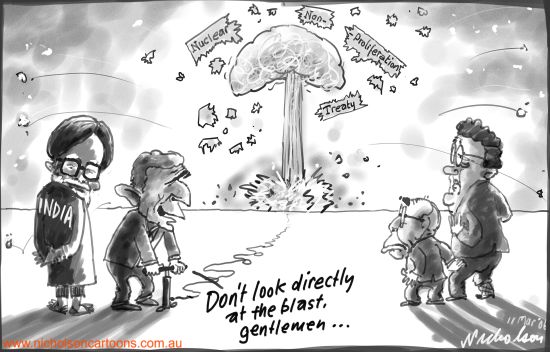
India/US Nuclear Deal Bad for the NPT


U.S.-India nuclear deal a non-proliferation disaster
By Anthony Salloum / August 21, 2008

Countries like Canada must stand up to Bush and say this is a bad deal with dire consequences

This week a select group of countries, Canada among them, will vote on a proposed nuclear deal between the U.S. and India that could lead to the further spread of nuclear weapons. With limited attention paid to this issue at home, indications are that Canada may be on the verge of making a grave mistake by supporting this deal. But this doesn’t have to be the case.

If Canada were to courageously stand against this deal, it wouldn’t be alone. Austria, Ireland, Japan, Netherlands, New Zealand, Norway and Switzerland all expressed concern last month.

Today and tomorrow, the 45 members of the Nuclear Suppliers Group – the alliance of countries that seeks to control trade in “dual-use” nuclear fuel, materials and technology – will be asked to consider the Bush administration’s proposal to exempt India from having to join the Non-Proliferation Treaty (NPT) as a condition of receiving nuclear technology and fuel.

The NPT is signed by 189 countries and has three key pillars: non-proliferation, disarmament and peaceful uses of nuclear energy. To be implemented, the U.S.-India nuclear deal requires approval by the Indian parliament, the International Atomic Energy Agency (IAEA), the Nuclear Suppliers Group and the U.S. Congress.

So far, India and the IAEA have approved it.

If the U.S. wins exemption for India, the deal would be a non-proliferation disaster. It would be a Bush legacy the world could do without. The deal will lead to greater nuclear proliferation.

Treaties like the NPT, meant to prevent the spread of nuclear weapons, have been unravelling. There are four nuclear weapons states that do not belong to the NPT: India, Pakistan, Israel and North Korea – the first state to actually quit the NPT while announcing its intention to develop nuclear weapons. Negotiations are still ongoing on compensating North Korea for agreeing to relinquish its nuclear weapons program.

Supporters of the U.S.-India nuclear deal argue that this bilateral agreement will help thwart the spread of nuclear weapons because it places 14 of India’s 22 reactors under IAEA monitoring. However, this deal allows India to continue thumbing its nose at the only legal, multilateral non-proliferation treaty the globe has, since it will not require India to join the NPT.

Additionally, unlike 178 other countries, India has not signed the Comprehensive Test Ban Treaty prohibiting the testing of nuclear weapons, and continues to produce reactor grade material and expand its nuclear arsenal via the remaining reactors not available to the IAEA for inspection. In fact, the deal guarantees India an uninterrupted supply of fuel without obligating it to sign the test ban treaty.

Organizations and experts, including the Rideau Institute, are raising the alarm. An Aug. 15 letter sent to all 45 foreign ministers of the Nuclear Suppliers Group, including David Emerson, by more than 150 NGOs and experts from 24 countries, noted that, “this deal, if approved, would give India rights and privileges of civil nuclear trade that have been reserved only for members in good standing under the NPT. It creates a dangerous distinction between `good’ proliferators and `bad’ proliferators and sends out misleading signals to the international community with regard to NPT norms.”

This special deal for India has not gone unnoticed by its rivals, Pakistan and China.

Adding fuel to the fire, Iran, which is a member of the NPT – unlike India – points to the deal as an example of the dangerous “good-bad” double standard. It is livid at the hypocrisy, pointing out that Israel is probably quietly lobbying for its own special deal. Iran has a right to have a civil nuclear program, but there are ample reasons to distrust its intentions. The U.S.-India nuclear deal does make a diplomatic solution even more difficult to achieve.

Iran’s ambassador to the United Nations in Vienna, Ali Asghar Soltanieh, cautioned that, “There is serious concern that the United States has taken this step with the intention to create a precedent and pave the way for Israel to continue its clandestine [nuclear] weapons activities.” In other words, the U.S.-India deal will embolden other countries to undermine the NPT as well. And with the 2010 review conference of the NPT looming, there is much at skate.

Canada has options. This week at the Nuclear Suppliers Group meeting, Canada could coalesce with Austria, Ireland, Japan, Netherlands, New Zealand, Norway and Switzerland, and demand that India signs two treaties – the Fissile Materials Cut-off Treaty, which stipulates that India halt production of reactor grade material, and the Comprehensive Test Ban Treaty – as a precondition for their support of the U.S.-India deal. Who knows, other countries may also be emboldened to stand up and say this is a bad deal with awful consequences. No one country has to be alone in standing up to George Bush.

Alternatively, these countries could ask for more time to study the proposed exemption. Such a delay would spell the end of the deal because the U.S. Congress cannot consider and vote on the deal until the Nuclear Suppliers Group approves it. If this agreement doesn’t land back in Washington by late September, it could not be approved during the remaining lifespan of Bush’s administration, effectively killing the deal.

However, if Canada were to support the U.S. on this deal, it would be abandoning its long-standing position as a strong supporter of nuclear non-proliferation, and instead, be supporting Bush’s legacy of undermining the most effective mechanism we have to avoid the spread of nuclear weapons in the world.

Here’s hoping this Bush legacy doesn’t come to fruition.

Anthony Salloum is the program director of the Rideau Institute, which serves as the global secretariat to Abolition 2000, a network of more than 2,000 organizations working for a global treaty to eliminate nuclear weapons.

Source / The Toronto Star

The Rag Blog

Posted in RagBlog | Tagged , , | Leave a comment

The Iraq War Will End on the Day We Stop Paying for It


San Francisco to Vote on Iraq War Funding
by Tom Gallagher / August 21, 2008

On November 4, San Franciscans will vote on the strongest anti-Iraq War measure yet to appear before the voters of a major American city. Proposition U, placed on the ballot by five of the city’s Board of Supervisors, declares it city policy that “its elected representatives in the United States Senate and House of Representatives should vote against any further funding for the deployment of United States Armed Forces in Iraq, with the exception of funds specifically earmarked to provide for their safe and orderly withdrawal.”

San Francisco was the site of some of the nation’s largest protests leading up to the war, culminating in over 1,000 arrests for blocking the streets on the day of the invasion. And in 2004, 63 percent of its voters backed a policy statement urging the federal government “to withdraw all troops from Iraq and bring all military personnel in Iraq back to the United States.” But with more American troops there today than on the day when San Francisco’s voters last spoke on the issue, it seemed time to go to the polls again, particularly since, in the words of the Supervisors’ ballot argument, “San Francisco has struggled to fund its schools, meet the health care needs of its citizens, and provide safety on its streets,” while the Iraq War has cost “the city of San Francisco alone $1.8 billion.”

As a local advisory measure (voters cannot compel their congressional representatives to vote as directed) on a national issue, Proposition U was conceived with one eye on San Francisco and the other on Washington, D.C. The city’s congressional delegation has never adequately reflected the depth of local antiwar feeling. The late Tom Lantos, who represented the city’s west side, was a flat-out war supporter. (Jackie Speier, his successor of only four months will not likely continue his hawkish stance.) The city’s more prominent Representative, House Speaker Nancy Pelosi, has been a more complicated case. Along with the majority of House Democrats, she voted against the war at the outset, then voted to fund it, proclaiming that “Democrats will never cut off funding for our troops when they are in harm’s way.”

Although Pelosi has since cast votes against war funding and was even recently joined by the generally hawkish California Senator Diane Feinstein (Senate colleague Barbara Boxer has been considerably better on the war), the scenario most favorable to antiwar forces portends votes on war funding that all of the city’s representatives in Washington may find significantly harder to resist. Since Barack Obama has never prattled on about envisioning American troops in Iraq for the next hundred years like John McCain, his election at least offers the hope of ending the occupation within the twenty-first century. The fact, however, is that Obama’s plan calls for “combat troops” remaining there sixteen months into his administration, with perhaps tens of thousands of so-called “non-combat troops” staying on indefinitely. Most congressional Democrats will need a lot of antiwar wind at their backs to resist requests for military appropriations in Iraq emanating from an Obama White House.

While aspiring to provide at least a gust to buoy the antiwar spirit of the local congressional delegation, Proposition U is also designed as a bit of an antidote to a type of magical thinking that seems to have come over some of the nation’s war opponents ever since their massive protests failed to stop the war. In 2004, this thinking took the form of believing that all that was necessary to end the war was to elect John Kerry, largely ignoring his have-it-both-ways stance of condemning Bush both for starting the war and for not sending enough troops. (The Administration’s “surge” has belatedly addressed the latter concern.)

In 2006, it was the drive to vote a Democratic majority into Congress that seemed to supplant the need for direct antiwar activity in the minds of many. This, although there was no genuine prospect of a simple Democratic majority providing the votes needed to end the war, given that a third of House Democrats have supported it. And, in 2008, the wish-the-war-away strategy appears to amount to electing Obama and hoping that he’ll do what his antiwar constituency wants him to do, even if he’s never said he would.

There is one way that the starry-eyed Obama fans have it right, though. What Obama’s supporters believe does matter. It matters a lot, but only insofar as they make him know they expect him to act on their beliefs, and do so loudly, publicly, and defiantly, if need be. For the fact is that even if Obama’s Iraq plan were far better than it is and his foreign policy team were not full of status quo types, these factors would not diminish the intense pro-war pressure he will feel if he is elected. Any Democrat in the White House can assume both a Republican drumbeat of accusations about undercutting our armed forces and selling out an ally as well as a steady stream of “stay the course” pronouncements — like the recent New York Times opinion piece, “Not Quite Ready to Go Home” — from supposedly neutral foreign policy establishment types.

Getting the Republicans out of the White House may be a necessary condition for ending this war, but it is far from a sufficient one. Hopefully, on election day, by voting in Proposition U, the voters of San Francisco will present the newly elected President with a real peace plan and remind both their representatives and the nation of the simple fact that the Iraq War will end on the day we stop paying for it.

Tom Gallagher is an antiwar activist living in San Francisco. Reach him at TGTGTGTGTG@aol.com.

Source / Common Dreams

The Rag Blog

Posted in RagBlog | Tagged , | Leave a comment

Fidel’s Is Still Bigger Than Bush’s !!

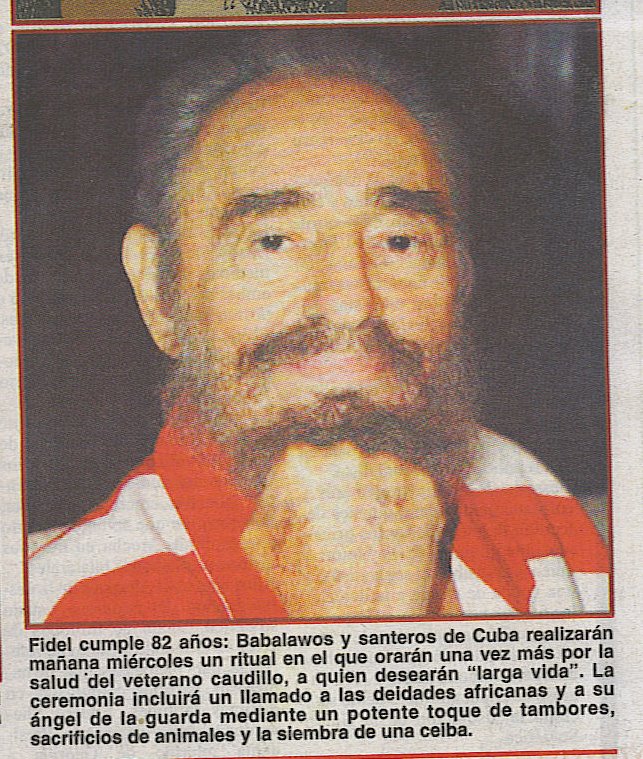
Fidel completes 82 years: Santería priests and priestesses in Cuba carried out yesterday, Wesnesday, a ritual in which they prayed again for the health of the veteran leader, for whom they wished “long life”. The ceremony included calling upon the African deities and Fidel’s guardian angel amid a strong touch of drumming, sacrifices of animals, and the planting of a ceiba tree. – Por Estó de Quintana Roo, Chetuaml, Q. Roo, Mex., 12 August 2008.

And as the photo clearly shows, his is still bigger than Bush’s!

Thanks to Mariann Wizard / The Rag Blog

Posted in Rag Bloggers | Tagged | 3 Comments

Nader: Asking the FDIC to Be Realistic

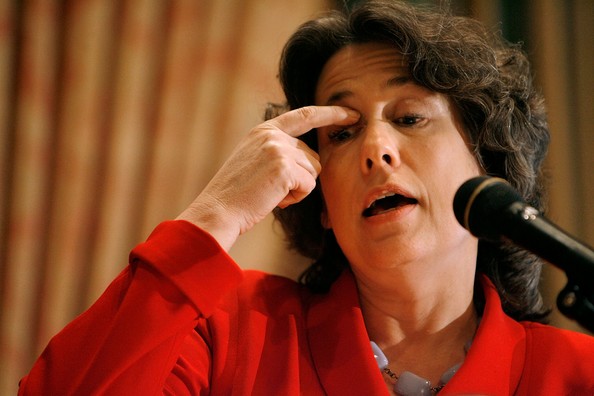
Federal Deposit Insurance corporation Chairman Sheila Bair addresses the Intstitute of International Bankers annual conference at the Four Seasons Hotel March 3, 2008 in Washington, DC. Photo: Chip Somodevilla/Getty Images North America

Where Is Congress? The Problem with Problem Banks
By Ralph Nader / August 21, 2008

This week, the Wall Street Journal reported that Federal Deposit Insurance Corporation (FDIC) officials are pushing various agencies charged with regulating banks, such as the Treasury’s Office of Thrift Supervision to more aggressively give problem banks lower ratings than they may now be receiving from regulators. Regulators give banks a rank between 1 and 5. Well-managed banks get a 1, problem banks receive a 4 or 5. The FDIC wants to see more banks getting 4s or 5s.

In late July, I wrote to U.S. Senate Committee on Banking, Housing and Urban Affairs Chairman Christopher Dodd (D-Conn.) and House Financial Services Committee Chairman Barney Frank, D-Mass. to suggest that they jointly hold hearings on the FDIC’s ability to deal with potential bank failures in the next several years. In the letter, I noted that in a March 10, 2008 memorandum on insurance assessment rates, Arthur J. Murton, Director of the Division of Insurance and Research for the FDIC stated:

While 99 percent of insured institutions meet the “well capitalized” criteria, the possibility remains that the fund could suffer insurance losses that are significantly higher than anticipated. The U.S. economy and the banking sector currently face a significant amount of uncertainty from ongoing housing sector problems, financial market turbulence and potentially weak prospects for consumer spending. These problems could lead to significantly higher loan losses and weaker earnings for insured institutions.

FDIC Chairman Sheila C. Bair, however, has been singing a more upbeat tune. She recently said, “The banking system in this country remains on a solid footing through the guarantees provided by FDIC insurance. The overwhelming majority of banks in this country are safe and sound and the chances that your own bank could fail are remote. However, if that does happen, the FDIC will be there – as always – to protect your insured deposits.”

Despite these reassuring words, the recent failure of IndyMac highlights the need for tough Congressional oversight. Banking experts have indicated that the cost of the collapse of IndyMac alone will be between $4 billion and $8 billion. The FDIC has approximately $53 billion on hand to deal with bank failures. This amount may not be adequate, given the cost of IndyMac and given the approximately $4 trillion in deposits the FDIC insures.

Congressional oversight of the financial services industry and its regulators should be a topic priority for Congress. I even suggested several questions that should be put to FDIC officials such as:

1. Was IndyMac on the list of “Problem Institutions” before it failed?

2. Were the other banks that failed this year on the FDIC list of “Problem Institutions”?

3. What is the anticipated cost of dealing with the failures of the other four banks that failed this year?

4. As of March 31, 2008 the FDIC reported 90 “Problem Institutions” with assets of $26 billion. What is the current number of “Problem Institutions” and what are the assets of these “Problem Institutions”?

5. How many banks are likely to fail in 2008 and 2009 respectively?

6. What is the estimated range of costs of dealing with the projected failures?

7. What will the effect of higher losses than those projected be on the FDIC’s estimate of the proper reserve ratio?

8. What are the FDIC’s projections for reserves needed and potential bank failures beyond 2009?

9. Is the FDIC resisting raising the current rates of assessments on FDIC insured banks so that the cost of any significant bailouts will have to be shifted to the taxpayers?

10. Does the Government Accountability Office (GAO) believe that the existing rate schedule for banks to pay into the Deposit Insurance Fund (DIF) is set at the proper level?

It would also make sense for Congress to revisit the FDIC’s current approach to setting reserve ratios for banks.

The FDIC is not likely to address its own inability to clearly assess the current risks posed to depositors and taxpayers by the high-rolling, bailout-prone banking industry.

When Congress reconvenes after Labor Day it would be prudent for Senator Dodd and Congressman Frank to focus on the FDIC and our nation’s troubled banks through some tough no-holds-barred hearings. These two lawmakers are going to have to hear from the people back home soon.

Neither Senator Dodd nor Congressman Frank have responded to my letter of July 23, 2008.

Ralph Nader is running for president as an independent.

Source / CounterPunch

The Rag Blog

Posted in RagBlog | Tagged , , | Leave a comment

Perspectives on the Iraqi Oil Industry


Political rifts slow recovery of Iraqi oil
By Carola Hoyos, Roula Khalaf and Ed Crooks (in London) / August 21, 2008

Political gridlock has overtaken security risk as the primary hurdle facing the rehabilitation of Iraq’s oil industry, according to oil executives and analysts.

Cabinet disagreements and unrealistic expectations from Baghdad are already threatening to scupper the oil ministry’s plans to sign short-term technical support agreements with international oil companies.

This could also complicate the more ambitious plans to agree longer-term development contracts that would involve big investments by oil majors. Iraq’s oil ministry last month invited foreign companies to bid for contracts to develop eight oil and gas fields for the first time in three decades.

Charles Ries, US co-ordinator for Iraq’s economic transition, recently told reporters that the short-term contracts, which would train and assist Iraqi engineers to raise oil output, now at 2.4m barrels a day, by an extra 500,000 b/d, were not likely to go through.

Anadarko, the US independent, has walked away from the short-term deals on offer, citing unfavourable terms. Others, including BP and Royal Dutch Shell, say talks are continuing. However, analysts have suggested no agreement is likely before the end of Ramadan, putting any deals off until at least October.

In its most recent report, the International Energy Agency, the oil consuming countries’ watchdog, said it might have to revise down its forecasts of Iraqi capacity expansions because of doubts over the technical support contracts.

Oil executives said the deals had been mired in confusion. Some said the agreements on offer had lost much of their appeal when Iraq reduced the contracts’ lengths from two years to one, and when it became clear Iraq would not give companies that signed short-term contracts preferential treatment for the more sought-after long-term deals.

International oil companies are far from shrugging off their security concerns over sending large numbers of employees to Iraq. Shell, for example, conducts all its work on Iraq outside the country, advising and training Iraqi staff working on the Kirkuk and Missan oilfields, and working on plans to use the gas produced as a byproduct of oil extraction and burned off in flares.

But at least one western energy group is becoming bolder. Eni, the Italian oil company, recently sent its head of exploration and production and its head of oil and gas for a visit.

For Eni and other big companies, the ultimate prize would be longer-term deals that allowed them to produce oil from Iraq’s huge fields, and seek more fields in the unexplored areas.

The country’s oil ministry wants to sign field development deals as early as next year, and has said it will reveal terms next month.

But companies are still concerned at the lack of new legislation governing the industry. Moves to agree on a new law have been derailed amid disagreements between the Kurdish minority and the Arab majority.

Meanwhile, China National Petroleum Corporation, the state-owned oil company that is the parent of the listed Petrochina group, may be the first foreign company to sign an oil deal with Baghdad since the fall of Saddam Hussein: a service contract to develop the Ahdab field.

Hussein Shahristani, Iraq’s oil minister, was quoted in an Iraqi newspaper on Tuesday as saying that a $1.2bn (€817m, £644m) deal with China had been under discussion for a year.

CNPC refused to comment, but an industry official in Beijing confirmed the talks were taking place with the Iraqi authorities, and that an Iraqi minister was expected to visit Beijing next week.

Additional reporting by Geoff Dyer in Beijing

Source / Financial Times

Iraq condemns oil majors’ “humanitarian” failure
By Simon Shuster, August 20, 2008

MOSCOW, Aug 20 (Reuters) – A top Iraqi official on Wednesday attacked oil majors for trying to overcharge the war-torn nation and ignoring their “humanitarian” duty to help develop Iraq’s battered oil industry.

“Foreign companies, including Russian companies, have not taken up the call to develop these projects. As a result of them not wanting to work in these conditions, the Iraqi people have suffered greatly,” Karim Waheed, Iraq’s electricity minister, said at a news conference in Moscow.

The attack came after Iraq delayed the signing of short-term oil service contracts with oil majors due to disagreements over payment terms and their duration.

Iraq and major international oil companies have been negotiating six short-term technical service contracts, each worth about $500 million and targeting a 100,000 barrels per day increase in output from six of Iraq’s biggest oilfields.

The companies involved in negotiations included Royal Dutch Shell (RDSa.L: Quote, Profile, Research, Stock Buzz) and Exxon Mobil (XOM.N: Quote, Profile, Research, Stock Buzz). The firms, jostling for years to position themselves for access to the world’s third-largest oil reserves, had hoped that the contracts would give them a headstart in negotiations for future deals.

“The invitations to take part in these projects have not only an economic but a humanitarian character,” Waheed said after meetings with Russian energy minister Sergei Shmatko and the heads of Russian energy service firms.

In negotiating deals, foreign majors had counted on Iraq’s ignorance of the markets in trying to overcharge the country in a time of need, the Iraqi minister said.

“Some companies in those cases demanded sky-high prices for their services, thinking Iraq does not have a grasp of international financial markets. They were unpleasantly surprised when they found out we fully understand global commodity markets and global stock markets,” he said.

Waheed also reiterated Iraq’s traditional stance that Russian oil major LUKOIL (LKOH.MM: Quote, Profile, Research, Stock Buzz) would have to compete on equal terms with other contenders to develop the giant West Qurna deposit at next year’s tenders.

LUKOIL signed the $4 billion West Qurna deal with the government of Iraq’s former dictator, Saddam Hussein, over a decade ago but Baghdad scrapped the deal shortly before Hussein was deposed by a U.S. invasion in 2003.

“These contracts are old in many ways. Firstly the price of metals and other building materials has increased dramatically, not to mention the price of oil…” Waheed said.

© Thomson Reuters 2008

Source / Reuters

The Rag Blog

Posted in RagBlog | Tagged , | Leave a comment

FBI Grabbing More Power While They Still Can


Relax, We’re Only Assessing You
Jacob Sullum / August 21, 2008

Sen. Russell Feingold (D-Wis.) and several of his colleagues are worried about new guidelines for FBI investigations that Attorney General Michael Mukasey is on the verge of approving. Yesterday, in a letter to Mukasey, they raised several concerns:

The guidelines permit the FBI to use a variety of intrusive investigative techniques to conduct “assessments” of possible criminal activity, national security threats or foreign intelligence collection—without any initial factual predication. We are concerned about the extent to which such authority might, for example, permit the FBI to conduct long-term physical surveillance of an innocent American citizen; interview such an individual’s neighbors and professional colleagues, including based on a “pretext” or misrepresentation; recruit human sources to provide information on that individual; or conduct commercial database searches on that individual—all without any basis for suspicion….We are particularly concerned that the draft guidelines might permit an innocent American to be subjected to such intrusive surveillance based in part on race, ethnicity, national origin, religion, or on protected First Amendment activities.

The guidelines permit the collection of foreign intelligence information inside the United States, through both “assessments” and predicated “full investigations,” with little explicit protection for information gathered about United States persons. The definition of “foreign intelligence” is broad, and covers any information relating to the activities of a foreign government, organization or person. We are concerned about the extent to which the FBI may be permitted to gather or use information about Americans under the rubric of foreign intelligence gathering when there is no suspicion of a crime, threat to national security, or any other wrongdoing.

The Bush administration has argued that FBI agents should not need grounds for suspicion to use commonly available investigative tools such as Web searches. While there is something to be said for that argument, one could also argue that law enforcement officials should be more restrained in their use of such tools than ordinary citizens, since the consequences of their curiosity have the potential to be much more serious. In any case, “long-term physical surveillance” is not something ordinary citizens can do without risking arrest for trespassing, stalking, or harassment. Likewise, FBI interviews, even when officially consensual, have a coercive aspect to them that is absent from, say, a chat with a neighbor. And if “commercial database searches” include examining sensitive information such as credit reports, which ordinary citizens can legally obtain only if they are engaging in or considering certain kinds of transactions with the subjects of the reports, that is another example of special government powers that should not be exercised willy-nilly.

This story is a good excuse to quote Feingold’s comments at a June 25 hearing about border searches of laptop computers, where he castigated the Bush administration for withholding information about the frequency of the practice:

Once again, this administration has demonstrated its perverse belief that it is entitled to keep anything and everything secret from the public it serves and their elected representatives, while Americans are not allowed to keep any secrets from their government. That’s exactly backwards. In a country founded on principles of liberty and democracy, the personal information of law-abiding Americans is none of the government’s business, but the policies of the government are very much the business of Congress and the American people.

Source / Hit & Run

Thanks to Diane Stirling-Stevens / The Rag Blog

Posted in RagBlog | Tagged , , | Leave a comment

Fleeting Glimpses by A. Traveler

Catedral, Calle de la Reina.

Before the Golden Arches Invade the Pearl of the Caribbean…
by A. Traveler / The Rag Blog / August 21, 2008

Six days in one city isn’t enough to form opinions of a country that has fired one’s imagination for over 50 years; there are only fleeting impressions.

Almost everything in Ciudad Habana, from the light fixtures at the hotels, to the ceilings in the restaurants, to the intricate plaster moldings on practically every house and public building, would attract wild bidding in the Antique listings on eBay. Beautiful things abound, made by craftsmen long retired or deceased, carefully maintained and cared-for, yet used as casually as paper plates at a picnic. History is present on every corner, and the central city is a living museum.

Ornate ironwork atop doorway, Obispo Street.

But not everything is old, and the new things are brilliant, Euro-inspired, yet harmonious additions to a bustling, active city. Everybody knows about the classic old cars – and they are sweet! – but the majority of vehicles on the roads are sleekly modern imports, including plenty of hybrids. Friendly neighbor Venezuela is providing the petrofuel.

Glass wall of Museum of Cuban Art reflects renovated Victorian across the street, in baby pink and lemon yellow.

View from Museum of the Revolution shows disparate eras of transportation and construction. The small tower is part of a Spanish-era fortification.

While hero worship is alive and well in Cuba, there is much less seen of Fidel’s image and much more of Che, and of Camilo Cienfuegas, than one might expect. Little is seen anywhere of Raul Castro, who, unlike Venezuela’s Hugo Chavez, seems disinclined to re-enact Fidel’s marathon speeches. Anti-Bush propaganda around town focuses as much on Papa Bush as on Junior, but never becomes anti-American – unless you consider the fact that the US dollar trades as just over 80% of the Cuban peso as anti-American… People are friendly, outgoing, glad to see US visitors, and willing to go the extra mile to help you without expecting a gratuity – except for the ever-present mariachi and would-be mariachi, who surely deserve to be paid if they must play Guantanamera yet again!

As in so many “foreign countries”, the farther the well-behaved visitor strays from tourist areas, the less likely one is to be noticed at all. While the island’s Spanish is softer, and even faster, than the more familiar Mexican variety, it is still Spanish after all, and the good old reliable polite phrases will see you through most interactions. (Of course, many Cubans speak excellent English, should it inconvenience you too greatly to make an effort to flatter your hosts.)

All of today’s Cubans are, so they say, of Spanish and/or African descent, since indigenous peoples present when Signor Columbus arrived were “rapidly exterminated”. That this should have happened so rapidly as to preempt any later aspirations to native blood, such as many in the US claim from the Cherokee princess great-grandmother we all think we had, boggles the mind of descendants of later genocidal invaders of the hemisphere.

Camilo and Che in “natural history” Sierra setting at Museum of the Revolution. Cienfuegos was the only one of Fidel’s companions ever photographed dancing.

Fidel’s typewriter, also at the Museum of the Revolution: it’s a Woodstock!

Outside the Granma boathouse. Fidel’s tank from the Bay of Pigs (above), and engine from a US spy plane which the US denied existed (below).


Everyone in Havana can get you Cohiba cigars “at a wonderful price”. (“Don’t be a sucker!”) The best rum, Canay, isn’t available in duty-free shops. One concludes rapidly that, no matter where he did it, Hemingway surely did drink! Even in sizzling August, the city hums with tourists from all over the world. Restaurant cuisine is bland and unimaginative – there’s not yet a Cordon Bleu school! – but not entirely pork, rice, and beans. Sometimes there is no chicken, but there are vegetables and fruits a’plenty, and good fish if you look for it. There aren’t many fat Cubans, but they generally look healthy, and there are lots of plump, well-outfitted babies. The shops have good-looking clothes and people are in there buying stuff. In six days, I saw only four outright beggars, three of them clearly professionals.

El Lider oversees sales at the Romeo y Julieta factory.

Two of Cuba’s principal products on parade.

It was just a glimpse, but I’m glad to have seen this much of revolutionary Cuba before the remnants of the ineffectual US “blockade” fall and “progress” brings la isla its greatest challenges yet.

Here is a little bonus: “Comandante Che Guevera” as performed by Havana’s “Trio Ruvela.”


The Rag Blog

Posted in Rag Bloggers | Tagged , | Leave a comment

Small Victories Reap Small Rewards


New York settles suit with antiwar activists for $2M
August 20, 2008

The city has agreed to pay $2 million to settle a lawsuit that claimed antiwar activists were unjustly arrested five years ago, city officials said.

The suit was filed by 52 activists against the Iraq war who were arrested in April 2003 outside the Manhattan offices of a military contractor.

“This settlement was reached without any admission of liability on behalf of the city and the individual defendants,” said Susan Halatyn, a spokeswoman for the city’s Law Department. “Although defendants believe that they would ultimately have prevailed at a trial, the costs of going forward weighed in favor of a settlement at this time.”

The antiwar group demonstrated April 7 in front of the building for the Carlyle Group, an investment house, on Fifth Avenue. During the protest, they were arrested on various violations, including disorderly conduct, city officials said.

According to the city’s Law Department, both parties determined that it would be best to settle rather than incur more costs at what was expected to be a lengthy trial.

Each of the 52 plaintiffs will share equally in $950,000, with the remainder of the settlement to cover their lawyers’ fees, officials said.

Source / Newsday.com

The Rag Blog

Posted in RagBlog | Tagged , , | Leave a comment

Tom Hayden : McCain, Neocons and the Georgia War Conspiracy

John McCain consults with lobbyist/foreign policy advisor Randy Scheunemann.

‘This is not a conspiracy theory but a conspiracy fact, stated as boldly as possible before it is too late’
By Tom Hayden / August 20, 2008

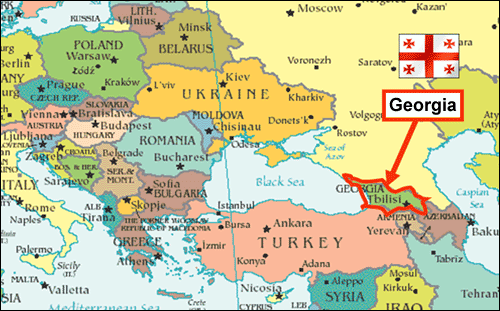
Barack Obama and the Democrats are heading towards trouble in November because of a new Cold War with the Russians triggered largely by a top John McCain adviser and the same neo-conservative clique who fabricated evidence to lobby for the Iraq War.

This is not a conspiracy theory but a conspiracy fact, stated as boldly as possible before it is too late.

Because they are still mired in what Obama himself calls “old thinking”, the Democratic hierarchy and the mainstream media will have to be challenged to recognize the Georgia Conspiracy by the the faithful and clear-headed rank-and-file and the blogosphere.

Here are the short-term essentials:

*After border skirmishes similar to the 1964 Tonkin Gulf affair, on August 7-8, Georgia’s president Mikheil Saakashvili of Georgia invaded the autonomous breakaway region of South Ossetia with his US-trained army. The Russians responded with massive force, quickly routing Saakashvili’s forces.

* McCain has traveled to Georgia, nominated his “close friend” Saakishvili for a Nobel Prize in 2005, and was the first American leader “to blast Russia” last April when Vladimer Putin issued a sharp warning against NATO membership for Georgia and the Ukraine, supported by the US. [NYT, Aug. 18, 2008]

* The Bush administration was divided along familiar lines, with the pro-Georgia hawks centered in vice-president Cheney’s office, allied with McCain. The former group were foreign policy “realists” while the latter were enthusiasts for spreading “democracy” from Iraq to the Russian border.

* Randy Scheunemann, McCain’s foreign policy adviser was “registered foreign agent” for Saakashvili’s government from at least 2004, when Saakashvili came to power, until May 15, 2008, when he technically severed his ties to Orion Strategies, his lobbying firm. At that point, Orion had earned at least $800,000 in lobbying fees from Georgia. [W Post, Aug. 13, 2008]

* Saakashvili, with Scheunemann advising him, campaigned on a platform of taking back South Ossetia and Abkhazia.

* Scheunemann was Georgia’s lobbyist when Saaskashvili sent troops to retake two separatist enclaves, Ajaria in 2004 and the upper Kodori Gorge in Abhkazia in 2006, over strong Russian objections.

* Saaskashvili tarnished his democratic credentials by sending club-wielding riot police against unarmed demonstrators protesting his abrupt purging of the police, civil servants and universities in 2007, a replay of Paul Bremer’s decision to privatize Iraq in 2003.

Until now Scheunemann has been less-visible but no less important than any of the top neo-conservatives who drove America into Iraq and now are lobbying for a new Cold War and a McCain presidency.

He was the full-time executive director of the Committee for the Liberation of Iraq. He helped draft the 1998 Iraq Liberation Act which authorized $98 million for the “Iraq lobby” led by Ahmad Chalabi which disseminated bogus intelligence in the lead-up to war. He also worked for Donald Rumsfeld as a consultant on Iraq. He joined the board of the Project for the New American Century.

Scheunemann traveled with McCain to Georgia in 2006. Seeking to repeat his 1998 Iraq jackpot, he lobbied for an unsuccessful measure co-sponsored by McCain that year, the NATO Freedom Consolidation Act which would have sent $10 to Georgia.

He claims to have invented the phrase “rogue state rollback” for a 1999 McCain speech, an echo of the right-wing Cold War strategy of rolling back the Soviet Union. He has been a paid lobbyist or consultant for such presumed beneficiaries of “roll back” as Latvia, Macedonia, and Romania, as well as Georgia. Not to miss another opportunity, his firm has represented the “Caspian Alliance”, a consortium of oil and gas producers in the region.

It is unclear at this writing what links Scheunemann, as Georgia’s paid lobbyist, may have to the Western oil interests who in 2005 built the Baku-Tbilisi-Ceyhan pipeline through Georgia, a project intentionally designed to “bypass Russia” and implement an “American strategy to put a wedge between Russia and the Central American countries that had been Soviet republics.” [NYT, Aug. 14] The BTC consortium includes BP, Chevron, Conoco, and the state of Azerbejian. As conceived, the system also would attempt to link eventually with Israel’s pipeline system as well. [Ha’aretz, Jan. 17, 2008]]. Using the justification of pipeline protection, US Special Forces in 2005 trained 2,000 Georgian troops in anti-terrorism techniques. [Turkish Weekly, May 27, 2005] Scheunemann has been a lobbyist for BP America, and Sec. Condoleeza Rice, of course, has longstanding ties with Chevron, which even named a super-tanker after her.

But as evidence of the serious tensions within Republican circles, Schuenemann attacked Rice for “appeasement” of Russia over Georgia as recently as 2006. [Financial Times, Oct. 21, 2006] Now it appears that the Shuenemann-McCain faction has succeeded in pulling the US into an unwinnable military situation which is overflowing with political dividends for McCain and the Republicans.

In a nutshell, here is what should be said: the same Republican neo-cons who fabricated the reasons for going to war in Iraq are back, and now they have been paid to trigger a new Cold War with Russia that benefits John McCain. These are dangerous, expensive unwinnable games being played with American lives to benefit Republican politicians and their oil company friends.

These are not words you are going to hear from Barack Obama or anyone in the Democratic hierarchy. Looking back, they agree that the Iraq invasion was a colossal misjudgment. Privately, most of them feel that Georgia’s adventurism provoked the current conflict. But politically, they are pledged to be positioned as tough against terrorism and Russian communism, tougher than the Republicans.

This should be a red line for peace movement supporters of Barack Obama. We can live to fight another time on his proposals on Afghanistan and Pakistan. Nor can we play into McCain’s game plan, not with the Supreme Court at stake and a stronger-than-Obama Democratic majority poised to take over Congress. But this new Cold War is now, heating up by the day, and Obama could be its first political victim. It is even possible that McCain, alerted to the complicated dangers at home and abroad, will propose a “diplomatic solution” after he has squeezed as much benefit out of the Cold War revival that he can, to be resumed after he becomes president and tries to incorporate the Ukraine into NATO.

Until a leading Democrat summons the courage and vision, the peace movement and netroots will have to lead the battle against this attempt to reward the very people who brought us Iraq with another lease on power.

First, it will be necessary for millions of people to re-educate themselves in the history and perils of the Cold War. Fortunately, we don’t have to repeat the communism/anti-communism debates that divided America and defeated Democrats for decades. No one defends Russia as a democratic example. The real question is as old as 1917 or 1945: can and should the US attempt to strangle Russia through reckless pro-Western privatization schemes combined with installing military bases – now including Pershing missiles – on its western and southern borders. And the question is as old as 1967: why was John McCain bombing Vietnam in the belief that it was a pawn of the Soviet Union? Why did our government and a majority of Americans fall for the same misleading pretext for that war?

The Republicans and neo-conservatives should be asked this puzzling question: whatever happened to your triumphal claim that Ronald Reagan won the Cold War by destroying the “evil empire”? Evidently they were seeking nothing more than Russia’s natural resources and complete subjugation by NATO. There was no limit to what their superpower mentality thought possible.

Among those who caused this current debacle too were the Democratic Party’s “humanitarian hawks”, who promoted the NATO military intervention in the Balkans with the dream of creating an independent Kosovo in Russia’s historic sphere of influence. That war would have been a disaster if the US [under Clinton] had sent ground troops. But Russia pulled back its support of Belgrade after three months of US bombing. That was perceived as Russia’s weakness and the birth of a new “uni-polar” world. Then came the giddy enlistment of former Soviet-bloc countries in NATO – the “new Europe”, as Rumsfeld hailed them. The Russians were clear in warning that they could recognize places like South Ossetia if the West could carve out Kosovo, but the superpower was deafened by the delirium of success. It was to be “the new American century”, a resumption of the march to the free-market millennium first announced on the Time cover at the beginning of the Cold War.

The initial goal of the principled rank-and-file peace movement should be to devise a persuasive message against the reckless adventurism of the resurgent McCain/neoconservative crusade and bombard the “realist” foreign policy school, from think tanks to editorial boards to senior members of Congress, with questions that widen the current climate of debate.

If Obama had a paid lobbyist for a foreign country on his Senate staff, what would the Republican outcry be?

If John McCain is above the special interest lobbies, why is he harboring Scheunemann? Is it enough to go off the Georgia payroll and over to the McCain campaign payroll during a regional war you helped set off?

Is Scheunemann as reckless as Saakashvilishi and McCain, in his own way? Besides his work for the Iraq lobby and the Georgia government, Scheunemann was the lobbyist for the National Rifle Association and the Sporting Arms and Ammunitions Manufacturers, and just nutty enough to be arrested for possession of an unregistered shotgun in the US Capitol – after a duck-hunting trip, of course. [Washington Times, Feb. 5, 1997.]

Obama supporters should step up their criticism of his hawkish mimicry of McCain, and consider lessen their support though still voting for him, unless he distinguishes himself from McCain on the immediate crisis.

At the very least, Obama can stop going out of his way to celebrate McCain as a great American war hero, which only reinforces McCain’s strongest rationale for victory. And Obama’s surrogates might delicately suggest that McCain shoots before he thinks. McCain was the pointman pushing the neo-conservative war against “islamo-fascism”, centered in Baghdad, months before the Bush Administration revealed its intentions. While Obama urged caution about a “dumb war”, McCain was supporting Ahmad Chalabi’s “misleading assertions” about weapons of mass destruction and Iraq-al-Qaeda ties that didn’t exist. [NYT, Aug. 17]

The broad peace movement has to awaken a burning memory from below. Everyone recalls George Bush declaring “Mission Accomplished”, but does anyone recall John McCain standing on another aircraft carrier on January 2, 2002, yelling to young Navy pilots like himself during Vietnam, “Next up, Baghdad!” #

TOM HAYDEN is the author of Ending the War in Iraq [Akashic] and Writings for a Democratic Society [City Lights].

Source / The Huffington Post / Progressives fro Obama

The Rag Blog

Posted in RagBlog | Tagged , , , , , , , , | Leave a comment

Danny Young : ‘Mayor of South Austin’ Dead at 67

Danny Young, washboard player with the Cornell Hurd Band, owner of the Texicalli Grille, and Mayor of South Austin. Photo by Carlos Lowry / The Rag Blog.

Washboard ace, neighborhood activist: ‘On Wednesday, a mighty whiff of the Old Austin spirit disappeared’
By Michael Corcoran / August 21, 2008

Someone called Danny Young “the Mayor of South Austin” and it stuck like an arrow because Young’s warm, gregarious personality and passion for Texas music lit up the whole 78704 Zip Code. The big-hearted neighborhood activist was the friendliest guy you could ever meet… and he met everyone who ever walked into his Texicalli Grille.

Danny Roy Young, who also played rub board in Cornell Hurd’s band for years, died of a heart attack Wednesday. He was 67. The stream of shocked phone calls and sad emails from friends started circulating at about 9 p.m. More details will be known Thursday morning.

“What a guy!” Susan Antone wrote in an email. “He was a class act always and a great friend. He’ll be sorely missed.”

A native of Kingsville, where his parents ran a diner, Young and his wife Lu moved to Austin in 1975 and opened the first location of Texicalli Grille (the signature Texicalli sandwich was named after Gene Autry’s “Mexicalli Rose”) on South Lamar Boulevard. He became the unofficial mayor of South Austin in the mid-1980s, when the city planned to widen South Lamar and put in a continuous median, to make it more of a thoroughfare. Fearing an expansion would change the soul of the neighborhood, Young organized other affected business owners, who gathered petitions, took their concerns to City Hall, and eventually got the expansion project dropped.

“It used to be, ‘All them Bubbas live over there with toilets in their front yards.’ And there’s still some of that,” Young said of South Austin in a 2002 American Statesman profile. “But it’s the most beautiful, supportive community. It doesn’t matter if you have long or short hair, Skoal in your back pocket or a joint in your shirt pocket; here people really care about people.”

Nobody spread the love like Danny Young, who tooled around town in Big Lu-Lu, a 1954 Chevy station wagon, waving at friends and playing a mix of music ranging from conjunto to blues to zydeco to western swing.

Young retired in 2006 at age 65 and sold the Texicalli, which brought funky charm to an old Taco Bell on East Oltorf Street in 1989. The restaurant, known for its Texan twist on the Philly cheesesteak, closed in July 2007 because of rising rents.

A storyteller, rabble rouser and minor league baseball fanatic, Young loved to hold court at a big, round table at the poster-covered Texicalli, where musicians, artists and neighborhood eccentrics used to gather to complain about government and “progress.”

“In South Austin, we do things the way we want, and we hope you like it,” Young told former Statesman columnist Don McLeese in 1996. “But if you don’t, we’ll do it anyway.”

On Wednesday, a mighty whiff of the Old Austin spirit disappeared. They’ll never be another Danny Young; you can be sure of that. On stage he kept the rhythm on a metal washboard he played wearing leather gloves with Mercury dimes glued to the fingertips. But it was the pulse of Danny Young’s personality, his love of life and music and conversation, that helped give the ‘04 it’s beat.

Source / Austin360

The Rag Blog

Posted in RagBlog | Tagged , , , , , | 5 Comments

George W. Bush : Feeding the Beast


In order to weaken federal agencies, the Bush administration has expanded them to the point of collapse
By Christopher Moraff

When President Bush exits the White House in January, he will leave behind a federal government in shambles.

Since his first term, Bush has pressed forward with a radical view of the executive branch. Beyond adopting autocratic positions on foreign policy and taking broad liberties to subvert the Bill of Rights, Bush has waged a quieter — and perhaps more damaging — war at home against the very agencies under his charge.

From formaldehyde-soaked FEMA trailers, tainted pharmaceuticals and politically motivated firings of U.S. attorneys, to allegations of retaliation against government whistleblowers and an exodus of career officials from key regulatory positions, the Bush administration has lorded over a highly politicized and increasingly ineffective federal bureaucracy.

Policy analysts and legal scholars paint a picture of an executive intent on controlling every aspect of the federal bureaucracy, in particular the agencies tasked with regulating industry and commerce.

Taken as a whole, the president’s rejection of international law and his consolidation of administrative oversight are representative of a decades-long effort by conservatives to implement a so-called “unitary executive theory” — a euphemism for virtually unlimited presidential power.

But for such a creation to succeed, the executive must assert its influence over all aspects of government, from the top down, through the ranks of the roughly 3 million civilian employees that today work in government jobs at more than 100 agencies and sub-agencies.

Even his detractors say this is something Bush has been especially adept at.

“Despite their ineptitude in a lot of other areas and how poor they are at governing, one of the things the Bush administration has been very good at is using administrative mechanisms to control policy outcomes,” says Rick Melberth, director of regulatory policy at the nonpartisan watchdog group OMB Watch.

Bush didn’t invent this theory, but regulatory experts say his administration has worked harder than any other to perfect it.

“I have worked on regulatory issues inside the Beltway since 1976, and have watched five presidents come and go,” says Rena Steinzor, president of the Center for Progressive Reform and a professor at University of Maryland Law School. “The Bush administration is the most hostile and aggressive toward these agencies by a couple of orders of magnitude, making the Reagan era look relatively benign.”

Steinzor says the next president will face a daunting task in putting the house back in order: “No matter who is elected in November, it will take years to repair this damage.”

The damage is evident in almost every federal agency and characterized most visibly by dwindling morale among career civil servants. None have suffered more than those in the scientific community, which has been forced to confront a growing cadre of inexperienced political appointees bent on pursuing a pro-business agenda.

An April survey conducted by the Union of Concerned Scientists found that nearly two-thirds of responding Environmental Protection Agency (EPA) scientists said they experienced political interference with their work.

“Politics is injected and elevated into decisions where science and rational judgment should prevail,” Melberth says. “Politics supersedes scientific and technical information that is critical to protecting our environment and health and safety at home and in the workplace.”

What’s more, research by political science professor David E. Lewis of Vanderbilt University shows that politicization results in lower agency competence and that political appointee-run programs earn systematically lower grades in most management areas.

Says Lewis: “Many of the politicization scandals in this administration came from cases where unqualified or inexperienced people got into key jobs … often with the power to hire others or control information flows.”

Congress seeks answers

Since the Democrats took back Congress in 2006, numerous hearings have examined the extent to which political policy has penetrated rulemaking.

Rep. Henry Waxman (D-Calif.), chair of the House Committee on Oversight & Government Reform, has been investigating the growth and influence of political appointees in federal agencies — in particular their interference with scientific research. Among the committee’s findings is that — despite Republicans’ oft-stated disdain for bloated government — the number of such appointees has actually expanded under Bush.

During his first term, federal jobs available to political appointees rose 15 percent, according to the 2004 edition of the “Plum Book,” which Congress publishes after each presidential election to list open positions.

In fact, in the first five years of the Bush administration, the total number of political appointees grew by 307 — or 12 percent — according to a 2006 report released by Waxman’s committee. At the same time, the number of Schedule C appointees — who are exempt from confirmation or qualification review — increased 33 percent during Bush’s first term.

In one of the more egregious examples, Bush appointed George Deutsch as NASA press officer in 2005. Deutsch, a then 24-year-old former Bush campaign staffer with no relevant scientific training, fell under fire almost immediately for attempting to censor the agency’s scientists. Most notably, he instructed senior scientists to refer to “the Big Bang” as a “theory,” and he tried to restrict scientists’ access to the media. He resigned in 2006 when it was revealed that he had lied on his resume about graduating from college.

But as the federal workforce has grown larger, it hasn’t gotten more done. Just the opposite: An analysis conducted by the Washington Post at the end of Bush’s first term found that since he took office, federal agencies had begun roughly one-quarter fewer regulations than President Clinton and 13 percent fewer than Bush’s father during their first terms.

Paul Light, a Brookings Institution fellow and author of A Government Ill Executed: The Decline of the Federal Service and How to Reverse It, refers to this tactic as the “thickening” of government.

“Despite the president’s promise to bring business-like thinking to the federal government, the Bush administration has overseen, or at least permitted, a significant expansion of both the height and width of the federal hierarchy,” Light says. “There have never been more layers at the top of government, nor more occupants at each layer.”

For Bush, the slowing of the federal machine has been less about manipulating regulatory output and more about sabotaging the machine itself.

Rep. Danny Davis (D-Ill.), who chairs the subcommittee that oversees the federal workforce, says that while he respects the authority of the executive branch to follow and implement certain policy initiatives, the Bush administration may have crossed an ethical line.

“We’ve been particularly concerned that some of the scientific community is being co-opted by political manipulation, and that policy is being presented as fact,” Davis says.

At the end of July, Rep. John Conyers (D-Mich.) — chair of the House Judiciary Committee — held a hearing to take inventory of what he called the Bush “imperial presidency.” He noted a laundry list of administration shenanigans: improper politicization of the Justice Department and the U.S. attorneys’ offices; misuse of executive branch authority (including unitary executive theory); misuse of presidential regulatory authority; and improper retaliation against administration critics.

A brief history of the unitary executive

The modern concept of a unitary executive was formalized during President Reagan’s first term, largely through the efforts of then-Attorney General Ed Meese. At its heart, the theory asserts the supremacy of the executive branch and the role of president as chief executive officer with unilateral authority over the workings of the regulatory functions of government.

Reagan codified this so-called “centralized regulatory review” through two sweeping executive orders that essentially gave the White House the power over regulatory policy — from inception to planning to final implementation.

In 1981, Reagan issued Executive Order No. 12291, which gave the newly created Office of Information and Regulatory Affairs (OIRA) the power to review all federal regulations, and introduced cost-benefit analysis and risk assessment to the regulatory process. A division of the Office of Management and Budget (OMB) — the executive agency charged with overseeing all federal agencies — OIRA became a liaison between regulatory officials and the Office of the President.

At the start of his second term, Reagan issued another executive order, No. 12498, that took centralized review even further, requiring regulatory agencies to submit an annual statement of “policies, goals and objectives” to ensure agency plans were in line with administration objectives.

OMB Watch’s Melberth says that under Reagan, the agency became known as a “black hole” where proposed regulation disappeared, never to be seen again.

“The power to coordinate information collection and to review proposed final regulations in a policy office of the White House made OMB the equivalent of a political censor over agency actions,” he says.

Melberth, a former law professor, says it got worse during George H.W. Bush’s presidency, when regulatory review was placed under the authority of the Council on Competitiveness, which Melberth describes as a “highly centralized reviewing authority, cloaked in secrecy.”

When Bill Clinton took office in 1993, Melberth says Clinton eased some of the restrictions of the previous Republican administrations, issuing Executive Order 12866, which limited centralized review to the most significant rules. Clinton also mandated that each agency head appoint a regulatory policy officer who would report directly to the agency head, a relationship that would undergo significant changes during the second Bush administration.

When Bush was elected president in 2000, conservatives saw an opportunity to put the unitary executive back in place. In January 2001, Robert Moffit, director of the conservative Heritage Foundation’s Center for Health Policy Studies and a former Reagan OMB official, was finishing a policy paper articulating the bureaucratic vision of a unified executive. The president must “protect his right to select appointees based not only on their managerial prowess but also on their commitment to his policy agenda and their ability to advance, articulate and defend it,” Moffit wrote.

In a list of objectives, Moffit insisted that Bush should resist advice to leave careerists in top spots during the first days of his administration; increase the number of Schedule C (nonconfirmed) appointments; hire noncareer personnel on the basis of their commitment to his policy agenda; and protect his appointive power against congressional encroachments.

Lastly, Moffit suggested the administration review noncareer-to-career conversions in order to prevent Clinton appointees from integrating into career positions. Ironically, as Bush prepares to leave office, his own appointees are reportedly engaged in exactly this behavior.

Bush quickly put this plan into action. In 2002, he made changes to Clinton’s Executive Order 12866, giving more oversight authority to the OMB. In a congressional report that year, OIRA referred to itself as “the gatekeeper for new rulemakings.”

Throughout his tenure, Bush has used legal sleights-of-hand to apply the unitary executive and circumvent legislative authority, such as issuing “signing statements,” which are written comments issued by a president at the time of signing legislation that signal his intent to ignore certain aspects of it. He rejected long-held international standards on the treatment of detainees. And he showed utter disregard for the Bill of Rights, exemplified by his domestic spying program that authorized the National Security Agency to eavesdrop on U.S. citizens and foreign nationals in the United States.

But Melberth says that when it comes to regulatory matters, the Bush administration’s masterstroke was its ability to open doors to elite, corporate interests with little regard for the consequences.

“One of the things this administration is going to be most known for is that they provided a lot of special access for business interests,” Melberth says. “They’ve allowed an unprecedented level of involvement by private interests in creating political policy with regard to regulation, with regard to rules — their energy policy, their greenhouse gas policy, all of that.”

In January 2007, Bush tightened his grip on the federal bureaucracy when he issued Executive Order 13422, which made three particularly worrisome changes to the Clinton-era document.

First, the order mandated that a regulatory policy officer (RPO) approve all new regulations. Second, it made these RPOs presidential appointees. (They were previously chosen by the agency head.) And third, the new language requires agencies to identify the “specific market failure” that any new regulation will address.

In other words, before a new regulation can be adopted, it must be shown that free market forces are somehow failing to address the problem, and then an administration policy officer must approve it.

By controlling regulatory officers, Brookings’ Light says the Bush administration has put a “political watchdog” on the inside. With the stroke of a pen, Bush has effectively usurped control of all government rulemaking.

Less than four months after signing Executive Order 13422, Bush appointed Susan Dudley as head of OIRA during a congressional recess in April. (The consumer group Public Citizen had spent the previous year fighting the appointment, decrying Dudley as an “anti-regulation zealot.”)

Dudley’s background made her a strange choice. Prior to her nomination, she directed the Regulatory Studies Program at the Mercatus Center, a free-market think tank that advocates limited government regulation. In a 2005 Mercatus policy brief, Dudley referred to regulations as “a hidden tax on Americans.”

The think tank — which receives funding from ExxonMobil — has been criticized for downplaying the risks associated with global warming. Several months after Dudley’s appointment, Mercatus issued a white paper defending Executive Order 13422.

Seven months before her recess appointment, Public Citizen, together with OMB Watch, issued a 68-page report on Dudley, highlighting positions she has taken against the Occupation Safety & Health Administration (OSHA), the EPA and the Securities & Exchange Commission (SEC).

“Not since OIRA was created … has there been a less appropriate nominee,” Gary D. Bass, OMB Watch executive director, said in the report.

Supporters of Dudley’s appointment, including Heritage Foundation’s Senior Fellow on Regulatory Policy James Gattuso, vigorously defended her, while simultaneously confirming the basic premise of her critics’ concern.

“Dudley’s work shows that she is not so much prejudiced against regulation as wary of it,” he wrote in a 2006 Heritage Foundation paper. “Dudley will bring to the job a wariness of new rules and an expertise in analyzing rules’ likely effects, both of which are appropriate, even essential.”

Untangling the knot

Whoever takes over the White House will face the monumental task of undoing some 30 years of bureaucratic layering that has seen the number of political appointees grow from 400 in 1961, to roughly 3,000 today. In a recent article for the Politico, Light warned that unless the next president begins fixing government, he will preside over “a string of meltdowns that will make the federal response to Hurricane Katrina look like a minor mistake.”

Many legal scholars, including Frederick Schwarz Jr., senior counsel of NYU Law School’s Brennan Center for Justice, say the problems extend beyond the Bush administration. They argue that the executive branch needs a complete overhaul.

Schwarz recommends establishing an investigatory commission — similar to the Church Committee of the ’70s that looked into illegal intelligence activities — to begin the process of unraveling the bureaucracy.

Vanderbilt’s Lewis agrees. He says the first thing a new president should do is commission a study of the federal personnel system to recommend how best to keep flexibility while also maintaining control and fairness.

“I would promote more career professionals into key positions. Not enough use is being made of civil servants,” says Lewis. “The civil service was created to provide expert and continuous management of government. The increase in appointees has hurt both the cultivation of expertise and the continuity of management.”

Unfortunately, what was already an unwieldy machine before Bush took office has since been completely broken. And by many accounts, in its last months, the administration is seeking to make it worse.

Some appointees are scrambling to push through last-minute regulation changes. At the end of July, the Washington Post reported on the Labor Department’s effort to push through rules making it harder to regulate workers’ on-the-job exposure to chemicals and toxins.

Others are working their way into career positions. Known as “burrowing,” this has some legislators worried. In a recent letter to Attorney General Michael Mukasey, Sens. Charles E. Schumer (D-N.Y.) and Dianne Feinstein (D-Calif.) urged officials at the Justice Department to ensure that political appointees not improperly fill jobs intended for nonpartisan professionals.

“We don’t need ideological stowaways undermining the work of the next administration,” Schumer wrote.

Their concerns are well-founded. On July 28, the Justice Department Inspector General concluded an investigation that found agency political appointees — including former aide Monica Goodling — engaged in misconduct and broke civil service laws by hiring and firing agency personnel based on political philosophy.

Whether Sens. John McCain (R-Ariz.) or Barack Obama (D-Ill.) have the political will to reform the federal bureaucracy remains to be seen. For her part, University of Maryland’s Steinzor believes things can only get better.

“The history of these issues demonstrates that, at some point, the pendulum reaches a limit in its rightward swing,” she says. “I think that point passed about two years ago, and that it has already begun to swing back. How long it will take to traverse the arc is the real question.”

Christopher Moraff is a writer and photographer who frequently contributes to In These Times, The American Prospect online and Common Sense magazine. He currently serves as a features correspondent for The Philadelphia Tribune and is associate editor of the finance magazine the Monitor, where he specializes in covering corporate fraud. He lives and works in Philadelphia.

Source / In These Times / Posted August 18, 2008

The Rag Blog

Posted in RagBlog | Tagged , , , , | Leave a comment

Orlando : Ale and High Water

Beer storm: Photo by Ghostbuster 2.

‘If a hurricane came through we can handle it. We will make sure that Manatee and Sarasota counties have beer…’
By J. Jurie / The Rag Blog / August 20, 2008

ORLANDO — Tropical storm Fay has been a very slow moving event. Arriving Monday night, it’s still here tonight (Tuesday). The better part of today was overcast but relatively calm and not that much rain. The only “damage” has been a fair number of palm fronds blown down in the yard. I’d be surprised if where I am there’s been more than three or four inches of rain. Quite a bit different in Brevard County, just to the east by about 20-25 miles, where they’ve borne the brunt so far. There, some areas have officially reported over 16 inches of rain the past two days, with unofficial reports of as much as 25 to 30 inches. Needless to say, there has been some flooding, but no serious injuries or fatalities reported.

It is unofficially rumored that Florida Gov. Charlie Crist has hired former Florida Secretary of State Katherine Harris and former FEMA Director Michael Brown to draft improved public sector disaster response procedures.

Although unrelated, one private initiative showcases Florida’s innovative leadership in emergency preparedness:

According to a Bradenton Herald article (Richard Dymond, “New Developments Put Ranch in High Spirits,” June 29, 2008, pp. 1A & 3A) about a new beer distributorship near Florida’s gulf coast: “The massive $18 million distributorship includes 150,000 square feet of warehouse on 22 acres…The new warehouse, built of steel and preformed concrete walls, will hold 500,000-plus ca ses of beer and other products.” Said the warehouse inventory manager: “The warehouse is also hurricane-hardened. If a hurricane came through we can handle it. We will make sure that Manatee and Sarasota counties have beer…”

But will they be able to ensure the beer is cold?

The Rag Blog

Posted in RagBlog | Tagged , , | Leave a comment