Bruce Melton : The Climate Change Awareness Drought is Over / 2

Photos by Bruce Melton / The Rag Blog.

The Climate Change 
awareness drought is over
Part Two: Voices tell us ‘the warmists are dead’

Which side is biased and how do we tell with all the noise in the media?

By Bruce Melton | The Rag Blog | June 1, 2012

[This is the second of a three-part series exploring the recent change in public awareness of climate change issues, the causes behind the change, biases, the latest science showing how much our climate has already changed, and academic support for a vigorous change in messaging.]

AUSTIN, Texas — Polls, surveys and academic evaluations of public opinion are showing a shift in the collective public understanding of climate change. Unprecedented extreme weather and political cues have allowed Americans to begin to disregard what the “voices” have been telling us.

The voices, and their “message,” lack credibility, yet their message is endlessly repeated in the media echo chamber. The brute force of Mother Nature can overcome many obstacles however. The increasing change in awareness is grounds for a shift in advocacy policy towards how we urge for climate change action. It is time to begin anew.

Climate pollutants are just pollutants. They will be no harder to limit and clean up than have been the challenges to find solutions to human toilet pollution over the last century. The voices have no credibility. Their money allows them to speak with millions of voices. The media is not qualified to tell the climate right from climate wrong.

The bias in climate change messaging is well documented in academia. This bias comes from conservative news reporting sources and those institutions like the Heartland Institute or George C. Marshall Institute.

One example of the bias in messaging comes from Stanford in 2010. It found that more exposure to Fox News quite significantly biased the respondents’ view against the consensus position on climate change. These researchers found that 82 percent of survey respondents that watched no Fox News believed the Earth’s temperature has been rising while 19 percent fewer Fox News viewers (63 percent) believed this.

They found that 85 percent of respondents that watched no Fox News believed that the temperature increase is caused mostly by things people do or about equally by things people do and natural causes, whereas 25 percent fewer Fox News Viewers (60 percent) believed this.

In this study the authors tell us: “more exposure to Fox News was associated with more rejection of many mainstream scientists’ claims about global warming, with less trust in scientists, and with more belief that ameliorating global warming would hurt the U.S. economy.”

A more comprehensive study dealing with the reasons behind the different beliefs of viewers predominantly watching the Fox News Channel was presented by Feldman et al., in the International Journal of Press/Politics in 2011. Their findings backed up the Stanford study but went further. They found that Fox News viewers were consistently polarized in their beliefs vs. CNN and MSNBC viewers who showed no polarization.

The campaign to deceive is a monster. All one has to do is pick up a few books to define the magnitude of this concerted effort led by Conservative think tanks and institutions representing big money, fossil fuels, and big business.

The books are becoming endless and among their highly credentialed publishers are: Powell, The Inquisition of Climate Science, Columbia University Press, 2011; Bradley, Global Warming and Political Intimidation, University of Massachusetts Press, 2011; Dr. Michael Mann, The Hockey Stick and the Climate Wars, Columbia University Press, 2012; Hulme, Why We Disagree About Climate Change, Cambridge University Press, 2009, and Dr. Naomi Oreskes, Merchants of Doubt, 2010, Bloomsbury.

And to wring this out, a paper in Political Science in December 2010 reviewed 141 books on portraying a skeptical view of the consensus and found 92 percent of them were funded by Conservative think tanks.

Television commercials from sources like Exxon, British Petroleum, and the American Petroleum Institute (there are many more) litter our evening viewing entertainment with proclamations that fossil fuels are good, are central to our society, and that we need more of them in the greatest whole-hearted American way.

This of course (except for the sarcasm) is very valid. Our society has evolved with fossil fuels and it is very obvious that significant changes in the cost of energy can cripple our world.

But the amount of propaganda produced by these sources, vs. the propaganda produced by sources whose message is to address our fossil fuel “addiction” is simply staggering. This kind of messaging influences us tremendously.

Two books that I left off the above list that show the great extent of organized propaganda created to persuade the American public about the dissenter’s viewpoint concerning climate change are Hogan and Littlemore, Climate Cover-Up: The Crusade to Deny Global Warming, Greystone, 2009, and Oreskes and Conway, Merchants of Doubt: How a Handful of Scientists Obscured the Truth on Issues from Tobacco Smoke to Global Warming, Bloomsbury, 2010.

These publishers are not the Academic powerhouses common to the above list, but the authors pursued this issue with a passion only similar to Rachel Carson and her Silent Spring which was published by a trade publisher, Houghton Mifflin, in 1962.

What about prominent scientists with dissenting positions like the Pielkes or Judith Curry? There are a few climate scientists whose views have been significantly reported in the media (and significantly promoted by interests capable of broadly advertising their message) that hold some viewpoints different from the consensus crowd. These scientists are mostly represented by the 2 to 3 percent of actively publishing climate scientists described in Anderegg et al. in their paper from 2010 (see the discussion of this work below as well as Oreskes 2004, Doran and Zimmerman 2007, Bray and Storch 2010 and Farnsworth and Lichter 2011).

There will always be dissenting views in science. Some are valid based on existing knowledge, others are rapidly disproven. Similar controversies in science have been repeated time after time. To name a few: planetary orbital theory, ice age theory, germ theory, continual drift theory, and atomic theory.

Is it weather? Are these public opinions reflecting changes in the weather, not changes in climate? Climate after all, is decades of weather. This change in trend is only a few years. Is it valid? If a doctor warns someone for 20 years that their smoking could give them cancer, and it occurs, was it caused by smoking?

The “weather is not climate” argument is a good argument and one that I use often, but it simply does not apply here. The “weather” has been getting weirder for decades. Now the extremes have become unprecedented and I will discuss this in Part Three of this series: “How Valid is the Trend?”

The findings in these polls and surveys are about respondent’s opinions about weather events, not about weather or climate itself. The validity of the trends in these cases is no different than the validity of public opinion poll trends looking at who is most likely to win a political race.

Statistical validity is based on sample size, sample diversity, and statistical measurements. The statistical validity of short-term opinion polls is little different from the statistical validity of long-term climate data. it just takes much, much longer to accumulate climate data than public opinion data and the data are much different in shape and form.

To lay the “bias” question aside, certainly there is bias. But, it is not coming from the vast majority of climate scientists. To illustrate the extent of the scientific acknowledgment of man’s impact on our climate, Naomi Oreskes, Professor of History and Science Studies at the University of California San Diego, in a paper in the journal Science, in 2004 (updated in 2005), revealed an astounding truth about academic thinking and current climate changes.

The study analyzes the contents of the ISI database. The ISI database (The Institute for Scientific Information) is an ongoing collection of over 18,000 scientific journals and is the foremost compendium of academic peer reviewed papers in the world. The ISI database provides a comprehensive coverage of the world’s most important and influential research. Oreskes searched the database period 1993 to 2003 for papers with the key words “global climate change” in their summaries.

This search found 928 papers. Seventy-five percent of the papers argued that climate change was caused by man, evaluated the impacts of climate change caused by man ,or discussed alternatives to lessen the impacts of climate change caused by man. Twenty-five percent dealt with scientific methods or the study of our ancient climate and took no position as to whether our current climate change is being caused by man.

 Zero percent of these papers argued that the climate changes we are seeing on our planet today are a natural occurrence. Of course, this research is only related to those papers with the key words “global climate change” in their summaries.

Doran and Zimmerman from the University of Chicago, Illinois, in the publication of the 50,000 member American Geophysical Union EOS, surveyed over 10,000 earth scientists about their professional opinions on climate change in 2007. Of over 3,000 responses, 90 percent (including prominent scientists who disagree with the consensus) say the earth is warming and 82 percent say it is caused by man.

Of those specialists whose work consists of more than 50 percent of their publishing related to climate science, 96 percent say the earth is warming and 97 percent of those say it is because of man. Interestingly, they found only 47% of petroleum geologists and 67% of meteorologists surveyed agreed there was human involvement in global warming.

A study by Bray and Storch (2010) from the Institute for Coastal Research in Geesthacht, Germany, looked at over 2,000 international climate scientists’ opinions in 2008. The respondents for their study came from the Oreskes study mentioned above, from the authors in ISI database journals showing the 10 highest impact ratings between 1998 and 2007, and from climate or weather related organizations such as the National Center for Atmospheric Research, the similar Max Planck Institute in Germany, the American Meteorological Society, etc.

They found that 94 percent of 375 respondents answering their survey agreed that climate change was occurring and 84 percent said it was caused by man. This work did not break out the responses per the respondents’ area of scientific expertise.

Farnsworth and Lichter at George Mason University have published a Research Note in the International Journal of Public Opinion Research (Oxford University Press) in October 2011 titled, “The Structure of Scientific Opinion on Climate Change.” Their survey list came equally from the American Meteorological Society and the American Geophysical Union, and was limited to individuals listed in the prestigious publication American Men & Women of Science, which is the most widely recognized biographical reference work on leading American scientists.

Their selection procedure did not include media weathercasters and they received responses from 489 of their 998 questionnaires (which is a really high response rate). Why no television weatherpersons? Weather and climate as we are concerned with here are distinctly different.

Weather looks at “climate” for the future in terms of days, maybe weeks, and sometimes months. Climate science is concerned with “weather” from the past and future based on the shortest time frames of years and generally 30 years to centuries and millennia. Weatherpersons are certainly knowledgeable about climate, but no more so than say, pharmacologists are knowledgeable about cancer.

What Farnsworth and Lichter found was that 97% of their respondents agreed that Earth was warming and 84% said it was because of man. Only 5 percent disagreed that it was because of man. They tell us that the greater proportion of atmospheric and metrological scientists in their sample could be the reason why their “belief in man-caused climate change results” was lower than Doran and Zimmerman.

“Surprisingly” (said that in the paper), industry-based scientists were not predisposed to show a preference one way or the other towards man-caused climate change. And tellingly, scientists based in academia were more likely to see climate change impacts more severely than their counterparts in industry and government positions.

Anderegg and colleagues (2010), from Stanford, the University of Toronto, the William and Flora Hewlett Foundation, in the Proceedings of the National Academy of Sciences, reported that between 97 and 98 percent of nearly 1,400 climate scientists’ publications reviewed, published by climate scientists who are most actively publishing findings in their field, support the human-caused climate change consensus. Out of the two to three percent that do not support the consensus, 80 percent have published fewer than 20 papers.

The consensus crowd includes only 10 percent of scientists who have published fewer than 20 papers. Not only do almost all climate scientists support the consensus position, those that do not support it do not have anywhere near the credentials as the consensus crowd.

In the authors’ words: “The relative climate expertise and scientific prominence of the researchers unconvinced of ACC [anthropogenic climate change — global warming] are substantially below that of the convinced researchers.”

As for the peer reviewed literature that contradicts the above I will just cite one extensive review of the literature against Oreskes (2004) and Anderegg et al. (2010), of about 7,000 words and 58 references (Goot, 2011): “None of the criticisms leveled at Oreskes or Anderegg et al. undermine their findings in any substantial way.”

Scientific discipline does make a difference. Any old scientist can be knowledgeable, but their knowledge may be inaccurate relative to that of the specialists. We need to pay the most attention to the most actively publishing climate scientists. The bias is not in the circles of specialists, it is in the voices of interests capable of widespread advertisement of their message and it is repeated far and wide by the media that knows not what it is about.

The media do their reporting innocently. Or maybe ignorantly is more an appropriate term. They no more know who is correct than the general public, or the vast majority of the signers of the Oregon Petition. They are reporters, not climate scientists. Their principles are based on the Journalists’ Creed. They are vested in the public trust and understand that both sides of the story need to be presented in an unbiased manner. To a journalist, “fair” is not just a motto for a television news program, but a presentation of both sides of an issue.

Our society has taught journalists and their kin to be fair. The Federal Communications Commission created the Fairness Doctrine in 1949 just to be sure. This rule required that media coverage of public issues be covered on the news and contrasting viewpoints were required to be presented. It said that broadcasters were to provide coverage of controversial news and public affairs when appropriate.

This was the way it should be done. It was just and fair. It basically created investigative journalism as we know it today, or as we knew it 20 years ago. The Fairness Doctrine was abolished by President Reagan in 1987.

Then there was the Equal Time Rule, established in 1927 and recodified in 1934. It was a rule addressing political issues only, intended to provide an equivalent opportunity to any opposing political candidates who request it.

These two rules help define ethics, and the morally appropriate way to behave while reporting on television and radio. It is only fair that both sides of the story be heard, that those with different beliefs be given appropriate time to demonstrate their position accordingly. We as a society understand these ethical and moral rights and generally we uphold them to the utmost degree.

But there is a big challenge associated with climate change, or science of any kind really. Most public issues in the past and today deal with beliefs and issues. Climate change is not about beliefs and issues. Beliefs change over time as the public’s perception of an issue changes over time. These are things like: racial issues, alcohol consumption, workers’ rights, child labor laws, women’s suffrage, slavery, right to life, appropriate religious beliefs, separation of church and state, the right to bear arms, nuclear power, national healthcare, birth control, etc.

Climate change is about science. Science has no morals. There are ethics involved in science, but they are the ethics of the industry of science, not the perceived appropriateness of an issue like “the right to life.” Issues can be debated based upon beliefs. There are no “beliefs” in science, only facts or evidence.

So right away, you see that there is a fundamental problem with the way our society is treating climate change as just another political issue. We are treating it like it is another belief; something that can be judged through morally appropriate behavior. We actively seek contrasting viewpoints and consume them with the same weight as the consensus position. Kruger and Dunning, in the Journal of Psychology, put this problem very simply:

When people are incompetent in the strategies they adopt to achieve success and satisfaction, they suffer a dual burden: Not only do they reach erroneous conclusions and make unfortunate choices, but their incompetence robs them of the ability to realize it.

Incompetent is a harsh word, but how does one know that climate change is real if they do not have the knowledge to understand the science is valid when their authority figures are telling them the science is not valid? Ignorance in many cases is not bliss. The media just reports, but should place more confidence in the vast majority of specialists? Should they be more aware of the sources of the information they are reporting? Or the funding sources of the information sources that they report?

Who gets more credibility, the George C. Marshall Institute or Penn State? The Oregon Institute of Science and Medicine or the Woods Institute? If one does not have the knowledge necessary to make decisions on such topics, how does one tell?

A little more knowledge however, may spoil the pudding. From the Yale Cultural Cognition Project we find that a little more knowledge often serves to reinforce the position of social issues of one’s peers. Higher education does not always mean that appropriate climate science is recognized for what it is. More education can enhance what is often described as the Kruger Dunning Effect.

Understanding a few more facts about climate serves to reinforce the well-designed propaganda of the vested interest groups that is so widely distributed to the media. This design specifically enhances commonly understood, intuitive evidence to the contrary of more detailed information understood by specialists.

The media only understand that the public trusts them to be fair, and that the rules their industry evolved under require them to provide equal time to the opposition. But the rules that trained this industry were written for issues-based discussions, not science based discussions. The bias is on the side of the voices. The media faithfully uphold their ethics and report what the voices have to say in ignorant bliss.

A Revelation

But all is not even as the voices themselves believe. In their quest to quell, they have denied the key to the whole conundrum. Authoritative voices tell us climate change is not real, that it is a scientific conspiracy, that it is a natural cycle soon to end, and that it will be good for society. These same voices, that are telling us all of these things at the same time; these are the voices that tell us that the solutions to climate change will ruin our economies.

Climate scientists say nothing of the sort. Richard Alley, Evan Pugh Professor of Geosciences at Penn State University, one of the lead authors of the 2001 and 2007 IPCC Reports, member of the United States National Academy of Sciences and one of the pivotal international researchers in climate science, tells us in his book Earth: The Operators Manual, that about 100 reports have been published concerning the economic impacts of the solutions to climate change and they are focusing in on one thing.

The solutions to fixing our climate will cost about one percent of global gross domestic product every year for 100 years. This may seem like a lot of money ($540 billion a year), but it needs to be taken in context. Professor Alley tells us that the cost and effort required to fix our climate will be no more than what has been spent across this planet in the last 100 years installing our human waste collection and treatment infrastructure.

That’s right. The cost and effort required to clean up greenhouse gas pollution is really not so much different than the cost and effort required to clean up human toilet pollution.

It’s time to begin anew. Climate pollution is just that — pollution. It’s no big deal, and a lot of people are going to make lots of money creating climate toilets to get rid of the climate pollution.

Part Three of this series will look at the validity of the trend: the validity of the public awareness trend and the trend of increased and unprecedented weather extremes caused by climate change. Completing this article, we explore public opinions on how the U.S. government should be treating climate change and some amazing numbers about how an active and vigorous position on “green” issues has been shown to win more political battles and races.

[Bruce Melton is a professional engineer, environmental researcher, filmmaker, and author in Austin, Texas. Information on Melton’s new book, Climate Discovery Chronicles, can be found at this link. More climate change writing, climate science outreach, and critical environmental issue documentary films can be found on his website. Read more articles by Bruce Melton on The Rag Blog.]

References

Fox News: Krosnick and MacInnis, Frequent Viewers of Fox News are Less Likely to Accept Scisntists Views on Global Warming, NSF grant, Stanford, 2010. http://woods.stanford.edu/docs/surveys/Global-Warming-Fox-News.pdf
Feldman et al., Climate on Cable, Nature and Impact of Global Warming Coverage on Fox News, CNN and MSNBC, International Journal of Press Politics, XX, 2011. http://climateshiftproject.org/wp-content/uploads/2011/11/FeldmanStudy.pdf
Scientific American Sidebar on Oregon Petition: http://www.physics.rutgers.edu/~kotliar/honors/honsem/somalwar/honsem/2002/articles/sciam_uncertainty.html
National Academy of Sciences Statement on the Oregon Petition: http://www8.nationalacademies.org/onpinews/newsitem.aspx?RecordID=s04201998
Of 141 skeptical books on climate sicence, 92 percent were funded by conservative Think Tanks: Jaques, Dunlap and Freeman, The organization of denial: Conservative think tanks and environmental skepticism, Environmental Politics, June 2008. http://www.tandfonline.com/doi/pdf/10.1080/09644010802055576
The Bias: Oreskes, “The scientific consensus on climate change,” Science, December 2004. http://www.sciencemag.org/content/306/5702/1686.full
Doran and Zimmerman, Examining the Scientific Consensus, American Geophysical Union EOS, January 2009. http://www.ucsusa.org/assets/documents/ssi/DoranEOS09.pdf
Bray and Storch, A Survey of the Perspectives of Climate Scientists Concerning Climate Science and Climate Change in 2008, Institute for Coastal Research, Geesthacht, Germany, 2010. http://ncse.com/files/pub/polls/2010–Perspectives_of_Climate_Scientists_Concerning_Climate_Science_&_Climate_Change_.pdf
Farnsworth and Lichter, The Structure of Scientific Opinion on Climate Change, International Journal of Public Opinion Research, October 2011. http://ijpor.oxfordjournals.org/content/early/2011/10/27/ijpor.edr033.short?rss=1
Anderegg et al., Expert credibility in climate change, Proceedings of the National Academy of Sciences of the United States of America, April 2010. http://www.pnas.org/content/early/2010/06/22/1003187107.full.pdf+html
Goot, Anthropogenic climate change : expert credibility and the scientific consensus, Garnaut Review Secretariat, 2011. http://hdl.handle.net/1959.14/159903
Kruger Dunning Effect: Kruger and Dunning, Unskilled and Unaware of it: How Difficulties in Recognizing One’s Own Incompetence Lead to Inflated Self-Assessments, Psychology, December 2009. http://www.math.ucdavis.edu/~suh/metacognition.pdf
Education can increase bias: Kahan et al., The Tragedy of the Risk-Perception Commons, Culture Conflict, Rationality Conflict, and Climate Change, Yale Cultural Cognition Project, 2011.
http://papers.ssrn.com/sol3/papers.cfm?abstract_id=1871503
Toilet Pollution: Alley, Earth: The Operators’s Manual, W. W. Norton and Company, 2011, pp. 209-219.

The Rag Blog

Posted in Rag Bloggers | Tagged , , , , , , | 1 Comment

INTERVIEW / Jonah Raskin : Steven Halliwell, To Russia With Love

To Russia with love:
A Rag Blog interview with Steven Halliwell

What Russia shows us is that there’s no easy fix. Getting to a common global discussion is the biggest challenge of the 21st century.

By Jonah Raskin / The Rag Blog / June 1, 2012

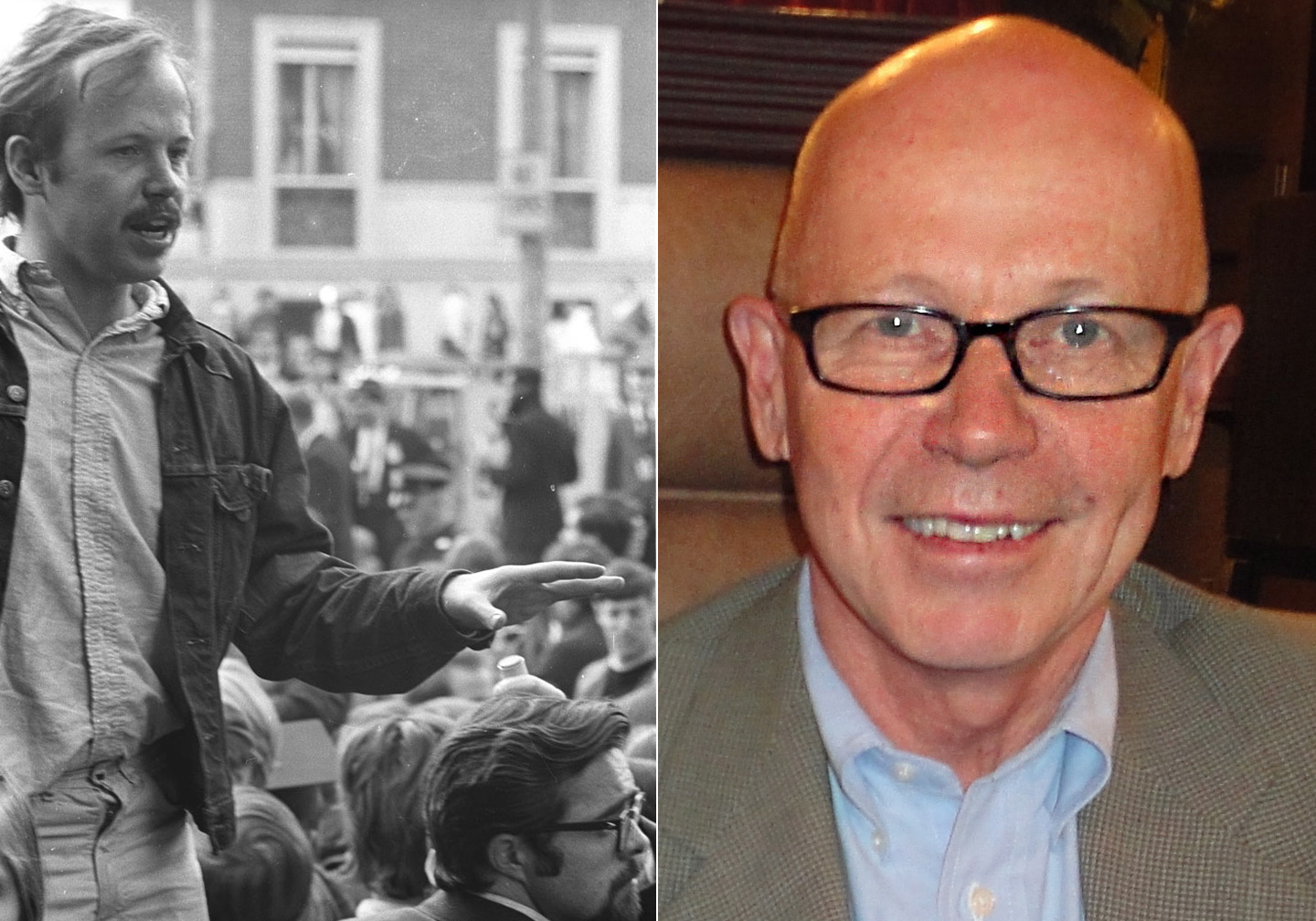
Steven Halliwell might be our ambassador to Russia — had there been a revolution in the U.S.A. in the 1960s.

A member of SDS, and a protester arrested at Columbia in the spring of 1968, Halliwell has long been an outlier. In his SDS days, while most of his friends and comrades were gazing at China, Cuba, and Vietnam, Halliwell learned Russian and turned his eyes on Russian history, the Soviet Union, and the Kremlin.

Revolutions — Russian and American — have occupied his thoughts ever since 1963, when he traveled to the U.S.S.R, as part of the first student exchange program between the U.S. and the Soviet Union that helped, albeit in a small way, to end the Cold War.

The names have changed, of course. It’s not the U.S.S.R. or Leningrad anymore. Still, over the course of the past 50 years, Halliwell has gone back to the same familiar and yet not so familiar places dozens of times as a student, tourist, and entrepreneur.

Few Americans in or out of academia and in or out of the diplomatic service know Russia as well as he does, and few are as emotionally and intellectually connected as he is to the land of Tolstoy, Dostoevsky, perestroika, Putin, and the new generation that’s demanding human and individual rights.

Born in New Jersey in 1943, Halliwell attended Wesleyan and Columbia, taught college in Vermont, and worked at the United Nations when Andrew Young was President Jimmy Carter’s UN Ambassador. In 1985, he joined Citibank and helped to open the Soviet Union and Eastern Europe to American enterprise.

In 1994, he left Citibank to become the Chief Financial Officer of a U.S. Government-backed investment fund for Russia. From 1997 to 2010, he ran his own investment firm, River Capital International.

With his wife, Anne, he lives outside New York, not far from his children and grandchildren. I’ve known the Halliwells since the 1960s, and, while they’ve moved on from their days in SDS, they’re as much a part of SDS history as the SDS members, such as Mike Spiegel, Bob Pardun, and Carl Davidson, who served with Steve on SDS’s National Interim Committee in 1967-1968.

On the cusp of 70, he might be too old to serve as the U.S. Ambassador to Russia. Moreover, the current U.S. Ambassador, Michael McFaul, is a friend. Behind the scenes, and at meetings, as well as over the Internet, he provides a living link between New York and Moscow, Americans and Russians, and between the land of Tolstoy and Dostoevsky and the land of Herman Melville and Walt Whitman.

Steven Halliwell: To Russia with love.

Jonah Raskin: For decades, I’ve been listening to you tell memorable stories about Russia. What really sticks in your mind?

Steven Halliwell: Some moments are fun, others are sad. Lots of people died in the 1990s, including a banker who was a friend. The head of a company I knew was shot leaving his apartment and his seven-year-old daughter was killed. Early on, I took Russians through a Citibank trading floor — a real market in action — and inevitably they’d say, “it’s too noisy for anyone to work!”

You were in SDS and part of the New Left. How did that experience help you to understand Soviet communism?

Complete disconnect. Communism was a way to force industrialization and the modernization of agriculture. The New Left was about post-industrial society, and how to manage the incredible surplus created by technology in a democratic order. I found U.S.A. “Communists” – members of the Communist Party and Progressive Labor – to be troglodytes.

How did your New Left experience blind you to Russia?

Despite my training in Russian history in the 1960s, I thought that perestroika could lead to a new democratic political order and a market economy. Russians were more practically minded. They focused on surviving the collapse of the Soviet system and getting goodies — TV’s, laptops, pretty clothes, makeup, and credit cards — from what they call the “civilized” world.

In 1968 and 1969, when activists and protestors thought of Russia they thought about the Russian Revolution, Lenin, and the Winter Palace. Now, if they think about Russia it’s probably about corruption, vast fortunes, and alcoholism. What’s the real Russia?

Alcohol was always an issue, and Russia has always been corrupt, including during the Soviet period. If a Politburo member needed surgery in London, they’d have an Aeroflot jet ready in hours. Same old same old.

As a student of history in the 1960s what drew you to the history of Russia and the Soviet Union?

Growing up in a WASP family in the 1950’s, there was something liberating about Dostoevsky, Tolstoy, and the big questions they posed in their writing. At the same time, Russia was the Enemy in the Cold War. I found the tension fascinating and started to learn Russian at 14.

It must be difficult to obtain accurate information these days from Russians about their own society because it’s closed in many ways. How do you do it?

I could tell you… but then I would have to kill you. But seriously, the blogosphere in Russia is very active. Of course, you never use Putin’s name in a phone or Skype call because that’s what the monitors are listening for.

I’ve heard you talk about the “backwardness” of Russian society. What do you have in mind?

Russia is so backward it might be forward. Russia, because of its geographical location, has been working for hundreds of years on how to reconcile Confucian, Greco-Roman, Islamic, and Judeo-Christian traditions. What Russia shows us is that there’s no easy fix. Getting to a common global discussion is the biggest challenge of the 21st century.

How would you describe the Obama administration’s policy vis-à-vis Russia?

Michael McFaul, Obama’s ambassador to Russia and a friend, is smart, pragmatic, and youthful. He and Hillary Clinton have the right mix of pressure and conciliation. The missile shield in Eastern Europe is the most volatile and hardest issue to address.

Is the ruling class of Russia essentially like the American ruling class?

I don’t believe there is an American “ruling class.” Russia’s current rulers are heavily skewed toward ex-KGB people who only know how to take value, not add it. There’s a heavy criminal element at the top.

What does recent Russian experience tell you about democracy as a political system?

The most common slogan in the recent Russian demonstrations was “We are not cattle” — an indication of the growing sense of individual rights. Russia has no history of incremental reform, which will make getting to democracy very difficult.

What do you love most about Russia and Russians?

Anne and I have met many beautiful, talented, dedicated people. There’s a creative intensity that goes hand-in-hand with hard-nosed survival in a dysfunctional world.

What do you most detest about Russians?

“Detest” is the wrong word. A young Mexican Sovietologist wrote an insightful article entitled “Russia as a Borderline Personality.” The damage done by so many years of terror, corruption, absolutism, and murder is still very pervasive.

Did the fall of the Soviet Union influence the lives of ordinary Russians?

It’s given the urban younger generation a chance to see how the rest of the world looks. Forty percent of 18 to 24 year olds say they’d like to emigrate. For poorer rural and industrial working people, the loss of the old subsidies (which were unsustainable) has been a nightmare. Essentially, power based on political standing has been traded for power based on money.

Do you see parallels between American and Russian radicals?

The history of the Russian Revolution, which I was studying at Columbia during the heyday of SDS, showed me that a student movement that idealized the downtrodden (in the 1860’s) could turn to underground violence (in the 1880’s). The same kind of cult-like idiocy in the U.S. destroyed a broad-based movement.

Is it possible for western investment in Russia to benefit Russian society as a whole and not simply a small elite?

There has already been a huge increase in the standard of living in Russian cities, thanks in large part to Western investment. The Russian elite has benefited, not from Western investment, but from stealing export dollars. Russia exports seven million barrels of crude oil every day. At $100 per barrel, that’s $700 million dollars a day of hard currency. There are a handful of decent Russians managing profitable businesses that raise the standard of living, but most of the oligarchs with access to the huge flood of resource dollars use it to buy respectability in Europe and the U.S.

How do you feel when you see images and read stories about Russian citizens protesting Putin and his policies?

I hope it continues. Putin can’t tolerate widespread middle class dissent. He will crush the Internet if that proves to be an organizing tool. There are reports that Putin plans to create a National Guard of 300-400,000 troops answerable directly to him. He has also moved the former head of emergency response into the governorship of Moscow. Not good signs.

What kinds of legacies still exist from the days of the Cold War and the U.S./ U.S.S.R. rivalry?

As long the U.S. is a global power, there will always be issues and rivalries. At some point, the overseas Russian communities will play a seminal role in changing the place. As we learned in the civil rights movement, you can never break a police state from the inside alone. Overseas Russians will at some point take on the challenge of bringing Russia into the 21st century.

If you could be in Moscow next week what would a day in your life look like?

I have partners there and there are always interesting projects to consider. Business meetings are pretty much like here, as long as you stay away from government toadies. There are great restaurants now — when I went to Moscow for Citibank in 1987, there was only one privately owned restaurant in the whole city. Now there are thousands.

You’ve known New York bankers and Moscow bankers? Are bankers more or less the same here and there?

Bankers are people — some are good guys, some are rotten. During the 1990’s, there was much more gangster-type banking in Moscow with automatic weapons at the doors. Today, the biggest growth area is consumer finance — home mortgages, credit cards. There is still a very stunted corporate lending market, because companies are very opaque and lending is politicized.

What is it that links the Steve Halliwell of SDS days with the Steve Halliwell who has invested money in the Soviet Union and Russia? Are you the same person?

The main link is Anne, my partner and love of 44 years. We came to SDS from very different backgrounds and personal agendas, but somehow it has worked. She and I have evolved in our views over the years, as have our former comrades, but at the core we’re still the same people who fell in love inside the movement. It’s been and continues to be a fascinating journey.

[Jonah Raskin is the author of For the Hell of It: The Life and Times of Abbie Hoffman, and editor of The Radical Jack London: Writings on War and Revolution. A former Yippie, he is a a regular contributor to The Rag Blog. Read more articles by Jonah Raskin on The Rag Blog.]

The Rag Blog

Posted in Rag Bloggers | Tagged , , , , , , , , | 3 Comments

BOOKS / Ron Jacobs : The Limbo of Death Row

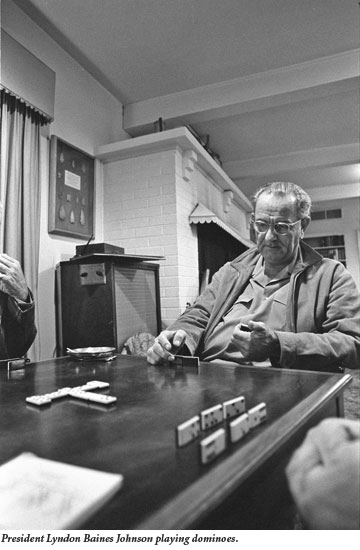
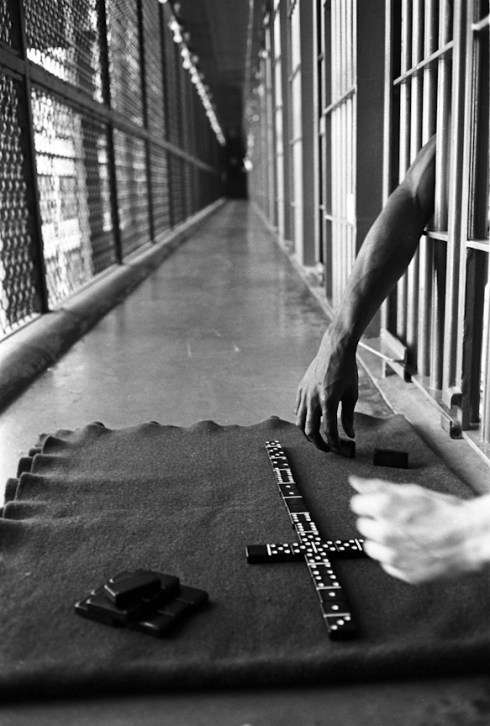
Image below (inset): ‘Dominoes. Death Row, Texas,” 1979. Photo by Bruce Jackson from In This Timeless Time. Image from Prison Photography.

‘In This Timeless Time’:
The limbo of Death Row

The life and surroundings can be summed up in the words of prisoner Excell White: ‘The gloom,’ he tells the writers, ‘wasn’t anything but emptiness.’

By Ron Jacobs | The Rag Blog | May 31, 2012

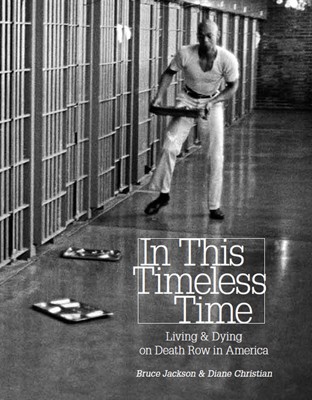
[In This Timeless Time: Living and Dying on Death Row in America by Bruce Jackson and Diane Christian (2012: University of North Carolina Press); Hardcover; 256 pp.; $35.]

The death penalty is a fact of life in the United States. Despite the actions of many well-intentioned people, these premeditated murders continue to take place at a shameful pace. The fact that the death penalty does exist has brought many young people to question the morality of a system that supports and even champions execution.

Unlike the other form of murder carried out by the state — war — the death penalty is harder to rationalize for many people. The act of intentionally putting an innocent human to death; the fact that life imprisonment is a worse punishment to many; the applied racism of the death penalty’s assignments; and the sheer pointlessness of execution by the state has caused many a thoughtful person to come out in opposition.

Those who are condemned to die in the United States wait out their time in parts of certain prisons. Those places are commonly known as death row. Occasionally, these unremembered places are the subject of books and movies. Sometimes, they are also the focus of the infrequent sociological survey.

While the latter surveys do fairly well at creating statistics and prognostications, it is the fictional renderings that do better in evoking the life in these prison tiers of gates and concrete. The despair and dashed hopes; the regret and the lack thereof; even the infrequent joy and laughter.

An exception to the factual/fictional disparity can be found in the recently published book from Bruce Jackson and Diane Christian. Back in 1979 Jackson took his camera into Ellis Prison in Texas and photographed men living on death row there. These photos were an adjunct to a documentary film he and Christian would release in the early 1980s.

The film features interviews, commentary and reflections of the inmates and the filmmakers. The book, titled In This Timeless Time: Living & Dying on Death Row in America, although just published, is also part of that documentary effort. It is a fitting coda.

Designed something akin to a coffee table book, In This Timeless Time is made up of three parts. The first part includes a selection of the aforementioned photographs. The photos are accompanied by text. Some of that text is narrative describing the physical setup of the part of the prison where death row is located. Other bits describe the interior of certain prisoner’s cells and the prisoners. Still other text describes the prisoners’ limited lives while still other text includes the words of the prisoners themselves.

The life and surroundings described can be summed up in the words of prisoner Excell White when he talks about his introduction to the row: “The gloom,” he tells the writers, “wasn’t anything but emptiness.”

The second part of the text is titled “Words.” That is what it is. Words from the prisoners talking about the other prisoners. Words from the writers about the prisoners and their particular cases. Words describing the legal limbo of a death row when nobody is being killed (the book was begun during the period following the Supreme Court’s suspension of the death penalty in its decision on Furman vs. Georgia), and when executions are taking place.

Last but not least are the words the authors use when writing their impressions of individual prisoners or about the Row itself.

The authors’ description of their work on the Row concludes the book. Gaining the trust of the prisoners and fending off the uneasiness of the guards are two of the dilemmas described by the authors. Overcoming their own fears of being alone with potentially psychotic murderers is another. Less wrenching but interesting nonetheless is the authors’ description of how they made the movie: funding, legalities and the like.

The grand finale is the showing of the film to the inmates. Jackson and Christian admit their fears of the prisoners’ reactions. Indeed, this was present in their minds during much of the process.

There is no way that a subject like death row can be presented with beauty. It is one of the ugliest of humanity’s activities. The inmates are not the most beautiful humans and their crimes are ugly. Yet, they too are human. The authors tell of a man on the Row named Arturo Aranda. Aranda who is well-inked. In other words, he has lots of tattoos.

The last tattoo he was getting before he went to prison was of the Lady of Guadalupe. Because he was arrested for murder, the tattoo is without a face. This image serves as a perfect metaphor for the denizens of death row; for the most part they remain faceless. Jackson and Christian’s book gives some of those men a face. Therein lays its beauty.

[Rag Blog contributor Ron Jacobs is the author of The Way The Wind Blew: A History of the Weather Underground. He recently released a collection of essays and musings titled Tripping Through the American Night. His latest novel, The Co-Conspirator’s Tale, is published by Fomite. His first novel, Short Order Frame Up, is published by Mainstay Press. Ron Jacobs can be reached at ronj1955@gmail.com. Find more articles by Ron Jacobs on The Rag Blog.]

The Rag Blog

Posted in Rag Bloggers | Tagged , , , , , | Leave a comment

RAG RADIO / Thorne Dreyer : Pschedelic Blues Pioneer Spencer Perskin of Shiva’s Headband

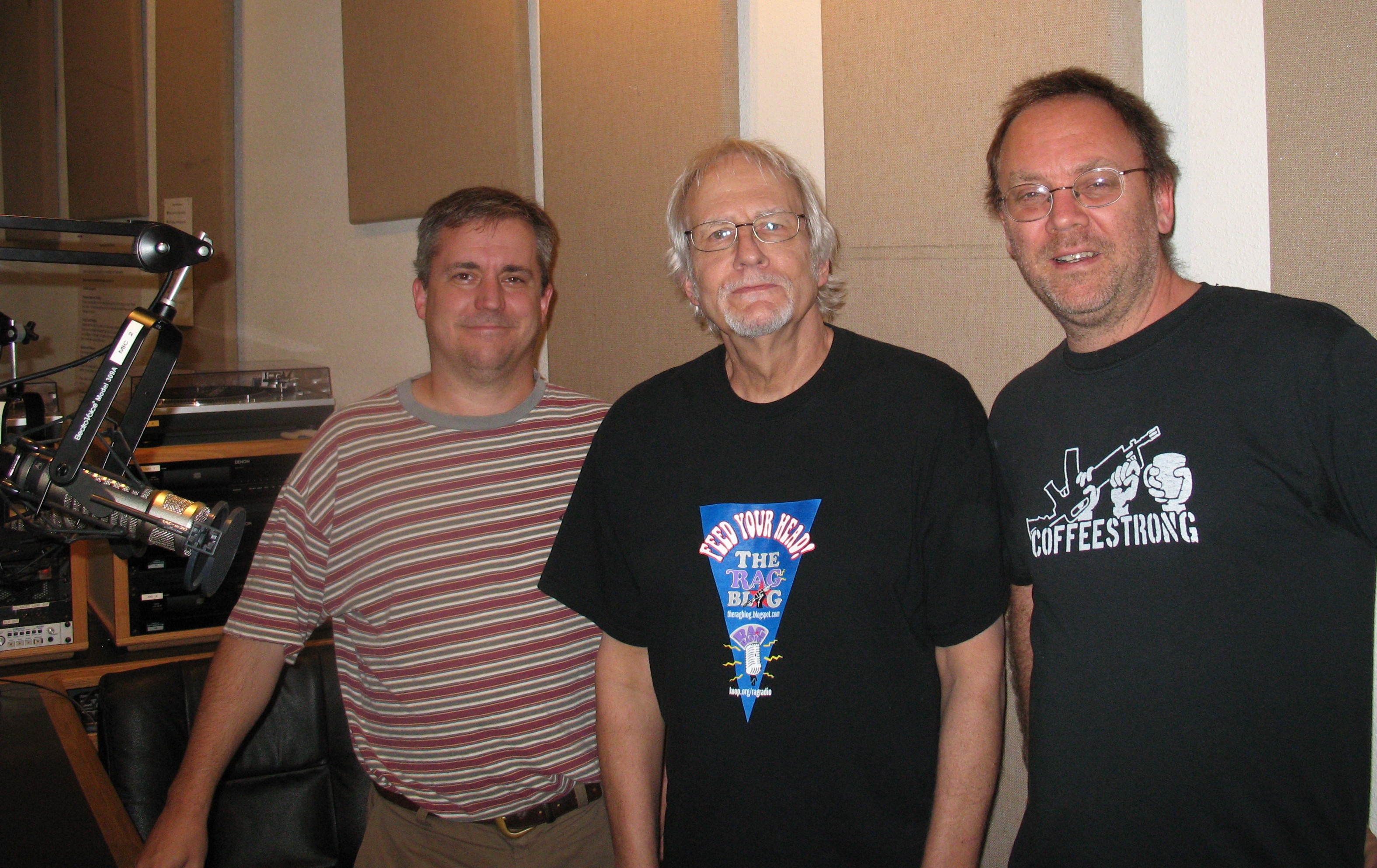
Spencer Perskin of Shiva’s Headband in the KOOP studios in Austin, Friday, May 25, 2012. Inset photos below: Susan Perskin and Shawn Siegel. Photos by William Michael Hanks / The Rag Blog.

Rag Radio:
Psychedelic blues pioneer
Spencer Perskin of Shiva’s Headband

By Rag Radio | The Rag Blog | May 30, 2012

Spencer Perskin, who founded Austin’s historic psychedelic blues group, Shiva’s Headband, was Thorne Dreyer’s guest on Rag Radio, Friday, May 25, 2012, on Austin community radio station KOOP 91.7-FM, and streamed live on the Internet.

Founded in 1967, Shiva’s Headband served as house band at Austin’s original Sixties music hall, the Vulcan Gas Company, and was the first group to perform at the historic Armadillo World Headquarters. Shiva’s played with such luminaries as Spirit, Steppenwolf, ZZ Top, Janis Joplin, Canned Heat, and Steve Miller. Take Me to the Mountains, produced by Perskin for Capitol Records, was the first record released nationally by an Austin band, and the band’s first royalty check provided the seed money to open the Armadillo.

You can listen to the show here:

Trained as a classical violinist, virtuoso musician Perskin plays several instruments, including the guitar and saxophone. At the age of nine Perskin was accepted as a special music student at SMU, and he later studied in the renowned North Texas State music program with classmates like Michael Murphy and Steve Fromholz. Spencer now leads a reenergized Shiva’s Headband that has recently released Shiva’s Headband: The Singles Collection, a limited-edition vinyl picture disc on Bluethroat.

Spencer is joined in the interview by his wife, Shiva’s vocalist Susan Perskin, and keyboardist/singer Shawn Siegel. The show includes live performance with Spencer, Susan, and Shawn. Allan Campbell engineered this show.

Rag Radio, which has aired since September 2009 on KOOP 91.7-FM, a cooperatively-run all-volunteer community radio station in Austin, Texas, features hour-long in-depth interviews and discussion about issues of progressive politics, culture, and history.

Hosted and produced by Rag Blog editor and long-time alternative journalist Thorne Dreyer, a pioneer of the Sixties underground press movement, Rag Radio is broadcast every Friday from 2-3 p.m. (CST) on KOOP and streamed live on the web. Rag Radio is also rebroadcast on Sundays at 10 a.m. (EST) on WFTE, 90.3-FM in Mt. Cobb, PA, and 105.7-FM in Scranton, PA.

Rag Radio is produced in the KOOP studios, in association with The Rag Blog, a progressive internet newsmagazine, and the New Journalism Project, a Texas 501(c)(3) nonprofit corporation. Tracey Schulz is the show’s engineer and co-producer.

Coming up on Rag Radio:

THIS FRIDAY, June 1, 2012: Singer-Songwriter & Peace Activist David Rovics.
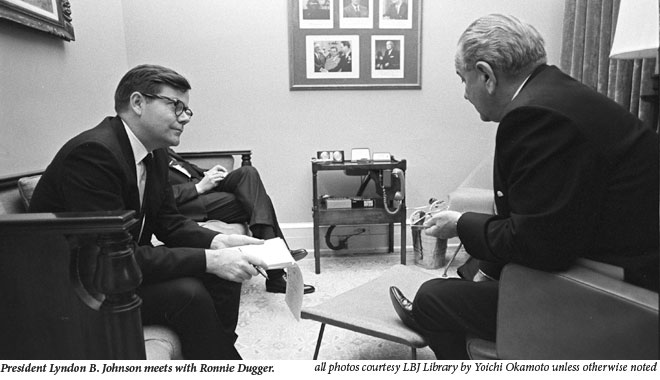
June 8, 2012: Ronnie Dugger, Founding Editor of The Texas Observer.
June 15, 2012: American Botanical Council Director Mark Blumenthal on Herbal Medicine.

The Rag Blog

Posted in RagBlog | Tagged , , , , , , , | Leave a comment

James McEnteer : How Intolerance Is Poisoning the Well

Art by Alice Brickner / Getty / Big Questions Online.

Deadly discourse:
How intolerance poisons our well

Most public ‘discussion’ consists of one side lobbing insults at the other from across an unbridgeable divide. There is little genuine give and take.

By James McEnteer | The Rag Blog | May 30, 2012

Intolerance runs rampant in American public discourse. Blog and article comment threads degenerate quickly into insult and abuse. The most innocuous opinions about almost anything can provoke shrill, scathing attacks. Even fact-based news accounts excite condemnation as biased or irrelevant.

Deep reserves of anger apparently abide in the U.S. population, ready to explode into violent rhetoric at the smallest transgression — real or imagined — against the responder’s hobbyhorse, be it guns, religion, sexuality, race, the environment,or whatever else.

Three related phenomena largely account for this inflammatory incivility: a meretricious media, more desperate than ever to survive; irresponsible religious and political figures, willing to enunciate increasingly extreme and outrageous views for high-profile notoriety; and the nature of the internet itself, the most powerful and pervasive system of communication yet devised.

The internet connects everyone to everyone else, conjuring global intimacy. Thanks to cell phones and YouTube, we can all be “in the moment” when a woman lets fly a racist rant in the London underground or a mob storms a public square in Madrid or Cairo or Oakland or a crime occurs somewhere on the planet. Every place appears as near or far as any other, here on our screen.

Modern technology can summon up flash mobs or instant wads of cash to protest or abet incipient events. We can weigh in instantly to “like” or condemn what we see or hear, calling forth responses to our own responses, ad infinitum.

Aided by the anonymity of user names, the level of interchange on comment threads trends downward over time, not up, producing more heat than light. Our sense of familiarity, however illusory, with events or newsmakers, breeds a primal contempt that tends to focus personal and political frustrations into immoderate attacks that in turn provoke others.

Irresponsible political heavyweights also demean our discourse. Mitch McConnell declared that the top priority of Congressional Republicans was to make sure Obama is a one-term president. That’s a pathetic partisan agenda for a so-called major party leader, considering the many challenges we face as a nation and a species.

Of course such a lame and limited ambition is far easier to accomplish than trying to restore employment, boost the economy, reduce military spending, promote environmental health, improve education, etc. etc. But McConnell and his ilk are not really out to better the lot of average Americans. Their goal is to serve their sponsors and masters, who enrich and enable them.

Pat Robertson and Franklin Graham rail against Muslims and homosexuals from pulpits they call “Christian,” though the blind hatred they flaunt contradicts the love and tolerance Jesus Christ actually espoused. Phony Christian bigots like Graham and Robertson — and the Westboro Baptist Church — poison our atmosphere and disinhibit their followers to commit acts of violence.

These false prophets spew enmity and discord in the name of religion, like the killers of abortion doctors who consider themselves “pro life,” a murderous irony they have not the eyes to see.

Media feed on conflict as much as the Pentagon does and, like the military, may sometimes provoke it for their own ends. To whip up interest in the “information” they peddle for (decreasing) profit, media amplify the divisive words of bigots, fools, and scoundrels (with someone like Robertson, they get a three-fer) and then play up the predictably outraged responses.

Rupert Murdoch’s Fox Network and numerous publications give platforms to political zombies like Karl Rove, Newt Gingrich, and Sarah Palin, to rouse the faithful and enflame opponents. Murdoch resuscitated Gingrich after his well-deserved political demise, granting him an artificial afterlife.

Murdoch’s largesse enabled the foredoomed Gingrich campaign for the Republican presidential nomination. The ethically impaired former House Speaker made over-the-top remarks that provided provocative headlines, enlivening the deadly primary process, feeding the Murdoch machine.

A recent British government report declared Murdoch unfit to lead a major corporation. But who will stop him? Murdoch is a major polluter who ought to be fined for degrading our atmosphere.

Like the irresponsible political and religious figures they interview, media “personalities” feel a need to top one another or themselves, to raise the decibel level to maintain their visibility. These talking heads give their fans permission to speak and behave outrageously. After he shot an unarmed black teenager to death, George Zimmerman sought out Fox stalwart Sean Hannity for counsel. Why?

The Trayvon Martin killing has become a flashpoint for issues from gun rights to racial profiling. Martin and Zimmerman turned into instant symbols and martyrs for different points of view. Some public figures donned hoodies in support of Martin, while one company does a brisk business marketing rifle targets with a hooded figure in their bull’s eye.

Events like the Trayvon Martin murder are difficult to discuss — or even to perceive — on their own terms, devoid of the biased context into which such incidents “fit.” Our preconceptions determine the meanings of everything that is said or done.

Most public “discussion” consists of one side lobbing insults at the other from across an unbridgeable divide. There is little genuine give and take. Thesis and antithesis rarely move toward any synthesis. They merely reenforce entrenched beliefs. Media promote and thrive on this sort of futile noise and conflict, a circus that distracts from the decreasing abundance of bread, enabling business and politics to proceed as usual with minimum interference.

Our lack of civility has consequences. Bullying — including cyber-bullying — of school-aged children by their peers (and in some cases, the parents of those peers) causes terrible harm, including suicide and murder. This trickle-down meanness merely follows the examples set by public figures in media and politics who belittle others for their religious preferences or sexual orientation.

With fewer defenses, our children are more likely to suffer the sometimes fatal effects of our toxic emotional environment before the rest of us. Mentally unstable individuals like Jared Loughner, who killed six people and injured 14 in Tucson in 2011, also absorb the free-floating anger around them without a clear sense of what it signifies or where to direct it.

Even adults in traditionally calm corners of this world, such as the fanatical anti-Muslim Norwegian who murdered 77 of his countrymen to avoid multicultural contamination, can be twisted by the overheated sentiments of foaming politicians, amplified by media. Who will take responsibility for such consequences?

There is a high price to be paid for allowing violent, hateful speech to predominate over more rational forms of public discourse. I fear we have only begun to pay it.

[James McEnteer is the author of Shooting the Truth: the Rise of American Political Documentaries (Praeger). He lives in Quito, Ecuador. Read more of James McEnteer’s articles on The Rag Blog.]

The Rag Blog

Posted in Rag Bloggers | Tagged , , , , , , | 1 Comment

Harry Targ : Why Wisconsin is Important

The Capital in Madison, Wisconsin, on Saturday, March 10, 2012. Photo by Barbara Rodriguez / AP. Image from The Nation.

Wisconsin is important

The defeat of Walker and his Republican legislative colleagues will give energy and enthusiasm to grassroots movements… and will prove that people-power can trump money-power.

By Harry Targ / The Rag Blog / May 30, 2012

Progressives look to cities and states that have been models of legislation and activism for inspiration. Of course, East Coasters look to New York City and West Coasters get their ideas from the Bay Area. If you grow up in “the Heartland,” that is the Midwest, you take from the historic example of certain states, such as Wisconsin.

A long time ago a noted political scientist, John Fenton, studied the politics of six Midwestern states, identifying central features dividing them. The so-called “job-oriented states,” Indiana, Illinois, and Ohio, were driven by money, power, and politics narrowly defined. The “issue-oriented states,” Wisconsin, Michigan, and Minnesota, had a politics that was significantly shaped by political ideologies and the promotion of various progressive values and principles.

Taking Wisconsin as a prime example, the state has historically distinguished itself by recognizing the right of public sector workers to form unions, the election of a Socialist mayor in Milwaukee, and the creation of a viable Progressive Party with presidential candidate Robert La Follette, Sr., winning 17 percent of the vote in 1924 (the state of Wisconsin was carried by candidate La Follette).

Madison, Wisconsin, was one of the homes of the intellectual and activist ferment that became “the 60s.” The “revisionist “school of scholarship concerning the United States as an imperial power was popularized in the history department of the University of Wisconsin. Among those activists that did some reading, William Appleman Williams’ ground-breaking, The Tragedy of American Diplomacy, helped to reshape thinking about United States foreign policy.

One of the premier journals of the early New Left, Studies on the Left, was initiated on the Madison campus. In addition, many remember Wisconsin politicians who crossed the line from Democrat to progressive over the years, from William Proxmire to Russ Feingold to Tammy Baldwin.

So watching the rise to power of Scott Walker and a bevy of tea party Republicans in 2010, such that the entire state government apparatus came under their control, was a puzzle to casual Heartland observers. Of course, progressives forget that Wisconsin was also the home of the very popular, at least for a time, Senator Joseph McCarthy who set the standard for public condemnation of those who disagreed with him and his right-wing colleagues and followers. Therefore, like most places, the political landscape in Wisconsin has been contradictory.

The Wisconsin contradiction has been no more glaring than during the time frame from early 2011 until today. The Walker administration, with no effort at dialogue and compromise, signed legislation denying most public sector workers the right to organize. Walker later worked to repeal existing legislation requiring equal pay for women. He, and his Republican legislature, embraced completely the legislative package of ALEC, the American Legislative Exchange Council, to reverse the populism that shaped Wisconsin’s political tradition.

Progressive Party presidential candidate Robert La Follette, Sr. Image from the Clarence Darrow Digital Collection / University of Minnesota Law Library.

These moves sparked an enormous outrage and political mobilization of opponents that fundamentally brought the spirit of Arab Spring to the United States. It can fairly be said that there was an inspirational link from Tunisia; Tahrir Square in Egypt; to Madison, Wisconsin, Ohio and Indiana; to the Dream Coalition; and most recently to the Occupy Movement. The Wisconsin opposition to the near-fascist agenda of Scott Walker and his minions has essentially “brought the war home,” as a 60s slogan defined it.

But now the passion for fighting back against reaction and moving the country back on the path to progress is being threatened. Just a week from now Wisconsin voters will decide whether the recalled Governor Walker will be reelected or be replaced by Democratic Party challenger Tom Barrett. The polls look like Walker could win reelection.

It is true that the right-wing billionaires — the Koch brothers and others — have outspent the Barrett forces 25 to 1. In a capitalist system money talks but money does not always determine the outcome. People-power which led to the recall of Walker in the first place overcame money in April. And people-power must be the main resource if Barrett is to defeat Walker and the right.

However, the national Democratic Party, from the Democratic National Committee, to President Obama, to Vice President Biden, to the Progressive Caucus in the House, should be involved. And it remains a puzzle why Republican governors and billionaires are campaigning in Wisconsin while prominent Democrats are not visible with the exception of former Wisconsin Senator Russ Feingold.

Progressive forces around the country need to understand that the future of national, as well as state, politics will be affected by the outcome of the Walker/Barrett race. A Barrett victory could begin to reverse the process of assault on public sector unionism (and not just in Wisconsin). A Barrett victory might give energy to those in Wisconsin and all over the country who oppose attacks on public education (K-12, and university levels). A Barrett win would be an important step in the long-term “fight-the right” campaign which will continue even beyond the 2012 presidential election.

Perhaps most important, the defeat of Walker and his Republican legislative colleagues will give energy and enthusiasm to grassroots movements which began in Wisconsin and spread like wildfire around the country. It will prove that people-power can trump money-power. And, it will give proof once again that so-called “inside/outside” strategies remain useful tools for organizing. That is, as progressives build social movements, they use the electoral processes at their disposal to bring alternative visions to the people.

And, it needs to be said that a defeat for reform will be a defeat for progressive forces, not only in Wisconsin but nationally.

[Harry Targ is a professor of political science at Purdue University who lives in West Lafayette, Indiana. He blogs at Diary of a Heartland Radical — and that’s also the name of his new book which can be found at Lulu.com. Read more of Harry Targ’s articles on The Rag Blog.]

The Rag Blog

Posted in Rag Bloggers | Tagged , , , , , , , | 2 Comments

Bob Feldman : Socialism, Women’s Suffrage, and the NAACP in Texas, 1890-1920

Socialist Eugene V. Debs, top center, visited Texas Socialists. Photo courtesy of Marty Boswell, a descendent of E.O. Meitzen of Hallettsville, who helped organize the Farmers’ Alliance. Image from labordallas.org.

The hidden history of Texas

Part IX: 1890-1920/6 — Socialism, women’s suffrage, and the NAACP

By Bob Feldman | The Rag Blog | May 28, 2012

[This is the sixth section of Part 9 of Bob Feldman’s Rag Blog series on the hidden history of Texas.]

During the period between 1890 and 1920 there was much dissatisfaction among Texas workers and farmers with how capitalist society treated them. So it’s not surprising that political support for an anti-corporate electoral alternative third-party to the pro-corporate Democrats and Republicans — the Socialist Party — began to develop in Texas by the beginning of the 20th century. As F. Ray Marshall’s Labor in the South noted:

The Texas Socialist Party… was a member of the radical wing of the national party. E.O. Meitzen of Hallettsville, a member of the Grange, who helped organize the Farmers’ Alliance in Fayette County, and edited a German Populist paper (Der Anzeiger) during the 1890’s, was an active Socialist, and was secretary of the Renters Union, formed by Texas Socialists around 1909. Meitzen’s activities were continued by Thomas Hickey, a lecturer for the Social-Democratic Party in the south during the early 1900’s. Hickey published a magazine, The Rebel, from Hallettsville for many years… In 1912, Eugene V. Debs, the Socialist candidate for President of the United States [got] about 9 percent of the Texas vote…

According to the labordallas.org website, the circulation of The Rebel “went over 20,000” before it “was suppressed by the United States government as World War I began and never was reborn.” The same Texas labor history website also recalled that Texas Socialist Party leader Meitzen “was elected County Judge in LaVaca County and… gained 11.7 percent of the votes in the governor’s race” in Texas in 1914, “was shot by a sheriff he had accused of `losing’ important records concerning county monies” that same year, and “survived the shooting and other physical assaults” before he “died in Houston in 1934.”

Dissatisfied feminist white women in Texas also began to organize during the 1890 to 1920 historical period. As Randolph Campbell’s Gone To Texas observed, in Texas the white feminist movement “stirred slightly in 1903 with formation of the Texas Equal Suffrage Association” and “suffragettes by 1916 formed 80 local chapters and claimed 9,500 members for their statewide organization.”

In Austin, the Austin Woman’s Suffrage Association was founded in 1908; and when the wife of Austin ’s then-Superintendent of Schools, Jane McCallum, became the Austin Woman’s Suffrage Association’s president in 1915, this group had 80 members.

So, not surprisingly, the Texas state legislature soon passed an act in 1918 which allowed white women in Texas to also vote in Texas primary elections; and after a May 1919 referendum in Texas, white women also were given the right to vote in U.S. presidential elections, when Texas became the ninth state to ratify the 19th amendment to the U.S. Constitution.

Ironically, “among those Austinites who supported the women’s voting rights movement was Adele Burleson, wife of Woodrow Wilson’s postmaster general [whose] husband urged the president to introduce racial segregation into the federal civil service,” according to David Humphrey’s Austin: An Illustrated History.

The same book also observed that former Austin Mayor A.P. Wooldridge “similarly sought to expand the rights of women while he limited those of blacks” and that “he advised a group of Austin blacks in 1919 [to] `keep out of politics’” and told them not to forget “that whites `will tolerate no idea of social equality.’”

After the Democratic Wilson Administration decided to involve the U.S. military in the European war in 1917 — over 197,000 people from Texas were either drafted into the military or volunteered during World War I. And according to Alwyn Barr’s Black Texans, “Negroes provided about 25 percent — 31,000 men — of the troops called up from Texas, though they formed only 16 percent of the state’s population” at that time.

Most draftees and volunteers from Texas served in the U.S. Army during World War I and “more than 5,000 men and 1 nurse” from Texas “died while in the service, most losing their lives in the great influenza epidemic of 1918,” according to Gone To Texas.

And the free speech rights and civil liberties of anti-war activists and dissidents in Texas who opposed U.S. military intervention in Europe during World War I were curtailed after the U.S. Congress passed its Declaration of War in 1917. According to the same book, “a special session of the… state legislature… passed espionage and sedition laws that made it a crime to criticize the U.S. government, its officials, the flag, or soldiers;” and the University of Texas regents “fired a well-known anti-war professor.”

African-American soldiers who were stationed in Texas after the U.S. military entered World War I also apparently challenged the racism of the Houston police department and white supremacy in Texas in a militant way in August 1917. As Gone To Texas recalled:

On Aug. 23, 1917, Houston police arrested a black soldier and then fired at and arrested a black military policeman who went to inquire about the first serviceman…The men still in camp… decided to march on the police station to secure the MP’s release… Gathering rifles, the soldiers… moved toward downtown Houston… killing 15 whites and wounding 12 others. Four of the soldiers also died…

But the U.S. Army subsequently found 110 of the African-American soldiers involved in this apparently anti-racist protest “guilty of mutiny and riot” and “19 were hanged and 63 received life sentences,” according to the same book.

The police had also “roughed up [a] black woman” on Aug. 23, 1917, according to Black Texans,  and the incident “stimulated a retaliatory raid by about 150” African-American troops. So, not surprisingly, after World War I ended, African-Americans in Texas “organized an Equal Rights Association to promote democratic government and equal justice” in Texas in 1919 — the same year that there were also anti-black race riots by some white Texans in Port Arthur and Longview (where homes of African-Americans were burned), according to the same book.

And according to Merline Pitre’s In Struggle Against Jim Crow: Lulu B. White and the NAACP, 1900-1957:

The Houston Riot of 1917 served as a catalyst for the establishment of the Houston chapter of the NAACP. Investigating the 1917 riot, NAACP field worker Martha Gruening found the time ripe for organizing a Houston chapter… Shortly after Gruening’s trip to Houston, M.B. Patten, a postal worker… called a meeting of the city’s leading black professionals, clergymen, and business people… Subsequently the Houston chapter of the NAACP was established on May 31, 1918… By the end of 1918, membership in the Houston branch had reached 414…

By 1919, according to Black Texans, 31 chapters of the NAACP existed in Texas “with 7,000 members — over 1,000 in both Dallas and San Antonio.” Yet in Austin — which at the time was still just the 10th-largest city in Texas — the following incident happened in August of 1919, according to Austin: An Illustrated History:

John Shilladay, the white executive secretary of the NAACP… journeyed to Austin in 1919 to assist with legal difficulties encountered by the NAACP’s Austin branch… At mid-morning just outside the Driskill Hotel, John Shilladay was assaulted by County Judge David Pickle, a county constable, and several other Austinites…

And that same month Democratic Texas Governor Hobby also warned NAACP national officers that “your organization can contribute more to the advancement of both races by keeping your representatives and their propaganda out of this state than in any other way.”

As late as 1910, Austin still “had virtually no public parks or playgrounds, only two paved streets, and few sidewalks, …refuse accumulated in alleys and was dumped on the banks of the Colorado, [and] the majority of residents still relied on backyard privies in the absence of sewer lines,” according to Austin: An Illustrated History.

[Bob Feldman is an East Coast-based writer-activist and a former member of the Columbia SDS Steering Committee of the late 1960s. Read more articles by Bob Feldman on The Rag Blog.]

The Rag Blog

Posted in Rag Bloggers | Tagged , , , , , , , | 2 Comments

Arson Attack on Women’s
Health Organization in New Orleans

By Jordan Flaherty

NEW ORLEANS — Women With a Vision (WWAV), a New Orleans advocacy and service organization that provides health care and other support for poor women of color, was the victim of a break-in and arson late Thursday night, May 24.

A small organization that has won a national reputation for its work, WWAV was founded in 1991 by a collective of Black women as a response to a lack of HIV prevention resources for those women who were the most at risk: poor women, sex workers, women with substance abuse issues, and transgender women.

WWAV has made national news for leading the fight against Louisiana’s Crime Against Nature Statute, which targeted poor women of color, transgender women, and anyone forced to trade sex for food or a place to sleep at night. The law forced women to register as sex offenders in a state database and placed a “sex offender” label on their drivers license, among other requirements.

With the grassroots leadership of WWAV, a national coalition that also included Center for Constitutional Rights, Loyola Law School and police misconduct attorney Andrea Ritchie was able to get the law off the books and has won a series of further victories in the process of removing the sex offender registration requirements for those convicted in the past.

The attack seemed political in its nature, directly targeting the crucial information, files, and materials needed for WWAV’s work. According to an email report from Bill Quigley, a social justice attorney and friend of the organization,

Major fire damage was done to a room which contained education and outreach materials. The arsonist seemed to have deliberately targeted this room. Destroyed were: three plastic and silicone breast models which were used to help people learn how to do self-examinations for breast cancer; a plastic pelvic model of a vagina; a two feet by one and a half foot plastic model of a woman’s reproductive system; boxes of male and female condoms; flip charts demonstrating the dangers of sexually transmitted diseases and HIV; several wooden penises which were used for condom demonstration; and boxes of educational materials.

The fires in that room seem to have been set with some accelerant and scorched the walls, ceiling fan and ceiling and destroyed everything in the room….The offices were ransacked leaving drawers pulled out and papers and files on the floor. A TV and a laptop were taken but many valuables were left including computer monitors, office equipment, even some beer left over from a reception held earlier in the week. Several small fires were started inside the offices, in the bathroom, the hallway and in a sitting room.

News of the attack has sent shockwaves across social justice communities around the U.S., and offers of help and donations have been coming in, but much more is needed. The fires have put the organization out of business at that location. They are seeking emergency temporary new quarters, as well as donations of clothing, supplies, and more. The organization has released a letter that lays out many of their needs.

In a video released on Friday afternoon SWWAV executive director Deon Haywood shows the damage and discusses the effects, concluding, “We are fighters, we are warriors here at Women With a Vision, and we continue our work.” For the official statement from WWAV, see this link.

[Jordan Flaherty is a journalist based in New Orleans, a producer for Al Jazeera, and author of the book Floodlines: Community and Resistance from Katrina to the Jena Six. He can be reached at neworleans@leftturn.org. Find more articles by Jordan Flaherty on The Rag Blog]


Type rest of the post here

Source /

The Rag Blog

Posted in RagBlog | Leave a comment

Kate Braun : Invoke Maiden Goddesses During Second Quarter Moon

Waxing gibbous with cirrus clouds on a Wednesday evening. Photo by Bob King / Astro Bob.

Moon Musings:
Second Quarter Moon
(May 29 – 31, 2012)

By Kate Braun / The Rag Blog / May 28, 2012

Second quarter moons are best celebrated between 10 and 11 p.m. Invoke all maiden goddesses such as Artemis and Branwen. In addition to the color appropriate for the day you choose, you may also incorporate the colors white (for pure intent), purple (for spiritual inspiration) and/or pale orange (for success).

Second quarter moons, also called waxing gibbous moons, are times to consider growth: where would you benefit from growth in your life, what plants or seeds should be put into the garden (if you do not already have night-blooming plants in your garden, this would be a good time to plant some or sow some seeds), what areas of your life would benefit from support and nurturance, what new projects should be begun?

As you contemplate possible plans, remember that Juno, Pluto, and Venus are currently retrograde; I strongly recommend that you consider the retrograde influences as well as the second quarter moon influences as you choose the day to open yourself to Lady Moon’s energies.

 “Retrograde” refers to the seemingly reversed motion of the planets and asteroids in their orbits. Forward-moving planets and asteroids are said to go “direct,” the opposite movement is called “retrograde.” All planets and asteroids retrograde at regular intervals and retrogrades generate the opposite affect of direct movement.

Juno, an asteroid, and Venus, a planet, exert influence primarily in our personal lives. Juno retrograde tends to make us more suspicious of our romantic partners, makes it easier to see signs of untrustworthiness — whether those signs are real or imagined. Venus rules the heart, hence her retrogrades make it easier for us to be attracted to someone less worthy of our love and trust. Venus also rules the household, making it easier for us to be tempted to overspend or go deeper in debt when she retrogrades.

Pluto, now considered a lesser dwarf by astronomers (not astrologers, please note), is generally an easy-going influence. When he retrogrades, however, we are forced to focus on whatever it is we have been ignoring; taking care of something “later” can quickly shift to taking care of it “right now” when Pluto retrogrades.

On Tuesday and Wednesday, May 29 and 30, the moon is in Virgo. Moon in Virgo is all about helping, about doing what needs to be done without whining or whimpering. Moon in Virgo is a very good time to pay attention to diet, hygiene, and daily schedules. Focus on YOU, pay attention to DETAILS, make PLANS to benefit you/your situation and then be prepared to ACT upon them.

If you choose to celebrate on Tuesday you should work with Mars energies: focus on overcoming enmity, developing courage, and protecting property. Use the color red, make sure the Fire element is present, and recite your chant five times. If Wednesday is a better day, work with Mercury energies and focus on career-related aspects of your life. Use the color yellow, be sure to feel air moving around you, and recite your chant eight times.

On Thursday, May 31, the moon is in Libra. Moon in Libra is all about balance. If you are aware of imbalance in your life, this is the day to not only honor the Waxing Gibbous Moon but also to make ritual that will restore balance to you.

Moon in Libra will orient you toward dealing with relationships and partnerships, particularly if you are aware of imbalances in these areas. A Libra Moon encourages us to beautify our surroundings (like weed the garden, plant flowers, scrub away dirt) and to surround ourselves with beauty.

If you celebrate on Thursday, make sure your setting is at the least harmonious and at the best beautiful. Remember that “beauty is in the eye of the beholder,” if it pleases you, that’s the more important thing.

If you prefer Thursday for your activities, use Jupiter energy for rituals primarily regarding money and legal matters. Use the color blue, have water present to sprinkle about and on you, and repeat your chant four times.

[Kate Braun’s website is www.tarotbykatebraun.com. She can be reached at kate_braun2000@yahoo.com. Read more of Kate Braun’s writing on The Rag Blog.]

The Rag Blog

Posted in Rag Bloggers | Tagged , , , , , | Leave a comment

Jack A. Smith : 2012 Elections: ‘Another Fine Mess…’

Train car outside Cheyenne, Wyoming. Image from Big American Night.

‘Another fine mess…’
The 2012 elections won’t
bring progressive change

If Obama returns to the White House it will be to the same mess the U.S. finds itself in today. Should Romney get in it will be a mess on steroids.

By Jack A. Smith / The Rag Blog / May 28, 2012

Less than six months before the November presidential elections in an exceptionally distressed United States the narrow, unpleasant parameters of political possibility are emerging. Two alternatives confront the American people, both to the right of center.

  1. If President Barack Obama is reelected, with the Democratic Party retaining control of at least one chamber of Congress, there probably will be four more years of economic stagnation, high unemployment, increasing poverty and inequality, more wars, erosions of civil liberties, and global warming.
  2. If Mitt Romney is elected, with the right/far right Republican Party dominating either House or Senate, every particular of the travail afflicting the country today will be multiplied, with emphasis on fulfilling the desires of the 1% at the expense of the 99%.

What else could be expected during the present conservative era? Paul Krugman, the liberal Nobel Prize-winning economist and New York Times columnist, recently described Obama, whom he supports, as having ruled like “a moderate Republican circa 1992.” Viewing the ultraconservatives, African American professor and left intellectual Cornell West detected “creeping fascism.”

In today’s society — based on gross economic inequality facilitated by a two-party political system spanning center right to far right and where big money is the decisive factor in the electoral process — an ostensibly democratic election can hardly mitigate the worst of abuses afflicting working people and their families, much less bring about substantial reform.

This dreary reality is offset by an important new development. For the first time over the last several presidential elections — when voters are usually cheering exclusively for their candidate — masses of people are protesting in the streets against inequality of income and opportunity, and the class war waged by the wealthy, as well as global warming, ending wars, dismantling NATO, and the like. Some unions, too, are not simply backing Obama but protesting on their own against Wall Street’s depredations.

Thirty years of wage stagnation, the growing rich-poor chasm, evisceration of the so-called American Dream and the long, painful effects of the Great Recession are the objective conditions behind the developing political consciousness of many Americans. Like the Roman Catholic church after widespread evidence of priests molesting children, sacrosanct capitalism — the economic holy of holies — is finally attracting public criticism for its crimes and hypocrisy, not yet on a huge scale, but growing.

The sudden entrance of Occupy Wall Street last September with an open critique of the substantial excesses of capitalism in American society, following the democratic Arab Spring and Wisconsin uprising, has energized much of the left and progressive forces.

Nationwide May Day actions and the 15,000 who demonstrated against NATO in Chicago later in May, among other protests, including civil disobedience, are encouraging harbingers that many more people eventually will take their grievances to the streets and meeting halls, where all social progress begins.

If this momentum manages to continue for the next few years it could become a broad and diverse national movement for social change — but it’s still a big “if.”

The political system seems no longer accountable to the public. Several matters of great importance to the American people do not even figure in this year’s election because both ruling parties basically agree about them and there’s little to squabble about but details. The administration has taken the U.S. up to its elbows in the quagmire of war, so the conservatives cry, “up to the shoulders!” Here are some issues the voters won’t be able to influence at the ballot box:

  • President Obama is presiding over U.S. wars in Afghanistan, Pakistan, and Yemen, killing “terrorist suspects” in Somalia and wherever the CIA’s drones wander. May opinion polls show 66% of the American people want the expensive 10-year-old stalemated Afghan conflict to end, and 40% — many of whom want it terminated now — are strongly opposed. Only 27% support the war, 8% strongly. For all the chatter about nearing the end of the Afghan war at the NATO summit in Chicago May 20, Obama days earlier announced that he was prolonging the war a decade after his “final” pullout date at the end of 2014. An undetermined number of special forces combat troops, military trainers, and CIA paramilitaries will “defend” the corrupt Kabul government until 2024. American taxpayers will foot the bills — several billion a year. Progressive Democrats in Congress seek to restrain Washington’s penchant for wars, but they are consistently ignored and occasionally berated by the Obama Administration for their efforts.
  • Most citizens want cuts in the war budget. But as they go to the polls, the American people will be lugging a military and national security behemoth on their recession-bent backs, costing about $1.2 trillion a year. Rumors of meaningful reductions are illusory. The Pentagon accounts for over half of this amount (about $642 billion for fiscal 2013); the rest goes to Homeland Security, 17 spy agencies, nuclear weapons, interest on past war debts, and so on.
  • Global warming is here and getting worse while the White House is opening up new areas to drill for oil and supports massive development of shale-derived natural gas (which requires fracking), “clean” coal (though it does not yet exist), nuclear power, and dirty tar sands fuel. The Obama Administration’s support for alternative non-carbon development is a token tossed to the environmental movement. Meanwhile, the U.S. — which demands to be recognized as world leader — is using its leadership to undermine international progress in fighting climate change. Big business and Wall St., primarily concerned with expansion and greater profits, heartily approve. Like Rhett Butler, the conservatives, frankly, just don’t give a damn.
  • Since he has borrowed populist phrases for the election, some of them from Occupy, President Obama has finally at least mentioned poverty, inequality, and low wages, but he has done nothing about this situation since taking office and will not put forward an anti-poverty program if reelected. The United States is the most economically unequal of the top 20 advanced, industrialized capitalist economies in the Organization for Economic Cooperation and Development (OECD). The U.S. also pays the lowest wages to its working class compared with OECD countries. Almost 25% of the American work force receives low wages (about $10 an hour down to minimum wage and below), usually without any benefits or healthcare. One in two Americans is low income or poor. The poor account for one in seven people. About 47 million Americans require food stamps to eat. Food stamps are the only “income” for six million of them. This has not come about by mistake; it’s the political system’s payoff to the ever-richer plutocracy and its minions.
  • The Obama Administration has responded more resourcefully to the Great Recession than the conservative opposition, but it only goes a quarter or half way in remedial action, which adds to the stagnation and prolongs the pain for the working class, lower middle class and a large sector of the middle class as well. When Obama delivers on the economy — whether in the stimulus, jobs, foreclosures, bank regulations, or infrastructure — it’s always partial and inadequate because the main concessions are made with the power structure up front before the inevitable compromises with the right wing. There’s a difference between talking like a fighter when trawling for votes, and avoiding confrontation as president. Krugman says “we have responded to crisis with a mix of paralysis and confusion.” This is a major reason why over 22 million Americas need but cannot secure full time work.
  • President Obama has retained all former President Bush’s many erosions of civil liberties, particularly the onerous Patriot Act, and added many of his own, such as when he approved of indefinite detention for suspects, including American citizens. A unique coalition of liberals and conservatives in the House tried to pass legislation to reject indefinite detention May 18, but the effort was defeated. The U.S., under Obama, is becoming a full fledged surveillance state. Tom Engelhardt writes that “30,000 people [are] hired to listen in on conversations and other communications in this country.”
  • Any listing of the important issues that are not part of the election campaign and over which the citizenry has no say must include a foreign/military/national security policy based on exercising world hegemony backed by military power. What’s the “pivot” to East Asia really all about, other than to weaken China in its own sphere of possible influence and cling to world domination? Why has the U.S. been taking steps to bring about regime change in Syria, other than to dominate yet another country and weaken Iran in the process?Why did Obama facilitate a violent civil war for regime change in Libya, other than to gain another oil-rich client state, but this time with an enormous aquifer under its sands which may become more precious than the oil as water supplies dwindle through North Africa? Why did the president get behind the coup in Honduras, other than to dispatch a potentially progressive regime friendly to Venezuela?

Further, why does Obama still maintain Cold War sanctions and a trade blockade against Cuba, other than to win Florida votes in November? Why is Washington supporting the vicious Sunni monarchy in Bahrain which routinely oppresses and attacks the Shi’ite majority seeking equality, other than satisfying the obnoxious rulers of Saudi Arabia? Why is Obama now fighting a war in Yemen, other than to keep the new president, who ran unopposed with strong U.S. support, in his pocket, and to bestow another favor upon the Saudi lords?

Why is the administration seeking to strangle Iran, other than to prevent an Iran-Iraq alliance that might compromise U.S. hegemony in the Middle East, especially the Persian Gulf, through which 40% of the world’s oil must pass? And what is the real purpose of the Oval Office’s new “scramble for Africa,” other than establishing a military presence throughout the continent while elbowing China out of the way to grab natural resources, trade, and markets.

President Obama blames all his failures in office on the conservatives and the recession, and most Democrats accept this explanation. Even progressive Democrats, well aware of Obama’s abundant shortcomings, will cut him slack for fear of the “greater evil.”

The corrosive impact of far right ideology in America must not be underestimated. But despite “Don’t-Tread-on-Me” Tea Party reactionaries and conservative obstruction in Congress, Democrats in the House and Senate remain responsible for many unmet objectives and a weak legislative record.

Led by Obama, they would not fight for progressive goals and spent much of the time trying to fulfill the naïve presidential fantasy of “governing like Americans, not Republicans or Democrats.” Once the conservatives understood Obama would rather compromise than fight they attacked full force and virtually paralyzed the Democratic agenda.

The silence of some Democratic politicians toward the erosion of civil liberties, indifference to climate change, and support for unnecessary wars — a silence many would have broken had a Republican been in the White House — should subject them to publicly wearing scarlet letters inscribed with a “C” (for craven) around their necks.

Despite the stagnant economy — the main issue in the election according to 86% of potential voters — the Republican Party’s lurch to the far right and the bizarre legislative behavior of the Tea Party-influenced GOP House majority led by the ineffable Speaker John Boehner seem to have at least evened the election odds. Stranger things have happened in American politics, but it remains very doubtful that the critically important independent voters will swing toward fringe conservatism. This factor, in our view, gives Obama the edge.

In this connection the April 28 international edition of Britain’s conservative magazine, The Economist, wondered “What happens to a two-party political system when one party goes mad?” The article quotes the following from the new book It’s Even Worse Than It Looks, a product of one author from the establishment Brookings Institute and the other from the conservative American Enterprise Institute: “The Republican Party has become an insurgent outlier — ideologically extreme; contemptuous of the inherited social and economic policy regime; scornful of compromise; unpersuaded by conventional understanding of facts, evidence and science, and dismissive of the legitimacy of its political opposition.”

Many right-wing voters despise Romney, a shape-shifting opportunist whom they distrust, but they will stick with him because Republican leaders and funders insist he has the best chance to defeat the “big government socialist” whom many Tea Partiers scandalously allege conceals his “true” nationality and religion. Those funders, by the way, will see to it that — as opposed to 2008 — the Republicans will spend at least enough money to buy the election as the Democrats, so the race should be close.

Once a moderate Republican, Romney adopted far right positions on most issues to secure the nomination, calling for severe cutbacks in social programs for the poor, unemployed, foreclosed, and similarly discarded, among a plethora of counterproductive social and economic nostrums satisfying to the Rush Limbaughs and Michele Bachmanns.

Now he’s in a tight bind. It is absolutely necessary to gravitate partially toward the center, where the independent votes are, but he is under considerable restraint from his own unforgiving constituency.

Consistent with mendacious ultra-conservative propaganda, Romney attributes the economic crisis entirely to Obama’s presidency, without suggesting that the Great Recession emanated from the millionaire tax cuts, war spending, and huge deficits of his Republican predecessor (following years of Clinton Administration deregulations of banking and Wall Sreet that set the stage for what by now had become a “winner take all” economic system.)

Romney’s nonsensical economic speech in Iowa May 15, was an epic self-exposure. While promising to cut social spending, increase the war budget, and not raise taxes, he declared:

President Obama is an old-school liberal whose first instinct is to see free enterprise as the villain and government as the hero… America counted on President Obama to rescue the economy, tame the deficit and help create jobs. Instead, he bailed out the public sector, gave billions of dollars to the companies of his friends and added almost as much debt as all the prior presidents combined.

Virtually every word was a lie, according to an analysis of the entire speech by the Associated Press the next day which pointed out that “the debt has gone up by about half under Obama. Under Ronald Reagan, it tripled.” AP didn’t mention Romney’s political characterization of Obama, but he’s hardly a liberal — as was clear during his first term, and his adhesion to “free enterprise” capitalism is indissoluble.

Romney has been sharply critical of Obama on two of the biggest issues of the campaign — healthcare and the Afghan war — despite the fact that his own past positions on both matters were nearly identical to those of his rival. Obama’s healthcare plan is based on the program Romney implemented as governor of Massachusetts.

And despite far more hawkish rhetoric to please the far right during the primaries, the Republican’s views on Afghanistan did not differ markedly from those of Obama. In recent weeks before and after the NATO summit, Romney has hardly spoken of the Afghan war, obviously recognizing that his primary views are anathema to the American people as a whole.

Obama and Romney have agreed on other issues. An article in Grist April 24 by Lisa Hymas pointed out that “Obama’s ‘smart growth’ initiative — the Partnership for Sustainable Communities — was also created in the mold of a Romney program… As governor, Romney actively fought sprawl and promoted density. He ran on a smart-growth platform: ‘Sprawl is the most important quality-of-life issue facing Massachusetts,’ he said in 2002… Under President Obama, the EPA moved from praising Romney’s smart-growth office to mimicking it.”

It went into effect in June 2009. Romney also supported abortion rights, environmentalism and immigration as governor.

These “coincidences” are the outstanding ironies of the campaign so far. “Far right” Romney and “liberal populist” Obama have both resembled “moderate Republicans” when in power. Obama will revert to his center-right configuration if reelected, but if Romney ever gets to the White House his constituency will force him to largely govern as an ultra-conservative.

A principal Republican issue in the past several presidential elections has been that the Democrats were “weak on defense,” including in 2008 when Obama opposed the Iraq war, but the right wing has lowered the volume significantly because it can’t work this year. The Democratic Party, of course, voted for, supported and funded the Afghan and Iraq wars, but Obama defeated pro-war Hillary Clinton for the Democratic nomination because his critique of the disastrous adventure in Iraq accorded with that of most Democratic primary voters — then turned around when elected and stole the Republican thunder by transforming into a war president.

He governs foreign/military affairs as a hawk, juggling several bloody conflicts simultaneously, abjectly pandering to the armed forces and fostering the growth of militarism in American society. A year after the Arab Spring in the Middle East and North Africa, the Obama Administration has launched its own Imperialist Spring in the same region.

Many Democrats voted for Obama in the 2008 primaries because he was considered a “peace candidate” of sorts. A recent article by Atlantic Magazine staff writer Conor Friedersdorf compiled a brief partial account of Obama’s “peace” record:

  • Obama escalated the war in Afghanistan, adding tens of thousands of troops at a cost of many billions of dollars.
  • He committed American forces to a war in Libya, though he had neither approval from Congress nor reason to think events there threatened national security.
  • He ordered 250 drone strikes that killed at least 1,400 people in Pakistan.
  • He ordered the raid into Pakistan that killed Osama bin Laden.
  • He ordered the killings of multiple American citizens living abroad.
  • He expanded the definition of the War on Terrorism and asserted his worldwide power to indefinitely detain anyone he deems a terrorist.
  • He expanded drone attacks into Somalia.
  • He ordered a raid on pirates in Somalia
  • He deployed military squads to fight the drug war throughout Latin America.
  • He expanded the drone war in Yemen, going so far as to give the CIA permission to kill people even when it doesn’t know their identities so long as they’re suspected of ties to terrorism.
  • He’s implied that he’d go to war with Iran rather than permitting them to get nuclear weapons.

No matter who wins in November nothing listed above will change, except perhaps for the worse. If Obama returns to the White House it will be to the same mess the U.S. finds itself in today, along with the wars, inequality, and hardship. Should Romney get in it will be a mess on steroids.

Progressive change certainly remains possible in America, although neither ruling party is equipped to bring it about. These parties were not prepared to end the Vietnam war either, or to get rid of Jim Crow, or to implement the eight-hour day, or to allow women the democratic right to vote. But the people organized radical mass movements to fight for these goals and won.

The informal people’s struggles of various organizations that began coalescing early last year, propelled several months later by Occupy’s left critique of inequality, Wall Street, and the 1% ruling plutocracy, has the potential to become a mass movement.

Many such potentials have come along and faded for various reasons, including some that were co-opted or lost their vision. But such broad and deep movements — as long as they are massive, activist, radical, and well organized — also have significantly changed American history.

It may be a long, arduous struggle, but that’s the light at the end of this dismal electoral tunnel.

[Jack A. Smith was editor of the Guardian — for decades the nation’s preeminent leftist newsweekly — that closed shop in 1992. Smith now edits the Hudson Valley Activist Newsletter. Read more articles by Jack A. Smith on The Rag Blog.

The Rag Blog

Posted in Rag Bloggers | Tagged , , , , , , , , | 2 Comments

Lamar W. Hankins : Sweet Land of Liberty (for Some)

“The Weight of Liberty.” Sculpture by Juliana Murcia Ortiz.

Ah, irony:
Sweet Land of Liberty

When liberty serves the interest mainly of the plutocrats who are largely in control of this country, we no longer have a republic that is of, by, and for the people.

By Lamar W. Hankins | The Rag Blog | May 28, 2012

SAN MARCOS, Texas — Fifty years ago when I graduated from high school and began solidifying my political beliefs, I looked at the world I had grown up in and started deciding what mattered.

The first thing that mattered to me was equal rights for minorities — those folks who were not allowed by either law or custom to participate fully in American life. They were denied the liberties that I enjoyed. I could not square these circumstances with the values I had been raised to believe in — the same values that had been dishonored throughout our history while being espoused by everyone from our founders, to my church, to my high school government teachers.

The irony of these contradictions did not escape my notice.

I grew up in a world (the Beaumont-Port Arthur area) where many workers exercised their right to join together with other workers for their mutual betterment. They united together to get better wages, better working conditions, better benefits for themselves and their families, which also made their community better.

Because of their liberty to associate guaranteed by the First Amendment, they were able to form unions to create better lives. When I went away to college, I learned that not everyone thought that having such liberty was a good idea — not everyone supported the idea of freedom of association even if it was in our Constitution.

The year 1965 was a watershed year for me. I upset my Abnormal Psychology professor by writing my term paper arguing the proposition that homosexuals were not abnormal. That summer, I worked for the Texas prison system. There I learned that the common practice at the Ferguson Unit, 20 miles north of Huntsville, was to beat young prisoners with rough-hewn ax handles for minor transgressions. For reporting this abuse, I was threatened by the warden and assistant warden and kept away from inmates for the rest of the summer.

It should come as no surprise that I began questioning the bona fides of people in positions of authority.

After a weekend at home from my summer prison job, I was driving back to the prison through Huntsville. As I approached the courthouse square, I noticed that it was crowded with people. I stopped to see what had drawn so many people on a Sunday evening to downtown Huntsville. I gathered information from bystanders that a desegregation sit-in was occurring at a local cafe on the square.

As this information was sinking in, a man walked up to a reporter for the local newspaper and knocked him to the ground, shattering his glasses. A policeman was standing a few feet away and saw this incident, but he turned away, unconcerned. It seems that having a reporter there to tell the newspaper’s readers what was happening in their town made the man angry, so he took out his anger on the reporter.

Once again, a person in authority would not take appropriate action to, in this case, protect the freedom of the press.

Before the year was out, I participated in my first demonstration against the Vietnam War. While I had supported Lyndon Johnson’s election as President, largely because of his embrace of civil rights and the implicit promise that he would be less warlike than his opponent Barry Goldwater, I was dismayed that he would send Americans to a small southeast Asian country to forcefully compel the people to follow our views on how they should conduct their political and economic affairs. Our founders had envisioned a foreign policy that did not intrude itself into the affairs of other nations by means of armed force.

Once again, the irony of this situation did not escape my notice.

By the summer of 1965, I had finished my junior year in college and wanted some experience in the nonacademic world. The summer work in a prison had whetted my appetite for doing something positive for others less fortunate than I, and helping to change a system that does not live up to the American values I had learned growing up.

At the end of that summer, I went to Florida to join a group of other mostly young people to spend a year working in a project to help change the lives of migrant farm workers. How naive we all were.

The exploitation of migrant farm workers has been going on in this country since the 1850s, when immigrants from Europe joined African Americans to harvest crops in the eastern part of the country. In the west, people from China, Japan, and Mexico provided the farm labor needed to harvest crops. Later, freed slaves, poor whites, Native Americans, Cubans, Jamaicans, and Puerto Ricans were employed at slave wages to harvest crops, particularly in Florida and along the East Coast.

The project I participated in was part of Volunteers in Service to America (VISTA). We were assigned to local social service agencies to help create programs to make the lives of migrant farm workers better. We did touch a few lives in a positive way, but we learned that it would take more than a bunch of idealistic, well-meaning people to change a system that was more akin to slavery than to the work that my father did as a machinist protected from exploitation by a union contract.

The lesson that I drew from this experience is that the system needs to be changed. Making the lives of farm workers slightly more tolerable with preschool programs, nutrition programs, tutorial programs, and programs that provide better access to health services has its place, but it is no substitute for changing a system that denies these people any real chance at liberty.

These experiences that began 50 years ago continue to affect my world view and inform my politics.

When I read that people believe that a health insurance mandate interferes with their liberty, I am appalled. I remember all the migrant workers I met who had incredibly hard lives without the benefit of much health care at all, who developed gangrene in wounds, who were missing half of their teeth, who were often kept in prison-like conditions by growers, who were made sick by pesticides used in the fields where they picked tomatoes and in the groves where they harvested oranges and limes, and who had to live in filthy hovels, larger, but no better than the dog houses many of our pets enjoy.

And I have learned that our founders did not seem to believe that liberty was curtailed by mandating purchases by citizens, which they did at least three times in the early years of this country, including mandating the purchase of health insurance by sailors during the administration of John Adams.

Liberty is an essential part of a free society, but one irony of America’s values is how little liberty there is for a large segment of our society — a segment in which over 300 million people depend for the food they eat. From this perspective, the liberty interest involved with being required to purchase health insurance pales in comparison to the liberty to have decent jobs at decent pay and decent working conditions.

I continue to hear people argue for their right to to have the liberty to defraud others through the kind of schemes that led to the “great recession” we are still trying to get free of. For many people, it is fine for Wall Street and the big banks to continue to gamble with depositors’ money, knowing that the government, you and I, will bail them out to keep the entire economy from failing.

While the Dodd-Frank law was well-intended, it has been too little, too late. An expanded version of the law that served us well since the Great Depression (Glass-Steagall), but was repealed under Bill Clinton, needs to be adopted, but many Democrats and almost all Republicans will not pass such a law, mainly because they are all beholden to the very entities that created our present economic morass.

The bankers want to have the liberty to do what they want, unimpeded by laws and regulations that will serve the public interest rather than their pecuniary interests.

When liberty serves the interest mainly of the plutocrats who are largely in control of this country, we no longer have a republic that is of, by, and for the people. Under these conditions, most Americans live under the dictates of the few — what a modern day John Stuart Mill might call the “tyranny of the 1%.” And liberty and justice for all becomes less than a pipe dream.

Mill wrote a fitting ending to this essay, which leads me to question whether we have ceased to be civilized, if we ever were: “[T]he only purpose for which power can be rightfully exercised over any member of a civilized community, against his will, is to prevent harm to others.”

There is much harm overwhelming our society and I see no reason to expect that to change.

[Lamar W. Hankins, a former San Marcos, Texas, city attorney, is also a columnist for the San Marcos Mercury. This article © Freethought San Marcos, Lamar W. Hankins. Read more articles by Lamar W. Hankins on The Rag Blog.]

The Rag Blog

Posted in Rag Bloggers | Tagged , , , , , , | Leave a comment

Roger Baker : Oil Addiction Generates Denial

Political cartoon from the LA Progressive.

Oil addiction generates denial

The major sin of the big oil companies was to get their customers addicted, to set up lobbies to keep them addicted, and to deny the looming shortage problem, including the threat of global warming.

By Roger Baker | The Rag Blog | May 23, 2012

It’s easier to fool people than to convince them that they have been fooled. — Mark Twain

Denial is a basic symptom of addiction that involves hiding the truth, refusing to talk about the problem, rationalizing, or dismissing the situation — defensive patterns of behavior that the addicted employ to avoid facing reality. This same principle of denial holds true whether the addiction applies to an individual or to an entire nation.

It is certainly no exaggeration to say that the United States has been a nation addicted to a continuous supply of cheap imported oil for at least the last 35 years. This has been so ever since President Jimmy Carter promised to take a leadership role in breaking our oil habit in 1976. At that time he characterized the U.S. energy crisis as the “moral equivalent of war.” The USA has been in denial ever since.

By 2006, our imported oil habit was still growing and caused about 35% of our trade deficit. (See Figure 1 in this link.) Since then, we have been able to produce more oil and cut back on our oil imports (see Figure 3), but now it has risen so much in price that it constitutes about 60% of the total U.S. trade deficit. Transportation, mostly driving, still accounts for about 70% of U.S. Oil consumption, despite the fact that driving has declined slightly after peaking in 2007.

Oilman and President George W Bush, who was in an excellent position to understand such things, openly declared our national addiction in his state of the union address in 2006:

Here we have a serious problem: America is addicted to oil, which is often imported from unstable parts of the world.

From President Carter to President Bush Jr., our imported oil habit became progressively less sustainable, as the cheap oil was used up. If the continuous stream of tankers that export oil from the Persian Gulf region should be interrupted now, the price would immediately rise to a level that would make fuel unaffordable to many U.S. drivers, and to a degree much more painful and disruptive than we experienced in 2008, or in recent months.

Our continuing addiction to Mideast oil accounts for the vast U.S. military force that we have stationed in the Persian Gulf, which region provides a large and growing portion of the world’s total oil supply. It is sometimes claimed that because the United States gets most of its oil from sources closer than the Gulf region, we are not highly dependent on this region. However, since the oil market is global, any oil supply interruption in the Gulf region would soon translate to high prices everywhere else. The Chinese would soon bid against the USA for the fuel produced from the Canadian tar sands, etc.

Europe, by comparison, has been been largely shielded from big fuel cost increases by its already much higher fuel taxes. These taxes have forced its drivers to adopt lifestyles that minimize their fuel consumption, and thus protect them more from a global oil price rise.

Whenever the U.S. supply of imported oil is threatened with interruption (or if the U.S. economy should recover much), the global marketplace bids up the oil price, and the politically sensitive price of gasoline will rise in step and depress consumer spending . Whenever the world oil price is high enough, it can cause an economic crisis. In this case global demand may contract sharply, as it did in 2009. The price can never rise for long above what the global oil market can bear.

In 2008 we found that limit as we approached $120 a barrel for oil and $4 a gallon for gasoline. Prices are once again beginning to kill demand in the U.S., but under a slightly lower ceiling, because the economy isn’t nearly as strong as it was in the first half of 2008. Now the ceiling is closer to $100 a barrel.

Young people are more inclined to kick their oil habit

The lower third of the U.S. population by income increasingly cannot afford to drive at all.

As a result, many young people in particular seem to be culturally rejecting car ownership as a lifestyle goal, and are arranging their lives so as not to require cars. According to a new report ,

The average annual number of vehicle miles traveled by young people (16 to 34-year-olds) in the U.S. decreased by 23 percent between 2001 and 2009, falling from 10,300 miles per capita to just 7,900 miles per capita in 2009. The share of 14 to 34-year-olds without a driver’s license increased by five percentage points, rising from 21 percent in 2000 to 26 percent in 2010, according to the Federal Highway Administration.

The road lobby, sprawl developers, and climate change denial lobbies all have a dog in the fight and are happy to support groups that help perpetuate oil addiction denial. The Antiplanner, funded by the Cato Institute, is one prominent voice of denial. This Libertarian think tank, founded by one of the Koch Brothers, is still a bit too independent and they are trying to regain control again.

In fact there is now a wealth of evidence for a deep shift in driving behavior.

America’s transportation policies have long been predicated on the assumption that driving will continue to increase. The changing transportation preferences of young people — and Americans overall — throw that assumption into doubt. Transportation decision-makers at all levels — federal, state and local — need to understand the trends that are leading to the reduction in driving among young people and engage in a thorough reconsideration of America’s transportation policy-making…

In accord with the nature of politics, unhappy voters tend to seek political scapegoats to blame for their pain at the gas pump. As a nation in denial of addiction, we seek external causes other than our own behavior, dependent as it is on this unsustainable resource. As a nation, we uniquely depend on private vehicles for commuting as an integral part of the U.S. lifestyle.

Given all the media attention it has attracted over the past few years, the public seems to understand that maintaining the U.S. oil supply is important. They also believe that their driving dependency is tied to political policy. This leads to the false hope that, by choosing the right president, their driving might remain more affordable.

Given this situation, it is easy to understand why the recent rapid rise in the cost of fuel has become a political issue. Likewise, the recent modest decline in fuel price might seem to indicate that some kind of mysterious factor other than a natural oil shortage is at play.

It is hard for the average driver to understand that the price of gasoline is closely tied to oil demand on a global scale; that the cost of domestic gasoline is closely linked to the global market price of crude oil, and that its price rises and falls accordingly. Here we can see that the average U.S. gasoline price closely tracks the price of Brent crude, the global benchmark standard, even more closely than it tracks the price of the WTI grade of crude oil still produced in the USA.

Other factors can be important too, like transportation and refining bottlenecks, but the cost of crude oil is primary. Global supply and demand, including our domestic demand that uses more than 20% of the world’s crude oil production, are the basic factors that determine what we will pay for our gasoline and diesel fuel. Because of our addiction , we seek scapegoats and seek to deny the need to change our own behavior.

Scapegoats for the right

Republicans make the absurd claim that the federal government and environmentalists have prevented the U.S. oil industry from producing enough oil to lower the price of gasoline. The attempt to portray any possible increase in domestic oil production as being sufficient to significantly lower the global price of oil is ridiculous but certainly attracts media attention.

The truth is that we are in the middle of an oil and gas “fracking” boom widely opposed by environmentalists. This drilling boom has indeed lowered our domestic natural gas price confined to areas within easy reach of gas pipelines, but it cannot much affect the price of oil, since oil is relatively cheaply transported by transoceanic tanker to the highest bidder.

The Republicans still contend that enough of an increase in petroleum could be obtained by increased domestic drilling so that it could lower the price of fuel, even down to the $2.50 a gallon gasoline that Gingrich was promising. Few in the oil industry seriously take these claims seriously, but it is the sort of talk that draws a lot of political attention. Mitt Romney has even called Obama to fire his three top energy advisors.

To be realistic about our current situation, the formerly cheap “conventional oil” that was produced by onshore drilling, which helped the USA win WWII, has nearly all been pumped up and is gone forever outside the Mideast. We now have to rely on much more expensive and hard to produce “unconventional oil” sources, like deepwater offshore wells — especially since 2005.

In the current global market, the reality is that the fruits of increased domestic production will be sold to the highest global bidder by the multinational corporations like Exxon.

The price of crude oil has increased globally by a factor of five from $20 to $100 in only about the last decade. In terms of the physical infrastructure appropriate to lubricating and growing a profitable world economy, this has had a profound and deep-seated economic effect, an global economic shock that has been felt everywhere as reduced profits throughout the global economy.

Scapegoats for the left

Democrats and critics of the business community naturally choose different scapegoats than Republicans, often on grounds that sometimes seem almost as far-fetched. These scapegoats tend to be the big oil companies, Wall Street oil speculators, and the oil refiners.

There is little that Exxon can now do to reverse the chronic oil dependence that they have done so much to help create and perpetuate. They are in effect the beneficiaries of a once-abundant, but now increasingly scarce resource in an era in which the production cost is steadily rising. As Exxon’s own reserves of cheap oil run short, they want to stay in business as middlemen, brokers, refiners, and producers of this increasingly scarce fluid vital to the continued functioning of the U.S. economy.

The major sin of the big oil companies like Exxon Mobil was actually, in large part, to get their customers addicted to their products in the first place, to set up lobbies to keep them addicted, and to deny the looming shortage problem, including the threat of global warming. This was recently detailed in the New Yorker. Obama’s response to being blamed for high oil prices has been more political than focused on informing the public of their addiction:

The President’s policies toward the oil industry are not easy to categorize. His actions — attacking oil-company profits while proposing more oil drilling — can best be understood as political responses to rising gasoline prices.

Obama is quite willing to take advantage of the unpopularity of speculators as scapegoats . The Democrats don’t have a coherent position on energy, but as politicians they still have to represent a public angry about fuel costs. What Democrat could resist blaming Wall Street and commodity speculators for driving up oil prices?

With gas prices continuing to soar, 70 members of Congress on Monday pushed federal regulators to stop excessive oil speculation. The House and Senate lawmakers — all Democrats — wrote to the Commodity Futures Trading Commission to urge the agency to immediately put in place limits on traders in crude oil markets and take whatever steps necessary to rein in prices at the pump.

“It is one of your primary duties — indeed, perhaps your most important — to ensure that the prices Americans pay for gasoline and heating oil are fair, and that the markets in which prices are discovered operate free from fraud, abuse, and manipulation,” the lawmakers wrote in a letter organized by Sen. Bernard Sanders…

The problem with blaming Wall Street speculators is that so much of the oil market is global, like the London exchange. In any case, price hedging is a legal and intrinsic part of a normal market involving buyers and sellers. Nailing down future delivery is the natural inclination of commodity dealers operating in a tight market.

The successful speculators tend to amplify price trends, rather than changing market direction. Speculation is a normal part of the business of airlines, for example, who do a service by anticipating and evaluating future fuel price risk. By anticipating future shortages, they make it hard to deny that there are looming oil supply problems that we urgently need to face.

“The fact is that there really are logistic challenges for Europe to replace Iran as a source of oil, and those challenges are going to translate into a higher price,” said James Hamilton, an economist at UC San Diego who has studied past oil-price spikes.

Reasonable voices are no match for addiction denial

Not everyone in Congress has been in denial of our precarious U.S. oil import position. Republican Senator Dick Lugar recently posted an article — “High gas prices threaten recovery” — which explained that there is practically no global spare reserve capacity left to cushion a sharp oil price rise, due to an inflexible and increasing global oil demand in conflict with a fixed global oil supply.

Price stability depends on a cushion of excess oil production capacity that could be brought online within 30 days or so if needed. A good rule of thumb is 5 percent of the market — now about 4.5 million barrels per day — is a sufficient cushion. Drop much below that, and the market cannot easily cope with planned or unplanned outages…

The cushion today is just 1.4 million barrels per day of spare capacity in a global market of approximately 89 million barrels, according to analyst Bob McNally, of the Rapidan Group. Some estimates are even lower. That thin margin already inflates prices, but it also puts global oil markets on the edge of massive upheaval.

Senator Lugar offered his “Practical energy Plan,” which amounts to taking a lot of simultaneous emergency measures to expand domestic fuel production, while reducing consumption. While this is good advice, it would certainly take more time and require more political will than we have available.

However even these kinds of sensible warnings by a moderate Republican Senator are apparently too much for the right-wing oil addiction deniers to tolerate. The Koch brothers, who became super-rich from petrochemicals, helped fund FreedomWorks, part of the opposition that successfully knocked Sen. Lugar out of the Republican primary, and thus removed a respected political moderate.

Little time left to deal with our addiction

Rising gasoline prices should ideally be welcomed as a warning of what is soon to come. One of the keenest observers of the geopolitics of oil and the precarious nature of our U.S. oil dependence is Michael Klare.

Because the American economy is so closely tied to oil, it is especially vulnerable to oil’s growing scarcity, price volatility, and the relative paucity of its suppliers. Consider this: at present, the United States obtains about 40% of its total energy supply from oil, far more than any other major economic power.

We will now have to prepare for major economic changes and high gas prices. Oil and politically sensitive gasoline prices have receded in price the last month, but this is in no way a sign that our lives can return to the cheap oil era of the past. We are busily preparing to fight Iran. The energy wars are heating up globally . The hour is getting late.

Klare now calls on Obama to be honest about the true gravity of our current situation.

President Obama has to be honest with the public. There is no solution to high prices, other than a change in the behavior of our energy use, because there is no cheap oil left on the planet. We have to begin a process of converting to alternative forms of energy or alternative forms of transportation. And he has to be honest.

Will we wake up and face our oil addiction denial in time? As they wisely say, you can evade reality, but you cannot evade the consequences of evading reality.

[Roger Baker is a long time transportation-oriented environmental activist, an amateur energy-oriented economist, an amateur scientist and science writer, and a founding member of and an advisor to the Association for the Study of Peak Oil-USA. He is active in the Green Party and the ACLU, and is a director of the Save Our Springs Association and the Save Barton Creek Association in Austin. Mostly he enjoys being an irreverent policy wonk and writing irreverent wonkish articles for The Rag Blog. Read more articles by Roger Baker on The Rag Blog.]

The Rag Blog

Posted in Rag Bloggers | Tagged , , , , , , | 9 Comments