Bill Freeland : A Balanced Budget for All Citizens!

Graphic by Bill Freeland / The Rag Blog.

Proposed:
A balanced budget amendment for all citizens

The guys who now work at bank loan departments and refinance companies would finally have to go out and find honest work.

By Bill Freeland | The Rag Blog | January 23, 2012

Like many Americans, I am thrilled by the Republicans’ bold support for a balanced budget amendment.

It’s the best way to get our fiscal house in order, they tell cheering crowds across the country.

But here’s my question: does the proposal go far enough!

Consider: if it’s good to limit new federal spending to only what the government takes in during a given year, why not place that same constitutional restriction on citizens? If Washington has to start living debt-free, why shouldn’t every American have to do the same?

That’s fair, right?

So here’s my simple solution: just as with the government under a balanced budget amendment, individual Americans should no longer be able take on more new debt than they could pay off by the end of each year.

Imagine: every American, every December 31st, with every bill from that year paid in full — just like Uncle Sam!

Here’s some examples of how it would work:

Say you’re a young person about to go off to college but the money you’ve faithfully saved from a sidewalk lemonade stand or mowing lawns simply won’t cover it. Yet, unlike so many students, you don’t want to get a $100,000 bill along with your diploma.

Under this new pay-as-you-go amendment, you would only enroll in the courses you can pay for during each academic year. Result: no student loans — ever! Of course, at that rate, it would probably take at least a dozen years to finish a four- year degree, but you’d be doing your part to fight nanny socialism.

Once out of school, new grads, of course, will want their first new car. But that would mean an expensive auto loan that can take years to pay off.

No more! Thanks to my consumer balanced budget amendment, these young people will escape that debt trap. What they will be required to do instead is to look for a reasonably priced used car, which with any luck will last them until they have saved up enough to buy their dream car for cash.

The next obvious step for these thrifty Americans would be owning a home. But as with their educational and transportation needs, they will have to save before they spend — again, just like Uncle Sam.

That will mean finding suitable rental accommodations, perhaps for decades, since multi-year, debt-creating mortgages would be abolished as un-American. Meanwhile they will develop the moral rigor that only postponed gratification can impart.

Now see yourself in old age. Just like our newly prudent government, downsizing will be the order of the day — including no borrowing allowed against home equity, for example, to pay for nursing home care, etc. That might be considered a downside until you recall that our Founding Fathers never had any such a safety net and yet they managed to build a great nation.

Such a consumer-centered amendment would have other benefits as well. To avoid the temptation to over spend on credit cards, for example, we would simply outlaw that form of “plastic money.” In addition, the amendment would also do away with other sorts of other easy credit. As a result the guys who now work at bank loan departments and refinance companies would finally have to go out and find honest work.

And by the way, since the Supreme Count has determined that corporations are people when it comes to speech, why not treat them like people when it comes to debt. So all of the above applies to them as well.

I’m not saying that a return to a nineteenth century financial system will be easy. After all, spending only what you literally have in your pocket will be challenging.

But if we are really serious about solving our debt crisis, public and private — as the balanced budget advocates surely are — this new amendment is what it’s going to take — both from our government and from ourselves!

[In the Sixties, Bill Freeland was a contributor to The Rag in Austin and Liberation News Service in New York. Read more articles by Bill Freeland on The Rag Blog.]

The Rag Blog

Posted in Rag Bloggers | Tagged , , , | Leave a comment

Bob Fitrakis and Harvey Wasserman : Hell of a Way to Begin a Year

Image from DNY59 / iStockphoto / MNN.

Apocalypse now!
Death knell for civil liberties

It’s a hell of a way to begin a year many believe will mark the end of the world.

By Bob Fitrakis and Harvey Wasserman | The Rag Blog | January 23, 2012

In case you missed it, President Barack Obama has signed a death knell for the Bill of Rights. It’s a hell of a way to begin a year many believe will mark the end of the world.

The National Defense Authorization Act (NDAA) makes a mockery of our basic civil liberties. It shreds the intent of the Founders to establish a nation where essential rights are protected. It puts us all at risk for arbitrary, indefinite incarceration with no real rights to recourse.

The Act authorizes a $626 billion dollar defense budget (which does not include the CIA, special ops, various black box items, etc.). Obama’s signing statement says it does address counterterrorism at home and abroad as well as Defense Department modernization, health care costs, and more.

But it also includes Sections 1021 and 1022, bitterly opposed by the American Civil Liberties Union and Human Rights Watch, among many others. The New York Times urged Obama to veto the bill because of them. The UK-based Guardian said NDAA 2012 allows for indefinite detention of U.S. citizens “without trial [of] American terrorism subjects arrested on U.S. soil, who could then be shipped to Guantanamo Bay.” The Kansas City Star was equally blunt, stating that the NDAA is “trampling the bill of rights in defense’s name.”

Section 1021 reasserts the President’s authority to use the military to detain any person “who was part of or substantially supported al-Qaeda, the Taliban, or associated forces that are engaged in hostilities against the United States or its coalition partners.” It also includes the military’s power to detain anyone who commits a “belligerent act” against the U.S. or its coalition allies under the law of war.

Despite widespread public pressure, Obama did not veto the bill. In his signing statement he said: “I have signed this bill despite having serious reservations with certain provisions that regulate the detention, interrogation, and prosecution of suspected terrorists.”

Citing the Authorization for Use of Military Force (AUMF) passed by the United States Congress on September 14, 2001, the NDAA states that those detained may be detained “without trial, until the end of the hostilities authorized by the [AUMF].” The NDAA also allows trial by military tribunal, or “transfer to the custody or control of the person’s country of origin,” or transfer to “any other foreign country or any other foreign entity.” This last practice is known as “rendition.”

It’s been widely documented that the United States has used rendition as a way to let individuals be tortured outside of U.S. soil. “Extraordinary rendition” — used during the second Bush administration — is the kidnapping and transfer of individuals to a third country for purposes of “enhanced interrogation,” otherwise known as torture.

An amendment to the NDAA offered by Senator Mark Udall forbidding the indefinite detention of U.S. citizens failed by a vote of 37-61. A compromise amendment to preserve current law concerning the detention of U.S. citizens and lawful resident aliens within the United States proposed by Senator Dianne Feinstein passed, but only sparked more controversy.

Feinstein insisted the reference to current law meant that U.S. citizens could not be indefinitely detained, while Senators Carl Levin and John McCain argued that it does allow indefinite detention. Senator Levin cited the Supreme Court as stating that, “There is no bar to this nation’s holding one of its own citizens as an enemy combatant.”

Section 1022 of the NDAA deals with the “Requirement for military custody.” Section 1022 requires that all persons arrested and detained under Section 1021, including those detained on U.S. soil whether held indefinitely or not, will be in the custody of the United States Armed Forces. Thus, Section 1022 of the NDAA 2012 clearly allows the U.S. military the option to arrest and indefinitely detain U.S. citizens.

The ACLU stated that, “The statute contains a sweeping worldwide indefinite detention provision… [without] temporal or geographic limitations, and can be used by this and future Presidents to militarily detain people captured far from any battlefield.”

Civil libertarians are calling for the specific repeal of Sections 1021 and 1022, asking elected officials to come out in favor of this repeal. Civil libertarian activists are also calling on local governments to pass ordinances and statutes declaring their municipalities and states “Bill of Rights Enforcement Zones” or “Rendition-free Zones.”

The ACLU believes that “the breadth of the NDAA’s detention authority violates international law because it is not limited to people captured within the context of an actual armed conflict as required by the laws of war.” Sections 1021 and 1022 pose a threat to U.S. citizens on U.S. soil who may be seized and held indefinitely because of so-called “belligerent acts.”

For a long while we have been hearing apocalyptic predictions about the end of the world through solar flares, natural disasters, invasions from outer space, and the like. All that is believed to be slated for December 2012.

But what most of the nation doesn’t realize is that the end of our basic civil liberties, in place since the December 1791, ratification of the Bill of Rights, has already taken place.

[Bob Fitrakis and Harvey Wasserman have co-authored four books about election protection. Bob’s Fitrakis Files are at freepress.org, where this article was first published. Harvey Wasserman’s History of the U.S. is at HarveyWasserman.com, along with Solartopia! Our Green-powered Earth. Read more of Harvey Wasserman and Bob Fitrakis’ writing on The Rag Blog.]

The Rag Blog

Posted in Rag Bloggers | Tagged , , , , , | Leave a comment

Lamar W. Hankins : Praising Jesus at the Hays County Courthouse

Hays County Courthouse. Image from tripadvisor.

‘In Jesus’ name’:
Hays County Commissioners Court
promotes sectarian prayer

By Lamar W. Hankins | The Rag Blog | January 23, 2012

SAN MARCOS, Texas — No principle is more fundamental to the founding of this country than the right of all people to follow their own religious beliefs without interference from or influence by government. Last summer, the United States Court of Appeals for the 4th Circuit issued an opinion in Joyner v. The Forsyth County Board of Commissioners, which found unconstitutional the largely sectarian prayers given before meetings of the board of county commissioners in Forsyth County, North Carolina.

A similar practice has been going on in Hays County, Texas, for about the last eight years, subjecting all Hays County citizens to indoctrination in one primary religion.

For the last three years, I have communicated with Hays County officials privately about this constitutional issue. I hoped that my private efforts would end the practice of sectarian prayers before county commissioners meetings, but they have not.

The first three meetings of the Hays County Commissioners Court in 2012 have included prayers from Christian clergy “in the name of Jesus Christ, our Lord and Savior,” “in Jesus’ name,” and “in the name of Jesus Christ.” These invocations are hardly non-sectarian as required by the United States Supreme Court’s First Amendment jurisprudence. That Court has not prohibited all prayers before government meetings — just the sectarian kind.

All citizens who have business before the Hays County Commissioners Court, regardless of their religious beliefs, are compelled to endure proselytizing nearly exclusively by Christians. All who are other than Christian are required to endure Christian religious practice in order to bring their business before the court or participate in their rights of citizenship.

I wrote to the court in February 2009:

Citizens of all religions or no religion are compelled to come before the Hays County Commissioners Court on civic, secular matters: variances, permits, licenses, contracts, subdivision approvals, etc. They should not be subjected to a religious show or test, or be expected to bow heads and demonstrate religious obeisance at a government function.”

Of equal importance, this sectarian practice is a potential affront to county employees who are required to attend some or all meetings. It cannot be expected that employees offended by the practice will feel free to object to attending a public meeting in which they will be subjected to indoctrination in a religion they may not follow or accept. Or perhaps, like me, they believe the government promotion of religious practice is offensive to constitutional principles.

My 2009 letter to the court made other points, as well: It is not necessary to pray on taxpayers’ time. Members of government bodies are free to pray privately or to worship on their own time in their own way. When government bodies lend their power and prestige to religion, this amounts to a governmental endorsement that excludes the 14% of the population that is nonreligious (Religious Identification Survey 2001). This practice inevitably turns minorities, including atheists, Jews, Muslims, Hindus, Buddhists, Wiccans, Humanists, and others into second-class citizens.

Even when prayers are nondenominational or nonsectarian, there is no conceivable way for a government body to conduct prayers that will not inevitably exclude, divide, and embarrass various taxpayers and constituents.

Of course, it is not necessary for invocations to be in the form of prayers. They can be solemn requests on behalf of the citizens to their public officials to follow the principles embodied in our founding documents in their decision-making, rather than prayers for help from the deity of one’s choice. It should be sufficient that public officials make decisions on the basis of equality, equity, fairness, justice, and the public good, rather than on an individual’s religious beliefs.

The practice of having sectarian prayers before government meetings is wholly unnecessary to the functioning of county government. I met with the county’s attorney in 2009 to discuss this sectarian prayer problem. He agreed that the Supreme Court has been clear in prohibiting sectarian prayers to open government meetings.

Last August, I met with County Judge Bert Cobb to discuss the matter. He assured me that it was a matter that greatly concerned him and he would work to find a way to eliminate sectarian prayers from the invocations at Hays County Commissioners Court meetings. I was asked for and provided a nonsectarian invocation appropriate for opening government meetings.

Last week, the United States Supreme Court declined to review the 4th Circuit’s decision in Forsyth, allowing it to stand. In response to the Supreme Court’s action, the Rev. Barry W. Lynn, executive director of Americans United for the Separation of Church and State, explained the impact of the Forsyth decision: “

When government meetings are opened regularly with Christian prayer, it sends the unmistakable message that non-Christians are second-class citizens in their own community. That’s unconstitutional, and it’s just plain wrong. All Americans ought to feel welcome at governmental meetings. The Constitution clearly forbids government to play favorites when it comes to religion.

This view is supported by the Forsyth opinion. Judge J. Harvey Wilkinson wrote,

Faith is as deeply important as it is deeply personal, and the government should not appear to suggest that some faiths have it wrong and others got it right.”

Judge Wilkinson’s opinion explains further,

…prayer in governmental settings carries risks. The proximity of prayer to official government business can create an environment in which the government prefers — or appears to prefer — particular sects or creeds at the expense of others. Such preferences violate “[t]he clearest command of the Establishment Clause”: that “one religious denomination cannot be officially preferred over another.” (citing the 1982 case, Larson v. Valente, 456 U.S. 228, 244). After all, “[w]hatever else the Establishment Clause may mean . . . it certainly means at the very least that government may not demonstrate a preference for one particular sect or creed.” (citing the 1989 case, County of Allegheny v. ACLU, 492 U.S. 573, at 605).

More broadly, while legislative prayer has the capacity to solemnize the weighty task of governance and encourage ecumenism among its participants, it also has the potential to generate sectarian strife. Such conflict rends communities and does violence to the pluralistic and inclusive values that are a defining feature of American public life.

Judge Wilkinson writes further that

…legislative prayer must strive to be nondenominational so long as that is reasonably possible — it should send a signal of welcome rather than exclusion. It should not reject the tenets of other faiths in favor of just one. Infrequent references to specific deities, standing alone, do not suffice to make out a constitutional case. But legislative prayers that go further — prayers in a particular venue that repeatedly suggest the government has put its weight behind a particular faith — transgress the boundaries of the Establishment Clause.

As further explanation, Judge Wilkinson quotes approvingly the position taken by the American Jewish Congress in opposing the sectarian prayers practiced in Forsyth County:

To… Jewish, Muslim, Bahá’i, Hindu, or Buddhist citizens[,] a request to recognize the supremacy of Jesus Christ and to participate in a civic function sanctified in his name is a wrenching burden.

Other groups that supported the position taken by the original plaintiffs in the 4th circuit include the Baptist Joint Committee for Religious Liberty, the Anti-Defamation League, the Blue Mountain Lotus Society, the Guru Gobind Singh Foundation, the Hindu American Foundation, and the Sikh Council on Religion and Education.

The court further explained that a county’s policy that does

…not discourage sectarian prayer will inevitably favor the majoritarian faith in the community at the expense of religious minorities living therein. This effect creates real burdens on citizens — particularly those who attend meetings only sporadically — for they will have to listen to someone professing religious beliefs that they do not themselves hold as a condition of attendance and participation.

The court found that

Public institutions throughout this country manage to regularly commence proceedings with invocations that provide all the salutary benefits of legislative prayer without the divisive drawbacks of sectarianism…. And religious leaders throughout this country have offered moving prayers on multitudinous occasions that have managed not to hurt the adherents of different faiths. In the end, the constitutional standard asks of the County no more than what numerous public and governmental entities already meet.

In an important distinction, the court wrote that the county’s practice

…resulted in sectarian invocations meeting after meeting that advanced Christianity and that made at least two citizens feel uncomfortable, unwelcome, and unwilling to participate in the public affairs of Forsyth County. To be sure, citizens in a robust democracy should expect to hear all manner of things that they do not like. But the First Amendment teaches that religious faith stands on a different footing from other forms of speech and observance.

Because religious belief is so intimate and so central to our being, government advancement and effective endorsement of one faith carries a particular sting for citizens who hold devoutly to another. This is precisely the opposite of what legislative invocations should bring about. In other words, whatever the Board’s intentions, its policy, as implemented, has led to exactly the kind of “divisiveness the Establishment Clause seeks rightly to avoid.”

Drawing from the views of our first president in a letter from him to Edward Newenham, dated June 22, 1792, the court wrote,

George Washington once observed that “[r]eligious controversies are always productive of more acrimony and irreconcilable hatreds than those which spring from any other cause.’”… As our nation becomes more diverse, so also will our faiths. To plant sectarian prayers at the heart of local government is a prescription for religious discord.

In churches, homes, and private settings beyond number, citizens practice diverse faiths that lift and nurture both personal and civic life. But in their public pursuits, Americans respect the manifold beliefs of fellow citizens by abjuring sectarianism and embracing more inclusive themes.

That the Board and religious leaders in Forsyth County hold steadfast to their faith is certainly no cause for condemnation. But where prayer in public fora is concerned, the deep beliefs of the speaker afford only more reason to respect the profound convictions of the listener. Free religious exercise posits broad religious tolerance. The policy here, as implemented, upsets the careful balance the First Amendment seeks to bring about.

For nearly three years I have been fooled by political cleverness into thinking that the matter of sectarian prayers at Hays County Commissioners Court meetings was being dealt with forthrightly and in keeping with current jurisprudence. I can no longer live with that delusion. The new year has brought us ample evidence that government officials are pursuing a sectarian agenda in Hays County. For that, they should be ashamed and should be held accountable.

[Lamar W. Hankins, a former San Marcos, Texas, city attorney, is also a columnist for the San Marcos Mercury. This article © Freethought San Marcos, Lamar W. Hankins. Read more articles by Lamar W. Hankins on The Rag Blog.]

The Rag Blog

Posted in Rag Bloggers | Tagged , , , | 1 Comment

While my old friend Allen was super pleased to have a mostly-negative series of sound-bites posted here (is that really all the honorable judge said, or did Jonah take snippets?) what occurred to me was

1)the paraphrasing of an old saying I learned from the Union for Democratic Communications: “There are always at least two sides to every story and two stories to every side”, and

2) no matter how honest, motivated and even well-read you are, it is impossible to get a really thorough idea of what is going on in a country during a few weeks as a visitor. You really do have to live there, for a long time, get to know a lot of people, and question everything any one person tells you, before you reach your conclusions. (For those who don’t know me, I’ve been going back and forth since 1968; lived, worked and raised two children there for 20 years, and just got back from my most recent yearly trip a few days ago).
Everything Jonah posted taken from his interview with the judge is true. And so is its opposite.

I know lots of old people who are as disillusioned as he would have you believe all the young people are. And lots of young people who, despite the hardships and challenges, are still enthusiastic believers in what the revolution stands for, and hope that their generation can achieve it. (The person who spent three eager hours interviewing me about the Occupy movement is in his 20s; the editor who sent him and is still a firm believer is in her 40s. If you want to get an idea where the revolution is heading, don’t focus on the 70 and 80 year olds — look at their children and grandchildren. There are few places more exciting than CENESEX — I wish Allen could overcome his 50-year old prejudices enough to visit it and get a better sense of the complexity of this place. Allen, there really are things you would love there. I’m not so sure about Jonah. But for those who read and listen to The Rag, it’s a great place to visit with an open mind, especially if you get out of Havana and visit communities in the countryside.

Posted in RagBlog | Leave a comment

Jonah Raskin : Maverick Judge Reichbach Offers Verdict on Cuba

Judge Gustin Reichbach on the bench. Image from AP.

Rag Blog interview:
Maverick U.S. Judge Gustin Reichbach
offers verdict on Cuba today

By Jonah Raskin | The Rag Blog | January 19, 2012

For nearly 14 years, the Honorable Gustin Reichbach has served as a Supreme Court Judge in Brooklyn, New York, where he presides over grim murder trials and sentences defendants found guilty to long prison terms.

He’s one of a kind — a compassionate judge without peers — and he presides over a courtroom unlike any other in the nation. Clarence Darrow, Paul Robeson, and Nelson Mandela stare out at defendants, witnesses, and jurors alike. There’s also a poster of Augusto Sandino, the Nicaraguan revolutionary, on the wall, and a photo of an underground coal miner.

You know where Judge Reichbach’s sympathies lie when you walk into his courtroom. I’ve known him since 1967 and have thought of him as a friend ever since. He’s been my lawyer and has represented me in civil matters and he’s been a wise kind of consigliore, too.

Born and raised in Brooklyn, New York, in a blue collar family and educated at the State University of New York at Buffalo, he attended Columbia Law School, where I first met him, and where he took part in the protests of 1968, appearing on the cover of Newsweek that year in a photo that depicted confrontational student radicals.

Not surprisingly, the New York Bar Committee on Character and Fitness refused to approve his application to practice law. But bigwig lawyers went to bat for him and after nearly two years the Committee relented. In the early 1970s, he joined the Law Commune in New York and represented Black Panthers and Yippies, such as Abbie Hoffman.

In an article in The New York Times, reporter Chris Hedges noted that Reichbach was a judge in the spirit of Abbie not Julius Hoffman, the federal judge who tried and failed to squelch the antics of Abbie, Jerry, and their co-conspirators at the Chicago Conspiracy Trial.

From 1976 to 1998, when he was in private practice in Manhattan, Reichbach represented tenants in battles with landlords. In his first go-round as a judge, he urged prostitutes, who had been arrested and were on trial, to use prophylactics to prevent the spread of sexually transmitted diseases.

The New York Daily News promptly dubbed him “The Condom Judge.” The label has followed him around for years. More recently, the New York tabloids have called him “soft on crime” and “soft on criminals” because he’s old-fashioned enough to abide by the Fourth Amendment to the Constitution that protects against “unreasonable searches and seizures.”

Occasionally, he’s strayed beyond Brooklyn. In the 1970s, he practiced law in California and in 2003-2004 in Kosovo he presided over the UN-sanctioned war crimes tribunal and sentenced defendants to terms that ranged from 10 to 20 years.

He visited Cuba in December 2011 and in January 2012. I caught up with him soon after he returned to Brooklyn.

Former activist Gustin Reichbach reflects on the 1968 student strike at Colombia University with Amy Goodman on Democracy Now.

Jonah Raskin: Is travel to Cuba easier these days than it was during the dark days of the Cuban Missile Crisis?

Gustin Reichbach: Obama opened up travel for Cuban families, but otherwise hasn’t eased the blockade at all. I was an invited guest of the Foreign Ministry and the Association of Jurists and flew from New York to Havana, but most Americans fly from Toronto or Cancun. Cubans think that if Obama is reelected he’ll lift the blockade. They show the same sort of optimism about him that many of us did three years ago.

What was the first thing you saw that really hit you?

Havana appears as a charming colonial town until up-close you see that most of the buildings are falling apart.

Did you feel that you went back in time, say, to the 1950s?

While the old cars provoke 1950’s nostalgia, that isn’t the dominant leitmotif. Things are loosening up a bit, but you sense the dynamism is in the small private sector with people turning their homes into restaurants and boarding houses. The only people still imbued with revolutionary zeal are the old, old leaders, not the generation in its 20’s.

Would you say Cuba is backward economically and politically?

Cuba is a poor country. Their economy hit rock bottom with the collapse of the USSR. This caused them to open up the economy very slightly, especially in the tourist sector for foreign exchange. As one older, disgruntled pensioner put it: “We have free doctors, but no medicine. We have free education but no books. We have free rent, but no money to fix the crumbling buildings.”

How does it compare to Venezuela which you also visited not long ago?

Venezuela has lots of oil and that makes a huge difference, though how well the oil industry and its revenue is being managed I can’t say. Caracas is jammed with cars and gridlock and gas is 25 cents a gallon. In Cuba, gas is expensive. Chavez sends it from Venezuela and Cuba sends him doctors.

But the Cubans still have wonderful music, don’t they?

The music is great and everywhere at all hours. We saw the Buena Vista Social Club our last night in Havana and they were terrific.

What can you tell us about Cuban courts and judges?

The new law permits the ownership and sale of family occupied property so a new body of real estate law will have to be developed.

Is there justice in Cuba?

What did you learn about repression and political prisoners?

People seemed to mock the government more than fear it, but no one thinks it’s a democracy. When I asked a driver who would succeed Raul, he said, “Oh, some old general.” The Cuban leaders have not groomed young people to take over after they’re gone.

I’ve heard the food is lousy. Is that accurate?

Food is terrible, though much better in private restaurants than in those run by the state. How they manage to make lobster taste like overcooked chicken breast is quite a trick.

When you talk to “Jose” and “Maria” in the street what do they have to say about their own country?

Jose grew up wanting to help the state develop and recognized that it gave him opportunities that he wouldn’t otherwise have had. His daughter is in the States because of the freedom she’ll have to do her own thing.

So, it’s a nice place to visit, but you wouldn’t want to live there?

One could easily live in a beach house largely insulated from the daily life of most Cubans.There’s a lot of talk about influence peddling and corruption. Our friends were involved in a car accident and the police seemed to act appropriately, but they talked skeptically about the role connections might play. Law suits as we know them are less necessary, since people have medical coverage for free and they get their salary while disabled.

I’m not disillusioned because I have had few illusions. While a supporter of the Cuban revolution in the 1960s, and a perpetual opponent of the blockade, I start from the premise that no revolution is a success if it needs the same leaders for 50 years. Jesus’s picture has been replaced by Che’s. That’s Cuban iconography.

What was the last thing you saw before you left?

The most disappointing thing was to experience how much hustling was going on, from steering to restaurants to selling street cigars. Cubans are curious about the United States. They want to talk with North Americans, but the hustling, which puts many travelers and tourists off-guard, makes it difficult to have genuine contacts with them. Still, despite the barriers, I managed to bridge the gap and to have conversations.

[Jonah Raskin is a frequent contributor to The Rag Blog and the author of The Radical Jack London, Marijuanaland, and For the Hell of It: The Life and Times of Abbie Hoffman. He is a professor at Sonoma State University. Read more articles by Jonah Raskin on The Rag Blog.]

The Rag Blog

Posted in Rag Bloggers | Tagged , , , , | 2 Comments

IDEAS / Bill Meacham : Is Science a Religion?

Images from Wikimedia Commons (top), NASA, via Science Meets Religion.

Is Science a Religion?

‘Believe nothing, no matter where you read it, or who said it, no matter if I have said it, unless it agrees with your own reason and your own common sense,’ says the Buddha.

By Bill Meacham | The Rag Blog | January 19, 2012

I was asked recently whether science is a religion. My answer: No, not at all, but some people treat it as if it were.

It is easy to contrast science and religion as two fundamentally different and incompatible ways of acquiring beliefs about the world. Science is based on empirical evidence. Religion, many say, is based on faith, which is belief without evidence. And empirical evidence is better than faith, so science is better than religion. In its extreme form, this account says that science is the only reliable way to knowledge, and religion is total bunk. End of story, and a fat fickle finger of fate to those deluded souls who still believe in the latter.

That, however, is rather an oversimplification. In fact there are elements of faith in science and elements of empirical inquiry in religion, or at least religion at its best. (One of the problems in the science-vs-religion controversy is that there are many forms of religion and some of them are undoubtedly full of ignorance and superstition. But some aren’t. So I’ll talk about religion at its worst and religion at its best, recognizing that most religions fall somewhere in between.)

There are a couple of ways to acquire knowledge about the world. The most fundamental, which we all do from infancy onward, is to notice regularities in our experience of the world, devise strategies for dealing with them, and hone and revise our strategies as we get more experience.

Babies and small children are mighty learners, with huge curiosity and love of finding out new things and mastering new skills. If we are lucky, we retain that inquisitiveness throughout life. If not, if we succumb to the distresses of the adults around us and the rigidity of the schools we are forced to attend, we gradually lose our zest for learning.

This is not to say that paying attention to what adults tell us is bad. In fact, it is not only a necessary component of learning, but the other primary way we find out things. We listen to what others tell us about what they have learned from their experience of the world, and thereby avoid having to go through a lot of those experiences ourselves. Without culture, without shared learning, we would hardly be human.

And then we test what others have told us against our own experience, which is why paying attention to our experience is primary and listening to others is secondary, although certainly a very close second.

So here is the fundamental difference between science and religion at its worst: Science is a systematic way of checking what people say about reality. Religion at its worst is systematically believing others without checking. And the claim of the pro-science folks, of which I am one, is that the former is a far more reliable way of acquiring true beliefs than the latter.

The word “science” can mean two things: a method for acquiring knowledge and the sum of the knowledge thus acquired. I am talking about the first meaning, the scientific method, which consists of five steps:(1)

  1. Observe and describe some phenomenon or group of phenomena of interest.
  2. Formulate a hypothesis to explain the phenomena.
  3. Make predictions based on that hypothesis. You can predict observation of other phenomena or the quantitative results of experiments to be performed.
  4. Perform experimental tests of the predictions. Ideally, get several independent experimenters to perform the experiments. Document both the procedure and the results so others can replicate them.
  5. Come to some conclusion about the hypothesis. If the experiments come out as predicted, they confirm (but do not fully prove) the hypothesis. If the experiments fail to come out as predicted, they disprove the hypothesis.

You don’t have to be a scientist in a laboratory to do this. The scientific method is just a formalized approach to everyday problem solving. For instance:

  1. Phenomenon of interest: the car won’t start.
  2. Hypothesis: It is out of gas.
  3. Prediction: If I put gas in it, it will start.
  4. Experiment: Put gas in it and try to start it.
  5. Conclusion: If it starts, the hypothesis was correct and the problem is solved. if not, the hypothesis was wrong, and I need to try something else.

Carefully elaborate that procedure, put in stringent safeguards to isolate the variables so you are sure that you are measuring just what you want, and you have the scientific method. The strength of this approach is that it minimizes the influence of bias or prejudice. By getting others to replicate the experiments and document their results the process weeds out mistaken observations, overly-hasty conclusions, biased interpretations and the like.

The result is a model or representation of the world that is reliable, consistent, and non-arbitrary. In other words, it results in our best attempt at knowledge of the world, always recognizing that future findings might alter the model.

In the scientific method, what we take to be true is always provisional, subject to change based on further observation. Of course, some aspects of our knowledge have been confirmed so much that it would take quite a lot to dislodge them. But the point is that science does not give us theoretical certainty, only the practical certainty that comes from basing our actions on what we have found out and having our actions be successful in the world.

And that practical certainty has given us defense against disease, a secure supply of food, roads, bridges, electricity, indoor plumbing, the Internet, and all the other technological marvels that we enjoy today.

It is all based on public verifiability, on repeatable observation of facts that any competent observer can see. But what happens when the phenomena to be investigated are private, not public? What happens, to take an extreme case, when you see a burning bush and hear a voice that nobody else hears, and that voice tells you to do something well outside your comfort zone?

I have addressed this question before. Given a single numinous experience of this kind, there is no way to tell whether it is truthful or delusional. But given more than one of them, or given reports of others about similar experiences, or — most importantly — given your response to such an experience and the results of that response, you have some basis for belief.

Image from Rahul’s Blog.

In other words, religion at its best bears some resemblance to science. The phenomena it concerns are not public in the same way that the subject matter of the physical sciences is. But they are subject to verification. There exist, for instance, quite detailed sets of instructions for meditative practices that produce altered experiential states. They are reliable, having been replicated many times over the centuries, and if you do the practices you too will experience those states.

The instructions carry with them conceptual frameworks for interpreting and understanding what you experience, including recommendations for how to conduct your life. If you live your life as recommended, you will experience the benefits, which typically include more peace, harmony, and happiness than before.

You can think of spiritual practice as a sort of experiment. You have to do the experiment to get the results, just as you do in the physical sciences. Unlike the physical sciences, the results are largely private, not public; but they are not unverifiable. You can talk to others about them. And some of the results — increased compassion and generosity, decreased anger and harshness toward others, for instance — are indeed observable by others.

The best religious teachers encourage a scientific attitude: “Believe nothing, no matter where you read it, or who said it, no matter if I have said it, unless it agrees with your own reason and your own common sense,” says the Buddha.(2)

That’s religion at its best. What about science at its worst? Just as many in the pro-science camp find fault with religion, many religionists find fault with science. Science, they fear, leaves out all the important things in life: meaning, value, personal freedom and responsibility, connection with a transcendent reality.

They think science denigrates profound sources of truth, sources on which they have staked their lives. Hence the question that prompted this essay. They think science is just another form of religion, antithetical to their own.

Science itself is not religion, it’s a method of investigation, but some people do make a religion out of it. We can call that religion “scientism” rather than science. Scientism asserts that public knowledge is the only real knowledge; that physical matter is all that exists; that consciousness is at best an epiphenomenon, along for the ride so to speak, but without causal efficacy; that belief in God, spirits or anything that goes beyond the physical is sheer delusion.

People who espouse scientism (perhaps we could call them “scientismists” to distinguish them from true scientists) take as the ultimate and only truth a narrow view of the scientific method and a subset of the findings of science. In this they are indeed religious; they espouse their view of the world with the same dogmatism and fervor as the worst of the religionists.

What those who make a religion out of science don’t seem to understand is that the scientific method itself is based on some assumptions that are not, strictly speaking, demonstrated by the method: that there is an objective reality; that it is ordered in a rational and intelligible way; that it is describable by immutable mathematical laws, laws that are not going to change arbitrarily with the passage of time or in different regions of space; and that these laws are discoverable by systematic observation and experimentation.

And science — meaning both the scientific method and the results of that method so far — fails to explain why these things are so. Science cannot tell us where the mathematical laws come from, nor why they apply as they do. Science is based on faith in an orderly universe. So far that faith has panned out, and we have no reason to disbelieve it; but faith it is, nevertheless.

Uncritical faith in anything is unworthy of a true human being, whether that be revealed religion or the findings of science. Religious believers would do well to understand and appreciate what science is really about: “The real purpose of the scientific method is to make sure Nature hasn’t misled you into thinking you know something you don’t actually know.”(3)

And those who make a religion out of science would do well to have some humility and realize that they are not so different from those to whom they think they are superior.

[Bill Meacham is an independent scholar in philosophy. A former staffer at Austin’s 60s underground paper, The Rag, Bill received his Ph.D. in philosophy from the University of Texas at Austin. Meacham spent many years working as a computer programmer, systems analyst, and project manager. He posts at Philosophy for Real Life, where this article also appears. Read more articles by Bill Meacham on The Rag Blog.]

Notes

(1) Wolfs, Frank L. H, “Appendix E: Introduction to the Scientific Method.” On-line publication, URL = http://teacher.pas.rochester.edu/phy_labs/appendixe/appendixe.html as of 22 November 2011. See also Science Made Simple, Inc., “Understanding and using the Scientific Method.” On-line publication, URL = http://www.sciencemadesimple.com/scientific_method.html as of 22 November 2011.

(2) Buddhist-Tourism.Com, “Buddha Quotes.” On-line publication, URL = http://www.buddhist-tourism.com/buddhism/buddha-quotes.html as of 7 January 2012.

(3) Pirsig, Robert M., _Zen and the Art of Motorcycle Maintenance_ as quoted in Railsback, Bruce, “Some Definitions of Science.” On-line publication, URL = http://www.gly.uga.edu/railsback/1122sciencedefns.html as of 22 November 2011.

References

Davies, Paul. “Taking Science on Faith.” On-line publication, URL = http://www.nytimes.com/2007/11/24/opinion/24davies.html as of 7 January 2012.

Overby, Dennis. “Laws of Nature, Source Unknown.” On-line publication, URL = http://www.nytimes.com/2007/12/18/science/18law.html as of 7 January 2012.

Wikipedia. “Science.” On-line publication, URL = http://en.wikipedia.org/wiki/Science as of 22 November 2011.

The Rag Blog

Posted in Rag Bloggers | Tagged , , , | 2 Comments

Rag Radio : David Edwards on Transformative Trends in World Affairs

University of Texas Government Professor David Edwards in the KOOP studios in Austin, Friday, January 13, 2012. Photo by Thorne Dreyer / The Rag Blog.

UT-Austin Government Prof David Edwards
discusses transformative trends in international relations
and the crisis of the capitalist empire —
on Rag Radio with Thorne Dreyer. Listen to it here:

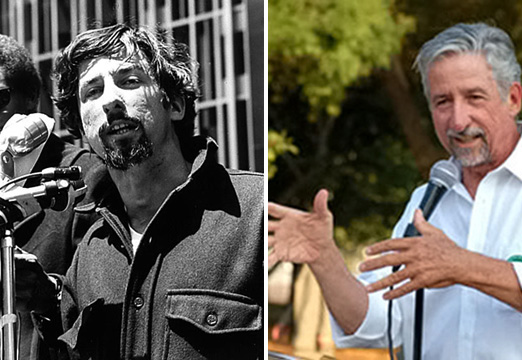
Tom Hayden, director of the Peace and Justice Resource Center and 60’s New Left leader, will continue his conversation with Thorne Dreyer on Rag Radio Friday, January 20, 2012, from from 2-3 p.m. CST on KOOP 91.7-FM in Austin and streamed live to the world. Listen to Dreyer’s January 6, 2012, interview with Hayden here.

David Edwards was Thorne Dreyer’s guest on Rag Radio, Friday, January 13, 2012.

Edwards teaches political and social theory, American politics, public policy, and international relations at the University of Texas at Austin, where he has taught for 47 years.

Edwards is currently working on a book on transformative trends in international relations — political, economic, technological, cultural, spiritual — and is also writing about the current “crisis of the capitalist empire.” On the show, we discuss these interrelated trends and how they tie into such things as the Arab Awakening and the Occupy movement.

David Edwards is the author of Creating a New World Politics, Arms Control in International Politics, The American Political Experience (four editions), and Practicing American Politics, and has written for The Nation and The Washington Post. He also has served as a consultant to the Institute for Defense Analyses, the Industrial Management Center, and the Danforth Foundation. Edwards was an early and vocal opponent of the Vietnam War and has been active in progressive causes through the years.

Rag Radio — hosted and produced by Rag Blog editor Thorne Dreyer — is broadcast every Friday from 2-3 p.m. (CST) on KOOP 91.7-FM in Austin, and streamed live on the web. KOOP is an all-volunteer cooperatively-run community radio station in Austin, Texas.

Rag Radio, which has been aired since September 2009, features hour-long in-depth interviews and discussion about issues of progressive politics, culture, and history. After broadcast, all episodes are posted as podcasts and can be downloaded at the Internet Archive. Tracey Schulz is the show’s engineer and co-producer.

Rag Radio is also rebroadcast on Sundays at 10 a.m. (Eastern) on WFTE, 90.3-FM in Mt. Cobb, PA, and 105.7-FM in Scranton, PA. Rag Radio is produced in the KOOP studios, in association with The Rag Blog, a progressive internet newsmagazine, and the New Journalism Project, a Texas 501(c)(3) nonprofit corporation.

Coming up on Rag Radio:

  • Jan. 20, 2012: Peace and justice activist Tom Hayden continues his conversation with Thorne Dreyer.
  • Jan. 27, 2012: Authors Kim Simpson and Jan Reid discuss the American radio revolution of the ’60s and ’70s.
  • Feb. 3, 2012: Historian and political economist Gar Alperovitz, author of America Beyond Capitalism.

The Rag Blog

Posted in Rag Bloggers | Tagged , , , | Leave a comment

FILM / Alan Waldman : A Look Back at My Favorite Films

James Gandolfini in the British film, In the Loop.

From 2003 to 2010:
Looking back at my favorite films

By Alan Waldman / The Rag Blog / January 18, 2012

[Last week we posted Alan Waldman’s 10 Favorite Films of 2011, with his list headed by The Help, The King’s Speech, and The Guard. Now Alan presents his favorites, by year, going back to 2003.]

2010:

  1. CITY ISLAND is a wonderful comedy drama about keeping secrets from your family. Andy Garcia, Julianna Margulies, Emily Mortimer, Alan Arkin, and three unknowns are absolutely terrific. The script is great—funny, insightful, surprising, sweet, offbeat, warm hearted and thoroughly enjoyable. It is a real treasure.
  2. INSIDE JOB (documentary) accomplishes the difficult task of making the labyrinthine financial crisis of 2008-2009 understandable — and therefore infuriating. The film is smart, brilliantly edited and compelling. It includes succinct interviews with top financial insiders, politicians, journalists, and academics. Despite the seemingly dry subject matter, it never stalls out but keeps driving forward.
  3. IN THE LOOP (U.K.) is one of the most hilarious films of the decade. I recommend watching it with the English subtitles, because although it is in English, the jokes and funny insults come so fast and furiously that you sometimes have to back up and read them to catch everything. Scottish actor Peter Capaldi steals the film with his astonishing range of insults and wisecracks, but the fine American/British cast also includes James Gandolfini, Tom Hollander, Gina McKee, and some funny folks with whom we are unfamiliar. The plot deals with the efforts of British and American bureaucrats and officials to prevent their countries from going to war in the Middle East.


Christoph Waltz in Quentin Tarantino’s Inglorious Basterds.

2009:

  1. STATE OF PLAY is a terrific two-hour American remake of the even better British six-hour miniseries about murder, political corruption and journalism. The American film stars Helen Mirren, Josh Mostel, Ben Affleck, Russell Crowe, Jeff Daniels, Rachel McAdams, Robin Wright Penn, and Jason Bateman. This is a smart, exciting, nicely detailed film, beautifully acted (in both versions), that is very timely and believable.
  2. INGLORIOUS BASTERDS is the most enjoyable Quentin Tarantino film in years. It is a surprising thriller about a group of American Jewish soldiers in Germany who are out to execute as many Nazis as they can. The plot has several exciting sequences, including a terrific (although historically inaccurate) sequence where they try to blow up a movie theater containing Hitler, Himmler, and Goering. Gripping, brilliantly executed and surprising. Brad Pitt plays the American group leader as a loony, bloodthirsty Southerner. Germany’s Christoph Waltz’s richly complex and compelling performance won him the Oscar.
  3. GOODBYE SOLO is an emotionally rich, superbly detailed human drama. A deeply depressed older man hires an African immigrant taxi driver to take him to the top of a North Carolina mountain, presumably so he can throw himself off to his death. An unlikely friendship develops between these two very opposite people. Although the cast is largely unknown, it is superb. A little gem.


2008:

  1. FROST/NIXON (U.K.) is a mind-blowing movie featuring Frank Langella as Nixon (nominated for an Oscar) and a great script by Peter Morgan (also Oscar-nominated). It tells the dramatic true story of how British talk show host David Frost, considered a lightweight, interviewed former president Richard Nixon for an eight-hour/four-night television broadcast in an attempt to get him to confess his crimes and apologize to the American people. For the first three talks, Nixon completely triumphs in this tense contest of wills, but before the fourth and final meeting Frost unexpectedly grows a set of testicles and stands up to him, with astonishing results.
  2. THE VISITOR In a great, Oscar-nominated performance, Richard Jenkins plays Walter, an obnoxious 62-year-old college prof who goes to NYC to attend a conference and finds two illegal aliens living in his rarely used Greenwich Village apartment. He develops a surprising, rich, and wonderful relationship with them. Then the plot takes a dramatic turn and moves into new territory whose demands deepen and enrich Walter’s character and humanity. This is a satisfying, intelligent, involving, and surprising work of art that is well worth your time.
  3. THE BAND’S VISIT (Israel) is a lovely, nuanced, funny, and touching film, full of wonderful characters. It tells of an eight-man Egyptian police band’s attempt to perform traditional music at a small Arab community in Israel. The band is mistakenly sent to an Israeli small town with a similar-sounding name. For 24 hours the band members interact with the Jewish Israelis they meet, and those encounters are surprising and enjoyable. Great writing, direction, and performing make this little sleeper a real treat.

Ulrich Mühe is an East German secret policeman in The Lives of Others.

2007:

  1. THE LIVES OF OTHERS (Germany) is a sensational 2006 film that I saw in 2007. It justifiably won the Best Foreign Language Film Oscar, as well as 58 other major awards in 10 countries. I found it riveting, intelligent, and brilliantly realized. It dramatizes the efforts of the East German secret police to spy on a popular playwright and his beautiful actress girlfriend. It has sensational character work, offers compelling plot elements and surprises, and holds you from beginning to end. This is a truly great film that will appeal to most people — one that even subtitle-phobics should take a chance on.
  2. SICKO (documentary) Michael Moore’s searing indictment of the insurance industry’s endless, cruel, greedy assault on the U.S. healthcare system (and the millions of patients who are harmed by it) is a must-see. Besides being dramatic, informative, and involving, it has moments of high humor and irony.
  3. WAITRESS is a surprising, delightful, highly original film. It was written and directed by, and co-stars, brilliant Adrienne Shelley, who also composed the songs. It is both a wonderfully whimsical, sly romantic comedy and a scary marital drama, starring excellent Keri Russell as the pie-baking heroine. Andy Griffith is wonderful as a crotchety customer. This is such a fresh, charming, character-rich movie that few will be able to resist.


2006:

  1. THE HISTORY BOYS (U.K.) This extraordinary film, from the Tony-award-winning Broadway play, features the original West End and Broadway cast — including the brilliant Richard Griffiths and wonderful Francis de la Tour. It is witty, dramatic, touching, funny, surprising, very intelligent, verbally dazzling, and bursting with ideas and insights. I experienced the full range of human emotions watching this one — from tears, to surprise, to laughter, to cheers.
  2. THE QUEEN (U.K.) Helen Mirren won the Best Actress Oscar for her performance as Queen Elizabeth II in this powerful, beautifully written and produced movie. Mirren makes the queen human and likable. Michael Sheen is outstanding as Prime Minister Tony Blair. Brilliant British director Stephen Frears is at the top of his game here, bringing subtlety, humor, irony, keen observation, and a great honesty to a true story.
  3. VOLVER (Spain) One of genius Pedro Almodovar’s best films ever. A strong female cast features Penelope Cruz and Carmen Maura. This story is rich, smart, tricky, sly, moving, and brilliantly assembled. This is a treat for everyone brave enough to read subtitles.
  4. AN INCONVENIENT TRUTH (documentary) A brilliant, chilling, mind-blowing, detailed, and highly persuasive documentary on how unchecked corporate greed is destroying our environment, weather, and health, and threatening human survival. Al Gore is wonderful in this — regardless of your political persuasion — as he explains why this has been the issue closest to his heart for decades. This is a movie that intelligent, concerned world citizens must not miss!

Rachel Weisz and Ralph Fiennes in The Constant Gardener.

2005:

  1. THE CONSTANT GARDENER (U.K.) is a smart, brave, beautifully realized film of the John Le Carre novel that won 20 major awards, including a Best Actress Oscar for Rachel Weisz. It is a gripping thriller about a husband’s (Ralph Fiennes) quest to discover how and why his wife was murdered in Kenya.
  2. MARCH OF THE PENGUINS (documentary) (France) is a thoroughly enjoyable, Oscar-winning documentary about Antarctic penguins and what they go through each year. Morgan Freeman’s narration is terrific and the story is dramatic, visually stunning, and heartwarming.
  3. MUNICH is a great historical drama which earned five Oscar nominations, including Best Picture, Best Director (Steven Spielberg) and Best Screenplay (Tony Kushner and Eric Roth). It dramatizes the efforts of Israeli agents to track down and murder all the Black September assassins. It is complex, surprising, pulse-pounding, and very intelligent.


2004:

  1. HOTEL RWANDA features a powerfully dramatic true story, two Oscar-nominated, great lead performances from Sophie Okonedo and Don Cheadle, a sensational script, and truly inspired direction. This one is not to be missed. Although it deals with a horribly violent historic period in Rwanda, it is not gratuitously graphic.
  2. A VERY LONG ENGAGEMENT (France) combines the enormous talents of director Jean-Pierre Jeunet and star Audrey Tatou (both dazzling in the marvelous 2001 film Amelie). This World War I mystery/love story/historical epic is touching, surprising, funny and visually stunning — as Jeunet continues to stretch the visual possibilities of cinema again and again.
  3. MOTORCYCLE DIARIES (Brazil) is a masterful movie from Brazilian genius director Walter Salles that movingly captures the political awakening of young Che Guevara and a pal, who are out for babes and booze in a breathtaking trip through South America. The visuals in this one will blow you away. It is witty, touching, surprising, and wonderfully nuanced.

Chitwetel Ejiofor in Stephen Frears’ Dirty Pretty Things.

2003:

  1. THE BARBARIAN INVASIONS (Canada, in French) Denys Arcand’s examination of friendship, parent-child relationships, and the worries that beset one as life’s end approaches, is beautiful, brilliant, moving, funny, surprising, visually stunning, beautifully acted, and easily the most intelligent picture of the year. Virtually every scene of this enjoyable film is a little polished jewel.
  2. WINGED MIGRATION (France, in English) This Oscar-nominated documentary about flocks of beautiful birds flying over gorgeous corners of the earth, to delightful music and very little dialogue, is masterful. It evokes every human emotion, including laughter, tears, fear, surprise, and exhilaration. This is as close to flying as you will ever come. Don’t dismiss this as simply another dull nature film: this one is very emotionally and visually rich; everyone I have recommended it to so far has loved it.
  3. DIRTY PRETTY THINGS (U.K.) Stephen Frears’ gripping, highly original look at illegal workers in Britain is beautifully written, directed, and performed, while being an important social statement. This is the kind of movie I like best — about sane people facing difficult challenges and dealing with them in fresh, unexpected ways.
  • See Alan Waldman’s full lists of favorite films from 2011 and 2010 on The Rag Blog.
  • [Houston native Alan Waldman is a former editor at Honolulu Magazine and The Hollywood Reporter.]

    The Rag Blog

    Posted in Rag Bloggers | Tagged , , | 2 Comments

    Jorge Rivas and Jamilah King : SOPA and the Internet Blackout


    What is SOPA?
    Here are five things you need to know

    Wikipedia was among several websites to shut down Wednesday in protest of anti-piracy bills now in Congress that critics say could amount to censorship.

    Instead of the usual encyclopedia articles, visitors to Wikipedia’s English-language site were greeted by a message about the decision to black out its Web page for an entire day.

    “Imagine a World Without Free Knowledge,” said the stark message in white letters on a black and gray background.

    “For over a decade, we have spent millions of hours building the largest encyclopedia in human history. Right now, the U.S. Congress is considering legislation that could fatally damage the free and open Internet. For 24 hours, to raise awareness, we are blacking out Wikipedia.” — CNN

    By Jorge Rivas and Jamilah King / AlterNet / January 18, 2012

    The Stop Online Piracy Act (SOPA) has the entire Internet up in arms today. Media justice advocates say the bill is anathema to basic functioning of the Internet; for a system that’s based on relative freedom and connectivity, SOPA would work as the online world’s stingy gatekeeper, giving government the power to shutdown websites altogether.

    Today, hundreds of websites are joining in a day of action to SOPA’s threat to freedom of expression on the Internet. Several civil rights and racial justice organizations are joining in what’s been called an “Internet strike,” by closing their websites from 8 a.m. to 8 p.m. eastern time. Colorlines.com’s Jamilah King, who covers media policy, explains why:

    The Internet’s been an important space for communities of color to tell their own stories and advocate for issues they don’t often see in film or on television. SOPA puts that independence in jeopardy. It’ll add yet another barrier to how and what we can communicate.

    So, here are the basics on what you need to know.

    Who’s behind SOPA? Rep. Lamar Smith, a Texas politician who’s been known mostly for his anti-immigrant stances in recent years. Smith’s got big industry backers, namely: the Recording Industry Association of America, the Motion Picture Association of America (now led by former U.S. Senator Chris Dodd), and the U.S. Chamber of Commerce.

    What’s the justification for SOPA? Supporters of the bill claim that it’ll help copyright holders (think big record labels) protect their content. Rep. Smith has criticized the bill’s opponents and explained that SOPA would only target foreign websites that put American businesses at risk.

    But opponents argue that the definition of “foreign infringing sites” is too vague. As it’s written now, they argue, the bill will fundamentally alter the relative freedom with which the Internet currently operates. What’s certain is that it’ll add a level of supervision to the Internet that’s never existed before.

    Who’s opposed to SOPA? Basically, every website that you visit regularly. Most notably, Wikipedia, Craigslist, and Reddit, along with at least 200 other websites, have chosen to go dark in opposition to the bill and to help educate users about its potential impact. But the list doesn’t stop there: Google [they’re putting a black bar across their logo today], Yahoo, YouTube, and Twitter have also publicly opposed the bill. The White House has also announced that, should the bill reach President Obama’s desk, he will veto it.

    How would SOPA work? It allows the U.S. attorney general to seek a court order against the targeted offshore website that would, in turn, be served on Internet providers in an effort to make the target virtually disappear. It’s kind of an Internet death penalty.

    More specifically, section 102 of SOPA says that, after being served with a removal order:

    A service provider shall take technically feasible and reasonable measures designed to prevent access by its subscribers located within the United States to the foreign infringing site (or portion thereof) that is subject to the order… Such actions shall be taken as expeditiously as possible, but in any case within five days after being served with a copy of the order, or within such time as the court may order.

    How would it impact me? If you create or consume content on the Internet, under SOPA the government would have the power to pull the plug on your website. If you’re a casual consumer, your favorite websites could be penalized and shut down if they seem to be illegally supporting copyrighted material.

    This is especially important for human rights groups and advocates in communities of color, who could faced increased censorship if the bill is passed. The language of the bill makes it easy for the US Attorney General to go after websites it simply sees as a threat.

    [Jorge Rivas is multimedia editor and pop culture blogger and Jamilah King is the news editor at Colorlines.com. This article was sourced from Colorlines and distributed by AlterNet.]

    The Rag Blog

    Posted in RagBlog | Tagged | 1 Comment

    Lamar W. Hankins : Funeral Costs Need not Require Charity


    Making an informed decision:
    Paying for a funeral need not require charity

    Many families succumb to grief, social pressures, and salesmanship by a funeral director and spend much more on the funeral than they can afford.

    By Lamar W. Hankins / The Rag Blog / January 18, 2012

    I was startled last Friday to see a news item in the Austin American-Statesman about a family that needs $8,700 in additional donations to pay for a funeral. It struck me as peculiar for two reasons. I’m surprised that the leading commercial newspaper in central Texas considered the circumstance newsworthy, and in my experience, soliciting money to give to a funeral home does not generate charitable impulses in most people.

    For 20 years, I have been an advocate for families who have to deal with the funeral industry. Most of that work has been done with the Austin Memorial and Burial Information Society (AMBIS) and with the national organization with which it is affiliated, the Funeral Consumers Alliance (FCA).

    I’ve learned a lot about the funeral industry over that time. I have testified before a U.S. Senate committee looking into fraud and deception in the preneed funeral business, and many times before committees of the Texas Legislature.

    I’ve learned that many funeral businesses are operated by kind and caring people who have chosen funeral service as their life’s work. I’ve experienced some of the satisfaction that many of them find in helping people at one of the most difficult times in their lives — handling the death of a loved one. I’ve also learned that there are vast differences in costs among funeral businesses. What costs $10,000 at one costs only $4,000 at another.

    Certainly, there are differences in services from one establishment to the next, but those differences have little to do with the cost of the funeral. They have more to do with the amount of money the funeral business has put into its building, landscaping, and funeral vehicles, as well as its location.

    The funeral home chosen by the donation-seeking family is one of the more expensive ones in the Austin area, including the counties of Travis, Williamson, Bastrop, Caldwell, and Hays. Consumers can easily find out about those costs. AMBIS publishes an annual survey of funeral costs it provides free to anyone with access to a computer. The 2012 survey will be available in February.

    A quick look at the 2011 price chart reveals that the funeral home chosen by the family seeking donations offers a hypothetical full-service funeral (used to make fair comparisons among all area funeral homes) for about $7,000. That same hypothetical funeral could be purchased at another area funeral home for less than $3,500. In fact, 22 funeral businesses in the survey offered the same funeral for less than $7,000. The description of the hypothetical funeral can be found in the survey’s narrative at the same website link given above.

    I don’t begrudge anyone choosing the kind of funeral they want for a loved one, but this family appears to have arranged for a $10,000-plus funeral, including the obituary (from which the Statesman makes a lot of money) and cemetery costs.

    It reminded me that the Executive Director of FCA, Josh Slocum, often points out that it is not necessary for any family to spend beyond its means on a funeral if the family will just be diligent consumers and adjust its thinking about how the family can honor the memory of the deceased without spending money it does not have.

    After all, we needn’t all drive luxury automobiles, and we needn’t all be buried in $12,000 caskets, especially if we can’t afford those purchases. To read some of Slocum’s ideas about what to do when you can’t afford a funeral, go here.

    Many families succumb to grief, social pressures, and salesmanship by a funeral director and spend much more on the funeral than they had intended or can afford. I meet people regularly who borrow $8,000 to $15,000 to pay for a funeral and are left saddled with debt for many years.

    Just as there are differences in the costs charged by funeral businesses for the same or similar goods and services, there are differences among funeral directors about how they sell funerals to families. Some actively discourage families from spending beyond their means; others encourage spending as much as they can convince a family to spend.

    Families can avoid spending beyond their means in several ways: be prepared for family deaths by having a general idea about what sort of funeral will be wanted when that time comes; ask for help in purchasing the funeral from someone not emotionally involved with the decedent; take advantage of the free resources available to learn about cost differences among the area’s funeral businesses; or do some research on your own.

    All funeral establishments are required by federal and state regulations to give out price information over the telephone, and to provide a copy of their General Price List if it is requested in person. In addition, prices are available at many funeral providers’ websites.

    When a death is unexpected, families may not have enough money to pay for the kind of funeral they prefer, necessitating a reevaluation of their expectations, or relying on charity to pay for their choices. If a family is indigent, Texas law requires that the county pay for burial or cremation, though such services are usually minimal and families have little or no say about the arrangements.

    AMBIS offers in its survey narrative some “Cost-saving suggestions for consumers.” Below is a slightly edited version:

    1. Choose immediate burial, a graveside service, or direct cremation followed by a religious or secular memorial service held almost anywhere people can gather together. This choice can reduce funeral costs by 75%. Or choose a reasonably-priced funeral home for 50% savings over average costs. If all services are held at a religious or other facility, the location of the funeral home is not important.
    2. Avoid embalming and viewing of the body in the funeral home’s parlor, a practice falsely promoted by many funeral directors as essential to the grief process. Instead, display pictures and mementos of the deceased at a gathering where sharing and visiting can occur that focuses on the memories of the deceased, rather than on an elaborately displayed body.

      (Embalming is not required by Texas law for any reason, and it has no public health benefits that have been recognized by any public health authority. The industry uses embalming to increase funeral costs dramatically by appealing to a person’s desire to preserve and protect the body. Embalming merely slows the natural decomposition process.)

    3. If you need a casket, choose the least expensive available (including a cremation casket) and cover it with a flag, the deceased’s favorite quilt, a religious pall, or other cloth. The looks of the casket will be unimportant, and the money saved can be put to a use significant to the deceased and survivors. (Remember, consumers can buy a casket from any source or supply their own homemade one without incurring any additional funeral home fees or charges.)
    4. Don’t be led to believe that the more spent on the funeral or the casket, the greater the love felt for the deceased. Most funeral directors have always been salespeople. To persuade consumers to spend lavishly, unscrupulous funeral directors appeal to feelings of guilt, family pride, and social pressures.
    5. Become informed consumers now. The funeral industry has depended on the fact that most consumers avoid death and its trappings until they are in the throes of grief just after the death of a loved one. Such feelings can make anyone vulnerable to exploitation. If faced with this situation, take along a trusted friend for assistance — one who is less emotionally involved with the dozens of decisions to be made and who can give sound advice and help.
    6. Check out religious questions with your minister, priest, rabbi, pastor, or other religious leader, rather than with the funeral director.
    7. Compare all the prices in the survey. If a funeral home is willing to gouge consumers for any service, consumers should beware.

    By following these and similar suggestions, no family should ever have to beg the public for money to pay a funeral director.

    [Lamar W. Hankins, a former San Marcos, Texas, city attorney, is also a columnist for the San Marcos Mercury. This article © Freethought San Marcos, Lamar W. Hankins. Read more articles by Lamar W. Hankins on The Rag Blog.]

    The Rag Blog
    Posted in Rag Bloggers | Tagged , , | 3 Comments

    Scott Galindez : Black Churches to ‘Occupy the Dream’

    Young people participating in the Occupy the Dream rally in front of the Federal Reserve in Washington DC, January 16, 2012. Photo by Scott Galindez / RSN.

    Occupy the Dream:
    Black churches join the Occupy movement

    Rallies throughout the country are designed to pick up the mantle of Dr. Martin Luther King, Jr.’s dream.

    By Scott Galindez / Reader Supported News / January 18, 2012

    In 16 cities around the country, ministers from African-American churches offered a unified set of demands as they served notice that they are joining the Occupy movement. The demonstrations took place at Federal Reserve banks because, as the organizers explained, it was the Fed that bailed out the banks and Wall Street while Main Street was left to suffer.

    In Washington, D.C., the Reverend Jamal Bryant of the Empowerment Temple AME Church in Baltimore spelled out the demands in front of the Federal Reserve headquarters.

    The first demand is campaign finance reform. Rev. Bryant said elections should not be about who can raise the most money, and for any reform to come out of Washington money has to be removed from the equation.

    The second demand is to expand Pell Grants so our youth will no longer be burdened by debt from student loans. Rev. Bryant said, “It is a travesty that there is more student loan debt in this country than there is credit card debt. There are more students struggling to pay their debt than people paying off their flat screen TVs.”

    Occupy the Dream’s third demand is an immediate moratorium on foreclosures. Rev. Bryant said current estimates are that four million families will lose their homes between now and April. The demand is for foreclosures to halt until a plan is put in place to assist the victims of predatory lending.

    The fourth demand is for Congress to allocate $100 billion to put people back to work. They are calling for the money to be allocated in three areas: job training, seed money for entrepreneurs, and money to rebuild our infrastructure.

    Occupy the Dream Youth Coordinator Farajii Muhammad speaks in front of the Federal Reserve in Washington DC, January 16, 2012. Photo by Scott Galindez / RSN.

    These rallies were designed to pick up the mantle of Dr. Martin Luther King Jr.’s dream. Many in Dr. King’s family believe that one of the reasons he was killed was that he was planning to occupy the National Mall until the Vietnam War ended. Rev. Bryant said this year, instead of “…resting and reflecting on the past, we are honoring Dr. King by making history, and beginning a new push to achieve his dream.”

    Another focus of the Occupy the Dream movement will be to hit the banks where it will hurt. They are calling for everyone to move their money from the big banks to minority-owned or community banks and credit unions. February 14th will be the day of the initial push. They will then extend the effort to professionals in the African-American community — doctors, lawyers, and others. The third push will encourage churches to move their money. Rev. Bryant said the goal was to “Let the banks know that it’s our money and they need to treat us with respect.”

    Rev. Bryant is a national co-chair for the Occupy the Dream movement. The other co-chair is former NAACP Director Dr. Ben Chavis. Dr. Chavis led the Occupy the Dream rally in New York City, where hundreds marched and four were arrested.

    Occupy the Dream is also building a National Mobilization to Washington DC, which is scheduled for April 4-7.

    [Scott Galindez is the Political Director of Reader Supported News, and the co-founder of Truthout. This article was distributed by Reader Supported News.]

    The Rag Blog

    Posted in RagBlog | Tagged , , , , , , , | 1 Comment

    Tom Hayden : Preventing the Coming War with Iran

    Image from Antinews.

    Preventing the coming war with Iran

    Rational self-interest is not always enough to prevent what Barbara Tuchman has called ‘the march to folly.’

    By Tom Hayden | The Rag Blog | January 17, 2012

    Peace and justice activist Tom Hayden and Rag Blog editor Thorne Dreyer will continue their discussion on Rag Radio this Friday, January 20, 2-3 p.m. (CST) on KOOP 91.7-FM in Austin, and streamed live to the world. To listen to our January 6, 2012, interview with Hayden, go here.

    During the past decade, this writer has remained skeptical about prospects of a U.S.-supported war against Iran. The potential costs outweighed the benefits. Now, as the 2012 election year unfolds, I am not certain. The political and geopolitical dynamics underscore the growing threat of war.

    It’s not that Barack Obama wants an airstrike against Iran, whether by the Israelis, the Americans, or the Israelis with covert U.S. support. My respected friends Juan Cole and Mark Weisbrot are not so sure. They think Obama is laying the groundwork, and they may be right.

    Obama hardly needs another war with unknown costs and consequences. But presidents are not all-powerful, and Obama can be forced to acquiesce unless there is a sharp increase in serious public opposition. As Trita Parsi, director of the National Iranian American Council, told Democracy Now on January 12:

    We may very well end up in a situation in which, rather than the governments controlling the dynamic, the dynamics will control the government…this could escalate into a full-scale war.

    Here’s the dynamic at work:

    First, the Israeli government and the powerful Israeli lobby, in evaluating the Arab revolutions in Egypt and beyond, are extremely concerned that time is against them. They perceive the diplomatic efforts of the Palestinians to secure United Nations recognition as a mortal peril, and went to great extremes to pressure Obama to threaten a veto of the Palestinian bid.

    This was an overreaction inimical to U.S. interests, leaving the Obama administration extremely isolated from the rest of the world on these issues. Employing a U.S. veto threat played into the hands of all those in the Palestinian and Islamic worlds who believe that armed struggle is the only path open to them.

    Second, the Israeli Lobby, or AIPAC, already has learned that Obama is isolated at home, or at least from Congress, on these questions. Obama was forced under pressure to back down on his demand for an end to settlements. His more progressive appointees, whether Chas Freeman or George Mitchell, were forced from their positions or resigned in frustration.

    Third, the Iranians have been far from helpful, if they ever intended to be. They reinforce the depiction of themselves as irrational, unstable, fundamentalist, theocratic extremists. Any ideas that they are rational actors in an ongoing crisis — which began with the U.S. overthrow of their democratically-elected government in 1954; which continues to threaten regime change on a daily basis; in which the Israelis have scores of nuclear weapons available for use — are dismissed as fuzzy foolishness.

    Fourth, and most important at the moment, the Israeli Lobby is using the Republican Party as a Trojan Horse. Mitt Romney is a former business partner of Benjamin Netanyahu (see the excellent screed at Daily Kos). And if the Romney-Netanyahu alliance doesn’t work out, there’s always Newt Gingrich to call the Palestinians an “invented people,” the better to collect millions from his chief financier Sheldon Adelson, a Las Vegas casino developer, and close ally of Netanyahu.

    Adelson, who says the Palestinians have no historical claims to statehood, just saved Gingrich with a $5 million bailout for the South Carolina primary, on top of millions more, including $7 million to Gingrich committees in 2006 alone. Adelson not only saved Gingrich this month, but his free newspapers in Israel are credited with having saved Netanyahu, too. (The New York Times, January 10, 2012)

    Fifth, the latest rationale is “Time To Strike Iran” in the current issue of Foreign Affairs, by Matthew Kroenig, who until July was Obama’s special adviser on Iran at the Pentagon.

    Koenig asserts that the U.S., not Israel, should attack Iran as the least-bad option. Koenig claims the goal should not be regime change, but merely the careful destruction of Iran’s nuclear sites. He assures us that an attack on Iran’s Natanz nuclear facility with a 30,000 pound bunker-busting bomb can be so carefully done that Teheran will not react by closing the Straits of Hormuz or launch missile assaults on European cities. The U.S. should assure Iran that we have no interest in overthrowing their government, only in destroying their nuclear facilities.

    Sounds neat, and perhaps Kroenig should not be dismissed as a Dr. Strangelove. But if the U.S. considers Iran’s leadership irrational now, why would Teheran become more reasonable after being attacked at Natanz, Isfahan, Arak, and centrifuge-manufacturing sites near Teheran itself? (The target list is Kroenig’s.)

    As the presidential campaign proceeds, Obama will be hammered by Romney and/or Gingrich, backed by the neocons and Israeli hawks, who will be legitimized by mainstream media commentary about Iran’s alleged menacing intentions. In the deep background there are concerns about oil supplies in the Straits of Hormuz. There may be an October Surprise.

    Who will back Obama against these pressures, especially if they seem to threaten his re-election? At this point, there is no serious organized opposition, although public opinion is on his side.

    There may be 200 House members against Iraq and Afghanistan, but few if any against striking Iran. The media prefers sanctions and diplomatic pressure but will not draw a red line against military intervention. The humanitarian hawks want regime change. Russia, China, and the UN General Assembly count for little in American presidential elections. That leaves Ron Paul and a small unfunded anti-war chorus of protesters.

    The national security and diplomatic implications may be too great to permit a U.S.-Israeli intervention. But rational self-interest is not always enough to prevent what Barbara Tuchman has called “the march to folly.” Only a serious campaign to protect Obama from repeating the same concessions to neocon pressure that led to Iraq and Afghanistan might have a chance in 2012.

    Perhaps the clergy should lead, the intellectual experts should engage and, at the grass-roots level, the peace movements in both Israel and America will expand a serious dialogue in the Jewish communities — and all communities —where reason might prevail against extremism.

    Otherwise, the barking you will hear all this year is from the dogs of war.

    [Tom Hayden is a former California state senator and leader of Sixties peace, justice, and environmental movements. He currently teaches at Pitzer College in Los Angeles. His latest book is The Long Sixties. This article was also published at Tom Hayden’s Peace and Justice Resource Center. Read more of Tom Hayden’s writing on The Rag Blog.]

    The Rag Blog
    Posted in Rag Bloggers | Tagged , , , , | Leave a comment