Josefina Castillo and Judith Rosenberg : Women and Fair Trade

The Women and Fair Trade festival. Image from the group’s website.

Sustaining indigenous traditions:
The Women and Fair Trade Festival

The people want fair markets, not ‘free trade.’

By Josefina Castillo and Judith Rosenberg / The Rag Blog / November 10, 2011

The Women and Fair Trade Festival is an annual Austin marketplace, now in its eighth year, that hosts artisan producers from women’s cooperatives from all over the world. Women and their representatives gather in Austin to meet local consumers for commerce, cultural celebration, and exchange. Austin Tan Cerca de la Frontera sponsors the two-day event, November 12-13, 2011, 10 a.m.-6 p.m., at The Old School, 1604 East 11th Street, Austin, Texas.

Saturday, November 12, from 3-5 p.m., the first John Ross Journalism Award will be presented to Melissa del Bosque of the Texas Observer. On Sunday, November 13, from 3-5 pm, the second annual Trans-lingual Poetry Concert features Liliana Valenzuela and other Austin poets influenced by Latina, Middle Eastern, and African cultures.

AUSTIN — The Women and Fair Trade Festival, established eight years ago by Austin Tan Cerca de la Frontera, is a community gathering where people can buy fair trade products while helping to sustain old indigenous traditions — and have the opportunity to interact with the direct producers of colorful arts and crafts. This community event celebrates the rich cultural diversity of our society, and presents an alternative to corporate globalization.

Participants include eight cooperatives, formed by women adversely affected by globalization, who come from various developing countries to tell their stories and sell beautiful handmade textiles, toys, pottery, jewelry, clothing, and ethnic weavings.

Through cooperatives, women become central participants in the management of their own products, maintain ancestral knowledge, support sustainable agriculture, and provide much needed funds for community development projects. Fair trade allows women to play central roles in the development of local economies.

This year, ATCFE has named Melissa del Bosque recipient of the John Ross Journalism Award 2011 for her reporting on Mexico and the U.S./Mexico Border in the Texas Observer. The award, to be presented Saturday, November 12, from 3 to 5 p.m, is given in recognition of Melissa’s independence, courage, and ability to place events within a deeper context.

Rag Blog editor Thorne Dreyer, Rene Valdez of Red Salmon Arts and Resistencia Bookstore, and noted documentary photographer Alan Pogue will pay tribute to the legacy of the great activist, poet, and author — and regular contributor to The Rag Blog John Ross, who died earlier this year. They will also discuss the importance of independent media and alternate channels for coverage of other countries.

On Sunday, November 13, from 3 to 5 p.m., the second annual Trans-lingual Poetry Concert features Liliana Valenzuela and other Austin poets influenced by Latina, Middle Eastern, and African cultures, who live simultaneously in several cultures and languages. They help us hear and see the world created by trade and colonialism as well as lives and identities that crisscross and re-define borders. Other confirmed poets include Deborah Paredez, Carolina Ebeid, Maganthrie Pillay, Zara Houshmand, Fehintola Mosadomi, and Adesile Okeowo.

The impact of ‘free trade’

In Austin Tan Cerca de la Frontera we have seen face-to-face the impact of free trade policies on workers’ lives while organizing border delegations to visit Mexican workers in the maquiladora industry, with its assembly plants located in developing countries, owned by transnational corporations.

We have learned of exploitation not only in terms of salary and working conditions but also in the places where they live. The “colonias” lack the basic infrastructure to allow workers to live in a decent way: they have no paved roads, no sewage systems, and are marked by widespread environmental damage.

Just a few years ago Austin Tan Cerca made a study of where the money goes when you buy a pair of jeans at a department store. The actual producer, the person whose hands created the product, gets less than 1%. Transnational corporations (and their brand name distributors), retail stores, and manufacturing facilities keep 99% of the value. How can anybody believe this is free trade?

In 1999 — the same year that Austin Tan Cerca de la Frontera took its first steps to establish a relationship of solidarity with Mexican workers — the World Trade Organization, meeting in Seattle, became a stage for activists and ordinary working people on which to protest against corporate greed. The people in the streets of Seattle were able to feel the power of their solidarity against the giant corporations and government — and they managed to stop the WTO’s deliberations. All the ministers went home confused and empty-handed.

Austin Tan Cerca de la Frontera wants not only to protest against the rank injustice of the income inequality between the 1% and the 99%, but also to offer and be part of alternative proposals such as the Fair Trade movement. More and more voices have proposed “fair trade” since the 1994 passage of the North American Free Trade Agreement (NAFTA) and through the years in which workers and environmentalists learned in personal terms the emptiness of NAFTA’s promises.

Though the 99% have not yet declared a formal program, and have wisely refrained from listing demands, their yearnings must surely be in harmony with fair trade. If the 99% are willing to cross borders, they must be in sympathy with the maquiladora worker who 10 years ago had an opportunity to look her U.S. CEO in the eye and say, “We’re the ones that create the wealth. You’re the one that reaps the benefit. My children and I still don’t have running water.”

The communities we serve and their diverse cultures are like pearls of a necklace, beautiful and rich, connected by a common thread of hope in their artistic designs. In these challenging economic times we offer a new path, a new way to link a rich cultural heritage with modern alternative ideas and marketing — which is what a real democracy looks like and which suggests the future that we’d like to see.

[Josefina Castillo is an ex officio member of the board and Dr. Judith Rosenberg is president of Austin Tan Cerca de la Frontera.]

The Rag Blog

Posted in Rag Bloggers | Tagged , , , , , , | Leave a comment

Bruce Goldberg : Carl Oglesby Occupies Heaven

Carl Oglesby. Photo by Jennifer Fels / AP / The Guardian.

Occupy Heaven:
The Memorial for Carl Oglesby

By Bruce Goldberg / The Rag Blog / November 10, 2011

Born of a working class family in Akron, Ohio, Carl Oglesby grew to become an influential radical activist, writer, and thinker from the 1960’s until the time of his death in September of this year. Elected President of Students for a Democratic Society (SDS) in 1965, Oglesby, a gifted orator, gave one of the more memorable speeches against the Vietnam War at a massive March on Washington Rally in November 1965.

He was the author of many books, notably Containment and Change, The New Left Reader, Who Killed JFK?, and his last published work in 2008, his memoir, Ravens in The Storm. An accomplished musician, he composed and sang his own songs on two recorded albums, Carl Oglesby (1969) and Going to Damascus (1971).

Carl died of cancer on September 13, 2011, and a memorial celebration in his honor was held in Cambridge, Massachusetts, on November 4.

Somewhere, call it heaven, the spirit of Carl Oglesby managed to occupy the entire outskirts of paradise on a brilliantly cool and crystal clear night in Cambridge, Massachusetts. Here, in Harvard Square’s Old Cambridge Baptist Church, just a few blocks from where he once lived, some 150 or so old friends, lovers, family, colleagues, and admirers gathered to remember a man.

Befitting Carl, the talks were long, sometimes very long. Some read from Carl’s early plays, some from his speeches and published writing.

Bob Katz, an early collaborator with Carl on the Assassination Information Bureau, recalled a trip with Carl to Boulder in the early 1970s. The two had come for an alternative media conference and during one of the many breaks in the conference they took a long hike with some of us Boulder folks into the mountains. Carl suddenly vanished as the sun disappeared behind the Rockies and just as some began to worry about what had happened to him, the familiar lilting sound of a flute filtered down through the trees. “He could still be there even when he wasn’t,” Bob thought, “much as he is here tonight even when he isn’t.“

Did you know there were over 15,000 pages of Carl’s FBI files compiled? Neither did I, but apparently that’s what Attorney Jim Lesar found in plying free Carl’s files under the Freedom of Information Act. Carl also has appeals pending concerning the JFK assassination, and the case of the World War II Nazi spy, General Reinhard Gehlen, who apparently continued to operate his Nazi spy ring with American complicity after the war. Carl’s partner, Barbara Webster, and his three children will now become plaintiffs in the still-pending suits.

Todd Gitlin remembered how Carl occupied SDS, all of SDS, during the period of its rapid growth from relative obscurity, and Alan Haber recounted how he and Carl had discussed a 50th SDS reunion commemorating the Port Huron statement.

Perhaps most touching and real, however, were the remembrances of Carl’s children — Aron, Caleb, and Shay. Only perhaps in the immediate aftermath of death, at that tipping point before the gossips of history carve their initials on what comes to be regarded as unquestioned fact, does the full measure of a life get a brief chance to be heard — and then, usually, only by those who came to know the whole person including the missing pieces.

Families and loved ones are often the best at this. And this night was no exception. Shay Oglesby-Smith performed a musical tribute to her dad, a rephrasing of “My Favorite Things,” sung a cappella and with hauntingly beautiful lyrics that only one of Carl’s daughters could pen.

Aron shared a hidden side of her dad that maybe, “if only subconsciously,” sought to inhabit the role of the tragic hero, trying “to do impossible things he thought were right.”

Caleb’s family slides showed Carl as a young boy, as an actor portraying the Earl of Kent in Shakespeare’s King Lear, as a gifted musician and songwriter, and simply, as Carl the man — the skinny man in his early 30’s tightly gripping his kids in his arms, the fiery bearded long-haired man giving razor-edged speeches, the dapper tuxedoed man at Caleb and Shay’s wedding, the beaming tender man posing proudly with his new grandchild.

Carl Oglesby the actor, the musician, the playwright, the radical activist, the father, and the man, was 76 years old.

[Bruce Goldberg is a former SDS organizer and friend of Carl Oglesby.]

Also see

The Rag Blog

Posted in Rag Bloggers | Tagged , , , , , , | Leave a comment

Rag Radio : Greenlandic Inuit Explorer/Actor Ole Jørgen Hammeken and Filmmaker Marc Buriot

Ole Jørgen Hammeken (above) at an Oct. 27, 2011, taping of Rag Radio at the KOOP studios in Austin. (The show was aired Nov. 4, 2011.) Inset below is filmmaker Marc Buriot. Photos by Michelle Manteris / The Rag Blog.

Inuit Explorer and Actor Ole Jørgen Hammeken & Filmmaker
Marc Buriot on Rag Radio with Thorne Dreyer. Listen to it here:

Thorne Dreyer‘s guest on Rag Radio this Friday, November 11, 2011, 2-3 p.m. (Central) on KOOP 91-7-FM in Austin will be author and sustainability advocate Ellen LaConte. Stream it live here.

Our guests on Rag Radio Friday, November 4, were Ole Jørgen Hammeken, an indigenous Greenlandic Inuit polar explorer, social worker, and actor, and French filmmaker Marc Buriot, the executive producer of Inuk, a feature film made in Greenland, in which Hammeken stars.

The story of Inuk is loosely based on the work Hammeken and his wife, Ann Andreasen, have done at their internationally-acclaimed home for disadvantaged children in Greenland. Hanneken uses dogsledding as therapy in working with troubled Greenlandic youth. We discuss the making of the film and the issues it raises about Greenland and its indigenous people — and the inevitable conflicts between their historic traditions and contemporary culture.

Inuk, made in Greenland by director Mike Magidson and distributed in Europe as Le voyage d’Inuk, has won numerous awards on the global film festival circuit, especially for its majestic cinematography. Here’s a description of Inuk from the Austin Film Festival’s website:

In the beautiful, treacherous wilderness of Greenland, a young Inuit is torn between the lures of modernity and the binding ties of tradition. Sent away from his alcoholic mother and violent stepfather by social services, 16 year-old Inuk is dispatched to a foster home in the far north of Greenland, 800 kilometres above the Arctic Circle. Taken on as a protégé by Ikuma, a grizzled polar bear hunter [played by Hammeken], Inuk embarks upon the annual seal hunt, and with it a unique, bitterly dangerous journey towards manhood.

Rag Radio — hosted and produced by Rag Blog editor Thorne Dreyer — is broadcast every Friday from 2-3 p.m. (CST) on KOOP 91.7-FM in Austin, and streamed live on the web. KOOP is an all-volunteer cooperatively-run community radio station in Austin, Texas.
Rag Radio, which has been aired since September 2009, features hour-long in-depth interviews and discussion about issues of progressive politics, culture, and history. After broadcast, all episodes are posted as podcasts and can be downloaded at the Internet Archive. Tracey Schulz is the show’s engineer and co-producer.

Rag Radio is also rebroadcast on Sundays at 10 a.m. (Eastern) on WFTE, 90.3-FM in Mt. Cobb, PA, and 105.7-FM in Scranton, PA. Rag Radio is produced in the KOOP studios, in association with The Rag Blog, a progressive internet newsmagazine, and the New Journalism Project, a Texas 501(c)(3) nonprofit corporation.

Coming up on Rag Radio:

  • Nov. 11, 2011: Author and Sustainability Advocate Ellen LaConte.
  • Nov. 18, 2011: Singer/Songwriter, Author, Actor & Artist Bobby Bridger.
  • Nov. 25, 2011: UT-Austin Government Professor David Edwards.

The Rag Blog

Posted in RagBlog | Tagged , , , , , , , , , , | Leave a comment

Robert Jensen : Angus Wright and the ‘Fire Next Time’

Angus Wright. Screen grab from Vimeo.

The fire next time is now:
Environmental historian Angus Wright’s
call for a planetary patriotism

By Robert Jensen / The Rag Blog / November 9, 2011

Angus Wright has a way of saying things we may not want to hear in a way that’s hard to ignore.

An example: During a meeting of environmentalists about shaping the public conversation on our most pressing ecological crises, folks were wrestling with how to present an honest analysis in accessible language — how to talk about the bad news and the need for radical responses, without turning people off. During the discussion about the effects of climate change, Wright offered a simple suggestion for a slogan: “No more water, the fire next time.”

Those words from a black spiritual, made famous by James Baldwin’s borrowing for his 1963 book The Fire Next Time, are usually invoked metaphorically. Wright was suggesting that we might want to consider the phrase literally. After a summer of drought and forest fires in Texas where I live, Wright’s comment reminded me that climate disruption isn’t part of some science-fiction future, but is unfolding around us in ways that are both complex and hard to predict, but devastatingly simple: We’re in deep trouble, ecologically and culturally, as we try to face up to unprecedented planetary problems in a society in denial.

Wright is one of our most astute observers of these troubles. His willingness to face these issues, and his ability to grasp the interplay of complex systems, is no surprise to readers of his book The Death of Ramon Gonzalez: The Modern Agricultural Dilemma, first published in 1990 and revised for a 2005 edition. Looking at one region in Mexico, Wright explains how political and economic power, combined with the arrogance of experts who believe they have all the answers, have radically changed people, communities, and land — mostly for the worse.

Though Wright speaks bluntly about these grim realities, he hasn’t given up trying to change the trajectory of a society that so often denies or minimizes the threat. A retired professor of environmental studies at California State University, Sacramento, Wright is the chair of the board of The Land Institute, which is committed to the research and organizing necessary for a truly sustainable agriculture. His writing also focuses on those issues — he is co-author of To Inherit the Earth: The Landless Movement in the Struggle for a New Brazil (with Wendy Wolford) and Nature’s Matrix: Linking Agriculture, Conservation, and Food Sovereignty (with Ivette Perfecto and John Vandermeer).

Because Wright has a knack for presenting complex ideas in plain language, I asked him to respond to some crucial questions about how to understand our predicament and options. Can we face reality honestly without feeling overwhelmed? Wright suggests we can.

The 2011 Texas drought. Image from tamu.edu.

Robert Jensen: Your invocation of “the fire next time,” with its Biblical roots, suggests a moral warning and the potential catastrophe if we are not up to the moral task. Before we get to questions of politics and science, what do you think is the right moral framework for understanding the ecological crises?

Angus Wright: There certainly is a moral question, but I think we in the environmental movement have wasted a lot of time dealing with it at the wrong level. I get frustrated with the deep tendency of so many Americans to be more worried about the task of saving their souls rather than solving the problem. I am not as interested in the purity of intention or personal practice as I am concerned about correctly identifying the nature of problems and getting to work in an organized way to solve them.

The emphasis, for example, on whether individuals are hypocritical when their personal consumption is out of sync with their political/ecological views has been a diversion. It undermines effective organization and helps to maintain the myth that it is personal rather than collective action that really matters.

When we think we are saving ourselves, we tend to become self-righteous in ways that separate us from the other people we need to work with in order to effect societal change. The important moral question is social, not individual. How do we collectively figure out ways to live that don’t require that we destroy the planet’s capacity to sustain life?

What are the two or three most important things we need to understand about humans, psychologically and politically, if we are to avoid that destruction?

Humans are capable of immense creativity and sacrifice, which has been demonstrated in crisis situations such as wars, famines, migrations, and in the building and defense of homes and communities. In my work, I have been frequently reminded of the incredible sacrifices Mexican immigrants make to earn a little money to send back to their families over years, sacrifices that have both an individual and a community aspect.

Many of us know how hard and how creatively our parents and ancestors worked to provide us with the lives we now take for granted. Of course, such effort can have negative as well as positive aspects — for example, the creation of the majority European culture of the Americas at the expense of Native Americans and Africans. People are also capable of stunning complacency, greed, and divisiveness.

The secret we seek is what inspires humans to act positively and creatively in the face of huge challenges. As humanity faces the environmental crisis, this is its greatest challenge: How do we elicit the kind of collective and individual action and creativity that will be needed? I think previous experience implies that it cannot be fear alone, nor opportunity alone, nor persuasion alone, nor organization alone, but a blend of these elements, with much else.

We have been able to lump these things together successfully in the past in something called patriotism — a powerful force for good and ill — and now we need something like a planetary patriotism. But no planetary patriotism can be built without acknowledging and dealing with the major things that divide us as well as the challenge that must unite us. Putting on a happy face won’t cut it.

If we have a considerable body of knowledge concerning the seriousness of the ecological crises and we have the capacity to respond to threats, what are the key impediments to change? Is the problem in the political leadership of recent decades? The economic system? Something we can’t yet identify?

One problem is an economic system that impels each company within it to pursue growth — each company must seek new investment funds by demonstrating greater growth potential than its competitors. Another problem is a political system that is so heavily corrupted by corporate cash, exacerbated by the absurd legal fiction that a corporation is a person with constitutional rights to free speech. Without those problems, we could have the kind of largely publicly funded campaigns adopted by other countries.

I also think that for all its virtues, the constitutional checks and balances built into our system have brought us to gridlock — we really might want to consider the advantages of a parliamentary system in which the executive branch is headed by the leader of the majority party, as in England and many other parliamentary democracies.

We have to be enlightened enough to take aggressive and expensive actions primarily for the benefit of our children and grandchildren. While individuals and families have been able to do this throughout history, it has proven very difficult for whole societies to do so. All these barriers are so daunting that we become overwhelmed by the sheer magnitude of it all. Here we face fundamental philosophical and psychological problems at both the individual and collective levels.

Wind farm. Photo from oz_britta’s photostream / Flickr.

You said the solutions aren’t going to be individual. But how do you evaluate the efforts of people who focus on their everyday lives? That can range from being diligent about recycling, to buying “green,” to biking to work, to planting a vegetable garden. If we don’t naively believe those things can solve all our problems, are they worth doing?

Our most important problems can only be solved by collective action — new policies and laws taken by government. That requires that we act, above all, as citizens. I have watched over the past 40 years as nearly every important institution in our society has gradually shifted to encouraging us to see ourselves as individuals and consumers as opposed to group participants and citizens. We are all aware of this in advertising, but it has also become a powerful trend in education and in government itself.

We are encouraged to believe that we can bring the changes we need by exercising our “consumer vote” in the marketplace more effectively than by exercising our citizenship — not just in voting, but also in public debate, in participating in political parties, in the exercise of our professional judgment, in educating our children, in participation in labor unions and professional associations, in speaking out in our communities.

Our “vote” through marketplace purchases can only bring about very limited change, and by thinking of ourselves more as consumers than as citizens we diminish our very dignity as human beings. We become a mouth that eats rather than a voice that speaks.

That said, I am all for making the changes at the individual level that can help to create a culture of frugality, help us realize that we don’t really need the great quantity of junk our civilization produces, help us understand that we can make major social changes while actually improving our lives. Most of us want sociability and conviviality more than we want consumer goods. We can set a good example for others by showing that we can live more happily by consuming less. All of this can also help us live within a discipline of conscious choice rather than of allowing advertising to manipulate us.

In my experience, academics tend to focus on narrow questions they think they can answer. You seem to gravitate toward big questions that defy definitive conclusions. I wonder if that’s because of your training and teaching — you’re a historian who taught environmental studies. We might say that the object of your inquiry has been everything that happened before today, and the interconnectedness of everything happening today. What lessons have you learned about intellectual life from your career?

When Wes Jackson (president of The Land Institute) recruited me to help him create an environmental studies program at Cal State-Sacramento, I was the all-purpose humanities and social science person in a small core faculty. I learned all I could from Wes about biology and genetics, and from other colleagues about oil and mineral depletion, nuclear power, city and regional planning, environmental law. It was a wonderful kind of second graduate school experience that lasted through an entire career.

I had always been attracted academically to what might be called the “pan-disciplines” such as geography, anthropology, and history, disciplines that can reasonably take on almost any topic in human affairs. Salina, our small Kansas city, was known nationally for having one of the best public libraries of its size, and I spent a lot of time camped out in its stacks.

My parents — intensely intellectual people who were too poor to go to college — assumed that any reasonable and moral person would be interested in nearly everything, and they hadn’t been beaten into submission by professors to think differently. They were good models who were eager for knowledge of all kinds. They were looking for clear words and straightforward thinking, and they assumed that good thinking led to social responsibility and political action, to which they were dedicated.

Thinking about that need for clarity, one last question. As an environmentalist, you can’t ignore the stark reality of the data about our ecological crises. As a historian, you can’t ignore the record of human successes and failures. When you weigh all that up, what advice do you have for how we should face the future? Many people find it hard to face the changes that are likely coming, which I once heard you describe as “dramatic and potentially highly unpleasant.” Are we facing “the fire next time”? Is there a way out of the trap we’ve set for ourselves?

I don’t know if there is a way out, but we have to try. My own expectations are pessimistic because I don’t see enough people having sufficient awareness, understanding, and determination to bring about the major changes we need.

And of course, contradicting what I just said, we don’t really have to try. We only really have to try if we want to maintain our self-respect. If we want to stumble forward drunk while whistling in the dark, we could choose that. I maintain a certain faith that many people are going to make the right choices, and we can hope that is enough. I think Gramsci had it right when he said that he lived with “pessimism of the intellect, optimism of the will.” And you have to take that seriously from a guy who wrote while in prison for his political beliefs.

[Robert Jensen is a journalism professor at the University of Texas at Austin, where he teaches courses in media law, ethics, and politics — and a board member of the Third Coast Activist Resource Center in Austin. His books include All My Bones Shake: Seeking a Progressive Path to the Prophetic Voice, and Getting Off: Pornography and the End of Masculinity. His writing is published extensively in mainstream and alternative media. Robert Jensen can be reached at rjensen@uts.cc.utexas.edu. Read more articles by Robert Jensen on The Rag Blog.]

The Rag Blog

Posted in Rag Bloggers | Tagged , , , , , , | Leave a comment

Harry Targ : Building a New Society

Paul Goodman. Image from Zeitgeist Films / Sam Falk for The New York Times.

Moving the vision forward:
Building a new society

Although the times are so different from the 1960s, perhaps the vision of community that animated our thinking then may still be relevant for today.

By Harry Targ / The Rag Blog / November 8, 2011

A powerful concept animated the vision of young people in the 1960s, the idea of community. Many of us came to that decade with little interest in politics. We were not “red diaper” babies but we became outraged by Jim Crow, McCarthyism, and war. Our education had communicated an early version of Margaret Thatcher’s admonition, “ there is no alternative,” and our impulses told us then that “another world was possible.”

New and old ideas about a better world began to circulate from college campuses, the streets, some churches, and popular culture. A whole body of engaging literature caught the fancy of young people. For me Paul Goodman’s description of youth growing up in the sterile 1950s, Growing Up Absurd, resonated. He wrote about alternative possibilities in such books as Utopian Essays and Practical Proposals.

Perhaps most startling to a young reader was the earlier analysis Goodman published with his brother Percival, Communitas. In that book the Goodman brothers argued that societies, big and small, were products of values. Architecture and the organization of space, social, and political forms, and the ease with which people could communicate and interact with each other varied. And the variations created in space and social forms affected whether communities valued life and sociability or consumption and profit maximization.

The Goodmans opened up new intellectual doors for me. I looked at earlier anarchists, such as Peter Kropotkin, who argued that humans — if not separated by time, space, and power structures — often lived in solidarity with their neighbors. A “mutual aid” principle was natural to human existence. And, as a result “the state” sought to stamp it out and replace it with top down authority.

Martin Buber, in Paths in Utopia, identified a “centralistic political principle” that emerged when groups and states sought control of markets and natural resources and “the most valuable of all goods,” the lives of people who lived with each other changed as “…the autonomous relationships become meaningless, personal relationships wither; and the very spirit of…” being human “…hires itself out as a functionary.”

The alternative for Buber was what he called a decentralized social principle, or community which is “…never a mere attitude of mind” but of “…tribulation and only because of that community of spirit; community of toil and only because of that community of salvation…”

In 1974, I wrote in summation about these theorists and many others that

the architectural forms and social structures of the Goodmans can profitably be blended with the spiritualism and socialism of Buber to construct a synthesis of all that the utopians and anarchists set out to achieve. The Goodmans show how community can be created in the industrial age and Buber illustrates how the best features of the entire community tradition fit together.

The ideas of community, empowerment, and social justice spread from these and other sources. They were articulated for the Sixties in the Port Huron Statement, written by founders of the Students for a Democratic Society. While written by and for a relatively privileged sector of disenchanted youth in a period of booming economic growth and military expansion, the document spoke to the passion for justice, participation, and community, and an “…unrealized potential for self-cultivation, self-direction, self-understanding, and creativity.”

It called for the creation of “human interdependence,” replacing “…power rooted in possession, privilege, or circumstance…” by “power and uniqueness rooted in love, reflectiveness, reason and creativity.”

By the late Sixties many of us were identifying a new society that must be built on core principles. These included:

  • local control and participatory democracy;
  • racial justice;
  • gender equality;
  • equitable distribution of resources and the collective product of human labor;
  • commitments to the satisfaction of minimal basic needs for all of humankind;
  • the development of an ethic that connects survival to human existence, not to specific jobs;
  • human control over technology; and
  • a new “land ethic” that conceives of humankind as part of nature, not in conflict with it.

Many of us began to explore the impediments to the construction of a society based on human scale that would celebrate both individual creativity and community. Growing familiarization with the critique of capitalism suggested that the capitalist mode of production, dominant over two-thirds of the world, was based upon the exploitation, oppression, dehumanization, and repression of the vast majority of humankind.

Incorporating an understanding of the workings of capitalism did not contradict the vision that Buber called the decentralized social principle and the many eloquent calls by others for “community.” It did suggest that building a new society entailed class struggle which would manifest itself in factories and fields, in rich and poor countries, and in political venues from the ballot box to the streets.

Bringing about positive change was a much more complicated affair than activists originally thought, but the sustained and sometimes brutal opposition to our visions validated the general correctness of them.

Today, new generations of activists, along with older ones, are reflecting and participating in diverse social movements in our cities and towns. They observe with enthusiasm the mobilizations, the militancy, and the passion for justice still unfolding in the Middle East.

The efforts of Venezuelans, Bolivians, Ecuadorians, and the Cubans who inspired us so much over the years are applauded. Important debates about social market economies, workers’ management of large enterprises, this or that candidate or political party, are occurring on the Internet and in the streets.

Although the times are so different from the 1960s, perhaps the vision of community that animated our thinking then (which we in turn learned from those who preceded us) may still be relevant for today.

Without creating new documents or dogmas perhaps it can be proclaimed that we remain committed to the sanctity of human life, to equality, to popular control of all our institutions, to a reverence for the environment, and to the idea that the best of society comes from our communal efforts to make living better for all.

[Harry Targ is a professor of political science at Purdue University who lives in West Lafayette, Indiana. He blogs at Diary of a Heartland Radical — and that’s also the name of his new book which can be found at Lulu.com. Read more of Harry Targ’s articles on The Rag Blog.]

The Rag Blog

Posted in Rag Bloggers | Tagged , , , , , , , | 1 Comment

The fire next time is now: Environmental historian Angus Wright’s call for a planetary patriotism

By Robert Jensen / The Rag Blog / November 8, 2011

Angus Wright has a way of saying things we may not want to hear in a way that’s hard to ignore.

An example: During a meeting of environmentalists about shaping the public conversation on our most pressing ecological crises, folks were wrestling with how to present an honest analysis in accessible language — how to talk about the bad news and the need for radical responses, without turning people off. During the discussion about the effects of climate change, Wright offered a simple suggestion for a slogan: “No more water, the fire next time.”

Those words from a black spiritual, made famous by James Baldwin’s borrowing for his 1963 book “The Fire Next Time,” are usually invoked metaphorically. Wright was suggesting that we might want to consider the phrase literally. After a summer of drought and forest fires in Texas where I live, Wright’s comment reminded me that climate disruption isn’t part of some science-fiction future, but is unfolding around us in ways that are both complex and hard to predict, but devastating simple: We’re in deep trouble, ecologically and culturally, as we try to face up to unprecedented planetary problems in a society in denial.

Wright is one of our most astute observers of these troubles. His willingness to face these issues, and his ability to grasp the interplay of complex systems, is no surprise to readers of his book The Death of Ramon Gonzalez: The Modern Agricultural Dilemma, first published in 1990 and revised for a 2005 edition. Looking at one region in Mexico, Wright explains how political and economic power, combined with the arrogance of experts who believe they have all the answers, have radically changed people, communities, and land — mostly for the worse.

Though Wright speaks bluntly about these grim realities, he hasn’t given up trying to change the trajectory of a society that so often denies or minimizes the threat. A retired professor of environmental studies at California State University, Sacramento, Wright is the chair of the board of The Land Institute, which is committed to the research and organizing necessary for a truly sustainable agriculture. His writing also focuses on those issues — he is co-author of To Inherit the Earth: The Landless Movement in the Struggle for a New Brazil (with Wendy Wolford) and Nature’s Matrix: Linking Agriculture, Conservation, and Food Sovereignty (with Ivette Perfecto and John Vandermeer).

Because Wright has a knack for presenting complex ideas in plain language, I asked him to respond to some crucial questions about how to understand our predicament and options. Can we face reality honestly without feeling overwhelmed? Wright suggests we can.

Robert Jensen: Your invocation of “the fire next time,” with its Biblical roots, suggests a moral warning and the potential catastrophe if we are not up to the moral task. Before we get to questions of politics and science, what do you think is the right moral framework for understanding the ecological crises?

Angus Wright: There certainly is a moral question, but I think we in the environmental movement have wasted a lot of time dealing with it at the wrong level. I get frustrated with the deep tendency of so many Americans to be more worried about the task of saving their souls rather than solving the problem. I am not as interested in the purity of intention or personal practice as I am concerned about correctly identifying the nature of problems and getting to work in an organized way to solve them.

The emphasis, for example, on whether individuals are hypocritical when their personal consumption is out of sync with their political/ecological views has been a diversion. It undermines effective organization and helps to maintain the myth that it is personal rather than collective action that really matters. When we think we are saving ourselves, we tend to become self-righteous in ways that separate us from the other people we need to work with in order to effect societal change. The important moral question is social, not individual. How do we collectively figure out ways to live that don’t require that we destroy the planet’s capacity to sustain life?

RJ: What are the two or three most important things we need to understand about humans, psychologically and politically, if we are to avoid that destruction?

AW: Humans are capable of immense creativity and sacrifice, which has been demonstrated in crisis situations such as wars, famines, migrations, and in the building and defense of homes and communities. In my work, I have been frequently reminded of the incredible sacrifices Mexican immigrants make to earn a little money to send back to their families over years, sacrifices that have both an individual and a community aspect. Many of us know how hard and how creatively our parents and ancestors worked to provide us with the lives we now take for granted. Of course, such effort can have negative as well as positive aspects — for example, the creation of the majority European culture of the Americas at the expense of Native Americans and Africans. People are also capable of stunning complacency, greed, and divisiveness.

The secret we seek is what inspires humans to act positively and creatively in the face of huge challenges. As humanity faces the environmental crisis, this is its greatest challenge: How do we elicit the kind of collective and individual action and creativity that will be needed? I think previous experience implies that it cannot be fear alone, nor opportunity alone, nor persuasion alone, nor organization alone, but a blend of these elements, with much else. We have been able to lump these things together successfully in the past in something called patriotism — a powerful force for good and ill — and now we need something like a planetary patriotism. But no planetary patriotism can be built without acknowledging and dealing with the major things that divide us as well as the challenge that must unite us. Putting on a happy face won’t cut it.

RJ: If we have a considerable body of knowledge concerning the seriousness of the ecological crises and we have the capacity to respond to threats, what are the key impediments to change? Is the problem in the political leadership of recent decades? The economic system? Something we can’t yet identify?

AW: One problem is an economic system that impels each company within it to pursue growth — each company must seek new investment funds by demonstrating greater growth potential than its competitors. Another problem is a political system that is so heavily corrupted by corporate cash, exacerbated by the absurd legal fiction that a corporation is a person with constitutional rights to free speech. Without those problems, we could have the kind of largely publicly funded campaigns adopted by other countries. I also think that for all its virtues, the constitutional checks and balances built into our system have brought us to gridlock — we really might want to consider the advantages of a parliamentary system in which the executive branch is headed by the leader of the majority party, as in England and many other parliamentary democracies.

We have to be enlightened enough to take aggressive and expensive actions primarily for the benefit of our children and grandchildren. While individuals and families have been able to do this throughout history, it has proven very difficult for whole societies to do so. All these barriers are so daunting that we become overwhelmed by the sheer magnitude of it all. Here we face fundamental philosophical and psychological problems at both the individual and collective levels.

RJ: You said the solutions aren’t going to be individual. But how do you evaluate the efforts of people who focus on their everyday lives? That can range from being diligent about recycling, to buying “green,” to biking to work, to planting a vegetable garden. If we don’t naively believe those things can solve all our problems, are they worth doing?

AW: Our most important problems can only be solved by collective action — new policies and laws taken by government. That requires that we act, above all, as citizens. I have watched over the past 40 years as nearly every important institution in our society has gradually shifted to encouraging us to see ourselves as individuals and consumers as opposed to group participants and citizens. We are all aware of this in advertising, but it has also become a powerful trend in education and in government itself. We are encouraged to believe that we can bring the changes we need by exercising our “consumer vote” in the marketplace more effectively than by exercising our citizenship — not just in voting, but also in public debate, in participating in political parties, in the exercise of our professional judgment, in educating our children, in participation in labor unions and professional associations, in speaking out in our communities. Our “vote” through marketplace purchases can only bring about very limited change, and by thinking of ourselves more as consumers than as citizens we diminish our very dignity as human beings. We become a mouth that eats rather than a voice that speaks.

That said, I am all for making the changes at the individual level that can help to create a culture of frugality, help us realize that we don’t really need the great quantity of junk our civilization produces, help us understand that we can make major social changes while actually improving our lives. Most of us want sociability and conviviality more than we want consumer goods. We can set a good example for others by showing that we can live more happily by consuming less. All of this can also help us live within a discipline of conscious choice rather than of allowing advertising to manipulate us.

RJ: In my experience, academics tend to focus on narrow questions they think they can answer. You seem to gravitate toward big questions that defy definitive conclusions. I wonder if that’s because of your training and teaching — you’re a historian who taught environmental studies. We might say that the object of your inquiry has been everything that happened before today, and the interconnectedness of everything happening today. What lessons have you learned about intellectual life from your career?

AW: When Wes Jackson (president of The Land Institute) recruited me to help him create an environmental studies program at Cal State-Sacramento, I was the all-purpose humanities and social science person in a small core faculty. I learned all I could from Wes about biology and genetics, and from other colleagues about oil and mineral depletion, nuclear power, city and regional planning, environmental law. It was a wonderful kind of second graduate school experience that lasted through an entire career.

I had always been attracted academically to what might be called the “pan-disciplines” such as geography, anthropology, and history, disciplines that can reasonably take on almost any topic in human affairs. Salina, our small Kansas city, was known nationally for having one of the best public libraries of its size, and I spent a lot of time camped out in its stacks. My parents — intensely intellectual people who were too poor to go to college — assumed that any reasonable and moral person would be interested in nearly everything, and they hadn’t been beaten into submission by professors to think differently. They were good models who were eager for knowledge of all kinds. They were looking for clear words and straightforward thinking, and they assumed that good thinking led to social responsibility and political action, to which they were dedicated.

RJ: Thinking about that need for clarity, one last question. As an environmentalist, you can’t ignore the stark reality of the data about our ecological crises. As a historian, you can’t ignore the record of human successes and failures. When you weigh all that up, what advice do you have for how we should face the future? Many people find it hard to face the changes that are likely coming, which I once heard you describe as “dramatic and potentially highly unpleasant.” Are we facing “the fire next time”? Is there a way out of the trap we’ve set for ourselves?

AW: I don’t know if there is a way out, but we have to try. My own expectations are pessimistic because I don’t see enough people having sufficient awareness, understanding, and determination to bring about the major changes we need.

And of course, contradicting what I just said, we don’t really have to try. We only really have to try if we want to maintain our self-respect. If we want to stumble forward drunk while whistling in the dark, we could choose that. I maintain a certain faith that many people are going to make the right choices, and we can hope that is enough. I think Gramsci had it right when he said that he lived with “pessimism of the intellect, optimism of the will.” And you have to take that seriously from a guy who wrote while in prison for his political beliefs.

[Robert JensenAll My Bones Shake: Seeking a Progressive Path to the Prophetic Voice, and Getting Off: Pornography and the End of Masculinity. His writing is published extensively in mainstream and alternative media. Robert Jensen can be reached at rjensen@uts.cc.utexas.edu. Read more articles by Robert Jensen on The Rag Blog.]

Source /

The Rag Blog

Posted in RagBlog | Leave a comment

Mike Ludwig : Thousands Circle White House to Protest Pipeline

Young protesters marched through the streets of Washington, DC, carrying an inflatable “pipeline” as long as a city block. Photo by Mike Ludwig / Truthout.

The pressure is on:
Thousands encircle White House,
tell Obama to reject Keystone pipeline

By Mike Ludwig / Truthout / November 8, 2011

UPDATE: The U.S. government on Thursday delayed approval of a Canada-to-Texas oil pipeline until after the 2012 U.S. election, bowing to pressure from environmentalists and sparing President Barack Obama a damaging split with liberal voters he may need to win reelection. — Reuters, November 10, 2011

WASHINGTON, DC — Thousands of people from across the United States and Canada completely encircled the White House grounds on Sunday in a show of collective strength that sent a clear message to President Obama: say no to the proposed Keystone XL pipeline that would pump oil from Canada to the Gulf Coast.

Activists of all ages descended on the White House, including more than 1,000 young people.

After surrounding the White House, a youth-led breakout march snaked through downtown Washington, DC, carrying the momentum of the Occupy movement along with an inflatable black pipeline replica as long as a city block.

At one point, the protesters filled the plaza outside the American Petroleum Institute office and chanted, “we are the 99 percent.” The protesters ceremoniously deflated their “pipeline” at the nearby Occupy DC encampment.

The march blocked traffic and drew police, but the protest remained peaceful. No arrests were made in stark contrast to the two-week sit-in at the White House in August where 1,253 anti-pipeline activists were arrested.

The president was playing golf in Virginia during most of the action, but protesters said he should not ignore the sheer numbers of protesters that showed up at his doorstep. Environmentalists and young voters propelled Obama into the White House, and the Keystone XL pipeline is quickly becoming the issue that could unite or divide the president’s voter base during the next year.

Oil giant TransCanada proposed the $7 billion dollar, 1,700-mile pipeline, which would pump 830,000 barrels of tar sands oil a day across 14 U.S. states to refineries in Oklahoma and Texas. The Obama administration is facing a year-end deadline to make a final decision on the pipeline, but a State Department official told reporters last week that the decision may slip past the deadline if the administration needs more time to review the department’s final report.

In an interview with a Nebraskan television station last week, Obama suggested that he would make the final decision.

“We’re really seeing this as a symbolic issue for [Obama] in the next year, and if he makes the right decision on this I think it will invigorate a whole generation of people who were starting to waver on their commitment to him,” said Maura Cowley, a youth organizer and the co-director of Energy Action Coalition.

Nikki Luke, a sophomore college student who traveled from Pittsburgh for the protest, said Obama stands to lose much of the support his 2008 campaign enjoyed from student volunteers if he sides with big oil and approves the pipeline.

“I was an intern for Obama in 2008 in Virginia, and I know that I and many of the other people in my office worked for him for environmental reasons, and we will have no reason to do so again in 2012 if he’s not going to show us why we voted for him in the first place,” Luke said.

The proposed pipeline has given environmentalists of all stripes a reason to take to the streets. Conservationists say extracting oil from the tar sands is a destructive, chemical-heavy process that threatens Canada’s boreal forests and native communities. Climate activists want the Obama administration to focus on alterative energy instead of a massive oil infrastructure project. Others say an influx of tar sands oil, which is dirtier than oil from conventional wells, will jeopardize the health of Americans living in the shadow of oil refineries.

There have been 14 reported oil spills along the existing Keystone pipeline system, and opponents say a major spill on the transcontinental line could poison farmland and the Ogallala aquifer.

Young protesters stood wide-eyed as a star-studded cast of speakers addressed the crowd during an initial rally. Co-authors and activists Naomi Klein and Bill McKibben, founder of the of climate action site 350.org, were joined by Native American activist Tom Poor Bear, actor Mark Ruffalo, Sojourners founder Jim Wallis, and several others.

Rep. Steve Cohen (D-Tennessee) told protesters that the Keystone XL pipeline is out of the hands of Congress and the decision rests “squarely on the president’s shoulders.”

“It’s not a protest against the president,” Cohen told Truthout. “This is a protest against a decision.”

Bruce Boettcher, a rancher from Nebraska, spoke on behalf of the ranchers and landowners who have become red-state allies of the environmentalists opposing the pipeline. Ranchers are facing the threat of losing land to eminent domain and worry that a potential spill could poison farmland and the Ogallala aquifer, a massive underground source of fresh water for millions living in America’s central plains.

“Eminent domain or otherwise, we will stand firm and strong upon the sandy soil of the Nebraska sand hills and the Ogallala aquifer to protect it,” Boettcher said. “We the American people do not need to sacrifice our land and water for TransCanada’s bottom line.”

Legislators in Nebraska have introduced five bills that would help the state regulated pipeline activities, including one bill that would give a panel and the governor authority over eminent domain claims.

Obama is not only under pressure from protesters and environmental groups. A Canadian official has warned that, if the Obama administration refuses to approve the pipeline, Canada will ramp up efforts to sell its oil to other countries, possibly in Asia, according to Reuters.

TransCanada and supporters of the project say it will decrease America’s dependence on oil from unfriendly countries and create thousands of jobs.

With unemployment at the top of the national agenda, some observers expect the Keystone XL controversy to pit two key factions of Obama’s voter base, labor unions and environmentalists, against each other.

A Cornell Global Labor Institute report released in September, however, shows that only $3 billion to $4 billion of the $7 billion that would be spent on the project will be spent in the U.S., and TransCanada’s claim that the project would create 20,000 jobs is “unsubstantiated.” The report also found that most jobs would be temporary and go to non-local and out-of-state workers.

[Mike Ludwig is a reporter for Truthout, where this article first appeared.]

The Rag Blog

Posted in RagBlog | Tagged , , , | Leave a comment

Joan Wile : Granny Votes ‘Yea’ on ‘Wall Street’ Youth

General Assembly at Occupy Wall Street in New York. Photos by Caroline Schiff / Flickr.

A ‘granny-report’ from Occupy Wall Street:
Discouraged about today’s youth?
Fuggeddaboudit!!!

I left the meeting with a singing heart. I absolutely believe these marvelous young justice-seekers will change the world for the better.

By Joan Wile / The Rag Blog / November 8, 2011

NEW YORK — If you, like me, have concluded that today’s kids are practically a throwback to the Neanderthals, with their faces buried in video games instead of books or their fingers texting i-phone messages instead of tapping piano keys, conclude again.

I recently had occasion to attend one of Occupy Wall Street’s near-daily Direct Action meetings, and I’ve never been so impressed. There were approximately 30 or 40 people seated in a circle in a building near Zucotti Park. Almost all of them were very young, except for two or three middle-aged persons and this one old broad, me.

The meeting was conducted — no, that’s the wrong word, they don’t have leaders — facilitated by a young, probably college-age, girl. In a most efficient manner, she adhered to a beautifully conceived structure that provided for anyone to speak, in a carefully allotted and monitored amount of time, and then allowed for the group to respond quickly to their requests.

It was all incredibly civil and, by golly, MATURE. Actions were speedily arranged and points of contention were briskly resolved, courteously. Not a minute was wasted on irrelevant chatter. One couldn’t help wondering what it would be like to have these intelligent and purposeful young men and women dominating the Congress. Hopefuly, someday they will.

But, most of all, one was struck with the completely democratic way the youngsters managed their complicated agenda. A number of events were planned, fundamental decisions were made, and all without an iota of rancor or ego conflict. And, make no mistake. These kids are ideologically committed to building a better, more economically just society, but with political savvy befitting much older, more experienced elders. They mean business!

Heretofore, I had observed through my grandchildren that the new generation has made great strides in terms of prejudice. They have gay friends, and friends with different racial and ethnic origins. I have noted several of my grandkids railing against bias of all kinds. That, of course, is very heartening, but I was not aware of their generation’s stance on other social and economic inequalities… until I visited Occupy.

Don’t pay any heed to the Murdoch-controlled New York Post and other media entities that try to paint the Occupy movement as presided over by a bunch of hippie hoodlums. No, Occupy is composed of serious, dedicated, and truly democratic people.

Don’t pay any attention to Mayor Bloomberg’s rants about how badly Occupy is affecting the local businesses. I went into the atrium at 60 Wall Street across from the Stock Exchange last week, and its shops were humming with business.

Murdoch and Bloomberg are at the top of the one percent and have a vested interest in discrediting this grass roots movement sweeping the nation and the world. They know their days are numbered in terms of manipulating the system to increase their massive wealth to the detriment of the rest of us.

I left the meeting with a singing heart. I absolutely believe these marvelous young justice-seekers will change the world for the better. So, stop bemoaning the deficiencies of the younger generation, my aging peers. The future is in very capable and caring hands.

[Joan Wile is the author of Grandmothers Against the War: Getting Off Our Fannies and Standing Up for Peace (Citadel Press, May 2008) This article was originally published at Waging Nonviolence. Read more articles by Joan Wile on The Rag Blog.]

The Rag Blog

Posted in Rag Bloggers | Tagged , , , , , | 1 Comment

Lamar W. Hankins : The Urgent Business of Promoting Religion

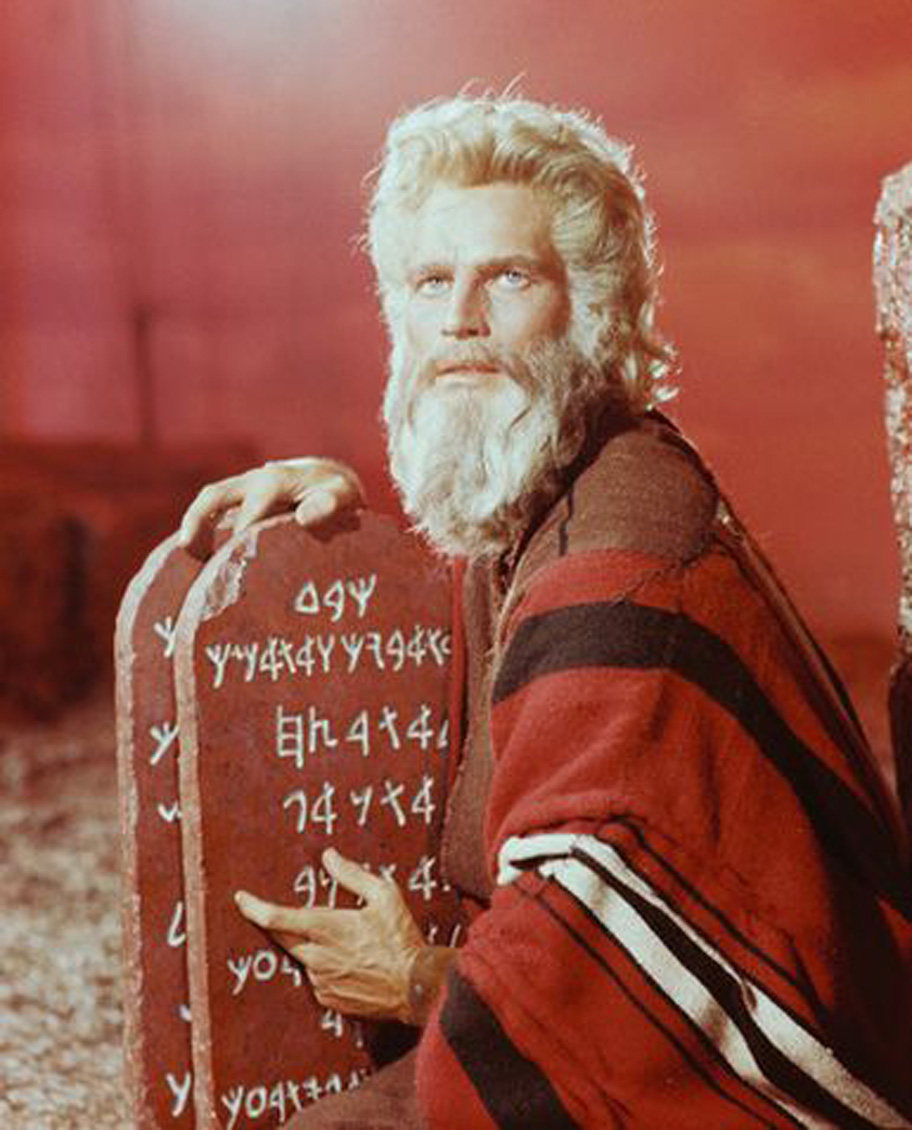
Writ in stone. Image from Addicting Info.

‘Substantive and meaningful’:
Congressional Republicans attend to
the urgent business of promoting religion

By Lamar W. Hankins / The Rag Blog / November 8, 2011

Republican House Majority Leader Eric Cantor of Virginia recently declared that he would work to prevent votes on any new legislation that is not “substantive and meaningful.” To show how serious the Republicans are about addressing only serious public business, on November 1, 2011, the Republican-controlled House of Representatives approved a resolution offered by a Republican congressman, J. Randy Forbes, that reaffirmed “In God We Trust” as the official motto of the United States.

The resolution also supported and encouraged “the public display of the national motto in all public buildings, public schools, and other government institutions.”

No one involved has explained why this reaffirmation of the motto adopted in 1956 and reiterated by a Republican-controlled Congress in 2006, has become a “substantive and meaningful” exercise of the legislative authority of the House.

I thought the U.S. was in the midst of the worst economic catastrophe since the Great Depression. I thought we were still fighting wars in the Middle East. I thought we were having currency issues with China that needed remedying. I thought we were engaging in internet espionage with Israel to interrupt the internet capability in Iran. I thought thousands of Americans were protesting in the streets against the rigged economic system.

I thought we had 9% unemployment officially, and real unemployment in excess of 15%. I thought we had a prolonged drought in Texas that has created great hardship and challenges to the well-being of our people. I thought we were expecting a new round of housing foreclosures against millions of American families.

These and many other problems are, to most of us, “substantive and meaningful,” but the Republicans seem to believe that making this nation’s government side with religion, and one religion in particular, is much more substantive and meaningful than all the economic, social, and environmental problems that are actually in the news and affecting the lives of most Americans daily.

Of course, this posture is in keeping with the theocratic positions of several Republican candidates for the presidency, so it is important for Americans to understand what this issue is about.

In 1782, upon the recommendation of a committee that included Benjamin Franklin, John Adams, and Thomas Jefferson, Congress adopted an official seal of the U.S., which included the motto “E Pluribus Unum.” That phrase is usually translated as “from many, one,” or “out of many, one,” indicating that out of many states (or colonies) one nation was created. Some prefer to interpret it to mean that from many people of all backgrounds, ethnicities, races, religions, etc., one nation came into being.

E Pluribus Unum” became the de facto motto of the U.S. until 1956, around the time when rabid anti-communism enveloped the country. It was the period when “In God We Trust” was placed on more American currency and coins than had been done previously, and it was a period when America’s leaders (and most of her people) seemed to be without irony.

The Almighty might view the placement of a reverential reference to God on filthy lucre as creating a graven image in violation of the admonition against such conduct found in the Ten Commandments. Yet, this was also the period when the Congress found it necessary to confound school children everywhere by adding the words “under God” to the Pledge of Allegiance. I still recall how hard it was to remember to add that phrase when we recited the Pledge each morning at school.

Such religious pronouncements are promoted by people who want to reinforce their claim that the United States is a Christian nation. Early in our history, John Adams and the Congress early disavowed such a notion in the Treaty of Tripoli, which was adopted in 1796:

As the Government of the United States of America is not, in any sense, founded on the Christian religion — as it has in itself no character of enmity against the laws, religion, or tranquility, of Mussulmen — and as the said States never entered into any war or act of hostility against any Mahometan nation, it is declared by the parties that no pretext arising from religious opinions shall ever produce an interruption of the harmony existing between the two countries.

The words “Mussulmen” and “Mohometan” refer to those who follow Islam or to the Muslim religion. For those who are irony-challenged, I would suggest that the widespread animosity felt by Americans against Muslims, particularly after 9/11, may seem puzzling in light of the Treaty of Tripoli.

The motto “In God We Trust” should present several obvious problems for those of us who live in a nation made up of Christians, Jews, Muslims, Buddhists, Bahais, Taoists, Wiccans, Hindus, and members of other religious traditions, as well as the over 16% of citizens who profess no religious affiliation.

The term “God” usually refers to the Judeo-Christian god and arguably to Allah, though I have never heard a Muslim refer to Allah by the name “God.” Some other religions don’t believe in any god. By using the name “God,” we exclude all of these others, which seems unAmerican. And for all I know, we have citizens in the U.S. who still believe in Zeus, or Zoriaster, or Krishna, or Thor, or Mithra, or any of the thousands of other gods that have been worshipped through the millennia.

If we have to have a religious motto, shouldn’t it be something like “In a diety we trust?” Yet that would leave out those Americans who don’t trust in any diety.

In pushing his legislation, Forbes claimed that there has been “a disturbing trend of inaccuracies and omissions, misunderstandings of church and state, rogue court challenges, and efforts to remove God from the public domain by unelected bureaucrats.”

Exactly how his resolution fixes any of these alleged problems is not apparent. Undoubtedly, the Republicans are trying to curry favor with the fundamentalist evangelicals who promote a false history of the U.S.

Former evangelist and author Frank Schaeffer, the son of the renowned evangelist Francis Schaeffer, wrote last month,

Like most evangelical/Roman Catholic fundamentalist movements in history, from the Bay State colonies to the Spanish Inquisition, the American Religious Right of today advocates the fusion of state power and religion through the reestablishment of the “Christian America” idea of “American Exceptionalism” (i.e., a nation “chosen” by God), the form of government adopted by the Puritans’ successors during the age of early American colonialism.

Forbes and most congressional Republicans will do almost anything to fuse government and fundamentalist religion, even if it means ignoring the substantive problems faced by most Americans, including most members of the religious right.

Forbes and others like him believe it is their business as government officials to compel me and all other Americans “to firmly declare our trust in God, believing that it will sustain us for generations to come.”

Nothing could be farther from the meaning and actual words of the religion clauses of the First Amendment: “Congress shall make no law respecting an establishment of religion, or prohibiting the free exercise thereof; . . .” No public official has the right to tell anyone how or when to practice his or her religion.

Such actions of Congress to privilege some religious beliefs turns all Americans who are not Christian or Jewish into political outsiders. They encourage government at every level to indoctrinate our children into a particular religious view regardless of their families’ beliefs. It is government promotion of religion and is forbidden by the Constitution.

A few representatives recognized this and voted against Forbes’s resolution:

Rep. Gary Ackerman (D-N.Y.)
Rep. Emanuel Cleaver (D-Mo.)
Rep. Justin Amash (R-Mich.)
Rep. Judy Chu (D-Calif.)
Rep. Mike Honda (D-Calif.)
Rep. Hank Johnson (D-Ga.)
Rep. Bobby Scott (D-Va.)
Rep. Pete Stark (D-Calif.)
Rep. Jerrold Nadler (D-N.Y.)

Two others voted “present.” They were Rep Keith Ellison (D-Minn.) and Rep. Melvin Watt (D-N.C.).

It should never be the purpose of government to sow religious division among Americans, but that’s just what this resolution does. It is time for all Americans, religious and non-religious, to tell their public officials to stop using religion to appeal to some of their constituents to the exclusion of the rest.

It is time to tell public officials to stop creating religious divisions in our country and acknowledge the clear intent of the the Constitution’s language that one of its authors, Thomas Jefferson, believed created a wall of separation between government and religion. Such a wall takes away nothing from the religious among us, all of whom are free to engage in their religion wherever and however they like, with an important exception: they should not expect the government’s approval or disapproval of their religion.

They should not expect the government to promote their religious beliefs, which is exactly what the Forbes House resolution does.

[Lamar W. Hankins, a former San Marcos, Texas, city attorney, is also a columnist for the San Marcos Mercury. This article © Freethought San Marcos, Lamar W. Hankins. Read more articles by Lamar W. Hankins on The Rag Blog.]

The Rag Blog

Posted in Rag Bloggers | Tagged , , , | 2 Comments

‘Substantive and meaningful’:
Congressional Republicans and the
urgent business of promoting religion

By Lamar W. Hankins / The Rag Blog / November 7, 2011

Republican House Majority Leader Eric Cantor of Virginia recently declared that he would work to prevent votes on any new legislation that is not “substantive and meaningful.” To show how serious the Republicans are about addressing only serious public business, on November 1, 2011, the Republican-controlled House of Representatives approved a resolution offered by a Republican congressman, J. Randy Forbes, that reaffirmed “In God We Trust” as the official motto of the United States.

The resolution also supported and encouraged “the public display of the national motto in all public buildings, public schools, and other government institutions.”

No one involved has explained why this reaffirmation of the motto adopted in 1956 and reiterated by a Republican-controlled Congress in 2006, has become a “substantive and meaningful” exercise of the legislative authority of the House.

I thought the U.S. was in the midst of the worst economic catastrophe since the Great Depression. I thought we were still fighting wars in the Middle East. I thought we were having currency issues with China that neede remedying. I thought we were engaging in internet espionage with Israel to interrupt the internet capability in Iran. I thought thousands of Americans were protesting in the streets against the rigged economic system.

I thought we had 9% unemployment officially, and real unemployment in excess of 15%. I thought we had a prolonged drought in Texas that has created great hardship and challenges to the well-being of our people. I thought we were expecting a new round of housing foreclosures against millions of American families.

These and many other problems are, to most of us, “substantive and meaningful,” but the Republicans seem to believe that making this nation’s government side with religion, and one religion in particular, is much more substantive and meaningful than all the economic, social, and environmental problems that are actually in the news and affecting the lives of most Americans daily.

Of course, this posture is in keeping with the theocratic positions of several Republican candidates for the presidency, so it is important for Americans to understand what this issue is about.

In 1782, upon the recommendation of a committee that included Benjamin Franklin, John Adams, and Thomas Jefferson, Congress adopted an official seal of the U.S., which included the motto “E Pluribus Unum.” That phrase is usually translated as “from many, one,” or “out of many, one,” indicating that out of many states (or colonies) one nation was created. Some prefer to interpret it to mean that from many people of all backgrounds, ethnicities, races, religions, etc., one nation came into being.

“E Pluribus Unum” became the de facto motto of the U.S. until 1956, around the time when rabid anti-communism enveloped the country. It was the period when “In God We Trust” was placed on more American currency and coins than had been done previously, and it was a period when America’s leaders (and most of her people) seemed to be without irony.

The Almighty might view the placement of a reverential reference to God on filthy lucre as creating a graven image in violation of the admonition against such conduct found in the Ten Commandments. Yet, this was also the period when the Congress found it necessary to confound school children everywhere by adding the words “under God” to the Pledge of Allegiance. I still recall how hard it was to remember to add that phrase when we recited the Pledge each morning at school.

Such religious pronouncements are promoted by people who want to reinforce their claim that the United States is a Christian nation. Early in our history, John Adams and the Congress early disavowed such a notion in the Treaty of Tripoli, which was adopted in 1796:

As the Government of the United States of America is not, in any sense, founded on the Christian religion — as it has in itself no character of enmity against the laws, religion, or tranquility, of Mussulmen — and as the said States never entered into any war or act of hostility against any Mahometan nation, it is declared by the parties that no pretext arising from religious opinions shall ever produce an interruption of the harmony existing between the two countries.

The words “Mussulmen” and “Mohometan” refer to those who follow Islam or to the Muslim religion. For those who are irony-challenged, I would suggest that the widespread animosity felt by Americans against Muslims, particularly after 9/11, may seem puzzling in light of the Treaty of Tripoli.

The motto “In God We Trust” should present several obvious problems for those of us who live in a nation made up of Christians, Jews, Muslims, Buddhists, Bahais, Taoists, Wiccans, Hindus, and members of other religious traditions, as well as the over 16% of citizens who profess no religious affiliation.

The term “God” usually refers to the Judeo-Christian god and arguably to Allah, though I have never heard a Muslim refer to Allah by the name “God.” Some other religions don’t believe in any god. By using the name “God,” we exclude all of these others, which seems unAmerican. And for all I know, we have citizens in the U.S. who still believe in Zeus, or Zoriaster, or Krishna, or Thor, or Mithra, or any of the thousands of other gods that have been worshipped through the millennia.

If we have to have a religious motto, shouldn’t it be something like “In a diety we trust?” Yet that would leave out those Americans who don’t trust in any diety.

In pushing his legislation, Forbes claimed that there has been “a disturbing trend of inaccuracies and omissions, misunderstandings of church and state, rogue court challenges, and efforts to remove God from the public domain by unelected bureaucrats.”

Exactly how his resolution fixes any of these alleged problems is not apparent. Undoubtedly, the Republicans are trying to curry favor with the fundamentalist evangelicals who promote a false history of the U.S.

Former evangelist and author Frank Schaeffer, the son of the renowned evangelist Francis Schaeffer, wrote last month,

Like most evangelical/Roman Catholic fundamentalist movements in history, from the Bay State colonies to the Spanish Inquisition, the American Religious Right of today advocates the fusion of state power and religion through the reestablishment of the “Christian America” idea of “American Exceptionalism” (i.e., a nation “chosen” by God), the form of government adopted by the Puritans’ successors during the age of early American colonialism.

Forbes and most congressional Republicans will do almost anything to fuse government and fundamentalist religion, even if it means ignoring the substantive problems faced by most Americans, including most members of the religious right.

Forbes and others like him believe it is their business as government officials to compel me and all other Americans “to firmly declare our trust in God, believing that it will sustain us for generations to come.”

Nothing could be farther from the meaning and actual words of the religion clauses of the First Amendment: “Congress shall make no law respecting an establishment of religion, or prohibiting the free exercise thereof; . . .” No public official has the right to tell anyone how or when to practice his or her religion.

Such actions of Congress to privilege some religious beliefs turns all Americans who are not Christian or Jewish into political outsiders. They encourage government at every level to indoctrinate our children into a particular religious view regardless of their families’ beliefs. It is government promotion of religion and is forbidden by the Constitution.

A few representatives recognized this and voted against Forbes’s resolution:

Rep. Gary Ackerman (D-N.Y.)
Rep. Emanuel Cleaver (D-Mo.)
Rep. Justin Amash (R-Mich.)
Rep. Judy Chu (D-Calif.)
Rep. Mike Honda (D-Calif.)
Rep. Hank Johnson (D-Ga.)
Rep. Bobby Scott (D-Va.)
Rep. Pete Stark (D-Calif.)
Rep. Jerrold Nadler (D-N.Y.)

Two others voted “present.” They were Rep Keith Ellison (D-Minn.) and Rep. Melvin Watt (D-N.C.).

It should never be the purpose of government to sow religious division among Americans, but that’s just what this resolution does. It is time for all Americans, religious and non-religious, to tell their public officials to stop using religion to appeal to some of their constituents to the exclusion of the rest.

It is time to tell public officials to stop creating religious divisions in our country and acknowledge the clear intent of the the Constitution’s language that one of its authors, Thomas Jefferson, believed created a wall of separation between government and religion. Such a wall takes away nothing from the religious among us, all of whom are free to engage in their religion wherever and however they like, with an important exception: they should not expect the government’s approval or disapproval of their religion.

They should not expect the government to promote their religious beliefs, which is exactly what the Forbes House resolution does.

[Lamar W. Hankins, a former San Marcos, Texas, city attorney, is also a columnist for the San Marcos Mercury. This article © Freethought San Marcos, Lamar W. Hankins. Read more articles by Lamar W. Hankins on The Rag Blog.]

The Rag Blog

Posted in RagBlog | Leave a comment

Ted McLaughlin : It’s High Time to Cut our Military Budget

Chart from Global Issues.

Last of the big spenders:
It’s time to make drastic cuts
to our military budget

By Ted McLaughlin / The Rag Blog / November 7, 2011

I was struck yesterday by a headline over at New York Times on MSNBC.com. It said “Lawmakers Aim To Stop Pentagon Cuts If Deficit Panel Fails.”

Frankly, this makes no sense at all. If the politicians are truly concerned about the deficit, as they claim to be (especially the Republicans), how could they fail to make cuts in the largest segment of discretionary spending in the entire government budget (military spending makes up about 54% of all discretionary government spending)? Here is part of that article:

As pessimism mounted this week over the ability of a bipartisan Congressional committee to agree on a deficit-reduction plan, lawmakers began taking steps to head off the large cuts in Pentagon spending that would automatically result from the panel’s failure.

Members of both parties and both chambers said they increasingly feared that the 12-member committee would be unable to bridge deep partisan divisions and find $1.2 trillion in deficit reduction as required under the law that raised the debt ceiling and created the committee in the summer.

As talks sputtered, one panel member publicly lamented that the process was not working, and the group was chastised by a bipartisan group of budget experts at a public hearing for failing to show progress. Several members of Congress, especially Republicans on the House and Senate Armed Services Committees, are readying legislation that would undo the automatic across-the-board cuts totaling nearly $500 billion for military programs, or exchange them for cuts in other areas of the federal budget.

These same politicians want Americans to believe that the spending on social programs that help poor people, unemployed people, children, and others is out of control and must be cut. And yet, all of these programs put together do not equal the money our government spends on the military. Spending for social programs is not out of control at all — in fact more is needed to help Americans survive this recession (especially since Congress refuses to invest in job creation).

But there is a part of the government budget where spending is definitely out of control — and that is the area of military spending. I know there are many who believe that the current level of military spending is necessary for the defense of this country. I find that argument to be ludicrous.

Just look at the chart above. The United States spends 43% of all the money spent on the military in the entire world! The second place country in military spending, China, lags far behind — spending only 7.3% of total world military spending. The top five in world military spending is rounded out by the United Kingdom at 3.7%, France at 3.6%, and Russia at 3.6%. In fact, the spending of the U.S. on its military is more than the next 15 countries spend combined on their militaries.

I know there are some on the right who say it is proper for the United States to spend such a large amount on their military because they have such a large percentage of the world’s GDP. That argument fails on a couple of levels. First, while the U.S. spends 43% of the world’s total military spending, it has only 21% of the world’s GDP. The U.S. would have to cut its military spending in half to bring it in line with its share of the world’s GDP.

Second, why must the United States spend more to defend itself than the next 15 biggest spenders? Are our needs and dangers so much greater than theirs? Of course not. The truth is that the only reason we spend so much is to support our military-industrial complex — the greediest one in the world — that gobbles up tax dollars like candy. Most of our spending is not for defense, but to fill the bank accounts of greedy capitalists and corporations.

If the budget deficit needs to be brought under control, as the politicians tell us it does, then the cuts should come from the vastly out of control military budget. We could cut our military budget in half and still be spending far more than any other country in the world (and more than China, Russia, France, and the United Kingdom combined). That would be more than enough to insure our national defense — and it would free up billions to help hurting Americans.

It’s time to stop financing our leaders’ ambitions to be the world’s bully, and use our funds to help the people in this country. It would promote peace and make us a better and fairer country.

[Ted McLaughlin also posts at jobsanger. Read more articles by Ted McLaughlin on The Rag Blog.]

The Rag Blog

Posted in RagBlog | Tagged | 1 Comment

Rick Ayers : Oakland’s Festival of Hope

The historic Grand Lake Theater in Oakland shut its doors to join the General Strike. Image from ThinkProgress.

A festival of hope:
Oakland General Strike

By Rick Ayers / The Rag Blog / November 7, 2011

[Rick Ayers shares with Rag Blog readers the following impressions from last week’s Oakland General Strike.]

OAKLAND — As I write this on Wednesday night, November 2, people are still massed at the Port of Oakland. This day of the Oakland General Strike has gone past like a dream. Something unimaginable just happened. The sleeping giant has awakened. This changes everything.

My thoughts right now are not political analysis — of the “line” of the demonstrators, of the impact on the elections, of the different tactics employed. I just want to bask in the moment, the feeling tone, of the day.

The way it went was this. Taking the bus towards downtown because there would be no parking. Getting off at 20th Street as the driver cheerfully told us that he would be turning here, could get no closer to City Center. Streaming down Broadway with a growing surge of people.

Getting to 14th and Broadway, running into Natalie outside of Oaklandish T-shirt store — which has closed for the day and set up turntables with full time DJ out front. Smiles and hugs. And here’s Greg and Chris, there’s Fatimah.

Joining a group of teacher friends, again unbearably big smiles. Wandering in the crowd, music and speakers. Every five minutes we run into people we know: hugs, high fives, and the same shared feelings, expressed only briefly, “Can you believe it?” “Amazing.” “Beautiful.”

Some of us have waited 30, 35 years for this day. Others have never seen such a thing. For some reason — being pushed to the breaking point by the greed of the wealthy, inspired by the audacity of the uprisings in Egypt and Tunisia, Spain, and Greece — this has finally broken open. 10,000 strong. Or more. Who knows?

I hear elders like myself begin, again and again, to offer advice — but then we clamp our hands over our mouths. No telling these young people how to do it. We tried our best these 35 years and failed. Whatever they are doing, they have the key thing right and let’s just learn from them.

Encountering former students who run up, proudly greeting their teachers, as if to say, “Yes, we’re here, we are finally doing what we talked about in class.” There’s Becca and she’s with her younger sister, just a freshman in high school. Beaming.

Something about the last decade, decades really, gave rise to a kind of sleight-of-hand postmodernism, a philosophy which posed individual resistance but ridiculed mass action or hope for major change. This last period made our primary form of commentary the comedian, the master of irony and sarcasm, who would at least help us endure the dark times.

Ah, but this is changed utterly. Mass mobilization in the streets changed that. Cynicism must give way to hope, alienation to commitment.

It’s hard to keep our posse together as we move around the downtown area. Marches are constantly leaving the center and heading to different banks and institutions of the one percent. Others are arriving — once a large contingent from Berkeley, another time a huge Teamsters semi blasting “Solidarity Forever.” I am mostly with Berkeley High and CAS folks; Ilene with Envision Academy colleagues. We join and separate in this direction and that. Then our daughter Sonia texts — she has gotten off work and is parked nearby, making her way in. Hooray!

Another wonderful thing: yes, there are some printed signs, made by unions or community organizations; there is a beautiful silk-screened poster that proclaims “Hella Occupy Oakland.” But there are thousands of little hand-made signs, on poster board or flattened cardboard boxes — little individual expressions, each person’s best thoughts on the moment. Strung together, they are like poems – beautiful words bobbing and swirling past.

At different points there are dance performances. A Brazilian group that we saw last week at the encampment, killin’ it to the drums, drawing in the crowd. Destiny Arts youth combining dance and martial arts. Some artists, like Boots Riley, have not only performed but have joined the work — soldiers in the struggle.

We run into our pal Lincoln — sitting on the curb with his sister. A movement poet since the 60’s, he has a beatific smile and a big hug. He turns around and shows a big sign on his back, “At last.” Nirali comes by — showing us the baby-march signs. She says there is a “pre-school teach-in” on Friday morning. Nearby shops have signs — solidarity with the general strike; open but taking no corporate credit cards.

A movement is a living organism. It grows and adapts. The day after the police teargas and rubber bullet attack on the demonstration, we had regathered in Oscar Grant Plaza. Walking by us were three young women carrying a banner. Each one had a gas mask slung around her neck, ready to deploy. We grow and adapt.

The narrative has changed. We are not just having a discussion. All of the people who have been horrified by the direction the country has been on — by the endless imperial wars, the disgusting global theft, the rape of the earth, the attacks on immigrants, the war on women, the racism of our wealth gaps, the destruction of our schools, the slave system of our prisons, the arrogance of the super-rich — we always knew the other was there, we always saw each other. But we all looked at each other, shook our heads, and sighed that we were powerless.

Now we are powerful. That is a genie that cannot be stuffed back in the bottle.

Later in the evening I teach my class in San Francisco. Driving home along the Panhandle I turn on the radio, KISQ 98.1. Out comes the beautiful voice of Jimi Hendrix, “Purple Haze,” a tribute to this city, to this Bay Area. A completely apolitical song, just a happy druggie song. But something else pulsates there. I am reminded of the 1960’s. A feeling of belonging, beyond alienation, home at last. A festival of hope.

[Rick Ayers was co-founder of and lead teacher at the Communication Arts and Sciences small school at Berkeley High School, and is currently Adjunct Professor in Teacher Education at the University of San Francisco. He is author, with his brother William Ayers, of Teaching the Taboo: Courage and Imagination in the Classroom, published by Teachers College Press. He can be reached at rayers@berkeley.edu. This article was also published at The Huffington Post. Read more articles by Rick Ayers on The Rag Blog]

The Rag Blog

Posted in Rag Bloggers | Tagged , , , | 2 Comments