Robert Jensen : Saving Soils and Souls

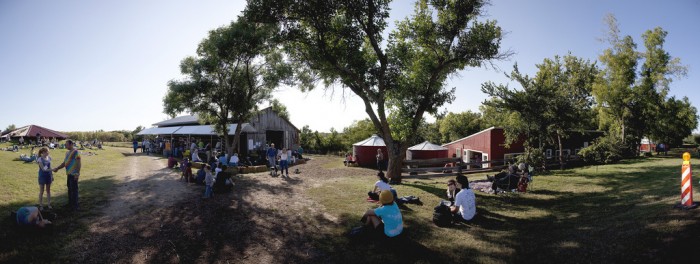
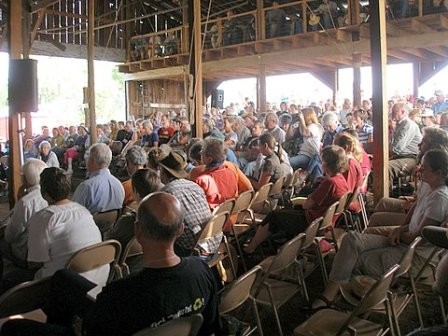
Top, 2009 Prairie Festival. Image from landlogics. Below, Prairie Festival 2010. Image from The Land Institute.

Soils and souls:
The promise of The Land

By Robert Jensen / The Rag Blog / October 18, 2010

Stop me if you’ve heard this one: A poet, an economist, and a biologist walk into in a barn in Kansas and start talking. What do you get when you cross their ideas?

Answer: Hybrid vigor.

OK, the joke might not quite work unless you’re an agronomist (and maybe even the agronomists aren’t laughing), but it captures the importance of the conversations at The Land Institute’s annual gathering in Salina, Kansas.

In the search for alternatives to our dead-end industrial agriculture system, Land Institute researchers are pursuing plant breeding programs that just may be the key to post-oil farming.

But beyond the science, “The Land” — that’s how everyone there refers to the Institute in conversation — provides a fertile space for mixing the ideas of people as well as the genes of plants. In both cases, the hybrid vigor — the superior qualities that result from crossbreeding — is exciting.

With the rain providing an intermittent backbeat on the barn roof throughout a Saturday in late September, the 2010 Prairie Festival began with three talks — by poet/novelist Wendell Berry, economist Josh Farley, and biologist Sandra Steingraber — that were insightful on their own, but even more intriguing as an intellectual mash-up. The three were telling the story of how sin brought us to this place, how we must redefine success if we are to atone, and how essential that change is for our own safety.

I had come expecting those kinds of insights and analyses, but surprisingly I left the barn that day with one revelation burning in my brain: While evil lurks in many places, it is most concentrated in fossil fuels.

On Sunday morning, Wes Jackson, The Land’s co-founder and president, played the role of ecologically evangelical preacher. We do indeed face challenges, Jackson testifies, but there is a better way to be found in Natural Systems Agriculture. Perennial polycultures can deliver us from that evil.

But before getting to the solutions, we have to understand the problem, which starts with sin.

Wendell Berry. Image from Peace by Peace.

Sin

Wendell Berry, who farms in his native Henry County, Kentucky, has become a kind of poet laureate of the sustainable agriculture movement, exploring culture and agriculture in verse, short stories, and novels. Establishing himself as a leading critic of industrial farming with his 1977 non-fiction book The Unsettling of America, he has been relentless in his analysis of the disastrous consequences of a consumption-obsessed, profit-driven society on both the human and the natural world.

The lanky Kentuckian began his talk by noting that he is not from Kansas, and therefore would speak about his home state, the place he knows and loves. That reflects one of Berry’s core themes, that the universal principles we articulate must be lived in intensely local fashion; one of his best-known sayings is, “If you don’t know where you are, you don’t know who you are.”

Wherever we are living, Berry argues, we’re in trouble as a consequence of a “land-destroying economy” that pursues “production-by-exhaustion.” That’s most clearly visible in the rapacious destruction of the land’s biotic communities in mountaintop-removal coal mining in his part of the world, Berry says, but also true of agriculture most everywhere. Extracting fossil fuels from the ground is dangerous, and so is the way those fuels are used to work the ground in farming.

The mining of the forests and soil, along with the extraction of fossil fuels, may have started innocently, but since the European conquest of the Americas, “It took us only a little more than 200 years to pass from intentions sometimes approximately good to this horrible result, in which our education, our religion, our politics, and our daily lives all are implicated,” Berry tells the packed house in The Land’s barn.

“This is original sin, round two.”

The sin comes not just in the greed that drives exploitation but the lack of attention we pay to “what is not obvious” — the way we so often ignore the complexity of the world beyond our powers of observation and our failure to recognize the consequences of our inattention. Berry argues that when it takes 1,000 years for nature to produce one inch of topsoil, human farming practices that erode that soil are not simply bad practices but an act of desecration.

While Berry doesn’t hesitate to condemn the corporate henchmen who direct much of this destruction and the politicians who enable them, his point is that “the carelessness of our economic life” means we all play a part in that desecration. We are, in fact, all sinners against the integrity of the ecosystem.

Despite the severity of the critique, Berry articulates “authentic reasons for hope” that sound simple but require much of us.

“We can learn where we are, we can look around us and see,” he suggests. We also can rely on land health, “the capacity of the land for self-renewal,” and work at conservation, “our effort to understand and preserve that capacity.”

Berry doesn’t look to educational, political, or corporate institutions for much help in those efforts, suggesting that we instead look to “leadership from the bottom” that can be provided by groups and individuals “who without official permission or support or knowledge are seeing what needs to be done and doing it.”

As a writer, Berry thinks not just about our actions but about our words. He argues that slogans such as “think globally, act locally” are of little value and that terms such as “green,” which are too easily exploited by corporations for marketing, are downright dangerous.

“What gives hope is actual conversation, actual discourse, in which people say to one another in good faith, fully and exactly, what they know, and acknowledge honestly the limits of their knowledge,” he advises
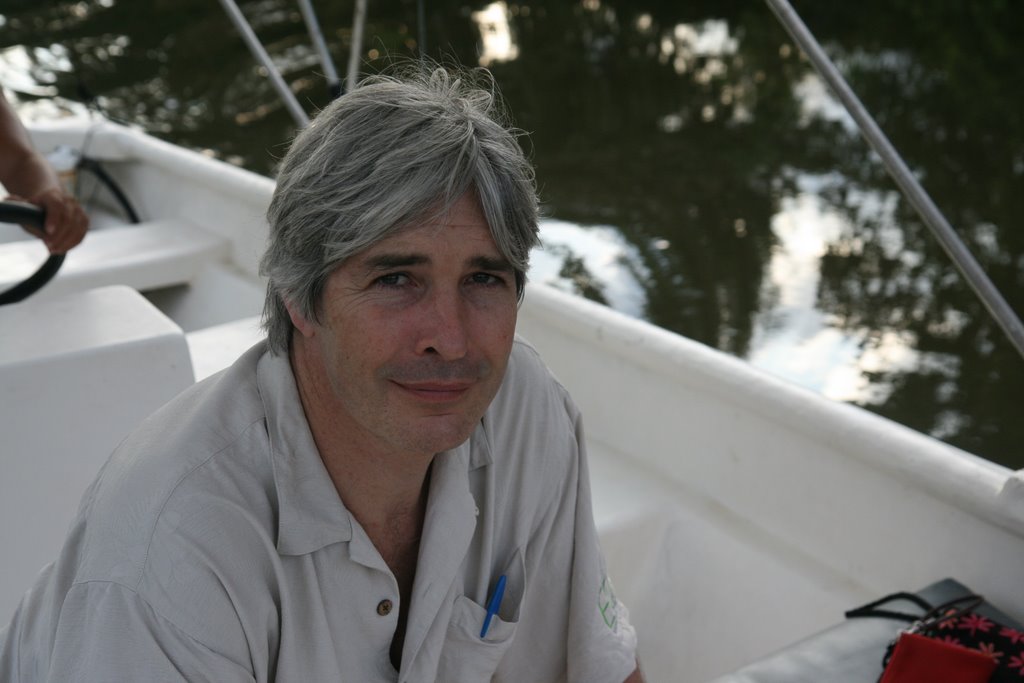
Josh Farley. Image from Picasa.

Success

Josh Farley found that saying exactly what he knows has rarely helped his career as an economist. Walking the grounds of The Land before his talk, he told me that the more he studied neoclassical economics, the more he realized that free-market ideology couldn’t account for ecological realities.

Most of his advisers counseled him to stick to the dogma of the discipline, but Farley managed to finish a Ph.D. and stay true to his calling. Seeking out other mentors, he hooked up with Herman Daly, a central figure in “ecological economics” and ended up co-writing with Daly the 2003 text Ecological Economics: Principles and Applications.

Now teaching at the University of Vermont, Farley is part of a small but growing group of economists who don’t simply treat the “environment” as a component of the economy but instead ask how we can construct an economy that can balance what is biologically and physically possible with what is socially and ethically desirable.

The first step in that, Farley told the Prairie Festival audience, is to dispense with some of the mythologies and mistakes of neoclassical economics.

High on the list of mythologies is the notion that our affluence is the product of the wonders of the capitalist market economy. Farley reminds us that capitalism developed alongside the exploitation of fossil fuels, first coal and then oil and natural gas.

Our productivity is the result not of the magic of the market so much as the magic of fossil fuels. Given that a barrel of oil can do the work of 20,000 hours of human labor, Farley says, such dramatic expansion of productivity is not so magical after all.

Markets also make mistakes. Humans use all that energy to transform our ecosystems faster than they can recharge or be restored. Resources are mined and waste is spewed according to the dictates of the market, not the limits of the natural world.

Farley points out that there’s no feedback loop in the market economy that stops us from destroying the planet, nothing that resets the prices of goods to reflect that destruction. That’s a problem, Farley says, in his trademark understated fashion.

As a result, we get confused about terms such as efficiency, Farley says. Before fossil fuels, when humans lived almost exclusively on the energy of contemporary sunlight, one calorie burned by a worker could create 10 calories of food, but now we use 10 calories from oil to create one calorie of food.

And remember that the market has no way to account for the disastrous consequences of burning all those fossil fuels. And we’re increasingly dependent on non-renewable resources for the food we need to live. That’s efficiency?

But perhaps most dangerous is the story capitalism tells us not about the natural world but about us. Glorifying greed, capitalism tells us we are nothing more than “atomic globules of desire” and that “we’re individuals, apart from community, and all we want is more and more and more.” We need, Farley explains, a different conception of success.

To cope with these problems, Farley sets a modest goal: “A fundamental redesign of our economy.” Sounds naïve, but if we don’t find a way to do that, well, remember that the economy is based not on the “laws of economics” dreamed up by free-market ideologues but on “laws of nature” that we can’t dream away.
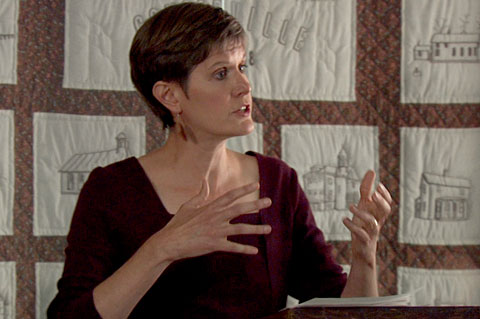
Sandra Steingraber Image from Steingraber.com.

Safety

As a biologist, Sandra Steingraber has long studied the negative consequences of human intervention into the natural world, for individuals and ecosystems. She describes those two different trunks of the environmental movement: The focus on toxins’ effects on organisms, which first hit the public radar with the publication of Rachel Carson’s 1962 classic Silent Spring; and the focus on larger ecosystem effects, of which global warming/climate disruption are the gravest threat and which hit the public consciousness first with Bill McKibben’s book The End of Nature in 1989.

Steingraber is best known for her inquiry into the effects of those toxins, an investigation that has been intensely personal; she is a cancer survivor, and her 1997 book, Living Downstream: An Ecologist Looks at Cancer and the Environment, examined the lines of evidence that establish connections between cancer and chemical contamination.

Recognizing that both trunks amount to a “de-creation of life,” Steingraber has decided to turn to what she believes is the source of the problems.

Says Steingraber: The two trunks — “the toxification of all life” and “the dissolution of the whole life support system on which the planet rests” — have one root, fossil fuels.

“When you light [fossil fuels] on fire, you destroy our life-support system through the creation of heat-trapping gases,” she explains. “When you turn them into synthetic chemicals with the power to break chromosomes and tinker with brain cells and hormones, you destroy children.”

This realization has led Steingraber, a visiting scholar at Ithaca College living in upstate New York, to get involved with the movement to stop hydrofracking, a controversial method of getting at natural gas in shale that involves blasting millions of gallons water, sand, and chemicals deep into the ground to force gas out of the rock.

That process, she says, is another version of mountaintop-removal and deep-water drilling, another desperate attempt to extend a fossil-fuel economy that is fundamentally unsustainable. In such a world, no one is safe. We all live downstream.
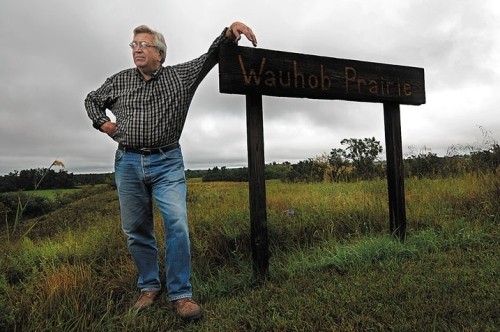
Wes Jackson. Image from The Land Institute.

Nature as measure

In the talks of Berry, Farley, and Steingraber — three very different people with very different backgrounds and training — the common thread is the recognition of the centrality of fossil fuels: to the desecration of land and communities, to the economy’s distortion of our sense of success, to the threats to the health of each of us and the ecosystem.

In that Kansas barn, friends of The Land gathered out of a belief that there are alternatives, and that nowhere is the pursuit of those alternatives more important than in agriculture, the way in which we feed ourselves. For many at Prairie Festival, the research being conducted at The Land is a key to our hopes, and those hopes are bolstered in Wes Jackson’s talk, which traditionally closes out the festival.

Jackson, who grew up on a Kansas farm before earning a Ph.D. in plant genetics, gave up a comfortable university teaching position to start The Land in 1976. His talk reflects both his roots on the farm and his specialized training, but there also are strains of the preacher in his presentation, as he speaks of both sin and redemption.

That redemption in agriculture can come, Jackson preaches, from recognizing that industrial farming — annual plants cultivated in monocultures, dependent on fossil fuel-based fertilizers, pesticides, and herbicides — has greatly expanded yields but at the cost of increased soil erosion and decreased soil fertility.

That “failure of success” as Jackson calls it, leaves us no choice but to look to nature for guidance. Rather than mimicking industrial processes, farmers have to ask how natural ecosystems hold soil and ensure fertility. Wheat farmers in Kansas should be looking at the prairie for inspiration, not a factory assembly line.

That is the core of Natural Systems Agriculture, taking nature as measure. The key to The Land’s research program is breeding perennial grains — whose deeper roots help hold the soil in place — that can produce adequate yields to feed us. Those perennials would ideally be planted in polycultures — mixtures of plants that help control insects, pathogens, and weeds without petrochemicals.

While this research is the heart of The Land, Jackson speaks as much about solidarity as he does about science, about the commitment it will take to see this through. Prairie Festival is in part about an exchange of information among the invited speakers, The Land’s staff, and guests.

But equally important is the role of this annual gathering in creating what Jackson calls “a consecrated community” that is committed over the long haul to the project of an agriculture that can reverse the erosion and depletion of the soil and provide a model for reversing the larger degradation of the planetary ecosystem.

If that project is to succeed, it will have to combine the traditional wisdom that farmers acquire in the fields with the specialized knowledge that scientists develop in the laboratory. But Jackson knows it also requires faith, and he ends with a preacher’s charge to the congregation.

Our task, he says, is to “save the soils as we save our souls.”

This article was also posted at Texas Observer online.

[Robert Jensen is a journalism professor at the University of Texas at Austin and board member of the Third Coast Activist Resource Center in Austin. He is the author of All My Bones Shake: Seeking a Progressive Path to the Prophetic Voice, (Soft Skull Press, 2009); Getting Off: Pornography and the End of Masculinity (South End Press, 2007); The Heart of Whiteness: Confronting Race, Racism and White Privilege(City Lights, 2005); Citizens of the Empire: The Struggle to Claim Our Humanity (City Lights, 2004); and Writing Dissent: Taking Radical Ideas from the Margins to the Mainstream (Peter Lang, 2002). Jensen is also co-producer of the documentary film Abe Osheroff: One Foot in the Grave, the Other Still Dancing, which chronicles the life and philosophy of the longtime radical activist. Robert Jensen can be reached at rjensen@uts.cc.utexas.edu.]

  • For more information on the work of The Land Institute, go here.

The Rag Blog

Posted in Rag Bloggers | Tagged , , , , | 1 Comment

Akwasi Evans : Standing Up to the Corporate Bully

Photo by Anton Tang / Flickr.

Corporate bullying:
It’s time to stand together

Big corporations charge citizens extra for making mistakes and penalize them unjustly for being the suckers who fall for their sales pitch.

By Akwasi Evans / The Rag Blog / October 18, 2010

There has been an increasing amount of talk taking place around the issue of bullying. Several young children and college students have recently committed suicide as a result of what many feel was bullying.

On Oct. 1 a 13-year-old boy committed suicide at his home in Houston after being bullied at the Cypress Fairbanks Independent School District. Asher Brown’s parents blamed the school for their son’s death, saying that he shot himself in the head after being tormented by classmates for being gay.

Tyler Clementi, a first year student at Rutgers University in New Jersey, jumped off a bridge to his death after his roommate and another student secretly filmed him engaging in a sexual act with another male student.

Kevin Morrissey committed suicide near the University of Virginia campus after being tormented on the job. At least two co-workers said they warned university officials about his growing despair over alleged workplace bullying at the award-winning Virginia Quarterly Review.

On July 30, Morrissey, the Review‘s 52-year-old managing editor, walked to the old coal tower near campus and shot himself in the head.

Bullying can take many forms, but one of the most lethal and least recognized is corporate bullying. Corporations treat citizens like commodities and charge them for services they don’t even render.

Recently National Public Radio ran a podcast about a couple that was charged $15 for paying their bills on time. The story talked about corporate automation and how corporations are charging customers extra fees for making payments in any form other than the one they dictate. And their dictation changes with every upgrade in their automation.

If and when automation shuts down we are all screwed. I was in an HEB a couple of months ago in Killeen when their computers shut down and they couldn’t sell food. Not even to people paying with cash.

Several large banks are now coming under fire for the arbitrary way they foreclosed on thousands of American homes. Many didn’t even examine the forms before forcing people out of their homesteads.

Last week my truck was repossessed a day after the payment had been made. When I inquired I was told that the payment may have been received, but it hadn’t been posted so they sent someone to sneak into my driveway in the middle of the night and repossess the truck.

But, they didn’t just take the truck; they also took all my possessions that were in the truck. In order to retrieve my property and the corporation’s truck that I am making monthly installments on I had to pay the equivalent of four months payment.

If you walk into a supermarket to purchase some food and you write a check without sufficient funds to cover the purchase the supermarket will charge you up to $40 in penalties, but if your check does clear and you learn from your receipt that the market had overcharged you, all you get is a refund and your time wasted.

One problem with corporate bullying is that big corporations charge citizens extra for making mistakes and penalize them unjustly for being the suckers who fall for their sales pitch. But, the bigger problem with corporate bullying is that they steal. I’m not talking petty theft here; I’m talking grand theft larceny.

Do you remember Enron? How about Bernie Madoff? These are two examples of corporate thieves who got caught. There are countless thousands of corporate bullies ripping us off more efficiently than the Tea Party can organize around hatred of President Obama.

Once when I was visiting Atlanta with some fellow publisher I attempted to purchase a tailor-made suit that was on sale because the short guy who ordered it never picked it up. When I gave the clerk my debit card he told me it had been declined. Embarrassed, I slinked out of the store with my head down wondering what had happened to the deposit I had just made before leaving Austin.

Upon my return I learned that the deposit wasn’t credited until the following day and when a large check came through without sufficient funds available they charged me a penalty. Then they ran the large check through a few more times and when some smaller checks came in they ran they through several times. When I closed the account out I still owed Chase Bank $800 in service fees.

It would be easy to site numerous other examples of how I have been ripped off by corporate bullies and easier still to acknowledge similar experiences by thousands of other citizens in corresponding or worse situations than my own.

My point is that bullies pick on people who don’t stand up to them. Editorializing is one way I can stand up even though doing so often gets me smacked further down. Still I stand, choosing to suffer rather than kowtow. Soon, I suspect, many others — thousands, and maybe millions — are going to start to stand up to corporate bullying. And when we band together we will force the bully to leave the schoolyard.

If we expect ever to improve our quality of life, if we hope to stabilize our communities, if we really want to educate our children, if we truly want to insure our future, it is becoming increasingly necessary for more of us to stand up to corporate bullying or accept the inevitable peonage, poverty, and anomie that awaits us.

Let’s stand together against all forms of bullying and let’s demand an end to the deterioration in the quality of our lives.

[Akwasi Evans is a progressive journalist and civil rights activist. He is publisher and editor of NOKOA, the Observer, a progressive Austin weekly newspaper which he founded in 1987, and also hosts a weekly radio show on KAZI-FM in Austin. Evans marched with Dr. Martin Luther King, Jr., and has been involved with the civil rights movement for most of his life.]

Listen to Thorne Dreyer‘s Oct. 5, 2010, interview with Akwasi Evans and Joe Dubovy on Rag Radio, here.

The Rag Blog

Posted in Rag Bloggers | Tagged , , , | 5 Comments

Harvey Wasserman : Hemp Is no Paper Tiger

Image from Hemp & Chocolat.

California’s Prop. 19:
With legal pot comes legal hemp,
history’s most profitable industrial crop

By Harvey Wasserman / The Rag Blog / October 18, 2010

Hemp is the far bigger economic issue hiding behind legal marijuana.

If the upcoming pot legalization ballot in California were decided by hemp farmers like George Washington and Thomas Jefferson, it would be no contest. For purely economic reasons, if you told the Constitutional Convention in 1787 that the nation they were founding would someday make hemp illegal, they would have laughed you out of the room.

If California legalizes pot, it will save the state millions in avoided legal and imprisonment costs, while raising it millions in taxes.

But with legal marijuana will come legal hemp. That will open up the Golden State to a multi-billion-dollar crop that has been a staple of human agriculture for thousands of years, and that could save the farms of thousands of American families.

Hemp is currently legal in Canada, Germany, Holland, Rumania, Japan, and China, among many other countries. It is illegal here largely because of marijuana prohibition. Ask any sane person why HEMP is illegal and you will get a blank stare.

For paper, clothing, textiles, rope, sails, fuel, and food, hemp has been a core crop since the founding of ancient China, India, and Arabia. It’s easy to plant, grow, and harvest, and farmers — including Washington and Jefferson — have sung its praises throughout history. It was the number one or two cash crop on virtually all American family farms from the colonial era on.

If the American Farm Bureaus and Farmers Unions were truly serving their constituents, they would be pushing hard for legal pot so that its far more profitable (but essentially unsmokable) cousin could again bring prosperity to American farmers.

Hemp may be the real reason marijuana is illegal. In the 1930s, the Hearst family set out to protect their vast timber holdings, much of which were being used to make paper.

But hemp produces five times as much paper per acre as do trees. Hemp paper is stronger and easier to make. The Declaration of Independence was written on hemp paper, and one of Benjamin Franklin’s primary paper mills ran on it.

But the Hearsts used their newspapers to incite enough reefer madness to get marijuana banned in 1937. With that ban came complex laws that killed off the growing of hemp. The ecological devastation that’s followed with continued use of trees for paper has been epic.

As canvas, hemp has long been essential for shoes, clothing, rope, sails, textiles, building materials and much more. It’s far more durable than cotton and ecologically benign compared to virtually any other industrial crop. Hemp needs no pesticides, herbicides or chemical fertilizers, and can grow well without much water.

Hemp’s use for rope was so critical to the U.S. war effort that in the 1940s, the U.S. military lifted the bans and blanketed virtually the entire state of Kansas with it. The War Department’s “Hemp for Victory” is the core film on how to grow it.

Henry Ford produced an entire automobile made from hemp fiber stiffened with resin. Like the original diesel engine, it was designed to run on hemp fuel .

Powder from hemp seeds is extremely high in protein and in omega-3 oils, now mostly gotten from fish.

Hemp could be key to the future of bio-fuels. Growing food crops like corn and soy to make ethanol and diesel is extremely inefficient and expensive. They force hungry people to compete with cars for fuel.

Fast-growing hemp stalks and leaves are well-suited for cheap fermentation into ethanol, and for compression into fuel pellets. The seeds produce a bio-diesel that’s far superior to what comes from soy.

Alcohol, tobacco, pharmaceutical, and law enforcement/prison-industrial industries — not to mention entrenched narco-terrorists — are leading the fight against legal pot.

But the industrial production of hemp would also transform the industries for paper, cotton, textiles, plastics, fuel, fish oi, and more. The economic, ecological, and employment benefits would be incalculable.

When Californians go to the polls November 2, they may end a marijuana prohibition that’s had devastating impacts on states’ public health and civil liberties, while costing it billions.

They’ll also decide whether California — and, ultimately, the U.S. — will resume production of history’s most powerful, versatile, and profitable industrial crop, one ultimately certain to be worth far more than marijuana.

One that was essential to this nation’s founding — and that could be central to its economic, ecological, and agricultural revival.

[Harvey Wasserman’s History of the United States is at www.harveywasserman.com, along with Passions of the Potsmoking Patriots by “Thomas Paine.” His “George Washington Was America’s First Stoner…” is in the December issue of Hustler Magazine.]

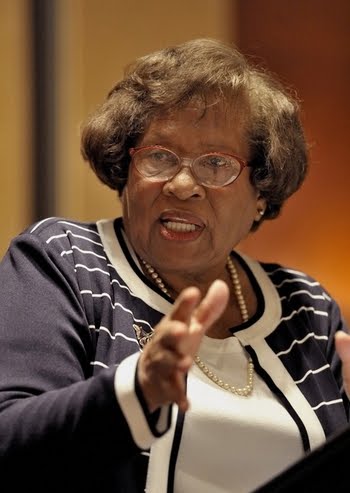
Former Surgeon General Joycelyn Elders. Image from El Porvenir.

Joycelyn Elders supports legal pot

Former U.S. Surgeon General Joycelyn Elders told CNN Sunday she supports legalizing marijuana.

The trend-setting state of California is voting next month on a ballot initiative to legalize pot, also known as Proposition 19. The measure would legalize recreational use in the state, though federal officials have said they would continue to enforce drug laws in California if the initiative is approved.

“What I think is horrible about all of this, is that we criminalize young people. And we use so many of our excellent resources … for things that aren’t really causing any problems,” said Elders. “It’s not a toxic substance.”

Supporters of California’s Prop. 19 say it would raise revenue and cut the cost of enforcement, while opponents point to drug’s harmful side-effects….

CNN

The Rag Blog

Posted in Rag Bloggers | Tagged , , , , , , , | 2 Comments

Jay D. Jurie : Behind the Chilean Mine Disaster

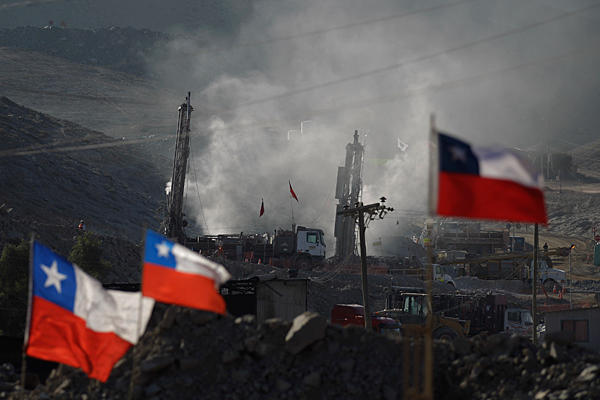
Drills are seen outside the San Jose Mine in Copiapo, Chile, where 33 miners were trapped 2,000 feet under the ground for more than two months. Photo by Roberto Candia / AP.

What’s caused it and what’s next?
After the Chilean mine rescue

By Jay D. Jurie / The Rag Blog / October 18, 2010

Besides focusing on one miner with a wife and a mistress, much has been made by major media outlets about the lucrative opportunities awaiting the 33 miners recently rescued from the San Jose copper and gold mine in Copiapo, Chile.

Little attention has been devoted to what led to the disaster, or what the future may hold for Chile’s thousands of other miners. Chile has a mining fatality rate of over 30 per year, and the Chilean government has not yet signed the International Labor Organization’s Convention 176 that establishes safety and health protocols for mining.

The owner of the San Jose Mine is the San Esteban Mining Co., a privately-owned firm that, like Massey Energy or BP in the U.S., has a poor safety track record. Like much “penny wise and pound foolish” management philosophy these days, it has been claimed the company did not want to fund inexpensive measures that would have prevented the disaster.

Early in the disaster San Esteban stated they didn’t have the funds to launch a rescue. They stopped paying the 33 trapped miners and laid off 200 others. San Esteban’s assets were frozen by the Chilean government in order to pay for the rescue operation.

Chilean miners, including those who worked at San Jose, are represented by a union, CONFEMIN (Confederacion Minera de Chile), that claims safety complaints they filed with San Esteban were consistently ignored. Labor representation. coupled with the promise of Chilean President Sebastian Pinera to improve workplace safety across the country, offers at least a small measure of hope.

[Jay D. Jurie is a proud Rag Blogger who teaches public administration and urban planning and lives near Orlando, Florida.]

The Rag Blog

Posted in Rag Bloggers | Tagged , , , , , | 1 Comment

One hundred years ago Hannah Shapiro, known as “Annie” to her fellow workers, rose up and stormed off her job as a garment worker in Chicago because her meager wages had just been cut even further. To her surprise, her fellow workers followed her out the door, and what resulted was the great Hart, Schaffner, and Marx strike of 1910 that eventually involved 40,000 workers. Annie’s story has been told in a new illustrated book for children (written, as Harry is quick to point out, by his sister). Targ discusses the importance of educating our children about the progressive history that is generally left out of their textbooks, and points out that children’s books have historically succeeded in addressing these subjects — even when writers in other fields were blacklisted or censored.

Posted in RagBlog | Leave a comment

William Michael Hanks : Net Neutrality / Stop Thief!

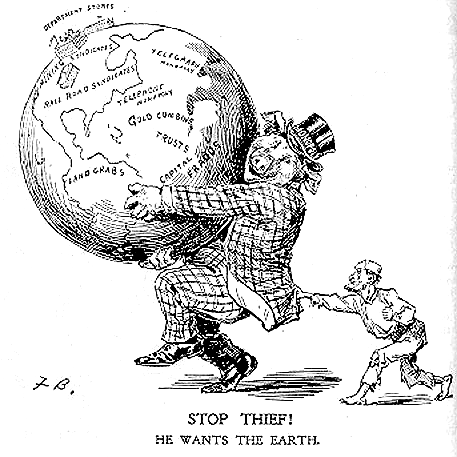
Stop thief!
How the internet happened
and why it’s in danger now

By William Michael Hanks / The Rag Blog / October 15, 2010

  • Also see Mike Hanks’ companion article: Net Neutrality / Open Internet Under Fire
  • And see ‘Save the Internet’ video and Net Neutrality resources, Below
  • Somebody is trying to steal your shiny new bicycle and I know who it is. What you can do about it depends on being able to dissuade their accomplices from participating in the crime.

    Your bicycle is the Internet. It takes you to far away places, on adventures, to see friends and family, and it informs your opinions. Right now you can hop on it and go anywhere you want. But if five monopolistic corporations have their way you’ll have to ask their permission first.

    A few short years ago there were thousands of local Internet Service Providers (ISP’s). They sold, for a monthly fee, telephone modem access to the Internet. Beep beep, whistle, buzz, long wait. Then cable service providers began to offer the service over much faster cable lines. Cable companies merged and consolidated so that now four or five corporations operate in protected monopolies across the entire country.

    The biggest are Comcast, AT&T, Verizon, Time Warner, and Cox. It’s not enough that they have a monopoly in your community, or that you pay them for the use of your Internet highway. They want to control where and how fast you can go and who you can do business with as well.

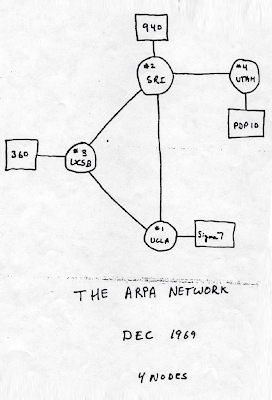
    Why is this a theft? After all it’s their cables. Because, if you have ever paid taxes, the Internet belongs to you. It was conceived with tax dollars spent on your behalf by the Defense Advanced Research Projects Agency (DARPA). Like most bureaucratic projects, it began with a memo:

    Dated April 23, 1963, the memo was dictated as its author, Joseph Carl Robnett Licklider, was rushing to catch an airplane. Licklider’s task might have been easier if he had been pursuing a more conventional line of computing research — improvements in database management, say, or fast-turnaround batch-processing systems. He could have just commissioned work from mainstream companies like IBM, who would have been more than happy to participate. But in fact, with his bosses’ approval, Licklider was pushing a radically different vision of computing.

    His inspiration had come from Project Lincoln, which had begun back in 1951 when the Air Force commissioned MIT to design a state-of-the art, early-warning network to guard against a Soviet nuclear bomber attack. The idea — radical at the time — was to create a system in which all the radar surveillance, target tracking, and other operations would be coordinated by computers, which in turn would be based on a highly experimental MIT machine known as Whirlwind: the first “real-time” computer capable of responding to events as fast as they occurred.

    Licklider, who was then a professor of experimental psychology at MIT, had led a team of young psychologists working on the human factors aspects of the SAGE radar operator’s console. And something about it had obviously stirred his imagination.

    By 1957, he was giving talks about a “Truly SAGE System” that would be focused not on national security, but enhancing the power of the mind…. he imagined a nationwide network of “thinking centers,” with responsive, real-time computers that contained vast libraries covering every subject imaginable. And in place of the radar consoles, he imagined a multitude of interactive terminals, each capable of displaying text, equations, pictures, diagrams, or any other form of information.

    By 1958, Licklider had begun to talk about this vision as a “symbiosis” of men and machines, each preeminent in its own sphere — rote algorithms for computers, creative heuristics for humans — but together far more powerful than either could be separately.

    By 1960, in his classic article “Man-Computer Symbiosis,” he had written down these ideas in detail — in effect, laying out a research agenda for how to make his vision a reality. And now, at ARPA, he was using the Pentagon’s money to implement that agenda.

    Licklider’s research program was so successful, in fact, that it’s now hard for us to remember just how visionary it was. IBM and the other major computer manufacturers were going in a completely different direction at the time, emphasizing punch cards and batch-processing machines suited to the needs of the business world. Mainstream computer engineers tended to see the ARPA approach as totally wrong-headed. Use precious computer cycles just to help people think? What a waste of resources!

    Thus his memo on April 23, 1963, which he addressed to “the members and affiliates of the Intergalactic Computer Network” — they would have to take all their time-sharing computers, once the machines became operational, and link them into a national system. “If such a network as I envisage nebulously could be brought into operation,” Licklider wrote, “we would have at least four large computers, perhaps six or eight small computers, and a great assortment of disc files and magnetic tape units — not to mention the remote consoles and Teletype stations — all churning away.”

    Leave aside the primitive technology and the laughably small number of machines: The vision that lay behind that sentence is still a pretty good description of the Internet we have today. Indeed, Licklider’s Intergalactic Network memo would soon become the inspiration for the Internet’s direct precursor, the ARPANET.”

    — “DARPA and the Internet Revolution,” by Mitch Waldrop

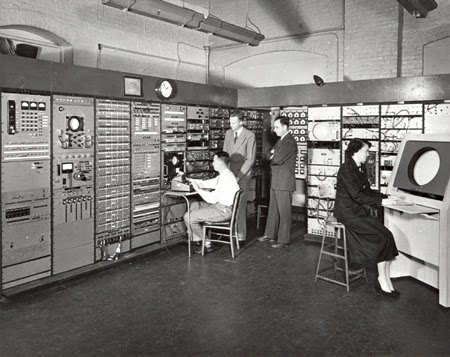
    Project Sage’s Whirlwind computer, developed at MIT, was the first computer to operate in real time. Image from History of Computers.

    One big problem remained and that was how to get all these computers physically linked to one another. The job of laying wires to each computer even in the U.S., much more so to computers all over the world, was monumental. However, a simple solution was found in using existing AT&T telephone wires.

    Essentially the network leased long distance lines and kept them perpetually open as in a never ending long distance call. But static in the system posed another problem. When data was being transmitted, if the stream broke, the data was useless — mere bips and beeps without meaning.

    To solve that, a method of correcting errors was developed along the lines of the U.S. Postal Service. The data stream was broken up into packets, each with the address of the sender and recipient. That way if a packet were unreadable it would be resent and added to the coherent data stream. After some hardware and software design accommodations, the inter-network system — the Internet — was a reality. It was a pretty small reality then but it had profound implications. With simple scalability it could be extended anywhere in the world, or, as in Linklider’s original, perhaps tongue in cheek memo, to the Galaxy.


    The content was primitive by today’s standards — ones and zeros — computer code. But that soon changed. Standards were developed to translate the bits and bytes into letters and numbers. The first email programs were written. And the whole system met it’s design criteria — no single node was necessary to exchange information. It could just be rerouted. So if those darn commies blew up a computer somewhere in the system — no problems mate. The world went merrily on as if nothing happened.

    But the thing that really made the Internet what it is today — the thing we all love and the main reason we use it — was the Graphic User Interface (GUI). That’s why we can send Aunt Martha pictures of the kids, why we can see animation of the space station construction, and why we can read and write blogs like this. The ability to see pictures and hear sounds, to tell a story, to research a term paper, to do all the things and go to all the places our shiny new bicycle will take us — it all depends on the GUI.

    The GUI was a gift. We didn’t pay for it like we did the design, architecture, hardware and software that put the Internet in place. It was a gift of a few good geniuses who wanted to do a few good things. Tim Berners-Lee, while at CERN, the European Particle Physics Laboratory, invented a way to transmit images over the Internet — and the World Wide Web was born. He could have patented his invention, protected it with copyrights, and made a bizzillion dollars. But he didn’t. He gave it to us, free of charge — a gift to the people.

    So not only is the foundation of the World Wide Web — the Internet — yours because you paid to develop it, but the World Wide Web itself — the Graphic Interface — is yours because it was a gift.

    So what’s the problem? The problem is a bunch of fat cats who can barely tie their shoes and could never in a million years create it themselves want to steal it and sell it back to you. Who would have the presumption, the hubris, the unmitigated gall to try such a thing? I’ll give you a clue. It’s who you make your check out to each month for your Internet connection.

    It’s the huge corporate vultures who are not content to simply have a monopoly on your Internet business — they want more. They want to leverage their monopoly to sell you services that you would otherwise freely choose on the open market where their limited abilities and lack of innovation make them uncompetitive.

    Here’s how it works. Lets say you use Vonage or Skype for phone service. You pay the modest fees, they give you good service, you save money. But the company that you use — that you pay to use — to connect to Vonage — your Internet Service Provider (ISP) — sees that’s a good business and wants to offer it too. So mysteriously your calls with Vonage buzz with static, get dropped, aren’t as clear as they used to be.

    Then, here comes your Internet Service Provider to the rescue. They have a service. It costs a little more but it’s more reliable so you switch. But because they have their foot on the hose — your Internet connection — they have just turned down or turned off your connection to Vonage without your knowledge. They think people are stupid enough not to notice.

    Well, people do notice. So now they have a problem. They have just hijacked your freedom to choose but how do they get away with it? Enter the accomplices — your representatives. You see, if the law doesn’t forbid this practice — or worse, if it encodes it into law — then there’s nothing you or anybody else can do about it.

    They have just stolen your shiny new bicycle and are offering to sell it back to you and it’s all perfectly legal. Well, after all, Representatives and Senators have to fly in jet planes and live high on the hog too. What’s a little graft in the free market. So what if they are selling you out to line their pockets. What are you going to do about it — complain? Take a number.

    There’s only one currency that is slightly more valuable to elected officials than dollars and that is votes. And that’s what you have. You may spend every dime every month just to live or send your kids to school but you still have what your representatives want just a little more than money — a vote. Or more exactly lots of votes. So if you exercise your oversight over your representatives and you convince enough other people to do the same, you win. If not, you lose. It’s just that simple.

    The theft of Net Neutrality is only one crime that moneyed corporations have tried to legitimize by recruiting your representatives as accomplices. But it’s one of the most important because if they can control your access to services that you choose to purchase on the Web they can also control your access to any kind of information about the world that you live in. They can tell you where you can and cannot ride your shiny new bicycle because now they own it.

    Net Neutrality is non-negotiable if you want to go where you want to go, see what you want to see, and continue to create and have access to ideas of your own choosing. Act now. Sign the petitions. Call your Senators and Representatives. Write them, email them. Get your friends together, make signs and march in the streets. Because once your freedom to ride your bike wherever you want to go is gone you may never get it back. Don’t let ’em steal the Internet — it belongs to you and to the generations to come.

    [William Michael Hanks lived at the infamous Austin Ghetto and worked with the original Rag gang in the Sixties. He has written, produced, and directed film and television productions for the National Aeronautics and Space Administration, The U. S. Information Agency, and for Public Broadcasting. His documentary film The Apollo File won a Gold Medal at the Festival of the Americas. Mike lives in Nacagdoches, Texas.]

    Also see:

    Net Neutrality Resources:

    • Electronic Frontier Foundation (EFF): Anyone who watched John Hodgman’s famous Daily Show rant knows what Net Neutrality means as an abstract idea. But what will it mean when it makes the transformation from idealistic principle into real-world regulations? 2010 will be the year we start to find out, as the Federal Communications Commission begins a Net Neutrality rulemaking process.

      But how far can the FCC be trusted? Historically, the FCC has sometimes shown more concern for the demands of corporate lobbyists and “public decency” advocates than it has for individual civil liberties. Consider the FCC’s efforts to protect Americans from “dirty words” in FCC v. Pacifica Foundation, or its much-criticized deregulation of the media industry, or its narrowly-thwarted attempt to cripple video innovation with the Broadcast Flag.

      With the FCC already promising exceptions from net neutrality for copyright-enforcement, we fear that the FCC’s idea of an “Open Internet” could prove quite different from what many have been hoping for.

    • Democracy Now: The internet and telecom giants Verizon and Google have reportedly reached an agreement to impose a tiered system for accessing the internet. The deal would enable Verizon to charge for quicker access to online content over wireless devices, a violation of the concept of net neutrality that calls for equal access to all services. The deal comes amidst closed-door meetings between the Federal Communications Commission and major telecom giants on crafting new regulations.

    Net Neutrality Petitions:

    Some You Tube Videos:

    The Rag Blog

    Posted in Rag Bloggers | Tagged , , , , , | 3 Comments

    William Michael Hanks : Net Neutrality / Open Internet Under Fire

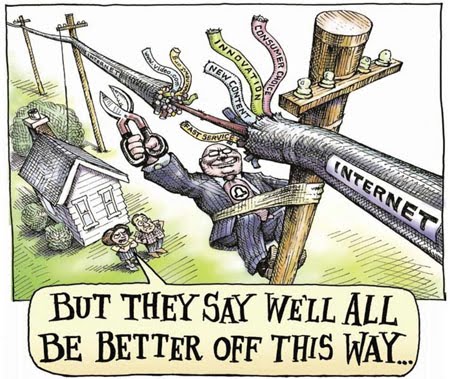
    Cartoon from Schrier Blog.

    Is FCC dropping the ball?
    The fight for a free internet

    By William Michael Hanks / The Rag Blog / October 15, 2010

  • Also see Mike Hanks’ companion article: Net Neutrality / Stop Thief!
  • And see Net Neutrality Timeline, Below
  • A strong right punch from the DC Appeals Court in April stunned the FCC, leaving it dazed and staggering. The champion of the people’s Internet entered the ring with a good fight plan and a righteous score to settle with the opponent.

    But, in a strong defense by a heavy-muscled corporation, the court delivered a near knockout punch to the open Internet defender. Blocking the FCC’s regulatory blow to Comcast, the court held the FCC had no authority to regulate Comcast’s Internet bandwidth management policies.

    The fight started brewing in 2007 when the Associated Press (AP) discovered that Comcast was blocking transmission of BitTorrent Peer-to-Peer file exchanges without notifying customers. A complaint was filed with the FCC by Internet and legal advocates and the FCC held public hearings on the issue. But at the first bell Comcast was caught wearing brass knuckles under the gloves.

    Then FCC Chair Kevin Martin called for public comments. The first hearing was at Harvard and was packed with shills, hired by Comcast, who filled the available seats. Advocates of an open Internet could not be seated and the campus police blocked their entry. Public outcry and overwhelming evidence moved the FCC to sanction the media giant anyway. That’s when the battle got bloody.

    Comcast punched back with a suit in federal court that demanded a stay of the FCC sanction. The court held in early April that a change during the Bush administration shifting the authority in such matters from Title II to Title I of the Communications Act resulting in the commission being powerless in the matter.

    That left the current FCC Chair Julius Genachowski with only one backup punch — to switch the authority back to Title II of the Communications Act and reassert control over Internet services. But so far the Commission seems dazed and unable to react.

    In August, while the Commission was still seeing stars, Google and Verizon proposed a “compromise” that called for unhindered Internet access for wired customers while leaving the door wide open for wireless providers to decide whatever they like, regardless of customer demands. They insist that their ambitious plans to enter the wireless business had nothing to do with their suggestion.

    Another blow to Net Neutrality came in September when Sen. Henry Waxman, Chairman of the House Energy and Commerce Committee, announced he was dropping the push for a Net Neutrality bill in Congress. This came after the Open Internet Coalition pulled it’s support and it seemed unlikely the bill would receive Republican support.

    Calls for Chairman Genachowski to act on the promises made by President Obama to vigorously fight for a free and open Internet have gone unheeded. It’s looking more like a free-for-all — a fight where the referees seem to be bought and the champ’s taking a fall.

    Unless the FCC gets off the mat, the next round will be when Congress reconvenes after the elections. By then the ringside tickets will be sold out, the fix will be in, and the citizens — the real owners — will get the cheap seats where they can’t be heard. But, hey, maybe it’ll all be on television, if you paid your cable bill.

    [William Michael Hanks lived at the infamous Austin Ghetto and worked with the original Rag gang in the Sixties. He has written, produced, and directed film and television productions for the National Aeronautics and Space Administration, The U. S. Information Agency, and for Public Broadcasting. His documentary film The Apollo File won a Gold Medal at the Festival of the Americas. Mike lives in Nacagdoches, Texas.]

    Also see:

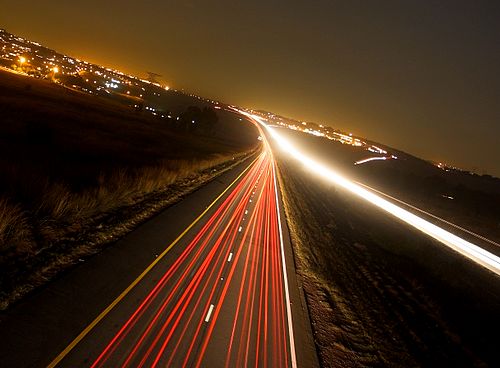
    Super highway: Traffic jam ahead? Photo by Sean Nel. Image from Robin Good.

    Timeline of recent events (from SaveTheInternet.com).

  • 2007. Comcast gave us a glimpse of a world without Net Neutrality when an Associated Press investigation found that the company was blocking the file-sharing application BitTorrent. Despite mounting evidence of Internet blocking, the company refused to come clean and disclose its “network management” practices. A coalition of Net Neutrality supporters and legal scholars filed a complaint with the FCC urging the agency to stop the cable giant from meddling with our ability to share information online.
  • 2008. The FCC took complaints about Comcast’s blocking seriously and convened a series of hearings across the country so that interested citizens could weigh in. Fearful that the public would lay into Comcast for violating Net Neutrality, the company hired people off the street to pack the first hearing at Harvard. The seat fillers took up so many chairs that Comcast critics and other members of the public were denied entry by campus police.
  • In response to the public outcry and a mountain of evidence, FCC Chair Kevin Martin sanctioned Comcast for violating Net Neutrality. The complaint was brought to the agency after a coalition of Net users and activists caught the cable giant red-handed, jamming use of popular file-sharing applications. Martin ruled that Comcast had “arbitrarily” blocked Internet access and failed to disclose to consumers what it was doing. But the ink was barely dry on the FCC order before Comcast filed an appeal in federal court, challenging not only the FCC’s ruling but the agency’s entire authority to protect Web users.

  • 2009. Buried deep in President Barack Obama’s American Reinvestment and Recovery Act is a line that brought a smile to the faces of Net Neutrality supporters — and a scowl to phone and cable industry lobbyists. It requires that billions of dollars directed to connect more Americans to broadband be spent on services that meet “nondiscrimination and network interconnection obligations.” The stimulus package stipulated that federal money earmarked for high-speed Internet services be spent the right way: building networks that abide by Net Neutrality.
  • The fight for Net Neutrality gained ground when Julius Genachowski, the newly appointed FCC chair, announced plans to expand existing agency rules to protect the free and open Internet. Genachowski said the FCC must be a “smart cop on the beat,” preserving Net Neutrality against increased efforts by providers to block services and applications over both wired and wireless connections. The chairman cited a number of examples where network providers had acted as gatekeepers and concluded, “If we wait too long to preserve a free and open Internet, it will be too late.

  • 2010. As the FCC began its Net Neutrality inquiry, the phone and cable industry that controls Internet access for 97 percent of Americans went into a spending overdrive. They funneled tens of millions of dollars to nearly 500 Washington lobbyists. Their mission: further consolidate industry control over Internet access and kill Net Neutrality, before the public gets a say. Untold sums have also been spent on Astroturf groups, fake grassroots operations that are funded by corporations to manufacture the impression of public support and that generate misinformation designed to sway policymakers and the media.
  • In early April, the U.S. Court of Appeals for the D.C. Circuit ruled that the FCC lacks the authority (under the jurisdiction it claimed) to protect Internet users against network operators. The case was brought by cable giant Comcast after it was sanctioned by the FCC for blocking Net users’ access to file-sharing applications. The ruling effectively gave corporate gatekeepers control over Internet users’ online experience, and it called into question the FCC’s ability to act as a public interest watchdog over our country’s communications media.

    We now wait to see whether the FCC will reclassify the Internet Service Providers from Title I to Title II and thereby reassert jurisdiction or whether Congress will act with legislation to preserve Internet Neutrality. Nothing is likely to happen before the mid-term elections. The outcome of those elections will undoubtedly affect the vitality of efforts to save the Internet from corporate piracy.

    The Rag Blog

    Posted in Rag Bloggers | Tagged , , , , , , | Leave a comment

    FILM / Vanessa Carlisle : Berman’s Doc Explores the Two Halves of Hefner


    Thank you, Hefner…
    We’ll take it from here.

    By Vanessa Carlisle / The Rag Blog / October 14, 2010

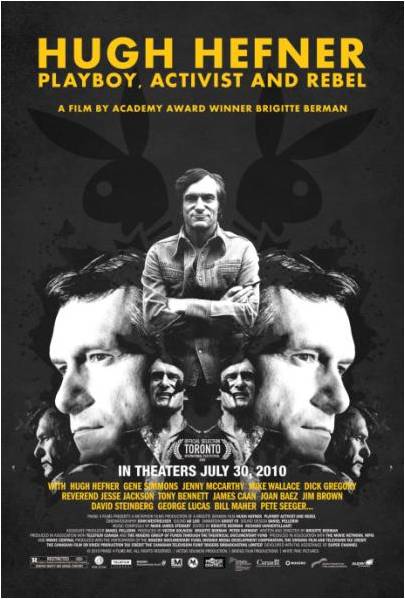
    Brigitte Berman’s new documentary, Hugh Hefner: Playboy, Activist, and Rebel, deserves attention. Read this great interview at Collider.com for more background on the process of the film and its conclusions. Go see it if you’re interested in sex, law, social justice, censorship, publishing, and/or sexy girls.

    On the movie’s opening night, July 30th, I went to the premiere at LA’s Nuart Theater. Both Hefner and director Berman were in attendance, and they did a brief Q&A after the film.

    As inspiring as the film was, the way Hefner has had to live on the defensive his whole life made me sad.

    At this point, he’s no longer defending himself against the obvious enemies he had in the ’60s. Then, it was the conservative Christians, the censors, the people who were out-and-out afraid of crass depictions of sexuality. That the feminists of the time (Susan Brownmiller and Gloria Steinem, famously) also vilified him is fascinating, since he thought he was working on the same project they were.

    But it’s even more complex now. The people who scoff at Hefner are people my age, who know little to nothing about his heroism of the ’50s, ’60s, and ’70s, and only see the caricature of male sexuality he’s become.

    They don’t care about the way he flouted racist convention, and in some cases actual law, to have black performers on his show and in his clubs. They don’t care that he published Charles Beaumont’s “The Crooked Man,” a short story that questioned homophobia directly, when no one else would. He said during the Q&A that he thinks most people nowadays don’t acknowledge “the other half” of his life.

    The implication here is heavy: one half of his life is women/sex/silliness/parties and the other half is intensely focused intellectual, creative, activist work. Much like the way they were presented in Playboy, Hef thinks of the naked girls as a very separate experience from the writing.

    This is such a puzzle to me. On the one hand, it seems like he should have the right to be a sexual adolescent, to love big boobies and blondes, and spend his time on that. He’s a grown man with consenting women, after all. On the other hand, I agree with the criticism that Playboy became, in some very important ways, a dictator of sexual taste, and that it presents a limited view of what is sexy.

    What’s clear from the film is that this restricted taste that has become so ubiquitous is actually Hef’s. It doesn’t seem as though he had a mission to tell all Americans what they “should” like, in fact. It seems as though he was a brilliant business man who happened to know exactly what HE liked. That Americans are sheep, media consumers, and easily told what their preferences should be based on what they see around them, is their own fault.

    Someone with Hugh Hefner’s acumen for business and a different aesthetic might have changed the course of American sexuality. Maybe. Or maybe Hef’s desire for a certain hour-glass gal is just so mainstream because it is also a basic biological imperative the way symmetry in the face seems to be in cross-cultural studies of beauty.

    Certainly a particular waist-to-hip ratio (.7) has been theorized as a beauty ideal in many cultures. If Hef was just tapping into some heterosexual evolutionary biology, what exactly could the feminists expect?

    What’s beautiful about Hef’s current incarnation as an 84-year-old business tyrant (he’s buying the magazine back from stockholders to, one imagines, exert some more creative control), strangely self-effacing lover (see a recent LA Weekly cover story by Dennis Romero), and general eccentric is that he still seems happily committed to being authentic — he really does exactly what he wants to do, no matter what.

    This I respect I great deal. I don’t share my generation’s disdain for the grandfather-aged patriarch of The Girls Next Door, because the sheer volume of good he’s done simply outweighs the potential done by his perpetuation of certain boring sexual aesthetics.

    It’s up to us to derail those aesthetics, offer alternatives in media, and so on. What is also up to us, and seems to be the next big project that Hef may never attempt, is to do real integration of the “two halves” — to lift the barrier between sex and intellect. They existed side-by-side in early Playboy, but they didn’t exist as integrated whole.

    This is the ideal that excites me most: not just a culture that has stopped oppressing sexual expressiveness, but a culture that has no problem with sex and sexuality entering the ivory tower.

    So overall I think we should see Hef as we see the early feminists or civil rights activists. We can never forget what they accomplished. We wouldn’t even be able to think the thoughts we think now without them. But we can’t pretend that the important fights have all been won, or we will be just a new generation of culture-slaves. There’s always a new front for revolutionary thinking.

    [Vanessa Carlisle is a writer, teacher, and performer who lives in Los Angeles. Now a doctoral student in Comparative Literature at UC Riverside, she studied psychology at Reed College, has an MFA in creative writing from Emerson College, and taught psychology at Emerson and Wheelock Colleges. She has danced with a neo-burlesque troupe and a Hawaiian lounge act. Her work has appeared in both literary and trade magazines, and her novel is A Crack in Everything. Her website is VanessaCarlisle.com and her blog is Gorgeous Curiosity.]

    The Rag Blog

    Posted in Rag Bloggers | Tagged , , , , , , , , | 3 Comments

    Roger Baker : Fed’s $2 Trillion Won’t Buy Much

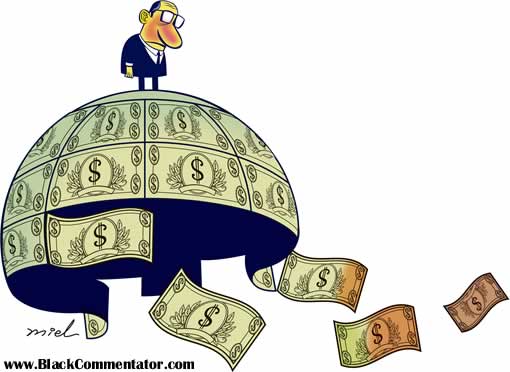
    Cartoon from Black Commentator.

    Time to reboot?
    Fed’s big bucks may be drops in bucket

    By Roger Baker / The Rag Blog / October 14, 2010

    As is often the case, Bloomberg tells it like it is, although a little interpretation is needed to put things into their proper context. Rarely do we hear it put so plainly that the U.S. government is almost out of realistic options for reviving the U.S. economy:

    For $2 trillion, Federal Reserve Chairman Ben S. Bernanke may buy little improvement in growth, employment or inflation over the next two years.

    Firms with large-scale models of the U.S. economy such as IHS Global Insight, Moody’s Analytics Inc. and Macroeconomic Advisers LLC project only a moderate impact from additional Fed asset purchases. The firms estimate that the unemployment rate will remain around 9 percent or higher next year whether the Fed buys $500 billion or $2 trillion of U.S. Treasuries in a second round of unconventional stimulus.

    “This is not a game changer for the economic outlook,” said Nigel Gault, chief U.S. economist at IHS Global Insight in Lexington, Massachusetts, whose models show that $500 billion of purchases would boost growth 0.1 percentage point in 2011 and leave the unemployment rate at 9 percent or above for the next two years. “There is clearly a risk that people start to perceive monetary policy as impotent.”

    The meager impact shows the conundrum U.S. central bankers face. Interest rates near zero have failed to produce the intended cycle of borrowing and spending among consumers and businesses. Unemployment hovering near a 26-year high, partly a symptom of weak demand, keeps downward pressure on prices, and further declines in inflation would raise borrowing costs in real terms, making credit more expensive…

    First they tried lowering interest rates, as they have done so often before, but that didn’t work. This was partly because they did it so often in the past — so it lost much effectiveness as a way to discipline risk during the successive Greenspan bubbles.

    Then they bailed out the banks and injected a lot of Keynesian stimulus spending — which requires Congressional approval. This had little result except to make it easy to agitate the U.S. middle class, who probably feared all their taxes would go to immigrants on welfare.

    A combination of Congressional gridlock plus conservative anti-Obama politics is now preventing much more Roosevelt-like stimulus spending, no matter how great the need. Probably this opposition will continue after the elections, and until grassroots economic pain increases its political impact.

    Economists say further asset purchases could underscore the limits of monetary policy, which is hobbled by consumers’ desire to pay down debt and the reluctance of Congress to approve additional fiscal stimulus.

    “At the zero boundary on interest rates, the burden shifts to fiscal policy, and fiscal policy is immobile because of the politics,” said [Macroeconomic Advisers co-founder Laurence] Meyer. “So now, the burden has shifted back to monetary policy. You have to hope the economy’s own resilience and underlying strength is going to be enough to have growth a little bit above 3 percent.”

    Having few other options left, the Federal Reserve (channeled by Bernanke) is announcing that they may create up to $2 trillion in new easy credit (as they have the legal right to do), and trade lots of cash to the banks in return for their suspect securities, although this would create few jobs. It kind of sounds bad, so the feds may need to relabel this remedy.

    “We know the Fed is going to be doing something,” said David Rosenberg, chief economist at Gluskin Sheff and Associates Inc. in Toronto.

    “The question is, in a cycle of contracting credit, how far will it work,” he said. “If taking rates to zero didn’t work, and if QE1 didn’t work, then the question, legitimately, is QE2 going to work?”

    Quantitative easing refers to large-scale asset purchases as a tool of monetary policy. Bernanke has said the purchases support growth by lowering borrowing costs across a broad spectrum of debt as investors reallocate money they would normally invest in Treasuries into mortgage bonds, corporate notes, and other securities…

    “It is a small but meaningful benefit and the recovery can take all the help it can get,” [Moody’s Analytics’ Mark] Zandi said. Because purchases could have such a low medium-term impact, Fed officials may recast the strategy in terms of aiming at a level on an inflation index rather than the rate of change on the index, Zandi said.

    Despite the known drawbacks and weak results of such quantitative easing, the U.S. Treasury and federal Reserve officials feel the need to try something other than watching things get worse.

    The Fed “really doesn’t have any alternative but to give this thing a whirl,” former Fed Governor Lyle Gramley, now senior economic adviser at Potomac Research Group in Washington. “It has a mandate to create maximum employment and price stability. It has to try.”

    This all sounds kind of bad. Let us now leave Bloomberg for a second opinion which explains the same situation. On NPR’s Money Planet, finance reporter Adam Davidson, who, like Paul Krugman, is a skilled popularizer of complex economic ideas, recently reported much the same thing. His perceptive blog explains why a second round of quantitative easing (called QE2 in the Bloomberg piece) — essentially giving easy cash to the banks in return for their paper, is unlikely to revive the economy. The track record of QE is not good; Japan tried it and it didn’t work:

    “A big bank — Bank of America, say — has $50 billion in government bonds. They’d sell those bonds if anyone would pay enough for them, but nobody is willing to pay that much. So the bank just holds on to them.

    With quantitative easing, the Fed comes along and says, “Hey, Bank of America, we’ll buy those bonds for a little more than anyone else is willing to pay.” Bank of America says, “OK, great, send us the money.”

    This is where the Fed gets to use central-bank magic. They pay for that $50 billion purchase in new money. They just invent it. That’s what the Fed — but nobody else — gets to do.

    So now Bank of America has $50 billion they need to do something with. The Fed is hoping that Bank of America will decide to lend that $50 billion to companies and people to invest or spend. That stimulates the whole economy.

    It sounds great. Create new money, get it out there, everyone wins. But — of course there’s a but.

    Nobody really knows if this works. It’s still really controversial among economists. It’s only been tried a few times and, as in the case of Japan, hasn’t had the greatest results.

    The Fed first used quantitative easing in 2008. It’s now considering a second round, even though a lot of folks are against it.

    While the economy is still this bad, the Fed really might only have two options: Do this as a desperation move, or do nothing.”

    Thus the biggest private bankers, operating through the Fed, have effective legal control over the whole U.S. economy. Just as Davidson says, the Federal Reserve has the right to create as much money as they please and give it to whom they please. Consequently, the public benefits from our U.S. banking system are ultimately of a trickle-down nature, subject to the fickle motivation of banking profit and Federal Reserve whim, often in alliance with the U.S. Treasury.

    The Fed is busy creating money and offering it to the banks in the apparent hope that — even in the absence of regulation or reform — some of it will stay here and won’t head toward more profitable investments that don’t create U.S. jobs. I described this same situation last December, as we can see from the Stiglitz snip in my earlier Rag Blog article:

    Stiglitz, 66, also said the Federal Reserve contributed to the financial crisis by failing to supervise banks or stem the housing bubble. He questioned proposals to give the central bank more authority to supervise firms whose failure might threaten the financial system. “Giving more power to an institution which has failed so miserably, with results that have imposed such costs on all of us, cannot be the right solution unless there are deep and fundamental reforms in the institution, of a kind that are beyond those currently being discussed,” he said.

    In the absence of the banking reform that Stiglitz advocates, reform that would partly take control of the U.S. economy away from private hands, the bankers have little incentive to create risky, low-profit domestic jobs.

    The bankers see little profit to be made from investing in such jobs, knowing that the U.S. consumers are under great financial stress. U.S. bankers won’t invest much in the industrial production of globally traded goods, because U.S. labor costs are still high compared to those in China and the rest of the world.

    Without strong outside regulation, the U.S. banks are free to use their $2 trillion (or whatever the Fed pleases to create and give to them) to speculate in the most profitable stuff. Things like gold, vital commodities like food, and in new industries abroad — like in China, where iPhone production remains highly profitable because of cheap labor. GM now makes lots of its money by building its cars in China rather than the U.S.

    All things considered, it looks like a good time to reboot the whole U.S. economic system.

    [Roger Baker is a long time transportation-oriented environmental activist, an amateur energy-oriented economist, an amateur scientist and science writer, and a founding member of and an advisor to the Association for the Study of Peak Oil-USA. He is active in the Green Party and the ACLU, and is a director of the Save Our Springs Association and the Save Barton Creek Association. Mostly he enjoys being an irreverent policy wonk and writing irreverent wonkish articles for The Rag Blog.]

    The Rag Blog

    Posted in Rag Bloggers | Tagged , , , , | 6 Comments

    Diana Claitor : Why We Need To Protect Texas Inmates

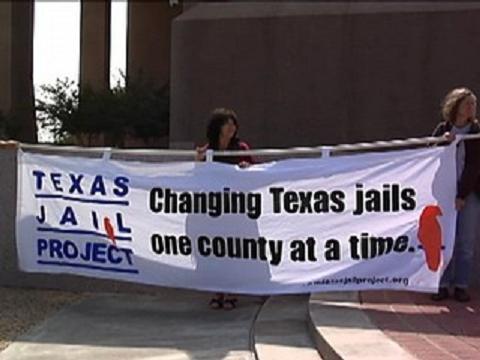
    Texas Jail Project protests at Taylor County Jail in 2008. Image from Abilene Reporter-News.

    Texas Jail Project director Diana Claitor will be Thorne Dreyer‘s guest on Rag Radio on KOOP 91.7 FM in Austin, Tuesday, October 19, 2-3 p.m. (CST). To stream Rag Radio live, go here. To listen to this show after the broadcast, or to listen to earlier shows on Rag Radio, go here.

    Protecting Texas inmates:
    Why do we need another law?

    By Diana Claitor / The Rag Blog / October 14, 2010

    I often hear about how stupid it is that Texas and other states have to pass bills and create laws to ensure care for pregnant inmates or to stop the shackling of nonviolent women during childbirth. Folks say, “Why don’t people in charge just do the right thing?”

    Of course, you can say that about everything. Why do we have to pass laws against pollution or bribery? Why do we have to enact standards or requirements for elected officials to follow?

    Probably because those in charge are human beings and make mistakes — and because they don’t always do the right thing. Like when sheriffs and jail administrators release inmates in dangerous locations after dark.

    Texas Jail Project recently found out about a man with a mental disorder who was shoved out of the Val Verde County facility, onto the county road outside Del Rio. Traumatized and lacking any information about where the town was, he walked up and down the road for hours in the dark until a deputy felt sorry for him and drove him into town.

    A typical response to stories like that: “Well, that’s an isolated case. You’re going to have that happen with some 245 jails all over this huge state.”

    But it’s turning out not to be so isolated. We have received detailed accounts of similar releases at night in Houston, and in Seguin over in Guadalupe County. Even worse cases are coming to light, including two releases outside Brownsville that resulted in women being hit by cars. Both woman died, one of them this past summer. Priscilla Falduto was 27.

    Patricia Falduta, who was arrested for swimming nude in a Brownsville park fountain, was killed when struck by a car after being released from custody on a highway close to the jail.

    Brownsville citizens wrote to their newspapers in outrage and contacted their elected representatives. Texas Jail Project brought these examples up to the Texas Commission on Jail Standards in the past month, but director Adan Muñoz says it is outside their purview — that when and where people are released is under local control.

    “The sheriff can’t be told when and where inmates are to be released,” says Muñoz.

    Why not, Mr. Muñoz?

    It seems to me that the legislature could pass a state law requiring that county jail inmates be released during daylight hours (like at Texas state prisons) at safe locations where transportation and a phone are available — thus ensuring that inmates are not treated like so much garbage, to be put out at night.

    The general idea of incarceration is that jails should hold people safely until it is determined whether they have broken the law or not. In the latter case, or after bail is made, they are released — and we want that to be a safe release.

    So it looks like we actually do need a new law, to require sheriffs and counties to be as careful in how they restore freedom as they are (or should be) when holding a person in custody.

    If, however, any of you readers should discover that human nature has changed and that people in charge have started making sure that each inmate gets released safely, let me know — it will be a huge relief.

    Please help us at the Texas Jail Project to research and publicize this problem.

    [Diana Claitor is director of the Texas Jail Project, an organization dedicated to improving conditions for the approximately 70,000 people incarcerated in Texas jails on any given day. Visit www.texasjailproject.org to learn more or to help support their efforts.]

    Activist-author Diane Wilson.

    Diane Wilson headlines Texas Jail Project bash.

    The Texas Jail Project is having a fundraising event Saturday, November 6, from 7-10 p.m., at 3209 Hemlock Ave. in Austin. Special guest will be TJP co-founder and award-winning author and activist Diane Wilson. Wilson will speak about the history of the Texas Jail Project and her experiences in the Harris and Victoria County Jails, and she will also tell about being arrested in Washington D.C. after disrupting two Senate hearings on the Gulf oil disaster.

    Wilson will also preview her new book, Diary of an Eco-Outlaw: An Unreasonable Woman Breaks the Law for Mother Earth, to be published in the spring of 2011. For more information on this event, please contact Diana Claitor at diana@texasjailproject.org or call (512) 597-8746.

    The Rag Blog

    Posted in Rag Bloggers | Tagged , , , | Leave a comment

    SPORT / Dave Zirin : Why the NFL is Thinking Pink

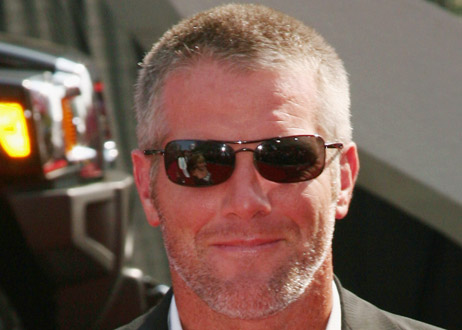
    In the pink: Brett Favre. Image from Full Issue.

    Brett Favre beware:
    The NFL is thinking pink

    By Dave Zirin / October 13, 2010

    You may have noticed an abundance of pink on the fields of the National Football League this month. Between the pink sneakers, pink mouth guards, and pink wristbands, one would be excused for wondering how the machismo-drenched league became so fabulous overnight.

    Welcome to the NFL’s celebration of Breast Cancer Awareness month. But there are reasons beyond the altruistic for the league’s sudden concern with women’s health. In September the league launched a $10 million public relations effort to woo female fans, which included the marketing of NFL jeans, sandals, and yoga mats. The 33 men that run the NFL have determined that this explosion of pink is just another way to say, “We care about our female fans: from their yoga to their tumors.”

    Courageous as it may be to take a stand on the polarizing issue that is breast cancer, the NFL’s new efforts to woo the female fan come off as desperate and patronizing. Women go to the games for the same reason as men: to have fun and cheer themselves hoarse. But the NFL has taken on this campaign because there are those in the owner’s box who fear the league has financially peaked.

    In a country where teams ensconced in Buffalo and Jacksonville are struggling to stay solvent, the internal expansion market has run dry. In a nation still in the grips of a Great Recession, attendance is down across the board. In a world where hatred of American football is a point of national pride, the NFL isn’t going to find revenue streams overseas. In an economic climate where the well of public subsidies is parched, the need to expand the fan base has become something of mania. Enter the pink.

    This concern for female sensitivities is also the reason why Minnesota Vikings quarterback Brett Favre might be in a whole world of trouble. For those living in witness protection, Favre is being investigated by the NFL for violating the league’s personal conduct policy. The website deadspin.com posted voice messages and penis-pictures Favre is alleged to have sent to team employee Jenn Sterger, when both were with the New York Jets.

    Two Jets masseuses have since emerged with similar stories, albeit without the now ubiquitous photos of Favre’s “Mississippi Burning.” These photos now wallpaper the internet and yes, this is another one of those sports stories that makes us all want to bathe in bleach. Brett Favre’s dong is like Lebron James: we are all witnesses.

    Photo from Getty Images.

    It also puts Favre in the position of now having to scramble to defend his career, legacy, and status as an athletic icon. Love him or hate him, Favre has had without question, one of the most remarkable careers in the history of sports. In 19 NFL seasons, he has as of this writing, 290 consecutive starts, 500 touchdown passes, and 70,000 yards passing: all records. Now his consecutive start streak could be snapped along with his reputation.

    The sad truth is that in an era where sports scandals swirl all around us, redemption is a young person’s game. If you are Michael Vick or Tiger Woods or Alex Rodriguez, and can emerge from disgrace to excel on the field, much is forgiven and forgotten. If you are Roger Clemens or Barry Bonds or Mark McGwire, the last memory becomes indelible.

    It doesn’t matter if your crimes are misdemeanors, felonies, or just an inability to control your libido. The field is like Lourdes and you are a SportsCenter highlight away from forgiveness.

    Favre, however, is 41, missing throws he used to make in his sleep and for the first time in his long career, hearing from columnists that he should be benched. Roger Goodell, longing for that pink dollar, might agree.

    But if Goodell thinks that female football fans will be twirling their parasols and raising their mint juleps in gratitude for his chivalry, then the Commish clearly hasn’t spent enough time in the stands of NFL games. If Goodell really wants to respect female fans, he should ban the cheerleaders, ban the sexist beer commercials, and continue to enforce equity and access for women journalists.

    All the rest of this is smoke and mirrors for a league flailing for dollars. Favre may have royally crossed the line but larger concerns will determine the price that he pays.

    [Dave Zirin is the author of Bad Sports: How Owners are Ruining the Games we Love (Scribner). Contact him at edgeofsports@gmail.com. This article also appears at The Nation.]

    The Rag Blog

    Posted in RagBlog | Tagged , , , , , , , | 2 Comments

    Judy Gumbo Albert : The More Things Change…

    L-R: Stew Albert, Attorney William Kunstler, and Judy Gumbo Albert, December 14, 1975. Photo from Wide World Photos.

    Adventures with the FBI:
    The more things change…

    By Judy Gumbo Albert / The Rag Blog / October 13, 2010

    Last week a story surfaced about Yasir Afifi, a 20-year-old Egyptian-American student, who discovered an FBI homing device on his car. Thirty-five years ago, the FBI put a homing device on my car. To my surprise, given current technical advances in miniaturization, my device appeared to be not much larger than the one Afifi found.

    I discovered my device because a wire hung down suspiciously; so did Afifi. Both devices were attached to our cars by magnets. FBI agents visited Afifi to retrieve their device; in my case, the FBI stole it back out of our lawyer’s office. The agent did this, I learned subsequently, because the cost of the missing device came directly out of the agent’s pocket.

    In 1975, putting a homing device on my car without a warrant was against the law. My late husband Stew Albert and I sued the FBI. Bill Kunstler and the Center for Constitutional Rights represented us. Defendants in our lawsuit were Acting FBI Director L. Patrick Gray, Mark Felt of “Deep Throat” fame and Assistant Director Edward Miller. In 1978, Gray, Felt, and Miller were indicted for approving such illegal acts. Gray resigned because of Watergate; Felt and Miller were convicted, then subsequently pardoned by President Reagan.

    My daughter is the lawyer in the family, not me, but I believe what the FBI did last week to Yasir Afifi is legal today under the USA Patriot Act and FISA.

    This is my story:

    The air around my ancient white Volvo felt charged with negative ions. I couldn’t put my finger on it, exactly. Perhaps my queasiness came from a half-formed memory of a man in a beige trench coat and fedora who I may or may not have spotted the night before lurking in a semi-dark stairwell next to Bill Kunstler and Margie Ratner’s red brick home on Gay Street in the Village. This is New York, I tell myself, everybody lurks in New York.

    Stew and I return to our Volvo before alternate-side-of-the-street-parking-tow-away kicks in. A man in what I hallucinate to be a black trench coat, scurries down the sidewalk on the opposite side of the street..

    Gumbo, are you going nuts or what? Then I notice it. Smack in the middle of the Volvo’s rear bumper is a well-defined white patch, serene amid the spewed up brown dirt the car accumulated on yesterday’s drive down from our beloved isolated cabin in the Catskill Mountains. Hanging down in the very center of the clean spot is a six-inch-long wire.

    “Hey Stew, cummere.” I say. “Look at this. I think there might be something the matter with the car.”

    “Whaddaya think it is?” Stew asks. He knows nothing about cars. A Brooklyn boy, he’s never learned to drive. This is fine by me. For me, car equals freedom, although I’m feeling momentarily insecure about my knowledge of automotive issues. Three weeks earlier I’d sent much of this poor Volvo’s electrical system up in smoke when, in a fit of know-it-all feminist machismo, I’d installed a new battery by myself, poles reversed, and fried much of the Volvo’s wiring.

    “Maybe something else happened to the electrical system.” I say. Still, I’m not deterred. I kneel down and put my arm up behind the bumper where I think the weird wire comes from.

    I’ve chewed on this moment for years and yet have never been fully able to explain to myself what prompted Stew and me to do what we did next.

    “Ok, so, I’m going to try and start the car and see if anything happens.” I tell Stew, “Wait over there on the sidewalk.”

    “Well… uh….. No!” Stew is adamant. He sits down heavily in his customary place in the passenger seat then brushes his famous blond curls back off his forehead. Stew jokes later that he did not want to see a news headline reading: “Sexist Survives.”

    I get behind the wheel, insert the key, and turn the ignition key. No click. No terrorizing silence. No explosion. The car starts. I feel my breath rush gratefully back into my lungs.

    I open the driver’s door, get back out, go back to the rear of the Volvo and kneel down in the gutter, avoiding as best I can the cold running water and dirty gray slush left behind from the previous day’s pre-winter storm. This time, when I reach up along the wire, my hand emerges clutching a size C battery, with a piece of black electrical tape wrapped around it.

    “Let’s get the fuck outta here.” Stew says at the exact same time I think it.

    We cut across town on 79th through Central Park. The more I drive, the more visible is the trail of cars behind us — two yellow cabs, three basic black Detroit four doors and, if memory serves, one Central Park horse and buggy taking up the rear. I pass fashionable Madison Avenue shops, then make a left at 86th to cross the Park. My new best friends stay close, never out of range. They make no attempt to conceal themselves.

    I panic. “Let’s go for Chinese,” I say. Stew agrees instantly. Chinese food is comfort food for Jews of my generation. That it might be foolish to leave the Volvo exposed and unattended on Upper Broadway does not cross my mind. The sweet-smelling hot and sour soup filled with slices of squirmy black mushrooms and seaweed fans of cloud ear fungus does its job; Stew’s and my rationality is restored; we head back to Bill and Margie’s. After all, if you think you may be in trouble with the law; it’s best to be in the company of lawyers.

    “Bill?”

    “Yeah?”

    “We think we’re being followed. I know we’re being followed. I drove through Central Park and there was a parade of cars behind us. And look, look here, look at this wire. It’s not a bomb. The car drives.” The tale tumbles simultaneously out of both our mouths.

    Bill bends down and, with his long arms and large fingers, reaches far up under the Volvo’s rear bumper. He grunts, pulls out a 6” by 4” black box, with two intact batteries and the ubiquitous wire hanging down. Bill places the device in his kitchen freezer, which, he says will cut off its capacity to transmit. Then, always a Yippie, Bill contacts the press.

    Over the years, I’ve often wondered who among us were the bigger schmucks — Stew and me, who gave the FBI access to our car by consigning it to the street, or the Keystone Cop FBI agents who installed a second, new, and completely functioning homing device.

    Three years after these events, Attorney General Griffin Bell charged Acting FBI Director L Patrick Gray, the FBI’s number two man Mark Felt, and Assistant FBI Director Edward Miller with violating constitutional protections against unreasonable search and seizure of “acquaintances and relatives” of the Weather Underground.

    Gray was, at the time, a leading candidate to succeed legendary FBI Director J. Edgar Hoover. Felt, the FBI’s key decision-maker on domestic spying, spilled the beans about the 1972 Watergate burglary to Washington Post reporter Carl Woodward, which led, ultimately, to the resignation of President Richard Nixon. Miller, the third person indicted, was an Assistant FBI Director of Intelligence between 1971 and 1974.

    Miller made his appearance in my FBI files as the “go-to” person for the New York City agents who tailed me. In the early 1980’s close to 20 people received settlements of $10,000 each for the FBI’s illegal actions — which would come to approximately $60,000 for Stew and me in today’s money.

    If I could offer any comfort to Yasir Afifi, it would be to say: don’t be afraid, hang in there. I wish I could promise that, one day, he’ll laugh about his homing device experience the way I can. Although we live in fear-based, anti-Arab, racist America, I nonetheless strongly encourage Yasir Afifi to exercise whatever remains of his constitutional right to legal redress.

    [Judy Gumbo Albert is an original Yippie, along with Abbie and Anita Hoffman, Jerry Rubin and Nancy Kurshan, Paul Krassner, and Judy’s late husband Stew Albert. Judy has remarried, lives in Berkeley, California, and is currently writing her memoir, Yippie Girl. She can be found at www.yippiegirl.com.]

    The Rag Blog

    Posted in Rag Bloggers | Tagged , , , , , , | Leave a comment