
Type your summary here
Type rest of the post here
Source /

By Harry Targ / The Rag Blog / August 14, 2010
I view as despicable the Obama administration strategy, expressed through Press Secretary Robert Gibbs, of ostracizing members of what he called the “professional left” who criticize shortcomings of administration policies.
Progressives have appropriately condemned economic policies that limited job stimuli, bailed out banks without nationalizing them, assumed away the very popular single payer option in health care reform, escalated war in Afghanistan, stalled the end of the blockade on Cuba, and maintained an imperial military presence in Latin America, East Asia, and just about everyplace else. The administration has not pursued immigration reform, climate change legislation, and the Employee Free Choice Act.
However, the reality of the first 19 months of this administration includes some health care reform, modest symbolic gestures to reduce hostilities toward other countries and the reintroduction of diplomacy as a tool of international relations, negotiations on the reduction of nuclear weapons, reestablishment of funding to international agencies that promote family planning, and a set of economic policies that bailed out banks and the auto industry that reduced somewhat the horrific consequences of the current recession.
The Obama administration still has on the table a progressive agenda concerning the environment, labor, job creation, and foreign policy. This is a public agenda for which he can and will be held accountable while electoral and tea party opponents are committed to the destruction of public institutions, fairness, and access to basic human needs.
As I read the Gibbs comments, however, a small part of me, I confess, was reminded of those who are inalterably opposed to every policy and practice of this administration. Some analysts on the left have articulated views that seem to me to ignore the historical context, the constellation of political forces today, the consciousness of people at the grassroots, and the almost omnipresence of an electronic media that frames virtually everything in terms of markets, the terrorist threat, unions as “special interests,” and government as an unmitigated evil.
I was ruminating about this discomfort I have with some of our left discourse as I sat through the August meeting of the Northwest Central Labor Council, Indiana, AFL-CIO meeting. We were listening to a presentation by a labor lawyer who works for a firm that specializes in cases of worker injuries and deaths on the job. This firm, for years, has worked with liberal state legislators, mostly Democrats, to get legislation passed that might guarantee the right of families of deceased workers to sue for deaths of loved ones at workplaces and to provide access to workers compensation.
It seems that Indiana law limits legal and compensation claims for victims of mesothelioma and other asbestos exposure diseases to cases occurring within the last 10 years. Scientific evidence indicates that victims of workplace asbestos exposure may not appear for 20 or 30 years. In effect, most claims for survivors and victims of asbestos related diseases would be ineligible for compensation.
Then the Council heard from State Rep. Dennis Tyler (D-Muncie) who has been working with the law firm, George and Sipes, to change the law. Tyler described the procedural roadblocks to proposed legislative reform in 2009; Republican opposition in both the State House and Senate to legislative reform, and lobbying efforts by the Indiana Manufacturers Association, the Indiana Chamber of Commerce, Associated Builders and Contractors, the National Federation of Independent Business, Indiana Energy Association, the Indiana Petroleum Council, and the Insurance Institute of Indiana.
The Tyler Bill was reintroduced in 2010. As George and Sipes describes the outcome:
The bill was assigned to the House Labor and Employment Committee and was heard in late January. With the bill about to pass the Committee and move to the House floor for a vote, the Republicans on the Committee, doing the bidding of the manufacturer and insurance lobbyists, walked out, which left too few members to hold a vote, effectively killing the bill.
In Council discussion State Rep. Tyler admitted that Indiana working people, including union members, are disillusioned with both parties and the electoral process generally. However, as expected from a state politician, he pointed out that the only hope workers and families have for some assistance when mesothelioma hits a family is to elect a pro-worker, largely Democratic, State House. Traditionally, in the Indiana legislature, Democrats have a narrow lead in the House and rarely control the Senate.
This fall, the Democrats could lose the House, which will not only bury any prospects of reform on asbestos compensation legislation but a Republican victory in the House and Senate would lead almost immediately to passage of legislation making Indiana a so-called “Right-to-Work” state. “Right-to-Work states allow workers in unionized workplaces to not join the unions that represent their interests. Wage rates and union membership in Right-to-Work states are uniformly less than in states that have not embraced such anti-union legislation.
So what do we on the “left” do? We surely do not want to be fodder for the White House strategy to convince voters that they are not “left.” We surely do not want to support more off shore drilling, more war in Afghanistan, allocation of fewer resources for public employment and green jobs etc.
But, at the same time, we need to work to protect workers stricken with mesothelioma. We need to work to create real regulation of mines, of oil drilling, of global warming. We need to push for single-payer health care. We need to mobilize around a real job creation agenda. And we need to demand that with tight resources our needs must be paid for by a dramatic draw-down of military spending.
In the end, I come to the conclusion that we on the “left” must continue to perform to Robert Gibb’s characterization. But, I believe we must also continue to work in our communities, our states and nationally, electorally and in the streets, to improve the lives of all who suffer today as we organize to build a better world tomorrow.
[Harry Tarq is a professor in American Studies who lives in West Lafayette, Indiana. He blogs at Diary of a Heartland Radical.]

By Ted McLaughlin / The Rag Blog / August 14, 2010
On Thursday, the United States Senate passed a $600 million bill to send more agents and equipment to the Mexican border (a bill that had already been passed by the House), and President Obama has signed the bill into law today. With the deficit already large and the other pressing needs in this country, why was this bill passed?
The answer is fear. In an effort to return to power, the Republicans have for months now been stirring up racial and ethnic fears. They have painted the U.S./Mexico border as a violent and very dangerous place and placed the blame for that on undocumented Hispanic immigrants. They have been so successful in painting this picture of a border area full of criminal activity that it looks like even the Democrats are buying into it.
After it was passed Senator Charles Schumer (D-New York) said the bill would provide Homeland Security “with the boots on the ground and the resources necessary to combat the (border) crime and violence.” Even President Obama is not immune to this belief. He said, “And this new law will also strengthen our relationship with Mexico in targeting the gangs and criminal organizations that operate on both sides of our shared border.”
If people listened to the politicians in Washington, most of whom know nothing about the border situation with Mexico (except probably some lurid accounts of crime on the Mexican side of the border), they might be convinced the border is a very dangerous place where residents are in constant fear for their lives. Is that true?
Actually, it is not true. It’s just one of several myths being spread and propagated by Republicans in an effort to capitalize on the fear and prejudice of many Americans — myths that have now assumed epic proportions and are blindly accepted by many Americans. There are three of these myths (lies) that seem to be accepted as truth by a large segment of the population (even though they have no basis in truth and are not supported by facts). Let’s examine these myths.
MYTH #1. Illegal immigration has turned America’s southern border into a very violent and crime-ridden area where residents must fear for their safety.
While many Americans have been duped into believing this, the Americans who actually live on the border know this is just not true. This is clearly shown by a new poll conducted by The Reuel Group. The poll was conducted July 14th and 15th and has a margin of error of 2.9%. Poll respondents were all American citizens who were registered to vote and lived in the cities of Douglas (AZ), Nogales (AZ), Yuma (AZ), El Centro (CA), San Diego (CA), Los Cruces (NM), Brownsville (TX), El Paso (TX), Laredo (TX) and McAllen (TX). Here are the poll results:
Do you feel safe as you walk and drive in your neighborhood during your regular daily activities?
Yes……………87.5%
No……………7.8%
Undecided……………4.7%
Would you allow a child, grandchild or other young relative to play in a neighborhood park?
Yes……………51.8%
No……………35.6%
Undecided……………12.6%
Do you feel that your neighborhood is as safe as most neighborhoods in the United States?
Yes……………69.7%
No……………19.2%
Undecided……………11.1%
Do you feel safe living in your border community?
Yes……………67.1%
No……………20.5%
Undecided……………12.4%
Now those are some pretty doggone good numbers. I daresay that many cities and towns further inside the United States don’t have nearly as good numbers. It is obvious that the huge majority of border residents (American citizens) don’t feel the border is a violent and crime-ridden area.
This is backed up by the sheriff in El Paso, who points out that his city is one of the safest cities in America (having only had two homicides so far this year). Sheriff Richard Wiles says there has always been a small amount of spillover violence at the border, but it is not anywhere near as bad as the politicians would have us believe. He said there are three reasons for this:
Both the citizens and elected officials living near the border don’t believe the border is a dangerous area, and most of those elected officials believe the extra money directed at crime and violence on the border is misguided and misspent.
MYTH #2. Undocumented immigrants receive the benefits of living in America without having to pay taxes in this country.
This is also false. To start with, all undocumented immigrants must pay state sales taxes just like anyone else shopping in the United States. They also pay the same property taxes as everyone else — including renters who pay these taxes as a part of their rent. And it doesn’t stop there.
Especially since the law was passed requiring a social security number to be hired in America, most undocumented immigrants (at least 75%) also pay income taxes (since it is taken out of their paycheck). They actually wind up paying more than low-wage American workers, since they are not able to get a tax refund at the end of the year.
They also have social security taxes taken out of their paychecks. Because they are not eligible to receive social security retirement benefits, this means they are subsidizing the Americans who are eligible to receive those benefits — to the tune of over $7 billion a year. The social security program is actually healthier because of the money paid into it by undocumented immigrants.
MYTH #3. Illegal immigrants are destroying American language and culture by bringing their own language and culture to this country.
While many non-thinking American may not believe it, this myth has been busted by many studies. It is a fact that while many first generation immigrants (both legal and illegal) stay predominantly with their native language, the second generation of the family are virtually all English speakers. It is just too hard to get by in this country without speaking English and nearly impossible to grow up in America without learning English. By the third generation, these families have become completely Americanized.
As for these families bringing their cultures, that has always been true in this nation of immigrants. There are millions of people in America who still celebrate some of the aspects of culture that their ancestors brought from other countries many generations ago. Why should recent immigrants be any different? By the third generation these families will be as American as anyone else, whether they retain a part of their unique culture or not.
My own family has retained very little of our original Scots-Irish-Dutch culture, and I think we are probably poorer for it. America is made stronger, not weaker, by it’s mixture of cultures (and it makes for a much more interesting and enlightened place to live).
It is sad that these myths are accepted by many Americans as fact. They are nothing more than lies forwarded by power-hungry politicians playing on the fears and racial insensitivity of the weak-minded. It is time for us to get past them.
We can debate what our immigration policy should be and what should be done with those who are not in this country legally. There are good arguments that can be made in this debate. But these myths are not among those and should be discarded by all decent Americans.
[Rag Blog contributor Ted McLaughlin also posts at jobsanger.]
An Indian hanging himself in the drunk tank is seldom big news in Indian country. But when Jay Spotted Elk hung himself while facing misdemeanor charges in Sheridan County, Nebraska, his mother decided not to stand for it. And Steve Russell — who is himself both a judge and an American Indian — tells us that this time “it became possible to prove that Jay Spotted Elk’s last night on earth was not unusual in the history of Sheridan County, Nebraska.”
By Amy Goodman / August 13, 2010
Our daily weather reports, cheerfully presented with flashy graphics and state-of-the-art animation, appear to relay more and more information.
And yet, no matter how glitzy the presentation, a key fact is invariably omitted. Imagine if, after flashing the words “extreme weather” to grab our attention, the reports flashed “global warming.” Then we would know not only to wear lighter clothes or carry an umbrella, but that we have to do something about climate change.
I put the question to Jeff Masters, co-founder and director of meteorology at Weather Underground, an Internet weather information service. Masters writes a popular blog on weather, and doesn’t shy away from linking extreme weather to climate change:
“Heat, heat, heat is the name of the game on planet Earth this year,” he told me, as the world is beset with extreme weather events that have caused the death of thousands and the displacement of millions.
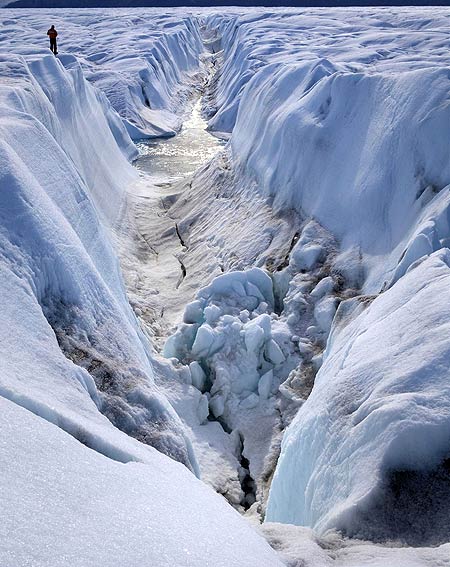
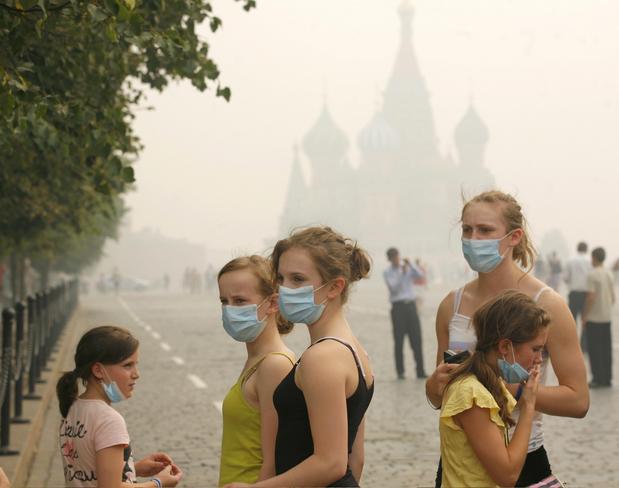
Wildfires in Russia have blanketed the country with smoke, exacerbating the hottest summer there in 1,000 years. Torrential rains in Asia have caused massive flooding and deadly landslides in Pakistan, Kashmir, Afghanistan, and China. An ice shelf in Greenland has broken off, sending an ice island four times the size of Manhattan into the ocean. Droughts threaten Niger and the Sahel.
Masters relates stark statistics:
“We will start seeing more and more years like this year when you get these amazing events that caused tremendous death and destruction,” Masters said. “As this extreme weather continues to increase in the coming decades and the population increases, the ability of the international community to respond and provide aid to victims will be stretched to the limit.”

When the Copenhagen climate talks last December were derailed, with select industrialized nations, led by the United States, offering a “take it or leave it” accord, many developing nations decided to leave it. The so-called Copenhagen Accord is seen as a tepid, nonbinding document that was forced on the poorer countries as a ploy to allow countries like the U.S., Canada, and China to escape the legally binding greenhouse-gas emissions targets of the Kyoto Protocol, which is up for renewal.
Bolivia, for example, is pursuing a more aggressive global agreement on emissions. It’s calling for strict, legally binding limits on emissions, rather than the voluntary goals set forth in the Copenhagen Accord. When Bolivia refused to sign on to the accord, the U.S. denied it millions in promised aid money. Bolivia’s United Nations ambassador, Pablo Solon, told me: “We said: ‘You can keep your money. We’re not fighting for a couple of coins. We are fighting for life.'”
While Bolivia did succeed in passing a UN resolution last month affirming the right to water and sanitation as a human right, a first for the world body, that doesn’t change the fact that as Bolivia’s glaciers melt as a result of climate change, its water supply is threatened.
Pacific Island nations like Tuvalu may disappear from the planet entirely if sea levels continue to rise, which is another consequence of global warming.
The U.N. climate conference will convene in Cancun, Mexico, in December, where prospects for global consensus with binding commitments seem increasingly unlikely. Ultimately, policy in the United States, the greatest polluter in human history, must be changed. That will come only from people in the United States making the vital connection between our local weather and global climate change. What better way than through the daily drumbeat of the weather forecasts? Meteorologist Jeff Masters defined for me the crux of the problem:
A lot of TV meteorologists are very skeptical that human-caused global climate change is real. They’ve been seduced by the view pushed by the fossil-fuel industry that humans really aren’t responsible … we’re fighting a battle against an enemy that’s very well-funded, that’s intent on providing disinformation about what the real science says.
It just may take a weatherperson to tell which way the wind blows.
Copyright © 2010 Truthdig, L.L.C.
[Amy Goodman is the host of “Democracy Now!,” a daily international TV/radio news hour airing on 800 stations in North America. She was awarded the 2008 Right Livelihood Award, dubbed the “Alternative Nobel” prize, and received the award in the Swedish Parliament in December. Denis Moynihan contributed research to this column.]
Source / Truthdig / CommonDreams

By John Ross / The Rag Blog / July 13, 2010
MEXICO CITY — Subcomandante Marcos, the quixotic mouthpiece for the Zapatista Army of National Liberation (EZLN) who has not been seen in public for the past 19 months, has emerged as a possible suspect in the kidnapping of powerful right-wing politico Diego Fernandez de Cevallos, who was taken by unknowns at the gate of his ranch in the rural Queretero county of Pedro Escobedo this May 14th and remains in captivity.
Up until quite recently, the snatching of “El Jefe Diego,” as he is known by Mexico’s political class, has been ascribed to mercantile motives — sources close to the negotiations with the kidnappers indicate that the original $50 million USD ransom demand has been reduced to $30 million and the family of Fernandez de Cevallos is said to be selling off choice properties and a fleet of nearly 200 vehicles to raise the asking price. If the information is accurate, the ransom would be a record for Latin America.
Diego Fernandez de Cevallos is a former presidential candidate of the right-wing PAN party and a dark horse candidate to succeed current PANista President Felipe Calderon. Indeed one theory popular with Mexico City taxi cab drivers is that El Jefe Diego kidnapped himself to enhance his candidacy in 2012.
As the rightists’ standard-bearer back in 1994, Fernandez de Cevallos racked up nearly 10,000,000 votes but finished second well behind the PRI’s Ernesto Zedillo — the PRI which had ruled Mexico for 71 years ceded the presidency in 2000 to the PAN’s Vicente Fox, Calderon’s predecessor.
During the reign of reviled ex-president Carlos Salinas (1988-94), El Jefe Diego served as head of the nation’s senate and cut frequent deals with the PRIista, signing off on the burning of ballots cast in the fraud-marred 1988 election that most Mexicans believe was won by leftist Cuauhtemoc Cardenas. As quid pro quo, the PAN was gifted with its first ever governorship (Baja California) and Fernandez de Cevallos got a vacation home in the ritzy Punto Diamante neighborhood of Acapulco that the family is now trying to unload to meet the ransom demand.
A fierce litigator who inevitably defended the interests of the oligarchy, El Jefe Diego has been frequently accused of influence peddling, the suspected source of his immense fortune. The abrasive Fernandez de Cevallos with his trademark bristly beard and Havana cigar clenched tightly in his jaws has nurtured many enemies both as a litigator and a lawmaker. Among them is Andres Manuel Lopez Obrador (AMLO), the left PRD’s presidential candidate in 2006 who is thought to have edged Calderon only to have the victory stolen from him in the vote count, and the announced left candidate for high office once again in 2012.
When AMLO was the wildly popular mayor of Mexico City, El Jefe Diego got his hands on a series of hand-made videos in which a crooked contractor doles out fistfuls of Yanqui dollars to Lopez Obrador’s former personal secretary and other high-ranking PRD officials. According to the contractor, after consulting with his old pal Carlos Salinas, Fernandez de Cevallos had the tapes delivered to Televisa and TV Azteca, Mexico’s two-headed television monopoly, where they were repeatedly aired in a failed effort to derail Lopez Obrador’s presidential bid. In his latest book, The Mafia That Took Over Mexico, AMLO lists both Salinas and El Jefe as leading members of the Mexican “mafia.”
Diego Fernandez de Cevallos is not popular with the Zapatista Army of National Liberation either. In the wake of the Zapatistas‘ 1994 rebellion in Chiapas, El Jefe Diego repeatedly dissed the ski-masked Subcomandante Marcos and declared that he would never agree to negotiate with “Indians who wore socks on their heads.” Later, he would reject the Zapatistas‘ Indian Rights Law, arguing that the recognition of indigenous uses and customs would lead to the restoration of “human sacrifice.”
Within days of the kidnapping, Fernandez de Cevallos’s family asked Mexico’s Attorney General to suspend his investigation into the whereabouts of the politico, pending negotiations with his captors whose Harry Potter-like e-mail address identifies only as the “Mysterious Disappearers.”
Communication with the authorities has been channeled through Fernandez de Cevallos’s law partner Antonio Lozano Gracia, himself a former attorney general. The current AG, Arturo Chavez Chavez, yet another Fernandez de Cevallos law partner, now meets with Lozano three times a week to review developments in the case.
From all accounts, communication with the “Mysterious Disappearers” has not been fast paced. A cell phone photo of Diego, blindfolded and naked from the waist up, was sent via Twitter May 20th, probably to prove that he was still alive. What is apparently the same photo was sent again June 10th but now Diego was holding a copy of Proceso magazine with his mug on the cover dated May 23rd. Photoshop can work wonders.
The delivery also included an eight-page letter written in a firm hand that graphologists conclude is El Jefe‘s handwriting, and addressed to Diego’s son, also named Diego, lamenting that his father was “living in hell” and expressing fears for his mental health. Fernandez de Cevallos implored his family to move quickly to post the asked-for ransom.
According to one informant quoted in the left daily La Jornada, Fernandez de Cevallos spoke directly with his son July 12th but no details of the conversation were disclosed. “Chisme” (gossip) floating around the Internet has the family reluctant to come up with the ransom because they don’t want the irascible Jefe freed to further complicate their lives. Another chisme has the Mysterious Disappearers so exasperated with having Fernandez de Cevallos on their hands that they will soon release him free of charge.
In a surprise late July statement released to the Mexican press, Attorney General Chavez Chavez’s office revealed that investigators have concluded that the motives for the kidnapping were political and not mercantile as had been broadly believed.
The Center for Investigation and National Security (CISEN), the nation’s lead anti-subversive intelligence agency, pointed a finger at the long-lived guerrilla Popular Revolutionary Army (EPR), a cell of which operating as the Revolutionary Democratic Tendency-Peoples’ Army (TDR-EP) has been active in the Bajio, the rich agricultural region in central Mexico where Fernandez de Cevallos was taken, for the past 20 years. In 2007, the EPR claimed credit for the bombing of PEMEX pipelines in Queretero and Guanajuato in retaliation for the disappearance of two of its historical leaders.
The EPR is famous for financing its operations through political kidnappings, most notoriously the 1994 snatch of Alfredo Harp Helu, the president of Banamex, Mexico’s oldest bank (now a branch of Citigroup), and cousin of the world’s richest tycoon Carlos Slim.
Negotiations for Harp Helu’s release were channeled through a defrocked Catholic priest Maximo Gomez of Atoyac Guerrero who one informant close to the negotiations says is again involved in the current bargaining between the family and the kidnappers. Harp Helu was released after six months in captivity for a reported $14 million USD ransom. According to newspaper accounts, the EPR invested the boodle in heavy caliber weaponry.
Armed to the teeth, the Popular Revolutionary Army made its public debut June 28, 1996, along the Costa Grande of Guerrero on the first anniversary of the massacre of 17 farmers and then launched a short-lived campaign against military and police installations that extended through six states. The CISEN reports that the EPR has more recently financed its activities from the kidnappings of 40 industrialists and ranchers in the Bajio region.
Intelligence sources quoted by La Jornada cite one Constantino Alejandro Canseco AKA “Comandante Jose Arturo” as the key organizer in the taking of El Jefe Diego — the pseudonymous “Jose Arturo” was the most public EPR spokesperson during the guerrillas‘ 1996 campaign, meeting with the press at least twice at training camps in the remote Huasteca mountains of Hidalgo state.
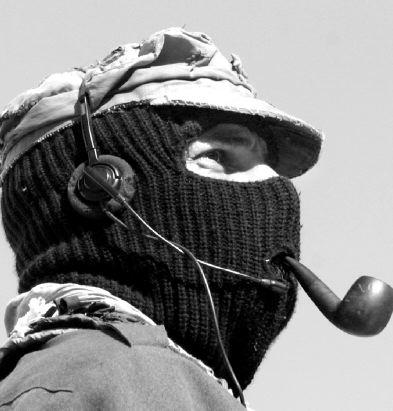
During its heyday, the Popular Revolutionary Army had a quarrelsome relationship with the EZLN, then the nation’s topdog insurgent army. When Subcomandante Marcos vehemently rejected the EPR’s offer of solidarity, Comandante Jose Arturo argued that Marcos was trying to fight a revolution with poetry and made fun of the pipe-smoking Sup.
But the kidnapping of Diego Fernandez de Cevallos suggests that the two have since reconciled and joined forces to pull off a spectacular operation on the eve of the nation’s celebration of its bicentennial of independence and the centennial of the Mexican revolution.
Evidence of Subcomandante Marcos’s involvement in the kidnapping of El Jefe Diego is exclusively circumstantial. In the Zapatistas‘ Sixth Declaration of the Lacandon Jungle issued in June 2005, Marcos called upon his supporters to set their sights on the 2010 twin centennials as a platform from which to launch a new Mexican revolution. In fact, the EZLN’s “Other Campaign,” also a creature of the “Sexta,” was initiated precisely to forge alliances with other radical groups in preparation for a new mass uprising in 2010.
But in 2010, Subcomandante Marcos has vanished from the political map. His last public appearance was in January 2009 when he spoke briefly at the “Digna Rabia” (“Dignified Rage”) forum in San Cristobal de las Casas and he has issued no public communiqués in the past 19 months. Chiapas’s many daily newspapers, all of which suffer a striking dearth of veracity, have frequently reported that the Sup has split with the largely disarmed EZLN and left the state for more radical pastures.
Wherever the truth lies, Subcomandante Marcos has surely not been idle for the past year and a half. This writer, the author of four volumes on the Zapatista rebellion, has often speculated on rapprochement with the EPR in preparation for some major mischief during the upcoming bi-centennial and centennial celebrations.
Marcos has a vivid model for the Jefe Diego caper. In the first days of the January 1994 Zapatista rebellion in southeastern Chiapas, rebels captured the former governor of the state, Absalon Castellanos Dominguez, a general who had ordered brutal massacres in indigenous communities and who was much hated by the Indians.
Absalon was held for a month at Guadalupe Tepeyac, the rebel command’s headquarters, before being taken before the community for a public trial where he was adjudged guilty of abusing and killing Indians and stealing their land and was sentenced to 30 years in an indigenous village hauling water and firewood.
A flurry of back-channel negotiations with the “mal gobierno” (“bad government”) followed and the EZLN then pardoned the General on the grounds that he would now have to spend the rest of his life bearing the shame of having been pardoned by the very people he had so abused.
The ex-governor was released on a jungle road in early February 1994 in a nationally televised extravaganza — for many Mexicans the ceremony surrounding the release was the first time they had even seen the Zapatistas. The blindfolded Absalon was marched down the dirt path accompanied by the Zapatistas‘ Major Moises and an unidentified woman comandante and handed over to the Salinas government’s peace commissioner, Manuel Camacho Solis.
Neither the conditions of Absalon’s release nor the amount of the ransom paid out was ever divulged, but two weeks later public negotiations between the EZLN and the mal gobierno began in the Cathedral of San Cristobal de las Casas.
For Subcomandante Marcos, the hoopla generated by Absalon’s kidnapping and release proved a media coup that put the EZLN at center stage in the Mexican political dynamic and won national and international recognition that the rebels have rarely been able to replicate.
Curiously, in an interview with Proceso at the end of July, Max Morelos Martinez, a Bajio lawyer who is privy to communications between the kidnappers and Fernandez de Cevallos’s family, speculated that El Jefe‘s captors intended to conduct a public show trial charging him with many crimes against the Mexican people after which a reasonable ransom would be paid for his release.
The language utilized by the Mysterious Disappearers in e-mails directed to Pepe Cardenas, a political columnist for the daily El Universal, is revealing. In one note, the Disappearers speak of El Jefe Diego as “the Archduke of Escobedo” (where the ranch from which he was kidnapped is located), a phrase that rings a bell with this assiduous reader of hundreds of Subcomandante Marcos’s poetic, humorous communiqués sent to national publications in the early years of the rebellion that mordantly lampooned Mexico’s political class.
Indeed, the title that the kidnappers have assigned to themselves, the “Mysterious Disappearers,” invokes the Sup’s unique, mocking literary style.
Lawyer Max Morelos Martinez, who has been the go-between in several negotiations between victims’ families and kidnappers in the Bajio and who has talked personally with the likes of Daniel Arizmendi, “the Earchopper,” who would often send his victims’ ears or fingers to their families, observes that the tone adopted by the “Misteriosos Desaparacedores” doesn’t sound authentic. When kidnappers demand ransoms, their language is always cut and dried: “send us x amount of money or you’ll get your kid’s ear in the mail tomorrow.” Click. They don’t have much of a sense of humor.
An E-mail sent last week (Aug. 5th) to the “Misteriorosos.Desaparacedores@yahoo.com” inquiring after Subcomandante Marcos’s well being did not elicit a response. When the message was re-sent the next day, the account had been closed down.
Down the years, Mexico has had its share of political kidnappings. Back in the 1970s, urban guerrillas snatched the U.S. Consul in Guadalajara, eventually exchanging him for a plane to fly political prisoners to Cuba. The September 23rd Communist League kidnapped many wealthy industrialists in Monterrey, occasionally killing them in the process. The taking of Harp Helu by the EPR was the most notorious in recent years but many kidnappings of influential Mexicans such as former Interior Secretary Fernando Gutierrez Barrio in 1997 have never been publicly disclosed and the victims were quietly released once the ransom had been paid off.
As President Felipe Calderon gears up for his gala, multi-billion peso bicentennial celebration of Mexican Independence this September 15th, longtime observers of Subcomandante Marcos’s media exploits cannot help but wonder if the Sup is about to steal the spotlight from the Mexican government once again?
John Ross, author of El Monstruo: Dread and Redemption in Mexico City (“gritty and pulsating” New York Post), will be otherwise occupied for the next month. These dispatches will be issued every 10 days until he returns to Monstruolandia. For queries, kvetches, or faint praise contact johnross@igc.org
By Clare Bayard / The Rag Blog / August 12, 2010
See ‘A call to action at Fort Hood,’ Below.
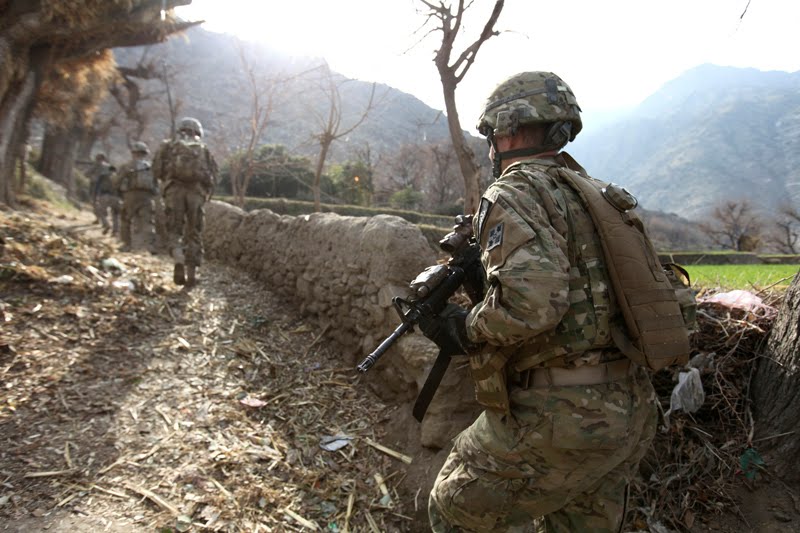
Army Reserve members facing imminent deployment to Afghanistan are publicly charging that their company is not properly trained or mentally fit for battle. Several members of the Indiana-based 656th Transportation Company, which is due to activate August 22nd, are requesting a Congressional inquiry into the unit’s lack of readiness. Alejandro Villatoro, a sergeant in the company, is amongst those coming forward.
Sergeant Villatoro says,
The main reason I am doing this is that I want people to know the lack of training and education our soldier have been receiving, and the focus on the mission is just not adequate to win the hearts and minds of the Afghan people. All I am asking is more time to reevaluate the training and mental health of these soldiers before sending them into war.
At risk to themselves, these soldiers are going public with first hand experiences of failures in military training, mental health care, and leadership, which many veterans charge are problems endemic to the military. This comes as the Afghanistan War falls under increased scrutiny in the wake of the Wikileaked “War Logs” information.
Untrained and unsupported
Three members of this company, Sgt. Villatoro and two reservists who wish to remain anonymous (referred to here as Private First Class A and Specialist B), have come forward to expose a crisis.
They tell of inadequate mental health care, scant and inappropriate training, and incompetent leadership distrusted by the rank and file.
Troops set to deploy to Afghanistan are given only a rudimentary briefing on Iraq — not Afghanistan. This transportation company has not even been trained on the vehicles and weapons their assignment depends upon, according to these servicemembers. Some mentally ill soldiers are able to keep their diagnoses secret from the military, which is not screening before deployment, while those with known mental illnesses are deployed regardless.
The 656th has been assigned to convoy security operations in Afghanistan. Yet, only 10% of its soldiers qualified on the .50 caliber guns that will be their primary weapon. Most have not learned to operate the heavy Mine Resistant Ambush Protected (MRAPs) vehicles they will be driving in Afghanistan, and Villatoro fears a repeat of his experience invading Iraq in 2003, with gun truck drivers who had never learned to drive a stick shift.
The company’s mandatory trainings have been cut from the required 40 hours down to two-hour PowerPoint presentations. Officers told the soldiers that funding cuts were the reason that their recent two-week training at Indiana’s Camp Atterbury, scheduled to be run by a privately contracted company, was reduced to some hastily improvised sessions with almost none of the equipment necessary for training.
“We’re part-time soldiers, we only train once a month, and when we do actually have trainings that are supposed to last any significant amount of time, we don’t do anything that seems useful.” says Private A, a 21 year-old reservist.
Training inadequacies go beyond the issue of equipment. According to Private A,
Most of the things we’re being taught are being applied specifically from Iraq and from Iraq vets. Afghanistan is a whole different ballgame. The only thing that’s the same is IEDs [improvised explosive devices]. The language, the landscape, the situation… everything is different
While U.S. and European diplomats have recently admitted they are floundering in the immensely complex social and political landscape of Afghanistan, Private A describes the level of preparation his company was offered: a single cultural awareness class focused, again, on Iraq rather than Afghanistan.
Everything they mentioned pertained to Iraq, so people were asking, “Well, in Afghanistan, what’s this like?” And they’d say, well, we can’t really tell you. Or just make up facts. It’s not making me feel any more comfortable about my first time deploying.
‘I fear that my chain of command will fail me’
The company has experienced numerous changes in leadership, including the transfer of their first sergeant after the disastrous Camp Atterbury training, where morale plummeted to a new low and one servicemember attempted suicide. Months of changing leadership have created insecurity and instability for members of the company, who have not had time to train together or build trust with the leadership they’ll be serving under in Afghanistan.
Even some top military brass acknowledge that poor mental health in the ranks is compounded by failures of leadership. Suicide is at “crisis level” in the military, declared Navy Adm. Mike Mullen in an August 2nd speech to the National Guard Family Program Volunteer Workshop in New Orleans. Mullen said, “A big part of the solution is tied to leadership and how we do the training.”
“Without stable enlisted leadership, unit commanders are unable to properly assess the training, mental health, and personal needs of their troops or effectively implement their training plans. This leaves soldiers vulnerable to inadequate training and pre-deployment preparation which could lead to disastrous outcomes on the battlefield.” wrote Iraq War veteran Aaron Hughes, in a July letter on behalf of the 656th arguing to delay deployment.
Specialist B, a 20 year-old from Indiana, says
I would like to believe that I’m fully prepared to go to war, but that is just not the case. I don’t know what my mission will be, I feel as if I have to defend my very close battle buddies and not my chain of command. I fear that my chain of command will fail me in the ultimate end and as a result my life will be on the line, or one of my buddies’ lives will pay the price for the lack of leadership.
Willful negligence?
Two weeks out from their activation date, Sgt Villatoro explains “It’s just not possible to be sufficiently trained in this time frame, let alone broadly enough for not knowing what our mission will be.”
“It just doesn’t make sense. And it’s dangerous. I just don’t understand why they’d put us in that much danger, to the point where it doesn’t make sense cause we’re unprepared for anything.” says Private A.
Clearly, the 656th cannot be prepared to successfully complete a mission it has not been trained for. But the question of inadequate training cannot be divorced from context. In every branch of the military, service members continue to question the legitimacy of the mission, and whether they can in good conscience participate in these projects.
Sgt. Villatoro says,
That’s the part I struggle with, that we don’t have to do this. It’s kind of hard to convince a soldier that they do have a choice. That the mission we were given, we believe it’s not effective.
Sit down and look at the effectiveness of trying to win the hearts and minds of the Afghan people. Sending 30,000 more soldiers with weapons doesn’t make sense to me. We don’t know anything about the culture, diplomacy; they train us on how to conduct traffic checkpoints.
These servicemembers also express concern about the effects on the Afghan people of deploying unprepared soldiers, untrained on their weaponry and equipment, and many in need of mental health support.
Sgt. Villatoro says:
What I’m afraid is that the rules of engagement might go out the window. That’s what happened when I went [to Iraq], they told us that as soon as you feel threatened you’re able to shoot. I’m afraid soldiers are going to forget the rules of engagement, go by their emotions, their anger and frustration, and take matters into their own hands.
Unfit for deployment
Lack of training on guns and vehicles makes soldiers a danger to themselves as well as others. The 656th will be operating top-heavy MRAP vehicles on Afghanistan’s difficult terrain, without having practiced driving these rollover-prone trucks even on Indiana’s flat roads.
“Whether we run off the road and kill somebody, or it’s somebody who snaps… If you don’t get mental help, that’s what is probably going to happen. And when you don’t have prepared soldiers, you’re going to have accidents.” says Private. A.
Many soldiers diagnosed with a mental illness by a civilian doctor don’t report their diagnosis to the Army. They fear that they will be either immediately discharged, or deployed without treatment and possibly barred from carrying weapons. Private A was diagnosed as bipolar 3 years ago and has kept this information secret.
“Mental health screening is a little embarrassing on the Army’s part — the fact that they haven’t done it,” says Private A. “There are several people here who I know of including myself with a diagnosed mental illness and the Army hasn’t caught it or done anything about it.”
During the Camp Atterbury training, a young servicemember slit his wrists with a number of others present. The military’s minimal response didn’t include mental health screening for the witnesses, the friends who intervened in the suicide attempt, or other company members shaken by the incident. Villatoro explains that the only mental health screening offered to this unit has been an anonymous online survey.
“The lack of screening could be a good thing to keep our numbers up as a unit,” says Private A, who has learned to manage his stability without medication over the last two years, after losing health insurance. “But God forbid something happens to those people or for some reason they can’t get medication over there. That could be the last time they see home. Any of those people could turn a gun on us or themselves.”
The experiences of these servicemembers reflect the escalating mental health crisis in the military, with rising deployments and redeployments of soldiers suffering from trauma, mental illnesses, and physical wounds. A third of troops returning from Iraq and Afghanistan report mental problems, according to a study by the RAND corporation. Post-traumatic stress disorder (PTSD), traumatic brain injury (TBI), military sexual assault (MST), depression, and anxiety disorders have carved holes in the ranks.
Army suicide attempts peaked this past June. The Army reports that in the last year, 239 soldiers killed themselves, (including 160 on active duty) and 1,713 people attempted suicide. Studies that include veterans in their statistics show even more horrifying numbers, like a CBS News study of state-by-state data in 2007 that revealed about 120 veteran suicides a week. The military does not acknowledge responsibility for many post-service suicides by veterans, who are two to four times more likely to commit suicide than civilians of the same age.
“It’s not enough for Obama to say that it’s not weak to ask for help, “ says Maggie Martin, an organizer with Iraq Veterans Against the War (IVAW) who works on issues of stopping deployment of soldiers with trauma and mental health needs. “We have to create a community where people know that. What the 656th is doing, in trying to delay the deployment and call attention to these issues — that is really important in helping soldiers know that they have to stand up for themselves and let people know what’s happening,”

Alejandro Villatoro enlisted as a high school senior in 2000 for economic reasons. Six months ago, he told his command he was applying for conscientious objector status. He avoided thinking about his participation in the invasion of Iraq in 2003 until entering non-commissioned officer training three years later.
As a leader, I wanted to take initiative and learn more about the war… It took me about two years to learn and decide what we were doing was ineffective and immoral.
When Sgt. Villatoro learned that his unit was slated to deploy to Afghanistan this fall, he decided to drop the conscientious objector application to go through deployment with his soldiers. “I wanted to be with them to educate them about the wars, what’s worth fighting for, what it really is to be a soldier.”
“They know my situation, that I wanted to get out and am only doing this for them” says Sgt. Villatoro. In conversations with soldiers in his unit, Villatoro found that many soldiers shared these concerns, and some felt ready to risk speaking out. Even more have indicated their agreement through informal surveys made by Villatoro, but stay quiet for fear of retribution.
Specialist B says “I have too many concerns with the 656th deploying to Afghanistan,” echoing the basic sentiment of many others in the company. Private A says “If we can’t even get little stuff like trainings scheduled, how are we supposed to nail down a complex mission in Afghanistan?”
Others appear comfortable or even enthusiastic about deployment. Villatoro says, “There’s a lack of knowledge; the motivation is money or medals, coming back with ribbons and hoping to have war stories. It’s not about the Afghan people, or thinking this will end the war. They don’t think that’s going to happen.”
“You have a bunch of people who want to go just for the experience and for the money. I think that a lot of it is the money. That’s the only thing that’s keeping me from saying OK, thanks and goodbye; there’s not a lot of jobs out there.” says Private A, who is from a small farming town and enlisted at 17.
The only thing that’s making me go is that I need the money. When I get back, I want to start school again and didn’t have money to do that before. That’s essentially the only thing that’s keeping me there.
Sgt. Villatoro says he feels a sense of responsibility to help younger soldiers to recognize where they may need more experience to understand of their own lack of preparation.
You can ask some of these soldiers if they’re satisfied with the training so far, and they’ll say yes. But you ask, Is it sufficient for you to conduct a mission in Afghanistan? That’s where the confusion sets in.
After his own experiences in the 2003 invasion of Iraq, Sgt. Villatoro names a key fear of sending out young, unprepared soldiers, many on their first deployment, without clarity about what they are expected to do and how they’re going to survive.
“As a young soldier, there’s a lot of insecurity,” he says. “You’re scared, you’re not going to remember the rules of engagement or what you’re supposed to do. You just want to get through the firefight.”
Private A sums it up: “It just doesn’t make sense to send an unprepared soldier into battle. It’s like brushing your teeth without toothpaste.”
Fending for themselves
After his command denied him an audience (and declined to comment for this article), Sgt. Villatoro and an increasing number of servicemembers from the 656th are looking to elected officials for assistance. Villatoro visited the office of Chicago’s Rep. Luis Gutierrez to underline the need for soldiers to be properly trained and mentally fit before deploying; Gutierrez has acknowledged the severity of these concerns and is taking the matter under advisement. Sgt. Villatoro was accompanied by allies including veterans of the Navy, Marines, Army and Illinois National Guard, representing service in Vietnam, Kosovo, Afghanistan, and Iraq.
Sgt Villatoro and several soldiers from his unit met last week to discuss the matter with Sen. Dick Durbin (D-Illinois), an advocate for mental health care for soldiers and veterans. Durbin’s office offered to forward a letter from Sgt Villatoro to the military liason in Congress. Yesterday, Sgt. Villatoro filed an official request with his office to open a Congressional inquiry into the 656th’s unfitness for deployment.
With only a couple weeks left before their activation date, these soldiers are taking multiple courses of action to address this situation. On why he decided to speak out, Private A says, “I just want future soldiers to realize you have to take this stuff into your own hands.”
More and more soldiers are stepping up to join Sgt. Villatoro in speaking up about the concealed chaos of the 656th. Their perspectives, politics, and hopes span a wide range; they unify behind lack of faith in their company’s preparation and leadership, and a common belief that the Afghanistan war is only getting worse.
An unwinnable mission
“I ask soldiers: what do you hope, do you really think this last push will end this war? A lot of them say no, because they know they’re not there to help the Afghan people.” says Sgt. Villatoro.
Private A says,
No, absolutely not. There’s no reason we’re even there. I’m going overseas to fight people where I have no idea that they did anything wrong. We’re not even fighting al-Qaeda, we’re just over there picking a fight, driving around and seeing who shoots at us, then shooting them. I don’t even understand the reason we’re over there.
“The mission as a whole in Afghanistan has lost its purpose,” says Specialist B. “The government can say whatever and do whatever and get away with it, with very little justice to the American people.”
Over 150 soldiers have publicly refused orders or deployment to Iraq or Afghanistan. There is precedent for a unit to successfully delay its deployment, as another National Guard unit and family members managed to do in 2007. Servicemembers, families, allies, and groups like Iraq Veterans Against the War organize resistance both publicly and under the radar.
The Under the Hood G.I. Coffeehouse in Killeen, Texas held a march to publicize opposition to the deployment of the 3rd Armored Cavalry Regiment (3rd ACR) from Fort Hood, scheduled for August. Soldiers, military families and civilian organizers demanded an end to the occupations, cancellation of this deployment, and for an end to the 3rd ACR’s policy of deploying traumatized soldiers.
“There is a strong history in this country of G.I.s taking a stand, confronting and exposing unjust and illegal military practices,” says Sarah Lazare, an Illinois-based organizer with the Civilian-Soldier Alliance, a group of non-veterans supporting and collaborating with servicemembers and veterans who resist orders and wars they view as unjust and illegal.
By courageously speaking out about the problems with their unit, soldiers in the 656th are strengthening the movement of servicemembers taking stands of conscience against military actions they oppose.
Despite his principled objection to the Afghanistan War, Sgt. Villatoro is prepared to deploy with the soldiers in his charge if they are unable to delay the 656th’s activation.
I ask myself why I feel so responsible. I put a lot of blame on myself because of mistakes I made as a young naïve soldier, and I don’t want to do it again or see other young soldiers make those mistakes.
Sgt. Villatoro says, “This war has never ended for me. I feel bad a lot about the soldiers, how they keep re-enlisting. My war, my fight will never end until every soldier is home.”
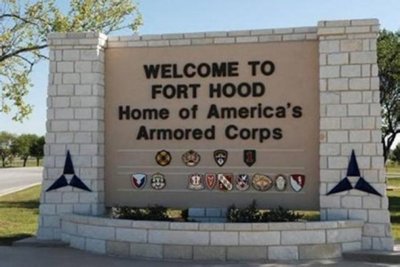
Call to action at Fort Hood
This is a nation-wide call to action! Come to Fort Hood, Texas, Aug. 22 to participate in peaceful actions with veterans and anti-war leaders opposing the deployment of the 3rd Armored Cavalry Regiment’s 5,000 Soldiers to Iraq…
Despite President Obama’s fallacious claims that the war in Iraq is winding down, the 3rd ACR is gearing up for yet another deployment! Furthermore, many Soldiers facing deployment are known to be unfit for combat due to injuries sustained in prior tours. The Peace Movement must not let this stand!…
This will be a RADICAL demonstration, with optional direct action elements and possible legal implications. While all are welcome to participate at whatever level they are comfortable, we value greatly those willing to put their bodies on the line…
Our message is that wounded warriors should never be forced to deploy. Our message is that the people of Iraq should not suffer at the hands of American troops. We will make this message clear with our voices, wills and bodies. We welcome our brothers and sisters from any social justice movement and their chosen messages of solidarity. We stand united as citizens of the world opposed to U.S. Empire.
We invite all who plan to participate to attend a brief planning meeting Aug. 21st at 5 p.m. We will be discussing plans for the following day’s actions, as well eating, drinking and enjoying each others’ company, before rallying at Fort Hood the following day.
Contact us now at forthooddisobeys@hushmail.com to RSVP, learn the location of the Aug. 21st meeting and stay up to date as more becomes available. Please send us your name, contact information and a brief bio of you as an activist, and we will be in touch. We are moving forward rapidly and look forward to welcoming you to beautiful Killeen, Texas!
In Solidarity,
The Disobedient

By Roger Baker / The Rag Blog / August 10, 2010
I suppose I might now call myself a neo-Marxist. This is not to argue that Marx does not need some updating, no matter how keen an observer of the distinctive traits of the capitalism that he closely observed 150 years ago. I remain mindful of the fact that to say that you agree with Marx on anything is still enough to raise eyebrows, and not just here in Texas.
I still maintain that Marx was the first to interpret history and the phases of economic development throughout history in a way that made good sense. To me, Marx put the eventual development of capitalism into historical perspective, and in a way that still seems valid in many respects.
Marx was a radical social reform advocate, but he was also a scholar, an economic historian, and a sociologist who built a logical case for why the world operates in the way that it does. With constant wars and internal conflicts between kingly and peasant classes over the sharing of material goods that has been a constant theme of history.
Marx’s perspective was that, impelled by human social instincts operating on a mass scale, and given an ever higher level of technical knowledge and mastery of nature accumulated throughout human history, the eventual emergence of capitalism out of the early marketplace economy was a highly predictable event. Finance capital survives as the fittest and most aggressive alternative to other varieties of social organization, like feudalism or slavery based on agrarian economies.
Empires fall, and no doubt our global empire will too at some point, but probably in a different and more uniform way than was seen in earlier history. The Roman Empire was about as global as their level of technology and communication and sailing ships would permit in their time.
Now our technology has allowed the global organization of capital. We live in a new global empire linking nearly seven billion humans based on an unsustainable supply of fossil fuel. The modern tentacles of military influence reach and attempt to manage every part of the world.
Economics and politics inseparable
High on my own list of Marx’s important insights was the understanding that economics cannot be separated from politics. Marx understood that economics, far from being a science, dismal or otherwise, is nothing more than the somewhat predictable face of politics. Politics in turn is based on human psychology, which is usefully predictable when it operates on a mass scale.
I believe that history has shown that Marx was wrong when he theorized that an organized working class would eventually overpower private capital, and by whatever means that might require. Marx imagined that the factor that would ultimately limit the global expansion of capital would be an increasingly organized working class, rather than the limits imposed by nature itself, as Malthus had contended.
Why is the ruling class now so dominant and the broader public interest of those below in retreat? The global economy is now a global empire of finance capital centered in New York and London, policed by the U.S. military, and based on the U.S. dollar as its standard exchange currency.
Finance capital has become an economic force with the capacity to quickly shift thousands of jobs between nations in search of higher profit. This is why Marx supported international worker organizations. There is now little contest between global corporations on the one side, and unions and worker organizations, the latter tending to be regional in organization.
Marx was clearly right when he saw that the forces of capital investment would, over time, tend to favor ever-larger and more concentrated wealth. This concentration of the control of the material production of traded goods implies that those in control will tend to get richer at the expense of everyone else. This cannot come as a shock when we see the world today.
So far as I can see, Marx was entirely right about the capitalist system being deeply and inherently prone to periodic economic crisis, when practiced on any scale. One key insight was that unregulated finance capital lacks the critical feedback mechanisms needed to prevent its inherently expansive nature from overshooting its markets.
Marx observed the business cycle in the early capitalist economies, but the same Ponzi-like character of capitalist investment psychology seems to be an inherent trait of all capitalism and on every scale, including the current global situation.
Marx analyzed the root instability as a case of overly optimistic investment psychology stimulating an economy to become over-extended. This leads to the investment in production overshooting underlying market demand.Which in turn leads to a self-perpetuating economic contraction and a credit crisis.
Now we can see the same kind of expansion of capital overshooting the market demand on a global scale. The eternal exponential expansion of the whole investment banking system was, in effect, hedged with securities like credit default swaps, and on a scale that was blind to the absurdity of infinite global expansion.
Oil and water?
Back in my own early days as a socialist, I imagined that there was socialism on one hand, and then there was capitalism on the other. The two were sort of like oil and water, or apples and oranges. Now I tend to accept the view that there is a socialist or government sector (although formally elected, this sector generally reflects the social and economic values of the ruling elite). This public sector operates alongside a private capital or finance sector in every modern advanced economy.
The socialist or government sector of a capitalist economy is usually formally elected. It collects taxes and is responsible for generating the national laws that everyone — including private capital — is legally obliged to follow. It is in this sector that we find the rules of law governing a nation of citizens, although always a nation in which a few are most influential.
Whenever the private sector gets itself into deep trouble, the socialist sector is called upon to come in and take control and impose enough reforms and safeguards and collect enough taxes to save the system. Accordingly, in the depth of the Great Depression, Roosevelt supported strong external banking restrictions designed to keep the finance system from getting overextended and crashing again for a long time to come.
Now I interpret this whole situation as a balancing act between the public and private sectors, ever in conflict, and steering a changing course between strict external governmental authority on one side and the free exercise of rapacious self-interest by private wealth on the other.
At one extreme, it is possible to have a nearly purely socialized command economy in which those in power, elected or unelected, have control of the ruling government sector and army and police, while keeping private capital on a short leash. Perhaps they only allow a small private sector the right to trade or sell produce in the farmer’s market. Think Cuba, maybe.
On the other extreme, you can have a situation where, despite the formality of free elections, private finance capital manages to effectively hijack the socialist/government sector of the economy to its own private benefit, which can destabilize the whole system. Why should the banks and corporations bother to steal elections when it is so easy to buy elections? Especially now that Congress and the president spend most of their time raising money.
The U.S. Senate has now become a blue ribbon example of dysfunctional government, offering a nearly impassible obstacle than can legally block any reform that could weaken the power of private wealth.
A matter of scale
In the times of Marx, the ideology of a ruling class elite dominated the policies of national governments and kingdoms, as it still does. However, the governmental sector of the economy that then governed the conduct of private capital was proportionally a lot smaller than today, and when not, it was usually focused on war, or acquiring the military power to control foreign colonies.
The governmental sector of most capitalist economies has since grown enormously, and in a way that seems designed to stabilize and assist the accumulation of private capital in times of both peace and war, now resembling a publicly funded incubator designed to support the growth of private wealth. Private control can come from a military-industrial complex, or under a permanent governmental bureaucracy able to maintain its influence, despite an elected government.
The U.S. banking empire has now evolved into a symbiotic relationship with the working class of China, delivered as part of a package deal, wherein the Chinese have welcomed foreign investment in return for about two trillion in their accumulated U.S. Treasury debt, This debt is still growing fast and has reached a point where it can never really be repaid in terms of its current stated buying power. Uncle Sam has effectively become an aging de-industrialized oil junkie, and obviously a bad credit risk considering the ever-growing size of his bar tab.
Our U.S. governmental institutions are not able to deliver on existing promises, partly because our politics have become so dysfunctional and distrusted that our system cannot impose much short term sacrifice for long term gain. The U.S. government takes the easy way out by printing money (hidden taxation) rather than by openly raising taxes.
This would make sense in Keynesian terms, but only if there were the prospect of a transition to some plausible and sustainable Plan B policy. Plus there obviously needs to be deep reform of the system to keep another credit and investment bubble from reappearing.
The spoils of global speculation
So what did the U.S. get out of our short-sighted and unregulated global speculation binge? The USA is now an oil addicted nation, with a hollowed out industrial base exported to China. We are now forced to restructure our economy and to try to rebuild a more sustainable infrastructure, but have to do so while deeply in debt. It is probably not going to turn out very happily.
China knows the score, so they are now trying to restructure to break off their precarious relationship with the U.S. The Chinese are cashing in their U.S. treasury bonds as rapidly as is prudent, to buy industrial commodities that can solidify their role as a global power. At least, they have a plan.
Perhaps the Chinese are already socialist, it depends on your definition. The governmental/socialist sector of their economy still seems to have unchallenged authority over their coexisting private capitalist sector. In China, the socialist sector maintains an industrial policy of keeping their yuan undervalued, despite the inflationary implications for their own economy.
By contrast, in the USA the private capital and banking sector has politically hijacked the formally democratic U.S. governmental/socialist sector. The private sector has essentially taken control through a mercenary army of lobbyists that now vastly outnumbers the members of Congress.
The energetic nature of capitalism has created a global trading economy, and this has made global government possible. Now the U.S. is fading as a central source of military and economic authority. This is a pattern of history; historian Paul Kennedy has written about military over-reach as a classic cause of the fall of empires.
Global finance capital is now in vital need of some type of adult supervision. The world needs something like a sober world government or a more powerful United Nations, or perhaps a wise and compassionate World Bank or world court system to impose rational limits or structure to the socially destructive side of private capital.
The rapid approach of peak oil, and its rising import cost as the global oil market tightens up again during the next five years, seems to guarantee that the our current recession will continue long enough to merge with our rising trade deficit problem. Other resource constraints loom, even if an ocean of new oil should be discovered tomorrow.
The current U.S. agricultural sector is unsustainable in many ways, especially where related to oil requirements, fertilizer needs, erosion, fossil water pumping and irrigation, and global warming. Already, the Russian forests seem to be burning due to global warming.
Looking ahead a few years, I think the current economic contraction will be followed by serious inflation or stagflation. One way or another, we will likely see our accustomed U.S. standard of living in decline, and our social institutions will be transformed in unpredictable ways by a new and more difficult material reality. A new reality more based on steady state survival than on the prospect for economic expansion.
Energy considerations alone dictate that the world economy, whether it is capitalist or socialist, is likely to splinter into smaller geopolitical blocs involving much less travel and tonnage of international trade. If the current global empire of capital breaks up like the Roman Empire did, because of growing energy, food, and resource limits, it will need to be restructured based on a more localized system of production.
One influential radical commentator who shares many of my neo-Marxist views on the impact of resource constraints on the evolving world economy is John Bellamy Foster, editor of Monthly Review.
Limits to growth
As Marx said, capital can abide no limits. Whenever there are limits placed in its path of expansion, capital and all its allies will do whatever they can to subvert and undermine any limits to economic growth.
We now live on a planet nearly sucked dry for a fast buck. We have to learn to live with this new reality in ways as tolerant and compassionate as the current situation allows. If our goal is to help build the kindest and best world going forward, we need to understand exactly what went wrong and how we got into our global resource limit predicament.
William Catton’s book Overshoot provides a classic description of the big picture written before many were conscious of the limits to growth. Today there are many who understand and study these limits, among which the Post Carbon Institute is one notable example.
We should start by acknowledging the necessity for some sort of outside regulation of capitalism — or any other system that strives to achieve exponential expansion of human population and its per capita impact, given our world of finite natural limits.
This is not the same outcome that Marx, in trying to understand the tendencies of the early capitalism he studied, could easily have foreseen, but it should be enough to show us that Marx was mostly on the right track in his understanding of the basic nature of capitalism.
[Roger Baker is a long time transportation-oriented environmental activist, an amateur energy-oriented economist, an amateur scientist and science writer, and a founding member of and an advisor to the Association for the Study of Peak Oil-USA. He is active in the Green Party and the ACLU, and is a director of the Save Our Springs Association and the Save Barton Creek Association in Austin. Mostly he enjoys being an irreverent policy wonk and writing irreverent wonkish articles for The Rag Blog.]

Minnie Redux
(after Cab Calloway’s ‘Minnie the Moocher’)
I never kicked the gong
yet I have longed
for an opiatic oblivion
to the world pressing down
I find it– that escape–
in books, rented BBC series
the hat movies
and, at times, in meditation
There is too much to know
more to remember
and being in tune
can drive one mad
No, not for me a drug induced
sleep or smoky haze
to drift away
Yet, the tendency to flee
from the collective heave and toss
of trivia and mundane
sometimes over takes me
I inhale
ice cream
© Alyce Guynn
Posted August 10, 2010 / The Rag Blog

THE WALL
We are all masons
highly skilled
without apprenticeship
a birthright of our culture
We lay the bricks
unintentionally – without design
as we sit in silence
and long for god-driven bulldozers
to crush our life’s work
Our dreams slowly suffocate
while our fear
places the mortar
expertly on the growing wall
We wait expectantly
for just one brick to crumble
by lightning, thunder and the
storms of heaven
but divine sources don’t intervene in
this human-made catastrophe
Instead
we move into smaller confines
as the wall spreads over the open spaces
our dreams intensify
as the space we allot ourselves shrinks
We imagine actions
which would crumble the red brick
praying our silent screams will shatter the wall
and uncover the hidden rainbows
The wall only continues to expand
How have we built such a sturdy wall
what did we do to shape its architecture
Did it begin with my silence
on that Sunday morning
when you rolled on and off of me quickly
apologized for your insensitivity
but received no satisfactory reply
or the last time we left the mortar
in the other room
threw the bricks out the window
stripped off the offending rococo
you slid into me easily
embarrassed that the entry was not biblical
my pleasure didn’t reassure you
and the wall went up a foot at least
Is it too late to tell you
how I loved your hard dick in those days
that you could want such pleasure with it
without the all restrictive fear
that I would not approve of your love of your own body
Have we learned enough not to build other walls
but not enough to tear down the existing structure
The great wall, the maginot line, the Berlin wall
county lines, racist incorporation, patriotic borders
separating cultures
dividing people
reinforcing the night silence into the day
walls built by human hands and weak hearts
by fear of loss, ignorance of gain
walls over the earth
providing privacy, preventing union
built brick by brick
as our minds lose the zest for openness
our hearts the belief in others
cynical walls too long to allow
holding-hand circles
too high to allow
embraces and kisses
We can’t even nestle in each other’s eyes
as the wall shades the sunlight
silence
the most effective and compleat mason of all time
We build a brick each time we keep our
fantasies to ourselves
each time we bury our smiles and tears
our stoic selves are building a dead world
the wall is high
shouts of love barely chip the mortar
my eyes can’t say enough to you
and how I miss your low slung balls in my hands
barbed wire fence parallels the brick in my country
supposedly to separate the cows from the sheep
but instead separating people
establishing territory
privacy
loneliness
people sweat as they stretch the wire
and lay the bricks
the same builders wonder at the destruction
of their dreams
about the purpose of their life at the time of their death
fleeting last thoughts of sweat, misunderstanding,
and eternal nothingness
a double wall of protection in my land
a crazy friend – who is sane –
smashes bricks and clips barbed wire
at the most unexpected time
exasperating her community with her lonely success
observers remain in their brick prison
silently cheering the effort she makes
on behalf of us all
but unwilling to enter the unknown territory
beyond the wall
this crazy bricksmasher is scratched by the wire
choked on the dust of the crumbling brick
she despairs at the bricklayers found on the
other side of the wall
replacing the red blocks faster than she can
knock them down
but she keeps looking for bricksmashers in her life
where are the bricksmashers
the bulldozers, the wire clippers
where are the crafty people
ones with strength in their hearts –
wall-smashing strength
determination in the eyes –
wire-cutting determination
show me the hands that can masturbate
in the middle of the morning
surrounded by red brick
and I will show you a natural born brick-smasher
show me the eyes that can shine
in the middle of the night
surrounded by barbed wire
and I will show you an experienced wire-cutter
eyes of light; hands of purpose
these are the illegals
those who cross borders, boundaries and walls
so tell me your fantasies
what you think as you fall into sleep
what you dream as the sun goes high
and the hours pass on the glossy lake
as the nibbling crappies mesmerize us
into a dead silence
help me rip open a small place in the wall
a hole through which we can pull ourselves
and make space for others
I know you’re there
I’ll look for you
you look for me
we can add on as we go
tearing down those red oblong blocks
which imprison our most worthwhile dreams
find the active hands and hold on tight
locate the gleaming eyes
and keep a steady gaze
do something
do it now
while we sit in our separate corners
the wall keeps getting higher
Bobby Nelson
© 1980


In memory of Jay Spotted Elk
It became possible to prove that Jay Spotted Elk’s last night on earth was not unusual in the history of Sheridan County, Nebraska.
By Steve Russell / The Rag Blog / August 9, 2010
In my time as a trial judge, I’ve learned that often when a litigant says it’s not about the money it is in fact about the money. You can’t tell at the beginning of a case but you can tell at the end. In this case, it was not about the money.
An Indian hanging himself in the drunk tank is seldom big news in Indian country except to his relatives. When Jay Spotted Elk hung himself while facing misdemeanor charges in Sheridan County, Nebraska, his mother decided not to stand for it. Arlyn Eastman/Broken Nose sued the county and several individuals who might have been able to prevent the suicide if they had been properly trained and motivated.
Any lawsuit is difficult, and this one much more so. In the wake of the civil rights movement, there was a time when the courts seemed generally sympathetic to claims by the powerless against the powerful. As a result, the Republican Party took on the reorientation of the federal courts as a project that continues to this day.
This year saw the racial attacks on Sonia Sotomayor and the recent hearing on the appointment of Elena Kagan that left the Republicans on the Judiciary Committee praising Kagan’s qualifications and personality while still resolved to vote against her (excepting Lindsey Graham, who seems to find good government more important than party discipline).
In all GOP administrations since Nixon, most nominees have been very young and very conservative. Young because federal judgeships are lifetime appointments and conservative to get the law back into what they choose to call the mainstream, where you can tell the winners largely by race and by class.
At this time, as at the beginning of the Clinton administration, there are no American Indians serving on federal courts, which is where Indian interests are normally adjudicated. As bad, the influx of judges with a political agenda has had approximately 40 years to work its magic, since the Democrats in power during that time have been centrists who would correctly claim that stacking courts is bad government and refrain from fighting fire with fire.
I was educated in the legal landscape peopled by Thurgood Marshall (demonized in the first day of the Kagan hearings), William O. Douglas, William Brennan, and judges like Hugo Black, who wrote the words that Indian lawyers call the all-purpose Indian law dissent: “Great nations, like great men, should keep their word.” I doubt that I would have become a lawyer had Thurgood Marshall not existed and I was reluctant to wash my hand again after William O. Douglas shook it.
In modern times, the “liberals” are conservative appointees who were enlightened by their experiences on the court like Harry Blackmun or David Souter. The “center” has been moved by political calculation. As a result, people without power have a set of problems that go far beyond the fact that they often don’t know lawyers and that lawsuits cost a lot of money.
Should she find a lawyer to work on a “contingent fee” (no pay unless you win), Spotted Elk’s mother would have to contend with the social fact of suing a local government (the law enforcement part, no less) and with the legal fact that if there is one class of litigants that has less success than American Indians it would have to be prisoners.
The courts, since the heyday of civil rights lawsuits, have made it harder to sue local governments for damages. It’s not enough that law enforcement officers violate your rights and they work for the city or the county you want to sue. To hold the local government responsible, you must prove that they did or failed to do something in particular. Most common is a failure to properly train or supervise the officers, but this has to be a pattern. One bad outcome is not enough, even if somebody is killed.
The lawyer who took on this case, Maren Chaloupka, hit a mother lode of evidence that was good for the lawsuit but bad for the Indian community in Nebraska:
When nothing was done in the face of all this, it was bad for the Indians who might be in the jail from time to time but it made proving that the county had failed to take suicide precautions the proverbial slam dunk.
It became possible to prove that Jay Spotted Elk’s last night on earth was not unusual in the history of Sheridan County, Nebraska. According to a report in the Scottsbluff Star-Herald, Spotted Elk threatened suicide before he even got to the jail. Yet his belt was not removed and he was not closely watched.
In these rare cases when there’s a good chance of prevailing in a trial, there comes a time when you know why the lawsuit was filed. Everybody knows that going to trial is a crapshoot, but there is something to negotiate about if the lawyer on the other side is sane. If the case settles, that’s when you learn why the case was brought.
Chaloupka, of Scottsbluff and her co-counsel, Robin Zephier of the Abourezk Law Firm in Rapid City, got $100,000 paid to Jay Spotted Elk’s estate, managed by his mother. If that was all, it would be better than not placing any cost on Indian lives, but it is unlikely that I would be writing about it. The rest of the settlement requires the county to:
This is what civil rights lawyers can do now and then even when the courts are so stacked against them, and local officials would plainly not care to spend money protecting Indians if they had a choice. In this case, we won’t know exactly whose life was saved but it is safe to say that saving lives will be the result. It’s for that result we should remember the life of Jay Spotted Elk.
[Steve Russell, Cherokee Nation of Oklahoma, lives in Sun City, Texas, near Austin. He is a Texas trial court judge by assignment and associate professor emeritus of criminal justice at Indiana University-Bloomington. Steve was an activist in Austin in the Sixties and Seventies, and wrote for Austin’s underground paper, The Rag. Steve is also a columnist for Indian Country Today, where this article first appeared. He can be reached at swrussel@indiana.edu.]
Thorne Webb Dreyer, Editor





