Political prisoner and acclaimed poet Marilyn Buck died of cancer early Tuesday, Aug. 3, in a New York hospital. Buck — who served 25 years of an 80-year sentence for politically motivated crimes in support of the black liberation movement — was paroled to New York on July 15 from a Texas prison hospital. Buck, a former Austin activist, was diagnosed late last year with a uterine sarcoma, a rare and aggressive cancer.

Posted in RagBlog | Leave a comment

Mariann G. Wizard : Poet/Political Prisoner Marilyn Buck Dies in New York

UPDATED Wednesday, Aug. 4 at 9:03 a.m. (CST)

Marilyn Buck was released from prison July 15, 2010.

Recently released from Texas prison:
Cancer takes poet Marilyn Buck

By Mariann G. Wizard / The Rag Blog / August 3, 2010

AUSTIN — Friends of long-time political prisoner, former Austinite, and acclaimed poet Marilyn Buck, 62, were saddened by news of her death at the home of her attorney Soffiyah Elija, early Tuesday, August 3.

Buck was released from the federal prison medical center in Carswell, Texas, July 15, 2010, and was paroled to New York City.

Buck served 25 years of an 80-year prison sentence for politically motivated crimes undertaken in opposition to racial injustice and U.S. imperialism. As a prisoner, Marilyn, while moderating her ideas about methods, continued to stand tall for her beliefs.

A selfless advocate for others, especially in the arena of prison medical care, Marilyn was diagnosed late last year with a uterine sarcoma, a rare and aggressive cancer, too late for treatment to save her life.

While attending the University of Texas at Austin, Buck became involved in the civil rights and anti-war movements, and worked with SDS and the underground newspaper, The Rag. In the following years she became increasingly committed to and active in support of the black liberation struggle in this country.

Buck is survived by three brothers; several cousins; her long-time counselor, Jill Soffiyah Elijah; and loving friends worldwide. Her parents, Dr. and Mrs. Louis Buck, who both pre-deceased her, were leading civil rights activists in Austin in the early 1960s.

According to sources close to Marilyn’s family, there will not be a funeral, but memorial gatherings will be scheduled in the future in New York City, in California’s Bay Area, and in Texas. Funds raised for her hoped-for transition to the free world that had not been dispersed at the time of her death will be used according to her wishes to assist other aging prisoners.

The size of the U.S. prison population guarantees that increasing numbers of those released after lengthy sentences will lack savings, health insurance, or the network of friends from all walks of life that sustained Marilyn — and benefited from her generous, principled spirit — throughout her years behind bars.

Marilyn Buck was the recipient of funds raised at a June 25 community support event and benefit in Austin hosted by eight local groups, including NOKOA the observer and The Rag Blog, and supported by many businesses, artists, poets, and compassionate individuals.

Youth Emergency Service, Inc., fiscal sponsor for the event, will continue to accept tax deductible contributions through PayPal at its website, or by check or money order, made out to YES, Inc., at PO Box 13549, Austin, TX 78711.

CORRECTION: The Rag Blog was originally informed that Marilyn Buck died in a New York hospital. Now we have learned that Marilyn in fact died surrounded by friends at the Brooklyn home of her attorney and long-time close friend, Soffiyah Elijah, where she was living after being paroled to New York City. Linda Evans announced the following through Freedom Archives:

Our dear comrade Marilyn Buck made her transition today [August 2] at 1 pm est peacefully and surrounded by friends at home in Brooklyn. Details of memorials and where to send cards and donations will follow soon.

Also see:

The Rag Blog

Posted in Rag Bloggers | Tagged , , , , , , , | 10 Comments

Tom Hayden : Despite WikiLeaks, Congress Votes War Bucks

WikiLeaks founder Julian Assange. Image from The First Post.

Despite WikiLeaks revelations,
Congress votes for war funding

By Tom Hayden / The Rag Blog / August 2, 2010

Never was the case so weak for throwing another $33 billion into the Afghanistan sinkhole, but that’s what a defensive U.S. Congress did anyway on Tuesday evening, July 27. The vote was 308-114, with Republicans supplying most of the pro-war votes.

Washington-based peace groups, after weeks of e-mailing messages to Congress, put the best face possible on the vote, claiming a “significant” gain of 14 additional antiwar votes over the 100 cast for a similar amendment by Representative Barbara Lee two weeks ago.

(The new Democratic votes were cast by Corrine Brown, Kathy Castor, John Conyers, Rosa Delauro, Lloyd Doggett, Anna Eshoo, Chaka Fattah, Eddie Bernice Johnson, Hank Johnson, Marcy Kaptur, Carolyn Cheeks Kilpatrick, Gregory Meeks, James Moran, Christopher Murphy, Carol Shea-Porter, Mike Thompson, Lynn Woolsey and David Wu; while five Republicans joined the opposition: Paul Broun, Vernon Ehlers, Jeff Flake, Phil Gingrey, and John Linder.)

Those casting pro-war votes from safe liberal districts included Lois Capps, James Clyburn, Susan Davis, John Hall, Patrick Kennedy, Nita Lowey, Lucille Roybal-Allard, John Sarbanes, and Joe Sestak. Significantly, Speaker Nancy Pelosi abstained from voting, which meant retreating from the chance to draw an antiwar line more firmly.

The highest measure of House opposition remains the 162 votes, including Pelosi’s, cast in the House recently for Representative Jim McGovern’s amendment requiring an exit strategy including a withdrawal timeline. Only 18 senators voted for an identical amendment by Senator Russ Feingold earlier this spring. The dissenting numbers have almost doubled since last year.

In the moments after Tuesday’s vote, a representative of Barbara Lee’s office said new antiwar measures may be put forward around the defense appropriations bill later in this session. No concrete plan yet exists.

Those Congressional anti-war votes are in part due to years of grassroots work and mobilization, according to Rusti Eisenberg of the legislative committee of United for Peace and Justice. Is the glass half-full or half-empty?, she asks.

What is clear is that there was never a better time to stop or delay this war. The political climate around Afghanistan turned extremely sour in the days leading up to Tuesday’s vote. The Washington establishment was shaken by the spilling of 91,000 classified documents by the independent muckrakers at WikiLeaks.org. The raw documents revealed a much grimmer situation in Afghanistan than portrayed by the White House and the Pentagon with its information-war strategy.

As millions read the WikiLeaks revelations in The New York Times, the Guardian and Der Spiegel, a nervous White House pressed for an immediate House vote. “We don’t know how to react. This obviously puts Congress and the public in a bad mood,” lamented one White House official.

The president could have declared that the newly released materials only add to a growing consensus that the war is unwinnable. Instead he sent his spokesperson Robert Gibbs out to discredit the founder of WikiLeaks, Julian Assange, who is fast becoming a hero in the global info-wars.

Gibbs was offended by a German interview with the elusive Assange, in which he said “I enjoy crushing bastards,” a sentiment that will do him no harm with Assange’s readers and collaborators.

The Pentagon also is seeking to muzzle and imprison the American Private First Class Bradley Manning, 22, charged with downloading the documents and sending them to Assange. Manning, who is known by his hacker name Bradass87, copied the secret information on a CD labeled “Lady Gaga” while pretending to hum along to her music.

“I want people to see the truth, the non-PR version,” said Manning. While downloading the materials, he had discovered “awful things that belong in the public domain and not on some server stored in a darkroom in Washington, DC… I just couldn’t let these things stay inside of the system and inside of my head.”

Manning calls his action “open diplomacy… It’s beautiful and horrifying. It belongs in the public domain.”

WikiLeaks founder Assange announced Monday that he has another 15,000 documents ready to release.

For now, funding for the escalation has been salvaged by the House vote. But the full impact of the documents remains to be seen. If the Pentagon finds a way to shut down WikiLeaks, it is likely that a huge media and public protest will follow. Going forward with upbeat messages about the war becomes hazardous for Obama too, especially with the release of more documents threatened. Pressures thus will increase here and across the NATO alliance to begin reducing the military presence.

On the very day the disclosures were splashed across front pages, American officials were quarreling with Afghanistan’s President Hamid Karzai over whether 52 civilians were killed by Western rockets in Helmand Province, a scene of the current offensive. And, according to official sources interviewed by Dexter Filkins of The New York Times, Karzai is “pressing to strike his own deal with the Taliban and the country’s archrival, Pakistan, the Taliban’s longtime supporter.”

Instead of bending to these apparent realities, Obama instead seems intent on doubling-down with the military offensive in Kandahar and his secret attacks in Pakistan.

No one in the government has found a way to stop him, despite 73 percent of Democrats and a majority of independents opposing his Afghanistan policy. By voting for war funding without conditions, Congress has yielded its checks and balances function, and now is being usurped and outperformed in its oversight responsibilities by the twentysomething geeks of WikiLeaks.

[Tom Hayden is a former California state senator and leader of Sixties peace, justice, and environmental movements. He currently teaches at Pitzer College in Los Angeles. His books include The Port Huron Statement, Street Wars and The Zapatista Reader.]

Thanks to Carl Davidson / The Rag Blog

Posted in Rag Bloggers | Tagged , , , , , | Leave a comment

Marc Estrin : The F-35 and the NIMBYS of Death

F-35 helmet: “Cool” lid for flying our “national treasure.”

NIMBYS of Death

By Marc Estrin / The Rag Blog / August 2, 2010

BURLINGTON, Vermont — This week the Secretary of the Air Force selected the Vermont National Air Guard as one of the top two contenders for housing “a national treasure,” the new F-35 Joint Strike Fighter. Our liberal congressional delegation is jumping with joy, with Sen. Leahy enjoying the “cream rising to the top,” Sen. Sanders basking in the “great national respect and admiration,” and Rep. Welch crowing about “400 full-time and 700 part-time employees, military and civilian, [who] receive about $53 million annually in pay and contribute about $2 million each year in fire and rescue services from their airport base.

Wowie zowie — sounds pretty good.

There have, of course, been some grumblers, the most cited being those airport neighbors complaining about a drop in property values and lives made noisome by unbearable decibels. While the militarized world at large understands and sympathizes with their issues and hopes to “work with them,” their concerns shrink, and are dismissed in the face of the larger issues of jobs and “national security.” They are labled NIMBYs — Not In My Backyarders. “What you’re doing is OK — just go do it elsewhere.”

But what is it it the F-35s are doing, beyond being national treasures and making a hell of a noise? What is it that is OK, as long as it’s elsewhere? There are those of us mean enough to point to its main task — mass murder. That’s why we don’t want F-35s based in Burlington — or anywhere else.

Burlington, Vermont — bobo paradise, the People’s Republic of, — does love its sleek if noisy aircraft. For several years, we enthusiastically hosted an airshow put on by the Navy’s Flight Demonstration Squadron, the Blue Angels.

Although very few of us support mass murder, I had an interesting conversation recently with an intelligent woman, highly critical of the war, who was all excited about this air show.

“I know I shouldn’t really love it — but it’s so exciting. Those planes are so beautiful, the pilots’ skill is so impressive. It triggers off some visceral reaction…”

“Would you be excited to see someone beheaded, or perhaps burned at the stake?” I asked.

“No!” she averred, “But nobody gets killed at the air show.”

What was amazing to me was the screeching to a halt of thought. No, short of a crash, these planes would not kill anyone at the air show. But they are the meanest and most vicious of killing machines, designed to bring fiery death to any persons or structures in their cross-hairs.

They are “smart,” these machines, and their pilots are smart, well-trained, and their bombs are “smart,” and we never intentionally kill innocent civilians. Yet somehow, there is always “collateral damage.” No one gets killed at the air show. Only everywhere else such machines perform.

At the time of the show, and in the face of F-35-like protests, a local columnist wrote a piece in the Burlington Free Press entitled “Cause It’s Cool, Let Airshow Roar”: “C’mon guys,“ he wrote,

all you waterfront zealots, anti-war movers and shakers, environmental sorts. Can’t you just get off your high horses for a day, stop being so stuffy, and, like, just have some fun watching the boys play with their toys? ‘Cause it’s cool, man. Don’t get your undies in a knot. Hey, even the Make-A-Wish Foundation loves it. [The foundation will receive a charitable donation from the proceeds.] Are you against dying kids? Meanies.

He advised the peace-freaks to just “close their eyes and imagine that the jets torching along at 500 mph are on a peace mission promoting sustainable global tranquility.”

But these jets, and worse, the F-35, will not be promoting global tranquility. They are promoting defense profits, over-the-top military macho, and by implication approving the world-wide death and suffering it creates. They are promoting killing kids who have no Make-A-Wish foundation, and whose only wish is that the wars around them would end. And not least, they are enticing our own children to graduate from violent video games to doing the real thing when they grow up.

I know — all those Burlingtonians who are thinking such thoughts are just elitist prigs with twisted undies. Why can’t we just be cool, instead of raining on the party? Besides, think of the jobs.

[Marc Estrin is a writer and activist, living in Burlington, Vermont. His novels, Insect Dreams, The Half Life of Gregor Samsa, The Education of Arnold Hitler, Golem Song, and The Lamentations of Julius Marantz have won critical acclaim. His memoir, Rehearsing With Gods: Photographs and Essays on the Bread & Puppet Theater (with Ron Simon, photographer) won a 2004 theater book of the year award. He is currently working on a novel about the dead Tchaikovsky.]

The Rag Blog

Posted in Rag Bloggers | Tagged , , | 1 Comment

Don’t miss this one! Paul Krassner on Rag Radio Tuesday, 2-3 pm (CST), KOOP 91.7 FM in Austin. The legendary social satirist and Realist editor is my guest, and we’ll discuss Tuli Kupferberg, The Realist, the Yippies, Lenny Bruce, the drug war, the media, and more… See link for streaming…

Paul Krassner, according to The New York Times, is “an expert at ferreting out hypocrisy and absurdism from the more solemn crannies of American culture.” The FBI is less generous: Krassner has “purported to be humorous,” but is in fact “a nut, a raving, unconfined nut.”

An author, journalist, and stand-up comedian, Krassner was the founder and editor of the legendary journal of social and political satire, The Realist – published irregularly in the 60s and more irregularly thereafter — which was a major inspiration for those of us working in the underground press. However, when People Magazine called him the “father of the underground press,” he immediately demanded a paternity suit.

Krassner, who claims to have taken LSD with Groucho Marx, was a founder of the Youth International Party (the Yippies), and was a member of Ken Kesey’s Merry Pranksters. He was a radio personality in San Francisco, known as “Rumpleforeskin.” His writing has appeared in major publications, including Playboy, Rolling Stone, Mother Jones, National Lampoon, Mad Magazine, and The Village Voice. He is a contributor to High Times and The Huffington Post. A close friend of comic and social critic Lenny Bruce, Paul edited his biography, How to Talk Dirty and Influence People.

Paul Krassner has written several critically-acclaimed books and compilations, including his autobiography, Confessions of a Raving, Unconfined Nut: Misadventures in the Counterculture, an expanded edition of which will be released soon. He was honored by the ACLU for his dedication to freedom of expression, and was recently inducted into the Counterculture Hall of Fame.

Paul Krassner is a contributor to The Rag Blog, where he recently wrote about the death of his friend and colleague, Tuli Kupferberg of The Fugs.

Posted in RagBlog | Leave a comment

Harry Targ : Higher Education Headed in Wrong Direction

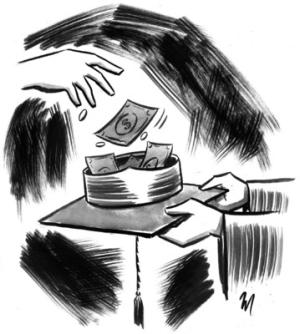
Editorial cartoon by Mark Weber / iHaveNet.

21st Century higher education:
An institution in crisis

By Harry Targ / The Rag Blog / August 1, 2010

The modern university

At my home university, only Coca-Cola products can be distributed on campus as a result of contractual agreements. Agriculture specialists train military personnel to teach agribusiness to farmers in Afghanistan. Students struggle against university contractors who have purchase agreements with companies such as Nike, which produce t-shirts and hats with university logos made with sweatshop labor. Research and teaching programs are established to highlight the significance of unregulated markets, electoral democracy, religions, and other ideas celebrated in the United States.

The president of the university, the director of athletic programs, and some athletic coaches earn 10 times more than experienced clerical staff and seven or eight times more than new assistant professors. In addition to corporate style salary differentials, members of the administrative staff, like those in corporations, work on logos, “branding,” and lobbying state and national legislators. Human relations bureaucracies, again like those in corporations, make personnel decisions that bear on substantive policy; in this case relating to education.


Shifting finances, academic workers,

And access to higher education

The enduring economic crisis has begun to open up debate on the direction of modern higher education. For example, The Delta Project supported by the Lumina Foundation for Education has recently issued a report, “Trends in College Spending: 1998-2008: Where does the money come from? Where does it go? What does it buy?” that deserves study and reflection. Inside Higher Education (July 9, 2010) summarized some of the project’s major findings:

  • Between 1998 and 2008 public research universities (such as Big Ten institutions) increased rates of expenditure on top administrators, lawyers, and accountants twice that of spending on faculty and instructional materials.
  • Students at what the Project calls, “Public Research Universities” are now subsidized over three times as much per student as those attending community colleges.
  • Resources channeled to instructional purposes have modestly declined while slight increases in moneys find their way to computers, libraries, and administrative expenses.

The 51 page Delta Project report concluded that if the trends identified between 1998 and 2008 (with data that does not include the 2008-2010 recession) continue significant aspects of higher education in the United States will decline, particularly in comparison with other developed countries. The trends increasingly affect access to higher education, job security among educators, and the quality of education. In the project’s words:

Revenue shortfalls in both public and private institutions have become the occasion, once again, for steep increases in student tuition, cutbacks in enrollments, and reductions in course offerings. Employee furloughs are becoming common, along with layoffs and program closures.

Higher education administrators and government officials, the report asserts, have adopted “the dominant model to manage revenue shortfalls,” including tuition increases, expanding class size, and reducing staff and faculty wages and benefits.

And changes in institutions of higher education, as in virtually all institutions, involve questions of class and inequality.

Turning this trajectory around will require huge attention to the deep issues of educational inequality, and the leaky pipeline that persistently disadvantages first-generation and low-income students.


Some proposals for change

In a recent essay in The Chronicle of Higher Education, Andrew Hacker and Claudia Dreifus make a series of proposals to address some of the crises of higher education today. They begin by noting that tuition for public and private colleges has doubled compared with a generation ago. Rising educational costs require parents to commit large financial outlays, second only to house mortgages, to their children’s education. Alternatively students have to take out loans that will burden them for their entire lives.

Among the proposals these authors make are the following:

  • Institute free higher education for all who seek it.
  • Maintain course requirements that lead to knowledge in history, the arts, sciences, and reasoned discourse.
  • Provide secure full-time teaching jobs for every classroom. Eliminate the system of staffing classrooms with graduate students and temporary adjuncts who receive one-sixth the pay of the regular faculty.
  • Pay presidents and other administrators salaries commensurate with public employees, not CEOs of Wall Street banks and corporations.

I would add that the connections between systems of higher education and sports, the military, and the corporate sector must be examined as well.

While our wealthiest and most powerful institutions — corporations and banks, the military, and the health care system — have come under some scrutiny in the new century, until recently higher education has remained hidden behind a wall of mystery even though everyone pays lip service to it as the hope for the future.

With enduring economic stagnation coupled with rising gaps in the distribution of income and wealth, education is offered as an escape route from poverty. We need to broaden public discussion about our assumptions concerning higher education, assessing its costs, accessibility, educational quality, and workplace security.

[Harry Tarq is a professor in American Studies who lives in West Lafayette, Indiana. He blogs at Diary of a Heartland Radical.]

The Rag Blog

Posted in Rag Bloggers | Tagged , , , , , | 3 Comments

Sarito Carol Neiman : Hill Country Environment Threatened by ‘Green Energy’ Transmission

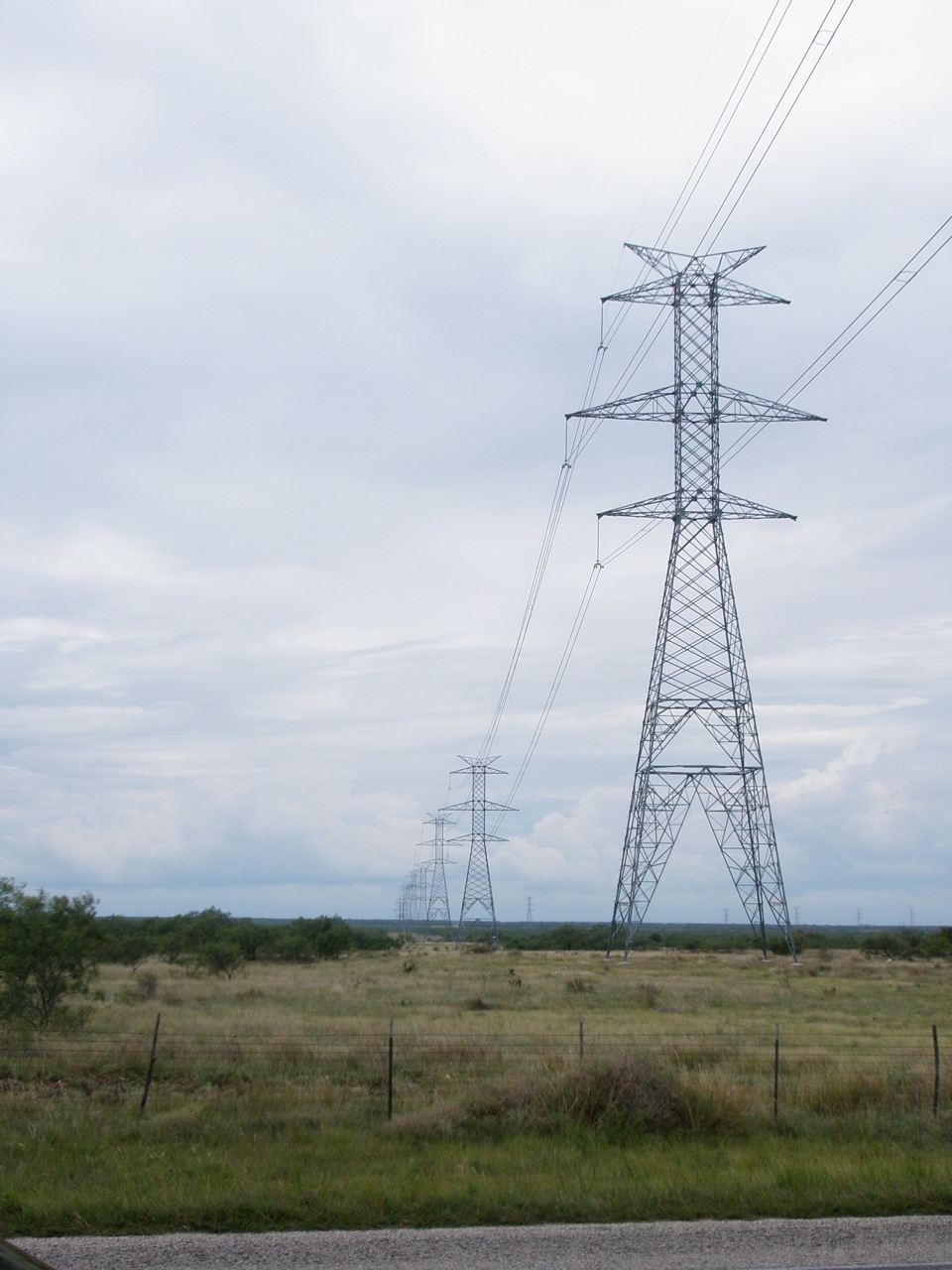
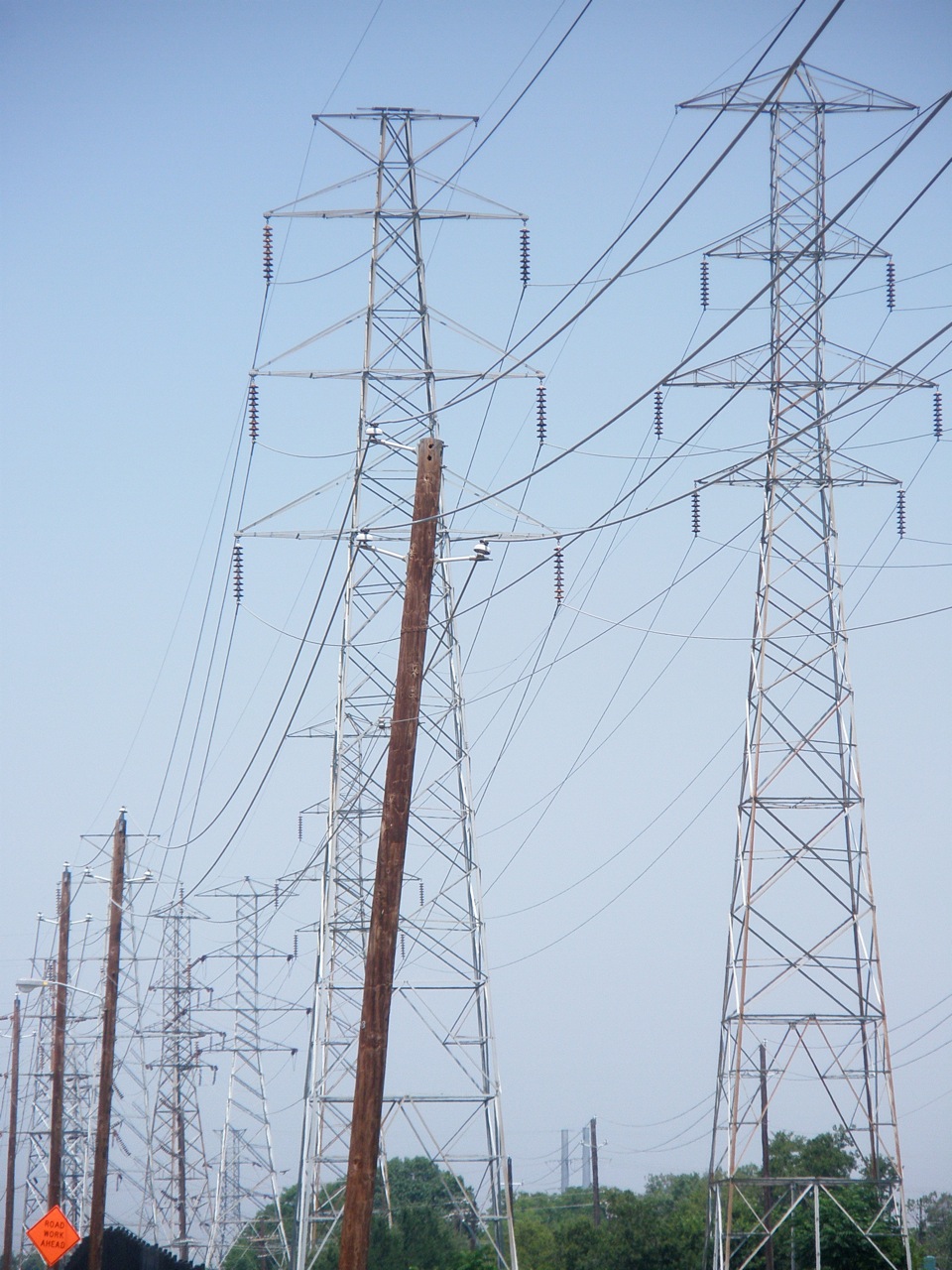
Lattice towers like this one will carry high-voltage electrical power lines from West Texas wind farms through the Texas Hill Country.


Proposed high-voltage power lines

Endanger unique Hill Country habitat

By Sarito Carol Neiman / The Rag Blog / July 31, 2010

When I came back to New York City a couple of years ago after a year’s “sabbatical” in my native Texas, I signed up for wind as the source of my electricity to be delivered by ConEd.

Being a “green” kind of person, I felt somewhat virtuous about this, despite the patent ridiculousness of the very idea that my personal kilowatts would now magically come from a windmill somewhere upstate, while those of my heedless neighbor in the next apartment would still be generated by planet-heating coal.


Then the news came from the folks back home, and the bigger picture was suddenly thrust before my city-dwelling, can’t-see-past-the-next-corner eyes.

On July 29th, the Lower Colorado River Authority (LCRA) submitted its revised “Certificate of Convenience and Necessity” (CCN) to the Texas Public Utilities Commission (PUC) for the construction of high-voltage electric transmission infrastructure across the Texas Hill Country.

After months of hearing from the public about the potential irreversible damage to the environment, the economy, and the livelihoods of those affected by the proposed lines, the revisions looked very much like the original proposals, only just more complicated and with a clearer effort to do a better PR job than the first time around.

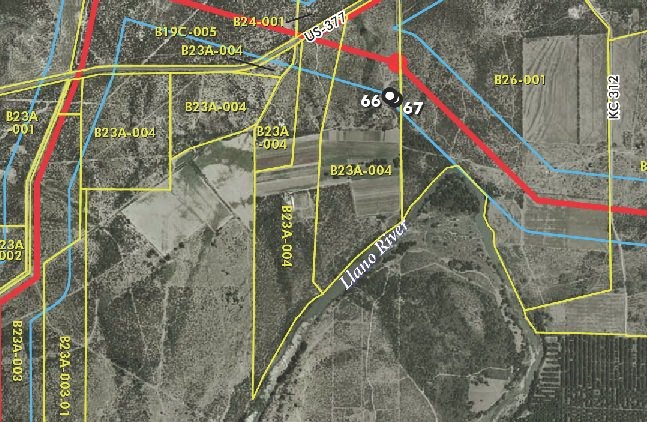
Here’s what I posted to my Facebook page as soon as I got the latest, updated aerial photo of the patch of ground in that affected region closest to my heart.

See the three yellow boxes just above and to the left of the words “Llano River.” That’s the family farm. See the white dots… numbered 66 & 67. Those are where I have enjoyed some of the best meals and most loving gatherings I’ve ever experienced in my life, with family and friends. See the big red lines. That’s where the “preferred route” is located for sending West Texas wind energy to the I-35 corridor to light up and air condition urban landscapes where you can’t see the stars or smell the breeze blowing out of the hills. See the big red spot. That’s where one of those big, 14-story made-in-Mexico steel lattice towers will be planted to hold up the lines (those lines where you can stand underneath and hold a fluorescent bulb in your hand and it will light up on its own).

Meantime the bro’ in his Kerrville TV station interview the other day took the lady’s question about his personal property situation and turned it round immediately to the question even closer to his heart, which is about preserving one of the most amazingly ecologically diverse open spaces left in the state of Texas, and among the top 20 in the world. I am not so generous as he is. I am really, really pissed. Because my brother and his family — my family — are the connection of this old city-dweller and rootless vagabond to my roots, and to the land.

Run, Spot, run. Or else I am coming after your head on a platter.

If, like me, you’re a city dweller who wants to support green energy, here are some links to the bigger picture. Between now and the end of August there is an opportunity for more public input — and I’m sure those who live in the Hill Country and will be directly impacted by this very un-green infrastructure would appreciate support from some of the intended consumers living at the end of the line along the I-35 corridor.

[Carol Neiman, a founding editor of the original Rag in Austin, coauthored A Disrupted History: The New Left and the New Capitalism, and has written or edited a number of other books. She lives in New York City but wishes she were back on a front porch in Texas, drinking a margarita.]


The Rag Blog

Posted in Rag Bloggers | Tagged , , , , , , , , | 7 Comments

John Ross : Lopez Obrador’s Mexico City Love Fest

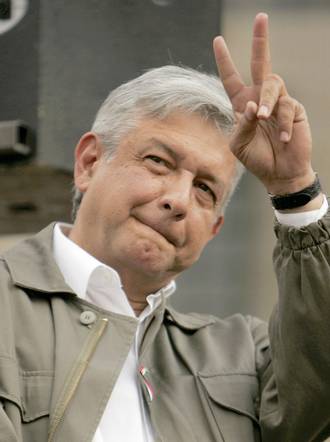
Andres Manuel Lopez Obrador.

Andres Manuel Lopez Obrador:
Massive love fest kicks of presidential run

By John Ross / The Rag Blog / July 29, 2010

MEXICO CITY — On a damp Sunday morning four years from the month in which the presidency of Mexico was stolen from him in the fraud-marred elections of 2006 and two years before the next presidential race kicks in, Andres Manuel Lopez Obrador (AMLO) convoked tens of thousands of supporters to the great Zocalo plaza in the heart of the city of which he was once a wildly popular mayor, to make it abundantly clear that he will again be the candidate of the Left on the 2012 ballot.

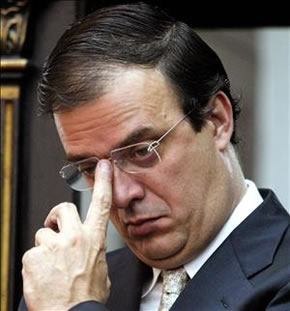
The humongous July 25th rally during which AMLO presented what he labeled “an alternative project for the nation” unfolded right under the City Hall windows of Lopez Obrador’s successor as mayor of this monster megalopolis, Marcelo Ebrard, his chief rival to head a coalition of left parties in the 2012 “presidenciales.”

Under the astute guidance of his political Padrino, Manuel Camacho Solis, himself a former mayor of Mexico City, Ebrard has been assiduously positioning himself to lead the left ticket with the connivance of Lopez Obrador’s archrivals, bonded together under the collective logo of “Los Chuchus” (slang for both the Christian savior and mongrel dogs) and headed by the Big Chuchu himself, Jesus Ortega, a PRD senator prone to cutting deals with right-wing President Felipe Calderon’s PAN.

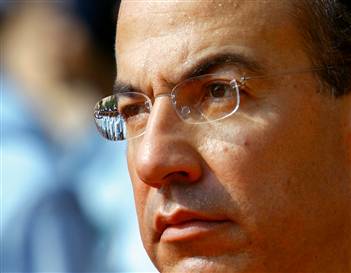
AMLO amassed 17 million votes in the 2006 balloting as the presidential candidate of the left-center Party of the Democratic Revolution (PRD) and two smaller left parties but despite widespread allegations of fraud committed by the ruling PAN party, Calderon was awarded the election by .057% of the total vote when the nation’s Supreme Electoral Tribunal denied a re-count.

A year after Andres Manuel garnered more votes than any other left candidate in Mexican political history, Ortega and his Chuchus took over the structure of the PRD in internal party elections that proved as bogus as the presidential vote-taking. Ballot boxes were swiped and others never counted. Precincts in which no one voted ran up massive tallies for New Left, the Chuchu faction. After several years of internal strife that left the left party badly bruised, Ortega’s group finally consolidated control of the PRD structure if not the base, which still tilts towards AMLO.

Lopez Obrador, who continues to have one leg inside the party of which he was once president, is sharply critical of Ortega’s prolonged game of footsy with Calderon’s PAN. This past July 4th, the Chuchus linked arms with the right-wingers to assemble a coalition that won the governorships of Sinaloa, Puebla, and Oaxaca. The alliance was brokered by Manuel Camacho Solis, Marcelo Ebrard’s guru.

Andres Manuel Lopez Obrador AKA “El Peje” (a gar-like fish from his native Tabasco) has been running for high office ever since he declared himself “the legitimate President of Mexico” in the aftermath of tumultuous protests that followed the 2006 flimflam. He reaffirmed his intentions on July 7th in an exclusive interview with the left daily La Jornada, a longtime champion of his cause and the July 25th convocation in the Zocalo signified the unofficial inauguration of his presidential campaign — according to Mexican electoral law, pre-candidates for party nominations cannot legally launch their campaigns until six months before the actual election.

In presenting his “New Alternative Project for the Nation” to a delirious throng that never ceased to chant “AMLO Presidente!” Lopez Obrador called upon the people to rescue the state from a “mafia” of oligarchs and place it at the service of the majority of Mexicans: “Only the people can save the people.”

El Peje also advocated for the democratization of the nation’s mass media. The corporate press has attacked AMLO with hateful vitriol since he was elected Mexico City mayor in 2000. One recent example: when one of his sons was spotted sporting $80 USD sneakers, Televisa and TV Azteca, the two-headed television monopoly, ran this earth-shaking item at the top of the news during a week when drug war massacres and killer floods were devastating the north of the nation. “If in 2006, they lied that my campaign was funded by Hugo Chavez, a man I’ve never met, then in 2012 they will say that I am Bin Laden’s brother,” Lopez Obrador joked to La Jornada.

Also included in the leftist’s alternative project for the nation that is guaranteed to be dissed by the oligarchs: the abolishment of fiscal privilege — El Peje promises to tax profits on the Mexican stock market and to force national and transnational mega-corporations that now pay minimal taxes, to cough up their fair share. Lopez Obrador, who, in 2008 built a popular movement that slammed shut the door on a Calderon-inspired privatization of the state-run petroleum monopoly PEMEX, demands a strengthening of the energy sector with sharp diminishment of U.S.-bound exports so that Mexico can use its own oil to fuel national development.

Marcelo Ebrard.

AMLO also pledges to strive for nutritional sovereignty to prevent the nation’s increasing dependency on food imports, i.e. eight to 10 million tons of cheap U.S. and Canadian corn that have wrecked Mexican agriculture and driven millions of farmers to seek survival in El Norte. As in 2006, Lopez Obrador seeks the renegotiation of NAFTA.

But what surprised many in AMLO’s flock in the Zocalo was his insistence on incorporating in his presidential platform an emphatic defense of the moral and cultural values of Mexico, urging his followers not to be trapped by materialism and consumerism but rather to cultivate solidarity and nourish family and social relations.

“Kisses harvest kisses,” he preached, encouraging the crowd to hug those around them as at the end of Catholic Mass. This mellowing of the once-crusty Peje may flow from his recent marriage and the birth of a new son who made his debut at the July 25th AMLOVE fest, as some leftish wags have dubbed it.

Aside from this surprising twist, Lopez Obrador emphasized many of the same points in his new project for the nation that he did in 2006. AMLO’s crusades always accompany the underclass — “the poor first” was his 2006 battle cry and race and class distinctions — brown vs. white, poor vs. rich — will again be the subtext of his 2012 campaign.

The upcoming presidential race may not be as lovey-dovey as Lopez Obrador would like. Although AMLO has built a broad-based social movement from the bottom, he tends to put all his eggs in the electoral basket rejecting more militant forms of struggle. Commited to Gandhianesque non-violent civil resistance, AMLO is critical of armed guerrilla movements and his 2006 presidential campaign was seriously bad-mouthed by the Zapatista Army of National Liberation’s Subcomandante Marcos, who has since dropped out of sight. Nonetheless, armed rebellion is always on the agenda here, particularly in 2010, the 100th anniversary of the Mexican revolution.

With the economy in chaos, unemployment at record levels, and out-of-control drug war raging throughout the north of the republic (25,000 dead since Calderon took office), the 2012 presidenciales are expected to be the most violent in the nation’s history. This July’s gubernatorial elections, the last major round of balloting before 2012, were jarred by the open intervention of the drug cartels which in some states used violence to vet candidates, most prominently the assassination of the PRI party front-runner for governor of Tamaulipas.

Crowd estimates for AMLO’s July 25th campaign opener varied wildly from 30,000 to a quarter of a million — the crowd filled the Zocalo floor and spilled out into surrounding streets which suggests the higher numbers. But whatever the real totals are. Andres Manuel Lopez Obrador remains the only politico in the land who can drum out the masses — four years ago on July 30th, at the zenith of post-electoral protest, AMLO drew 2,000,000 citizens to a rally, the largest political demonstration in Mexican history.

This July 25th, tens of thousands of throats never tired of taunting Felipe Calderon’s own feeble powers of convocation: “These are the people of Lopez Obrador/ Where are yours, fucking Calderon?”

Attendance at the huge rally was not confined to Mexico City where Andres Manuel continues to have a deep base. Many thousands of supporters traveled the length and breadth of the country to be on hand for the campaign opener. Since early 2007, Lopez Obrador has visited all 2,400 municipalities or county seats throughout Mexico, relentlessly working his way from border to border and sea to sea “to keep the flame of hope alive” (AMLO) and learn what the “pueblo” is thinking.

Traveling through heartland and outback from Thursdays to Sundays of each week, he held three to five meetings daily, drawing dozens or thousands depending on the size of the venue, signing up 2.2 million citizens as representatives of his legitimate government, and building a network that now includes 9,000 territorial committees stretching from Chihuahua to Chiapas.

At the July 25th rally in the Zocalo, delegates from all 31 states, half of them women, presented an accounting of their achievements, among them the distribution of 35 million copies of the movement’s monthly newspaper, Regeneration, named for a broadsheet edited by Ricardo Flores Magon that sparked the Mexican Revolution, the centennial of which is being celebrated this year.

Lopez Obrador’s protracted journey through Mexico clocked 150,000 kilometers on paved highways and another 25,000 on dirt roads, mostly during 2009 when he visited 570 municipalities in the state of Oaxaca, 418 of them autonomous indigenous counties that have rarely if ever hosted a presidential candidate.

No Mexican politician has embarked upon such an odyssey since Lazaro Cardenas in 1933 before assuming the presidency of the country. Cardenas’s extended travels sensitized him to the devastation of the underclass and infused his administration with a dedication to social justice.

Like Cardenas, Lopez Obrador took copious notes while on the road that have become the core of his ninth book, The Mafia That Has Taken Over Mexic0. Since his presentation of the new book that had thousands hanging from the rafters at the Metropolitan Theater in downtown Mexico City — the literary event of the year — Lopez Obrador has taken the book tour on the road in the provinces to spread the word.

The Mafia That Has Taken Over Mexico is a who’s who of who holds power, listing 30 “potentates” as AMLO labels them as if Mexicans were living in Ali Baba land — 16 oligarchs, including Carlos Slim, the world’s richest tycoon, and “El Chapo” Guzman, reportedly Calderon’s preferred narco-lord; a dozen politicos, leaders of the PAN and the once-ruling PRI (but no Chuchus); and a pair of bankers. At the top of the Mafia pyramid is the Capo de Tutti Capos ex-president Carlos Salinas who El Peje is convinced is responsible for the neo-liberal mutilation of Mexico.

Felipe Calderon.

AMLO’s journey through what sociologist Guillermo Bonfils once termed “Mexico Profundo” shocked him. The ecological destruction of the country weighed heavily on Lopez Obrador as he traveled through this mosaic of poverty:

In Chihuahua, we traveled for five hours through the mountains on terrible dirt roads to reach the gold mine at Tayotita — the Canadian transnational that now runs the mine takes the gold out by air. All over Mexico, these foreign corporations are ripping up the land and stealing the wealth of our country…

How Calderon’s futile drug war has impacted Mexico also stunned AMLO:

…so many have died and yet the worst is the corruption of Mexican values. Materialism is degrading the nation. In Sinaloa, the cradle of narco culture, consumerism contaminates daily life: big trucks (“La Troca“) Hummers, gold jewelry, designer clothes, expensive homes, cheap luxuries and runaway individualism while others live in shacks made of cardboard…

In Cochoapa in the Montana de Guerrero, the most impoverished region in Mexico,

I was startled by the silence of the Indians. They received me with a traditional band but the music was so sad that I couldn’t stop crying…

I still have inscribed on my memory the image of an old woman in San Miguel Huautla in the Mixteca of Oaxaca. She showed me her painfully arthritic hands and with the scrupulous serenity of those who live in profound poverty told me they were dead because she had spent her whole life weaving sombreros for five pesos a day.

AMLO’s travels give him an advantage in building a national movement from the grassroots that his rival for the left nomination for president Marcelo Ebrard, cooped up as he is in Mexico City City Hall juggling the megalopolis’s multiple problems, does not enjoy. Although, like Lopez Obrador, Marcelo has initiated Pharonic public infrastructure projects that put people to work (jobs are votes), he is not universally worshipped by his constituents, as Andres Manuel was when he was mayor.

The “Supervia,” a luxury toll road running from upscale Santa Fe in the west of the city angers an underclass whose homes and colonies have been expropriated and bulldozed for the project as does Metro subway construction in Tlahuac, one of the few rural delegations (boroughs) left in the city.

Yet despite his gaffes, Ebrard should split the capital vote with Lopez Obrador if there is a run-off between the two for the left nomination — Mexico City accounts for a fifth of the nation’s voters. But judging by AMLO’s growing support outside of the city, Camacho Solis and the Chuchus will once again have to resort to fraud to wrest the countryside from El Peje.

Ebrard and Lopez Obrador profess to be friends and claim they have reached a gentleman’s agreement that whoever is “better positioned” to run for the presidency at the end of 2011 will get the nod. How this will be determined verges on vagueness. A party primary run by the Chuchus will not be acceptable to Lopez Obrador. “Will they have a wrestling match in the Zocalo?” jabs Carlos Diaz, proprietor of the La Blanca Café in the city’s old quarter, “and if so, who will get to wear the mask?”

AMLO’s ties to the PRD are shaky at best. He broadcasts weekly on television utilizing time allocated to the Party of Labor or PT, a party instigated by Lopez Obrador’s personal Moriarity, Carlos Salinas, to siphon votes from the PRD in the 1994 presidential elections, and if Marcelo is successful in stealing the PRD nomination, AMLO is liable to channel his campaign through the PT, a strategy that will surely bury the electoral Left in 2012. Some supporters suggest that El Peje should abandon the party system altogether and fight for a constitutional reform that will allow him to run as a candidate of a social movement.

Should the prognosis for his candidacy look bright at the end of next year, Ebrard will no doubt take a leave of absence as mayor of the capitol to campaign nationally. His likely replacement will be Dr. Juan Ramon de la Fuente, a former health secretary under Ernesto Zedillo but not a member of the PRI. De la Fuente, who has a strong base at the National Autonomous University (UNAM), is also mentioned as a compromise left candidate if Lopez Obrador and Marcelo Ebrard cannot sort out their differences.

Meanwhile, Mayor Marcelo uses City Hall as a bully pulpit to enhance his political fortunes. The Mayor, who has excellent posture but little charisma, has taken to promulgating emergency proclamations of late. With a mammoth rainstorm brewing over the city on the weekend of AMLO’s July 25th love-in, the Mayor admonished his constituents not to make unnecessary trips — at least not to the Zocalo for El Peje‘s campaign opener.

[John Ross is at home in the old quarter of Make Sicko City. His latest opus El Monstruo: Dread and Redemption in Mexico City is available at your neighborhood independent bookstore. You can direct all queries, kvetches, and faint praise to johnross@igc.org.]

The Rag Blog

Posted in Rag Bloggers | Tagged , , , | 8 Comments

“Trevor Loudon and the Right-wing Propaganda Machine”

By Jay D. Jurie / The Rag Blog / July 29, 2010

Until I came across the Source KeyWiki site I didn’t know I had my very own “Wiki” page. When I went to “my” page I discovered it focused exclusively on the political side of my life.

KeyWiki describes itself as “…a bipartisan knowledge base focusing primarily on corruption and the covert side of politics in the United States and globally. While particular interest is taken in the left, KeyWiki serves to expose covert politics on both the left and right of the political spectrum.” Accompanying this description was a photo of the Statue of Liberty.

Wondering who might be responsible for all this, the KeyWiki “team” identified only one individual, named Trevor Loudon, while “members of the KeyWiki team will be added below shortly.”

As it turns out, Trevor Loudon is a resident of Christchurch, New Zealand. Since New Zealand has a multiparty parliament it is a little odd that he describes his site as “bipartisan.” His description makes it clear he is focusing on the U.S., so perhaps he means “bipartisan” in the U.S. context. If that’s the case, then his “knowledge base” is virtually nonexistent when it comes to exposing “covert politics” on the right.

For example, a search on his site for David Horowitz produced information only to his incarnation on the left several decades ago. There were no pages or listings for well-known figures on the right such as Bay Buchanan, Ann Coulter, Nikki Haley, Sean Hannity, Rush Limbaugh, or Bill O’Reilly, though there are links on the companion KeyWiki.org site to blogs operated by Glenn Beck and Michelle Malkin.

Thinking maybe these were insufficiently “covert,” I tried several others, including Bo Gritz, Eric Rudolph, and Randall Terry, turning up nothing. I thought he might have entries for well-known white supremacists David Duke or Tom Metzger, and since Loudon apparently is Jewish, I thought he might have entries for well known anti-Semites or Holocaust deniers such as Don Black or Willis Carto, but again, nothing.

There is no information on right-wing elected officials such as Michelle Bachmann, John Cornyn, Ron Paul, or Joe “you lie!” Wilson. Loudon maintains a separate blog called “New Zeal” (“promoting liberty in New Zealand and beyond”) on which he re-posted a Washington Times op-ed piece by former Representative and nativist Tom Tancredo (R-CO), in which Tancredo wrote: “Mr. Obama is a more serious threat to America than al-Qaeda,” to which Loudon approvingly appended “well said.”

There are a lot of items about individuals and groups on the left, including denunciatory articles about legislators Neil Abercrombie and Dennis Kucinich, and negatively-framed information about Alan Grayson and Bernie Sanders, among others.

There’s a list of “key organizations” that includes the Apollo Alliance, the Center for American Progress, Committees of Correspondence, Democratic Socialists of America, Institute for Policy Studies, and the New Party. Several other organizations and groups also rate considerable attention, including the Communist Party USA, In These Times, the Movement for a Democratic Society (MDS), the New American Movement (NAM), and the Rag Blog.

A September 2008 blog article (“therealbarackobama”) by Brenda J. Elliott was entitled “Has Trevor Loudon found the Ayers-Dohrn-Obama ‘smoking gun’?” According to Elliott, MDS was behind the creation of Progressives for Obama. Carl Davidson of Progressives for Obama responded that MDS “had nothing to do” with it, “nor did any one of the other alphabet soup of left groups you list.” Elliott further asserted “MDS is the brains behind the SDS brawn.”

America’s Survival Inc. president and Accuracy in Media blogger Cliff Kincaid and Loudon co-authored a 32-page article entitled “From Arms to Education to Political Power: Return of the SDS and the Weather Underground” to further smoke out MDS. Loudon and Kincaid found that under the auspices of MDS, the new SDS, the Center for American Progress and pro-Barack Obama elements were ominously coalescing: “Key to this overall effort is the MDS, which unites Rudd, Ayers, Dohrn and other members of the SDS and Weather Underground from many different socialist and communist organizations.” These assertions are certain to generate some laughter among those actually familiar with the organizations in question.

Former Obama administration “green jobs” director Van Jones was among those singled out by Loudon for special attention. Kincaid has used a Loudon link about Jones on his blog. Glenn Beck has given Loudon a shout-out for “exposing” Jones and Joel Rogers of the New Party. Another shout-out comes from Andrew Breitbart, who conjured up the recent brouhaha over Shirley Sherrod. Loudon has expended considerable energy making a case that Obama boyhood mentor Frank Marshall Davis was a secret Communist. According to Loudon, U.S. Supreme Court nominee Elena Kagan “doesn’t lean left. She leans socialist-communitistic (sic) first.”

Among the reasons I apparently rate my own KeyWiki page is I once signed a petition in support of academic freedom for, in Loudon’s word, “terrorist” Bill Ayers. Loudon’s definition of terrorism seems highly selective, or he must look across the Pacific to find it. Nowhere does he mention the deadly French intelligence services bombing of the Greenpeace ship Rainbow Warrior in the Auckland harbor, or refer to that as a terrorist act. Nor does Loudon have anything to say about an incident in which New Zealand police pointed automatic weapons at the passengers of a Maori-operated school bus.

My page shows me as a signer of a statement several decades ago that advocated closer working relations between NAM and the Socialist Party USA. I owe Loudon a debt of gratitude for this, as I had forgotten all about it. After being reminded of this, my regret is that those closer working relations never materialized.

Virtually all “Rag Bloggers,” including Marion Delgado, have some listing on KeyWiki. Thorne Dreyer and David Hamilton are among those who have interested Loudon most.

Still left unanswered is the question as to why Loudon hasn’t exposed covert politics on the right?

Since KeyWiki has only been in existence since April, perhaps he’s just been preoccupied with filling in the left-wing side.

A larger question is why has a New Zealander like Loudon created a Wiki site primarily concerned with the U.S.? Answers to these two questions seem to overlap. In several of his writings Loudon makes it clear he is a committed “Americanphile.” He apparently sees New Zealand as a satellite for what he believes, but the U.S. is the mother ship.

What are those beliefs? Several on-line sources identify Loudon as a member of the “Zenith Applied Philosophy” or ZAP cult, based upon an admixture of Scientology, Eastern mysticism, and John Birch-style laissez-faire capitalism. Loudon’s admiration for the U.S. and its traditions is apparently limited to that which conforms to his laissez-faire outlook. He has taken it upon himself to help chart the rightful course for the U.S.

Whereas its site claims “KeyWiki isn’t a part of any political party and we don’t support candidates,” Loudon is a former vice-president of New Zealand’s ACT (Association of Consumers and Taxpayers) Party. ACT appears to be more or less the equivalent of the U.S. Libertarian Party. According to its website, ACT espouses “free market classical liberalism” and “…seek[s] to rebuild diplomatic and political relationships with Australia and the United States.” ACT also seeks to negotiate a free trade agreement with the United States.

All of the above makes it patently obvious that Loudon is engaged in the “covert politics on the right of the political spectrum.” Rather than engage in honest pursuit of knowledge or debate, his modus operandi is duplicity. While KeyWiki masquerades as objective or balanced its real purpose is to conceal the advancement of a right-wing agenda.

In the deceitful pursuit of this purpose Loudon is not alone, as the shameful Breitbart attack on Shirley Sherrod makes evident. Washington Post columnist Eugene Robinson recently wrote of “a cynical right-wing propaganda machine.” Trevor Loudon has not only helped fuel this machine with half-truths, distortions, and fabrications, but is one of its drivers.

Type rest of the post here

Source /

The Rag Blog

Posted in RagBlog | Leave a comment

Jordan Flaherty : A Movement Rises in Arizona

Protest agains Arizona’s new immigration law April 25, 2010, in Phoenix. Photo from Getty Images.

Widespread struggle offers human rights vision:
A movement rises in Arizona

By Jordan Flaherty / The Rag Blog / July 29, 2010

PHOENIX — Three months ago, Arizona Governor Jan Brewer signed into law the notorious SB 1070, a bill that put her state at the forefront of a movement to intensify the criminalization of undocumented immigrants.

Since then activists have responded through legal challenges, political lobbying, grassroots organizing, and mass mobilizations. More than 100,000 people from across Arizona marched on the state capitol on May 29. Today, hundreds more have pledged to risk arrest through nonviolent direct action. These are the public manifestations of an inspiring and widespread struggle happening in this state. The organizations leading this fight offer a vision for people around the U.S. concerned with human rights.

A rogue state

Yesterday, Federal District Court Judge Susan Bolton issued a preliminary injunction against sections of Arizona law SB 1070, which is scheduled to go into effect today. The judge put a hold on some of the most outrageous parts of the bill, such as language that mandates racial profiling by officers. However, Judge Bolton left much of the rest of the law intact, including sections that specifically target day laborers.

For Arizona activists, the legal ruling represents — at best — a small respite. “It’s not a victory, it’s a relief,” says Pablo Alvarado of the National Day Laborer Organizing Network (NDLON). “We’re putting a band-aid on a wound.”

Alvarado and the organizers with NDLON are part of a broad network of national organizations and volunteers who have joined with local organizers to fight not just against this unjust law, but also against a general climate of anti-immigrant hatred. “Arizona is a rogue state,” says Alvarado. “We’re going to use every single means that we have at our disposal to fight back.”

Puente Arizona, a Phoenix-based organization that describes itself as a human rights movement working to “resurrect our humanity,” has formed Barrio Defense Committees in neighborhoods across the city. Emulating the structure of groups founded by popular movements in El Salvador, the community-based structure work to both serve basic needs, and also build consciousness and help bring people together.

According to Puente activist Diana Perez Ramirez, the committees host regular “know your rights” trainings and ESL classes, and are organizing “Copwatch” projects. “We ask the community to unite and organize themselves,” says Ramirez. “And we are just there to support that.” More than 1,000 people have joined these neighborhood organizations so far, with more joining every day.

Puente has made use of volunteers from across the U.S., utilizing national support to help with local organizing, and initiating direct action with the support of out of town allies like the Ruckus Society, Catalyst Project, and various chapters of Students for a Democratic Society (SDS). They have issued calls to action including a Human Rights Summer (modeled after the civil rights movements’ Freedom Summer) and “30 Days for Human Rights,” a month of actions culminating today, the day SB 1070 will become law.

Just after midnight, as the law took effect, the first protest of the day began, as nearly 80 people blocked the intersection at the entrance to the town of Guadalupe, a small (one square mile) Native American and Hispanic community just outside of Phoenix. The town has a long history of struggle against Maricopa County Sheriff Joe Arpaio, who has been one of the main public faces of SB 1070, and most of the protesters (and all of the organizers) were from the community.

Holding signs declaring their opposition to the new law and leading chants against police brutality, activists declared that Arpaio’s officers are not welcome in their town. The stand off against police lasted more than an hour, before protest leaders in consultation with the town’s mayor decided to open the intersection. Several more actions are planned for today.

Working proactively

The Repeal Coalition, a Flagstaff- and Phoenix-based grassroots immigrants-rights organization, was formed in 2007. The group came together because they saw a vacuum in the immigrants’ rights movement in Arizona. “Some of the left here were not being very audacious,” explains Luis Fernandez of the Repeal Coalition. “The positions in the public debate ranged from ‘kick them all out,’ to ‘get their labor and then kick them out.’”

The Repeal Coalition has staked out a position of calling for the elimination of all anti-immigration laws, declaring, “We fight for the right for people to live, love, and work wherever they please.” With this call, says Fernandez, “Now we have a real debate.”

When the coalition was founded, organizers brought in labor activists to advise them on how to build an organization along similar models to those that have built strong unions, utilizing house calls, neighborhood mapping, and group meetings. Although they are an all-volunteer group with little to no funding, they have developed a structure that has initiated large protests and provided direct service, and they are now strategizing more ways to take direct action in the post SB 1070 era.

Fernandez says that this struggle is ultimately about overcoming fear and moving from reaction to proactive action. “We’ve been in a crisis in Arizona for a long time,” he explains. “Even if SB 1070 weren’t implemented, it wouldn’t matter. The political crisis would continue.”

To address this crisis, Fernandez believes organizations must build unity across race and class. “Traditionally in America, when the working class starts suffering, instead of connecting together and looking upwards at the cause of the problem, they look sideways or downwards for who to blame.” Most important, he believes activists must take action to seize the initiative.

In this vision, he has been inspired by young organizers working on the federal DREAM ACT, a federal law that creates a path to citizenship for undocumented youth. “They came to Arizona and said, ‘we’re undocumented and we’re going to commit acts of civil disobedience.’” At first, Repeal Coalition members tried to talk them out of this action, but the youth explained, “We are going to lose our fear because it is the fear of being arrested or the fear of being deported that fuels the inability of political action.”

The bravery and vision of these youth has inspired Fernandez to continue to search for new and bold ways to take action, rather than just continually respond to right wing attacks. “We need to set the agenda,” explains Fernandez. “We have to say, ‘No, you’re going to react to us.’”

Despite a range of tactics and philosophies, one thing organizers here have in common is a dedication to exporting the lessons of their struggle. While Arizona’s law is the first and most draconian, similar laws are pending across the country. And during this current national economic crisis, more and more politicians have found that they can score political points by demonizing immigrants.

“The last two months we’ve had a lot of people calling us asking what they can do to help Arizona,” says Fernandez. “We say, organize in your own town. You don’t have to come to Arizona because Arizona is coming to you.”

[Jordan Flaherty is a journalist, an editor of Left Turn Magazine, and a staffer with the Louisiana Justice Institute. He was the first writer to bring the story of the Jena Six to a national audience, and his award-winning reporting from the Gulf Coast has been featured in a range of outlets including The New York Times, Mother Jones, and Argentina’s Clarin newspaper. He has produced news segments for Al-Jazeera, TeleSur, and Democracy Now!. Haymarket Books has released his new book, FLOODLINES: Community and Resistance from Katrina to the Jena Six. He can be reached at neworleans@leftturn.org.]

Organizations Mentioned in this Article:

The Rag Blog

Posted in Rag Bloggers | Tagged , , , , | 17 Comments

It appears that Formula One racing is coming to the Austin area, but the project has been shrouded in secrecy and the process has taken place with little public input. Promoter Tavo Hellmund kept the whole thing out of public view for three years, and there is still a whole lot we don’t know. Certainly a questionable practice for a project of this magnitude — greatly dependent on public funding, and with such great potential for environmental impact.

Posted in RagBlog | Leave a comment

Paul Buhle : Pekar and Kupferberg were Oblique Jewish Intellectuals

Harvey Pekar (left) in 2003, and Tuli Kupferberg in 1968. Photos from Getty Images / Forward.

Harvey Pekar and Tuli Kupferberg:
They looked at the world from an oblique angle

By Paul Buhle / The Rag Blog / July 28, 2010

See “On the grumpy but sweet Harvey Pekar,” Below.

Harvey Pekar and Tuli Kupferberg died on the same day, July 12, and shared much, including peacenik politics, a strong sense of humor, and a passion to carve art out of the fragments of popular culture. But they were almost an American Jewish generation apart, a detail that now seems difficult to grasp entirely, but is still crucial.

Kupferberg, born in 1923, was a real bohemian of the pre-beatnik era, a hipster whose leap off a New York bridge in an attempted suicide famously appeared, without his name, in Allen Ginsberg’s seminal poem “Howl.” He once told me that he had become an anarchist in the mini-boom of postwar anti-bomb, anti-government sentiment among intellectuals and artists on both coasts.

He recalled being a young man bitterly opposed, from the left, to Henry Wallace, the Progressive Party candidate of 1948. Meanwhile, Pekar, then 9, was following his mother’s lead, passing out Wallace leaflets in his Cleveland Jewish neighborhood. He shared his Bialystok-raised parents’ joy at the birth of Israel.

The two future artists were both shaped by the Depression and by Franklin Roosevelt, two key influences upon practically any American Jew of those years. But Kupferberg had briefly become a Trotskyist even before Roosevelt died, while Harvey remained, till the end of his life, at one with his family memory that the great leader had saved them all personally, as well as the country, from disaster.

Kupferberg and Pekar were both college dropouts — but with a difference. Bright and focused, born on Manhattan’s Lower East Side, Kupferberg graduated cum laude from Brooklyn College in 1944 (psychology and English), and hit the wall only as he began working on an advanced degree in sociology, at The New School. After that, as he recalled, he faced with equanimity a long and productive life as a luftmensch, a person who makes his living, as it were, “from the air.”

By contrast, in one of Pekar’s several autobiographical comic art books, “The Quitter,” he bitterly regrets dropping out of college after only two semesters in his native Cleveland. He couldn’t get his head around schoolwork, and slipped into bohemianism almost by accident. The two were evidently major jokesters as schoolchildren, which may have marked them out as a particular Jewish type, prepared to look at the world from an oblique angle when offered the possibility of getting friendly laughs.

Despite these differences, Kupferberg and Pekar were deeply interested intellectually, and even more deeply involved personally, in urbanism, the decay and sometime revival of the neighborhood for good or ill. Through his life’s work there, Kupferberg made himself into an iconic figure of the Lower East Side, latterly fighting gentrification, just as Pekar was forever in Cleveland, actually moving to one neighborhood from another across several decades, ahead of the bulldozers and the urban renewal that never renewed much of anything.

Their work — in Kupferberg’s case, words, drawings and music — was full of neighborhood people, all types, storefronts, crowds, friends (in Harvey’s case, his own first two wives, who were often not so friendly) and a sensibility all their own.

They hit upon art forms whose uniqueness will remain, long after their deaths, the signature of a time and place, hinting always, but in highly curious ways, at something larger.

Drawing by Tuli Kupferberg.

Kupferberg began writing poetry early and, if he had agreed to the definition, would be rightly classified as a Beat Poet in what might be called the Ferlinghetti or City Lights school: humane, free form, and uncensored, above all raging against the madness of the Cold War arms race. In 1958, with his future wife, Sylvia Topp, he brought out Birth, a literary magazine that would publish the likes of LeRoi Jones and Diane di Prima, among others. Living off B Street, selling 1001 Ways To Live Without Working, a beatnik humor book of his own, on the street, he ran into another poet, Ed Sanders.

The two of them opened the Peace Eye Bookstore in 1964, and were the most famous of The Fugs, one of the delightfully outrageous rock groups of the coming era. The Fugs performed endlessly at peace demonstrations and other venues. Paul McCartney foiled autograph hounds by signing himself “Tuli Kupferberg.” The Fugs wore themselves out by 1970, but Kupferberg went on and on, performing in many ways, often as inauspiciously as sending out packets of his photocopied cartoons to friends (I was one of them). Peace and resistance never failed as themes.

Pekar famously met cartoonist R. Crumb in the early 1960s, and gradually came to the conclusion that anything, even the Russian novels he loved so much, could be done in comic form. His long-running series of comics, “American Splendor,” was launched in 1976 (he, too, began as a self-publisher) and continued on almost until his death, in one format or another.

Pekar went through dozens of artists, giving them dialogue and precise directions (in the form of comic panels with stick figures). He couldn’t pay them much: Making his own living never ceased to be a struggle. But the award-winning, 2003 film American Splendor rendered him a public personality, especially on campus, where lecture fees and book sales finally gave him a modicum of financial security. It was long overdue.

One of Kupferberg’s own favorite strips (I received it several times) showed a grandmother with Kupferberg as a child. In one panel he is whistling; in the next, Granny warns, “Yidishe kinder fayfn nit!” [“Jewish children don’t whistle!”] It was obviously a fond, oddball memory of another time. Pekar also had his connection to the culture of the mameloshn, or mother tongue.

In the months before his death, Pekar was working (with me and a handful of artists) on “Yiddishland,” a book that begins with him and his Yiddish-speaking grandfather in Cleveland around 1944. He still wanted to tell his vanished relatives that he had become a Yidishe shrayber, a continuator of Yiddishkeit, and he had, in his own way, reached that goal before the end came. Neither of these deeply Jewish artists is likely to be forgotten soon.

[Cultural historian Paul Buhle is professor emeritus at Brown University. He edited several comics in collaboration with Harvey Pekar, including The Beats. They collaborated on Yiddishland, to be published next Spring by Abrams ComicArts. Contact Paul Buhle at feedback@forward.com. This article was also published in the Jewish weekly Forward.]


Above, from the American Splendor series, cover art by R Crumb. Below, Harvey Pekar by Jeff Smith / The Pekar Project.

On the grumpy but sweet Harvey Pekar

[Paul Buhle and Harvey Pekar collaborated on five books. Karen Winkler of The Chronicle of Higher Education asked Buhle about working with Pekar.]

You worked with Harvey Pekar on several projects, including books on the Beats, SDS, the Wobblies, and the New Deal. How did your collaboration come about?

I was working on my second historical comic, about the Students for a Democratic Society, and I could gather (in some cases writing about my own life) local stories that worked as scripts, but the big narrative was terribly difficult for me, probably because the collapse of SDS was such a huge disappointment in my younger life. Harvey happened to call me and he needed money. I offered him my advance if he would write the narrative. We started there and went on til the end.

Pekar was known for his sometimes irascible commentary. What was it like to work with him?

He pretended to be grumpy. He was grumpy about making very little money for his work, and also about the rightward drift of America after his earliest years, in a family that admired FDR and hoped for a more egalitarian society. But he was truly sweet, generous, and supportive of young artists.

How was his viewpoint on life reflected in his work?

Harvey was able to conceive of his work as his life and vice versa. He may have borrowed the idea from his 1960s close friend, Robert Crumb, but he took it in a different direction, to deeply ethnic, blue collar Cleveland. Many of his early stories were about his own personal relationships but also about his neighborhoods, his job (work at the VA hospital for 36 years) and his interests, such as jazz.

You’re a historian. How did Pekar’s perspective inform your interpretation of history?

I like to think that I broadened his vistas in his published work, in the sense that in our five books, he read very widely about large historical questions and developed scripts that tell the story differently from a scholarly study, but just as well and in many cases, much better. You didn’t need to agree with Harvey’s take on SDS or the Beat Generation, for instance, to see that he had strong opinions and a distinct aesthetic.

He was deeply interested in history, as he was in literature and art. If I were describing some Cleveland setting, I would start with demography. He would start by describing a local Serbian restaurant he liked whose owner was actually a Croat, and so on: that was his way of explaining and exploring history.

What do you think will be his legacy in the world of comics and graphic novels?

There were not many artists and writers (he never drew comics, but he gave artists very specific directions, along with dialogue) in the U.S. whose work, before the turn of the new century, shaped the emergence of comics as an accepted, serious art form. Along with Harvey, I count Robert Crumb, Art Spiegelman, Ben Katchor, and Alison Bechdel. These were also practically the only artists of “alternative comics” who made a living.

He expanded what comics can do. When I worked with him on the adaptation of Studs Terkel’s Working, I realized — as an oral historian and teacher of oral history — that he was also to comics what Studs was to the interview. He knew how to listen to people. He raised the level of comic art.

Did you have another project in the works with him?

Yiddishkayt or Yiddishland (we are still debating the title) will, I hope, appear next year. It meant a lot to Harvey, a native Yiddish speaker. It’s the story of secular Jewish-Americans who carried on the centuries-old legacy of Yiddishkayt, and did wonderful things with the language and culture until time ran out. His scripts for this book, to be published by Abrams ComicArt, are more than masterful, and he knew it.

Also see:

The Rag Blog

Posted in Rag Bloggers | Tagged , , , , , , , , , , , , , | 1 Comment