Cold War Redux : Dissident, Criminal, Contractor, Spy

Image from Today’s Financial Times.

Cold war redux:
What’s in a name…

Dissident, political prisoner, contractor, spy, criminal? All depends: Which side are you on?

By Harry Targ / The Rag Blog / July 21, 2010

Secretary of State Hillary Clinton called on the Jewish community in the United States to raise its voice in support of Agency for International Development “contractor,” “human rights activist,” supporter of the “isolated Jewish community in Cuba,” Alan Gross who is currently in jail for bringing unauthorized communications equipment to distribute to Cuban citizens.

The Clinton speech resembles the Cold War efforts of various administrations to get the support of ethnic groups to advocate for United States imperial policies: Poles, Hungarians, Koreans, Taiwanese, Vietnamese, and counter-revolutionary Cubans. The Reagan administration launched a phony campaign in the 1980s to convince the American people that the Sandinista-led government in Nicaragua was anti-Semitic. Despite the efforts of a few holocaust survivors, a delegation of Jewish leaders, including rabbis, visited Nicaragua and reported that after careful investigation, the charges were false.

In addition, several dozen convicted violators of Cuban law, who probably had ties to U.S. efforts to undermine the Cuban government, have been referred to in the media as “dissidents,” or activists for “democratization” on the island. Curiously, the five Cubans who have been in U.S. prisons for working to uncover Cuban-American terrorist plots against the island are called “spies.”

Eleven Russians who have been living in the United States for years and all of a sudden have been identified as “spies” are being returned to Russia in exchange for spies funded by the United States who were serving prison terms in Russia.

Finally, a story just broke that an Iranian scientist who left his country and via Saudi Arabia came to the United States, presumably as a defector, is returning to Iran. Was he a defector? Is he an Iranian spy? Was his family in Iran threatened by the regime?

There are several morals from these stories. First, the United States continues to work to undermine, destabilize, and destroy the Cuban revolution. Gross is claimed to have been a conduit for humanitarian assistance to marginalized Cubans at the same time that Walter Lippman (CubaNews@yahoogroups.com), reports that the State Department is increasing the dispersal of funds to anti-government dissidents in Cuba: more money for “contractors” like Gross.

Second, the mainstream media never tells the story of the Cuban Five, who with the full knowledge of the FBI, were working to uncover violent plots against their country hatched in Miami.

Third, the spy story — Cubans, Russians, Iranians, or others — captures the imagination and interest of the mainstream media. What makes stories like the capture of the Russian spies so silly is that most information any operatives from one or another government might want is available on the internet. But the spy story reminds us of the good old days of James Bond and Matt Helm and the Cold War.

Fourth, as to the old Cold War adversaries, bureaucratic institutions were established, the Federal Bureau of Investigation and KGB, to stimulate fear, justify bizarre militaristic policies, and stifle dissent. The FBI and the successor to the KGB need spies. In fact these two bloated and irresponsible bureaucracies, parallel to the military establishments of the former Cold War adversaries, need each other and so-called “spies” to justify their existence.

Finally, as to Cuba, Karen Wald has pointed out that Alan Gross, the humanitarian USAID “contractor,” had not contacted Cuban Jews to distribute the communications technology that was supposed to improve their lives. Several years ago I visited the synagogue and community center, Patronato, in Vedado in Central Havana. The then Jewish community leader, Dr. Jose Miller, welcomed me and asked where I was from. I told him Indiana. He responded: “Ah Congressman Burton.” He knew that the Helms/Burton Act of 1996 tightened the economic blockade of Cuba. I took from his response the idea that the primary kind of humanitarian assistance the Jewish community of Cuba wanted from the United States was an end to the economic blockade.

But United States policy remains buried in the Cold War days: trying to undermine regimes, calling people who agree with us “dissidents,” “contractors,” humanitarians” and “political prisoners” and those we still oppose “spies,” and the regimes they serve dictatorships.

[Harry Tarq is a professor in American Studies who lives in West Lafayette, Indiana. He blogs at Diary of a Heartland Radical.]

The Rag Blog

Posted in Rag Bloggers | Tagged , , , | 1 Comment

John Ross : Oaxaca : Killer Governor Blown Away

Oaxaca Governor Ulises Ruiz Ortiz (depicted above) was blown away in the recent Mexican elections by left-right candidate Gabino Cue. Cartoon from NNDB.

Victor Gabino Cue a question mark:
Killer Governor blown away in Oaxacan election

The unlikely new governor Gabino Cue, [was] the candidate of a much-questioned alliance between the left Party of the Democratic Revolution (PRD) and President Felipe Calderon’s right-wing PAN…

By John Ross / The Rag Blog / July 21, 2010

MEXICO CITY — As the preliminary election results began to flow this past July 4th, Ulises Ruiz Ortiz (URO), Oaxaca’s outgoing governor whose police state tactics have been dissed at every strata of Mexican society from the nation’s Supreme Court to the Zapotec market venders in his state capital, was not a happy camper.

Early returns overwhelmingly favored Gabino Cue, the candidate of a bizarre left-right alliance over URO’s chosen successor Eviel Perez for governor of this impoverished southern state and Ulises began to drink heavily.

Soon, according to eye-witnesses as reported by Proceso magazine, Ruiz got on his cell phone to trash former aides, accusing them of betraying him and threatening great bodily harm. Indeed, his ex-Secretary of Government Jorge Franco took the threats to heart and reportedly fled Mexico.

As Cue’s margin of victory mounted, URO became desperate and tried to shut down the preliminary vote count or PREP, ordering electricity cut off to the state electoral institute where the votes were being registered but the vote counters had backup generators and were prepared to ward off the sabotage.

Although URO’s Institutional Revolutionary Party (PRI) has had a lock on Oaxaca for the past 81 years and controlled the state electoral apparatus, there seemed to be no way that Ruiz could dodge defeat. Even though URO’s henchmen had set up duplicate Internet pages to communicate doctored results, URO’s candidate was losing on both of them.

Ulises Ruiz’s star rose precipitously in the PRI firmament when his political godfather Roberto Madrazo won the presidency of the party in 2004 — URO had once been his chauffeur and Madrazo engineered Ruiz’s successful candidacy for governor of Oaxaca.

Madrazo won the PRI presidential nomination in 2006 but ran an inept campaign and finished in third place, the worst showing ever for the party that had controlled the nation’s destiny from 1928 through 2000, the longest-ruling political dynasty in the known universe.

Ruiz did not fare much better in Oaxaca. In June 2006, one month prior to the presidential election, it became evident that URO would lose the state for Madrazo to the leftist upstart Andres Manuel Lopez Obrador (AMLO) and he went on the war path, ordering state police to break up a “planton” (encampment) of teachers from the maverick Education Workers Union’s Section 22 in the Oaxaca city plaza — but the maestros soon rallied and took the square back.

After three days of bruising confrontations with the police, hundreds of social struggle groups from all over this majority Indian state convened to form the Oaxaca Peoples’ Popular Assembly or APPO, which became the linchpin of the landmark civic insurrection of 2006.

At the zenith of the uprising, the APPO and its allies took over the state television channel and set up a thousand barricades in and around the capitol, the self-declared “Commune of Oaxaca.”

URO retaliated. Twenty six APPO supporters, including U.S. Indymedia reporter Brad Will, were executed by the governor’s roving death squads between August and November. Will’s murder October 27th during a last-ditch effort by the APPO to shut Oaxaca city down triggered federal intervention and thousands of military police were sent in to crush the rebellion. Hundreds were arrested and tortured and flown to out-of-state prisons where they were locked up for months on bogus charges.

The suppression of individual guarantees in Oaxaca during URO’s reign of terror drew condemnation from the National Human Rights Commission (CNDH) and even the Mexican Supreme Court of Justice. International human rights organizations issued highly critical reports. When Irene Khan, director of Amnesty International, tried to hand her organization’s conclusions to URO, he defiantly refused to accept the document.

The international spotlight has continued to dog Ruiz since 2006. On April 27th of this year, goons thought to be on URO’s payroll opened fire on a bus full of human rights workers seeking to deliver humanitarian aid to the autonomous Triqi Indian municipality of San Juan Copala, killing one international observer from Finland, Jyri Jaakola.

When deputies from the Green Party faction in the European parliament traveled to Oaxaca to interview Ulises this June about his role in the killing, the governor refused to meet with them and accused “foreigners” (“extranjeros“) of intervening in the Oaxaca elections.

As news of the PRI’s defeat spread this July 4th, Oaxacans took to the streets, giving voice to the belatedly fulfilled chant of 2006: “Ya Cayo! Ya Cayo! Ulises Ya Cayo!” (“He’s Fallen! He’s Fallen! Ulises Has Fallen!”) The “voto de castigo” or punishment vote meted out to the now ex- governor “expressed the exasperation of the people with the repressive, authoritarian, and, yes, fascist rule of URO and the PRI,” Azael Santiago, leader of Section 22, summed it up for the press.

Oaxaca’s new governor Gabino Cue in Puerto Escondido, March 19, 2010. Photo from Cue’s website.

The unlikely new governor Gabino Cue, the candidate of a much-questioned alliance between the left Party of the Democratic Revolution (PRD) and President Felipe Calderon’s right-wing PAN plus two small left parties (Cue, a one-time PRIista is himself a member of record of Democratic Convergence, a shadow party of ex-PRIistas) handed the Institutional Revolutionary Party its most damaging setback in eight decades of iron-fisted, cradle-to-grave rule in Oaxaca — even when the national PRI lost the presidency in 2000, the Institutionals retained control in this conflictive southern state.

Cue’s awkwardly-named alliance “United for Peace and Progress in Oaxaca” (UPPO), topped the former ruling party by nine points July 4th, soundly whipping URO’s hand-picked “gallo” Eviel Perez by 200,000 votes (700,000 to 500,000). For Ruiz, the vote represented a double TKO. Thought to be next in line to succeed Beatriz Paredes as president of the PRI (Paredes is an unannounced presidential candidate), the Oaxaca thrashing appears to have derailed URO’s national political ambitions.

Nonetheless, results from the state congress races proved less gloomy for the PRI with the the Institutional Revolution taking 16 seats, the PAN 11, and the PRD 10. Although the two alliance partners hold a majority, whether they can work together for legislative change remains to be tested.

In the aftermath of the July 4th shakedown, a bitter Ruiz appointed Perez president of the state PRI to confirm the former governor’s continuing domination of the party apparatus in Oaxaca, refused to negotiate with Cue on the details of transition, and lodged protests in a thousand polling places with the state electoral institute to overturn what appears to be an irreversible debacle.

One pivotal addition to the new state congress will be Flavio Sosa, a former spokesperson for the APPO during the 2006 Battle of Oaxaca. Sosa was once a PRD deputy in the federal congress but jumped briefly to the PAN before returning to Oaxaca to become a key voice in the APPO.

Lured up to Mexico City in August 2006 to negotiate with federal officials, Sosa was arrested after meeting with then-Secretary of Government Carlos Abascal and locked down in the nation’s maximum-security penitentiary for 10 months, during which stretch Sosa was transformed into Mexico’s most public political prisoner. Cue is thought to have nixed the flamboyant Sosa’s candidacy for the state congress but relented when he realized his veto would cost the Alliance the votes of APPO supporters.

The PAN-PRD alliance was brokered by political fixer Manuel Camacho Solis, a former PRI mayor of Mexico City and now a PRD honcho who brought together Jesus Ortega, the leader of the “Chuchus” group (many members are named Jesus) that controls the left party apparatus and are arch-foes of the PRD’s ex-presidential candidate Andres Manuel Lopez Obrador (AMLO), and Cesar Nava, installed by Calderon as president of the PAN. The goal of this coalition of strange bedfellows was to halt the PRI steamroller before it reaches critical mass and takes back the presidency in 2012.

Accompanied by Lopez Obrador, Gabino Cue, a former mayor of Oaxaca city who challenged URO in the 2004 gubernatorial race, visited all 572 municipalities or counties in the state last year, 402 of which are autonomous majority Indian entities, an expedition that established his creds with social struggle organizations. The tour with Lopez Obrador is thought to have been the building block that put Cue over the top July 4th.

Ironically, AMLO rejected the alliance between the PAN and the PRD and refused to take part in Cue’s campaign for governor — Lopez Obrador continues to maintain that he was stripped of presidential victory in 2006 by PAN flimflam (although AMLO did win Oaxaca handily that year.)

The PAN and the PRD fielded joint gubernatorial candidates in five states July 4th, winning in three of them — as graphic evidence of Mexico’s Byzantine political dynamic, all five of the PAN-PRD coalition candidates were ex-PRIistas. But whether the left’s fortunes will prosper in states where it was part of the winning ticket remains to be seen.

In Sinaloa and Puebla, where the alliance scored upsets, the PRD has minimal influence and will not play a pertinent role in the new administrations. But in Oaxaca where the electoral left has aligned itself with the social struggle and Lopez Obrador remains a popular figure, the PRD will command a quota of power.

Which side of the alliance Gabino Cue ultimately favors remains up for grabs at this early hour. The morning after his resounding victory, he telephoned both Felipe Calderon and Lopez Obrador to thank them for their support and invited them both to his December 1st inauguration (don’t expect AMLO to put in an appearance).

Perhaps the litmus test for the leftists’ strength in the incoming Oaxaca government will be how Gabino Cue handles seething public indignation at URO’s prolonged police state regime. “There are widows and orphans. Hundreds were sent to jail unjustly and tortured. Someone has to answer for all this,” insists Adelfo Regino, a Mixe Indian lawyer and founding member of the National Indigenous Congress. Adelfo worries that the new governor will offer amnesty to Ruiz and his thugs in exchange for political peace.

Throughout his campaign, Cue pledged justice for the families of the dead but has been quick to reject the creation of a truth commission or the appointment of a special prosecutor. On the other hand, Gabino Cue’s election extends a slender beam of hope for justice to the family and friends of Brad Will, cut down by URO’s police in Santa Lucia del Camino, a suburb that the alliance won July 4th. Cue’s coalition also won Oaxaca city.

2010 is the bicentennial of Mexico’s War of Independence from Spain and the 100th anniversary of the Mexican Revolution, twin celebrations that will have deep resonance in this southern state, the birthplace of three seminal personages in this distant neighbor nation’s oft-violent history: Benito Juarez, the Zapotec Indian who rose to become Mexico’s first (and last) indigenous president; Porfirio Diaz, dictator from 1876 to 1910 whose overthrow ushered in the revolution; and Ricardo Flores Magon, the anarchist writer and organizer who played a crucial role in the genesis of that first great uprising of the landless in Latin America.

Indeed, the defeat of the PRI is freighted with historical significance, particularly for armed groups who view 2010 as a platform for renewed revolutionary struggle. Oaxaca has traditionally been fertile ground for guerrilla movements.

But for the survivors of URO’s 2006 onslaught, optimism is tempered with caution. The next months before Gabino Cue takes office in December will be extremely treacherous ones, frets Gustavo Esteva, rector of the University of the Earth and a theoretician of grassroots organizing in Oaxaca.

The “colatazo” or tail whipping of the PRI dinosaur as the party is so often caricatured, could produce plenty of fresh victims. After 81 years with its foot on the throat of this poverty-wracked, mostly rural and indigenous state, the PRI is not going to go gently into the good night. “We have to get ready for the War!” a drunken Ulises shouted at his compinches on election night.

That war was apparently detonated July 19th on the first day of the state-wide Guelaguetza fiesta, when the outgoing governor ordered his state police to drive APPO street venders from the Oaxaca city plaza. Dozens were injured and arrested in the melee.

Gabino Cue did not win the July 4th election so much as voters turned out to dump URO and the PRI machine, Esteva reasons. Gustavo is amazed that brigades of rebel youths who in 2006 fought Ulises’s death squads on the barricades, plastered walls with fierce anarchist slogans, and who usually reject electoral politics as an avenue of change, pitched in to organize the voter turn-out and volunteered as poll watchers in 2010.

The bases do not really trust Gabino Cue to satisfy their demands without a fight, Esteva confides. Indeed, justice is only going to come home to Oaxaca if the social thrust from the bottom that was embodied in the 2006 revolt by the APPO and Section 22 rises up to challenge the new governor to do the right thing.

[John Ross is at home in Mexico City. His latest opus, El Monstruo: Dread and Redemption in Mexico City (“gritty and pulsating” — the New York Post) is available at your neighborhood independent bookstore. For complaints, admonitions, and faint praise write johnross@igc.org.]

The Rag Blog

Posted in Rag Bloggers | Tagged , , , | 1 Comment

Baudrillard 3 : Breakaway and Inertia

Image by alexkess / RedBubble.

BAUDRILLARD 3:

Breakaway and inertia

By Marc Estrin / The Rag Blog / July 20, 2010

[This is the last of a three part series on the philosopher and social critic Jean Baudrillard, who died three years ago at the age of 77. Go here for Parts 1 and 2.]

Before we leave him, let us follow Baudrillard’s thought a bit further here for the hints it may give us about our contemporary situation. In a provocative 1987 article entitled “The Year 2000 Has Already Happened,” he takes us astride some fascinating metaphors. While some of the physics may be less than strict, it is worth suspending disbelief, and being open to the poetic truth of his images.

Why has the real disappeared? Baudrillard evokes the “speed of liberation” necessary for a body to escape the gravitational force of a star or planet.

According to this image, we may suppose that the acceleration of modernity, technical, factual, mediatory, the acceleration of all economic, political and sexual exchanges — all that we denote fundamentally under the term “liberation” — has carried us at a speed of liberation, such that we have one day…escaped from the referential sphere of the real and of history. (35)

But since all actions have their equal and opposite reactions, at the same time, Baudrillard invokes an “inverse” hypothesis dealing with the slowing down of processes. By relativity theory, great mass slows down time.

Here then is the most important event of our modern societies, the most subtle and most profound trick of their history: the advent, in the very course of their socialization, of their mobilization, of their productive and revolutionary intensification,…the advent of a force of inertia, of an immense indifference, and of the silent power of indifference. What we call the masses. This mass, this inert material of the social, does not arise from a lack of exchange, information, and communication, but on the contrary from the multiplication and saturation of exchange, information, etc. It is born of the hyper-density of the city, of merchandise, of messages, of circuits. It is the cold star of the social and, surrounding this mass, history chills, slows down, events succeed one another and are annihilated in indifference. Neutralized, immunized by information, the masses in turn neutralize history and play(act) as a screen of absorption.(37)

Gridlock. In this view (wave, not photon), progress, history, reason, desire can no longer find their “speed of liberation.”

We are already at the point where political and social events do not have sufficient autonomous energy to move us, and thus they unfold as in a silent film for which we are, not individually, but collectively, irresponsible. History ends there, and you may see how: not because of lack of character, nor of violence…nor of events, but of a slowing down, indifference, and stupefaction….[History’s] effects accelerate, but its sense slackens, ineluctably. (38)

Baudrillard thinks through — in microcosm — the cosmological question of infinite expansion vs. cycles of expansion and contraction. Will the breakaway or the inertia prevail?

Are we, like the galaxies, caught in a definitive movement that distances us one from another at a prodigious speed, or is this dispersion to infinity destined to end, and the human molecules to approach one another according to an inverse movement of gravitation? (38)

It could be that the very energy of the liberation of the species (the demographic, technological acceleration, the acceleration of exchanges in the course of centuries) creates an excess of mass and of resistance which goes faster than the initial energy, and which would thus drag us in an unrelenting movement of contraction and inertia. (39)

Baudrillard offers a third hypotheses about the “vanishing point,” the point of disappearance beyond which all ceases to be real, by evoking the technical perfection of stereo. In his listening experience, there is no more music, but rather an impression of something “viscerally secreted in the interior.”

The problem of the disappearance of music is the same as that of history: it will not disappear for want of music, it will disappear in the perfection of its materiality.

It is also thus with history, there too we have gone beyond that limit where, as a result of informational sophistication, history as such has ceased to exist. [There has been a] short-circuit between cause and effect,…a radical uncertainty about the truth, about the very reality of the event.

By definition, this ‘vanishing point’, the point on this side of which there was history, there was music, there was a meaning to the event, to the social, to sexuality,…this point is irrecoverable. Where must we stop information?…We will never know what history was before becoming exasperated in the technical perfection of information, or before vanishing in the multiplicity of codes — we will never know what all things were before vanishing in the realization of their model.(39)

Unlike the (sophisticated) complainers of the Frankfurt School, Baudrillard seems pleased — or at least not unhappy — with all this.

That we leave history in order to enter into simulation…is not at all a despairing hypothesis, unless one speaks of simulation as a higher form of alienation. Which I will certainly not do. History is precisely the place of alienation, and if we leave history, we also leave alienation (not without nostalgia, one must say, for that good old dramaturgy of subject and object.)

But we can offer the hypothesis that history itself is or was only an immense model of simulation….I speak of the time in which it unfolds, of this linear time where events supposedly succeed one another from cause to effect, even if the complexity is great. (41)

Baudrillard sees no liberating local language games, but

massive comportments of retreat, of the suspension of the historic will, including the apparent inverse obsession of historicising everything, of achieving everything, of memorizing everything of our past and that of other cultures. (43)

Wandering through underground shopping malls, he senses

societies which entomb themselves behind their prospective technologies, their stocks of information and in the immense alveolate networks of communication where time is finally annihilated by pure circulation — these generations will never perhaps awake, but they don’t know it. (43)

Nevertheless, he does not complain. His positive evaluation of America stands alone amidst the howling and jeering of other cultured Europeans:

The US is a beautiful example of this immoral energy of transformation [directed] toward and against all systems of value. Despite [Americans’] morality, their puritanism, their obsession with virtue, their pragmatic idealism, everything there changes irresistibly according to an impulse which is not at all that of progress, linear by definition — no, the real motor is the abjection of free circulation. Asocial and still untamed today, resistant to every coherent project of society: everything is tested there, everything is paid for there, everything is made to have value there, everything fails there. Western music, various therapies, sexual “perversions”, buildings in the east, the leaders, the gadgets, the artistic movements, all pass by in succession without stopping. And our [European] cultural unconscious, profoundly nourished by culture and meaning, can howl before this spectacle. Nevertheless, it is there, in the immoral promiscuity of all the forms, of all the races, in the violent spectacle of change, that resides the success of a society and the sign of its vitality.

What do we do with all this oddball stuff?, or Baudrillard’s Conception of the Role of Theory

It’s not a question of ideas — there are already too many ideas!

Baudrillard calls for nothing — and no action.

And indeed it would be hard to call for anything else since, in Baudrillard, “critical theory faces the formidable task of unveiling structures of domination when no one is dominating, nothing is being dominated and no ground exists for a principle of liberation from domination.” Baudrillard’s writing seems to be for him

simply an act of defiance, a game. But it seems to me to be the only enthralling game. At the same time, it’s often an act of provocation. Perhaps the only thing one can do is to destabilize and provoke the world around us.

Is he modest, or what?

We shouldn’t presume to produce positive solutions. In my opinion this isn’t the intellectual’s or the thinker’s task. It’s not our responsibility. It might occur, but it will only come about by reaction. I’ve the impression that if energy still exists, it is reactive, reactionary, repulsive. It needs to be provoked into action. One should not attempt to inaugurate positive solutions because they will immediately be condemned — so they’re virtually a waste of energy. In other words, one needs to make a kind of detour through the strategy of the worst scenario, through the paths of subversion. It’s a slightly perverse calculation, perhaps. But in my opinion it’s the only effective option — it’s the only way that a philosopher or thinker can, as it were, become a terrorist.

The secret of theory is that truth doesn’t exist. You can’t confront it in any way. The only thing you can do is play with some kind of provocative logic. Truth constitutes a space that can no longer be occupied. The whole strategy is, indeed, not to occupy it, but to work around it so that others come to occupy it. It means creating a void so that others will fall into it.

Much of Baudrillard’s “perverse calculation” is a corollary of an amazing insight:

The false is resplendent with all the power of the true, that is art;…inversely the true …is resplendent with all the power of the false, that is obscenity.

Art, the antithesis of obscenity. There’s an idea for the Evangelical Right!

When one says it is the false which is resplendent with the power of the true, it means that the true, by having this kind of aura placed on it, can never be found simply by looking for it. The only strategy is the reverse one! You only reach the true, the beautiful — supposing that that is what is wanted — by passing directly to the inverse….Indeed, there is a radical contradiction in pretending to find the truth where one is looking for it…which is our morality. Happily, art does not partake of that self-contradiction. It knows very well that illusion is the sole route to get somewhere if something is to be found…It is very fundamental.

Herein lies the ultimate demise of socialism or any other grand theory that, however well-intended, seeks to achieve a particular goal, be it liberation or enslavement.

There is a terrible self-contradiction in the social as we envisage it — or in socialism which proposes indeed the frontal realization of the social, and I would not say without perversion but without any intelligence — that never do things promote themselves like that — in a straight line which would lead from their origin to their end. Happily, things are more subtle than that.

We have already heard “That people want to be told what they want is certainly not true; it is not clear either that they really want to know what they want, or that they desire to want at all.” Baudrillard continues:

The whole edifice of socialism is based on that assumption. They start from the fact that this is what people ought to want, that they are social in the sense that they are supposed to know themselves, know what they want. I think we have pressed beyond that point, beyond truth, beyond reality.

So no more Mr. Fixit. Social theory, at least

maintains absolutely no relation with anything at all; it becomes an event in and of itself. We can no longer fix the way things are going…Strictly speaking, nothing remains but a sense of dizziness, with which you can’t do anything.

And thus we can understand Baudrillard’s evolution from academic, Marxist sociologist to postmodern artist, playing with falsehood “resplendent with all the power of the true.” Though I worry about Baudrillard being nothing but a jester, I read him with a strong sense of lurking enlightenment. The stakes are profound.

Appraising the unappraisable Baudrillard

Everything I write is deemed brilliant, intelligent, but not serious. There has never been any real discussion about it. I don’t claim to be tremendously serious, but there are nevertheless some philosophically serious things in my work!

His critics are merciless, seeing his “speculative spontaneity” as “grossly undertheorized.”

It is inconceivable that any collectivistic political programme can emerge from this practice.

[Baudrillard’s] rhetorical ‘play’ and ‘caprice’ may well disrupt restricting intellectual ethics or conventions, but seldom suffice to inaugurate radically new alternatives to dominant practices.

Certainly, his aestheticist view of the world can be problematical. Who could have watched the Challenger explosion, and then say

It was extraordinary: a sort of symbolic victory that only the Americans could afford! That fantastic burial in the sky! They’ve revived our appetite for space. Offering themselves the luxury of such disasters. What a way to go! Simple endings are without interest; they’re flat and linear. The really exciting thing is to discover orbital space where these other forces play.

Are we to take such a man seriously? We can grant him his “voluntary stance as a marginal oppositional figure.” And we can still be inspired by his enthusiasms:

Even if things are not really at their end, well! Let’s act as if they were. It’s a game, a provocation. Not in order to put a full stop to everything, but, on the contrary, to make everything begin again. So you see, I’m far from being a pessimist.

But most of all, I think we have to value the extraordinary originality of his angle on the contemporary world. How remarkable his attack on what Foucault terms the “abundance of things to know: essential or terrible, marvelous or droll.” As Foucault concludes, there are still “too few means to think about all that is happening.”

Baudrillard adds immeasurably to those means. I would certainly agree with Nickolas Zurbrugg, a most critical critic, in saying

There is frequently something profoundly engaging and inspiring in Baudrillard’s idiosyncratic attempts to grapple with those issues which he finds most challenging and most at stake. Compared with the unadventurous ways in which other cartographers of postmodern culture carefully sift elementary shifts within the familiar shallows of twentieth-century discourse, Baudrillard’s finest “virtual’ descents into uncharted contemporary depths offer models of passionate engagement with the most crucial developments within the postmodern condition.

As to whether hyperreality is truly the new mode of postmodernism, I can only quote my wife, Donna, who the other day called an airline, and pressed 1 to speak to a representative.

“The human I talked to this morning,” Donna reported, “asked ‘What did it say on the automated system?'”

[Marc Estrin is a writer and activist, living in Burlington, Vermont. His novels, Insect Dreams, The Half Life of Gregor Samsa, The Education of Arnold Hitler, Golem Song, and The Lamentations of Julius Marantz have won critical acclaim. His memoir, Rehearsing With Gods: Photographs and Essays on the Bread & Puppet Theater (with Ron Simon, photographer) won a 2004 theater book of the year award. He is currently working on a novel about the dead Tchaikovsky.]

Also see:

The Rag Blog

Posted in Rag Bloggers | Tagged , , , , | 3 Comments

VERSE / Mariann G. Wizard : The Real Dragon (for Marilyn Buck)


People who come out of prison can build up the country.
Misfortune is a test of people’s fidelity.
Those who protest at injustice are people of true merit.
When the prison-doors are opened, the real dragon will fly out.

Ho Chi Minh, Prison Diary

The Real Dragon
for Marilyn Buck

I dreamed you came out ~
Young dragon, hit by unspeakable change
So long ago;
Fallout from bombs you never saw,
Hidden away in darkness, growing, glowing,
With a heart of fire.

I dreamed you came out ~
And swam across the ocean
And hatched your eggs at last
In the abandoned chambers of dreams
And named them Peace,
And Justice,
And Honor,
Joy and Brother;
Sister and Love;
Flower and Power;
And a hundred hundred more
Offspring without number
From your nuclear womb,
Your hero’s heart.
Others there were, too ~
Children of your siblings,
Who learned of you in the nest,
And longed to see your face,
And bask in your radiant shadow.

I dreamed you came out ~
Our dragon ~
And swam the mighty ocean
To this strange future
We never dreamed.

You walked down streets familiar with destruction
And where your feet touched down,
Mighty forests grew.
Your eyes brought forth health clinics;
Your talons, schools;
And your teeth were stained with the blood of lies.

I dreamed you came out ~
And all that had been sent against you
Poured off your silky-armored strength
Like that small silver rain,
And all the past was prelude
And all men heard your roar:

Marilynilla!
Free, free, free at last!

Then, picking up the pieces,
You’ll dance down Fifth Avenue,
Among your retinue
With music everywhere,
And a thousand tongues
Raised in praise.
You’ll stroll through Central Park,
Munching on the new green leaves,
And smile at Liberty,
And She’ll smile back.

Mariann G. Wizard
11/2002

Graphics from Tribal Dragon Tattoos.

The Rag Blog

Posted in RagBlog | Tagged , , , | 3 Comments

Carl Davidson : U.S. Social Forum a High Energy Event

10,000 marched through downtown Detroit to kick off the U.S. Social Forum in Detroit, June 22, 2010.

U.S. Social Forum in Detroit:
High-energy gathering fires up
A new generation of activists

The gathering in Atlanta in June 2007 had 12,000 people come together in the belief that “Another World Was Possible!” Movement forces from all over the country took advantage of the opportunity to celebrate, organize, teach, debate and otherwise contribute to a growing sense that “Another U.S. Is Necessary!” …

The purpose of the USSF is to effectively and affirmatively articulate the 
values and strategies of a growing and vibrant movement for justice in the
 United States. …we see ourselves as part of new movements that reach
 beyond national borders, that practice democracy at all levels, and understand 
that neo-liberalism abroad and here in the US is not the solution. The USSF 
provides a first major step towards such articulation of what we stand for.

US Social Forum

By Carl Davidson / The Rag Blog / July 19, 2010

Carl Davidson is Thorne Dreyer’s guest on Rag Radio, Tuesday, July 20, 2-3 p.m. (CST) on KOOP 91.7 FM in Austin. They will discuss the Social Forum movement and the lively U.S. Social Forum in Detroit. They will also discuss the sad state of politics in the country, the peace and social justice movements in America, and how socialism can still be a viable option in today’s world.

For those outside the listening area, go here to stream the show. To listen to this interview after it has been broadcast, go here. To listen to earlier shows, go to the Rag Radio archives.

[We believe the international Social Forum movement to be a significant phenomenon, offering a big splash of hope to a social justice movement that too ofter appears diffuse and disjointed. The U.S. Social Forum that took place in Detroit June 22-26, 2010 brought together activists of all stripes and styles. We intend to report more on it in the future. This dispatch from Carl Davidson focuses especially on efforts of the trade unions, the Committees of Correspondence for Democracy and Socialism, and the Solidarity Economy Movement.]

DETROIT — When 15,000 vibrant and politically engaged people gather in one spot for five days and organize themselves into more than 1,000 workshops, dozens of major plenaries and late night parties across five major cultural hot spots, no one article can claim to give a full account and get away with it.

But an event on that scale livened up Detroit, Michigan during the week of June 22-26 at the U.S. Social Forum, when Cobo Hall and several nearby universities were buzzing with thousands of people trying to shape a new world.

I won’t even try to capture it all. I’ll just affirm the common conviction that it was a major happening on the left and a huge success, an inspiration and an affirmation of hope that progress is being made towards a better future. Then I’ll humbly offer my take on it. We’ll start with some highlights and, for those who aren’t familiar with the Social Forum movement, offer a few explanations.

The Forum started on June 22 with a massive march of thousands through the streets of a devastated and de-industrialized Detroit. “I’ve never seen anything like this, in Detroit or anywhere,” said Forum participant and Detroit resident Charnika Jett. “The sense of joy, support, and determination on the part of the people here, both Detroiters and visitors, is just incredible.”

“What an amazing day!” said Allison Flether Acosta of Jobs with Justice. “We held an orientation session for local coalition folks early in the day, then joined the march with the other members of the Inter-Alliance Dialogue and more than 10,000 people for a lively march through downtown! We ended at Cobo Hall, and then convened for the opening ceremonies.”

New entry of the trade unions

One important new addition to the young crowd in the streets was the participation of organized labor. According to the AFL-CIO News Blog, “Newly elected UAW President Bob King joined Metropolitan Detroit AFL-CIO President Saundra Williams; Al Garrett, president of AFSCME District Council 25; and Armando Robles, UE Local 1110 president, in leading a march and rally through the streets of Detroit. Chanting ‘Full and Fair Employment Now!’ and ‘Money for Jobs, Not for Banks!’ Participants demanded Congress address the pressing jobs emergency.”

The opening events, unfortunately, were either ignored or strangely spun by the mass media. “This ain’t no Tea Party,’ said Noel Finley, in a scarce account in the Detroit News, somewhat awed by the sight of it all. “The forum is a hootenanny of pinkos, environuts, peaceniks, Luddites, old hippies, Robin Hoods and urban hunters and gatherers.” Indeed it was, with even more variety. And the diverse crowds and meetings grew stronger as the week unfolded. To make sense of it all, some history and background is in order:

The USSF 2010 in Detroit is an outgrowth of the World Social Forum. The WSF started some 10 years ago as a counterpoint to the World Economic Forum, the elite gathering of global capitalists in Davos, Switzerland. The first WSF was held in Porto Allegre, Brazil, with backing from the Brazilian Workers Party. It soon became co-sponsored by a wide and inclusive variety of grassroots organizations working for global social justice. Since then, the site has shifted around the world’s larger cities, usually in the Global South — Mumbai, Nairobi, Caracas, and mostly recently, Belem in Brazil. The next WSF will be in Dakar, Senegal in 2011.

In certain years, however, the World Social Forum movement is decentralized, and various countries and regions organize their own. The first to be held in the U.S. was in 2007 in Atlanta, GA, which drew some 12,000 participants. Detroit was chosen for 2010, largely to serve as a U.S. urban example of how the injustices of corporate globalization have a powerful impact even in the homeland of Empire.

Despite the air-conditioned conveniences of Cobo Hall and the modernized blocks in the inner city’s center along the riverfront, just walking about 10 blocks in any other direction and you would find yourself in a shocking urban wasteland of closed factories, shuttered stores and abandoned housing.

By any measure, this year’s USSF was a big success. It drew over 15,000 largely young and ethnically diverse student and working class participants. They participated in a total of 1062 workshops and panels, 50 major assemblies, and conducted a huge march of thousands through the streets of Detroit — all in a festive and cooperative atmosphere.

Tediously planned and well structured

The Detroit gathering was, in fact, part festival, part interconnected and overlapping teach-ins, part trade fair, and partly a spontaneous “gathering of the tribes.” But it was also carefully and tediously planned and structured, which, despite a small degree of chaos, was what made it all work so well. Months ago, the core organizers subdivided the event into “tracks” around common but freshly defined themes. For the U.S. in 2010, these included:

  • Capitalism in Crisis: tearing down poverty, building economic alternatives and a solidarity economy
  • Climate Justice: sustainability, resources, and land
  • Indigenous Sovereignty
  • Displacement, Migration, and Immigration
  • Democracy and Governance
  • To the Right: internationally and domestically
  • To the Left: building a movement for social justice: intersections and alliances across race, class, gender, sexuality, age, ability…
  • Strategies for Building Power & Ensuring Community Needs (housing, education, jobs, clean air…)
  • Organizing a Labor Movement for the 21st Century: crisis and opportunities
  • Media Justice, Communications, and Culture
  • Transformative Justice, Healing, and Organizing
  • Endless War: militarization, criminalization, and human rights
  • International Solidarity and Responsibility: building a unified response to global crises
  • Detroit and the Rust Belt

The tracks helped focus participants in two ways. For those wanting to work downward with others on a given workshop on a narrower topic, they helped establish connections. For those wanting to pull forces together for the larger “People’s Movement Assemblies,” they also helped to gather resources to a central focus. In brief, the framework either contained or allowed something for everyone, including the space to self-organize pretty much whatever one had in mind. You weren’t necessarily guaranteed a large audience; promoting your own special interests was largely up to you and your friends and allies.

Since three years earlier, some 12,000 activists and their various organizations had taken part in Atlanta’s USSF 2007, many participants this time around had a “head start” of core experience to build on for Detroit. Atlanta’s core organizers even published a book on the topic, The United States Social Forum: Perspectives of a Movement. Newcomers would have to pick up organizing techniques on the fly.

Many organizations started their preparations about six months ago. For a few, this meant having people join the nationwide organizing core for the whole event, or at least getting in touch with it. But for most, it meant figuring out what their two main workshops would be (that was the maximum allowed for any one group), and who they could ally with to form more workshops around their preferred ideas, projects or perspectives.

It also required registering ahead of time, making a small donation, planning displays, and then, via the web sites, staying in touch with what others were posting, so as to promote cooperation and avoid duplication or conflict. In brief, the planning structure encouraged networking horizontally, and from below.

The result was an amazing array of workshops, on every topic under the sun, ranging from “how-to” hands-on organizing techniques to oral history and theoretical debates. “There was a workshop for every cause and strategy,” said a Labor Notes reporter, “from stopping natural gas ‘fracking’ to using puppetry to move your campaign.”

Perhaps the most significant new development for the 2010 USSF was the active participation of the AFL-CIO and other labor organizations. Labor’s participation gave the USSF important financial support and populated the event with a cohort of labor activists from around the nation. The AFL-CIO presented two workshops in Cobo Hall on Thursday morning that were well attended.

Importance of full employment campaign

The two hour workshop on the Fight for Jobs and Economic Recovery was led by an AFL-CIO staff person and the national jobs coordinator of Jobs with Justice. The workshop focused on the tasks of organizing the unemployed locally and mobilizing for the October 2nd National March on Washington for Jobs and Justice. The second focus of the workshop was on how to raise the militancy of tactics in the struggle for jobs. The workshop of 80 people broke into eight subgroups to separately come up with proposals for local organizing and raising the level of militancy, then reported back to the body.

The Immigration rights workshop was also organized by the national AFL-CIO. Panelists included a founder of the Alliance of Guest Workers founded in 2007, who responded to the abuse of immigrant guest workers who are recruited by corporations on the basis of false promises.

“Guest workers are treated as slaves,” explained Pat Fry, “forced to work for little pay in dangerous work conditions under threat of being reported to ICE if they quit their jobs. The point made by the panelists who were both either guest workers or undocumented was that legal status does not end abuse of immigrant workers.

“I was impressed with the panel and the role of the AFL-CIO in organizing it,” Fry added, “and the work that the labor federation is doing working with the U.S. Labor Department to expand U Visas for workers who quit their jobs due to abusive employers. We are working legislatively with Congress to support the POWER act introduced by Sen. [Robert] Menendez (NJ) and its work with the building trades unions who are requiring employers who recruit guest workers to cover them under the same terms of work — pay and working conditions – as union members.”

The role of CCDS

The Committees of Correspondence for Democracy and Socialism, for its part, decided early on to try to organize two panels, one on 21st Century Socialism, which it hoped to do as a “left unity” effort with other socialist groups, and a panel on the role of the struggle for democracy in the South as a critical element to winning nationwide democratic gains.

But since we wanted to do more, we also cooperated with other groups in putting together panels on the peace movement and the economy, on Vietnam and Agent Orange, on Anne Braden’s Legacy as a Southern Activist, and especially on the Democracy Charter initiative launched by civil rights veteran Jack O’Dell.

We also worked with groups like Kentuckians for the Commonwealth for a workshop on organizing in Appalachia and supported the Iraq Vets Against the War on GI organizing. Altogether, to promote these efforts, we put together our own program, a “CCDS Track” of some 32 panels and two “Peoples Movement Assemblies.”

Duncan McFarland, a CCDS National Committee member, worked with the Vietnam Agent Orange Relief and Responsibility Committee and Veterans for Peace to conduct a powerful and moving workshop on Vietnam the first full day, June 23. He presented slides from a recent tour of Vietnam showing the ongoing human damage of Agent Orange within the broader context of Vietnam’s progress since the war. “We were also able to promote the upcoming CCDS 2011 socialist study tour to Vietnam,” said McFarland.

The Democracy Charter workshop was held in the Westin Cadillac Hotel on Friday, June 5. It was chaired by Pat Fry, a CCDS Co-chair, and led by a well-organized panel. Bill Fletcher, Jr., author of Solidarity Divided: The Crisis in Organized Labor and a New Path toward Social Justice, called for the organizing of People’s Assemblies where the Democracy Charter can be a tool for engaging grass roots discussion on what we stand for. “It is less a document,” said Fletcher, “and more a process.”

He cautioned, however, that the ANC Freedom Charter would not have been the organizing tool that it was without the South African Communist Party, and it is hard to think about the utility of the Democracy Charter apart from a more organized left in the U.S.

Tim Johnson, a librarian at New York University and a left journalist, said the Democracy Charter needs a “conscious movement” that can organize around it. Johnson also spoke about the ideological confusion sown by corporate control of the airwaves. Frances Fox Piven, the author of many books on poverty issues, said there are many charters and that another should evolve out of the mass movement, not before the movement.

Instead, she said, what is needed is a new manifesto that explains the capitalist system. Others commented on the specific points of the Charter in ways to deepen the content. Jackie Cabasso of the Western States Legal Foundation talked about peace and disarmament — no country’s population has ever voted to have nuclear weapons, she said.

Democracy Charter as a counter to the Tea Party ‘Principles’

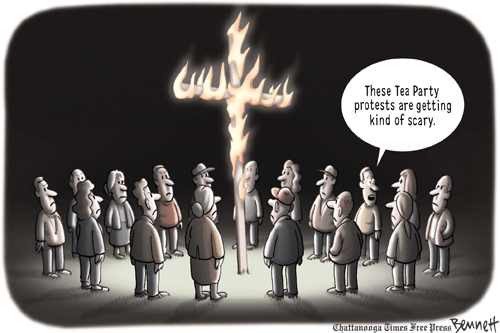
CCDS’s Carl Davidson said the Democracy Charter filled the need for a principled agenda as an organizational tool and an answer to Glenn Beck’s “9-12 principles” for the Tea Party. “It reminds me of the old ten-point program of the Black Panthers,” he said, “but aimed at the entire population.” Discussion that followed struggled with the various themes on process and organizing that were expressed in the presentations. Most important, the workshop helped launch the newly formed Democracy Charter Grassroots Organizing Committee.

The DSA-CCDS sponsored joint workshop on socialism that followed was a big success. The speakers included David Schweickart, author of After Capitalism; Carl Davidson, national co-chair of CCDS; Libero della Piana of the Communist Party, USA; Eric See of Freedom Road Socialist Organization; and Joe Schwartz, vice-chair of DSA, with David Green of DSA as the moderator. Held in the UAW’s Ford Building, it was standing room only until the room dividers were opened to deal with the overflow.

David Schweickart opened with a PowerPoint presentation making the case for “Economic Democracy” as a successor system to today’s capitalism. “If we can elect our mayors, why not elect the managers of firms we own or control?” he asked. Within a Marxist framework, he segmented markets into three — labor, capital and goods and services — and argued that the first two could be restricted or abolished, while the third would best be maintained, although regulated. This would allow for a worker-controlled variant of a socialist market economy that would give us a basis for a genuine democracy rather than our current “Dollarocracy.”

Carl Davidson elaborated on important political points about democracy, both as an end and a path to socialism. He went on to describe 20th Century socialism as compromised by Stalinism and its distortions, the excesses of the Cultural Revolution in China, and the genocidal results of Pol Pot’s Kampuchea. A 21st century socialism would do best to recognize that all governmental power, of whatever sort, is limited by natural human rights that are inherent, even if they develop historically.

Davidson’s second point focused on “our dual tasks, democratic and socialist, which overlap but are not the same.” The first involved finding the forms to unite a progressive majority, while the latter involved uniting a militant minority around serious policy work and revolutionary education.

Democracy Charter Panel: Carl Davidson, standing, Tim Johnson, Bill Fletcher, Frances Fox Piven. Photo from Keep On Keepin’ On.

Left unity arises in struggle

Libero della Piana opened by describing how left unity was something that is achieved “after we’ve worked together in a practical way. It’s more of an outcome of struggle than a starting point.” Speaking to the problems of past socialisms, he told how one friend told him that the CPUSA had “the best brand” on the left. “Yes,” he replied, “but what about the content? Are we an Edsel? The point is we have a lot of baggage, good and bad.” He noted, however, that whatever the problems of the left, “this system has no good answers, and “even with the right’s attacks on Obama as a ‘socialist,’ new interest is being aroused, especially among young people, and we had best relate to it.”

Eric See of FRSO started by taking a quick poll of the audience: Were they socialists and what did it mean to them, in a nutshell? He got dozens of quick responses, from “eco-socialism” and “ending racism,” to “bringing democracy into the economy” and “the workers in power.” The brutality of the system, he warned, could itself bring us to Rosa Luxemburg’s choice, “socialism or barbarism.” After posing a series of poignant questions, he noted that, first, efforts to “refound our thinking” were in order, and second, however corrupt our electoral system, we had to find ways to work through it “in order to get past it.”

Joe Schwartz of DSA noted the need to fan the flames and expand the mass movements. “We have lots of local activity on many fronts, but still not enough. Workers, for instance, are not spontaneously demanding unionization in any massive way.”

Next he stressed the fight against racism and the apartheid-like divisions created in both affluent suburbs and across the board in the public sphere. “Who can deny the overt and open use of racism to build a center-right majority for the next election?” He concluded with a call for a “Second Bill of Rights,” one that expands democracy into the economic and social spheres, beyond individuality.

The discussion that followed covered a range of issues. People went deep into the matter of ecology and climate change, into how socialist experiments could be launched and survive with the context of capitalism, and into the importance of engaging youth in social movements and anarchist networks. When we had to leave the room, DSA invited everyone to a tent outside offering free ice cream, an “ice cream socialist.”

These two workshops were not the largest or even necessarily the most important.

“I attended three workshops that were very large,” said Randy Shannon, a CCDS National Committee member, “two of which were packed with youth. The composition of these workshops reflected that of the USSF overall, which is predominantly young people. One of my objectives at the USSF was to promote our new booklet on full employment, and the concepts of employment as a human right and full employment were very appealing to them.”

Since any one person at the USSF could only attend nine workshops and three assemblies, a sort of “competitive marketing” was essential if you wanted to use the immense gathering as an organizing opportunity. It enabled any group to use the USSF as a way to organize its own “conferences within a conference” on any number of subthemes.

The Solidarity Economy Network organized one of the larger projects like this. SEN itself was founded out of a project of about 10 groups to organize some 70 panels at the Atlanta USSF in 2007. It had also gathered up the best of the 2007 presentations and produced a book introducing the topic. In Detroit, it expanded its effort to include some 109 workshops on solidarity economy related themes, as well as getting a speaker from the solidarity economy movement in Brazil as a speaker on one of the major closing panels.

“It’s important for other parts of the world to realize that there is a lot of organizing going on in the belly of the beast,” said Emily Kawano, executive director of the Solidarity Economy Network. “But there has been a lot of progress made, as you can see by the growth in the number of SEN-related activities here.”

Kentuckians for the Commonwealth served as a good case in point on how local groups used the forum. Two dozen of their members joined with dozens of Kentucky allies, such as Jobs with Justice, and loaded buses for Detroit. Once there, they hosted two powerful workshops with about 60 people attending between them. The workshops were “The Struggle For Justice in the Coalfields of Central Appalachia and Colombia” and “A Discussion About the Life and Example of Anne Braden.”

Inter-generational dialogue

“I’m an old radical,” said Jack Norris of KFTC’s Jefferson County chapter, “and I’ve never been around this many other radical people — including lots of young people in leadership roles. It was an opportunity to pass the torch to the next generation.”

KFTC partnered with the Alliance For Appalachia in setting up a booth throughout the five days to talk to people about mountaintop removal mining and other damages inflicted on communities by the coal industry.

Climate change crisis

One CCDS local chapter, Metro DC, also organized a workshop, entitled “Rapid Solarization Can Drive Sustainable Economic Growth While Preventing Catastrophic Climate Change.” David Schwartzman, Walter Teague, and Jane Zara from DC Science for the People made presentations. “Unfortunately, we were moved twice and ended up far from the center of the conference,” said Teague, “and so the attendance was small. But we distributed widely throughout the conference the new three-fold leaflet “Preventing Climate Catastrophic Change and a revision of the 18 page in-depth piece “Climate Change: An Unprecedented Challenge.”

The major venue for groups to display their wares was the huge Macomb sector of Cobo Hall, which had hundreds of tables and displays. “CCDS had a good, well-stocked table,’ said Mark Solomon, a former co-chair. “Our material is becoming a bit more attractive!”

There were also additional street demonstrations throughout the week. “I was thrilled to arrive downtown one evening and see over a thousand union people marching on the banks,” said Pat Fry, a native Detroiter. She was referring to a Jobs with Justice co-sponsored march and rally with AFSCME Council 65 and the Metro Detroit AFL-CIO demanding, “Money for JOBS, not Banks!”

Cultural activities: ‘The Leftist Lounge’

One fairly interesting feature of downtown Detroit, once you got the hang of it, was the “People Mover,” a two-car train that covered a circular route through the downtown area. New Yorkers tended to scoff at it as a “toy subway,” but it actually worked rather nicely getting people to decent and inexpensive restaurants, and the nearby culture and entertainment area, labeled the ‘Leftist Lounge,’ for late-night parties and revelry.

“The most fun I had was at the Leftist Lounge,” said Tina Shannon, a CCDSer and also president of the 4th CD Progressive Democrats of America in Beaver County, PA. “It was a series of warehouses turned into dance clubs. The walls were covered with posters from social movements and pictures of activists and videos documenting protest in different places.

The music in each room had a different flavor. The crowd was mostly young and very diverse. The social atmosphere was welcoming. Us old folks didn’t feel out of place. We just danced and let our hope and faith in our young be rejuvenated. My only regret was that CCDS only had one literature table in the main hall and not here.”

As for housing, the downtown hotels were filled, as were motels as far as 25 miles out. Naturally, everyone looked up old friends still living in the Detroit area, and for the more adventuresome youth, a vacant lot about half a mile from Cobo served as “Tent City” for tent campers. Along with one or two others, I found a legal spot to park my truck camper/RV within a 10-minute walk.

“We secured 3,000 hotel rooms in downtown Detroit, except for the MGM Grand Hotel who wouldn’t work with us,” said Maureen Taylor, chair of the organizing committee in Detroit. “It was good to come to Detroit. We are validated. We’ve got love, commitment and anger.”

Somehow it all worked out. One reason is that the Social Forums, both here and abroad, are not so much organizations as a “political space,” or common ground where groups with conflicting and contending ideas can seek common ground, or at least coexist cooperatively for a time. That usually means there is no document or set of unifying principles or common political platform to wrangle over. One can try to organize an assembly under the bigger tent that does come up with a common statement, which is then reported to the closing assembly, but it’s not binding on anyone. Here’s some excerpts from a just a few resolutions:

  • From the assembly discussing the Oct. 2 March on DC for jobs initiated by the NAACP, La Raza and several unions: “Support the One Nation, Working Together march to be held in Washington, DC, October 2, 2010. Jobs, Education, Housing, Immigration Rights, Cut the Military Budget!”
  • From the resolution on Displacement, Migration, and Immigration: “The freedom to move across borders that were set up to colonize and exploit people for profit is a basic element of human dignity. We recognize the right and need for Peoples to migrate and connect across the world to experience other cultures and expand our understanding of life.”
  • From the Endless War and Militarism resolution: “We call for a diametrical shift of U.S. tax revenues from war and militarization to meet human needs, here and abroad. This requires recalibrating the moral compass of the nation in ways that prioritize sustainability, justice and equity over power, growth and control of resources.”

The WSF approach to resolutions and platforms has developed several criticisms over the years. Some argue that the SF structures bend too much towards anarchism, avoiding a unified spearhead against a common target. A few others argue that the Social Forums have become “tame” and “taken over” by foundation-funded Non-Governmental Organizations, or NGOs, meaning Greenpeace, the Sierra Club, and the like, which have more liberal politics and are engaged with government in various ways. Still others have become more receptive to the recent call by Hugo Chavez of Venezuela to found a new “Fifth International” of socialist and related anti-imperialist liberation movements, which would have a higher level of unity and discipline.

But these criticisms are all a minor chord in the background. When all is said and done, there’s still nothing quite like the cross-fertilization and synergy that arises en masse from the formula devised by the Social Forum. Its efforts bring the political left and the social movement left together in one intense happening. As long as it’s not broke, it’s not likely anyone is going to be successful fixing it.

Thanks to Pat Fry, Duncan McFarland, Ted Pearson, Mark Solomon, Janet Tucker, Jim Skillman, Ben Skillman, Walter Teague, Randy Shannon, Tina Shannon, and many others who helped pull this report together.

[Carl Davidson is a leader in the U.S. socialist movement, serving as a national co-chair of Committees of Correspondence for Democracy and Socialism (CCDS). Carl became widely known in the American left as a national officer of SDS (1966-68), as a writer and editor of the New Left newsweekly The Guardian, and as a leader of the anti-Vietnam war movement. Most recently Carl worked as webmaster for Progressives for Obama, an independent left-progressive voice in the campaign (now renamed Progressive America Rising). A longtime resident of Chicago, he recently moved back to the Western Pennsylvania milltowns where he was born and his family resides. To learn about CCDS, go to its website. This article was also posted at Keep On Keepin’ On….]

Photo by Orin Langelle / Censored News.

Photo by Orin Langelle / Censored News.

Photo from Peoples World.

Photo by Deborah Rosenstein / Workday Minnesota.

The Rag Blog

Posted in Rag Bloggers | Tagged , , , , | 4 Comments

Poet and political prisoner Marilyn Buck has been released from a prison hospital in Texas after serving 25 years of an 80-year sentence for crimes related to her actions in support of the black liberation movement. Buck was diagnosed with uterine cancer last December, and that cancer is no longer considered treatable. Buck, who grew up in Austin, became a widely acclaimed and award-winning poet while incarcerated. She has been paroled to New York City.

Posted in RagBlog | Leave a comment

Thorne Dreyer : Poet Marilyn Buck Freed After 25 Years in Prison

Poet-activist Marilyn Buck was released from a federal prison hospital on July 15, 2010. Photo taken at Dublin Fci, 1998. Photo from The Rag Blog.

Poet and political prisoner Marilyn Buck
Freed after 25 years in federal prison

By Thorne Dreyer / The Rag Blog / July 19, 2010

AUSTIN — Marilyn Buck is free.

Marilyn Jean Buck, 62, who served 25 years of an 80-year sentence in federal prison for crimes related to her actions in support of the black liberation movement, was released from the federal prison medical center in Carswell, Texas, July 15, 2010. She was paroled to New York City.

Buck, who was considered to be a political prisoner, became a respected and widely published poet while incarcerated.

Last December Buck — who grew up in Austin — was diagnosed with a rare form of cancer, a uterine sarcoma. She underwent surgery and chemotherapy for the cancer in prison, but treatment was eventually suspended after it was determined that her body could tolerate no more chemotherapy.

Representatives of her support group, the Friends of Marilyn Buck, announced on July 15:

Our beloved sister, friend and comrade, Marilyn Buck, is out free! She was released from the prison hospital this morning and is on her way to New York.

The Rag Blog’s Mariann Wizard spoke with Buck shortly after her release. Wizard reports:

She is elated, she is exhausted. Her spirits are high, in large part because of the strong support she has received through the years from hundreds of people around the world. She asked me to “please thank everyone” for their support.

The crimes for which Marilyn Buck was convicted included assisting in the 1979 escape from a New Jersey prison of Assata Shakur, who was a Black Panther and a member of the Black Liberation Army. She was also charged in the 1981 robbery of a Brinks armored car in which $1.6 million was stolen and two police officers were killed, and in the “Resistance Conspiracy” trial in which six activists were charged with several bombings, including a 1983 bombing of the U.S. Senate building. These bombings were preceded by warnings and involved only property damage.

There is substantial precedent for considering Marilyn Buck a political prisoner, even though some of the crimes for which she was convicted might not be viewed as explicitly political. Courts have determined that crimes committed with political motives or in a political context should be treated differently from other crimes.

Healing ceremony led by Austin shaman Maria Elena Martinez, at community benefit for Marilyn Buck on June 25, 2010, in Austin. Photo by Carlos Lowry / The Rag Blog.

Mariann Wizard, Marilyn’s friend since 1966 — and also a poet — was the primary organizer of a highly successful community-wide benefit for Marilyn Buck on June 25 in Austin, calling for Buck’s immediate release for humanitarian reasons. It featured live music, poetry reading, an art auction, a healing ceremony, and remarks of support from former Black Panther Robert Hillary King, who spent 32 years in Angola Prison as part of the Angola 3.

Wizard wrote a feature story, “Warrior-Poet Marilyn Buck: No Wall Too Tall,” that was published in The Rag Blog on May 19 and has been widely republished. In the article Wizard discusses the crimes for which Buck was charged, and places them in the context of the times in which they occurred.

Mariann wrote:

Marilyn was accused of sensational acts of insurrection… Many otherwise liberal-minded Americans are unable to get past the violence of the confrontations between the police and the small groups of Black and white revolutionaries with whom Buck was linked. Many committed leftists criticized the militants as foolhardy adventurists.

Neither give due weight to the extraordinary repressive measures undertaken by the U.S. government to crush lawful dissent against unjust policies at home and abroad. Behind the shadow of COINTELPRO (the FBI’s Counter Intelligence Program), law enforcement agencies operated outside the rule of law against Movement activists…

To be an African-American dissident, especially, meant walking around with a “shoot-to-kill” sign pinned on your chest.

While acknowledging that many, including Marilyn, now question or reject some of the tactics used at the time, Wizard said, “She dared to support with deeds what we only said we supported: the right of oppressed people to defend themselves.”

In 2001, Marilyn Buck told Monthly Review:

I think about the vision I had when I was a nineteen-year-old of justice and human rights and women’s equality. It was a wonderful vision. I think [that] how… we became rigid and rhetorical within that — took away from that vision. But without a vision, you can’t go forward.

Wizard wrote in The Rag Blog:

Reading her letters, poems, and essays over all these years, I’ve seen her extraordinary evolution, witnessed the maturation of an articulate, responsible, disciplined, ethical mind.

Marilyn Buck earned a masters’ degree while incarcerated.

Her poems can be found in many collections, in her chapbook, Rescue the Word, and on her CD Wild Poppies. She was awarded the P.E.N. American Center poetry award in 2001. In 2009 City Lights Books published her translation of Uruguayan poet-in-exile Cristina Peri Rossi’s collection, State of Exile.

Her political writings have also been widely published.

1966 UT-Austin police surveillance photo from anti-war rally. From left, Liz Jacobsen (Liz Helenchild), Terry Dyke, and Marilyn Buck. Photo from The Rag Blog.

Marilyn Buck was born in Temple, Texas, but grew up in Austin where her father, the late Louis Buck, was an Episcopal priest at a predominantly African-American church. Louis Buck, an avid civil rights activist, was removed from his ministry after his sharp criticism of the church hierarchy over the refusal of a local segregated Episcopal school to admit two black members of his congregation.

As a student at the University of Texas she became involved in civil rights organizing and in the movement against the war in Vietnam. She was active with the Students for a Democratic Society (SDS) and worked with Austin’s underground newspaper, The Rag.

She later edited the SDS national newspaper New Left Notes and worked in the women’s movement. In the 1970s she became increasingly involved in the fight against racism and in opposition to U.S. imperialism, and committed to active support for the black liberation struggle.

Mariann Wizard reports:

Marilyn is now on parole in New York — and with her 80-year sentence that is unlikely to change — so her first tasks are to comply with her parole requirements and try to stabilize her health, but it is very clear that she still has much to contribute to the struggle for human rights and economic justice, as well as to poetry. It has been a very long road to freedom.

[Thorne Dreyer lives in Austin where he is a director of the New Journalism Project, edits The Rag Blog, and hosts Rag Radio, a weekly radio show on KOOP 91.7 FM. He was active in SDS in the Sixties and was a founding editor of The Rag in Austin and Space City! in Houston. He can be reached at tdreyer@austin.rr.com.]

UPDATE: Marilyn Buck died on August 3, 2010, in New York City. Please see Mariann Wizard’s article on The Rag Blog.

The Rag Blog

Posted in Rag Bloggers | Tagged , , , , , , , , , , , , | 8 Comments

Jack A. Smith : Israel and Palestine After the Flotilla / 3

Then Palestinian Prime Minister Ismail Haniyeh of Hamas, left, meets Palestinian Authority President Mahmoud Abbas on March 19, 2006 in Gaza City. Haniya continues to function as Prime Minister, despite having been dismissed by Abbas the next year. Photo from Getty Images / Life.

Part 3: Two problems for the Palestinians
Israel and Palestine after the Flotilla

By Jack A. Smith / The Rag Blog / July 18, 2010

[This is the third in a four-part series in which Jack A. Smith assesses multiple aspects of the situation in Palestine, including the relations between Israel and the U.S., Israel and the Palestine National Authority, the Palestinian split between Fatah and Hamas, the action and inaction of the Arab states, the new role of Turkey, the key importance of Iran, and the future of Washington’s hegemony in the Middle East.]

Israeli domination and the right wing government’s unwillingness to compromise are the biggest problems confronting the Palestinians. But there are two other big problems.

The first is the present disunity between secular PNA/PLO, Fatah in the West Bank and, Islamist Hamas in Gaza. The two sides are far apart politically as well as geographically — a fact exploited by Tel-Aviv and Washington. The second problem is that while supportive of the Palestinians in general, the Arab countries themselves are split and relatively weak, with several of them within Washington’s sphere of influence.

Israel and the U.S. do not recognize or speak to the Hamas leaders, including Ismail Haniyeh who became Prime Minister after the January 2006 democratic election for the Palestine National Authority’s Legislative Council — which Fatah previously dominated. Hamas gained 74 seats to Fatah’s 45 in the 132-member body. Four other parties gathered the remaining seats. The Bush Administration immediately joined the Israeli government in discrediting the voting, which Jimmy Carter and other election monitors said was completely honest, and in seeking to subvert or overthrow Hamas, with which Israel considers itself to be at war.

The next year, as a consequence of a virtual civil war between Fatah and Hamas, PNA President Abbas — a former Fatah leader who also is chairman of the Palestine Liberation Organization (PLO) dismissed Haniyeh as Prime Minister. (The PLO has long been recognized internationally and by Israel as the “sole legitimate representative of the Palestinian people.”)

The Hamas leader contested the firing as illegal and continues to function as Prime Minister in Gaza only, legally backed by the Legislative Council. Abbas, who announced recently that he does not plan to run for reelection in January because of a lack of progress in negotiations, named Salam Fayyad Prime Minister. Fayyad functions in that capacity in the West Bank, without legislative approval and presumably without legal authority. He is considered to be friendly to the United States, where he lived as a student at the University of Texas in Austin while obtaining a PhD in economics — a field in which he is said to excel.

Over the years Israel has jailed dozens of elected Hamas legislators, mostly on spurious charges. At least 10 from Hamas remain locked up in Israeli prisons. According to a June 29 report by a Palestinian researcher, 7,300 Palestinians are presently held in some 20 Israeli prisons, including 17 legislators, two former ministers, and some 300 children.

The U.S. and Israel deal only with Abbas, Fayyad, and the PNA government. They are aware that these Palestinian partners are weaker today compared to the mass support enjoyed by the organization when it was led by the legendary Yasser Arafat until his death six years ago. And President Abbas, of course, is more amenable to making concessions to Israel and the U.S. than Hamas.

The reasons for the split between the two sides are complex. It cannot be forgotten that in earlier years Israel encouraged the growth of Hamas as an alternative to the secular and leftist Fatah led by Arafat. Fatah has lost some support from a portion of the Palestinian people for various reasons, not least being the internal contradictions, rivalry, and alleged corruption within the organization. Hamas offers an extensive and popular program of social welfare, and is said to fight corruption and favoritism. As such it has gained considerable support.

Much to Tel-Aviv’s regret, given its earlier hopes, Hamas turned out to be as dedicated to the national struggle as Fatah and the PLO. Unlike the PLO, Hamas refuses to recognize Israel, but has let it be known it is not inflexible when it comes to making a balanced and sustainable deal. Fatah does not recognize Israel, either. In reality, whether or not a political party “recognizes” a state has no legal significance. Recognition is a state to state affair. It’s fairly certain that an eventual Palestinian state will exchange mutual recognitions with Israel.

At this stage the two Palestinian factions remain enemies, though they agree on many issues. There have been reports in recent months that both sides have been contemplating terms for a possible reconciliation. Abbas said he was willing to send a Fatah delegation to Gaza for talks, but Hamas evidently rejected the bid. The Arab League has been pressuring the factions to work towards unity.

Some kind of unity between Fatah and Hamas, within the context of the PNA and PLO, appears to be required if the Palestinian people are to achieve their goals. Eventual necessity may bring them into a working relationship, especially if serious negotiations begin to bring an independent state closer to reality.

The second big problem for the Palestinians is the lack of unity and purpose in the Arab world. Israel has worked to split the Palestinians. The U.S. has worked to split the Arabs — or rather to reunite them within Washington’s superpower sphere of influence, a process that seems to be succeeding so far.

A main purpose of Washington’s strategy is to assure success for the U.S. government’s principal goal of controlling the Middle East. At this point it seems the U.S. wants to reduce the Israel-Palestine irritant to manageable proportions to secure Tel-Aviv as America’s surrogate at the eastern end of the Mediterranean, proximate to the strategic Persian Gulf with its oil reserves to the east, and North Africa including the Suez Canal to the west.

We will here briefly discuss the relationship between some key Arab states and the Israel-Palestine conflict, which has been going on for over six decades.

All the Arab countries give backing to the Palestinians rhetorically and some do materially as well. But very few these days — two decades after the collapse of the first global socialist project, which supported Palestinian aspirations — are willing to take political risks for Palestinian national liberation, given the probability of incurring Washington’s wrath in a unipolar world. Only two Arab countries maintain diplomatic relations with Israel — Egypt and Jordan, both of which are adjacent to Palestinian territory. In most cases relations between the other Arab countries and Israel are more distant but no longer antagonistic.

It may be of interest to note that the U.S. provides annual subsidies to both Arab countries that recognize Israel. Egypt gets $1.3 billion this year; smaller Jordan receives $540 million.

Egypt is the most powerful Arab country with a population of just over 80 million, and it remains influential in the region. But the days when the Cairo government sought to lead the Arab nations behind an anti-colonial and pan-Arab banner are gone with the desert winds of yesteryear, along with Egypt’s once significant military forces.

Cairo today is well within Washington’s orbit — and by extension, Tel-Aviv’s as well. The regime of President Hosni Mubarak despises Hamas because it is ideologically associated with its own principal internal enemy, the Muslim Brotherhood. It has thus joined Israel’s blockade of Arab Gaza.

Egypt had little option in the aftermath of the flotilla debacle but to finally open the Rafah Border Crossing just before Israel announced it was going to open some crossings of its own as part its partial easing of the blockade. These crossings are the only means for people or supplies to enter and exit Gaza. Access by sea remains prohibited by the Israeli navy.

President Mubarak is now 82 and he has held office for nearly 29 years, all of them under a continuing state of emergency granting him such extraordinary powers that he has been reelected routinely without challenge. The next presidential election is in 2011 and he has not yet declared his candidacy.

Mohamed ElBaradei, left, a potential challenger to Egyptian President Hosni Mubarak, is not favored by Washington or Tel Aviv. Image from eatbees blog.

Mohamed ElBaradei, who retired last year as head of the International Atomic Energy Agency, may enter as a candidate. He is not favored by Washington or Tel-Aviv, who wanted him to be much tougher on Iran. Mubarak is rumored to be grooming his son Gamal to succeed him in power. It’s doubtful the election will produce changes in Egypt’s relationship to Israel, but nothing’s ever certain.

Jordan with its large Palestinian population is in Uncle Sam’s pocket because it is small, weak, and insecure about both Fatah and Hamas. The ruling Hashemite Kingdom dramatically crossed swords with the PLO by cracking down on militant Palestinian groups in September 1970 (known to Palestinians as Black September).

By July 1971 the various organizations within the PLO were ousted from Jordan, with many finding refuge in Lebanon, where they were besieged again when Israel invaded that country in 1982. Jordan’s King Abdullah II may fear that either a secular democratic or an Islamic neighboring Palestinian state will ultimately undermine the monarchy. King Abdullah worked with Obama on developing the concept of a Palestinian state without military forces.

The kingdom of Saudi Arabia has received U.S. protection since the end of World War II in return for reliable access to petroleum, insuring the survival of the royal family with its particular form of Sunni Islam, Wahhabism. The Saudi government has helped the Palestinians financially and supports many of the PLO’s political positions, but its close association with Washington makes it an inconsistent friend of Palestinian liberation.

The Saudis do not have formal diplomatic ties with Israel but the relationship is cooperative and friendly. A strong independent and modern Palestinian state, either under the secular leadership of Fatah or Islamic governance of a different Sunni type, is problematic for the House of Saud and constrains its support.

The oil-rich Arab Gulf States, now including post-Ba’athist Iraq (which before Washington’s 2003 invasion was strongly supportive of Palestinian goals), all give a nod to the Palestinian cause but bend the knee to Washington’s global power.

Syria strongly supports the Palestinians in many ways and maintains cordial relations with both Fatah and Hamas, but it is no match for Israel’s regional military supremacy and America’s demanding presence and keeps a relatively low profile.

President Bashar al-Assad’s main interest is in negotiating a peace treaty with Israel leading to the restoration of the occupied Golan Heights to Syria, and in retaining its historic influence in Lebanon. He strongly opposed Israel’s invasion of Lebanon in 2006 and expressed admiration for the resistance waged by Hezbollah, the Shi’ite people’s organization supported by Iran.

Sophisticated and small Lebanon has too often been an Israeli battlefield for it to invite Tel-Aviv’s ire. However, some observers believe Israel will discover a pretext to invade once again to crush Hezbollah, the non-government Shi’ite Muslim defense force, after its failure to accomplish this objective in 2006. Israeli militarists are still smarting over the failure to destroy Hezbollah, which is essential to bring all Lebanon under its control.

Israel’s invasion cost the lives of 1,183 Lebanese civilians; some 4,000 were wounded, and over 30,000 family homes were destroyed or severely damaged. Throughout the month of warfare, Hezbollah sent thousands of largely ineffective though frightening unguided rockets into Israel killing 36 civilians. Hezbollah’s death toll is unknown. Israel also lost 118 soldiers.

The rest of the Arab countries, including one time radical states such as Libya, continue to back Palestinian hopes and vote correctly at Arab League meetings, but do little else to promote the cause.

(More to come.)

[Jack A. Smith was editor of the Guardian — for decades the nation’s preeminent leftist newsweekly — that closed shop in 1992. Smith now edits the Hudson Valley Activist Newsletter, where this series also appears.

  • Go here for Part 1 and 2 of this series.

The Rag Blog

Posted in Rag Bloggers | Tagged , , , , , , | 1 Comment

Bob Feldman : A People’s History of Afghanistan /Conclusion

Iran-Turkmenistan gas pipeline. The Turkmenistan government is apparently still interested in moving forward with a pipeline through Afghanistan. Photo from Tehran Times.

Conclusion: 2001-2010
A People’s History of Afghanistan

By Bob Feldman / The Rag Blog / July 18, 2010

[If you’re a Rag Blog reader who wonders how the Pentagon ended up getting stuck “waist deep in the Big Muddy” in Afghanistan (to paraphrase a 1960s Pete Seeger song) — and still can’t understand, “what are we fighting for?” (to paraphrase a 1960s Country Joe McDonald song) — this 15-part “People’s History of Afghanistan” might help you debate more effectively those folks who still don’t oppose the planned June 2010 U.S. military escalation in Afghanistan? The entire series can be found here.]

By November 13, 2001, the U.S. government and NATO-backed Northern Alliance coalition of right-wing Mujahideen groups had marched into Kabul and taken control of Kabul from the Taliban’s Afghan government. But apparently the U.S. government-supported Northern Alliance militias also committed a number of war crimes in Afghanistan in late 2001. As Guilles Dorronsoro’s Revolution Unending recalled:

Enemy military losses…went unrecorded. However, a number of war crimes were committed by allies of the United States. For example, on 25 November hundreds of Taliban prisoners were killed in the prison at Mazar-i-Sharif, after a revolt in which a CIA agent who had been interrogating prisoners was killed. Apparently many prisoners were summarily executed once they had been recaptured. The most serious incident concerned the deaths of Taliban and foreign prisoners who were suffocated inside containers. According to a meticulous inquiry, around 3,000 Taliban prisoners were massacred by Northern Alliance forces, an atrocity which by some accounts was perpetrated in the presence of American soldiers. Despite the gravity of these reports, and the known locations of communal graves, the UN declined to carry out an inquiry in order not to embarrass the Afghan and U.S. government…

After the Northern Alliance marched into Kabul, an agreement to eventually begin construction of the proposed Unocal pipeline project in Afghanistan was soon reached. A former Unocal consultant, Zhalamy Khalizad, was named as the Bush II Administration’s special envoy to Afghanistan, and a former Unocal consultant, Hamid Karzai, was soon brought back to Afghanistan by the Bush II Administration to be the new Afghan president in Kabul. (In 2005, Unicol became a subsidiary of a company — Chevron Texaco — on whose corporate board former Secretary of State Condoleezza Rice sat before joining the Bush II Administration.)

As Revolution Unending observed, “his exile in the United States… enabled Karzai to gain the backing of the U.S. government and therefore achieve his present position.” According to the same book, Karzai “is the son of a… Pashtun family from Kandahar ” and is “related to the royal family” of Afghanistan, whose members controlled the government of Afghanistan until the 1970s.

But outside of Kabul, “local warlords and militia commanders… were able to take de facto control of their respective areas,” and “Karzai’s tolerance of the warlords has been seen by Afghans in general as a weakness,” according to Angelo Rasanayagam’s Afghanistan: A Modern History.

Since 30 to 50 percent of the recruits in the Karzai regime’s new Afghan Army of 6,000 troops deserted in 2003, in 2004 the Pentagon still had to spend $11 billion on U.S. military operations in Afghanistan in order to prop up the Karzai regime. As Afghanistan : A Modern History observed:

…The balance of armed forces was weighted heavily on the side of the warlord militias, variously estimated at between 60,000 full time fighters to over 100,000, if one includes “part-timers” from the swollen ranks of the unemployed…

As before, warlords have been able to expand their financial base by imposing customs duties and other taxes on their own account. Some have benefited substantially from smuggling and drug trafficking…The opium crop earned Afghan farmers and traffickers some $2.3 billion, or around 50 percent of the gross domestic product… The crop in Afghanistan accounted for over 75 percent of the world’s illicitly grown opium in 2003… The New York-based Human Rights Watch has produced detailed documentation of the abuses committed with impunity by militia leaders and their followers…

The U.S. soldiers first sent to occupy Afghanistan in late 2001 (who now number between 70,000 and 100,000) were apparently seen by many people in Afghanistan as yet another set of the foreign invaders that have attempted to manipulate Afghanistan’s internal affairs since the 19th-century. As Revolution Unending observed in 2005:

The U.S. forces are unwelcome, especially in the Pashtun areas, where the civilians have complained of harassment. Regularly and predictably, military operations result in civilian casualties… For instance, 42 Afghans died and 181 were wounded on the night of June 30-July 1, 2002, when four villages near Kabraki in the province of Uruzgan were bombed during a marriage ceremony… The treatment of prisoners of war also does not measure up to international standards. In a communique on January 28, 2003 the World Organization Against Torture stated that Taliban detained by the Americans had been subjected to torture in CIA interrogation centers, particularly at Bagram air base in Afghanistan and on the island of Diego Garcia…”

Around 1,025 U.S. soldiers have been killed and around 5,275 have been wounded in Afghanistan since October 2001 (along with around 500 troops killed from other nations whose governments agreed to send troops to fight with the NATO-led International Security Assistance Force [ISAF] — which, besides its 70,000 to 100,000 U.S. soldiers, now includes 38,000 troops from other nations).

But the number of Afghan civilian casualties produced by the Pentagon’s war in Afghanistan since October 2001 has been far greater. As James Lucas’s “America’s Nation-Destroying Mission in Afghanistan” article, for example, noted, “since the U.S. started its bombing in 2001 an estimated 7,309 Afghan civilians have been killed by U.S.-led forces as of June 20, 2008, according to an estimate made by University of New Hampshire Professor Mark Herold.”

In his “ America ’s Nation-Destroying Mission in Afghanistan ” article, Lucas also summarized what life is apparently like for the people of Afghanistan in 2010:

Today the ordinary Afghan is caught between three forces: the U.S., the Taliban, and the puppet government composed of former members of the Mujahideen whom many Afghans would like to have tried as war criminals. Also, the Upper House of Parliament is not a democratic institution, its members being appointed by the President… Up to 60% of the deputies in the Lower House are directly or indirectly connected to current and past human rights abuses.

Under the newly established government in 2001, women were allowed to once again work and go to school. Nevertheless, the abuse of women continues, since the government is too weak to enforce many of the laws, especially in the rural areas.

According to Human Rights Watch, “The law gives a husband the right to withdraw basic maintenance from his wife, including food, if she refuses to obey his sexual demands. It grants guardianship of children exclusively to their fathers and grandfathers. It requires women to get permission from their husbands to work. It also effectively allows a rapist to avoid prosecution by paying ‘blood money’ to a girl who was injured when he raped her.”

…About one in ten Afghans is disabled, mostly due to the wars and landmines. Their life expectancy is about 43 years…

Although more than 3.7 million Afghan refugees have returned to their homes in the past six years, several million still live in Pakistan and Iran. About 132,000 people are internally displaced as a result of drought, violence and instability. Furthermore, there are reportedly about 400,000 orphans in Afghanistan.

Afghanistan suffers from an unemployment rate of 40 percent and most of those who have jobs earn only meager wages. Many youth joined the Mujahideen or Taliban in order to receive some food, shelter and income. The average educational level of Afghans is 1.7 years of schooling, which severely limits their job opportunities. As many as 18 million Afghans still live on less than $2 a day.

…”On their land there are still about 10 million mines which cause loss of life and limbs and reduces the amount of land available for farming…

But the Turkmenistan government is apparently still “interested in moving forward with a natural gas pipeline through Afghanistan,” according to a Feb. 15, 2010 UPI article. The same article noted that the proposed 1,044-mile Turkmenistan-Afghanistan-Pakistan-India [TAPI] pipeline “is seen as a rival to a long-delayed natural gas pipeline from the Iranian South Pars gas field” and “TAPI is favored by Western powers over the South Pars option because of diplomatic concerns with dealing with Iran.”

And since much of the $230 billion that the U.S. War Machine has spent on the endless war in Afghanistan between October 2001 and the end of 2009 has gone to private war contractors, the recipients of the Pentagon’s lucrative war contracts have also apparently profited much more from the 21st-century historical situation in Afghanistan than have the people of Afghanistan.

So, not surprisingly, the Pentagon is still apparently planning to use some of the additional 30,000 U.S. troops sent to Afghanistan in 2010 in a planned military offensive against the Taliban in Kandahar this June 2010 that it has nicknamed “Operation Omid.”

The word “omid” means “hope” in the Dari language of Afghanistan. Yet — as this people’s history of Afghanistan indicates — people in Afghanistan are not likely to accept the endless presence in their country of still more foreign troops. Whether they come from the UK, from India, from Pakistan, from Saudi Arabia, from Russia, from the United States, from Canada, from NATO, or from the ISAF.

So it’s not necessarily historically inevitable that a Taliban guerrilla force of about 25,000 Afghan fighters will be easily defeated militarily by the Obama Administration’s troops in 2010, if the U.S. troops continue to be seen as foreign invaders by most people in Afghanistan in 2010. As an Afghan farmer in Kandahar named Abdul Salaam recently told the Global Post (April 19, 2010): “You cannot bring peace through war.”

End of series.

[Bob Feldman is an East Coast-based writer-activist and a former member of the Columbia SDS Steering Committee of the late 1960s.]

  • The entire series can be found here.

The Rag Blog

Posted in Rag Bloggers | Tagged , , , , , , , , , | Leave a comment

BOOKS / Dick J. Reavis : Bruce Watson’s ‘Freedom Summer: The Savage Season…’


But his take is a bit romantic…
Bruce Watson’s Freedom Summer a page turner

By Dick J. Reavis / The Rag Blog / July 16, 2010

[Freedom Summer: The Savage Season That Made Mississippi Burn and Made America a Democracy, by Bruce Watson (Viking, 2010, 384 pp, $27.95.]

New York publisher Viking-Penguin in June released Freedom Summer, a book by Massachusetts writer Bruce Watson, previously the author of a volume about the anarchist martyrs Sacco and Vanzetti. Thanks chiefly to his use of telephone logs, Watson gives readers a nearly minute-by-minute account of the violence which native blacks and a thousand mostly-white college students faced as civil rights agitators in Mississippi during the summer of 1964.

Watson’s account is the second volume published under the title Freedom Summer. Its 1988 predecessor, by Doug McAdam, an Arizona professor, was a sociological study. Both works concentrate on the experiences of the summer volunteers, many of whom were forerunners of, and prophets for the Vietnam anti-war movement. Berkeley firebrand Mario Savio, feminist pioneer Casey Hayden, and Congressman Barney Frank were among them. The chief difference in the two books is that Watson’s volume is a page-turner.

He structures more than half of his tale around the disappearance of volunteers Michael Schwerner, James Chaney, and Andrew Goodman, and the rest of it, around the Mississipi Freedom Democratic Party’s challenge to a lily-white Mississippi delegation at the August 1964 national Democratic convention.

While building the drama of these two events, he intersperses reports of church burnings, beatings, arrests, and murders. The result is an accurate picture of the civil rights movement, or CRM, as a war, one in which, to the misgiving of many of its foot soldiers, one side was unarmed. Nonviolence, in Watson’s account, was not an overarching philosophy, but a promising, if largely untested strategy.

From time to time Watson’s story dips into the internal politics of the Student Nonviolent Coordinating Committee, or SNCC, which, he admits, was brought low by the defeats and conflicts of the summer project. Within a year, SNCC stopped accepting whites into its ranks. But on the whole, Watson’s account is romantic: SNCC regulars are daring warriors, summer volunteers are noble and brave.

Freedom Summer is a biographical volume for several contributors to the original Rag, the late Charlie Smith, Bob Speck, Robert Pardun, and Judy Schieffer, among them. I read it because I believed that it would help me assess my life, two summers of which I spent with summer projects in Alabama. Watson’s account convinced me that Mississippi was more perilous than Alabama, though he does not delve into the chief reason why. Because it was more industrialized, Alabama had during the 30’s — in the Scottsboro, Sharecropper’s Union, and CIO campaigns — had developed a tradition of struggle.

If Watson fails at any task, it is because of his optimism. Not only does he downplay conflicts inside SNCC, but he also comes close to endorsing a teaser line on his book’s cover: “The Savage Season That Made Mississippi Burn and Made America a Democracy.” Mississippi has elected more black officials than any other jurisdiction, and though it didn’t fall into the Obama column in 2008, Watson apparently believes that Freedom Summer wrought a decisive victory. That, after all, is the received wisdom about the CRM as a whole.

That view is untenable if, like many of the movement’s veterans, one takes the view that what the CRM accomplished was a triumph for civil liberties, which is something less than the triumph of racial equality. It’s mere equality before the law. If, as I believe, the circumstances of African-Americans in the Twentieth Century are essentially those of the Irish in nineteenth-century Britain, they are then the markers and victims of the status that moneyed “democracy” accords its most exploited workers.

By this yardstick, the accomplishments of the CRM must be measured by health, educational, and living standards. None of these show anything nearing a state of equality between the races. Not only do the statistics show wide disparities, but, as any reader of history — or student of Social Security! — must realize, all political changes are reversible.

Freedom Summer was not the decisive battle, as Watson suggests, of the Southern Civil Rights Movement, nor did it produce permanent change. The Movement was a victory in a protracted war in which hostilities have temporarily ceased.

[Dick J. Reavis, who contributed to The Rag in Sixties Austin, is a professor in the English Department at North Carolina State University. His latest book is Catching Out: The Secret World of Day Laborers. He can be reached at dickjreavis@yahoo.com

The Rag Blog

Posted in Rag Bloggers | Tagged , , , , , , | 2 Comments

NOLA’s Killer Cops : Danziger Bridge is Just the Beginning

Lance Madison is surrounded by State Police and NOPD SWAT members on Sept. 4, 2005, after violence erupted on the Danziger Bridge in New Orleans. Madison was accused of shooting at police and was arrested, but he was later released. Madison’s brother, Ronald, was fatally shot on the bridge. Photo by Alex Brandon / Times-Picayune.

Activists say problem goes deeper:
Cops charged in post-Katrina killings

By Jordan Flaherty / The Rag Blog / July 16, 2010

NEW ORLEANS — This week, federal officials charged six current and former New Orleans police officers in connection with the killing of civilians in the days after Hurricane Katrina. The six are not only accused of murder but also of conspiring to hide their crime through secret meetings, planting evidence, inventing witnesses, false arrests, and perjury. Four of the officers may face the death penalty.

While the details of their charges are shocking, much of the media has missed the real story: corruption and violence are endemic to the NOPD, and wider systemic change is needed not just in police personnel, but in the city’s overall criminal justice system.

Days of Violence

In the days after the flooding of New Orleans, police officers were told they were defending a city under siege and were given tacit permission to use deadly force at their own discretion. At the time, no one in power seemed to be interested in looking into the details of who was killed and why.

For more than three years, these post-Katrina murders were ignored by the city’s District Attorney, the Republican U.S. Attorney, and even the local media. But in late 2008 ProPublica and The Nation published the results of an 18-month investigation by journalist A.C. Thompson. Under new leadership, the Department of Justice began its own inquiries soon after Thompson’s report.

FBI agents reconstructed crime scenes, interviewed witnesses and seized officers’ computers. Disturbing revelations have continued to unfold since then, as the mounting evidence against them has forced a growing number of cops to confess.

Among the most shocking cases:

On September 2, four days after Katrina made landfall, Henry Glover was shot by one officer, then apparently taken hostage by other officers who either killed him directly or burned him alive. His charred remains were found weeks later.

Also on September 2, Danny Brumfield Sr., a 45 year old man stranded with his family at the New Orleans Convention Center, was deliberately hit by a patrol car, then shot in the back by police in front of scores of witnesses as he tried to wave down the officers to ask for help.

On September 4, 2005, on New Orleans’ Danziger Bridge, a group of police officers drove up to several unarmed civilians who were fleeing their flooded homes and opened fire. Two people were killed, including a mentally challenged man named Ronald Madison, and four were seriously injured. Madison was shot in the back by officer Robert Faulcon, and officer Kenneth Bowen then rushed up and kicked and stomped on him, apparently until he was dead.

Faulcon and Bowen were among those charged this week in a 27-count indictment that lays out the disturbing chain of events on the bridge.

The post-Katrina killings have also led investigators into further inquiries. The feds have already announced that they are looking into at least eight cases, including incidents that occurred in the summer before Katrina and in the years after. And as high-ranking officers confess to manufacturing evidence, their confessions bring doubt to scores of other cases they have worked on.

Endemic violence

A coalition of criminal justice activists called Community United for Change (CUC) has asked for federal investigations of dozens of other police murders committed over the past three decades, which advocates say have never been properly examined. Activists named a wide range of cases, from the death of 25-year-old Jenard Thomas, who was shot by police in front of his father on March 24, 2005; to Sherry Singleton, shot by police in 1980 while she was naked in a bathtub, in front of her four year old child.

Several parents and other family members of victims of police violence have joined in protests and community forums sponsored by CUC. The parents of Adolph Grimes III, who was shot 14 times by cops on New Year’s day in 2009, are among those who have spoken out. “We want those officers incarcerated, so they can live with it like we live with it,” said Grimes’ father.

“This represents a real opportunity to raise some fundamental questions about the nature of police and what they do,” said Malcolm Suber, project director with the New Orleans chapter of the American Friends Service Committee and one of the organizers who formed Community United for Change.

Civil rights attorney Tracie Washington has been among those leading the call for federal intervention in the department. “It is time for the U.S. government, through the Justice Department’s Office of Civil Rights, to step in and step up,” she said. “We need a solution that addresses the systemic nature of the problem.”

Justice Department officials have indicated that they agree on the need for federal assistance. “Criminal prosecutions alone, I have learned, are not enough to change the culture of a police department,” said Assistant Attorney General Thomas Perez.

Mayor Mitch Landrieu has also said he agrees on the need for federal supervision. In a letter to Attorney General Holder, Landrieu wrote, “It is clear that nothing short of a complete transformation is necessary and essential to ensure safety for the citizens of New Orleans.”

However, many activists fear that Mayor Landrieu is speaking out in support of reform so he can maintain a level of control over the changes dictated by the feds. They are critical of Landrieu’s choices so far, such as his selection of NOPD veteran Ronal Serpas for the job of police chief, and have expressed concern that he will not break with the department’s troubled history.

“This is lukewarm reform,” says Rosana Cruz, the associate director of V.O.T.E., an organization that seeks to build power and civic engagement for formerly incarcerated people. “This is reaching the lowest possible bar that we could possibly set.”

Beyond bad apples

While some form of federal supervision of the department seems likely, Malcolm Suber doesn’t think federal oversight is enough.

“I don’t think that we can call on a government that murders people all over the world every day to come and supervise a local police department,” He says. For Suber, federal control will not offer the wider, more systemic changes needed in other aspects of the system. While Suber wants more federal investigations of police murders, he wants these investigations to go hand in hand with community oversight and control of the department.

While activists may disagree on the role they see for the federal government, one thing Washington, Suber, and Cruz agree on is that the problem runs deeper than police department corruption. They say any solution needs to reach beyond the department to other facets of the system like the city’s elected coroner, the District Attorney’s office, the U.S. Attorney and the city’s Independent Police Monitor, who many see as limited by not having the ability to perform its own investigations.

“We have a coroner who always finds police were justified,” said Suber, referring to Frank Minyard, an 80-year-old jazz trumpeter who is trained as a gynecologist. Minyard has been city coroner since 1974, and has been the frequent subject of complaints from activists, who contend that he has mislabeled police killings. “We’ve had independent coroners, forensic doctors come after him,” said Suber, “And we found that basically all of his finding were bogus. Just made up.”

Henry Glover, last seen in the custody of police then found burned to death in a car, was not flagged by the coroner’s office as a potential homicide. In another case now under federal investigation, witnesses say police beat Raymond Robair to death. The coroner ruled that he “fell down or was pushed.” This “fall” broke four ribs and caused massive internal injury, including a ruptured spleen.

“If you ask any attorneys who have handled cases of police killings,” continued Suber, “When they have hired independent doctors to go after our coroner, nine times out of ten he’s wrong.”

Activists also complain that the city’s District Attorney Leon Cannizzaro has been slow to pursue cases of police violence. “The district attorney just does not file charges,” Suber said. “When it’s involving police, he finds no crimes committed.” Republican U.S. Attorney Jim Letten has also failed, Suber added. “A number of community groups have gone and met with him, asked him to investigate and he didn’t do anything.”

Organizers have put forward a range of proposals for the reforms they would like to see, including institutional support for community-led programs like CopWatch, the incorporation of a system for language interpretation, and a more powerful Independent Police Monitor. But they all agree that not just the department, but the entire system needs fundamental change, and that change needs to come from outside of city government. “How you gonna get the wolf to watch over the chicken coop?” asks Adolph Grimes, Jr. “It’s the system itself that is corrupted.”

[Jordan Flaherty is a journalist, an editor of Left Turn Magazine, and a staffer with the Louisiana Justice Institute. He was the first writer to bring the story of the Jena Six to a national audience, and his award-winning reporting from the Gulf Coast has been featured in a range of outlets including the New York Times, Mother Jones, and Argentina’s Clarin newspaper. He has produced news segments for Al-Jazeera, TeleSur, and Democracy Now!. Haymarket Books has just released his new book, FLOODLINES: Community and Resistance from Katrina to the Jena Six. He can be reached at neworleans@leftturn.org. An earlier version of this article appeared on colorlines.com.]

Other Resources:

The Rag Blog

Posted in Rag Bloggers | Tagged , , , , , , | 2 Comments

Distribution of Wealth : Way Out of Whack

Image from OECD / CBS News.

Trickle UP theory:
The recession and its roots

By Ted McLaughlin / The Rag Blog / July 15, 2010

Have you ever wondered just what caused the deep recession that the United States is in? Many people believe it was the meltdown of Wall Street and the financial industry. That was the trigger that began the recession, but was it the true cause of it? Robert Reich has a very good article in The Nation that the folks over at Alternet have reprinted.

Reich agrees that the Wall Street meltdown was the trigger to the recession, just as the Wall Street disaster in 1929 triggered the Great Depression. But the real cause of both the current recession and the Great Depression was the absurdly lopsided distribution of income. In 1928 the income distribution had reached a point where the top 1% of the population was making 23.9% of all income in the United States. With only 76.1% of the country’s income left for 99% of the country’s people, the situation created was like a loaded gun waiting for something to pull the trigger (and that trigger was pulled with the Wall Street crash of 1929).

Conservatives don’t like to admit it, but a capitalist economy such as ours simply cannot function correctly when such a large proportion of the country’s income is going to such a small percentage of it’s people. The country did not pull out of that depression until the income was redistributed in a more equitable way. This was accomplished by the New Deal programs putting people to work, World War II (which employed even more people), the GI Bill (which educated many soldiers, qualifying them for higher-paying jobs), the Great Society, which decreased the number of people in poverty, and higher income taxes.

By the 1970’s the income percentage of the top 1% had been reduced to around 7% or 8% of the nation’s total income — a much more manageable figure. But the Great Depression had taught the Republican Party nothing it seems. In 1980, Ronald Reagan became president and began the process of again redistributing the income toward the top 1%.

The Republicans did this with a really good propaganda campaign which convinced many Americans that a “trickle down” theory of economics would work. This was the idea that if we just let the rich make more and more money, then they would share it with the rest of us — in other words, it would trickle down and benefit all Americans. Sadly, all it did was fatten the bank accounts of the rich.

The Republicans redistributed the country’s income by busting unions, deregulating the stock market and the financial industry, severely cutting social programs, deregulating college tuitions (which priced college out of the budgets of many Americans), and by repeatedly and radically cutting taxes for the richest Americans. By 2007, the top 1% of Americans was again controlling 23.5% of this country’s total income.

Once again the country’s economic gun was loaded and cocked. The trigger was pulled by the meltdown of the financial industry. Reich says the reason this has not caused another depression was the bailout of the financial industry with the TARP funds. I’m not so sure we have yet escaped that. The bailout saved the financial giants and the rich, but many smaller banks have gone under (and it’s still happening), and all but the rich are still mired in a deep depression because of the loss of 12 to 15 million jobs. We may still see a deeper recession (depression?) because the jobs situation has not been adequately addressed and the income distribution is still way out of line.

So what can be done to cure the current recession? Further deregulation or tax cuts will not help. That would only exacerbate the situation and make the income distribution problem even worse (which was the cause of this mess in the first place). The problem must be attacked on a broad front by government targeted at re-distributing the country’s income. Conservative’s hate the term “income redistribution,” but they have been doing just that for the last 30 years. The problem is they have been redistributing the income away from the people who need it and toward the richest among us. This process must be reversed.

The government must spend a lot more money on job creation. Much of this can be directed at the private sector through the building and revamping of our transportation infrastructure (bridges, streets and highways, mass transit, trains, etc.). They could also create government programs to clean up and improve our National Parks, wetlands, monuments, and other things along the lines of the New Deal’s WPA and CCC.

Another thing needed is a massive influx of money into low-cost and easy-to-pay-back loans for small businesses (since small businesses provide the bulk of jobs in this country). These small businessmen and -women are hurting too, and they are certainly not among that richest 1% of Americans. Although the government bailed out the financial giants, these financial giants have not repaid Americans by making loans available to small businesses as they should have. They have instead used that money to speculate in the stock market and give themselves enormous bonuses.

A couple of other things that could be done: strengthen worker unions and have the government provide a much larger portion of the money needed for a college education. Strengthening unions would insure workers’ wages and benefits and guarantee that those workers receive their fair share of increased production. Paying a much higher portion of the cost of a college education would once again let all Americans take advantage of educational opportunities to create a better and higher-paying future for themselves.

Finally, income taxes should be raised significantly on the richest Americans — especially that top 1%. I know the right-wingers will whine that this would hurt job creation. That is false. High taxation does not cause job losses and low taxation does not create jobs. Businesses will hire only the number of workers needed to appropriately deliver their goods or services to their customers — regardless of what the tax rate is.

In fact, there is a good argument to be made that our country prospers the most when the rich are highly taxed (as they were during the boom times of the 1950s). For one thing, it helps to distribute the country’s income more evenly and fairly. It also encourages business interests to re-invest their excess income back into their business to save on the taxes they would owe, thus creating new jobs and helping the economy (and creating even more income for the business).

The right wing will scream that much of what I have proposed will increase our already large deficit. That is true. But it must be done if we are to stave off an even deeper recession and eventually pay off that deficit. As the income is redistributed and jobs are created there will be an ever increasing number of people paying taxes. The higher taxes on the rich and the increasing number of tax-paying workers will pay down the deficit as these proposals begin to take effect.

The deficit is important, but just trying to reduce it without creating jobs and redistributing income will not bring the country out of the recession. It will only make it worse. Job creation and income redistribution are much more important — not only to bring the country out of recession but also to prevent another even worse recession.

[Rag Blog contributor Ted McLaughlin also posts at jobsanger.]

The Rag Blog

Posted in Rag Bloggers | Tagged , , , , , | 11 Comments