Greg Moses : American Hindoonomics (A Mood Piece)

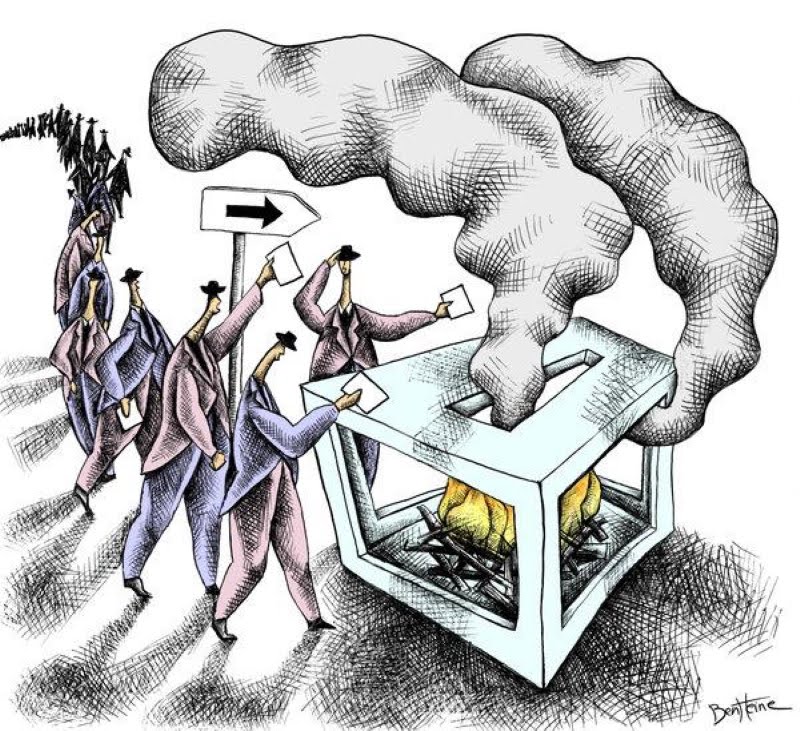
Lakshmi is the Hindu Goddess of wealth and prosperity, both material and spiritual. Image from Yoga USA.

A Mood Piece:
American Hindoonomics

Comes a time as Thoreau sez when the friction invents the machine and what you smell is value turned wrong side out…

By Greg Moses / The Rag Blog / July 6, 2010

I like to think about Emerson and Thoreau, the great American Hindoos: Atman is Brahman, Self is World, Spirit is One. If Inner and Outer are at War, then we have understood neither very well. Value will out, whether we listen to its whispers attentively or provoke it to shout. And these are shouting times.

As a Neo-Pythagorean of the Prechterite variety, I also like to think about why depressions are absolutely structured into the iron laws of history. And increasingly the answer comes out for me in a form that is American Transcendentalist, or American Hindoo if you will. Great destructions are necessary because we puffed things up that have no business being jumbo sized.

Meanwhile, little bitty precious things we have left in the sun to dry out, yes like raisins. And so we make it necessary to line up against each other and take the whole system down. Try not to forget this, Arjuna: reality cannot suffer. Your true self shall never change.

Here’s the methodology that I’m rehearsing for the descent. It’s called the quadruple negation. Along one of its diagonal cuts it sounds like this: neither anti-communist nor anti-capitalist. Neither anti-Keynesian nor anti-Friedmanite. And where I think this leaves me is with third-eye thinkers like Henry George or G.K. Chesterton who held out for concepts of economic justice connected to the ambiguities of common experience.

I can’t be anti-Marxist, because everywhere the dialectic of alienation grows new teeth. But neither can I be anti-Capitalist because so many worthy dreams take the shape of profits well-earned and unobstructed. Emerson’s royalties, for example, or his lecture fees.

Along another diagonal cut, I’m pretty sure I can’t be anti-gigantistic, because without the giants we make ourselves into there is something sublime that would go missing. Call it Cameronism if you will, with its blockbusters, superstars, and hedge fund financiers. Neither anti-big nor anti-small.

But comes a time as Thoreau sez when the friction invents the machine and what you smell is value turned wrong side out, like when the Gulf of Mexico gets monstrously transmogrified into the Gulf of Oil. Or when the machineries of state get so busy with foreign wars that the Commander in Chief is advised that the Department of Defense cannot lead a defense against an all-out assault upon our shores.

Anyway, here it comes. A period is upon us plainly announced in terms that Egyptologists call intermediate, when Parish Presidents and County Judges shall rise in unison to grip the handles of things not done on the ground for the people on the land.

Neither anti-federalist nor anti-state, neither anti-tax nor anti-profit. America as she stands is definitely not anti-war. What will we she have to go through before she also decides not to be anti-peace? Still yourself, Arjuna, before the true fight.

[Greg Moses is editor of the Texas Civil Rights Review and author of Revolution of Conscience: Martin Luther King, Jr. and the Philosophy of Nonviolence. He can be reached at gmosesx@gmail.com]

The Rag Blog

Posted in Rag Bloggers | Tagged , , , , , , , | 2 Comments

BOOKS / Gregg Barrios : David Montejano’s ‘Quixote’s Soldiers’


Up from the barrio:
A Chicano son of San Antonio
Reflects on El Movimiento

By Gregg Barrios / The Rag Blog / July 6, 2010

See video of Gregg Barrios’ interview with David Montejano, Below.

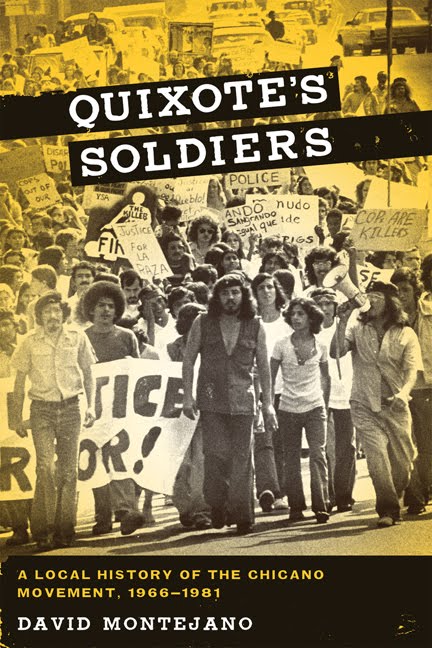
[Quixote’s Soldiers: A Local History of the Chicano Movement, 1966-1981, by David Montejano (University of Texas Press, 360 pp., $24.95, paperback).]

SAN ANTONIO — In Quixote’s Soldiers: A Local History of the Chicano Movement, 1966-1981, author and educator David Montejano posits that San Antonio local history provides a microscopic look at the Chicano civil-rights movement and the social change it forged.

In the book’s preface he declares: “As a San Antonio native, my narrative explanation has a certain autobiographical quality to it.” Montejano grew up in “a West Side subdivision built in the 1950s, in the Edgewood District, one of the poorest in the state and later made famous by its successful challenge of the state’s educational financing schema. My neighborhood was a poor working class surrounded by poorer neighbors on three sides.”

Still, Montejano’s parents made the decision to send him to Catholic school since it provided a better education. He attended Central Catholic High in the mid-1960s along with George and Willie Velásquez and Ernie Cortés, all of whom later played important roles in the movimiento. While future San Antonio mayor Henry Cisneros also attended the Catholic high school, Montejano considers Cisneros a beneficiary but not part of the Chicano movement.

The seeds of Montejano’s activism were planted early on: “The Brothers [of Mary] taught a humanistic philosophy of brotherhood that later became liberation theology.” He was drawn to those teachings with their attention to poverty and social inequality.

His freshman year at then South Texas State University in San Marcos proved important to the young man’s education: He witnessed a clash between a Mexican service-station attendant who had refused to put gas in a car of drunken cowboys and how it was effectively defused. Later, when a caravan of striking farmworkers came through the small college town, Montejano joined them.

He transferred to the UT Austin campus where he became involved in the counterculture, anti-war, and black civil-rights movements and helped collect petitions to get La Raza Unida Party on the state ballot. His activism led to his arrest during a student protest in Austin against service-station owner Don Weedon.

Montejano is now a professor of ethnic studies at the University of California, Berkeley. He is also the author of the award-winning Anglos and Mexicans in the Making of Texas, 1936-1986, and the editor of Chicano Politics and Society in the Late Twentieth Century.

Unlike many academic books steeped in jargon, Quixote’s Soldiers is a fascinating look into the making and undoing of el movimento chicano and more specifically traces “some parts and tactics to its history of the Chicano movement in San Antonio.”

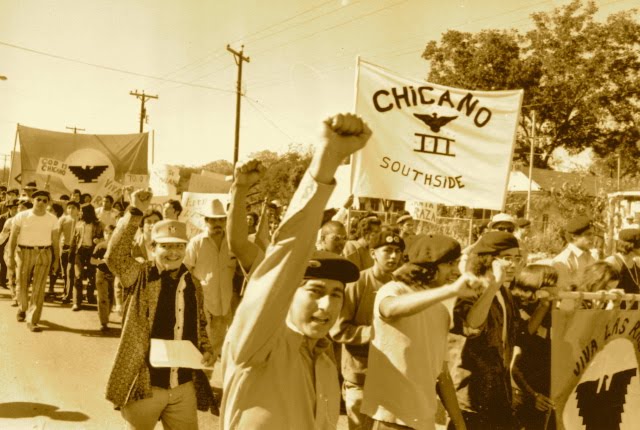
Juan Guajardo (foreground) and other Brown Berets leading a march against police brutality, San Antonio, November 20, 1971. Photo from San Antonio Light Collection / UTSA Institute of Texan Cultures / San Antonio Current.

We spoke to Montejano during a brief visit upon the publication of Quixote’s Soldiers.

In the first part of Quixote, you point out how San Antonio’s gang problem in the 1960s wasn’t helped by how it was viewed by the authorities.

There was a real gang problem, but it was exacerbated by the perception by authorities that all the working- and lower-class youth in the barrios were gang members. This included the social scientists that would come from the outside to study the youth. They would come in with this assumption that was an oversimplification and false. But there were gangs and conflicts that were passed on from generation to generation. But when I talk about self-identified gangs, I’m speaking of a very small number, perhaps 10 percent.

Your account of how Mexican-American student activists [many from St. Mary’s University] along with politicized gang social workers mobilized disenfranchised barrio youth is fascinating. And yet organizations like [the Mexican American Youth Organization] and [the Mexican American Unity Council] quickly faced opposition from the Anglo and Mexican-American political elite.

The MAYO leadership and the batos locos of the barrio hanging out truly influenced one another. But once Henry B. shuts down places like [the alternative] La Universidad del Barrios, these young college kids get involved in politics. Symbolic politics. The batos were geared to addressing local issues: police brutality, drug trafficking. If they had remained together who knows how this could have developed.

Where do the Brown Berets fit in the movimiento? I remember there were some Wild West types in the Berets and a few informants as well.

Wild West Side types. The first part of the book deals with barrio youth and gang warfare and how they become involved in the movement and eventually form the Brown Berets. The [academic] literature places little emphasis on the barrio or the batos locos that formed the Berets. The first confederation of the Berets in San Antonio is based on the old gang boundaries and identities.

Did Saul Alinsky’s community-organizing strategy have a bigger influence on MAYO and MAUC than the Mexican Revolution?

The Mexican revolution provided the symbols and the songs [laughs] and the color, but without question, Saul Alinsky. And, of course, the Black Power movement.

Why did the rhetoric turn to the confrontational “Kill the Gringo!”?

Jose Angel Gutiérrez, Nacho Perez, Mario Compean, [and] Norman Guerrero all believed that the only way you could wake up our people was through this confrontational, provocative language. There was an image that we were a passive people, the sleeping giant. Estos batos were going to wake up the sleeping giant through their rhetoric. This scared the hell out of the political establishment — the Anglo and Mexican-American elite.

You devote several chapters to Henry B. Gonzalez [influential San Antonio politician who served in Congress, 1961-1999], who viewed the Raza movement as racist. Still he was also considered a hero for his liberal stance on issues. Why this division? Was this old crab trying to keep the others down? Political posturing?

That’s a good question. I wrestled with that. Henry B. would say it was out of principle. He opposed any politics based on ethnicity. He thought it was equivalent to corruption. His adversaries believed it was based on his alliance with the [Good Government League], that Henry B. had turned his back on the people who had helped elect him. And so that’s the basis for a lot of animosity between Henry, Albert Peña, Joe Bernal, and others. So was it just principle or was it just money? Was it patrón politics we’re talking about? I’ll let the reader figure that out.

Did the strong showing of Mario Compean [the Committee for Barrio Betterment candidate for mayor in 1969] against GGL incumbent Walter McAllister spark the notion that we could elect our own candidates and create a political party like Raza Unida?

I definitely believe that. It is not just my belief but that of others that I have interviewed — the fact that CBB was able to place second without any money and just campaigning in the barrios, using mimeograph machines, going to the quinceañeras, clearly a low-budget affair. And they clearly won against the GGL in the West Side. And not by tiny margins; there were some substantial margins. This results in Mario Compean declaring himself Mayor of the West Side.

I was a teacher at Lanier High School at the time. I saw the sense of pride and identity in my students, not only in having Latino teachers, but in the rise of a Chicano renaissance in the arts. While your book centers on the political aspects of the movimiento, I believe both go hand in hand; all art in a sense is political.

It’s true, I do in passing mention the teatros, the art, the flourishing of literature. And the identity formation. Now we are Chicanos, Chicanas. That’s a new vocabulary. A new identity. And all of that is buttressed by this cultural renaissance. There is no question about that.

Was José Angel Gutiérrez’s strategy of building the Raza Unida Party county by county instead of running candidates in state elections ultimately the road that should have been taken?

In hindsight it would have been the better alternative. At the time we wanted everything and we wanted it now.

But were we prepared to accept the responsibilities that come with those victories?

We were young. We were 20-something. We were naive. We didn’t know a lot of these things, we just wanted someone elected. And in many cases we didn’t know what to do afterward. We had no plan other than that it might lead to some sort of liberation.

What is the lasting legacy of the Chicano movement?

Certainly the opening up of universities in the creation of Chicano Studies, because that is where we get our history, our art and literature. And in San Antonio, the establishment of UTSA might be considered a logro for us. The changing from at-large electoral politics to single-member districts was a very important change. The building of our political and community capacity by grassroots organizations — COPS and Southwest Voter Registration Education Project.

Bless Willie [Velásquez] and Ernie [Cortés].

They increased the political capacity of these barrios and the result of all that in tangible, concrete results are parks, housing, flood control, drainage. Those are some of the accomplishments. And I think besides the election of Henry Cisneros in 1981 that symbolizes the changes.

The other major change is the emergence of Chicanas in leadership positions. I mean visible leadership, no longer being in the supportive background but now being upfront, leading the organizations, holding the press conferences, running for office. That to me is an important change.

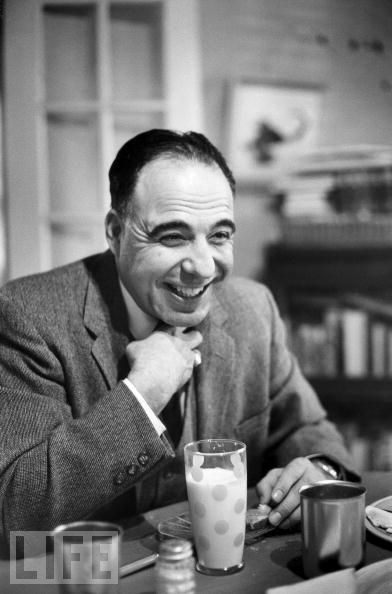
U.S. Rep. Henry B. Gonzalez, D-TX, during campaign for U.S. Senate, 1961. Photo by Grey Villet / Time & Life Pictures / Getty Images.

A few wrong turns

In one of Quixote’s Soldiers’ most interesting and bound to be controversial chapters, Montejano focuses on three individuals as examples of failed leadership. Fred Gómez Carrasco, Ramsey Muñiz, and Henry B. Gonzalez dominated media coverage in Texas in the 1970s — representing a “Mexican” voice or presence to the larger public.

Montejano writes that some may question his selection of these three men as arbitrary and unreasonable:

The first was a convicted killed and drug dealer, the second a fallen political star, and the last a respected liberal congressman. [F]or better or worse, they represented different paths leading up and away from barrio poverty and isolation.

Fred Gómez Carrasco, the chivalrous drug “don,” had been a major heroin supplier for the barrios and ghettos of San Antonio and other points in Texas. Despite the romanticization of his life as a narco-traficante, Carrasco must be remembered as the genius organizer behind a drug operation that tranquilized and criminalized countless barrio and ghetto youths. In short, Carrasco played a critical part in undermining the Chicano movement in the poor, working-class barrios. Yet his last-minute political testaments, given before his staged death, suggests there could have been a different path.

Ramsey Muñiz, athletic star, charismatic leader, and two-time gubernatorial candidate for the Raza Unida Party, stumbled and then self-destructed, taking along with him the fortunes of the party. What happened? [Muñiz was charged with conspiracy to smuggle drugs from Mexico to Alabama.] Yes, it was a setup by the authorities, but how could Muñiz have walked into it? Was the temptation so great? Was it hubris? Ten years after serving time for his first two convictions, Muñiz was arrested and convicted on a third drug charge. As a result, Muñiz has been permanently incarcerated. The loss is irrevocable. What remains is a memory of those inspiring years when Muñiz moved 200,000 voters to believe in a “united people.”

Henry B. Gonzalez, an American of Spanish surnamed descent who held an idealistic “color-blind” view of the world was so upset with the Chicano ethnic demands that he actively opposed the Chicano movement. He was successful in defunding MAYO, forcing MALDEF to move from San Antonio, and restricting MAUC activities. Was it principle that moved his opposition, personal pique at movement rhetoric, or simply interest in maintaining political control? Gonzalez has been charged with undermining the Chicano movement, yet that responsibility must be partitioned among many.

Montejano concludes:

Perhaps this does lead to a judgmental question after all. Can we judge which path was the most flawed? [W]hich is worse, a flawed journey, a flawed decision or a flawed vision?

[San Antonio poet, playwright, and journalist Gregg Barrios is on the board of directors of the National Book Critics Circle. His new book of poetry, La Causa, appears in September and his play I-DJ premieres in October. Gregg wrote for The Rag in Sixties Austin. This article was also published in the San Antonio Current.]

The Rag Blog

Posted in Rag Bloggers | Tagged , , , , , , , , , , | 2 Comments

Thomas Cleaver — who recently wrote about the news of Republican and corporate involvement in the petition drive that (at least for now) has put the Green Party on this fall’s Texas ballot — here answers the critics’ claims that the Democrats and Republicans are two sides of the same coin. He discusses several issues where we find much more than a dime’s worth of difference between the two parties.

Posted in RagBlog | Leave a comment

Bob Feldman : A People’s History of Afghanistan /13

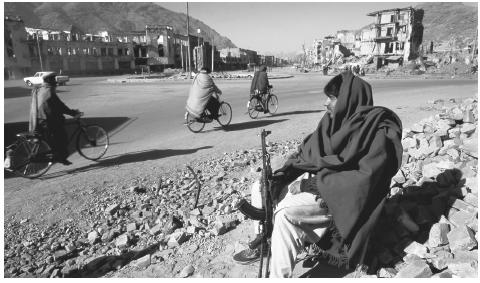
An Afghani man sits in the rubble of Kabul, Afghanistan in 1995. Image from Countries and their Cultures.

Part 13: 1992-1998
A People’s History of Afghanistan

By Bob Feldman / The Rag Blog /July 5, 2010

[If you’re a Rag Blog reader who wonders how the Pentagon ended up getting stuck “waist deep in the Big Muddy” in Afghanistan (to paraphrase a 1960s Pete Seeger song) — and still can’t understand, “what are we fighting for?” (to paraphrase a 1960s Country Joe McDonald song) — this 15-part “People’s History of Afghanistan” might help you debate more effectively those folks who still don’t oppose the planned June 2010 U.S. military escalation in Afghanistan? The series so far can be found here.]

Since October 2001, the Pentagon has been waging an endless war in Afghanistan against the Taliban regime. Yet after the Taliban guerrillas first marched into Kabul in September 1996, an editorial in the October 8, 1996, issue of The New York Times stated that the Taliban regime “has brought a measure of stability to the country for the first time in years.”

In Afghanistan: The Mirage of Peace, Chris Johnson and Jolyon Leslie indicated why the coalition of CIA and ISI-organized Mujahideen guerrilla groups that initially replaced the PDPA regime in Afghanistan in April 1992 failed to bring “stability to the country,” when they described what happened after the Mujahideen militia groups marched into Kabul:

Tens of thousands of civilians fled their homes… The public services that the Najibullah regime had maintained were soon a thing of the past…

About 20,000 people died in the fighting between April 1992 and December 1994 that followed the “liberation” of Kabul. Almost three-quarters of those who survived were forced to leave their homes and move across the city, or flee to squalid camps for the displaced in Jalalabad… Kabul continued to be the focus for rocket attacks from the outside until 1995…

In August 1992, for example the Mujahideen leader whose armed group had received the most military aid from the CIA in the early 1980s, Gulbuddin Hekmatyar, “launched a barrage of rockets against Kabul from his bases north and east of the city that killed over a thousand civilians,” according to Angelo Rasanayagam’s Afghanistan: A Modern History.

The same book also noted that in January 1994, Hekmatyar’s Mujahideen group also “unleashed the most ferocious artillery and rocket attacks that Kabul had ever experienced” and “these attacks destroyed half the city, took some 25,000 civilian lives, and caused tens of thousands of Kabalis to seek safety in Pakistan or in the north” of Afghanistan.

The situation of women in Kabul also worsened dramatically after the CIA and ISI-organized armed Islamic groups entered Afghan’s capital city. As Guilles Dorronsoro’s Revolution Unending noted:

The arrival of the Mujahideen in 1992 inaugurated a range of restrictions from the wearing of the veil to the ban on women appearing on television… In Kabul all the armed groups… were guilty of rapes and kidnappings, leading sometimes to the suicide of young girls who had been dishonored. The very few women who dared to dress in the western style in the modern part of Kabul were harassed by the Mujahideen. All this was a new departure, and a contrast, since Afghan women had seldom before been threatened with deliberate acts of violence and certainly not with rape…

But, according to John Lucas’s “America’s Nation-Destroying Mission in Afghanistan” article, although the Mujahideen now set up a “Ministry for the Promotion of Virtue and Prevention of Vice” to “control women’s dress codes and the length of men’s beards,” under the Mujahadeen government “women were still allowed to work” and were still able to be employed in professional jobs in Kabul.

Outside of Kabul, the Afghan countryside was pretty much ruled by Afghan warlords and Afghan drug lords. And by 1994, the country in the world that produced the most heroin was now Afghanistan.

But in November 1994 a new anti-feminist, Islamic guerrilla group of Afghan Pashtun tribes that was apparently backed by Saudi government money and Pakistani government weapons — the Taliban — initiated its military campaign to gain control of Afghanistan’s government. As Afghanistan: A Modern History observed, “the heavy Pakistani involvement in arming, training and even providing logistical support in Taliban field operations was no secret to informal observers as early as 1995” and “the generous Saudi funding was also well known.”

The Democratic Administration of Secretary of State Clinton’s husband also apparently wished, during the mid-1990s, to see the Taliban obtain control of the Afghan government, after one of its diplomats, Ms. Robin Raphael, held a meeting with Taliban representatives. According to the same book:

The United States… was not an uninterested party. An eventual take-over by the Taliban… served both the U.S. political strategy of “containing” [Iran], as well as its economic interests in fostering… an alternative land route through Afghanistan and Pakistan for the exploitation by U.S.-led companies of the seemingly inexhaustible oil and gas reserves of Central Asia.

Dator Zayar’s “Afghanistan: An Historical View” article also asserted that “the Taliban were the creation of the Pakistan military and intelligence establishment with the active support of the CIA” and that “U.S. imperialism is directly responsible for the Taliban reaction in Afghanistan.”

Less than three weeks after Taliban guerrilla fighters from Pakistan captured in two days the Afghan city of Kandahar on November 3, 1994, the number of Taliban guerrilla fighters in Afghanistan had rapidly increased to 2,500. And, according to Afghanistan: A Modern History, many of these Taliban insurgents were “armed with brand-new weapons that could only have come from Inter-Service Intelligence [ISI] warehouses in Pakistan.” So, by February 1995, the Taliban forces were able to capture the base near Kabul of Hekmatyar’s Mujahadeen forces.

Although the Taliban apparently began to act more independently of the Pakistani government in March 1995, during the summer of 1995 the Pakistan government’s ISI agency trained more Taliban guerrillas; and, according to Afghanistan: A Modern History, there is “no doubt that Pakistan through its ISI had played a key role in reinforcing the Taliban capacity to wage war.” The Afghan city of Jalalabad was then captured by the Taliban on September 12, 1996, and by September 26, 1996, the ISI-trained Taliban troops now controlled Kabul. By 1998, over 90 percent of Afghanistan’s territory was now controlled by the Taliban’s new Afghan government.

Coincidentally, after an October 21, 1995 agreement was signed between Turkmenistan President Saparmurad Nizazov, Unoca, and Unocal’s business partner — the Saudi-owned Delta oil company — to build a gas pipeline through Afghanistan, Unocal (which became a subsidiary of Chevron Texaco in 2005) began to handle “public relations for the Taliban and sponsored visits to Washington and Houston during the mid-1990s,” according to Afghanistan: A Modern History. As the same book explained:

Behind… U.S. acquiescence in an eventual Taliban takeover, engineered by its Pakistan and Saudi allies, lay the Unocal game plan. Unocal was a consortium of U.S. oil companies formed to exploit the hydrocarbon reserves of Central Asia. Unocal and its Saudi partner, Delta, had hired every available American involved in Afghan operations during the jihad years, including Robert Oakley, a former ambassador to Pakistan, and worked hand-in-glove with U.S. officials. Unocal staff acted for a time as an unofficial lobby for the Taliban and were regularly briefed by the CIA and Pakistan’s ISI.

In U.S. eyes, the most important function of the Taliban would have been to provide security for the roads, and potentially for the gas and oil pipelines that would link the Central Asian states to the international markets through Afghanistan rather than Iran… The U.S. assistant secretary of state for South Asian Affairs, Robin Raphael, went so far as to state that the Taliban capture of Kabul was “a positive step.”

Following the September 1996 takeover of Kabul by the Taliban regime, Unocal Vice President Chris Taggart also said on October 2, 1996, that “if this leads to peace, stability, and international recognition, then this is a positive development.”

Support for the Taliban by the Clinton Administration apparently became “an economic priority,” after Unocal executives signed its October 21, 1995 agreement with the Turkmenistan president, based on potential gas exports evaluated at $8 billion, according to Forbidden Truth: U.S.-Taliban Secret Oil Diplomacy and the Failed Hunt for Bin Laden by Jean-Charles Brisard and Guillaume Dasquie. Chris Johnson and Jolyon Leslie also observed in their Afghanistan : The Mirage of Peace book:

Afghanistan potentially offered advantages over all the alternative pipeline routes… The Clinton administration weighed in heavily on behalf of Unocal… In February 1997, and again in November of that year, Taliban representatives were in Washington meeting both Unocal and State Department officials. Unocal estimated it had spent some $15-20 million on the pipeline project… It hired… Zalmay Khalizad… a member of the National Security Council… Hamid Karzai… in 1997 represented Unocal in negotiations with the Taliban leadership…

Yet for Afghan women in Kabul, the victory of the Unocal, Clinton Administration, Pakistani government, and Saudi government-backed Taliban in September 1996 apparently “represented the triumph of the most fundamentalist tendency,” according to Revolution Unending. The same book also observed that the “earliest victims” of the new Taliban regime in Afghanistan “were educated women, who were mainly in Kabul and numbered around 165,000.” As a March 1998 article by N.O.W. vice president Karen Johnson noted:

On Sept. 27, 1996, the Taliban issued an edict that forbade women and girls from working or going to school. The edict took effect immediately, and women who tried to go to work the next day were beaten and forced to return home… On Sept. 26, 1996, women were 70% of the school teachers, 40% of the doctors, 50% of government workers and 50% of the university students… A woman must be accompanied by a male relative in order to leave the confines of her home…In the city of Kabul alone there are 40,000 widows who can no longer work to support themselves and their families… The Taliban asserts that the prohibitions for women and girls are religious and protective in nature…

But, according to Revolution Unending, for “country women” in Afghanistan “the principal effect of the arrival of the Taliban was an end to insecurity,” since rural Afghan women already lacked the educational and work opportunities that urban Afghan women lost after the Taliban militias entered Kabul in September 1996.

At least one writer has questioned the assertion that all actions of the Taliban regime’s Afghan government between September 1996 and November 2001 deserved condemnation. In his book, The World Is Turning, Don Paul wrote that “the Taliban… rebuilt schools and hospitals,” “eliminated (according to a year 2000 United Nations drug Control Program study) opium cultivation in their territory,” and “barred the selling of women as chattels.”

In addition, the Taliban (according to a speech by their roving Ambassador, Sayyid Rahmatullah Hashemi, at the University of Southern California on March 10, 2001) claimed that it allowed women to “work in the Taliban’s Ministries of Health, of Education, of the Interior, of Social Affairs” and allowed” more women than men” to “attend the schools of Medical Science that the Taliban had re-opened in all of Afghanistan’s major cities.”

Another early victim of the Taliban occupation of Kabul on September 26, 1996, was the Afghan government leader whose regime had collapsed in April 1992, Najibullah. Between April 1992 and September 1996, Najibullah had enjoyed sanctuary at the United Nations diplomatic premises in Kabul . But “one of the Taliban’s first acts after entering Kabul was to violate the United Nations diplomatic premises” to “torture and execute” Najibullah “and two companions in a particularly gruesome manner and expose their mutilated bodies in a Kabul square,” according to Afghanistan: A Modern History.

Datar Zayar’s “Afghanistan : An Historical View” article also observed that, additionally, the Taliban regime “unleashed a reign of terror with ethnic cleansing in Bamiyan and Mazar-e-Sharif and severe repression against oppressed religious minorities and nationalities” in Afghanistan.

Next: “A People’s History of Afghanistan—14: 1998-2001″

[Bob Feldman is an East Coast-based writer-activist and a former member of the Columbia SDS Steering Committee of the late 1960s.]

  • Previous installments of “A People’s History of Afghanistan” by Bob Feldman on The Rag Blog can be found here.

The Rag Blog

Posted in Rag Bloggers | Tagged , , , , , , , | Leave a comment

Baudrillard 2 : Postmodern Democracy and the End of History


BAUDRILLARD 2:

Postmodern democracy
and the end of history

By Marc Estrin / The Rag Blog / July 5, 2010

“The Balance of Terror is the Terror of Balance.” (60)

[This is the second of a three part series on the philosopher and social critic Jean Baudrillard, who died three years ago at the age of 77. Go here for Part I.]

So what of democracy, the great Enlightenment goal? Is there now only a democratic simulacrum? What is the demos, the “fantastic silent majority characteristic of our times” thinking and doing in its silent postmodernity?

The masses in “advanced” democracy

In Dostoevsky’s brilliant chapter, “The Grand Inquisitor,” Jesus comes back to earth during the Inquisition, and is arrested and interrogated by the Grand Inquisitor, “a man of almost ninety, tall and erect.” Jesus says nothing throughout the moving and remarkable monologue of his adversary. The supposed Savior is condemned for lack of compassion:

[GRAND INQUISITOR:] Instead of seizing men’s freedom, You gave them even more of it! Have You forgotten that peace, and even death, is more attractive to man than the freedom of choice that derives from the knowledge of good and evil… Instead of ridding men of their freedom, You increased their freedom, and You imposed everlasting torment on man’s soul… Had you respected him less, You would have demanded less of him and that would have been more like love, for the burden You placed on him would not have been so heavy. Man is weak and despicable… We [the Church] have corrected your work.

Baudrillard meditates on the same material.

Choice is a strange imperative. Any philosophy which assigns man to the exercise of his will can only plunge him in despair. For if nothing is more flattering to consciousness than to know what it wants, on the contrary nothing is more seductive to the other consciousness (the unconscious?) than not to know what it wants, to be relieved of choice and diverted from its own objective will. It is much better to rely on some insignificant or powerful instance than to be dependent on one’s own will or the necessity of choice. Beau Brummel had a servant for that purpose. Before a splendid landscape dotted with beautiful lakes, he turns toward his valet to ask him: “Which lake do I prefer?”

In the Sixties, and even now, the (New) Left called for “empowering people to make the decisions that affect their lives.” But that assumes people know what they want, or at least want to find out. Baudrillard demurs:

Not only do people certainly not want to be told what they wish, but they certainly do not want to know it, and it is not even sure that they want to wish at all.

But while most commentators — Chomsky, the Frankfurt School — would see this as the surrender of the masses to the designs of Power (Dostoevsky: “Man is weak and despicable.”), Baudrillard challenges us to see things another way.

Whom does this trap close on? The mass knows that it knows nothing, and it does not want to know. The mass knows that it can do nothing, and it does not want to achieve anything. It is violently reproached with this mark of stupidity and passivity. But not at all: the mass is very snobbish; it acts as Brummel did and delegates in a sovereign manner the faculty of choice to someone else by a sort of game of irresponsibility, or ironic challenge, of sovereign lack of will, of secret ruse.

The ruse of silence: the mass’s way of resisting manipulation.

About the media you can sustain two opposing hypotheses: they are the strategy of power, which finds in them the means of mystifying the masses and of imposing its own truth. Or else they are the strategic territory of the ruse of the masses, who exercise in them their concrete power of the refusal of truth, of the denial of reality.

Understanding media…

…is crucial, for it is the media which cooks up reality stew and invites the masses to dinner.

We must think of the media as if they were…a sort of genetic code which controls the mutation of the real into the hyperreal. (55)

But the question of whether the masses eat or are eaten remains unsettled.

There is an over-circulation of ideas, of the most contradictory ideas, all in the same flux of ideas. What happens is that their specific impact is wiped out. I mean their negativity is wiped out. Mass media, and all that, are not vehicles for negativity. They carry a kind of neutralizing positivity.

Which means that even the negative is positive. It’s true. Iran-Contra created the stardom of Ollie North. It was fascinating, and everyone was excused. Anita Hill accused Clarence Thomas and we are all the better now for understanding sexual harassment, and the pundits taunted us “They can’t both be telling the truth,” and Clarence Thomas sits on the Supreme Court. And then, OJ flees from the police in what becomes the most watched chase scene in TV history. Isn’t actuality wonderful? Remember those fascinating L.A. riots? No matter how negative the event, just reporting it shows us that “The system works!”

What kind of person does this self-affirming recursiveness create? Democracy depends upon an informed public, but

Is information really information? Or on the contrary, will it produce a world of inertia? Will it produce, by its very proliferation, the inverse of what it wants to? Doesn’t it lead to a world, a universe in reverse, of resistance, inertia, circulation, silence and such like… It is by information that one is supposed to bring consciousness to the world, to inform and to awaken the world, but it is this very information through its very media which produces the reverse effect.

It would seem that in this simulated postmodernity, the conditions of democracy are far from being met, and all of us are largely consigned to inconsequential states of obeying and resisting a bland hyperreality.

Our relationship to this system is an insoluble “double bind” — exactly that of children in their relationship to the demands of the adult world. They are at the same time told to constitute themselves as autonomous subjects, responsible, free, and conscious, and to constitute themselves as submissive objects, inert, obedient, and conformist. The child resists on all levels, and to these contradictory demands he or she replies by a double strategy. When we ask the child to be object, he or she opposes all the practices of disobedience, of revolt, of emancipation; in short, the strategy of a subject. When we ask the child to be subject, he or she opposes just as obstinately and successfully a resistance as object; that is to say, exactly the opposite: infantilism, hyperconformity, total dependence, passivity, idiocy.

Does this seem an apt description of the electorate?

I don’t know what people are looking for. They have been taught to look for things like happiness, but deep down that doesn’t interest them, any more than producing or being produced.

The masses are playing dead…They are no longer involved in a process of subversion or revolution, but in some gigantic devolution from an unwanted liberty…

The drive to spectacle is a more powerful instinct than self-preservation.

And this suggests an explanation for a phenomenon perplexing now, and perplexing too, to an interviewer in 1989, who comments

President Reagan and his whole administration, his wife included, seem like an immense simulation: before he was a Hollywood B-grade actor, now he looks like a living cadaver. The astonishing thing is that no one really cares when he lies to the press or makes incredible gaffes. Even more, he’s been involved in many suspicious or illegal activities, like the Iran-Contra scandal. But basically no one in the US seems really upset; in fact, it’s as if the exposé itself, as a genre of critical or investigative reporting, had suddenly become dépassé in the eighties. Everyone knows or suspects the worst but finally remains indifferent. One might even say that the very visibility of Reagan and his suspect activities makes him invulnerable to criticism. Do you see here any confirmation of your own theories?

To which, Baudrillard replies,

Indeed. Reagan is a sort of fantastic specimen of the obscene transparence of power and politics, and of its insignificance at the same time. It’s as if everyone has become aware of the indifference of power to its own decisions, which is nothing but the indifference of the people themselves to their own representation, and thus to the whole representative system. This is accompanied by a demand all the greater for the spectacle of politics, with its scandals, morality trials, mass-media and show-biz effects. There is no longer anything but the energy of spectacle and of the simulacrum….

Reagan provided one kind of spectacle, Obama provides another. There is in President Hope and Change a kind of “anti-Teflon effect,” in which no matter what he does, he is seen by many as blameworthy. Why this curious transformation of public opinion from all-forgiving to merciless?

The conflicts have all the depth of a grade-B Hollywood movie:
Reagan — old and pitiful; The Public — magnanimous and tolerant.
Obama — young and treacherous; The Public: fierce and righteous.
Always enough white hats to go round. Self-preservation — and reality — be damned!

True, there’s a lot of theorizing there, in the disguise of “intellectual terrorism.” But notions such as Baudrillard’s are postmodern products, deep from the molten core.

Naturally, he denies it all:

I have nothing to do with postmodernism.

One should ask whether postmodernism, the postmodern, has a meaning. It doesn’t as far as I am concerned. It’s an expression, a word which people use but which explains nothing. It’s not even a concept. It’s nothing at all. It’s because it’s impossible to define what’s going on now, grand theories are over and done with… That is, there is a sort of void, a vacuum. It’s because there is nothing really to express this that an empty term has been chosen to designate what is really empty. So in a sense there is no such thing as postmodernism.

And yet Baudrillard, of all the commentators, gives the most arresting expression to this “non-existent” state. He describes a contemporary world which has burst the previous limits of Western society, a world in which all previous boundaries — male/female, art/non-art, economics/politics, etc. — have broken down, where religion becomes fashion, and revolution becomes style and colored shirts. What does a simulated hyperreality signify if not the “postmodern rupture”?

In fact, in Symbolic Exchange and Death, Baudrillard talks about the

second revolution of postmodernity, which is the immense process of the destruction of meaning, equal to the earlier destruction of appearances [in modernity’s search for the hidden authentic]. Whoever lives by meaning dies by meaning.

A second revolution, equal to that of modernity? This is hardly nothing.

“Who lives by meaning dies by meaning.” Thus Baudrillard dismisses the entire debate over the Enlightenment Project.

This intellectual, mental, metaphysical situation has through inertia managed to survive beyond its point of relevance. And it is probably from this that we get the stagnation and collapse of thought that we see today… We are dragging behind us a whole bundle of ill-digested rationalities, radicalities, that have no support, no enemies, and in which there is nothing at stake.

The old theories are irrelevant.

It is a question here of a completely new species of uncertainty, which results not from the lack of information but from information itself and even from an excess of information. It is information itself which produces uncertainty, and so this uncertainty, unlike the traditional uncertainty which could always be resolved, is irreparable.

I have the impression with postmodernism that there is an attempt to rediscover a certain pleasure in the irony of things, in the game of things. Right now one can tumble into total hopelessness — all the definitions, everything, it’s all been done. What can one do? What can one become? And postmodernity is the attempt — perhaps it’s desperate, I don’t know — to reach a point where one can live with what is left. It is more a survival among the remnants than anything else.)

The end of history

The seriousness of the postmodern rupture is attested to by Baudrillard’s musings on “the end of history”. In 1989, Francis Fukayama created an intellectual storm when he published an article with that title. His thesis was that with the collapse of the Soviet Union, and the worldwide triumph of liberal democracy — at least in theory — history, as we know it — the struggle between opposing forces — was over. I mention this teapot tempest in order to contrast it with Baudrillard’s deeper, more mysterious probe.

Unlike Fukayama’s triumphal announcement, Baudrillard’s reasoning rings with affirmatory hopelessness.

A painful idea: that beyond a certain precise point in time, history was no longer real. Without being aware of it, the totality of the human race would have suddenly quit reality. All that would have happened since then would not have been at all real, but we would not be able to know it. Our task and our duty would now be to discover this point and, to the extent that we shall not stop there, we must persevere in the actual destruction.

History has been irreversibly destroyed by the virus of simulation. Although there is much “interest” in history today — there is even a History Book of the Month Club — a genuine return to an authentic relationship with history has become impossible.

And that is also part of the postmodern: restoration of a past culture, to bring back all past cultures, to bring back everything that one has destroyed, all that one has destroyed in joy and which one is reconstructing in sadness in order to try to live, to survive.

It’s true that everywhere today (and not just in the U.S.) there is a resurgence of history, or rather of the demand for historicity, linked no doubt to the weak registration rate of factual history (there are more and more events, and less and less history). We are caught in a sort of gigantic, historical backwards accounting, and endless retrospective bookkeeping. This historicity is speculative and maniacal, and linked to the indefinite stocking of information. We are setting up artificial memories which can take the place of natural intelligence.

But all this frenetic activity, all the research and data entry and hypertextual referencing do us little good in our attempt to connect.

We tend to forget that our reality, including the tragic events of the past, has been swallowed up by the media. That means that it is too late to verify events and to understand them historically, for what characterizes our era and our fin de siècle is precisely the disappearance of the instruments of this intelligibility. It was necessary to understand history while there was still history…

Now it’s too late, we’re in another world. It’s evident in the television production of “Holocaust” or even in “Shoah.” Those things will no longer be understood because notions as fundamental as responsibility, objective cause, the meaning (or non-sense) of history have disappeared or are in the process of disappearing. Effects of moral conscience or collective conscience are now entirely the effects of the media. We are now witnessing the therapeutic of obstinacy with which some try to resuscitate this conscience, and the little breath it still has left.

History has disappeared

in the ecstasy of information, the ecstasy of messages. We have disappeared in a sort of ecstasy of the media, of information circulating with acceleration across everything. And one is no longer able to put a stop to this process.

This, not Fukayama’s superficial assessment, is the deeper meaning of “The End of History”.

(Final installment next week.)

[Marc Estrin is a writer and activist, living in Burlington, Vermont. His novels, Insect Dreams, The Half Life of Gregor Samsa, The Education of Arnold Hitler, Golem Song, and The Lamentations of Julius Marantz have won critical acclaim. His memoir, Rehearsing With Gods: Photographs and Essays on the Bread & Puppet Theater (with Ron Simon, photographer) won a 2004 theater book of the year award. He is currently working on a novel about the dead Tchaikovsky.]

Also see “Marc Estrin: The Genius of Jean Baudrillard” by Marc Estrin / The Rag Blog / June 29, 2010

The Rag Blog

Posted in Rag Bloggers | Tagged , , , , | 1 Comment

Kate Braun : (New) Moon Musings

New moon and solar eclipse. Photo by maharani_r / photobucket.

Moon Musings:
New Moon and Solar Eclipse
(Sunday, July 11, 2010)

By Kate Braun / The Rag Blog / July 5, 2010

[I have been researching, gathering data, putting the data in some sense of order, and pondering the moon’s affect on Planet Earth and its inhabitants for some time. The result is a collection of lore, facts, suggestions, and recommendations that come to you under the title “Moon Musings.” I trust you will find these messages interesting and informative. If you have any moon lore you would like to share with me, please send it to kate_braun2000@yahoo.com.]

A new moon is a time of beginnings, making plans, and setting forces in motion with the goal of achieving your purpose by the next new moon. Eclipses, whether solar or lunar, represent a perfect union of sun and moon (also masculine and feminine energies).

We can also see balance in the combination of day (Sunday, the Sun’s day, much masculine fire and action) and astrological sign (Cancer, a water sign, with feminine characteristics of nurturing and caring). It is good to think of each new moon as a time to start making things happen!

Focus your attention on security, affection, family, and children, positive growth in all aspects of the word “growth.” Part of this focus is recognizing the things in our lives that are no longer needed or useful. This can be as simple as cleaning out a closet or as complicated as deciding to change patterns of behavior.

Since this moon phase acts as a doorway between our past and future, it can be helpful to ritualize the clearing out and the bringing in. Invite close friends to help you celebrate; you do not need to emulate the Cherokee women who dance from the first sighting of the New Moon until it sets to have a magickal time.

New Moons always rise at sunrise, so anytime during the day is good for action. Just be sure to finish your activities by sunset. Start with what you choose to eliminate; finish with what you want to bring in.

Some examples of what you might choose to release: unhealthy eating and drinking patterns, putting off until tomorrow what you could have done today, buying new before using up the old. Some examples of what you might choose to start: an exercise program, enrolling in a class or seminar, reorganizing kitchen drawers and cabinets.

If you are a recent parent, consider holding your newborn child up to the light of the new moon as you give thanks for the new life you are now blessed with. Lore says this is a ritual that brings luck and long life to the child. Other Lore says it is considered lucky to move into a new home during a New Moon as prosperity will increase as the moon waxes. This does not mean complete the move in one day; New Moon energy may be utilized for 3½ days after the first appearance of the New Moon.

Edgar Cayce said “Mind is the builder.” This is another way to say that things begin with ideas. Each New Moon brings you the opportunity to turn an idea into an action. Your ideas can make a powerful impact on your life, if you choose to let them.

[Kate Braun’s website is www.tarotbykatebraun.com. She can be reached at kate_braun2000@yahoo.com.]

The Rag Blog

Posted in Rag Bloggers | Tagged , , , , | Leave a comment

Green Party Scandal : Dime’s Worth of Difference

A difference between Democrats and Republicans? Ask FDR.

And furthermore:
There IS a dime’s worth of difference

By Thomas McKelvey Cleaver / The Rag Blog / July 5, 2010

[On June 30 The Rag Blog posted an article by Tom Cleaver titled “The Texas Greens: Making a Deal With the Dark Side” about the recent controversy concerning the allegedly Republican-directed and corporate-funded petition drive to get Green Party candidates on the Texas ballot for the upcoming fall election. Tom here elaborates on his contention, disputed by some of the Greens and their supporters, that, even from a progressive perspective, there is much more than a “dimes-worth” of difference between the Democrats and Republicans.]

In answer to those who might have disagreed with my previous post about the political immorality of the Green Party, ask yourselves if this is the America we’d like to see after the November elections:

According to the Republican leadership, their first priority would be repeal of the health care reform act. Yes, it’s not anywhere close to perfect, and on more than a few points, it’s not even good. I would remind all of you, however, that when Social Security first passed in 1935, the only jobs covered were those “traditionally” held by white males, and not even all of them. However, by the time I got my Social Security Card in 1958, pretty much everyone was covered.

The Medicare Act that passed in 1966 was a shadow of the program that exists today. In both cases, what happened was progressives got their foot in the door, and then proceeded in the following years to work to amend the law and expand coverage. Right now the GOP plan is to repeal and if they cannot do that, to refuse to fund the Affordable Care Act, something they can do if they gain control of the House.

Their second priority would be to reduce regulation of business and industry beyond where it is already. To the Republicans, the problem in the Gulf of Mexico is not that BP has wrecked the environment for the coming century, but that the government regulated the oil industry at all. They want MORE of what caused the problem, and they’ll be happy to apologize to the oil companies for anything done against their interests.

The same is the case with Wall Street reform, which they characterize as “using a nuclear weapon on an ant.” Their plan is to keep everything as it was before, all the programs and policies that led to the greatest financial meltdown since the Great Depression.

Their third priority would be to kill any environmental legislation that attempts to deal with climate change, which they say is a “liberal plot” to destroy capitalism. They would also take away the authority of the Environmental Protection Agency to regulate greenhouse emissions.

They would gut the Endangered Species Act, some would destroy the EPA, and “drill baby drill” and “dig baby dig” would be the policies of the day. The result 50 years from now, when the “tipping point” has been passed and profound change is irreversible, would be a “revolution” for sure, but not one I think anyone would want.

Their fourth priorities would be to start legislating choice out of existence, and to not only maintain current restrictions against gay people, but to further criminalize the state of being gay. (Think I am kidding? The GOP-dominated Montana legislature right now is debating a bill to make homosexuality a felony.)

I think we can see what they would do to education in the current follies of the Texas School Board.

So, for those who think there isn’t a dime’s worth of difference between the Republicans and the Democrats, welcome to Republican World.

I am sure there are those (my wife included) who will say I am being an alarmist, that the necessary majorities won’t happen this November, but all it will take is 39 seats changing over in the House (and they only have to win by one vote in each) and the Reaction begins.

Whatever happens, this election is going to be close, and the decisive races — whichever way they go — will be by razor-thin margins. Remember the last six years of the Clinton presidency, with the Republicans in control of the House? That will be a Sunday school picnic, compared to what will happen this time. I’ll be happy to be proven wrong on November 10.

The Rag Blog

Posted in Rag Bloggers | Tagged , , , , , , , | 4 Comments

Salon et al : Romancing the Stone

On a roll: Image from Luminous Landscape.

Jann Wenner and Rolling Stone:
The Salon/Adobe/Oracle/Dell connection

By Bob Feldman / The Rag Blog / July 3, 2010

As the recent replacement of General McChrystal by General Petraeus as military leader of the Pentagon’s war in Afghanistan indicates, Rolling Stone magazine can publish an article that has a profound effect on U.S. politics during the current historical era of endless war abroad and endless economic recession at home.

But it’s unlikely that Rolling Stone will publish many news articles that are critical of either the Internet magazine Salon’s lack of reporting about U.S. political prisoners or of the way Salon, Adobe Systems, Oracle, or Dell Inc. executives obtain their wealth.

Here’s why:

  1. As of June 1, 2010, Rolling Stone owner Jann Wenner and his Wenner Media LLC firm apparently owned 10.1 percent of the Salon Media Group’s common stock;
  2. Adobe Systems Co-Chairman of the Board John Warnock is also Salon’s Chairman of the Board;
  3. former Adobe CEO Bruce Chizen sits on Oracle’s corporate board;
  4. and current Adobe president and CEO, Shantanu Narayen, sits next to Texas Billionaire Michael Dell on the Dell Inc. Board of Directors.

Between 2004 and February 2006, Wenner also sat on Salon’s board of directors, after investing $200,000 in the Salon Media Group in December 2003. According to a January 15, 2004, Salon press release, after Rolling Stone invested in Salon, the Salon founder and then-CEO, David Talbot, stated:

I look forward to working with Jann Wenner on the Salon board of directors… Everyone at Salon is also very excited about collaborating with Rolling StoneSalon’s partnership with Rolling Stone is full of great promise.

The same press release also reported that Wenner said:

I’m excited about this collaboration between Rolling Stone and Salon.

Ironically, a few years before Wenner joined its corporate board, Salon had posted an article by Sean Elder on June 28, 2002, titled “The Death of Rolling Stone,” which observed:

…The truth is that Rolling Stone has been such an undistinguished hybrid — part ‘70s-style journalism (investigative reporting, distinct voices and rambling interviews), and part any other entertainment magazine you can name for so long that most of its subscribers are probably unaware that they still get it…

As Rolling Stone has slowly morphed into a magazine just like dozens of others, it has lost its reason for being… Rolling Stone seems like an anachronism, the Ladies’ Home Journal of rock journalism…

Salon’s Website attracts about 5.4 million unique visitors per month and “ultimately, Salon charges advertisers for a set number of ad impressions viewed by a Website visitor,” according to the Salon Media Group’s June 2010 10K S.E.C. financial filing.

Between March 2009 and March 2010, for example, Salon collected over $2.9 million from its corporate advertisers and $701,000 from its 15,800 paid subscribers (who pay Salon between $29 and $45 each year). In addition, none of Salon’s 45 full-time and two part-time employees are unionized or subject to a collective bargaining agreement.

Yet, according to its June 2010 10K financial filing:

Salon has been relying on cash infusions primarily from related parties to fund operations. The related parties are generally John Warnock, Chairman of the Board of Salon, and William Hambrecht. William Hambrecht is the father of Salon’s former President and Chief Executive Officer, Elizabeth Hambrecht, a Director of the Company. During the year ended March 31, 2010, related parties provided approximately $2.6 million in new loans.

Curtailment of cash investments and borrowing guarantees by related parties could detrimentally impact Salon’s cash availability and its ability to fund its operations.

Warnock (a founder and former CEO of Adobe Systems, as well as an Adobe board co-chairman since 1989) has sat on the Salon corporate board since 2001 and been Salon’s chairman of the board since December 2006. As of June 1, 2010, Adobe board chairman Warnock owned 41 percent of Salon’s Series D Preferred Stock, 52.8 percent of Salon’s Series C Preferred Stock, and 18.5 percent of Salon’s Series A Preferred Stock; while his Adobe Systems firm owned 100 percent of Salon’s Series B Preferred Stock.

Besides providing “cash infusions” for the media firm whose former president and former CEO is his daughter, William Hambrecht currently sits next to Salon board member Elizabeth Hambrecht on the WR Hambrecht & Co. investment firm’s corporate board, is a member of the Motorola and AOL corporate boards, and co-founded the United Football League in December 2009. The Hambrecht family’s tax-exempt Sarah & William Hambrecht Foundation also owns stock in Salon.

Sitting next to Salon Chairman of the Board Warnock on Adobe’s corporate board between December 2000 and April 2008 was an Adobe executive named Bruce Chizen who “has served as a strategic advisor to Adobe Systems Incorporated… since November 2007,” according to the website of the Oracle computer software company — on whose corporate board former Adobe board member (and Adobe’s CEO between April 2000 and January 2005) Chizen currently sits. Coincidentally, on June 16, 2010, Bloomberg News reported the following:

Oracle Corp., the world’s second- biggest software maker, faces a lawsuit brought by a whistleblower and the U.S. Justice Department claiming it overcharged the government by tens of millions of dollars.

“Oracle failed to disclose discounts that it gave its most favored commercial customers, according to a complaint in federal court in Alexandria, Virginia. Under General Services Administration contracts, the government must get the company’s best prices, according to the complaint.

“Oracle knowingly and recklessly employed these techniques to offer commercial customers deeper discounts without offering those deeper discounts to the U.S. government,” it said…

The complaint alleges “various schemes Oracle used to give commercial customers deeper discounts than the GSA schedule provided.”

Taxpayers “overpaid for each Oracle software product by the amount of discounts and reductions from other commercial pricing practices that should applied to each such purchase,” according to the complaint…

When Oracle board member Chizen was an executive at Salon board chairman Warnock’s Adobe firm, he apparently was not reluctant to eliminate the jobs of a lot of Adobe workers in order to enrich Adobe’s already wealthy top executives and stockholders. As the San Francisco Chronicle, for example, observed on June 3, 1999:

Adobe Systems Inc. yesterday announced it will slash 250 jobs by the end of the year, the second round of layoffs to hit the San Jose graphics software maker in the past nine months.

…The layoffs… will cut about 9 percent of Adobe’s workforce…

Yet in the same breath, Adobe executives said revenues for its second quarter, which ends tomorrow, should be better than expected. Adobe expects as much as $246 million in revenues for the quarter, which would touch the high end of analysts’ estimates.

“The business is doing well and we are certainly excited by that,” said Bruce Chizen, Adobe executive vice president for worldwide products.

“But we have an obligation to… our stockholders… to grow this company aggressively” he said…

Adobe dominates the market for graphics and document software used by publishers with programs like Illustrator, Photoshop and PageMaker…

Last August, Adobe announced a restructuring that eventually pared 350 positions, or 12 percent, of its workforce…

…Chizen said the company’s goal is to save about $25 million to $30 million in administrative costs annually.

And in 2005, Chizen and Salon board chairman Warnock’s profitable Adobe firm was also not reluctant to lay off more U.S. workers, despite generating “record profits” in 2005. As the Seattle Post-Intelligencer (12/16/05) noted:

Adobe Systems Inc. posted higher fourth-quarter earnings Thursday but said it expects to cut 650 to 700 jobs as it folds recently acquired rival Macromedia Inc. into its operations…

At Thursday’s earnings announcement, Chief Executive Bruce Chizen said 2005 was “another remarkable year for Adobe.” He added, “We grew our business 18 percent, generated record profits, and for the third consecutive year achieved record revenue for the fourth quarter and year.” …

The 11 percent to 12 percent companywide work force reduction will… help the company… achieve its 2006 financial targets, said Murray Demo, Adobe’s chief financial officer…

Salon Chairman of the Board Warnock founded his then-privately-owned Adobe Systems firm with his current co-chairman of the Adobe corporate board, Charles Geschke, in 1982; but, ironically, “their original product called PostScript was derived from technology… developed at the University of Utah,” a publicly-funded state university, according to A History of the Personal Computer by Roy Allan.

The same book also noted that “shortly after the founding of Adobe, Apple Computer made a significant financial investment in the company.”

Besides owing 19 percent of Adobe’s stock until 1989, Apple Computer was apparently, simultaneously, the biggest “customer” of the same Adobe firm that it partially owned until 1989. As the 1997 book Apple by Jim Carlton revealed:

[Apple Computer Founder] Steve Jobs… got Apple to invest $2.5 million in… in Adobe…

By 1989, Adobe had grown to a minibehemoth selling hundreds of millions of dollars worth of Postscript and related programs per year… Adobe licensed PostScript for use on Apple’s Macintosh, with Adobe receiving royalty payments as well as money for the use of PostScript-related Type 1 fonts… It had mushroomed in size in tandem with Apple’s growth…

…Apple paid Adobe royalties on PostScript sold in Laser-Writers, as well as an extra $300 for each Type 1 font needed to print characters…

In 1986, for example, Apple accounted for 80 percent of Adobe’s sales, according to the International Directory of Company Histories.

The current Adobe CEO and president (who both sits next to Salon board chairman Warnock on Adobe’s corporate board and next to Texas Billionaire Dell on Dell Inc.’s corporate board), Shantanu Narayen, also has not been reluctant to lay-off a lot of Adobe workers. As the San Francisco Chronicle reported, for example, on December 4, 2008:

Adobe Systems in San Jose is laying off 600 employees…

The layoffs… represent 8 percent of Adobe’s global workforce…

“The global economic crisis significantly impacted our revenue during the fourth quarter,” Adobe’s president and chief executive officer, Shantanu Narayen, said in a statement. “We have taken action to reduce our operating costs and fine-tune the focus of our resources on key strategic priorities.”

Yet the AFL-CIO website indicates that “in 2009 Shantanu Narayen received $6,663,781 in total compensation” — after the Adobe CEO and Dell Inc. board member eliminated the jobs of eight percent of Adobe’s workers in 2008. And although Adobe’s 2009 revenues still exceeded $2.9 billion, in November 2009 the Tech Crunch website confirmed that Adobe executives were going to lay off 680 more Adobe workers — representing nine percent of Adobe’s remaining work force — in 2010.

According to the TechAmerica Foundation’s recently-released annual Cyberstates report, Cyberstates 2010: The Definitive State-by-State Analysis of the High-Technology Industry, the U.S. high-tech industry lost 245,600 jobs in 2009 — including 112,600 jobs eliminated by high-tech manufacturing firm executives and 20,700 jobs eliminated by software services company executives.

But at Adobe board Co-Chairman Warnock’s Salon Media Group, Salon executives still seem to earn a lot more money than the average U.S. worker. According to Salon’s December 2009 10K financial filing, for example, Salon Editor-in-Chief Joan Walsh “received cash compensation of $219,000 during fiscal year 2009” and “Richard Gingras, who became” Salon‘s “CEO effective May 1, 2009, earns a base salary of $230,000.”

Coincidentally, in a July 10, 1999 Salon article, Salon Editor-in-Chief Walsh wrote the following in reference to U.S. political prisoner Mumia Abu-Jamal and his U.S. left supporters:

…The Mumia cult sickens me like little else in American politics today. For the white left, it’s Black Panther worship all over again, with even less to worship… Abu-Jamal has done little but run a one-man self-promotion machine from prison.

…Mumia’s minions are content with marching in the streets and signing petitions on behalf of their cuddly convict. “He is just beautiful,” says author Alice Walker. “He has a lot of light. He reminds me of Nelson Mandela.” What an insult to Mandela…

Mumia madness pushed me over the edge earlier this year, when Oakland teachers demanded to stage a teach-in on his behalf throughout the Oakland schools…

Besides owning both stock in Adobe Co-Chairman Warnock’s Salon Media Group and Rolling Stone magazine, Wenner’s media firm also owns both Us Weekly magazine (www.usmagazine.com) and Men’s Journal magazine (www.mensjournal.com). According to New York Magazine (3/27/00) in at the turn of the century, Wenner Media was still a private company “worth somewhere between $500 million and $750 million, with earnings in the $40 million-to-$60 million range.”

In the early 1990s, Wenner spent about four months out of the year at his three-story country manor in East Hampton, Long Island, employed servants there, and also owned both a five-story Manhattan townhouse and a Mercedes limousine, according to the book Rolling Stone Magazine: The Uncensored History by Robert Draper.

And in October 2009, Wenner apparently purchased an eight-room, three-story waterfront home on one and a half acres in Montauk, Long Island for $11.9 million — after previously purchasing a 62.9 acre upstate estate in Tivoli, New York for $5.8 million in 2007, according to the New York Post (10/22/09).

So if you’re a U.S. music fan who’s been suffering economically during the current U.S. historical era of endless war abroad and endless economic recession at home (or been laid-off recently by corporations like Adobe, Oracle, and Dell), don’t expect Rolling Stone or Salon to be that eager to promote a more equitable redistribution of the U.S. celebrity music world and U.S. high-technology computer industry’s surplus wealth in 2010.

[Bob Feldman is an East Coast-based writer-activist and a former member of the Columbia SDS Steering Committee of the late 1960s.]
The Rag Blog

Posted in Rag Bloggers | Tagged , , , , , | 3 Comments

David Van Os : Celebrate the Vision

Photo by Tom Weber / Minnesota Public Radio.

Notes from a Texas patriot:
Though stained with hypocrisy,
The vision has inspired millions

By David Van Os / The Rag Blog / July 4, 2010

[Independence Day]

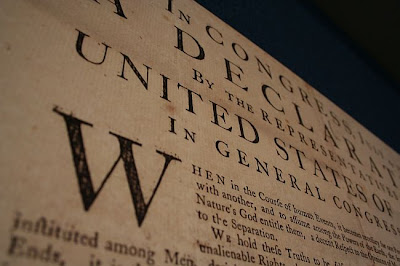
Today is the 234th anniversary of the adoption and publication by the Continental Congress of the United States of America of these words that never fail to stir my soul:

We hold these truths to be self-evident, that all men are created equal, that they are endowed by their Creator with certain unalienable Rights, that among these are Life, Liberty and the pursuit of Happiness… That to secure these rights, Governments are instituted among Men, deriving their just powers from the consent of the governed…

The conception of the vision was stained with hypocrisy from the beginning, most especially by the Continental Congress’s submission to the evil of slavery. Although Thomas Jefferson’s original draft of the Declaration contained a passage denouncing the slave trade, the delegates to the Congress removed that passage over Jefferson’s strenuous objection.

Also hypocritical was the failure of the men who adopted the Declaration of Independence to extend the vision of equality to females, as well as their blindness to the humanity of indigenous American peoples.

Nevertheless, the vision of a new human society characterized by self-governing representative democracy and universal human rights set down in the American Declaration of Independence and delivered to the world 234 years ago still remains always one of the greatest gifts any people has ever given to the rest of humanity.

The image of human rights, equality, and democracy described in the words of the Declaration has always given us a shining goal toward which to train our sights, and toward whose ultimate realization each generation is charged to progress further than the generations that came before.

The Declaration’s transcendent vision has often inspired the march across American history toward the just society. For example, Dr. Martin Luther King often referred to the Declaration of Independence in the soaring speeches in which he challenged America to live up to its own promise. The peaceful revolution for which Dr. King served as one of the chief spiritual voices and courageous leaders was nothing less than a cry for America to be what it was meant to be, must be, and will be.

Dr. King’s frequent invocation of the Declaration of Independence challenged the arrogance of brute power with the greater power of right and justice — thereby proclaiming its truths in exactly the same way and for exactly the same reasons that the patriots of 1776 presented the Declaration to the waiting world.

The Declaration of Independence is a living document, not a stale antique. It is just as needed and potent for us today as it was for the heroes who challenged the mightiest empire in the world with hunting rifles in 1776.

For example, today a sick perversion of the dream of 1776 daily oppresses the majority of the American people. It is a twisted distortion of America’s founding vision that holds “all men are created equal” to really mean “all men and corporations are treated equal” and “the consent of the governed” to really mean “the consent of the corporations.”

This distortion threatens to subordinate human rights to the rule of almighty profit and to put an end to self-governing rule by the people. The 234th anniversary of the Declaration of Independence is a perfect time to recall that the intent of that momentous day was to proclaim human rights for people, not soulless corporations; democracy, not corporate oligarchy; and equality, not inequality.

Let us remember who we Americans are. We are the political descendants of farmers, shop-owners, and laborers who left their farms and shops to challenge the might of the most powerful empire in the world with their hunting rifles; and did it not to follow a different monarch or duke or count, but in order to set up something unheard of in the world, a whole nation where there are no kings or royalty, but instead where the people are equal to one another and the people govern themselves.

Our national forebears of 234 years ago acted with unimaginable courage and audacity. They knew their odds of winning were extremely slight when they rebelled against the British Empire, but they did it anyway. They believed in unrestricted liberty and unrestrained democracy. They pledged to each other their lives, their fortunes, and their sacred honor. They dared to dream the impossible.

They won, and we are here 234 years later still believing in their dream. The passion for democracy that motivated their revolution has inspired revolutions against tyranny all over the planet for over two centuries, and still does so this very day. All across the world, oppressed peoples have believed that if our forebears could do it, they can do it too.

This is a monumental legacy that we inherited. I believe it is our duty to preserve and strengthen it for our posterity. Let us defend it against all the King Georges of today who still seek to stamp it out. Let us defend it so well as to ensure that our distant descendants will still be celebrating this birthday in a glittering future when the awesome goal of human rights, justice, equality, and democracy has been fully realized and all human beings live in brotherhood and sisterhood in a world of universal democracy, equality, justice, and peace.

Happy Independence Day.

[David Van Os is a populist Texas democrat and a civil rights attorney in San Antonio. He is a former candidate for Attorney General of Texas and for the Texas Supreme Court. To receive his Notes of a Texas Patriot — published whenever he gets the urge — contact him at david@texas-patriot.com.]

The Rag Blog

Posted in Rag Bloggers | Tagged , , , , , , , | Leave a comment

LITERATURE / ‘Punto Final’ : ‘Adios’ to Monsivais and Saramago

Carlos Monsivais (top), and Jose Saramago. Photos from el idiota de la familia, top, and La Nousfera.

Left writers as endangered species:
Adios to Carlos Monsivais and Jose Saramago

By John Ross / The Rag Blog / July 3, 2010

MEXICO CITY — Jose Saramago and Carlos Monsivais, two writers who shared an enthusiasm for popular struggle and a mutual disaffection with the Catholic Church, were buried a few Sundays ago amidst tumultuous public acclaim.

Saramago, the first writer in the Portuguese language to win the Nobel Prize for Literature, drew tens of thousands of mourners in Lisbon, as did Monsivais in his beloved Mexico City, a megalopolis whose foibles he chronicled for a half a century.

Although the two writers held much in common — they were both writers of conviction and commitment, Quijotes who tilted at the windmills of power — they were hardly peas in a pod.

Immaculately dressed even when visiting tropical jungles, Saramago was tall and almost gaunt — only a profound sadness saved him from generalized dourness. Monsi, as he was universally pet-named around here, was short and bumptious and rumpled. So far as can be determined, Monsivais was never photographed wearing a necktie.

If one were casting them for a play it would have to be Samuel Beckett’s Waiting For Godot with Saramago in the role of Vladimir (played by the master character actor E.G. Marshall in the original Broadway production) and Estragon, portrayed by the comic Bert Lahr, “the Cowardly Lion,” both of them stranded at a crossroads in time pondering Godot’s arrival or fretful that he (she?) may have passed by before they even got there.

Saramago was not even his name. Like his father, he was a Souza, born in 1922 in the impoverished Portuguese farming town of Azingha. As the writer lovingly recalled it in The Small Memories, his father had acquired the nickname of “Saramago,” a wild radish with which poor farmers fed the bellies of their families when times were tough on the land which they always were, and when the writer’s father went to City Hall to register the birth of his new son, town officials ascribed him the surname of Saramago. It fit.

Jose Saramago grew like dry grass, bereft and barefoot. There were no books in his home and no Nobel in his future. His first novel with the flaming title of Tierra de Pecado (“Land Of Sin”) appeared in the post-World War II rush and achieved little notoriety. He did not publish again for 30 years and then inexplicably exploded, producing 32 volumes in the two decades he had left on earth.

The Year of The Death of Ricardo Reis, which put him on the literary map in 1985, is in fact his only screed in which he confronts the Salazar dictatorship that kept Portugal in chains from 1926 through 1974, the longest ruling tyranny in Europe, eventually overthrown in the Revolution of Los Claveles (“The Carnations”).

For decades, Saramago was a militant of the clandestine Portuguese Communist Party, often blacklisted and dodging Salazar’s secret police. But Jose Saramago had little taste for ideological palaver, considering himself an “hormonal communist,” an identity he fiercely maintained until he breathed his last at 87 June 18th in Lanzarote, the Canary Islands, where he lived blissfully with his translator and collaborator Pilar del Rio in self-imposed exile.

Saramago abandoned Portugal in a moment of pique after a right-wing government, at the behest of the Catholic Church (which despised the writer) refused to nominate his Gospel According To Jesus Christ for an important European literary prize. In Saramago’s Gospel, Jesus, in the throes of the Crucifixion, denounces God’s crimes against the people.

The volume earned Saramago eternal damnation by the Catholic hierarchy, which never wearied of describing the writer as “a noxious weed who has placed himself in the wheat fields of the Evangelization.” The Church, the Nobelist complained, had even denied him the right to speak with god — even if he believed god did not exist.

Similarly, Carlos Monsivais was deemed an acute thorn in the side of the Mexican Church and the pompous, all-powerful Cardinal of Mexico City Norberto Rivera whom he lampooned without mercy. Raised in a Protestant family, Monsi suffered the brunt of Catholic intolerance and never missed a chance to strip bare the Church’s fork-tongued moral message.

“I am a communist everywhere but in Mexico, I am a Zapatista,” Jose Saramago proclaimed with pride when he touched down here in 1998, his Nobel Year. The Portuguese laureate won the hearts of many Mexicans when he traveled twice to Chiapas to meet with the Zapatista rebels in defiance of President Ernesto Zedillo who threatened the writer’s arrest and deportation under Article 33 of the Mexican Constitution that provides for the removal of any non-Mexican the president deems “inconvenient.”

“If we don’t go to where the pain and the indignation are, we are not alive,” Saramago protested. “We are compelled to go to Chiapas, the center of the pain, and look into the eyes of the Indians, the survivors of all the massacres of history.” When stopped by soldiers at a roadblock in Chenalho, Saramago stood tall: “I am going to visit the Zapatistas. It my right and my obligation.”

Accompanied by Monsivais, Saramago canoodled with Subcomandante Marcos and visited the village of Acteal soon after 45 Tzotzil Indians had been massacred by paramilitaries trained and armed by the Mexican army. As he hunkered down with the farmers to hear the stories of their Via Cruces, his long, grave face darkened and Saramago’s kindly features seemed to absorb all the pain of the people.

In 2001, the Nobelist returned to Mexico to welcome Marcos and the Comandancia of the Zapatista Army of National Liberation (EXLN) to the capitol. As the huge Zocalo plaza filled with “the people the color of the earth,” Saramago, a kerchief of solidarity knotted around his throat, mounted to the roof of Mexico City City Hall to display his jubilation. But later, the writer would chastise Marcos for his poison pen attacks on Spanish judge Baltazar Garzon.

Jose Saramago stood with the wretched of Fanon’s earth, always at the ready to express his solidarity with those the rulers single out for punishment, whether it be the Saharan activist Aminatu Haidar, starving herself to death at the Tenerife airport because Moroccan authorities would not let her return to her homeland (his final political act) or with the Palestinian people — Saramago was designated persona non grata in Israel after decrying the treatment the Zionists inflicted on the Palestinians as a holocaust of the dimensions the Jews had suffered under the Nazis.

Carlos Monsivais, an indefatigueable “cronista” of pop culture and its intersection with social struggle, broke into the business as a teenage participant in the watershed 1968 student strike at the National Autonomous University (UNAM) in which hundreds were slaughtered by the military in the days before the Olympic Games were to begin. Along with his longtime co-conspirator Elena Poniatowska’s Noche De Tlatelolco, Monsi’s Dias De Guardar (“Days To Treasure” – 1971) denounced this act of genocide before the world.

Carlos Monsivais’s identification with the barrios and colonias of this monstrous metropolis (he himself lived practically all of his life in the San Simon barrio of the working class Portales Colonia) was the truth serum that validated his chronicles of civil society. In his No Sin Nosotros (“Not Without Us”) Monsi’s words animated the civic uprising that emerged from the ashes of the 1985 8.1 killer earthquake that felled tens of thousands here.

Carlos Monsivais was a self-confessed addict of “lost causes” (a Mexico City university once honored him with a Doctorus of Lost Causes), a Quijote-like figment who embraced every social movement to flex its fist from the 1959 railroad workers strike to gay liberation.

A disciplined, stylish writer whose baroque syntax sometimes confounded critics, Monsivais authored 50 books in 50 years, many defending popular culture against the MacDonaldization of post-NAFTA Mexico — read his final judgment in the just-published Apocalipstick. Untranslated and virtually untranslatable because his chronicles are so focused on the little things, Monsivais remains largely ignored north of the border.

Like Saramago, Monsi was fascinated by the Zapatista rebellion, penning the prologues to five volumes of EZLN documents but later quarreled with Marcos over the Sup’s gung-ho support for “ultras” who took over the 1999-2000 UNAM strike.

Although once a member of the Young Communist League, Monsi was mostly a Groucho Marxist. Unlike his Portuguese comrade, Monsivais, a critic of the cult of Fidel and Che, was not an aficionado of the Cuban revolution. Instead he walked the twisty walk of Mexican social democrats like Cuauhtemoc Cardenas in whose foiled 1988 presidential campaign he immersed himself.

Monsi often spoke his truth from the podiums during Andres Manuel Lopez Obrador’s 2006 bid for the presidency, thwarted by Felipe Calderon and the right-wing PAN in the most fraud-mired Mexican election yet. Monsi later split with AMLO, decrying the inconveniences forced upon motorists during the left candidate’s three-week occupation of Reforma Boulevard.

Carlos Monsivais neither owned nor drove an automobile.

One of the few writers with face recognition on the streets of the city (dixit poet and pal Jose Emilio Pacheco), the sudden demise of Monsivais’s weekly assemblage of the absurdist stupidities of Mexico’s political class, “Por Mi Madre, Bohemios” (a poem his mother loved), will leave a profound pothole in the street life of Mexican journalism.

Carlos Monsivais died young enough to have been my contemporary (indeed, I was six weeks’ his senior) from pulmonary fibrosis, a disease that turns one’s lungs to cardboard. The cause of death is attributed to (a) Mexico City’s unbreathable air; (b) Monsi’s 20 beloved cats, one of whom once pissed on the world’s richest man Carlos Slim (Monsi’s family claims the cats killed him); (c) the dust and spores of antiquarian books for which the writer had an unquenchable Jones. Monsi did not smoke or drink anything more damaging to his health than jeroboams of Coca Cola.

Funerals and wakes with the “corpus presente” are organized quickly in Latin America. The climate contributes to quick spoilage and death is such a familiar feature of everyday life that when someone passes, everyone knows just what to do.

Hours after Monsi had gasped his last June 19th, friends and admirers gathered at the Museum of the City. “Viva Monsis!” echoed through the gloomy old building and white flowers showered his coffin. Mariachis tootled his favorite “rancheras” and “boleros” and writers reminisced into the dawn about their Monsi connection. Here’s mine:

A year or so after the great Mexico City earthquake that had brought me back here, I jumped into a car with Carlos Monsivais, Hector Garcia, the consummate photographer of social strife in Mexico, and Feliciano Bejar, an eccentric sculptor, bon vivant, and early environmentalist.

We were headed to Veracruz to stop the start-up of Laguna Verde, Mexico’s first and last thermo nuclear power plant. For five hours, the three artists meticulously reviewed every cantinade mala muerte” (dive) in Mexico City, a virtual journey through the underbelly of this urban jungle I had only recently settled in.

Down in Jalapa Veracruz, Monsi schooled me in the ordering of a “Tampiquena“, a slab of thin-sliced beef with intricate accessories that is a staple of northern Veracruz cuisine. I still can’t lunch on a tampiquena without wondering if Monsi would approve.

Over the years, I consulted with the writer frequently on the social implications of the “damnificado” (earthquake victims’) movement. We shared a mutual fascination for popular anti-heroes, masked wrestlers, and the narco lord Rafael Caro Quintero who once offered to pay off Mexico’s $100 billion buck foreign debt.

In August 1994, we were both trapped beneath a sagging tent after a monumental rainstorm had ended the Zapatistas‘ Democratic National Convention deep in the Lacandon jungle. Herded into the only wooden structure on the premises, a rustic library filled with the books of Monsivais and Poniatowska, Carlos fell flat on his face and twisted his ankle painfully. When we finally raised him from the deepening muck, he was plastered with mud from scalp to socks “just like at Avandaro” (Mexico’s Woodstock) he giggled.

Carlos Monsivais was blessed with peripheral vision — “his chronicles put the marginal in the center” commented Salvador Novo, the chronicler of Mexico City life in whose footsteps young Monsi eagerly followed. Carlos Monsivais was a collector of things and people whose personal coterie included the likes of Tongolele, a pseudo Polynesian drum dancer (she was born Yolanda Montes in San Francisco), the roly-poly ranchera idol Juan Gabriel, aging sex kitten Gloria Trevi, and the hardcore feminist torch singers Chavela Vargas and Paquita La del Barrio (“Rata De Dos Patas“).

An obsessive bibliophile and tchotchke collector, Monsi prowled the flea markets of La Merced and the Lagunilla for political and pop culture memorabilia and when his Colonia Portales’ home became so cluttered with exotic bric-a-brac, he opened a museum, “El Museo del Estanquillo” (a sort of neighborhood general store), in a handsome colonial building just down the street from my rooms in the old quarter of the city.

The Estanquillo is now filled with artifacts like Mexican lottery cards, Diego Rivera’s “Dream of Sunday on the Alameda” entirely fashioned from toothpicks, Spencer Tunick’s photos of 17,000 naked chilangos (Mexico City residents), comic books featuring the down-at-the-heels Family Burron, Zapatista dolls, facsimile Adelitas (women soldiers in the Mexican revolution), the words to popular corridos (ballads), and reportedly an x-ray of Emiliano Zapata’s skull. Dead or alive, Monsi continues to thrive just down Isabel la Catolica Street.

Although Carlos Monsivais was an ardent crusader for gay, lesbian, and transgender rights, he himself was barely out of the closet, never publicly professing his sexual preferences. Nonetheless, he was an apostle of the nation’s gay liberation movement and at the official state lying-in under the rotunda at the Bellas Artes fine arts palace, when Calderon’s cultural czarina Consuelo Saizar draped a Mexican flag over Monsi’s bier, his disciples laid the rainbow flag representing sexual diversity on top of it, inciting momentary scandal.

The incident recalled Frida Kahlo’s farewell in this same spot in 1954 when the painter’s devotees rolled out a red flag with an embossed hammer and sickle upon it to the horror of Mexico’s then toxically anti-communist president (Monsi had been a witness).

Felipe Calderon himself failed to attend Carlos Monsivais’s funeral, perhaps because his nemesis Andres Manuel Lopez Obrador was programmed to appear at the same hour. At the marking of Frida’s centennial three years ago, Lopez Obrador’s supporters chased the neophyte president across the esplanade of Bellas Artes, shouting “Frida Belongs To The Left!” and necessitating military intervention.

Inside the rococo palace, the crowd chanted Monsi’s name and clenched fists shot up from wall to wall – Benito Juarez’s theme song “La Paloma” replaced “The Internationale.” When it was suggested that Monsivais be carried off to lie in state in the great Zocalo plaza where dozens of members of the Mexican Electricity Workers Union were in the 60th day of a hunger strike protesting Calderon’s privatization of electricity generation, Saizar and Education Secretary Alfonso Lujambio quickly loaded the writer’s corpse into a hearse and drove it non-stop to the incineration ovens at the Spanish Cemetery.

The next noon at a celebration of Monsivais’s life mounted by the capitol’s left government, Poniatowska poignantly asked how the city would survive without its cronista? To add a kitsch touch to the ceremonials that certainly would have tickled Monsi’s funny bone, dozens of Hari Krishnas appeared on the steps of the Theater of the City, to chant and to dance for the writer’s lively spirit.

Neither Jose Saramago nor Carlos Monsivais were much invested in the afterlife. “First you are here and then you are not,” the Portuguese Nobelist considered. When queried about what came next, Saramago described the process as “Nada. Punto.” (“Nothing. Period.”)

Saramago and Monsivais were joined in death by another of Mexico’s premium left writers, Carlos Montemayor, whose ashes were stashed in his native Parral Chihuahua, Pancho Villa’s one-time place of rest, on the same Sunday (June 20th) that tens of thousands saw off his contemporaries in Mexico City and Lisbon.

Montemayor’s novels of Mexico’s guerrilla movements, including his masterpiece War In Paradise, remain achingly pertinent today. The Chihuahua writer’s analysis of the Zapatista struggle is perhaps the most penetrating study of that indigenous uprising.

Fluent in dozens of native languages, Montemayor translated Indian poets from all over Latin America and Mexico in addition to publishing translations of Sephardic literature, and the works of Virgil, Sappho, and the Carmina Burana (he performed as an operatic tenor). Carlos Montemayor’s passing along with Saramago and Monsivais underscores just how endangered a species left writers have become in this age of scoundrels, hacks, and Pharisees.

[John Ross has lived in Mexico City for the past quarter of a century. His El Monstruo: Dread and Redemption in Mexico City (“gritty and pulsating” — the New York Post) describes this difficult passage. You can register your complaints and/or admiration at johnross@igc.org.]

The Rag Blog

Posted in Rag Bloggers | Tagged , , , , , , , , | 1 Comment

Howard Zinn on the 4th of July : Put Away the Flags

Image by Darren Wamboldt / Shutterstock / Journal of the American Enterprise Institute.

The self-deception of exceptionalism:
Put away the flags

By Howard Zinn / July 3, 2010

[People’s historian Howard Zinn died on January 7, 2010. This piece was originally distributed by the Progressive Media Project in 2006. Though Zinn was writing during the presidency of George W. Bush, the message is certainly no less relevant today, as we observe the Fourth of July weekend throughout the land.]

On this July 4, we would do well to renounce nationalism and all its symbols: its flags, its pledges of allegiance, its anthems, its insistence in song that God must single out America to be blessed.

Is not nationalism — that devotion to a flag, an anthem, a boundary so fierce it engenders mass murder — one of the great evils of our time, along with racism, along with religious hatred?

These ways of thinking — cultivated, nurtured, indoctrinated from childhood on — have been useful to those in power, and deadly for those out of power.

National spirit can be benign in a country that is small and lacking both in military power and a hunger for expansion (Switzerland, Norway, Costa Rica and many more). But in a nation like ours — huge, possessing thousands of weapons of mass destruction — what might have been harmless pride becomes an arrogant nationalism dangerous to others and to ourselves.

Our citizenry has been brought up to see our nation as different from others, an exception in the world, uniquely moral, expanding into other lands in order to bring civilization, liberty, democracy.

That self-deception started early.

When the first English settlers moved into Indian land in Massachusetts Bay and were resisted, the violence escalated into war with the Pequot Indians. The killing of Indians was seen as approved by God, the taking of land as commanded by the Bible. The Puritans cited one of the Psalms, which says: “Ask of me, and I shall give thee, the heathen for thine inheritance, and the uttermost parts of the Earth for thy possession.”

When the English set fire to a Pequot village and massacred men, women and children, the Puritan theologian Cotton Mather said: “It was supposed that no less than 600 Pequot souls were brought down to hell that day.”

On the eve of the Mexican War, an American journalist declared it our “Manifest Destiny to overspread the continent allotted by Providence.” After the invasion of Mexico began, The New York Herald announced: “We believe it is a part of our destiny to civilize that beautiful country.”

It was always supposedly for benign purposes that our country went to war.

We invaded Cuba in 1898 to liberate the Cubans, and went to war in the Philippines shortly after, as President McKinley put it, “to civilize and Christianize” the Filipino people.

As our armies were committing massacres in the Philippines (at least 600,000 Filipinos died in a few years of conflict), Elihu Root, our secretary of war, was saying: “The American soldier is different from all other soldiers of all other countries since the war began. He is the advance guard of liberty and justice, of law and order, and of peace and happiness.”

We see in Iraq that our soldiers are not different. They have, perhaps against their better nature, killed thousands of Iraq civilians. And some soldiers have shown themselves capable of brutality, of torture.

Yet they are victims, too, of our government’s lies.

How many times have we heard President Bush tell the troops that if they die, if they return without arms or legs, or blinded, it is for “liberty,” for “democracy”?

One of the effects of nationalist thinking is a loss of a sense of proportion. The killing of 2,300 people at Pearl Harbor becomes the justification for killing 240,000 in Hiroshima and Nagasaki. The killing of 3,000 people on Sept. 11 becomes the justification for killing tens of thousands of people in Afghanistan and Iraq.

And nationalism is given a special virulence when it is said to be blessed by Providence. Today we have a president, invading two countries in four years, who announced on the campaign trail in 2004 that God speaks through him.

We need to refute the idea that our nation is different from, morally superior to, the other imperial powers of world history.

We need to assert our allegiance to the human race, and not to any one nation.

© 2010 The Progressive

[Howard Zinn (1922-2010) authored many books, including A People’s History of the United States, Voices of a People’s History (with Anthony Arnove), and A Power Governments Cannot Suppress.]

Source / The Progressive / CommonDreams

The Rag Blog

Posted in RagBlog | Tagged , , , , , , | Leave a comment

Check out the new Rag Blog Digest, online version — with links to all the articles from the last week.

Posted in RagBlog | Leave a comment