Cannabis Commerce : Wasted Potential

Graphic from sloshspot.

CLICK ON IMAGE TO ENLARGE

Put that in your pipe and smoke it

Love it or hate it, people smoke marijuana — lots of it. In some states marijuana consumption and possession have been decriminalized, and even legalized for medicinal purposes. But, have you ever wondered how large the economics of Marijuana were? Us too. As a result, we decided to put together this graphic, which illustrates the popularity of marijuana consumption, the federal tax dollars spent to keep marijuana illegal, and the possible tax revenues that could be generated if marijuana production were legalized and taxed like any other agricultural product. — sloshspot

No matter what sort of spin you put on the issue, ignoring the revenue-creating potential of taxing cannabis sales — which will continue, legally or otherwise — hardly seems prudent when we live in an era in which local governments can’t afford to fix potholes or hire schoolteachers. — Brand X

Thanks to Janet Gilles / The Rag Blog / Posted November 30, 2009

Posted in RagBlog | Tagged , , , , , | 3 Comments

Jonah Raskin : 40 Years Later: The Assassination of Fred Hampton

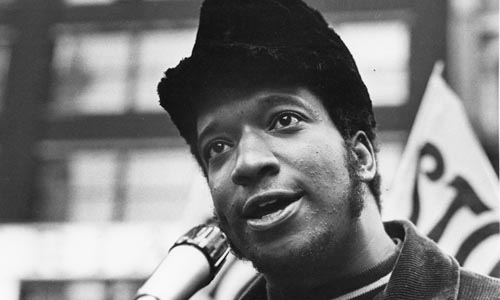
Black Panther leader Fred Hampton in 1969. Photo by Paul Sequeira.

I will never forget…
The assassination of Fred Hampton

I protested in New York with hundreds of other people, all of us outraged… I was arrested and beaten on 51st Street opposite St. Patrick’s Cathedral by plainclothes police officers, and, along with dozens of other demonstrators, locked up in jail.

By Jonah Raskin / The Rag Blog / November 29, 2009

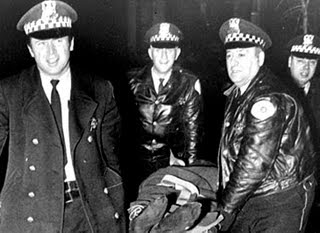
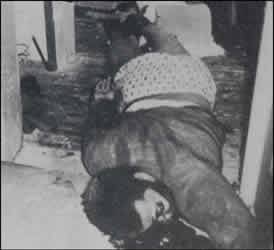
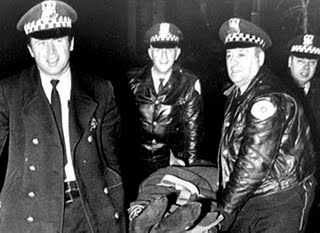
See photos from the murder scene, Below.

I have a special relationship to Fred Hampton, the charismatic leader of the Black Panther Party who electrified crowds in Chicago in the late 1960s with fiery comments such as “You can jail the revolutionary but you can’t jail the revolution.”

I first heard about Hampton — “Chairman Fred” as he was affectionately called — in the summer of 1969 when I was working in the national office of Students for a Democratic Society (SDS) in Chicago, where Hampton was born in 1948, and where he joined the Black Panther Party at the age of 20 in 1968.

That summer I wrote a pamphlet about him and about the attacks on the Panthers that were mounted by state and federal law enforcement. Six months later — on December 4, 1969 — Hampton and fellow Black Panther Mark Clark were murdered by the Chicago police in an apartment at 2337 West Monroe. Five days after those murders, on December 9, I protested in New York with hundreds of other people, all of us outraged.

At about 7 p.m., I was arrested and beaten on 51st Street opposite St. Patrick’s Cathedral by plainclothes police officers, and, along with dozens of other demonstrators, locked up in jail. All that night and into the wee hours of the next morning I was beaten by at least a dozen police officers in several precincts in Manhattan. My hands were handcuffed behind my back. I was punched, pushed, kicked, clobbered, and struck with a variety of blunt and sharp instruments, including truncheons. At the time it felt like torture.

My lawyer, Paul Chevigny of the American Civil Liberties Union, who specialized in cases of police brutality, said then that the beating that I received was the worst beating he had ever seen at the hands of the New York police. To document the case that he hoped to bring against the police on charges of brutality he took dozens of color photos of me that showed every cut, laceration and bruise — I was black and blue and swollen from head to toe — but someone broke into his law office and stole the photos.

When I appeared before a judge that December I was charged with attempted murder of a police officer, though I thought the police had been trying to murder me, or at least to make me feel that my life was in danger. “If you want war, we’ll give you war,” one of the New York City police officers who beat me said. He was a veteran of the War in Vietnam who believed in the war, and he carried out his own personal war against anyone and everyone who was opposed to that war.

In fact, it was a time of war and not only in Vietnam. America itself seemed to be on the brink of civil war in those violent days at the very end of the 1960s and on the cusp of the 1970s, and as President Nixon, FBI Director J. Edgar Hoover, and U.S. Attorney General John Mitchell launched a program to combat the tide of rebellion in every possible way.

The murders of Fred Hampton and Mark Clark, and the attacks on the Black Panther Party all around the country, added up to a war with real guns and real bullets. It was accompanied by a public relations campaign that the forces of law and order in the Nixon administration aimed at black militants and at their white supporters: a rag-tail army of rebels, resisters, rioters, anarchists and saboteurs who did everything in their power to disrupt the orderly, day in and day out operations of the American Empire.

The Assassination of Fred Hampton: How the FBI and the Chicago Police Murdered a Black Panther, by Jeffrey Haas. Lawrence Hill Books; $26.95.

Recently, I had the opportunity to revisit those turbulent times, and to rethink the murder of Hampton. Forty years is a long time, but my memories of that era are crystal clear. I was also aided and abetted by The Assassination of Fred Hampton, a new and engaging book by long-time radical lawyer Jeff Haas who spent more than a decade aiming to uncover the government conspiracy against the Panthers and to see justice done.

Haas brought a civil suit against the real criminals in the case such as Edward Hanrahan, the Illinois State Attorney and a Harvard Law School graduate, who dispatched 14 heavily armed Chicago police officers to 2337 West Monroe on December 4, 1969, at 4 a.m.. “Heavily armed” is no exaggeration. In addition to shotguns and handguns, the officers had a Thompson machine gun, wielded by officer Joe Gorman.

One can only imagine what Gorman and his fellow police officers thought they were doing, but it seems possible that they saw themselves as actors in a movie about a Chicago gangland massacre in which they played the part of gangsters with police badges.

The seven Panthers who survived the raid on West Monroe were indicted by an Illinois grand jury on charges of attempted murder and aggravated battery, but the indictments were dismissed. And that was only the beginning of a series of legal battles that went on and on and on, into the 1980s.

In The Assassination of Fred Hampton Haas shows that an undercover police agent infiltrated the Illinois Panthers, that he became Hampton’s bodyguard, and furnished to law enforcement officials vital information about Hampton, Clark and their comrades. The Chicago police had a floor plan of Hampton’s apartment, and knew exactly where he would be sleeping. Someone, perhaps the undercover agent, drugged Hampton so that he would be asleep and unable to fire a shot.

Haas also shows that the police had a green light from FBI Director Hoover who created the FBI Counterintelligence Program (COINTELPRO), and who sent a directive to Marlin Johnson, the head of the Chicago FBI office, in which he ordered operatives to “disrupt, expose, misdirect, discredit, or otherwise neutralize” the Panthers, and “prevent the rise of a messiah who could unify and electrify the militant black nationalist movement.”

It didn’t matter that Hampton wasn’t a black nationalist. He was messiah-like and he was young. He was a Panther, and the Panthers, who carried guns, used the rhetoric of urban guerrillas, urged members to “Off the Pig” in the parlance of that era. In fact, on November 13, 1969, two Chicago police officers were ambushed and murdered. The FBI pointed an accusing finger at the Panthers, and the local police carried out their directive. One Panther would testify that on December 4, while inside the apartment at 2337 West Monroe, he heard a police officer say, “If Black Panthers kill police, police will kill Black Panthers.”

The Assassination of Fred Hampton has plenty of drama both in and out of the courtroom, and at times it reads like a suspenseful Perry Mason case, though it was, of course, far more political than any case Perry Mason ever handled and with more far-reaching implications. Hanrahan was never able to run successfully for public office in Chicago after Hampton’s murder, and Panthers as well as the African American community at large found solace in his failure. But there was no real justice, and no happy ending of the sort Mason always enjoyed at the end of a case.

The surviving occupants of the Panther apartment filed for damages against 28 state and federal law enforcement officials. Haas was their lawyer. The complaints alleged violations of constitutional rights. The jury trial lasted 18 months, generating a 37,000-page transcript. At the close of the case, a District Court granted verdicts in favor of the federal and most of the state defendants. Neither the judge nor the jury wanted to believe that the government had actually conspired to murder two men.

After I was beaten by New York City police officers some of my friends assumed that I was to blame, and that I deserved the harsh treatment I received. After all, they said, I had rioted in the streets. I had damaged property and I was violent. That the police who beat me were no less violent many friends could not and did not see or understand. The police had cracked my skull — I required dozens of stitches — and had beaten me to a bloody pulp, but in the eyes of many citizens the police were simply doing their job and enforcing law and order.

Forty years later, I am not sorry that I rioted in the streets of New York. I am, of course, happy to be able to say that the charges of attempted murder against me were dropped when I agreed to drop the case against the police for brutality.

When police officers murder men in their sleep one can’t simply go on living as though nothing has happened. Indeed, something very terrible happened in America when Fred Hampton and Mark Clark were assassinated. I have not forgotten them, and I have not forgotten what happened to me on December 9, 1969. The stain is still there on the national conscience. That is how I feel now, 40 years later.

Perhaps if you read Haas’s relentlessly honest book, and also see reproduced here the photos of the Panther apartment with bullet holes in the walls, and the bloody mattress of the bed in which Hampton lay asleep, you will not forget either.

[Jonah Raskin is the author of The Mythology of Imperialism: Revolutionary Critique of British Literature and Society in the Modern Age (Monthly Review Press), and American Scream: Allen Ginsberg’s “Howl” and the Making of the Beat Generation (University of California Press.]

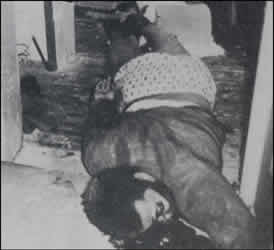
Fred Hampton murder scene. Photos, from top, by Paul Segueira, from the Chicago Police Department, and from AP / World Wide Photos.

The Rag Blog

Posted in Rag Bloggers | Tagged , , , , , , , , , | 3 Comments

Legacy of the Neocons : Understanding our Economic Fix


Understanding our economic fix:
The role of neocon economics in damaging the economy and creating unemployment

By Sherman DeBrosse / The Rag Blog / November 29, 2009

If Republicans can blame economic problems on Democratic spending, they will have a leg up in their efforts to launch another attack on entitlements. By next year, our debt will be larger and could be a major political issue. Democrats need to explain how it got so large and to tie some of it to recent military adventures.

There are signs that the Obama administration is “open to reform” as a means of reigning in debt. That term has the same meaning as the IMF’s favorite term, “structural adjustment,” which means making the little guy pay for the mistakes of others farther up the food chain. We may have to swallow some entitlement reduction, but it should not take place without an end to the Bush tax cuts and the institution of excess profits taxes on the energy industry and on any firm’s transactions in hedge funds and derivatives.

Last week, Texas Representative Kevin Brady released the latest Republican trial balloon — a clever attempt to capitalize on growing middle class rage that government is helping irresponsible bankers while unemployment continues to rise. He blamed it all on Timothy Geithner and demanded that the Secretary of the Treasury resign. Geithner correctly reminded Brady that the economy was bad due to Republican policies.

If the GOP can combine economic populism with their patented right-wing populism, they could turn 2010 from a good Republican election year into a fantastic one. Democrats had better start educating the public by explaining how neoconservative economic policies landed us in this mess. Yes, they need to don some sack cloth and ashes because some of them followed the Republican lead.

Dimensions of the problem

Neoconservative economic policies did so much harm to our economy and financial system, that it would be foolish to expect a healthy recovery anytime soon. New York University economist Nouriel Roubini, who predicted the collapse of our economy, is now saying the worst is yet to come. There will be still more unemployment, and many of the lost jobs will not return.

Randy Zisler, a leading real estate expert, warns that there will be “a crisis of unprecedented proportions” in commercial real estate next year. Federal Reserve Chairman Ben Bernanke took the unusual step of saying that economic recovery is bound to be slow and unspectacular because the banks are doing very little lending and there are serious ongoing problems in the real estate sector. Unemployment would persist.

All of this was to be expected. In 2008, we came very close to a depression, and the financial system was very close to an Armageddon. In the last 12 months, the FDIC has taken over 150 banks, and the Treasury loaned TARP money to 690 financial institutions, 27 of which then had to be seized or faced seizure by federal regulators.

Given these facts, the Obama administration deserves high marks in dealing with the economy. The situation it inherited was so grim that there was widespread speculation that the United States might still face a decade long slump similar to what happened in Japan. But even the conservative Economist is now saying we have dodged that bullet. But it adds that “recovery will be a longer slog than many expect.”

The Great Recession turned out to be the kind of downturn that is marked by extraordinarily high unemployment. Employment is a lagging indicator of recovery, but in this sort of recession it lags a very long time. Of course, the delay in reclaiming jobs means that what recovery there will be is not likely to be strong. Larry Summers covered this sort of recession in his Ph.D. dissertation. Obama knows this, and has not gone to great pains to explain why recovery will be slow and, for a time, relatively jobless.

The stimulus program and the stress tests did help to restore confidence and preserved many jobs. It pulled us back from the precipice of a depression, but it is unlikely Obama will be given credit for this. In the short term, the Republicans will probably be successful in blaming Obama for a jobless recovery.

Obama’s “holy shit” moment

As soon as Obama took office, he had what a close advisor called his “holy shit” moment. His advisors told him the economy was on the verge of sliding far lower and that the financial system was badly damaged. Larry Summers, his senior economic advisor, had long ago proven that the old idea that unemployment usually lasts only three or four months for an individual was dead wrong.

Obama is being very cautions in claiming that the recession is over. The recent upward movement on Wall Street does not reflect a return to health. The averages are going up because low U.S. interest rates and a weak dollar have encouraged people to borrow dollars to speculate in assets and commodities. The current speculative bubble cannot last, and it is not a good development for the world economy.

It is more likely that last quarter’s GDP growth was a fluke and that we may have a few more bad quarters. There was very little increase in industrial production. More than 90% of the growth came from stimulus, much of it from the one-shot cash for clunkers. Some of the increased consumer spending came from a sharp dip in the savings rate. However sales are still slow. Some of the recently reported improvements in earnings came from one-time economies and laying people off.

The economy is a bit like a car battery that has seen better days. In this case, two cells are badly damaged: housing and manufacturing are weak. It will take years for housing values to reach former levels, and continual foreclosures and resales at lower prices will have a negative impact on new home starts. More people are facing foreclosure now than last year. There is about $3 trillion in outstanding mortgages, and $1.4 trillion will come due for maturation in the next four years. Zisler thinks that up to $750 million of that will be in defaults.

We also know that a healthy housing market requires a sound financial system, and our financial system is very fragile, having barely escaped destruction. Recently, an economic observer noted that the fact that so many people are not paying on mortgages might, in the short term, be good because they are spending the money on goods and services. We do not need that kind of optimism. There is some good news. Randy Zisler thinks some improvement in housing values might begin in 2011.

Premature optimism

Recently, the manufacturing sector showed a 9% gain in productivity. That was because industries were doing more with fewer workers. Gains at that level cannot be sustained. The GDP rose by 3.5%, but most of that did not have to do with manufacturing. There are few signs that the manufacturing sector will revive soon, and we note that General Motors, using federal funds, is exporting more jobs. Chrysler, also using federal funds, is bringing in more foreign made engines.

We probably cannot expect to get the manufacturing sector to improve beyond where it was two years ago. The long-term prospect is for exporting more jobs.

A top expert’s view

Robert Shiller of Yale noted that we spent far too little on the stimulus package. Gross national production was projected to have fallen two trillion short, and it was thought necessary to fill the gap with about $1.2 trillion. Given the velocity of money when invested in infrastructure and some other stimuli, the gap could be filled. Unfortunately, politics forced the Obama Administration to settle for less than $800 billion, and much of that was in tax cuts whose multiplier effect is far short of one. The drop in production and the decreased spending rates together added well above six million to the unemployment roles.

Republicans had played the politics of “No!” so well, that Obama could not go back to the well for a second stimulus. It was needed when it became clear that consumption would fall off by one trillion. That is a hole the administration could not fill.

Shiller identified a serious structural problem. Our economic system increases the wealth share of those at the top and diminishes that of almost everyone else. The root problem is that most American workers have not seen an increase in real wages in 20 years, and the ownership share of the vast majority has been declining. The problem is not moral, it is economic. With no increase in real wages, the middle class cannot increase its consumption so a consumer-driven revival is not possible.

Shiller has suggested that if the gap between rich and the rest of us is not narrowed in the next 30 years, there will be such great frustration, resentment, and disillusionment that the viability of our political system could be threatened. His Yale colleague Bruce Judson warns that our current economic problems could lead to the “penny auctions” and other leftist populist outbreaks that occurred in the Great Depression.

He enumerated the problems.

  1. High unemployment. It stands at 10.2 %, which amounts to an actual 17.5. Next year, at this time, it is likely to be 8.5 or 9%, somewhere around an actual 15%.
  2. A shrinking middle class. Good paying manufacturing jobs seem to be disappearing. This results in “status anxiety,” which brings about sharp political change.
  3. The average man has not seen an increase in real income since 1980.
  4. The top 1% controls 23% of income — and far more of property. This is the same as in 1929. The lowest reported income, according to flawed census data, in this 1% is 400,000 a year. It is probably much higher.
  5. One fourth of mortgages are in danger of being foreclosed on. As long as people saw the value of their homes rising, they had hope for improving their situation and even having enough to help their children. With the collapse of the housing market, Judson thinks, people were forced to come to terms with all the other economic and social threats.

Leaving aside the social and moral implications of these facts, all of this indicates that the vast majority of Americans are not in a position to revive the economy through a new surge in spending. They lack the money, are maxed out on credit, and are worried about their long-term prospects. Economists tell us that the Great Depression was created by under-consumption. Even in terms of the ability to consume food, the data is shocking. The number of households facing food insecurity rose 31% from 2007 to 3008. That comes to 17 million families that are having trouble putting food on the table.

The credit squeeze

Businesses of most sorts have been having problems getting access to capital. One reason why bank money was and is not available to manufacturing firms is that banks expected to consistently enjoy 20% returns on credit cards and large returns on investments in exotic instruments. Caps should be placed on credit card rates, and excess profits taxes gradually phased in on profits from extraordinary returns earned through investments in hedge funds and the derivatives markets. This would apply to big manufacturers and oil companies that are now trading in derivatives and hedge funds. This problem underscores the fact that the problems of the economy and those of the financial system are intertwined.

A mini-stimulus?

Another stimulus package is needed, but President Obama cannot push for one because the Republicans, abetted by the mainstream media, have the voters so worried about the deficit and big government; they have also convinced many that the stimulus is not working. When the last of the stimulus money is spent in 2011, we can expect a 2% drop in the GDP because the stimulus is no longer present. The Democrats might consider a mini-stimulus comprised of elements the Republicans will find difficult to denounce. It would include:

  1. Incentivize firms to hire new workers by waiving payroll taxes on new hires by giving a 10% tax credit on new payroll. This should be done in terms of total payroll rather than new hires so that employers will not fire some people so they can hire others. New firms might get a 50% payroll tax credit, following the 1977 pattern. It has been estimated that these steps could add 4% to the active work force.
  2. Passage of something approaching universal health care would be a major boost for the industrial sector. But if Congress and the administration continue to avoid serious cost cutting it will turn out that they were practicing bad politics and bad economics.
  3. Pass HR 2568, the fairness and Transparency in Contracting Act, which will redirect back to small businesses about $100 billion in stimulus money intended for them but somehow awarded to big firms.
  4. We should play to our strengths by providing generous tax breaks for research that will lead to higher end goods. By 2015, China will replace us as the world’s largest manufacturer. We will remain a major manufacturer, specializing in high end-goods.
  5. More tax incentives should be created for self-employed business owners.
  6. There are at least two impediments to capitalizing new small businesses. Banks charge a 7% commission fee for Initial Public Offerings, while the IPO fee in Europe is 4%. There is less interest in these IPOs because of the surge of on-line brokerage and the tendency of high frequency traders to rely on computer driven strategies and not research new firms. For those reasons new firms should receive tax credits for the IPO fees they pay banks. People who invest in IPOs should receive tax credits for 10% of their investments up to a total of $50,000 invested in IPOs. There should be incentives to carry out the SEC’s suggestion that a new market segment be established for IPOs that would not have automated trading and would have fixed commissions. That might encourage research into new firms.
  7. For a 12-month period, reduce federal taxes on profits earned abroad that are repatriated and invested creating jobs in the United States.
  8. Some of the breaks for business should be balanced with tax breaks for firms that go to a shorter work week and the enactment of some parts of the Employee Free Choice Act, at least to substitute substantial penalties for existing minor fines for illegal anti-union certification tactics. Speed up elections and mandate card check certification in cases where companies violate worker rights, particularly when a worker is fired for union organizing activities.
  9. Create a bipartisan commission to weigh ways of introducing the Value Added Tax. The commission should recommend ways to lower other taxes gradually as the VAT is phased in. This would do much to establish a level playing field with many GAAT countries. This is the method other countries use to indirectly subsidize exports. Unfortunately, it is a regressive tax. Perhaps the commission would reduce taxes on ordinary savings such as bank accounts, CDs, and retirement instruments. The same Commission should look into the repeal of legislation that gives American firms tax advantages for exporting capital or creating jobs abroad. The last effort to do this was the Hartke Bill that was vetoed by Gerald Ford.
  10. Careful plans should be drawn up now to create public service jobs if the Bush Great Recession turns out to be like Japan’s long ordeal with a sluggish economy and high unemployment.

In my next column I will examine the near destruction of the financial system.

[Sherman DeBrosse is a retired history teacher. Sherm spent seven years writing an analytical chronicle of what the Republicans have been up to since the 1970s. The New Republican Coalition : Its Rise and Impact, The Seventies to Present (Publish America) can be acquired by calling 301-695-1707. On line, go here.]

The Rag Blog

Posted in Rag Bloggers | Tagged , , , , , , | 9 Comments

A Dog’s Life : America’s Financial Mess

A walk in the park: Scout and Missy take a breather. Photo by Larry Ray / The Rag Blog.

A walk in the park:
A Felliniesque view of our financial mess

By Larry Ray / The Rag Blog / November 27, 2009

Walking my dogs under a crisp, cool, bright blue sky a few days ago in a nearby wooded park, I had an unusual, Felliniesque daydream. It all started when the peace and tranquility of the walk was broken by someone talking loudly on his cell phone, for all to hear, which is all too common today. A young fellow was totally absorbed in a verbal replay of his loss, recent physical pain and a love affair gone badly. He urgently shouted the details into his cellphone.

We picked up our pace to get away from the intrusion, but it seemed that he had decided to take the same trail behind us. He was detailing how he had cracked his ribs in some sort of a fall and how that had not hurt nearly as much as breaking up with the woman he still loved. He finally branched off on another trail leading away from us, the cell phone drama slowly fading out.

A relaxed free-form daydream began as we walked the familiar path. It turned into a Woody Guthrie moment for me. In a surprising flash, I had the title for a new country song: “That fall broke my ribs, but she broke my heart!” I hummed part of a stock three chord country western melody and tried out a couple of lines. It slowly became the sound track for the open-ended Fellini movie getting underway in my head.

It’s getting tough out in this old world/
my back’s against the wall/
The bank just took my house away/
now them credit cards ain’t no good at all/
When I fell off that stock room ladder/
and landed hard on the concrete floor,/
They laid me off that afternoon…/
and I don’t work at Walmart any more/
Then my wife took off and left me/
everything is falling apart/
That fall broke my ribs…/
but she broke my heart.

Hell, I’ve heard worse, and Woody might even have liked it. I bet the guy on the cell phone probably would have liked it too. I pictured this young man, working class, maybe in his late-twenties, probably a high school graduate, with maybe even a year or so of community college, as a metaphor for greedy banks, self-serving spineless politicians and millions of average folks just like him.

The daydream was also being fed with scenes from “The Card Game” a Frontline-New York Times co-production on PBS I had watched the night before. It laid bare the whole sorry, wild west story of the evolution of the American credit card and the half-hearted attempt to finally rein it in after almost a half century of unregulated abuse.

Frontline showed how banks have gotten away with predatory credit card practices and how a proposed Credit Card Control Act of 2009 was written with gaping loop holes that banks can use to continue exploitation of credit card holders… and still generously fund political campaigns.

I bet if I had actually talked to the fellow in the park and learned more about him other than what I was forced to overhear, he would have been a perfect example of what credit card issuers call the “unbanked market.” People living from paycheck to paycheck who use credit cards as though they were money… money that people refuse to realize they don’t have.

The whole credit card industry is designed to trap and exploit those people who don’t read the fine print in their contracts and who run up huge balances, making only minimum payments from one card to another. They rack up ever-changing penalty fees with huge loan interest rates in a scheme better than Machiavelli could have ever imagined. According to the Federal Reserve Bank, 40% of American families spent more than they earned in 2008.

Certainly no bank has forced anyone to use a credit card. But a “free” credit card seems so innocent, so easy, and “we can always just pay off the balance” is a reassuring rationalization. Credit cards quickly became as American as imitation apple pie with two-thirds of the population owning one or more in 2008. Too many folks were living high on the hog with bank credit card loans that weren’t legally considered “bank loans,” thereby allowing them to remain unregulated with nary a peep from Capitol Hill. Most all existing governmental financial regulation put in place after the Great Depression of the 1930’s had already been peeled away by the 1990’s.

Even though there were no Flappers or speakeasies, the giddiness of our recent boom times was just like the 1920’s, and just as imprudent. Americans with only modest incomes had learned to spend like they were making six figure salaries. Wallets are even designed to hold a dozen or so credit cards that slip in and out of an accordion fold of pockets for the mag-striped mañana money.

At the same time, home values were increasing at a record rate with no end in sight… but who was looking? Things seemed so good that second mortgage home loans were used to pay off huge credit card balances. Then in a blink, before the Republicans could get out of office in time, the inflated silver-dollar-studded Potemkin village blew over like a long line of doomed dominoes.

In no time folks were shouting their own Woody Guthrie lyrics over cell phones across the country. Homes now were valued at half of what they were mortgaged for. Americans again were jobless, out on the streets and forced to face harsh realities. Eighty-eight million accounts and credit lines, representing $751 billion in credit, have been closed since September of 2008.

My daydream in the park shifted to a classic Fellini scene with two huge cauldrons of smelly political broth bubbling and stewing up on Capitol Hill. They were both made from the same old soup stock. Senators in stained, flowing robes warned that the health care insurance gumbo may ultimately be indigestible. On an adjoining burner the low fat, credit card control consommé seemed way too thin but the Senators weren’t in the least concerned. A parade of morbidly obese, angry people brandishing illegible placards passed by the cauldrons and Senators, demanding that they be left alone to just govern themselves. “No big cauldrons. No big cauldrons,” they chanted.

The daydream is then jarred by a ticker tape crawl across my field of vision with endless data in large scrolling letters, “In September 2009 Americans currently owed $917 billion on revolving credit lines and $69 billion of it was past due, according to Federal Reserve statistics.” In the daydream I then realized that was just a couple of months ago, and I was jarred back to reality briefly. Soon the dream slowly returned as a classic Fellini black and white wide shot of a totally empty beach with waves slowly rolling in and I expected to see “Fine” or “The End” in Italian dissolve in over the meaningless empty beach.

Instead, the Border Collies were tugging insistently on the leash, literally yanking me out of my free-running reverie. The guy that had been shouting into his cell phone was now walking toward us, looking down at the edges of the path. He nodded to me and asked, “You haven’t seen a ring of keys have you?” I said I really hadn’t been paying much attention but that I would keep an eye out for them. For a moment I wondered it there was yet maybe another song in that somewhere? How about, “I was looking for my keys while they towed away my truck.” Woody, America could use you about now.

[Retired journalist Larry Ray is a Texas native and former Austin television news anchor. He also posts at The iHandbill.]

The Rag Blog

Posted in Rag Bloggers | Tagged , , , | 2 Comments

John Ross : A Mexican Revolution Every 100 Years?

“Revolución.” Woodcut by José Guadalupe Posada / Biografías y Vidas.

1810! 1910! 2010?

A Mexican Revolution timeline

By John Ross / The Rag Blog / November 26, 2009

MEXICO CITY — Fact: Every 100 years on the tenth year of the century, Mexico explodes in extravagant social upheaval. In 1810, this distant neighbor nation declared its independence from the Spanish Crown, signaling monumental bloodletting — hundreds of thousands died, mostly people the color of the earth, fully 10% of the census.

In 1910, the Mexican revolution, the first massive uprising of the landless in the Americas, detonated in a geyser of blood and before it was done, a million were dead and a million more had been driven into permanent exile north of the border.

The 100-year timeline has triggered intense speculation about what’s ahead for Mexico in 2010.

Whether the 100-year cycle is a measure of Mexico’s political metabolism or merely an accident of numbers has scholars scurrying back to their history books. Certainly objective conditions for insurrection are rife. Mexico is wracked by the deepest economic contraction since the Great Depression, millions are out of work (one estimate calculates real unemployment as 40%), 72,000,000 out of 107,000,000 Mexicans live in and around the poverty line (three daily minimum wages), and income disparity is comparable to Africa. The parties of the left, right, and center are universally mistrusted and elections are tainted with fraud, canceling out a political solution to the ongoing crisis.

President Felipe Calderon who won high office in the fraud-tarred 2006 election is as unpopular as dictator Porfirio Diaz was a hundred years ago (Diaz himself repeatedly stole elections) and, like Diaz, he is spending billions to stage next year’s Bicentennial celebration of the War of Liberation and the 100th birthday of the Mexican Revolution. The Dictator’s allocation of the nation’s social budget to mark the first hundred years of Independence in 1910 trip-wired his downfall.

Yet memories of the enormous human tragedies that accompanied 1810 and 1910 passed on from one generation to the next tend to make Mexicans cautious about the “R” word and revolution in 2010 is dismissed by many radicals as mere wishful thinking.

The notion that 2010 would usher in a new revolutionary chapter in Mexico’s complicated history was first advanced by the Zapatista Army of National Liberation’s (EZLN) charismatic mouthpiece Subcomandante Marcos in the Sixth Declaration of the Lacandon Jungle issued in June 2005. The “Sexta” called for the writing of a new revolutionary Mexican constitution in 2010, a process to be accompanied by prolonged social struggle.

To keep the pot boiling, the Zapatistas insisted upon the unity of all revolutionary forces and the creation of a mechanism — the Other Campaign or “La Otra” — that would develop and implement a plan of action. Although “La Otra” was marginated by its own sectarianism and brusque polemics with the electoral left, the Zapatistas‘ Other Campaign continues to look towards 2010 as a revolutionary watershed.

At a meeting of “Otras” from eight states and the federal district this past March in Tampico, Tamaulipas, activists considered the prospects for renewed revolution in the coming year. There was general consensus that 2010 constituted an historical opportunity that could not be passed up but some participants stepped back from proclaiming a new revolution.

Carlos Montemayor, the nation’s top scholar of guerrilla movements, even declared the 2010 timeline to be a “trap” that the “mal gobierno” (“bad government”) will capitalize on to infiltrate provocateurs into social movements and militarize the country. Montemayor reminded the Otras and Otros that the War of Liberation and the Mexican Revolution only broke out in 1810 and 1910 and it was another decade before the killing had run its course with very mixed results for the “pueblo” (“people.”)

By design or divine coincidence, Tampico is thought to be the birthplace of Zapatista spokesperson Subcomandante Marcos, born Rafael Sebastian Guillen Vicente, the son of a president of a local furniture store association. Marcos himself did not put in an appearance at the Other Campaign conference and in fact has been missing in action throughout all of 2009 after showing his ski-masked face briefly last New Year’s at the rebels’ Festival of “Digna Rabia” (“Rage with Dignity”) in Chiapas. His elongated absence has led to suggestions that the pipe-chomping Zapatista Comandante is up to significant mischief.

In no other region of the country has the phantom of 2010 provoked more speculation than in Chiapas where the Zapatistas rose 16 years ago on January 1, 1994, in the very first hour of the North American Free Trade Agreement. Governor Juan Sabines and his Secretary of Government Noe Castanon never weary of warning of “a social explosion” in the coming year. Many like La Jornada‘s veteran Chiapas correspondent Hermann Bellinghausen see their dire pronouncements as paving the path for the increased criminalization of social protest that has marked the Calderon years and a pretext for further militarizing an already militarized state.

Following a wave of scare stories in the Chiapas press, this past November 20 — the 99th anniversary of the declaration of the Mexican revolution and a national holiday — 5000 Chiapas state police backed up by Mexican army troops patrolled roads throughout the Zapatista zone of influence in anticipation of renewed uprising. None occurred.

Several recent hyper-publicized incidents provide a glimpse of the psychosis that grips Chiapas on the eve of 2010:

This September 30, in the highland Tzotzil Indian hamlet of Yebchalum hard by Acteal where in December 1997 49 members of Las Abejas (“The Bees”), a group aligned with the EZLN, were massacred by paramilitaries trained and financed by the Mexican Army, federal agents arrested local gun seller Mariano Jimenez and recovered a small arsenal that included three AK-47s (“Cuernos de Chivo”), 17 handguns, and 47 fragmentation grenades.

The recent release of 20 paramilitaries convicted of the 1997 killings has ratcheted up tensions in the highlands — Mexico’s Supreme Court is preparing to release 30 more of the convicted killers, including four who confessed to perpetrating the massacre, due to judicial irregularities in their trials. Jimenez purportedly confessed to investigators that he was stockpiling weapons for the Abejas to defend themselves from the just-released killers.

The highly publicized “confession” was immediately denounced by the Bees, devout liberationist Catholics commited to nonviolence who were created and fomented by San Cristobal de las Casas Bishop emeritus Don Samuel Ruiz. Indeed, Jimenez’s “confession” invoked a touch of déjà vu – back in 1994, Bishop Ruiz was the government’s favorite villain, condemned as “Comandante Sammy”, the real face behind the Zapatistas‘ ski-masks.

A second incident reflecting a reinvigorated media assault on the San Cristobal diocese which is now under new management (Don Samuel’s successor Felipe Arizmendi is much more of a moderate) unfolded October 13 when federal troops raided a ranch near Frontera Comalapa on the Guatemalan border and confiscated 40 long guns, 300 grenades, and what the Federal Prosecutor’s Office (PGR) described as a “tank.”

Three men taken into custody were pictured as “guerrilleros” and claimed that they had been trained by one “Comandante Uerto” of the “Kaibiles“, a dread unit of the Guatemalan Army that functions as a death squad — “Comandante Uerto“, the suspected “guerilleros” revealed, had been recommended to them by “a catechist in the San Cristobal diocese” (sic.)

Reports in the Chiapas press, one of the most venal and for-sale in the country, suggested that the three were members of either the OCEZ (Emiliano Zapata Campesinos Organization) or the OPEZ (Emiliano Zapata Proletarian Organization) depending on which mendacious journalistic vision the reader swallows.

Chiapas daily newspapers like “Cuarto Poder” and other scandal sheets finger Diocesan priest Juan Hurtado Lopez in Altamirano in the Zapatista zone of influence, for calling for armed revolt in 2010 from his pulpit, an unfounded allegation that has been taken up by Governor Sabines. Other priests and catechists have allegedly encouraged takeovers of public buildings and attacks on banks. Cuarto Poder accuses the priest of Nueva Galicia of preaching revolution and reports that local merchants “are scared” that their stores will be sacked. Ricardo Lagunes, a lawyer for the Diocesan Fray Bartolome de las Casas Human Rights Center founded by Bishop Ruiz was beaten by thugs in Jotola down in the hot lands, September 18th.

Graffiti in Coyoacan in southern Mexico City. Photo Deborah Bonello / Los Angeles Times.

Adding fuel to this combustible ambiance was the September 29 arrest of veteran social activist Juan Manuel Hernandez, universally known as “Chema,” a founder of the OCEZ and the House of the People (“Casa del Pueblo“) in the central valleys around Venustiano Carranza. Chema, a longtime lightning rod for that community’s recovery of 14,000 hectares from local ranchers, is a fiery indigenous leader whose political leanings are said to tilt more to the Popular Revolutionary Army (EPR) than to the EZLN. Cuarto Poder insinuates that Hernandez was plotting revolution in 2010 but subsequent Chiapas state police arrests of OCEZ militants on guns and drugs charges failed to turn up any guns or drugs.

Nonetheless, officials accuse Chema and his associates of running a criminal enterprise behind the smoke screen of the OCEZ. Repeatedly imprisoned during land struggles in Chiapas, Hernandez was flown out of state to a maximum security federal prison in the north of Mexico “for his own protection” (sic). After months behind bars, the charges were dismissed and Chema was finally released November 20th.

Despite the hullabaloo in the local “prensa vendida,” the EZLN has remained notoriously closemouthed about what it has up its sleeve in 2010. No communiqués have been forthcoming from the missing Marcos and the Zapatista leadership group, the Clandestine Indigenous Revolutionary Committee (CCRI) has been silent. So are the Juntas de Buen Gobierno or Good Government Commissions that have become civil Zapatismo‘s voice in recent seasons. Even when the beleaguered Mexican Electricity Workers Union (SME) that once installed turbines and brought light to EZLN villages in the Lacandon jungle appealed for solidarity in its life and death struggle with the Calderon government, the Zapatistas remained mum.

Enmeshed in bitter conflicts with other campesino groups over corn land the rebels recovered from ranchers after their January 1, 1994, uprising, the EZLN is under pressure on several fronts. Governor Sabines’s plans to build a super highway that will divide up Zapatista autonomous villages has also increased their vulnerability and the rebels may well consider that a second edition of 1994 in 2010 would be political suicide. Still, Subcomandante Marcos has often characterized the Indians’ impossible rebellion 16 years ago as “an act of suicide.”

Given the odds, it is highly improbable that Chiapas will be the stage set for insurrection in 2010. A more likely theater for revolution would be Oaxaca and Guerrero, two contiguous, desperately poor and highly indigenous states with rich histories of guerrilla uprisings. The War of Liberation, whose bicentennial will be commemorated in 2010, blossomed in this hothouse geography and as recently as this spring, confrontations between the military and unidentified guerrilleros were reported in the Guerrero sierra where 40 years ago Lucio Cabanas and his Party of the Poor rose against the mal gobierno.

The most prominent guerrilla formations in the region are the Popular Revolutionary Army which made its debut in 1996 with a series of murderous attacks on the military along Guerrero’s Costa Grande and whose cadre are thought to be drawn from Cabanas’s descendents (the EPR is now based in Oaxaca) and the ERPI or the Revolutionary Army of the Insurgent People, active in the Sierra and Costa Chica regions of Guerrero. Long incarcerated (ten years) ERPI founders Jacobo Silva and Gloria Arenas were recently released from prison and pledged allegiance to non-violent social struggle, aligning themselves with the Zapatistas’ Other Campaign.

The most active public face of the ERPI, “Comandante Ramiro” (Omar Guerrero Solis), was reportedly slain November 4 in the sierra of Guerrero during a dispute between ERPI factions and buried in a clandestine grave.

Other actors in the mix include the Armed Forces of Popular Revolution (FARP), the Villista Army of the Revolutionary People (EVRP), the December 2nd Revolutionary Organization (OR-2nd), The Viva Villa Collective (CVV), the Justice Commando-June 28th (CJ-28), the Democratic Revolutionary Tendency (TDR), and the Triple Guerrilla National Indigenous Alliance (TAGIN.)

All of these groups have claimed at least one armed attack and their range extends to Veracruz, Puebla, Morelos, Mexico state, and the Federal District. While most of these “focos” express a Marxist-Leninist orientation, a handful of anarchist cells take credit for at least 10 bombings at Mexico City banks and auto showrooms in September — one of the cells celebrated the name of Praxides G. Guerrero, the first anarchist to fall in the Mexican Revolution.

Another geography where uprising could be on the agenda in 2010 is the north of Mexico. The 1910 revolution, in fact, germinated in this mineral rich region of deserts and rugged mountains. The “barbarians of the north” — Pancho Villa, Pascual Orozco, Venustiano Carranza, and Alvaro Obregon among others — advanced on the center of the country squaring off against each other as much as they waged war against Diaz and his successor Huerta, and taking turns seizing power.

In the 1960s and ’70s, urban guerrilla bands thrived in northern cities like Monterrey and Torreon, heisting banks and kidnapping industrialists. Indeed, the roots of the EZLN are firmly planted in those two northern cities — the Zapatista Army of National Liberation grew out of the Monterrey-based Forces of National Liberation (FLN) whose original strategy contemplated the formation of the Zapatista Army in the south and the Villista Army of National Liberation in Chihuahua but the northern branch was not yet consolidated in 1994 when Chiapas grew ripe for rebellion.

The seven northern border states are the bloodiest battlefields in Felipe Calderon’s ill-conceived war on Mexican-Colombian drug cartels and narco-commando attacks often resemble guerrilla actions. The coalescence of radical forces and the drug gangs could create a climate propitious for revolutionary violence in 2010.

Mexico’s 1910 revolution was not confined to any one region. Simultaneous rebellions sprouted up all over the landscape, the most celebrated of which was Emiliano Zapata’s Liberating Army of the Southern Revolution based in tiny Morelos state just outside of Mexico City. Similarly, one scenario for 2010 proposes coordinated risings in the cities and countryside throughout Mexico. Does the Mexican left have the numbers and organization to pull off simultaneous insurrection?

Although Andres Manuel Lopez Obrador, the most popular left politician in the land, is wedded to the electoral option, his millions of followers all over the country are less so inclined and massive civil disobedience and even armed struggle against the “mal gobierno” could be on the horizon given economic conditions and the level of social frustration.

One subplot for 2010 projects indigenous rebels seizing sacred sites like Palenque and Teotihuacan this January 1, the 16th anniversary of the Zapatista rebellion in Chiapas.

Revolutionaries in 2010 will have weapons their forbearers in 1810 and 1910 who fought hand to hand on central Mexican battlefields like Celaya and Las Cruces never dreamed of. The Internet is a great facilitator of logistics that revolutionizes revolution in the new millennium. Obeying this logic, the Zapatistas have become computer savvy both as a tool for internal communication and for broadcasting their word to the outside world.

Mastery of the cybernetic arts could unlock a Pandora’s box of sabotage, allowing hackers to access strategic infrastructure, shutting down electro-magnetic communications, paralyzing airports, and threatening the petroleum flow, Mexico’s economic lifeblood.

So is a new revolution on Mexico’s plate in 2010? The Calderon government seems to be considering the possibility, beefing up its intelligence and armed response capabilities while distributing billions of pesos in “assistencial” aid like the Opportunities program to 26,000,000 Mexicans living in extreme poverty in a ploy to tamp down outbursts of revolutionary violence from “los de abajo” (“those at the bottom.”)

The September-October issue of El Insurgente, the EPR’s theoretical journal, reminds readers that revolutions are a “coyuntura” (coming-together) of objective conditions such as economic collapse, repression, natural disaster, and the hunger of the people, and subjective forces — i.e. the revolutionaries themselves. Revolutions only happen when revolutionary forces are ready to carry them out, El Insurgente posits. The EPR’s conclusion: although objective conditions in 2010 are overripe for revolutionary upheaval, the objective forces lack cohesion and consolidation. In other words, don’t count on a new Mexican Revolution in 2010.

[John Ross’s monstrous cult classic El Monstruo: Dread and Redemption In Mexico City (“a lusty corrido to the most betrayed city in the Americas.” — Mike Davis, author of City of Quartz) is now available at your local independent bookseller. Ross is plotting a monster book tour in 2010 — readers should direct possible venues to johnross@igc.org. John will present El Monstruo this Monday, November 30, at the University of California’s Center for Latino Studies Research at 2547 Channing Way in Berkeley at 12 noon.]

The Rag Blog

Posted in Rag Bloggers | Tagged , , , , , | 1 Comment

Tom Hayden : Obama is ‘Kicking the Can’ on Afghanistan

Kicking the can. Image from Oskar Rough.

Obama’s Afghanistan policy:
Playing to the imaginary center

Like President Johnson before him, President Obama is squandering any hope for his progressive domestic agenda by this tragic escalation of the war.

By Tom Hayden / The Rag Blog / November 26, 2009

See ‘Oakland’s Rep. Barbara Lee continues call for U.S. withdrawal from Afghanistan,’ by John Grennan, Below.

The president’s proposed Afghanistan policy is not a product of intelligent rethinking so much as it is a predictable Obama preference for an imaginary centrism.

On the one hand, he is sending 30,000 more American troops, who have been dying at a current rate of more than 500 per year.

On the other hand, he is attempting to placate growing anti-war sentiment by pledging to limit the duration of the war.

As with all compromises, this one will satisfy only the few. It is what President Bill Clinton called kicking the can down the street.

The antiwar movement will continue to support Rep. Barbara Lee’s bill cutting off funds for the troop escalation [see below]and Rep. Jim McGovern’s resolution calling for the administration to offer an exit strategy.

Sending 30,000 or more American soldiers to die for the Karzai government is a waste of valuable American lives, which at the present rate will exceed 1,000 in two years of bloody battles under President Obama. Spending one million dollars per American soldier will mean a waste of one trillion dollars on this war by the end of the President’s term of eight years.

These costs in human lives and tax dollars are simply unsustainable.

The president is tragically jeopardizing his domestic agenda by this expenditure of tax dollars without any tax increases. Like President Johnson before him, President Obama is squandering any hope for his progressive domestic agenda by this tragic escalation of the war.

As I committed myself during Vietnam, I am committing myself to do everything possible to turn our nation’s priorities around and make President Obama’s domestic agenda a possibility. Just as President Johnson could not pay for guns and butter, President Obama cannot possibly pay for Iraq, Afghanistan, Pakistan and the Pentagon’s projection of a “long war” of fifty years duration.

I am afraid to say that President Obama is even risking his presidency by this decision. From this point forward, he will lack the support of the rank and file Democratic majority and become dependent on the very Republicans whose highest priority is to defeat him in 2012.

U.S. Rep. Barbara Lee speaks about her Congressional resolution on the Afghanistan war during a rally in downtown Oakland. Photo from Oakland North.

Oakland’s Rep. Barbara Lee continues call
for U.S. withdrawal from Afghanistan

By John Grennan / November 23, 2009

As the deadliest year of the U.S. war in Afghanistan draws to a close, Oakland’s congressional representative Barbara Lee today stepped up her calls to end U.S. involvement in the conflict.

“I stand here today to put this stage of American history — a stage characterized by open-ended war — to a close,” Lee told a crowd of more than 200 people attending a noon rally at the Ronald V. Dellums Federal Building in downtown Oakland.

So far this year, 297 American service personnel have died in Afghanistan, almost twice as many as in any other year of the war. Taliban forces have reestablished strongholds in southern Afghanistan, and deaths among NATO soldiers and Afghan civilians have also increased over figures from recent years.

After scaling down its presence in Iraq, the U.S. military has intensified its efforts against Taliban and al-Qaeda fighters in Afghanistan and, since 2008, in neighboring Pakistan. U.S. ground commander General Stanley McChrystal called in late September for more U.S. troops in Afghanistan, but President Barack Obama has not committed more troops as he awaits a full review of U.S. policy in Afghanistan.

“President Obama is right to take his time,” Lee said. “He shouldn’t be rushed into making a decision. He inherited a quagmire from George W. Bush. We know there’s no military solution in Afghanistan, and a long-term presence there is not in our interest.”

Lee, the only member of Congress to vote against the 2001 authorization of war in Afghanistan, introduced House Resolution 3699 in October, which would prevent funding for any additional troop deployments to Afghanistan. Her bill, one of several recent House initiatives to halt expansion of U.S. war efforts in Afghanistan, now has 23 co-sponsors, including former presidential candidate Dennis Kucinich (D-Ohio) and Lynn Woolsey (D-Petaluma). At the rally today, Lee said she’s not alone in opposing the war and that her votes on Capitol Hill reflect her constituents’ political views.

“My district—California’s 9th Congressional district — remains the most progressive, diverse and committed to dissent in the country,” Lee said to a round of applause. “Where we lead, others go.”

A large contingent of the crowd belonged to Code Pink, a primarily women’s antiwar organization whose members held signs and led chants of “Barbara Lee speaks for me.” The congresswoman was joined on the dais by 1960s Students for Democratic Society president Tom Hayden, Veterans Speaker Alliance founder Paul Cox, the Alameda Labor Council executive secretary-treasurer Sharon Cornu, and actor and activist Danny Glover.

“With Barbara Lee’s resolution [HR 3699], there’s more than ideas on the table for leaving Afghanistan, there are bills on the floor of Congress. ” Hayden said. “We hope for the recovery and growing strength of the peace movement with Barbara’s leadership.”

Several speakers drew parallels between the Vietnam War and the current conflict in Afghanistan and argued that military spending in Iraq and Afghanistan has prevented the U.S. government from addressing domestic political needs.

“Our military demands ever more troops,” Cox said. “Meanwhile, our economy is in the toilet, health care costs are out of control, and we can’t afford to educate our children. But somehow, there’s always money for war.”

Lee argued that the United States needs to employ “smart power” to improve the situation in Afghanistan, citing her hopes for increased diplomacy and economic development in the region. She drew on historical parallels in her argument against the U.S. military presence in the country.

“Afghanistan is known historically as the graveyard of empires for a reason. It’s good to ask why we should follow the same course as the British and the Soviets,” she said. “We need an exit strategy to bring troops and contractors home to ensure the economic security of all Americans.”

Source / Oakland North

Thanks to Carl Davidson / The Rag Blog

Posted in Rag Bloggers | Tagged , , , , , | 1 Comment

Greg Moses : Thanksgiving and the Popol Vuh

Popol Vuh Series, Number 5, 1943, lithograph, Carlos Merida, from Art Museum of the Americas.

A Thanksgiving day well made:
We remember the Popol Vuh

By Greg Moses / The Rag Blog / November 26, 2009

Crawling down below Meauan Mountain, where ground meets sea level, the first grandson of America whispers a plot that will bury a bad god forever. The crawling insurrectionist is Hunahpu, Jr. and there on the whiteness of a giant pyramid stone at Mirador, Guatemala, you can see the young genius at work, with the head of his father strapped tight to his sash.

If Hunahpu, Jr. does not get the words exactly right, if the crab that he conjures from flagstone and bromeliad does not obey precisely, then the arrogant clan of old gods will persist one day longer. Zipacna, who calls himself the mountain maker, will not be buried under the weight of his own prideful production. Hunahpu’s grandmother will have to mark the day wasted.

Because it falls now to the grandson to conquer the wicked gods in grandmother’s name, we watch this subterranean subterfuge through grandmother’s x-ray eyes. That dirty god Zipacna must be teased into submission and buried face up. Since this is the fifth time the good gods have experimented with the creation of humankind — if we count the chattering creatures, the mud people, the stick people, and the decapitated generation of Hunahpu, Sr. — we can see how grandmother is running out of options.

Of course we also know that Hunahpu Jr. is the star of a long and proud story that ends happily with our corn-fed existence above ground. Like some 2,300-year-old serial drama, the story of the Popol Vuh wraps around the base of the Mirador pyramid, its images of hope reflected across the surface of a memoried waterwork. Onward and upward the story unwinds, until life triumphs over death. The ball-game episodes would play well on ESPN.

CNN dramatizes this year’s archaeological sensation by raising a specter of suspicion. “Some say” that the Popol Vuh was never really handed down to us by Mayans. “They say” it could be a post-conquest corruption. True enough, Christian officials of Yucatan burned all the Mayan libraries during the 1570s. Why would they not attempt to displace Mayan memory with fraud? But there are all kinds of Christians making history, and the carving at Mirador seems to prove that the priest who made it his business to preserve the Popol Vuh circa 1701 wrote down authentic words.

Conflict and suspicion are good for a story and serve to sell the pictures that come with it. But in the case of the Popol Vuh there was no need to worry very much about the authenticity of its ancient genius. Raphael Girard after three decades of experience in the Mayan regions learned to see the Popol Vuh everywhere he looked. It is the classic text of America and its heart beats behind the life of native cultures up and down the Western Hemisphere. Corn, beans, tobacco, rubber balls, and spirits coming at you from six directions of every crossroads — don’t forget up and down.

In 1948 Girard argued that the Popol Vuh is like the Mayan encyclopedia of everything: astronomy, mathematics, zoology, agriculture, history, comprehensive sex education, and the ethics of The Hunahpu Code. Get on the bus tomorrow at 5:30 a.m. and see the industrious man of America for yourself — hombre trabajador — still growing the world against sinister odds. On Thanksgiving we remember authentic words that refused to be forgotten. And we try to remember how to be grateful for them.

Based on the plants and animals named in the Popol Vuh, Girard argued in 1948 that the epic must have been composed along the Pacific Coast of Guatemala. In 2006 at La Blanca, archaeologist Michael Love unearthed a scooped-out four-leaf clover which he dated to 900-600 BCE. Old as the books of Moses, that clover basin would have been filled with water six feet across for ritual re-enactment of the first creation when Heart of Sky conferred with Plumed Serpent and conceived the possibility of an existence that could count the days and keep them well: grandmother’s Hunahpu.

Therefore, we mark Thanksgiving Day to rebury the gods of arrogance under the very stuff they claim to control. We drink to underground genius that makes a day well made. Messages in stone unbury themselves to whisper spirits unconquered. We remember the Popol Vuh.

[Greg Moses is editor of the Texas Civil Rights Review and author of Revolution of Conscience: Martin Luther King, Jr. and the Philosophy of Nonviolence. He can be reached at gmosesx@gmail.com.]

The Rag Blog

Posted in Rag Bloggers | Tagged , , , , , | 3 Comments

Thirty Years and Counting : Radioactive News from Three Mile Island

Three Mile Island. Graphic from The Infrastructurist.

The new nuke media machine:
Fluff, lies and radiation from TMI

By Harvey Wasserman / The Rag Blog / November 25, 2009

Yet another “perfectly safe” release at Three Mile Island has irradiated yet another puff of hype about alleged “green” support for new reactors.

The two are inseparable.

In 1979, when TMI’s brand new Unit Two melted, stack monitors and other critical safeguards crashed in tandem. Nobody knows how much radiation escaped, where it went or who it harmed. Cancers, leukemia, stillbirths, malformations, asthma, sterility, skin lesions and other radiation-related diseases erupted throughout central Pennsylvania. Some 2400 families sued, but never got a full public hearing in federal court.

Unit Two had operated just three months when it melted. By a 3-1 margin, three central Pennsylvania counties then voted that TMI-One, which opened in 1974, stay shut. But Ronald Reagan tore down that wall.

This week TMI’s owners were forced to evacuate 150 workers when radioactive dust “unexpectedly blew out of a pipe being cut by workers.” Exelon was “trying to determine exactly how and why it happened.”

As always, official announcements emphasize that the public was “in no danger.” That was an epic lie in 1979. This time Exelon’s Ralph DeSantis said things were rapidly “back to normal.”

DeSantis then said radiation could be quickly wiped off protective outfits, while “it takes two to three days for radiation to naturally leave the body of anyone who breathed it in.”

This is a ghastly lie. Among other isotopes, alpha and beta emitters — especially from radioactive dust — can easily lodge in the lungs and other internal organs long enough to damage cells and cause numerous forms of cancer, often lethal.

Ditto the hype about alleged green support for new reactors. Latest is a carefully contrived piece of industry fluff from one Anthony Faiola, whose “Nuclear Power Regains Support” has just been featured atop the Washington Post. This wafer thin installment in the “former environmentalists deem nukes green” series features a Brit named Stephen Tindale who recently left Greenpeace under strained circumstances.

Greenpeace is as anti-nuke as ever. Like Patrick Moore, another former Greenpeacer now hiring out to the nuclear industry, Tindale’s tenure with the organization was stormy, and his defection unsurprising to many still with the group.

But once again the turn of a single activist was a sufficient hook on which to hang a breathless feature.

Faiola cites “only muted opposition” to new reactors in the U.S. while ignoring the inconvenient reality that none are yet licensed for construction. The thousands of “no nukes” arrests in the 1970s and ‘80s came at reactor sites like Seabrook, New Hampshire and Diablo Canyon, California, where construction was already under way.

In fact, today’s safe energy opposition is far beyond corresponding stages when the first reactors were just being proposed. Its decisive advantage comes from true green renewable and efficiency technologies that are four decades further along, and that have all but priced atomic energy wholly out of the marketplace. Only this media-based stab at federal handouts keeps the prospect of new reactors on life support.

Faiola crows that the U.S. Nuclear Regulatory Commission “is reviewing applications for 22 new nuclear plants from coast to coast.” Unmentioned is Toshiba-Westinghouse’s flagship AP-1000 design, which the NRC says can’t withstand an earthquake, hurricane or tornado. Also missing are devastating safety critiques from regulators in Finland, France and Great Britain of the “standardized” reactor being pushed by France’s taxpayer-financed AREVA.

Failoa does cover Al Gore’s harsh assaults on the economic and proliferation problems of atomic energy. He briefly mentions the catastrophic AREVA fiasco at Finland’s Olkiluoto, where construction costs have soared by at least $3 billion. That project is also more than three years behind schedule, with no firm completion date in sight.

Failoa omits the escalating Texas-sized turmoil in San Antonio, whose city council was set to sign on to the construction of a new nuke when it learned the price had jumped by $4 billion — long before the license has been granted.

The story completely skips the DC-based Nuclear Information and Resource Service, which sponsored a statement signed by more than 850 other environmental groups opposing new reactor construction as a proposed means of addressing the climate crisis.

Like this vast core of green groups, Moody’s, Standard & Poor, Citibank and a powerful cohort of financial analysts see atomic power as a horrific investment that can only be described as, well, radioactive. The risks of building a new reactor, says a recent Citibank report, “are so large and variable that individually they could each bring even the largest utility company to its knees.”

But as sure as radiation continues to pour from Three Mile Island, the hype about “green” support for atomic power will continue to spew, while the core of the environmental movement remains staunchly anti-nuke, especially as the price of Solartopian technologies continues to plummet.

“We can meet climate goals with efficiency and renewable technologies that are cheaper and much less risky than new reactors,” says Michele Boyd of Physicians for Social Responsibility.

Nuclear power, adds Anna Aurilio of Environment America, “takes us backward.”

[Harvey Wasserman’s Solartopia! Our Green-Powered Earth, is at www.harveywasserman.com along with Harvey Wasserman’s History of the U.S. He is senior editor of www.freepress.org, where this article also appears.]

The Rag Blog

Posted in Rag Bloggers | Tagged , , , , , , | 1 Comment

Life During Wartime : The Great Society

Political cartoon by Joshua Brown / Historians Against the War / The Rag Blog

Thanks to Dr. S.R. Keister /The Rag Blog

Posted in Rag Bloggers | Tagged , , , , | 2 Comments

Rabbi Arthur Waskow : Fort Hood and the Prophetic ‘IF’

These battle-weary troops from the 1st Air Cav had just staged a “combat refusal” at the PACE firebase in Vietnam. There were also countless instances of “fragging” against officers by Vietnam GI’s. Photo from NAM – The Story of the Vietnam War (Issue 8).

How will the community respond?
Fort Hood and the Prophetic ‘IF’

By Rabbi Arthur Waskow / The Rag Blog / November 25, 2009

One reader wrote me to ask: “What effect will the Ft. Hood shootings have on the American public’s perception of Islam?” That question asks us to be foretellers, fortune tellers, to predict. But The Shalom Center has had the holy chutzpah to call ourselves a “prophetic voice,” and that voice is about “forth-telling,” not foretelling. About “If,” not “will.”

The Prophets spoke always with an “if” — “IF the community chooses to oppress its workers into slaves, then the owners will themselves become slaves to Babylonia; IF the slave-owners will free their slaves, they will be freed from the yoke of Babylonia.” (That was Jeremiah, as the Babylonian Army besieged Jerusalem, speaking forth a challenge, at once a warning and a promise, to the conventional practices and power structures of his society.)

From that perspective, the Prophetic question today should be a challenge to power and convention: “What effect should the Ft. Hood shootings have on the American public’s perception of the Afghanistan War?”

For anyone who lived through the Vietnam War, Fort Hood recalls the epidemic of “fragging” late in the war — that is, enlisted men throwing fragmentation bombs at the officers who were ordering them into hopeless, senseless battle.

In Fort Hood, if the reports and claims from the police and military are correct (we already know that a number of falsehoods were reported as facts), an officer, a physician, trained to heal traumatized people from the maiming of their souls, was refused an exit from the soul-destroying prison he begged to leave.

If the reports are accurate, it seems that he broke, choosing murder rather than the nonviolent forms of resistance he might have chosen. In that sense he replicated the violence of the war he abhorred and the violence that kept him in the Army against his will –- replicated the violence instead of resisting it in a deeper way.

One of the reasons that “fragging” came near the end of the Vietnam War is that the epidemic of fragging signaled to the higher officer corps that they had better end the war. Coming on top of more and more evidence that the U.S. and NATO military presence in Afghanistan is itself multiplying the violent resistance it claims to suppress, the Fort Hood murders should signal the American public and its military and civilian leadership to take off the hoods we have put over our own eyes, see the truth, and take our soldiers out from Afghanistan.

If — IF, the Prophetic word — If we seriously want to help grow a grassroots democracy there, we might send teams of women from American community banks to provide grassroots microloans to those who are prepared to use them, especially including women, while abandoning the self-destructive effort to impose democracy with Predators. Then Fort Hood might help Americans grow into a new relationship with the hundreds of millions of Muslims who seek to shape their own futures in peace.

IF instead the American public chooses to define Fort Hood as proof that Islam is a world of hatred, then the cage of violence that some Muslims, some Christians, some Jews, some Hindus are helping build will clang shut upon us all .

IF.

Shalom, salaam, shantih, peace,

Arthur

[Rabbi Arthur Waskow is director of The Shalom Center and is co-author of The Tent of Abraham; author of Godwrestling, Round 2, Down-to-Earth Judaism and a dozen other books on Jewish thought and practice, as well as books on U.S. public policy.]

The Rag Blog

Posted in Rag Bloggers | Tagged , , , , , | 3 Comments

BOOKS / The Great Turning : From Empire to Earth Community


The Great Turning:
Moving in a radical new direction

By Alex Knight / The Rag Blog / November 25, 2009

We stand at a critical moment in Earth’s history, a time when humanity must choose its future. As the world becomes increasingly interdependent and fragile, the future at once holds great peril and great promise. To move forward we must recognize that in the midst of a magnificent diversity of cultures and life forms we are one human family and one Earth community with a common destiny. We must join together to bring forth a sustainable global society founded on respect for nature, universal human rights, economic justice, and a culture of peace. Towards this end, it is imperative that we, the peoples of Earth, declare our responsibility to one another, to the greater community of life, and to future generations.

— The Earth Charter.

David Korten, long-time global justice activist, co-founder of Yes! Magazine, and author of such books as When Corporations Rule the World, lays out the fundamental crossroads facing the world in his 2006 book The Great Turning: From Empire to Earth Community [Berrett-Koehler, 2007; paperback, 402 pp.].

In response to global climate change, war, oil scarcity, persistent racism and sexism and many other mounting crises, Korten argues we must recognize these as symptoms of a larger system of Empire, so that we might move in a radically different direction of equality, ecological sustainability, and cooperation, which he terms “Earth Community.”

This is a powerful and important book, which excels in overviewing the big picture of threats facing our ecosphere and our communities at the hands of global capitalism(1), and translating this into the simplest and most accessible language so we might all do something about it. It’s pretty much anti-capitalism for the masses. And it has the power to inspire many of us to transform our lives and work towards the transformation of society.

Capitalism and Empire

Of course, Korten has made the strategic decision to avoid pointing the finger at “capitalism” as such in order to speak to an American public which largely still confuses the term as equivalent to “freedom” or “democracy.” In fact the “C” word is rarely mentioned in the book, almost never without some sort of modifier as in “corporate capitalism” or “predatory capitalism,” as if those weren’t already features of the system as a whole.

Instead, Korten names “Empire” as the culprit responsible for our global economic and ecological predicament, which is defined as a value-system that promotes the views that “humans are flawed and dangerous,” “order by dominator hierarchy,” “compete or die,” “masculine dominant,” etc.

Korten explains that Empire, “has been a defining feature of the most powerful and influential human societies for some five thousand years, [and] appropriates much of the productive surplus of society to maintain a system of dominator power and elite competition. Racism, sexism, and classism are endemic features.”

In this way the anarchist concept of the State is repackaged as a transcendent human tendency, which has more to do with conscious decision-making and maturity level than it does with political power. While this compromise does limit the book’s effectiveness in offering solutions later on, it does speak in a language more familiar to the vast non-politicized majority of Americans, and may have the potential to unify a larger movement for change.

Whatever you want to call the system, the danger it presents to the planet is now clear. Korten spells out the grim statistics: “Fossil fuel use is five times what it was [in 1950], and global use of freshwater has tripled… the [Arctic] polar ice cap has thinned by 46 percent over twenty years… [while we’ve seen] a steady increase over the past five decades in severe weather events such as major hurricanes, floods, and droughts. Globally there were only 13 severe events in the 1950s. By comparison, seventy-two such events occurred during the first nine years of the 1990s.” If this destruction continues, it’s uncertain if the Earth will survive.

This ecological damage is considered alongside the social damage of billions living without clean water or adequate food, as well as the immense costs of war and genocide. But Korten understands that the danger is relative to where you stand in the social hierarchy — the system creates extreme poverty for many, and an extreme wealth for a few others. He explains how the system is based on a deep inequality that is growing ever worse, “In the 1990s, per capita income fell in fifty-four of the world’s poorest countries… At the other end of the scale, the number of billionaires worldwide swelled from 274 in 1991 to 691 in 2005.”

The critical point that these few wealthy elites wield excessive power and influence within the system to stop or slow necessary reform could be made more clearly, but at least the book exposes the existence of this upper class whose members are usually quite effective at hiding from public scrutiny and outrage over the suffering they are causing.(2)

Earth community: Growing a revolution

Standing at odds with the bastions of Empire is what David Korten calls “earth community,” a “higher-order” value system promoting the views of “cooperate and live,” “love life,” “defend the rights of all,” “gender balanced,” etc. These values are elaborated to describe a counterforce to the dominant paradigm of society that seeks to replace it. “earth community, which emphasizes the demonstrated human capacity for caring, compassion, cooperation, partnership, and community in the service of life, assumes a capacity for responsible self-direction and self-organization and thereby the possibility of creating radically democratic organizations and societies.”

It’s immediately obvious that these values stand in direct opposition to the self-interested, competitive, and top-down capitalist order that now stands over the entire planet.

In an era when “TINA — There Is No Alternative” (to capitalism)(3) remains the dominant political-economic viewpoint, at least in the U.S., it’s this clear contrast between the two fundamental directions of Empire and Earth Community which is the book’s main strength. The crisis-laden society we live in today is rightfully understood as not a result of destiny, but merely one possibility that we have the power to overturn through our individual and collective actions.

Actually, Great Turning does one better and puts forward the controversial, though I think certainly correct, argument that the “corporate global economy” (capitalism) is facing unprecedented disruptions which will likely spell the end of its worldwide dominance, “forc[ing] a restructuring in favor of local production and self-reliance.” The conditions bringing about this potentially monumental paradigm shift are pinpointed as peak oil,(4) global warming, the decline of the U.S. Dollar, and the ineffectiveness of standard military strategy.

As the editor of endofcapitalism.com, it makes me glad to see others writing about the limits to capitalist expansion, both ecological and social. However I would have hoped that as a veteran of the global justice movement Korten would have added to this outline of obstacles to global capitalism at least a broad description of how organized communities are consciously resisting and making progressive change possible.

From labor to environmentalists to students to feminists to people of color to queer and trans communities and far beyond, everyday people everywhere are involved in an active struggle to restore their dignity and create a better world. And despite a steady stream of propaganda to the contrary, in many ways these movements are winning.(5) We must give thanks and honor their successes, and their failures, so that we may grow a wiser movement for change.

The Great Turning also lays out a vision for what a future society organized around the values of Earth Community would look like, from culture to economy to spiritual values and more. Economically, the proposals are put forward under the heading “Local Living Economies,” and include such common-sense but radical ideas as “Economic Democracy,” “Human Scale,” “Information and Technology Sharing,” and “Fair and Balanced Trade.” It must be noted that Korten advocates the use of markets as “an essential and beneficial human institution,” but only if they are thoroughly regulated to “assure an equitable distribution of ownership and income.”

Another key insight is the distinction made between the “fictional wealth” of bank accounts, stocks, bonds, derivatives and so forth which are the obsession of our current economy, and what Korten calls “real” wealth: “Real wealth consists of those things that have actual utilitarian or artistic value: food, land, energy, knowledge, technology, forests, beauty, and much else. The natural systems of the planet are the foundation of all real wealth, for we depend on them for our very lives.”

By flipping the idea of wealth on its head, Korten shows that social and ecological benefit should be primary considerations in all economic decision-making. For the author, and for myself, the goal is to create a system that seeks to maximize these real forms of wealth, not the profits of a few large corporations and wealthy investors. Investing in this form of wealth would allow for dramatically different economic outcomes, for example after surveying the poverty and immense pollution created through mountain-top coal removal, we might decide that it makes more sense to use sites such as Coal River Mountain, West Virginia, to produce wind energy instead.(6)

Korten outlines the society we are working towards in such vivid language that it’s worth quoting from him at length:

We will know a society has succeeded when it matches the following description:

  • There is a vibrant community life grounded in mutual trust, shared values, and a sense of connection. Risks of physical harm perpetrated by humans against humans through war, terrorism, crime, sexual abuse, and random violence are minimal. Civil liberties are secure event for the most vulnerable.
  • All people have a meaningful and dignified vocation that contributes to the well-being of the larger community and fulfills their own basic needs for healthful food, clean water, clothing, shelter, transport, education, entertainment, and health care. Paid employment allows ample time for family, friends, participation in community and political life, healthful physical activity, learning, and spiritual growth.
  • Intellectual life and scientific inquiry are vibrant, open, and dedicated to the development and sharing of knowledge and life-serving technologies that address society’s priority needs.
  • Families are strong and stable. Children are well nourished, receive a quality education, and live in secure and loving homes. Rates of suicide, divorce, abortion, and teenage pregnancy are low.
  • Political participation and civic engagement are high, and people feel their political civic participation makes a positive difference. Persons in formal leadership positions are respected for their wisdom, integrity, and commitment to the public good.
  • Forests, fisheries, waterways, the land, and the air are clean, healthy, and vibrant with the diversity of life. Mother’s milk is wholesome and toxin free, and endangered species populations are in recovery.
  • Physical infrastructure — including public transit, road, bridge, rail, water and sewerage systems, and electric power generation and transmission facilities — is well maintained, accessible to all, and adequate to demand.

This kind of vision for the society we want is all too rarely discussed, but it should inform all our decisions — otherwise we can too easily be confined to false choices and distractions from the way forward. In its best moments, this book acts as a beacon, illuminating the path we need to walk.

Limitations

In a book as ambitious as The Great Turning, there are bound to be parts that don’t succeed. Perhaps the most problematic ideas in the book come from the section on “Culture and consciousness.” Here David Korten lays out a system of five “orders” of consciousness, from the lowest, “Magical Consciousness,” up to the “Fifth Order: Spiritual Consciousness.” This hierarchy of consciousness is used to explain that those who favor Empire tend to think in terms of either fantasies or in simple power terms, while those favoring Earth Community are much more complex thinkers, incorporating concern for others and concern for the future into their decisions.

It’s an analysis that appears relatively benign at first, but in the end is sadly limited by the problematic liberal belief that we must win a “culture war” against the other half of society which is perceived as hopelessly ignorant. This line of thought fits in nicely with Red-State/Blue-State politics and the essentially classist stereotype that Southerners and rural Americans are backwards and uneducated. As long as progressives allow politicians and the media to convince us of the enormity of this “cultural divide,” forward motion on the path to a just and sustainable world will be held hostage by partisan bickering.

Another direction, based on overcoming differences and emphasizing unity of interests is far more strategic. This can be made much easier by dropping the obsession with “culture and consciousness” and talking specifically about class, wealth, and power. Not that necessary and potentially divisive issues like race, gender, or sexuality should be left unraised! But when we begin to study the ways that most everyone, including the vast majority of Americans, are being victimized by capitalism, it becomes much easier to locate the true enemy.

For one example, recall that upwards of 95% of calls, emails and faxes to Congress in advance of the vote on the $700 billion Wall Street bailout last September were strongly negative. Here we can find an immediate rallying point against entrenched financial elites (who were able to buy the politicians into passing the bailout package over public opposition).

The “five orders of consciousness” analysis is further weakened by its apparent ageism. It’s bad enough to suggest that supporting the values of Earth Community is a function of “maturity,” which implies that education and age are prerequisites for human decency. But the book goes one step further and actually assigns age numbers to each of the five levels of the consciousness ladder. Level 4, “Cultural Consciousness,” which is associated with having “the capacity to question the dysfunctional cultural premises of Empire,” is specifically declared the domain of adults.

“A Cultural Consciousness is rarely achieved before age thirty,” he states on page 46, in direct contradiction to Abbie Hoffman’s warning not to trust anyone older than the big three-oh. Speaking as someone under thirty, I have to question the notion that older folks are more inclined to support justice than my generation. Ageist statements like this have the effect of invisiblizing youth and student activism, which has always been at the forefront of progressive change. At this very moment, hundreds of students in California are organizing rallies and occupations of their school buildings in order to save public education from unprecedented tuition increases.(7) I’d like to see the over-thirty crowd take such inspiring action for change!

A final limitation of the book is the lack of strategy it puts forward for achieving the “Great Turning” itself. As described by Korten, this enormous transformation will occur mostly by people elevating their consciousnesses and living differently — “a turning from relations of domination to relations of partnership based on organizing principles discerned from the study of healthy living systems.”

But what steps must be taken to transform these relations is not adequately explained. Instead there are vague passages such as the following: “As communities of congruence grow and connect, they advance the process of liberation from the cultural trance of Empire and offer visible manifestations of the possibilities of Earth Community. Individually and collectively they become attractors of the life energy that Empire has co-opted — thus weakening Empire and strengthening Earth Community in an emergent process of displacement and eventual succession.” It sounds good, but how is that supposed to actually happen?

If history is any guide, Empire doesn’t just fade away when something better comes along. Overcoming the system will require confronting the real forces of power that dominate our lives, and taking power back for our communities. The Civil Rights Movement remains the most inspiring and instructive example of democratic change in America. Black folks in the South had been struggling for freedom since before slavery ended and continued to resist Jim Crow laws through the 1960s, when legal segregation was finally defeated (though de facto segregation and racism continue today).

It wasn’t enough to set up separate Black-owned schools or restaurants as refuge from the white supremacist realities of America, although this helped and is a positive step. Taking down legal segregation required direct confrontations with power — sit-ins at “whites only” restaurants, the legal action which brought about Brown v. Board of Education, the Montgomery Bus Boycott, voter registration drives, and many, many other manifestations of mass-based popular struggle.

To take down global capitalism and U.S. imperialism, the actual institutions behind what Korten calls Empire, any viable strategy will require a worldwide and multi-faceted, long-term movement for democratic change. This movement already exists, thankfully, so let’s celebrate it and talk about how to strengthen it to achieve our common goals!

Conclusion: Giving thanks for life and struggle

The Great Turning: From Empire to Earth Community is a much-needed book which accomplishes a surprising amount despite its limitations. We can all be thankful that David Korten has compiled such wisdom from many different sources of inspiration in order to present a holistic vision of the world we need to lose and the world we want to gain. By translating anti-capitalist and anarchist concepts into everyday language, Korten widens the appeal of the fundamental transformation of society that is needed.

Moreover, he points towards a common-sense, radical politics by highlighting the strong majority of Americans supporting progressive change. For example, he quotes from various polls to show that, “Nearly nine out of 10 U.S. adults (87 percent) believe we need to treat the planet as a living system and that we should have more respect and reverence for nature… Seventy-six percent of Americans reject the idea that the United States should play the role of world police officer, and 80 percent feel it is playing that role more than it should be… Eighty-eight percent distrust corporate executives, and 90 percent want new corporate regulations and tougher enforcement of existing laws.”

And, “More than two in three would like to see a return to a simpler way of life with less emphasis on consumption and wealth (68 percent).” This is the common ground held by Americans that should be seen as the base for moving in the direction of “earth community.” If the United States can transform itself, than surely other nations will follow.

This Thanksgiving, let us be thankful for our friends, families and communities, as well as our spiritualities for enriching our lives. And let us be grateful for the planet which sustains all that we do and all that we work towards. But let us also give thanks for those who speak and act boldly for justice and sustainability.

From the generations that came before us and won so many victories, like ending segregation so that we might strive for unity, to the new generation currently struggling to save education in California and clean energy in Appalachia, millions have been struggling so that we might continue working towards a future worth living in. By giving thanks, we honor that challenge.

Notes:

  1. I’ve tried to summarize the main features of capitalism in my essay “What is Capitalism?
  2. The “ruling class” is exposed in simple but compelling terms by Paul Kivel in his 2004 book You Call This a Democracy? Who Benefits, Who Pays and Who Really Decides.
  3. Right-wing British Prime Minister Margaret Thatcher coined the TINA phrase.
  4. For a good introduction to the concept of “peak oil” see Energy Bulletin’s “Peak Oil Primer.”
  5. Anarchist anthropologist David Graeber has written about the surprising success of grassroots movements for change in his essay “The Shock of Victory.”
  6. See Coal River Wind for background on this choice, and Mountain Justice for ongoing news from the struggle to stop mountaintop removal.
  7. After the UC Board of Regents passed a 32% tuition increase and similar measures were taken across the state, students have fought back by building an enormous movement to save affordable education. A recent compilation of links and information regarding the California student struggle can be found here (although it’s all over the internet).

[Alex Knight is an organizer and writer in Philadelphia. He is currently organizing with Philly Students for a Democratic Society (SDS) and the People’s Caravan, which recently completed a story-listening and action trip to the G20 summit in Pittsburgh. He also maintains the website endofcapitalism.com and is in the process of writing a book called The End of Capitalism. He can be reached at activistalex@gmail.com]

Find The Great Turning: From Empire to Earth Community at Amazon.com.

The Rag Blog

Posted in Rag Bloggers | Tagged , , , , , , , | 3 Comments

Colombian Invasion : Touching All the Bases

A sign in Caracas, Venezuela, denounces expanded U.S. military presence in Colombia. Photo by Thomas Coex / AFP / Getty Images.

Just the beginning?
The U.S buildup in Colombia

By Marion Delgado / The Rag Blog / November 24, 2009

CARTAGENA DE INDIES, Colombia — Larandia Air Force Base, Departmento Caquetá, in southern Colombia, is shared by the Colombian National Army (COLAR), National Police (DAS), Colombian Air Force (COLAF), (see “U.S. taxpayers: know your Colombian investments,” below) and numerous U.S. military and civilian personnel giving support and training to the Colombian forces. As a Forward Operating Location (FOL), the base has been primarily used since 2000 for counter-narcotics operations, as established in Plan Colombia, and as a training and base facility for helicopters and aircraft supporting the OMEGA Joint Task Force.

Larandia is thus an anti-drug and counterinsurgency operations center deep in the jungles of south-central Colombia. U.S. Special Forces troops have used Larandia for training Colombian Army anti-drug battalions. The base also has radar facilities to track smuggling flights and coordinate aerial spraying of drug crops with herbicides (poisons).

U.S. personnel are a near-constant presence at Larandia. The base has hundreds of U.S.-made helicopters. U.S. officers supervise and train anti-narcotics battalions, units also used against insurgents. The commanding officer of one anti-narcotics brigade there admitted he had trained at the U.S. Army’s School of the Americas, Fort Benning, GA.

In addition to regular military units in Colombia, paramilitary units, or paracos, are supported by you through open U.S. support of the Colombian Army and covertly by your C.I.A. They were loosely clustered under the banner of Autodefensas Unidas de Colombia (AUC; in English, United Self-Defense Forces of Colombia) an umbrella organization of regional paramilitaries, each formed to protect different local economic, social and political interests by fighting insurgents in their areas. AUC, formed in April 1997, has been estimated to have more than 20,000 militants. It is considered a terrorist organization by many countries and organizations, including the U.S. and the European Union.

AUC claimed its primary objective was to protect its sponsors from the rebel Fuerzas Armadas Revolucionarias de Colombia — Ejército del Pueblo (FARC or FARC-EP; Revolutionary Armed Forces of Colombia-Peoples Army); and Ejercito de Liberacion Nacional, (ELN; the National Liberation Army), the agrarian-based opposition to the Bogota government, because the Colombian state had failed to do so. Former AUC leader Carlos Castano Gil in 2000 claimed 70% of AUC’s operational costs were financed with cocaine-related earnings, the rest with “donations” from sponsors.

Although it is claimed that AUC demobilized in early 2006, some units still exist openly and others continue to operate clandestinely. A recent report claims some units have relocated to Honduras, where they are paid to protect corporations from insurgents and unions.

The genesis of what’s happening goes like this: In 2003, shortly after Bush the W came into power, Congress approved Plan Colombia, funded with your taxpayer money to the tune of $16,000,000,000.00 (Sixteen BILLION dollars). For what, you wonder? Why, to “fight drugs”, of course. Plan Colombia ran into trouble early on. Four billion was transferred to Colombia to jump start the buildup. It was immediately stolen. Congress was incensed, although they steal that and more themselves through “earmarks” every year. The money pipeline was shut off.

Plan Colombia was done but the rip-off was not. Congress, short of memory, quickly approved a new Plan Uribe, named for Colombian President Alvaro Uribe, and funded with the $12,000,000,000.00 (Twelve BILLION dollars) not stolen from Plan Colombia; again, to “fight” drugs. Money flowed again, but this time the U.S. would keep better track of it. Lol!

The operational arm of Plan Uribe was given the name Joint Task Force Omega; this is the Central Command of the Drug War in Colombia, although the mission quickly came to also include fighting insurgent “narcoterrorists”: the FARC and ELN.

Let’s recap for a moment. Plan Colombia begat Plan Uribe which begat JTF Omega. Omega in turn begat Plan Patriota, a military offensive that sent 18,000 Colombian troops, with U.S. advisors, into a broad swath of supposed rebel territory from 2004 to 2006. Plan Patriota has begotten 2 million people who have fled the fighting and poison spraying of their farms.

These internal refugees, unemployed, living in squatters’ communities in the cities where they have fled, are the principal result of the war so far. Don’t get queasy now; it’s what you are paying for. Many Colombians believe these dispossessed persons are an intentional result; that the real aim of the war against insurgents and against drugs is to get small farmers off their land to make room for “development.” Under Colombia’s rural coca fields, you see, there is oil.

You had to know there was oil in there somewhere. (See Iraq War.)

Besides “protecting” their bosses, paramilitaries also terrorize people into leaving their land. Labor organizers are the people most targeted for assassination. More than 1,000 have been killed in the past 12 years, 200 so far in 2009.

Plan Patriota is not discussed in the Colombian press. Battles and results are treated as separate incidents. Of course, the refugees know what is happening, and word leaks out.

Time for a switch! G.W. Bush re-branded Plans Colombia, Uribe and Patriota as the new, improved “Andean Regional Initiative.” He kept JTF Omega as the Colombian arm of the “Initiative.”

As the term “Andean Regional” signals, Colombia is only one part of U.S. plans for a military buildup in South America. U.S.-run Eloy Alfaro Air Base in Manta, Ecuador, was being expanded. Ecuador, many suspected was being set up to function in South America as Honduras did in Central America in the 1980s: a place from which U.S. military involvement in other countries of the region could be coordinated. Unfortunately for this idea, Ecuador caught wise and unceremoniously dumped the U.S. from the airbase in June of this year.
.
Forced withdrawal of the U.S. Southern Command (USSC) from Manta led the Pentagon to deepen and diversify its presence in Colombia. Under the original Plan Colombia, the U.S. would use the Tres Esquinas and Larandia bases in the south, as well as at least three other bases.

The two countries have now signed an agreement for U.S. use of additional air bases at Apiay, Malambo, and Palanquero, the Pacific naval ports of Tumaco and Malaga Bay, and perhaps others as well. This will distribute what previously existed at Manta throughout Colombia. With Palanquero (in the center of the country) alone, USSC more than recoups what was lost at Manta, with a runway 600 meters longer, room to host 2000 soldiers and 100 aircraft, and the capability to operate giant C-17s, a capability that did not exist at the Ecuadoran base.

Alfredo Molano, an exiled Colombian journalist in Barcelona, Spain, has raised the possibility of Colombia authorizing the stationing of a U.S. aircraft carrier in Caribbean waters or in the Pacific.

This broad U.S. deployment is not merely a military response to the loss of the Manta base, as some analysts argue. It aims to construct a comprehensive response, military, political, and economic, to the strategic decline of the U.S. superpower and the crisis it faces.

In South America, the main strategic threat to the U.S. is the China-Brazil (read China-South America) alliance that has as one of its pillars the joint Initiative for the Integration of Regional Infrastructure in South America (IIRSA). IIRSA is a series of infrastructure projects designed to facilitate the flow of Pacific-Atlantic trade; hence, the importance of military bases in the Pacific

While public justification continues to center on drug trafficking and terrorism, the objective is to reposition USSC as the axis of U.S. control in the region. It is clear that the Manta air base was never really intended to combat drug trafficking. In fact, “Manta is now the number one port for export of drugs in Ecuador,” according to Luis Angel Saavedra, director of the Ecuador based La Fundación Regional de Asesoría en Derechos Humanos (INREDH). “What [the new U.S.-Colombia pact] involves,” he says, “is the construction of a ‘military framework’ to allow rapid control from Mexico to Patagonia, as well as the integration of Plan Puebla Panama into the Andean Regional Initiative.”

Meanwhile, Venezuelan President Hugo Chavez is, according to Colombia’s Uribe, about to make war on his neighbors. Demonization of Chavez has had its effect in Colombia as well as in the U.S. The U.S. press, at the behest of its masters in the seats of power, continues to attack him relentlessly. He is described as a lunatic, a warmonger, paranoid, and the sworn enemy of the people of the U.S. His rhetorical style does little to soften this image.

(My brother’s widow up in the freezing cold of Maine gets some free heating oil each winter from the Venezuelan state’s oil company, CITGO. She appreciates it, although she doesn’t really understand the politics of it all and she doesn’t care.)

For his part, Chavez complains that the U.S. is surrounding him with military bases of which the most recent in Colombia are only a part. Some veracity might be gleaned from the fact that Venezuela has one of the largest oil fields in the world. The U.S. has been known to make war on a country just to capture its oil.

Let’s see if Chavez’s story holds water… er, oil. Let’s look at where the U.S. has military bases in the region.

Currently, 13 U.S. bases, strategically placed in countries allied to Washington, surround Venezuela. With the agreement in matters of “cooperation and technical assistance in defense and security,” endorsed by Colombia and the United States, U.S. soldiers can use seven new military bases in Colombia, bringing the total to 20 (see “Thirteen U.S. bases already surround Colombia,” below).

The United States has surrounded Venezuela militarily. To the north in the Caribbean Sea it has bases in Cuba, Puerto Rico, Aruba, and Curacao. To the northwest in Central America it has bases in El Salvador, Honduras, and Costa Rica, besides the old School of the Americas in Panama.

To the west, it has three allied bases in Colombia: Arauca, Larandia and Tres Esquinas. Though soon there will be 10 military facilities. To the south, the U.S. manages two bases in Peru and another in Paraguay. The U.S. hasn’t built any bases to the east only because that side of Venezuela borders with the Atlantic Ocean!

So, Latin America continues on fire throughout the Andean region and Colombia. What does Barack Obama offer by way of change? Some would say not even the gestures he has offered in other situations. In Colombia, militarism continues to grow, with the U.S. military presence escalating to virtually irreversible levels, and it is happening on his watch.

The Obama Administration’s priority was finding another place with the same characteristics as Manta to maintain air coverage of the region. The new era Obama promised will continue to be just words if the reality remains imperial control and open interference

U.S. taxpayers: know your Colombian investments!

Today’s featured base: Larandia Air Force Base

Colombian Army (COLAR) units stationed at Larandia AFB that are specifically mentioned in U.S. documents as receiving taxpayers’ money include:

Colombian Military Joint Task Force (JTF) Omega HQ-Larandia

Colar Div 02

  • Twenty Second Mobile Brigade (BRM22)-Larandia
  • 5th Counter Guerrilla BN (BCG05)-Larandia
  • 14th Counter Guerrilla BN (BCG14)-Larandia
  • 25th Counter Guerrilla BN (BCG25)-Larandia
  • 36th Counter Guerrilla BN (BCG36)-Larandia

Colar Div 04

  • 26th Service and Support Company (CPS26)-Larandia

Colar Div 05

  • Tenth Mobile Brigade (BRM10)-Larandia
  • 75th Counter Guerrilla BN (BCG75)-Larandia
  • 76th Counter Guerrilla BN (BCG76)-Larandia
  • 77th Counter Guerrilla BN (BCG77)-Larandia
  • 78th Counter Guerrilla BN (BCG78)-Larandia
  • 24th Combat Service Support Company (CPS24)-Larandia

Colar Div 06

  • Thirteenth Mobile Brigade (BRM13)-Larandia, Caquetá
  • 87th Counter Guerrilla BN (BCG87)-Larandia
  • 88th Counter Guerrilla BN (BCG88)-Larandia
  • 89th Counter Guerrilla BN (BCG89)-Larandia
  • 90th Counter Guerrilla BN (BCG90)-Larandia
  • 36th Combat Service Support Company (CPS36)-Larandia

Colar Forces (Tropas Ejercito)

  • Counter Narcotics Brigade (BRCNA)-Larandia
  • 1st Counter Narcotics BN (BACNA1)-Larandia
  • 2nd Counter Narcotics BN (BACNA2)-Larandia
  • 3rd Counter Narcotics BN (BACNA3)-Larandia
  • Counter Narcotics Service and Support BN (BASCN)-Larandia

That is a lot of soldiers.

— md


Thirteen U.S. bases already surround Venezuela

Just to be sure, let’s count them:

  • Central America:

In the Republic of El Salvador there is the military base Comalapa, a Forward Operating Location (FOL.) In the Republic of Honduras there is base Soto Cano, in Palmerola. In Costa Rica the U.S. owns military base Liberia, while in Panama, though there is no military base, there is the former School of the Americas, now repositioned at Fort Benning, GA. The old school in Panama is now called the “Western Hemisphere Institute for Security Cooperation,” and it is where U.S. mercenaries are trained.

  • South America

In Colombia, the U.S. already has three military bases. The first is Arauca, devised to “fight” drug trafficking in Colombia. However, it is used in fact as a strategic point to monitor the oil producing areas, particularly Venezuela. The military base in Larandia is a U.S. helicopter base. It also has a landing strip for B-52 bombers. The base at Tres Esquinas works for terrestrial, tactical helicopter, and fluvial operations, besides being a strategic point from which to attack the FARC. This is a permanent base and receives U.S. weapons and logistics. It is also used to train combat troops.

The Republic of Peru has within its territory two U.S. military bases: Iquitos and Nanay. The government insists that these bases belong to the Peruvian armed forces. However, they were built by the U.S. and are used by U.S. soldiers who operate on the fluvial area of Nanay, at the Peruvian Amazon.

In the Republic of Paraguay, there is a base at Mariscal Estigarribia, Departmento Boquerón, in the Paraguayan Chaco region. It has existed since May 2005.

  • The Caribbean

The main base, and the oldest, is the Naval Base of Guantanamo, located near Santiago de Cuba, on the island of Cuba, existing due to a 107-year-old agreement with a former Cuban government.

In Puerto Rico, Free Associated State to the United States, there is the base at Vieques, with its own controversial history.

Aruba has a U.S. base at Reina Beatriz; Curacao’s base is called Hatos.

And there will be more! The U.S. aims to build in the future four additional Latin American bases: in Alcantara, Brazil; Chapare, Bolivia; Tolhuin, Departmento Tierra del Fuego, Argentina; and one in the area that is known as the Triple Frontier, at the borders of Brazil, Argentina and Paraguay.

President Chavez, just because you’re paranoid, it doesn’t mean they aren’t out to get you and your country’s OIL!

— md

  • For previous articles by Marion Delgado about the U.S. military presence in Columbia, go here.

The Rag Blog

Posted in Rag Bloggers | Tagged , , , , | 2 Comments