Guatemala : A General Sense of Insecurity

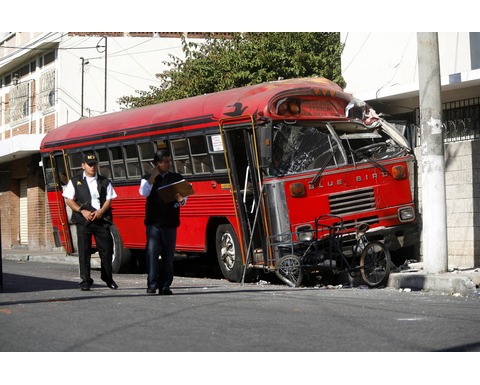
Guatemalan police work at crime scene where bus driver was killed in ongoing domestic violence. Photo by Reuters / All Voices.

Insecurity in Guatemala

There are several processes taking place on the governmental level that are intended to reduce this insecurity, but so far, they have not convinced people that the government or the police are able to provide basic security for citizens, much less foreigners who are likely to be considered rich pickings for street crimes.

By Val Liveoak / The Rag Blog / May 14, 2009

Last week, I was in Guatemala City. It has always felt less safe than in some other parts of the country, and on this visit I continued to feel a pervasive sense of insecurity among the group with whom we partner, CEDEPCA [an ecumenical training center for community action]. One example of this is the reaction to my plan to go by city bus to buy my international bus ticket. My colleague Betty seemed ok with my plan but others in the office were rather surprised that I would go unaccompanied by bus, and expressed concern for my safety.

“Make sure the bus goes where you want to go, but don’t sit near the driver,” said the woman who shares Betty’s office. (There have been assassinations of drivers of public buses while they were driving lately.) “Be sure not to carry your passport, just take a copy,” Betty warned. I think their warnings reflect the general concern for the comfort and safety of a woman alone and a foreigner at that.

I think the staff at CEDEPCA share a general sense of growing insecurity that is common among middle-class people in Guatemala. There are several processes taking place on the governmental level that are intended to reduce this insecurity, but so far, they have not convinced people that the government or the police are able to provide basic security for citizens, much less foreigners who are likely to be considered rich pickings for street crimes.

I have experienced more concern about using public transportation here than in other cities where I work, and I try to take the advice I am offered. At any rate, my bus trips to and from the bus office were uneventful, and I travelled to El Salvador the next day.

Lately in Guatemala, there has been a rash of killings of drivers of public buses, and more widespread extortion of money from both drivers and other businesses. Organized crime here is considered to be in control of drug trafficking, human trafficking (including fraudulent adoptions) and to some extent, of gang activity. Few people consider the police forces, local, national or specialized groups such as tourist police, to be adequate protection — in some places they are known to be active in crime, and in others considered impotent at best.

I have read of two efforts to respond to this concern. One is the process called CICIG, an international initiative to reduce impunity in the judicial system by developing more effective investigative and prosecutorial efforts by the police, and reducing corruption among judges. They are investigating a number of high profile cases, presumed to involve some high authorities, as yet unnamed and uncharged. One case is that of three Salvadoran members of the Central American Parliament, who with their driver, were killed in February 2007. Five Guatemalan police were arrested in this case, and, assassinated a few hours after being transferred to another prison. One of the suspect/victims was the head of the Organized Crime Unit. They are also investigating the murders of a group of Nicaraguans and one citizen of The Netherlands, whose bus was intercepted and burned.

On May 1, the government put into effect a law regulating licensing of guns and sale of bullets, intended to control rampant arms sales here. While as a licensing measure it may be ineffective, what is hoped is that it will cause criminals who have illegal arms to remain detained in jail after arrests — frequently they are released for lack of proof (or because judges are either paid or afraid to arraign them) after too hasty arrests. Some citizens are skeptical about any measures initiated by the current government, widely accused of having ties to drug cartels, but otherd are hopeful about results.

One effect of the widespread cynicism is growing vigilante or mob violence against accused criminals. The day I arrived the newspaper had stories of three men who were thrown off bridges by people who accused them of being extortionists. These events are common in the capital and in the provincial cities as well. In previous visits I have heard of organized vigilante groups, although not this time. Still, armed security guards are omnipresent.

I also heard of kidnappings of children, one of whom was killed, in a small town near a large provincial city. When I asked a Guatemalan about these kidnappings, he told another horrific story — the victims are not merely murdered but often cut into pieces, beheaded or show signs of torture — the intention is to terrorize their families into complying with kidnappers’ demands. These events all lead to a sense that Guatemala is unsafe for both visitors and residents.

[Texan Val Liveoak is a nonviolent activist who works with the Friends Peace Teams, a Quaker-sponsored network of groups and organizations that work for peace in communities around the world. Currently living in El Salvador and San Antonio, she coordinates Peacebuilding en las Americas, the Latin American Intitiative of Friends Peace Teams which also has programs in the African Great Lakes region and in Indonesia.]

The Rag Blog

Posted in Rag Bloggers | Tagged , | 4 Comments

Obama Administration Will Continue Massive Secret Budgetary Outlays

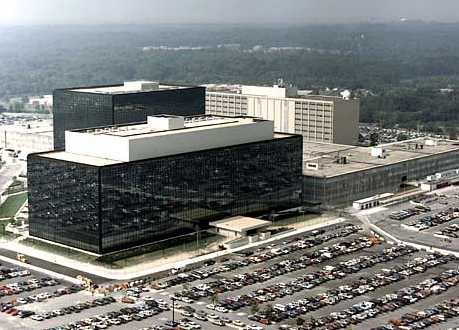
“The Black Hole” NSA headquarters, Ft. Meade, Maryland.

Big Increases for Intelligence and Pentagon “Black” Programs in 2010
By Tom Burghardt / May 13, 2009

Continuing along the dark path marked out by his predecessors in the Oval Office, President Barack Obama’s Defense and Intelligence budget for Fiscal Year 2010 will greatly expand the reach of unaccountable agencies–and the corporate grifters whom they serve.

According to Aviation Week, “the Pentagon’s ‘black’ operations, including the intelligence budgets nested inside it, are roughly equal in magnitude to the entire defense budgets of the UK, France or Japan, and 10 per cent of the total.”

Yes, you read that correctly. The “black” or secret portions of the budget are almost as large as the entire defense outlays of America’s allies, hardly slouches when it comes to feeding their own militarist beasts. The U.S. Air Force alone intends to spend approximately $12 billion on “black” programs in 2010 or 36 percent of its entire research and development budget. Aviation Week reveals:

Black-world procurement remains dominated by the single line item that used to be called “Selected Activities,” resident in the USAF’s “other procurement” section. This year’s number stands just above $16 billion. In inflation-adjusted terms, that’s 240 per cent more than it was ten years ago.

On the operations side, secret spending has risen 8 percent over last year, to just over $15 billion–equivalent to more than a third of Air Force operating costs.

What does it all go for? In simple terms, we don’t know. It is apparent that much if not all of the intelligence community is funded through the black budget: for example, an $850 million USAF line item is clearly linked to reconnaissance satellites. But even so, the numbers are startling–and get more so year by year. (Bill Sweetman, “Black budget blows by $50 billion mark,” Aviation Week, May 7, 2009)

How’s that for change! The Register gives a break down of the numbers for added emphasis:

1) Mainstream US armed forces $490bn-odd

2) UK armed forces $60bn

3) Chinese armed forces $58bn

4) French armed forces $54bn

5) “Black” US forces $50bn+

6) Japanese Self-Defence forces $44bn

While the American government refuses to disclose the CIA or NSA’s budget, “both the Agency and other non-military spooks do get money of their own. Some of this is spent on military or quasi-military activities,” The Register reports.

Toss in the world-wide deployment of CIA and U.S. Special Operations Command (USSOCOM) paramilitary operatives hidden among a welter of Special Access Programs (SAPs) classified above top secret and pretty soon we’re talking real money!

One such program may have been Dick Cheney’s “executive assassination ring” disclosed by investigative journalist Seymour Hersh during a “Great Conversations” event at the University of Minnesota in March.

And should pesky investigators from the Government Accountability Office (GAO) have the temerity to probe said “executive assassination ring,” or other DoD “black” programs well, their Inspector General’s had better think again!

According to the whistleblowing security and intelligence website Cryptome, a May 8, 2009 letter from Susan Ragland, GAO Director of Financial Management and Assurance to Diane Watson (D-CA), Chairwoman of the House Committee on Government Management, Organization and Procurement, lays down the law in no uncertain terms to Congress.

Ms. Ragland wrote: “the IG Act authorizes the heads of six agencies to prohibit their respective IGs from carrying out or completing an audit or investigation, or from issuing any subpoena if the head determines that such prohibition is necessary to prevent either the disclosure of certain sensitive information or significant harm to certain national interests.”

Neat, isn’t it! Under statutory authority granted the Executive Branch by congressional grifters, Congress amended the IG Act “to establish the Department of Defense (DOD) IG and placed the IG under the authority, direction, and control of the Secretary of Defense with respect to audits or investigations or the issuance of subpoenas that require access to certain information.”

What information may be withheld from public scrutiny? Ms. Ragland informs us: “Specifically, the Secretary of Defense may prohibit the DOD IG from initiating, carrying out, or completing such audits or investigations or from issuing a subpoena if the Secretary determines that the prohibition is necessary to preserve the national security interests of the United States.” (emphasis added)

The same restrictions to the IG Act that apply to the Defense Department are similarly operative for the Departments of the Treasury, Homeland Security, Justice, the U.S. Postal Service (!), the Federal Reserve Board, and the Central Intelligence Agency. Talk about veritable mountains of dirty laundry–and “black” programs–that can be hidden here!

Space-Based Spies

Among the items nestled within the dark arms of Pentagon war planners is a program called “Imagery Satellite Way Ahead,” a joint effort between “the Office of the Director of National Intelligence and the Department of Defense designed to revamp the nation’s constellation of spy satellites,” Congressional Quarterly reports.

As Antifascist Calling revealed in several investigative pieces in June, October and November 2008, America’s fleet of military spy satellites are flown by the secretive National Reconnaissance Office (NRO).

According to the agency’s own description, “The NRO is a joint organization engaged in the research and development, acquisition, launch and operation of overhead reconnaissance systems necessary to meet the needs of the Intelligence Community and of the Department of Defense. The NRO conducts other activities as directed by the Secretary of Defense and/or the Director of National Intelligence.”

As investigative journalist Tim Shorrock revealed in his essential book, Spies for Hire, some ninety-five percent of NRO employees are contractors working for defense and security firms. Indeed, as Shorrock disclosed, “with an estimated $8 billion annual budget, the largest in the IC, contractors control about $7 billion worth of business at the NRO, giving the spy satellite industry the distinction of being the most privatized part of the Intelligence Community.”

While the Office’s website is short on information, some of the “other activities” alluded to by NRO spooks include the Department of Homeland Security’s National Applications Office (NAO).

As I wrote in October, the NAO will coordinate how domestic law enforcement and “disaster relief” agencies such as FEMA use satellite imagery (IMINT) generated by spy satellites. But based on the available evidence, hard to come by since these programs are classified above top secret, the technological power of these military assets are truly terrifying–and toxic for a democracy.

DHS describes the National Applications Office as “the executive agent to facilitate the use of intelligence community technological assets for civil, homeland security and law enforcement purposes.” As Congressional Quarterly reveals, the “classified plan would include new, redesigned ‘electro-optical’ satellites, which collect data from across the electromagnetic spectrum, as well as the expanded use of commercial satellite imagery. Although the cost is secret, most estimates place it in the multibillion-dollar range.”

How these redesigned assets will be deployed hasn’t been announced. The more pertinent issue is whether or not DHS, reputedly a civilian agency but one which answers to the militarized Office of the Director of National Intelligence (ODNI), will position these assets to illegally spy on Americans. The available evidence is they will.

DHS avers that “homeland security and law enforcement will also benefit from access to Intelligence Community capabilities.” With Pentagon “black” programs already costing taxpayers tens of billions of dollars the question remains, with NAO as the “principal interface” between American spooks, DHS bureaucrats and law enforcement, who will oversee NAO’s “more robust access to needed remote sensing information to appropriate customers”?

Certainly not Congress. Investigative journalist Siobhan Gorman writing in The Wall Street Journal documented last year, that despite a highly-critical June 2008 study by the Congressional Research Service (CRS), Congress partially-funded the program “in a little debated $634 billion spending measure.”

Indeed, a fully-operational NAO now provides federal, state and local officials “with extensive access to spy-satellite imagery–but no eavesdropping–to assist with emergency response and other domestic-security needs, such as identifying where ports or border areas are vulnerable to terrorism.” But as CRS investigators wrote:

Members of Congress and outside groups have raised concerns that using satellites for law enforcement purposes may infringe on the privacy and Fourth Amendment rights of U.S. persons. Other commentators have questioned whether the proposed surveillance will violate the Posse Comitatus Act or other restrictions on military involvement in civilian law enforcement, or would otherwise exceed the statutory mandates of the agencies involved. (Richard A. Best Jr. and Jennifer K. Elsea, “Satellite Surveillance: Domestic Issues,” Congressional Research Service, June 27, 2008)

While these serious civil liberties’ issues have apparently been swept under the carpet, huge funding outlays by Congress for Pentagon’s “black” budget operations indicate that President Obama’s promises of “change” in how “government does business” is so much hot-air meant to placate the rubes.

Driven by a Corporatist Agenda

Wholesale spying by the American government on its citizens as numerous investigators have uncovered, is aided and abetted by a host of well-heeled corporate grifters in the defense, intelligence and security industries. These powerful, and influential, private players in the Military-Industrial-Security Complex are largely unaccountable; it can be said that America’s intelligence and security needs are driven by firms that benefit directly from the Pentagon’s penchant for secrecy.

Federal Computer Week reported in April that the program to revamp America’s spy satellites “has the backing of the Obama administration, and the program is expected to win congressional approval, according to a senior intelligence official.”

The same anonymous “senior official” told the publication, “given the backing of the Defense Department, ODNI and the Obama administration, lawmakers are expected to approve the plan.” And as with other “black” programs, the cost is classified but is expected to run into the billions; a veritable windfall for enterprising defense corporations.

The electro-optical satellite modernization program involves building new satellites that the National Reconnaissance Office (NRO) would operate and expanding the use of imagery from commercial providers, according to a statement the Office of the Director of National Intelligence released April 7. Under the plan, the National Geospatial-Intelligence Agency would continue to integrate imagery products for government customers. (Ben Bain, “Spy satellite tally could increase,” Federal Computer Week, April 8, 2009)

While no decision has been reached on the “acquisition approach for the program,” ODNI and NRO “would oversee the acquisition strategy for the new government-built satellites and a contract would likely be awarded within months.”

In a toss-off statement to justify the enormous outlay of taxpayer dollars for the new initiative, Obama’s Director of National Intelligence, Dennis Blair, said last month, “When it comes to supporting our military forces and the safety of Americans, we cannot afford any gaps in collection.” Or perhaps “any gaps in collection” on Americans. As Tim Shorrock revealed,

The plans to increase domestic spying are estimated to be worth billions of dollars in new business for the intelligence contractors. The market potential was on display in October at GEOINT 2007, the annual conference sponsored by the U.S. Geospatial Intelligence Foundation (USGIF), a non-profit organization funded by the largest contractors for the NGA. During the conference, which took place in October at the spacious Henry B. Gonzalez Convention Center in downtown San Antonio, many companies were displaying spying and surveillance tools that had been used in Afghanistan and Iraq and were now being re-branded for potential domestic use. (”Domestic Spying, Inc.,” CorpWatch, November 27, 2007)

Indeed, according to Shorrock when the NAO program was conceived in 2005, former ODNI director Michael McConnell “turned to Booz Allen Hamilton of McLean, Virginia–one of the largest contractors in the spy business. The company was tasked with studying how intelligence from spy satellites and photoreconnaissance planes could be better used domestically to track potential threats to security within the U.S.”

Tellingly, McConnell was a senior vice president with the spooky firm for a decade. Booz Allen Hamilton was acquired by the private equity firm The Carlyle Group in a 2008 deal worth $2.54 billion. In addition to Booz Allen Hamilton, other giant defense and security corporations involved in running Homeland Security’s National Applications Office include the scandal-tainted British firm BAE Systems, ManTech, Boeing and L-3 Communications.

Among the firms in the running to land ODNI/NRO new spy satellite contracts are: BAE, Boeing, Lockheed Martin and Northrop Grumman. All of these corporations according to the Project on Government Oversight’s (POGO) Federal Contractor Mismanagement Database (FCMD) have “histories of misconduct such as contract fraud and environmental, ethics, and labor violations.”

Unsurprisingly, Lockheed Martin, Boeing, BAE and Northrop Grumman lead the pack in “total instances of misconduct” as well as fines levied by the federal government for abusive practices and outright fraud.

Conclusion

Unaccountable federal agencies and corporations will continue the capitalist “security” grift, particularly when it comes to “black” programs run by the Department of Defense and the Office of the Director of National Intelligence. Despite a documented history of serious ethical and constitutional breeches, these programs will persist and expand well into the future. While the Obama administration has said it favors government transparency, it has continued to employ the opaque methods of its predecessors.

From the use of the state secrets privilege to conceal driftnet surveillance of Americans, to its refusal to launch an investigation–and prosecution–of Bush regime torture enablers and war criminals, the “change” administration instead, has delivered “more of the same.”

[Tom Burghardt is a researcher and activist based in the San Francisco Bay Area. In addition to publishing in Covert Action Quarterly and Global Research, an independent research and media group of writers, scholars, journalists and activists based in Montreal, his articles can be read on Dissident Voice, The Intelligence Daily and Pacific Free Press. He is the editor of Police State America: U.S. Military “Civil Disturbance” Planning, distributed by AK Press.]

Source / Dissident Voice

The Rag Blog

Posted in RagBlog | Tagged , , , | Leave a comment

Health Care Profiteers : This Won’t Hurt a Bit

Graphic from ISIPS.

The fight for real health care reform

We are being outspent by billions of dollars by the amalgam of well heeled interest groups that will benefit financially from maintaining the status quo.

By Dr. Stephen R. Keister / The Rag Blog / May 14, 2009

In Webster’s Universal College dictionary there are four definitions, but one applies. Prostitute: “A person who willingly uses his or her talent or ability in a base or unworthy way, usu, for money.”

I have studied several photographs of President Obama taken this past Monday with the representatives of the health insurance industry and their shills. Try as I may I cannot get a similar photograph out of my mind, of negotiations which took place in September 1938. Here is Prime Minister Neville Chamberlain in Munich amid a group of glowing contemporaries happily announcing “we have achieved peace in our time.”

Concurrently, Sen. Max Baucus continues to create a chimera in his Senate committee, inviting those to testify who have created the present health care crises and having those who honestly and sincerely desire decent health care escorted out of the chamber in handcuffs. It is really mind-boggling that the needs for health care for all Americans would descend into such a farcical morass.

Each day I come across reports of more unions that have endorsed HR 676. Each time I want to cry out in frustration. I have not reached the depths of cynicism felt by Alan L. Maki as expressed in his excellent comment appended to my Rag Blog article of May 8; however, I can share his frustration. I further appreciate his listing of the financial contributions by the insurance and related industries to the members of the Senate.

It is my understanding that Congress will not finally vote on a health care bill until September, so we have some time to work for HR 676, S 703, or the compromise suggestion of an alternative, i.e. a public, subsidized, public health care plan for all similar to that presently available for those over the age of 65 as Medicare. According to a survey published by The Commonwealth Fund, only 8% of the folks covered by Medicare rated their coverage as “fair or poor,” while 18% of individuals with employer based insurance were dissatisfied.

M.S. Bellows, Jr. has an excellent piece that was distributed by Common Dreams: “Is Obama Naive about the For-Profit Industry’s Commitment to Real Reform?” What was promised? A coalition of health insurance, hospital, pharmaceutical company and physician trade groups, plus a major union, are promising the President that they will reduce the rate of future growth in the cost of health care by 1.5% per year for the next decade! The reason sited by the group — including Big Pharma, the health insurance lobby, the American Medical Association (which represents the pharmaceutical industry and has done so for years), and hospital industry groups — is that they are “Americans.” To anyone with any insight at all this is patently absurd and has absolutely nothing to do with the establishment of a universal health care system in the United States. How stupid do these folks think we are?

Yet, I fear that they have something very strong in their favor, and that is the cultural detachment in the United States. I am taken back to an episode during the 2004 presidential campaign when on a rare occasion I was watching TV – CNN as I recall. The correspondent was interviewing an underprivileged lady somewhere in the Midwest. Her husband was unemployed, they had lost their health insurance, two children were ill, their house was in foreclosure. The interviewer asked the lady who she was voting for, and without hesitation she answered: “For President Bush, of course, he is against gay-marriage.”

In recent weeks numerous new organizations have entered the fight for decent health care, including Single Payer Action and Doctors for America. These join the Physicians for a National Health Care Program, Center for American Progress, Campaign for America’s Future, Health Care for America Now, and others. Yet, in spite of the positive work done by all of these dedicated folk, we are being outspent by billions of dollars by the amalgam of well heeled interest groups that will benefit financially from maintaining the status quo. Their lies and misrepresentations are everywhere: that European or Canadian health care is inferior to ours, that folks die of cancer in the UK because of neglect, that it takes weeks to get seen by a doctor in the Netherlands, that the government in Germany chooses one’s physician. Happily, a bit of light is being brought by The Ed Show on MSNBC, and a few well done TV appeals to support the cause of decent health care.

At near age 88 I hate to surrender; however, I feel that the only answer to achieve anything constructive — and I will, with hesitation, settle for “Medicare for all” — is to mobilize an action akin to the civil rights movement, taking to the streets, the public squares, and our elected representatives’ local offices. This must remain nonviolent, for the forces behind denying health care will only be too glad to take advantage of what they see as civil disobedience. They control the “authorities” and the seats of power. There may be three months to overcome the pandering of the lobbyists to our elected officials. Remember the Jacobins did not initiate the events of 1889, the movement originated with The Third Estate, the middle class.

Don’t miss “The Secret Right-Wing Strategy on Health Care is Exposed,” an article by Bernie Horn published by Campaign For America’s Future. To effectively counter the manipulation of our representatives and the mainstream media, we must stay informed.

Further, do not be distracted by the calls for computerized records as the sine qua non of health care. The right wing seems to feel that this, along with “wellness programs,” and further tax breaks for the well-to-do, will suffice. Granted computerized records would once again open up communications, hopefully, among our various attending physicians, but they would also have the unhappy result of opening up our health care records to the insurance industry and give them further opportunity to fish for reasons to disqualify our rightful claims.

We must educate any and all of our friends. Medicare, for instance, is an example of government run insurance, as is the Veterans Administration (which the Bush administration grossly underfunded). For instance, with a national health program the “bureaucrats” will not select your doctor or hospital for you. You will have free choice of physicians as is the case in Europe. The lies and fabrications of long waits for care in the EU or Canada are essentially just that: lies and fabrications. Yes, in Canada, just as in the United States, you might have to wait for an especially popular physician at a major clinic, but that is the exception, not the rule.

The opponents of universal care will, however, cite it as the rule. You might have to wait for a new and expensive cancer drug in the UK; however, you probably won’t get it at all in this country — without the best insurance. Here’s a statistic to remember: single payer, universal care as proposed in HR 676 will cost the citizen approximately 40% of present costs.

Health Insurance Company Profits in 2007 (thanks to the Wonkroom at Think Progress):

  1. UnitedHealth Group — $4.654 billion (Oxford, PacifiCare, IBA,AmerChoice, Evercare, Ovations, MAMSI and Ingenix)
  2. Well Point — $3.345 billion (Various BLUES across the U.S.)
  3. Aetna Inc. — $1.831 billion
  4. CIGNA Corp. — $1.115 billion
  5. Humana Inc. — $834 million
  6. Coventry Health Care — $626 million
  7. Health Net — $194 million

Much work lies ahead. We must unite and give it a good try, for if we do not succeed we will encounter an even worse health care situation than has been foisted upon us by the health insurance industry for the past 30 or more years.

[Dr. Stephen R. Keister, a regular contributor to The Rag Blog, lives in Erie, PA. He is a retired physician who is active in health care reform. His previous articles on The Rag Blog can be found here.]

The Rag Blog

Posted in RagBlog | Tagged , , , | 2 Comments

Dick Cheney: The Dangerous Legacies Live On


The hidden hand of Dick Cheney
By Juan Cole / May 13, 2009

Out of office, he continues to push his tortured version of reality — and his vision of an imperial presidency — and there are signs he is succeeding.

Dick Cheney is out there. He is defending torture, dissing Colin Powell, and genuflecting before radio personality Rush Limbaugh as the high priest of what’s left of conservatism. His refusal to go quietly, unlike his much-reviled boss, is risky. He was a laugh line more than once at Saturday’s White House Correspondents’ Dinner.

But the media’s focus on the sheer spectacle of the ex-veep’s antics, and on the Republican vs. Democrat feud he’s stoking, underestimates the way Cheney’s principles still inform many of the country’s most crucial policies. Like the creatures in the “Alien” films, Cheney has planted some vicious spores in the bellies of his successors, which threaten to tear them apart as they mature. Can the new administration truly reverse Cheney’s transformation of the United States into a 21st century empire, with the president an imperial figure above the law?

The former vice-president is now a more reliable laugh-getter than vote-getter. At the correspondents’ dinner, President Obama quipped, “Dick Cheney was supposed to be here, but he’s very busy working on his memoirs, tentatively titled ‘How to Shoot Friends and Interrogate People.'” Guest comedian Wanda Sykes went further, saying she found Cheney positively terrifying. “He scares me to death. I tell my kids, I say, ‘Look, if two cars pull up and one has a stranger and the other car has Dick Cheney, you get in the car with the stranger.'”

This week’s news is about the grand old pit bull’s struggle to continue to define his own party. Cheney emerged last Friday to warn on a North Dakota radio program that it would be a mistake for the Republican Party to moderate its message. (Does that mean it is now radical?) Then on Sunday Cheney told Bob Schieffer of “Face the Nation” that it was a mistake to stop using waterboarding and other forms of extreme interrogation, and that they did not constitute torture. He also poked fun at Colin Powell, questioning his credentials as a Republican and expressing a preference for the waspish Limbaugh as the party’s leader.

But don’t dismiss Dick Cheney as a fading punch line, or as tragedy reprised as comedy. While the Obama administration has adopted large numbers of policies that directly contradict Cheney’s positions, it would be a mistake to overlook Cheney’s continued influence on the executive branch through the precedents set by the Bush administration. Among the former vice-president’s most important legacies is increased government secrecy. Obama’s Department of Justice continues to rely on an alleged “state secrets” privilege. It has thus tried to block lawsuits by victims who alleged they were kidnapped and tortured by U.S. intelligence even though they were innocent of wrongdoing, on the grounds that such trials would reveal state secrets. The same state secrets doctrine was used by Obama’s DOJ in an attempt to block investigations of Bush-Cheney warrantless wiretaps. Likewise, the DOJ has attempted to block lawsuits seeking the release of Bush-era e-mails and to prevent prisoners held at Bagram air base in Afghanistan from appearing before a judge to challenge their imprisonment.

Although the Obama administration is pledged to withdraw from Iraq militarily in a way that Cheney would never have contemplated, it is just as committed as Bush-Cheney to spreading good cheer about the new government in Baghdad. Secretary of State Hillary Clinton called the bombings by Iraqi guerrillas this spring the “last gasp” of “rejectionists,” seeming to channel Cheney’s allegation in 2005 that we were seeing the “last throes” of the insurgency. Red Washington and blue Washington both want to tell us stories about how Iraq will be OK and is just bedeviled by a few unreasoning malcontents who are on their last legs.
Quantcast

On a trip to Afghanistan in 2004, Cheney told U.S. troops, “Your children and my grandchildren will live in freedom tomorrow because of what you’re doing today.” He warned them of continuing threats there, however, saying, “Our coalition still has important work to do.” He added, “Freedom still has enemies here in Afghanistan. And you are here to make those enemies miserable.” Obama has, likewise, tied the establishment of a stable government in Afghanistan to U.S. national security, and pledged to defeat the Taliban and al-Qaida (even though there does not appear to be any significant al-Qaida in Afghanistan anymore). Both Cheney and Obama tend to amalgamate al-Qaida (a small, mainly Arab, international terrorist organization) to the Taliban (a form of Pushtun fundamentalist nationalism with local concerns). Cheney’s war in Afghanistan envisaged no end, and neither, apparently, does Obama’s.

Many of Cheney’s harshest policies were rooted in a conviction that small terrorist groups might well get hold of nuclear weapons or other very dangerous armaments, and that all necessary steps must be taken to forestall that eventuality, even if it has only slight probability of occurring. (Journalist Ron Suskind called this notion the “one percent” doctrine.) The Obama administration just forced the Pakistani military to invade the Malakand region and to displace hundreds of thousands of civilians in the course of shelling and bombing a few thousand Taliban tribesmen. Among its rationales for this massive application of force was that the Taliban had advanced too close to Islamabad, and, apparently too close to that country’s nuclear warheads. (In fact, the idea that a small force of rural Taliban could take over the Pakistani government or get access to its closely guarded arsenal is fantastic.)

In the government’s commitment to a doctrine of “state secrets” that protect the executive from the scrutiny of other branches of government, in the continued attempt to block lawsuits and release of important documents, and in the shielding of secret programs of torture, unlawful kidnapping and warrantless wiretapping, Obama is preserving policies to which Cheney is deeply committed. In configuring Pushtun fundamentalists in southern Afghanistan and northern Pakistan as a mortal threat to the U.S. and potentially even a nuclear power, the Obama administration is picking up themes from Cheney’s old speeches and running with them. Cheney may or may not win his struggle for the soul of the Republican Party. If we are not careful, he will win the struggle for the soul of the country as a whole.

Source / Salon

The Rag Blog

Posted in RagBlog | Tagged , , | Leave a comment

William Blum: On Enhanced Interrogation, Enhanced Explosive Devices, and Other Matters

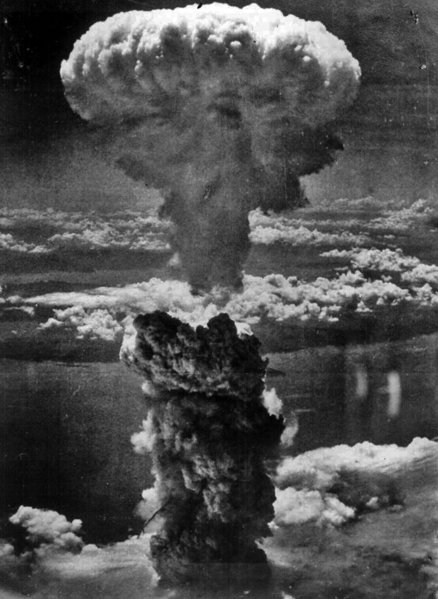
An “enhanced explosive device” in action, aka the atomic bombing of Nagasaki on August 9, 1945. The picture was taken from one of the B-29 Superfortresses used in the attack.

The Anti-Empire Report: Some thoughts about torture. And Mr. Obama.
By William Blum / May 4, 2009

Okay, at least some things are settled. When George W. Bush said “The United States does not torture”, everyone now knows it was crapaganda. And when Barack Obama, a month into his presidency, said “The United States does not torture”1, it likewise had all the credibility of a 19th century treaty between the US government and the American Indians.

When Obama and his followers say, as they do repeatedly, that he has “banned torture”, this is a statement they have no right to make. The executive orders concerning torture leave loopholes, such as being applicable only “in any armed conflict”2 What about in a “counter-terrorism” environment? And the new administration has not categorically banned the outsourcing of torture, such as renditions, the sole purpose of which is to kidnap people and send them to a country to be tortured. Moreover, what do we know of all the CIA secret prisons, the gulag extending from Poland to the island of Diego Garcia? How many of them are still open and abusing and torturing prisoners, keeping them in total isolation and in indefinite detention? Total isolation by itself is torture; not knowing when, if ever, you will be released is torture. And the non-secret prisons? Has Guantanamo ended all its forms of torture? There’s reason to doubt that.3 And what do we know of what’s happening now in Abu Ghraib and Bagram?

And when Obama says “I don’t believe that anybody is above the law”, and then acts in precisely the opposite fashion, despite overwhelming evidence of criminal torture — such as the recently leaked report of the International Committee of the Red Cross and the Bush Justice Department “torture memos” — it’s enough to break the heart of any of his fans who possess more than a minimum of intellect and conscience. It should be noted that a Gallup Poll of April 24/25 showed that 66% of Democrats favored an “investigation into harsh interrogation techniques on terrorism suspects”. If the word “torture” had been used in the question, the figure would undoubtedly have been higher.

Following the US invasion of Iraq in March 2003, President Bush went on TV to warn the people of Iraq: “War crimes will be prosecuted. War criminals will be punished. And it will be no defense to say, I was just following orders.”4

“Objectively, the American public is much more responsible for the crimes committed in its name than were the people of Germany for the horrors of the Third Reich. We have far more knowledge, and far greater freedom and opportunity to stop our government’s criminal behavior,” observed James Brooks in the Online Journal in 2007.

On February 10, the Obama Justice Department used the Bush administration’s much-reviled “state secrets” tactic in a move to have a lawsuit dismissed — filed by five detainees against a subsidiary of Boeing aircraft company for arranging rendition flights which led to their torture. “It was as if last month’s inauguration had never occurred”, observed the New York Times.5

And when Obama says, as he does repeatedly, “We need to look forward as opposed to looking backwards”, why is it that no one in the media asks him what he thinks of the Nuremberg Tribunal looking backwards in 1946? Or the Church Committee of the US Senate doing the same in 1975 and producing numerous revelations about the criminality of the CIA, FBI, and other government agencies that shocked and opened the eyes of the American people and the world?

We’re now told that Obama and his advisers had recently been fiercely debating the question of what to do about the Bush war criminals, with Obama going one way and then another and then back again, both in private and in his public stands. One might say that he was “tortured”. But civilized societies do not debate torture. Why didn’t the president just do the obvious? The simplest? The right thing? Or at least do what he really believes.

The problem, I’m increasingly afraid, is that the man doesn’t really believe strongly in anything, certainly not in controversial areas. He learned a long time ago how to take positions that avoid controversy, how to express opinions without clearly and firmly taking sides, how to talk eloquently without actually saying anything, how to leave his listeners’ heads filled with stirring clichés, platitudes, and slogans. And it worked. Oh how it worked! What could happen now, as President of the United States, to induce him to change his style?

The president and the Director of the CIA both insist that no one at the CIA who was relying on the Justice Department’s written legal justification of methods of “enhanced interrogation” should be punished. But the first such approval was dated August 1, 2002, while many young men were arrested in Afghanistan and Pakistan during the previous nine months and subjected to “enhanced interrogation”. Many were sent to Guantanamo as early as January 2002. And many others were kidnaped and sent to Egypt, Jordan, Morocco and other secret prisons to be tortured beginning in late 2001. So, at least for some months, the torturers were not acting under any formal approval of their methods. But they still will not be punished.

I love that expression “enhanced interrogation”. How did our glorious leaders overlook calling the atomic bombs dropped on Hiroshima and Nagasaki “enhanced explosive devices”?

Lord High Dungeon Master Richard Cheney is upset about the recent release of torture memos. He keeps saying that the Obama administration is suppressing documents that show a more positive picture of the effectiveness of interrogation techniques, which he claims produced very valuable information, prevented certain acts of terrorism, and saved American lives. Hmmm, why am I skeptical of this? Oh, I know, because if this is what actually happened and there are documents which genuinely and unambiguously showed such results, the beleaguered Bush administration would have leaked them years ago with great fanfare, and the CIA would not have destroyed numerous videos of the torture sessions.

But in any event, that still wouldn’t justify torture. Humankind has aspired for centuries to tame its worst behaviors; ridding itself of the affliction of torture has been high on that list. There is more than one United States law now prohibiting torture, including a 1994 law making it a crime for US citizens to commit torture overseas. This was recently invoked to convict the son of former Liberian dictator Charles Taylor. There is also the Geneva Convention Relative to the Treatment of Prisoners of War, ratified in 1949, which states in Article 17:

No physical or mental torture, nor any other form of coercion may be inflicted on prisoners of war to secure from them information of any kind whatever. Prisoners of war who refuse to answer may not be threatened, insulted, or exposed to any unpleasant or disadvantageous treatment of any kind.

Thus it was that the United States has not called the prisoners of its War on Terror “prisoners of war”. But in 1984, another historic step was taken, by the United Nations, with the drafting of the “Convention Against Torture and Other Cruel, Inhuman or Degrading Treatment or Punishment” (came into force in 1987, ratified by the United States in 1994). Article 2, section 2 of the Convention states:

No exceptional circumstances whatsoever, whether a state of war or a threat of war, internal political instability or any other public emergency, may be invoked as a justification of torture.

Such marvelously clear, unequivocal, and principled language, to set a single standard for a world that makes it increasingly difficult for one to feel proud of humanity. We cannot slide back. If today it’s deemed acceptable to torture the person who supposedly has the vital “ticking-bomb” information needed to save lives, tomorrow it will be acceptable to torture him to learn the identities of his alleged co-conspirators. Would we allow slavery to resume for just a short while to serve some “national emergency” or some other “higher purpose”?

If you open the window of torture, even just a crack, the cold air of the Dark Ages will fill the whole room.

“I would personally rather die than have anyone tortured to save my life.” – Craig Murray, former British Ambassador to Uzbekistan, who lost his job after he publicly condemned the Uzbek regime in 2003 for its systematic use of torture.6

With all the reports concerning torture under the recent Bush administration, some people may be inclined to think that prior to Bush the United States had very little connection to this awful practice. However, in the period of the 1950s through the 1980s, while the CIA did not usually push the button, turn the switch, or pour the water, the Agency …

* encouraged its clients in the Third World to use torture;
* provided the host country the names of the people who wound up as torture victims, in places as bad as Guantanamo, Abu Ghraib and Bagram;
* supplied torture equipment;
* conducted classes in torture;
* distributed torture manuals — how-to books;
* was present when torture was taking place, to observe and evaluate how well its students were doing.7

I could really feel sorry for Barack Obama — for his administration is plagued and handicapped by a major recession not of his making — if he had a vision that was thus being thwarted. But he has no vision — not any kind of systemic remaking of the economy, producing a more equitable and more honest society; nor a world at peace, beginning with ending America’s perennial wars; no vision of the fantastic things that could be done with the trillions of dollars that would be saved by putting an end to war without end; nor a vision of a world totally rid of torture; nor an America with national health insurance; nor an environment free of capitalist subversion; nor a campaign to control world population … he just looks for what will offend the fewest people. He’s a “whatever works” kind of guy. And he wants to be president. But what we need and crave is a leader of vision.

Another jewel in the crown, Miss Hillary

During the presidential campaign much was made of Obama’s stated promises to engage in direct talks with Iran, as opposed to the Bush administration’s refusal to speak to the Iranians and threatening to attack them and bomb their nuclear facilities. This was one more example of the much-vaunted “change” that Obama was going to bring. But, in actuality, it wouldn’t be much of a change. Mid-level American officials did in fact occasionally meet with Iranian officials, most notably after the September 11 attacks in 2001 and in mid-2003 after the US invasion of Iraq. These meeting were always in secret.8 There were also at least three publicly-announced meetings between the US and Iran in 2007, primarily dealing with the fighting in Iraq. And now that Obama is in power, what do we find? We find his Secretary of State, Hillary Clinton, testifying April 22 before the House Foreign Affairs Committee and stating:

“We actually believe that by following the diplomatic path we are on [speaking to Iran], we gain credibility and influence with a number of nations who would have to participate in order to make the sanctions regime as tight and as crippling as we would want it to be.”

Would it be unfair to say that she’s implying that a reason for talks with Iran is that the US could get more international support when it decides to cripple that country? Is crippling a country the United States is at peace with supposed to be part of the “change” in US foreign policy? Is Iran expected to be enthusiastic about such talks? If the talks collapse, will the United States use that as an excuse for bombing Iran? Or will Israel be given the honor?

Later in the hearing, Clinton declared: “We are deploying new approaches to the threat posed by Iran.”

I would love to have been a member of the House committee so I could have had the following exchange with the Secretary of State:

Cong. Blum: Do we plan to impose sanctions on France?

Sec. Clinton: I don’t understand, Congressman. Why would we impose sanctions on France?

Cong. Blum: Well, if we impose sanctions on Iran on the mere suspicion of them planning to build nuclear weapons, it seems to me we’d want to impose even stricter sanctions on a country which already possesses such weapons.

Sec. Clinton: But France is an ally.

Cong. Blum: So let’s make Iran an ally. We can start with ending our many sanctions against them and calling off our Israeli attack dogs.

Sec. Clinton: But Congressman, Iran is a threat. Surely you don’t see France as a threat? What reason would France have to use nuclear weapons against the United States?

Cong. Blum: What reason would Iran have to use nuclear weapons against the United States? Other than an irresistible desire for mass national suicide.

If Congressman Blum had pursued this line of questioning, it might well have culminated in some Orwellian remark by dear Hillary, such as the one she treated us to a few days later when speaking to reporters in Iraq. As the Washington Post reported it: “Clinton played down the latest burst of violence, telling reporters she saw ‘no sign’ it would reignite the sectarian warfare that ravaged the country in recent years. She said that the Iraqi government had ‘come a long, long way’ and that the bombings were ‘a signal that the rejectionists fear Iraq is going in the right direction’.”9

So … the eruption of violence is a sign of success. In October 2003, President George W. Bush, speaking after many resistance attacks in Iraq had occurred, said: “The more successful we are on the ground, the more these killers will react.”10

And here is Gen. Richard B. Myers, chairman of the Joint Chiefs of Staff, speaking in April 2004 about a rise in insurrection and fighting in Iraq over nearly a two-week period: “‘I would characterize what we’re seeing right now as a — as more a symptom of the success that we’re having here in Iraq,’ he said … explaining that the violence indicated there was something to fight against — American progress in building up Iraq.”11

War is Peace … Freedom is Slavery … Ignorance is Strength. I distinctly remember when I first read “1984” thinking that it was very well done but of course a great exaggeration, sort of like science fiction.

Clinton was equally profound on May 1, speaking to an assemblage of State Department employees. Discussing Venezuela and Bolivia, she said that the Bush administration “tried to isolate them, tried to support opposition to them, tried to turn them into international pariahs. It didn’t work. We are going to see what other approaches might work.” Oh … uh … how about NOT trying to isolate them, NOT supporting their opposition, NOT trying to turn them into international pariahs? How about the National Endowment for Democracy, the Agency for International Development, and the US Embassy NOT trying to subvert their revolutions? And when she says “It didn’t work”, one must ask: Work to what end? To return the two countries to their previous condition of client-states? Perhaps like with Nicaragua, about whom the Secretary of State said improving relations was important to counter Iran’s growing influence. She noted that “the Iranians are building a huge embassy in Managua. You can only imagine what it’s for.”12 I can only imagine what Ms. Clinton imagines it’s for. What is the new American Embassy in Iraq — the biggest embassy in the entire history of the world, in the entire universe — What is that for? Another example of Obamachange that means no change. What is it with American officials? Why are they so insufferably arrogant and hypocritical?

Notes

1. Washington Post, February 24, 2009 ↩
2. See, for example, “Executive Order – Ensuring Lawful Interrogations”, January 22, 2009 ↩
3. See The Observer (London), February 8, 2009 for an account of how conditions were still very awful at Guantanamo as of that date. ↩
4. Video of Bush ↩
5. New York Times, February 10, 2009, plus their editorial of the next day. In April, a federal appeals court ruled that the detainees’ lawsuit could proceed. ↩
6. Testimony before the International Commission of Inquiry On Crimes Against Humanity Committed by the Bush Administration, session of January 21, 2006, New York City ↩
7. See William Blum, “Rogue State: A Guide to the World’s Only Superpower”, chapter 5. ↩
8. The Independent (London), May 27, 2007 ↩
9. Washington Post, April 26, 2009 ↩
10. Washington Post, October 28, 2003 ↩
11. New York Times, April 16, 2003 ↩
12. Associated Press, May 1, 2009 ↩

Source / Anti-Empire Report

The Rag Blog

Posted in RagBlog | Tagged , , | Leave a comment

Alice Embree on El Salvador : Reflections on a People’s Victory, Part 3: Face of Victory

‘Venceremos!’ he shouted, and asked that we put his picture on the internet. Photo by Alice Embree / The Rag Blog.

The face of victory

It was in the small, dusty town of Rosario de Mora that I witnessed the historic election in El Salvador.

By Alice Embree / The Rag Blog / May 13, 2009

[This is the third in a four-part series on El Salvador by The Rag Blog’s Alice Embree, who was part of Committee in Solidarity with the People of El Salvador (CISPES), an international team observing the March 15, 2009, Salvadoran elections. For a live report, join the author and others at Monkey Wrench Books in Austin on Wednesday, May 13, at 7 p.m. For the previous articles in this series, go here.]

It was in the small, dusty town of Rosario de Mora that I witnessed the historic election in El Salvador. Our seventy-member CISPES delegation was trained as election observers by an organization called FUNDASPAD. In the air-conditioned splendor of the San Salvador Radisson, we presented our passports, were photographed and given credential badges. FUNDASPAD issued each of us a vest, cap, and canvas tote bag with the election code and observer rules. We were among 4,000 international observers that included delegations from the Organization of American States (OAS) and the European Union (EU). Although the election was largely invisible to U.S. media, the rest of the world knew history was in the making.

Decked out in our tan attire designating us as “Observacion Internacional de Eleccion 2009,” we were divided into teams. My four-person team was assigned to Rosario de Mora. Rosario had one election center in a school with sixteen voting tables. We would each have four tables to watch. Annie from Portland was designated our leader because of her Spanish skill and previous observer experience. We paid a visit to the town the day before the election and introduced ourselves to both FMLN and ARENA representatives. Then we were allowed to see the school. Annie expressed concern about an elevated ramp entrance close to a voting booth location because someone could look down to see people as they voted. The next day the arrangement of tables was slightly altered in response to the concern.

On election day, March 15, we left San Salvador at 3 a.m., dropping one team in nearby San Tomas, and proceeding down the winding, bumpy rural road to Rosario. We introduced ourselves to the police stationed at the polls and were allowed to stash our water bottles in their classroom headquarters. At 4:30 a.m. we entered the election site. Across the street, there was already a buzz of activity at the FMLN headquarters and by 5:00 all of the designated FMLN election workers were lined up in table order ready to enter.

In the U.S. we are accustomed to machines and a few, often older, election workers overseeing several booths. It was humbling to observe the low-tech system and the degree of citizen involvement. They had cardboard ballot booths and ballot boxes. There was nothing flashy about the material, but the election workers in Rosario were dedicated. It was as though everyone knew they were involved in an historic decision.

In the January municipal and legislative referendum, more parties had been represented, but the presidential election had only two candidates. Each voting table had four election workers seated — a president, secretary and two “vocals” to check the registry list. They alternated roles; an FMLN president at odd-numbered tables, ARENA president at even-numbered tables. Each table could have four vigilantes or election observers. Those seated at the table didn’t wear party designations, but the vigilantes had on their party colors – red FMLN vests and red, white and blue ARENA vests.

At 5:00, the election workers entered. It was dark and poorly lighted. Boxes were distributed to each table. With flashlights, the election workers checked that the material was all present — ballots, markers, ink to mark fingers, a cardboard booth and blue cardboard ballot box to assemble, the “pardon,” or registry list for each table.

At 7:00 the voters began to arrive. It got packed after church with families and children in their Sunday best. Vote buying had been reported in previous elections at a site several blocks from the polls. We had been told to be vigilant about people trying to photograph their ballots — an indication that they were getting paid and needed proof.

People walked or came in the backs of pick up trucks to vote. The elderly often stood baffled by the canvas curtains on the cardboard booth, trying to figure out if they should put their head through or over the curtains. This was a new feature recommended by the OAS to ensure privacy. These were my images: dedicated election workers, people who couldn’t read or write placing their inked finger near their registry picture, a blind man escorted by his grandchild. With our slick election machines, we are distanced from that simple act of placing a mark on a ballot.

The transparency of the count at each table was also impressive. The ballots were removed from the box by the table president, shown to everyone at the table and placed with an FMLN representative or with an ARENA representative. Sometimes the mark was unclear, an “X” in the middle that didn’t touch either party insignia or touched both. Votes could be nullified if they weren’t clear. Everyone would enter the debate, occasionally heated, until it was resolved.

Since each party was represented equally, there had been concern over resolving disputes. But, disputes were always resolved after vigorous debate. Rosario de Mora wasn’t expected to go to the FMLN. Out of the nearly 5,000 votes cast, 53% went to ARENA. But four tables went to the FMLN. As the counts were finalized for those four tables, a huge cheer would go up at the table and be picked up by FMLN workers at all the other tables.

After the counts were completed, the election workers at each table entered them on to the “Actas,” the official results. Unused ballots were stamped to invalidate them. We observed the faxing of the sixteen “Actas,” checking the totals we had written down at each table against the pages faxed to make sure there were no substitutions. The election workers began to clean up the schoolyard.

It was a long day. We called in to FESPAD at designated times with our status reports, responding to a series of questions on timeliness, training, credentials, lines, observer and police presence and approximate vote totals. We checked totals each hour to make sure ballot numbers matched registry tallies. We offered occasional “observations” when we saw minor infractions. The EU sent two observers who stayed for two hours. The OAS had an observer there most of the day. Our team stayed from 4:30 a.m. until the results were faxed and we left when the ballots were taken from the schoolyard to be escorted by police to San Salvador.

At about 7:00 p.m., two hours after the polls closed, we were getting our backpacks and water bottles ready to leave. By then, election news was filtering in to the FMLN party headquarters across the street. They knew where they were winning and how large the turnout was.

An FMLN “vigilante,” or observer, in his red FMLN vest told us that the FMLN had won. “Venceremos!” he shouted, literally jumping with excitement. That day we were neutral election observers. All I could do was take his picture and he wanted me to put it on the Internet. For me, his exuberant joy is the face of victory.

Also see Alice Embree on El Salvador : Reflections on a People’s Victory, Part 1 by Alice Embree / The Rag Blog / May 11, 2009

And Alice Embree on El Salvador : Reflections on a People’s Victory, Part 2: Organizing by Alice Embree / The Rag Blog / May 12, 2009

The Rag Blog

Posted in Rag Bloggers | Tagged , , , , | 1 Comment

Mesmo’s Meanderings : Bud Shrake, Acapulco Gold, Mad Dogs and the Raw Deal

Texas literary legend Bud Shrake, 77, passed away on May 8, 2009, in Austin. Photo from The Texas Observer.

Bud Shrake, 77, a seminal literary figure (“a lion of Texas letters,” according to the Austin American-Statesman) and an Austin underground icon, died Friday, May 8, in Austin, after a long battle with lung cancer.

Funeral services yesterday in Austin drew an overflow crowd of luminaries and amigos; Willie Nelson sang at Bud’s funeral and Jerry Jeff Walker performed at his gravesite. Shrake was buried next to former Texas Gov. Ann Richards, his long time companion.

For Bob Simmons’ Rag Blog article on his friend Bud Shrake’s life and death, go here.

For an enticing set of rowdy and illicit memories, read Gerry Storm’s account, below.

Thorne Dreyer / The Rag Blog / May 13, 2009

‘Back in ’68 Joe Brown and I were stranded in the Big Apple with several suit cases of Acapulco Gold… Bud not only bought a couple of pounds but connected us with his gang at Elaine’s, the posh discothèque where we spent the evenings peddling the load by the pound and drinking.’

By Gerry Storm / The Rag Blog / May 13, 2009

I first met Bud in New York City in the autumn of 1968. He was a sports reporter at the time, one of the rising stars in this field, employed by Sports Illustrated (to which I was a subscriber). I had lived in Dallas in the early ’60’s and followed his writing in both the Times Herald and Morning News.

I still recall a travelogue he wrote in about 1964 for SI extolling the beauty and virtues of Austin and the Hill Country, not a word about sport but such a work of love for a place that I immediately started thinking about moving there. In 1965 I did so. He was right, it was quite a place. At the time I could not have imagined that I would meet him one day and claim him as a good friend.

But back in ’68 Joe Brown and I were stranded in the Big Apple with several suit cases of Acapulco Gold. Our buyer had pulled a cross on us and we were in trouble, far away from home in a strange place, nearly broke, and carrying around a dangerous load. Joe called Bud who invited us to his swank high rise apartment where we stayed for several days as we moved the load. Bud had not only bought a couple of pounds but connected us with his gang at Elaine’s, the posh discothèque where we spent the evenings peddling the load by the pound and drinking. One of the lessons I learned was not to get into a drinking contest with pros like Bud and Joe. Needless to say I was very impressed with Bud the man and happy to add he and his lovely wife Doatsy to my list of new friends.

Our next encounters centered on the Mad Dogs, Bud’s drinking, doping, and social club in West Lake Hills. This was 1969 and I was playing drums with Shiva’s Head Band and renting a house in the super suburb. Members of the club who lived in the vicinity included Gary (Jap) Cartwright, Billy Lee Brammer, and Paula Sarnoff (most often the hostess for the wild parties which brought us together). And there were always visitors at our flings, some of them quite well known in literary circles as well as professional athletes.

During this time there was no public hangout for the likes of us in Austin and our band desperately needed a place to play. Eddie Wilson was the band’s manager and he had located the building that would become the Armadillo, but we could not afford to lease the place and convert it into a rock and roll dance hall. I took our plight to Bud, introduced him to Eddie and he wrote us a fat check which enabled us to launch the place. We sealed the deal with a shaker of martinis. Some of you may recall that Bud had a couple of rooms, one with a bar, reserved in the original ‘dillo, Bud’s private lair, Bubba meets Elaine’s.

I turned down an offer to manage the place and moved to Marin County soon afterward. My plans called for me to escape from the rock scene, not manage a club. This adventure lasted there for seven years, mostly in West Marin, one of the best times of my life. While there I met Peter Boyle who had just worked on Bud and Jap’s original flick, “Mad Dogs! You’re one of the Mad Dogs from Texas? Man, that movie was the most fun I’ve ever had. Those guys were unbelievable. You don’t happen to have any of that Austin weed do you?”

When I returned to Austin in 1976 the rumblings which led to Eddie’s ouster from the Armadillo were in place and he was looking to open a restaurant. Sure enough the Raw Deal was born, with Bud’s sponsorship and Eddie’s drive. Later the place was “sold” to Jim Smitham and Fletcher Boone and Eddie set about creating Threadgill’s, a real restaurant but not nearly as much fun.

The Raw Deal evolved into, as might be expected considering the personalities involved, quite a unique place. I especially liked the original little joint down across the creek from the police station. Bud and I spent many a night closing the place and draining whatever bottle(s) he had brought along. I didn’t know at the time that he had a degree in philosophy in addition to his English studies. His mind was quite profound. In addition to the obvious, Bud was the funniest man I have ever known.

Ultimately both he and Jap were informed by their physicians that they had to either stop drinking or die. Both of them were in pretty bad shape. You can’t have that much fun without paying a price. The ease with which they went onto and stayed on the wagon was remarkable. Give up booze? Nothing to it, only been doing it for 50 years. The quality of their work and their humor seemed to be unaffected. But there was a negative slant to their abstinence as well, as we never saw them around any more and the quality of the parties slid backward. I hadn’t seen him for many years although I had read his books and seen his movies.

And so it went. When I heard that he had cancer I thought seriously about driving to Austin to bid him farewell. Unfortunately I too had (have) the disease and was in no shape for such a cruise. Besides, what would we have done? Now that I have had a few days to digest his parting there is no sadness. There goes one of the good ones. I am sure that he handled death the same way he always handled adversity, with a quip and a grin. Although I care next to nothing about golf I am going to read “The Little Red Book” and expect to be entertained royally one more time.

[Gerry Storm, aka Mesmo, is a former Austin musician, activist and union leader who now lives in rural New Mexico where he contributes to The Rag Blog when he feels like it . His interests combine the political with the spiritual. ]

Please see Bud Shrake, 77 : This Texas Tall Tale is a Literary Legend by Bob Simmons, introduction by Thorne Dreyer (with links to other obits) / The Rag Blog / May 11, 2009

Also see

The Rag Blog

Posted in Rag Bloggers | Tagged , , , , , , , | 1 Comment

Rabbi Arthur Waskow : American Jews, Middle East Peace and a Crisis of Values

Rabbi Arthur Waskow, pictured at the North America Conference of Rabbis for Human Rights held in Washington, D.C., in December 2008.

If the U.S. insists on peace in the Middle East, will there be a crisis over values and identity within American Jewish life?

By Rabbi Arthur Waskow / The Rag Blog / May 13, 2009

Is the American Jewish community headed for a deep internal split over our values and commitments if the U.S. and Israeli governments collide over whether to be serious about a two-state peace settlement?

The Israeli-Palestinian collision, since Hamas rocket attacks on parts of Israel and the Israeli bombing and invasion of Gaza, has now reached a crisis point. It has become both a special case of the collision between some elements of Islam and some elements of the West — and a burning source of anger on both sides that makes harder any peaceful resolution of issues between the West (especially the U.S.) and some Muslim states and organizations.

On both sides of these divides, there are some who itch for outright war, and some who seek peaceful relationships. The U.S. was attacked on its own soil by a group claiming legitimacy as Muslim, though the overwhelming majority of Muslim teachers and leaders in the world have rejected that claim. The U.S. government is now militarily occupying two majority-Muslim states (Iraq and Afghanistan), is openly attacking villages and regions in another (Pakistan), is constantly hinting at both war and diplomacy with a fourth (Iran), and is closely allied with a state –- Israel–that is militarily occupying and blockading a fifth mostly-Muslim people — Palestine.

It is not hard to see why many Americans view Muslims and Islam as “the enemy,” and why many Muslims view the U.S. government as “the enemy.”

In this situation, the Israel-Palestine relationship is a source of great danger to the U.S. as well as to both colliding peoples. The new American president has asserted a strong American interest in peacefully resolving that conflict. But he, and all of us, face deep intransigence and a propensity to violence both in the Israeli government and in the leadership of the Palestinian people.

Most Americans and most Israelis have gotten used to a relationship in which the U.S. government mouths a wish for peace but does almost nothing to press Israeli policy toward necessary steps for making peace. U.S. policy has been carrots for Israel, sticks for Palestine. Neither has worked.

It is not yet clear whether President Obama is ready to use pressure against Israeli policies of occupation and blockade. If he does, there will be not merely a deep political crisis within the American Jewish community, but a deep identity crisis: can American Jews whose values seek peace and who admire Obama break with an Israeli government that refuses to take the crucial steps for peace? What would such a collision mean for the comfortable assumption of most American Jews that there is no conflict between their commitment to liberal values and American interests, and their commitment to Israel?

One step even deeper into the values crisis: Forget about U.S. policy. If the Israeli government’s behavior and policy diverge further and further from the values of peace and justice rooted in prophetic and rabbinic teaching, will American Jews choose to support Israeli government policy anyway, or pursue their ethical commitments?

There is no real contradiction between commitment to Israel and support for a U.S. peacemaking policy. It is clear that no American policy will abandon support and protection for Israel. But to make peace, it will be necessary to end the Israeli occupation of the West Bank and East Jerusalem, the settlement of hundreds of thousands of Israelis there, and the blockade of civilian goods from entering Gaza.

By now, so many Israeli Jews and American Jews have gotten so used to the sense of control and the economic benefits of occupation and settlement that many will think that dismantling the occupation is an attack on Israel. They may react that way even if part of the proposed peaceful solution is a great advance in Israeli security through a full peace treaty between Israel, a new Palestine, and all Arab states.

Obama is extraordinarily adept at changing atmospherics in foreign affairs; but it is not so clear he will carry through with policy change if the going gets rough and the opposition gets rancorous. For example, to persuade the Israeli government to dismantle Israeli settlements on Palestinian land it might be necessary for the U.S. to threaten to cancel military aid equal in dollars to the amount the Israeli government spends in supporting and subsidizing the settlements. Would Obama be willing to take on that political firestorm?

If so, it will be important for some American Jews to take public independent positions despite the bitter attacks that would be likely to come from the right and center of “established” American Jewish life.

Already I know of rabbis, professors, and other people who have been bitterly attacked for expressing such views as calling for an independent investigation of charges that both Israelis and Palestinians committed war crimes during the battle over Gaza. Those attacks have intensified because some in established Jewish organizations see that a crisis is looming, and are fearfully trying to circle the wagons before it erupts.

That is why it is important to build support for the five “pro-peace, pro-Israel” organizations and the one rabbinic Israel-connected human-rights group that have already built a solid base in the American Jewish community, among Jews who take seriously their commitment to Israel. I am NOT saying these organizations do or would adopt the kind of position I have just described. But they come with an independent mindset that will be crucial in a crisis.

The six are:

1. J Street, a lobbying group that has in one year built a strong base of contributors and a strong network of connections on Capitol Hill. Its emergence and swift creation of a strong Email constituency has rattled the established Jewish organizations more than any of the other groups, since it poses a direct challenge to AIPAC.

2. Brit Tzedek v’Shalom (Jewish Alliance for Justice & Peace). Grass-roots organization with a number of chapters, a rabbinic cabinet, and a program for bringing members to lobby Congress on special occasions.

One recent Brit Tzedek initiative is a pledge, as follows:

WE’VE GOT YOUR BACK, MR. PRESIDENT

Dear President Obama,

Please know that I share your sense of urgency to bring peace to the Middle East. Therefore, I pledge:

  • to back your committed and persistent leadership in support of a negotiated two-state solution
  • to work within my communities and within the Congress to build thepolitical will for you to take decisive and bold steps
  • to make it known that an American President who dedicates himself to establishing a durable Israeli-Palestinian peace acts in the best interests of Israelis, Palestinians, the United States and our allies
  • to support you in staying the course through difficult times and to celebrate your successes.

In Hebrew, the words for wind and for spirit are one and the same—ruach. As you work for peace, I promise that the ruach of the American Jewish people and our friends in the pro-Israel community will be at your back.

To sign, go here.

3. Americans for Peace Now. Grew out of and mostly beyond connections to Shalom Achshav, which used to be the strongest of Israeli peace groups. APN does not sponsor chapters, has focused on educational work around the constant growth of Israeli settlements on the West Bank, and has some connections with Obama administration foreign-policy staff.

4. Israel Policy Forum, a think tank that grew out of the Israeli Labor Party while it was still committed to peacemaking. IPF now has a more explicit, forceful, and iconoclastic position than the others in urging US insistence that Israel move toward peace.

5. Meretz USA, closely connected to the small Israeli political party that remains peace-oriented. Meretz in Israel approved the invasion of Gaza; Meretz USA criticized it.

6. Rabbis for Human Rights/ North America. RHR/NA both supports the human rights work of RHR in Israel and carries out its own work for human rights in America, focused on ending the use of torture. It is constrained by its focus on human rights and its connections to RHR in Israel to walk very carefully on (or to avoid) broader peace questions.

For the sake of America, Israel, and Palestine, this is important work.

[Rabbi Arthur Waskow, a regular contributor to The Rag Blog, is director of The Shalom Center. Rabbi Waskow is co-author of The Tent of Abraham, author of Godwrestling — Round 2, Down-to-Earth Judaism, and a dozen other books on Jewish thought and practice, as well as books on U.S. public policy. The Shalom Center voices a new prophetic agenda in Jewish, multireligious, and American life. To receive the weekly on-line Shalom Report, click here.]

The Rag Blog

Posted in Rag Bloggers | Tagged , , , | 1 Comment

If We Can’t Have a Good Laugh, What Do We Have?

Source / Cracked.com

Thanks to Leslie Sklar / The Rag Blog

Posted in RagBlog | Tagged , , | 3 Comments

Alice Embree on El Salvador : Reflections on a People’s Victory, Part 2: Organizing

SETA organizer from El Salvador talks with SEIU organizer from the U.S. SETA is the Salvadoran water workers union leading the fight against privatization. Photo by Alice Embree / The Rag Blog.

Our delegation heard from CONPHAS representatives, students, human rights organizations, legal rights advocates and publishers of popular education materials. These representatives were eloquent in their understanding of the neo-liberal policies of globalization.

By Alice Embree / The Rag Blog / May 12, 2009

[This is the second in a four-part series on El Salvador by The Rag Blog’s Alice Embree, who was part of Committee in Solidarity with the People of El Salvador (CISPES), an international team observing the March 15, 2009, Salvadoran elections. For a live report, join the author and others at Monkey Wrench Books in Austin on Wednesday, May 13, at 7 p.m. For the first article in this series, go here.]

Our CISPES delegation received a crash course in El Salvadoran history and then was introduced to the ingredients of popular victory. As we traveled via bus to meet with university students, this song blared through the speakers:

No, no, no basta rezar
Hacen falta muchas cosas
Para consequir la paz.

No, no, no, praying’s not enough
There’s a lot of work to be done
To gain peace.

The upbeat song by the Venezuelan group Los Guaraguao was popular on the FMLN radio. It was an appropriate theme song for the tireless organizing that had been undertaken. The FMLN battled through the eighties in a civil war with many victories and defeats. They took much of the capital, San Salvador, in a 1989 military offensive. Under a U.N.-brokered peace accord, they put down their weapons. Many of the progressive peace accord provisions were not implemented or enforced under ARENA rule. The deck was clearly stacked against the FMLN. Election financing, the press and the electoral apparatus of voter registration were in the hands of ARENA and their wealthy allies. And a system of fraud had been perfected and utilized repeatedly. It included vote-buying and busing foreigners from adjacent countries to the polls with false registration cards.

The FMLN didn’t rest or just pray. They organized ceaselessly and they maintained a unified front –- a feat virtually unheard of on the left, or for that matter, in any kind of politics. They gained delegates in the legislative assembly and won municipal elections, but ARENA held on to executive power.

Key to the March 15 electoral success was a coalition of social and popular movement groups called Concertacion Para un Pais Sin Hambre y Seguro (CONPHAS). The coalition included organizations from the informal sector, market vendors, organized labor, and environmental activists fighting river pollution from foreign-owned mines. The concept is similar to a U.S. Jobs With Justice coalition. Under the umbrella of Jobs With Justice, unions, advocates and political groups with distinct agendas come together and agree to mutual support. CONPHAS is like Jobs With Justice on steroids –- a coordinated effort with a sophisticated political analysis, a diverse organizing strategy and a clear goal of changing government. The social movements and the Frente Sindical Salvadoreno (FSS), or Salvadoran Union Front, working together through CONPHAS, were important FMLN allies.

Our delegation heard from CONPHAS representatives, students, human rights organizations, legal rights advocates and publishers of popular education materials. These representatives were eloquent in their understanding of the neo-liberal policies of globalization. Equipo Maiz, a publishing house specializing in popular education, is a case in point. Their work is based on the education model of the Brazilian Paulo Freire. Pamphlets are illustrated with cartoon images but cover subjects like CAFTA, globalization, neo-liberalism, and community planning. While the subject matters are complex, the presentation is intentionally accessible and non-academic. Equipo Maiz does more than publish. Since 1983, they have convened workshops and theater productions throughout the country to further popular education.

At the Fundacion de Estudios Para la Aplicacion del Derecho (FESPAD), economist Raul Moreno addressed our delegation. Insightful and funny, Moreno speaks about the new face of exploitation — neo-liberalism. He dissects the elements and explains how the pieces work together. First, neo-liberalism relies on the use of the Central American Free Trade Agreement (CAFTA), or Tratado del Libre Comercio (TLC) in Spanish, to create a legal framework that subjugates a country’s sovereignty. With this legal framework in place, there comes a push for privatization for public services such as water and health and for development through mega-projects –- super-highways for data and goods –- that serve the interests of transnational corporations. A third part of the strategy has been to ramp up the repressive apparatus of the state. Legislation modeled on the Patriot Act has been passed under the guise of fighting terrorism and then used against activists protesting water privatization.

Both Moreno and the water-workers union (SETA) spelled out the way the privatization agenda has been furthered. It should be familiar to anyone with experience in public sector organizing. First, public sector funding is cut so services are compromised. Then an agenda of “decentralization” is pushed. The privatization battles are waged community-by-community, making national opposition more difficult. (Does this sound like education vouchers and charter schools?) International Monetary Fund (IMF) loans are conditioned on privatization and pursuit of mega-projects, with the puppet strings attached to corporate interests. It was chilling to hear the process described so vividly in El Salvador. It was like looking into the mirror image of a globalization strategy that pushes privatization of public services in the United States and ships off U.S. jobs and industrial capacity to unregulated maquilas all over the world.

Our delegation met with representatives from many different sectors. What emerged from these exchanges were the points of unity motivating the FMLN and the social movements that supported them. They shared frustrations, a sophisticated analysis and a common agenda. And they were tireless organizers. The breadth and depth of their organization was stunning. It was as though an ocean swell had gathered strength to become a massive wave.

Please see Alice Embree on El Salvador : Reflections on a People’s Victory, Part 1 by Alice Embree / The Rag Blog / May 11, 2009

Also see:

The Rag Blog

Posted in Rag Bloggers | Tagged , , , , | 2 Comments

BOOKS / Eric Boehlert’s ‘Bloggers on the Bus’

It’s a very fast, entertaining read, and since it focuses (almost) exclusively on the liberal blogosphere it mostly avoids the sense of triumphalism you might get in a more partisan book.

By Kevin Drum

If you’re interested in the political blogosphere and the netroots in general, Eric Boehlert’s Bloggers on the Bus is a great read. It’s built around potted sketches of some of the best known liberal bloggers (Atrios, Digby, Jane Hamsher, John Amato, Arianna Huffington, Glenn Greenwald, and others) and some of the blogosphere’s greatest campaign hits during 2008 (the Obama MySpace debacle, the John Hagee meltdown, the Sarah Palin eruption, the great sexism debate), and Boehlert really does a terrific job of diving in and explaining how everything unfolded. I followed almost all of this stuff pretty obsessively in real time, but I still learned lots of details I’d never heard of before.

It’s a very fast, entertaining read, and since it focuses (almost) exclusively on the liberal blogosphere it mostly avoids the sense of triumphalism you might get in a more partisan book. Which is a good thing since it ends with this:

The bad news for liberal bloggers was that as the Obama campaign unfolded, as his new commuhity-based coalition was being built and celebrated, it became obvious that bloggers were never really invited to the party. Liberal bloggers simply never became active partners with Obama in the way they had been with the Dean insurgency four years earlier, and the way they had been with scores of Democratic politicians in skirmishes throughout the Bush years. Why? Mostly because Obama didn’t seem to want the bloggers around.

That’s true, isn’t it? For all the hype, the liberal blogosphere in 2008 had its biggest impact in state and local races, just as it did in 2004. It’s true that it was much more successful in pushing stories into the mainstream media than it was four years ago, but in terms of being active in the Obama campaign itself, it wasn’t. And that was primarily a choice made by Obama himself, who apparently felt that the raw partisanship of the blogosphere was something he wanted to keep at arm’s length.

There were a couple of things missing from the book that struck me. The first is specific: the Jeremiah Wright firestorm, which begged to be included in any book about the 2008 campaign, but which Boehlert inexplicably never mentions. The second is more general: Boehlert does a good job of showing how the blogosphere managed to gain attention for stories that might otherwise have gone unnoticed, but at times his account feels too blinkered. The mainstream media played a pretty big role in all this too, and even in a book about the blogosphere this deserves a little more attention. At the very least, there should have been a chapter devoted to the relationship between blogs and the MSM.

But these are nits. If you’re looking for a blog’s eye view of Campaign ’08, Bloggers on the Bus is a terrifically readable and carefully reported book. Highly recommended.

Source / Mother Jones / Posted May 5, 2009

The Rag Blog

Posted in RagBlog | Tagged , , , , , , | Leave a comment

Larry Piltz : These Future Days

“A” is for Android / James “Jimbot” Demski / Idiot Box Artwork.

These Future Days

I’ve got a clock that runs on water
my dog takes Chinese herbs
I live next door to my dear wife’s house
and I’m not a bit perturbed
my car is half electric
and could run on mayonnaise
it’s said there’s nothing new under the sun
try telling that to my solar shotgun
then tell me you’re not amazed
to be alive in these future days

my computer’s built in Iceland
my printer in Monaco
my software’s written in some nice land
I print out on trees from Idaho
my money’s purple paisley
it has chips that make it smart
It tells me that I should spend it
on a wheelbarrow from Wal-Mart
oh tell me you’re not amazed
what life’s like in these future days

my doctor is an android
her clinic’s on the moon
she mostly treats the paranoid
and swears she’ll see me soon
my lawyer lives in the ocean
his lawyer lives up a tree
they swear they’ll file a motion
to do something about me
cause they think I’m too unphased
to appreciate these future days

my job’s become elastic
and I’m stretched way too thin
though I’m 14% plastic
I know now when to say when
my eyeballs are half vinyl
and I see you’re looking good
are you sure your answer’s final
cause I’m 30 percent wood
I’m so glad this issue’s raised
In these heady future days

my hard drive reads the paper
tells me what I should know
a Nobel Prize went to a man
who could kiss his own elbow
the Oscar went to China
along with Meryl Streep
though no one could be finer
I’m not losing any sleep
we won’t always be in this haze
that’s just life in these future days
I’ll take life in these future days

Larry Piltz / The Rag Blog

Indian Cove
Austin, Texas
May 12, 2009

The Rag Blog

Posted in Rag Bloggers | Tagged , , , | 4 Comments