Herdshares, Melamine and the Crazed Priorites of the ‘Regulators’

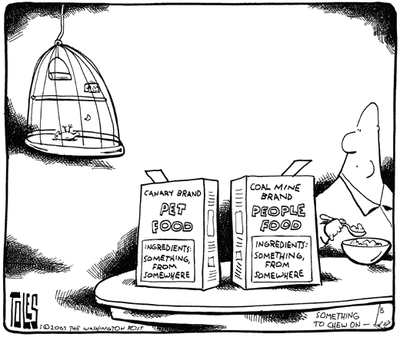
I wonder what sort of regulatory model we have arrived at that finds it commendable to break up small groups of people wanting to raise and consume a natural product with no harmful properties and yet ignores a massive, fraudulent, intentional contamination of food with industrial toxins.

By Jack Kittredge / The Rag Blog / January 2, 2009

[Jack Kittredge is a former political activist and SDS member who is now an organic farmer in Massachussetts. A version of this article appeared in the newsletter of the Massachussetts Chapter of the Northeast Organic Farming Association (NOFA). This is an excellent piece, pointing to the serious dangers of melamine and the skewed priorities of the FDA and other “regulators,” and we think it deserves a wider audience.]

Some friends involved with the Northeast Organic Farming Association have recently been finding and passing along fascinating (if somewhat chilling) news about developments on the industrial and local food fronts.

Frank Albani forwarded a 13-page document that is the first clear explanation I have seen on melamine. Melamine is the white powder derived from petroleum used in the production of plastic goods. It has nearly the same chemical structure as the milk protein casseinate, but with extra nitrogen ions. It has been added to milk and other foods as a very cheap way to boost the apparent protein content of the food.

If ingested, however, the extra nitrogen ions prevent the compound from being absorbed or excreted by the kidneys. It eventually forms kidney stones that block the tubes that cleanse and excrete urine. This leads to intense pain, swelling, bleeding and eventual death. Emergency surgery can remove the stones, but by then there is often irreversible kidney damage and life-long dialysis, or regular blood-washing hooked up to a machine in a hospital, is necessary.

In 2007 over 50,000 United States cats and dogs died suddenly and investigators found that pet food from China contained high levels of melamine. Starting in 2008 an increase in the number of infant kidney stone cases in China was reported. In August of 2008, the Chinese milk powder Sanlu tested positive for melamine. In September, pressured by New Zealand, China tested a broad line of milk-based food products, many of which showed melamine content. New Zealand, Australia and most EU nations issued recalls and public warnings. The US, however, remained silent.

Billions of dollars worth of milk-based Halloween and holiday candy continue to pour out of China to our shores. Some of the familiar brand names offering products containing dairy ingredients from China include: Kraft, M&M, Nabisco, Nestle, and Snickers.

So much for news on the industrial food front. On to the local angle.

Steve and Barbara Smith operate Meadowsweet Dairy in the Finger Lakes region of New York and process raw milk from their cows into products like yogurt, butter and cream for the 120 shareholding families in their herdshare. (In case you haven’t heard of herdshares, they are legal arrangements whereby consumers purchase a share of a herd of cows and hire a farmer to milk the cows and provide the consumer with the milk—or milk products—from the cow he or she already owns. The idea takes advantage of the almost universal exemption for owners of cows to legally consume their cow’s unpasteurized milk products.)

I interviewed the Smiths for the “Families and Farming” issue of The Natural Farmer in 2001 and found them to be warm and wonderful NOFA farmers and parents, and their lemon kefir simply delicious!

Despite no cases of health or other problems with Meadowsweet Dairy, however, New York’s Department of Agriculture and Markets has been trying to shut them down. In the Empire State, raw milk permits allow the farm to sell just unprocessed raw milk — no cream, butter, yogurt, or other “processed” raw milk products. They apparently see the herdshare as a ruse and an attempt to sell raw milk products outside the law.

Jill Ebbott alerted me and several others to the excellent blogs by David Gumbert regarding federal and state efforts to shut down raw milk dairies, including the Smiths’. Most upsetting when I read these was the news that a New York state court has now ruled against the Smiths, Judge John C. Egan, Jr. saying that herdshares give no exemption from regulation. He ruled that the shareholders were consumers “based on the plain meaning of the word” and that the state had the power to search the dairy, open and seize containers and products, and regulate its operations.

The state is now aggressively following up on this victory by going against other local farmers. In a late November press release the Department of Ag and Markets says their inspectors are organizing squads “dedicated to administering and enforcing the State’s food safety laws and regulations to protect the public health…”

I sometimes wonder what sort of regulatory model we have arrived at in this country that finds it commendable to break up small groups of people wanting to raise and consume a natural product with no harmful properties and which they believe is healthful for their families, and yet ignores a massive, fraudulent, intentional contamination of food with industrial toxins.

I don’t want to believe that there is a deeper villain here. Could it simply be easier to go after the Smiths and the local families they serve than to pick a fight with large corporate food companies that have lawyers and PR departments and friends in high places? Could it be that the FDA is just acting out the anti-regulatory beliefs of the Republicans while the NY zealots are responding to a liberal, Democratic and big government agenda?

Or are some of my friends right — those who believe that our public health enforcers’ fetish for sanitizing is a conscious effort to squeeze out the small farmer and food artisan, leaving only one food system, the industrial, global one. Then, with a population half sick and with no alternatives to regain natural good health, the pharmaceutical and food conglomerates will have us where they want us.

As Gumpert concludes, we have an important fight on our hands — for the sake of our health and our family’s health, we need to keep small farmers and food producers alive and thriving. And as Michael Pollan suggests, we need to stop buying any product of the food industry that needs to have a label; it is no longer a food. If enough of that happens then we can have our sustenance from men and women who know us, want our trade, and are willing to hold to high standards to deserve it.

Also see The Real Melamine Story: The FDA Isn’t Protecting Us by James E. McWilliams / The Rag Blog / Dec. 29, 2008

Thanks to Allen Young / The Rag Blog

Posted in Rag Bloggers | Tagged , , , , , , | 2 Comments

A New Year’s Day Thought

There comes a point in your life when you realize who matters, who never did, who won’t anymore… And who always will. So, don’t worry about people from your past, there’s a reason why they didn’t make it to your future. Be kinder than necessary, because everyone you meet is fighting some kind of battle.

With thanks to Diane Stirling-Stevens / The Rag Blog

Posted in RagBlog | Tagged , | 1 Comment

Houston : The Unexplained Death of Spook Roland Carnaby

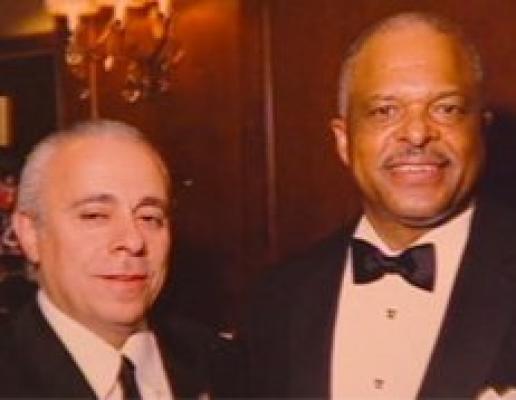
Roland Carnaby, left, in an undated photo with Houston Police Chief Harold Hurtt taken at a HPD Policeman’s Ball. Photo provided by family / KHOU.com.

Roland Carnaby had claimed to be a CIA agent and showed identification. The CIA quickly put out the word that he was not its employee. The papers and corporate media were filled with stories about how this strange fellow was probably a CIA wannabe. The dead man was trashed and ridiculed.

By Sherman DeBrosse / The Rag Blog / January 1, 2009

The news cycle has moved on, and the shooting death of Roland Vincent “Tony” Carnaby has been forgotten. The Houston police shot him on April 29, 2008, after an automobile chase. There were many strange circumstances about the shooting, and it is unlikely that the full truth will ever surface.

The circumstances surrounding the shooting are still unclear. Before the arrest, he had been stopped for speeding. He showed an officer what he said was CIA identification. The officer questioned his identification. It’s a reasonable guess that something spooked Carnaby. We know now that there is one unexplained hole in the left rear passenger door of his car. Did it come earlier or at that point? He took off and there was a 50 mile chase, with speeds up to 120 mph.

He talked to a friend on the cell phone during the chase and was advised to pull over. His response was “I can’t.” He made calls to the FBI and to someone in the Houston Police Department during the chase. After the chase, he refused to roll down the window. Police broke it with a billy club. The first policeman to approach came to the passenger side of the car, and what he might have been doing was not completely captured on a squad car camera. Police claim Carnaby seemed erratic when he stepped out of the vehicle. He then reached under the seat for a shiny Blackberry PDA and seemed to move toward an officer. That move got him killed. An officer saw something shiny and fired into Carnaby’s back.

They have not released their videos of the shooting. His attorney said that Carnaby must have felt he was being set up. Others say that for some reason or other he wanted the police to kill him. A Houston homicide captain later made a strange comment, saying he was told that Carnaby should be arrested for “something” other than speeding.

The black Jeep SUV he was driving was supposedly owned by the National Security Command Center. At first it seemed that there was no such agency. There is, and it is an appendage of the NSA in Fort Meade, Maryland.

Inside the car were two pistols, a shotgun, more CIA identification, a lapatop, and cell phones. A gag order was placed on autopsy information even though autoposy information in Houston is almost always 100% open. His widow has been unable to recover Carnaby possessions removed from the vehicle. Some of the possessions had been seized by federal agents. There are reports that the police disposed of some of the possessions as well as of some videos of the incident.

He had claimed to be a CIA agent and showed identification. The CIA quickly put out the word that he was not its employee. The papers and corporate media were filled with stories about how this strange fellow was probably a CIA wannabe. The dead man was trashed and ridiculed.

Though his home is filled with CIA memorabilia, the agency flat out insisted that he had never been an employee. There were all sorts of articles that suggested a life found in far-flung places. The agency sent a representative to aid the HPD in its investigation. For some reason, there is a lot of effort being exerted to discredit this man. His former wife said he told tall stories and one man speaking to the media about him is considered an asset of a foreign intelligence service. Some of this effort resembles previous attempts to make Valerie Plame appear to have been a mere desk clerk at the CIA.

It is clear that no one came to his defense after the shooting. One close friend and FBI official had called the HPD during the chase asking that it be stopped. Later, the man distanced himself from Carnaby. The CIA also went out of its way to deny ties with Carnaby.

He is being widely portrayed as a CIA wannabee. We can prove that his uncle Boudi was Army Intelligence in World War II and appears on the Association for Intelligence Officers’ CIA Wall of 83 Stars and OSS Memorial. There is also a notation about Roland being president of the Houston chapter. One would think that a local chapter would not elect someone president if there were doubts about his status, but some say he entered the chapter as an associate member. Members have defended his claim to have been a CIA agent, and some other intelligence professionals think he was assassinated. A Russian web site says Carnaby was a CIA agent called by the KGB “Tuxedo.” Perhaps the question comes down to whether he was an actual agent or a contractor. His family has provided many certificates that indicate he was at least a contractor.

We do know that he operated a successful security firm in Houston and most probably had contracts with the US government. He was an expert in financial information and counter-terrorism. He provided some security services for the Houston airports and port authority. Carnaby was about to retire and leave management of the firm to former CIA agent who may have been connected with the rendition of prisoners. The firm has 248 licensed operatives around the world.

He spoke fluent French and Arabic and had good contacts throughout the Middle East, partly through his family’s shipping business. His father had been Lebanese ambassador to several nations. The Carnaby intelligence firm was running 40 operatives out of Rome who were tracking money flows from the Russian-Israeli mafia and Iserael. It apparently relies heavily upon Panamanian banks and has become a presence here in the United States, even getting involved in gambling casinos. He was also tracking Israeli intelligence financial operations and the activities of Israeli agents within the United States. Houston is an important center for Mossad activities in shipping, aviation, sales and warehousing.

Carnaby’s CIA momentos. Photo by Houston Chronicle.

Carnaby had worked for the agency in Beruit and was captured by Hezbollah 1984. After Carnaby’s capture, his boss, William F. Buckley, was captured, tortured, and murdered. Carnaby was returned in an prisoner exchange arranged by the Lebanese government. Recently, Carnaby rejoiced when the man behind his capture died when his car blew up. Mossad had planted as bomb in the seat of the car. But some blamed Carnaby when word was leaked that another seat bomb was earmarked for Hassan Nasrallah, Hezbollah leader in Lebanon. Carnaby had close ties with the Israeli government, and some thought that an aid to Prime Minister Omert tipped off Carnaby. His fear was that killing Nasrallah would set off a war in Lebanon, which would require US intervention against Hezbollah and Syria, and eventually against Iran. The plot against the Hezbollah leader was to come off four or five days before Carnaby was killed.

In 2008, he was working out of the same office building where the office of George H.W. Bush occupies the whole 9th floor. Carnaby’s job concerned the security of the Port of Houston. He was concerned that Homeland Security was doing too little to protect the port and to prevent illegal arms shipments from passing through it. When the Houston police killed him, they seized his laptop and cell phone. Both could be used to learn more about the CIA’s network of NOC (non-official cover) people who worked on such matters. There is a fear that the intelligence agency of another government could have gotten information off the computer and phone.

In 1994, Carnaby, then working in counter-terrorism, testified before a federal grnd jury ab out the 1993 bombing of the World Trade Center. Both CArnaby and his friend John O’Neill knew how much prior knowledge the federal government had about the bombing as well as its links to Saudi Arabia. Much of that information was suppressed. Carnaby carried in his wallet a laminated funeral mass card with the image of his friend John O’Neill. Both were mavericks and patriots. O’Neill even explored the possibility that two Arabs in a dingy were not responsible for the attack on the USS Cole. He asked too many questions and was quickly sent home. By all accounts, O’Neill was our most talented terrorist hunter, but he was quickly forced to resign. Ironically, he became head of security at the World Trade Center and died trying to help people escape.

Carnaby was a friend of James Baker III and George H.W. Bush, who had been seen recently giving Carnaby a hug in a restaurant. He shared their aversion to more military adventures in the Middle East and was angry that Dick Cheney pushed George W. Bush into Iraq. A conservative Republican, Carnaby was backing Ron Paul. Among the pallbearers at his funeral were former president George H. W. Bush, former KBG General Oleg Kalugin and former Deputy Director for Operations James Pavitt. George Tenet was among a cluster of Washington politicians.

Perhaps his killing had to do with other information he had or something he was doing.

There was speculation that he was trying to move weapons to the Aoun faction—the “generals” — in Lebanon. Would that have been a sanctioned activity?

He was an expert in tracing Israeli cash flows around the world. It has been said that a Mossad faction in the police department was behind his death, but Israeli intelligence is too experienced and professional to get involved in such a messy hit.

Investigator Wayne Madsen was told that Carnaby had information on the Jack Abraham political/financial network as well as how the prosecution and death of Deborah Jean Palfrey was related to that. She killed herself on May 1, 2008, in a shed on her mother’s property. Her call girl service was involved with Republican corruption in Maryland, and it is likely that she knew a great deal about the sex rings servicing federal officials and mostly Republican politicians in D.C. Palfrey’s ring was supposedly tied to important federal defense contractors and was used my many ranking politicians and the larger part of one Republican state delegation to Congress.

Much of the money Abramoff distributed to Republicans came from Russian oil and gas interests and the Russian mob, which was buying into US casinos. There was already a messy murder connected with an Abramoff casino in Florida that has been pretty well covered-up. The Russian mob’s casino activitie4s wre probably partly to blame for the wrongful prosecution of Don Siegelman in Alabama. A great deal of the money Abramoff used as part of the K Street scheme for funding the GOP was skimmed off of US defense and intelligence contracts and rerouted back to the Republican Party.

There have been a few prosecutions, including one of a ranking CIA official, but we will probably never know the full extent of this network. It is very likely that at least two US Attorneys were sacked for looking into these matters.

On the other hand, the shooting could be about cops who became very suspicious and hostile when they saw a prosperous Arab guy and somehow got involved in a bad shoot.

If this were the case, it would be a bad situation. But it would not be as bad as having to wonder if this man died at the hands of foreign intelligence services, the Russian mafia, or people tied to a very corrupt domestic criminal activities that will probably never be brought to light.

[Sherman DeBrosse, the pseudonym for a retired history professor, is a regular contributor to The Rag Blog and also blogs at Sherm Says and on DailyKos.]

The Rag Blog

Posted in Rag Bloggers | Tagged , , , | 6 Comments

POETRY / Alyce Guynn : Cardinal in Pyracantha

Cardinal, detail from quilt / Wolven CyberArts

Cardinal in Pyracantha

A wind chime plays softly
the melody of memory
soaked in winter sun

Bright the contrast
between then and now

like the cardinal
in my pyracantha bush

The breeze behind the music
is cold against
the warmth of winter sun

© Alyce Guynn

Alyce Guynn / The Rag Blog
Austin, Texas
December 31, 2008

The Rag Blog

Posted in Rag Bloggers | Tagged , | 2 Comments

Hamas Rockets, Smart Bombs and Israeli Politics

‘Even smart bombing is bound to cause civilian casualties and much of the Israeli bombing is less than smart. So, of course, when the body count of Palestinian civilians exceeds the body count of Israeli civilians (as it always does) the Israeli response is disproportionate.’

By Steve Russell / The Rag Blog / December 31, 2008

Damn Jews. Shooting back.

Overwhelming force applied over a few stray missiles.

No sense of proportion, those Israelis.

What’s going on politically? Bennie Netanyahu was opposed to giving up the Gaza Strip. His position was that land can’t buy peace, and Gaza would just be a launching pad for military attacks on Israel.

It’s the US equivalent of saying “Newt Gingrich was right” but Netanyahu was right, and this massive retaliation is timed to the Israeli elections. It gives the right a chance to say they told the voters so and the left a chance to demonstrate they are not wimpy.

Election cycles do not so constrain Hamas. Their position remains the same. Remember the alien in “Independence Day” after the POTUS has tried to open negotiations to no avail and finally said “What do you want us to do?”

“Die! Die!”

I have been informed by some that strapping bombs on children is simply a low tech way of fighting a war, certainly not a tactic preferred by the poor.

So I don’t suppose I would have any luck criticizing the lobbing of missiles at civilians.

Cue the lecture about moral equivalence. Even smart bombing is bound to cause civilian casualties and much of the Israeli bombing is less than smart. So, of course, when the body count of Palestinian civilians exceeds the body count of Israeli civilians (as it always does) the Israeli response is disproportionate.

And the 15 year old pizza bomber is just more of the same, the moral equivalent of an Israeli jet jockey.

There is, quite literally, no place to put a missile battery in Gaza where it would not be surrounded by civilians, assuming Hamas was suicidal enough to do so. Therefore, any criticism of Hamas for siting missiles among civilians is clearly out of place. Shit, it amounts to arguing that Hamas has no right to lob missiles into Israel, and that’s a clearly untenable position.

It’s possible to point at the Israel lobby when complaining about how US pols cave on cue and seldom put any daylight between our policy and Israel’s.

But it’s also possible to point at Hamas and observe that among ordinary Americans the moral equivalence argument will never fly. I don’t see anything progressive in the moral equivalence argument, so in this matter it’s hard for me to say the voters are stupid.

So Netanyahu’s prediction about what would happen if Israel gave Gaza over to the Palestinians has been shown correct.

If Netanyahu comes back to power, there will be no peace during his time. That suits Hamas just fine but it does not suit me and….well, I won’t speculate on what US policy is beyond seeking a ceasefire.

Bush II’s first foreign policy pronouncements involved ridiculing Clinton’s efforts to broker a deal between the Israelis and the Palestinians and as a result the Israeli right was emboldened to scuttle those efforts.

I don’t think Obama should similarly work the sidelines. He should keep out of it unless asked by the current President to involve himself.

Let’s say that when Obama is sworn in, there is another ceasefire. Or not–it hardly matters. Gaza as a launching pad is not a good idea. Gaza is a worthless piece of real estate because to be economically viable it has to trade freely with Israel or Egypt. While it needs links to the West Bank, and the West Bank has potential for economic viability on its own, the West Bank cannot be an adequate support for Gaza right now even leaving aside the contretemps between Hamas and Fatah.

So, in the immoral words of Lenin, what is to be done?

Never mind the ceasefire. That’s almost irrelevant because it would be temporary. The question is what’s to become of Gaza?

To support its people in the squalor to which they are accustomed, it needs to be economically linked to Egypt or Israel.

Which shall it be, and how shall the linkage be accomplished, keeping the body count on all sides to a minimum?

The Rag Blog

Posted in Rag Bloggers | Tagged , , , | Leave a comment

‘Terrorist’ : A Word That Comes After ‘Arab’

“Arab terrorist,” played by Albert Moses in a Nescafe commercial.

Since the classic definition of “terrorism” is the use of violence against civilians to achieve a political goal, Israel would seem to be inviting an objective analysis that it has chosen its own terrorist path. But it is clearly counting on the U.S. news media to continue wearing the blinders that effectively limit condemnations about terrorism to people and groups that are regarded as Washington’s enemies.

By Robert Parry / December 31, 2008

Israel, a nation that was born out of Zionist terrorism, has launched massive airstrikes against targets in Gaza using high-tech weapons produced by the United States, a country that often has aided and abetted terrorism by its client military forces, such as Chile’s Operation Condor and the Nicaraguan contras, and even today harbors right-wing Cuban terrorists implicated in blowing up a civilian airliner.

Yet, with that moral ambiguity excluded from the debate, the justification for the Israeli attacks, which have killed at least 364 people, is the righteous fight against “terrorism,” since Gaza is ruled by the militant Palestinian group, Hamas.

Hamas rose to power in January 2006 through Palestinian elections, which ironically the Bush administration had demanded. However, after Hamas won a parliamentary majority, Israel and the United States denounced the outcome because they deem Hamas a “terrorist organization.”

Hamas then wrested control of Gaza from Fatah, a rival group that once was considered “terrorist” but is now viewed as a U.S.-Israeli partner, so it has been cleansed of the “terrorist” label.

Unwilling to negotiate seriously with Hamas because of its acts of terrorism – which have included firing indiscriminate short-range missiles into southern Israel – the United States and Israel sat back as the humanitarian catastrophe in Gaza worsened, with 1.5 million impoverished Palestinians packed into what amounts to a giant open-air prison.

When Hamas ended a temporary cease-fire on Dec. 19 because of a lack of progress in those negotiations and began lobbing its little missiles into Israel once more, the Israeli government reacted on Saturday with its lethal “shock and awe” firepower – even though no Israelis had been killed by the post-cease-fire missiles launched from Gaza. [Since Saturday, four Israelis have died in more intensive Hamas missile attacks.]

Israel claimed that its smart bombs targeted sites related to the Hamas security forces, including a school for police cadets and even regular policemen walking down the street. But it soon became clear that Israel was taking an expansive view of what was part of the Hamas military infrastructure, with Israeli bombs taking out a television station and a university building as well as killing a significant number of civilians.

As the slaughter continued on Monday, Israeli officials confided to Western journalists that the war plan was to destroy the vast support network of social and other programs that undergird Hamas’s political clout.

“There are many aspects of Hamas, and we are trying to hit the whole spectrum, because everything is connected and everything supports terrorism against Israel,” a senior Israeli military official, who spoke on condition of anonymity, told the Washington Post.

“Hamas’s civilian infrastructure is a very, very sensitive target,” added Matti Steinberg, a former top adviser to Israel’s domestic security service. “If you want to put pressure on them, this is how.” [Washington Post, Dec. 30, 2008]

Since the classic definition of “terrorism” is the use of violence against civilians to achieve a political goal, Israel would seem to be inviting an objective analysis that it has chosen its own terrorist path. But it is clearly counting on the U.S. news media to continue wearing the blinders that effectively limit condemnations about terrorism to people and groups that are regarded as Washington’s enemies.

Whose Terrorism?

As a Washington-based reporter for the Associated Press in the 1980s, I once questioned the seeming bias that the U.S.-based wire service applied to its use of the word “terrorist” when covering Middle East issues. A senior AP executive responded to my concerns with a quip. “Terrorist is the word that follows Arab,” he said.

Though meant as a lighthearted riposte, the comment clearly had a great deal of truth to it. It was easy to attach “terrorist” to any Arab attack – even against a military target such as the bombing of the U.S. Marine barracks in Lebanon in 1983 after the Reagan administration had joined hostilities against Muslim forces by having U.S. warships lob shells into Lebanese villages.

But it was understood that different rules on the use of the word “terrorism” applied when the terrorism was coming from “our side.” Then, no American reporter with any sense of career survival would think of injecting the word “terrorist” whatever the justification.

Even historical references to acts of terrorism – such as the brutal practice by American revolutionaries in the 1770s of “tar and feathering” civilians considered sympathetic to the British Crown or the extermination of American Indian tribes – were seen as somehow diluting the moral righteousness against today’s Islamic terrorists and in favor of George W. Bush’s “war on terror.”

Gone, too, from the historical narrative was the fact that militant Zionists employed terrorism as part of their campaign to establish Israel as a Jewish state. The terrorism included killings of British officials who were administering Palestine under an international mandate as well as Palestinians who were driven violently from their land so it could be claimed by Jewish settlers.

One of the most famous of those terrorist attacks was the 1946 bombing of the King David Hotel in Jerusalem where British officials were staying. The attack, which killed 91 people including local residents, was carried out by the Irgun, a terrorist group run by Menachem Begin who later founded the Likud Party and rose to be Israel’s prime minister.

Another veteran of the campaign of Zionist terrorism was Yitzhak Shamir, who also became a Likud leader and eventually prime minister.

In the early 1990s, as I was waiting to interview Shamir at his Tel Aviv office, I was approached by one of his young female assistants who was dressed in a gray and blue smock with a head covering in the traditional Hebrew style.

As we were chatting, she smiled and said in a lilting voice, “Prime Minister Shamir, he was a terrorist, you know.” I responded with a chuckle, “yes, I’m aware of the prime minister’s biography.”

Blind Spot

To maintain one’s moral purity in denouncing acts of terror by U.S. enemies, one also needs a large blind spot for recent U.S. history, which implicates U.S. leaders repeatedly in tolerance or acts of terrorism.

For instance, in 1973, after a bloody U.S.-backed coup overthrew the leftist Chilean government, the new regime of Gen. Augusto Pinochet joined with other South American dictatorships to sponsor an international terrorist organization called Operation Condor which assassinated political dissidents around the world.

Operation Condor mounted one of its most audacious actions on the streets of Washington in 1976, when Pinochet’s regime recruited Cuban-American terrorists to detonate a car bomb that killed Chile’s former foreign minister Orlando Letelier and an American co-worker, Ronni Moffitt. The Chilean government’s role immediately was covered up by the CIA, then headed by George H.W. Bush. [For details, see Robert Parry’s Secrecy & Privilege.]

Only weeks later, a Venezuela-based team of right-wing Cubans – under the direction of Orlando Bosch and Luis Posada Carriles – blew a Cubana Airliner out of the sky, killing 73 people. Bosch and Posada, a former CIA operative, were co-founders of CORU, which was described by the FBI as “an anti-Castro terrorist umbrella organization.”

Though the U.S. government soon learned of the role of Bosch and Posada in the Cubana airline attack – and the two men spent some time in a Venezuelan jail – both Bosch and Posada since have enjoyed the protection of the U.S. government and particularly the Bush Family.

Rebuffing international demands that Bosch and Posada be held accountable for their crimes, the Bushes – George H.W., George W. and Jeb – have all had a hand in making sure these unrepentant terrorists get to live out their golden years in the safety and comfort of the United States.

In the 1980s, Posada even crossed over into another U.S.-backed terrorist organization, the Nicaraguan contras. After escaping from Venezuela, he was put to work in 1985 by Oliver North’s contra-support operation run out of Ronald Reagan’s National Security Council.

The Nicaraguan contras were, in effect, a narco-terrorist organization that partially funded its operations with proceeds from cocaine trafficking, a secret that the Reagan administration worked hard to conceal along with the contras’ record of murder, torture, rape and other crimes in Nicaragua. [See Parry’s Lost History.]

President Reagan joined, too, in fierce PR campaigns to discredit human rights investigators who documented massive atrocities by U.S. allies in Central America in the 1980s – not only the contras, but also the state terrorism of the Salvadoran and Guatemalan security forces, which engaged in wholesale slaughters in villages considered sympathetic to leftist insurgents.

Generally, the major U.S. news outlets treaded very carefully when allegations arose about terrorism by “our side.”

When some brave journalists, like New York Times correspondent Raymond Bonner, wrote about politically motivated killings of civilians in Central America, they faced organized retaliation by right-wing advocacy groups which often succeeded in damaging or destroying the reporters’ careers.

Double Standards

Eventually, the American press corps developed an engrained sense of the double standards. Moral outrage could be expressed when acts of terrorism were committed by U.S. enemies, while studied silence – or nuanced concern – would be in order when the crimes were by U.S. allies.

So, while the U.S. news media had no doubt that the 9/11 terrorist attacks justified invading Afghanistan, there was very little U.S. media criticism when President Bush inflicted his “shock and awe” assault on Iraq, a war that has resulted in hundreds of thousands of Iraqi deaths.

Though many Muslims and others around the world have denounced Bush’s Iraq invasion as “state terrorism,” such a charge would be considered far outside the mainstream in the United States. Instead, Iraqi insurgents are often labeled “terrorists” when they attack U.S. troops inside Iraq. The word “terrorist” has become, in effect, a geopolitical curse word.

Despite the long and bloody history of U.S.-Israeli participation in terrorism, the U.S. news media continues its paradigm of pitting the U.S.-Israeli “good guys” against the Islamic “bad guys.” One side has the moral high ground and the other is in the moral gutter. [For more on the U.S. media’s one-sided approach, see the analysis by Greg Mitchell of Editor & Publisher.]

Any attempt to cite the larger, more ambiguous and more troubling picture draws accusations from defenders of U.S.-Israeli actions, especially the neoconservatives, of what they call “moral equivalence” or “anti-Semitism.”

Yet it is now clear that acquiescence to a double standard on terrorism is not just a violation of journalistic ethics or an act of political cowardice; it is complicity in mass murder. Without the double standard, it is hard to envision how the bloodbaths – in Iraq (since 2003), in Lebanon (in 2006) and in Gaza (today) – would be possible.

Hypocrisy over the word “terrorism” is not an innocent dispute over semantics; it kills.

[Robert Parry broke many of the Iran-Contra stories in the 1980s for the Associated Press and Newsweek.]

Source / consortiumnews.com

Thanks to CommonDreams / The Rag Blog

Posted in RagBlog | Tagged , , , , , | 1 Comment

Rabbi Arthur Waskow : The Politics of Gaza and Beyond

The SS Free Gaza and the SS Liberty, with human rights workers and supplies from the Free Gaza Movement successfully landed in Gaza early the evening of Aug. 23, 2008, breaking the Israeli blockade of the Gaza Strip: has been a model for creating pressure for peace.

Beyond anguish, what can we say about Gaza that points toward an alternative? Not just in pretty theory, but in political practicality?

By Rabbi Arthur Waskow / The Rag Blog / December 31, 2008

Beyond anguish, what can we say about Gaza that points toward an alternative? Not just in pretty theory, but in political practicality?

The alternative for Hamas would have been to multiply the approach of the nonviolent boatloads of people who were in the last month bringing supplies to Gaza, ignoring or violating the Israeli blockade. This approach was building support in much of the world, pointing out the injustice and violence of the blockade. Instead of canceling the cease-fire and aiming rockets once again, Hamas could have turned those boats into a multitude. They might have built an enormous popular pressure in Europe and the US for an end to the blockade and negotiations between Israel, the various powers, and Hamas.

Can Hamas still take this turn toward a powerful nonviolent politics instead of a weak and dead-end military pop-gun? Much harder now. Their knee-jerk response will be to keep up enough military action to suck Israel into a land invasion and terrible carnage. Perhaps that was their intention all along. The result will be lose-lose. It will take profound rethinking to pursue a win-win path. All the sticks in the world are not likely to beat such a response out of Hamas. Carrots might, and that requires strong US support for such a move.

The alternative for the Israeli government would be to say (instead of scornfully rejecting the Saudi/Arab League proposal for a region-wide peace settlement among Israel, all Arab states, and a viable Palestinian state): We encourage it, and encourage its proponents to press Hamas to join in, while making clear that for us the deal must include only very small symbolic numbers of Palestinian refugees returning to Israel itself, and control of the Jewish Quarter and the Western Wall in the Old City of Jerusalem. And we encourage, instead of blocking, a Palestinian government of national unity, including Hamas as well as Fatah.

And — We will negotiate directly with Hamas toward ending the blockade, welcoming European and Egyptian aid and investment, releasing the members of their parliament we are holding in jail, and in exchange, get an end to the rocket attacks by Hamas, a commitment to at least fifty years of “calm” or “truce,” and their acceptance of governmental responsibility to control other groups that may try to continue.

Can an Israeli government take such steps? Perhaps now any Israeli government can do this and say that they have not rewarded terrorism, are not negotiating from weakness, have shown they can be bloody. But would they want to? That too would require a deep rethinking, because it would mean a serious commitment to ending the occupation of the West Bank and East Jerusalem, as well as the blockade of Gaza. Settlers and other opponents of doing this will, though fewer in numbers than those who will support it, be much more intense in their opposition. So the government is likely to be paralyzed, refusing to do what is necessary for peace, resorting to old slogans and the institutional and cultural power of the military to justify paralysis.

So the necessary counterweight for this domestic paralysis will have to come from outside — that is, the United States.

The alternative policy for the US government would be to use the disaster of these reciprocal attacks to call for all the above: To insist on a regional Middle East peace conference, to insist that even a Netanyahu government of Israel and even a Hamas leadership of Gaza or Palestine take part and accept a decent peace, to connect the end of the US occupation of Iraq with serious diplomacy with Iran and a political settlement of the Afghan agony; to move swiftly off the fossil fuel addiction that drives a planetary disaster and drives American policy into corruption or conquest in the Middle Eastern oil pools.

Only the biggest response can meet the need. Half-measures, the normal response of governments facing complex conflict, will not work.

And what might make such a break with automatic US policy possible? The Presidency of an unusual person chanting “change” is not enough. There are only two clusters of power in the US with enough passion about the Middle East to matter. One is Big Oil. The other is the ethnic and religious passion of American Christians, Jews, and Muslims. If sizeable parts of these groups could work together for such a policy, it might be possible.

For many Jews and Muslims, that is even harder now than it was two weeks ago. But for others, perhaps the shock of so much blood can make it possible.

Rabbi Arthur Waskow / The Shalom Center.

The Rag Blog

Posted in Rag Bloggers | Tagged , , , , , | Leave a comment

Stephanie Chernikowski :
SHINE! 2009

photo by Stephanie Chernikowski

The Ritz, Austin, Texas, 1973. © Stephanie Chernikowski.

New Year’s greeting from Stephanie Chernikowski | The Rag Blog | December 31, 2008

Posted in Rag Bloggers | Tagged , , , | Leave a comment

New Years Day : J. D. Salinger Turns 90


Still Paging Mr. Salinger
By Charles McGrath / December 31, 2008

On Thursday, J. D. Salinger turns 90. There probably won’t be a party, or if there is we’ll never know. For more than 50 years Mr. Salinger has lived in seclusion in the small town of Cornish, N.H. For a while it used to be a journalistic sport for newspapers and magazines to send reporters up to Cornish in hopes of a sighting, or at least a quotation from a garrulous local, but Mr. Salinger hasn’t been photographed in decades now and the neighbors have all clammed up. He’s been so secretive he makes Thomas Pynchon seem like a gadabout

Mr. Salinger’s disappearing act has succeeded so well, in fact, that it may be hard for readers who aren’t middle-aged to appreciate what a sensation he once caused. With its very first sentence, his novel “The Catcher in the Rye,” which came out in 1951, introduced a brand-new voice in American writing, and it quickly became a cult book, a rite of passage for the brainy and disaffected. “Nine Stories,” published two years later, made Mr. Salinger a darling of the critics as well, for the way it dismantled the traditional architecture of the short story and replaced it with one in which a story could turn on a tiny shift of mood or tone.

In the 1960s, though, when he was at the peak of his fame, Mr. Salinger went silent. “Franny and Zooey,” a collection of two long stories about the fictional Glass family, came out in 1961; two more long stories about the Glasses, “Raise High the Roof Beam, Carpenters” and “Seymour: An Introduction,” appeared together in book form in 1963. The last work of Mr. Salinger’s to appear in print was “Hapworth 16, 1924,” a short story that took up most of the June 19, 1965, issue of The New Yorker. In the ’70s he stopped giving interviews, and in the late ’80s he went all the way to the Supreme Court to block the British critic Ian Hamilton from quoting his letters in a biography.

So what has Mr. Salinger been doing for the last 40 years? The question obsesses Salingerologists, of whom there are still a great many, and there are all kinds of theories. He hasn’t written a word. Or he writes all the time and, like Gogol at the end of his life, burns the manuscripts. Or he has volumes and volumes just waiting to be published posthumously.

Joyce Maynard, who lived with Mr. Salinger in the early ’70s, wrote in a 1998 memoir that she had seen shelves of notebooks devoted to the Glass family and believed there were at least two new novels locked away in a safe.

“Hapworth,” which has never been published in book form, may be our only clue to what Mr. Salinger is thinking, and it’s unlike anything else he has written. The story used to be available only in samizdat — photocopies of photocopies passed along from hand to hand and becoming blurrier with each recopying — though it has become somewhat more accessible since the 2005 DVD edition of “The Complete New Yorker.” In 1997 Mr. Salinger agreed to let Orchises Press, a small publisher in Alexandria, Va., bring out a hardcover edition, but five years later he backed out of the deal.

Ever since, Salinger fans have been poring over the text, looking for hidden meaning. Did the author’s temporary willingness to reissue “Hapworth” indicate a throat-clearing, a warming up of the famously silent machinery? Or was it instead an act of closure, a final binding-up of the Glass family saga — one that, coming last but also at the chronological beginning, brings the whole enterprise full circle?

“Hapworth,” to summarize the unsummarizable, is a letter — or rather a transcription of a letter — 25,000 words, written in haste, by the 7-year old Seymour Glass, away at summer camp, to his parents, the long-suffering ex-vaudevillians Les and Bessie, and his siblings Walt, Waker and Boo Boo, back in New York.

Seymour, we learn, is already reading several languages and lusting after Mrs. Happy, the young wife of the camp owner. He condescends to his campmates and dispenses advice to the various members of the family: Les should be careful about his accent when singing, Boo Boo needs to practice her handwriting, Walt his manners, and so on.

The letter concludes with an extraordinary annotated list of books Seymour would like sent to him — a lifetime of reading for most people, but in his case merely the books he needs to get through the next six weeks: “Any unbigoted or bigoted books on God or merely religion, as written by persons whose last names begin with any letter after H; to stay on the safe side, please include H itself, though I think I have mostly exhausted it. … The complete works again of Count Leo Tolstoy. … Charles Dickens, either in blessed entirety or in any touching shape or form. My God, I salute you, Charles Dickens!” And so on, all the way through Proust — in French, naturally — Goethe, and Porter Smith’s “Chinese Materia Medica.”

“Hapworth,” in short, must be the longest, most pretentious (and least plausible) letter from camp ever written. But though it’s the work of a prodigy, it’s also, like all camp letters, a homesick cry for attention.

Its author is the same Seymour who, while on his honeymoon in Florida years later (but — it gets confusing — 17 years earlier in real time, in the 1948 short story “A Perfect Day for Bananafish”), will take an automatic pistol from the bottom of his suitcase and shoot himself through the temple as his bride lies napping in the twin bed next to him. And the same Seymour — the family saint, poet and mystic — whom we’ve heard about at such length in the later Glass stories.

Or is he the same? The Seymour of “Bananafish,” and “Raise High the Roof Beam,” is more a sweetly charming neurotic than the ethereal, otherworldly figure described in “Seymour: An Introduction,” who in turn seems not in the least like the superior, boastful little genius of “Hapworth.” The discrepancies among the various versions of Seymour is such that some critics have questioned the motives and reliability of Buddy, Seymour’s younger brother and the family scribe, who is our source for much of what we know (and also the transcriber of the “Hapworth” letter).

But that kind of tricky, Nabokovian reading feels forced in this case. Mr. Salinger seems less interested in keeping the details straight than in getting them right and offering some explanation, or justification perhaps, for that moment, still startling even after many rereadings, when Seymour blows his brains out. It’s as if Mr. Salinger realized, belatedly, that he had prematurely killed his best character and wanted to make it up to him.

And at some point, it seems fair to say, he fell in love with this project — not just with Seymour but with the whole clan. Who can blame him? The Glasses are one of the liveliest, funniest, most fully realized families in all of fiction. The trouble is that like a lot of families, they occasionally take themselves too seriously and presume to lecture the rest of the world. In the early ’60s, as a certain amount of sentimental and half-baked mysticism began to be spouted by some of the younger Glasses, the critics quickly turned on Mr. Salinger, and “Hapworth” was grumpily dismissed.

What makes “Hapworth” so fascinating, though, is that it’s the only work of Mr. Salinger’s in which the voice is not secure, as the young Seymour fidgets first with one tone and then with another — by turns earnest, anxious, playful and sarcastic. In effect he’s always revising himself. He worries about his spirituality and then skewers his fellow campers. He wants to be like Jesus, and he wants to sleep with Mrs. Happy. He yearns to be left alone, and is desperate to be noticed. He wants to be a saint, and even if he can’t quite admit it yet, he wants to be a great author. Intentionally or not, he seems like a projection of his creator.

In general what has dated most in Mr. Salinger’s writing is not the prose — much of the dialogue, in the stories especially and in the second half of “Franny and Zooey,” still seems brilliant and fresh — but the ideas. Mr. Salinger’s fixation on the difference between “phoniness,” as Holden Caulfield would put it, and authenticity now has a twilight, ’50s feeling about it. It’s no longer news, and probably never was.

This is the theme, though, that comes increasingly to dominate the Glass chronicles: the unsolvable problem of ego and self-consciousness, of how to lead a spiritual life in a vulgar, material society. The very thing that makes the Glasses, and Seymour especially, so appealing to Mr. Salinger — that they’re too sensitive and exceptional for this world — is also what came to make them irritating to so many readers.

Another way to pose the Glass problem is: How do you make art for an audience, or a critical establishment, too crass to understand it? This is the issue that caused Seymour to give up, presumably, and one is tempted to say it’s what soured Mr. Salinger on wanting to see anything else in print.

Sadly, though, Mr. Salinger’s spiritual side is his least convincing. His gift is less for profundity than for observation, for listening and for comedy. Except perhaps for Mark Twain, no other American writer has registered with such precision the humor — and the pathos — of false sophistication and the vital banality of big-city pretension.

For all his reclusiveness, moreover, Mr. Salinger has none of the sage’s self-effacement; his manner is a big and showy one, given to tours-de-force and to large emotional gestures. In spite of his best efforts to silence himself or become a seer, he remains an original and influential stylist — the kind of writer the mature Seymour (but not necessarily the precocious 7-year-old) would probably deplore.

Copyright 2008 The New York Times Company

Source / New York Times

Thanks to Harry Edwards / The Rag Blog

Posted in RagBlog | Tagged , , , | Leave a comment

Lisa Sanchez Gonzalez : The Real Problem of the 21st Century

30 Rock’s Kenneth the page (Jack McBrayer): “What about white men?”

I would go as far as to say that the defining problem of the 21st-century United States is not, as W.E.B. DuBois claimed of the 20th, the “color line.” Nor is it women’s rights. Instead, it’s a novel permutation of the two — discrimination and reproduction — as they intersect with poverty, which is of course inclusive of all women and children — of whatever background — living in poverty.

By Lisa Sanchez Gonzalez

[Lisa Sanchez Gonzalez is a teacher and author. She studied classics and comparative literature at UCLA where she received her PhD in 1995. She has taught at universities in the United States, Puerto Rico and Brazil. She posts on Lisa’s Blog which she calls an “experimental project” and points out that the “I” and other characters in her pieces are fictional composites. She posted the following on Dec. 19, 2008.]

Did you see the “30 Rock” episode last night? As Tracy and Jenna argue over who is more oppressed — black men or white women — Kenneth the page interrupts to ask “what about white men?” Then Jack the network executive steps in and tells Kenneth “white men? You have more like the socioeconomic standing of an inner-city Latina.”

Hilarious.

Seriously, it was very funny, grain of truth and all. Absurd of course to think of a white southern male being the lowest of the low on the identity prestige-cum-power totem pole in the United States, but that’s probably what made me giggle.

Perhaps I should have been insulted, being a Latina who has spent most of her life in inner cities. But somehow I was amused. It’s not because I’ve bought into some “post-racial” or “post-gender” notion of social relations in the U.S. — far from it — but rather because I was glad to see a moment in one of the finest comedies on air acknowledge that the white female/black male oppression debate that seethed under (and often over) the surface of the Clinton/Obama contest was, well, absurd. Absurd in part because neither Clinton nor Obama, much like Jenna or Tracy, could be rationally considered “oppressed” individuals (and their roles as representatives of “oppressed” constituencies are equally belied by their individual successes). Absurd too because this particular (and wildly popular) chapter of the “quién es mas oprimido?” game on the national stage utterly ignores the most disempowered and thoroughly disadvantaged group in the U.S.: low-income children.

And being that the children of inner-city Latinas are much more likely than most other children to suffer poverty and that Latinos will soon be the single largest community defined by racial/ethnic type in the United States, the symbolic white woman/black man contest for paragon of adversity seems, if not utterly irrelevant, than utterly out of date. Not to mention the fact that most Latino and African American children living in poverty are being raised by single mothers, nor the irony that, east of the Mississippi, many Latinas are often mistaken for black women.

In fact, I would go as far as to say that the defining problem of the 21st-century United States is not, as W.E.B. DuBois claimed of the 20th, the “color line.” Nor is it women’s rights. Instead, it’s a novel permutation of the two — discrimination and reproduction — as they intersect with poverty, which is of course inclusive of all women and children — of whatever background — living in poverty.

And if you think that Latino poverty is a function of illegal immigration, think again. The poorest Latino community by far is the stateside Puerto Rican community, which does not comprise immigrants. In case you didn’t get the memo, all Puerto Ricans have been born U.S. citizens since the passage of the Jones Act in 1917; as citizens, their movement from the island to the mainland U.S. is called migration.

When the pundits talk about children in poverty, usually the discussion pivots on education. No Child Left Behind, etc. What is needed is more money for education. Can’t argue with that.

Or can you? The overwhelming share of funding for public education goes to teacher salaries and benefit packages. The overwhelming majority of the nation’s public school teachers today are white females, and will continue to be (upwards of 80%) in the foreseeable future. Ergo, a bigger investment in public education means more employment and better pay for one particular cohort of white women, who are, by the way, as a group, already the largest single beneficiary of affirmative action.

Don’t get me wrong. Excellent teachers should be paid well, and good schools should be adequately funded, but how is that supposed to alleviate the poverty of the students who attend those public schools? The operative theory behind this idea is a convoluted mix of true and false assumptions. Go ahead, take the quiz:

(True or false) 1. Better pay for teachers magically transforms them into better teachers. 2. Better teaching results in better learning. 3. Better learning ensures that children born into poverty transcend poverty as adults. (The answers are: 1. false; 2. true; 3. false)

The problem behind this logic should be obvious. Better pay scales for teachers do not translate into better educational achievement for the poorest children, and the poorest children, even if they are excellent students, are least likely to go to college and thus improve their lifetime earning potential because, like more and more Americans in the lower income brackets, they can’t afford it. The state of Connecticut, for example, has some of the best pay and benefit packages for its public school teachers and some of the worst performing school districts in the nation. And of course those failing districts’ students are predominantly Puerto Rican and African American. Even with state income tax revenue supplementing those districts, they are failing, and even the college-bound students from the districts tend to come out grossly under-prepared for success in higher education and drop out of college at a rate far exceeding their suburban peers.

Which leads to the second theme the pundits revert to when children and poverty are the subjects. It usually goes something like “public schools can only accomplish so much. Parents need to take more responsibility for their children’s education and other needs.” This leads inevitably down the trail of the “culture of poverty” way of thinking, which has been echoed by countless politicians of all persuasions (even our President-elect — more than once). Simply put, the main idea behind this school of thought is that people living in poverty suffer from a congenital form of nihilism. They don’t succeed because they don’t even try to succeed; their cultures, in other words, set them up for failure. So transcending poverty requires a massive psychological cure that entails rejecting the culture into which the poor are born. Kill the culture, save the child.

One of the most blatant problems with that way of looking at it is the obvious fact that winners come from every socioeconomic strata. Losers too. Some gazillionaires never go to college, some college grads never find a good job. And I can say from experience that all the education in the world doesn’t make the world look at a Puerto Rican woman any differently. I have a PhD. I survived poverty. I should know.

(Though personal experience, in my experience, isn’t all that reliable when coming to big conclusions. Uh-oh, I feel a research project coming on…)

I think one thing that’s certain in all of this is that women need to have the right to choose whether or when to have children. We could make huge strides in ending childhood poverty if we simply incorporated better, more meaningful reproductive education and resources into the lives of our young adult women and girls. ALL of them. Really teach them the options they have. Empower them to make informed and careful decisions about their lives and the lives they may potentially create.

In the meantime, let’s hope our kids earn their rightful place at the center of national debate.

Source / Lisa’s Blog

The Rag Blog

Posted in RagBlog | Tagged , , , , | Leave a comment

Those Wacky Republicans : "Magic Negro" May Actually HELP Candidate Saltsman

‘Four days after news broke that the former Tennessee GOP chairman had sent a CD including a song titled “Barack the Magic Negro” to the RNC members he is courting some of those officials are rallying around the embattled Saltsman.’
By Andy Barr / December 30, 2008

The controversy surrounding a comedy CD distributed by Republican National Committee chairman candidate Chip Saltsman has not torpedoed his bid and might have inadvertently helped it.

Four days after news broke that the former Tennessee GOP chairman had sent a CD including a song titled “Barack the Magic Negro” to the RNC members he is courting, some of those officials are rallying around the embattled Saltsman, with a few questioning whether the national media and his opponents are piling on.

“When I heard about the story, I had to figure out what was going on for myself,” said Mark Ellis, the chairman of the Maine Republican Party. “When I found out what this was about I had to ask, ‘Boy, what’s the big deal here?’ because there wasn’t any.”

Alabama Republican Committeeman Paul Reynolds said the fact the Saltsman sent him a CD with the song on it “didn’t bother me one bit.”

“Chip probably could have thought it through a bit more, but he was doing everyone a favor by giving us a gift,” he said. “This is just people looking for something to make an issue of.”

“I don’t think he intended it as any kind of racial slur. I think he intended it as a humor gift,” Oklahoma GOP Committeewoman Carolyn McClarty added. “I think it was innocently done by Chip.”

The song came with 40 others on an album from conservative satirist Paul Shanklin, a personal friend of Saltsman. The song is a parody of a 2007 Los Angeles Times column of the same title and is written to the tune of “Puff the Magic Dragon.”

“Barack the Magic Negro lives in D.C.” the opening of the song goes. “The L.A. Times, they called him that ‘cause he’s not authentic like me. Yeah, the guy from the L.A. paper said he makes guilty whites feel good. They’ll vote for him, and not for me, ‘cause he’s not from the ‘hood.”

The song, written shortly after the publication of the Times column, was first played on the Rush Limbaugh radio show. On Monday, Limbaugh prominently re-posted the song on the top left corner of his website above the headline, “Drive-by media misreporting of ‘Barack the Magic Negro’ song.”

The flap has generated unflattering attention at a time when the GOP is trying to rebuild its brand and reach out to new voters after an election in which GOP presidential nominee John McCain ran poorly among minority constituencies.

The day after the story was first reported by The Hill, RNC Chairman Mike Duncan issued a statement expressing disgust over the song.

“The 2008 election was a wake-up call for Republicans to reach out and bring more people into our party,” said Duncan, who is seeking reelection to his post. “I am shocked and appalled that anyone would think this is appropriate as it clearly does not move us in the right direction.”

Duncan was joined by Michigan GOP Chair Saul Anuzis, another RNC chairmanship aspirant who chided Saltsman for sending out the CD.

North Dakota Republican Party Chairman Gary Emineth said he was “disappointed” when he heard about the story and questioned Saltsman’s viability as a candidate going forward.

There are a lot of things about Chip that would have made a good a RNC chairman, but this has definitely hurt him,” he said in an interview with Politico. “With less than a month to go, Chip needs to be talking about where he wants to lead the party, and he is not going to get that opportunity.”

Not everyone is so sure, with some RNC members contending that Anuzis and Duncan may have actually hurt their candidacies with their responses.

“Those are two guys who just eliminated themselves from this race for jumping all over Chip on this,” one committee member told Politico. “Mike Duncan is a nice guy, but he screwed up big time by pandering to the national press on this.”

While South Carolina GOP Chairman Katon Dawson and former Maryland Lt. Gov. Michael Steele have decided to stay away from the controversy, offering no comment, former Ohio Secretary of State Ken Blackwell, who would be the party’s first black chairman, has drawn notice for his vigorous defense of Saltsman.

“Unfortunately, there is hypersensitivity in the press regarding matters of race. This is in large measure due to President-elect Obama being the first African-American elected president,” Blackwell said in a statement. “I don’t think any of the concerns that have been expressed in the media about any of the other candidates for RNC chairman should disqualify them. When looked at in the proper context, these concerns are minimal. All of my competitors for this leadership post are fine people.”

As a result of his position, a source close to the race said that at least 12 uncommitted committee members have contacted Blackwell to thank him for his support for Saltsman and have expressed anger toward Duncan and Anuzis “for throwing a good Republican under the bus.”

Indeed, in a fluid race in which six candidates are vying for the votes of 168 members, both Blackwell and Saltsman stand to benefit from a backlash to the flap.

Most observers expect Duncan to lead after the first ballot, but few expect he or any other candidate will be able to secure election on a first ballot. For either Saltsman or Blackwell to win election they will likely need the votes of the other’s supporters to break in their direction, along with any other committee members who are not enamored of Duncan’s leadership.

In calls to committee members in recent days, both Saltsman and Blackwell have been reminding Republicans of how both Duncan and Anuzis reacted to the story.

“I wasn’t angered by what Mike had said; it was just revealing to me how each one responded,” said Ellis of Maine, who as an uncommitted member received calls from all six candidates Monday. “Their responses were kind of a surprise to me because I saw it as something that was not an issue, something that was manufactured from outside the committee.”

Source / Politico

Also see Tone Deaf GOP : Just Humming Along? by Larry Ray / The Rag Blog / Dec. 28, 2008

And ‘Magic Negro’ and ‘Star Spanglish Banner’ : Republicans are Equal-Opportunity Offenders by Mike Allen / The Rag Blog / Dec. 27, 2008

The Rag Blog

Posted in RagBlog | Tagged , , , , , , | 1 Comment

2008 : Bush Blew it on Katrina, But Where Were the Progressives?

Speaker Nancy Pelosi in Chalmette, La., Aug. 14, 2007. Pelosi and a congressional delegation of Democrats were visiting Hurricane Katrina ravaged areas. With her are House Majority Whip James E. Clyburn, D-S.C. (right) and U.S. Rep. Charlie Melancon, D-La. Photo by Dave Martin / AP.

‘On one of the biggest human rights tragedies within our own borders — a hurricane which devastated an area the size of Great Britain, killed 1,800 people and uprooted a million residents — progressives had little to offer.’
By Chris Kromm / December 30, 2008

What was it that finally turned public sentiment against President Bush and the Republicans after their post-9/11 rise in popularity? Not the Iraq war or Abu Ghraib, issues which rightfully became focal points for progressive opposition. According to Bush’s own aides, it was Washington’s failed response to the tragedy of Hurricane Katrina

That’s the finding of “An Oral History of the Bush White House” by Cullen Murphy and Todd Purdum in Vanity Fair. Featuring interviews with people close to Bush about key moments in his presidency, the consensus among Bush’s friends and critics alike is that Katrina marked the unraveling point of Bush’s presidency and Republican dominance. A couple choice quotes:

Dan Bartlett, White House communications director and later counselor to the president: Politically, it was the final nail in the coffin.

Matthew Dowd, Bush’s pollster and chief strategist for the 2004 presidential campaign: Katrina to me was the tipping point. The president broke his bond with the public. Once that bond was broken, he no longer had the capacity to talk to the American public. State of the Union addresses? It didn’t matter. Legislative initiatives? It didn’t matter. P.R.? It didn’t matter. Travel? It didn’t matter. I knew when Katrina–I was like, man, you know, this is it, man. We’re done.

What’s shocking is how little progressives and Democrats understood this. In the months after Katrina, progressives were rightfully pouring into the streets to protest the Iraq war, and blogs and book writers were churning out millions of pages on human rights crimes like CIA torture flights and Abu Ghraib.

But on one of the biggest human rights tragedies within our own borders — a hurricane which devastated an area the size of Great Britain, killed 1,800 people and uprooted a million residents — progressives had little to offer.

Democratic leader Rep. Nancy Pelosi didn’t make it to the Gulf Coast until six months after Katrina hit. I was in New Orleans when she came, preparing the first of several Institute reports trying to bring national attention to the ongoing crisis in the Gulf. Pelosi told the TV cameras she was “shocked” at the devastation she saw. Locals just rolled their eyes — Pelosi only underscored how out of touch Congressional Democrats were with what was happening in the Gulf Coast.

Each time our team went to interview residents in New Orleans and coastal Mississippi, we got the same questions: Why aren’t they doing anything in Washington? Where’s the outrage? Where’s the legislation? Has the country forgotten about us?

The strange thing is that the country hadn’t forgotten about Katrina. Millions of people — especially faith groups — cared deeply and took action, committing time and money to deliver supplies, rebuild houses and help those in need. There was a massive constituency across the country ready to be mobilized around the cause of Gulf Coast recovery.

But progressives dropped the ball. Even after Democrats recaptured Congress in 2006 — more the result of Katrina than anything done by Howard Dean and Rahm Emanuel — there was little movement on rebuilding New Orleans’ ramshackle levees or addressing the crisis of affordable housing.

There was no shortage of good ideas: In spring 2007, we released an entire report on concrete policy propsals coming from Gulf Coast leaders on how to jump-start the failing recovery. But aside from a few token pieces of legislation, none were honestly pursued.

The results of that failure of progressive leadership are with us today. Thousands of Gulf families are still struggling and displaced. Affordable housing is scarce. Hundreds of miles of Louisiana coast is still being destroyed by industrial activity, removing a critical natural defense against future storms.

Katrina wasn’t just the turning point for Bush and Republicans. It also marked a failure of Democratic and progressive leadership — with deadly consequences.

Source / Facing South / Institute for Southern Studies

The Rag Blog

Posted in RagBlog | Tagged , , , , , , | 2 Comments