Offshore Drilling Rigs Could Be in California’s Future

The coast off Jenner, north of Bodega Bay, is one area that would be attractive to oil companies, but the Cordell Bank marine sanctuary would still be off limits. Photo: Brian L Frank/The Chronicle.

Drillers eye oil reserves off California coast
By Jane Kay / December 29, 2008

The federal government is taking steps that may open California’s fabled coast to oil drilling in as few as three years, an action that could place dozens of platforms off the Sonoma, Mendocino and Humboldt coasts, and raises the specter of spills, air pollution and increased ship traffic into San Francisco Bay.

Millions of acres of oil deposits, mapped in the 1980s when then-Interior Secretary James Watt and Energy Secretary Donald Hodel pushed for California exploration, lie a few miles from the forested North Coast and near the mouth of the Russian River, as well as off Malibu, Santa Monica and La Jolla in Southern California.

“These are the targets,” said Richard Charter, a lobbyist for the Defenders of Wildlife Action Fund who worked for three decades to win congressional bans on offshore drilling. “You couldn’t design a better formula to create adverse impacts on California’s coastal-dependent economy.”

The bans that protected both of the nation’s coasts beginning in 1981, from California to the Pacific Northwest to the Atlantic Coast and the Straits of Florida, ended this year when Congress let the moratorium lapse.

President-elect Barack Obama hasn’t said whether he would overturn President Bush’s lifting last summer of the ban on drilling, as gas prices reached a historic high. Sen. Ken Salazar, D-Col., Obama’s pick as interior secretary and head of the nation’s ocean-drilling agency, hasn’t said what he would do in coastal waters.

The Interior Department has moved to open some or all federal waters, which begin 3 miles from shore and are outside state control, for exploration as early as 2010. Rigs could go up in 2012.

National marine sanctuaries off San Francisco and Monterey bays are off-limits in California. Areas open to drilling extend from Bodega Bay north to the Oregon border and from Morro Bay south to the U.S.-Mexico border.

Drilling foes say the impacts of explosive blasts from seismic air guns that map rock formations, increased vessel traffic and oil spills should be enough to persuade federal agencies to thwart petroleum exploration. California’s treasured coast, with its migrating whales, millions of seabirds, sea otters, fish and crab feeding grounds, beaches and tidal waters, are at risk, Charter and other opponents say.

Click image to enlarge.

According to the Interior Department, coastal areas nationwide that were affected by the drilling ban contain 18 billion barrels of oil and 76 trillion cubic feet of natural gas in what the agency called yet-to-be-discovered fields. The estimates are conservative and are based on seismic surveys in the late 1970s and early 1980s, before the moratorium went into effect.

California’s share

The agency’s last estimate puts about 10 billion barrels in California, enough to supply the nation for 17 months. That breaks down to 2.1 billion barrels from Point Arena in Mendocino County to the Oregon border, 2.3 billion from Point Arena south to San Luis Obispo County and 5.6 billion between there and Mexico.

“If you were allowed to go out and do new exploration, those numbers could go up or down. In most cases, you would expect them to go up,” said Dave Smith, deputy communications officer of the Interior Department’s Minerals Management Service, which oversees energy development in federal waters.

In California, any exploration and drilling would be close to shore, experts say. In contrast to the Gulf of Mexico, where drilling could occur in waters 10,000 feet deep, California’s holdings lie on its narrow, shallow continental shelf, the underwater edge of land where creatures died over the millennia to produce the oil.

If the Interior Department decides to explore off California’s coast, it could probably do so, some attorneys say. If a state objects to a lease plan, the president has the final say.

Once an area has been leased, the California Coastal Commission may review an oil company’s plan to explore or extract resources to assess if it is consistent with the state’s coastal management program. Conflicts can end up in court, said Alison Dettmer, the commission’s deputy director.

Californians have generally opposed drilling since a platform blowout in 1969 splashed 3 million gallons of black, gooey crude oil on 35 miles of beaches around Santa Barbara, killing otters and seabirds. The destruction of shoreline and wildlife sparked activism and led to the creation of the Coastal Commission.

But when gas prices peaked a few months ago amid cries of “drill, baby, drill” at rallies for GOP presidential candidate John McCain and running mate Sarah Palin, 51 percent of Californians said they favored more offshore drilling, according to a survey by the Public Policy Institute of California.

In July, Interior Secretary Dirk Kempthorne jump-started the development of a new oil and natural gas leasing program and pushed up possible new coastal activity by two years.

The Interior Department is reviewing comments about which coastal areas to include in the next five-year leasing plan. Oil companies want all of the nation’s coastal areas open and say they can produce oil offshore in a way that protects the environment. Gov. Arnold Schwarzenegger, who opposes new offshore development, has offered comments, as have environmental groups.

Obama’s energy plans

Obama’s administration and Congress will have the final say over which regions, if any, would be put up for possible lease sales. In Congress earlier this year, Salazar, Obama’s nominee for interior secretary, supported a bipartisan bill allowing exploration and production 50 miles out from the southern Atlantic coast with state approval. The bill died.

“We’ve been encouraged that the president-elect has chosen Sen. Salazar,” said Dan Naatz, vice president for federal resources with the Independent Petroleum Association of America, a group with 5,000 members that drill 90 percent of the oil and natural gas wells in the United States. “He’s from the West, and he understands federal land policy, which is really key.”

During this year’s presidential campaign, Obama was bombarded by questions about high gas prices and said new domestic drilling wouldn’t do much to lower gasoline prices but could have a place in a comprehensive energy program.

After introducing his green team of environment and energy chiefs recently, Obama said the foundation of the nation’s energy independence lies in the “power of wind and solar, in new crops and new technologies, in the innovation of our scientists and entrepreneurs and the dedication and skill of our workforce.”

He spoke of moving “beyond our oil addiction,” creating “a new, hybrid economy” and investing in “renewable energy that will give life to new businesses and industries.”

Obama didn’t mention oil drilling. When a reporter asked him if he would reinstate the moratorium, he said he wasn’t happy that the moratorium was allowed to lapse in Congress without a broader thought to how the country was going to reduce dependence on fossil fuels.

He reiterated his campaign position that he was open to the idea of offshore drilling if it was part of a comprehensive package, adding that he would turn over the question to his team.

In the 1970s and 1980s, before the moratorium on offshore drilling fully took effect, the federal government produced a series of maps showing areas in California of prospective interest to the oil industry. Those maps offer clues to where oil companies would bid if they had the opportunity.

North Coast

The last proposed lease sale in 1987, thwarted by the moratorium, would have opened 6.5 million acres off the North Coast. Off Mendocino and Humboldt counties, the tracts for sale lay from 3 to 27 miles offshore, and some of the 24 planned platforms, some of them 300 feet tall and each with dozens of wells, would have been visible from land.

Tourism and commercial fisheries would have been affected, according to an environmental review then, while as many as 240 new oil tanker trips from Fort Bragg and Eureka to San Francisco Bay refineries were predicted under the full development scenario. The probability of one or more spills occurring would be 94 percent for accidents involving 1,000 barrels or more, according to documents.

Rep. Lois Capps, D-Santa Barbara, a member of the House Natural Resources Committee, recently said oil drilling will be part of a comprehensive energy policy focusing on renewable sources, but she would like to see drilling occur only on land and in the Gulf of Mexico where infrastructure is in place.

Capps well remembers the Santa Barbara spill almost 40 years ago.

“I was living in Goleta. I just had two children, and my husband was a young professor at UC Santa Barbara. It was a devastating experience,” she said. “The birds and other animals got trapped in the oil. So many people waded out in boots just inch by inch trying to rescue our wildlife. It ruined our tourism for many years.

“I think about it all the time, especially last week when we had had a spill at the same platform. It was a small spill, 1,000 gallons, but it was a wake-up call.”

Source / San Francisco Chronicle

The Rag Blog

Posted in RagBlog | Tagged , , | Leave a comment

BushCo’s Abstinence-Only Program: A Bit Less Than Successful

New research shows that, whether or not they wear purity rings or make other pledges that they will protect their virginity, more than half of American teenagers become sexually active before they get married. Photo: Jonathan Dyer/Hilton Head Island Packet Via Associated Press.

Premarital Abstinence Pledges Ineffective, Study Finds
By Rob Stein / December 29, 2008

Teenagers Who Make Such Promises Are Just as Likely to Have Sex, and Less Likely to Use Protection, the Data Indicate

Teenagers who pledge to remain virgins until marriage are just as likely to have premarital sex as those who do not promise abstinence and are significantly less likely to use condoms and other forms of birth control when they do, according to a study released today.

The new analysis of data from a large federal survey found that more than half of youths became sexually active before marriage regardless of whether they had taken a “virginity pledge,” but that the percentage who took precautions against pregnancy or sexually transmitted diseases was 10 points lower for pledgers than for non-pledgers.

“Taking a pledge doesn’t seem to make any difference at all in any sexual behavior,” said Janet E. Rosenbaum of the Johns Hopkins Bloomberg School of Public Health, whose report appears in the January issue of the journal Pediatrics. “But it does seem to make a difference in condom use and other forms of birth control that is quite striking.”

The study is the latest in a series that have raised questions about programs that focus on encouraging abstinence until marriage, including those that specifically ask students to publicly declare their intention to remain virgins. The new analysis, however, goes beyond earlier analyses by focusing on teens who had similar values about sex and other issues before they took a virginity pledge.
ad_icon

“Previous studies would compare a mixture of apples and oranges,” Rosenbaum said. “I tried to pull out the apples and compare only the apples to other apples.”

The findings are reigniting the debate about the effectiveness of abstinence-focused sexual education just as Congress and the new Obama administration are about to reconsider the more than $176 million in annual funding for such programs.

“This study again raises the issue of why the federal government is continuing to invest in abstinence-only programs,” said Sarah Brown of the National Campaign to Prevent Teen and Unplanned Pregnancy. “What have we gained if we only encourage young people to delay sex until they are older, but then when they do become sexually active — and most do well before marriage — they don’t protect themselves or their partners?”

James Wagoner of the advocacy group Advocates for Youth agreed: “The Democratic Congress needs to get its head out of the sand and get real about sex education in America.”

Proponents of such programs, however, dismissed the study as flawed and argued that programs that focus on abstinence go much further than simply asking youths to make a one-time promise to remain virgins.

“It is remarkable that an author who employs rigorous research methodology would then compromise those standards by making wild, ideologically tainted and inaccurate analysis regarding the content of abstinence education programs,” said Valerie Huber of the National Abstinence Education Association.

Rosenbaum analyzed data collected by the federal government’s National Longitudinal Study of Adolescent Health, which gathered detailed information from a representative sample of about 11,000 students in grades seven through 12 in 1995, 1996 and 2001.

Although researchers have analyzed data from that survey before to examine abstinence education programs, the new study is the first to use a more stringent method to account for other factors that could influence the teens’ behavior, such as their attitudes about sex before they took the pledge.

Rosenbaum focused on about 3,400 students who had not had sex or taken a virginity pledge in 1995. She compared 289 students who were 17 years old on average in 1996, when they took a virginity pledge, with 645 who did not take a pledge but were otherwise similar. She based that judgment on about 100 variables, including their attitudes and their parents’ attitudes about sex and their perception of their friends’ attitudes about sex and birth control.

“This study came about because somebody who decides to take a virginity pledge tends to be different from the average American teenager. The pledgers tend to be more religious. They tend to be more conservative. They tend to be less positive about sex. There are some striking differences,” Rosenbaum said. “So comparing pledgers to all non-pledgers doesn’t make a lot of sense.”

By 2001, Rosenbaum found, 82 percent of those who had taken a pledge had retracted their promises, and there was no significant difference in the proportion of students in both groups who had engaged in any type of sexual activity, including giving or receiving oral sex, vaginal intercourse, the age at which they first had sex, or their number of sexual partners. More than half of both groups had engaged in various types of sexual activity, had an average of about three sexual partners and had had sex for the first time by age 21 even if they were unmarried.

“It seems that pledgers aren’t really internalizing the pledge,” Rosenbaum said. “Participating in a program doesn’t appear to be motivating them to change their behavior. It seems like abstinence has to come from an individual conviction rather than participating in a program.”

While there was no difference in the rate of sexually transmitted diseases in the two groups, the percentage of students who reported condom use was about 10 points lower for those who had taken the pledge, and they were about 6 percentage points less likely to use any form of contraception. For example, about 24 percent of those who had taken a pledge said they always used a condom, compared with about 34 percent of those who had not.

Rosenbaum attributed the difference to what youths learn about condoms in abstinence-focused programs.

“There’s been a lot of work that has found that teenagers who take part in abstinence-only education have more negative views about condoms,” she said. “They tend not to give accurate information about condoms and birth control.”

But Huber disputed that charge.

“Abstinence education programs provide accurate information on the level of protection offered through the typical use of condoms and contraception,” she said. “Students understand that while condoms may reduce the risk of infection and/or pregnancy, they do not remove the risk.”

© 2008 The Washington Post Company

Source / Washington Post

The Rag Blog

Posted in RagBlog | Tagged , , | 1 Comment

The Assault on Gaza and International Law

Hundreds rallied at Rockefeller Center on Sunday in an emergency protest against the Israeli attacks on Gaza. Go here for story, photos and video. Photo by Thomas Good / Next Left Notes.

Talking Points: The Gaza Crisis

If we are serious about ending this carnage, this time, we have no choice but to try to analyze, try to figure out what caused this most recent massacre, how to stop it, and then how to continue our work to end the occupation, end Israel’s apartheid policies, and change U.S. policy to one of justice and equality for all.

By Phyllis Bennis / December 28, 2008

[Phyllis Bennis is a Fellow of the Institute for Policy Studies and of the Transnational Institute in Amsterdam. ]

The death toll in Gaza continues to rise. The carnage is everywhere – city streets, a mosque, hospitals, police stations, a jail, a university bus stop, a plastics factory, a television station. It seems impossible, unacceptable, to step back to analyze the situation while bodies remain buried under the rubble, while parents continue to search for their missing children, while doctors continue to labor to stitch burned and broken bodies back together without sufficient medicine or equipment. The hospitals are running short even of electricity-the Israeli blockade has denied them fuel to run the generators. It is an ironic twist on the legacy of Israel’s involvement in an earlier massacre – in the Sabra and Shatila camps, in Lebanon back in 1982, it was the Israeli soldiers who lit the flairs, lighting the night sky so their Lebanese allies could continue to kill.

But if we are serious about ending this carnage, this time, we have no choice but to try to analyze, try to figure out what caused this most recent massacre, how to stop it, and then how to continue our work to end the occupation, end Israel’s apartheid policies, and change U.S. policy to one of justice and equality for all.

The Israeli airstrikes represent serious violations of international law – including the Geneva Conventions and a range of international humanitarian law.

The U.S. is complicit in the Israeli violations – directly and indirectly.

The timing of the air strikes has far more to do with U.S. and Israeli politics than with protecting Israeli civilians.

This serious escalation will push back any chance of serious negotiations between the parties that might have been part of the Obama administration’s plans.

There is much work to be done.

Violations of International Law

The Israeli airstrikes on the Gaza Strip violate important tenants of international humanitarian law, including violations of the Geneva Conventions. The violations include both obligations of an Occupying Power to protect an Occupied Population, and the broader requirements of the laws of war that prohibit specific acts. The violations start with collective punishment – the entire 1.5 million people who live in the Gaza Strip are being punished for the actions of a few militants.

Israel’s claim that it is “responding to” or “retaliating for” Palestinian rocket attacks is spurious. The rocket fire as currently used is indeed illegal – Palestinians, like any people living under a hostile military occupation, have the right to resist, including the use of military force against the occupation. But that right does not include targeting civilians. The rockets used so far are unable to be aimed with any specificity, so they are in fact aimed at the civilians who live in the Israeli cities and towns, and so are illegal. The rocket fire against civilians should be ended – as many Palestinians believe, because it does not help end the occupation, but also because it is illegal under international law. However, that rocket fire, illegal or not, does not give Israel the right to punish the entire population for those actions. Such vengeance is the very essence of “collective punishment” and is therefore unequivocally prohibited by the Geneva conventions.

Another Israeli violation involves targeting civilians. This violation involves three aspects. First, Israel claims the airstrikes were targeted directly at “Hamas-controlled” security-related institutions. Since the majority Hamas party controls the government in Gaza, virtually all the police departments and other security-related sites were hit. Those police and security agencies are civilian targets – not military. They are run by the Hamas-led government in Gaza, an institution completely separate from Gaza’s military wing that has carried out some (though by no means the majority) of the rocket attacks. Second, some of the attacks directly struck incontestably civilian targets: a plastics factory, a local television broadcasting center. And third, the incredibly crowded conditions in Gaza, one of the most densely populated sites in the world, mean that civilian casualties on a huge scale were an inevitable and predictable result. Such targeting of civilian areas is illegal.

The U.S. is also directly complicit in the violations of the Geneva Convention inherent in Israel’s blockade of the Gaza Strip. Israel’s actions – keeping Gazans locked in the Strip; closing the border crossings to almost all fuel, food, equipment and other basic humanitarian goods; preventing UN and other international human rights monitors and journalists from entering, and more – have all been backed and supported by the U.S. and others in the international community. The resulting humanitarian crisis – reaching catastrophic proportions even before the current air attacks – is partly the responsibility of the United States.

Still another violation involves the disproportionate nature of the military attack. The airstrikes have killed at least 270 people so far, injured more than 1,000, many of them seriously, and many remain buried under the rubble so the death toll will likely rise. This catastrophic impact was known and inevitable, and far outweighs any claim of self-defense or protection of Israeli civilians. (It should be noted that this escalation has not made Israelis safer; to the contrary, the one Israeli killed by a Palestinian rocket attack on Saturday after the Israeli assault began, was the first such casualty in more than a year.)

Key human rights officials, in particular the UN’s Special Rapporteur for Human Rights in the Occupied Territories, Professor Richard Falk, as well as Father Miguel d’Escoto, President of the General Assembly, have issued powerful statements identifying Israeli violations of international law as well as the UN’s obligations to protect the Palestinian population. (Falk statement) But so far there has been no operative response from the UN Security Council. The Council statement, issued 28 December, was completely insufficient, essentially equating the culpability of the Occupying Power and of the occupied population for the violence that has so devastated Gaza. And the statement makes no reference to violations of international law inherent in the Israeli assaults, or in the siege of Gaza that has so drastically punished the entire population. There is a clear need for the General Assembly to step in to reclaim the UN’s role of protecting the world’s people, certainly including the Palestinians, and not just responding to the demands of the world’s powerful.

U.S. Complicity

The United States remains directly complicit in Israeli violations of both U.S. domestic and international law through its continual provision of military aid. The current round of airstrikes have been carried out largely with F-16 bombers and Apache attack helicopters, both provided to Israel through U.S. military aid grants of about $3 billion in U.S. taxpayer money sent to Israel every year. Between 2001 and 2006, Washington transferred to Israel more than $200 million worth of spare parts for its fleet of F-16’s. Just last year, the U.S. signed a $1.3 billion contract with the Raytheon corporation to provide Israel with thousands of TOW, Hellfire, and “bunker buster” missiles. In short, Israel’s lethal attack today on the Gaza Strip could not have happened without the active military support of the United States.

Israel’s attack violated U.S. law – specifically the Arms Export Control Act, which prohibits U.S. arms from being used for any purpose beyond a very narrowly-defined set of circumstances: use inside a country’s borders for self-defense purposes. The Gaza assault did not meet those criteria. Certainly targeting police stations (even Israel did not claim Gazan police forces were responsible for the rockets) and television broadcast centers do not qualify as self-defense. And because the U.S. government has confirmed it was fully aware of Israeli plans for the attack before it occurred, the U.S. remains complicit in the violations. Further, the well-known history of Israeli violations of international law (detailed above) means U.S. government officials were aware of those violations, provided the arms to Israel anyway, and therefore remain complicit in the Israeli crimes.

The U.S. is also indirectly complicit through its protection of Israel in the United Nations. Its actions, including the use and threat of use of the U.S. veto in the Security Council and the reliance on raw power to pressure diplomats and governments to soften their criticism of Israel, all serve to protect Israel and keep it from being held accountable by the international community.

Timing of Israel’s Attack on Gaza

The Israeli decision to launch the attacks on Gaza was a political, not security, decision. Just a day or two before the airstrikes, it was Israel that rejected Hamas’s diplomatic initiative aimed at extending the six-month-long ceasefire that had frayed but largely stayed together since June, and that expired 26 December. Hamas officials, working through Egyptian mediators, had urged Israel to lift the siege of Gaza as the basis for continuing an extended ceasefire. Israel, including Foreign Minister Tsipi Livni, of the “centrist” (in the Israeli context) Kadima Party, rejected the proposal. Livni, who went to Egypt but refused to seriously consider the Hamas offer, is running in a tight race for prime minister; her top opponent is the further-right Benyamin Netanyahu of the officially hawkish Likud party, who has campaigned against Livni and the Kadima government for their alleged “soft” approach to the Palestinians. With elections looming in February, no candidate can afford to appear anything but super-militaristic.

Further, it is certain that the Israeli government was eager to move militarily while Bush was still in office. The Washington Post quoted a Bush administration official saying that Israel struck in Gaza “because they want it to be over before the next administration comes in. They can’t predict how the next administration will handle it. And this is not the way they want to start with the new administration.” The Israeli officials may or may not be right about President Obama’s likelihood of responding differently than Bush on this issue – but it does point to a clear obligation on those of us in this country who voted for Obama with hope, to do all that’s necessary to press him to make good on the “change” he promised that gave rise to that hope.

Obama and Future Options

The escalation in Gaza will make it virtually impossible for any serious Israeli-Palestinian negotiations aimed at ending the occupation. It remains uncertain whether sponsorship of an immediate new round of bilateral negotiations was in fact on Barack Obama’s initial post-inauguration agenda anyway. But the current crisis means that any negotiations, whether ostensibly Israeli-Palestinian alone or officially involving the U.S.-controlled so-called “Quartet,” will be able to go beyond a return to the pre-airstrike crisis period. That earlier political crisis, still far from solved, was characterized by expanding settlements, the apartheid Wall and crippling checkpoints crippling movement, commerce, and ordinary life across the West Bank, and a virtually impenetrable siege of Gaza that even before the current military assault, had created a humanitarian catastrophe.

So What Do We Do?

The immediate answer is everything: write letters to Congressmembers and the State Department, demonstrate at the White House and the Israeli Embassy, write letters to the editor and op-eds for every news outlet we can find, call radio talk shows, protest the U.S. representatives at the UN and their protection of Israeli crimes. We need to engage with the Obama transition process and plan now for how we will keep the pressure on to really change U.S. policy in the Middle East. We should all join the global movement of outrage and solidarity with Gaza. There are a host of on-line petitions already – we should sign them all. The U.S. Campaign to End Israeli Occupation is compiling action calls on our website, endtheoccupation.org. We have to do all of that.

But then. We can’t stop with emergency mobilizations. We still have to build our movement for BDS – boycott, divestment and sanctions, to build a global campaign of non-violent economic pressure to force Israel to comply with international law. We have to challenge U.S. military aid that scaffolds Israel’s military aggression, and U.S. political and diplomatic support that prevents the UN and the international community from holding Israel accountable for its violations. We have to do serious education and advocacy work, learning from other movements that have come before about being brave enough to call something what it is: Israeli policies are apartheid policies, and must be challenged on that basis.

We have a lot of work to do.

[Phyllis Bennis’ books include Understanding the Palestinian-Israeli Conflict: A Primer in FAQ format which many will find useful for education work in this urgent period. Go to interlinkbooks.com Thanks to Josh Ruebner of the U.S. Campaign for some of the background on U.S. military aid.]

Source / United for Peace and Justice

Thanks to CodePink Austin / The Rag Blog

Posted in RagBlog | Tagged , , , , , | 1 Comment

The Dynamics of a Deflationary Spiral

Goody’s Family Clothing appears to be the first retail casualty of a tough holiday season. Above, a store in Knoxville, Tenn., in 2005 during better times. Photo by AP.

One problem in engineering an eventual recovery is that so much of US trade is global, whereas the US is not very competitive in the basic potential recovery strengths like manufacturing, raw materials, or labor costs, while its population is meanwhile relatively old.

By Roger Baker / The Rag Blog / December 29, 2008

This piece below allows you to see the dynamics of a deflationary spiral. Just think of the impact if 10-20% of the retailing jobs disappeared and all of the unemployed clerks cut back on their own shopping. That would be about 1.5-3 million out of work in an industry that already has a lot of retail space by comparison with other countries. Total US employment is about 138 million out of a total population of 300 million. About 2/3 of the total US economy is consumer spending.

From Retail Industry Information on About.com.

…According to the US Department of Labor, Nearly 15.5 million people worked in the US Retail Industry in Q4 2007. That number has dropped to 15.3 million as of May, 2008…

As Keynes noted, there is no inherent factor within capitalism operating so that employment comes to rest at a high level; it can come to rest in a permanently depressed state so that it is seen as a task of government to try to re-stimulate the economy above a depressed state until things turn around. But right now, it appears to be collapsing into a state of greater efficiency whereby people only buy what they actually need. This non-discretionary spending centers around food and energy, and not what the shopping malls typically sell, like jewelry and frills.

One problem in engineering an eventual recovery is that so much of US trade is global, whereas the US is not very competitive in the basic potential recovery strengths like manufacturing, raw materials, or labor costs, while its population is meanwhile relatively old. What kind of a restructured trade bargain can a debtor nation like the US strike with other countries that would prevent the dollar from being devalued?

From the Wall Street Journal:

Analysts estimate that from about 10% to 26% of all retailers are in financial distress and in danger of filing for Chapter 11. AlixPartners LLP, a Michigan-based turnaround consulting firm, estimates that 25.8% of 182 large retailers it tracks are at significant risk of filing for bankruptcy or facing financial distress in 2009 or 2010. In the previous two years, the firm had estimated 4-7% of retailers then tracked were at a high risk for filing.Retailers are particularly vulnerable to a recession because of their high fixed costs….

Store Closings: The International Council of Shopping Centers estimates that 148,000 stores will close in 2008, the most since 2001, and it predicts that there will be an additional 73,000 closures in the first half of 2009.

The Rag Blog

Posted in Rag Bloggers | Tagged , , , | 1 Comment

BOOKS / 1,000 Recordings to Hear Before You Die

When John W. Wilson wrote about music and film for the Houston Chronicle back in the early 70s he’d slip articles to us at Space City! under a pseudonym. Space City! was an underground newspaper that wrote about things in Houston that weren’t otherwise being covered and that helped to coalesce and inform a counterculture and left community there. While doing it, and having a lot of fun in the process — except when we were dodging bullets from the Knights of the Ku Klux Klan — we ruffled a feather or three. Expect to see John’s byline here in the future.

Thorne Dreyer / The Rag Blog / December 29, 2008

One book to read in 2009, about 1,000 recordings to hear before you die.
By John W. Wilson
/ The Rag Blog / December 29, 2008

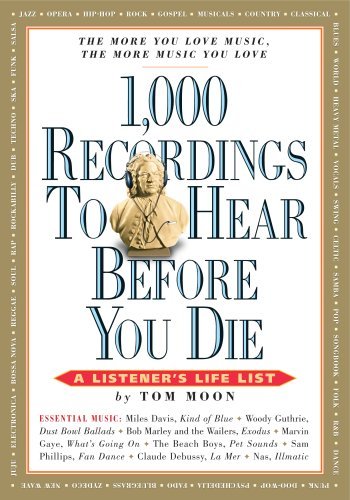
1,000 Recordings to Hear Before You Die, A Listeners Life List, a new book by Tom Moon published by Workman Publishing, is a monumental achievement. Released in August of 2008 it represents a prodigious amount of work encompassing three years of Moon’s life. He listened to countless recordings, culled those down to 3,000 titles, then finished the job and got the list to its final number.

It makes for some interesting reading. Tom Moon, an award-winning music journalist, is a regular contributor to National Public Radio’s All Things Considered as well as Rolling Stone, Blender and other publications. He is an excellent writer and it is fun to read his short descriptions of the selected works, because as a curious fellow I like to know what I’ve missed and why I might want to catch up with it.

Curiously all of Moon’s selections are albums. This is a conscious choice. “Spend a while inside an album, and a deeper impression immerges — of the artist, and the time of the work’s creation,” he writes.

Curious, I say, because a lot of great recordings are singles from the days of 78s and 45s and should have been covered individually. The album as a work of art is a 60’s construct, and viewing all of this music through that lens is limiting.

The musical works are presented alphabetically which I applaud because doing it by genre would mean that lot of folks might have skipped right past the classical and jazz titles in favor of the rock. It really is much more fun to read it front to back and get the odd juxtapositions of dissimilar works that Moon intended.

Then there is the quirky pleasure of questioning the author. Why is the Beach Boy’s Good Vibrations classed as Pop while Pet Sounds is Rock? How come there’s no John Denver or Tom Jones? How come I think this is an oversight?

Personally, I think The Wild, The Innocent and the E-Street Shuffle is a more nuanced, stronger Springsteen album than Born to Run. Even if a Bluegrass genre only had two members, Bill Monroe and Allison Krause, that would be fine; they should never be lumped with country.

Porgy and Bess should have been in with musicals and the list could have done with about 25 fewer operas which would have lowered the number of essential operas for the casual music fan to about three. And how does he explain overlooking the musical Oklahoma? I think every American of a certain age can sing, “Oh, What a Beautiful Morning.”

I would eliminate the entire pop category. Pop in most circles is a derogatory term and the artists he put in that category include Joni Mitchell, Michael Jackson, Dionne Warwick, and Alanis Morissette to name a few. Folk and Rock and R&B could have handled the load.

He also needed a soundtrack category because that’s where the soundtracks for Trainspotting, O Brother, Where Art Though, Saturday Night Fever, and Dazed and Confused belong. Which brings up the question of how did he overlook The Big Chill, Dream Catcher, The Breakfast Club, and American Graffiti? This is why he needed fewer operas.

The World category contains music from 50 countries, but he does some strange things like using the terms Latin America and Middle East even though there are plenty of listings for countries within both regions. So, why not list the countries?

All of this is the fun of the book — the discussion that goes along with the why of the author’s musical choices.

But as I sit here thumbing through the book I can’t help but feel that it represents an artifact of a previous era. As a one-time book publisher, I appreciate the tidiness of this sort of project. It’s so easy to explain to a buyer. “This is a book that’s a list of things and its sure to be of interest to….” and you fill in the blank.

But the people interested in music these days are out surfing the web and getting their information real-time and they want it updated as new information comes in. That’s why the Wikipedia has replaced paper encyclopedias.

The good news here is that there’s a website based on the book and Moon is blogging there and he’s added his ten best for 2008. So, this might be an evergreen project.

So all is not lost and perhaps we’ll be saved from the specter of 20 years of What Color is Your Parachute or the 2000th iteration of Chicken Soup for the (fill in the blank).

Given the ease with which information flows these days, people also have little need for an expert to tell them what music should be on their playlists or an aggregator such as Workman Publishing to pull it all together and print a book.

Websites such as Pandora and ILike can match a listener to a variety of music based on the listener’s preferences. Then there are the social networking sites such as Facebook and MySpace where members post their favorite songs for their friends to discover. And getting recommendations from friends is way better than getting them from a stranger.

Tom Moon may be a great guy and he certainly appears to have plenty of credentials from his playing experience right through his critical experience writing for magazines such as Rolling Stone but you and he might have exceptionally different tastes in music and you’d probably rather not spend $20 to find this out.

The title is also a bit of a misnomer. This is going to sound pedantic and nitpicky but the title says it is a list of 1,000 recordings to hear before you die which sounds inclusive but these are all musical recordings.

If a publisher is going to title a book in that fashion there ought to be a mention of Edison’s first recordings, or King’s “I have a Dream Speech,” or MacArthur’s “Old Soldiers Never Die” speech just to name a few memorable recordings which, if you’re interested, can be found at the Library of Congress courtesy of the National Recording Preservation Board (http://www.loc.gov/rr/record/nrpb/).

And finally, why do we have to hear this music before we die? I’d be willing to bet no one is going to heaven or hell or qualify for reincarnation based on the recordings they listened to prior to their death.

If you’re going to take your things-to-do-before-you-die guidance from pop culture I’d recommend Earl’s approach in the TV show “Leave it to Earl”. Make a list of all the people you’ve wronged in life and try to make amends. You can listen to the recommended recordings on your IPod while you’re making the rounds if you want, but either way, take care of Earl’s list and you dramatically improve your chances in the afterlife.

[John W. Wilson is a publisher and writer who lives in Houston. He was editor of the Daily Cougar at the University of Houston and wrote about music and film for the Houston Chronicle while writing on the sly for Space City!, the Houston underground paper founded in 1969. (That’s where we first knew him: one of Space City!’s editors was The Rag Blog’s Thorne Dreyer.) John also directed Gulf Publishing’s book division. His websites are yourtexasmusic.com and yourtexasmusicnotes.com .]

Go to the the official site of 1,000 Recordings to Hear Before You Die.

Find 1,000 Recordings to Hear Before You Die by Tom Moon on amazon.com.

The Rag Blog

Posted in Rag Bloggers | Tagged , , | 1 Comment

Dan Rather Lawsuit Will Linger After Junior’s Gone


CBS Newsman’s $70m Lawsuit Likely to Deal Bush Legacy a New Blow
By Christopher Goodwin / December 28, 2008

As George W Bush prepares to leave the White House, at least one unpleasant episode from his unpopular presidency is threatening to follow him into retirement.

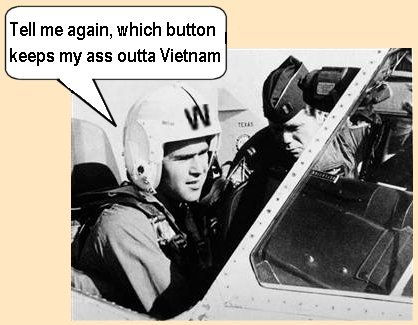
A $70m lawsuit filed by Dan Rather, the veteran former newsreader for CBS Evening News, against his old network is reopening the debate over alleged favourable treatment that Bush received when he served in the Texas Air National Guard during the Vietnam war. Bush had hoped that this controversy had been dealt with once and for all during the 2004 election.

Eight weeks before the 2004 presidential poll, Rather broadcast a story based on newly discovered documents which appeared to show that Bush, whose service in the Texas Air National Guard ensured that he did not have to fight in Vietnam, had barely turned up even for basic duty. After an outcry from the White House and conservative bloggers who claimed that the report had been based on falsified documents, CBS retracted the story, saying that the documents’ authenticity could not be verified. Rather, who had been with CBS for decades and was one of the most familiar faces in American journalism, was fired by the network the day after the 2004 election.

He claims breach of contract against CBS. He has already spent $2m on his case, which is likely to go to court early next year. Rather contends not only that his report was true – “What the documents stated has never been denied, by the president or anyone around him,” he says – but that CBS succumbed to political pressure from conservatives to get the report discredited and to have him fired. He also claims that a panel set up by CBS to investigate the story was packed with conservatives in an effort to placate the White House. Part of the reason for that, he suggests, was that Viacom, a sister company of CBS, knew that it would have important broadcasting regulatory issues to deal with during Bush’s second term.

Among those CBS considered for the panel to investigate Rather’s report were far-right broadcasters Rush Limbaugh and Ann Coulter.

“CBS broke with long-standing tradition at CBS News and elsewhere of standing up to political pressure,” says Rather. “And, there’s no joy in saying it, they caved … in an effort to placate their regulators in Washington.”

Rather’s lawsuit makes other serious allegations about CBS succumbing to political pressure in an attempt to suppress important news stories. In particular, he says that his bosses at CBS tried to stop him reporting evidence of torture at Abu Ghraib prison in Iraq. According to Rather’s lawsuit, “for weeks they refused to grant permission to air the story” and “continued to raise the goalposts, insisting on additional substantiation”. Rather also claims that General Richard Meyers, then head of the Joint Chiefs of Staff, the top military official in the US, called him at home and asked him not to broadcast the story, saying that it would “endanger national security”.

Rather says that CBS only agreed to allow him to broadcast the story when it found out that Seymour Hersh would be writing about it in the New Yorker magazine. Even then, Rather claims, CBS tried to bury it. “CBS imposed the unusual restrictions that the story would be aired only once, that it would not be preceded by on-air promotion, and that it would not be referenced on the CBS Evening News,” he says.

The charges outlined in Rather’s lawsuit will cast a further shadow over the Bush legacy. He recently expressed regret for the “failed intelligence” which led to the invasion of Iraq and has received heavy criticism over the scale and depth of the economic downturn in the United States.

© Guardian News and Media Limited 2008

Source / The Guardian Observer

The Rag Blog

Posted in RagBlog | Tagged , , | 4 Comments

A History Lesson from Cuba: The PIC

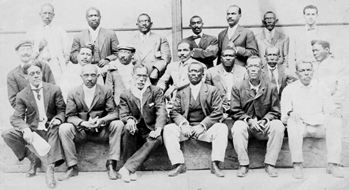
Members of the Party: the Independents of Color. Photo: © Gloria Rolando, 2001.

Cuba marks centennial of Independent Party of Color
By Mike Taber / December 29, 2008

Two presentations on little-known history of party that championed black rights in Cuba in early 1900s

The story of the Independent Party of Color (PIC) in Cuba, from its founding in 1908 to the massacre in 1912 of more than 3,000 of its black and mulatto members and supporters, is a chapter of history largely unknown within Cuba and abroad.

Knowledge of the PIC and the 1912 massacre was buried by the various capitalist regimes in Cuba between then and 1958. Even after the Cuban Revolution’s triumph in 1959, these events remained little-known.

The story of the Independent Party of Color is intertwined with the legacy and reality of racism in Cuba. The 1959 revolution eliminated all legal forms of discrimination, including Jim Crow practices imposed on Cuba during the U.S. military occupation following 1898. And by eliminating the source of institutionalized racism—capitalism—it opened the door to unprecedented gains by blacks and mulattos and their fuller integration into all aspects of Cuban society.

But many deep-rooted prejudices nonetheless remained. With the collapse in 1990-91 of the Soviet and Eastern European regimes, Cuba lost 85 percent of its foreign trade. Cuba’s increased exposure to the world capitalist market and the economic measures the government had to take in response to this crisis have led to increased inequalities, leading to the reinforcing of racial prejudices that had long been diminishing.

The decision last year by the Communist Party of Cuba to establish a commission to commemorate the 100th anniversary of the PIC’s founding was thus of great importance, not just in rescuing this historical chapter from oblivion, but as part of addressing the challenge of combating the legacy of racism today.

The commission’s president is Fernando Martínez Heredia, a noted Marxist author and essayist and winner of the 2006 National Social Sciences Award. Other members include Digna Castañeda Fuertes, professor of Caribbean studies at the University of Havana; Marta Cordies Jackson, director of the Fernando Ortiz African Cultural Center; Eusebio Leal, official historian of Havana; Rogelio Martínez Fure, National Folkloric Ensemble of Cuba; author and poet Nancy Morejón; Leida Oquendo, the commission’s executive secretary and a member of the Cuban Academy of Sciences; veteran journalist Marta Rojas; and filmmaker Gloria Rolando.

Below are major excerpts from presentations to two events organized by the commission this year, reviewing the history of the PIC and its importance for today. The first, titled “Social Diversity Is Not a Weakness of the Nation, but Rather a Very Important Example of its Richness,” was given by Fernando Martínez Heredia at the opening session of the commission’s work on January 14. The second, titled “Preserving Memory,” was given by Miguel Barnet on August 7 to a meeting in Havana commemorating the 100th anniversary of the PIC’s founding. Miguel Barnet is president of the Union of Writers and Artists of Cuba (UNEAC) and author of Biography of a Runaway Slave.

The translation and subheadings are by the Militant.

* * * * *

BY FERNANDO MARTÍNEZ HEREDIA

The great export-based economy that led Cuba to advance so far materially during the 19th century was built on the bases of a massive slave population numbering a million Africans, the chief labor force of that mode of production. It was a horrific form of exploitation and cultural plunder, embodying a social order of oppression, deep inequalities, castes, and antiblack racism. That social order was the antithesis of the great advances in technology, enterprise, ideas, literature, and art of that era. But at the same time it furnished the material basis that made these possible. Such terrible contradictions could not be overcome through evolution, because the only concern of the ruling class of Cuba was capitalist profits and maintaining its social power. It therefore defended at all times the system that enabled it to be the exploiter, and it did not hesitate to be antinational when necessary.

Insurrections against Spanish rule

A new situation was created by the armed insurrections of 1868 and 1898.1 The revolution of 1868 united abolitionism with the fight for independence, and forged ties between the races based on shared blood, sacrifice, and heroism. The revolution of 1895, with its popular liberation war and mass sacrifices by the Cuban people to defeat Spanish colonialism, attacked the root of the colonial order and developed fraternal relations between the races, mutual respect, and the ideal of equality of all before the law and in social life. Decades of evolution and reforms could never have obtained what was achieved during those years of combat and mobilization. Blacks and mulattos participated in that war on a vast scale.

But the imperialist intervention and occupation stymied the revolution and cut short the country’s sovereignty. The republic of 1902 remained under a new form of domination by neocolonialism and by the Cuban bourgeoisie, an accomplice and subordinate of imperialism.

Cuba attained its independence as a republic and the popular masses achieved citizenship, but under those conditions there were no social changes in the interests of working people or small farmers. Black and mulatto Cubans suffered permanently from the very disadvantageous social situation in which slavery and colonialism had left them, and they lacked the possibilities to pressure, negotiate, and obtain their rights. Racism was able to preserve great strength both in work and in society as a whole, as well as in the political arena. There was a great contradiction between this situation and the ideals of the mambí effort,2 and with the democratic character that the republic should have had. Dissatisfaction among the old combatants and among the black and mulatto population often found expression during those first years of the century… .

On Aug. 7, 1908, the Independent Group of Color was founded in Havana. Chairing the meeting was war veteran Evaristo Estenoz Corominas, and the secretary was journalist Gregorio Surín. Following the elections of November of that year, intensive organizational work was conducted. Soon the Independent Party of Color was constituted in virtually the entire country, coming to have thousands of sympathizers and followers. In February 1910 Colonel Pedro Ivonet joined. A mambí hero from the Invasion and the Pinar del Río campaign, he assumed the chairmanship of the party in Oriente.

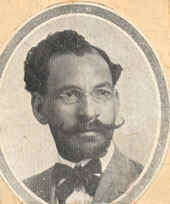
Pedro Ivonet, a founder of the PIC
Photo: © 2007 Bohemia. Images source.

The new party organized its activities utilizing legal methods of public expression and electoral activity. Like many other blacks and mulattos, the Independents linked their republican and democratic nationalism to demands and efforts for social advancement and to achieve civil rights as men and women “of color.” But they tried to achieve these goals and confront racism through a political party, as a tool that could theoretically be used within the norms of the system.

I call attention to the demands of their program, because these were very advanced and went far beyond the racial dimension. The Independents always identified themselves as Cubans, and demanded a sovereign, egalitarian republic, defending jobs for the native-born, for the return to Cuba of economic emigres, and for immigration without racial discrimination. They advocated the eight-hour day and labor courts to hear disputes between workers and bosses; distribution of state and other lands to poor Cubans who worked them; and defense of farmers against land grabbers. They called for free education on all levels, and state control of education. They called for changes in the administration of justice and the prison system that favored fairness and education of the poor. And they advocated other measures that transcended racial questions.

Together with other Cubans, the Independents criticized U.S. domination, the usurpation of territory by the Guantánamo base, and the prevailing racism in the U.S. But the relations between nationalism and the racial question were complex and uncertain, because racism clearly expressed the country’s retreat with regard to the revolutionary practices and program of 1895. Social conservatism was the necessary counterweight to the existence of the republic and economic liberalism. Patriotism had to be blind to races, and therefore keep quiet in face of injustices committed for racial reasons. The idea of risking the loss of sovereignty at the hands of the U.S. was linked to the untouchability of the existing order, and every movement that genuinely or supposedly threatened this order was condemned. “National interest” could be used to wall off demands and organizations of social or racial struggle, with the oppressor and oppressed having common interests. This wasn’t simply imposed. The nation had meaning and it had values that were very important for the majority of the country. Therefore the majority of persons “of color” kept apart from, or rejected, political actions based on race in the case of the Independents of Color, even during the great crime of 1912. Some undoubtedly had little consciousness. But many did not agree with racial mobilization as a basis of political action.

From 1908 to 1912 the members of the PIC confronted all this—indifference or incomprehension, but above all the systematic attacks of the neocolonial bourgeois power and its instruments. Slandered in a thousand ways, cynically accused of being racists, the PIC was outlawed in 1910 through an amendment to the Electoral Law (the Morúa Amendment), with many leaders and activists imprisoned for six months. With great tenacity and consistency, they defended their cause in the newspaper Previsión, and every way they could, without getting involved in political wheeling and dealing as was common at the time. Harassed and prevented from utilizing the electoral road, they opted finally to hold an armed protest on May 20, 1912, the 10th anniversary of the establishment of the Republic. Their aim was to demand the party’s legalization. In Oriente thousands of Independents rose up with very few arms, and without a real plan of war, with Estenoz and Ivonet in charge. In Las Villas there were also uprisings.

That tactic turned out to be disastrous. The government of José Miguel Gómez went from political juggling to mobilizing thousands of troops against them, while a very dirty press campaign demonized them. During June and July a bloodbath was carried out with impunity by the republican government. Estenoz, Ivonet, and at least 3,000 nonwhite Cubans were murdered, the majority in Oriente province. This served only to repress a broad sector of the Oriente peasantry that was dispossessed and impoverished by capitalist expansion. A great wave of repression, prisons, persecutions, and an intensification of antiblack racism swept over the entire country. The official republic celebrated the great crime at the end of that summer, and then immediately consigned it to oblivion, a situation that lasted almost half a century.

In 1959 the victorious insurrection put forward for all Cubans a supraracial egalitarianism. The vast transformation of life, social relations, and institutions created the foundation for that goal to be attainable. In the struggles and intensive work that followed, the unity of the people was extolled as a higher political virtue. Brotherhood among Cubans of different races and social origins was considered an ideal that could be realized quickly, and a clear announcement of definitive liberation. In the midst of concrete work and the development of consciousness that offered equal opportunities, racism was rejected and condemned as a scourge of the past. And confidence grew that the advance of socialism would eliminate defects among individuals and social remnants.

In the 1960s some publications referred to the great racist repression of 1912 as part of an abominable past, but there was little analysis of its meaning and its place in the history of racism and capitalist rule in Cuba.3 Following this, 1912 returned to the shadows in the historical culture that was becoming socialist in the country, even though a number of authors were doing historical research into this event, something that in recent years has made significant contributions.

Initiative by Cuban leadership

Nevertheless, the initiative of the Communist Party in creating this commission is not the result of such advances, but rather of the realities, needs, and plans of Cuba today. The great crisis that hit the country 15 years ago—and the measures adopted to overcome it—have produced notable changes in a number of aspects of material and spiritual life, and have had an impact on behavior, values, ways of living, motivations, and expectations. Social disintegration has brought to light many diversities—and in some cases has fueled them. But we are not observing such processes with fear. Social diversity is not a weakness of the nation, but rather a very important example of its richness. It’s not a question of simply admitting these things, or tolerating them. They must be understood as a force with extraordinary potential. The socialist road will become strong and will deepen if it is capable of embracing these diversities and living with them, of leading them and learning from them simultaneously, of respecting their identities and attending to their demands—at the same time as they are asked to contribute to the effort of all and to give a large part of their virtues and their work to the community.

The racial question has been raised increasingly in recent years. We note again that a large part of those who continue to be the most disadvantaged are blacks and mulattos, and that racism flourishes when ties of solidarity and socialist values weaken. In the muffled but tremendous cultural battle taking place between those ties and the relations and values of capitalism, it’s clear which side should be taken by those who are conscious of their position in society and of the social process they must defend. Today a part of the Cuban population are Cuban above all, like the Independents of Color almost a century ago, but also identify themselves as blacks and mulattos. We need those identities and that consciousness to march hand in hand, and to strengthen the socialist revolution and its work. Like all important things, this is very difficult to realize in practice… .

It’s the job of this commission to help recover the historical memory of a stage of the struggles and aspirations of the Cuban people for their rights and their liberation from all domination, broadening one part of the national consciousness and helping to better understand the painful and tenacious cultural legacy of racism in our country.

It must thus encourage an understanding of the pluralistic character of the nation’s culture, and turning that complex richness into a greater force in our way of life and of the social undertaking we defend… .

If we work as brothers and sisters, in an organized way and without faltering, and we advance along this road, then we will fulfill this task.

Thank you very much.

* * * * *

BY MIGUEL BARNET

As is almost always the case, history is written by the conquerors, and the conquered are therefore described through the eyes and psychology of the ruling classes. Such was the fate of the Independent Party of Color, humiliated and outraged by bourgeois politics and history during the neocolonial republic. All Cubans owe a great debt to those patriots who, on Aug. 7, 1908, exactly 100 years ago today, led by Pedro Ivonet and Evaristo Estenoz and meeting in the latter’s home, founded a party that was stigmatized for almost 100 years… .

The party, apart from calling for civil rights for Cuban blacks and mulattos, had a broad social program to benefit the poorest strata, irrespective of color. This included the right to strike, the eight-hour day, the right to education up to the highest levels, health care, and other benefits that, if achieved, would have been a social conquest unprecedented in the history of the continent.

Not only did “persons of color”—the term of the day—constitute the members and sympathizers of the party, but it was essentially a Cuban party. Those who did not act like patriots were their oppressors, the veritable traitors who committed an unforgivable holocaust.

In 1908 Cuba was undergoing its second military occupation by Yankee troops. As we know, the newly emerging empire employed all methods at its disposal to economically and politically dominate our country. Racial and social discrimination played a part in its strategy, just as it did in the United States itself. This schema was mechanically imposed on Cuba, which left traces that have still not been erased… .

History has not done justice to the movement of the Independents of Color. Cuba’s history has been a history of genocide. Of our aboriginal peoples—the first inhabitants of the island—whose numbers decreased by several hundred thousand during the sixteenth century. Of the Ladder Conspiracy.4 Of Valeriano Weyler’s concentration camps in the last battle for liberty.5 Of the tyrant Fulgencio Batista, who showed off his methods of torture and terror at Moncada,6 in city streets, and during a rash of murders committed during the Bloody Christmas massacre.7 Of the genocide of military aggression and terrorist acts against the revolution. What is almost never mentioned, however, is the genocide of those courageous Cubans who, between 1908 and 1912, defended the rights of the Cuban people to join a political party that at the time was the only one that genuinely represented them.

Our best tribute to them in this centennial year is the commemorative plaque unveiled this morning as part of other activities that have taken place at various times throughout this year, and that will continue over the following months.

Making a reality, with ever increasing revolutionary consciousness, of the social justice advocated by those of us who carry forward our Martí-ist, and Fidelista socialist undertaking—embodying within it full social equality, is to also recall Ivonet and Estenoz and all the patriots who followed them. It is to recognize the human right to knowledge of the historical truth. It is to prevent crimes like that of the Little War of 1912 from recurring. It is to preserve the memory of men like Aponte,8 Estenoz, and Ivonet, who must not remain, even a single day longer, in oblivion.

Glory to them

Notes

1. From 1868 to 1898 Cubans waged a series of wars for independence from Spain. The first, the Ten Years War, lasted from 1868 to 1878, followed by the “Little War” in 1879-80. The final war for independence was fought from 1895 to 1898, leading to the end of Spanish colonial rule. It was immediately followed, however, by a U.S. military occupation of the country.

2. Mambí was the name given to fighters against Spanish colonial rule in Cuba’s wars of independence.

3. The main proponents of this line were leaders of the former pro-Moscow Popular Socialist Party (PSP), who asserted that going back to this history would be “divisive.” For example, the only serious work on the Independents of Color until recently was a 1950 book by a PSP member whose father had been a leader of the PIC (Los independientes de color by Serafín Portuondo). But immediately after publication, the book was attacked in the PSP’s press as being “un-Marxist,” with criticisms of the PIC for “dividing the working class.”

4. In 1844 Spanish colonial authorities announced they had discovered plans for a slave revolt organized by free Blacks and slaves, which became known as the “Ladder Conspiracy,” referring to the ladders to which suspects were bound as they were whipped until they “confessed” or died. Although the existence of such a conspiracy is in doubt, 98 people were sentenced to death, and many others were imprisoned, exiled, or died under torture.

5. During the 1895-98 war, Spanish general Valeriano Weyler was appointed governor of Cuba, with orders to suppress the independence struggle. His most notorious act was herding more than 300,000 rural residents into concentration camps to prevent them from aiding the independence fighters. At least 200,000 died from starvation and disease.

6. On July 26, 1953, some 160 revolutionaries under the command of Fidel Castro launched an insurrectionary attack on the Moncada army garrison in Santiago de Cuba together with a simultaneous attack on the garrison in Bayamo, opening the revolutionary armed struggle against the Fulgencio Batista dictatorship. After the attack’s failure, Batista’s forces massacred more than 50 of the captured revolutionaries. Fidel Castro and 27 others, including Raúl Castro and Juan Almeida, were tried and sentenced to up to 15 years in prison. They were released on May 15, 1955, after a public defense campaign forced the regime to issue a general amnesty for political prisoners.

7. On Christmas Eve 1956, Batista’s police in a number of towns in eastern Cuba kidnapped and murdered 23 members of the July 26 Movement and Popular Socialist Party.

8. José Aponte led a slave rebellion in 1812. He was captured and hanged.

Source / The Militant

Thanks to Jeff Segal / The Rag Blog

Posted in RagBlog | Tagged , , , | Leave a comment

Fisk: Obama Needs More Than Empty Rhetoric for Lasting Progress in the Middle East

A Palestinian demonstrator holding a Palestinian flag flees as an Israeli soldier holds a position behind him. Photo: GETTY.

How can anyone believe there is ‘progress’ in the Middle East?
By Robert Fisk / December 27, 2008

A test of Obama’s gumption will come scarcely three months after his inauguration

If reporting is, as I suspect, a record of mankind’s folly, then the end of 2008 is proving my point.

Let’s kick off with the man who is not going to change the Middle East, Barack Obama, who last week, with infinite predictability, became Time‘s “person of the year”. But buried in a long and immensely tedious interview inside the magazine, Obama devotes just one sentence to the Arab-Israeli conflict: “And seeing if we can build on some of the progress, at least in conversation, that’s been made around the Israeli-Palestinian conflict will be a priority.”

What is this man talking about? “Building on progress?” What progress? On the verge of another civil war between Hamas and the Palestinian Authority, with Benjamin Netanyahu a contender for Israeli prime minister, with Israel’s monstrous wall and its Jewish colonies still taking more Arab land, and Palestinians still firing rockets at Sderot, and Obama thinks there’s “progress” to build on?

I suspect this nonsensical language comes from the mental mists of his future Secretary of State. “At least in conversation” is pure Hillary Clinton – its meaning totally eludes me – and the giveaway phrase about progress being made “around” the Israeli-Palestinian conflict is even weirder. Of course if Obama had talked about an end to Jewish settlement building on Arab land – the only actual “building” that is going on in the conflict – relations with Hamas as well as the Palestinian Authority, justice for both sides in the conflict, along with security for Palestinians as well as Israelis, then he might actually effect a little change.

An interesting test of Obama’s gumption is going to come scarcely three months after his inauguration when he will have a little promise to honour. Yup, it’s that dratted 24 April commemoration of the Armenian genocide when Armenians remember the 1.5 million of their countrymen – citizens of the Ottoman empire slaughtered by the Turks – on the anniversary of the day in 1915 when the first Armenian professors, artists and others were taken off to execution by the Ottoman authorities.

Bill Clinton promised Armenians he’d call it a “genocide” if they helped to elect him to office. George Bush did the same. So did Obama. The first two broke their word and resorted to “tragedy” rather than “genocide” once they’d got the votes, because they were frightened of all those bellowing Turkish generals, not to mention – in Bush’s case – the US military supply routes through Turkey, the “roads and so on” as Robert Gates called them in one of history’s more gripping ironies, these being the same “roads and so on” upon which the Armenians were sent on their death marches in 1915. And Mr Gates will be there to remind Obama of this. So I bet you – I absolutely bet on the family cat – that Obama is going to find that “genocide” is “tragedy” by 24 April.

By chance, I browsed through Turkish Airlines’ in-flight magazine while cruising into Istanbul earlier this month and found an article on the historical Turkish region of Harput. “Asia’s natural garden”, “a popular holiday resort”, the article calls Harput, “where churches dedicated to the Virgin Mary rise next to tombs of the ancestors of Mehmet the Conqueror”.

Odd, all those churches, isn’t it? And you have to shake your head to remember that Harput was the centre of the Christian Armenian genocide, the city from which Leslie Davis, the brave American consul in Harput, sent back his devastating eyewitness dispatches of the thousands of butchered Armenian men and women whose corpses he saw with his own eyes. But I guess that all would spoil the “natural garden” effect. It’s a bit like inviting tourists to the Polish town of Oswiecim – without mentioning that its German name is Auschwitz.

But these days, we can all rewrite history. Take Nicolas Sarkozy, France’s cuddliest ever president, who not only toadies up to Bashar al-Assad of Syria but is now buttering up the sick and awful Algerian head of state Abdelaziz Bouteflika who’s just been “modifying” the Algerian constitution to give himself a third term in office.

There was no parliamentary debate, just a show of hands – 500 out of 529 – and what was Sarko’s response? “Better Bouteflika than the Taliban!” I always thought the Taliban operated a bit more to the east – in Afghanistan, where Sarko’s lads are busy fighting them – but you never can tell. Not least when exiled former Algerian army officers revealed that undercover soldiers as well as the Algerian Islamists (Sarko’s “Taliban”) were involved in the brutal village massacres of the 1990s.

Talking of “undercover”, I was amazed to learn of the training system adopted by the Met lads who put Jean Charles de Menezes to death on the Tube. According to former police commander Brian Paddick, the Met’s secret rules for “dealing” with suicide bombers were drawn up “with the help of Israeli experts”. What? Who were these so-called “experts” advising British policemen how to shoot civilians on the streets of London? The same men who assassinate wanted Palestinians in the West Bank and Gaza and brazenly kill Palestinian civilians at the same time? The same people who outrageously talk about “targeted killings” when they murder their opponents? Were these the thugs who were advising Lady Cressida Dick and her boys?

Not that our brave peace envoy, Lord Blair, would have much to say about it. He’s the man, remember, whose only proposed trip to Gaza was called off when yet more “Israeli experts” advised him that his life might be in danger. Anyway, he’d still rather be president of Europe, something Sarko wants to award him. That, I suppose, is why Blair wrote such a fawning article in the same issue of Time which made Obama “person” of the year. “There are times when Nicolas Sarkozy resembles a force of nature,” Blair grovels. It’s all first names, of course. “Nicolas has the hallmark of any true leader”; “Nicolas has adopted…”; “Nicolas recognises”; “Nicolas reaching out…”. In all, 15 “Nicolases”. Is that the price of the Euro presidency? Or will Blair now tell us he’s going to be involved in those “conversations” with Obama to “build on some of the progress” in the Middle East?

Source / The Independent

The Rag Blog

Posted in RagBlog | Tagged , , , , | 2 Comments

Dr. Stephen R. Keister : ‘Citizens, There Is No Time to Lose’

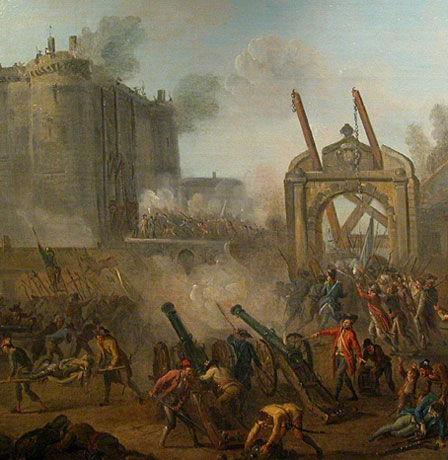
Leaping on a table, a pistol in each hand, Camille Desmoulins cried, ‘To the Bastille.’

‘Something in my subconscious clicked last night, and part of the time I lay awake considering the report in The Washington Post about the drastic cuts in Medicaid due to the economic collapse in the United States.’

By Dr. Stephen R. Keister / The Rag Blog / December 28, 2008

It is said that young men see visions and old men dream dreams. Last night I dreamt of a scene in a motion picture that I saw at about the age of 14, in 1935. The picture was “A Tale of Two Cities” and in an opening scene an aristocrat’s carriage overran a small Parisian waif without slowing down or stopping. The result, not noted in the motion picture, was one Camille Desmoulins, leaping on a table, a pistol in each hand, and crying “citizens, there is no time to lose, to the Bastille.”

Something in my subconscious clicked last night, and part of the time I lay awake considering the report in The Washington Post about the drastic cuts in Medicaid due to the economic collapse in the United States. In addition I had watched the PBS news report of the California deficit, the response in the state legislature by the Democrats to alleviate it by raising taxes, and the Republican answer, i.e. further reduce taxes for the wealthy and drastically curtail social programs, including Medicaid. People in shelters, eating in food lines, and “cut their social services!” It called to mind Anatole France’s comment, “It is only the poor who are forbidden to beg.”

Further, yesterday afternoon I had read a Commonwealth Fund report about how poorly the chronically ill fare in the United States in relation to seven other nations, i.e. Australia, Canada, France, Germany, The Netherlands, New Zealand and The United Kingdom. More than half (54%) of chronically ill patients in the U.S. did not get recommended care, did not fill prescriptions, or did not see a doctor when they were sick because of the cost, compared with 7% to 36% in the other countries. (France and the Netherlands scored the best.) About one-third of U.S. patients — again, the highest proportion among the eight countries — experienced medical, medication, or lab/diagnostic test errors, with a similar share encountering poorly coordinated care, including duplication of tests or medical records that were unavailable at the time of an appointment.

The Commonwealth Fund has been doing excellent objective work in tracking health care in the United States; however, I am perplexed that they do not at length liaison with Physicians For A National Health Program (PNHP), or overtly support Rep.Charles Rangel’s bill in the House of Representatives, HR 676, which in essence is based on the PNH recommendations. HR 676 has something like 90 co-sponsors, but the House leadership has allowed it to languish in committee without debate. Of course, it causes one to wonder what obscene, financial incentive has caused the inaction in a Democratic controlled Congress.

A few words regarding Medicaid which is federally mandated and federally funded per formula, but under which each state is required to outline its own allocation of the funds. In many or most states, with the current depression, the funding is inadequate. This is extremely sad, for at best, Medicaid pays for a degree of medical care normally seen in third world nations. Prior to my retirement, 18 years ago, we were struggling in our office about how to accommodate Medicaid patients, in view of the fact that our income was consumed by over 55% overhead, and that the Medicaid payments were approximately 50% of our then not excessive fees for specialists in Internal Medicine. Thus, we were required to assign one morning a week for care of these folks. The next problem encountered, and we saw this again after my retirement when I volunteered at St. Paul’s Neighborhood Free Clinic, there was great difficulty in obtaining more sophisticated procedures such as CT Scans or MRIs, or consultations with surgeons, orthopedists, neurosurgeons, etc. Care was definitely restricted because these were poor people. Now many states are having to cut back care even further, thanks to the depression caused by the neo-liberal economics instituted during the Reagan years in the White House that has finally decimated our nation.

Yet, this is only the tip of the iceberg. Last month alone, employers slashed 533,000 jobs — the most in 34 years — with the jobless rate rising to 8.4%. With the loss of employment, of course, goes employer paid health insurance, as about 60% of American workers are covered by work related health care plans. Of course, through the COBRA provision the worker may take over his own insurance at an average of $4704 per year for an individual or $12,680 for a family, according to a survey by the Kaiser Family Foundation & Health Research and Educational Trust.. Other private insurance is offered but may include a deductible per year of $1000-$5000. Totally unaffordable.

We undoubtedly face a spiraling crises in health care. There are two viable plans on the table. And let me repeat: “viable.” There are several Senate versions being discussed but these are basically selling out to the insurance industry. Hence, the two: (1)the Obamaplan which still maintains private health insurance, but institutes a “Medicare for all” option for those without health insurance, or those who would elect to switch to it. This would be administered by a public “insurance company” with government supervision and provide coverage similar to that provided to”members of Congress,” and (2)the plan incorporated in HR676, single payer, universal health care, which is discussed in detail at the PNHP website. I personally, as a member of PNHP and The American College of Physicians, which has endorsed the plan, would prefer the second; however, either would be preferable to the travesty that exists for health care in the United States and its domination by the insurance industry.

If I may be permitted a few thoughts about the insurance industry. When I think about the pitch of the insurance companies to the naive American public I think of Edith Sitwell’s comment, “The public will believe anything, as long it is not founded on truth.” Right on! In some way the American public looks at the insurance industry as a benevolent ally. Not so. An insurance company, like any corporation, is out to make money for its owners, managers and shareholders. The practice of medicine was coopted by the collusion of the insurance companies some 30 years ago in the guise of the HMO or IPA, advertised to the medical profession and public as having the advantage of cost containment and efficiency. Indeed there was containment, containment of adequate care to the patient (now known as “customer”) and income and ability to make his/her own decisions to the physician (now known as “the provider”). There have been record profits for the insurance industry, record salaries and bonuses for the CEOs, and a record amount of money spent lobbying our elected representatives. The Bush administration, like the Reagan administration earlier, has encouraged the insurance takeover. The Bush administration passed the Medicare prescription plan, which is a limited value to the patient but provides an ongoing excessive profit to the insurance and pharmaceutical industries, Further, masked as a great bargain to the patient, the Bush administration has flummoxed the public with “Medicare Advantage,” a subtle method of depleting the Medicare Fund and turning the management over to the private insurance industry.

I started my practice in 1950 and shortly thereafter came face to face with the insurance industry. In those days folks were sold “health insurance” by door to door salesmen who would stop by to pick up their premium, of, let us say, $5 per week. Thus, if ill or incapacitated, the insurance would pay a fixed amount a month for defraying hospital costs, doctors bills, etc. I remember well, one elderly lady who developed cancer of the stomach, and was told that the disease predated her purchase of the policy some ten years earlier. Of course, this was absurd. I turned the matter over to The Pennsylvania Insurance Commission and the lady was paid forthwith. Thus, I learned, early in my career that one should always “read the fine print” and if fraud was evident that the Insurance Commissioner would indeed be a great friend of the public.

Be sure that the insurance companies will spend billions of dollars on frightening the public via TV Commercials, and will spend like mad with our elected representatives to oppose either the Obama or PNHP plans. We will hear of the imperfections of health care in Canada or the UK. We will see unhappy folks (either actors or malcontents) demeaning the care in other countries. We will hear that we are going to have “socialized medicine” thrust upon us. (We already have it in the V.A. System and Medicare). We will hear that it takes forever to get a doctor’s appointment in Canada, which may well be true, as it is in the USA, if one wants a specific doctor at a famous institution. The American public is in for an indoctrination that would make Joseph Goebbels proud. Remember, in every nation there may be some hitches in medical care; no system is perfect. However, most European systems, Canada, and Australia have a near 90% approval by the citizens. In all these other nations one has free choice of family doctor, specialist, or hospital, and in most instances the GPs still make house calls and communicate directly by telephone with their patients rather than relegating that duty to nurse or PA.

Unhappily, most physicians away from medical centers, are not politically educated. As a matter of fact, the hierarchy of our local county medical society felt privileged tosit behind President Bush on the podium when he campaigned locally in 2004. Hardly intellectual sophistication! Yet most doctors, if you as patients discuss the matter with them and provide the PNHP website, may well get aboard. Many are tired of the hassle and malpractice exposure provided by being subordinates of the insurance industry. I have approached my personal internist, an excellent physician, who has a rightful concern. “If 49 million people without insurance are enabled to choose their own doctor, there are not enough of us to go around.” True. Thus, in view of the fact that the average medical student graduates with $120,000 tuition debt and hence opts for a well paying specialty, thus not providing enough family doctors, I would suggest that one of two things be included in either plan. My suggestions, with each having the qualification that the graduate would do general practice in an under-served area for a specified number of years: (1) Government subsidy of tuition for qualified students at existing medical schools, or (2) a “medical academy,” similar to West Point or Annapolis, to train healers. If we can train to kill, we can train to heal.

We have a difficult task ahead. There are a great number of folks nationally trying to get decent health care in this country, so please sign on. Contact your representatives, first ascertaining his/her connections to the insurance industry at Open Secrets, and demand that either the Obama or PNHP plan be enacted. If your representative or senator is a Republican, ask him to show some Christian Charity to the poor, the dispossessed, the halt and the blind. Ask him to set aside his belief in the flawed economic theories of Milton Friedman, as they did not work in Chile or Argentina. Request that HR676 be debated by the full House. Perhaps then we will not be required to storm the Bastille.

The Rag Blog

Posted in Rag Bloggers | Tagged , , , , | 1 Comment

Tone Deaf GOP : Just Humming Along?

‘Chip Saltsman, pretender to the chairmanship of the Republican National Committee thought it would be funny to send a CD with 41 tasteless, demeaning racial parodies to his Republican buddies as a holiday gift.’

By Larry Ray / The Rag Blog / December 28, 2008

The GOP just can’t seem to shed its divisive and racially insensitive mantle of privileged intolerance and hate. Many Republicans still herd all black and hispanic people into the back entrances of their minds, and find raucous, race-bating, put-down musical parodies good for an attitude affirming chuckle. “Why no harm intended!”

Chip Saltsman, pretender to the chairmanship of the Republican National Committee who thought it would be funny to send a CD with 41 tasteless, demeaning racial parodies to his Republican buddies as a holiday gift makes my point. The tasteless gaffe caused an uproar. Saltsman still thinks the songs, produced for the ever sensitive, Rush Limbaugh, are “light hearted” and “good humor.”

What good old Chip has done here is to prove what my departed yellow dog Democrat Irish-stock father always enjoyed pointing out about South Texas politics, “The jackasses always stick out a head higher from everybody else.” His observation works across party lines and on the national level as well.

In the quiet confines of the private whites-only clubs and well-tithed all white Protestant churches many still do not see what all the uproar over the “clever little songs” is all about. It is dismissed as so much more thin-skinned political screaming from “those liberals.” Even one of the two African-American candidates for the chairmanship of the GOP National Committee, J. Kenneth Blackwell, reportedly called the disgust with the Republican’s “Barack the Magic Negro” racial ditty, mere “hypersensitivity.” A token dismissal?

Just to be sure they don’t regain any of the flood of Latino votes that went to the Democrats, the happy holiday hum-along CD also contained a tasteless treatment of Hispanics set to the music of our national anthem titled, “The Starspanglish Banner.”

While high profile Republicans like current party chairman, Mike Duncan, former GOP house speaker, Newt Gingrich, and many more in the GOP leadership have been quick to distance themselves from, and denounce Chip Saltsman’s musical miscue, I have to wonder how many of the other candidates for the GOP party chairmanship, who were, or were not, on the gift list for the now-toxic CD will issue statements categorically denouncing Saltsman and his lack of musical taste.

[Retired journalist Larry Ray is a Texas native and former Austin television news anchor. He also posts at The iHandbill.]

Please see ‘Magic Negro’ and ‘Star Spanglish Banner’ : Republicans are Equal-Opportunity Offenders by Mike Allen / The Rag Blog / Dec. 27, 2008

The Rag Blog

Posted in Rag Bloggers | Tagged , , , | Leave a comment

New Gaza War : The Neighborhood Bully Strikes Again

“A loud-mouthed bully?”: Israel’s Prime Minister Ehud Olmert attends the weekly cabinet meeting in Jerusalem December 21, 2008. Photo by Gali Tibbon / Pool / Reuters.

‘Once again, Israel’s violent responses, even if there is justification for them, exceed all proportion and cross every red line of humaneness, morality, international law and wisdom.’
By Gideon Levy / December 28, 2008

Israel embarked yesterday on yet another unnecessary, ill-fated war. On July 16, 2006, four days after the start of the Second Lebanon War, I wrote: “Every neighborhood has one, a loud-mouthed bully who shouldn’t be provoked into anger… Not that the bully’s not right – someone did harm him. But the reaction, what a reaction!”

Two and a half years later, these words repeat themselves, to our horror, with chilling precision. Within the span of a few hours on a Saturday afternoon, the IDF sowed death and destruction on a scale that the Qassam rockets never approached in all their years, and Operation “Cast Lead” is only in its infancy.

Once again, Israel’s violent responses, even if there is justification for them, exceed all proportion and cross every red line of humaneness, morality, international law and wisdom.

What began yesterday in Gaza is a war crime and the foolishness of a country. History’s bitter irony: A government that went to a futile war two months after its establishment – today nearly everyone acknowledges as much – embarks on another doomed war two months before the end of its term.

In the interim, the loftiness of peace was on the tip of the tongue of Ehud Olmert, a man who uttered some of the most courageous words ever said by a prime minister. The loftiness of peace on the tip of his tongue, and two fruitless wars in his sheath. Joining him is his defense minister, Ehud Barak, the leader of the so-called left-wing party, who plays the role of senior accomplice to the crime.

Israel did not exhaust the diplomatic processes before embarking yesterday on another dreadful campaign of killing and ruin. The Qassams that rained down on the communities near Gaza turned intolerable, even though they did not sow death. But the response to them needs to be fundamentally different: diplomatic efforts to restore the cease-fire – the same one that was initially breached, one should remember, by Israel when it unnecessarily bombed a tunnel – and then, if those efforts fail, a measured, gradual military response.

But no. It’s all or nothing. The IDF launched a war yesterday whose end, as usual, is hoping someone watches over us.

Blood will now flow like water. Besieged and impoverished Gaza, the city of refugees, will pay the main price. But blood will also be unnecessarily spilled on our side. In its foolishness, Hamas brought this on itself and on its people, but this does not excuse Israel’s overreaction.

The history of the Middle East is repeating itself with despairing precision. Just the frequency is increasing. If we enjoyed nine years of quiet between the Yom Kippur War and the First Lebanon War, now we launch wars every two years. As such, Israel proves that there is no connection between its public relations talking points that speak of peace, and its belligerent conduct.

Israel also proves that it has not internalized the lessons of the previous war. Once again, this war was preceded by a frighteningly uniform public dialogue in which only one voice was heard – that which called for striking, destroying, starving and killing, that which incited and prodded for the commission of war crimes.

Once again the commentators sat in television studios yesterday and hailed the combat jets that bombed police stations, where officers responsible for maintaining order on the streets work. Once again, they urged against letting up and in favor of continuing the assault. Once again, the journalists described the pictures of the damaged house in Netivot as “a difficult scene.” Once again, we had the nerve to complain about how the world was transmitting images from Gaza. And once again we need to wait a few more days until an alternative voice finally rises from the darkness, the voice of wisdom and morality.

In another week or two, those same pundits who called for blows and more blows will compete among themselves in leveling criticism at this war. And once again this will be gravely late.

The pictures that flooded television screens around the world yesterday showed a parade of corpses and wounded being loaded into and unloaded from the trunks of private cars that transported them to the only hospital in Gaza worthy of being called a hospital. Perhaps we once again need to remember that we are dealing with a wretched, battered strip of land, most of whose population consists of the children of refugees who have endured inhumane tribulations.

For two and a half years, they have been caged and ostracized by the whole world. The line of thinking that states that through war we will gain new allies in the Strip; that abusing the population and killing its sons will sear this into their consciousness; and that a military operation would suffice in toppling an entrenched regime and thus replace it with another one friendlier to us is no more than lunacy.

Hezbollah was not weakened as a result of the Second Lebanon War; to the contrary. Hamas will not be weakened due to the Gaza war; to the contrary. In a short time, after the parade of corpses and wounded ends, we will arrive at a fresh cease-fire, as occurred after Lebanon, exactly like the one that could have been forged without this superfluous war.

In the meantime, let us now let the IDF win, as they say. A hero against the weak, it bombed dozens of targets from the air yesterday, and the pictures of blood and fire are designed to show Israelis, Arabs and the entire world that the neighborhood bully’s strength has yet to wane. When the bully is on a rampage, nobody can stop him.

Source / Haaretz.com

Thanks to Carl Davidson / The Rag Blog

Posted in RagBlog | Tagged , , , , , , | 1 Comment

‘Magic Negro’ and ‘Star Spanglish Banner’ : Republicans are Equal-Opportunity Offenders

Chip Saltsman, who managed Mike Huckabee’s campaign, said the songs, produced for Rush Limbaugh, are just “light hearted political parodies.”

‘Republican operative Chip Saltsman distributed a CD containing “Barack the Magic Negro” as part of his campaign to be elected chairman of the Republican National Committee; Republican chairman ‘appalled.’

By Mike Allen / December 27, 2008

Republican National Committee Chairman Mike Duncan issued a statement Saturday distancing the party’s leadership from one of the GOP’s best-known operatives, Chip Saltsman, who distributed a CD containing “Barack the Magic Negro” as part of his campaign to be elected chairman of the Republican National Committee next month.

Duncan, who has served the campaigns of five presidents dating back to Richard Nixon, is seeking reelection as the party’s 60th chairman in a hotly contested race that includes Saltsman and several other viable candidates.

Saltsman, 40, was former Arkansas Governor Mike Huckabee’s campaign manager during the Republican presidential primaries.

Saltsman sent Republican National Committee members, who will choose the next chairman, a CD by conservative political satirist Paul Shanklin, “We HATE the USA.” It contains the controversial track, which was popular on conservative radio. Shanklin’s Web site promises “absolutely the best parodies in talk radio.”

Duncan’s statement, in full: “The 2008 election was a wake-up call for Republicans to reach out and bring more people into our party. I am shocked and appalled that anyone would think this is appropriate as it clearly does not move us in the right direction.”

Saltsman’s candidacy for national party chair is endorsed by Huckabee and fellow Tennessean Bill Frist, the former Senate majority leader.

Saltsman defended his song selection to The Hill’s Reid Wilson, who first reported the gift.

“Paul Shanklin is a longtime friend, and I think that RNC members have the good humor and good sense to recognize that his songs for the Rush Limbaugh show are light-hearted political parodies,” Saltsman told The Hill.

Saltsman said in a statement later Saturday that the title was a reference to an opinion article in the Los Angeles Times in March 2007 with the headline, “Obama the ‘Magic Negro,” which argued that “The Illinois senator lends himself to white America’s idealized, less-than-real black man.”

Saltsman’s statement said: “Liberal Democrats and their allies in the media didn’t utter a word about David Ehrenstein’s irresponsible column in the Los Angeles Times. … But now, of course, they’re shocked and appalled by its parody on the Rush Limbaugh Show. I firmly believe that we must welcome all Americans into our party and that the road to Republican resurgence begins with unity, not division. But I know that our party leaders should stand up against the media’s double standards and refuse to pander to their desire for scandal.”

Saltsman’s marketing campaign comes as Republicans grapple with ways to offer a counterpoint to President-elect Obama at a time when the country is largely supportive of his appointments and policies.

The national GOP ticket lost badly in November among many growing voter groups – including young people, Hispanics and suburbanites. Party officials says that a voter base consisting of the South plus social conservatives is not a dependable way to win elections.

In the “Republican Plan for Victory” that is Saltsman’s platform in the chairman’s race, he writes: “I believe that countering an emboldened Democratic Party, led by the Obama-Reid-Pelosi troika, requires an aggressive national strategy. This campaign’s message cannot depend upon traditional media outlets or communication methods. It will require building upon new media and developing and mastering new tactics.”

The disclosure by The Hill was met with an odd silence from Republican leaders. The story was posted at 12:10 p.m. on Friday, was quickly picked up by Talking Points Memo, and for a time was the banner headline on The Huffington Post, later replaced by Israeli’s strikes on Gaza.

Duncan issued his statement after Politico noted the party’s 22-hour silence.

Politico has exchanged e-mails with an aide to Saltsman, and will post a response when it arrives.

Saltsman is a former development director of the National Republican Senatorial Committee, and was elected chairman of the Tennessee Republican Party in 1998.

Source / Politico

The Star Spanglish Banner

‘Magic Barack’ AND ‘The Star Spanglish Banner’
By Mark Silva / December 27, 2008

It may not be enough that Chip Saltsman, a candidate for chairman of the Republican National Committee, has recycled that bad Barack the Magic Negro tune in a CD of satirical songs that he has circulated to fellow Republicans. The tracks also include “The Star Spanglish Banner.”

Radio’s Rush Limbaugh already has been raked over the politically correct coals for supporting the tasteless takeoff on Puff the Magic Dragon that plays on racial prejudices about Barack Obama, president-elect of the United States. But now Saltsman, courting support for the national party’s chairmanship, has recycled the sad tune as part of a 41-tune CD of political songs by conservative satirist Paul Shanklin, as Politico.com tells the tale.

“Jose, can you see…

“Barack the magic Negro, lives in D.C…” (“Close-captioned for the thinking -impaired.”)

You get the drift.

Party tactician Chip Saltsman sent an emailing to RNC members with an attachment of political songs by the satirist Shanklin, according to Politico. The 41-track CD entitlled We Hate the USA includes other songs lampooning liberals, according to The Hill, such as Wright Place, Wrong Pastor, Love Client #9 and The Star Spanglish Banner

Saltsman was former Arkansas Gov. Mike Huckabee’s campaign manager during the 2008 presidential primaries.

RNC Chairman Mike Duncan, seeking another term as chairman of the national party, has blasted Saltsman’s tactics in a statement released today, according to Politico.

“The 2008 election was a wake-up call for Republicans to reach out and bring more people into our party,” Duncan says today. ” I am shocked and appalled that anyone would think this is appropriate as it clearly does not move us in the right direction.”

Hear here. Wear where?

Source / The Swamp

The Rag Blog

Posted in RagBlog | Tagged , , , , | 1 Comment