Iraq Lies: Will Anyone Ever Be Held to Account?


White Paper Justifying Iraq War Written Three Months before Intel Report Arrived
by Michael Collins / August 25, 2008

The National Security Archive released a report Friday Aug. 22, 2008 that sheds even more light on the premeditated lying and deception that took the United States to war in Iraq. The findings are based on new evidence compiled by Dr. John Prados and published by the National Security Archive. See “White Paper” Drafted before NIE even Requested, “Scoop” Independent News, Aug. 24, 2008.

Most notably, Prados shows the depth of the deception perpetrated against citizens and Congress regarding the alleged threat to U.S. security posed by Iraq. It had appeared that the White House rewrote the Oct. 1, 2002 National Intelligence Estimate and then issued that doctored report to Congress on Oct. 4, 2002. Prados reveals convincing evidence that the Oct. 4 White Paper had already been written by July 2002. He shows that it was only slightly altered after the final NIE arrived. This White Paper served as the basis for the war.

The unavoidable conclusion is that the Bush-Cheney White paper “justifying” the invasion was developed a full three months in advance of the intelligence data and analysis that should have served as the basis for that justification. The National Security Archive summed it up succinctly:

“The U.S. intelligence community buckled sooner in 2002 than previously reported to Bush administration pressure for data justifying an invasion of Iraq,

“The documents suggest that the public relations push for war came before the intelligence analysis, which then conformed to public positions taken by Pentagon and White House officials. For example, a July 2002 draft of the “White Paper” ultimately issued by the CIA in October 2002 actually pre-dated the National Intelligence Estimate that the paper purportedly summarized, but which Congress did not insist on until September 2002.” National Security Archive in “Scoop’ Independent News, August 24, 2008.

The seemingly endless war in Iraq has become a total disaster on multiple levels for all involved. The awful toll in human deaths and casualties is largely ignored but real nevertheless. Over 4,000 U.S. soldiers have been lost in battle and tens of thousands injured. In excess of one million Iraqi civilians are dead due to civil strife unleashed by the invasion. The U.S. Treasury is drained and the steep decline in respect for the United States around the world is just beginning to manifest.

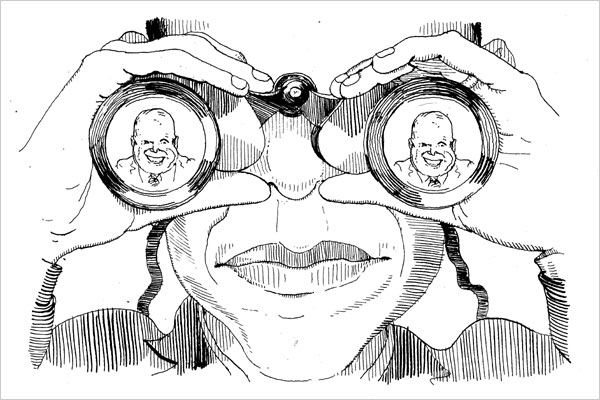
The United States political establishment responds with collective denial on a scale that’s incomprehensible. In the presidential campaign, the only sustained public commentary on the war comes from the Republican presidential candidate John McCain who makes the bizarre claim that U.S. is “surrendering” with victory in clear sight. McCain touts the surge without noting that 4.0 million Iraqis are “displaced from their homes.” Nearly ten percent of Iraq’s population is either dead or injured and there are 5.0 million Iraqi orphans.

This pathological view of victory claims the “surge’ is a success in the context of a devastated population in an obliterated nation lacking in the most essential supplies and services; a nation where death continues on a shopping spree

The report by Dr. Prados makes it clear that the executive branch was responsible for creating whatever information they found necessary to justify war and they did it by posing security threats from Iraq and demanding that intelligence briefers fill in the details

Summary of Findings by Prados, National Security Archive

“A recently declassified draft of the CIA’s October 2002 white paper on Iraqi WMD programs demonstrates that that (the White) paper long pre-dated the compilation of the National Intelligence Estimate on Iraqi capabilities.

“Bush administration and the Tony Blair government began acting in concert to build support for an invasion of Iraq two to three months earlier than previously understood.

“A comparison of the CIA draft white paper with its publicly released edition shows that all the changes made were in the nature of strengthening its charges against Iraq by inserting additional alarming claims, in the manner of an advocacy, or public relations document.

“The draft and final papers show no evidence of intelligence analysis applied to the information contained.” August 22, 2004

One Final Hope to Avoid a Tragic War

Ultimately, the White House had what it wanted by July 2002. When the National Intelligence Estimate arrived from an intimidated intelligence community, there was still one hope of a rational outcome on the rush to war. The NIE delivered to the White House on Oct. 1, 2002 noted that the one scenario in which Iraq would attack the United States involved a U.S. attack on Iraq that threatened Saddam Hussein’s survival.

The following is brutally simple. The one way to cause the hypothesized (and erroneous) claims of Hussein’s intent to attack the United States is to go to war and threaten his regime. Therefore, refraining from war was the best way to protect the United States.

“Baghdad for now appears to be drawing a line short of conducting terrorist attacks with conventional or CBW against the United States, fearing that exposure of Iraqi involvement would provide Washington a stronger cause for making war.

“Iraq probably would attempt clandestine attacks against the U.S. Homeland if Baghdad feared an attack that threatened the survival of the regime were imminent or unavoidable, or possibly for revenge.” Key Judgments, National Intelligence Estimate, Oct. 2002

That was deleted entirely. The July White Paper was “complete” and sent to Congress as the evidence justifying the invasion of Iraq.

In the most supreme of ironies, many members of Congress failed to even review the distorted White Paper before voting overwhelmingly to approve the invasion.

Is there any hope that this same legislative body can remedy the great wrong they helped create? Is there anyone who believes that this or any future White House will move with the urgency necessary to end this war? Will anyone ever be held to account for this series of premeditated deceptions?

See full report with links to primary evidence at Scoop Independent News

Source / OpEdNews.com

The Rag Blog

Posted in RagBlog | Tagged , , | Leave a comment

Texas : Raiding Pension Funds to Build Toll Roads

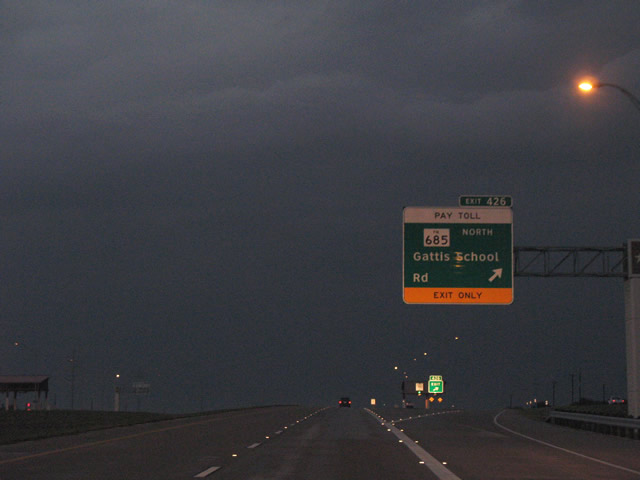
Northbound Texas Toll 130 at the Exit 426 off-ramp. This toll road northeast of Austin opened for traffic in 2006.

‘An irresponsible and immoral idea”
By Paul Burka / August 23, 2008

I doubt whether Rick Perry, David Dewhurst, or Tom Craddick has ever heard of the Lane Cove Tunnel in Sidney, Australia. If they had, they might not be so eager to raid the teacher and state employee retirement funds to build toll roads.

On the day the Olympics opened (08/08/08), the Sidney Morning Herald carried the news that the tunnel “is rapidly turning into a bottomless pit for its financial backers….” Two credit rating agencies, Standard & Poor’s and Moody’s, have warned that the toll road could default on its $1.1 billion debt with a year. The tunnel has suffered three consecutive monthly dropoffs in traffic usage. The estimated usage before the road was built was 100,000 vehicles per day; actual numbers in June and July barely exceeded 50,000. A Standard & Poor’s analyst predicted that unless the project gets fresh capital (at least half a billion dollars), it will default within 10 to 16 months. Perhaps TxDOT, since it is such a believer in such projects, would like to invest.

The problem with the financial wheeling and dealing with retirees’ funds that Perry, Dewhurst, and Craddick have proposed is that toll road projects are risky investments. They are risky for two reasons. One is that they are subject to economic fluctuations that affect people’s driving habits, such as the price of gasoline or the pace of development. The second reason is that, when government is involved, they are vulnerable to political pressure and favoritism. Google “toll road defaults” and you will find a trove of stories with unhappy endings. The Camino Columbia toll road in Laredo, which was rife with political intrigue over which landowners would benefit from having a road go through their property, opened in 2000 and defaulted in 2004. Cost: $90 million. Auctioned off for: $12 million. Tx-DOT bail out acquisition payment: $20 million. The Dulles Greenway toll road to Washington’s Dulles Airport defaulted on its bonds within a year of its opening in 1995. The private owner, Toll Road Investors Partnership II, have lost money every year since the road opened. When toll roads lose money, tolls go up–in this case, to $4.80 by 2012. That works out to an astronomical 35 cents per mile. There are similar stories in Orange County, California (where the state had to buy failing toll lanes), and along Florida’s west coast, and near Richmond, Virginia, where the 8.8-mile Pocohantas Parkway, financed with tax-free bonds, has suffered around a 50% shortfall in projected toll receipts; the state has had to maintain the road because the private owners don’t have the money. Bond ratings have been lowered to below investment grade. To pay off the bonds, the toll was increased by 50%.

It is true that many toll roads have been success stories. In Texas these include the Dallas-Fort Worth Turnpike, which paid off bondholderes with toll revenues after thirty years and became free Interstate 30; the Dallas North Tollway and its northern extension; and the Sam Houston Tollway on the west side of Houston. The issue here is not toll roads per se. It is toll roads built with pension funds (and probably other investment funds as well, such as the Permanent School Fund and the Permanent University Fund). These are trust funds. They belong to the members. It is morally wrong to require fund managers to invest them in risky ventures like toll roads. Does anybody doubt that there will be pressure on the pension funds to invest in certain projects that favor certain people and certain contractors and certain areas? We all know what kind of people we are dealing with here. Rick Perry can’t resist it. He appointed the members of the boards that oversee the pension funds. These deals will be neck-deep in politics.

The Statesman’s story on the leadership’s plan quotes Britt Harris, the chief investment officer of the Teacher Retirement System, as saying that investments in infrastructure made sense if the proposal was “equal or better than something we can get [in another project].” Harris then pointed out that the fund’s “ultimate loyalty is to the members,” not to target investments based on geography or politics. The last clause does not appear in quotation marks in the article. Bravo for Britt Harris, but I think he should keep his resume updated.

The biggest risk in toll roads as investments is political pressure. The pressure comes in two forms. The first is pressure on the consultants to provide favorable projections for use of proposed toll roads. Does anybody trust TxDOT–or the consultants they hire, or the private entities they seek to contract with–to do hardnosed, accurate projections? If you do, then consider these comments from an article in Business Week several years ago, at about the time Rick Perry was unveiling his proposal for the Trans-Texas Corridor:

* “There is a history of feasibility studies for toll roads being overly optimistic,” says John J. Hallacy III, director of municipal bond research for Merrill Lynch and Co.

* “Of the 10 major private toll roads constructed since the mid-1990s, nearly half carry far less traffic than projected. Some $4 billion in toll road bonds risk default over the next five years unless they’re refinanced,” estimates Robert H. Mueller, a municipal bond analyst at the J.P. Morgan securities Inc.

What about financing toll roads with bonds? Well, don’t expect bond raters to give the bonds a good rating. I’m quoting here from an article that appeared eight years ago in a tollroad industry publication, so it is possible that things may have changed, though I doubt it. Credit is much harder to get today than it was in 2000.

Fitch-ICBA, the New York bond rating agency says that there is a permanent bifurcation of the toll road bond market. Established systems of toll facilities can expect to be rated in the range A to AA, whereas most standalone and startup toll facilities will be rated BB- to BBB. They see a continuing demand for new toll road financings because of what they call a “seemingly unbridgeable gap” between highway needs and the ability to finance them with tax monies that toll projects can often help to fill.

According to BondsOnline, bonds rated BBB are “lower medium grade” and bonds rated BB- are “speculative.” The lower the bond rating, of course, the higher the interest rate that bond buyers demand. No one is going to be getting any bargains on toll road bonds. And AAA ratings are just a dream: “Fitch says that the ever present possibility of state governments siphoning off surplus toll revenues or leveraging them for other borrowings prevents state owned turnpikes from achieving the AAA rating.” So how can asking pension funds to invest in these bonds ever be a prudent investment? It can’t.

The article continues: Another problem with bonds for highways is that bond rating houses distrust state governments. It is unlikely that any state owned turnpikes will ever reach AAA: The key reason is susceptibility to political interventions.

I have said this before, and I will say it again. There is a sensible way to finance roads. It is to increase the gasoline tax and index it to inflation in the highway construction index. The gasoline tax has some weaknesses. Part of it is diverted to public education. People drive less when gasoline prices go through the roof. Cars are more fuel-efficient. All of this cuts into the revenue potential of the tax. Nevertheless, Texans still love their cars. The suburban lifestyle here is designed around the automobile. Even if the revenue per mile driven is declining, there is a lot of life left in the tax. A portion of the revenue could be dedicated to paying off the bonds for toll roads. This should be capped to ensure that money will still be available for free roads. While the resistance to tax increases is formidable, so is the resistance to toll roads. If you can persuade the public that a gasoline tax increase will reduce the need for toll roads, I think that proposition could be sold. Anything is better than insisting that the savings of retired teachers and state employees be invested in risky ventures like toll roads.

Source / Burkablog / Texas Monthly

See Austin and US 290 E: You Can’t Get There From Here by Roger Baker / The Rag Blog / August 13, 2008

Thanks to Roger Baker / The Rag Blog

Posted in RagBlog | Tagged , , , , , | Leave a comment

What George Orwell Wrote, 70 Years Later to the Day

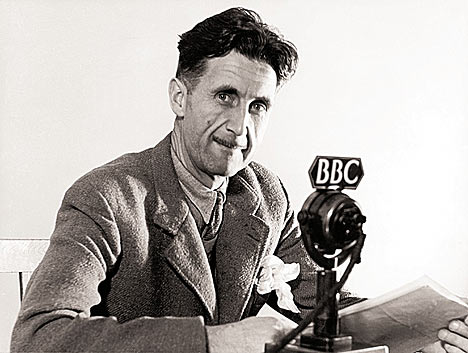
George Orwell, author of 1984 and Animal Farm.

‘”I think he would have been a blogger,” said Jean Seaton, a professor at the University of Westminster in London’
By Noam Cohen / August 24, 2008

See George Orwell’s “post” for August 25, 1938, below.

Aug. 12 began as a hot morning in Aylesford, Kent, England, only to be followed by a powerful thunderstorm in the afternoon. Meanwhile, the blackberries were beginning to redden.

Aug. 12, 1938, that is.

The observations were made by George Orwell, whose copious diaries are now being published every day in blog form, exactly 70 years after they were made. The scholars behind the project say they are trying to get more attention for Orwell online and to make him more relevant to a younger generation he would have wanted to speak to.

“I think he would have been a blogger,” said Jean Seaton, a professor at the University of Westminster in London who administers the Orwell writing prize and thought up the idea of the blog.

Though as prolific as any blogger (his collected writings occupy some 20 volumes), Orwell, who died in 1950, never had the chance to spontaneously publish his thoughts to a waiting public. Now — with some lag time — they are being made available that way at Orwell Diaries.

The Webmaster has included hyperlinks, including a definition of blackberries (no, not the kind you operate with your thumbs) and a Google map of the sanitarium in Kent in southeast England where Orwell was recuperating from tuberculosis and observing the weather so closely.

The entry from Aug. 10, for instance, is offers this report: “Drizzly. Dense mist in evening. Yellow moon.”

Rest assured, he will soon become consumed by the clouds gathering over Europe. Next month the blog will reprint the entries from the political diary he started Sept. 7, 1938.

“The diary isn’t Orwell at his most polemic; it is Orwell at his most steady, most observant,” Professor Seaton said.

Like any good political blogger, Orwell devoured the news, making clippings and looking for shifts in public and government opinion, Professor Seaton said. “He’s partly obsessed by the newspapers because of the start of the world war,” she said. “The diary is written against this almost traumatized understanding that there is going to have to be a second world war.”

The material being reprinted (with the permission of the Orwell estate) can be found in the Orwell archive at University College in London and in the author’s collected works, but “ordinary people won’t go to it,” she said. “I thought, if you publish what he wrote as he wrote it in real time, people would find that rather engaging.”

Professor Seaton said the site would publish at least until 2010, and had more than 50,000 page views since it started on Aug. 9.

The Orwell blog is not the only effort to inject spontaneity into material written generations ago.

For more than a year, Bill Lamin, 60, a retired mathematics teacher in England, has been publishing the letters of his grandfather, who fought in World War I — 90 years to the day.

Part of the attraction for readers, Mr. Lamin said in an e-mail message, was that “no one knows the outcome, whether he lives or dies from letter to letter.”

While the Orwell blog will not have that level of suspense, Professor Seaton said the material was full of tension.

“You do know how this story is going to end,” she said, “but one of the brilliant things is that Orwell doesn’t know how it is going to end.”

Source / New York Times

August 25, 1938, Preston Hall

Everything in Suffolk is much more dried-up than in Kent. Until the day we arrived there had been no rain for many weeks & various crops had failed. Near S’wold saw several fields of oats & barley being harvested which had grown only 1’ or 18” high. Ears nevertheless seemed normal. Wheat crop all over the world said to be heavy.
A bedstraw hawk-moth found in our back garden & mounted by Dr Collings¹. Evidently a straggler from the continent. Said to be the first seen in that locality for 50 years.
Little owl very common round here. Brown owl does not seem to exist.
Dr C. says the snake I caught was the “smooth snake”, non-poisonous & not very common.
Today hot again.
Gipsies beginning to arrive for the hop-picking. As soon as they have pitched their caravans the chickens are let loose & apparently can be depended on not to stray. The strips of tin for cloth-pegs are cut of biscuit boxes. Three people were on the job, one shaping the sticks, one cutting out the tin & another nailing it on. I should say one person doing all these jobs (also splitting the pegs after nailing) could make 10-15 pegs an hour.
Another white owl this evening.

¹The Blairs’ family doctor at Southwold from 1921. His son, Dennis, was a friend of Orwell’s; see 109, n. 1. Peter Davison

Orwell Diaries / August 25, 2008

Thanks to Harry Edwards / The Rag Blog

Posted in RagBlog | Tagged , , , , , | 1 Comment

Type your summary here


Type rest of the post here

Source

The Rag Blog

Posted in RagBlog | Leave a comment

What We Don’t Read About Abkhazia’s Fight for Independence

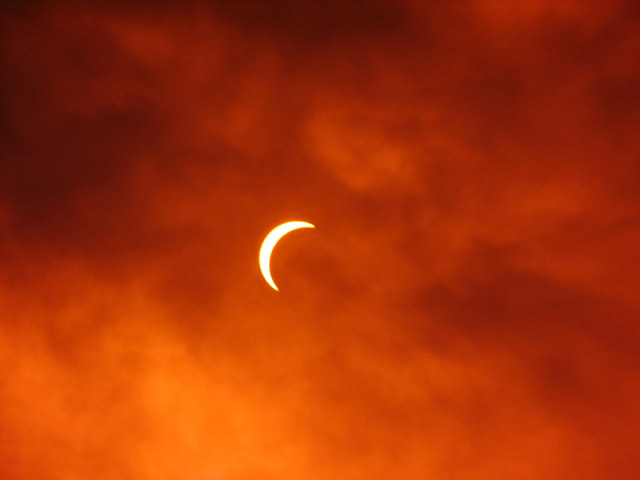
The sun also shines (and hides): ‘It was only a partial eclipse in Tbilisi–but it was total in western Georgia, and supposedly perfect in separatist Abkhazia, Georgia’s westernmost province,’ according to Ben Wheeler, posted on March 29, 2006. Photo by John “Pachydon” Mackedon.

‘All this trumpeting of Georgian sovereignty is quite exaggerated’
By Gerry Storm / The Rag Blog / August 25, 2008

What we aren’t getting in the way of news is that Abkhazia fought a brutal war to resist becoming part of Georgia, hates the Georgians, wants to be an independent state, and an ally of Russia. They use rubles for currency, welcome Russian aid, and much of their population is Russian.

The country is still an unreconstructed mess after the Georgians virtually destroyed it after the Abkhazians refused to be good Georgians.

I would presume that something similar is going on in South Ossetia.

All this trumpeting of Georgian sovereignty is quite exaggerated and promoted by the Bushies who made lots of promises to Georgia without checking the history of the place. The Russian position of backing both provinces as independent states is quite popular in the region.

See the following: Russia Votes to Recognize Independence of Breakaway Regions / The Huffington Post / August 25, 2008

The Rag Blog

Posted in Rag Bloggers | Tagged , , , , | Leave a comment

Dem Convention Protesters: "Fuck Fox News"

Boy, how right did the protesting youth get this? Fox News, “fair and balanced,” deserves every bit of abuse that anyone cares to dish them. “Fair” refers to their disdain for the facts, while “balanced” reflects their racism and hatred of other, particularly black, Muslim, or Latino.

Richard Jehn / The Rag Blog

Denver Democratic Convention Protesters

Thanks to Diane Stirling-Stevens / The Rag Blog

Posted in RagBlog | Tagged , , | Leave a comment

The Answer Is Not Another Pill : The Answer Is Spinach

Bill Maher – Anti-Pharma Rant

Bill Maher ends this episode, which aired on the 28th of September 2007, with a rant about big pharma.

Thanks to Janet Gilles | The Rag Blog | Posted August 24, 2008

Posted in RagBlog | Tagged , , | Leave a comment

What Precisely Are YOU Afraid Of?


Gay marriage foes mobilize for ban in Calif.
By Tracie Cone And Lisa Leff / August 24, 2008

FRESNO, Calif. — Michael Bumgarner says he’s never campaigned for a political cause before, but his strong opposition to same-sex marriage has prompted him to join thousands of volunteers going door-to-door in support of a ballot initiative that would ban gay nuptials here.

“I’ve never stumped before, but I want to be a part of this,” Bumgarner said. The retired insurance executive and devout Mormon said his late mother would “turn over in her grave” if she knew that gays and lesbians could marry.

With less than 11 weeks until Election Day, supporters of Proposition 8 are ramping up their field organization and refining their message as they seek to persuade California voters to shut the door on same-sex marriage. It’s the first time voters will be asked to weigh in on the issue in either California or Massachusetts — the states where gays have won the right to wed.

An estimated 15,000 backers of the measure, most of them members of Mormon, Catholic and evangelical Christian churches, knocked on doors and distributed campaign literature to registered voters throughout the state this weekend and last, according to Jennifer Kerns, spokeswoman for the Yes on 8 campaign.

The initiative is a constitutional amendment, similar to ones already enacted in 26 other states, that would overturn the California Supreme Court decision that legalized same-sex marriage. It needs a simple majority of votes to pass.

Ron Prentice, director of the coalition of religious and social conservative groups that qualified the amendment for the November ballot, said the group has ordered 1 million yard signs and 1 million bumper stickers.

“Unless the people are angry, nothing will happen,” Prentice said. “We are going to change the Constitution and say on Nov. 4, ‘Judges, you can’t touch this.'”

For now, the campaign’s goal is to identify supporters and voters who are unaware or haven’t made up their minds about the measure, said Al Almendariz, a retired air traffic controller and a Mormon.

Almendariz led a team of five people canvassing a suburban neighborhood southeast of Sacramento on Saturday, and their script was concise. The volunteers told people who answered their doors they were with the Proposition 8 campaign, an effort that would define marriage as being between a man and a woman. They didn’t mention same-sex marriage unless a resident brought it up.

“We’re just polling — yes or no, not trying to find converts or change people’s minds,” said Christina Hirst, 28, a photographer with three young children. Hirst and her husband, Justin, 33, a high-school Spanish teacher, said they joined the door-knocking Saturday because they don’t want their children hearing about gay relationships at school.

The literature that volunteers distributed was intended to reinforce the campaign’s message that the amendment is “pro-marriage and children” instead of anti-gay.

“California should do more to encourage families to stay together,” reads the pamphlets illustrated with close-ups of heterosexual couples posed cheek-to-cheek.

Frank Schubert, who is co-managing the Yes on 8 campaign, said the outreach effort is designed to counter the principle message of gay rights advocates, who are portraying the upcoming vote as a matter of fairness and equality.

“They want people to feel like you are a bad person if you support what has been the definition of marriage since the dawn of time,” Schubert said. By having face-to-face conversations about why the amendment is necessary, organizers hope to reach potential supporters who may worry that voting for the measure would get them labeled as “bigots or homophobes,” he said.

Bumgarner distributed handouts listing “Six Consequences if Proposition 8 Fails” that volunteers were encouraged to use as talking points. They included warnings that ministers who preach against same-sex marriage could be sued for hate speech, churches would be sued for refusing to host wedding ceremonies for gays, and that “children in schools will be taught that same-sex marriage is OK.”

The amendment’s opponents dispute those claims, saying that the Supreme Court specifically exempted churches from having to participate in same-sex weddings and that nothing in state law requires teachers to discuss marriage — straight or gay — with students.

Recent polls suggest the election could be close. A Field Poll taken last month found that 51% of likely voters said they would vote against Proposition 8, while 42% said they would vote for it.

Source / USA Today

Thanks to Diane Stirling-Stevens / The Rag Blog

Posted in RagBlog | Tagged , , | Leave a comment

Frank Rich : Last Call for Change We Can Believe In

Drawing by Barry Blitt / NYT.

‘It’s time for Barack Obama to dispatch Change We Can Believe In to a dignified death’
By Frank Rich / August 24, 2008

AS the real campaign at last begins in Denver this week, this much is certain: It’s time for Barack Obama to dispatch “Change We Can Believe In” to a dignified death.

This isn’t because — OMG! — Obama’s narrow three- to four-percentage-point lead of recent weeks dropped to a statistically indistinguishable one- to three-point margin during his week of vacation. It’s because zero hour is here. As the presidential race finally gains the country’s full attention, the strategy that vanquished Hillary Clinton must be rebooted to take out John McCain.

“Change We Can Believe In” was brilliantly calculated for a Democratic familial brawl where every candidate was promising nearly identical change from George Bush. It branded Obama as the sole contender with the un-Beltway biography, credibility and political talent to link the promise of change to the nation’s onrushing generational turnover in all its cultural (and, yes, racial) manifestations. McCain should be a far easier mark than Clinton if Obama retools his act.

What we have learned this summer is this: McCain’s trigger-happy temperament and reactionary policies offer worse than no change. He is an unstable bridge back not just to Bush policies but to an increasingly distant 20th-century America that is still fighting Red China in Vietnam and the Soviet Union in the cold war. As the country tries to navigate the fast-moving changes of the 21st century, McCain would put America on hold.

What Obama also should have learned by now is that the press is not his friend. Of course, he gets more ink and airtime than McCain; he’s sexier news. But as George Mason University’s Center for Media and Public Affairs documented in its study of six weeks of TV news reports this summer, Obama’s coverage was 28 percent positive, 72 percent negative. (For McCain, the split was 43/57.) Even McCain’s most blatant confusions, memory lapses and outright lies still barely cause a ripple, whether he’s railing against a piece of pork he in fact voted for, as he did at the Saddleback Church pseudodebate last weekend, or falsifying crucial details of his marital history in his memoirs, as The Los Angeles Times uncovered in court records last month.

What should Obama do now? As premature panic floods through certain liberal precincts, there’s no shortage of advice: more meat to his economic plan, more passion in his stump delivery, less defensiveness in response to attacks and, as is now happening, sharper darts at a McCain lifestyle so extravagant that we are only beginning to learn where all the beer bullion is buried.

But Obama is never going to be a John Edwards-style populist barnburner. (Edwards wasn’t persuasive either, by the way.) Nor will wonkish laundry lists of policy details work any better for him than they did for Al Gore or Hillary Clinton. Obama has those details to spare, in any case, while McCain, who didn’t even include an education policy on his Web site during primary season, is still winging it. As David Leonhardt observes in his New York Times Magazine cover article on “Obamanomics” today, Obama’s real problem is not a lack of detail but his inability to sell policy with “an effective story.”

That story is there to be told, but it has to be a story that is more about America and the future and less about Obama and his past. After all these months, most Americans, for better or worse, know who Obama is. So much so that he seems to have fought off the relentless right-wing onslaught to demonize him as an elitist alien. Asked in last week’s New York Times/CBS News poll if each candidate shares their values, registered voters gave Obama and McCain an identical 63 percent. Asked if each candidate “cares about the needs and problems of people like yourself,” Obama beat McCain by 37 to 23 percent. Is the candidate “someone you can relate to”? Obama: 55 percent, McCain: 41. Even before McCain told Politico that he relies on the help to count up the houses he owns, he was the candidate seen as the out-of-step elitist.

So while Obama can continue to try to reassure resistant Clinton loyalists in Appalachia that he’s not a bogeyman from Madrassaland, he must also move on to the bigger picture for everyone else. He must rekindle the “fierce urgency of now” — but not, as he did in the primaries, merely to evoke uplifting echoes of the civil-rights struggle or the need for withdrawal from Iraq.

Most Americans, unlike the press, are not obsessed by race. (Those whites who are obsessed by race will not vote for Obama no matter what he or anyone else has to say about it.) And most Americans have turned their backs on the Iraq war, no matter how much McCain keeps bellowing about “victory.” The Bush White House is now poised to alight with the Iraqi government on a withdrawal timetable far closer to Obama’s 16 months than McCain’s vague promise of a 2013 endgame. As Gen. David Petraeus returns home, McCain increasingly resembles those mad Japanese soldiers who remained at war on remote Pacific islands years after Hiroshima.

Economic anxiety is the new terrorism. This is why the most relevant snapshot of voters’ concerns was not to be found at Saddleback Church but at the Olympics last Saturday. For all the political press’s hype, only some 5.5 million viewers tuned in to the Rev. Rick Warren’s show in Orange County, Calif. Roughly three-quarters of them were over 50 — in other words, the McCain base. By contrast, a diverse audience of 32 million Americans tuned in to Beijing that night to watch Michael Phelps win his eighth gold medal.

This was a rare feel-good moment for a depressed country. But the unsettling subtext of the Olympics has been as resonant for Americans as the Phelps triumph. You couldn’t watch NBC’s weeks of coverage without feeling bombarded by an ascendant China whose superior cache of gold medals and dazzling management of the Games became a proxy for its spectacular commercial and cultural prowess in the new century. Even before the Olympics began, a July CNN poll found that 70 percent of Americans fear China’s economic might — about as many as find America on the wrong track. Americans watching the Olympics could not escape the reality that China in particular and Asia in general will continue to outpace our country in growth while we remain mired in stagnancy and debt (much of it held by China).

How we dig out of this quagmire is the American story that Obama must tell. It is not a story of endless conflicts abroad but a potentially inspiring tale of serious economic, educational, energy and health-care mobilization at home. We don’t have the time or resources to go off on more quixotic military missions or to indulge in culture wars. (In China, they’re too busy exploiting scientific advances for competitive advantage to reopen settled debates about Darwin.) Americans must band together for change before the new century leaves us completely behind. The Obama campaign actually has plans, however imperfect or provisional, to set us on that path; the McCain campaign offers only disposable Band-Aids typified by the “drill now” mantra that even McCain says will only have a “psychological” effect on gas prices.

Even as it points to America’s future, the Obama campaign also has the duty to fill in its opponent’s past. McCain’s attacks on Obama have worked: in last week’s Los Angeles Times-Bloomberg poll, Obama’s favorable rating declined from 59 to 48 percent and his negative rating rose from 27 to 35. Yet McCain still has a lower positive rating (46 percent) and higher negative rating (38) than Obama. McCain is not nearly as popular among Americans, it turns out, as he is among his journalistic camp followers. Should voters actually get to know him, he has nowhere to go but down.

The argument against Obama’s “going negative” is that it undermines his message of “transcendent politics” and will make him look like an “angry black man.” But pacifistic politics is an oxymoron, and Obama is constitutionally incapable of coming off angrier than McCain. A few more fisticuffs from the former law professor (and many more from his running mate and other surrogates) can only help make him look less skinny (metaphorically if not literally). Obama should go after McCain’s supposedly biggest asset — experience — much as McCain went after Obama’s crowd-drawing celebrity.

It is, after all, not mere happenstance that so many conservative pundits — Rich Lowry, Peggy Noonan, Ramesh Ponnuru — have, to McCain’s irritation, proposed that he “patriotically” declare in advance that he will selflessly serve only a single term. Whatever their lofty stated reasons for promoting this stunt, their underlying message is clear: They recognize in their heart of hearts that the shelf life of McCain’s experience has already reached its expiration date.

Is a man who is just discovering the Internet qualified to lead a restoration of America’s economic and educational infrastructures? Is the leader of a virtually all-white political party America’s best salesman and moral avatar in the age of globalization? Does a bellicose Vietnam veteran who rushed to hitch his star to the self-immolating overreaches of Ahmad Chalabi, Pervez Musharraf and Mikheil Saakashvili have the judgment to keep America safe?

R.I.P., “Change We Can Believe In.” The fierce urgency of the 21st century demands Change Before It’s Too Late.

Source / New York Times

Thanks to Shelia Cheaney / The Rag Blog

Posted in RagBlog | Tagged , , , , , , | Leave a comment

Sunday’s Laugh


A cannibal was walking through the jungle and came upon a restaurant operated by a fellow cannibal. Feeling somewhat hungry, he sat down and looked over the menu…

* Tourist: $5
* Broiled Missionary: $10
* Fried Explorer: $15
* Baked Democrat or Grilled Republican: $100

The cannibal called the waiter over and asked, ‘Why such a price difference for the Politician?’

The cook replied, “Have you ever tried to clean one? They’re so full of shit, it takes all morning.”

Thanks to Diane Stirling-Stevens / The Rag Blog

Posted in RagBlog | Tagged , | 1 Comment

Elections: This Is the Only World We’ve Got, Folks


We Have a Chance to Choose a Better Road
By Caroline Arnold / August 24, 2008

Hope has two beautiful daughters. Their names are Anger and Courage; anger at the way things are, and courage to see that they do not remain the way they are. – Augustine of Hippo (354-430 AD)

Annie Glenn liked to tell the (probably apocryphal) story about a hand-lettered sign posted on a muddy, rutted road in rural Muskingum County, Ohio: “Choose your rut carefully – you’ll be in it for the next ten miles.”

With the conventions now upon us, we must hope that delegates and voters alike heed that homespun Ohio advice: Choose a rut carefully. We will all be in it for at least the next four years.

Despite the efforts of the neocons and much of the media over the last quarter-century to make fear the organizing principle of our society, most Americans today are more angry than fearful at the way things are, deeply dissatisfied with the rut we’ve been in for the last seven years and hoping, yearning for a road leading to a better world.

The 2006 election showed that we were angry about the rut our country was in. It also revealed that our courage – or the courage of our Congress – was not equal to the task of pulling out of the rut we were in and getting on firmer ground.

We’re angry again this year. What about? Gas prices? Cost of living? Gay marriage? Cost of war? Job losses? Unfair taxes? Mortgage foreclosures? Corporate welfare? Torture? Health Care? Surveillance of Internet and phones? Global warming? Peak oil? Abortion? “Illegal”aliens?

This week Speaker Pelosi said that in light of public anger over gasoline prices and public opinion that offshore drilling will bring those prices down, she will put the issue back on the table. As she should: this is a democracy, and if people are angry about something, elected officials should address it.

But by the same reasoning, Pelosi was dead wrong to keep impeachment off the table for two years. People were and are angry over the lying, cheating and criminal actions of the President and Vice President and have been clamoring for impeachment. How many people (in both cases) may be open to question, but the best way to find out is to put the issue on the table and see how many people pick up their forks.

Democracy is supposed to be a road on which people make the public decisions, policies and laws that affect their lives and communities and pave the way for a better future. It doesn’t guarantee scientifically-sound policies, logical, rational or moral decisions, fair or equitable laws, or even “liberty and justice for all.” It can only offer the people who travel the road and take the consequences of public decisions and policies the means to keep maintaining the infrastructure and improving the road as needed.

But what happens when elections are corrupted by money, when wealth can fund political campaigns and buy not just advertising but whole media empires, when voting machines can be corrupted, and voters intimidated or falsely disqualified, and when a questionably elected President can put the whole nation in a rut of secrecy, torture and perpetual war?

We have plenty to be angry about, but do we have the courage to change things? Do we even have the courage to set priorities among the things we will invest in or take risks for? What comes first, our own children, parents, siblings, friends? Our own homes, cars, private property, pets? Our personal education and health care? Education and health care for all? Gas for $3/gallon? Hungry, homeless people in our communities? Hungry, homeless people in Palestine or Afghanistan? Undocumented immigrants here? Refugees from genocide in Africa? Endangered species planet-wide?

The ethanol in the our cars’ gas tanks takes food from poor children; the exhaust from our lawn-mowers strands polar bears in the Arctic; our tax dollars pay for the cluster bombs that maim Lebanese children and the bulldozers that raze the houses of Palestinians. Our racism sends one in 20 black men to prison, serving longer terms than whites or Hispanics for the same crimes. Our hatred of “illegal immigrants” has stranded 43 women and 150 children in Postville, Iowa, destitute and under virtual house-arrest, and our fear of illegal drugs killed the dogs of a small town mayor when a local SWAT team without a proper warrant burst into his house on the mistaken assumption that his wife was dealing marijuana.

This is the only world we’ve got, folks. What we Americans do, how we spend our time, our money and the world’s natural resources, how we use our technical prowess, our human creativity and our human capacity for fairness, compassion and helping one another, and most of all, who we elect and what ruts in the road we choose in this election will affect, for better or worse, every living creature and living system on earth, down to the last generation to the end of time.

Though the mud-machines are already operating and it’s going to be very hard even to see where the ruts are, we have the chance to choose a better road. Barring new ways to tamper with votes or voters, some event that can be billed as a terrorist attack, or a few election-day power outages on the East or West Coasts, this election will tell us which ruts we are angry about and which ruts we have the courage to change or get out of.

[Before joining Senator John Glenn’s Washington staff in 1985, Caroline Arnold (csarnold@neo.rr.com) founded a successful small business and served three terms on the Kent (OH) Board of Education. In retirement she is active with civic and environmental organizations in Kent.]

Source / Common Dreams

The Rag Blog

Posted in RagBlog | Tagged , , | Leave a comment

Police State Amerikkka, Right in My Own Backyard

I was astounded to read that a Border Patrol roadblock was erected for several hours last week on SR 104 near the Hood Canal Bridge. Welcome to police state Amerikkka, I thought. And I tend to agree with the Port Townsend couple identified below who suggest this is “racial profiling.” In typical Olympic Peninsula fashion, arresting one white person mitigates such a charge. “Simplistic” is the best description of the reasoning that goes on out here.

I need to leave it, because I sure as hell don’t love it anymore.

Richard Jehn / The Rag Blog

Hood Canal Bridge, view to the east

Border Patrol immigration checkpoints like one approaching Hood Canal Bridge to be more common on Peninsula, agency says
By Erik Hidle and Tom Callis / August 24, 2008

U.S. Border Patrol checkpoints, such as one near the Hood Canal Bridge on Friday and another about six months ago near Forks, are about to become more common on the North Olympic Peninsula, said an agent.

A checkpoint was set up Friday morning on state Highway 104 one mile west of the Hood Canal Bridge.

“Today we implemented a checkpoint there between approximately 9 a.m. and 2 p.m.,” Supervisory Border Patrol Agent Michael Bermudez Bermudez said on Friday.

“These types of check points have proven to be successful in the past, and we are starting to utilize more checkpoints.

“We are expecting to begin using them frequently in and around that area, and in places in Jefferson and Clallam counties.”

He declined to say where or when the checkpoints would be.

Border Patrol Deputy Chief Patrol Agent Joseph Guiliano said checkpoints on U.S. Highway 101 are planned north of Forks and south of Discovery Bay between now and mid-September.

Guiliano said agents detained six illegal immigrants at a checkpoint eight miles north of Forks about six months ago eight miles north of Forks.

In March 2007, agents detained seven people at a checkpoint near Forks.

Bermudez said the temporary checkpoints’ primary objectives are to apprehend terrorists and illegal immigrants.

They also are used in conjunction with local law enforcement to arrest felons, seize drugs and weapons and to deter illegal activity, he added.

At Friday’s checkpoint near the bridge, seven illegal immigrants and one person with a felony warrant were taken into custody, and $2,500 worth of illegally harvested salal was confiscated, Bermudez said.

“Border Patrol checkpoints are a critical tool to protect against illegal activity,” he said.

“We are going to continue to put them in areas where people have to pass through from point A to point B.”

Eastbound traffic

The checkpoint required vehicles heading eastbound on state Highway 104 to stop briefly while agents performed visual inspections of vehicles and asked drivers questions.

If agents believed more investigation was required, they sent the vehicle to a secondary lane.

Otherwise, drivers were permitted to travel on.

“The supervisor today said traffic was flowing along pretty good through the checkpoint,” Bermudez said on Friday.

“I don’t believe that at any time did traffic come to standstill.”

Waited in line

Jewel and Harry Atwell of Port Townsend said they did have to wait in a line while they passed through the checkpoint on Friday morning.

“We were approaching the bridge when we had to stop in a line,” Jewel Atwell said.

“We assumed the bridge was open, but then we saw a big sign that said there were U.S. officers ahead.”

Atwell said the agents made them stop and asked them questions, while men on each side of their car looked in at their belongings.

Atwell said she felt the Border Patrol agents had violated their civil liberties and were racially profiling people.

“We asked them what they were doing, and the man said they were looking for someone,” she said.

“I told them that they were racially profiling us.”

Both the Atwells are Caucasian. Jewel Atwell said that by letting them go through so easily, the agents were practicing racial profiling.

Bermudez said he disagreed with Atwell’s view.

“We arrested numerous people today, and one of the people was white,” he said.

“We have the authority to do these checkpoints in numerous places and we will.”

Bermudez said he understands the frustration of waiting in line, but that the job the Border Patrol is doing is important.

“It’s not just illegal immigration we are focusing on because we are reducing crime when we take a felon off the street,” Bermudez said.

“Our agents are highly skilled and highly trained.”

Bermudez also said he wasn’t surprised to hear some complaints.

“You won’t see a Border Patrol agent telling doctors or lawyers how to do their jobs,” he said.

“But you will see people trying to tell us how to do our job, even though we’re trained to do it.”

Source / Peninsula Daily News

The Rag Blog

Posted in RagBlog | Tagged , , | 6 Comments