College Students Choosing Action Over Protest


‘Activism isn’t dead on the nation’s college campuses; it’s just different’
By Jeannie Kever / August 10, 2008

The Kent State shootings and other iconic protests of the 1970s are so last century.

Student activists now are more likely to run recycling stations or deliver bottled water to day laborers.

“It’s not really as much protesting as students taking charge,” said Murray Myers, a senior at the University of St. Thomas who runs the campus recycling program. “I guess protest was pretty popular in the ’60s. I see me and other students … doing positive things, rather than protesting.”

“They’re everywhere in many, many ways,” said Maria Jimenez, who was a student activist at the University of Houston during the 1970s and now advocates for immigrant and human rights.

Shifting interests, styles

For most students, college is primarily a ticket to the future, a place to gain the skills to make it in the adult world. Many juggle jobs and classes, leaving little time for saving the world.

“In my generation, maybe about 10 percent really care, but those who care are really passionate about it,” said Imelda Padilla, 21, a senior at the University of California, Berkeley, who is spending the summer in Houston for an internship with the Service Employees International Union.

Some say activism is cyclical.

“We were an extremely active generation,” Jimenez said. “Then there were several generations that were not active at all. … It impresses me how important the work that young people are now doing is.”

Students during the 1980s and ’90s focused on careers and paychecks, “not so much public service,” said William Munson, dean of students at the University of Houston. “Now there’s an expectation among our students that they give something back.”

Today’s activists, however, aren’t only about food drives and charity runs. Old-style guerrilla theater is still around, too.

Two student groups at UH — Students Against Sweatshops and Students for Fair Trade — regularly storm President Renu Khator’s office. A small band of protesters has spent the past 18 months in a grove of trees on the UC Berkeley campus, hoping to save them from being cut down to make way for a sports facility.

“You walk to a football game, and you see them,” said Padilla, a political science major on the California campus. ” … I wouldn’t necessarily say I’m that kind of activist.”

She is, instead, spending the summer on Houston’s street corners, talking to day laborers about the minimum wage and other concerns.

“I want to change the world, but you have to do it one issue at a time,” she said.

A place at the table

Other students work on topics closer to home.

“There’s a lot more people going to college these days, and we have to ensure we’re preserving accessibility for everyone,” said Sam Dike, 21, president of the UH Student Government Association.

Dike served on a university committee considering tuition increases last spring and reluctantly agreed to support a 6 percent increase.

But he also is trying to revive the dormant Texas Student Association, a statewide group he hopes will lobby for student interests, such as tuition and financial aid.

“For far too long, we have not had a legitimate place at the table,” said Dike.

Another group of students work on behalf of people halfway around the world, a trend Jimenez links to the increased ease of international travel.

“They will take off by plane to protest at the Republican convention or the World Social Forum in Brazil,” she said.

Tiffany Le, 21, a creative writing student at UH, says her family’s ties to Vietnam helped drive her support for fair-trade coffee, harvested by workers paid a living wage.

She grew up in the North Texas suburb of Plano but has traveled to Vietnam.

“I saw what it was like to live in that kind of poverty,” she said. “In the ’60s, (student issues) were domestic, U.S. involvement in the Vietnam war or the civil rights movement. Now we’re looking at globalization and our impact on the world.”

UH Students for Fair Trade is aligned with a national group that advises campus affiliates. A similar group, United Students Against Sweatshops, works with students on 250 campuses to demand the schools sell only items produced in factories offering decent wages and working conditions.

Poverty, justice

Working conditions in a Chinese factory or Central American coffee plantation may seem far removed from a college campus in Texas.

Student activists don’t see it that way.

“I think there is more and more the realization that any human problem, it is part of our human lives and we have a role to play,” said Rogelio Garcia-Contreras, an assistant professor at the University of St. Thomas’ Center for International Studies.

His students want to end poverty, ensure justice and provide food and shelter everywhere in the world.

But sometimes, their work is less dramatic.

At 24, Myers wants to fight global warming and urban sprawl. For now, he’s the recycling czar at the University of St. Thomas.

Myers, an environmental studies and political science student, inherited the job when the previous coordinator graduated.

“There are a lot of other areas I’d rather be working on, but because this is my responsibility, it’s what I’ve been doing,” he said.

He could have graduated in May but put it off because there was no one to take over.

This fall, he has a new goal: “Finding my replacement.”

Copyright 2008 Houston Chronicle

Source / Houston Chronicle

The Rag Blog

Posted in RagBlog | Tagged , , , , , , , , , | Leave a comment

Feds Have Erected Barriers : Help Our Veterans Vote


Veterans Affairs has banned nonpartisan voter registration at federally financed facilities
By Susan Bysiewicz / August 10, 2008

WHAT is the secretary of Veterans Affairs thinking? On May 5, the department led by James B. Peake issued a directive that bans nonpartisan voter registration drives at federally financed nursing homes, rehabilitation centers and shelters for homeless veterans. As a result, too many of our most patriotic American citizens — our injured and ill military veterans — may not be able to vote this November.

I have witnessed the enforcement of this policy. On June 30, I visited the Veterans Affairs Hospital in West Haven, Conn., to distribute information on the state’s new voting machines and to register veterans to vote. I was not allowed inside the hospital.

Outside on the sidewalk, I met Martin O’Nieal, a 92-year-old man who lost a leg while fighting the Nazis in the mountains of Northern Italy during the harsh winter of 1944. Mr. O’Nieal has been a resident of the hospital since 2007. He wanted to vote last year, but he told me that there was no information about how to register to vote at the hospital and the nurses could not answer his questions about how or where to cast a ballot.

I carry around hundreds of blank voter registration cards in the trunk of my car for just such occasions, so I was able to register Mr. O’Nieal in November. I also registered a few more veterans — whoever I could find outside on the hospital’s sidewalk.

There are thousands of veterans of wars in Korea, Vietnam, the Persian Gulf and the current campaigns in Iraq and Afghanistan who are isolated behind the walls of V.A. hospitals and nursing homes across the country. We have an obligation to make sure that every veteran has the opportunity to make his or her voice heard at the ballot box.

Connecticut’s attorney general, Richard Blumenthal, and I wrote to Secretary Peake in July to request that elections officials be let inside the department’s facilities to conduct voter education and registration. Our request was denied.

The department offers two reasons to justify its decision. First, it claims that voter registration drives are disruptive to the care of its patients. This is nonsense. Veterans can fill out a voter registration card in about 90 seconds.

Second, the department claims that its employees cannot help patients register to vote because the Hatch Act forbids federal workers from engaging in partisan political activities. But this interpretation of the Hatch Act is erroneous. Registering people to vote is not partisan activity.

If the department does not want to burden its staff, there are several national organizations with a long history of nonpartisan advocacy for veterans and their right to vote that are eager to help, as are elected officials like me.

The department has placed an illegitimate obstacle in the way of election officials across the country and, more important, in the way of veterans who want to vote. A group of 21 secretaries of state — Republicans and Democrats throughout the country, led by me and my counterpart in Washington State, Sam Reed — has asked Secretary Peake to lift his department’s ridiculous ban on voter registration drives.

Bills that would require the department to repeal the ban have been filed in both houses of Congress. They need to be signed into law no later than Oct. 1, so that veterans in V.A. care don’t miss their states’ deadlines to register to vote in the fall elections.

But federal legislation shouldn’t be needed for the Department of Veterans Affairs to lift the ban on voter registration drives by state and local election officials and nonpartisan groups.

The federal government should be doing everything it can to support our nation’s veterans who have served us so courageously. There can be no justification for any barrier that impedes the ability of veterans to participate in democracy’s most fundamental act, the vote.

[Susan Bysiewicz is the secretary of state for Connecticut.]

Source / New York Times

The Rag Blog

Posted in RagBlog | Tagged , , , | Leave a comment

It Is Not Too Late to Redeem the Situation


Suskind on America’s declining moral authority
John Walbridge / August 12, 2008

Most of the discussion of Ron Suskind’s new book, “The Way of the World,” has focused on a single anecdote. Citing CIA sources, he claims that the White House ordered the production of a rather clumsy forgery of a letter from the head of the Iraqi intelligence service to Saddam purporting to prove that Muhammad Atta, the leader of the 9/11 hijackers trained in Iraq and that Iraq was attempting to buy uranium from Niger. The forgery was leaked to a sympathetic British journalist in 2003 and had little impact. The content was immediately seen to be implausible. Though the anecdote is juicy, and apparently true–the letter exists, after all–it is somewhat beside the point and tends to confirm my suspicion that those who discuss such books read only the first and last chapters (or their reviews). Having by chance had a tedious trans-Atlantic flight to endure, I read the whole book in a single sitting. There is much more than the not wholly surprising news that someone at the White House panicked and tried to cover himself politically by forging a document. It is a book of singular beauty and importance.

First, and less important, the forgery anecdote is part of a larger story about the failure and misuse of American intelligence in the run-up to the Iraq war, especially in human intelligence. Suskind reveals that skillful British agents had managed to develop two highly placed sources within the Iraqi government prior to the start of the war–the head of intelligence who supposedly wrote the incriminating letter and the foreign minister. Both told the British that there were no weapons of mass destruction and explained why. This news was passed to the White House, which chose to ignore it. Suskind points out that the CIA had been totally unable to develop such sources. He also tells an even more alarming tale about how George Bush deliberately blew the British operation that was watching the development of the plot to blow up airliners over the Atlantic. Despite American urgings to shut the plot down immediately, the British wanted to wait until the plotters revealed their plans and contacts. They were forced to act prematurely when the US had Pakistan arrest a key intermediary between the plotters in Britain and al-Qaeda. The purpose was apparently to allow Bush to claim progress in preventing terrorism in the run-up to the 2006 congressional elections.

Much more important is the main theme of the book, the role of moral authority in the struggle against terrorism. Suskind argues that American democratic ideals retain a powerful appeal throughout the world. He makes this point by telling the stories of a number of individuals: an American official desperate to prevent terrorists from getting enriched uranium, an Afghan teenager in America on an exchange program, a lawyer from Illinois and her client in Guantanamo, a young Pakistani man educated in the US and living and working in Washington who is arrested by the Secret Service one day when walking to work past the White House, a former US ambassador to Pakistan who wants to see something like the Peace Corps to express what is best about America, Benazir Bhutto, who despite herself finds herself at the head of genuine democratic movement but went to her death believing that America had been unwilling to protect her, and others. Their stories are often touching and beautiful; Suskind can write. The Illinois lawyer convinces her new client in Guantanamo that she is genuine by laying twenty-six annual bar association membership cards on the table between them. The young Pakistani emerges from hours in the interrogation cell beneath the White House (God help us, there apparently is such a thing) to find that his co-workers are waiting with a cake to welcome him back. Later, when Musharraf declares martial law and shuts down the Pakistani media, he and his Pakistani-American fiancée set up an impromptu news service funneling information back to the leaders of the democratic lawyers’ movement in Pakistan. The young Afghan exchange student is asked for the first time in his life what he thinks is right. A former military judge remembers seeing the key to the Bastille at Mount Vernon and writes a memo exposing the trials at Guantanamo as farces.

Contrasted with these people and their hopes and ideals are the lies, the cruelty, the ruthlessness, and the sheer injustice that have characterized America’s prosecution of the “Global War on Terror.” We have been told that these abuses have been necessary to fight a new kind of enemy. Suskind does not dwell on these abuses; they have been summarized with white anger in Jane Mayer’s “The Dark Side,” a book that can be usefully read with this one. Suskind argues that these abuses have actually undermined the struggle against terrorism.

Suskind points out that Bin Laden and al-Qaeda have tapped an old folk tale theme: the prince who leaves the palace behind to live with the people and defend justice. He argues that people like Ayman al-Zawahiri have skillfully deployed this myth to make Osama Bin Laden a champion of justice and Islam. Suskind argues that the ethical corner-cutting of the War on Terror has simply confirmed the jihadist portait of a hypocritical America whose real interest is the colonization of the Islamic world. Guantanamo stands as proof that American pretensions are hollow.

But there were not only torturers at Guantanamo; there were also American lawyers— even American military lawyers—who chose to defend the detainees out of a stubborn commitment to law and justice. Suskind argues passionately that it is not too late to redeem the situation, that there is a counter-narrative in which American democratic ideals do prevail, in which America does the right thing, not because it is good public diplomacy and will advance America’s interests, but simply because it is moral and ethical and the right thing to do. The world needs and desperately wants America to lead with its moral ideals.

Suskind is right about this. I have been living for the last year in Turkey, once a fervently pro-American country. A year ago public opinion polls showed that only 9 percent of Turks had a favorable impression of America. That has risen somewhat of late, partly due to simple relief that George Bush’s term would soon be over but also out of astonishment that America might elect a Black man with a Muslim name as President. The corresponding thing here, electing a Greek or Armenian as prime minister of Turkey, is inconceivable—but people want America to be different. They are beginning–very cautiously–to let themselves believe that the old America, Lincoln’s “last best hope of mankind,” might return. Suskind’s goal is to urge us Americans to let this happen, both through new government policies and through the actions of individual Americans. May it be so.

John Walbridge / Indiana University

Source / Informed Comment

The Rag Blog

Posted in RagBlog | Tagged , | Leave a comment

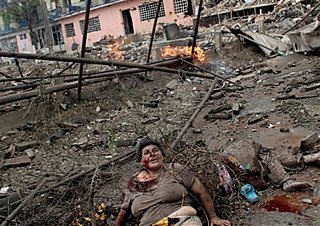
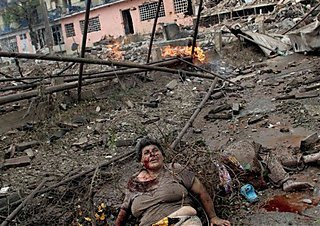
Assessing the Meaning of the Confict in Ossetia

Credit: ABC News

Bush’s war in Georgia: Will it be the flyswatter or the blunderbuss?
By Mike Whitney / August 11, 2008

“I saw bodies lying on the streets, around ruined buildings and in cars. It’s impossible to count them now. There’s hardly a single building left undamaged.” Lyudmila Ostayeva, resident of Tskhinvali, South Ossetia

Washington’s bloody fingerprints are all over the invasion of South Ossetia. Georgia President Mikhail Saakashvili would never dream of launching a massive military attack unless he got explicit orders from his bosses at 1600 Pennsylvania Ave. After all, Saakashvili owes his entire political career to American power-brokers and US intelligence agencies. If he disobeyed them, he’d be gone in a fortnight. Besides an operation like this takes months of planning and logistical support; especially if it’s perfectly timed to coincide with the beginning of the Olympic games. (another petty neocon touch) That means Pentagon planners must have been working hand in hand with Georgian generals for months in advance. Nothing was left to chance.

Putin needs to carefully weigh his options. Then, on Monday, he should announce that Russia will sell all $50 billion of its Fannie Mae mortgage-backed bonds, all of its US dollar-backed assets, and will accept only rubles and euros in the future sale of Russian oil and natural gas. Then watch as the Dow Jones goes into a death-spiral. Why use a blunderbuss when a flyswatter will do just fine?

Another tell-tale sign of US complicity is the way President Bush has avoided ordering Georgian troops to withdraw from a province that has been under the protection of international peacekeepers. Remember how quickly Bush ordered Sharon to withdraw from his rampage in Jenin? Apparently it’s different when the aggression serves US interests.

Saakashvili has been working closely with the Bush administration ever since he replaced Eduard Shevardnadze as president in 2003. That’s when US-backed NGOs and western intelligence agencies toppled the Shevardnadze regime in the so-called color-coded “Rose Revolution”. Since then, Saakashvili has done everything that’s been asked of him; he’s built up the military and internal security apparatus, he’s allowed US advisers to train and arm Georgian troops, he’s applied for membership in NATO, and he’s been a general nuisance to his Russian neighbors. Now, he has sent his army into battle ostensibly on Washington’s orders. At least, that is how the Kremlin sees it. Vladimir Vasilyev, the Chairman of Russia’s State Duma Security Committee, summed up the feelings of many Russians like this: “The further the situation unfolds, the more the world will understand that Georgia would never be able to do all this without America. In essence, the Americans have prepared the force, which destroys everything in South Ossetia, attacks civilians and hospitals.”

True. That’s why Bush is flying Georgian troops back home from Iraq to join the fighting rather than pursuing peaceful alternatives. Bush still believes that political solutions will naturally arise through the use of force. Unfortunately, his record is rather spotty.

But that still doesn’t answer the larger question: Why would Saakashvili embark on such a pointless military adventure when he had no chance of winning? After all, Russia has 20 times the firepower and has been conducting military maneuvers anticipating this very scenario for months. Does Uncle Sam really want another war that bad or is the fighting in South Ossetia is just head-fake for a larger war that is brewing in the Straits of Hormuz?

Mikhail Saakashvili is a western educated lawyer and a favorite of the neocons. He rose to power on a platform of anti-corruption and economic reform which emphasized free market solutions and privatization. Instead of raising the standard of living for the Georgian people, Saakashvili has been running up massive deficits to expand the over-bloated military. Saakashvili has made huge purchases of Israeli and US-made (offensive) weapon systems and has devoted more than “4.2% of GDP (more than a quarter of all Georgian public income) to military hardware.

The Chairman of Russia’s State Duma Security Committee, Vladimir Vasiliyev, summed it up like this:

“Georgia could have used the years of Saakashvili’s presidency in different ways – to build up the economy, to develop the infrastructure, to solve social issues both in South Ossetia, Abkhazia and the whole state. Instead, the Georgian leadership with president Saakashvili undertook consistent steps to increase its military budget from US$30 million to $1 billion – Georgia was preparing for a military action.” Naturally, Russia is worried about these developments and has brought the matter up repeatedly at the United Nations but to no avail.

Israeli arms manufacturers have also been supplying Saakashvili with state-of-the-art weaponry. According to Israeli newspaper Ha’aretz:

“In addition to the spy drones, Israel has also been supplying Georgia with infantry weapons and electronics for artillery systems, and has helped upgrade Soviet-designed Su-25 ground attack jets assembled in Georgia, according to Koba Liklikadze, an independent military expert in Tbilisi. Former Israeli generals also serve as advisers to the Georgian military.” (“Following Russian pressure, Israel freezes defense sales to Georgia” Associated Press)

The Israeli news source DebkaFile elaborates on the geopolitical implications of Israeli involvement in the Georgia’s politics:

“The conflict has been sparked by the race for control over the pipelines carrying oil and gas out of the Caspian region….The Russians may just bear with the pro-US Georgian president Mikhail Saakashvili’s ambition to bring his country into NATO. But they draw a heavy line against his plans and those of Western oil companies, including Israeli firms, to route the oil routes from Azerbaijan and the gas lines from Turkmenistan, which transit Georgia, through Turkey instead of hooking them up to Russian pipelines.

Jerusalem owns a strong interest in Caspian oil and gas pipelines reach the Turkish terminal port of Ceyhan, rather than the Russian network. Intense negotiations are afoot between Israel Turkey, Georgia, Turkmenistan and Azarbaijan for pipelines to reach Turkey and thence to Israel’s oil terminal at Ashkelon and on to its Red Sea port of Eilat. From there, supertankers can carry the gas and oil to the Far East through the Indian Ocean.” (Paul Joseph Watson, “US Attacks Russia Through Client State Georgia”)

The United States and Israel are both neck-deep in the “Great Game”; the ongoing war for vital petroleum and natural gas supplies in Central Asia and the Caspian Basin. So far, Putin appears to have the upper-hand because of his alliances with his regional allies–under the Commonwealth of Independent States—and because most of the natural gas from Eurasia is pumped through Russian pipelines. An article in “Today’s Zaman” gives a good snapshot of Russia’s position vis a vis natural resources in the region:

“As far as natural resources are concerned Russia’s hand is very strong: It holds 6.6 percent of the worlds proven oil reserves and 26 percent of the world’s gas reserves. In addition, it currently accounts for 12 percent of world oil and 21 of recent world gas production. In May 2007, Russia was the world’s largest oil and gas producer.

As for national champions, Putin has strengthened and prepared Gazprom (the state-controlled gas company), Transneft (oil pipeline monopoly) and Rosneft (the state-owned oil giant). That is why in 2006 Gazprom retained full ownership in the giant Shtokman gas field (7) and took a controlling stake in the Sakhalin-2 natural gas project. In June 2007, it took back BP’s Kovytka gas field and now is behind Total’s Kharyaga oil and gas field.” (“Vladimir Putin’s Energystan and the Caspian” Today’s Zaman)

Putin–the black belt Judo-master–has proved to be as adept at geopolitics as he is at “deal-making”. He has collaborated with the Austrian government on a huge natural gas depot in Austria which will facilitate the transport of gas to southern Europe. He has joined forces with German industry to build an underwater pipeline through the Baltic to Germany (which could provide 80% of Germany’s gas requirements) He has selected France’s Total to assist Gazprom in the development of the massive Shtokman gas field. And he is setting up pipeline corridors to provide gas to Turkey and the Balkans. Putin has very deliberately spread Russia’s influence evenly throughout Europe with the intention of severing the Transatlantic Alliance and, eventually, loosening America’s vice-like grip on the continent.

Putin’s overtures to Germany’s Merkel and France’s Sarkozy are calculated to weaken the resolve of Bush’s neocon allies in the EU and put them in Russia’s corner. Putin is also attracting considerable foreign investment to Russian markets and has adopted “a ‘new model of cooperation’ in the energy sector that would ‘allow foreign partners to share in the economic benefits of the project, share the management, and take on a share of the industrial, commercial and financial risks’”. (M K Bhadrakumar “Russia plays the Shtokman card”, Asia Times) All of these are intended to strengthen ties between Europe and Russia and make it harder for the Bush administration to isolate Moscow.

Putin has played his cards very wisely, which makes it look like the fighting in South Ossetia may be Washington’s way of trying to win through military force what they could not achieve via the free market.

On Saturday, President Bush issued this statement from Beijing: “We have urged an immediate halt to the violence and a stand-down by all troops. We call for an end to the Russian bombings and a return by the parties to the status quo of August 6th.”

That was it. Bush then quickly returned to the Olympic festivities. He was last spotted at a photo op with the US girls volleyball team jumping up and down on the beach-sand in his wingtips. The pretense that Bush is leading the country has seemingly been abandoned altogether. Cheney is in charge now.

Meanwhile, Putin boarded a plane to Moscow as soon as he heard about the Georgian invasion and after angrily waving his finger in Bush’s face. It’s doubtful that the friendship between the two leaders will survive the present storm. America’s gambit in the Caucasus has aroused the sleeping bear and put Russia on the warpath. There’s no telling when the hostilities might end. The conflagration could sweep across the entire region. Currently, news agencies are reporting that Russian warplanes are pounding Georgia’s military bases, airfields, and the Black sea port of Poti.

According to Bill Van Auken on the World Socialist Web Site:

“Much of the city (Tskhinvali) was reportedly in flames Friday. The regional parliament building had burned down, the university was on fire, and the town’s main hospital had been rendered inoperative by the bombardment.”

Vesti radio reported that Georgian forces burned down a church in Tanara in South Ossetia where people were hiding, to the ground, with all the people inside. The Deputy Director of an information agency as an eye witness reported that fragments of cluster bombs of were found in Tskinvali. There have also been reports by a South Ossetian reservist that civilians who were hiding in basements were shot dead by Georgian soldiers.

Wikipedia reports that, “Russian soldiers captured group of American mercenaries on territory of South Ossetia. Group was captured near of Zare village.”

An estimated 1,500 people have died in the onslaught and 30,000 more fled across the Russian border. Large swaths of the city have been reduced to rubble including the one hospital that was pounded by Georgia bombers. Georgia has cut off the water supply to the city.The Red Cross now anticipates a “humanitarian catastrophe” as a result of the fighting.

“I saw bodies lying on the streets, around ruined buildings, in cars,” Lyudmila Ostayeva, 50, told the Associated Press after fleeing the city with her family to a village near the Russian border. “It’s impossible to count them now. There is hardly a single building left undamaged.”

At least 15 Russia peacekeepers were killed in the initial fighting and 70 more were sent to hospital. Georgia’s army stormed the South Ossetia capital, Tskhinvali, killing more than 1,000 fleeing civilians. Russian Deputy Foreign Minister Grigory Karasin told news agencies in an interview how the hostilities began:

Russian peacekeepers “were killed by their own [Georgian] partners in the peacekeeping forces. There is a Russian battalion, an Ossetian battalion, and a Georgian battalion… and all of a sudden the Georgians, Georgian peacekeepers, begin shooting their Russian colleagues. This is of course a war crime. I do not rule out that the Hague and Strasbourg courts and institutions in other cities will be involved in investigating these crimes, and this inhuman drama that has been played out.”

According to South Ossetia’s president, Eduard Kokoyti, Georgian troops had been taking part in NATO exercises in the region since the beginning of August. Kokoyti claims that there is a connection between the NATO’s activities and the current violence.

Clearly, no one was expecting Russia to react as quickly or as forcefully as they did. In a matter of hours Russian tanks and armored vehicles were streaming over the border while warplanes bombed targets throughout the south. The Bush-Saakashvili strategy unraveled in a matter of hours. The Georgia president is already calling for a cease-fire. He’s had enough.

Russian Prime Minister Vladimir Putin has promised to spend $400 million to rebuild parts of South Ossetia. Large shipments of food and medical supplies are already on the way.

Russian President Dmitry Medvedev said on Sunday:

“The actions of Georgia have led to deaths – among them are Russian peacekeepers. The situation reached the point that Georgian peacekeepers have been shooting at Russian peacekeepers. Now women, children and old people are dying in South Ossetia – most of them are citizens of the Russian Federation. As the President of the Russian Federation, I am obligated to protect lives and the dignity of Russian citizens wherever they are. Those responsible for the deaths of our citizens will be punished.”

Indeed, but how will Medvedev bring the responsible people to justice; with tanks and fighter pilots or is there another way?

PUTIN’S OPTIONS: Flyswatter or Blunderbuss?

Sometimes war provides clarity. That’s certainly true in this case. After this weekends fighting, everyone in the Russian political establishment knows that Washington is willing to sacrifice thousands of innocent civilians and plunge the entire region into chaos to achieve its geopolitical objectives. Bush could call the whole thing off right now; Putin and Medvedev know that. But that’s not the game-plan. So, the two Russian leaders have to make some tough decisions that will end up costing lives. What choice do they have?

Putin needs to carefully weigh his options. Then, on Monday, he should announce that Russia will sell all $50 billion of its Fannie Mae mortgage-backed bonds, all of it US dollar-backed assets, and will accept only rubles and euros in the future sale of Russian oil and natural gas. Then watch as the Dow Jones goes into a death-spiral. Why use a blunderbuss when a flyswatter will do just fine.

Source / Information Clearing House

The Rag Blog

Posted in RagBlog | Tagged , , | 1 Comment

Privatizing Iraq Doesn’t Seem to Have Worked

Workers leaving the Diyala State Company for Electrical Industries in Baquba recently. Photo Credit: Ashley Gilbertson for The New York Times

Iraq Private Sector Falters; Rolls of Government Soar
By Campbell Robertson / August 10, 2008

BAGHDAD — Hampered by years of violence, a decimated infrastructure, a lack of foreign investors and a flood of imports that undercut local businesses, Iraq’s private sector, particularly its small non-oil economy, has so far failed to flourish as its American patrons had hoped.

In its absence, the Iraqi government has been sustaining the economy the way it always has: by putting citizens on its payroll. Since 2005, according to federal budgets, the number of government employees has nearly doubled, to 2.3 million from 1.2 million.

The impetus is not only economic: In exchange for abandoning the insurgency that plunged the nation into civil war, many of the 100,000 members of civilian patrols known broadly as the Awakening movement have been promised jobs in the security forces or in reconstruction, though many Sunni Muslim members complain it is not happening quickly enough.

But this growth has not come without problems. Already, a huge wage increase to government workers that was instituted — but then suspended because of fears that it was pushing up inflation — has underscored the difficulties of being far and away the largest employer in an unstable country.

In 2006, 31 percent of Iraq’s labor force was working in the public sector, according to the agency for statistics in the Ministry of Planning. The agency expects that figure to reach 35 percent this year, about 5 percentage points short of where the C.I.A. estimated it to be on the eve of the 2003 invasion.

This figure is not atypical for the region, but it hardly indicates the free market state initially envisioned by the United States-led Coalition Provisional Authority, which pushed for full and rapid privatization in its first few months.

“For all the talk about the private sector taking off in Iraq, it didn’t materialize,” said Haider al-Abbadi, who is on the parliamentary economic committee, and is disappointed by Iraq’s reversion to its old statist habits. “People would say, ‘Well, these people are poor; we need to help them.’ It’s true, but we didn’t create jobs. I think this is a huge problem.”

While some ministries need to keep growing — the Defense and Interior Ministries, which each include Iraqi security forces, account for about a third of government employees — others have tried to curtail hiring.

“I think that the government itself has been concerned about keeping a cap on the number of people that can join the public sector,” said Jorge Araujo, the lead economist for Iraq at the World Bank.

But to combat unemployment, a factor contributing to much of Iraq’s violence, there are few other options right now. Nothing sent recent graduates and out-of-work Iraqis scrambling to land civil service jobs more than the hefty raises that went into effect in June.

Given how large a proportion of the country’s population is on the government payroll, this series of wage increases, like the two that came before, in 2003 and 2007, was essentially a form of widespread economic relief. The salaries of many Iraqis were more than doubled.

Some economic advisers and members of Parliament worried that a raise for government workers could be a nightmare for others when a sudden flood of cash poured into the market. They argued that the raises should be phased in gradually to prevent a spike in inflation, which, at around 14 percent — a sea change from two years ago, when it neared 70 percent — has largely been tamed by a disciplined fiscal policy, robust oil revenues and an influx of low-cost imports.

But Iraqi citizens were desperate for the money. And lawmakers were thinking about elections.

“When people see a sudden pay raise, they will spend,” said Mr. Abbadi, who supported the phased approach. “To be frank, we have not been fair to the poorer people, or people without jobs, or people not on the payroll of the government.”

For a short time, the raises were a windfall for a handful of privately owned businesses — like the gold shops and car dealerships that cater to the doctors, lawyers, engineers and teachers of the public sector.

“This is the best season I’ve ever had,” said Muhammed Aziz, 36, sitting behind the counter of his bustling gold shop in the Kadhimiya neighborhood.

But even government employees were wary. “When our salary was increased, it came along with rising prices in the market,” Tamathaer Hameed, 27, a professor of Arabic who was browsing for rings in Mr. Aziz’s gold shop, said of the last round of wage hikes. “It’s an economic circle.”

Read the rest here. / The New York Times

The Rag Blog

Posted in RagBlog | Tagged , , | Leave a comment

Minneapolis/ St. Paul : Rocking the Republicans

Texas-reared singer-songwriter Steve Earle will be rocking the Republicans on Labor Day. Image copyright Charles Devlin.

‘Most of the rock concerts during RNC convention week are renegade events aimed at countering the Republican mania, not fueling it’
by Keith Goetzman / August 11, 2008

What do the Republican National Convention and rock and roll have in common? Very little, which is why most of the rock concerts in Minneapolis and St. Paul during RNC convention week are renegade events aimed at countering the Republican mania, not fueling it.

On August 31, the day before the convention, a large roster of local bands plus smartypants New York singer-songwriter Nellie McKay will play at ProVention, “a concert for people, peace, and the planet” at O’Gara’s, a stalwart St. Paul rock club. (Utne Reader will be involved as a sponsor.)

On Labor Day, which is RNC kickoff day, a host of national acts with working-class sympathies will rock the Take Back Labor Day Festival at Harriet Island Regional Park, just across the river from the convention site. On the docket of this concert sponsored by the SEIU (Service Employees International Union) are Steve Earle, Billy Bragg, Lupe Fiasco, Mos Def, Atmosphere, Alison Moorer, and Tom Morello, a.k.a. the political hell raiser known as the Nightwatchman.

Finally, on September 3, the eve of the convention’s close, Morello and his briefly reunited Rage Against the Machine bandmates will bring their potent rap-rock to the Target Center in St. Paul’s sister city of Minneapolis. You might recall that Rage broke up shortly after an incendiary gig during the 2000 Democratic National Convention in Los Angeles.

Altogether, this show of musical force seems to reinforce the idea that apart from Ted Nugent, the Republican Party doesn’t have many rock and rollers on its side. Minnesota Governor Tim Pawlenty, who’s been getting a lot of buzz as a potential McCain running mate, was famously flummoxed before the 2004 election to learn that his favorite rock artist, Bruce Springsteen, harbored liberal tendencies. As the governor may have figured out by now, it’s not just the Boss who’s blue.

Source / Utne Reader

Thanks to Sarito Neiman / The Rag Blog

Posted in RagBlog | Tagged , , , , | Leave a comment

The American Left : Do We Have a Progressive Movement Today?

Is there a new progressive movement? If so, it’s different from the last one: sixties anti-war demonstration was part of the New Left movement. Photo courtesy of Robert Altman.

George Bush ‘has succeeded in bringing moderates, liberals, and progressives closer together than at any time in decades’
By Ken Brociner

Even if there are only fleeting moments when many of us can feel – in our bones – that there really is such a thing as “a national progressive movement,” the fact is that those moments are real.

George W. Bush will go down in history as one of this country’s worst presidents ever. But there is at least one thing we can genuinely thank him for: He has succeeded in bringing moderates, liberals, and progressives closer together than at any time in decades. But do the many political connections created since Bush took office actually add up to something that can be called a (or “the”) “progressive movement”?

The short answer is – it depends on who you ask. Over the past five or six years, I have been struck by the wide range of answers to this question within progressive circles. Some progressives believe it is premature to talk about the existence of a singular “progressive movement” – as opposed to the existence of a number of separate but related progressive movements. Some even dismiss the importance of the question to begin with – considering the issue either irrelevant or of secondary importance.

The question of whether or not we constitute “a movement” cuts to the very core of just who “we” are at the present moment. How we answer it is bound to shape the programs and strategies we develop in the months and years ahead.

I recently interviewed a few leading intellectuals and activists to find out whether or not they believe it is accurate to say that today – less than four months before the 2008 election – “a progressive movement” actually exists.

Bill Gamson is the co-director of Boston College’s Media/Movement Research and Action Project — and one of the leading scholars in the field of social movement theory. In an email interview last week this is what he had to say:

“Is there a field of actors – formal organizations and/or networks — who are trying to mobilize people for collective action to challenge and change social, political, and economic inequalities? Of course. Sometimes they work in coalitions and sometimes they work independently. Do they always work together harmoniously with a common strategy? Of course not. But that doesn’t make them less of a progressive movement.”

Offering a strikingly different perspective was Charles Knight, the president of the Commonwealth Institute, an independent, public policy research center in Cambridge, Mass. Knight, who also co-directs the institute’s Progressive Strategies Studies Project, said he sees ” a progressive political tendency,” but not a movement.

“But I would agree that there are movement elements within progressive politics today,” Knight said. “Still, while referring to a ‘progressive movement’ does give people a feeling of being part of something bigger, it’s important that progressives have a sense of our own history, and that we not throw around the term ‘movement’ too loosely.”

I also spoke with Fred Berman, a leading activist/organizer in the Boston area. Berman, one of the leaders of the Progressive Democrats of Somerville (which is affiliated with Democracy for America), spends most of his time working on issues like regional development, affordable housing and government accountability. He told me: “I do feel connected to people and organizations that are working on particular issues on a local, state, or national level. But that feels very different than being part of an overarching national movement.”

Todd Gitlin, a longtime activist and professor of journalism and sociology at Columbia University, has written several important books that discuss progressive movement building, including, most recently, The Bulldozer and the Big Tent. When I asked Gitlin what he thought about the current state of progressivism, he said: “It’s a wish more than an accomplished fact to say that there is a single progressive movement. There are movements, plural, some moving more vigorously than others…. Insofar as there is a single movement, it’s a reaction to the depredations of the Bush years.”

Is there any way to synthesize these different viewpoints? I think there is. For four out of the last six years, I have attended the Take Back America (TBA) conferences, now held every spring in Washington D.C. TBA brings together progressive politicians and leaders, activists, and organizers from the peace, labor, civil rights, economic justice, environmental, women’s, gay rights and netroots movements. But each year – from lecterns, in panel discussions and in the corridors, one hears constant references to “the progressive movement.”

This has never felt like a political line or wishful thinking to me, but rather a perfectly appropriate way of capturing the essence of what is happening right then and there, during three jam-packed days of speeches and discussions. Sure, the 2,000 or so people who attend each year are not reading from the same playbook on a year-round basis. And most people in attendance have individual organizational allegiances of one sort or another. But that feeling of being part of a national “movement” that so many people get from attending the TBA conferences is something quite real. I know I can practically “taste it,” and I doubt I am alone in this.

Other activists find that same feeling of connectivity when they attend mass anti-war demonstrations, the annual Netroots Nation conference, or national meetings of their labor unions – especially when representatives of other movements show up to offer solidarity.

Throughout this decade, progressive groups large and small have significantly increased their connections to each other in all sorts of ways unimaginable just ten years ago. One excellent example of this is the recently formed Health Care for America Now coalition that includes many of the leading unions and progressive organizations in the country, such as ACORN, AFSCME, SEIU, MoveOn, USAction, and The Campaign for America’s Future.

Obviously, the Internet has been a big part of these new connections – but the stolen 2000 election, the war in Iraq and Bush’s many other disastrous policies have also been instrumental in bringing progressives together.

Even if there are only fleeting moments when many of us can feel – in our bones – that there really is such a thing as “a national progressive movement,” the fact is that those moments are real. Which raises this question: How can we hold onto and enhance those feelings of nationwide connectivity?

Clearly, one way is to expand “the movement” (what it was universally called in the ’60s) itself. The idealism and mass participation in the Obama campaign provides us with an enormous opportunity to do just that. We also need to create more effective relationships, links, and coalitions between the various components of the progressive movement.

But equally important is that we expand our collective awareness of the existence of a national movement. To some extent, what this really boils down to is how we think, write, and talk about ourselves. The more frequently we refer to the progressive movement, the more we actually solidify its — and thus our — existence as a nationwide entity.

Back in the 1960s, the lines were more clearly drawn than they are today. Both the counterculture and the New Left (which constantly overlapped) felt as if they were practically at war with “the system.” There was no need to promote a sense of there being “a movement” forty years ago — it was in the very air one breathed. But the situation today is very different: opposition to the war in Iraq hasn’t generated anywhere near the kind of cataclysmic revolt within American society that the war in Vietnam did. And nothing today approximates the ’60s mass rebellion of youth – when millions openly rejected the cultural and social norms of “mainstream America.”

Still, it seems clear that – thanks to the Internet and new connections between progressive organizations – “a movement” has come back into existence since Bush took office.

Perhaps it’s a matter of seeing the proverbial glass as half full. For what is to be gained by insisting it is still half empty? By looking at our movement positively, we not only boost our spirits, but help to foster progressive unity rather than fragmentation. After all, if we are “a movement, ” than we need to act like one.

As the Jefferson Airplane so aptly put it back in 1969, “We can be together… we should be together.”

[Ken Brociner’s essays and book reviews have appeared in Dissent, In These Times and Israel Horizons. He also has a biweekly column in the Somerville (Mass.) Journal.]

Source / In These Times / Posted August 5, 2008

The Rag Blog

Posted in RagBlog | Tagged , , , , , , | Leave a comment

The Next Bubble Is on the Way : Credit Card Debt


Why are we all complicit in our own economic servitude?
by Danny Schechter / August 11, 2008

Let me try a few words out on you: “Charge It,” “Swipe It” and “Priceless.”

You know exactly what I am talking about. We all have credit and debit cards. We all use them, and many of us keep our lives going because of them.

That is, until the bill becomes due.

The sad truth is that we are all complicit in our own economic servitude even if, at bottom, it’s not our fault because we live in a consumption society, and don’t feel we could live without them.

While many eyes are focusing on the housing meltdown and its hugely negative effect on an economy clearly moving into recession, few are paying attention to the next bubble expected to burst: credit cards. You would never know it by watching those slick VISA card ads on the Olympic TV broadcasts.

Combined with the subprime losses, such a credit card nightmare has the potential, experts say, of bringing down the entire financial system and global economy.

You and your credit card have become key players in the highly unstable financial crunch. Mortgage lender cupidity and bank credit card greed wedded to financial institution deregulation supported by both political parties, have been made manifestly worse by Bush administration support-the-rich policies. It has brought us to a brink not seen since just before the Great Depression.

While campaigning in Edinburg, Texas, in February, Barack Obama met with students at the University of Texas-Pan American. “Just be careful about those credit cards, all right? Don’t eat out as much,” he said. After the foreclosure crisis, he warned, “the credit cards are next in line.”

The coupling of home equity debt and credit card debt has gone hand in glove for years. The homeowners at risk can no longer use their homes as ATM machines, thanks to their prior re-financings and equity loans, often used in the past to pay off their credit cards. Indeed, homeowners cashed out $1.2 trillion from their home equity from 2002 to 2007 to pay down credit card debts and to cover other costs of living, according to the public policy research organization Demos.

To compound the problem, fewer people are paying their credit card bills on time. And, to flip the old paradigm, more are using high-interest credit card cash to pay at least part of their mortgages instead of the other way around.

Younger people are being crushed by this debt burden as college students and new consumers. Emma Johnson of MSN Money reports that “Generation Y” is broke.

“The democratization of credit has really generated a competitive spending culture, and plastic has allowed for material goods not had in the previous generation,” says Bob Manning, author of Credit Card Nation. “Most of us grew up in a home with just one or two bathrooms for the whole family, he points out; today, new homes usually have at least one bathroom per bedroom.”That change has happened so fast,” Manning says.

“This generation feels that somehow or another they’re going to figure out some technological advancement that’s going to get them out of their financial troubles and outsmart the market,” says Manning, who served as adviser to the documentary In Debt We Trust. The documentary paints a picture of national financial crisis stemming from the personal-debt burden. (See InDebtWeTrust.com)

Happily, this issue is finally being addressed by Congress and the Federal Reserve Bank. When asked for comments, the public overloaded the Fed’s website as the New York Times commented:

When the Federal Reserve asked for comments on its proposed rules on abusive credit card practices, an astonishing 56,000 poured in. Most were from outraged consumers. They told of interest rates skyrocketing when they paid an unrelated bill late. They complained of unwarranted late fees and pushed-up due dates. One Pennsylvania customer fumed: “I’m fed up with credit card company tricks that drive us deeper in debt.”

This anguished deluge should send a clear message to leaders in Washington. The Federal Reserve should swiftly adopt its proposed rules against unfair or deceptive credit card practices. But the real burden to curb these abuses falls on Congress.

This discontent is being organized to press Congress to act by groups like the Consumer Federation of America and the Center for Responsible Lending. And Congress is listening:

WASHINGTON (Reuters) – Legislation aimed at curbing credit card billing practices that surprise borrowers with unexpected interest rate increases and fees was approved on Thursday by a U.S. House of Representatives committee.

The bill approved by Financial Services Committee mirrors Federal Reserve proposals that would effectively end double-cycle billing — in which card companies reach back to prior billing cycles to help calculate the interest charged in the current cycle.

These reforms are a start but much more needs to be done because it’s not just billing practices that is at issue — it’s high interest changes, deceptive marketing, and arbitrary rules. On top of that, there are other loans that need scrutiny including payday lenders and student loans. And of course our own addiction to shop until we drop.

Also, let us not forget that our credit card companies have been colonizing markets throughout the world. As the New York Times explained in a series on debt, “As the American blessing of credit cards became widespread, so did the American curse of debt.”

Bear in mind the experience of another addicting industry — tobacco. As they came under restraints in the US, they escalated their poison pushing worldwide.

Debt is a global issue and has to be treated as such.

Just as groups like NACA provide help to homeowners in distress, we need a major effort to help the victims of credit cards — with practical assistance and political demands for regulation and relief.

[News Dissector Danny Schechter made the film In Debt We Trust (InDebtWeTrust.com). His new book PLUNDER: Investigating Our Economic Calamity is out later this month from Cosimo. (Newsdissector.com/Plunder) Comments to dissector @mediachannel.org.]

Source / CommonDreams

The Rag Blog

Posted in RagBlog | Tagged , , , , , | 1 Comment

A Video Series on World Agriculture: Monsanto, Part 2

The World According to Monsanto (Part 2 of 8)

Right now, there is probably no other company that is doing more to endanger the health of this planet, and it’s inhabitants, than Monsanto. With Nazi-like attitude, they are leading the world in shear destructive evil greed. First they were a drug company, and then they expanded to become a drugs and genetic engineering company, and now Monsanto is attempting to acquire water rights in countries with water shortages in a move to control the people’s basic means of survival, and production of the global food supply. Giant transnational corporations like Monsanto, in collusion with the World Bank and the World Trade Organization, seek to commodify and privatize the world’s water and put it on the open market for sale to the highest bidder. Millions of the world’s citizens are being deprived of this fundamental human right, and vast ecological damage is being wrought as massive industry claims water once used to sustain communities and replenish nature.

Click here for more information.

Thanks to Diane Stirling-Stevens / The Rag Blog

Posted in RagBlog | Tagged , | 3 Comments

Corporate America Prepares for Battle Against Progressive Labor Legislation


Big business building massive war chest to stop Employee Free Choice Act and other efforts to put a check on corporate power
By Joshua Holland

There is nothing more terrifying to corporate America than the prospect of dealing with its workforce on an even playing field, and, along with allies on the Right, it’s pulling out all the stops to keep that from happening. At stake is much more than the usual tax breaks, trade deals and relentless deregulation; corporations are gearing up for a fight to preserve a status quo in which the largest share of America’s national income goes to profits and the smallest share to wages since the Great Depression — in fact, since the government started tracking those figures.

There will be many heated legislative battles if 2008 shakes out with larger Congressional majorities for Democrats and an Obama White House — fights over war and peace, energy policy, health care reform and immigration. But it may be a bill that many Americans have never heard of that sparks the most pitched battle Washington has seen since the Civil Rights Act. It’s called the Employee Free Choice Act (EFCA) — a measure that would go a long way toward guaranteeing working people the right to join a union if they so choose — and it has the potential to reverse more than three decades of painful stagflation, with prices rising and paychecks flat, for America’s middle class and working poor.

The Chamber of Commerce, D.C. lobbyists, firms that rely on cheap labor and a host of “astroturf” front groups are building a war chest that could reach hundreds of millions of dollars in an effort to build a firewall against EFCA and other efforts to put a check on corporate power and rebuild a declining middle class. A recent report on the front page of the Wall Street Journal about how Wal-Mart — the nation’s largest employer — is “mobilizing its store managers and department supervisors” in an effort to discourage its workers from voting Democratic this fall generated quite a bit of controversy. According to a report in the National Journal that received less attention, “several business-backed groups … (including) two fledgling coalitions fighting labor-supported legislation and the conservative political group Freedom’s Watch are trying to raise $100 million for issue advocacy and get-out-the-vote efforts to benefit about 10 GOP Senate races.”

It’s the EFCA — the idea that working people who want to join a union can — that has corporate America quaking in its collective boots. The bill passed the House easily in 2007 — by 56 votes — and had majority support in the Senate. But it didn’t reach the 60 votes required to kill a GOP-led filibuster, and that massive war chest being amassed by the corporate Right is, in part, an attempt to maintain a firewall of at least 41 anti-union senators — mostly Republicans joined by a few corporatist Dems — to kill the bill in the 2009 Congress. President Bush threatened to veto the legislation if it had passed in 2007, but this time around, they fear that a Democrat will be sitting in the White House. Obama was a co-sponsor of the 2007 legislation; McCain opposed it.

The prospect of a filibuster-proof majority that’s sympathetic to the needs of ordinary working Americans, according to the National Journal, is making “business groups jittery.” Polls show that the economy is Americans’ number one concern going into this fall’s election; fully 75 percent of Americans believe the country is on the wrong track, and these well-funded groups are intent on keeping it firmly on that track.

American Wages and the Law of Supply and Demand

At the heart of the bloody cage match that’s likely to come is this: In economic terms, the wages of many — probably most — Americans represent a “market failure” of massive proportions. Even the most devout of free-marketeers — economists like Alan Greenspan and the late Milton Friedman — agree that it’s appropriate and necessary for government to intervene in the case of those failures (they believe it’s the only time that such “meddling” is appropriate). But the corporate Right, which claims to have an almost religious reverence for the power of “free” and functional markets, has gotten fat off of this particular market failure, and it’s dead-set on continuing to game the system for its own enrichment.

About 1 in 4 Americans has at least a four-year college degree, and many of those degrees are even worth something in the labor market (sorry, art history majors). Others — Derek Jeter, Bill Gates, a gifted artist or a writer who can turn a decent phrase — have specialized skills that allow them to command an income that’s as high as the market for their scarce talents will bear. There are also people with more common skills who have the scratch (and/or connections) and fortitude to establish their own businesses — think George W. Bush or a really great mechanic who owns his or her own shop.

That leaves a lot of people (about 80 percent of working America) who are hourly workers — “wage slaves” in the traditional sense. There’s no doubt that their salaries are heavily influenced by the laws of supply and demand. We saw that clearly in the latter half of the 1990s, when, under Bill Clinton, the Fed allowed the economy to grow at a fast clip, unemployment dropped below 4 percent, and for a brief period, a three-decade spiral in inequality was reversed as wages grew for people in every income bracket.

But a common fallacy is that wages are determined by market forces. They’re not, for a variety of reasons that require more explanation than space permits. I’ll focus on two: what economists call “information asymmetries” and coercion. Both are anathema to a functional free market, and both exist today, in abundance, in the American workplace.

To understand these failures of the free market, one has to go back, briefly, to basic economic theory. In order for a free market transaction to work, both the buyer and the seller need to have a good grasp of what the product being sold — in this case, people’s sweat — is worth elsewhere, who else is buying and selling, etc. In other words, they have to have more or less equal access to information. There can be no misrepresentation by either the buyer or the seller in a free market transaction. And both parties have to enter into the transaction freely, without being coerced; neither side can exercise power or undue influence over the other, whether implicitly or explicitly, through threats or other means.

Now let’s look at how that theoretical construct plays out in the real world of the American workplace. When an individual worker negotiates a price for their time, effort and dedication with any business bigger than a mom-and-pop operation, there’s quite a bit of explicit coercion (much of it in violation of our labor laws), which I’ll get to shortly. But there’s always an element of inherent coercion when an individual negotiates with a company alone, because of the power differential: a company that’s shorthanded by one person will continue to function, while a person without a job is up a creek with no paddle, unable to put a roof over his or her head or food on the table.

The “information asymmetries” in such a negotiation are immense — they’re actually more like process asymmetries. Companies spend millions of dollars on human resource experts, consultants, labor lawyers, etc., and they know both the conditions of the market and the ins and outs of the labor laws in intimate detail. While working people with rarified skills are often members of trade associations or guilds, read trade journals and have a pretty good sense of what the market will bear, many low- and semi-skilled workers don’t know their rights under the labor laws, don’t know how to assert them and (rightfully) fear reprisals when they do. They often have little knowledge of the financial health — or illness, as the case may be — of the company to which they’re applying for a job, how profitable it is, how much similar workers in other regions or firms earn, etc.

What Would a Free Market Transaction Look Like?

For the majority of Americans who lack scarce talents or a high level of education, negotiating a price for one’s time with a firm on an individual basis is anything but a free market transaction. And that’s where collective bargaining comes in — when workers bargain as a group, they do so on a level playing field with employers, and the resulting wages (and benefits) are as high as the market can bear, but no higher.

Unions, like corporations, have a great deal of information about the market. They know how a firm is doing, how profitable it is and where it is relative to the larger industry in which it operates. They know what deals workers at other plants have negotiated. They have attorneys who are just as familiar with the American labor laws as their counterparts in management.

And while an individual has very little leverage in negotiations — again, most companies can do with one less worker — collectively, an entire work force has the ability to shut down or at least slow down a company’s operations if management chooses not to negotiate in good faith (as is often the case).

It’s not difficult to quantify the difference between what most hourly employees take home and what the free market would dictate. Economists Lawrence Mishel and Matthew Walters estimate the “union wage premium” — the amount of additional pay a unionized worker receives compared with a similar worker who isn’t a member of a union — at around 20 percent (that’s in keeping with other studies, using different methodologies, which put the premium in a range between 15 and 25 percent). If one includes benefits — health care, paid vacations, etc. — union members make almost 30 percent more than their nonunion counterparts.

Another way of looking at it is this: Millions of American families are scraping by on below-market wages, and if that weren’t the case, there wouldn’t be such a large group of American families among the “working poor.” In economic theory, it’s a given that a producer can’t sell his or her wares below the cost of production. The equivalent to the cost of producing a gizmo, when we’re talking about the sale of someone’s working hours, is the cost of providing basic necessities — nutritious food, safe housing and decent medical care. These are out of reach for the almost 3 million American families who work full-time and live beneath the poverty level. According to the Working Poor Families Project, half of the working poor have no health insurance.

It’s important to understand that unionization doesn’t just boost the incomes of union members. When an industry has a certain threshold of unionization, all workers, whether unionized or nonunionized, end up with a fairer share of the pie. Mishel and Matthew point out that a high school graduate who doesn’t belong to a union but who works in an industry that has a rate of union membership of 25 percent or higher brings home 5 percent more in wages than a similar worker in a less unionized industry.

Unions, Coercion and the Long Decline

Those are the tangibles, but there are intangibles as well. When enough workers are organized, and can speak with one voice, they represent a powerful influence on the political establishment — one that is largely absent in America today. Inequality, stagnant wages, out-of-reach health care costs, rising prices for food and energy, dwindling opportunities to get an affordable, high-quality education and a host of other issues that have a real impact on most American families are all issues that a healthy labor movement can force politicians to address

Read the rest of this article here / AlterNet / Posted August 8, 2008

Thanks to Bill Meacham / The Rag Blog

Posted in RagBlog | Tagged , , , , , | 1 Comment

The Rag Blog’s David MacBryde from Berlin : Obama and the German People

BEFOREHAND: Setting up for TV coverage: The message to Obama: “The whole world will be watching you.” Photo © David MacBryde / The Rag Blog.

‘Obama’s speech was sober and serious – he did not grandstand or pump up emotions.’
By David MacBryde / The Rag Blog / August 11, 2008

BERLIN — Here is some high-value news, some on the ground reporting, some philosophical reflections on profound issues, and some personal references to Texas and personal comments, including on McCain’s responses.

Beforehand: In the lead-up to Obama’s visit expectations climbed higher and higher – with a standard question being how Obama would handle what was widely seen as a “high-wire balancing act” (Hochseilakt) between arriving as a star who is supposed to make a spectacular appearance and giving a serious speech. What will he say? (The cover of popular weekly Die Stern pictured a smiling Obama and provocatively asked “A savior, or a [devilish] seducer?”.)

I will point out the most important reactions here to the speech, and offer some reflections.

* German Foreign Minister Frank-Walter Steinmeier was quoted (throughout the German media) that their talks and Obama’s speech demonstrated a common philosophy to base foreign policy on cooperation instead of on confrontation.

Backgroundt: Obama did not repeat here his quote of JFK, “Never negotiate out of fear, but never fear to negotiate.” But foreign policy experts here certainly know of Obama’s judgment on that.

Note that in the two days PRIOR to Obama’s visit the president of Iraq was in Germany on a working trip.

(Media footnote: Der Spiegel, major league magazine, reported that the Iraq President confirmed that he also wants a planned withdrawal of occupation troups, agreeing with the Germans and Obama. The McCain campaign responded on this core issue by accusing “Der Spiegel” of mistranslation. As Jon Stewart of the Daily Show, pointed out: the Germans are well known for sloppy work and imprecision.)

The day AFTER Obama’s visit Foreign Minister Steinmeier went to Afghanistan — on a working trip that including putting potable water works on line and the German support for police training and the legal system (including anti-corruption measures).

(Media footnote: Most German media covers the question of exactly what “larger efforts” Obama will ask the Europeans to undertake, especially in Afghanistan. The German public is 70% against continuing war in Afghanistan. At the same time, support for an immediate withdrawal of security including military forces has little support. The predominant interest in Germany is for fundamental change in strategic priority — to implement a “Marshall Plan” for civilian development, and refocusing security efforts to develop robust Afghanistan police and anti-corruption capabilities. With that in mind, Obama’s very specific local reference to the Marshall Plan was noted with interest here as an important example of how to get from war to peace. This time the Germans will be on the paying side, and it will cost them a lot of money.

* One of the widely reported statements in the speech (eg. headlined by the Handelsblatt, the usually pro-American and conservative publication of economics and finance) was Obama’s point that there are challenges in the world that the United States — that no one nation alone — can solve. The idea was not new. German Chancellor Angie Merkel, at a recent public event in Berlin with Father Bush, made precisely that point. Father Bush’s public grin showed no reaction. What was seen as newsworthy, and so widely reported, was that Obama evidently actually understands this.

* Among the most lively responses to the speech came from the younger people, when Obama was talking about himself and mentioned that his father had been a goat herder. The younger people, including the “young Turks” and Arabs who moved here from rural areas, really enjoyed that. It is apparent the young people of Berlin identified with Obama’s background and evident comfort with his own “mixed identity,” especially those trying to live in multi-cultural, multi-racial and multi-ethnic Berlin.

Talking with older Germans just after the speech (mostly reporters, who, not only in Berlin, can be cynical) there was relief that Obama’s speech was sober and serious – that he did not grandstand or pump up emotions. (An historical aside: older Germans are nervous and cynical about “charismatic leaders”.) They were seriously pleased that the younger generation here reacted not to hype but to a calm Obama as a role model the kids could identify with. Not so calm was the Berlin mayor. He was, to say the least, delighted. Obama’s visit was of great help – on “the street” and in the schools of big city multi-cultural Berlin. The city is no utopia and there certainly can be “youth problems” among ethnic (including “Aryan”) young people grouping together and forming “gangs” for self- and group-empowerment. Especially in the last two decades Berlin has become “multi-cultural”. Berliners are dealing with that, but it is new and not easy for them.

The visit was also helpful for older Berliners. Germans are not known historically for their lack of racism.

Obama is likeable. More than that, as some otherwise cynical reporters commented, Obama’s speech was indeed well-crafted for Berliners. There are a range of points where he evidently had received excellent, experienced advice.

Obama walked out by himself, and it was a long walkway.

“Setting up a long walk to the podium.” Photo © David MacBryde / The Rag Blog.

Look at the picture of the walkway and podium and also take note of what you do NOT see in the background – no cheerleaders, clapping supporters, balloons and flags, lines of military at attention, and no music hype. Indeed at the time he was scheduled to walk out the music that had been played while people were arriving and waiting (some 215,000 – it took a while) had stopped. There was silence. He walked out simply by himself and started by introducing himself as a citizen of the United States and a citizen of the world. A double identity. He did not try to say “Ich bin ein Berliner,” or try to identify himself with JFK (as some had expected). He said he was here as a US citizen and a world citizen. And he addressed the Berliners, with respect, as being both Berliners AND citizens of the world. This was very well received by both younger and older Germans.

The main question Germans have is, of course, whether he can get elected . Will voters elect Obama? Indeed, the whole world is watching the voters in the United States.

In trying to answer that question here for Germans I usually note that Obama has one very difficult problem, and one huge problem.

In contrast to German proportional voting, Obama has to win a majority off the bat, or he is off the field. So he has the very difficult problem of getting a numerical majority.

And then there is the huge problem:

I think that we in the United States have a problem in our culture with identity politics.

Germans, even those who know the US well, often have a hard time getting their head around this. Some Germans know a lot about the great efforts of the civil rights movement, with its successes and failures. What I think they do not understand is that the very successes (as limited as they were) of the civil rights movement(s), the women’s movement, all the various efforts for empowerment, often were based on specific group identification, on identity politics. Philosophically put, there is a fundamental and ontological difference between an identity defined against others and an identity defined with respect for others. And “identity politics” in a diverse country does not necessarily lead to a sense of common ground. Greg Calvert reflected a lot on this in writing his 1991 book Democracy from the Heart.

Specifically, let us look at Texas. While an Obama victory is a long shot (maybe everything in Texas is a long shot) consider the likely voting patterns ther. How will the Hispanics, Chicanos, Latinos, and, very interestingly, Texans with German ancestors, or “cowboys” vote? (Remember the “Cowboys Need Love Too” Bumper-stickers that appeared after county musician Kenneth Threadgill’s 60th Birthday Party when Janis Joplin flew in with a ring of flowers from Hawaii to give Kenneth what he always wanted – “a good lay”. Kenneth and Janis giggled, and there was much laughter and raucous enjoyment by thousands of hippies and country music lovers.)

So sometimes people who identify themselves differently do find themselves on common ground. Sometimes not.

While some Germans I know do understand how the economy and the media actually work in the US, they still find likely voting patterns in Texas hard to understand.

For instance, Germans do not understand the US health care system, and why voters have not changed it. Germans live longer, and pay less. Germans consider their health care system to be a public good. There is a fundamental issue here. Germans want good health-care for themselves and their children, and for their colleagues at work and the other kids in their school, for their neighbors and generally for all in their society. This they see as making common sense.. They think that there are common goods that are important and worth creating, maintaining and improving. There are other common goods they value. Germans want a good school system, as a common good, and have lively controversies about how best to do that. They view their decentralized and democratically operated and publically owned broadcast system as important so that they and their fellow citizens can be well informed, so that they can live in a society of well informed citizens.

Some Germans do understand the United States, and have even read the US Constitution. They understand that the USA is a “work in progress” and that the “we” in “We, the people” now also includes Native Americans, descendents from slaves and even women. They also know that a core purpose in the founding of the USA was “to promote the general welfare”. Concerning that point some Germans I know do laugh. Some know well the phrase made famous in the 1950’s that “what is good for General Motors is good for America”. (Also General Electric, General Dynamics, etc.) They ask: How is the “general welfare” defined, decided upon, historically and now? From here, it seems that what was good for General Motors was not generally and in the long-run very good for the United States, or for the planet. And that GM now is hardly able to take care of itself, or meet obligations to retiring workers, and is certainly not in a position to dominate much of anything.

Even more than that: there is extreme concern here about what in recent times have been the main products “made in the USA” and exported, namely investment products. Investment decisions, the processes in the investment sector, and indeed the question of ownership and decision-making rights in creating the dollar supply are at issue. But this is a topic for a later piece. Here I am trying to focus on the German’s response to Obama’s speech and the question here about how US citizens will vote, and thus invest in their future.

(I will get to McCain later – the short version here is that McCain’s stature now [after his campaign response to Obama’s speech] is not even in the ball park – except maybe with Herbert Hoover.)

The Germans, with their rather commonly held view of the challenges facing us on the thin surface of this planet and in the economy, did not want to see — and did not see – a “humble” Obama. There was, as mentioned above and so widely reported, relief and appreciation that Obama evidently does recognize that there are problems that no one nation alone can solve, and that in foreign policy, the subject of the speech, indeed a strategic change is needed towards international cooperation instead of confrontation. (Academic aside: I hear there is a new book on recent US history titled “US vs.Them”.)

While there is certainly broad appreciation here for Obama, the far more important concern here is what US citizens will do.

Will the pumping of paranoia for purposes of perpetuating political power prevail? Will, one way or another, Obama be portrayed as something “unknown” or somehow “foreign” and not quite “American”?

The older Germans I spoke with after the speech tried to explain why there was such a positive response to Obama. The common explanation was that the Germans would love there to be an America that they could like, an America that could vote for Obama, whom they saw as so very, a positive sense, American. And who walked out alone and introduced himself as being both a US citizen and a citizen of the world. Obama was someone they could identify as a good American.

I will finish up this report from Berlin with the response here to the McCain campaign activity, and then with a few personal comments.

I already pointed at the McCain reaction on one core issue – the McCain charge that “Der Spiegel” had mistranslated something during the visit in Berlin by the President of Iraq. While Jon Stewart managed to find some humor in that, the serious press here did not. (But then Germans are not necessarily known for their sense of humor.)

Not funny here was the McCain campaign’s dismissive reference to Germans as “fawning” — the standard translation into German is “kriecherisch,” with connotations of groveling in mindless adulation, and in any case and however translated, a huge insult to all Germans. So even if McCain was not here in Germany, he did, if very briefly, gain much attention.

While the official McCain (“I approve of this”) video blending in Brittney Spears and Paris Hilton has not gotten that much play here, some younger Germans might find it titillating. But the chance of that making the McCain campaign look cool is sub-zero here. I will leave to the readers’ imagination what, say, high school kids in Germany would think of an America that is seduced by such a McCain campaign.

The Republican National Committee video response was an attempted satire in the fictional form of a Made in Germany ad for Obama, “Obama in Berlin.” Starting with some spaced out kids, the clip focuses on “Marxists’” support for Obama and identifying him with Che Guevara. That is of course disconnected from the reality in Germany – the ideological “left” press here did not advertise for but criticized Obama. My sense is that Germans who see the ad would not think that it relates to Obama but that it does position the Republican National Committee as an extremist group trying to play dirty in an historical dustbin.

In contrasting Obama’s visit with McCain’s activities, there was one very particular foreign policy issue raised by McCain and noted by serious observers here, and by the Wall Street Journal, that has to do with foreign policy judgment.

The smallest of the formal international meetings of heads of state is the annual G8 Summit of the main industrial countries. McCain has announced, and made it a campaign promise, that he wants to kick Russia out of the G8. Whatever one thinks of the G8, my considered estimate is that if McCain were to win and were to hold his campaign promise, the net result would be to finish isolating the US completely, even from the narrowest group of traditional allies.

Many Germans working on foreign policy will say privately, and some have said publically, that while they would prefer to work with someone like Obama in order to get things done, there is one sense in which working with McCain would be easier – it would be easier to say “no” to McCain, to dismiss his foreign policy positions as not serious or helpful.

And they can certainly count on an informed German public to agree with that.

I will conclude this report with a few personal comments.

First, on the faith of my father: He was a “Carolina boy,” a veteran who proudly fought the Nazis in WW II. He and my mother well knew that freedom is worth fighting for, and if it must be, to die for. He went on to serve as a minister in a small North Carolina town. He worked hard to get different churches in town to hold joint Easter Sunrise services, white and black together. He found the most difficult problem he had to deal with in pastoral care was the intensity of feelings about sexuality and race. Any whisper, indeed any image, placing sexy white women near a black man was the hottest button that could be pushed.

I will also mention that he had worked in military intelligence during WW II, including psychological warfare, and found his most rewarding work was after the war in Berlin, working on de-Nazification and for a democratic culture here. The greatest help he found right after the war was the arrival in Germany of jazz (which the Nazis called “neger musik” and tried to ban). The Armed Forces Network radio, and black soldiers were greeted here as fresh, lively and very American.

Given my father’s experience, in Berlin and North Carolina, and in psychological warfare, I ask you to imagine what questions he might now have about McCain’s “I approve of this” ad titled “Celeb.” If one wanted show “celebrities” in relation to Obama, why not show a popular celebrity boxer, like Mohammed Ali, or musician like Prince? Why pick sexy women and in particular a celebrity, a virtual porn star, to place with Obama? What did John “Straight Talker” McCain, with his claimed experience as a military tactician working on hearts and minds, show about his judgment, or lack thereof, in personally approving this ad?

My first reaction to the ad was to laugh. I thought it silly, and showed poor judgment by McCain to insult the citizens of Germany, to insult their reaction to Obama.

When I reflected on my father’s experience I was concerned about the effects, the consequences of putting out that ad. In his time and place he would not have been amused at all, and would judge harshly what the production of the ad showed about the judgment and trustworthiness of its producers. What are the ad’s actual effects? Many, I presume, might simply see it as silly. Those who reflect on how Germans might react may make a judgment about McCain’s foreign policy expertise. I ask, however, who today would react to the images in the racist way that so concerned my father, as a man of faith and with experience in combat and psychological warfare?

My father, may he rest in peace, enjoyed revisiting peaceful Berlin, now not a hate-filled enemy city but a friendly place. And I have enjoyed living here over 20 years, having also experienced the Germans, actually the East Germans (and not Regan or Gorbachev) taking down one wall. Obama talked of the other walls that must have our attention, at this moment. While I will admit that Obama was not my initial choice, I will say that it was a pleasure to work with fellow Americans living in Berlin on some preparations for Obama’s visit. It was also a pleasure to see the response here to the visit of a fellow American. After the pre-visit hype and after the speech it was good to experience the broadly positive, serious and sober response among the often cynical press. Some who were not familiar with Obama but who knew the “I have a Dream” speech by Martin Luther King Jr., and who also may have had pre-judgments about the style of the black preacher, expressed some disappointment. The speech itself was not as “rousing” as some had anticipated. But most I talked with later, after having actually read the speech, did acknowledge with respect how well crafted it was. And “good workmanship” is a serious compliment here.

For me it was pleasant to hear an American being complimented.

AFTER the speech: me grinning at a happy fellow American, Dr. Susan Neiman (off camera) who directs the Einstein Forum in Germany. The other happy guy with a tie is Klaus Wowereit, who has the mixed identity of being both a governor of a state and mayor of a city (and considers himself to be a citizen of the world) – Berlin being both a city and a state. Susan was being interviewed and doing interviews – writing a quick opinion in the New York Times and a long thoughtful piece “Obama in Berlin: Finding the Right Tone,” The Huffington Post, 31. July 2008. She looked at how the speech was designed and received, and focused on media hype and substance, and on satire, irony and cynicism in reporting. And, at the end, how happy she was.

In the end I was happy, indeed feeling some layers of depression melting away – layers of depression reaching back to the time of the Nixon elections, and all that we learned about what happened in that time. While the economic news may be depressing, compared to McCain (or Herbert Hoover for that matter) it was a relief to see a fellow American who has gained rather than destroyed respect here. Someone who has now convinced a lot of people here that he understands that there are very hard problems on this planet that must be faced, that no nation alone can solve, that will require great effort, and that in particular require a fundamental change toward international cooperation. Obama’s visit and McCain’s actual responses provide a vast contrast in judgment and capability on that foreign policy point.

With best wishes from Berlin,
For now, and for the future
David

The Rag Blog

Posted in Rag Bloggers | Tagged , , , , , , , | 3 Comments

Oil Drilling, the New ‘Clean’ Energy?

The New York Sun ran this idyllic graphic with its op-ed by Texas state Rep. Myra Crownover, who also owns a drilling company.

Texas state Rep. Myra Crownover — who owns an oil drilling company — asserts that ‘oil drilling in Texas has had no environmental impact.’
By Forest Wilder / August 19, 2008

Did anyone catch [Texas] state Rep. Myra Crownover’s op-ed in the New York Sun on Friday? I doubt there are many readers of the Sun in Crownover’s North Texas district, but the piece wasn’t really intended for her constituents anyway. In her op-ed, Crownover, who co-owns a drilling company, joins the chorus of Republicans screaming “Drill Here, Drill Now.” Even in that crowd — in which pandering and misinformation have been commonplace — Crownover manages to distinguish herself. Crownover argues that Texas has much to teach the nation about “energy, the economy, and the environment.”

Among her boldest assertions is that oil drilling in Texas has had no environmental impact. Crownover writes:

There is debate in Congress right now as to whether the Atlantic and Pacific Coastlines should be opened to offshore drilling. In Texas and the Gulf of Mexico, we have been producing millions of barrels of oil for years with no environmental consequences. Offshore drilling safety is so advanced that even during Hurricane Katrina not one drilling rig in the Gulf experienced a significant environmental event.

You heard the representative: there have been NO environmental consequences from oil production in the Gulf. Zero. Crownover goes on to state that Hurricane Katrina didn’t cause any “significant” environmental problems related to drilling rigs either.

Both assertions are flatly contradicted by numerous media accounts and reports from the federal government, only a Google search or phone call away. Just take hurricanes Katrina and Rita, events that happened in the last three years. For example, a Houston Chronicle investigation found:

[T]he two storms caused at least 595 spills, incidents that released untold amounts of oil, natural gas and other chemicals into the air, onto land and into the water. The quantity and cumulative magnitude of the 595 spills, which were spread across four states and struck offshore and inland, rank these two hurricanes among the worst environmental disasters in U.S. history. Some have even compared the total amount of oil released — estimated at 9 million gallons — to the tragedy of Exxon Valdez.

I called Wilma Subra, the technical assistant for the Louisiana Environmental Action Network (LEAN), to get her assessment of Crownover’s belief that Katrina produced no major oil problems. “There were a large number of rigs totally lost,” she said. “They’re not there anymore. There were a large number of spills. There were pipelines that run from the rigs to the shore that were disrupted. The oil had an impact on aquatic organisms… You can go along the coastal areas and still find residual oil.”

While it’s true that drilling rigs are safer and cleaner than they used to be, spills still occur with some regularity. In 2006, a pipeline linking a rig to the land leaked 21,000 gallons of oil offshore of Galveston. Sometimes oil outfits intentionally and illegally discharge waste into the Gulf. And what about the barge on the Mississippi that recently leaked hundreds of thousands of gallons of fuel oil into the river? Or how about the oil spill from a leaking pipeline in San Leon, Texas that happened just today?

It’s as if Crownover is living in some alternative universe.

But you can’t really blame her. The drilling-is-safe/”not-one-drop-spilled” meme has caught fire in the GOP ranks, bandied cavalierly about by John McCain, Fox News talking heads, and a hundred others who’ve read the talking points. Texas elected officials, who speak with some authority about the oil bidness, have gotten in on the act. For example, Railroad Commissioner Elizabeth Ames-Jones, whose agency regulates the oil and gas industry, writing in the Washington Post, urged federal policymakers to “cast off ’70s thinking and learn from the recent experiences of energy-producing states such as Texas.” The impacts on sensitive areas like ANWR, she said, would be “minuscule.”

Contrary to the belief of some, repeating something that is untrue over and over does not make it true.

Source / Texas Observer Blog

The Rag Blog

Posted in RagBlog | Tagged , , , , , , , | Leave a comment