Returning Soldiers Still Struggling


VA Gets 55,000 Plus Suicide Calls: A Suicide Hotline Is Turning Into A Life Line For Veterans In Crisis
By Pia Malbran / July 28, 2008

More than 55,000 people – including about 22,000 who identified themselves as veterans – have called the Department of Veterans Affairs’ suicide hotline during its first year in operation and CBS News has learned that many of the calls, in recent months, have come from the mid to south central part of the country.

According to the VA’s own count, during a three month time period between March and May of this year, the regions where the highest number of calls originated include the states of Texas, Tennessee, Illinois and Florida among other surrounding areas. (California and Florida have the nation’s largest veteran populations.)

Other data, obtained by CBS News, shows that during the first six months of the hotline’s operation, the state of Texas had more callers than any other state with 2,102 out of 21,439 calls. California came in second with 2,088 calls, then Florida (1,250 calls) and Massachusetts (1,051 calls.)

Calls to the VA’s hotline more than doubled this calendar year going from a total of about 21,000 in January to more than 55,000 by the end of June, averaging about 250 calls a day.

Out of 55,469 calls that the VA’s suicide hotline has received in the last year, 22,044 callers identify themselves as veterans. Callers can remain anonymous if they choose. About 3,000 (2,966) identified themselves as a family member or friend of a vet. Six hundred (621) said they were on active-duty. The VA rescued 1,221 callers with emergency responders while 2,911 received help in what the VA calls a “warm transfer.” More than 4,500 (4,592) callers were referred to a VA suicide prevention coordinator in their local area. The VA says they don’t know of any individuals who committed suicide after using the 1-800-number. A spokesperson for the VA told CBS News that “there are none that we are aware of that have occurred when they called the hotline.”

Janet Kemp, the VA coordinator in charge of the hotline, told The Associated Press (AP) that the hotline is geared prevent deaths and help vets who may not get the help they need in time. “They have indicated to us that they are in extreme danger, either they have guns in their hand or they’re standing on a bridge, or they’ve already swallowed pills,” Kemp said, according to the AP.

The VA launched its suicide prevention hotline last July. It teamed up with the government’s mental health agency, the Substance Abuse and Mental Health Services Administration (SAMHA), which had a pre-exiting 24-hour, toll-free number that had been around since 2005. The VA created an option on that national hotline dedicated specifically for those who have served in the military.

When veterans, their family members or friends call 1-800-273-TALK (8255), a voice recorder instructs them to press “1” to reach the VA hotline. The calls are then routed to a call center in Canandaigua, New York where mental health professionals, who work with the VA, answer phones.

A recent RAND Corporation study found that nearly 20 percent, or about 300,000 veterans out of the approximately 1.64 million who served in Iraq and Afghanistan, currently suffer from major depression or post traumatic stress disorder. A news report last November by CBS News Chief Investigative Correspondent Armen Keteyian discovered that in 2005 more than 6,200 veterans had committed suicide at a rate twice that of non-veterans. A series of internal VA emails, which were exposed earlier this year, confirmed CBS’ findings as well as revealed that about 1,000 vets seeking care from the VA attempt suicide every month for a total of about 12,000 a year.

The VA is making several efforts to improve the hotline. The agency just started a three-month pilot project to test several public service announcements in Washington, D.C. advertising the 1-800-number. They created a television PSA featuring actor Gary Sinise who famously portrayed a disabled veteran in the 1994 movie Forrest Gump. If the ads go well in the D.C. area, the VA will then consider advertising in other states across the country.

“The need for this is clear, and I hope this program will be taken nationwide soon,” said Congressman Harry Mitchell, a democrat from Arizona, who was instrumental in pushing the VA to beef up its suicide outreach. “We can’t just wait for veterans to come to us, we need to bring the VA to our veterans,” he added.

The VA also told The Associated Press that there is a plan to hire 212 more people to answer phones and, according to the AP, counselors can quickly match callers with their medical records and then connect them directly with local VA hospitals for follow-up and care.

Source / CBS News

The Rag Blog

Posted in RagBlog | Tagged , | Leave a comment

Dealing a Blow in the Oil and Gas Markets


Russia takes control of Turkmen (world?) gas
By M K Bhadrakumar

From the details coming out of Ashgabat in Turkmenistan and Moscow over the weekend, it is apparent that the great game over Caspian energy has taken a dramatic turn. In the geopolitics of energy security, nothing like this has happened before. The United States has suffered a huge defeat in the race for Caspian gas. The question now is how much longer Washington could afford to keep Iran out of the energy market.

Gazprom, Russia’s energy leviathan, signed two major agreements in Ashgabat on Friday outlining a new scheme for purchase of Turkmen gas. The first one elaborates the price formation principles that will be guiding the Russian gas purchase from Turkmenistan during the next 20-year period. The second agreement is a unique one, making Gazprom the donor for local Turkmen energy projects. In essence, the two agreements ensure that Russia will keep control over Turkmen gas exports.

The new pricing principle lays out that starting from next year, Russia has agreed to pay to Turkmenistan a base gas purchasing price that is a mix of the average wholesale price in Europe and Ukraine. In effect, as compared to the current price of US$140 per thousand cubic meters of Turkmen gas, from 2009 onward Russia will be paying $225-295 under the new formula. This works out to an additional annual payment of something like $9.4 billion to $12.4 billion. But the transition to market principles of pricing will take place within the framework of a long-term contract running up to the year 2028.

The second agreement stipulates that Gazprom will finance and build gas transportation facilities and develop gas fields in Turkmenistan. Experts have estimated that Gazprom will finance Turkmen projects costing $4-6 billion. Gazprom chief Alexei Miller said, “We have reached agreement regarding Gazprom financing and building the new main gas pipelines from the east of the country, developing gas fields and boosting the capacity of the Turkmen sector of the Caspian gas pipeline to 30 billion cubic meters.” Interestingly, Gazprom will provide financing in the form of 0% credits for these local projects. The net gain for Turkmenistan is estimated to be in the region of $240-480 million.

From all appearance, Gazprom, which was headed by Russian President Dmitry Medvedev for eight years from 2000 to May 2008, has taken an audacious initiative. It could only have happened thanks to a strategic decision taken at the highest level in the Kremlin. In fact, Medvedev had traveled to Ashgabat on July 4-5 en route to the Group of Eight summit meeting in Hokkaido, Japan.

Curiously, the agreements reached in Ashgabat on Friday are unlikely to enable Gazprom to make revenue from reselling Turkmen gas. Quite possibly, Gazprom may now have to concede similar terms to Kazakhstan and Uzbekistan, the two other major gas producing countries in Central Asia. In other words, plain money-making was not the motivation for Gazprom. The Kremlin has a grand strategy.

Coincidence or not, Russian Deputy Prime Minister Igor Sechin traveled to Beijing at the weekend to launch with his Chinese counterpart, Vice Premier Wang Oishan, an energy initiative – a so-called “energy negotiation mechanism”. The first round of negotiations within this framework took place on Saturday in Beijing. There has been an inexplicable media blackout of the event, but Beijing finally decided to break the news. The government-owned China Daily admitted on Monday, “Both China and Russia kept silent on the details of the consensus they reached on energy cooperation in the first round of their negotiation in Beijing on the weekend.”

Without getting into details, China Daily merely took note of the talks as “a good beginning” and commented, “It seems that a shift of Russia’s energy export policy is under way. Russia might turn its eyes from the Western countries to the Asia-Pacific region … The cooperation in the energy sector is an issue of great significance for Sino-Russian relations … the political and geographic closeness of the two countries would put their energy cooperation under a safe umbrella and make it a win-win deal. China-Russia ties are at their best times … The two sides settled their lingering border disputes, held joint military exercises, and enjoyed rapidly increasing bilateral trade.”

It is unclear whether Gazprom’s agreements in Ashgabat and Sechin’s talks in Beijing were inter-related. Conceivably, they overlapped in so far as China had signed a long-term agreement with Turkmenistan whereby the latter would supply 30 billion cubic meters of gas to China annually for the 30-year period starting from 2009. The construction work on the gas pipeline leading from Turkmenistan to China’s Xinjiang Autonomous region has already begun. China had agreed on the price for Turkmen gas at $195 per thousand cubic meters. Now, the agreement in Ashgabat on Friday puts Gazprom in the driving seat for handling all of Turkmenistan’s gas exports, including to China.

Russia and China have a heavy agenda to discuss in energy cooperation far beyond the price of Turkmen gas supplies. But suffice it to say that Gazprom’s new stature as the sole buyer of Turkmen gas strengthens Russia’s hands in setting the price in the world gas (and oil) market. And that has implications for China. Moscow would be keen to ensure that Russian and Chinese interests are harmonized in Central Asia.

Besides, Russia is taking a renewed interest in the idea of a “gas cartel”. Medvedev referred to the idea during the visit of Venezuelan President Hugo Chavez to Moscow last week. The Russian newspaper Nezavisimaya Gazeta reported on Friday that “Moscow finds the idea of coordination of gas production and pricing policy with other gas exporters to be too tempting to abandon”. The daily quoted Miller as saying, “This forum of gas exporters will set up the global gas balance. It will give answers to the questions concerning when, where and how much gas should be produced.”

Until fairly recently Moscow was sensitive about the European Union’s opposition to the idea of a gas cartel. (Washington has openly warned that it would legislate against countries that lined up behind a gas cartel). But high gas prices have weakened the European Union’s negotiating position.

The agreements with Turkmenistan further consolidate Russia’s control of Central Asia’s gas exports. Gazprom recently offered to buy all of Azerbaijan’s gas at European prices. (Medvedev visited Baku on July 3-4.) Baku will study with keen interest the agreements signed in Ashgabat on Friday. The overall implications of these Russian moves are very serious for the US and EU campaign to get the Nabucco gas pipeline project going.

Nabucco, which would run from Turkey to Austria via Bulgaria, Rumania and Hungary, was hoping to tap Turkmen gas by linking Turkmenistan and Azerbaijan via a pipeline across the Caspian Sea that would be connected to the pipeline networks through the Caucasus to Turkey already existing, such as the Baku-Tbilisi-Ceyhan pipeline.

But with access denied to Turkmen gas, Nabucco’s viability becomes doubtful. And, without Nabucco, the entire US strategy of reducing Europe’s dependence on Russian energy supplies makes no sense. Therefore, Washington is faced with Hobson’s choice. Friday’s agreements in Ashgabat mean that Nabucco’s realization will now critically depend on gas supplies from the Middle East – Iran, in particular. Turkey is pursuing the idea of Iran supplying gas to Europe and has offered to mediate in the US-Iran standoff.

The geopolitics of energy makes strange bedfellows. Russia will be watching with anxiety the Turkish-Iranian-US tango. An understanding with Iran on gas pricing, production and market-sharing is vital for the success of Russia’s overall gas export strategy. But Tehran visualizes the Nabucco as its passport for integration with Europe. Again, Russia’s control of Turkmen gas cannot be to Tehran’s liking. Tehran had keenly pursed with Ashgabat the idea of evacuation of Turkmen gas to the world market via Iranian territory.

There must be deep frustration in Washington. In sum, Russia has greatly strengthened its standing as the principal gas supplier to Europe. It not only controls Central Asia’s gas exports but has ensured that gas from the region passes across Russia and not through the alternative trans-Caspian pipelines mooted by the US and EU. Also, a defining moment has come. The era of cheap gas is ending. Other gas exporters will cite the precedent of the price for Turkmen gas. European companies cannot match Gazprom’s muscle. Azerbaijan becomes a test case. Equally, Russia places itself in a commanding position to influence the price of gas in the world market. A gas cartel is surely in the making. The geopolitical implications are simply profound for the US.

Moreover, Russian oil and gas companies are now spreading their wings into Latin America, which has been the US’s traditional backyard. During Chavez’s visit to Moscow on July 22, three Russian energy companies – Gazprom, LUKoil and TNK-BP – signed agreements with the Venezuelan state-owned petroleum company PDVSA. They will replace the American oil giants ExxonMobil and ConocoPhillips in Venezuela.

At the signing ceremony, Medvedev said, “We have not only approved these agreements but have also decided to supervise their implementation.” Chavez responded, “I look forward to seeing all of you in Venezuela.”

Ambassador M K Bhadrakumar was a career diplomat in the Indian Foreign Service. His assignments included the Soviet Union, South Korea, Sri Lanka, Germany, Afghanistan, Pakistan, Uzbekistan, Kuwait and Turkey.

Copyright 2008 Asia Times Online (Holdings) Ltd.

Source / Asia Times Online

The Rag Blog

Posted in RagBlog | Tagged , , | Leave a comment

Decriminalising Pot: Can They Do It This Time?


Ease Pot Restrictions, Lawmakers Urge
July 30, 2008

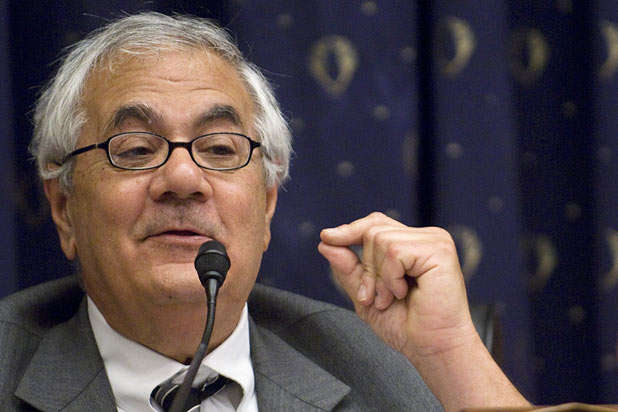
The U.S. should stop arresting responsible marijuana users, Rep. Barney Frank said Wednesday, announcing a proposal to end federal penalties for Americans carrying fewer than 100 grams, almost a quarter-pound, of the substance.

Current laws targeting marijuana users place undue burdens on law enforcement resources, punish ill Americans whose doctors have prescribed the substance and unfairly affect African-Americans, said Frank, flanked by legislators and representatives from advocacy groups.

“The vast amount of human activity ought to be none of the government’s business,” Frank said on Capitol Hill. “I don’t think it is the government’s business to tell you how to spend your leisure time.”

The Massachusetts Democrat and his supporters emphasized that only the use — and not the abuse — of marijuana would be decriminalized if the resolution resulted in legislation.


The Drug Enforcement Administration says people charged with simple possession are rarely incarcerated. The agency and the White House Office of National Drug Control Policy have long opposed marijuana legalization, for medical purposes or otherwise.
Marijuana is a Schedule I controlled substance, meaning it has a high potential for abuse and no accepted medical use, according to the drug control office.

“Smoked marijuana has not withstood the rigors of science — it is not medicine and it is not safe,” the DEA states on its Web site. “Legalization of marijuana, no matter how it begins, will come at the expense of our children and public safety. It will create dependency and treatment issues, and open the door to use of other drugs, impaired health, delinquent behavior, and drugged drivers.”

Allen St. Pierre, spokesman for the National Organization for the Reform of Marijuana Laws, likened Frank’s proposal — co-sponsored by Rep. Ron Paul, R-Texas — to current laws dealing with alcohol consumption. Alcohol use is permitted, and the government focuses its law enforcement efforts on those who abuse alcohol or drive under its influence, he said.

“We do not arrest and jail responsible alcohol drinkers,” he said.

St. Pierre said there are tens of millions of marijuana smokers in the United States, including himself, and hundreds of thousands are arrested each year for medical or personal use.

There have been 20 million marijuana-related arrests since 1965, he said, and 11 million since 1990, and “every 38 seconds, a marijuana smoker is arrested.”

Rob Kampia, director of the Marijuana Policy Project, said marijuana arrests outnumber arrests for “all violent crimes combined,” meaning police are spending inordinate amounts of time chasing nonviolent criminals.

“Ending arrests is the key to marijuana policy reform,” he said.

Reps. William Lacy Clay, D-Missouri, and Barbara Lee, D-California, said that in addition to targeting nonviolent offenders, U.S. marijuana laws unfairly target African-Americans.

Clay said he did not condone drug use but opposes using tax dollars to pursue what he feels is an arcane holdover from “a phony war on drugs that is filling up our prisons, especially with people of color.”

Too many drug enforcement resources are being dedicated to incarcerating nonviolent drugs users, and not enough is being done to stop the trafficking of narcotics into the United States, he said.

Being arrested is not the American marijuana smoker’s only concern, said Bill Piper of the Drug Policy Alliance Network. Those found guilty of marijuana use can lose their jobs, financial aid for college, their food stamp and welfare benefits, or their low-cost housing.

The U.S. stance on marijuana, Piper said, “is one of the most destructive criminal justice policies in America today.”

Calling the U.S. policy “inhumane” and “immoral,” Lee said she has many constituents who are harassed or arrested for using or cultivating marijuana for medical purposes. California allows medical marijuana use, but the federal government does not, she explained.

House Resolution 5843, titled the Personal Use of Marijuana by Responsible Adults Act of 2008, would express support for “a very small number of individuals” suffering from chronic pain or illness to smoke marijuana with impunity.

According to NORML, marijuana can be used to treat a range of illnesses, including glaucoma, asthma, multiple sclerosis, HIV/AIDS and seizures.

Frank, who is chairman of the Financial Services Committee, said that about a dozen states have approved some degree of medical marijuana use and that the federal government should stop devoting resources to arresting people who are complying with their states’ laws.

In a shot at Republicans, Frank said it was strange that those who support limited government want to criminalize marijuana.

Asked whether the resolution’s passage would change his personal behavior, Frank quipped, “I do obey every law I vote for” but quickly said he did not use marijuana, nor does he encourage it.

“I smoke cigars. I don’t think other people should do that. If young people ask me, I would advise them not to do it,” he said.

If HR 5843 were passed, the House would support marijuana smokers possessing up to 100 grams — about 3½ ounces — of cannabis without being arrested. It would also give its blessing to the “nonprofit transfer” of up to an ounce of marijuana.

The resolution would not address laws forbidding growing, importing or exporting marijuana, or selling it for profit. The resolution also would not speak to state laws regarding marijuana use.

© 2008 Cable News Network.

Source / America On Line

The Rag Blog

Posted in RagBlog | Tagged , , | Leave a comment

Susan Klonsky on Carl Oglesby’s Memoir

Carl Oglesby, author of Ravens in the Storm, in 1989.

On July 24 The Rag Blog ran what proved to be a very controversial review of former SDS leader Carl Oglesby’s memoir, Ravens in the Storm. The review, written by Mariann Wizard, stirred up a storm of its own. Wizard’s (and Oglesby’s) negative characterization of Mike Klonsky – a sixties New Left leader, now a respected educator who writes on educational reform – resulted in an angry response. The discussion was joined by a number of other readers, most of whom had personal experience with the times and the players.

The resulting flurry stirred up once more some of the divisions that plagued the New Left and that were a major factor in its demise. It also offered an opportunity to revisit those issues with the benefit of a longer view.

The following account is from Susan Klonsky, who was also active in SDS and the larger movement. Susan and Mike live in Chicago; they co-authored Small Schools: Public School Reform Meets the Ownership Society.

Thorne Dreyer / The Rag Blog / July 30, 2008

Carl Oglesby’s The Raven in the Storm, and the resulting storm created by Mariann Wizard’s review, once more revisited
By Susan Klonsky / The Rag Blog / July 30, 2008

One night last winter Mike and I ventured out in the subzero to Barnes & Noble specifically to read Carl Oglesby’s book (too cheap to order it), following the review in the NY Times. We took 2 copies of it and sat down for a couple of hours to peruse it. I knew Carl very well but I escaped mention in this book.

We were both audibly groaning by the time we gave up. A reviewer for some other publication (I believe it was Ron Jacobs) characterized the book as possessing the tone of an embittered divorcee still trying to settle the unresolved score with an ex-. That’s about it. It reads a bit like a failed screenplay. I figured perhaps Carl was trying to get it optioned. (Spielberg was at that time casting for The Trial of the Chicago Seven, with Sascha Baron Cohen as Abbie Hoffman. I wanted Fred Thompson to play Judge Hoffman.)

A funny thing about Carl’s bitterness toward Mike: About ten years ago we attended an sds reunion in Great Barrington (Massachusetts). Carl and Mike sat down to talk. Carl told Mike he was very angry about something MK had supposedly said about him, which Carl had heard secondhand (who knows what the issue was? something from 30-40 years ago) from Tom Hayden. Mike explained to him that Tom had him mixed up with this other guy Bob Avakian, the head of the RCP. Carl had sort of a Rosanne Rosannadanna moment (or was it Emily Litella?) –after nourishing this grudge for decades, he just shrugs and says, “Oh. Never mind.”

But now it’s all rehashed in this stupid story in which he describes MK as having, among other things, “a strong nose,” as if the schnozz is an aggressive characteristic… What is his beef with Mike? In a meeting held in late 1967, Mike, who was at that time serving as national secretary of sds, asked Carl to explain what he was doing about some political relationship or issue–that’s it. No accusations of anticommunism, no charges of misconduct–and the guy has been pissed for 40+ years. He did not like being asked about his work. It’s remarkably inane and self-pitying.

Yet, if you reflect on Oglesby’s role in history when his role mattered, I think it was on the whole positive and progressive. He was a person who spoke eloquently and publicly about rejecting the values of war and corporate domination of U.S. policy. He moved many people, young and old, to oppose the Vietnam war.

In the brief period of his leadership in sds, he was in the segue between the overt anti-communism of the SLID and the ascendance of the revolutionary youth movement.

But then, perhaps because his feelings were hurt, he removed himself entirely from the movement. He focused his efforts in this book on creating a record of his role as he would want to be recalled. He recalls nothing good or warmly remembered about any of our old comrades. This book is entitled a record of the movement of the 60s. But it’s not. It’s about what he says he said and what he says others said back, and how surrounded he was by enemies, and how unappreciated he was. I intended to go back and see how he describes his life after sds, but honestly, I found it too boring to pursue that line. I hear Carl’s health has been in decline, and I wish him well. It doesn’t make the book truer, but it may explain some of his thoughts or imaginings.

I take this book, and several others of recent vintage, as a warning. If you decide to memorialize your thoughts and your activities in a book, speak for yourself. Don’t put words in the mouths of others, living or dead. Don’t impute motives based on their facial features, their purported tone of voice, as you recall it from 30 or 40 years out…Show a little respect for the fact that all of us from that time who are lucky enough to still be living, have gone on working, building organizations, raising families, making difficult decisions, regretting some things and still proud of others.

For the lot of us, pride for having been part of it all remains a warm ember despite all that has happened to each person since those times. Surely being a grown-up means moving on, past the juvenile name-calling, and relinquishing the real or imagined slights of junior high school. So it is with the movement. Remember what’s worthy of remembering, and move on; it’s a useful way to live.

[Go here to read Mariann Wizard’s review of Ravens in the Storm, published in The Rag Blog on July 24, followed by responses from Mike Klonsky and a number of others.]

The Rag Blog

Posted in Rag Bloggers | Tagged , , , , , , , , , | Leave a comment

We Little Understand the Great Tragedy of Black America


My Lost Thought
By Charlie Loving / The Rag Blog / July 30, 2008

I read three books at once while waiting for the Brush Hog to be fixed. No one sits in the Brush Hog repair shop and reads books, they usually read the grease covered copies of Penthouse and Playboy, or they just chew tobacco and jaw with the mechanic. The mechanic who commented on my Obama bumper sticker, “Ain’t he the antichrist?” The Brush Hog may be in trouble. Another beer-bellied fellow who looked like his tummy might have him so out of balance that he could topple over at any moment added, “Don’t pick on him Mape, we need a few N….r lovers around here.” I would have just packed it in and left but the Brush Hog was all in pieces. I also knew to keep mum. Again I was a coward when faced with bigots.

These are paraphrases from God’s Politics by Jim Wallis. And as a note on the author, he started out as an Evangelical and was told that Christianity had nothing to do with racism. That didn’t sit well and he left the movement. Evangelicals however have been forced by their own recruitment of minorities to take a different tact in more recent times. Evangelical churches are growing in the third world by leaps and bounds. This has a marked effect on the racist dogma of these churches. Evangelicals are more predictable than the mainline churches who seem out of touch and out of gas on the subject.

“We have gone from a war on poverty to a war on the poor.” Bishop John B. Chane

Lyrics from South Pacific: ‘”You’ve got to be taught to be afraid of people whose eyes are oddly made,, or whose skin is a different shade, you’ve got to be carefully taught. You’ve got to be taught before it is too late before you are six or seven to hate all the people your relatives hate. You’ve got to be carefully taught.”

I heard that song many times and it never really dawned on me until late what it was telling me, us. Now I see it again in “God’s Politics” by Jim Wallis and it hits home like a hammer.

“America’s Original Sin”

The United States of America was established as a white society, founded upon the genocide of another race and the enslavement of yet another.

That is a statement of fact and has affected everything that came after.

And here I will paraphrase Howard Dean in what was his most significant speech made in (of all places) South Carolina on December 7, 2003.

For four decades, the primary political project of the Republican Party has been to transform itself into the White Man’s party. Not only in the Deep South, but also nationally, the GOP seeks to secure a majority popular base for corporate government through coded appeals to white racism. The success of this GOP project has been the central fact of American politics for two generations – reaching its fullest expression in the Bush presidency.

In 1968 Richard Nixon won. He did so in a most shameful way – by dividing Americans against each other, stirring racial prejudices and bringing out the worst in people. Nixon invented the Southern Strategy. (That strategy so carefully honed by Karl Rove.) The GOP is using it still. Reagan perfected it with phrases like “racial quotas” and “welfare queens” to put the blame on minorities for all America’s problems.

The GOP would never win an election if the came out and said their agenda was to sell America piece by piece to their campaign contributors and to concentrate power in the hands of a few. So to distract the voters from their agenda they run elections based on race which divides.

Lyndon Johnson said this, “Negro poverty is not white poverty. Many causes are the same. But there are differences, deep and significant differences that came from painful roots into the community and into the family, and the nature of the individual. These differences are not racial. They are the consequence of ancient brutality, injustices and today’s prejudice. We are all in this together.

The white majority little understand, or even care about, the great tragedy of how the black anger our society generates in the African American youth that has become such a destructive and dangerous obstacle to success.

The Rag Blog

Posted in RagBlog | Tagged , | Leave a comment

Fannie, Freddie Rescue Won’t be Cheap

See A government takeover would cost taxpayers, by Chris Isidore, below.

The big lie: Do the math!
By Roger Baker / The Rag Blog / July 30, 2008

At least the media is challenging the government lies that are so ridiculous on their face that they are a farce and badge of dishonor to officials like Paulson. At least the mainstream media, such as it is, is beginning to expose the big lie that the Fannie Freddie bailout is only going to cost us a mere $25 billion.

Do the math. $25,000,000,000 divided by 300,000,000 — Thats only about $83 dollars per capita!!!

Does anyone really seriously imagine that one of the most serious economic problems in the US history, being federal guarantees for trillions of dollars in home mortgages, could possibly be resolved by applying a total of just a little piece of one month’s average citizen’s rent to fixing this problem? Only our Congress would be stupid enough to buy that line of BS.

A government takeover would cost taxpayers far more than current estimates of $25 billion.
By Chris Isidore /July 30, 2008

NEW YORK — When it comes to rescuing Fannie Mae and Freddie Mac, there’s not likely to be any middle ground.

Treasury Secretary Henry Paulson hopes he’ll never have to use the unlimited authority he has just received to bail out the mortgage giants. If he’s right, the cost to taxpayers will be zero.

But if Treasury does have to rescue Fannie and Freddie, it’s likely to cost far more than the current estimate of $25 billion – even well beyond the $100 billion worst-case-estimate from the Congressional Budget Office.

Fannie and Freddie, which have charters with the government, are instrumental to the mortgage process since they provide funding to banks by purchasing pools of home loans and packaging them as securities.

Shares of the two companies have each plunged about 50% in the past month, raising fears about whether they have enough capital to deal with losses brought on by further declines in home prices.

But even if just one of the firms needs to turn to Treasury to borrow money or sell stock in order to raise more capital, the market reaction could be swift. And it would likely start both firms down an inevitable road to a government takeover.

“If one goes down it’s likely to so spook the market that it will bring the other one down as well,” said Jaret Seiberg, financial analyst for the Stanford Group, a research firm.

If that were to occur, taxpayers will be on the hook for huge losses on the $5 trillion in mortgage-backed securities the two firms either own or guarantee. So the cost of a government rescue of Fannie and Freddie is almost certain to soar well beyond last week’s official $25 billion cost estimate.

The CBO came up with its estimate based on the likelihood of different scenarios. The CBO said it believed there was a better than 50% chance that no rescue would be needed. Thus, it wouldn’t cost taxpayers anything.

However, the CBO also said there was about a 5% chance of a rescue that would cost taxpayers “more than $100 billion” because of the need to cover losses at the firms.

Some experts believe the probability of a full-blown takeover is much higher than the CBO’s 5% estimate.

Dan Seiver, a finance professor at San Diego State, said he thinks Fannie and Freddie will run into more financial problems “because the housing market hasn’t bottomed out yet.”

As a result, he believes “their essential independence from the federal government will disappear and they’ll become government entities.”

Just how much assistance, if any, Fannie and Freddie may ultimately need could come into clearer focus next month after the two firms report their latest financial results.

Fannie hasn’t announced a date for its second-quarter report yet but Freddie will release its second quarter results on Aug. 6.

The two companies have lost a combined $12 billion during the past three quarters, mainly due to write-downs in the value of their combined $1.5 trillion portfolio of mortgage backed securities.

Analysts expect losses for both firms to continue through this year, according to Thomson Reuters. And some analysts believe second quarter losses for Fannie and Freddie could top the losses from the first quarter.

Victoria Wagner, the chief credit analyst for the firms at credit rating agency Standard & Poor’s, said Fannie and Freddie are likely to post record losses from defaults and foreclosures on mortgages they own or guarantee.

S&P put Fannie and Freddie on credit watch last week, meaning it is considering whether to downgrade their debt. Still, Wagner said it’s too soon to predict whether Fannie or Freddie will need a bailout.

“Our belief is still they should be able to manage through the cycle,” she said.

Spokespeople for Fannie and Freddie wouldn’t answer questions about whether they could get direct government help and still stay independent.

“We do not believe this will ever happen, so we’re not going to speculate if this did happen, what the next step might be,” said Freddie spokeswoman Sharon McHale.

Treasury Department spokeswoman Jennifer Zuccarelli also did not want to speculate about whether the government would have to take over the firms should direct help from Treasury become necessary.

She did reiterate, however, that the Treasury Department “is interested in keeping Fannie and Freddie in their current shareholder-owned form.”

Source / CNN Money

The Rag Blog

Posted in Rag Bloggers | Tagged , , , , | Leave a comment

Oh Where is the Jon Voight of Yesteryear…


Voight Offensive
By Mike Klonsky / The Rag Blog / July 30, 2008

Wing-nut Jon Voight (channeling his late amigo Charlton Heston) warns us that electing Obama will bring about “a socialst era” in America. I doubt it.

He blames it all on school reformer/educator Bill Ayers, us civil rights and anti-war activists, and other assorted, “militant white and black people” who hypnotized him back in the ’60s. I hope my friend and colleague Bill realizes the kind of power he has. Name me one other progressive educator who can single-handedly so influence the course of American politics.

Damn! What ever happened to the Jon Voight in Coming Home, who gave that great speech at the end, to high school students, warning them that the Vietnam war wasn’t all it was cracked up to be?

When I was your age, all I got was some guy standing up like that, man, giving me a lot of bullshit, man, which I caught. I was really in good shape then, man. I was captain of the football team. And I wanted to be a war hero, man, I wanted to go out and kill for my country. And now, I’m here to tell you that I have killed for my country or whatever. And I don’t feel good about it. Because there’s not enough reason, man, to feel a person die in your hands or to see your best buddy get blown away. I’m here to tell you, it’s a lousy thing, man. I don’t see any reason for it. And there’s a lot of shit that I did over there that I find fucking hard to live with. And I don’t want to see people like you, man, coming back and having to face the rest of your lives with that kind of shit. It’s as simple as that. I don’t feel sorry for myself. I’m a lot fucking smarter now than when I went. And I’m just telling you that there’s a choice to be made here.

Maybe he and fellow new-McCarthyites Sol Stern and Checker Finn ought to order it from Netflix, heat up some pop corn, and watch it together.

Mike Klonsky blogs at Small Talk.

See VOIGHT: My concerns for America / Washington Times / July 28, 2008

The Rag Blog

Posted in Rag Bloggers | Tagged , , , , | 1 Comment

Iranian Women : Fighting Back

Iranian women. Image: public domain.

See Iranian women: A force to be reckoned with, by Talajeh Livani, below.

‘Death by stoning’: Save Kobra Najjar
By Catherine Price / July 30, 2008

Her name makes her sound like a bit like a supervillain; Iranian authorities are treating her like one. Equality Now has issued an urgent call for action on behalf of Kobra Najjar, 44, found guilty of “adultery” and sentenced to death by stoning. Iranian advocates working on her case say that she has “exhausted all domestic legal remedies” and could be executed at any moment.

Najjar’s “adultery” was not exactly a furtive affair with the postman. According to Equality Now, she was forced into prostitution by an abusive husband in order to support his heroin addiction, and he was murdered by a client of Najjar’s who sympathized with her plight. They both served eight years in prison, but the murderer was released after paying a fine and receiving 100 lashes. She, meanwhile, faces death for forced prostitution — that is, “adultery.”

Equality Now notes that seven other women and one man are currently facing similar sentences. Adultery is the only crime punishable by stoning in Iran. (At least there’s always hanging.)

Stoning, it should be noted, violates the International Covenant on Civil and Political Rights (ICCPR) — to which Iran is a party — which prohibits cruel and inhuman punishment and limits application of the death penalty to “the most serious crimes.” The U.N. Human Rights Committee has found that consensual sexual activity (and, we’re guessing, being the victim of sexual coercion) is, well, not that.

There is hope, it is said, for saving Najjar without some sort of superhero strike force. As the Press Trust of India notes: “The head of the Iranian judiciary, Ayatollah Shahroudi, passed a [not all that binding] moratorium on stoning in 2002. In March 2008, a woman named Mokarrameh Ebrahimi … was released from prison and her stoning sentence was reversed by Iranian authorities.” (She and her husband, Jafar Kiani — whose marriage had for some reason gone unregistered — had been sentenced to be stoned together. Despite international outrage about both sentences, he was stoned separately in 2007, possibly at the order of a judge who also defied local civilian and governmental opposition.)

“Mokarrameh’s release from prison must not be an isolated case. The example has already been set,” said Taina Bien-Aim, executive director of Equality Now. “We urge Ayatollah Shahroudi to extend the progress made through Mokarrameh’s case by irrevocably reversing all current sentences of death by stoning for so-called ‘immoral acts.’ What is immoral is the act of stoning, and all other forms of violent and inhumane punishment.”

There’s also hope in the bigger picture, considering — for one thing — that Iranian women’s rights groups are (though subject to serious censorship) among the loudest in opposition to stoning of both men and women. The Middle East Times reports that while national political representation of women is “lagging” (see the piece for further explanation), “Iran performs much better than other Middle Eastern countries on female education, health, and labor force participation. Iranian women comprise around two-thirds of university entrants … And, while lower than the world average of 58 percent, Iran’s female labor force participation — 42 percent — is the highest in the Middle East.”

Plus: “Today, Iranian women are present in every educational and employment field that is traditionally male-dominated. And they are active politically, especially at the local level. In the 2006 municipal elections, 44 seats out of the 264 on provincial capital councils went to women. In addition, Iranian women represent such a large share of voters in local and national elections that they are able to significantly influence national politics. For instance, the 2008 parliamentary candidates had to adjust their election campaigns to attract women voters by vowing to change family and labor laws to ensure more equal treatment of women.”

And! “There is strong public support for greater gender equality in Iran. A recent poll … [found] that 78 percent of Iranians think that it is somewhat or very important for women to have full equal rights with men and 70 percent think that the government should make an effort to prevent discrimination against women.”

Back to Kobra Najjar: Equality Now has the 411 for the officials you can contact to urge both her release, and the commutation of all other stoning sentences, in accordance with Iran’s obligations under the ICCPR.

Source / salon.com

Iranian Women a Force to be Reckoned With
By Talajeh Livani / July 16, 2008

Iran’s parliament convened last month for the first time since the April 2008 elections. The results of the parliamentary elections are in and all the votes have been counted. Surprisingly, or perhaps alarmingly, women now account for a mere 2.8 percent of this new conservative-dominated parliament. This is a decline from the already low 4.1 percent representation in the previous Iranian parliament.

Those familiar with Iranian society may find this shocking. Iran performs much better than other Middle Eastern countries on female education, health, and labor force participation. Iranian women comprise around two-thirds of university entrants, which has led to government-imposed quotas on university admittance, where women were dominating fields such as medicine, dentistry, and pharmacy. And, while lower than the world average of 58 percent, Iran’s female labor force participation – 42 percent – is the highest in the Middle East.

How is it then possible that the political representation of Iranian women is lagging, even when compared to other countries in the region; the average for the Middle East and North Africa is approximately 9 percent with Iraq having the highest female representation in parliament – 26 percent.

The answer to this question is complex. First, Iran does not use gender quotas for female political participation like some other Middle Eastern and North African countries; it is not certain how the other countries would have performed without the use of quotas and appointments.

Second, to qualify as a candidate in the parliamentary elections, the conservative Guardian Council – a powerful political body that has the power to veto candidates – has to be convinced of the prospective candidate’s belief in Islam and the Islamic Republic. Women in Iran have played a crucial role in shifting the conservative-liberal balance in the government. Many believe that women were an integral part in bringing to power former Iranian President Mohammad Khatami. Therefore, it may simply be that females who register to run are likely to be less conservative than their male counterparts leading to a lower qualification rate.

Third, some of Iran’s laws discourage women from rising to positions of leadership and decision-making. Women are not allowed to serve as judges or to run for the presidency. And the current president, Mahmoud Ahmadinejad, encourages women to stay at home and focus on the institution of family. Only two women hold secondary cabinet positions, the Center for Women’s Participation has been renamed the Center for Women and Family Affairs and Ahmadinejad has publicly announced support for larger families with women staying at home to take care of children.

Finally, in light of external pressure with regards to its nuclear program, the Iranian government has come to view domestic women’s groups as a threat to national security. There have been crackdowns on the One Million Signatures Campaign, a campaign aimed at collecting 1 million signatures in support of gender equality in Iran, peaceful women’s rights demonstrations, and over the dress code. And the premier women’s magazine, Zanan, was shut down in January 2008 allegedly because it offered a dark picture of the Islamic Republic and compromised the psyche and the mental health of its readers by providing them with “morally questionable information.”

Despite these challenges, Iranian women’s determination to break stereotypes cannot be underestimated. Today, Iranian women are present in every educational and employment field that is traditionally male-dominated. And they are active politically, especially at the local level. In the 2006 municipal elections, 44 seats out of the 264 on provincial capital councils went to women.

In addition, Iranian women represent such a large share of voters in local and national elections that they are able to significantly influence national politics. For instance, the 2008 parliamentary candidates had to adjust their election campaigns to attract women voters by vowing to change family and labor laws to ensure more equal treatment of women.

The government is slowly amending laws that are discriminatory toward women. The most recently passed laws by parliament allow some Iranian women married to foreigners to pass on their Iranian nationality to their children, which was previously not possible. And women suffering injury or death in a car accident are now entitled to the same insurance company compensation as men, whereas previously women received only half of the compensation given to men.

There is strong public support for greater gender equality in Iran. A recent poll conducted by World Public Opinion and Search for Common Ground finds that 78 percent of Iranians think that it is somewhat or very important for women to have full equal rights with men and 70 percent think that the government should make an effort to prevent discrimination against women.

As the world is watching developments in Iran, the women’s movement is likely to be on the forefront. And perhaps it will not be too long before Iranian women become as politically empowered as they are in other spheres of society.

[Talajeh Livani is an Iranian who was raised in Sweden and is currently working as a consultant for the World Bank’s Middle East and North Africa division. This article was written for the Common Ground News Service (CGNews).]

Source. / Middle East Times

The Rag Blog

Posted in RagBlog | Tagged , , , , , , , | Leave a comment

Settling International Disputes by Peaceful Means


End the Occupation of Iraq — and Afghanistan
by Marjorie Cohn / July 29, 2008

So far, Bush’s plan to maintain a permanent U.S. military presence in Iraq has been stymied by resistance from the Iraqi government. Barack Obama’s timetable for withdrawal of American troops has evidently been joined by Iraqi Prime Minister Nuri al-Maliki, Bush has mentioned a “time horizon,” and John McCain has waffled. Yet Obama favors leaving between 35,000 and 80,000 U.S. occupation troops there indefinitely to train Iraqi security forces and carry out “counter-insurgency operations.” That would not end the occupation. We must call for bringing home — not redeploying — all U.S. troops and mercenaries, closing all U.S. military bases, and relinquishing all efforts to control Iraqi oil.

In light of stepped up violence in Afghanistan, and for political reasons — following Obama’s lead — Bush will be moving troops from Iraq to Afghanistan. Although the U.S. invasion of Afghanistan was as illegal as the invasion of Iraq, many Americans see it as a justifiable response to the attacks of September 11, 2001, and the casualties in that war have been lower than those in Iraq — so far. Practically no one in the United States is currently questioning the legality or propriety of U.S. military involvement in Afghanistan. The cover of Time magazine calls it “The Right War.”

The U.N. Charter provides that all member states must settle their international disputes by peaceful means, and no nation can use military force except in self-defense or when authorized by the Security Council. After the 9/11 attacks, the Council passed two resolutions, neither of which authorized the use of military force in Afghanistan. Resolutions 1368 and 1373 condemned the September 11 attacks, and ordered the freezing of assets; the criminalizing of terrorist activity; the prevention of the commission of and support for terrorist attacks; the taking of necessary steps to prevent the commission of terrorist activity, including the sharing of information; and urged ratification and enforcement of the international conventions against terrorism.

The invasion of Afghanistan was not legitimate self-defense under article 51 of the Charter because the attacks on September 11 were criminal attacks, not “armed attacks” by another country. Afghanistan did not attack the United States. In fact, 15 of the 19 hijackers came from Saudi Arabia. Furthermore, there was not an imminent threat of an armed attack on the United States after September 11, or Bush would not have waited three weeks before initiating his October 2001 bombing campaign. The necessity for self-defense must be “instant, overwhelming, leaving no choice of means, and no moment for deliberation.” This classic principle of self-defense in international law has been affirmed by the Nuremberg Tribunal and the U.N. General Assembly.

Bush’s justification for attacking Afghanistan was that it was harboring Osama bin Laden and training terrorists. Iranians could have made the same argument to attack the United States after they overthrew the vicious Shah Reza Pahlavi in 1979 and he was given safe haven in the United States. The people in Latin American countries whose dictators were trained in torture techniques at the School of the Americas could likewise have attacked the torture training facility in Ft. Benning, Georgia under that specious rationale.

Those who conspired to hijack airplanes and kill thousands of people on 9/11 are guilty of crimes against humanity. They must be identified and brought to justice in accordance with the law. But retaliation by invading Afghanistan is not the answer and will only lead to the deaths of more of our troops and Afghanis.

The hatred that fueled 19 people to blow themselves up and take 3,000 innocents with them has its genesis in a history of the U.S. government’s exploitation of people in oil-rich nations around the world. Bush accused the terrorists of targeting our freedom and democracy. But it was not the Statue of Liberty that was destroyed. It was the World Trade Center — symbol of the U.S.-led global economic system, and the Pentagon — heart of the U.S. military, that took the hits. Those who committed these heinous crimes were attacking American foreign policy. That policy has resulted in the deaths of two million Iraqis — from both Bill Clinton’s punishing sanctions and George W. Bush’s war. It has led to uncritical support of Israel’s brutal occupation of Palestinian lands; and it has stationed more than 700 U.S. military bases in foreign countries.

Conspicuously absent from the national discourse is a political analysis of why the tragedy of 9/11 occurred and a comprehensive strategy to overhaul U.S. foreign policy to inoculate us from the wrath of those who despise American imperialism. The “Global War on Terror” has been uncritically accepted by most in this country. But terrorism is a tactic, not an enemy. You cannot declare war on a tactic. The way to combat terrorism is by identifying and targeting its root causes, including poverty, lack of education, and foreign occupation.

There are already 60,000 foreign troops, including 36,000 Americans, in Afghanistan. Large increases in U.S. troops during the past year have failed to stabilize the situation there. Most American forces operate in the eastern part of the country; yet by July 2008, attacks there were up by 40 percent. Zbigniew Brzezinski, national security advisor for Jimmy Carter, is skeptical that the answer for Afghanistan is more troops. He warns that the United States will, like the Soviet Union, be seen as the invader, especially as we conduct military operations “with little regard for civilian casualties.” Brzezinski advocates Europeans bribing Afghan farmers not to cultivate poppies for heroin, as well as the bribery of tribal warlords to isolate al-Qaeda from a Taliban that is “not a united force, not a world-oriented terrorist movement, but a real Afghan phenomenon.”

We might heed Canada’s warning that a broader mission, under the auspices of the United Nations instead of NATO, would be more effective. Our policy in Afghanistan and Pakistan should emphasize economic assistance for reconstruction, development and education, not for more weapons. The United States must refrain from further Predator missile strikes in Pakistan, and pursue diplomacy, not occupation.

Nor should we be threatening war against Iran, which would also be illegal and result in an unmitigated disaster. The U.N. Charter forbids any country to use, or threaten to use, military force against another country except in self-defense or when the Security Council has given its blessing. In spite of the U.N. International Atomic Energy Agency’s conclusion that there is no evidence Iran is developing nuclear weapons, the White House, Congress, and Israel have continued to rattle the sabers in Iran’s direction. Nevertheless, the antiwar movement has so far fended off passage of HR 362 in the House of Representatives, a bill which is tantamount to a call for a naval blockade against Iran — considered an act of war under international law. Credit goes to United for Peace and Justice, Code Pink, Peace Action, and dozens of other organizations that pressured Congress to think twice before taking that dangerous step.

We should pursue diplomacy, not war, with Iran; end the U.S. occupation of Iraq; and withdraw our troops from Afghanistan.

Marjorie Cohn is president of the National Lawyers Guild and a professor at Thomas Jefferson School of Law. She is the author of Cowboy Republic: Six Ways the Bush Gang Has Defied the Law and her new book, Rules of Disengagement: The Politics and Honor of Military Dissent (co-authored with Kathleen Gilberd), will be published this winter. Her articles are archived at http://www.marjoriecohn.com/.

Source / Common Dreams

Thanks to David Hamilton / The Rag Blog

Posted in RagBlog | Tagged , , , | 1 Comment

Giant Chunks Break Off Canadian Ice Shelf

This satellite image shows a large, rectangular chunk of ice at center that broke away from the Ward Hunt Ice Shelf. Other pieces also broke away from the shelf. Photo from NASA.

Cracks had been earlier found on Ward Hunt; ‘more could go’ this summer
July 29, 2008

OTTAWA – Giant sheets of ice totaling almost eight square miles broke off an ice shelf in the Canadian Arctic last week and more could follow later this year, scientists said on Tuesday.

In a development consistent with climate change theories, the enormous icy plain broke free sometime last week and began slowly drifting into the Arctic Ocean. The piece had been a part of the shelf for 3,000 years.

Temperatures in large parts of the Arctic have risen far faster than the global average in recent decades.

The ice broke away from the shelf on Ward Hunt Island, a small island just off giant Ellesmere Island in one of the northernmost parts of Canada.

It was the largest fracture of its kind since the nearby Ayles Ice Shelf — which measured 25 square miles — broke away in 2005.

Scientists had earlier identified deep cracks in the Ward Hunt Ice Shelf, which measures around 155 square miles. The shelf is one of five along Ellesmere Island in the northern Arctic.

“Because the breakoff occurred between two large parallel cracks they’re thinking more could go this summer before the freeze sets in,” said Trudy Wohlleben of the Canadian Ice Service. “More could be a piece as large as the Ayles Ice Shelf.”

Ellesmere Island was once home to a single enormous ice shelf totaling around 3,500 square miles. All that is left of that shelf today are five much smaller shelves that together cover just under 400 square miles.

Melting ice shelves don’t raise sea levels because they are already in the water, but their demise can speed up retreating glaciers, which do raise sea levels.

Sea ice, glaciers also shrinking

“The breakoff is consistent with other changes we’ve seen in the area, such as the reduction in the amount of sea ice, the retreat of the glaciers and the breakup of other ice shelves,” Wohlleben said.

She said a likely reason for the shelf breaking away was a strong wind from the south.

Warwick Vincent, director of the Centre for Northern Studies at Laval University in Quebec, said much of the remaining Ward Hunt Ice Shelf is now in a vulnerable state.

“It underscores the fact that each year we’re now crossing new thresholds in environmental change in the High Arctic, and of course our concern in the longer term is that these may signal the onset of serious change at all latitudes, much further to the south, for example,” he told Reuters.

Derek Mueller, an Arctic ice shelf specialist at Trent University in Ontario, said he was concerned by the rapidity of changes in the High Arctic over the last few years.

“It’s a bit of a wake-up call for those people who aren’t yet affected by climate change that there are places on Earth that are, and the same could be true for them (these people) if you fast-forward a decade or two or three,” he said.

‘No longer … in balance’

Mueller initially estimated that 1.5 square miles of ice had broken off the shelf but increased that figure to eight square miles after studying the data more closely.

“Whatever has kept this ice shelf in balance for 3,000 years is no longer keeping it in balance,” he told Reuters, saying he too would not be surprised to see more ice breaking away from the Ward Hunt shelf this year.

Wohlleben said the ice shelves, which contained unique ecosystems that had yet to be studied, would not be replaced because they took so long to form.

“Once they’ve broken off they’re gone,” she said.

Mueller was careful not to blame the Ward Hunt breakup specifically on climate change, but said it is consistent with the theory. The current Arctic climate certainly isn’t reinforcing ice shelves.

“We’re in a different climate now,” he said. “It’s not conducive to regrowing them. It’s a one-way process.”

A crack in the shelf was first spotted in 2002. Last April, a patrol of Canadian Rangers found the weakness had spread into an extensive network of cracks, some 40 yards wide and 11 miles long. The crack-riddled section of ice was like a jigsaw puzzle, with the pieces held in place only by each other.

Formed by accumulating snow and freezing meltwater, ice shelves are large platforms of thick, ancient sea ice that float on the ocean’s surface. Ellesmere Island was once entirely ringed by a single enormous ice shelf that broke up in the early 1900s.

At 170 square miles in size and 40 yards thick, the Ward Hunt shelf is the largest of those remnants — even bigger than the Antarctic shelf that collapsed earlier this year and seven times the size of the Ayles Ice Shelf chunk that broke off in 2005 from Ellesmere’s western coast.

Despite a period of stability in the 1980s, the Ward Hunt shelf and its characteristic corrugated surface has been steadily declining since the 1930s, said Mueller. Its southern edge has lost seven square miles over the last six years.

Icebreaker searching for sea ice

It’s the same all over the Arctic, said Gary Stern, co-leader of a major international research program on sea ice.

Speaking from the Coast Guard icebreaker Amundsen in Canada’s north, Stern said the Ward Hunt breakup is related to what he’s seeing thousands of miles away.

He hasn’t seen any ice in weeks. Plans to set up an ice camp last February had to be abandoned when usually dependable ice didn’t form for the second year in a row.

“Nobody on the ship is surprised anymore,” said Stern. “We’ve been trying to get the word out for the longest time now that things are happening fast and they’re going to continue to happen fast.”

Many scientists now believe that the Arctic will have ice-free summers by 2013 instead of 2030 as predicted by the International Panel on Climate Change.

“It’s all connected to the warming climate. Everything is connected together,” Stern said.

Source / MSNBC

The Rag Blog

Posted in RagBlog | Tagged , , , , , | Leave a comment

Prisons : Why Texas Still Holds ‘Em


Forget oil and gold. In the Lone Star state, the boomtown business is locking up immigrants.
By Stephanie Mencimer

This article appears in the July/August issue of Mother Jones.

In 1997, with the private prison business booming, the Corrections Corporation of America picked a 64-acre plot near Austin, Texas, for its newest lockup. A medium-security prison, it was named after the company’s cofounder and designed for some 500 federal inmates. But the anticipated stream of prisoners never arrived: By the time the T. Don Hutto Correctional Center opened, a glut of private prison beds, along with cca’s own poor track record, had left the company nearly bankrupt. Its stock, which once traded at around $45 a share, bottomed out at 18 cents. Several of its facilities were shuttered or sat empty for years, including the Hutto prison, which cca moved to close in 2004.

But Hutto, like cca itself, has risen from the ashes thanks to a sudden source of new business: the Bush administration’s crackdown on immigrants. Historically, Mexicans caught illegally entering the country have been dumped back across the border, while immigrants and asylum seekers from other countries were processed and released to await their court dates. (Only those with criminal records were detained.) Most of those released, though, failed to appear for court hearings and removal proceedings, and the government didn’t have the resources to go looking for them. So in 2006, the Immigration and Customs Enforcement (ice) agency ended its traditional “catch and release” policy and instead started incarcerating non-Mexican immigrants—anyone from a Salvadoran migrant to an Iraqi family seeking political asylum—pending their deportation or asylum hearings. Over the two years since, the agency has increased its use of detention facilities by more than half; it now holds some 30,000 people on any given day.

In this new population—and in ice’s $1 billion-plus detention budget—cca saw opportunity. In 2004, when Congress passed legislation authorizing ice to triple the number of immigrant detention beds, cca’s lobbying expenditures reached $3 million; since then, it has spent an additional $7 million on lobbyists. Among them was Philip Perry, Vice President Dick Cheney’s son-in-law, who later became general counsel at the Department of Homeland Security, ice’s parent organization, which has awarded cca millions in contracts; one of them, in 2006, allowed the company to reopen the old Hutto prison, now christened a “residential facility” housing immigrant families, including small children.

CCA isn’t the only firm lining up for ice contracts: There’s so much money to be made warehousing immigrants that in 2006, Cornell Companies, a private prison firm, sent the state of Oklahoma an eviction notice for more than 800 state inmates housed in its facility in Hinton. The company was negotiating with ice to take in immigrants for more than the roughly $45 per diem that Oklahoma paid.

State and local governments are also getting in on the action. In 2006, Willacy County, Texas, floated millions in bonds and, in 90 days, built a tent city for immigrants that it leases to ice for $78 a day per detainee. (A room at the local Best Western Executive Inn costs $65.) Run by the Utah-based Management and Training Corporation, a private prison management company, the camp houses up to 2,000 immigrants in a razor-wire-ringed compound holding 10 Kevlar tents of the sort used by troops in Iraq. Detainees have reported problems with heat and air conditioning, as well as maggot-infested food. The county has since approved another $50 million to add space for 1,000 more detainees.

Elsewhere, detention centers have been sued for providing inadequate health care, food services, and education. The aclu of Texas recently settled a lawsuit with ice over the conditions at Hutto for 26 children ages 1 to 17. According to the aclu, they were kept in cells 11 or 12 hours a day, forced to wear prison garb, fed “unrecognizable substances, mostly starches,” and denied toys, bathroom privacy, and access to medical care.

According to the Washington Post, more than 80 people have died in ice detention, in many cases because of poor health care. The most famous case is that of Francisco Castaneda, a Salvadoran detained in San Diego for eight months. The government denied his request for a penile biopsy while in detention, arguing that it was an “elective outpatient procedure.” He was eventually found to have cancer. His penis was amputated, but the malignancy spread, and he died last year.

On average, ice pays $95 a day per immigrant that it detains, yet research indicates that other, far cheaper, methods can work almost as well in making sure immigrants show up in court. Back in the late 1990s, the agency asked the nonprofit Vera Institute of Justice to run a pilot project under which people facing deportation got intensive supervision and connections to social service agencies. More than 90 percent appeared for their hearings—partly, the institute said, thanks to better information about the process. Intensive supervision costs an average of $14 per detainee per day, according to congressional testimony by Julie Myers, assistant secretary of Homeland Security. Yet in fiscal 2007, ice spent only about $44 million on alternative programs, compared with roughly $1.2 billion on detention—and legislation sponsored last year by representatives Heath Schuler (D-N.C.) and Tom Tancredo (R-Colo.) in the House would authorize the agency to develop another 8,000 detention beds, which must be provided by private contractors such as cca “whenever possible.”

CCA, meanwhile, is contributing to the detention boom in its own small way: Last year, after inspecting the Hutto center’s personnel records, ice officials arrested 10 workers—illegal immigrants themselves.

Source / Mother Jones

The Rag Blog

Posted in RagBlog | Tagged , , , , , , | Leave a comment

Sucking Up to the Bankers : A Bipartisan Lovefest

“The Bankers” by Art Young.

They’re the ones who got us into this mess
By Robert Scheer / July 30, 2008

This is a time to condemn the bankers, not to embrace them. They are the scoundrels who got us into the biggest economic mess since the Great Depression, lining their own pockets while destroying the life savings of those who trusted them. Yet both of our leading presidential candidates are scrambling to enlist not only the big-dollar contributions but, more frighteningly, the “expertise” of the very folks who advocated the financial industry deregulations at the heart of this meltdown.

Republican candidate John McCain even appointed as his campaign co-chairman Phil Gramm, who went from being chairman of the Senate Banking Committee, where he sponsored disastrous legislation that empowered the banking bandits, to becoming one of them at UBS Warburg. Gramm was forced to resign from McCain’s campaign only after he went public with his contempt for the financial concerns of ordinary Americans, calling them “whiners” and perpetrators of a “mental recession.”

But Gramm and the Republicans couldn’t have done it without the support of leading Democrats. The most egregious of Gramm’s legislative favors to the financiers took the form of legislation named in part after him–the Gramm-Leach-Bliley Act, which became law only after then-Treasury Secretary Robert Rubin prevailed upon President Clinton to sign the bill. The bill’s immediate major effect was to legitimize the long-sought merger between Citibank and insurance giant Travelers. Rubin’s critical support for the bill was rewarded with an appointment, within days of its passage, to a top job at Citibank (later Citigroup) paying more than $15 million a year.

That is the same Rubin with whom Democratic candidate Barack Obama met, along with other influential advisers, on Tuesday to figure out what to do about the sorry state of our economy. But what in the world did he expect to learn from Rubin? And why did he appoint Rubin’s protégé, Jason Furman, who ran the Rubin-funded Hamilton Project, to be the Obama campaign’s economic director? Hopefully, during their encounter Tuesday, Rubin offered himself as a contrite model of everything that the candidate of change needs to change.

After all, Goldman Sachs, where Rubin spent 25 years of his business career before entering the Clinton administration, has been one of the prime corporate villains in the financial shenanigans that led to the subprime mortgage scandal. As co-chairman of the firm, surely he had knowledge of the financial hanky-panky that would prove so disastrous down the road. Indeed, as Treasury secretary, he favored an extension of the deregulation that enabled this explosion of banking avarice. Not surprisingly, the current Treasury secretary, Henry Paulson, also previously headed Goldman.

When Rubin assumed a top position at Citibank after his stint at the Treasury, he was not above influencing his former employees in the government. In one notorious instance during the fall of 2001, when Enron was going down the tubes Rubin telephoned a Treasury undersecretary and asked him to consider intervening with credit-rating agencies to hold off downgrading Enron’s ratings. When the story was leaked, some media accounts noted the possibility of a conflict of interest because Enron owed Citibank $750 million, which it could not pay if bankrupt.

Despite his skills and his vaunted position as Citibank’s chairman, Rubin was not spared the disastrous consequences of Citibank’s own wild financial manipulations, which, if anything, exceeded those of Enron. Tens of billions in bad mortgage and credit card debt placed the bank at the forefront of the current economic crisis, and so it is weird that Obama would now turn to Rubin for advice.

It’s even weirder that the presumptive Democratic nominee would pick Rubin’s man Furman as his campaign economic director at a time when cleaning up the mess left by the bankers is the highest priority. Furman hardly distinguished himself four years ago in that role in John Kerry’s failed presidential campaign, with its muffled economic message that could not be blamed on the candidate’s stiff style alone.

The bigger problem is that folks such as Rubin and Furman, perhaps best known as an economist for his bold but woefully misguided defense of the Wal-Mart business model, clearly do not feel the pain of the voters who are losing their homes.

But then again, why should Rubin, or Gramm on the Republican side, be expected to care when he has made so many millions off the suffering of those voters? Not good at a time when we need a presidential candidate who sticks it to the bankers instead of sucking up to them.

[Robert Scheer is author of a new book, “The Pornography of Power: How Defense Hawks Hijacked 9/11 and Weakened America.”]

Source / The Huffington Post

The Rag Blog

Posted in RagBlog | Tagged , , , , , , | 2 Comments