Stop the Noise!


When noise pollution is not making us sick
and anxious, it is literally killing us.
How do we turn it off?
By Katharine Mieszkowski

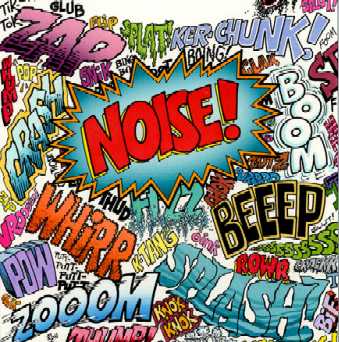
Jun. 25, 2008 Henry Bean can’t stand the sound of burglar alarms. He hates back-up beepers on trucks and bristles when garbage rigs grind up their fetid loads in the middle of the night, the noise reverberating off Manhattan’s buildings. But Bean harbors special resentment for the oblivious car owners whose vehicles blare false alarms. “It bothers me that their cars can shout in my ear, not stop shouting, and I can’t do anything about it,” he says. “My pride can’t handle it. I can’t exist if I don’t fight back in some way, however pathetically or ineffectually.”

For years, Bean enacted small-scale revenge, breaking in to stop the alarms or letting air out of tires. One night in the early ’90s, an alarm sounded for more than four hours outside his apartment at 97th Street and West End. By the time Bean broke into the car, the vehicle was covered with eggs, beer and tomatoes. “People inflicted their fury, but nobody did what I did, which is break the window, pop the hood and disconnect the battery cable,” he says.

For his crime against private property, Bean was arrested. After a night in jail, and spending thousands on his legal defense, Bean was somewhat chastened, but not reformed. Just the other day, a car alarm started making a ruckus, and he confesses he confronted the blaring vehicle and “did some stuff to it,” but won’t be more specific than that.

Bean, who is in his early 60s, is a screenwriter, director, novelist and actor. He may be best known for his 2001 film “The Believer,” about a 22-year-old Jew (Ryan Gosling) who becomes a Nazi skinhead, which won the Grand Jury Prize at the Sundance Film Festival. His real-life role as noise vigilante inspired “Noise,” released in May, in which an upscale Manhattan lawyer (Tim Robbins) throws away his job, his marriage and his apartment in a quixotic quest to fight car alarms. In vain pursuit of a little quiet, the lawyer becomes “The Rectifier,” waging a one-man war on the discordant urban soundscape, throttling offending cars. One scene shot at 97th and West End replicates Bean’s own crime and trip to jail.

Despite a host of good reviews, in the New Yorker, Entertainment Weekly and the Los Angeles Times, “Noise” hasn’t found a huge audience. But if the film won’t set any box office records, it does spotlight a pervasive form of pollution that seems to escape our concern — at our peril. Recent studies reveal that noise can be harmful to human health, just like water or air pollution, damaging not only hearing and sleep but raising our blood pressure to dangerous levels. According to the World Health Organization, noise pollution is responsible for tens of thousands of deaths a year.

In the city that never sleeps, noise is the No. 1 quality-of-life complaint. New York City’s 311 hot line logged 350,000 complaints about racket in 2006, according to Arline Bronzaft, a psychologist who studies noise. In the ’70s, Bronzaft did landmark research on how the noise of elevated train tracks hampered children’s learning in nearby schools. Now a member of New York’s Council on the Environment, she recently helped rewrite the city’s noise code.

In July 2007, a new noise code went into effect, updating the old one for the first time in 30 years, and regulating construction noise, air-conditioner noise, garbage truck grinding and even music from bars and restaurants. Hey, taxi drivers! Horn honking is not permitted, except in situations of “imminent danger.” Is the new code quieting things down out there? It’s hard to say, but the complaining about noise has only gotten louder. In the 11 months following the new code’s introduction, the city registered a 6 percent increase in noise complaints.

Modern cities can be so noisy that ornithologists have found birds warbling at the top of their lungs to be heard. Nightingales in Berlin have been documented singing up to 14 decibels louder than their counterparts in woody environs, in an attempt to make their songs audible above all the background noise. Yet the cacophony of modern life is hardly confined to metropolises like New York or Cairo, Egypt, where you literally have to shout on the street to make yourself heard.

In “Noise,” Bean’s protagonist and his family escape to the country for the weekend. Their getaway is besieged by a neighbor’s farting leaf blower. Getting away from it all just isn’t that easy.

“For 50 years, if people didn’t like noise, and they had money, the solution has been: Move to the suburbs. Now we’ve made our suburbs noisy. They’re no longer quiet refuges,” says Les Blomberg, executive director of the Noise Pollution Clearinghouse in Montpelier, Vt. “We got our half-acre lots, and now we have our weed whacker, our leaf blower, our hedge trimmer, our riding lawn mower, and then we hop in our car and drive on four- and six-lane highways past thousands of other suburbs to our place of work, noise-polluting every place we pass.”

But you don’t have to be an anti-noise crusader to suffer physical effects from noise, even if you’re sleeping right through it. Scientists at Imperial College London monitored the blood pressure of 140 sleeping volunteers who lived near London’s Heathrow airport. They discovered that subjects’ blood pressure rose when a plane few overhead even when the subjects remained asleep. A study of 5,000 45-to-70-year-olds living near airports for at least five years found that they were at greater risk of suffering from hypertension, aka high blood pressure, than their counterparts in quieter realms. People with high blood pressure have an increased risk of developing heart disease, stroke, kidney disease and dementia. In 2007, WHO estimated that long-term exposure to traffic noise may account for 3 percent of deaths from ischemic heart disease among Europeans.

Not only can too much loud noise damage your hearing, or disrupt your sleep, it can literally suck the life out of you thanks to the human body’s fight-or-flight response. “The human auditory system is designed to serve as a means of warning against dangers in the environment,” explains Louis Hagler, a retired internal medicine specialist in Oakland, Calif. “Noise above a certain level is perceived by the nervous system as a threat.” The body responds to that threat with an outpouring of epinephrine and cortisol, the so-called stress hormones. “Your blood pressure goes up, your pulse rate goes up, there is a sudden outpouring of sugar into the bloodstream so the body is prepared to meet whatever threat there is in the environment.”

If exposures are intermittent or rare, the body has the chance to return to normal. But if the exposure is unrelenting, the body doesn’t have a chance to calm down, and blood pressure and heart rate may remain elevated, Hagler explains. That’s why what seems like a mere annoyance can actually have long-term health effects. “There is no question that people who live near a busy roadway are experiencing effects on their blood pressure,” says Hagler.

As Bean attests, once you tune into the din, it’s hard to tune out again. “It’s like an allergy — once you get sensitized to one of these things then they all bother you, and then each one builds on the other,” he says. And what’s a mere nuisance to one person is another’s bĂȘte noire. “There is no evidence that noise causes mental illness itself, but there is little doubt that it may accelerate or intensify some kind of mental disorders,” explains Hagler. He adds that symptoms of exposure to noise pollution include anxiety, nervousness, nausea, headaches, emotional instability, argumentativeness and changes in mood. No wonder excessive noise has been used as a form of torture.

In ancient Rome, chariots were banned from the streets at night to prevent clattering wheels on stones from waking people up. In the United States, back in the ’70s, when Bronzaft was documenting how children studying in classrooms next to elevated train tracks had delayed learning, there was an outpouring of official concern about the effects of noise, on both health and quality of life. In 1972, Congress passed the Noise Control Act. The Environmental Protection Agency had its own Office of Noise Abatement and Control, which still exists today, but as an unfunded skeleton. What happened? “A man got elected president named Ronald Reagan and everything stopped,” says Bronzaft. The Gipper decided that noise was best regulated by cities and states, but federal funding to help them evaporated. Attempts to refund the office have failed.

Since the ’80s, noise abatement, such as it is, has been subject to a hodgepodge of local regulations in towns and cities, on a piecemeal basis, banning gas-powered leaf blowers here or restricting construction hours there. You’re in trouble in Florida if your car stereo can be plainly heard from more than 25 feet away. California cities including Berkeley, Santa Monica, Beverley Hills and Laguna Beach have restricted leaf blowers. Many communities deal with noise under more general nuisance laws. “Even if you have the law on your side, getting the police to enforce it can be the bigger challenge,” says Richard Tur, 39, founder of NoiseOff.org, a Web resource for fighting local noise pollution. Beyond regulating highway and aircraft noise, the feds don’t do much.

Meanwhile, the world continues to get louder. “The last century was the loudest in the history of the world,” says Blomberg. “The last decade was the loudest decade in the history of the world without a question,” he adds, citing rising populations and their attendant airplanes, cars, trucks, weed whackers, air conditioners and, yes, leaf blowers. Yet Blomberg is optimistic the future can be quieter than it is today.

“People assume that living in this advanced technological world, noise is the price we pay,” he says. “Almost all our noises are related to technology. Only the barking dog is not related to technology.” But he thinks that technological innovation can also quiet the din. He points to electric lawn equipment and hybrid and electric cars, and cites innovation in asphalt technology to help reduce highway noise, which mostly consists of the sound of wheels on the pavement.

Blomberg says he gets about 150 calls or e-mails per week from the noise-addled seeking some peace and quiet. He recommends confronting, nicely, noisemakers themselves and, if that doesn’t work, getting a copy of a local noise or nuisance ordinance to make your case, or even approaching lawmakers about the racket. Blomberg led his own local noise pollution crusade back in the ’90s against street cleaners that swept the street in front of his downtown apartment at 4 a.m., three days a week. Political organizing, including a petition drive and lobbying City Council members, got the street cleaning postponed to 6 a.m.

Since then, Blomberg has moved to a quieter neighborhood, where he mows his property with electric mowers (both battery and plug-in) and a push mower. He has outfitted his house with a quieter-model furnace, air conditioner and dishwasher. He recommends befriending your neighbors, as a way to stop many noise pollution problems before they start.

But not everyone can move where it’s quieter. Noise pollution activist Tur, founder of Noise Off, which has 600 online community members, all fighting the loud and obnoxious, lives in an apartment in Astoria, Queens, N.Y., near a major thoroughfare. “I pretty much live near a ‘perfect storm’ of noise pollution,” he says. That’s clear during our phone conversation, in which a siren is blaring the background. Tur has joined political clubs, spoken out at public meetings and lobbied local officials, as well as networked hundreds of activists. He has also installed soundproofing windows in his bedroom; they create a dead-air space between the inner and outer panes of glass, which muffles general traffic noise.

With little official relief in earshot, it’s clear that finding relief from the din is left up to individuals, whether through grass-roots organizing or buying a quieter lawn mower. We may not, however, want to follow the lead of Bean, for whom the degrading indignities of life are concentrated in the car alarm.

“The whole purpose of car alarms is to make money for the people who manufacture and install them,” he says, fuming. “They don’t prevent theft.” (He’s right, according to the Highway Loss Data Institute of the Insurance Institute for Highway Safety.) In New York City, car alarms can legally blare for three minutes. Bean wants the city to ban them outright, but doesn’t have a lot of faith in that happening any time soon. “If people in New York City destroyed or severely damaged every car whose alarm went off for any time at all, except during a burglary or theft, I think people would disconnect their alarms,” he says. “Then this whole thing would go away.”

For years, Bean enacted small-scale revenge, breaking in to stop the alarms or letting air out of tires. One night in the early ’90s, an alarm sounded for more than four hours outside his apartment at 97th Street and West End. By the time Bean broke into the car, the vehicle was covered with eggs, beer and tomatoes. “People inflicted their fury, but nobody did what I did, which is break the window, pop the hood and disconnect the battery cable,” he says.

For his crime against private property, Bean was arrested. After a night in jail, and spending thousands on his legal defense, Bean was somewhat chastened, but not reformed. Just the other day, a car alarm started making a ruckus, and he confesses he confronted the blaring vehicle and “did some stuff to it,” but won’t be more specific than that.

Bean, who is in his early 60s, is a screenwriter, director, novelist and actor. He may be best known for his 2001 film “The Believer,” about a 22-year-old Jew (Ryan Gosling) who becomes a Nazi skinhead, which won the Grand Jury Prize at the Sundance Film Festival. His real-life role as noise vigilante inspired “Noise,” released in May, in which an upscale Manhattan lawyer (Tim Robbins) throws away his job, his marriage and his apartment in a quixotic quest to fight car alarms. In vain pursuit of a little quiet, the lawyer becomes “The Rectifier,” waging a one-man war on the discordant urban soundscape, throttling offending cars. One scene shot at 97th and West End replicates Bean’s own crime and trip to jail.

Despite a host of good reviews, in the New Yorker, Entertainment Weekly and the Los Angeles Times, “Noise” hasn’t found a huge audience. But if the film won’t set any box office records, it does spotlight a pervasive form of pollution that seems to escape our concern — at our peril. Recent studies reveal that noise can be harmful to human health, just like water or air pollution, damaging not only hearing and sleep but raising our blood pressure to dangerous levels. According to the World Health Organization, noise pollution is responsible for tens of thousands of deaths a year.

In the city that never sleeps, noise is the No. 1 quality-of-life complaint. New York City’s 311 hot line logged 350,000 complaints about racket in 2006, according to Arline Bronzaft, a psychologist who studies noise. In the ’70s, Bronzaft did landmark research on how the noise of elevated train tracks hampered children’s learning in nearby schools. Now a member of New York’s Council on the Environment, she recently helped rewrite the city’s noise code.

In July 2007, a new noise code went into effect, updating the old one for the first time in 30 years, and regulating construction noise, air-conditioner noise, garbage truck grinding and even music from bars and restaurants. Hey, taxi drivers! Horn honking is not permitted, except in situations of “imminent danger.” Is the new code quieting things down out there? It’s hard to say, but the complaining about noise has only gotten louder. In the 11 months following the new code’s introduction, the city registered a 6 percent increase in noise complaints.

Modern cities can be so noisy that ornithologists have found birds warbling at the top of their lungs to be heard. Nightingales in Berlin have been documented singing up to 14 decibels louder than their counterparts in woody environs, in an attempt to make their songs audible above all the background noise. Yet the cacophony of modern life is hardly confined to metropolises like New York or Cairo, Egypt, where you literally have to shout on the street to make yourself heard.

In “Noise,” Bean’s protagonist and his family escape to the country for the weekend. Their getaway is besieged by a neighbor’s farting leaf blower. Getting away from it all just isn’t that easy.

“For 50 years, if people didn’t like noise, and they had money, the solution has been: Move to the suburbs. Now we’ve made our suburbs noisy. They’re no longer quiet refuges,” says Les Blomberg, executive director of the Noise Pollution Clearinghouse in Montpelier, Vt. “We got our half-acre lots, and now we have our weed whacker, our leaf blower, our hedge trimmer, our riding lawn mower, and then we hop in our car and drive on four- and six-lane highways past thousands of other suburbs to our place of work, noise-polluting every place we pass.”

But you don’t have to be an anti-noise crusader to suffer physical effects from noise, even if you’re sleeping right through it. Scientists at Imperial College London monitored the blood pressure of 140 sleeping volunteers who lived near London’s Heathrow airport. They discovered that subjects’ blood pressure rose when a plane few overhead even when the subjects remained asleep. A study of 5,000 45-to-70-year-olds living near airports for at least five years found that they were at greater risk of suffering from hypertension, aka high blood pressure, than their counterparts in quieter realms. People with high blood pressure have an increased risk of developing heart disease, stroke, kidney disease and dementia. In 2007, WHO estimated that long-term exposure to traffic noise may account for 3 percent of deaths from ischemic heart disease among Europeans.

Not only can too much loud noise damage your hearing, or disrupt your sleep, it can literally suck the life out of you thanks to the human body’s fight-or-flight response. “The human auditory system is designed to serve as a means of warning against dangers in the environment,” explains Louis Hagler, a retired internal medicine specialist in Oakland, Calif. “Noise above a certain level is perceived by the nervous system as a threat.” The body responds to that threat with an outpouring of epinephrine and cortisol, the so-called stress hormones. “Your blood pressure goes up, your pulse rate goes up, there is a sudden outpouring of sugar into the bloodstream so the body is prepared to meet whatever threat there is in the environment.”

If exposures are intermittent or rare, the body has the chance to return to normal. But if the exposure is unrelenting, the body doesn’t have a chance to calm down, and blood pressure and heart rate may remain elevated, Hagler explains. That’s why what seems like a mere annoyance can actually have long-term health effects. “There is no question that people who live near a busy roadway are experiencing effects on their blood pressure,” says Hagler.

As Bean attests, once you tune into the din, it’s hard to tune out again. “It’s like an allergy — once you get sensitized to one of these things then they all bother you, and then each one builds on the other,” he says. And what’s a mere nuisance to one person is another’s bĂȘte noire. “There is no evidence that noise causes mental illness itself, but there is little doubt that it may accelerate or intensify some kind of mental disorders,” explains Hagler. He adds that symptoms of exposure to noise pollution include anxiety, nervousness, nausea, headaches, emotional instability, argumentativeness and changes in mood. No wonder excessive noise has been used as a form of torture.

In ancient Rome, chariots were banned from the streets at night to prevent clattering wheels on stones from waking people up. In the United States, back in the ’70s, when Bronzaft was documenting how children studying in classrooms next to elevated train tracks had delayed learning, there was an outpouring of official concern about the effects of noise, on both health and quality of life. In 1972, Congress passed the Noise Control Act. The Environmental Protection Agency had its own Office of Noise Abatement and Control, which still exists today, but as an unfunded skeleton. What happened? “A man got elected president named Ronald Reagan and everything stopped,” says Bronzaft. The Gipper decided that noise was best regulated by cities and states, but federal funding to help them evaporated. Attempts to refund the office have failed.

Since the ’80s, noise abatement, such as it is, has been subject to a hodgepodge of local regulations in towns and cities, on a piecemeal basis, banning gas-powered leaf blowers here or restricting construction hours there. You’re in trouble in Florida if your car stereo can be plainly heard from more than 25 feet away. California cities including Berkeley, Santa Monica, Beverley Hills and Laguna Beach have restricted leaf blowers. Many communities deal with noise under more general nuisance laws. “Even if you have the law on your side, getting the police to enforce it can be the bigger challenge,” says Richard Tur, 39, founder of NoiseOff.org, a Web resource for fighting local noise pollution. Beyond regulating highway and aircraft noise, the feds don’t do much.

Meanwhile, the world continues to get louder. “The last century was the loudest in the history of the world,” says Blomberg. “The last decade was the loudest decade in the history of the world without a question,” he adds, citing rising populations and their attendant airplanes, cars, trucks, weed whackers, air conditioners and, yes, leaf blowers. Yet Blomberg is optimistic the future can be quieter than it is today.

“People assume that living in this advanced technological world, noise is the price we pay,” he says. “Almost all our noises are related to technology. Only the barking dog is not related to technology.” But he thinks that technological innovation can also quiet the din. He points to electric lawn equipment and hybrid and electric cars, and cites innovation in asphalt technology to help reduce highway noise, which mostly consists of the sound of wheels on the pavement.

Blomberg says he gets about 150 calls or e-mails per week from the noise-addled seeking some peace and quiet. He recommends confronting, nicely, noisemakers themselves and, if that doesn’t work, getting a copy of a local noise or nuisance ordinance to make your case, or even approaching lawmakers about the racket. Blomberg led his own local noise pollution crusade back in the ’90s against street cleaners that swept the street in front of his downtown apartment at 4 a.m., three days a week. Political organizing, including a petition drive and lobbying City Council members, got the street cleaning postponed to 6 a.m.

Since then, Blomberg has moved to a quieter neighborhood, where he mows his property with electric mowers (both battery and plug-in) and a push mower. He has outfitted his house with a quieter-model furnace, air conditioner and dishwasher. He recommends befriending your neighbors, as a way to stop many noise pollution problems before they start.

But not everyone can move where it’s quieter. Noise pollution activist Tur, founder of Noise Off, which has 600 online community members, all fighting the loud and obnoxious, lives in an apartment in Astoria, Queens, N.Y., near a major thoroughfare. “I pretty much live near a ‘perfect storm’ of noise pollution,” he says. That’s clear during our phone conversation, in which a siren is blaring the background. Tur has joined political clubs, spoken out at public meetings and lobbied local officials, as well as networked hundreds of activists. He has also installed soundproofing windows in his bedroom; they create a dead-air space between the inner and outer panes of glass, which muffles general traffic noise.

With little official relief in earshot, it’s clear that finding relief from the din is left up to individuals, whether through grass-roots organizing or buying a quieter lawn mower. We may not, however, want to follow the lead of Bean, for whom the degrading indignities of life are concentrated in the car alarm.

“The whole purpose of car alarms is to make money for the people who manufacture and install them,” he says, fuming. “They don’t prevent theft.” (He’s right, according to the Highway Loss Data Institute of the Insurance Institute for Highway Safety.) In New York City, car alarms can legally blare for three minutes. Bean wants the city to ban them outright, but doesn’t have a lot of faith in that happening any time soon. “If people in New York City destroyed or severely damaged every car whose alarm went off for any time at all, except during a burglary or theft, I think people would disconnect their alarms,” he says. “Then this whole thing would go away.”

Source. salon.com

The Rag Blog

Posted in RagBlog | Leave a comment

Telecom Donations Tied to FISA Vote


Supporters of the spying bill received twice
the contributions as those against it.
By Mike Lillis / June 24, 2008

When scores of House Democrats joined Republicans last week to reauthorize a controversial White House spying program, many critics attributed that support to election-year jitters. But as liberal voters continue to bash Democrats on the issue, some campaign finance reformers charge that political contributions from the telecom industry, which benefited handsomely under the bill, probably also swayed votes

In an analysis released Tuesday, Maplight.org, a nonprofit campaign finance watchdog group, found that lawmakers voting Friday in support of the wiretap deal averaged roughly twice the donations from the nation’s leading telecoms – Verizon, Sprint and AT&T – over the last three years as those voting against it.

The figures might not have raised eyebrows except that the proposal contained a gift for the industry, effectively granting retroactive legal immunity to the telecoms that enabled the Bush administration’s warrantless eavesdropping program. The immunity provision – blasted by civil libertarians for putting industry concerns above Fourth Amendment rights against search and seizure – rescues the companies from the roughly 40 lawsuits pending against them. Some money-in-politics watchdogs say the connection between the contributions and votes is no accident.

The money-in-politics debate is hardly new to Washington, but it has taken on greater urgency as both political contributions and federal budgets grow larger with each passing year. Under the current system, lawmakers have become ever more reliant on campaign coffers to maintain their hold on power. Industry, meanwhile, is under constant pressure to be at the negotiation table when related legislation is being crafted on Capitol Hill. Money is often the quickest way to gain that seat. This combination of factors has created a near symbiotic relationship between Congress and industry, often lending a sense that business interests take priority over citizens’ concerns.

“It’s not a dollar given and a vote bought,” said Meredith McGehee, policy director at the Campaign Legal Center, a nonprofit campaign finance reform advocate, “but it is a system where large industries can gain influence and direct how policy is decided.”

The shame, McGehee said, is that the campaign-finance system leads to conflict-of-interest questions even when none exist. “That undermines confidence in the legislative process,” she stated.

Mary Boyle, a spokeswoman with Common Cause, echoed the message. “We certainly know that contributions go a long way to gaining access and influence,” she said. “The appearance is that money buys votes.”

Maplight’s analysis, crunched using contribution data from the Center for Responsive Politics, found that the 293 House members voting last week in favor of the wiretapping compromise received, on average, more than double the amount of money as those who voted against it. They got $9,659 from Verizon, AT&T and Sprint between January 2005 and March 2008, while those voting against got $4,810.

But some campaign finance experts warned against linking campaign donations to votes. “It’s way too simplistic just to look at money given to a candidate and claim it’s affected a particular vote,” said Richard L. Hasen, an election specialist at Loyola Law School in Los Angeles. “It’s something that’s often alleged, but much harder to prove.”

“There does seem to be a correlation between telecom money and the way people voted,” Massie Ritsch, spokesman for the Center for Responsive Politics, said in an email, “but as in all cases when you’re following the money, causation is nearly impossible to establish.”

Indeed, in the case of the spying proposal, 94 of the 105 Democrats voting for the bill had supported an earlier House proposal to renew the spying law without granting retroactive immunity to the telecoms. House Speaker Nancy Pelosi (D-Cal.), one of those 94, made clear that she opposed telecom immunity, but was forced to accept a compromise for the sake of passing a bill. The immunity language was a concession to the White House, which threatened to veto any bill without it.

“I do not believe that Congress should be in the business of interfering with ongoing lawsuits and attempting to grant immunity to telecommunications companies that allegedly violated the law,” Pelosi said on the chamber floor last week. “Those companies have not lived up to the standards expected by the American people … They come out of this with a taint.”

In return, Democrats included language previously opposed by the administration, including a clarification that the president has no authority outside the 1978 Foreign Intelligence Surveillance Act to collect foreign-to-domestic communications, even in times of war.

The Senate is expected to pass the bill on Wednesday.

Not all Democrats felt the compromise language was worth the sacrifice of civil liberties.

“I have consistently said that it is not appropriate for Congress to grant these companies immunity for their actions without having an understanding of what it is that they did,” said Rep. John Dingell (D-Mich.), chairman of the House Energy and Commerce Committee. “This is not only because it will hold the telecommunications companies accountable for their actions, but because it is the only way of finding out just how extensive the president’s illegal wiretapping program really was.”

Liberal voters have lit up the blogosphere in agreement, charging that Democrats caved to White House demands at the expense of constitutional rights. Some civil liberties advocates also placed blame on the congressional leaders.

“This is all part of the abuse of power that we’ve seen out of this White House, as well as Congress’ refusal to stand up and perform its constitutional duty to check the executive branch,” said Boyle of Common Cause. “Congress is complicit here.”

Source. / Washington Independent / truthout

The Rag Blog

Posted in RagBlog | Tagged , , , , , , , | Leave a comment

If I Had to Watch US News, I’d Blow My Brains Out

Iraq story buried by US networks:
features Lara Logan of CBS

h/t Informed Comment / Posted June 25, 2008

Go to War in Iraq? What War in Iraq? about lack of media coverage of the war. / The Rag Blog

The Rag Blog

Posted in RagBlog | Tagged , , , , , | Leave a comment

Where Teardrops Fall

Antonio Neri Licon, “Nerilicon” / El Economista, Mexico City

The Rag Blog / Posted June 25, 2008

Posted in RagBlog | Tagged , , , , , | Leave a comment

Time for a Grand Inquest into Bush’s High Crimes

Impeachment trial of Andrew Johnson.

We have witnessed a staggering
abuse of power by the president

By Robert L. Borosage / June 24, 2008

One of House Speaker Nancy Pelosi’s first acts upon taking the gavel was to rule impeachment off the table. She wanted Democrats to focus on challenging the president on the war and on kitchen table concerns — from energy to education to health care. With Democrats now enjoying an increasing margin in generic polls and looking towards gaining seats in both the House and the Senate, the strategy certainly hasn’t hurt politically.

But the constitutional implications are far more disturbing. This was dramatized as the Congress debated the FISA reform legislation that will provide retroactive immunity to the telecommunications companies for warrantless interception of the conversations of Americans — and by implication, retroactive acceptance of the president’s authority to order such wiretaps.

We have witnessed a staggering abuse of power by this president. Even former Bush Justice Department officials now charge President Bush with trampling the Constitution. Bush has claimed the prerogative to declare an endless war without congressional approval, to designate someone an enemy without cause, to proceed to wiretap them without warrant, arrest or kidnap them at will, jail them without a hearing, hold them indefinitely, interrogate them intensively (read torture), bring them to trial outside the US court system. He claims that executive privilege exempts his aides — even the aides of his aides and his vice president’s aides — from congressional investigation. He claims the right to amend or negate congressional laws with a statement upon signing them. And much more.

Even this Supreme Court, stacked with activist right-wing judges enamored of executive national security powers, has rebuked the president on some of these claims, particularly around the treatment of allegedly enemy combatants. But many of Bush’s claims will escape judicial determination.

And there is the rub. According to the leading case on presidential powers, if Bush’s extreme assertions of power are not challenged by the Congress, they end up not simply creating new law, they could end up rewriting the Constitution itself, altering the Constitutional division of powers by establishing the president’s claims as constitutional powers that the Congress or the Courts may not infringe.

The Steel Seizure case — Youngstown Sheet and Tube v Sawyer, 343 US 579 (1952), remains the leading case on presidential power. In Youngstown, a six member majority of the Court joined in overturning Truman’s executive order nationalizing the steel plants to end a strike during the Korean War. Justice Black wrote the opinion for the Court, but the historically influential opinions were penned by Justices Robert H. Jackson and Felix Frankfurter, both Democratic appointees. Frankfurter laid out the argument for a sort of common law of constitutional amendment:

Deeply embedded traditional ways of conducting government cannot supplant the Constitution or legislation, but they give meaning to the words of a text or supply them. It is an inadmissibly narrow conception of American constitutional law to confine it to the words of the Constitution and to disregard the gloss which life has written upon them. In short, a systematic, unbroken, executive practice, long pursued to the knowledge of the Congress and never before questioned, engaged in by Presidents who have also sworn to uphold the Constitution, making as it were such exercise of power part [343 U.S. 579, 611] of the structure of our government, may be treated as a gloss on “executive Power” vested in the President by 1 of Art. II.

In Youngstown, Jackson concurred, arguing that the president’s powers vary as to whether he acts with congressional authority (his greatest power), in the absence of it, or in opposition to it:

When the president acts in absence of either a congressional grant or denial of authority, he can only rely upon his own independent powers, but there is a zone of twilight in which he and Congress may have concurrent authority, or in which its distribution is uncertain. Therefore, congressional inertia, indifference or quiescence may sometimes, at least as a practical matter, enable, if not invite, measures on independent presidential responsibility. In this area, any actual test of power is likely to depend on the imperatives of events and contemporary imponderables rather than on abstract theories of law.

When a president egregiously abuses his power — particularly in areas relating to the rights of American citizens — remedies are often difficult. The Supreme Court is reluctant to arbitrate a power struggle between two co-equal branches. That is why the Constitution prescribes the specific remedy of impeachment for crimes and abuses of power — High Crimes and Misdemeanors — and empowers the House and Senate to sit in judgment whether the actions are to be accepted or condemned.

What the Court said in Youngstown is that if presidents assert a prerogative — like the power to make war without a congressional declaration — systematically, with unbroken regularity, with the knowledge of the Congress and are never questioned — then that practice becomes a Constitutional power that cannot be infringed upon by the Congress or the Courts.

Thus, Congress must formally object to President Bush’s abuses or it risks by “indifference or quiescence” contributing to the powers of our imperial presidency.

When Pelosi took impeachment off the table, it was reduced to being a rhetorical protest vehicle for progressives like Dennis Kucinich or Russ Feingold. But Congress need not convict President Bush to impeach him for High Crimes and Misdemeanors. And arguably, the House need not even impeach the president to hold a Grand Inquest into the powers that he has claimed, registering a formal objection to them. The Judiciary Committee in the House should formally convene that Inquest, no matter what the decision is on impeachment. For if Pelosi’s sensible political judgment results, as it has to date, in a show of congressional “inertia, indifference or quiescence,” the Democratic majority in Congress may have gained a dozen seats at the cost of relinquishing its own powers, and putting the rights of Americans at risk.

Source. / The Huffington Post

The Rag Blog

Posted in RagBlog | Tagged , , , , , | Leave a comment

Sarah Bird : How Gay It Would Be

I know a mother is supposed to accept her children as they are. But my son has one painful flaw — he’s straight.
By Sarah Bird / June 25, 2008

Novelist Sarah Bird lives in Austin.

I know, I know — a mother is not supposed to have preset dreams that she expects her child to fulfill. And I tried. Believe me, for an entire 18 years of my son’s life, I tried. I promised myself that I would accept my son no matter what path he chose. And since our little unit lives in Austin, blue heart of red Texas, there was always the danger that his path might take him into the Pi Kappa Alphas or the Republican Party. Still, I vowed that I would find a way to love my little Pike president of the Young Republicans. In his giant SUV. With the gun rack.

But, like so many of us, I am only human. How could I not dream of having a son who cared deeply about all the right things: fashion, musical theater, interior décor? But mostly a son who cared deeply about the most right thing of all: his mother? How could I not yearn for a son who would tell me that the bias cut emphasized my saddlebag thighs, that no one was staining concrete anymore, that the tiniest bit of white on the upper lids would open up my eyes and make me look 10 years younger? And now that California is handing out marriage licenses, what mother could resist the opportunity to micromanage a union in which both participants would obsess with her about whether the color theme celadon and peach or apple green and hot pink best expresses their love?

We all know the fate that awaits mothers of heterosexual sons. After straight boys learn how to order pizza, Mom becomes an abstraction. Straight sons sort of get that their mom is a tremendously powerful force in their lives, but, like the Federal Reserve System, they have no real understanding of or interest in how she works.

But gay men, whole other story. And that story is “Auntie Mame.” Suddenly the maternal presence is a showstopping diva in chinchilla fitting a Benson Hedges into a 2-foot cigarette holder and zinging everyone in sight with one-liners, instead of Ma Kettle in a Mother Hubbard apron dishing up the possum stew and never exfoliating.

I guess I’ve suspected the worst for a long time. Certainly the signs were there from a fairly young age: He invariably chose “Power Rangers” over joining me in marathon viewings of the work of Stephen Sondheim. He preferred to thickly carpet his bedroom floor with castoff clothing rather than use the color-coded, padded hangers I put in his closet. Worst of all, he evinced a disturbing interest in Grace’s bare, bony chest rather than concentrating on absorbing Will’s snappy — yet ultimately supportive — patter. If he didn’t pay attention, who would I have to call me “girlfriend” in my old age? How would I keep tabs on Britney, Carrie Underwood and that creepy kid from “High School Musical” without my very own Rex Reed 2.0?

I decided to put my suspicions to the test. We had just replaced all our doorknobs, so I asked my son, “What do you think of the new knobs? Do you like it that we got rid of the crappy antique brass knobs and went for the brushed nickel?”

“They’re fine.”

Sensing that his attention was focused more on annihilating Counter-Strike terrorists than on my knobs, I probed further. “And what do you think of the solid gold strike plates and ruby-encrusted lock sets?”

“They’re fine.”

“But tell me, what are your thoughts on the very best feature of all? That each knob morphs into a different, yet equally deadly, venomous snake? Asp, adder, crate, bushmaster?”

“They’re fine.”

My dream child would have cared. He would have had an opinion about the aesthetic desirability of brushed nickel over antique brass. You get none of that concern with the typical straight boy. And while we’re on the topic of blatant stereotypes, before the entire membership of the gay Anti-Defamation League responds below to tell me what an ignorant bigot I am, working from outdated stereotypes, hang on a second. Before you write those ALL-CAP LETTERS WITH LOTS OF EXCLAMATION POINTS!!!!! informing me that you are a proud, stereotype-defying homosexual stevedore, soccer hooligan, whatever, that you are unabashedly clueless about fashion, dĂ©cor and hygiene, let me just say, if that is you: Don’t apply to be my gay son. I already own that model. No, please, submit a rĂ©sumĂ© only if you are an old-school homosexual with all the traditional old-school homosexual values and interests. Particularly if those interests include knowing how to add fullness to thinning, middle-aged hair.

Anyway, after the doorknob debacle, I faced my worst fear: I would be antiquing alone. And then, as if to prove that God never closes a door that he doesn’t open a lilac satin-lined Louis Vuitton makeup case, my dream came true. Overnight my boy was transformed. Suddenly he lost all interest in slaughtering terrorists and wanted nothing more than to watch “Project Runway” with me and debate if a contestant had really “resolved” the skirt or not. Suddenly we were spending long evenings playing Scattergories and arguing over whether fuchsia and sandy qualified as distinct colors or just hues. Suddenly we were zipping out to be the first in line on opening day of “Sweeney Todd,” then discussing Johnny Depp’s performance over cups of tea and pastries. Suddenly I had the gay son I had always dreamed of. And all it took was a girlfriend.

I hadn’t counted on my gay son’s being delivered to me via a wonderfully winsome girlfriend with a whiff of the young Audrey Hepburn about her, yet that is what has happened. Overnight, my offspring, who believed that Oliver Twist and other plucky motherless orphans had gotten a sweet deal, became willing to do anything my heart desired. Just so long as Audrey was on board. And since Audrey adores board games, art openings, nibbling delicate sandwiches in precious cafes and hanging out with an old lady whom she reminds of the young Audrey Hepburn, that is precisely what we’ve been doing. Sigh.

“You do realize, don’t you,” my friend Rudy said, when I related this blissful state of affairs, “that you’re getting to have your cake and eat it too?”

Rudy is a brilliant, handsome (and single, he would like me to add) theater director here in Austin, and he is also one of the leading candidates to be my gay son. “You get to have the closeness that you imagine you would have from having a gay son without any of the, you know, finding your son’s gay porn that he downloaded from the Internet. The joke is that you can get all the fashion and musical theater and closeness without homosexuality, and that joke is on me and mine. We have to deal with a lot of ‘Can’t you just, you know, help me pick out my clothes without, you know, kissing in front of me or hitting on my brother?'”

Excellent point. This is exactly the kind of sensitive, informed, insightful comment I’d expect from my gay son. Thank you, Rudy, I will be moving your application to the top of the pile tout de suite. As for what goes on in my grown child’s bedroom? Not my business. Unless, however, it’s to confer with me about whether frosty blue and chocolate brown is a color combination for the ages. Or if that expensive duvet and sham set I’m contemplating will be dated faster than you can say “teal” and “mauve.”

Before I have time to fit a Benson and Hedges into my 2-foot cigarette holder, another buzz kill arrives. This one is from my editor, who inquires, “Is your son aware that his heterosexuality has let you down? Does he care?”

I decide to check out this queerest of queries with my son, 18, and Audrey, 17, who are eating popcorn and playing Brain Quest, for Grades 1 to 6. As I enter, they are naming the planets.

“My editor would like to know how you feel about me being disappointed that you’re not gay.”

“I’m surprised you still believe I’m not.”

“You are not helping here. What would you say to outraged readers?”

“Uh, semi-condolences? Sorry, outraged readers? Who are you writing this for anyway? Stupid People With No Sense of Humor Weekly? Yeah, help! Save me! My mother was putting me in designer diapers from the day I was born!”

Our tĂȘte-Ă -tĂȘte has come to an end. My son goes back to amusing Audrey with alternative pronunciations of Uranus. At this point, it’s all academic anyway. You see, at just the moment when I finally have someone in my life who understands the importance of the perfect pair of red patent leather flats, it is all about to end. The cloud in this silver lining is college. My son will be leaving. The nest will be empty.

Hmm. Perhaps if my husband starts right now, by next September, he can find a girlfriend.

Source. / salon.com

The Rag Blog

Posted in RagBlog | Tagged , , , , | 1 Comment

Look Out Denver

“How can we make ourselves less frightening? We aren’t this scary image that protesters often get painted as.” – Zoe Williams, CodePink. Photo by Joe Amon, The Denver Post.

New generation plans dissent
at Democratic Convention

By Colleen O’Connor / June 22, 2008

A nude-in with bare bodies arranged to spell “PEACE,” traffic-stopping bike blockades, music with a message. Civil disobedience, direct confrontation, radical cheerleading.

That funky fusion of protest, performance and pompoms.

The new generation of activists, and the daisy-in-the-rifle protesters who birthed them, is busy with creative ferment, organizing public dissent for the Democratic National Convention here in August. They are motivated by the desire to create social change with people power, not political power, frustrated by a mounting list of problems, from the housing crisis to soaring prices for gas and food.

“There will be a lot of people at this convention who are progressive and who are angry at the Democrats,” says Virginia Trabulsi, who has worked for years with the anti-war group United for Peace and Justice.

“They’re saying, ‘Why have we not impeached Bush? Why is Homeland Security out of control?'”

Tens of thousands of activists are expected, homegrown and imported. Some plan to drive FEMA trailers up from Mississippi for a media-savvy statement about continuing Hurricane Katrina struggles. Others are coming from Seattle, like the Backbone Campaign, which will haul 70-foot-tall political puppets called The Chain Gang: prison-suited images of Bush, Dick Cheney and Donald Rumsfeld.

Socialists have formed an alliance with military veterans who are against the Iraq war.

Guerilla gardening

Anarchists will give workshops on guerilla gardening, or political gardening, a style of nonviolent action that takes on issues like land ownership by occupying abandoned lots — sometimes in the dead of night — and transforming them into urban gardens.

And then there are the pacifists, groups like the historic American Friends Service Committee founded by Quakers in 1917, which plans to host an exhibition called “The Costs of War,” detailing how the $720 million spent each day on the war could be spent on education and housing.

These different factions speak of just one common goal: stopping the Iraq war immediately.

Beyond that, beliefs differ. So do strategies.

Some protesters espouse the right to active self-defense if they are treated too harshly. On the other side are those who say that violence, verbal or physical, is never an acceptable tool on the path toward peace.

In America, this debate is as old as the war between the North and the South.

“It goes back to the abolitionist movement during the Civil War,” says Ira Chernus, professor of religious studies at the University of Colorado at Boulder.

“Some were committed to strict nonviolence, and some felt that because the system of slavery, and the military force used to maintain it, was so violent that the only way to break the system of slavery was by using violence.”

As Chernus points out in his recent book, “American Nonviolence: The History of an Idea,” nonviolence is an integral thread in the fabric of U.S. history.

Significant role

“From the 1820s to the 1950s, scarcely a decade went by that a nonviolent movement did not play some significant role in the practical outcome of political, social and economic events,” he says.

From the Civil War to the civil-rights movement, from the labor movement to the environmental movement — and now, in Denver, activists young and old, the progressives and the radicals, will enact the next chapter of the nonviolent movement in America, addressing everything from the Iraq war to global warming.

“If I called my granddad an environmentalist,” says Adam Jung, “he’d smack me, but those are his values.” Tent State workshops will train activists in nonviolent direct action. (Joe Amon, The Denver Post)activists young and old, the progressives and the radicals, will enact the next chapter of the nonviolent movement in America, addressing everything from the Iraq war to global warming.

CodePink, a national anti-war organization, plans a Restore Democracy Parade, an extravaganza of dissent: floats, political theater, musicians, stilt performers, radical cheerleaders, puppets, drummers and bands.

The local spokeswoman for CodePink is Zoe Williams, a 22-year-old platinum blond with spiky hair, rectangular glasses and a penchant for black-and-white polka-dot canvas shoes.

She’s part of the new face of activism, a youth-driven alliance that includes Students for Peace and Justice, Students for a Democratic Society, and Tent State

“We were putting in all this work” for the convention, Jojo Pease says, and thought, “What’s going to happen afterward?” The answer: a chapter of Students for a Democratic Society, reborn two years ago. (Joe Amon, The Denver Post )University. Her goal is to help restore the image of activists everywhere.

“That’s something our progressive movement is now seriously considering,” she says. “How can we make ourselves less frightening? How can we make ourselves look open?

“One of the big things about the colorful, creative protests is to show that we are a very interesting, artistic, positive group of people. We aren’t this scary image that protesters often get painted as.”

She works closely with guys like Adam Jung, a farm boy from Missouri who now studies at the University of Denver and spends his free time organizing Tent State University, mobilizing students to confront the Democrats and end the war.

“I’m definitely not right-wing or conservative, but I do identify with rural values,” Jung says. “If I called my granddad an environmentalist, he’d smack me, but those are his values.”

Grassroots movement

The base camp he envisions for Tent State University will include thousands of tents staked in City Park, with a music festival featuring political hip-hoppers The Coup and Wayne Kramer, who played with his old group the Motor City 5 during the 1968 Democratic National Convention in Chicago. Tent State workshops will train activists in nonviolent direct action,and focus on building a grassroots movement.

And from this idea sprang the newly minted Denver chapter of the Students for a Democratic Society.

“We were talking a lot about Tent State, which is not actually an organization but more a technique or strategy,” says 25-year-old Jojo Pease. “I was feeling a little disappointed. We were putting in all this work, but I thought, ‘What’s going to happen afterward?’ “

To capture the momentum created at the DNC, they decided to start a Denver chapter of Students for a Democratic Society.

Back in the 1960s, the SDS was the most influential group of radical student activists in the country. It died out in 1969 but was re-created two years ago and is now one of the fast-growing groups of young activists, with more than 300 chapters on college and high school campuses. The goal is to create a society free from poverty, war, racism and sexism.

“SDS is starting to become cool again,” says Jung.

Whether rooted in the ’60s or the ’00s, activists are driven by the same fuel.

“We are passionate people who really spend way too much time thinking about all the awful stuff in the world that’s so urgent,” says Sarah Gill, program director for the Denver office of the American Friends Service Committee. “We just want to do the right thing, and it matters if we do it the right way, because people’s lives depend on it.”

Six months ago, with his eye on the convention, longtime activist Ron Forthofer created a group called The People Call for Change.

Their action plan for the convention calls not for a protest, nor a demonstration, but a series of events to be held in churches and community centers — educational evenings that will dangle a hopeful vision of how a grassroots movement might lead the country in a new direction. Topics include health care, consumerism, the environment and civil liberties.

“The thing that is driving all of us is that we want to reclaim our country, to restore it and make it be a government and a country by and for the people,” he says.

“There’s a lot of alienation out there today, a feeling that both parties have abandoned their responsibilities to the people.”

Source. / Denver Post

The Rag Blog

Posted in RagBlog | Tagged , , , , , , , , , , , , , | Leave a comment

War in Iraq? What War in Iraq?

For the people in Iraq, the war is full time. A woman wept as the body of a relative was borne to burial in Najaf. Photo by Alaa Al-Marjani/AP

Reporters Say Networks Put War on Back Burner
By Brian Stelter / June 23, 2008

Getting a story on the evening news isn’t easy for any correspondent. And for reporters in Iraq and Afghanistan, it is especially hard, according to Lara Logan, the chief foreign correspondent for CBS News. So she has devised a solution when she is talking to the network.

“Generally what I say is, ‘I’m holding the armor-piercing R.P.G.,’ ” she said last week in an appearance on “The Daily Show,” referring to the initials for rocket-propelled grenade. “ ‘It’s aimed at the bureau chief, and if you don’t put my story on the air, I’m going to pull the trigger.’ ”

Ms. Logan let a sly just-kidding smile sneak through as she spoke, but her point was serious. Five years into the war in Iraq and nearly seven years into the war in Afghanistan, getting news of the conflicts onto television is harder than ever.

“If I were to watch the news that you hear here in the United States, I would just blow my brains out because it would drive me nuts,” Ms. Logan said.

According to data compiled by Andrew Tyndall, a television consultant who monitors the three network evening newscasts, coverage of Iraq has been “massively scaled back this year.” Almost halfway into 2008, the three newscasts have shown 181 weekday minutes of Iraq coverage, compared with 1,157 minutes for all of 2007. The “CBS Evening News” has devoted the fewest minutes to Iraq, 51, versus 55 minutes on ABC’s “World News” and 74 minutes on “NBC Nightly News.” (The average evening newscast is 22 minutes long.)

CBS News no longer stations a single full-time correspondent in Iraq, where some 150,000 United States troops are deployed.

Paul Friedman, a senior vice president at CBS News, said the news division does not get reports from Iraq on television “with enough frequency to justify keeping a very, very large bureau in Baghdad.” He said CBS correspondents can “get in there very quickly when a story merits it.”

In a telephone interview last week, Ms. Logan said the CBS News bureau in Baghdad was “drastically downsized” in the spring. The network now keeps a producer in the country, making it less of a bureau and more of an office.

Interviews with executives and correspondents at television news networks suggested that while the CBS cutbacks are the most extensive to date in Baghdad, many journalists shared varying levels of frustration about placing war stories onto newscasts. “I’ve never met a journalist who hasn’t been frustrated about getting his or her stories on the air,” said Terry McCarthy, an ABC News correspondent in Baghdad.

By telephone from Baghdad, Mr. McCarthy said he was not as busy as he was a year ago. A decline in the relative amount of violence “is taking the urgency out” of some of the coverage, he said. Still, he gets on ABC’s “World News” and other programs with stories, including one on Friday about American gains in northern Iraq.

Anita McNaught, a correspondent for the Fox News Channel, agreed. “The violence itself is not the story anymore,” she said. She counted eight reports she had filed since arriving in Baghdad six weeks ago, noting that cable news channels like Fox News and CNN have considerably more time to fill with news than the networks. CNN and Fox each have two fulltime correspondents in Iraq.

Richard Engel, the chief foreign correspondent for NBC News, who splits his time between Iraq and other countries, said he found his producers “very receptive to stories about Iraq.” He and other journalists noted that the heated presidential primary campaign put other news stories on the back burner earlier this year.

Ms. Logan said she begged for months to be embedded with a group of Navy Seals, and when she came back with the story, a CBS producer said to her, “One guy in uniform looks like any other guy in a uniform.” In the follow-up phone interview, Ms. Logan said the producer no longer worked at CBS. And in both interviews, she emphasized that many journalists at CBS News are pushing for war coverage, specifically citing Jeff Fager, the executive producer of “60 Minutes.” CBS News won a Peabody Award last week for a “60 Minutes” report about a Marine charged in the killings at Haditha.

On “The Daily Show,” Ms. Logan echoed the comments of other journalists when she said that many Americans seem uninterested in the wars now. Mr. McCarthy said that when he is in the United States, bringing up Baghdad at a dinner party “is like a conversation killer.”

Coverage of the war in Afghanistan has increased slightly this year, with 46 minutes of total coverage year-to-date compared with 83 minutes for all of 2007. NBC has spent 25 minutes covering Afghanistan, partly because the anchor Brian Williams visited the country earlier in the month. Through Wednesday, when an ABC correspondent was in the middle of a prolonged visit to the country, ABC had spent 13 minutes covering Afghanistan. CBS has spent eight minutes covering Afghanistan so far this year.

Both Ms. Logan and Mr. McCarthy noted that more coalition soldiers were killed in Afghanistan in May than in Iraq. No American television network has a full-time correspondent in Afghanistan, although CNN recently said it would open a bureau in Kabul.

“It’s terrible,” Ms. Logan said in the telephone interview. She called it a financial decision. “We can’t afford to maintain operations in Iraq and Afghanistan at the same time,” she said. “It’s so expensive and the security risks are so great that it’s prohibitive.”

Mr. Friedman said coverage of Iraq is enormously expensive, mostly due to the security risks. He said meetings with other television networks about sharing the costs of coverage have faltered for logistical reasons.

Journalists at all three American television networks with evening newscasts expressed worries that their news organizations would withdraw from the Iraqi capital after the November presidential election. They spoke only on the condition of anonymity in order to avoid offending their employers.

Source. / New York Times

Thanks to Harry Edwards / The Rag Blog

Posted in RagBlog | Tagged , , , | Leave a comment

Liposuction: The Key to Energy Independence


Living off the fat of the land
By Barbara Ehrenreich / June 24, 2008

Everyone talks about our terrible dependency on oil — foreign and otherwise — but hardly anyone mentions what it is. Fossil fuel, all right, but whose fossils? Mostly tiny plants called diatoms, but quite possibly a few Barney-like creatures went into the mix, like Stegosaurus, Brontosaurus and other giant reptiles that shared the Jurassic period with all those diatoms. What we are burning in our cars and keeping our homes warm or cool with is, in other words, a highly processed version of corpse juice.

Think of this for a moment, if only out of respect for the dead. There you were, about 100 million years ago, maybe a contented little diatom or a great big Brontosaurus stumbling around the edge of a tar pit — a lord of the earth. And what are you now? A sludge of long-chain carbon molecules that will be burned so that some mammalian biped can make a CVS run for Mountain Dew and chips.

It’s an old human habit — living off the road kill of the planet. There’s evidence, for example, that early humans were engaged in scavenging before they figured out how to hunt for themselves. They’d scan the sky for circling vultures, dash off to the kill site — hoping that the leopard that did the actual hunting had sauntered off for a nap — and gobble up what remained of the prey. It was risky, but it beat doing your own antelope tracking.

We continue our career as scavengers today, attracted not by vultures but by signs saying “Safeway” or “Giant.” Inside these sites, we find bits of dead animals wrapped neatly in plastic. The killing has already been done for us — usually by underpaid immigrant workers rather than leopards.

I say to my fellow humans: It’s time to stop feeding off the dead and grow up! I don’t know about food, but I have a plan for achieving fuel self-suffiency in less time than it takes to say “Arctic National Wildlife Refuge.” The idea came to me from reports of the growing crime of French fry oil theft: Certain desperate individuals are stealing restaurants’ discarded cooking oil, which can then be used to fuel cars. So the idea is: why not could skip the French fry phase and harvest high-energy hydrocarbons right from ourselves?

I’m talking about liposuction, of course, and it’s a mystery to me why it hasn’t occurred to any of those geniuses who are constantly opining about fuel prices on MSNBC. The average liposuction removes about half a gallon of liquid fat, which may not seem like much. But think of the vast reserves our nation is literally sitting on! Thirty percent of Americans are obese, or about 90 million individuals or 45 million gallons of easily available fat — not from dead diatoms but from our very own bellies and butts.

This is the humane alternative to biofuels derived directly from erstwhile foodstuffs like corn. Biofuels, as you might have noticed, are exacerbating the global food crisis by turning edible plants into gasoline. But we could put humans back in the loop by first turning the corn into Doritos and hence into liposuctionable body fat. There would be a reason to live again, even a patriotic rationale for packing on the pounds.

True, liposuction is not risk-free, as the numerous doctors’ websites on the subject inform us. And those of us who insist on driving gas guzzlers may soon start depleting their personal fat reserves, much as heroin addicts run out of useable veins. But the gaunt, punctured, look could become a fashion statement. Already, the combination of a tiny waist and a huge carbon footprint–generated by one’s Hummer and private jet — is considered a sign of great wealth.

And think what it would do for our nation’s self-esteem. We may not lead the world in scientific innovation, educational achievement, or low infant mortality, but we are the global champions of obesity. Go here and you’ll find America well ahead of the pack when it comes to personal body fat, while those renowned oil-producers — Saudi Arabia, Venezuela and Iran — aren’t even among the top 29. All we need is a healthy dose of fat pride and for CVS to start marketing home liposuction kits. That run for Mountain Dew and chips could soon be an energy-neutral proposition.

Source. ZNet

Visit Barbara’s Blog.

The Rag Blog

Posted in RagBlog | Tagged , , , , , , | Leave a comment

Books : Gore Vidal’s Inconvenient Truths

Gore Vidal at his house in Malibu, Calif., in September 2006. Photo by Joshua Lutz/Redux.

“The Selected Essays of Gore Vidal” reminds us that this combative political provocateur is also one of our finest literary critics.
By Louis Bayard / June 23, 2008

“Is he still alive?” a friend asked me not long ago.

Casual observers might be excused for thinking of Gore Vidal in posthumous terms. A twilight pall suffused his most recent memoir, “Point-to-Point Navigation,” which described the death of Vidal’s longtime companion even as it ladled out retribution against longtime enemies. Many of those enemies have likewise passed on, and in recent appearances, Vidal has had to squeeze his proud, patrician figure into a wheelchair.

The old lion may be enfeebled, but he still has teeth. Doubters are referred to Deborah Solomon’s recent New York Times Magazine interview, in which Vidal responded to the question “Were you chaste?” with a line that Groucho Marx might have coveted — “Chased by whom?” — and succinctly described his feelings on the death of William F. Buckley: “I thought hell is bound to be a livelier place, as he joins forever those whom he served in life, applauding their prejudices and fanning their hatred.”

In the course of what must have been a terrifying conversation, Solomon managed to ask Vidal why critics prefer his essays to his novels. “That’s because they don’t know how to read,” he replied. By now he has schooled us in the dangers of conventional wisdom, but in this case, the conventioneers have it right. Vidal has never produced a great novel (though not for want of trying) because he was, from the start, an essayist manquĂ©.

It was his misfortune, perhaps, to come of age in postwar America, when the novel was still the royal road to glory. His first book, “Williwaw,” was published when he was still 19. Several more followed, among them the succes de scandale of “The City and the Pillar,” one of America’s first fictional depictions of homosexuality (and barely readable today). But the field-clearing fame that the young Vidal clearly hungered for, the kind his rival Truman Capote snatched up right out of the gate — all this eluded him.

Vidal would later blame his arrested development on the homophobia of mainstream review outlets, especially the New York Times. (To this day, the Gray Lady remains high on his shit list.) But he would also write, revealingly, of William Dean Howells, who, unable to get his poems published, “went off the deep end, into prose.” Something similar happened to Vidal. Unable to claim his seat in Valhalla by fictional means, he came at it subterraneously — through the literary journal — brandishing not a sword but a quiver of aphorisms, smeared at the tips with invective.

Vidal, of course, would go on to write a great many more novels, most of them historical, a good many of them bestsellers. What he could never do was convince us that we were reading about someone other than Gore Vidal. “Burr,” to cite one of his best works, was lively and rebarbative, and yet there was no way to reconcile its cynical, astringent protagonist with the quixotic historical figure who leapt from folly to folly. Burr was, of course, Vidal. As was Lincoln, as was Grant. As was Myra Breckinridge (though, in retrospect, she might better be described as Vidal’s countercultural alter ego, which may explain why she is the most persuasive of his fictional personae).

Vidal’s essays, by contrast, have all the strengths of his novels with this additional grace: They don’t have to make a show of inhabiting other minds. And so the qualities of the originating mind — wit, phrasemaking, autodidacticism, a talent to inflame — stand out all the more starkly.

For proof, we may call up “The Selected Essays of Gore Vidal,” assembled by Jay Parini, the author’s literary executor (more whiffs of the posthumous). That word “selected,” of course, implies a certain amount of cherry-picking. Juvenilia, senilia, outmoded usages, casual tribalisms have all presumably been cast away. Or have they? To Parini’s credit, more than enough remains to show why and how Vidal gets under people’s skin.

There is enough, too, to show that Vidal was, in some respects, well ahead of his time. His defense of homosexuality as “a matter of taste” (in the midst of the ’60s), his calls for limits on executive power, his attack on “the National Security State” … these still walk the razor’s edge of topicality. Mere weeks after the Iraq war was joined, Vidal was calling attention to the prisoners in GuantĂĄnamo Bay. Some 15 years before Christopher Hitchens’ “God Is Not Great,” Vidal was declaring that monotheism was “the great unmentionable evil at the center of our culture.”

He was not always so prescient. Taking his cues, probably, from Paul Ehrlich, he predicted that the entire planet would be overrun with famine by … 2000. Some 28 years before that, he was declaring with great confidence that “the South is not about to support a party which is against federal spending … Southern Democrats are not about to join with Nixon’s true-blue Republicans in turning off federal aid.”

But federal aid was the least of it. Southerners were breaking from the fold for cultural, not economic reasons, and American culture, in general, is one of Vidal’s most notable blind spots. By his own choosing. Like Sinclair Lewis, he speaks of “our brainwashed majority,” of the “hypocrisy and self-deception” that mark our “paradigmatic middle-class society.” Unlike Lewis, he gives no signs of having actually lived there. The grandson of a U.S. senator, he was raised in privilege in Washington, D.C., and absconded as quickly as he could to Europe, sequestering himself for many years in a villa in Ravello, Italy, where he could get the right altitude on his native land.

But an aerial shot won’t show you where all the bunkers are. No surprise, then, that wherever Vidal actually enters the bunker, his political reportage sparks to life. There’s a deft analysis of Theodore Roosevelt that draws on conversations with Alice Longworth, and a wry and splendid take on his one-time pals the Kennedys (“The Holy Family,” he calls them) that offers welcome ballast to the hagiographies of Schlesinger and Sorensen.

The old injunction to “write what you know” can be crippling for a writer of fiction, but for a writer of essays, it is close to an imperative. And there are clearly places Vidal hasn’t been — the corporate boardroom, for instance — and things he doesn’t know (though he doesn’t always know it). His broad-brushed attacks on American power elites have earned him a reputation in many quarters for paranoia. In reality, he is simply vague (although vagueness is a prerequisite for paranoia). “The Few who control the Many through Opinion,” he announces, “have simply made themselves invisible.” A mercy for him, because he is excused from describing them at any length. He mutters darkly of “cash in white envelopes” and the “1 percent that owns the country” and the “elite” that is “really running the show.” Beyond that level of signifying, he rarely ventures.

Which means that he can’t exactly be proven right or wrong — although history has done a fine job of vindicating him. If anything, the backroom corporate dealmaking of the current administration has shown that Vidal wasn’t paranoid enough. We might venture to conclude, then, that he has been right more often than he has been wrong. The only problem is that he’s often right for the wrong reasons. He disdains the U.S. power elite not because it oppresses the common man but because it savages his own vision of America, a history-steeped mythos that ignores (when it doesn’t condemn) the multicultural realities of today’s nation.

But if it’s difficult to fix Vidal’s standing as a political intellectual, there is no such difficulty in measuring his ability to read and assay literature. Indeed, the real contribution of Parini’s collection is to remind us — how exactly did we forget? — that Vidal has been from the start one of our finest literary critics. Not simply because of those lancing quips. (“Might Updike not have allowed one blind noun to slip free of its seeing-eye adjective?” he wonders in a review of “In the Beauty of the Lilies.”) But because the act of reading other people’s books frees Vidal from having to swallow all the oxygen in the room. In much of his political writing, knowingness passes for knowledge. Here, that tends to fall away, and what’s left is a man genuinely engaged with the matter at hand and willing to be changed by it.

In his long analysis of the French New Novelists, for example, Vidal cogently makes the case for theoreticians like Alain Robbe-Grillet and Nathalie Sarraute before parting ways, reluctantly but firmly. “There is something old-fashioned and touching,” he writes, “in [the] assumption … that if only we all try hard enough in a ‘really serious’ way, we can come up with the better novel. This attitude reflects not so much the spirit of art as it does that of Detroit.”

“The French mind,” he adds, “is addicted to the postulating of elaborate systems in order to explain everything, while the Anglo-American mind tends to shy away from unified-field theories. We chart our courses point to point; they sight from the stars. The fact that neither really gets much of anywhere doesn’t mean that we haven’t all had some nice outings over the years.”

There is a refreshing lack of doctrine in that judgment, and Vidal’s strength as a critic is that he refuses to matriculate into anyone’s school. An exhaustive study of the “Art Novels” of Barth, Barthelme and Gass leads him back to his first conclusion: “I find it hard to take seriously the novel that is written to be taught.” But the road that leads him there is cobbled with dazzling insights. “I suspect that the energy expended in reading ‘Gravity’s Rainbow’ is, for anyone, rather greater than that expended by Pynchon in the actual writing. This is entropy with a vengeance. The writer’s text is ablaze with the heat/energy that his readers have lost to him.”

With other authors, Vidal can be quite startlingly generous. I was surprised to learn that he considers Thornton Wilder “one of the few first-rate writers the United States has produced.” Kudos are likewise extended to Italo Calvino and to Edgar Rice Burroughs (a boyhood favorite). Vidal almost single-handedly salvaged the fortunes of the late Dawn Powell, who, in his perfect formulation, “hammered on the comic mask and wore it to the end.”

Vidal even has a grudging word or two for smut merchants. “By their nature,” he writes, “pornographies cannot be said to proselytize, since they are written for the already hooked. The worst that can be said of pornography is that it leads not to ‘antisocial’ sexual acts but to the reading of more pornography. As for corruption, the only immediate victim is English prose.”

On at least one occasion, as I recall, Vidal has confessed that his primary passion in life is not writing but reading, and judging from these deeply informed essays, I can well believe it. Others may suspect him of less pure motives. His social circle has been notable for its glamour, and his willingness to grant audiences to every reporter who comes calling has passed well beyond compulsion. Interviews, in general, bring out his very worst grandstanding impulses and goad him into his most insupportable statements (a bizarre defense of Timothy McVeigh, for instance, and the usual cockamamie theorizing about 9/11).

Vidal’s well-documented reputation as a go-to provocateur has made it all too easy to overlook his astonishing work ethic: 24 novels, five plays, two memoirs, screenplays, television dramas, short stories, pamphlets and more than 200 essays. As this particular collection makes clear, Vidal writes to live. Approvingly, he recalls the final days of Edmund Wilson: “He was perfect proof of the proposition that the more the mind is used and fed the less apt it is to devour itself. When he died, at seventy-seven, he was busy stuffing his head with irregular Hungarian verbs. Plainly, he had a brain to match his liver.”

Plainly, too, Vidal has a brain to match his self-regard. And late at night, when the blandishments of ego subside and a new book lies open in his lap, his lifelong, half-requited love for the novel still burns bright — no matter that the novel itself is fading into insignificance. “Our lovely vulgar and most human art is at an end,” he wrote in 1967, “if not the end. Yet that is no reason not to want to practice it, or even to read it. In any case, rather like priests who have forgotten the meaning of the prayers they chant, we shall go on for quite a long time talking of books and writing books, pretending all the while not to notice that the church is empty and the parishioners have gone elsewhere to attend other gods, perhaps in silence or with new words.”

Source. / salon.com

The Selected Essays of Gore Vidal at Amazon.com.

The Rag Blog

Posted in RagBlog | Tagged , , , , , | Leave a comment

Russ Feingold Stands Alone


Why Can’t Dems Be Tough On
Security And Civil Liberties?

By Seth Colter Walls / June 24, 2008

If you are a hardcore civil libertarian — the kind of citizen whose heart rate goes up at the mention of obscure legislative acronyms like FISA (the Foreign Intelligence Surveillance Act) or PAA (the Protect America Act) — then Sen. Russ Feingold is one of your heroes. His unwavering commitment to first principles has left him on the solitary end of many a vote in the Senate, where he was the lone voice of opposition to the Patriot Act’s debut incarnation.

But even as his national constituency thrills to Feingold’s gadfly voting record, the important question to ask is why, with Democrats now in control of Congress, he still finds himself alone so frequently. Or, more accurately, why the Democratic caucus is so often split on national security votes.

As FISA returns to the Senate this week — now with a near-certain immunity clause for the telephone companies that aided President Bush’s warrantless wiretapping program — Feingold himself said Monday that he expects to lose “too many Democrats” to the Republican block in the Senate.

“I’m blue in the face already,” he told a gathering at the New America Foundation in Washington, D.C on Monday. “We’re gonna fall over on this and I’m very unhappy about that.”

The cynic’s explanation for the “falling over” phenomenon holds that, on any national security issue, there are enough Democrats who are nervous about being painted as weak — or who actually are not conflicted in the slightest about valuing security over civil liberties — that they can be easily peeled away from their caucus in order to give united Republicans a filibuster-proof majority, despite the fact that the GOP no longer controls the Senate.

That intellectual state of affairs in the Democratic Party amounts to an either-or choice between viability on matters of civil liberties or national defense. In the post 9/11 era, it’s a decision that has appeared to be a slam dunk in favor of the latter. Instead of trying to make the argument in reverse, it’s clear that Sen. Feingold is now trying to do away with that unappealing dichotomy once and for all by staking out new ground on the security frontier.

To demonstrate how the two priorities are not mutually exclusive, Feingold has picked this week to roll out new legislation, co-sponsored by Republican Sen. Chuck Hagel, to create an independent commission to investigate and improve the nation’s intelligence gathering operation. The significance of the timing is unmistakable, as Feingold is virtually certain to kick up a stink in the Senate over FISA at the same time he’s rolling out his new proposal.

The implicit message: you can stick up for civil liberties and national security simultaneously.

Should the Feingold-Hagel commission on intelligence ever come into being, the Wisconsin Democrat believes it will note how the Bush-era view of foreign intelligence as principally derived from clandestine operations has short-changed America’s ability to exploit non-covert diplomatic reporting and what Feingold calls “open source information” available by simply having a presence in any given country.

Describing a 2001 congressional trip to Nigeria, Sen. Feingold recounted seeing postcards of Libyan leader (and then official terrorist) Moammar Ghaddafi and Osama bin Laden selling briskly on the Muslim street (literally). “‘I want to get briefed on this,'” Feingold said he told his staff at the time, adding that the northern town was an important city in Islamic history, sitting on a major trade route, but had no U.S. consulate with “ears on the ground.”

Feingold’s briefing on regional sympathy for bin Laden was scheduled for Sept. 13, 2001.

But by simultaneously invoking the specter of America’s unpreparedness before 9/11 and what he calls its “distraction” in Iraq starting in 2003, Feingold is hoping that a critique of the Republicans’ handling of security issues will not block out from the public’s mind his own proposals for making America stronger in the fight against terrorism.

As The Huffington Post has previously reported, many progressive scholars and foreign policy analysts are hoping that more Democrats will stop running from the fight with Republicans over national security — no less an authority than Gen. Wesley Clark said he saw Democrats creating a more “full-service party” on security issues — but while these figures may all hope for this change or sense some ground shifting, as yet there’s little empirical evidence to validate those positions.

Indeed, two recent polls conducted by Gallup reveal the strange position that Democrats still find themselves in on security issues. In mid-May, the firm found that a majority of Democrats and Independents (as well as nearly half of Republicans) thought it would be “a good idea for the president of the United States to meet with the president of Iran” — an idea that sounds very close to a plank in Barack Obama’s national security platform.


Given that the issue of diplomacy with Iran has been one of John McCain’s favored bludgeons over the past few weeks, you might expect Gallup’s polling to show that the same Americans who support Obama’s policies might view McCain as less well equipped to handle the threat of terrorism overall. Not so. In a June Gallup survey, McCain’s only issue area of dominance was on the question of which candidate would do a “better job” on terrorism, on which he beat Obama to the tune of 19 points.


What this suggests is that while the Democrats’ hoped-for resurgence on national security could possibly be underway, it has thus far failed to materialize in the electorate.

Still, the maverick Feingold is set to chip away at the existing stereotypes Democrats face on national security. Just because he’s trying to gain traction as a thoughtful proponent of stronger intelligence gathering doesn’t mean he’ll hang up his spurs on the FISA bill when it passes back through the Senate. Asked after his Monday address whether he and others might mount a filibuster on FISA, Feingold ducked the issue deftly by saying “I’m not in a position to talk about exactly what’s going on with that in the committee.”

Still, he noted that both he and Senator Chris Dodd met with Senate Majority Leader Harry Reid last Friday and indicated their joint desire that “this thing not just be jammed through.” According to Feingold, “we will be requiring key procedural votes,” he said, “and also be taking some time on the floor this week to indicate the problems with this legislation. We’re not just going to let it quickly pass.”

Source. / The Huffington Post

The Rag Blog

Posted in RagBlog | Tagged , , , , , | Leave a comment

Thorne Dreyer & Margaret Moser :
Austin Rock Musician Benny Thurman Dead at 65

photo of Benny Thurman

Benny Thurman. Photo By John Anderson / Austin Chronicle.

By Thorne Dreyer | The Rag Blog | June 24, 2008

Benny Thurman, a founding member and bassist of the famed sixties rock group the Thirteenth Floor Elevators, died this past Sunday, June 22 in Austin. Thurman was in intensive care at Austin’s Seton Hospital for two and a half weeks before his passing from undisclosed illnesses. He was 65.

Thurman played bass for the Elevators from the band’s beginning in late 1965 until mid-1966.

Austin’s Thirteenth Floor Elevators, the first band to openly embrace the concept of “psychedelic rock” and whose live concerts became a thing of legend, never gained mass popularity or much commercial success but were headliners in the early days of San Francisco’s psychedelic rock scene. The band’s legacy continues, its songs covered by a new generation of bands, and the Elevators are often cited as a major influence by musicians like Bruce Springsteen and the Rolling Stones.

Benny Thurman, also a violinist, later played for Mother Earth and Plum Nellie but eventually gave up performing.


Before the Elevators: Benny Thurman, Stacy Sutherland, and John Ike Walton in their Lingsmen days. Photo courtesy Austin Chronicle.

The following article by Margaret Moser appeared in the Austin Chronicle on August 20, 2004.

Benny Thurman of the Thirteenth Floor Elevators

“I wasn’t too much on bass, I was a fiddle player, violin. I couldn’t play bass worth a darn, but I said I’d learn. It was hard, but I got a big ol’ jazz bass from John Ike [Walton]. I could keep up and was on a lot of the fast rock stuff, but then they got into those romantic love songs, with Roky singing.”

So reflects Benny Thurman on his two years as the original bassist for the 13th Floor Elevators. Retired from a state job and caring for his mother, Thurman jokes about spending his days watching Jerry Springer and living with “three cats, two dogs, and a redbird nest outside the window with little blue eggs in it.”

Thurman was classically trained as a violinist, playing in his high school orchestra before joining the Marines. He returned to Austin after the service and one fortuitous afternoon sauntered into Dirty’s Hamburgers on the Drag where he met John Ike Walton and Stacy Sutherland. The three teamed up, found a singer, and relocated to the coast, where they called themselves the Lingsmen and played “the Dunes, a concession stand on the beach, Wednesday nights and weekends” with great success.

After Tommy Hall drafted the band’s rhythm section for the Elevators, Thurman found his world and music had changed.

Compared to everyone else, we were smashing! We had the sound, the image – you can hear the gap between us and what else was going on in 1965. It’s the basic beat. When you first get hip, it’s what you feel. We were inspired by Dylan. And Janis. Janis really tore it up. Tommy was the main instigator. I remember sweating it out, rehearsing for gigs.

The music was so new, they called it the 13th floor – everyone else had only gone to 12. It was the movement of the spirit – Owsley, Leary, the Dead. People were tired of the Kingston Trio and ‘Where Have All the Flowers Gone?’ and the Elevators were on the pinnacle. We went out to San Francisco and L.A. twice in a Volkswagen and stayed with Clementine. She was so kind with us when we were there.

Believe me, nobody wants to stay on the 13th floor. It’s too weird. It was bedlam, that Armageddon-in-your-mind type music. And we were the first, the original. We were onto the pyramid, with its mystical Egyptian connection. Incense, hash, peyote were introduced into the culture. Amphetamines and barbiturates. I liked Desoxyn; I’m drug-free now. After the bust, I broke away. I was about to get married and they needed a better bass player.

Thurman went on to play with other Austin acts, notably Plum Nelly in the mid-Seventies, but with family responsibilities looming, he left music behind.

Nevertheless, his time as an Elevator is a source of great pride for him.

“I’d like to see Tommy again someday,” he commented wistfully. “We caught the wave and held onto our surfboard. It was all an experiment, but it was a great experience. A lot of people never get to experience anything at all. Not just performing, but the life around it, the sparkle of it, the groove. I got some of it.”

— Margaret Moser

Source / Austin Chronicle

Special thanks to Fontaine Maverick / The Rag Blog

Posted in Rag Bloggers | Tagged , , , , , , , , | 4 Comments