Defending the Indefensible: Billions in Subsidies

I don’t know about you, but I wanna throw up all over these smug, arrogant fuckers.

Richard Jehn / The Rag Blog

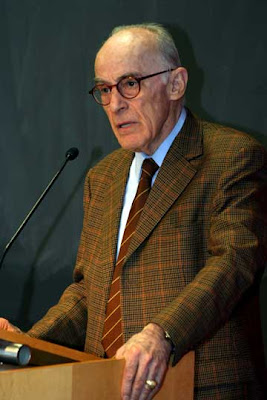
Stephen Simon (Exxon Mobil), John Hofmeister (Shell), Peter Robertson (Chevron), John
Lowe (Conoco Phillips) and Robert Malone (BP America) face congress April 1 2008.

BIG OIL – 4,000 Americans Died For Them
By Frank Gormlie / April 3, 2008

Top Oil Execs to Congress on Their Record $123 Billion Profits: ‘We feel your pain, but don’t blame us!’

Ten days after US military deaths in Iraq reached 4,000, the top executives of the five largest oil and gas companies appeared before Congress. It was Tuesday, April 1st – April Fools’ Day – and they were there to address the record profits their companies were bringing in and why the companies should continue to receive billions in government subsidies by way of tax breaks. The top honchos were from Exxon, Shell, BP America Inc., Chevron Corp. and ConocoPhillips, and were appearing before the Select Committee on Energy Independence and Global Warming. The execs told Congress that they know record fuel prices are hurting the American people, and claimed it’s not their fault and said their huge profits are in line with other industries.

Combined, the oil companies made $123 billion last year. This is at a time when US motorists are paying record prices at the pump – now averaging $3.29 a gallon amid talk of $4 a gallon this summer. The price of oil has settled at just over $100 a barrel on the New York exchange. And one out of 8 Americans are on food stamps. Then there’s the mortgage crisis, the housing crisis, … not to mention the Constitutional crisis. And recent economic experts have tied the huge costs of the Iraq and Afghanistan wars to bringing down the American economy, and there’s even talk that we’re heading into not just a recession but a massive depression …. we could go on.

Record profits by the oil companies. Even Alan Greenspan had to admit that the reason we’re in Iraq is because of the oil.

4,000 US Deaths to Secure Iraq Oil Fields for Oil Companies

So, let me get this straight. Our economy is going down the toilet while the hike in gas prices drives all our consumer goods – like food – up. The Iraq war is taking away our financial resources while we’re in Iraq to secure the oil fields for the oil companies. And the oil companies are making record profits off of us. My god, no wonder we elected Bush twice! We’re dumber than a bag of hammers.

But wait – our countrywomen and men are dying to secure those oil fields! Our people! 4,000 and counting. They died for the oil executives who testified in front of our Congress and said, hey, we feel your pain, but don’t blame us, we’re just making money like everybody else. That’s what they said.

Oil Company Profits Higher Than Other Industries

The Associated Press reported that the execs said their earnings are typical and in line with the average of other major US industries. AP outlined the combined 2007 earnings and revenues of five top companies in some major industries:

The oil and gas industry earned $123.29 billion on revenue of $1,460.20 billion. Companies included are Exxon Mobil Corp., Royal Dutch Shell, BP PLC, Chevron Corp. and ConocoPhillips.

The pharmaceutical industry earned $48.24 billion on revenue of $230.64 billion. Companies included are Johnson & Johnson, Pfizer Inc., GlaxoSmithKline PLC, Sanofi-Aventis SA and Novartis AG.

The defense industry earned $15.5 billion on revenue of $229.59 billion. Companies included are Boeing Co., United Technologies Corp., Lockheed Martin Co., Honeywell International Inc. and Northrop Grumman Corp.

Read all of it here.

Posted in RagBlog | Tagged , | Leave a comment

A Case of Great Respect for Privacy Rights

Notice the lawyer’s name — could he be related to our own Red-Headed Stranger??

Mariann Wizard / The Rag Blog


Search and Seizure: Vermont Supreme Court Throws Out Marijuana Conviction Based on Warrantless Aerial Surveillance
from Drug War Chronicle, Issue #530 / April 4, 2008

In a decision handed down last Friday, the Vermont Supreme Court threw out the felony marijuana cultivation conviction of a man caught growing marijuana following a warrantless flyover of his rural property by a military helicopter. Vermont residents have a broad privacy right “that ascends into the airspace above their homes and property,” the court held in State v. Bryant.

The case began in 2003, when Stephen Bryant, who owned a remote Addison County home, told a local official he didn’t want trespassers. That unnamed official “found defendant’s insistence on privacy to be ‘paranoid,'” the opinion noted, and suggested that a Vermont State Police team do a flyover to look for marijuana. Under the rules of the state’s Marijuana Eradication Team, which uses Vermont Army National Guard helicopters and pilots, flights are supposed to stay 500 feet above the ground. But an August 7, 2003 surveillance flight dipped down to 100 feet and hovered above Bryant’s property for half an hour.

Troopers in the chopper saw marijuana plants, then used that information to obtain a search warrant. Bryant was arrested and charged with marijuana possession and cultivation. At trial, he argued that he used marijuana for medicinal purposes to treat an old work injury. Jurors acquitted him of possession, but convicted him of cultivation. In June, 2005, he was sentenced to 45 days. His appeal followed.

The Vermont constitution protects the privacy rights of residents even if it means some pot plants may go unseized, the court held in an opinion written by Associate Justice Marilyn Skoglund for the 4-1 majority.

“We protect defendant’s marijuana plots against such surveillance so that law-abiding citizens may relax in their backyards, enjoying a sense of security that they are free from unreasonable surveillance. Vermonters expect — at least at a private, rural residence on posted land — that they will be free from intrusions that interrupt their use of their property, expose their intimate activities, or create undue noise, wind, or dust,” wrote Skoglund.

“With technological advances in surveillance techniques, the privacy-protection question is no longer whether police have physically invaded a constitutionally protected area. Rather, the inquiry is whether the surveillance invaded a constitutionally protected legitimate expectation of privacy,” she added.

“The decision is a boon to all Vermonters,” said Middlebury attorney William Nelson, who represented Bryant at the Supreme Court. “It protects our privacy when we are out of doors, on our own property, and in our own yards,” he told the Burlington Free Press after the decision.

The opinion serves as further evidence that the state constitution gives Vermonters greater privacy protection than federal laws do, Vermont law school professor Cheryl Hanna told the Free Press. “A lot of people feel the federal government doesn’t respect privacy rights after Sept. 11,” said Hanna. “Vermonters, at least at the state level, have that additional check on what the government can do.”

Source

Posted in RagBlog | Tagged , , | Leave a comment

Never Did the Possibility of Disappointment Offer So Much Hope


Would you like change with that?

Super Tuesday II, as Fox dubbed it, took some steam out of the Obama bandwagon, but he’s still the likely Democratic nominee, and therefore the likely president-to-be. Which is remarkable, really—a nonparticipant can only stand slackjawed in awe of Obamamania. Previously rational people whom LBO admires, like Barbara Ehrenreich and Christopher Hayes, have fallen in love with the Senator’s brand of change we can believe in, a slogan that has to be one of the emptiest since Sandburg’s “The people, yes!,” that the New Party used in New York in the early 1990s. Obama has become the Tokio Hotel of politics.

On what is this mania based? Obama is inspiring the young, lifting the alienated off their couches, and catalyzing a new movement for…change, presumably one we can believe in. The content of this change is hard to specify. Some serious leftists we know and love point to Obama’s roots as a community organizer in Chicago, though many people in a position to know say he didn’t rock many boats in those days. He was embraced by foundation liberals, however, who greased his way into the Harvard Law School via a lakefront condo.

All of which doesn’t make Obama uniquely bad: he’s just another mainstream Democrat with a sleazy real estate guy in his past. Though he’s being touted as an early opponent of the Iraq war, he told the Chicago Tribune in 2004: “There’s not that much difference between my position and George Bush’s position….” He voted to renew the PATRIOT Act, campaigned for happy warrior Joe Lieberman against Ned Lamont in 2006, and wants to increase the size of the U.S. military. He supports Israel’s continuing torture of the Palestinians penned into the Gaza Strip. A Congressional Quarterly study found his Senate voting record was virtually indistinguishable from Hillary Clinton’s; the only major difference in their votes is a surprising one: a move to limit class actions suits against corporations, which Clinton voted against, and Obama for. Obama’s vote was against the preferences of a Dem financial base, trial lawyers, but pleasing to the Fortune 500 and Wall Street.

In this binary world, when you criticize Obama, people immediately include you’re a Hillary Clinton fan. Uh, no. Her politics are bellicose and neoliberal. Her “experience” consists largely of having watched her husband be president for eight years, though it’s likely they were sleeping in separate bedrooms for much of the time. A plague on all their houses.

Agendas

Some more thoughtful victims of Obama Disease point to detailed position papers on the candidate’s website. These must always be taken with a grain of salt, especially during primary season. Candidate Bill Clinton promised to “invest in people” and ended up being the president of “a bunch of fucking bond traders,” as Hillary’s husband memorably put it. LBJ campaigned as the peace candidate in 1964, and ended up killing a million Indochinese.

Obamians also point to his rejection of the centrist Democratic Leadership Council (DLC); they put him on their list of rising stars, and he asked to be removed. Encouraging—except for the fact that his chief economic advisor, Austan Goolsbee, the fellow who told the Canadians not to take the anti-NAFTA rhetoric seriously, is the DLC’s chief economist. Goolsbee has written gushingly about Milton Friedman and denounced the idea of a moratorium on mortgage foreclosures. That hire is more significant than asking to be struck from a list.

Big capital would have no problem with an Obama presidency. Top hedge fund honcho Paul Tudor Jones threw a fundraiser for him at his Greenwich house last spring, “The whole of Greenwich is backing Obama,” one source said of the posh headquarters of the hedge fund industry. They like him because they’re socially liberal, up to a point, and probably eager for a little less war, and think he’s the man to do their work. They’re also confident he wouldn’t undertake any renovations to the distribution of wealth. You could say the same about Clinton—but you know those hedge fund guys. They like a contrary bet. A share of Obama stock on the Iowa Electronic Market was 30 on May 19, 2007, the day of Jones’s Obama bash; it peaked at 86 on March 1, a gain of 187% (in a year where triple digits are rare). It’s since settled back into the low 70s, which is still quite a gain.

Read all of it here.

From Mariann Wizard / The Rag Blog

Posted in RagBlog | Tagged , , | Leave a comment

On the Road with the Beats


On Display Through August at The University of Texas at Austin.

Now on display at The Harry Ransom Center at The University of Texas at Austin is Jack Kerouac’s scroll manuscript of On the Road, included for a limited time with the exhibition On the Road with the Beats. Travel with Jack Kerouac, Allen Ginsberg, William S. Burroughs, and their friends across America and the globe in this exhibition. Manuscripts, books, photographs, and visual art from the Ransom Center’s collections tell the story of the Beat Generation and the literary and social revolution they inspired. The scroll will be on view through June 1, with the entire exhibition running through August 3. Located at 21st and Guadalupe Streets, the Ransom Center is free and open to the public. More information at http://www.hrc.utexas.edu/.

Look for more about this exhibit on The Rag Blog.

Posted in RagBlog | Tagged , , | Leave a comment

An Outrageous Miscarriage of Justice

Lynne Stewart arrives at court Oct. 16, 2006. Photo: AP

Targeting Defense Lawyers: Lynne Stewart’s Long Struggle for Justice
By Stephan Lendman / April 3, 2008

On April 9, 2002, Attorney General John Ashcroft made a symbolic visit to “Ground Zero.” While in New York, he held a well-publicized press conference at the US Attorney’s Office and used the occasion for an indictment. Four individuals were named on charges of conspiracy and materially aiding a terrorist organization. One of them was long-time civil rights lawyer Lynne Stewart. On the same day, FBI agents arrested her at her home and illegally seized documents there and from her office that are protected by attorney-client privilege.

In July 2003, Federal District Court Judge John Koeltl (a 1994 Clinton appointee) dismissed the original charges for being “unconstitutionally void for vagueness” and because they “revealed a lack of prosecutorial standards.” Nonetheless, Stewart was symbolically reindicted on November 22, 2003 (the 40th year anniversary of John F. Kennedy’s assassination) on five counts of aiding and abetting a terrorist organization under the 1996 Antiterrorism Act. Specific charges included:

* “conspiring to defraud the United States;

* conspiring to provide and conceal material support to terrorist activity;

* providing and concealing material support to terrorist activity; and

* two counts of making false statements.”

Stewart was also accused of violating US Bureau of Prisons-imposed Special Administrative Measures (SAMS) that included a gag order on her client, Sheik Abdel Rahman. These measures are imposed on some prisoners to forbid discussion (even with an attorney) of topics DOJ claims are outside the scope of their “legal representation.” It’s all very vague, does more to harass and obstruct justice than protect state secrets, yet Stewart was forced to accept them to gain access to her client.

In her case, police state-type attorney-client monitored conversations provided the basis for her indictment. However, engaging in this practice stretches the limit of the law, gives DOJ sole authority to decide how far and for what purpose, and in this instance egregiously overstepped it by charging defense counsel with aiding and abetting terrorism for representing her client as required.

At former US Attorney General Ramsey Clark’s request, Stewart agreed to join him as a member of Rahman’s court-appointed defense team. He was convicted in his 1995 show trial and is now serving a life sentence for “seditious conspiracy” in connection with the 1993 World Trade Center Center bombing despite evidence proving his innocence.

However, in what’s now common practice, the government’s case related more to his affiliations and anti-western views than specific evidence presented. Rahman was connected to the Egyptian-based Al-Gamaa al-Islamiyya (Islamic Group) – a 1997 State Department-designated “Foreign Terrorist Organization (FTO). Ironically in the 1980s, he was handled much differently as a “valuable (CIA) asset” for his influential role in recruiting Mujahadeen fighters against the Soviets in Afghanistan. It was no accident that he got a US visa, green card and State Department-CIA protection for as long as he was valued. When he wasn’t, he became a target along with Lynne Stewart who represented him at trial.

Stewart’s charges were trumped up, outrageous, and likely first time ever instance of a defense attorney in a terrorism case facing terrorism-related counts – for doing her job as the law requires and that renders attorney-client confidentiality sacrosanct under our criminal justice system. No matter, if convicted, she faced a possible 30 year sentence.

In America’s “war on terrorism,” her precedent-setting case is chilling, and president of the Center for Constitutional Rights, Michael Ratner, explained it: Its “purpose….was to send a message to lawyers who represent alleged terrorists that it’s dangerous to do so.” It’s also an effort to exploit the current atmosphere, incite fear and suspicions, stifle dissent, and make it just as risky for anyone with openly critical views of government policies. In Police State America, we’re all Lynne Stewarts.

At the time of her indictment, her attorney, Michael Tigar, explained what was at stake:

“This case (still ongoing) is an attack on a gallant, charismatic and effective fighter for justice (and has) at least three fundamental faults: (it) attack(s) the First Amendment right of free speech, free press and petition; (it) attack(s)….the right to effective assistance of counsel ….chills the defense….(and) the ‘evidence’ in this case was gathered by wholesale invasion of private conversations, private attorney-client meetings, faxes, letters and e-mails. I have never seen such an abuse of government power.” In America’s “war on terrorism,” many other defense attorneys can cite similar instances of lawlessness and injustice today.

However, in targeting Stewart, DOJ may have gotten more than it bargained for. Whatever the outcome, her case shamed the government, gave her worldwide recognition, made her a powerful symbolic figure, and elevated her to iconic stature. For her honor, devotion to principles, and lifetime of service to society’s most abused, she deserves it and more.

Throughout her 30 year career, she never shunned controversy or her choice of or duty to clients. She represented the poor, the underprivileged and society’s underdogs and unwanted who never get due process unless they’re lucky enough to have an advocate like her. She knew the risks and understood the state uses every underhanded trick possible to convict these type defendants and overwhelm, outspend and/or discredit their counsel doing it.

Nonetheless, she did what the American Bar Association’s Model Rules state all lawyers are obligated to do: “devote professional time and resources and use civic influence to ensure equal access to our system of justice for all those who because of economic or social barriers cannot afford or secure adequate legal counsel.”

Read all of it here.
counterpunch / The Rag Blog

Lynne Stewart Sentencing Begins; Chaos Ensues

Chaos erupted on the twelfth floor of the Daniel Patrick Moynihan U.S. Courthouse in lower Manhattan this morning when Lynne Stewart, the left-wing criminal-defense lawyer convicted of materially aiding terrorism last year, appeared for sentencing before U.S. District Judge John G. Koeltl a bit after nine.

“Free Lynne! Free Lynne!” shouted at least 100 of her supporters massed outside the courtroom, some of them raising their fists in a Black Power salute, others singing from “The Battle Hymn of the Republic.” They had gathered earlier for a rally in Foley Square to support Stewart’s efforts to be spared prison, perhaps with a sentence of home confinement. She has undergone radiation therapy for breast cancer.

Read it here.

Posted in RagBlog | Tagged , | Leave a comment

The Surge Is Prolonging Instability


General William Odom Tells Senate: Rapid Withdrawal Is Only Solution

TESTIMONY BEFORE THE SENATE FOREIGN RELATIONS COMMITTEE ON IRAQ
By William E. Odom, LT General, USA, Ret. / April 2, 2008

Good morning Mr. Chairman and members of the committee. It is an honor to appear before you again. The last occasion was in January 2007, when the topic was the troop surge. Today you are asking if it has worked. Last year I rejected the claim that it was a new strategy. Rather, I said, it is a new tactic used to achieve the same old strategic aim, political stability. And I foresaw no serious prospects for success.

I see no reason to change my judgment now. The surge is prolonging instability, not creating the conditions for unity as the president claims.

Last year, General Petraeus wisely declined to promise a military solution to this political problem, saying that he could lower the level of violence, allowing a limited time for the Iraqi leaders to strike a political deal. Violence has been temporarily reduced but today there is credible evidence that the political situation is far more fragmented. And currently we see violence surge in Baghdad and Basra. In fact, it has also remained sporadic and significant inseveral other parts of Iraq over the past year, notwithstanding the notable drop in Baghdad and Anbar Province.

More disturbing, Prime Minister Maliki has initiated military action and then dragged in US forces to help his own troops destroy his Shiite competitors. This is a political setback, not a political solution. Such is the result of the surge tactic.

No less disturbing has been the steady violence in the Mosul area, and the tensions in Kirkuk between Kurds, Arabs, and Turkomen. A showdown over control of the oil fields there surely awaits us. And the idea that some kind of a federal solution can cut this Gordian knot strikes me as a wild fantasy, wholly out of touch with Kurdish realities.

Also disturbing is Turkey’s military incursion to destroy Kurdish PKK groups in the border region. That confronted the US government with a choice: either to support its NATO ally, or to make good on its commitment to Kurdish leaders to insure their security. It chose the former, and that makes it clear to the Kurds that the United States will sacrifice their security to its larger interests in Turkey.

Turning to the apparent success in Anbar province and a few other Sunni areas, this is not the positive situation it is purported to be. Certainly violence has declined as local Sunni shieks have begun to cooperate with US forces. But the surge tactic cannot be given full credit. The decline started earlier on Sunni initiative. What are their motives? First, anger at al Qaeda operatives and second, their financial plight.

Their break with al Qaeda should give us little comfort. The Sunnis welcomed anyone who would help them kill Americans, including al Qaeda. The concern we hear the president and his aides express about a residual base left for al Qaeda if we withdraw is utter nonsense. The Sunnis will soon destroy al Qaeda if we leave Iraq. The Kurds do not allow them in their region, and the Shiites, like the Iranians, detest al Qaeda. To understand why, one need only take note of the al Qaeda public diplomacy campaign over the past year or so on internet blogs. They implore the United States to bomb and invade Iran and destroy this apostate Shiite regime. As an aside, it gives me pause to learn that our vice president and some members of the Senate are aligned with al Qaeda on spreading the war to Iran.

Let me emphasize that our new Sunni friends insist on being paid for their loyalty. I have heard, for example, a rough estimate that the cost in one area of about 100 square kilometers is $250,000 per day. And periodically they threaten to defect unless their fees are increased. You might want to find out the total costs for these deals forecasted for the next several years, because they are not small and they do not promise to end. Remember, we do not own these people. We merely rent them. And they can break the lease at any moment. At the same time, this deal protects them to some degree from the government’s troops and police, hardly a sign of political reconciliation.

Now let us consider the implications of the proliferating deals with the Sunni strongmen. They are far from unified among themselves. Some remain with al Qaeda. Many who break and join our forces are beholden to no one. Thus the decline in violence reflects a dispersion of power to dozens of local strong men who distrust the government and occasionally fight among themselves. Thus the basic military situation is far worse because of the proliferation of armed groups under local military chiefs who follow a proliferating number of political bosses.

This can hardly be called greater military stability, much less progress toward political consolidation, and to call it fragility that needs more time to become success is to ignore its implications. At the same time, Prime Minister Maliki’s military actions in Basra and Baghdad, indicate even wider political and military fragmentation. We are witnessing is more accurately described as the road to the Balkanization of Iraq, that is, political fragmentation. We are being asked by the president to believe that this shift of so much power and finance to so many local chieftains is the road to political centralization. He describes the process as building the state from the bottom up.

I challenge you to press the administration’s witnesses this week to explain this absurdity. Ask them to name a single historical case where power has been aggregated successfully from local strong men to a central government except through bloody violence leading to a single winner, most often a dictator. That is the history of
feudal Europe’s transformation to the age of absolute monarchy. It is the story of the American colonization of the west and our Civil War. It took England 800 years to subdue clan rule on what is now the English-Scottish border. And it is the source of violence in Bosnia and Kosovo.

How can our leaders celebrate this diffusion of power as effective state building? More accurately described, it has placed the United States astride several civil wars. And it allows all sides to consolidate, rearm, and refill their financial coffers at the US expense.

To sum up, we face a deteriorating political situation with an over extended army. When the administration’s witnesses appear before you, you should make them clarify how long the army and marines can sustain this band-aid strategy.

The only sensible strategy is to withdraw rapidly but in good order. Only that step can break the paralysis now gripping US strategy in the region. The next step is to choose a new aim, regional stability, not a meaningless victory in Iraq. And progress toward that goal requires revising our policy toward Iran. If the president merely renounced his threat of regime change by force, that could prompt Iran to lessen its support to Taliban groups in Afghanistan. Iran detests the Taliban and supports them only because they will kill more Americans in Afghanistan as retaliation in event of a US attack on Iran. Iran’s policy toward Iraq would also have to change radically as we withdraw. It cannot want instability there. Iraqi Shiites are Arabs, and they know that Persians look down on them. Cooperation between them has its limits.

No quick reconciliation between the US and Iran is likely, but US steps to make Iran feel more secure make it far more conceivable than a policy calculated to increase its insecurity. The president’s policy has reinforced Iran’s determination to acquire nuclear weapons, the very thing he purports to be trying to prevent.

Withdrawal from Iraq does not mean withdrawal from the region. It must include a realignment and reassertion of US forces and diplomacy that give us a better chance to achieve our aim.

A number of reasons are given for not withdrawing soon and completely. I have refuted them repeatedly before but they have more lives than a cat. Let try again me explain why they don’t make
sense.

First, it is insisted that we must leave behind military training element with no combat forces to secure them. This makes no sense at all. The idea that US military trainers left alone in Iraq can be safe and effective is flatly rejected by several NCOs and junior officers I have heard describe their personal experiences. Moreover, training foreign forces before they have a consolidated political authority to command their loyalty is a windmill tilt. Finally, Iraq is not short on military skills.

Second, it is insisted that chaos will follow our withdrawal. We heard that argument as the “domino theory” in Vietnam. Even so, the path to political stability will be bloody regardless of whether we withdraw or not. The idea that the United States has a moral responsibility to prevent this ignores that reality. We are certainly to blame for it, but we do not have the physical means to prevent it. American leaders who insist that it is in our power to do so are misleading both the public and themselves if they believe it. The real moral question is whether to risk the lives of more Americans. Unlike preventing chaos, we have the physical means to stop sending more troops where many will be killed or wounded. That is the moral responsibility to our country which no American leaders seems willing to assume.

Third, nay sayers insist that our withdrawal will create regional instability. This confuses cause with effect. Our forces in Iraq and our threat to change Iran’s regime are making the region unstable. Those who link instability with a US withdrawal have it exactly backwards. Our ostrich strategy of keeping our heads buried in the sands of Iraq has done nothing but advance our enemies’ interest.

I implore you to reject these fallacious excuses for prolonging the commitment of US forces to war in Iraq.

Thanks for this opportunity to testify today.

Source

Posted in RagBlog | Tagged , | Leave a comment

Col. Ted Westhusing : A Death Reconsidered


Gen. Petraeus and a High-Level Suicide in Iraq
By Greg Mitchell / April 1, 2008

The scourge of suicides among American troops in Iraq is a serious and seriously underreported problem. One of the few high-profile cases involves a much-admired Army colonel named Ted Westhusing — who, in his 2005 suicide note, pointed a finger at a then little-known U.S. general named David Petraeus. Westhusing’s widow, asked by a friend what killed this West Point scholar, had replied simply: “Iraq.”

Now there is a disturbing update on this case.

Before putting a bullet through his head, Westhusing had been deeply disturbed by abuses carried out by American contractors in Iraq, including allegations that they had witnessed or even participated in the murder of Iraqis. His suicide note included claims that his two commanders tolerated a mission based on “corruption, human right abuses and liars.” One of those commanders: the future leader of the “surge” campaign in Iraq, Gen. Petraeus.

Westhusing, 44, had been found dead in a trailer at a military base near the Baghdad airport in June 2005, a single gunshot wound to the head. At the time, he was the highest-ranking officer to die in Iraq. The Army concluded that he committed suicide with his service pistol. Westhusing was an unusual case: “one of the Army’s leading scholars of military ethics, a full professor at West Point who volunteered to serve in Iraq to be able to better teach his students. He had a doctorate in philosophy; his dissertation was an extended meditation on the meaning of honor,” as Christian Miller explained in a major Los Angeles Times piece.

“In e-mails to his family,” Miller wrote, “Westhusing seemed especially upset by one conclusion he had reached: that traditional military values such as duty, honor and country had been replaced by profit motives in Iraq, where the U.S. had come to rely heavily on contractors for jobs once done by the military.” His death followed quickly. “He was sick of money-grubbing contractors,” one official recounted.

Westhusing said that “he had not come over to Iraq for this.”

After a three-month inquiry, investigators declared Westhusing’s death a suicide. Last March, The Texas Observer published a cover story by contributor Robert Bryce titled “I Am Sullied No More.” It is featured in a chapter in my new book on Iraq and the media.

Bryce covered much of the same ground paved by Miller but added details on the Petraeus angle. Now, in the past few weeks, Bryce has added more in an update — which explores whether Westhusing was murdered.

“When he was in Iraq, Westhusing worked for one of the most famous generals in the U.S. military, David Petraeus,” Bryce observed last year. “As the head of counterterrorism and special operations under Petraeus, Westhusing oversaw the single most important task facing the U.S. military in Iraq then and now: training the Iraqi security forces.”Bryce referred to a “two-inch stack of documents, obtained over the past 15 months under the Freedom of Information Act, that provides many details of Westhusing’s suicide….The documents echo the story told by Westhusing’s friends. ‘Something he saw [in Iraq] drove him to this,’ one Army officer who was close to Westhusing said in an interview. ‘The sum of what he saw going on drove him’ to take his own life. ‘It’s because he believed in duty, honor, country that he’s dead.'”In Iraq, Westhusing worked under two generals: Maj. Gen. Joseph Fil, and Petraeus, then a lieutenant general. But Bryce continued: “By late May, Westhusing was becoming despondent over what he was seeing.” When his body was found on June, a note was found nearby addressed to Petraeus and Fil. According to Bryce it read:

“Thanks for telling me it was a good day until I briefed you. [Redacted name]–You are only interested in your career and provide no support to your staff–no msn [mission] support and you don’t care. I cannot support a msn that leads to corruption, human right abuses and liars. I am sullied–no more. I didn’t volunteer to support corrupt, money grubbing contractors, nor work for commanders only interested in themselves. I came to serve honorably and feel dishonored. I trust no Iraqi. I cannot live this way. All my love to my family, my wife and my precious children. I love you and trust you only. Death before being dishonored any more.

“Trust is essential–I don’t know who trust anymore. Why serve when you cannot accomplish the mission, when you no longer believe in the cause, when your every effort and breath to succeed meets with lies, lack of support, and selfishness? No more. Reevaluate yourselves, cdrs [commanders]. You are not what you think you are and I know it.”

Twelve days after Westhusing’s body was found, Army investigators talked with his widow, who told them: “I think Ted gave his life to let everyone know what was going on. They need to get to the bottom of it, and hope all these bad things get cleaned up.”

Bryce concluded: “In September 2005, the Army’s inspector general concluded an investigation into allegations raised in the anonymous letter to Westhusing shortly before his death. It found no basis for any of the issues raised. Although the report is redacted in places, it is clear that the investigation was aimed at determining whether Fil or Petraeus had ignored the corruption and human rights abuses allegedly occurring within the training program for Iraqi security personnel.” Since then, the corruption and failed training angles have drawn wide attention although the Petraeus’s role, good or bad, has not.

The writer returned to the case this past February with another Texas Observer article. I’ve run out of space here so I will merely quote its opening and link to it:

Since last March, when I wrote a story about the apparent suicide of Col. Ted Westhusing in Iraq, I had believed there was nothing else to write about his tragic death.

But in December, I talked to a source in the Department of Defense who met Westhusing in Iraq about three months before his death. The source, who asked not to be identified for fear of reprisals, was investigating claims of wrongdoing against military contractors working in Iraq.

After a short introduction, I asked him what he thought had happened toWesthusing. ‘I think he was killed. I honestly do. I think he was murdered,’ the source told me. ‘Maybe DOD didn’t have enough evidence to call it murder, so they called it suicide.'”

Bryce doesn’t yet back the “murder” claim but notes that Rep. Henry Waxman is now looking into the Westhusing case.

[Greg Mitchell’s new book is So Wrong for So Long: How the Press, the Pundits and the President Failed on Iraq. It features a foreword by Joe Galloway and a preface by Bruce Springsteen, and has been hailed by Arianna Huffington, Bill Moyers, Glenn Greenwald and others.]

Source. The Huffington Post.
Thanks to Jim Baldauf / The Rag Blog

Also read A Death Reconsidered By Robert Bryce / Texas Observer / Feb. 19 / 2008.

Posted in RagBlog | Tagged , , , | Leave a comment

We Need to Demand a Less Bloated Budget

When Pigs Sprout Wings: Mangled Rationales for a Fatter Defense Budget
By WINSLOW T. WHEELER

The Pentagon’s budget is now bigger than at any point since World War II as measured in constant 2008 dollars.

Nonetheless, some want more stuffing. They want the money not for operations in Iraq and Afghanistan, but for the so-called baseline, non-war budget.

Some adopt arguments that destroy their own case. Examining them explains how the Pentagon fails to give us a war-winning, combat–ready military. James Carafano, a senior research fellow at the Heritage Foundation, argued Feb. 21 in the Washington Times, “In Defense of Defense Spending,” that “Comparing the cost of today’s military to what America spent to equip and deploy GIs against the Nazis is like comparing today’s home entertainment center – plasma-screen, surround-sound HDTV with PlayStation 3 and Wii – to Harry Truman’s Philco Radio. Sure, today’s system costs a lot more. But look what you’re getting.” A typical example is the F-22 fighter. It may cost more, but it is also a superb fighter, the argument goes.

According to Wikipedia, Harry Truman’s Philco radio console “ran into the $500-$800 range.” Today, at Circuit City, a top-of-the-line HDTV runs about $3,800; a good surround-sound, about $1,800. The PlayStation 3 and Wii are $400 and $250 respectively.

Add a DVD player and a year of broadband TV service for $200 and $600, respectively.

That makes $7,050 for the “lot more” cost of the superb, modern home theater compared with Harry Truman’s dowdy Philco console.

According to the Office of Management and Budget (OMB), to compensate for the change in the value of the dollar from 1945 to today, the 1945 price should be multiplied by 11.9. That “$500-$800 range” for Harry Truman’s Philco calculates to $6,000-$9,500 today.

In other words, if we adjust for inflation, weapons today should cost – very roughly – what they cost in 1945, at most 30 percent more. Of course, the advance in technology should bring a vast im-provement in performance.

Now, let’s run the price comparison for fighter aircraft. The newest thing in 1945 was the Lockheed P-80 jet, the most expensive fighter Harry Truman could buy. In 1945, the P-80 cost $110,000. Using the OMB index to convert the dollars, we get $1,309,000.

Today’s F-22 is a little pricier.

The 184 F-22s the Air Force is now buying will cost $65.3 billion in contemporary dollars. That’s $355 million per copy. That’s not exactly in the price neighborhood of the inflation-adjusted P-80. In fact, it’s in a whole different universe. It’s a multiple of 273.

Read the rest of it here.

Posted in RagBlog | Tagged , | Leave a comment

Urban Crisis : Gentrification Endangered

Incoming aristocrats are easily spotted by their distinctive dress and taste for chamber music.

Report: Nation’s Gentrified Neighborhoods Threatened By Aristocratization

Washington —According to a report released Tuesday by the Brookings Institution, a Washington-based think tank, the recent influx of exceedingly affluent powder-wigged aristocrats into the nation’s gentrified urban areas is pushing out young white professionals, some of whom have lived in these neighborhoods for as many as seven years.

Multibillion-dollar castles like this one have been popping up all over Brooklyn.

Maureen Kennedy, a housing policy expert and lead author of the report, said that the enormous treasure-based wealth of the aristocracy makes it impossible for those living on modest trust funds to hold onto their co-ops and converted factory loft spaces.

“When you have a bejeweled, buckle-shoed duke willing to pay 11 or 12 times the asking price for a block of renovated brownstones—and usually up front with satchels of solid gold guineas—hardworking white-collar people who only make a few hundred thousand dollars a year simply cannot compete,” Kennedy said. “If this trend continues, these exclusive, vibrant communities with their sidewalk cafés and faux dive bars will soon be a thing of the past.”

According to Kennedy, one of the most pressing concerns associated with rapid aristocratization is the drastic transformation of the metropolitan landscape in a way that fails to maximize livable space.

“A three-block section of [Chicago neighborhood] Wicker Park that once accommodated eight families, two vintage clothing stores, a French cleaners, and a gourmet bakery has been completely razed to make way for a private livery stable and carriage house,” Kennedy said.

“The space is now entirely unusable for affordable upper-income condominium housing. No one can live there except for the odd stable boy or footman who gets permission to sleep in the hayloft.”

Many of those affected by the ostentatious reshaping of their once purely upmarket neighborhoods said that they often wish for a return back to the privileged communities they helped to overdevelop just a few years ago. Among the first to feel the effects of the encroaching aristocracy have been local business owners like Fort Greene, Brooklyn resident Neil Getz.

“Around here, you used to be able to get a Fair-Trade latte and a chocolate-chip croissant for only eight bucks,” said Getz, who is planning to move back in with his parents after being forced out of the lease on his organic grocery store by a harpsichord purveyor. “Now it’s all tearooms and private salon gatherings catered with champagne and suckling pig. Who can afford that?”

Incoming aristocrats are easily spotted by their distinctive dress and taste for chamber music.

“It’s just a terrible shame,” Getz continued. “There was this great little shop right across the street from my duplex apartment where I bought my baby daughter a Ramones onesie a couple of years ago, just after she was born. That whole block is an opera house now.”

The aristocracy has adamantly dismissed claims that the sweeping changes are detrimental to the merely wealthy who have been displaced, and many persons of noble blood have pointed to aristocratization’s benefits. These include lower crime rates attributed to new punishments, such as public floggings and the pillory, which are primarily meted out for maintaining direct eye contact with members of the highest class.

“These accusations are pure, slanderous rubbish,” said Lord Nathan Dunkirk III, the owner of a prodigious manor house that, along with its steeplechase course and topiary garden, sits on what was once the Haight-Ashbury district of San Francisco. “If anything, the layabouts and wastrels have been afforded a veritable glut of new and felicitous opportunities as bootblacks and scullery maids.”

Other aristocrats have echoed Dunkirk and have additionally deflected blame onto regification, a process by which they say they were priced out of their vast rural holdings by kings who wished to consolidate property and develop monumental palatial estates.

The Onion / March 31, 2008 / The Rag Blog
Source.
Posted in RagBlog | Tagged , | Leave a comment

Freaky Fanged Fish Found in Pond


More than 4,000 fish dead of unknown causes
Brigham City, Utah — It looks like something from the swamps of a science fiction movie, not from Pioneer Park.

The remains of an unidentified aquatic species that appears to have been carnivorous were found near the shoreline of the Pioneer Park Pond in Brigham City.

The fish was found along with the remains of more than 4,000 other fish that died from unknown causes.

Bernie Develin, of Ogden, found the fish March 19 and reported it to the Division of Wildlife Resources.

DWR biologists are stumped as to what kind of fish it is and are seeking outside help to identify it.

Aquatics biologist Matt McKell sent photos of the fish to other biologists.

“It’s different than anything any of us have seen. It’s definitely not native,” he said. “Nobody that’s seen the photos can identify the fish, either.”

The approximately 21-inch-long fish sports sharp teeth, but is missing its fins and tail, making it difficult to identify.

The fish carcass was in bad shape when McKell recovered it, and he believes it may have been run over by a car.

The reason for the deaths of the other fish in the pond is also still unknown.

McKell said one possibility is that someone may have dumped something in the pond. However, results from a water analysis revealed no chemicals.

Drew Cushing, warmwater sport fish and community fisheries coordinator, believes that the kill was caused by thick ice blocking light to the vegetation in the pond, causing aquatic plants to decay.

As the plants decay, they absorb oxygen, leaving nothing for the fish to breathe, and they suffocate under the ice.

“Those fish looked like they’ve been dead for a long time,” he said. “Our thought is that it’s a winter kill.”

The carcasses of 2,500 rainbow trout, 1,300 catfish, 400 crappie, 92 bluegill, 40 yellow perch, 30 carp, two bass, one goldfish and the unidentified fish were found on the shore of the reservoir.

Cushing also saw the unknown fish.

“It sure looked like a fish that could eat a lot of fish,” he said. “It probably was eating a lot of fish that we were stocking.”

Of the species found, only the trout, catfish, bluegill and largemouth bass were placed there by the DWR.

Cushing said there may be some benefit to the fish die-off because nonnative and unproductive species are now cleared from the pond.

He said the unknown fish may have been an aquarium pet placed in the pond when it was smaller, and it just grew over time.

This is a problem that continues regardless of attempts to educate the public about the dangers of introducing nonnative fish into local waters, he said.

The angler who found the fish doesn’t believe the fish die-off theory. The 62-year-old has been fishing in Utah his whole life and has seen the effects of many winter kills.

“It doesn’t make sense to me that the winter kill killed off every fish in the water,” Develin said.

“That kill was not from a lack of oxygen. I could not believe how many dead fish there were and how many species.”

Develin believes some sort of parasite may have been in the water. He’s concerned that children who wade there could be in danger.

He also believes the unknown species may have left the water on its own.

“I believe that he actually worked his way up on the bank.

“This thing looks like something you would see in a prehistoric scary movie.”

Source.

April 3, 2008 / The Rag Blog

Posted in RagBlog | Tagged , | 2 Comments

Tibetan Protest in NYC

At a protest in Washington, DC, Dechea Dolma, a Tibetan from New York City, responds with tears to deaths in Lhasa under Chinese troops’ crackdown. Protests around the world coincided with the Olympic torch relay begun in Olympia, Greece. Photo by Melina Mara / TWP.

truthout / April 2, 2008 / The Rag Blog

Posted in RagBlog | Tagged , , | Leave a comment

The Fork in the Road…


old stork’s a good friend
bringing me my next of kin
girl boy scale of ten
joy hope win win

where goeth cousin toad
hopping round its damp abode
disappearing by the load
croaking as its sky erodes

every mile that we go
takes us with it in its flow
to the fork in the road
to the stork or the toad

old stork’s soaring high
with driven gleam in its eye
slinging gifts across the sky
like Santa on a contact high

hear toad croaking loud
a mating call to do it proud
used to be it drew a crowd
silent now its head is bowed

every night and every day
we are pulled along the way
to the fork in the road
to the stork or the toad

as stork takes the well-loved path
we all add up we are the math
floating in placenta bath
borne by flying psychopath

toad takes a different road
passing lawns too green and mowed
passing fields of poisons sowed
with its cracked genetic code

every mile we begin
takes us only further in
toward the fork in the road
to the stork or the toad

stork stork who art thou
come on out and take a bow
come on out and tell us how
you become a sacred cow

listen toad and you will hear
how all of life is held so dear
just procreate and have no fear
ignore the chance your time is near

as we sit and breathe in traffic
could it really be more graphic
at the fork in the road
to the stork or the toad

life is strong it will survive
says the stork in overdrive
never mind the empty hive
mutations will keep us alive

ribbit ribbit gasp and choke
is that some kind of killing joke
laugh it up you can have my toke
I’ll be in my toxic soak

as our world tumbles around
can you almost hear the sound
from the fork in the road
to the stork or the toad

old stork’s not to blame
works hard for its good name
just bringing life though all the same
a vacation wouldn’t be a shame

old toad’s breathing hard
drying up in your back yard
frying in the sun like lard
flattened like a playing card

every day and every night
we are nearer to the sight
of the fork in the road
to the stork or the toad

can’t we all just get along
honk the storks in surround song
life is good it can’t be wrong
and you know we all belong

tell that to toad I’d say
as it whiles its time away
as the time becomes the day
when toad becomes a memoray

as we come to the fork
to the toad or the stork
do we pause at our choice
do we ever give it voice
do we use our mental torque
or stand there like a dork

have we wondered at our plight
can we flee is there flight
do we plea or do we fight
at the fork in the road
for the stork and for the toad

our choice is more than either or
if a window shuts bust out the door
go around and break some glass
go through the roof
break through the floor
get off your ass get off your ass

By Larry Piltz, 2007, In the Year of our Toad
Indian Cove / Austin, Texas

Posted April 3, 2008 / The Rag Blog

Posted in Rag Bloggers | Tagged , | 1 Comment


