
Type your summary here
Type rest of the post here
Source /
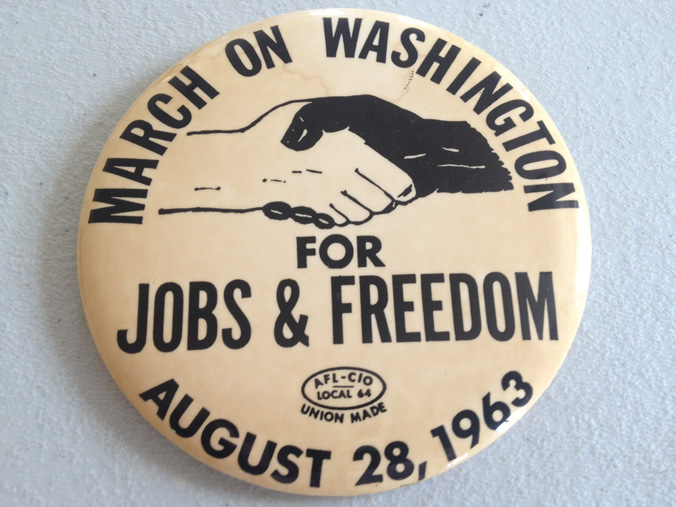
50 years later:
The March for Jobs and Freedom
While King’s ‘I Have a Dream’ speech is clearly worthy of distinction, our memories of the event have shunted aside one of the primary purposes of the March: to push for a $2-per-hour minimum wage.
By Lamar W. Hankins /The Rag Blog / August 24, 2013
[A series of events marking the 50th anniversary of the 1963 March on Washington for Jobs and Freedem is being held Saturday, August 24-Wednesday, August 28, in Washington, D.C., highlighted by a Realize the Dream March and Rally on Saturday, 8 a.m-4 p.m., and a March for Jobs and Justice on Wednesday, 11:30-4 p.m., led by veterans of the ’63 event and featuring speeches by President Obama and former presidents Clinton and Carter.]
August 28, 2013, will mark the 50th anniversary of what is now called “The March on Washington,” but was officially named “The March on Washington for Jobs and Freedom.” I was unable to go to Washington, D.C., 50 years ago, but I remember where I was, and the March was certainly on my mind. A friend and I were on a trip through Houston. We stopped at a Foley’s store and spent some time in the appliance section watching the March on the televisions displayed.
Another friend I had known in high school was working for a federal agency in D.C. at the time. He and his fellow employees were sent home for the day (a Wednesday) because the government feared violence, clear evidence of the state of race relations at the time. My traveling companion and I were pleased to see that the March was as peaceful as its organizers had hoped it would be.
There were stirring speeches by John Lewis, now a Congressman from Georgia, as well as Martin Luther King, Jr. Others well-known in public life were in attendance or sent their remarks to be read by others. James Farmer, head of the Congress of Racial Equality, was in jail in Louisiana. His remarks were read by Floyd McKissick. Author James Baldwin’s remarks were read by Sidney Poitier.
Others, including labor leader Walter Reuther and actor and singer Josephine Baker gave brief speeches. A. Phillip Randolph and Bayard Rustin played key roles in organizing the March, which was supported by the major civil rights organizations active at that time, as well as the AFL-CIO, and other union and religious groups.
Many musicians and singers performed, including Marian Anderson; Joan Baez; Bob Dylan; Mahalia Jackson; Peter, Paul, and Mary; Odetta; and Josh White. Actors present included Charlton Heston, Harry Belafonte, Marlon Brando, Diahann Carroll, Ossie Davis, Sammy Davis, Jr., Lena Horne, and Paul Newman, along with comedian Dick Gregory.
 |
| March on Washington, 2013. |
What we hear most about the March was the famous “I Have a Dream” speech of Dr. King. While the speech is clearly worthy of distinction, our memories of the event have shunted aside one of the primary purposes of the March: to push for a $2-per-hour minimum wage.
Had that goal been achieved and a $2 minimum wage been passed and indexed for inflation, the minimum wage today would be $15.26 based on the Bureau of Labor Statistics Consumer Price Index Inflation Calculator.
It happens that $15.26 is less than what a living wage in San Marcos-Austin-Georgetown would be today for one adult supporting one child. That figure, according to the Living Wage Calculator maintained by MIT, is $19.56 for those living in San Marcos/Hays County, Austin/Travis County, and Georgetown/Williamson County. The Living Wage Calculator takes into account the following costs:
These Living Wage calculations show that we are nowhere close to what an inflation-adjusted minimum wage would be had it been $2 an hour in 1963. In fact, we are at less than half that amount with a current minimum wage of $7.25 an hour. And President Obama earlier this year, in the face of strong opposition, requested an increase in the federal minimum wage to a pitifully inadequate $9 per hour.
These facts about what income can provide a minimal standard of living in the U.S. demonstrates that we have an economic system unwilling to provide Americans with a living wage when left to its own devices. But, as we are learning from current efforts by workers at fast food restaurants to be paid adequate wages, the companies that own these businesses are raking in plenty of profits from the labor of workers.
These companies could both thrive and allow their workers to live decently. An undergraduate student at the University of Kansas who researched McDonald’s company-owned stores found that the fast food giant could double all employee salaries by increasing the cost of a Big Mac by 68 cents, without giving up one penny of profits. And Dean Baker, co-director of the Center for Economic and Policy Research, believes that McDonald’s is so large, vast, and lucrative that the company could easily manage a major wage increase for its employees without damaging its profits.
Recently, fast food workers in New York City, St. Louis, Chicago, Detroit, Milwaukee, Kansas City, and Flint, Michigan, have been demanding that they be paid something closer to a living wage and that they be allowed to have the chance to form a union without intimidation by management. They ask to be paid $15 an hour, just under what the 1963 $2 per hour minimum wage demand would be if adjusted for inflation.
As a result of these recent efforts to obtain fairer pay, work stoppages and walkouts have occurred in fast food restaurants in several cities. Their efforts are being aided by the Service Employees International Union and could be advanced further if those of us who consume fast food support them.
If consumers respond to the moral issues related to fast food businesses by refusing to patronize fast food restaurants that won’t pay a living wage to their employees, this movement could finally realize a part of King’s dream and a primary objective of the 1963 March on Washington.
Nothing could be a more fitting memorial to the man who was killed while supporting sanitation workers in Memphis, who sought better wages, than for minimum wage workers throughout the country finally to be paid a fair wage that allows them and their families to live adequately.
[Lamar W. Hankins, a former San Marcos, Texas, city attorney, is also a columnist for the San Marcos Mercury. This article © Freethought San Marcos, Lamar W. Hankins. Read more articles by Lamar W. Hankins on The Rag Blog.]
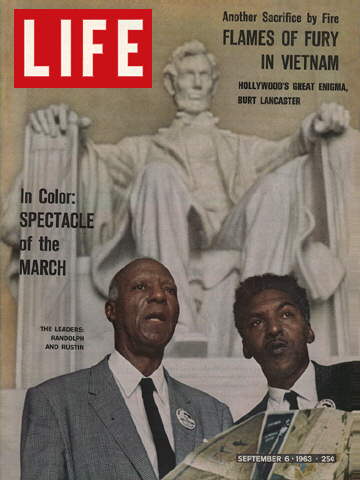 |
| A. Philip Randolph and Bayard Rustin on the cover of Life Magazine, September 6, 1963. |
A socialist remembers:
Reflections on the March on Washington
The climate in Washington, D.C. that day was timorous. White Washingtonians feared some riotous upheaval.
By David McReynolds | The Rag Blog | August 24, 2013
August 28th will be the 50th anniversary of the 1963 March on Washington for Jobs and Freedem.
Increasingly I realize, at 83, that there just aren’t that many of us around who were there that August day 50 years ago. I knew Bayard Rustin — chief organizer of the March — (and will return to his name in a moment) and like many of us in the War Resisters League, the Socialist Party, and virtually all left organizations, was involved in the organizing for the event.
The decision to hold the March in mid-week rather than on a Saturday was very deliberate: Saturday marches are fairly easy to build, since few have to take time off from work, but a demonstration in the middle of the week means real commitment.
The climate in Washington, D.C. that day was timorous. White Washingtonians feared some riotous upheaval. It was then (and still is) easy for tourists to be unaware that the bulk of the population of the city is black. And what, the white minority wondered, would happen with thousands of angry Blacks coming to town.
Many businesses closed down. President Kennedy had made serious efforts to persuade Dr. King and the March organizers to call off the event. For a weekday the city was remarkably quiet. One must keep in mind the political climate of 1963.
The Civil Rights Revolution (it was nothing less than that) had only begun in December of 1955 in Montgomery. Ahead lay the bloodshed, the murders, the police violence, all of which had brought the leadership of the Black community into agreement on the need for some powerful symbolic action — and that action was the March on Washington for Jobs and Freedom.
It’s important, first, to look at the slogan: Jobs and Freedom. The link was very deliberate — for what was freedom without a job?
I remember three things about the day.
One was the sound of thousands of souls, black and white, marching together toward the Lincoln Memorial, with the chant “Freedom! Freedom! Freedom!” It was truly black and white together. “White Washington” may have been fearful, but the trade unions were out in full force, and church and social justice groups had turned out their congregations and members.
The second thing I remember — and I suspect few saw it — was the failed effort of the American Nazi, George Lincoln Rockwell, to stir up a riot. I give him credit for raw courage: he stood up on a park bench and began an oration against “Kikes, Niggers and Communists.” What happened next was a testament to careful planning on the part of the March organizers. Several dozen young Black youth formed a large circle around Rockwell and his followers, and, with their backs facing Rockwell, linked arms to make it clear that no one would be able to get through to the man and give him the violence he had sought to provoke.
The third thing I remember was King’s speech. Sometimes at these marches and demonstrations — and over the years I’ve attended many — I simply made sure I got to the rallying point so the “count” would be maximized, and then I drifted away for a drink (those being the days when I drank) or a hamburger. There are so many speeches, and they are so boring. But this time I stayed — and remember as if it were yesterday the cadence of King as he spoke, “I have a dream”.
There were, I was aware, compromises; John Lewis, the courageous young Black civil rights leader, had had to to modify his comments a bit. (I suspect Lewis, looking back today, might realize the compromises in his language were much less important than the March itself.)
For Bayard Rustin the March was a great triumph. Life magazine carried a cover with A. Philip Randolph and Bayard Rustin standing together on the steps of the Lincoln Memorial.
I’ve been invited to take part in a forum at a “Celebration of the Life of Quaker Bayard Rustin ” on Sunday, August 25, at the Friends Meeting in Washington. They will show the film, Brother Outsider, followed by a panel with Mandy Carter, Bennett Singer, and myself.
I’m reluctant to take part, since, while Bayard was a deeply important part of my life — he and A.J. Muste were the two mentors for my politics. I knew him well, and had under him at Liberation magazine and the War Resisters League. But I feel that the political path Bayard took after the March was a disturbing shift to the right, and that this must be discussed if we are to confront his life honestly.
As I said, I’m reluctant to do this since Bayard was one of the most courageous men I ever knew.
In connection with the events this month there is a new book out by Paul Le Blanc and Michael D. Yates, A Freedom Budget for All Americans. Published by Monthly Review Press, the book is due for print in September. (I have the uncorrected proof, which Paul Le Blanc was kind enough to send me.) Bayard had been very concerned that the March would not lead to the next steps, which he felt should be an effort to put forward a political and economic program to give the civil rights movement a “floor,” a program for full employment.
The original Freedom Budget foundered because the authors sought to sell it to the publilc without realizing the need to take on the military budget. From Bayard’s point of view, such an approach would “politicize” the budget and sink it, but in the real world of politics, which somehow Bayard failed to grasp, it was impossible to advance such a radical proposal at a time when the Vietnam War was so soon to absorb the attention of the nation.
It is good to have two socialist thinkers sketch out not only the history of the original Freedom Budget, but also give us an updated look at what such a budget might look like today.
[David McReynolds was the Socialist Party’s candidate for President in 1980 and 2000, and for 39 years on the staff of the War Resisters League. He also served a term as Chair of the War Resisters International. He is retired and lives with his two cats on New York’s lower east side. He can be reached at davidmcreynolds7@gmail.com. Read more articles by David McReynolds on The Rag Blog.
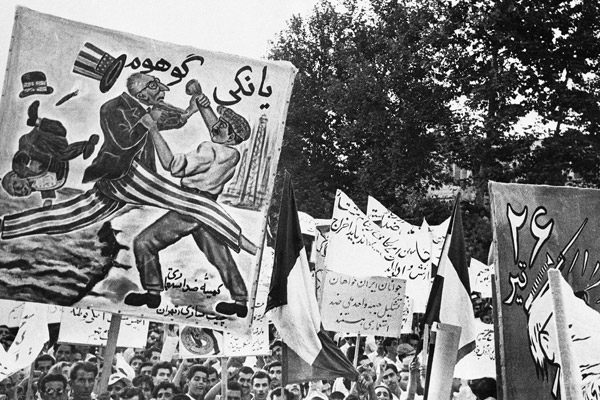 |
| Supporters of Mohammed Mossadegh demonstrate in Tehran, July 1953. Placard depicts an Iranian fighting off Uncle Sam and John Bull. Image from The Spectator. |
The overthrow of Mossadegh:
Sixty years of Iranian ‘blowback’
The overthrow of Mossadegh and the backing of the return of the Shah to full control of the regime led to U.S. support for one of the world’s most repressive and militarized regimes.
By Harry Targ /The Rag Blog / August 21, 2013
Chalmers Johnson wrote in The Nation in October 2001, that “blowback”
is a CIA term first used in March 1954 in a recently declassified report on the 1953 operation to overthrow the government of Mohammed Mossadegh in Iran. It is a metaphor for the unintended consequences of the U.S. government’s international activities that have been kept secret from the American people. The CIA’s fears that there might ultimately be some blowback from its egregious interference in the affairs of Iran were well founded… This misguided “covert operation” of the U.S. government helped convince many capable people throughout the Islamic world that the United States was an implacable enemy.
The CIA-initiated overthrow of the regime of Mohammed Mossadegh 60 years ago on August 19, 1953, was precipitated by what Melvin Gurtov called “the politics of oil and cold war together.” Because it was the leading oil producer in the Middle East and the fourth largest in the world and was geographically close to the former Soviet Union, President Eisenhower was prevailed upon to launch the covert CIA war on Iran long encouraged by Great Britain.
The immediate background for the ouster of Mossadegh was Iran’s nationalization of its oil production. Most Iranians were living in poverty in the 1940s as the Iranian government received only 10 percent of the royalties on its oil sales on the world market. The discrepancy between Iran’s large production of oil and the limited return it received led Prime Minister Mohammed Mossadegh, a liberal nationalist, to call for the nationalization of the Anglo-Iranian Oil Company in 1951.
Despite opposition from Iran’s small ruling class, the parliament and masses of the Iranian people endorsed the plan to seize control of its oil. Mossadegh became the symbol of Iranian sovereignty.
Ironically, Mossadegh assumed the United States would support Iran’s move toward economic autonomy. But in Washington the Iranian leader was viewed as a demagogue, his emerging rival the Shah of Iran (the sitting monarch of Iran) as “more moderate.”
After the nationalization, the British, supported by the United States, boycotted oil produced by the Iranian Oil Company. The British lobbied Washington to launch a military intervention but the Truman administration feared such an action would work to the advantage of the Iranian Communists, the Tudeh Party.
The boycott led to economic strains in Iran, and Mossadegh compensated for the loss of revenue by increasing taxes on the rich. This generated growing opposition from the tiny ruling class, and they encouraged political instability. In 1953, to rally his people, Mossadegh carried out a plebiscite, a vote on his policies. The Iranian people overwhelmingly endorsed the nationalization of Iranian oil. In addition, Mossadegh initiated efforts to mend political fences with the former Soviet Union and the Tudeh Party.
As a result of the plebiscite, and Mossadegh’s openings to the Left, the United States came around to the British view; Mossadegh had to go. As one U.S. defense department official put it:
When the crisis came on and the thing was about to collapse, we violated our normal criteria and among other things we did, we provided the army immediately on an emergency basis… The guns that they had in their hands, the trucks that they rode in, the armored cars that they drove through the streets, and the radio communications that permitted their control, were all furnished through the military defense assistance program… Had it not been for this program, a government unfriendly to the United States probably would now be in power. (Richard Barnet, Intervention and Revolution, 1972)
The Shah, who had fled Iran after the plebiscite, returned when Mossadegh was ousted. A new prime minister was appointed by him who committed Iran to the defense of the “free” world. U.S. military and economic aid was resumed, and Iran joined the CENTO alliance (an alliance of pro-West regional states).
In August 1954, a new oil consortium was established. Five U.S. oil companies gained control of 40 percent of Iranian oil, equal to that of returning British firms. Iran compensated the Anglo-Iranian Oil Company for its losses by paying $70 million, which Iran received as aid from the United States. The Iranian ruling class was accorded 50 percent of profits from future oil sales.
President Eisenhower declared that the events of 1953 and 1954 were ushering in a new era of “economic progress and stability” in Iran and that it was now to be an independent country in “the family of free nations.”
In brief, the United States overthrew a popularly-elected and overwhelmingly-endorsed regime in Iran. The payoff the United States received, with British acquiescence, was a dramatic increase in access by U.S. oil companies to Iranian oil at the expense of the Anglo-Iranian Oil Company.
The overthrow of Mossadegh and the backing of the return of the Shah to full control of the regime led to U.S. support for one of the world’s most repressive and militarized regimes. By the 1970s, 70,000 of the Shah’s opponents were in political prisons. Workers and religious activists rose up against the Shah in 1979, leading to the rapid revolutionary overthrow of his military state.
As Chalmers Johnson suggested many years later, the United States’ role in the world is still plagued by “blowback.” Masses of people all across the globe, particularly in the Persian Gulf, the Middle East, and East Asia, regard the United States as the major threat to their economic and political independence. And the covert operation against Mohammed Mossadegh in Iran is one place where such global mistrust began.
[Harry Targ is a professor of political science at Purdue University and is a member of the National Executive Committee of the Committees of Correspondence for Democracy and Socialism. He lives in West Lafayette, Indiana, and blogs at Diary of a Heartland Radical. Read more of Harry Targ’s articles on The Rag Blog.]
 |
| Third quarter moon. Image from Leaders in Science. |
Moon Musings:
Third Quarter Moon
(August 24-26, 2013)
This is a time to banish negative energies, to rid yourself of bad habits, bad jobs, bad relationships, bad choices.
By Kate Braun | The Rag Blog | August 21, 2013
The third quarter moon is a time to banish negative energies; a time to rid yourself of bad habits, bad jobs, bad relationships, bad choices. This is not a good time to attempt to manifest newness, whether it involve romance or finance, but it is an excellent time to manifest energies to help you manage stress, maintain a spiritual protection zone, and to continue the progress of projects begun at the new moon. You may call upon Umbrea or any Crone Goddess to help advance your cause.
It is best to determine in advance how you decide to orient your ritualing. It is not wise to attempt both banishing and manifesting intentions, as their oppositeness may cause them to cancel each other out.
If your focus is on banishing negative energies, it is best to plan your ritualing for Saturday, August 24, or Sunday, August 25. If your focus is more on the continuing advance of projects already begun, the best days are Saturday, August 24, or Sunday, August 25, or Monday, August 26.
If you choose to banish negative energies on Saturday, August 24, the ruling planet is Saturn and you should use the color black, try to be outdoors and barefoot so the soles of your feet connect with the earth, repeat your chant three times. This day is good to use to focus on rituals for self-discipline. Stick to the point and don’t let yourself become distracted.
If Sunday, August 25, is a better day for banishing your unwanteds, Lord Sun governs your intentions, the color yellow should be used, there should be fire flaming in your ritualing area, and your chant should be repeated six times. Center your focus on money or financial matters, health concerns, and friendship issues. In particular, ask for clarity.
A suggested chant for releasing:
I let go I let go as I grow, as I grow
direction and choice is mine to make
I choose the best for my soul’s sake.
If you prefer to concentrate on the completion of projects already begun, Monday, August 26, is the better day for this work. Lady Moon rules the day and will assist you in your rituals for inspiration, change, self-inspiration, and increased psychic ability. These will likely give you insights about how to best bring your unfinished projects to fruition. Use the color or metal silver, make sure to have water present in a goblet or bowl or fountain, and repeat your chant nine times.
A suggested chant for manifesting:
Desiring only good I call blessings to me;
in honor and joy so shall it be.
Before you put away your tools and decorations, I recommend you take a moment to reflect on the work you have done this day. Then you may find it helpful and balancing to recite:
May I be at peace;
May love live in my heart;
May I awaken to the light of my own true nature;
May I be open to the positive changes begun today;
May the love within me flow to all living beings.
[Kate Braun was a contributor to the original Rag. Her website is www.tarotbykatebraun.com. She can be reached at kate_braun2000@yahoo.com. Read more of Kate Braun’s writing on The Rag Blog.]
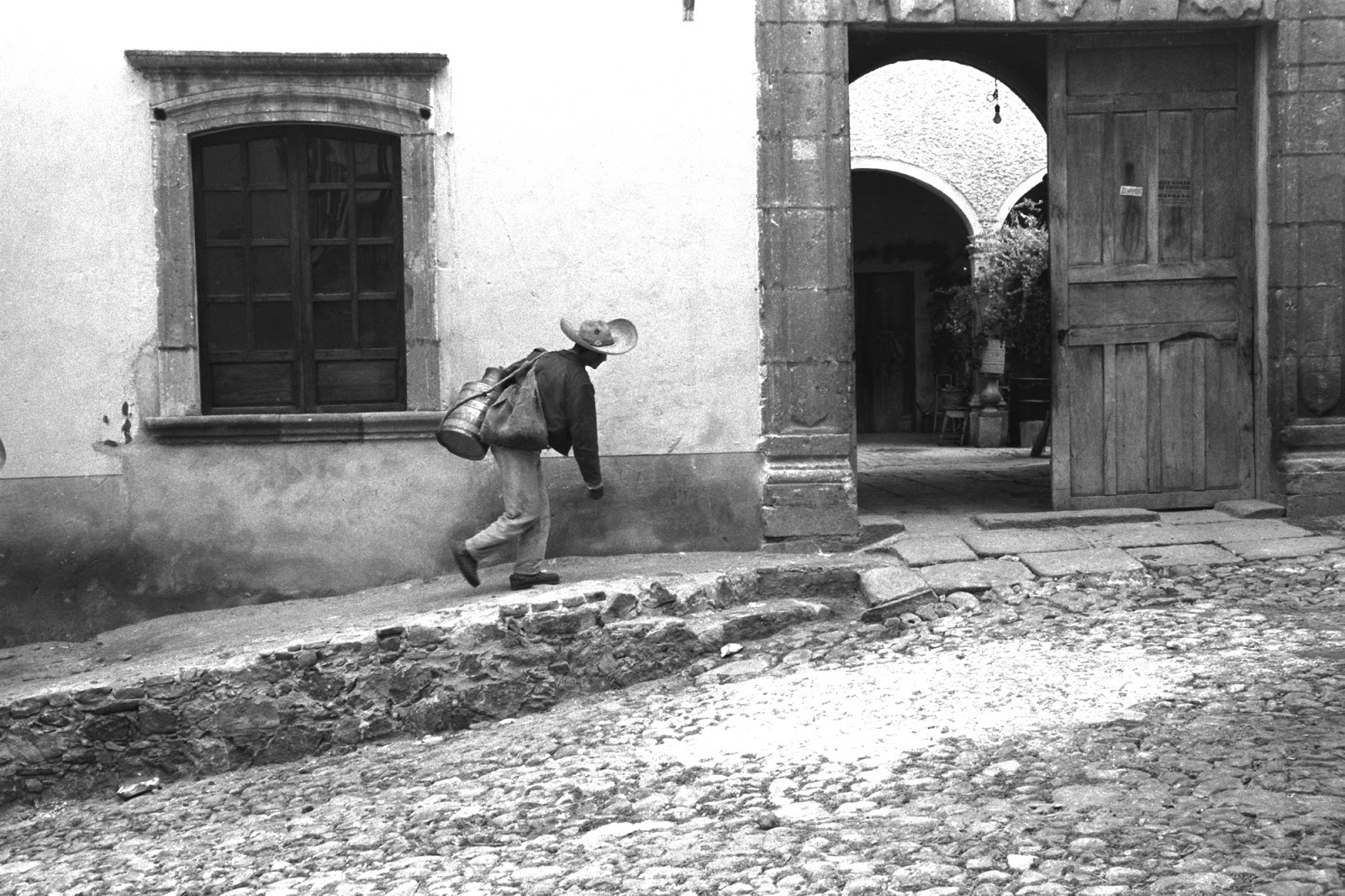 |
| ‘El lechero’ in San Miguel de Allende, Mexico, August 1962. Photo by Michael James from his forthcoming book, Michael Gaylord James’ Pictures from the Long Haul. |
Pictures from the Long Haul:
‘El lechero‘ in San Miguel, 1962
We arrive early and watch people setting up and selling their produce and wares. There are a few vaqueros stumbling up a cobblestone street… I shoot an image of a lechero making his delivery rounds, a container of milk on his back.
By Michael James | The Rag Blog | August 21, 2013
[In this series, Michael James is sharing images from his rich past, accompanied by reflections about — and inspired by — those images. This photo will be included in his forthcoming book, Michael Gaylord James’ Pictures from the Long Haul.]
I’m riding in the back seat of a 1957 Plymouth, heading to Acapulco on a weekend adventure. Cliffs on the mountainside act as pages in the “People’s Book,” catching my attention. Giant messages say: “¡Capitalismo No! ¡Comunismo Si! ¡Viva Castro!” I heard in one of my anthropology classes about leftist guerillas controlling portions of Guerrero, the state we’re riding in.
The car belongs to the Delamarter twins out of Michigan, Larry and Lou. Also on the ride are Bob Marks and a guy named Zeke from Long Island. I credit these four with introducing me to the wilder side of new things I experienced in Mexico.
In Acapulco there’s drinking at a back-street cantina where a little pimp, speaking a few words in five languages, introduces a parade of women. There is a party on a docked sailboat, where the Jamaican captain is very rude to the women he’s invited.
On a more wholesome adventure, we head south of Acapulco to a non-tourist beach, for a great swim in the Pacific. Older women sit on an old boat. A campesino couple is walking the beach. An old man is asleep in a hammacca.
I see Afro-Mexican kids, reflecting the slave economy of earlier times. Years later I will learn the extent to which African slaves were brought to Mexico and Central and South America. And later I will also learn that Mexico abolished slavery in 1829, long before it was abolished in the USA.
Early Sunday morning in Acapulco, at dawn, I’m awakened from a short night’s sleep by the barking of dogs, followed by the earth rumbling and the building shaking. Whoa! It’s short and then it’s over: my first earthquake.
On yet another occasion with the same four fellows, plus another gringo and three Mexican theater types, I take a Saturday trip to San Miguel de Allende. An artists’ colony with a long-running expatriate presence, San Miguel is about 175 northwest of Mexico City. Once a battleground between the Dominican and Franciscan religious orders, there are churches everywhere.
We arrive early and watch people setting up and selling their produce and wares. There are a few vaqueros stumbling up a cobblestone street after an apparent night out. Lots of burros, little beasts of burden, are loaded with bundles on their backs. An old man pulls a small cart, watched by a group of laughing Mexican teenagers modernos. What a contrast. I shoot an image of a lechero making his delivery rounds, a container of milk on his back.
Other new friends I meet at the Mex-Ci-Co apartamentos include Jack and Donna Traylor, and Jim Darby, who years later would become a Chicago public school teacher. Jim, an ex-sailor, had ridden the smallest model Honda motorcycle all the way from Chicago. Part of the trip his brother was riding on back, getting out of town after being shot in the leg.
I would see Jim just once back in Chicago, but after then was never able to find him — that is, until I saw him in 2013 while watching public TV. Jim and his boyfriend were the focus of a story about how they are suing my pal David Orr, the Cook County Clerk, over the right to marry in Illinois. Wow. I ended up contacting him and having him on our Live from the Heartland radio show.
Jack Traylor was an Okie, his family part of the Grapes of Wrath migration that moved from Oklahoma to California in the late 1930’s. He and Donna were schoolteachers and graduate students. And Jack sang beautiful versions of Woody Guthrie songs. He has my favorite voice ever.
In the early 1960’s in San Jose, California, Jack taught Paul Kantner guitar riffs. Later in the 60’s he played with the Gateway Singers and toured the nation’s folk clubs. In the 70’s, his own group, Steele Wind, put out an album on Grunt. The Jefferson Airplane “stole” guitarist Craig Chaquico from Steel Wind. Jack wrote some tunes for Jefferson Airplane, and was the link that brought the Airplane to the Heartland Café 40-odd years later.
Jack and Donna have a VW camper. I ride around with them, and they are the closest thing to parental figures I have in Mexico. They look out for me. Once Jack throws me into the van and speeds off. We’d been drinking at the Tipico Mexico in Garibaldi Square, a place full of bars, mariachi bands, and putas.
A well-dressed young Mexican with a smile asks me — an inebriated, not-very-bilingual gringo — ¿Como se gusta tipico Mexico? How do I like typical Mexico? Thinking he means the bar we’ve been in, where solicitation for sex is constant, I say No me gusta, demasiado putas, “I don’t like, too many whores” — whereupon Jack immediately shoves me into the van; an embarrassing episode to this day.
Mexico City. Wow! What a place. Years later I would become friends with the late, great leftist writer John Ross, who was a regular contributor to The Rag Blog and whose El Monstruo: Dread and Redemption in Mexico City covers the city’s dynamic history from early on.
My activities in La Ciudad that summer of ’62 include eating out, drinking, lifting weights at a Mexican version of a Vic Tanny gym, going to museums, taking classes, reading, writing letters, shopping, and getting the Triumph repaired. And I discover Sanborns.
Sanborns was a lunch counter/soda fountain operation similar to Howard Johnsons in the States. I meet a waitress there, a pretty counter girl in a tan uniform, little hat, and white apron. Getting my courage up, I make a return visit and ask if she would like to go on a date, go see a movie. And she accepts.
So, wearing a sport jacket and driving the Delamarter boys’ 1957 Plymouth wagon, I venture into a maze of unpaved back streets, getting lost in el barrio. Eventually I find her family’s small adobe home, indistinct from hundreds of others. I go to the door and she greets me — with the information that her father won’t permit her to go on the date. She says she is sorry. So am I.
At a party one night at the apartment complex, I am sharing a joint: la mota, la marijauna. I remember seeing this far-out, amazing golden waterfall as I take a piss. In the morning I wake up sick. Really sick. Very sick.
Yellow jaundus, hepititis. I’ve got it. It’s got me. Over the course of the next few days, through one of my dad’s connections (who he had repeatedly asked me to contact) — I end up in the American British Cowdray Hospital. I stay there for 19 days. A benefit is eating big, part of the comeback.
While I am recovering I read a book filled with oddities about Mexico, called A Mexican Medley for the Curious. I read Kerouac’s On the Road. In posession of a portable Olivetti typewriter and probably influenced by Jack’s adventures, I write of my little Mexican adventures. I reference politics, drinking, women, and drugs.
A Panamanian nurse who speaks English and has been very friendly asks if she can read it; I say sure. When she returns a few days later, she hands back my would-be manuscript and leaves without a word, never to return. What? First glimmer of lessons I continue to learn.
For the short remainder of the summer I live with the Delamarter brothers who have moved to a modern apartment off the Carretera Mexico Toluca north of Mexico City College. A general lives next door. We never see him, but we do see his wife — glamorous and modern, a bourgiois woman. Her two small boys come to play; other kids from the neighborhood come around too, checking out the gringos. The sexy neighbor wife has some Afghan hounds and, grinning, looks at us young fellows and asks, “You like my dogs?” Ay-yi-yi.
And then it’s time. Trecking north and back to school, I’m on the Triumph, following the gang of four in the Plymouth. We ride through San Luis Potosi, then the desert and Sautillo, and stop for the night in Monterrey. The next day we ride into dusk, heading to Nuevo Laredo during the night. Suddenly around a curve there are lights: a carnival, people enjoying a festive event. I shoot the picture. We move on, cross the border, and sleep in Laredo on the state side of the Rio Bravo, the Rio Grande.
In the morning we find a bike shop and I arrange to leave the Triumph to be shipped. Post-hepititis, I had been told not to ride the bike. But because Mexican law does not permit me to sell it; if I want to keep it I have to drive it out of the country, doctor’s advice or not.
Then we cross back into Mexico, into Neuevo Laredo for a last-time look around. We walk through the red-light disctrict at noon, observing an abundance of women on the stoops of small shacks, their hair up in curlers.
The gang of four leaves me off at my college girlfriend Lucia’s new family home in Morton, outside Chicago. Her dad and I compete to see who can eat the most jalapeño peppers. A day later I’m hitchiking to Connecticut, somehow via the New York Thruway. A band of Gypsies picks me up in a beater Cadillac convertible. They ask if I have money. “No… I wouldn’t be hitchiking if I had money.”
Late that night I am pretty miserable, sleep-deprived, sort of hallucinating while waiting for a ride near Batavia, New York. I make it home to Connecticut sometime the next day and sleep till the day after that.
It’s good to be home. I talk with my dad. He tells me of his job in a fish cannery in Alaska back in the 1920’s, and lets me know that he had smoked marijauna then. He does encourage me not to smoke it every day.
Against my wishes, Dad had been editing and compiling my letters into what he called “The Mexican Oddyessy of Senior Miguel Gaylord James,” then sending mimeographed copies to family and friends. Years later I am grateful to have that tamed-down version of my summer in Mexico.
[Michael James is a former SDS national officer, the founder of Rising Up Angry, co-founder of Chicago’s Heartland Café (1976 and still going), and co-host of the Saturday morning (9-10 a.m. CDT) Live from the Heartland radio show, here and on YouTube. He is reachable by one and all at michael@heartlandcafe.com. Find more articles by Michael James on The Rag Blog.]
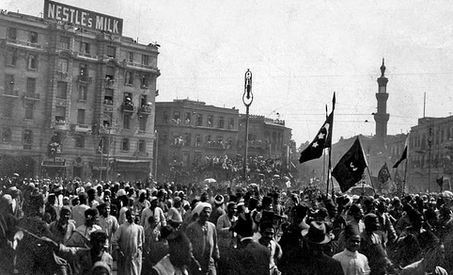 |
| Scene from the Egyptian Revolution of 1919. Image from Egyptian History website. |
A people’s history:
The movement to democratize Egypt
Part 7: 1917-1921 period — British oppression leads to nationalist revolution and beginnings of a labor movement.
By Bob Feldman | The Rag Blog | August 20, 2013
[With all the dramatic activity in Egypt, Bob Feldman’s Rag Blog “people’s history” series, “The Movement to Democratize Egypt,” could not be more timely. Also see Feldman’s “Hidden History of Texas” series on The Rag Blog.]
Despite the 1882 to 1956 imperial occupation of Egypt by the United Kingdom, until 1914 Egypt was still considered to be a legal part of Turkey’s Ottoman Empire. But after Turkey’s Ottoman dynasty rulers — on October 29, 1914 — allied with Germany during World War I, “the British declared martial law in Egypt” on November 2, 1914, and “imposed censorship,” according to Jason Thompson’s A History of Egypt.
Then, on December 18, 1914, “the British government severed Egypt’s ceremonial connection with the Turks and declared the country a British protectorate, changing its territorial status and regularizing Anglo control,” according to Selma Botman’s Egypt from Independence to Revolution, 1919-1952; and on December 19, 1914, the UK “deposed Abbas Hilmy II” as Egypt’s official ruler “for having `definitely thrown in his lot with his Majesty’s enemies’” and “replaced Abbas with his uncle Husein Kamil, an elderly man, easily managed,” who “was given the title of sultan,” according to A History of Egypt.
But Egypt from Independence to Revolution, 1919-1952 noted how more direct and overt UK imperialist rule after 1914 brought increased national oppression to most people in Egypt:
As World War I progressed, the British became more aggressive in their efforts to control the entire country. In addition to British civil servants who were brought to Cairo to run the bureaucracy, British Empire troops swarmed the larger cities. With the war came high inflation and a degree of hardship that was painful to the majority of the population. In consequence, Anglo-Egyptian hostility deepened… Military authorities forced the peasants to exchange grain, cotton, and livestock for limited compensation.
As A History of Egypt also recalled:
Large numbers of men were conscripted into auxiliary forces such as the Camel Corps and the Labor Corps. Beginning in 1916, desperate for soldiers, the British began drafting Egyptians into the army. The British also conscripted people’s livestock, taking the donkeys and camels that were often necessary for subsistence… The tightness of the British grip on Egypt became glaringly apparent when Sultan Husein Kamil died in October 1917, and the British…altered the terms of succession so that he was succeeded not by his son, who was viewed as anti-British, but by his half-brother Ahmed Fuad…
So, not surprisingly, near the end of World War I an Egyptian “nationalist leader, Saad Zaghlul, with support from the entire country, openly demanded….. that Egypt be allowed to determine [its]own destiny;” and “in November 1918, an Egyptian delegation of nationalist politicians and well-paid notables was formed” — that “became the nucleus” of the Egyptian landowning elite’s nationalist Wafd party — “and prepared itself to represent Egypt at the postwar conference in Paris,” according to Egypt from Independence to Revolution, 1919-1952.
On March 8, 1919, UK authorities in Egypt arrested Zaghlul and his political associates and deported them to Malta. In response to these arrests, according to the same book, the following happened:
Within days, the country erupted in revolt, protesting against the deportation of Zaghlul, the British occupation and Britain’s refusal to allow Egyptian nationalists to represent their country in negotiations to determine Egypt’s postwar status. Students, government employees, workers, lawyers, and professionals took to the streets…demonstrating, protesting… Throughout the country, British installations were attacked, railway lines damaged, and the nationalist movement gained credibility.
And, according to A History of Egypt, “by the time the British rushed in troops and restored order later in the month, more than 1,000 Egyptians were dead from the violence, as were 36 British military personnel and four British civilians.”
Zaghlul and his imprisoned Wafd colleagues were then released on April 7, 1919 — following what became known as the “Egyptian Revolution of 1919” — and were now allowed to attend the post-World War I peace conference in Paris to demand political independence from UK imperialism for Egypt. When the Egyptian nationalist leaders arrived, however, in Paris “the American envoy recognized Britain’s protectorate over Egypt;” and “Egypt’s right to self-rule was not established” in 1919, according to Egypt from Independence to Revolution, 1919-1952.
Although Egyptian labor movement activists and workers joined with nationalist businesspeople in making a nationalist Egyptian revolution in 1919, “the revolution did not produce any movement toward labor reform” in Egypt; “and the alliance between labor and the bourgeoisie quickly dissipated,” according to Tareq Y. Ismael and Rifa‘at El-Sa’id’s The Communist Movement in Egypt: 1920-1988.
Labor organizer “[Joseph] Rosenthal and Egyptian intellectuals committed to the labor movement — among the most prominent were Hosni al-‘Arabi, Ali Al’-‘Anony, Salamah Musa, and Mohammed ‘Abdallah ‘Anan — set out to establish an Egyptian Socialist Party (“al-Hizb al-Ishtiraki al-Misr”) with Egyptian members who would represent the unionized workers,” according to the same book. And in August 1921, they founded the Egyptian Socialist Party.
The Egyptian Socialist Party then opened a party headquarters in Cairo and established branches in Alexandria, Tanta, Shibin al-Kawm, and Mansura. But when the party “applied for a license to publish a newspaper“ it was denied a license “because of its opposition to British and government policy” in Egypt, according to The Communist Movement in Egypt: 1920-1988.
In its August 28, 1921, program, the Egyptian Socialist Party demanded “the liberation of Egypt from the tyranny of imperialism and the expulsion of imperialism from the entire Nile Valley;” and in a December 22, 1921, manifesto, the party also declared that it would “maintain its socialist program” and would “not renounce the struggle against the Egyptian capitalist tyrants and oppressors, accomplices and associates of the tyrannical foreign domination.”
[Bob Feldman is an East Coast-based writer-activist and a former member of the Columbia SDS Steering Committee of the late 1960s. Read more articles by Bob Feldman on The Rag Blog.]
Waldman’s film and TV
treasures you may have missed:
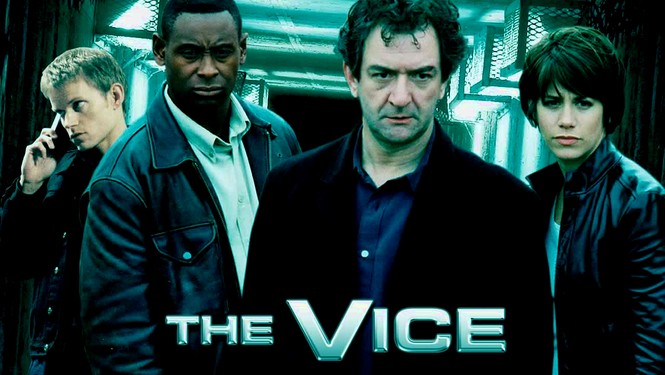
From 1999 to 2003, Ken Stott headed a strong cast as a police inspector battling prostitution, pornography, and other sex crimes.
By Alan Waldman | The Rag Blog | August 20, 2013
[In his weekly column, Alan Waldman reviews some of his favorite films and TV series that readers may have missed, including TV dramas, mysteries, and comedies from Canada, England, Ireland, and Scotland. Most are available on DVD and/or Netflix, and some episodes are on YouTube.]
Veteran Detective Inspector Pat Chappel (Ken Stott) leads his team of undercover Vice Squad agents through London’s seamy underworld, investigating cases of human trafficking, corruption, murder, sexual slavery, sadomasochistic filmmaking, drug trafficking, child prostitution, pedophilia, and gambling in the outstanding British crime drama The Vice.
Chappel and his team (David Harewood, Marc Warren, Rosie Marcel and Caroline Catz) often find themselves struggling to maintain normalcy in their personal lives as their work takes a toll on them.
Twenty-one gripping episodes aired between 1999 and 2003. Many are available on DVD and YouTube and three episodes are coming to Netflix. Here is an episode in which Chappel goes undercover in a prison to discover the ringleaders of a prostitution racket pimping young women to inmates and guards.
Stott was nominated for two major British awards and the show was up for “Best Drama Series.” The program frequently blurs the line of the team staying on the right side of the law, as almost every member of it at different points submits briefly or permanently to the temptations of either sex, drugs, money, or honey traps — sometimes with drastic consequences.
The regular cast was headed by the sterling Stott, who starred in the gripping Scottish cop series Rebus. The Vice’s cast also included Caroline Catz (the female lead in Doc Martin), David Harewood (SAG nom for Homeland), Marc Warren (Hustle, State of Play), Rosie Macel (Holby City), Tim Piggot-Smith (won BAFTA for Jewel in the Crown), and Anna Chancellor (BAFTA nom for The Hour).
The fine guest cast included Tim McInnerny (all four Blackadder series), Eddie Marsan (now in Ray Donovan, won nine of his10 awards and six noms for Happy-Go-Lucky), Philip Jackson (Poirot) and Corin Redgrave (A Man for all Seasons and 41 other films and series).
The Vice is exceptionally well produced, directed, and acted. I enjoyed it immensely.
[Oregon writer and Houston native Alan Waldman holds a B.A. in theater arts from Brandeis University and has worked as an editor at The Hollywood Reporter and Honolulu magazine. Read more of Alan Waldman’s articles on The Rag Blog.]

Dave All en Courtesy off icial website of Rockin’ Dave All en
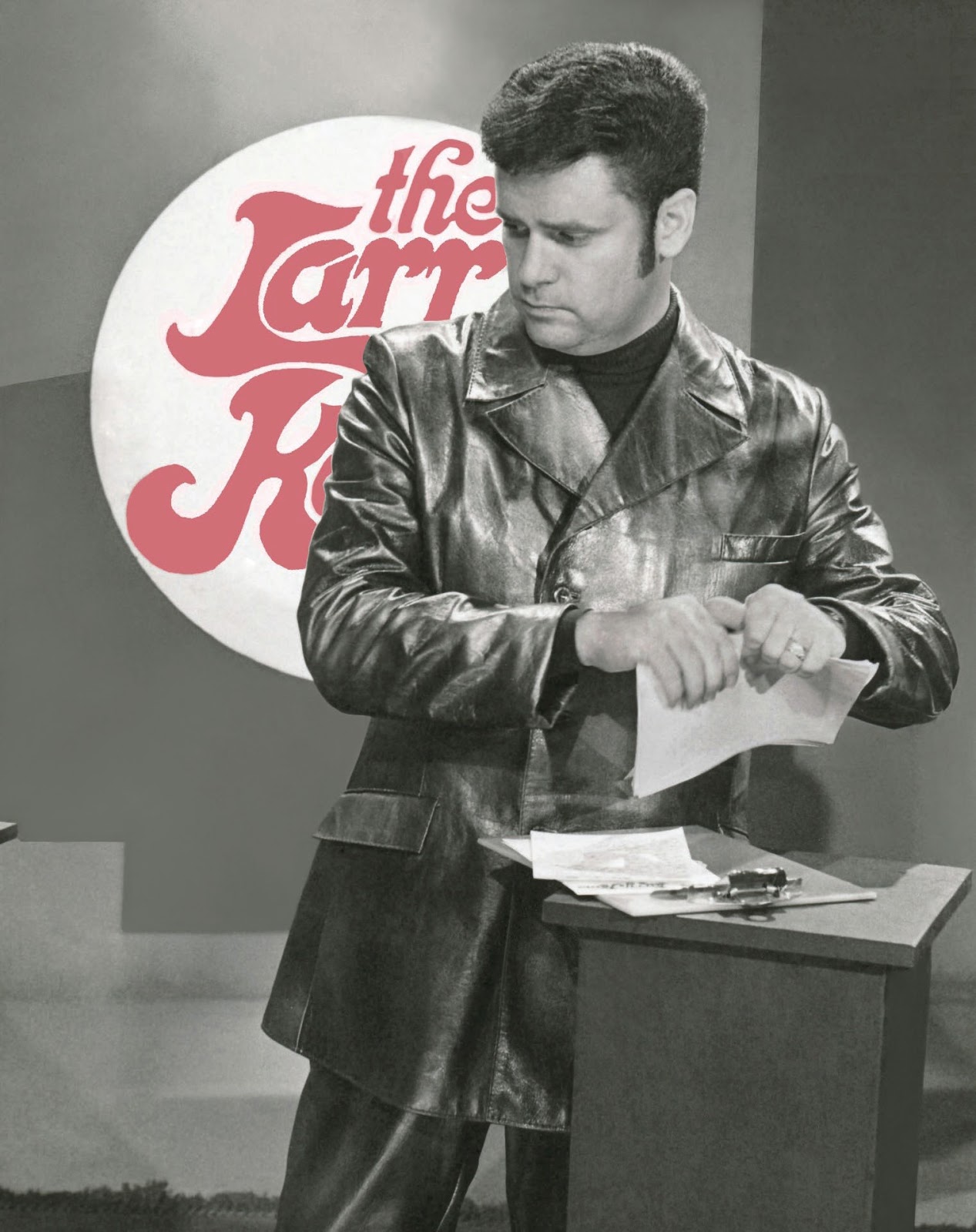
Larry Kane. Photo by Glenn Pitts
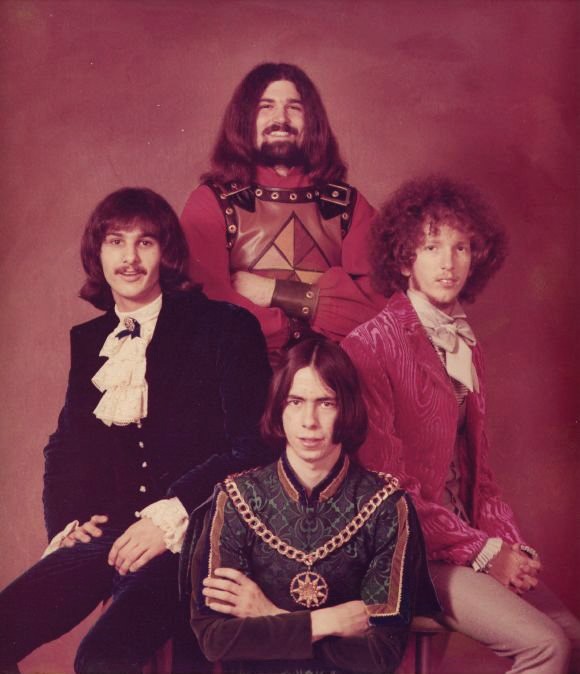
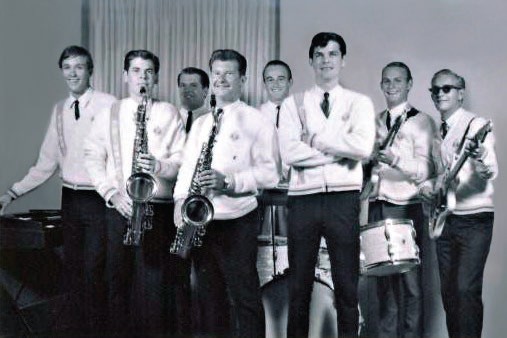
Cover sHoot From bubbLe puppy’s 1969 aLbum “a gatHering oF promises” roy Cox, rod prinCe in baCk, todd potter in Front, and david “FuZZy” Fore Cover art For “gatHering oF promises” Hangs in tHe roCk in roLL HaLL oF Fame in CLeveLand, oHio. tHese CLotHes were Custom made For tHe aLbum Cover by a Costume designer. Courtesy oF rod prinCe
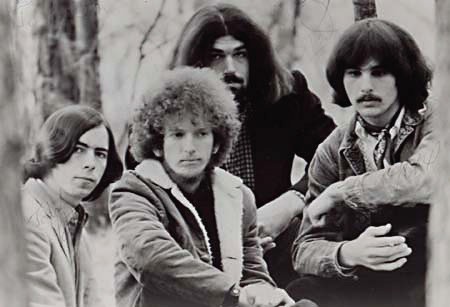
tHe band was todd potter (Lead guitar, and voCaLs), david “FuZZy” Fore (drummer, and voCaLs), rod prinCe (Lead guitar, and voCaLs) in baCk, roy Cox (bass, and voCaLs). bubbLe puppy at tHe Country House on east mount Houston road in Houston, texas. Courtesy oF dave Fore
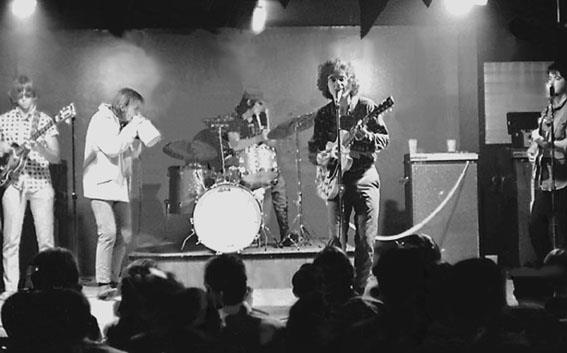
13th FLoor eLevators pLay tHe new orLeans CLub in 1966 © pHoto by robert simmons
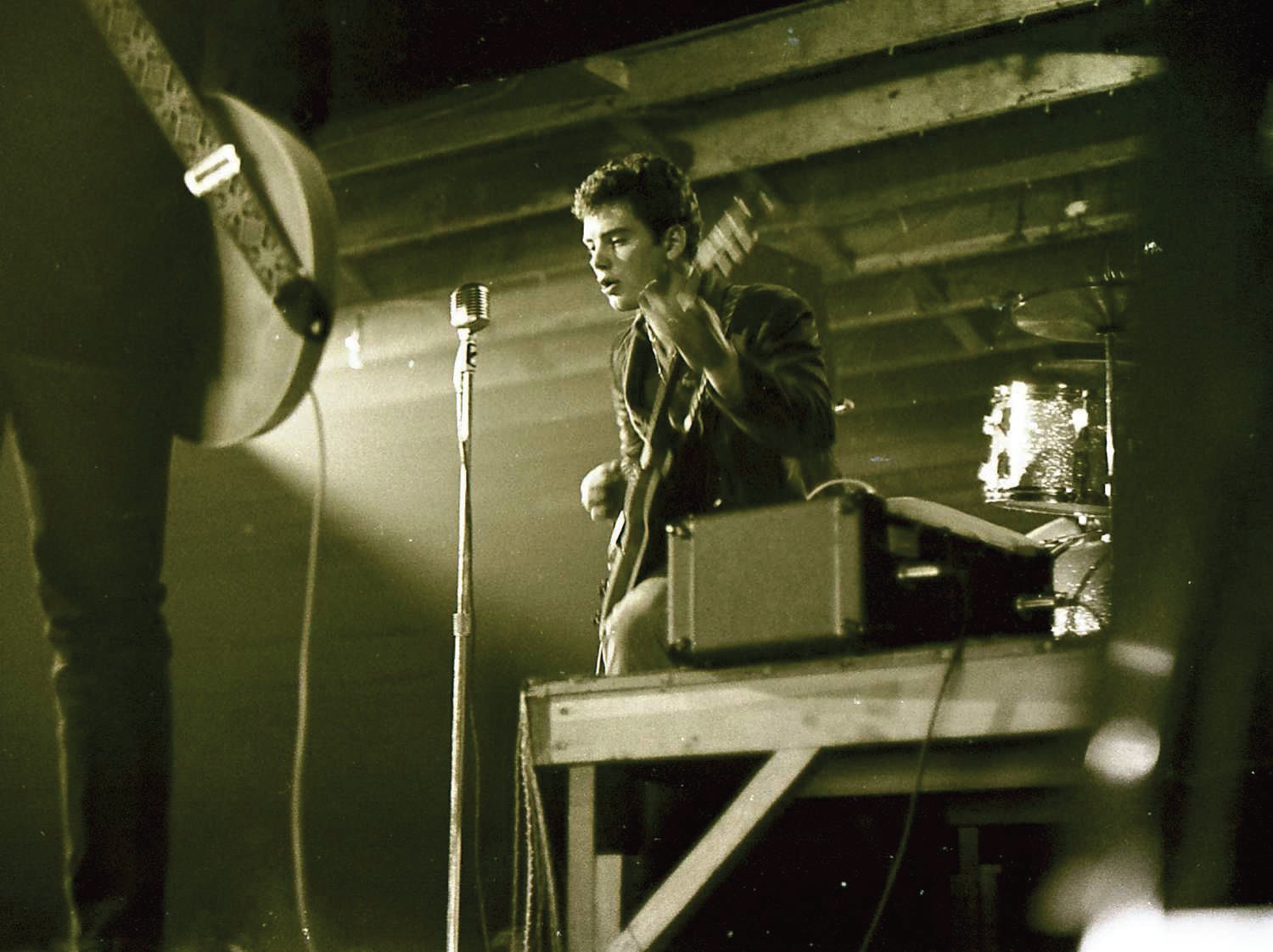
roky eriCkson at La maison © pHoto by robert simmons
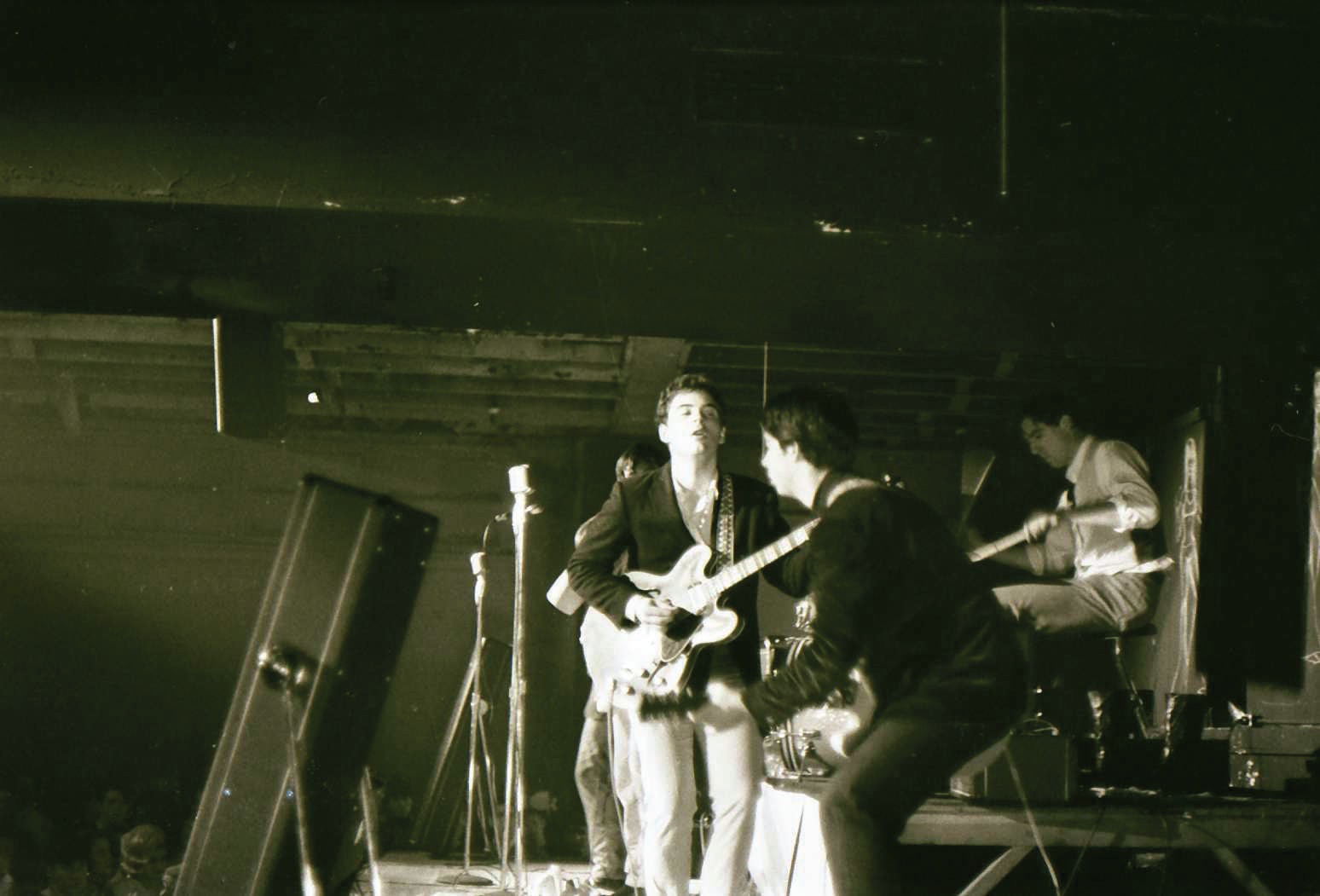
roky, staCy & JoHn ike at La maison © pHoto by robert simmons
moVing sideWAlks dan mitCHeLL (drums), tommy moore (keys), don summers (bass), biLLy gibbons (voCaLs & guitar) Courtesy oF riCk CampbeLL
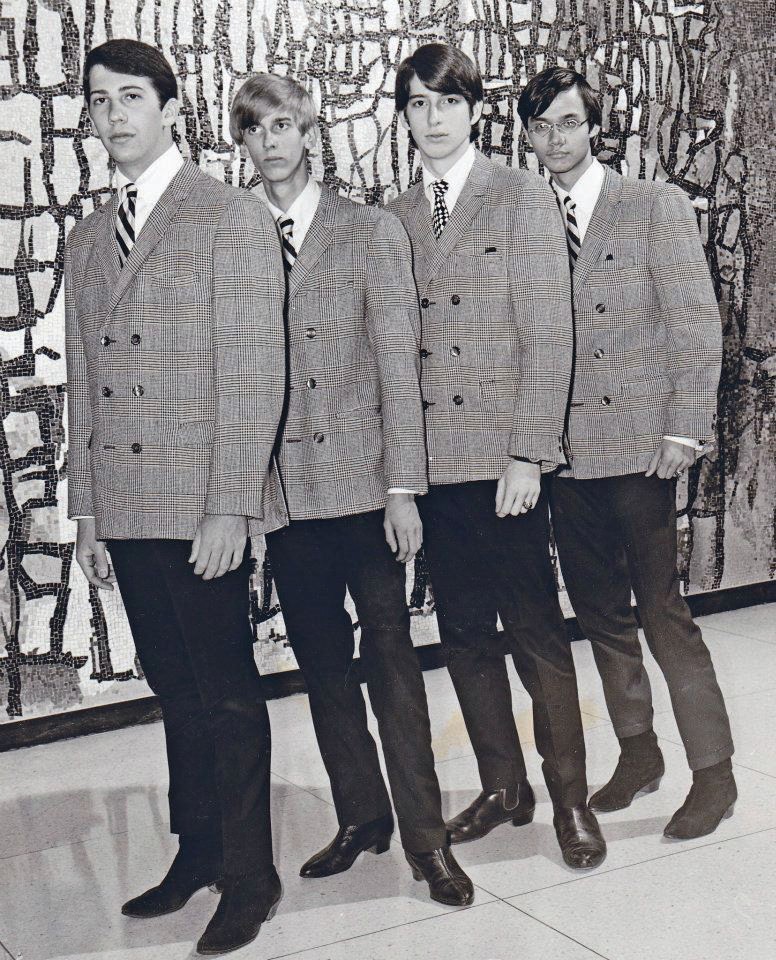
tHe Crabs Courtesy oF robbie LeFF
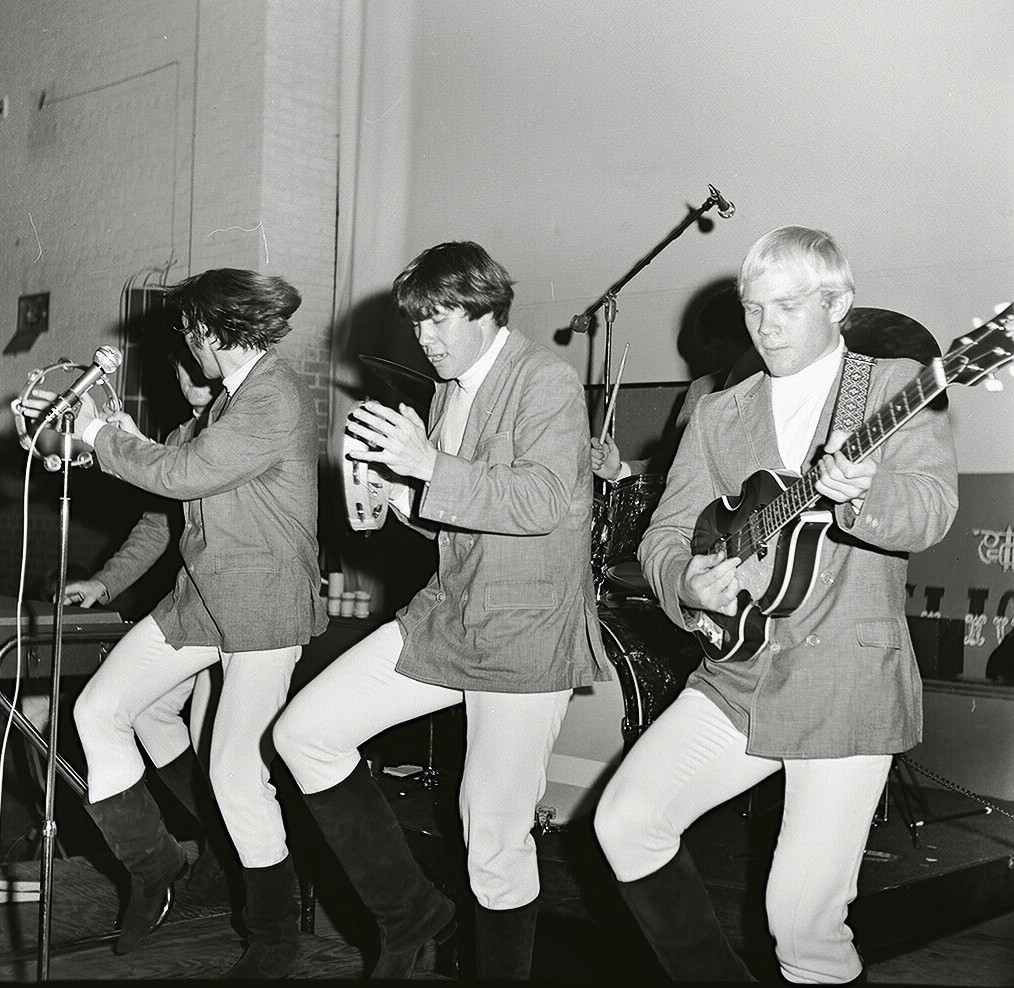
tHe CLique Courtesy oF bruCe tinCH
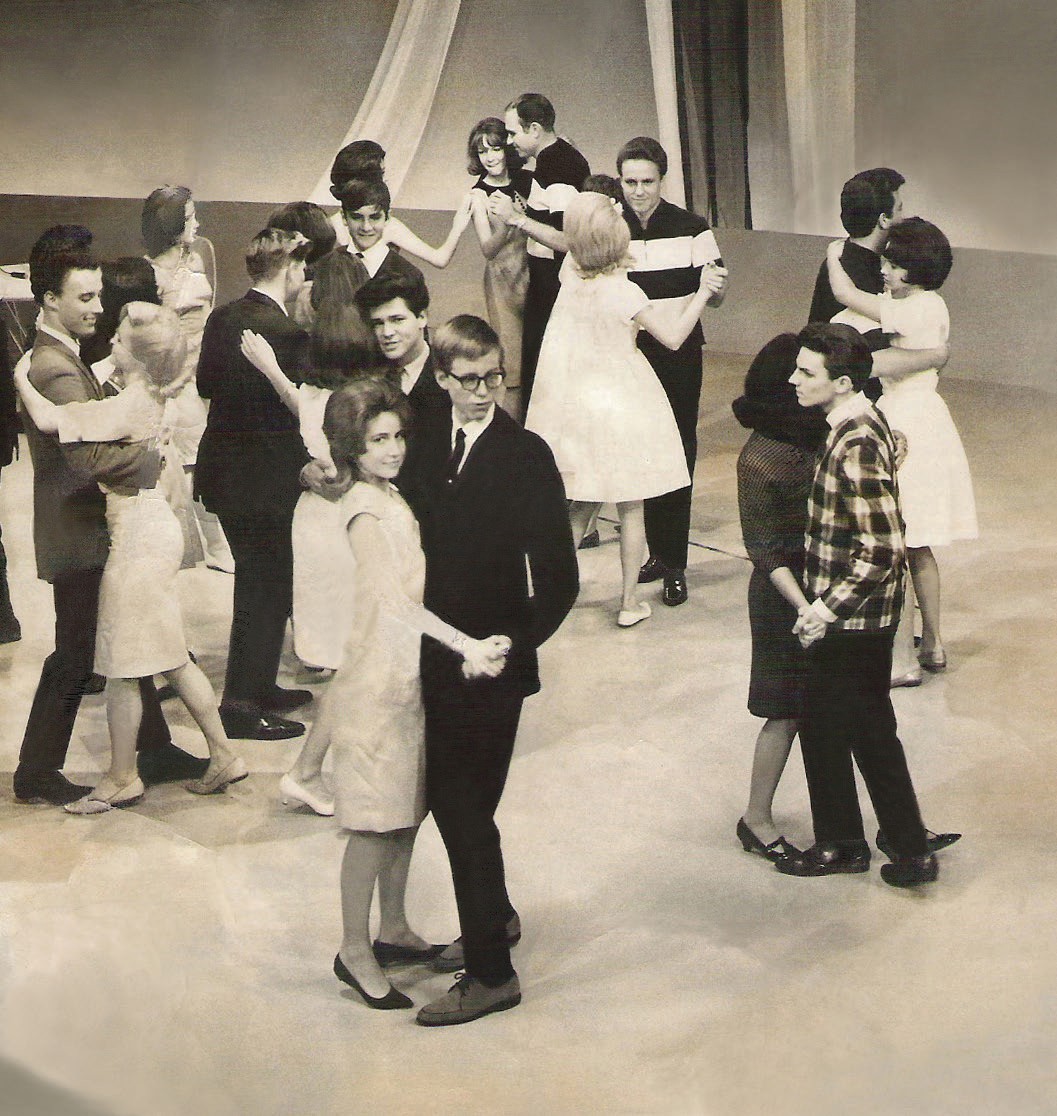
Larry kane danCe sHow 1964-65 Courtesy oF gordon vest

Vicki at 17

Type your summary here
Type rest of the post here
Source /
 |
| The Greenwood Acres fishing pier on Lake Buchanan, west of Burnet, Texas. Photo by Bruce Melton / The Rag Blog. |
The climate science is certain:
Time to kick the deniers off the island
In just eight years, permanent climate conditions across the North American Southwest (including Austin) will be comparable to the worst megadrought in 1,000 years.
By Bruce Melton | The Rag Blog | August 15, 2013
AUSTIN, Texas — The science is certain, but the deniers are just as certain that their pseudo science is certain. Getting the last few deniers to agree with 97 percent of climate scientists though — is that a good use of resources? We have the vast majority of the public on our side — isn’t that enough votes?
We can kick the deniers off the island. This is not a mean-spirited thing — far from it. It’s about the optimal path for resource-deprived situations.
The denier crowd is no longer a viable voting block. We need to be focusing on the rest of us. Very few understand the extreme nature of the most recent findings in climate science and the relative ease with which our climate pollution problem can be solved. Environmentally aware voices today advocate for Kyoto Era policies. But Kyoto Era policies were created in the early 1990s.
The psychology of denial is a tricky thing to overcome. It’s not about what we think it is about. It’s not about “their science” being as good as ours in their eyes. It’s deeper than that and involves social upbringing, false intuition, authority figures, geography, gender, and religion. Because “believers” control the voting block it no longer matters why deniers disbelieve. We no longer need to change their minds.
Because of the dwindling number of deniers, their opinions are no longer relevant. The only thing that has a chance of changing their minds is time or personal experience — so says the global warming psychology literature. We can influence neither of those, so why waste valuable time and resources? In just eight years, permanent climate conditions across the North American Southwest (including Austin) will be comparable to the worst megadrought in 1,000 years. (1)
This megadrought has now begun. In Austin we are suffering from a devastating long-term drought, but only four of the last eight years in Austin have seen significantly below normal rainfall (less than 0.5 inches below average). In the Highland Lakes watershed at San Angelo, where the water comes from to fill our lakes that are at 36 percent of capacity, only three of the last eight years saw significantly below normal rainfall. Yet inflows to the lakes have fallen below the 1950s Drought of Record levels four times in the last eight years. How can this be?
A longer growing season soaks up more soil moisture and leaves less for the springs to create inflows into the lakes. More numerous bigger rainfall events and fewer smaller rainfall events happening already mean that dry periods are longer. When it does rain, more soaks in and less runs off.
Winters are warm enough now that many species do not go dormant any longer (in Central Texas). They keep using groundwater through the winter and leave less to create inflows into the lakes. Evaporation is disproportional to warmth. A little warmth equals a lot more evaporation; more evaporation creates a drier atmosphere allowing it to get warmer creating a feedback loop.
Inflows to the Highland Lakes during the drought of record were 14 percent more than what we have seen today. They were more during the Drought of Record.
(This does not include the drought buster year of 1957 with 4.4 million acre feet of inflow.)
Plus, during the Drought of Record, LCRA was releasing 460,000 acre feet of water annually above what they release today because of hydroelectric generation. If hydroelectric releases similar to LCRA’s hydroelectric generation era were made today, in 2011 lake levels would have been far lower than they were in the 1950s and today the lakes would be completely dry. LCRA quit making hydroelectric releases in the late 1970s and early 80s as coal- and natural gas-fired power plants came on line.
But the biggest surprise is that rainfall in Austin is 7 percent more than it was in 1990. Yet, inflows to the lakes are far, far below the average of the previous 50 years. Drought can be perpetuated even with greater rainfall.
Climate scientists have been telling us these things will happen for decades, and now they are happening. It shouldn’t be counterintuitive, but the denier and delayer crowd has effectively killed discussion about anything except whether or not global warming exists from a high school greenhouse effect point of view.
We need to be focusing on the level of “belief” of the “believers.” It’s a business decision. We can fire the deniers. It might not be the “right” thing to do, but we do not have time to be so kind. As a bonus however, we can preserve our relationships with deniers by ignoring the topic like they do. It’s ok, we have enough votes.
The amount of resources needed to convince the denier and delayer gang is disproportionally large compared to the fine-tuning of the message that needs to be delivered to “believers.” Time is short. We are likely too far gone to forego major tipping points like the collapse of the West Antarctic Ice Sheet, desertification of the interior of continents, and a 50 GT methane outburst from clathrates. Now we need to prevent our climate from crossing even more severe thresholds.
Solution requirements are much larger today than in the Kyoto Era. We were supposed to have reduced our emissions to 1987 levels by 2012 to prevent dangerous climate change. Instead we have increased emissions by 57 percent. Since 1987 we have emitted 81 percent of all greenhouse gases emitted from the beginning of mankind’s emissions until 1987.
Greater than 100 percent emissions reductions are now needed to prevent “extremely dangerous climate change.” (2) Spending all of our time trying to convince a few deniers that climate change is real is not a good use of limited time or resources.
The public needs to know the ease with which we can “treat” climate pollution. The 2 percent global gross domestic product cost of dealing with climate pollution advocated by most economists over the last decade is the same as we spend on advertising every year; or the annual U.S. military budget not counting wars; or the yearly costs of the Clean Air Act or the Clean Water Act; or the costs of normal weather losses every year in the U.S. alone not counting climate enhanced events. It is one quarter the annual cost of health care in the U.S. averaged from 2000 to 2009 — before Obamacare went into effect.
But the latest research leaves the science of the mid-2000s in its dust. The Stanford/Cornell Plan for a fossil fuel-free New York State suggests that New York build a new alternative energy infrastructure at a cost of a bit more than $500 billion by 2030. Beginning in 2030, the savings and profits — above a fossil fuel economy in New York State — are $114 billion per year. This pays off the investment in less than five years. Savings and profits then only increase with time relative to the ever-increasing costs of a fossil fuel infrastructure.(3)
[Bruce Melton, a regular contributor to The Rag Blog, is a professional engineer, environmental researcher, filmmaker, and author in Austin, Texas. Information on Melton’s new book, Climate Discovery Chronicles, as well as more climate change writing, climate science outreach, and critical environmental issue documentary films can be found on his website and at climatediscovery.com. Melton’s Climate Change Now Initiative has applied for nonprofit 501(c)(3) status. Read more articles by Bruce Melton on The Rag Blog.]
References:
(1) In just eight years, permanent climate conditions across the North American Southwest will be comparable to the worst megadrought in 1,000 years — Evaluation of work from NOAA and Columbia Earth Institute (Seager 2012) for Truthout.org. Melton, Worst Drought in 1,000 Years Could Begin in Eight Years, Truthout.org, Feb. 21, 2013.
http://truth-out.org/news/item/14655-worse-drought-in-1000-years-could-begin-in-eight-years
Seager et al., Projections of declining surface water availability for the southwestern United States, Nature Climate Change, December 2012, page 5, last paragraph.
Abstract: http://www.nature.com/nclimate/journal/vaop/ncurrent/full/nclimate1787.html
NOAA:
http://www.ldeo.columbia.edu/res/div/ocp/glodech/research11%20SW%20water%20surface.html
Earth Institute press release: http://blogs.ei.columbia.edu/2012/12/23/smaller-colorado-river-projected-for-coming-decades-study-says/
(2) Extremely dangerous climate change, two degrees C: 550, 450, 350 and 300 ppm CO2 — Morrigan, Target Atmospheric GHG Concentrations Why Humanity Should Aim for 350 ppm CO2e, University of California Santa Barbara, 2010.
http://www.global.ucsb.edu/climateproject/papers/
Ramanthan, On avoiding dangerous anthropogenic interference with the climate system: Formidable challenges ahead, Proceedings of the National Academy of Science of the United States of America, 2008.
http://www.pnas.org/content/105/38/14245.full.pdf+html
Hansen et al., Target Atmospheric CO2, Where Should Humanity Aim, Open Atmospheric Science Journal, NASA, November 2008.
http://pubs.giss.nasa.gov/abstracts/2008/Hansen_etal.html
IPCC 2007, Contribution of Working Group III to the Fourth Assessment Report of the Intergovernmental Panel on Climate Change,, B. Metz, O.R. Davidson, P.R. Bosch, R. Dave, L.A. Meyer (eds), Cambridge University Press, Cambridge, United Kingdom and New York, NY, USA, Chapter 13, Policies, Instruments and Co-operative Arrangements.
IPCC 2001, Intergovernmental Panel on Climate Change, Third Assessment Report, Climate Change 2001: The Scientific Basis, Technical Summary.
http://www.grida.no/publications/other/ipcc_tar/
(3)A Fossil Fuel Free New York State — Melton, A Fossil Fuel Free New York State by 2050: An in-depth look at Stanford and Cornell’s 100 percent alternative energy road map for New York state, Truthout.org, May 26, 2013.
http://www.truth-out.org/news/item/16540-a-fossil-fuel-free-new-york-state-by-2050
Jacobson et al., Examining the feasibility of converting New York State’s all-purpose energy infrastructure to one using wind, water, and sunlight, Energy Policy 57 (2013) 585-601.
http://www.stanford.edu/group/efmh/jacobson/Articles/I/NewYorkWWSEnPolicy.pdf
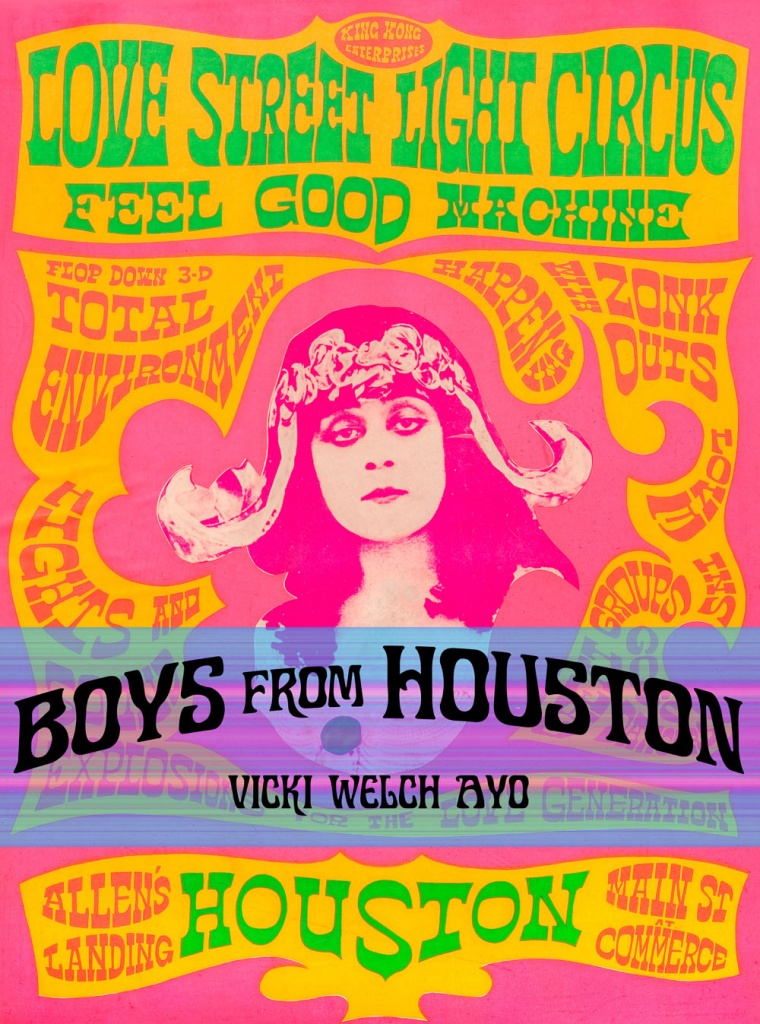
The book is a real eye-opener for those who would have never believed that the city once known as ‘Baghdad on the Bayou,’ referring to its oppressive climate and its brackish waterway, was anything but a cultural wasteland.
By Ivan Koop Kuper | The Rag Blog | August 15, 2013
[Boys From Houston: The Spirit and Image of Our Music by Vicki Welch Ayo (2013: Create Space); Paperback; 450 pp; $89.95.]
Author Vicki Welch Ayo and I have never actually met, but we share a similar adolescent experience. The very first rock concert we both attended as teenagers was a performance by a local group called The Sound Investment, a garage band from South Houston fronted by a charismatic vocalist named Ray Salazar.
The year was 1967, and in the high school semester before the “Summer of Love,” Houston, Texas, was experiencing a cultural renaissance. This was a period of creativity and progressive thinking that was reflected in alternative lifestyles, hippie fashion, visual art, and most important, the music.
|
| Vicky Welch Ayo at 17. |
Three years had passed since the “Fab Four” first appeared that eventful Sunday night on the Ed Sullivan Show, and from that point on, in the living rooms, basements, and garages of America, boys and sometimes girls were hard at work, on a grassroots level, honing their craft in an attempt to emulate their mop-top heroes.
This was also an era in Houston, Texas, when music was everywhere, and on any given weekend, local bands were performing for their peers in high school gymnasiums, fraternity houses, and neighborhood shopping malls.
These bands were comprised of mostly “waspy” teenagers with a smattering of Italian, Jewish, and Hispanic kids in the mix, who, in the laboratories of their parents’ suburban homes, borrowed from the British Invasion, California surf music, and their own Texas blues roots to create what would be referred to as the “Gulf Coast Sound.”
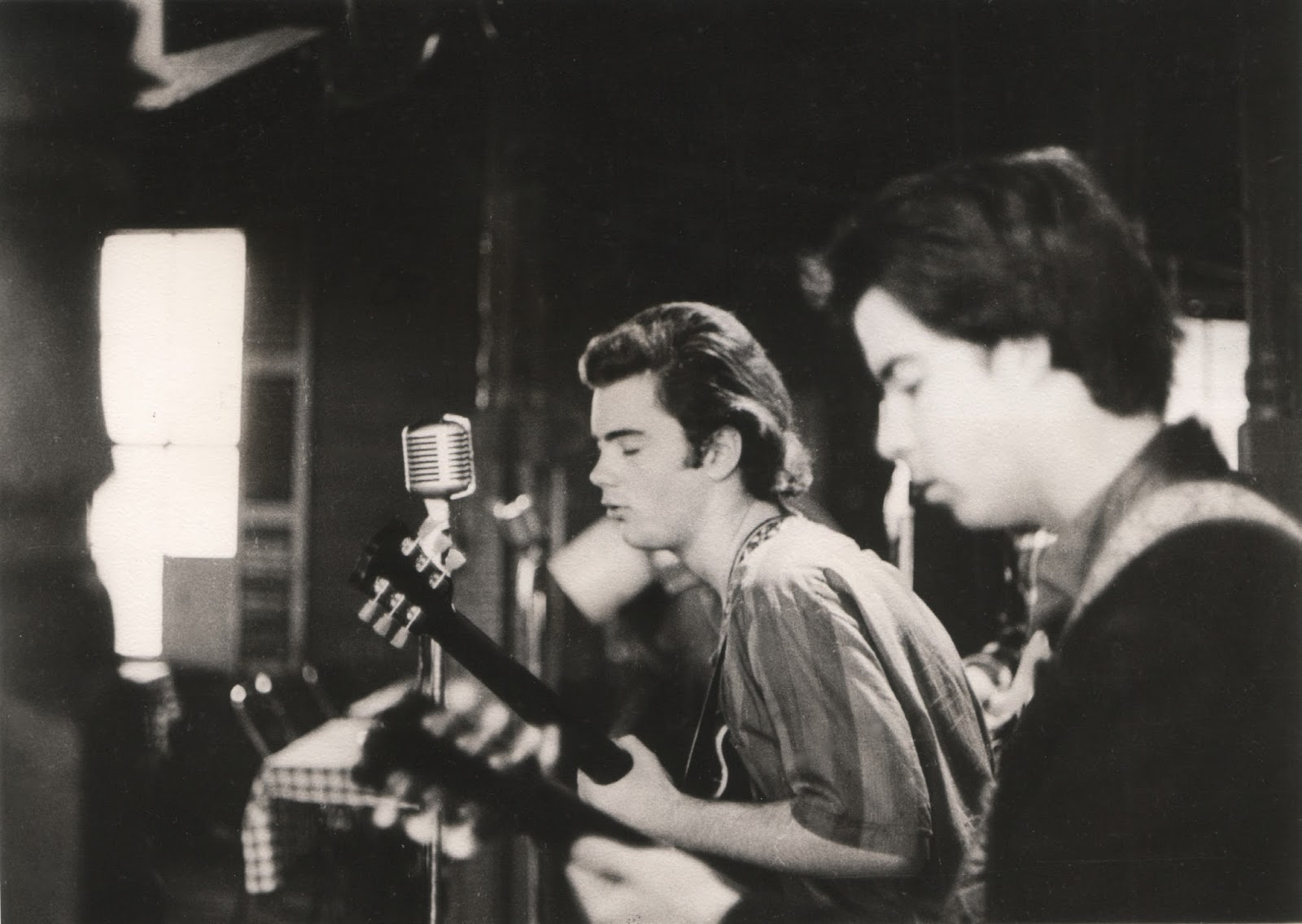
The soundtrack to this special era was provided by Texas bands with the names of A-440, The Coachmen, The Coastliners, The Clique, The Crabs, The Sixpentz, The Fun & Games Commission, The Children, Thursdays Children, Lost and Found, Red Krayola (with Mayo Thompson), The 13th Floor Elevators (with Roky Erickson), Fever Tree, Bubble Puppy, The Moving Sidewalks (with Billy Gibbons), and Zakary Thaks, to name just a few.
 |
| Roky Erickson and the 13th Floor Elevators at the New Orleans Club, 1966. Photo © Robert Simmons. Image from Boys From Houston. |
Although not all of these bands originated in Houston, they all performed in Houston clubs, recorded in Houston studios, and their records were played on Houston radio. Their music was embraced by Houston teenagers, and some of these bands and band members even went on to make a name for themselves in the national music arena.
First-time author Ayo speaks to those baby boomers who, like herself, share a collective memory of coming of age during the 1960s in Houston, in teen clubs like The Living Eye, Love Street Light Circus, La Maison, and The Catacombs, and in “head shops” of the era like The Electric Paisley, Dirty Jim’s Dry Goods, and Houston Blacklight & Poster Company.
Boys From Houston is a real eye-opener for those who would have never believed that the city once known as “Baghdad on the Bayou,” referring to its oppressive climate and its brackish waterway, was anything but a cultural wasteland.
 |
| The Moving Sidewalks: From left, Dan Mitchell, Tommy Moore, Don Summers, and Billy Gibbons. Photo courtesy Rick Campbell. Image from Boys From Houston. |
Ayo chronicles the time period from 1965 to 1970 with near-encyclopedic accuracy, and explains what key ingredients contributed to this creative and historic time in a town not necessarily known for tolerance or for having an enlightened outlook toward social change.
Houston musician and songwriter, Neal Ford (of The Fanatics), puts this phenomenon into perspective ever so poignantly in the prologue of this publication:
Up and down the streets of the neighborhoods of Houston the sound of bands practicing in their garages and living rooms could be heard day and night. New sounds, fun sounds, and exciting sounds of guitars, basses, drums and keyboards that claimed we are here and we have something to say.
Ayo does have a tendency to overly romanticize this time period and eschews writing about those musicians we lost due to their fascination with the dark side who were added to the roster of Houston’s rock & roll casualties. These were individuals whose promising careers were cut short, and who left us wondering where their talent would ultimately have taken them had they lived.
|
| Bubble Puppy. Photo courtesy of Dave Fore. Image from Boys From Houston. |
Tragically, three prominent guitarist/songwriters of this era with ties to Houston — Steve Perron of The Children, Stacy Sutherland of The 13th Floor Elevators, and Michael Knust of Fever Tree — all died prematurely, and their all-too-early deaths were unfortunately linked to reckless behavior, an excessive lifestyle, addictive personalities, and substance abuse.
Still equally sad is how some of the key players of this era grew into adulthood and abandoned their musical ambitions only to buy into the trappings of the generation they strived to become an alternative to. Some were lured by Houston’s petrochemical industry, some by the promise of riches in real estate development; and still some have been seen over the years pandering to conservative Texas politicians and other special interest groups.
Ayo reveals how this special point in time could not have occurred without the help of rival AM radio stations, KILT and KNUZ, who made a commitment to the community to provide radio airplay to records produced by local talent, as did Houston’s first progressive free-form FM station, KFMK. This was a time before corporate greed and radio programming consultants redefined the concept of broadcasting into one of “narrowcasting” by creating new radio formats that restricted the quantity and genre of music introduced into the marketplace.
Ayo also gives accolades to local music columnist Scott Holtzman, whose weekly column, “Now Sounds,” in The Houston Post, gave invaluable print exposure to the city’s burgeoning music scene and youth culture. Holtzman, with his wife, Vivian, would go on to produce and manage Houston’s psych/pop export, Fever Tree.
Another Houston Post music columnist who is referenced by Ayo is Larry Sepulvado. Sepulvado is recognized as one of the first to write about the Texas music scene in a national publication. In December, 1968, Rolling Stone magazine issue #23 published Sepulvado’s comprehensive expose, “Tribute to the Lone Star State.”
|
| B.J. Thomas and the Triumphs. Photo courtesy Don Drachenberg. Image from Boys From Houston. |
This was the issue with the iconic photo on the front cover of the late Doug Sahm and his toddler son, Shawn, who is seen wearing an oversized cowboy hat. It is also the issue, thanks to Sepulvado, that first exposed the nation to Beaumont native and guitar virtuoso, Johnny Winter.
Finally, Ayo acknowledges the contribution made by disc jockey-turned-TV-host, the late Harry Lieberman aka Larry Kane, who hosted a teen dance show Saturday afternoons on KTRK-TV for more than 11 years. The Larry Kane Show broadcast both local Houston and Texas bands lip-synching to their new 45 rpm singles on the air while adoring fans in the studio audience danced to the infectious backbeat of the music.
Vicky Welch Ayo, who now resides in Southern California, spent eight years researching this self-funded labor of love, and after shopping her unfinished manuscript to both UT Press and Texas A&M Press for their “Texas Music Series,” she opted to self-publish, under the company name, CreateSpace Independent Publishing Platform, in favor of editorial control.
Boys from Houston is a fun read and is recommended to all those who ever wondered about Houston’s once-glorious musical past. It was a special time in the most unlikely of cities whose once-thriving music scene vanished as mysteriously as it appeared.
My only burning question is, “What happened?” Perhaps Ayo could address this issue in Boys From Houston, Volume II, which I understand she is in the process of researching.
[Ivan Koop Kuper is a a drummer and a real estate broker, and is still a graduate student at the University of St. Thomas in Houston. He can be reached for comment at kuperi@stthom.edu. Find more articles by Ivan Koop Kuper on The Rag Blog.]
Thorne Webb Dreyer, Editor





