Type your summary here

Type rest of the post here

Source The Rag Blog

Posted in RagBlog | Leave a comment

Type your summary here

Type rest of the post here

Source /

The Rag Blog

Posted in RagBlog | Leave a comment

Lamar W. Hankins : Talking Guns with Wayne

Cartoon by Steve Breen / San Diego Union Tribune. Image from The English Blog.

The liberty to live:
Talking guns with Wayne

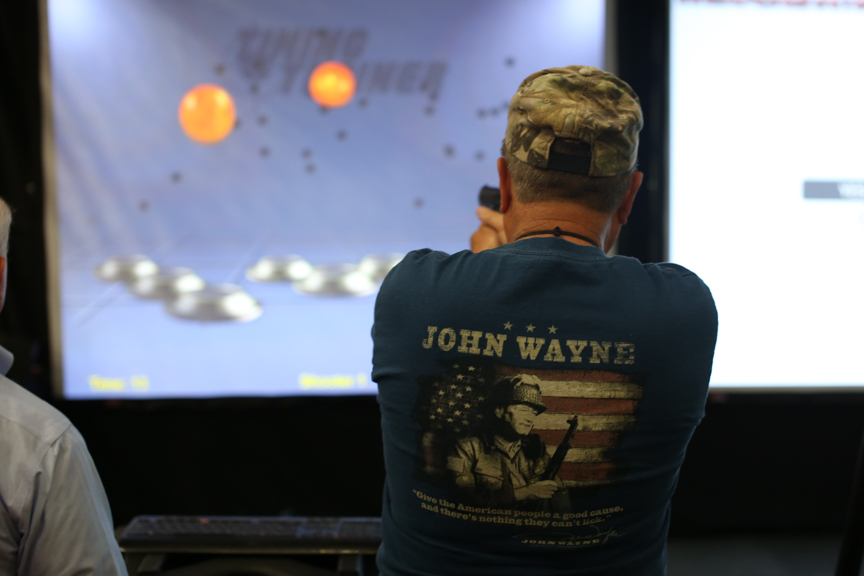
Wayne seemed to be growing frustrated with our discussion. ‘I don’t want kids killed,’ he said, ‘but I don’t want anyone taking away my right to own an AR-15 semi-automatic.’

By Lamar W. Hankins | The Rag Blog | May 6, 2013

I had a talk with my old friend Wayne the other day. We hadn’t seen each other for a while, so we had a lot of catching up to do. After we talked about our work and compared how many fish each of us had caught on our last fishing trips, talk turned to politics. Wayne owns several guns, so it was no surprise to me that he had gun control on his mind.

Wayne said that he had been following the new gun legislation being considered by Congress. He said it concerned him even though he didn’t think there was much chance any kind of gun control laws were going to pass this Congress. “Hell,” he said, “both of our Texas senators are completely behind the right to own guns. In fact, Sen. Ted Cruz is completely against unreasonable and burdensome gun restrictions that limit our liberty.”

I asked. “So you think requiring background checks is unreasonable and burdensome?”

“Well,” said Wayne, “Sen. Cruz thinks all of this new regulation won’t do anything to stop violent crime. It’ll just undermine the constitutional rights of all citizens to own whatever guns they want to own. That boy up in Connecticut who killed all those children and teachers was just a criminal using guns inappropriately.”

“Well, how could we have prevented that criminal from getting the guns he used?” I asked.

Wayne responded, “We need to keep the mentally ill from getting access to guns.” I acknowledged that this was a good idea, but I wondered how we could accomplish that.

“As I recall,” I told him, “the mentally ill criminal in Connecticut who killed those kids and their teachers got his semi-automatic weapon and large clips of bullets from his own mother’s stash of weapons, and he even killed her before he left for Sandy Hook Elementary School.”

Wayne replied that every gun purchaser should be checked for mental illness. When I noted that this wouldn’t have prevented the Connecticut shooter from taking his mother’s guns from the home that he shared with her, Wayne suggested that maybe family members of gun purchasers needed to be checked out also. I said, “Ted Cruz is not going to like that idea.”

Wayne agreed. “Maybe we just need to require people to keep their guns locked in a secure gun safe.”

“That sounds like a good idea,” I responded, “but wouldn’t that cost a lot and involve the government even more in my life?” Wayne agreed that maybe this wasn’t such a good plan. “What if we just close the gun show loophole that allows people to purchase guns without a background check?” I suggested.

Wayne agreed, but pointed out that this step would not have prevented the Sandy Hook killings. He had another idea.

“What if we put armed police officers at every school,” Wayne asked. “Wouldn’t that have stopped the Sandy Hook killer?”

“I don’t know,” I responded, “I seem to remember that there was a sheriff’s deputy assigned to the Columbine high school, and he was easily outgunned by the two kids who killed those 12 students and injured 21 more out there in Colorado. And that brings up even more questions. How many officers would we need at every school in America — over 132,000 schools — to provide it adequate protection?

“Officers make an average of of over $56,000. Just 10 officers at every school (and that may not be enough) would cost over half a million dollars per school, and more for their benefits. That’s over $6.6 billion per year, plus benefits. Do you think that the taxpayers would go along with even those minimal increases in costs?”

“Well, why don’t we arm all the teachers?” Wayne asked. “One of them should be able to kill or stop a shooter.”

I replied, “Teachers are not trained to use guns and might have difficulty taking on the combined roles of police officer and teacher. Some may not want to carry guns, and others just might not have the right personality or disposition to be good police officers. If firefighters resist cross-training as police officers, which they often do, how much more difficult would it be to cross-train teachers as police officers? It is not currently part of a teacher’s job description to shoot and kill someone.”

Wayne agreed that those points were worth considering. After thinking about it for a minute, he asked, “Why don’t we redesign our schools to be as safe as prisons?” he asked.

I replied, “Wouldn’t that still require a large number of police officers to provide security? How would we pay for all those extra officers, not to mention the costs of making our schools as safe as prisons?”

“That is a lot of money,” Wayne said. “But I’m not a politician. Why can’t they figure out how to keep our schools safe from gun-wielding killers?”

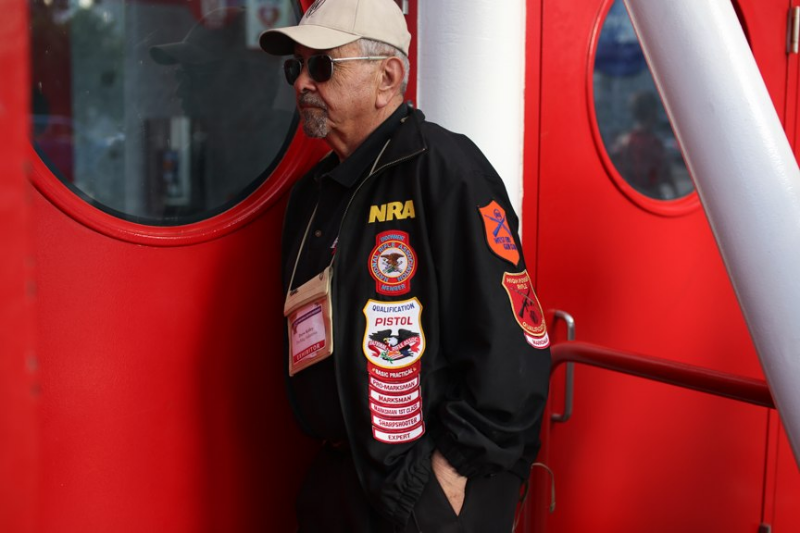
“They keep trying, but every time a bill comes up the NRA defeats it,” I said. “Do you know that the NRA has even prevented government agencies from studying the problem? And they don’t even want to prohibit what are called cop-killer bullets or put tracers in gun powder so that law enforcement agencies can solve crimes after they are committed.”

Wayne agreed that not allowing government agencies to study those ideas didn’t make a lot of sense. He avoided my other points.

Wayne seemed to be growing frustrated with our discussion. “I don’t want kids killed,” he said, “but I don’t want anyone taking away my right to own an AR-15 semi-automatic. I paid over $1,000 for that gun last year. Maybe we need to realize that just because a bad person does something bad doesn’t mean that you get to put some government bureaucrat in charge of my life.

“I’m sorry those children in Sandy Hook were killed, but you know what? Deal with it, and don’t force me to lose my liberty to buy any gun I want without a hassle, which would be a greater tragedy than having 20 children killed by some deranged guy.”

“I guess your liberty to buy any gun you want, anytime you want, is more important than the lives of our children,” I said. Wayne agreed.

Author’s note: If you have difficulty accepting Wayne’s views about this, check out and/or participate in an initiative of the survivors of Sandy Hook who are interested in finding common sense solutions to senseless violence.

[Lamar W. Hankins, a former San Marcos, Texas, city attorney, is also a columnist for the San Marcos Mercury. This article © Freethought San Marcos, Lamar W. Hankins. Read more articles by Lamar W. Hankins on The Rag Blog.]
The Rag Blog

Posted in Rag Bloggers | Tagged , , , , , , , , | 1 Comment

FILM / Michael Simmons : How Bob Fass Revolutionized Late-Night Radio

Bob Fass in the WBAI studios in New York. Photo by, yes, Bob Fass. Photos courtesy Radio Unnameable.

Radio Unnameable:
Bob Fass revolutionized late-night radio

Fass and ‘Cabal’ changed history and deserve the credit and Lovelace and Wolfson have provided the first in-depth cinematic look. It resonates like an epic tale with the hero emerging as a long-shot survivor.

By Michael Simmons | The Rag Blog | May 2, 2013

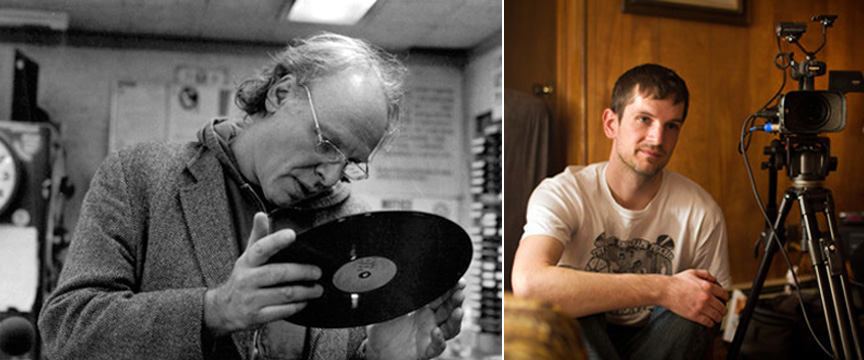
Radio legend Bob Fass and filmmaker Paul Lovelace will be Thorne Dreyer’s guests on Rag Radio this Friday, May 3, from 2-3 p.m. (CDT) on KOOP 91.7-FM in Austin, and streamed live to the world. The show will be rebroadcast by WFTE-FM in Mt. Cobb and Scranton, PA, Sunday morning, May 5, at 10 a.m. (EDT), and the podcast of this interview can be listened to or downloaded at the Internet Archive.

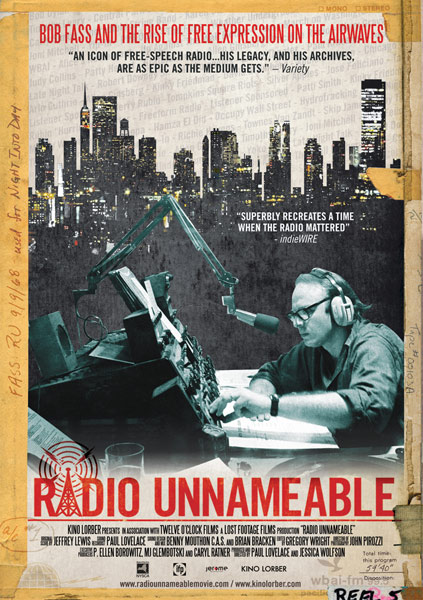
[Paul Lovelace and Jessica Wolfson’s remarkable film, Radio Unnameable, about free-form radio pioneer Bob Fass, is currently being featured at screenings around the country and the DVD will be released later this year. When the film was screened by the Austin Film Society last December, famed singer-songwriter Jerry Jeff Walker — who first performed “Mr. Bojangles” on Fass’ radio show — introduced the film to the Austin audience.]

“I wanna be a neuron — I don’t wanna be the brain,” said all-night radio host Bob Fass in the 1960s to his audience. “We’re all the brain.”

Bob Fass began his show Radio Unnameable at non-commercial, listener-sponsored WBAI-FM in New York City in 1963. By 1966 when I began listening as a fledgling nonconformist, Fass was on the air Monday through Friday from midnight to 5 or 6 a.m. Radio Unnameable was completely free-form and improvisational — radio jazz, as opposed to jazz radio.

Bob would play two or more records simultaneously of eclectic music and spoken word. Musicians would show up unexpectedly and perform. His friends came and shpritzed free-associative comedy routines or rapped about politics du jour or cultural happenings in the underground that were being created in real time. Friends included Bob Dylan, Abbie Hoffman, Paul Krassner, and Wavy Gravy. These characters were in cahoots with Fass’ audience whom he called “Cabal” — a handle that connoted subversion and conspiracy.

Bob Fass. In back, on left, is Abbie Hoffman.
Photo by Robert Altman.

An actor in his youth, Fass knew how to underplay. His voice was like a muted baritone saxophone — calm and reassuring, but at moments — always the right ones — he was capable of removing the mute and that bari would modulate, rising in excited exhortation. He entertained, comforted, educated, organized, raised consciousness, and inspired.

I was 11-years old in 1966 and I too wanted to be a neuron. A child of Top 40 radio (“W-A-Beatle-C!”), I was one of those kids with transistor radio and earplugs under the sheets when I was supposed to be asleep. One day while futzing with the dial at 2 a.m., I landed on WBAI and heard Phil Ochs sing “Draft Dodger Rag,” an absurdist satire about the serious subject of avoiding the military draft and thus the human meat-grinder that was The War In/On Vietnam. The combination of Ochs’ idealism and irony was irresistible and I was hooked on Fass at 99.5 on my FM dial.

Every night with Bob was different. There was no playlist, no formula, no commercials. Fass took phone calls and a techie had rigged a system that enabled 10 callers to yap at once — a pre-internet chat room. At times the show was indecipherable chaos, but mostly it was compelling for a restless and skeptical nipper like myself who’d been raised on rules and unquestioning respect for the authority of parents and so-called teachers and leaders.

Bob’s willingness to screw up in pursuit of the sublime — the audacity of failure, to quote filmmaker Jennifer Montgomery — was a lesson in the creative process — being unafraid to fall on one’s tuchus so that the practice of obliterating limits could reveal higher levels of artistry and consciousness. Ultimately we Cabalists discovered that the medium of radio alone could not only get one high, but get many high simultaneously.

Being a Fass listener in those days was to witness an emerging counterculture, watching it form on a molecular level in real time through experimentation and connection. One night in early ’67, Bob announced a Fly-In at a JFK Airport terminal and a thousand young people showed up to give flowers to passengers arriving from Hong Kong or Barcelona, giving birth to Flower Power. The Sweep-In followed and young ‘uns armed with brooms and mops helped clean up the untended ghetto of East Village streets.

These events led to the founding of the Youth International Party — the Yippies — and were all aired on Radio Unnameable. Even though I was initially too young to participate, the energetic positivity — the desire to change the human dynamic for the better — was infectious. I got bit and so did tens of thousands — eventually millions — of others. Within a year of my first listen, I was in the streets, at the barricades, on the front lines.

Fass c. 1969. Photo by Jim Demetropoulis.

Plenty more happened to Fass — both good and bad — but 40-sumpin’ years later, Bob is still on WBAI, Thursday night/Friday morning from midnight to 3 a.m. For the rest of the Bob Fass story, check out the extraordinary documentary Radio Unnameable by filmmakers Paul Lovelace and Jessica Wolfson. Fass and “Cabal” changed history and deserve the credit and Lovelace and Wolfson have provided the first in-depth cinematic look. It resonates like an epic tale with the hero emerging as a long-shot survivor.

Like so many young people in any era, I had a difficult adolescence. Mainstream adults with their arbitrary expectations and — worse — greed and slaughter were all transparently fucked up. At the age of 58 I still view most of conventional society with horror. But Bob Fass has helped keep me sane in an insane world for a half-century.

Radio Unnameable is a roadmap for rebels, those who believe — as the saying goes — that another world is possible. Fass and Lovelace and Wolfson show that political and cultural transformation are often generated in the wee small hours of the morning — that perfect time when the moon shines, the squares sleep, and dreamers share dreams while wide awake.

[As leader of the band Slewfoot, Michael Simmons was dubbed “The Father Of Country Punk” by Creem magazine in the 1970s. He was an editor at the National Lampoon in the ’80s where he wrote the popular column “Drinking Tips And Other War Stories.” He won a Los Angeles Press Club Award in the ’90s for investigative journalism and has written for MOJO, LA Weekly, Rolling Stone, Penthouse, High Times, the Los Angeles Times, The New York Times, CounterPunch, and The Progressive. Currently wrapping a solo album, Michael can be reached at guydebord@sbcglobal.net.]

The Rag Blog

Posted in Rag Bloggers | Tagged , , , , , , , , , , , | Leave a comment

Kristin Moe : Polluted Houston Neighborhood Draws the Line at Tar Sands

Children from the Manchester neighborhood in Houston with oil refinery smokestack in the background. Photo by Tar Sands Blockade. Photo by Tar Sands Blockade / YES! Magazine.

Houston’s most polluted neighborhood
draws the line at Alberta Tar Sands

East Texas is the belly of the beast: the heart of America’s oil country and the seat of power for the fossil fuels industry.

By Kristin Moe / YES! Magazine / May 2, 2013

HOUSTON — If the Keystone XL pipeline is approved, 90 percent of the tar sands crude that flows through it will be processed near an embattled Houston neighborhood called Manchester. Residents are joining up to demand a healthier future.

The playground in Manchester, a neighborhood on Houston’s east side, is empty much of the time. Children who play for too long here often start to cough. They go back inside, leaving an empty swing set in the shadow of a nearby oil refinery.

Yudith Nieto, 24, has lived in Manchester since her family came from Mexico when she was a small child. While it’s OK to visit the playground, she says, it’s not OK to bring her camera. On several occasions, security guards from the Valero refinery next door have appeared and asked her to leave, claiming that taking pictures in the park was “illegal.” They’ve even brought in Houston police as reinforcements.

Valero, one of the major oil companies operating in this industrial part of Houston, keeps its security busy: Nieto says that they have harassed documentary filmmakers and journalists. And when college students participating in an “alternative spring break” program came to the park to talk to her about the neighborhood’s problems, a guard drove up in an unmarked vehicle and took video of the meeting on his cellphone.

“I’m not afraid of the attention I’m getting from these people,” Nieto says, “because we want people to know that we’re aware.”

Manchester, one of Houston’s oldest neighborhoods, is surrounded by industry on all sides: a Rhodia chemical plant; a car-crushing facility; a water treatment plant; a train yard for hazardous cargo; a Goodyear synthetic rubber plant; oil refineries belonging to Lyondell Basell, Valero, and Texas Petro-Chemicals; as well as one of the busiest highways in the city.

Industrial development continues uninterrupted down the Houston Ship Channel for another 50 miles south to the Gulf of Mexico. The refineries around Houston have been called the “keystone to Keystone” because they’re expected to process 90 percent of tar sands crude from Alberta if the controversial Keystone XL pipeline is completed.

It’s one of the most polluted neighborhoods in the U.S., one where smokestacks grace every backyard view. But it’s taking on a new significance as the terminus of Keystone because the pipeline is at the center of the highest-stakes environmental battle in recent years. As international pressure builds, residents are beginning to organize, educate themselves, and speak out for the health of their families.

For them, the struggle over Keystone is not a political game. It’s not even about climate change, at least not exclusively. The effects of the pipeline will be right next door.

A grassroots movement begins to grow

Manchester is in some ways typical of low-income urban neighborhoods: it’s almost entirely Latino and African American, with a large number of undocumented immigrants. A full third of residents live below the poverty line. Drugs, unemployment, and gangs are a problem. And there’s a strange smell in the air: sometimes sweet, sometimes sulfurous, often reeking of diesel.

The most striking thing is that people here always seem to be sick. They have chronic headaches, nosebleeds, sore throats, and red sores on their skin that take months to heal.

Playground with Valero refinery
in background.

It took a groundbreaking study by the Houston Chronicle in 2005 to reveal for the first time the extent of the air pollution here. It identified five human carcinogens (a 2010 EPA study identified eight), including enough benzene that one scientist told the Chronicle that living in Manchester was “like sitting in traffic 24/7.” Toxin levels “were high enough that they would trigger a full-scale federal investigation if these communities were hazardous waste sites,” the Chronicle wrote.

Given this, it’s easy to understand why there are so many chronic respiratory problems. But the health risks go beyond asthma: for children living within two miles of the Houston Ship Channel, chances of contracting acute lymphocytic leukemia are 56 percent higher than for children only 10 miles away. “Children are being bombarded with toxins every day of their lives,” Nieto says.

Nieto, like many others in Manchester, grew up with asthma. Now an after-school teacher at Southwest Elementary, she spends her spare time working to organize this community, which has long been paralyzed by poverty, language barriers, and lack of access to information about exactly what is making them sick.

But the business of grassroots organizing is a slow one. It’s family to family, house to house. Many residents have reasons to resist taking action. They’re preoccupied with earning a living, fearful of authorities — often because of their legal status — and hesitant to accept just how bad their air might be.

Most people, Nieto says, just want to get out of Manchester. But they can’t afford rents anywhere else, and it’s impossible to sell. After all, who would buy a house with an oil refinery in the backyard?

So far, government representatives have been unwilling to act on behalf of residents who live along the Ship Channel. Juan Parras, a community organizer who founded Texas Environmental Justice Advocacy Services, or TEJAS, says that a major goal is simply holding public officials accountable and enforcing the laws already in place under the Clean Air Act.

But in a state where oil is king, he says, “our elected officials are more responsive to industry than they are to community needs.” Fossil-fuel companies — and the politicians whose campaigns they fund — stand to profit enormously from projects like the Keystone XL pipeline, Parras says. “They have our elected officials in their back pockets.”

Where grassroots meets DIY

But residents of Manchester are finding ways to take action that don’t depend on those representatives. Alongside two organizers from the group Tar Sands Blockade, Nieto, her partner Emmanuel, and a few other young people have set up a “free store” with regular hours.

It’s an outdoor community space based in a neighbor’s yard, a tent and some tables crammed with information and arts-and-crafts materials for children. The store offers free donated clothes, food, information on air pollution, meetings of local government officials, and trainings in skills like talking to the media and filing pollution complaints with the city.

The free store starts to address some of the immediate, daily needs for things like clothing and healthy food, which might prevent residents from engaging politically. It seems tiny in comparison with the industrial behemoth that’s so close. But it represents a critical shift towards mutual aid and self-sufficiency, an alternative to the feelings of helplessness that have long been dominant here.

By creating a space where neighbors can come together to take control of their own needs, organizers hope they’ll pave the way for deeper empowerment.

After a small rally and march last year, two activists from the Gulf Coast locked themselves to trucks entering a Valero facility in Manchester and launched a 45-day hunger strike, demanding that Valero divest from the Keystone XL pipeline. For now, the people risking arrest in these actions remain outsiders — U.S. citizens with greater access to resources and support. For many locals who struggle with supporting families under already difficult conditions, civil disobedience isn’t an option.

For Nieto, though, it’s about “building the support from people that I’ve known all my life.” Residents are mistrustful of even the most well-intentioned outsiders. That puts Nieto and the small handful of other young people from Manchester in a unique position to create change from the inside.

A critical position

The Alberta tar sands and the Keystone XL pipeline have taken on a monumental significance for the North American environmental movement. It’s not just another pipeline; former NASA climate scientist James Hansen famously referred to it as “the fuse to the biggest carbon bomb on the planet.” In February, it was a rallying point for the largest demonstration on climate change in U.S. history. Over 60,000 people have already signed a pledge to engage in civil disobedience should the final leg of the pipeline be approved.

East Houston man pickets pipeline.

If that happens, almost all of the tar sands crude that flows through Keystone will be processed at refineries in East Houston. Activists from Tar Sands Blockade say that Valero has contract rights with TransCanada, which will allow them to purchase up to three-quarters of Keystone’s capacity. Tar sands crude oil is much more toxic than regular crude, and contains 11 times more sulfur and nickel, and five times more lead.

That puts neighborhoods like Manchester in a critical position not only to affect the future of the pipeline — and by extension the fight against climate change — but to raise environmental justice issues around race and class into the national conversation.

After decades in the shadow of the refineries, Ship Channel residents have the potential to play a major role in the debate. The political pressure around Keystone might be just big enough to catalyze both residents and public officials to change the composition of the air in East Houston and the carbon in our atmosphere.

What’s more, East Texas is the belly of the beast: the heart of America’s oil country and the seat of power for the fossil fuels industry. Juan Parras of TEJAS says he tells national environmental groups concerned about climate change to get involved in Manchester. “Because if you can fight them here,” he says, “and beat them to the punch, it’s going to have a huge impact on the rest of the nation.”

But Parras also worries that spotlighting Keystone will allow the media to forget the myriad other issues faced by residents of Manchester — that even if the pipeline is stopped, public attention will move on, and local people will still be dealing with polluted air, cancer and asthma, and the poverty that makes it impossible to leave.

Yudith Nieto, through her activism, has started to travel. She has met organizers from places all along Keystone’s path, including indigenous people from the Alberta tar sands.

Meeting them only deepened her sense of shared destiny, she says, the sense that she and her neighbors are not alone. “It put everything else into perspective,” she says. “This has been going on for such a long time. I became an ally to those people, and they became allies to me.”

Keystone is a threat to the health of communities along its path, from the source in Alberta to the terminus in Texas. But it also presents a challenge, and an opportunity, for those communities to realize what they have in common and make their voices heard. What’s at stake is not only the air quality in East Houston, but the stability of the climate across the planet.

This article was originally published by YES! Magazine and distributed by Truthout under a Creative Commons License.

[Kristin Moe writes for YES! Magazine, a national, nonprofit media project that fuses powerful ideas and practical actions. Kristin writes about climate, grassroots movements and social change. Follow her on Twitter @yo_Kmoe.]

The Rag Blog

Posted in RagBlog | Tagged , , , , , , , , , , , , | Leave a comment

Type your summary here

Type rest of the post here

Source /

The Rag Blog

Posted in RagBlog | Leave a comment

Bob Fass leads East Village Sweep-In. Type your summary here

Type rest of the post here

Source /

The Rag Blog

Posted in RagBlog | Leave a comment

RAG RADIO / Thorne Dreyer : Pedro Gatos and Val Liveoak on Nicaragua, Cuba, and the Global South

From left, Pedro Gatos, Rag Radio’s Thorne Dreyer, and Val Liveoak, in the studios of KOOP-FM in Austin, Texas, Friday, April 26, 2013. Photo by Roger Baker / The Rag Blog.

Rag Radio podcast:
Pedro Gatos and Val Liveoak on changes
in Cuba, Nicaragua, and the Global South

We discuss the legacy of Hugo Chavez, the state of the Cuban revolution, the landmark genocide trials in Guatemala, and the growing challenge to U.S. hegemony in the hemisphere.

By Rag Radio | The Rag Blog | May 1, 2013

Peace activists Pedro Gatos and Val Liveoak joined Rag Radio host Thorne Dreyer in a discussion of recent developments in Cuba, Nicaragua, Guatemala, and the Global South on Friday, April 26, 2013. Rag Radio is a syndicated radio program produced at the studios of KOOP 91.7-FM in Austin, Texas.

Listen to or download our interview with Pedro Gatos and Val Liveoak here:


Among the topics Gatos and Liveoak discussed on the show were the legacy of Hugo Chavez in Nicaragua and the recent narrow victory of Nicolas Maduro; Cuba in transition and the state of the continuing revolution; the landmark genocide trials in Guatemala of former head of state Efraín Ríos Montt and former military intelligence chief José Mauricio Rodríguez Sanchez; and the region’s growing challenge to U.S. hegemony.

Pedro Gatos (aka Pete Katz) is an activist, a specialist in Latin American politics and history, a radio show host, and a licensed chemical dependency counselor. He was employed in the Travis County Justice System in Austin, Texas, for 24 years.

He founded the Pedro Gatos Institute on Addiction, Health and Social Theory. He has facilitated workshops on subjects ranging from addiction and the War on Drugs to U.S. foreign policy and “The Bay of Pigs 50 Years Later.”

Gatos has visited Cuba five times since 2000 and has had exclusive interviews with then National Assembly President Ricardo Alarcón and many others. Pedro hosts Bringing Light into Darkness Mondays at 6 p.m. on KOOP-FM in Austin.

Val Liveoak is the volunteer Coordinator of Friends Peace Teams’ Peacebuilding en las Américas program. An activist since 1971, she founded the Friends Peace Teams in 1993, and has been involved with many community organizations and nonviolent struggles.

For 21 years, she has been a facilitator with the Alternatives to Violence Project (AVP), working in Mexico, Canada, Burundi, Rwanda, Kenya, Guatemala, Nicaragua, Cuba, St. Croix, St. Kitts, Bolivia, Colombia, Honduras, and El Salvador.

Val lives in San Antonio, but spends most of the year in Suchitoto, El Salvador, and travels throughout the region. She has been named a “Woman of Peace” by Womens’ Peacepower Foundation (2009) and Peacemaker of the Year by the Austin Peace and Justice Center (1986).

Listen to our December 9, 2011, Rag Radio interview with Val Liveoak here.

Rag Radio has aired since September 2009 on KOOP 91.7-FM, an all-volunteer cooperatively-run community radio station in Austin, Texas. Hosted and produced by Rag Blog editor and long-time alternative journalist Thorne Dreyer, a pioneer of the Sixties underground press movement, Rag Radio is broadcast every Friday from 2-3 p.m. (CDT) on KOOP, and is rebroadcast on Sundays at 10 a.m. (EDT) on WFTE, 90.3-FM in Mt. Cobb, PA, and 105.7-FM in Scranton, PA.

The show is streamed live on the web by both stations and, after broadcast, all Rag Radio shows are posted as podcasts at the Internet Archive.

Rag Radio is produced in association with The Rag Blog, a progressive Internet newsmagazine, and the New Journalism Project, a Texas 501(c)(3) nonprofit corporation. Tracey Schulz is the show’s engineer and co-producer.

Rag Radio can be contacted at ragradio@koop.org.

Coming up on Rag Radio:
THIS FRIDAY, May 3, 2013:
Free-form radio pioneer Bob Fass of Pacifica Radio’s WBAI-FM in New York, with filmmaker Paul Lovelace (Radio Unnameable).
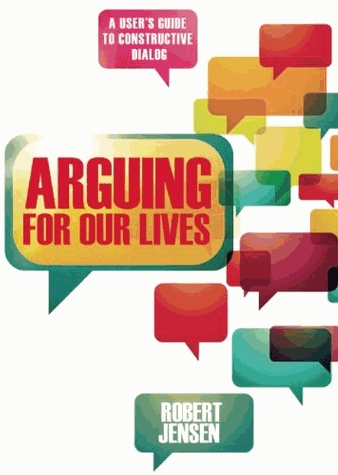
Friday, May 10, 2013: Journalism professor & activist Robert Jensen, author of Arguing for Our Lives: A User’s Guide to Constructive Dialog.
Friday, May 17, 2013: Political economist Gar Alperovitz, author of What Then Must We Do?
May 24, 2013 (RESCHEDULED): Amsterdam-based poet John Sinclair, legendary founder of the White Panther Party and former manager of the MC5.

The Rag Blog

Posted in Rag Bloggers | Tagged , , , , , , , , , , , | Leave a comment


Type your summary here


Type rest of the post here

Source /

The Rag Blog

Posted in RagBlog | Leave a comment

FILM / Jonah Raskin : Robert Redford ‘Keeps Company’ with the Sixties Underground

‘The Company You Keep’:
Robert Redford’s overambitious
take on the Sixties underground

He clearly wanted to make an epic about then and now, about Sixties radicals and their kids, and he couldn’t pull it off.

By Jonah Raskin | The Rag Blog | May 1, 2013

The Company You Keep, released in December 2012, was directed by Robert Redford with a screenplay by Lem Dobbs based on the novel of the same name by Neil Gordon.

Robert Redford’s new movie, The Company You Keep, boasts a huge cast of characters that includes cops, reporters, FBI agents, and former members of an organization of 1960s/1970s radicals that resembles the Weather Underground. A few of the characters are on the run and the target of a manhunt, while others have crept back into the halls of respectability and want nothing to do with their former comrades.

Redford himself certainly remembers that era of seemingly unending protest, resistance, and an invincible underground as well as anyone else in the movie industry today, except perhaps the director and screenwriter Haskell Wexler (best known for Medium Cool, 1969).

Indeed, Redford was near the height of his movie career when fugitives in the Weather Underground set off bombs in federal, state, and local government buildings to protest the war machine, the criminal justice system, along with imperialism, capitalism, colonialism, sexism, racism, and more.

Redford is, of course, also familiar with Sam Green’s 2002 documentary, The Weather Underground, which tends to romanticize the fugitives and their clandestine organization. The picture was nominated for an Oscar after it made the rounds at Redford’s Sundance Film Festival.

Neil Gordon, the author of the novel that inspired the movie, had the cooperation of former members of the Weather Underground. Like Sam Green, Gordon also romanticizes the characters he portrays. He once told me he thought of the Weather Underground as the American equivalent of the African National Conference (ANC), the organization that helped end apartheid in South Africa. Like others before him, Gordon fell prey to myth.

There’s something about fugitives that makes them endearing, even when they’re desperados such as Duke Mantee, the gangster on the run played by Humphrey Bogart in the 1936 classic, The Petrified Forest. But perhaps that endearing quality has vanished in the era of terrorists and terrorism when whole neighborhoods are locked down.

I know the pitfalls of writing about fugitives, though I often found the actualities of fugitive life mundane. I remember an occasion more than 30 years ago when the FBI launched a massive hunt for the Weathermen and Weatherwomen. Curiously, they didn’t panic. Instead, they calmly and deliberately destroyed everything in their possession that might have led to their capture.

And they spent days wearing rubber gloves, wiping every surface perfectly clean in an apartment to eradicate fingerprints. That took dedication, but it certainly wasn’t glamorous. From the actualities of fugitives cleaning an apartment with Ajax you can’t really make a dramatic picture.

Mimi, the most fetching of the fugitives in Redford’s picture — played to perfection by Julie Christie — makes a speech in which she says that everything she once protested against is as insidious as ever before, and perhaps even more so. She’s eloquent and so is the character that Redford plays.

He’s an ex-radical who has reinvented himself as a liberal lawyer. His past catches up with him and so he goes in search of his own past to clear his name. The hunter is hunted. Mimi is the only person who can help him. By the end of the movie, he finds her and convinces her to come out of hiding and rescue him.

The character Redford plays is also a widower with a young daughter who doesn’t know who he really is or what he’s done in the past. Between the two of them, there’s a huge generation gap. Redford also has a beautiful older daughter — his love child — who was born underground, then adopted and raised by a police officer and his wife. (That part of the story doesn’t make any sense. When the picture tries to tie-up loose ends it only makes more of a mess.)

Both daughters are in the dark. Like the younger daughter, the older daughter doesn’t know that her real father was a Sixties radical who went on the lam. Nor does she know that she has a half-sister. The two sisters don’t ever meet. Family secrets flourish until the FBI flushes them out. Moreover, the older sister never meets her biological mother, Mimi, who has survived underground as a drug smuggler.

All the pieces in this big jigsaw puzzle of a picture don’t fit together.

Redford was overly ambitious. He clearly wanted to make an epic about then and now, about Sixties radicals and their kids, and he couldn’t pull it off. His ending is anti-climactic, though it also avoids a great many Hollywood clichés. There are no bombings and nothing is blown up — a real virtue in a picture about bombers and bombers.

There’s a long chase by car, train and on foot. Indeed, Redford’s character is on the run most of the time, though he’s long past his prime running days. Even his designer running shoes don’t help him. An old, ex-radical trying to run from the FBI presents a rather comic figure. Old fugitives can’t run. That much is clear, though it’s also clear that the acting is stellar. Redford elicited stunning performances from his team.

Along with Julie Christie, there’s Nick Nolte, Susan Sarandon, Richard Jenkins, Sam Elliott, and Chris Cooper. It’s almost as if Redford called all of his old Hollywood pals and asked them to join with him and to make a picture that would pay homage to the Sixties and bury ideological hatchets.

It’s a kinder, gentler America that Redford would like — along with integrity in journalism and fresh organic food from local farms. But nothing bigger or bolder. Even Mimi, the most revolutionary of the characters, hasn’t any hope for revolution.

The personal is more important than the political for Redford and for the character he plays. In The Company You Keep, family and friends carry more weight than ideology, and in that sense the picture does seem to accurately reflect the lives of former Weather Underground members who have almost all married, embraced monogamy, become moms and dads, raised families, become lawyers and doctors, joined the middle class and remained loyal to one another.

But has no one really become a moral monster? Or poor? Or serve a life sentence in prison? The picture gives the impression that all the old New Leftists became solidly middle class with cars, toys, and gadgets. Perhaps so, though Dave Gilbert and Judy Clark, two Weather Undergrounders, are both behind bars.

Watching the picture, I found myself caring about the characters. I kept waiting to see whether Redford would be captured by the cops — or if he’d remain at large. Still, there’s something musty and outdated about the picture that prevented me from getting emotionally caught up in the dramatic conflicts. The news got in the way.

Think about the recent bombings in Boston and the manhunt for the two brothers suspected of planting the explosives, and then think of Redford’s movie, and it’s clear that we’re in another era with a whole other set of rules. The Company You Keep is mostly an exercise in nostalgia.

The bombers of today bear little if any resemblance to the Weather Underground bombers of yesterday who were white, middle class, college educated, well-read in Marx and Mao, atheists or agnostics, and not motivated by religion or ethnicity.

I never once met a single member of the Weather Underground who knew a thing about Chechnya or about Islam. Geopolitics have changed, and the power of law enforcement has grown exponentially. If today’s tactics had been applied to the Weather Undergrounders they wouldn’t have remained at-large for a decade.

It’s too bad Redford didn’t make his picture in, say, 1980. It would have seemed a lot more relevant then. Now, it’s a curiosity, though it’s also a reminder that older actors such as Nick Nolte, Julie Christie, and Susan Sarandon can still give strong performances. The young Shia LaBeouf does a credible job as an idealistic, fledgling reporter carrying on the tradition of Bob Woodward and Carl Bernstein.

You remember those guys don’t you? Redford starred in the picture, All the President’s Men, as Bob Woodward of The Washington Post and Watergate fame who helped bring down President Nixon. And surely you remember Butch Cassidy and the Sundance Kid (1969), another movie about outlaws and fugitives that stars Redford and Paul Newman and that inspired the Weather Undergrounders. All the guys wanted to be Butch or Sundance and to go out in a blaze of glory.

What hasn’t changed, of course, after all all these years, is the chemistry of the company you keep. The title of Redford’s movie about fugitives on the run seems to suggest that one ought to be careful about choosing one’s associates. Guilt by association goes a long way.

In the era of Homeland Security, the company one keeps can be as harmful to one’s health, as it was during the Salem witch trials more than 300 years ago or during the McCarthyism of the 1950s. So, if you’re going to conspire, make sure you conspire with the ones you really love.

[Jonah Raskin, a long-time journalist and activist and a regular contributor to The Rag Blog, was involved with the Yippies and, tangentially, with the Weather Underground. He is the author of For the Hell of It: The Life and Times of Abbie Hoffman. Read more articles by Jonah Raskin on The Rag Blog.]
The Rag Blog

Posted in Rag Bloggers | Tagged , , , , , , , | 2 Comments

Michael James : Hope Springs Eternal

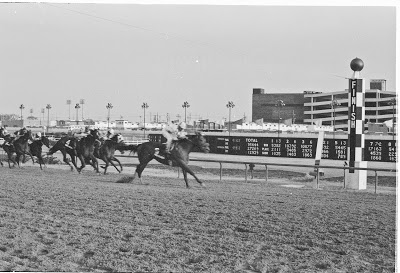
Comiskey Park, Chicago, 1990. Photo by Michael James from his forthcoming book, Michael Gaylord James’ Pictures from the Long Haul.

Pictures from the Long Haul:
Hope springs eternal on
opening day at Comiskey Park

By Michael James | The Rag Blog | May 1, 2013

[In this series, Michael James is sharing images from his rich past, accompanied by reflections about — and inspired by — those images. This photo will be included in his forthcoming book, Michael Gaylord James’ Pictures from the Long Haul.]

Today is opening day. Yea!

This is opening day 1990, the last year of the wonderful old White Sox park, aka Comiskey Park. Was there for this final opening, and, more sadly, the last day of that season when police on horseback kept the masses from going on the field. Ahh, and again at the new park in 1991. My dislike of the new park has diminished, but I would have preferred keeping the old park and fixing it up.

Having grown up loving the Brooklyn Dodgers, I went to my first White Sox game in the summer of 1966 with Paul Booth. By 1976, the year we opened the Heartland Cafe, I was a dedicated Sox fan.

I loved Bill Veeck (who not only wanted to integrate baseball, but wanted to incorporate the old Negro Leagues into the Majors), the shower in the outfield stands, Harry Caray when he was the Sox announcer, the food, the Southside Hitmen motorcycle club, the activity on 35th street, and… that summer of 1976 that saw both the Sox and the Cubs in first place, for awhile.

Ahh, and let’s not forget the White Sox were the World Champions in 2005.

[Michael James is a former SDS national officer, the founder of Rising Up Angry, co-founder of Chicago’s Heartland Café (1976 and still going), and co-host of the Saturday morning (9-10 a.m. CDT) Live from the Heartland radio show, here and on YouTube. He is reachable by one and all at michael@heartlandcafe.com. Find more articles by Michael James on The Rag Blog.]

The Rag Blog

Posted in Rag Bloggers | Tagged , , , , , , , | Leave a comment

Harry Targ : Speaking Truth About Violence

Window into violence: A boy and his bird in Gaza. Image from chemicalcollisions / Tumblr.

Towards a just society:
Speaking truth about violence

Violence engendered by the rich and powerful and responses from the poor and powerless are embedded in the system of structural violence.

By Harry Targ | The Rag Blog | May 1, 2013

Establishing causal connections between “variables” and violence is a form of mystification. The reality of this world is that of grotesque inequalities in wealth, power, respect for humankind and the environment, a world awash in instrumentalities of death, and a global culture that celebrates it. Recent reports from the World Bank and the World Economic Forum (of all places) document the continuing and growing inequalities in wealth and income on a worldwide basis.

Could it be a surprise that seemingly indiscriminate acts of violence occur all across the globe? Only a humane global movement for fundamental change can radically transform the world we live in but movements of protest can make constructive changes along the way.

Harry Targ, Facebook, April 23, 2013

Each violent tragedy in the United States brings an outpouring of wrenching and “expert” analyses of what was behind the acts that led to so much pain and suffering. Most of the soul-searching about tragedies from Arizona, to Colorado, to Connecticut, to Boston is about domestic events (the repeated killings of Iraqis, Afghan peoples, Pakistanis, Yemenis and others generate much less empathy).

Explanations usually involve deranged “others,” usually poor “others,” “others” of color, and “others with fundamentalist religious beliefs.” Their crimes are described as perpetrated against victims who are the “normal” people.

Make no mistake about it, violence against any individuals, communities, and nations must be opposed, even among those who in the end are the root cause of it. But we need to be clear about the economic, social, political, cultural, and military/police context in which violence occurs. And, in no small measure, violence itself is celebrated in the societies where it is most prevalent.

Peace researchers have written about “direct,” “cultural,” and “structural” violence for years. While each of these is seen as having its own characteristics and causes, for the most part analysts regard the three as inextricably interconnected.

Direct violence refers to physical assault, shooting, bombing, gassing, and torture. It is about killing people. Cultural violence refers to dominant cultures whose apparatuses, such as the media and laws, portray their own institutions and values as superior to others and rituals that seek to honor the violence engaged in by one’s own country or group while demeaning other countries or groups. What is most vicious about cultural violence is its effort to make the victimized groups hate themselves.

Structural violence occurs when economic, political, cultural, and military institutions create relationships in which some human beings gain disproportionately from the labor, the talents, and the pain and suffering of others. Structural violence is institutionalized violence most often organized around class exploitation, racism, and patterns of gendered forms of domination and subordination. The key concepts that shape efforts to understand the causes and effects of structural violence are class, race, and gender.

Ironically, reports issued this year between the Newtown and Boston massacres by the World Bank and the World Economic Forum tell us much about the fundamentals of structural violence on a worldwide basis. These reports clearly describe why we do not live in a better world, why people do not treat each other with more respect, and why vast majorities of humanity and their natural habitats are in danger of extinction.

And they imply that violence engendered by the rich and powerful and responses from the poor and powerless are embedded in the system of structural violence.

The World Bank Report

The World Bank issued a press release on April 17, 2013 summarizing “The State of the Poor: Where are the Poor and Where are the Poorest?” It reported that the number of the world’s citizens living on less than $1.25 a day has declined markedly between 1981 and 2010 from half the world’s population to 21 percent. But still, they say, 1.2 billion people live in extreme poverty (below $1.25 per day). Sub-Saharan Africa accounts for more than one-third of those who live in such poverty worldwide.

A World Bank spokesperson noted that “We have made strides in cutting down poverty, but with nearly one-fifth of the world population still below the poverty line, not enough.” (This particular World Bank report does not include data on those living just above the poverty line. For example, another 20 percent live on $2 per day.)

Oxfam reports on the World Economic Forum’s “Global Risk Report”

In an Oxfam Media Briefing (January 18, 2013), the authors site a recent World Economic Forum warning that rising global inequality constitutes one of the top “global risks of 2013.” Oxfam points out that lifting masses of people out of absolute poverty has been the goal of economic elites over the last decade but “inequality and the extreme wealth that contributes to it were seen as either not relevant, or a prerequisite for the growth that would also help the poorest, as the wealth created trickled down to the benefit of everyone.”

The Oxfam Media Briefing suggests reasons why the WEF might correctly regard growing global inequality as a “risk.” They highlight the following:

  • Extreme wealth and inequality are reaching levels never before seen in history and are getting worse. Inequality is growing in the industrial developed countries such as the United States and Great Britain, rapidly developing economies such as China and South Africa, and many of the poorest countries in the world. The incomes of the top 1 percent have increased by 60 percent over the last 20 years. The top 100 billionaires added $240 billion to their wealth in 2012. “The IMF has said that inequality is dangerous and divisive and could lead to civil unrest.”
  • Extreme wealth and inequality is politically corrosive. Oxfam makes the obvious but important point that growing inequality in wealth and income relates to growing inequality in political power. They quote economist Joseph Stiglitz who contends that financial deregulation in the largest capitalist countries led to greater economic inequality and further consolidation of political power by financial elites.
  • Extreme wealth and inequality is socially divisive. For Oxfam, the consolidation of wealth and power reduces the life chances and even human sustainability of the vast majority of populations. People work harder for less and suffer more. “If rich elites use their money to buy services, whether it is private schooling or private healthcare, they have less interest in public services or paying taxes to support them.” And, as Oxfam reminds us, inequality is linked to growing alienation, mental disorders, crime, anomic violence, and sheer desperation.
  • Extreme wealth and inequality is environmentally destructive. Oxfam reiterates the fact that rising inequality increases demands by the rich for access to and consumption of scarce resources that the earth can no longer provide. “Those in the 1 percent have been estimated to use as much as 10,000 times more carbon than the average U.S. citizen.”

So if you grow up in urban America or rural Africa, the Middle East, or almost anywhere else, and you are young, intelligent, and experience the world through the globalization of a racist, sexist, violent media, does your view of the world look bright? No job, no respect, hungry, alienated, and imbued with the cultural values about violence and racism that are used to define you, you may act in the same ways the rich and powerful act against you and your people.

The conversation that should come out of Newtown, Boston, and West, Texas, or Baghdad, Kabul, and Gaza, or almost anyplace else, is how to change the structural violence that gave rise to direct and cultural violence. This discussion should lead to the mobilization of progressives to create a just society, one in which people will not want to kill each other.

[Harry Targ is a professor of political science at Purdue University and is a member of the National Executive Committee of the Committees of Correspondence for Democracy and Socialism. He lives in West Lafayette, Indiana, and blogs at Diary of a Heartland Radical. Read more of Harry Targ’s articles on The Rag Blog.]
The Rag Blog

Posted in Rag Bloggers | Tagged , , , , | 3 Comments