Type your summary here

Type rest of the post here

Source /

The Rag Blog

Posted in RagBlog | Leave a comment

Alan Waldman : Two Very Funny, Politically Incisive British Series That Are Well Worth Watching

Waldman’s film and TV
treasures you may have missed:

Paul Eddington and Nigel Hawthorne are outstanding as a British Minister and his civil servant nemesis in Yes Minister and Yes Prime Minister.

By Alan Waldman | The Rag Blog | April 23, 2013

[In his weekly column, Alan Waldman reviews some of his favorite films and TV series that readers may have missed, including TV dramas, mysteries, and comedies from Canada, England, Ireland, and Scotland. Most are available on DVD and/or Netflix, and some episodes are on YouTube.]

Two comic TV series beloved by British audiences, critics, and Prime Minister Margaret Thatcher (who claimed it gave her “hours of pure joy”) were the 23-episode 1980-84 political comedy Yes Minister and its 16-episode 1986-88 sequel, Yes Prime Minister. All episodes are available on Netflix, and most can be seen on YouTube.

Nigel Hawthorne justifiably won five acting awards for the two series; Yes Minister won three Best Comedy honors (in four years); Yes Prime Minister won Best Entertainment, and two other awards went to the series writers, Antony Jay and Jonathan Lynn.

The first series is mostly set in the private office of M.P. Jim Hacker (beautifully played by Paul Eddington), who holds the (fictional) title of Minister of Administrative Affairs. He is constantly coming up with legislation and suggested departmental changes, but, alas, he is eternally undercut by his Permanent Private Secretary, Sir Humphrey Appleby (a magnificent Nigel Hawthorne), who like all true bureaucrats doggedly wants to maintain the status quo.

Caught in the perpetual crossfire is Principal Private Secretary Bernard Woolley (a very funny Derek Fowlds). In the sequel series, Hacker has risen to prime minister and Sir Humphrey and Bernard have followed him to 10 Downing Street

Sometimes Sir Humphrey succeeds in thwarting Hacker’s latest reform effort, but on other occasions the minister outsmarts the big bad bureaucrat and gets his way. Sir Humphrey is snobbish and supercilious, has cynical views of government, speaks in complicated sentences, and is a master of obfuscation.

Yes Minister: Incisive political comedy.

Usually once per episode he delivers a towering oratorical aria that viewers (like comic Stephen Fry) looked forward to and adored. Hacker is a well-intentioned, indecisive, publicity-mad bungler. Bernard frequently strikes comic gold by pedantically pointing out the impossibility of Hacker’s or Humphrey’s mixed metaphors.

Here is a sample episode of Yes Prime Minister.

Political scientists have praised the two series for their accurate and sophisticated portrayal of the relationships between civil servants and politicians. The shows are actually quoted in some British political textbooks. They have significantly changed the way viewers regard politicians and career civil servants, because they so brilliantly expose the bullshit beneath governmental and political public utterances.

The Guinness Television Encyclopedia suggests that “real politicians enjoyed the show’s cynical dismissal of Whitehall intrigue and its insights into the machinations of government.”

In an interview, Fowlds explains the show’s near-universal popularity: “Both political sides believe that it satirizes their opponents, and civil servants love it because it depicts them as being more powerful than either.” The programs avoided having Hacker belong to any specific party, perhaps because writer Lynn supported Labour while co-writer Jay was a Thatcher fan.

The idea for the series dates back to when Lynn, thinking he might like to enter politics one day, joined the Cambridge Union debating society. He recalls: “All of the main debaters there, aged 20, were the most pompous, self-satisfied, self-important bunch of clowns that I’ve ever clapped eyes on. They were all behaving as if they were on the government front bench,” and 20 years later many of them were.

Lynn decided that the best way he could ever contribute to politics was in making fun of the politicians. He and co-writer Jay did so magnificently in these masterful comedies.

Yes Minister/Prime Minister led to radio programs, books, and remakes of the shows in Portuguese, Hindi, Dutch, and Hebrew. In 2013, a six-episode revival of Yes Prime Minister, starring David Haig and Henry Goodman, began taping in England.

[Oregon writer and Houston native Alan Waldman holds a B.A. in theater arts from Brandeis University and has worked as an editor at The Hollywood Reporter and Honolulu magazine. Read more of Alan Waldman’s articles on The Rag Blog.]

The Rag Blog

Posted in Rag Bloggers | Tagged , , , , , , , | Leave a comment

BOOKS / Ron Jacobs : ‘Conversations on U.S. State Terrorism’

‘Weapon of the Strong’
Interviews from ‘State of Nature

Throughout the text is an underlying question of language and its meaning. Why is one act considered terrorism while another act that is essentially the same not considered so?

By Ron Jacobs | The Rag Blog | April 23, 2013

Weapon of the Strong: Conversations on U.S. State Terrorism, edited by Jon Bailes and Cihan Aksan (2012: Pluto Press); Paperback; 224 pp; $24.

The interview is one of the journalist’s best tools. If done right, an interview provides a considerable amount of information about the views of the interviewee and interviewer, while also informing the reader about the subjects covered.

Certain journalists made the interview an art form in its own right. Relatively recent examples of this include Jann Wenner’s Rolling Stone interview with John Lennon in 1971, David Frost’s interview of Richard Nixon in 1977, Alex Haley’s interview of Malcolm X, and Ignacio Ramonet’s interview of Fidel Castro.

Two of these interviews have been published in book form (Ramonet and Castro; Wenner and Lennon, with the Lennon interview being twice made into a book); one was related to one of the best-selling books of the 20th Century (Alex Haley’s Malcolm X); and the Frost-Nixon interviews were watched by millions on television, while also being remade into a film drama almost 30 years later.

I mention these interviews as a means of introducing the first book by the editors of the political-cultural web magazine State of Nature. This book, titled Weapon of the Strong: Conversations on U.S. State Terrorism, features 13 interviews.

The interviewees are philosophically from the left side of the political spectrum and come from five different countries. They include Noam Chomsky, attorney Marjorie Cohn, several professors and the director of the Swiss Institute for Peace and Energy Research. The interviewers and editors are Cihan Aksan and Jon Bailes.

The conversations cover topics that include state-sponsored terrorism, the Unites States as a terrorist state, the nature of economic terrorism as facilitated by the International Monetary Fund (IMF) and the World Bank, the role of the United Nations, and the U.S. role in the Middle East, to name but a few.

Throughout the text is an underlying question of language and its meaning. Why is one act considered terrorism while another act that is essentially the same not considered so? Is it the actor that determines whether or not an act is terroristic? Why is the U.S. hesitant to accept the commonly held definition of terrorism? Is the reason that doing so would indict the United States as a terrorist state?

These are just a small number of the questions raised and addressed in this tightly edited and intellectually stimulating collection.

Chomsky discusses the pointlessness of international law given the fact that it is the most powerful nations (most specifically, the U.S. and UK, although Russia and China have managed to counterbalance some excesses) that set up structures to implement it. Furthermore, their sheer power creates a situation where their actions define the nature of those structures, Should a group of smaller nations decide to go against that nature, the more powerful just ignore those demands.

In South African Patrick Bond’s discussion of Washington’s economic terrorism, Bond brings up the inability of Nelson Mandela to refuse the IMF structural adjustment forced on his nation after the end of apartheid. This “adjustment” included insisting that the new government pay off the prior government’s debts. Bond and the editors rightly point out that South Africa was a victim of U.S. economic terrorism.

One need look no further than Cyprus to see the latest victim of this form of terrorism. It can be argued that the terrorist regime in the case of Cyprus (and Greece, Spain and Portugal) was the European Union and Germany, but in doing so, one would have to ignore the role played by giant U.S.-based financial houses in the manipulation of those nations’ economies the past decade.

The editors’ introduction ties the 13 interviews together. They draw a line from Roosevelt to Obama, pointing to the continuity of policy when it comes to the pursuit of U.S. dominance in the world. In one instance, they discuss the U.S. support for the Suharto regime in Indonesia and the slaughter in East Timor under Nixon; in another, they discuss the U.S. support for the Shah of Iran and Jimmy Carter’s unabashed support for the man who sat on the Peacock Throne.

They tie up these and other instances of U.S.-sponsored genocide and brutality with the knot of U.S. imperialism, still humanity’s number one enemy.

This is a valuable text. Building on themes addressed on their State of Nature website, Aksan and Bailes have compiled an intellectually challenging and forthright collection of conversations certain to create further conversations of their own. Each interview could easily stand alone. Together, they overwhelm.

[Rag Blog contributor Ron Jacobs is the author of The Way The Wind Blew: A History of the Weather Underground. He recently released a collection of essays and musings titled Tripping Through the American Night. His novels, The Co-Conspirator’s Tale, and Short Order Frame Up will be republished by Fomite in April 2013 along with the third novel in the series All the Sinners Saints. Ron Jacobs can be reached at ronj1955@gmail.com. Find more articles by Ron Jacobs on The Rag Blog.]

The Rag Blog
Posted in Rag Bloggers | Tagged , , , , , , , , | 1 Comment

Michael James : 1939 Hot Rod Ford Rolling Through Town

1939 hot rod Ford, Durango, Colorado, February 1989. Photo by Michael James from his forthcoming book, Michael Gaylord James’ Pictures from the Long Haul.

Pictures from the Long Haul:
1939 hot rod Ford rolling,
rumbling, and purring through town

By Michael James | The Rag Blog | April 23, 2013
[In this series, Michael James is sharing images from his rich past, accompanied by reflections about — and inspired by — those images. This photo will be included in his forthcoming book, Michael Gaylord James’ Pictures from the Long Haul.]

Hot rod cars, especially Fords, have always given me jolts of happiness. Discovering them and coming to love them coincided with early rebellion and working on cool.

I come out of the Downshifters Hot Rod Club. I helped found the Club in 1956. We met on Friday nights at the Westport (CT) YMCA: old business, new business, club plaques-jackets-and cards, new members, etc.

Our garage (except in summer) was the camp hall at the Y’s Camp Mahackeno. Together we worked on our hot rod and custom cars. And while we peeled out of zillions of places zillions of times and drove fast on occasion, we did discipline our members for such activities, as I was for peeling out of the Staples High parking lot.

Yes, those early rebellious rock-and-roll hot-rod-car teen years became constructively channeled by numerous people and community institutions in my New England hometown.

A picture of club members and their cars, standing by a statue commemorating the Revolutionary War, was published in the local Town Crier.

We learned about organization, publicity and promotion, how the town was run, and how cars work. And we learned about serving in the community. We held safety checks. We had a safety campaign, cautioning the commuters speeding to the train station for their commute to New York City.

We held rod and custom shows in the police parking lot, did car washes for charity, helped stranded motorists with broken cars or flat tires, and worked with clubs statewide (Nutmeg State Timing Association) campaigning for the state’s first drag strip.

We spoke to the Rotary Club, putting hot rodders in a positive light. And we got some satisfaction when the superintendent of schools — at a special dinner at the YMCA — presented us with an award from Parents’ Magazine, for being named one of America’s “fourteen outstanding youth groups in 1959.”

My attention is pretty much immediately captured when I see a modified machine. And that happened to me on a warm February afternoon in ’89 when I spotted this 1939 Ford panel truck as it rolled, rumbled, and purred through downtown Durango.

I had taken a tumble earlier in the day — crashed and rolled on a ski run up at Purgatory. I was in Durango as a guest of pal David Meggyesy at a National Football League Players’ Association event to benefit skiers with disabilities. Pro football players and disabled athletes were paired up for runs down the mountain.

After a lesson and a little practice I took the lift to the take-off spot for what turned out to be the most difficult ski run at Purgatory. My friend Guy Benjamin (quarterback for Stanford, SF 49ers, etc.) and a friend of his were both experienced in the art of speeding down a mountain. I was not.

Following them, I promptly crashed onto my left shoulder and rolled to a stop in the snow. I slowly tacked my way down the run to the bottom, and found a lift back to the top. Back top, wounded, I slowly descended down the other side to the lodge, falling once or twice.

My shoulder has never been the same. I have been working on it ever since, and I’m talking stretching, pulling, hanging, and all manner of manipulation. Lifting weights, doing the breaststroke, treading water, swinging my arm, getting acupuncture, and applying ice, heat, tiger balm, and lots of salves and elixirs. Yet while it remains restricted and is certainly deteriorated, the shoulder is working good enough to keep on going.

Working on my body reminds me of working on wonderful old hot rod clunkers back in the day. But now I’m a little less concerned with looking cool than with the keeping it running.

[Michael James is a former SDS national officer, the founder of Rising Up Angry, co-founder of Chicago’s Heartland Café (1976 and still going), and co-host of the Saturday morning (9-10 a.m. CDT) Live from the Heartland radio show, here and on YouTube. He is also president of the local progressive 49th Ward Democratic Party, a member of the Screen Actors Guild, a board member of Athletes United for Peace, and on the advisory panel of the organic watchdog organization, The Cornucopia Institute. He is reachable by one and all at michael@heartlandcafe.com. Find more articles by Michael James on The Rag Blog.]

The Rag Blog

Posted in Rag Bloggers | Tagged , , , , , , , | 1 Comment

Kate Braun : Beltane is a Time of Great Magick

May Pole. Image from deviantART.

A time of Great Magick:
Celebrate Beltane on April 30 or May 1

By Kate Braun | The Rag Blog | April 23, 2013
“All things ripen and grow… Abundance in Eternal Flow/ As one the Lord and Lady…”

Either Tuesday, April 30, or Wednesday, May 1, is a good time to celebrate Beltane, also known as Roodmas, Walpurgisnacht, and May Eve. This is a time of Great Magick, second only to Samhain in power.

The powers of elves and fairies are growing and will reach their peak at Summer Solstice, so be nice to them! One way to do this is to decorate a living tree or bush with bells and ribbons. When these elementals are happy, they will protect your outdoor spaces.

All colors are acceptable to use in your decorations, but be sure to use white, dark green, and red. This is a Fire Festival, a Wedding Feast honoring the union of God and Goddess, a time to take action on the activities and projects planned at the Vernal Equinox. As it is the last of the three springtime fertility festivals, plan to generate energy centered on growth of all kinds: growth in spiritual awareness, growth in the garden, growth in your bank accounts.

Serve your guests dairy foods, sweets of all kinds, red fruits, green salads, and cereals. A menu incorporating these elements would be a buffet of: an assortment of breads, crackers, and cheeses; apple slices; strawberries and yogurt; salad of lettuces, baby spinach, sprouts, and parsley; honey-vinaigrette salad dressing; ice cream and oatmeal cookies; red velvet cake; sweet muffins; sangria; mint-hibiscus tea.

May Pole: Life emerging.

Your decorations should include braiding of some sort. May Poles are a traditional sight at Beltane, the red and white streamers a manifestation of the life emerging in the Planet Earth. A small pole with red and white ribbon woven around it would make an appropriate centerpiece. If your hair is long enough, braid it. The intertwining represents the union of God and Goddess.

You could also provide the materials for you and your guests to each make a May Basket: small woven baskets, greenery (real or artificial) to fill the baskets, flowers and sprigs of herbs (real or artificial) to add to the greenery, red and white ribbons to make bows for the finished basket.

When choosing flowers to use in the May Baskets, keep in mind that roses can represent spirituality as well as the goddess, red carnations will attract fairies who enjoy healing animals, clover is wildly attractive to fairies, lobelia helps attract winged fairies, heliotrope is enjoyed by fire elementals, morning glory repels unwanted night fairies, and rosemary protects from baneful fairies. But do not use mistletoe, as it can attract unpleasant tree fairies and be aware that fairies tend to not like the smell of dill.

Another activity associated with Beltane is to make a joyful noise. Encourage your guests to bring wind instruments and use them at some point in your festivities. Trumpets, recorders, whistles, flutes, and ocarinas fit the category, as do many other breath-powered instruments. Be creative.

Above all, make it a joyful and joyous event. This is a time to celebrate life, love, and vitality!

[Kate Braun‘s website is www.tarotbykatebraun.com. She can be reached at kate_braun2000@yahoo.com. Read more of Kate Braun’s writing on The Rag Blog.]

The Rag Blog

Posted in Rag Bloggers | Tagged , , , , , , , , | 1 Comment

Bob Feldman : African-Americans and Institutional Racism in Texas, 1954-1973

Barbara Jordan was elected to the Texas State Legislature in 1966.

The hidden history of Texas

Part 13: 1954-1973/3 — African-Americans elected to office but institutional racism continues

By Bob Feldman | The Rag Blog | April 17, 2013

[This is the third section of Part 13 of Bob Feldman’s Rag Blog series on the hidden history of Texas.]

In 1966 an African-American, Barbara Jordan, was elected to the Texas State Legislature, and by 1971 African-American City Council members had been elected in Austin, Bryan, Fort Worth, Galveston, Hearne, Houston, Huntsville, Malakoff, Port Arthur, San Antonio, Waco, and Wichita Falls.

But institutional racism in Texas did not disappear during the last half of the 1960s and the early 1970s, despite the victories achieved by local civil rights movement activists in the early 1960s struggle to end legal forms of racial discrimination, white supremacy, and racial segregation in Texas.

In Austin , for example, local residents voted to repeal a Fair Housing Ordinance in a May 1968 referendum; and the U.S. Justice Department initiated a lawsuit against the Austin School District in August 1970 because of the failure of city officials to desegregate Austin’s public school system.

In addition, in the early 1970s the Austin Human Relations Commission reported that discrimination in employment in Austin was still “widespread and well-documented,” according to David Humphrey’s Austin: An Illustrated History.

In 1969, the University of Texas administration still only employed one African-American faculty member. And although the poll tax in Texas was finally declared unconstitutional in 1966, as late as 1966 the Texas Rangers law enforcement agency still included no African-Americans.

African-Americans in Texas were still also likely to live in poverty. Around 39 percent of all African-American residents of Texas still lived in poverty in 1970, for example, whereas 90 percent of all white Anglo residents of Texas did not live in poverty.

Dormitories at Texas Southern University that housed African-American students were shot up by Houston police in 1967; and in the late 1960s, “Lee Otis Johnson, who led anti-war protests at Texas Southern University and publicly criticized the mayor and police of Houston at a Martin Luther King memorial rally, received a 30-year sentence for giving a police undercover agent a marijuana cigarette,” according to Alwyn Barr’s Black Texans.

Peoples Party II leader
Carl Hampton.

After People’s Party II was formed in Houston in the summer of 1970, its African-American chairman, Carl Hampton, was killed by Houston police on July 26, 1970; and three African-American supporters and a white supporter of People’s Party II were wounded by the Houston police in the same incident.

During the late 1960s and early 1970s, “Negroes in many Texas cities continued to complain that police stopped and searched them without reason, used dogs to move non-violent persons or groups, and still used… profane terms in addressing black people,” according to Black Texans. Not surprisingly, there was an African-American urban rebellion in Midland, Texas, in July 1968 and an African-American urban rebellion in Lubbock, Texas, in September 1971.

Affordable housing opportunities for African-Americans who lived in Texas cities like Dallas, Houston, and San Antonio were also still limited in 1970 because residential segregation still existed in these three cities at that time — although 26 percent of all Houston residents and 25 percent of all Dallas residents were now African-American in 1970.

And in Austin, “as a result of the Keating urban renewal project in Austin during the 1960s… one-third of the families in the `renewed’ area did not get decent homes, 70 percent paid more rent or higher house payments afterward, and 19 percent of the pre-project home owners had become renters;” and “highway construction in Austin went far toward eliminating the small black enclave called Clarksville on the overwhelmingly white west side of the city,” according to Black Texans.

The official unemployment rate for African-American workers in Texas also continued to be nearly double the official unemployment rate for white workers in the state during the late 1960s and early 1970s. Between 1967 and 1970, the jobless rate for African-American workers in Texas was between 5.7 and 7.6 percent, while the jobless rate for white workers in Texas was between 2.7 and 4 percent.

And as late as 1970, African-American workers were still apparently being excluded from membership in the construction worker unions and skilled trades unions in Texas. And, although in the late 1960s “Negroes formed 20 to 25 percent of the population in Dallas and Houston, they owned only about 3 percent of the businesses in each city” and whites still “owned a majority of the businesses in the black community,” according to Black Texans.

[Bob Feldman is an East Coast-based writer-activist and a former member of the Columbia SDS Steering Committee of the late 1960s. Read more articles by Bob Feldman on The Rag Blog.]

The Rag Blog

Posted in Rag Bloggers | Tagged , , , , , , , , , | Leave a comment

Lamar W. Hankins : Politicians Refuse to Protect the Public

Explosion at fertilizer plant in West, Texas, April 17, 2013. Photo by Andy Bartee / KVUE.com.

Texas explosion, guns, and fracking:
Politicians refuse to protect the public

Only a dramatic revolution of values focused on respect for people, creatures great and small, and the natural world can make life worth living for our descendants.

By Lamar W. Hankins | The Rag Blog | April 22, 2013

While the safety and welfare of the public should be the minimal standard to judge the actions of politicians, recent events and public debates demonstrate the inadequacies of our political system and the failure of our politicians to assure public safety.

People throughout the U.S. learned in their local newspapers and on television of the April 18 explosion of a fertilizer plant in West, Texas, that killed and maimed over a hundred people, and destroyed homes and businesses located in a five-block radius of the plant. Inadequate regulation of such inherently dangerous operations put the people and buildings of the town of just over 2,800 residents in grave danger. The explosion destroyed 50 homes and an apartment building, and it damaged a middle school and a nursing home.

After so many lives are lost, it is not enough merely to declare a state of emergency, as did Gov. Rick Perry, who opposes most government regulation for the safety of citizens. With adequate regulation, most of those lives would have been spared. But saving lives requires a “state of care” before emergencies happen. And most politicians don’t care enough to fix the problem.

A second event, which will cost many more lives, occurred in the United States Senate this past week on the same day as the West explosion. An ineffective bill to address gun violence failed to get enough support to expand background checks for gun buyers (much less ban assault weapons, and ban high-capacity gun magazines). The National Rifle Association (NRA) incited its members to badger senators to oppose the measure through phone calls, e-mails, and letters. The NRA spent $500,000 on the day of the vote alone on an advertising campaign against the pitifully inadequate legislation.

The public safety cannot be adequately protected from gun violence with anything short of total gun registration and severe penalties for possessing an unregistered gun. Registration, reports of all transfers of guns, universal background checks, and mandatory reporting of stolen guns would enable law enforcement agencies to track guns used in criminal activities, arrest and prosecute offenders, and gradually reduce gun possession by criminals and the mentally unstable. None of these measures are unconstitutional under Supreme Court decisions, and they do not violate the Second Amendment.

As Robert Parry explained recently citing (research by Steven Krulick), “the key point about the Second Amendment is that it was never about an individual’s right to possess guns without restrictions. It was framed mostly out of concern that a standing army could become excessively powerful and that the states should maintain their own citizen militias.” Certainly, it had nothing to do with the modern libertarian claim that it is about the right to possess guns so that we can occasionally revolt anew and kill elected representatives.

Nevertheless, four Senate Democrats voted against the weak gun control bill introduced in the Senate: Max Baucus of Montana, Mark Pryor of Arkansas, Mark Begich of Alaska, and Heidi Heitkamp of North Dakota. As Joe Nocera, a New York Times columnist explained it, “The four Democrats — along with many Republicans — quake in fear of the National Rifle Association.”

With overwhelming public support for gun control, even among members of the NRA, only the money in politics, focused on selected members of Congress by groups like the NRA, can explain the unwillingness of so many public officials to protect the public from gun violence like that at Sandy Hook Elementary School last year or the persistent gun violence that results in nearly 1,000 intentional deaths each month in the U.S. (over 30 per day).

As reported by journalist Ezra Klein, the Harvard Injury Control Research Center has found “substantial evidence that indicates more guns means more murders. This holds true whether you’re looking at different countries or different states.”

Klein also reports a clear correlation between states with stricter gun control laws and fewer deaths from gun-related violence:

Last year, economist Richard Florida dove deep into the correlations between gun deaths and other kinds of social indicators. Some of what he found was, perhaps, unexpected: Higher populations, more stress, more immigrants, and more mental illness were not correlated with more deaths from gun violence. But one thing he found was, perhaps, perfectly predictable: States with tighter gun control laws appear to have fewer gun-related deaths. The disclaimer here is that correlation is not causation. But correlations can be suggestive.

Florida explains that states which have one of three gun control restrictions in place — assault weapons bans, trigger locks, or safe storage requirements — have firearm death rates that are significantly lower than in states without the stricter gun control.

A third failure to protect the public safety involves the unregulated practice of fracking in the search for oil and gas in the U.S. The recent appearance of biologist, mother, and environmental activist Sandra Steingraber on Moyers & Company was a reminder that we don’t know much about the safety of the many chemicals used in fracking. Many of us have seen the images of water so contaminated with methane as a result of fracking that it can be lit on fire as it comes out of a home’s water faucet.

But Steingraber is concerned, as well, about other toxins she says are threatening our health by contaminating our air, water, and food. She calls these substances “toxic trespassers.” These substances are leading to earlier sexual maturation in girls. They are contaminating breast milk and affecting our children’s bodies at the molecular level. As Steingraber explains, breast milk “now has more dioxins, more toilet deodorizers, more mothproofing agents, dry cleaning fluid, pesticides, and P.C.B.’s than any other human food. And they didn’t get there on purpose. They were carried to us by ecological forces outside of our individual control. They represent a form of toxic trespass.”

Toxic trespass occurs because our laws do not require that before a new substance is introduced into our environment (and into our bodies) it be proven safe. Our regulatory system benefits the economic interests of the corporations that produce the toxic trespassers rather than the health of the American people.

All of these matters concern the liberty interests of Americans to be free from human-made threats to our right to life and the pursuit of happiness. Public policy should be decided on the basis of what will protect the liberty of most of us, balanced against the liberty interests of the few. The right to be safe in our homes and neighborhoods can be protected by a government that serves the public interest.

The founders never intended gun ownership to be a personal right, no matter what five right-wingers on the Supreme Court now claim. The right to be free from contaminates in our water and air that may be carcinogenic should not even be a debate — it should be as self-evident as Euclid’s first common notion.

But our real liberties — as opposed to those imagined by some people — are under greater threat today than they were in 1776. These threats are pushing the United States closer to becoming a failed state largely because our politicians have sold their souls to the wealthy who fund their political campaigns or threaten their re-election. This is no less true of Democrats than of Republicans, and involves most of the politicians in Congress and our state legislatures.

The American people don’t know what to do to take back their government from those who serve the wealthy special interests rather than the health, safety, and welfare of the vast majority of people — the 99% who have insufficient money to buy influence and are not organized to take control of their government.

Perhaps we will become another in a long line of dead empires from Eastern dynasties to the Ottoman, the Roman, the Mongol, and the British empires, to name a few. We will continue to exist in some form, but there will be no luster. We will continue to tell ourselves that we are great and wonderful, but this will be self-delusion.

The so-called “world’s greatest democracy” will be a shell of democratic promise. The peoples of this planet will remember us as having been built first on the exploitation of the indigenous inhabitants of North America and Africa, then on the exploitation of the entire world’s natural resources, and finally on the degradation of human beings everywhere.

Our disrespect for people and nature will exhaust us morally and physically. Neither religion nor science will save us from such a fate. Only a dramatic revolution of values focused on respect for people, creatures great and small, and the natural world can make life worth living for our descendants. I wish I had more hope that such a revolution will occur.

[Lamar W. Hankins, a former San Marcos, Texas, city attorney, is also a columnist for the San Marcos Mercury. This article © Freethought San Marcos, Lamar W. Hankins. Read more articles by Lamar W. Hankins on The Rag Blog.]

The Rag Blog

Posted in Rag Bloggers | Tagged , , , , , , , , , , | 4 Comments

Michael James : Moving Right Along

rolling wheels photo

Rapid rolling wheels at U.S. Track and Field Championships, Haywood Field, Eugene, Oregon, 1993. Photo by Michael James from his forthcoming book, Michael Gaylord James’ Pictures from the Long Haul.

Rapid rolling wheels at U.S. Track and Field Championships, Haywood Field, Eugene, Oregon, 1993. Photo by Michael James from his forthcoming book, Michael Gaylord James’  Pictures from the Long Haul.

Pictures from the Long Haul:
Rapid rolling wheels and
the momentum of Boston

For me the Boston bombings have kindled memories, images, and observations of people who — despite their challenges — go about their lives with an apparent good attitude.

By Michael James | The Rag Blog | April 18, 2013

[In this series, Michael James is sharing images from his rich past, accompanied by reflections about — and inspired by — those images. This photo will be included in his forthcoming book, Michael Gaylord James’ Pictures from the Long Haul.]

I am truly inspired by the outpouring of concern, support, and action over the bombings at the Boston Marathon. Many incidents and events have saddened me, but his one is leaving a big impact — on many of us. This morning on AOL’s top stories there was a picture of a disabled athlete offering to counsel those injured in Boston. It triggered finding and posting this picture of athletes in their rapid rolling wheels.

For me the Boston bombings have kindled memories, images, and observations of people who — despite their challenges — go about their lives with an apparent good attitude.

I remember a trip to the old Soviet Union and seeing a woman with no legs, but moving around on a small wooden platform with tiny wheels. There were no banked inclines on sidewalks there.

I recall a trip with my son Jesse James to Oaxaca in the 1980’s where we hung out with a man from Los Angeles who lived most of his waking hours in a wheel chair. For a week I watched and admired him — his mental, spiritual, and upper-arm strength in going through his daily activities. At Loyola Park in Chicago I have watched the so-impressive full tilt basketball games played by 10 guys in wheel chairs. I remember the marathons I’ve run, and those I’ve watched, and seeing the disabled athletes who compete.

I am thinking now about people I’ve observed — whether physically-, emotionally-, spiritually-, or economically-challenged — who go about their lives with a strong will and positive attitude. Everywhere I’ve been and gone I am impressed too by old folks carrying on in their backside of the mountain years.

I was at the U.S. Track and Field Championships at Haywood Field, Eugene, Oregon in 1993. All the athletes inspired me, but especially those in the rapid rolling wheels. My pal Gordon Thomson, then the track and field coach at Loyola University, had invited me to the Championships. Haywood Field was the home track of the legendary runner Steve Prefontaine, who was tragically killed in a car accident in the hills above Haywood after a track meet. We visited the accident site and paid our respects.

Power to the people, especially those many who carry on through thick and thin. Thank you. Thanks too to all who inspire!

[Michael James is a former SDS national officer, the founder of Rising Up Angry, co-founder of Chicago’s Heartland Café (1976 and still going), and co-host of the Saturday morning (9-10 a.m. CDT) Live from the Heartland radio show, here and on YouTube. He is also president of the local progressive 49th Ward Democratic Party, a member of the Screen Actors Guild, a board member of Athletes United for Peace, and on the advisory panel of the organic watchdog organization, The Cornucopia Institute. He is reachable by one and all at michael@heartlandcafe.com. Find more articles by Michael James on The Rag Blog.]

The Rag Blog

Posted in Rag Bloggers | Tagged , , , , , , , , | Leave a comment

Ed Felien : Komen and Cancer: Cause and Effect?

These women are protesting the Komen Foundation’s defunding of Planned Parenthod — later retracted — at headquarters in Dallas,  February 7, 2012. But there may be other reasons to say “Shame on Komen!” Photo by Rex C. Curry / AP. Image from PBS.

Komen Foundation:
Is the ‘Race for the Cure’
actually a ‘Race to Obscure?

Even more troubling than the revelation of their right-wing anti-choice agenda was the realization among many critics that principal sponsors of the Race for the Cure produce or use products that actually cause cancer.

By Ed Felien | The Rag Blog | April 18, 2013

MINNEAPOLIS — Last year the Komen Foundation, the chief sponsor of Race for the Cure, pulled $700,000 in funding from Planned Parenthood for breast cancer screening and service grants as part of the right-wing attempts to defund and destroy Planned Parenthood. A storm of protest forced them to retract their move and apologize to Planned Parenthood, but damage to their brand may have already been done.

But, even more troubling than the revelation of their right-wing anti-choice agenda was the realization among many critics that principal sponsors of the Race for the Cure produce or use products that actually cause cancer. A race for the cure might be a way to run away from an honest disclosure of the causes of cancer. A Race for the Cure might just be a Race to Obscure.

The national Komen Foundation Partners include American Airlines, BMW, and Ford Motor Company. In an article, “Relationship Between Genetic Damage from PAH in Breast Tissue and Breast Cancer,” F. Perera and others in Carcinogenesis, July 2000, say Polcyclic aromatic hydrocarbons (PAH) are widespread environmental contaminants that are generated by gasoline and oil combustion and also are found in cigarette smoke and broiled meat. In lab experiments, PAH cause mammary cancer in animals.

Another Komen Foundation Partner is OxyChem. They manufacture bonding resins, chlorine, polyuerethane chain extenders, and solvents. The American Journal of Industrial Medicine in 1991 noted that breast cancer mortality was 1.64 times higher among pharmaceutical workers and 1.51 times higher among electrical equipment manufacturing workers who are often exposed to high levels of solvents.

Last year one of the local platinum sponsors was C. H. Robinson, a freight forwarder that used mostly diesel powered 16-wheelers to transport 11.5 million shipments. But diesel fumes cause lung cancer, the World Health Organization declared in June of 2012, and experts said they are more carcinogenic than secondhand cigarette smoke. “There is a clear association, a causal role, of diesel engine exhaust, particularly with lung cancer in humans,” according to Dr Kurt Straif.

Over 10 years ago, the Minneapolis Women’s Cancer Resource Center sponsored “The Toxic Industry Tour — Stop Cancer Where it Starts.” Their first stop was the downtown garbage burner because of its dioxin emissions. From their report:

The Hennepin County Incinerator located in downtown Minneapolis emits dioxin, which causes cancer. Dioxin is a by-product of burning chlorine-based products such as #3 polyvinyl chloride (PVC) plastic in children’s toys, bottles, and paper and wood products. Plastic wraps such as Saran Wrap are particularly toxic.

Dioxin is a known carcinogen as classified by the U. S. EPA. Dioxin is the most harmful substance known to humankind. The U. S. EPA Dioxin Reassessment Report issued after years of study found dioxin to be 10 times more harmful to human health than originally reported.

Municipal incinerators like HERC are the major air polluters emitting dioxin, followed by hospital incinerators. The pulp and paper making industry is another major polluter of the air and rivers and ultimately fish and humans.

The most common form of dioxin is a byproduct of the bleach used to make paper white. When that paper is burned, dioxin is released. Winona LaDuke wrote in The Circle, in August 2001, “With the help of new sophisticated tracking mechanisms, it is found that the residue of our own garbage is what is in the breast milk of Alaskan women.” Of the top 10 sources of dioxin in the breast milk of Inuit women in a remote Canadian village, two came from Minnesota.

In their pamphlet “Dioxin Phase-out — Why we can’t wait,” the Women’s Cancer Resource Center says,

Most Americans get 280 times the EPA’s “safe” amount of dioxin daily. We’re exposed to 95% of the dioxin through meat and dairy products. That’s because airborne dioxin coming from incinerators or factories can travel 1,000 miles, settling onto plants, soil and water. Grazing animals eat the plants and store the dioxin in their fats and internal organs. As we eat full-fat milk, cheese, or fatty meats or fish, we take in dioxin.

Hennepin County Environmental Services says it does the following with:

  • Poison, such as pesticides, insecticides, etc.  (“incinerate them at very high temperatures”)
  • Corrosive products (acids and bases), such as lime remover, oven cleaner, etc.(“these wastes are incinerated”)
  • Flammable solids, such as adhesives, driveway sealer, roofing tars, etc. (“high temperature incineration”)
  • Oxidizers, such as bleach, hardeners, etc. (“high temperature incineration”)

Incineration doesn’t get rid of the problem, it just puts it into the air.

The Toxic Industry Tour made two other stops.

They stopped at the corporate offices of TruGreen-Chemlawn because the company uses dicamba, a known carcinogen, the organochlorine 2,4-D (the same compound as Agent Orange sold as Trimec). The National Cancer Institute found children are 6.5 times more likely to develop leukemia if their parents used pesticides.

They stopped at Koch Refinery because they emit benzene. Benzene is the same carcinogen in cigarettes. The company has since seen fit to comply with Minnesota Pollution Control Agency regulations and stop their emissions.

Carol Johnson, the environmental program coordinator at the Women’s Cancer Resource Center, said in 2006, “In 1940 1 in 20 women had breast cancer; in 1972 it was 1 in 14; today it is 1 in 8. Are we willing to accept 1 in 4? Because that’s where we’re headed.”

Barbara Ehrenreich, speaking about the Komen Foundation and Race for the Cure in a speech at the 2002 Breast Cancer Action Town Meeting, said: “While they want a cure — we ALL do — they say almost nothing about the need to find the CAUSE of breast cancer, which is very likely environmental. This omission makes sense: Breast cancer would hardly be the darling of corporate charities if its complexion changed from pink to green.”

[Ed Felien is publisher and editor of Southside Pride, a South Minneapolis monthly where this article was also published. Read more articles by Ed Felien on The Rag Blog.]

The Rag Blog

Posted in Rag Bloggers | Tagged , , , , , , , , , | Leave a comment

Type your summary here

Type rest of the post here

Source /

The Rag Blog

Posted in RagBlog | Leave a comment

INTERVIEW / Jonah Raskin : Documentary Filmmakers Doug Hecker and Christopher Oscar Dish on ‘Junk Food News’

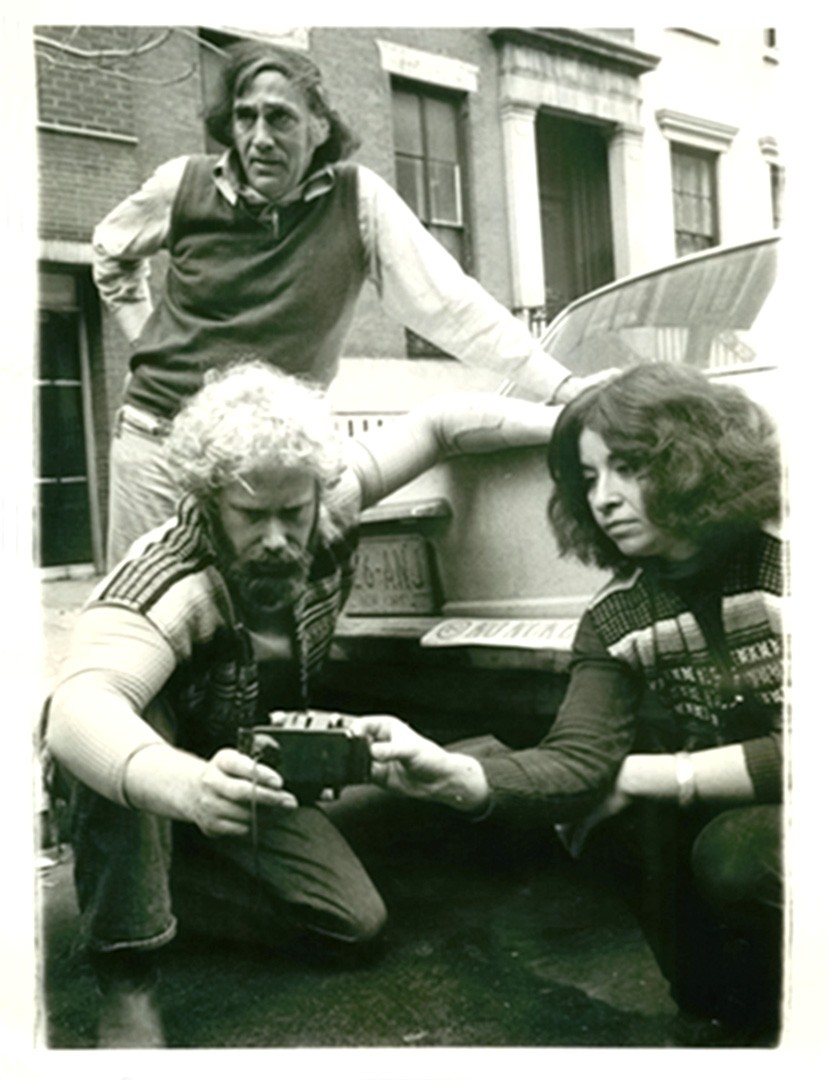
Documentary filmmakers Christopher Oscar, left, and Doug Hecker.

Doug Hecker and Christopher Oscar:
Documentary filmmakers on media,
civil liberties, and ‘Project Censored

“The corporate rules are simple: tell the news the way you’re told to tell the news or ratings will decline and you’ll be out of a job.” — Doug Hecker, Co-Producer, Co-Director, Co-Writer, ‘Project Censored: The Movie’

By Jonah Raskin | The Rag Blog | April 18, 2013

Filmmaker, Doug Hecker, 47, was born and raised in San Francisco, California. His pal and cinematic collaborator, Christopher Oscar, 42, hails from Montclair, New Jersey.

Six years ago, they met in the town of Sonoma, California, and ever since then — with time off for good behavior — they’ve worked on a documentary about the media watchdog group, Project Censored, founded by Carl Jensen in the wake of Watergate.

Hecker and Oscar are both college grads and they’re both the kinds of grads that teachers will practically die for — which means they’re committed to critical thinking, life-long learning, and social responsibility.

When they graduated from college — Oscar from C.W. Post University on Long Island, New York, Hecker from Sonoma State University in California — their studies just began.

Their new 60-minute documentary, Project Censored: The Movie, Ending the Reign of Junk Food News, informs, entertains, and riles up citizen activists, too, about the loss of civil liberties in the United States today and the rise of what they regard as a police state.

The talking heads who speak in the movie — historian Howard Zinn, all-around gadfly Noam Chomsky, poet Amiri Baraka, UCLA Professor Nora Barrows-Freeman, and more — make far more sense than the talking heads on ABC, CBS, NBC, and Fox.

“Human consciousness,” Zinn says “is hard to fathom, but every so often it breaks to the surface.” Hecker and Oscar know that the media puts humanity to sleep all day and all night, and that the media can also wake humanity from its slumber.

Mickey Huff, the current director of Project Censored, points out that there’s more information available these days thanks to the Internet, but that, paradoxically, there’s also greater misinformation. Movie producer, director, and cinematographer Haskell Wexler suggests that in our peculiar form of democracy, Americans may not want to known the truth. Hecker and Oscar hope that’s not true.

Their rousing picture about Project Censored and the state of the media in America today is also a wake-up call to viewers sickened by the steady diet of junk food news dished out by corporate media.

The interview with both Hecker and Oscar took place two days after I saw their movie.

Jonah Raskin: Can you say something about an exact moment when the proverbial light went on in your head?

Doug Hecker: The light went on for me when I was enrolled in communications classes. As a student in Project Censored, we constantly discussed the spin that corporate media uses when reporting the news.

Christopher Oscar: For me, it was when I was an investigative journalism major and writing a story about the fact that crime was down 30%, but crime coverage increased 70%.

In your own life have you noticed a strong urge to censor?

Hecker: I choose my words wisely, but I tend not to censor myself. I could lose some business as a realtor because of the movie. If a client chooses not to work with me because I believe the press should be free and should present news that lead to social change, I’d rather not work with that person.

As a father with children, what kinds of limits if any do you set for them about TV and the Internet?

Hecker: I prefer to discuss topics on TV and the Internet and to help create awareness and media literacy in my children. However, I do limit violence, foul language, and sexual content.

Oscar: It’s very rare that we find a program that is suitable for my children to watch. My kids don’t use the Internet. They are eight and five years old. If and when we find a child-friendly program, we limit viewing.

Your documentary shows that when there’s war there’s censorship and when there’s censorship there’s war.

Hecker: Censorship leads to war. War doesn’t benefit anyone except those in power. It’s corrupt and it’s brought about by power, money, greed, religion, politics, ignorance, and stupidity.

Doug, you grew up in a small California town. Did you buy into the official story disseminated by the media?

Hecker: I did for years. I began reading newspapers in high school and believed what I read. However, once I got to college I realized that a majority of U.S. news is designed to control the population, shape public policy, and instill fear into citizens.

Oscar, what about you?

Oscar: What I witnessed was that my parents watched tons of fear. I could never understand why they were so hypnotized by it. As I grew older, I found that I enjoyed investigative news shows like 60 Minutes. It wasn’t until college that I became a critic of corporate media.

Looking at the global picture, would you say censorship is better or worse in the U.S. than in say, China, Russia, or Iran?

Hecker: I would say it’s not better or worse, but different. U.S. censorship is subtle — not the dictatorship-style where the consequences are prison or death. However, the attack on journalists and the First Amendment is increasing in the U.S. Under the guise of protecting us against terrorism, we’re losing civil liberties.

Oscar: The majority of people don’t even know censorship is there. Next thing you know, America will be back in another illegal war.

In the U.S. if you want to play the corporate media game I guess you have to play by the corporate rules — or get out.

Hecker: The corporate rules are simple: tell the news the way you’re told to tell the news or ratings will decline and you’ll be out of a job.

Oscar: Reporters should investigate the owners of their own stations.

Where you live in California, what local stories and truths do you think are hidden from citizens now?

Hecker: GMOs, pesticides, farm animal abuse, the ever-increasing rise of health care, petroleum products, pollution, lobbyists, government corruption, etc.

Fear is a big factor in our society isn’t it? Reporters are afraid and citizens are afraid. How do we overcome fear?

Hecker: Fear-based news leads to higher ratings, which leads to increased ad revenue. To change fear-based news you need to start at the grassroots with programs like Project Censored and other alternative media sources that have validated news and fact-based reporting.

Oscar: People glued to the nightly news are bombarded and besieged with violence and destruction. The message you get is that people are out to get you so you better watch out. We need a media system that shines light on the good that people are doing in the world to create a more harmonious planet.

There still are people who are courageous, such as the Australian, Julian Assange, founder of Wikileaks, who released on the Internet confidential U.S. documents. Did he go too far?

Hecker: We need more people like Assange, Daniel Ellsberg, Bradley Manning who realize that sacrifice may be necessary to expose human rights abuses, corruption, and environmental damage.

Oscar: Hopefully, governments will think twice about their actions now that there is a Julian Assange out there. It’s surprising, though, how little attention it’s really gotten. You would think more people would be upset about the failure of the news to dig for truth.

What gives you hope for a world in which your kids are grown up?

Hecker: Without hope no future is possible. We made this film to help future generations and to point out that social change is needed and that the people of the world need to put an end to complacency and become active and involved citizens both politically and socially in order to end the human and environmental atrocities that plague our world.

[Jonah Raskin, a regular contributor to The Rag Blog, is  a long-time journalist and author. Read more articles by Jonah Raskin on The Rag Blog.]

The Rag Blog

Posted in Rag Bloggers | Tagged , , , , , , , , , | 1 Comment

Shirley Youxjeste : Mexican Feds Crack Down on Teachers Protesting Educational ‘Reform’

Mexican federal police confront protesting teachers in Chilpancingo, Guerrero, on April 4, 2013. Photo by  EFE / STR. Image from La Prensa (San Antonio).

Mexican teachers take the streets
against standardized tests

Teachers in Guerrero, tired of the hostility of the business class, shut down two department stores in Chilpancingo for eight hours, using shopping carts as barricades.

By Shirley Youxjeste | The Rag Blog | April 18, 2013

GUERRERO, Mexico — The image had an impact in and out of Mexico: an older man with the appearance of a campesino, surrounded and subdued by five federal police officers who employed fists, boots, and three fire extinguishers. The man’s crime was to attend a demonstration in support of his children’s teachers in Chilpancingo, capital of the state of Guerrero.

Guerrero is home to tourist centers like Acapulco and Zihatanejo/Ixtapa, but the rest of the state is among the poorest places in the Western Hemisphere. It is here where resistance to the attempt to convert teachers into test preparers is strongest.

In December, Enrique Peña Nieto was inaugurated president after controversial elections led to the return of the traditional ruling party, the PRI (Partido de la Revolución Institucional) after 12 years out of office. Within days, Peña Nieto had rammed an educational “reform” package with the assent of all registered political parties.

The new law forces even more standardized testing for teachers and students and facilitates the firing of teachers whose students don’t “perform” as expected.

The march of April 5 in which the above-described incident took place was the first of many attempts to occupy the Autopista del Sol, the freeway that runs from Mexico City to Acapulco during the final days of school vacations, when traffic tie-ups were sure to be more severe.

About 3,000 teachers and supporters kept it blocked for a few hours until police moved in and used violent tactics to subdue demonstrators. This spot on the freeway, incidentally, is where state police killed two protesting education students in a similar blockade in December 2011.

Most news media reported the April 5 protest as a gathering of “lazy and violent” teachers; the more violent police actions have been publicized mainly through social networks. Teachers responded with  more marches the following Wednesday, with an estimated 100,000 marching in Chilpancingo (whose total population is not much more than that), and teachers in the neighboring states of Oaxaca, Morelos, and Michoacán also demonstrated.

Among the marchers in Chilpancingo and other cities in Guerrero, in addition to teachers, parents, students, and members of other unions, were members of various Policía Comunitaria organizations, grassroots defense groups that have more in common with the Black Panthers than with the real police.

Shopping cart barricades

On Saturday, April 13, teachers in Guerrero, tired of the hostility of the business class, shut down two department stores in Chilpancingo, Wal Mart and Liverpool, for eight hours, using shopping carts as barricades to prevent people from entering.

On April 25-27, the CNTE (Coordinadora Nacional de Trabajadores de la Educación), the dissident caucus within the dominant teachers’ union, will hold a national conference on alternative education in Mexico City.

Business organizations have reacted with extreme hostility toward the teachers, with executives and business owners offering themselves as scabs so classes can take place. Other business groups (apparently more local) and, of course, groups of parents have expressed support for the teachers.

[Shirley Youxjeste is a retired Wisconsin teacher now living in southern Mexico.]

The Rag Blog

Posted in Rag Bloggers | Tagged , , , , , , , | Leave a comment