
Type your summary here
Type rest of the post here
Source /

Paul Ryan is an extremist on issues of restricting personal liberty and using government to benefit the wealthy to the detriment of middle- and low-income families, and he is a hypocrite when it comes to fiscal conservatism.
By Lamar W. Hankins | The Rag Blog | August 29, 2012
Glenn Greenwald did a masterful job for Salon.com the other day outlining much of the evidence that demonstrates Paul Ryan has not acted to constrain government spending, nor to constrain the government during his time in office. For over a decade, Ryan has voted for the expansion of federal debt and the restriction of individual liberty almost every time he has had a chance to do so. How is such a person a conservative?
As Greenwald explains, Ryan presents himself as an Ayn Rand “Super-Hero of Individual Self-Reliance and Working Class Warrior against government debt, waste, and intrusiveness — whose actual life is a testament to the precise opposite values.”
Ryan managed to go to college after receiving Social Security survivor’s benefits through his high school years after his father died at an early age, benefits which he claims he saved up to pay for college. As Joan Walsh explained recently in Salon magazine, Ryan has “become the scourge of the welfare state, a man wholly supported by government who preaches against the evils of government support,” and he has become famous for “trying to dismantle the very program that helped him go to the college of his choice.”
After receiving a B.A. with a double major in economics and political science from Miami University of Ohio, he spent a few years on the payroll of several politicians and right-wing think-tanks. Occasionally, in the years before he became a Congressman at age 28, Ryan worked briefly for the family-owned construction business when he needed money.
Ryan seems incapable of acknowledging that government is a collective endeavor to cobble together a system that will make possible economic and social endeavors that can make life fulfilling for all the people. That’s the promise of our Constitution and the government it created. But Ryan has tried to fashion an image of himself as a self-made man who wants government to go away because it is not needed.
I recognized shortly after graduating from the college of my choice that I was able to go to college because of the sacrifices made by my parents, the excellent public school system I attended, the public transportation system that took me to school for several years, the public library I used regularly while in high school, the public roads over which I traveled to get to college and return home to visit my parents, the public postal system that allowed me to stay in contact with my family (and receive occasional checks for incidentals), the air traffic control system that looked out for my safety when I flew in an airplane, and the myriad other programs established for the safety of all Americans — food safety, water purity, air pollution control, mosquito eradication (particularly important where I grew up), flood control, fire protection, and police protection.
It was about the same time that I learned about the large sums of crop support payments paid to farmers in the county where I worked — payments that no one referred to as welfare, while assistance for other people was frowned upon and derided. I realized that all such government assistance was part of an effort to equal the playing field and create a fairer system so that the entire nation could prosper, no matter what personal circumstances or natural events interfered.
Obviously, there were abuses — it’s a system organized and operated by humans whose natures need to have some controls. Some people who received assistance did not need it, but the basic idea was to create a system that acknowledged that we were all in this together, and if we worked together, helping one another when needed, we would all be better for it. However, that spirit of cooperation was not infused in everyone equally.
Many years later I began figuring out that the tax system was rigged for the benefit of the wealthiest among us. All during this time when I was working, I paid payroll taxes on my entire salary to support the Social Security and Medicare system, but higher-paid workers did not have to pay those same taxes on much of their income. We allow major industries, such as the coal, oil, and natural gas companies to produce their products or conduct their businesses in ways that pollute our environment and leave the taxpayers to pay for the costs of environmental cleanup and health care for people damaged by pollution.
In a 2009 report, the National Research Council (NRC) estimates that the hidden costs of energy production in 2005 were $120 billion. Economists refer to these costs as external costs, including the economic effects to human health, structural damage, and the reduction in harvests caused by air pollution.
As the study explained, these external costs are hidden “because they are not reflected in the market prices of coal, oil, other energy sources, or the electricity and gasoline produced from them. Health damage from air pollution associated with electricity generation and motor vehicle transportation was found to be the largest single impact.”
During the 1960s and 1970s, my government spent nearly $600 billion to fight a war in Southeast Asia, a war that I did not support; but I was compelled to pay for it under threat of losing what little property I owned. The same sort of politicians who voted for the Vietnam War also voted for Bush’s two wars that have been continued under Obama and have cost the taxpayers about $3.7 trillion to date, according to Brown University’s Watson Institute for International Studies.
Ryan has supported all of these expenditures as a Congressman and wants to spend even more on defense in the years to come. His support for wars and interventions overseas suggest an extremist view about the role of the U.S. in the world, believing that “American Exceptionalism” gives us the right to tell the rest of the world how to act. In what way are these the actions of a fiscal conservative, or any kind of conservative?
Ryan voted for the expansion of Medicare to pay for prescription drugs (in a way that favored the pharmaceutical industry) and for the Wall Street and bank bailouts at the end of Bush’s second term. In fact, Ryan seems to have no problem with propping up the too-big-to-fail banks with an annual $60 billion subsidy, while extolling the virtues of the Free Enterprise system.
Also, Ryan is all for the government-sponsored patent system that gives pharmaceutical companies 20-year patents on prescription drugs. Dean Baker reports that these government-created monopolies cost taxpayers $270 billion more a year than they would pay in a free market system, and that there are efficient alternatives to financing drug research (see the Center for Economic and Policy Research report authored by Baker in 2004). In what way are these the actions of a fiscal conservative?
When it comes to restraining the power of the federal government, Ryan can always be counted on to support the government and diminish the liberty of all citizens. He voted for the original PATRIOT Act, its later modifications, and then to make its intrusive government powers permanent. He voted for the Military Commissions Act, which provides indefinite detention apparently for both resident aliens and U.S. citizens, who can be denied the Constitutional right of habeas corpus under the Act — the right to have a court compel the government to justify its detention of such people.
Ryan voted for the Protect America Act of 2007 to expand the power of the government to eavesdrop on Americans without court authorization for up to one year if the conversation involves talking to a person “reasonably believed to be outside the United States.” In what way are these the actions of someone who wants to restrict the power of the federal government?
Ryan has voted to deny same-sex couples the right to marry or to adopt children. He wanted to continue the military policy of discriminating against gays in the military. He wanted a Constitutional amendment to make flag-burning a crime. He favors the restriction of abortion rights, even supporting criminally prosecuting women who have an abortion.
He has sponsored legislation to give a fertilized egg the constitutional rights of a person, though millions are destroyed nationally each year in the normal process of nature, making such a declaration irrelevant and foolish. His legislation would criminalize in vitro fertilization and some forms of birth control. In what way are these the actions of someone who wants to restrict the power of the federal government?
Ryan claims to be an Ayn Rand libertarian, but he opposes medical marijuana and needle-exchange programs to reduce the spread of diseases among drug addicts. He opposes all drug use, including recreational marijuana. As Congressman Barney Frank said two years ago in a discussion with Ryan and George Will, it should be an embarrassment to conservatives that they want to tell people whom they can have sex with, whom they can marry, what they can read, what they can smoke.
Frank ended the discussion with the observation, “It’s the conservatives who want to intrude on personal liberty.”
As Glenn Greenwald recently concluded, “Whatever one wants to say about Ryan’s record, it is the very opposite of constraining the power of the federal government to intrude into the lives of individuals; indeed, it’s a testament to massive expansion of intrusive federal government power in almost every realm.”
While I am not happy with how President Obama has handled many of these same issues, it seems plain to me that Paul Ryan, Mitt Romney’s pick for his vice-presidential running mate, is an extremist on issues of restricting personal liberty and using government to benefit the wealthy to the detriment of middle- and low-income families, and he is a hypocrite when it comes to fiscal conservatism. His views about America’s role in the world can fairly be described as megalomaniacal — an all too common view among many, if not most, Americans, who seem to believe that America has the right to do anything, anywhere.
I agree with Ryan that our government needs to change its ways. But the change Ryan wants will take us further from a government that honors the purpose of our Constitution: “to form a more perfect Union, establish Justice, insure domestic Tranquility, provide for the common defence, promote the general Welfare, and secure the Blessings of Liberty to ourselves and our Posterity. . .”
Ryan would diminish justice in an already harsh system, destroy the minimal economic supports provided for our most disadvantaged citizens, engage in more interventionist wars abroad, push the government to provide more benefits for the wealthy to the exclusion of all others, and further constrain our liberties.
To call Ryan’s political goals “free market conservatism” is Doublespeak at its most dishonest and shameful.
[Lamar W. Hankins, a former San Marcos, Texas, city attorney, is also a columnist for the San Marcos Mercury. This article © Freethought San Marcos, Lamar W. Hankins. Read more articles by Lamar W. Hankins on The Rag Blog.]

Lance Armstrong, and his ubiquitous Livestrong bracelets, are 21st century totems of survival and the USADA isn’t going to change that.
By Dave Zirin / The Rag Blog / August 29, 2012
If Joe Paterno represents the greatest fall from grace in the history of sports, then many are saying that Lance Armstrong might now have won the silver.
On Thursday, Armstrong was stripped of all seven of his Tour de France cycling crowns and will be banned for life from any connection to the sport he made famous. Why? Because he withdrew his appeal against the U.S. Anti-Doping Agency’s contention that he time and again rode steroids and performance enhancing drugs to victory.
Armstrong quit the fight against the USADA but issued a statement without contrition, accusing them of an “unconstitutional witch hunt.”
As Armstrong said in a statement,
There comes a point in every man’s life when he has to say, “Enough is enough.” For me, that time is now… I have been dealing with claims that I cheated and had an unfair advantage in winning my seven Tours since 1999. The toll this has taken on my family and my work for our foundation and on me leads me to where I am today — finished with this nonsense. Today I turn the page. I will no longer address this issue, regardless of the circumstances… I will commit myself to the work I began before ever winning a single Tour de France title: serving people and families affected by cancer, especially those in underserved communities.
With the swiftness of a pro cyclist going 75 miles per hour down a steep hill, the USADA acted immediately, treating Armstrong’s surrender as a legal admission of guilt. Travis Tygart, the USADA’s chief executive, spoke as if a jury of Armstrong’s peers had voted to convict, saying, “It is a sad day for all of us who love sport and athletes. It’s a heartbreaking example of win at all costs overtaking the fair and safe option. There’s no success in cheating to win.”
Tygart maintained that Armstrong didn’t give up the fight from exhaustion but because he knew that the USADA had 10 former teammates ready to testify that he was doping. Armstrong, it should be noted, made clear that no matter what any witnesses had to say, “There is zero physical evidence to support [their] outlandish and heinous claims,” Armstrong said. “The only physical evidence here is the hundreds of [drug tests] I have passed with flying colors.”
I don’t know about Armstrong’s guilt or innocence, but anyone who writes off Armstrong after the USADA ruling and thinks that he’s about to enter some sort of Paterno-Pete Rose-Barry Bond pantheon of infamy, doesn’t quite understand his appeal or why he connects so strongly with his army of fans. Of the 70 top-10 finishers in Armstrong’s seven Tour De France victories, 41 have tested positive for PEDS, Armstrong is a hell of a lot more than just number 42.
The Texas native came to public consciousness not just for beating the Pyrenees but for beating stage four cancer. In our increasingly toxic world, I don’t think a family exists that hasn’t been touched by cancer in some way. Lance Armstrong, and his ubiquitous Livestrong bracelets, are 21st century totems of survival and the USADA isn’t going to change that. Nothing ever could.
No adult male saw Mark McGwire or Sammy Sosa in 1998 and thought, “Someday I’m going to hit 70 home runs.” No adult female saw Marion Jones and thought, “Someday I’ll win gold at the Olympics.” But legions of adults have watched Lance Armstrong and thought, “Someday, I’m going to beat this damn cancer.”
That’s a deeper connection than fandom or even the virtual-world of fantasy sports could ever provide. If Lance Armstrong has been able to further the connection because he’s white, photogenic, and politically connected (and did I mention white?), then to his credit he’s leveraged those advantages to raise over $500 million for cancer research and access to treatment in poor and minority communities across the United States.
Armstrong, a religious agnostic, was once asked how his belief in God helped him beat cancer, He answered, according to the great sportswriter Robert Lipsyte, “Everyone should believe in something, and I believe in surgery, chemotherapy, and my doctors.” That response in the end is why he won’t go into hiding. He won’t live in self-imposed exile. He won’t slink to the margins of U.S. society and he won’t lose his fans.
Call him a doper. Call him a cheater. Call him the dirtiest player in a sport that’s as dirty as they come. He’ll call himself the guy who keeps fighting to make sure people have the surgery, chemo, and doctors they need. For people like those in my own family who have through trials of unimaginable courage, earned the right to wear that LiveStrong rubber bracelet, that will always matter more.
[Dave Zirin is the author of the book, Welcome to the Terrordome: The Pain, Politics and Promise of Sports (Haymarket). Receive his column every week by emailing dave@edgeofsports.com. Contact him at edgeofsports@gmail.com. Read more articles by Dave Zirin on The Rag Blog.]
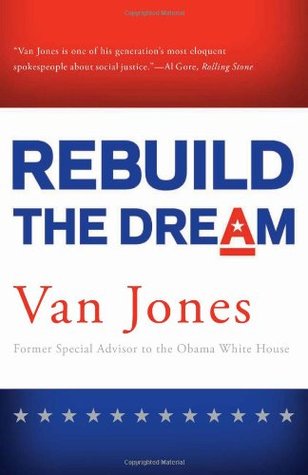
As election nears:
Van Jones on rebuilding the dream
Activists know that building mass movements entails a variety of cognitive and action steps. Sometimes it is useful for a skilled activist like Van Jones to provide us with a framework for discussing how to proceed.
By Harry Targ | The Rag Blog | August 29, 2012
[Rebuild the Dream by Van Jones (2012: Nation Books); Hardcover; 320 pp.; $25.99.]
The central argument of this book is that, to bring back hope and win change, we need more than a great president. We need a movement of millions of people, committed to fixing our democracy and rebuilding America’s economy.
In June, 2011, Van Jones, former White House advisor on Green Jobs and before that community organizer and author of The Green Collar Economy, called on progressives to organize house parties to establish a policy agenda that could serve as the basis for building a new progressive social movement. An inspiring speech to urge organizing at the grassroots level was widely distributed on the internet.
In July thousands of house parties, advertised as efforts to “Rebuild the American Dream,” were held. These were followed by electronic dialogue that led to the adoption of a “Contract for the American Dream;” a 10-point program for economic renewal. Over 300,000 Americans have endorsed the Contract, and the Rebuild the Dream coalition claims to have 600,000 members.
In some communities, including in Lafayette, Indiana, where I live and teach, local Rebuild the Dream Coalitions became the vehicle for networking among representatives of civil rights and civil liberties groups, trade unionists, defenders of women’s reproductive health, and progressive Democrats. Rallies, petition drives, and panel presentations were organized around jobs and justice, protecting Planned Parenthood, and challenges to the connection between big money and politics.
During the fall of 2011, overshadowing grassroots Dream coalition efforts, the Occupy Movement surfaced and spread all across the United States. Already dramatic fightbacks against anti-labor legislation in Wisconsin, Ohio, and Indiana had begun. Both the activism in the Heartland and in the occupations became more visible (and perhaps more influential).
Reflecting on the possibility of continuing the construction of a mass movement to revitalize democratic institutions and the economy, Jones has written a book assessing these campaigns (including the Obama electoral campaign which preceded them). Most important he presents a conceptual scheme for helping communities decide on appropriate political programs and activities.
Before addressing future needs, Jones makes the important point that the Occupy and Dream movements and the 2008 campaign around the Obama election followed a massive anti-Iraq war movement, new developments in internet organizing, and the construction of movement-oriented think tanks and cable television programs during the first decade of the new century. He believes that social movements build on the successes and failures of those that precede them.
During the first few chapters of Jones’ book, the author discusses strengths and weaknesses of the Obama administration. Among the positive contributions of the administration Jones refers to policies that averted another Great Depression, including saving of the auto industry. Jones applauds passage of the Ledbetter Act. On the negative side Jones discusses the failure of the administration to secure passage of the Employee Free Choice Act, an inadequate economic stimulus package, and weak efforts to regulate Wall Street financial institutions.
From a social movement standpoint Jones included in his critique the successful Democratic National Committee effort to accumulate the power that had been generated at the grassroots to elect Barack Obama. Organizing for America (OFA) groups, Jones wrote, which represented grassroots mobilizations everywhere, were taken over by the formal centralized Democratic Party machinery, thus defusing the energy, passion, and willingness of activists to work for a progressive agenda.
Beyond his review and analysis of 21st century social movements and the Obama campaign, a major theoretical contribution of the book is in its conceptual scheme. By using a 2 x 2 table Jones identifies two critical dimensions of movement building.
The first, involves whether campaigns are organized around rational analysis (thorough argumentation with the use of data and the making of specific proposals) or emotional appeals (referring to emotive symbols, slogans, and inspiring artistic creations).
The second dimension involves politics as conceptualization (generating ideas) or action. Action can be about the “inside game”(bargaining and negotiation, electoral work, lobbying), or politics as an “outside game” (engaging in street heat, mass mobilizations, rallies, and civil disobedience).
Jones calls the process of identifying policies through rigorous analysis as the “head space,” rallying public support through emotions the “heart space,” lobbying, pressure group politics and elections the “inside game,” and going to the streets the “outside game.” For him the political process involves the activation of all four quadrants at different points in time; using concepts and analysis or emotional appeals applied to inside or outside forms of action.
In Jones’ words:
Sometimes the process moves in the order I have just laid out — from sober analysis and facts (Head Space), to resonant narratives that inspire support (Heart Space), to citizen participation (Outside Game), to official debate, deal making, and rule making (Inside Game). Sometimes it starts in the Heart Space with an impassioned call for change, which activists then pick up on a mass scale (Outside Game), which in turn catalyzes scholars and think tanks (Head Space), and ultimately leads to elected officials changing laws (Inside Game).
…each and every quadrant is the most important one at different stages in the process of making change (121).
The conceptual scheme offered by Van Jones may help grassroots coalitions strategize about their progressive agenda.
First, Jones is correct to argue that politics is about theoretical and policy discussion. Also, politics is about popular, accessible appeals to action. In addition, political activity concerns routinized political action, including the selection of leaders, pressuring them to act on the people’s behalf, and making them accountable. Furthermore, it is about extraordinary public action to demand that leaders defend the interests of the masses of the people (the 99 percent) or be ready to suffer punishment for their inside game decisions.
Second, grassroots organizations must decide, given their local, as well as the national, context where their energies need to be placed: developing theories and programs, generating emotive symbols to build mass support, working in elections and generating lobbying campaigns, and/or hitting the streets.
Third, these four dimensions of politics — head space, heart space, inside game, and outside game — are what progressives do. But often we do not reflect on what we are doing; what “stage” in the process of movement-building we are in; and what combination of dimensions — given our resources — should be part of our plan of work.
Fourth, all grassroots groups can sit down at a planning meeting, identify the quadrants, list the activities that have been carried out in each somewhere in the country, assess the situation of the local group, and develop a program that is feasible, given resources and local context, to achieve pre-articulated progressive goals.
Activists know that building mass movements entails a variety of cognitive and action steps. Sometimes it is useful for a skilled activist like Van Jones to provide us with a framework for discussing how to proceed. Rebuild the Dream does that. It would be a good resource for study group discussion.
[Harry Targ is a professor of political science at Purdue University who lives in West Lafayette, Indiana. He blogs at Diary of a Heartland Radical — and that’s also the name of his book from Changemaker Press which can be found at Lulu.com. Read more of Harry Targ’s articles on The Rag Blog.]
Are Rape Jokes Funny? By Paul Krassner Abortion was still illegal in 1970. At the time, as both an underground abortion referral service and a stand-up satirist, I faced an undefined paradox. Irreverence was my only sacred cow, yet I wouldn’t allow victims to become the target of my humor. There was one particular routine I did that called for a “rape-in” of legislators’ wives in order to impregnate them so that they would then convince their husbands to decriminalize abortion. But my feminist friends objected. I resisted at first, because it was such a well-intentioned joke. And then I reconsidered. Even in a joke, why should women be assaulted because men made the laws? Legislators’ wives were the victims in that joke, but the legislators themselves were the oppressors, and their hypocrisy was really my target. But for me to stop doing that bit of comedy wasn’t self-censorship. Rather, it was, I rationalized, a matter of conscious evolution. * * * Now, in July 2012, more than four decades later, rape-joking triggered a widespread controversy when a woman who prefers to remain anonymous went to a comedy club, expecting to be entertained. She chose the Laugh Factory in Hollywood because Dane Cook was on the bill, but he was followed by Daniel Tosh, and she had never heard of him. In an email to her Tumblr blogger friend, she accused Tosh of saying that “rape jokes are always funny, how can a rape joke not be funny, rape jokes are hilarious.” She was so offended that she felt morally compelled to shout, “Actually, rape jokes are never funny!” Tosh paused and then seized the opportunity, responding, “Wouldn’t it be funny if that girl got raped by like five guys? Like right now? What if a bunch of guys just raped her?” The audience laughed raucously. After all, isn’t anyone who yells at a comedian practically asking to become an immediate target? But this woman was stunned and humiliated, and she left. In the lobby, she demanded to see the manager, who apologized profusely and gave her free tickets for another night–admitting, however, that she understood if this woman never wanted to return. In her email, she concluded that, “having to basically flee while Tosh was enthusing about how hilarious it would be if I was gang-raped in that small, claustrophobic room was pretty viscerally terrifying and threatening all the same, even if the actual scenario was unlikely to take place. The suggestion of it is violent enough and was meant to put me in my place.” She added, “Please reblog and spread the word.” And indeed, it went viral. Coincidentally, on the same night that Tosh, in his signature sarcastic approach to reality, provoked the woman, Sarah Silverman was performing at Foxwords Casino and she touched upon the same taboo subject: “We need more rape jokes. We really do. Needless to say, rape, the most heinous crime imaginable, seems it’s a comic’s dream, though. It’s because it seems when you do rape jokes, that the material is so dangerous and edgy, and the truth is, it’s like the safest area to talk about in comedy ’cause who’s gonna complain about a rape joke? Rape victims? They don’t even report rape. They’re just traditionally not complainers.” Ironically, in The Aristocrats, a documentary entirely about a classic joke of the same name, Silverman complained that she was once raped by show-biz legend Joe Franklin. * * * In the fall of 1981, I booked myself for a cross-country tour, from New York to Chicago, Minneapolis, San Francisco and Los Angeles. While I was in New York, a nun was raped. When I got to Chicago, the rapist was also there. He had given himself up to the police. On stage I explained the true reason why: “He heard that the Mafia, in a rush of Christian compassion, put a $25,000 contract out on his life.” That part was true. “So now I’m asking the Mafia to use their clout to end the war in El Salvador since four nuns were raped and killed there.” They must’ve heard my request. By the time I got to Los Angeles, the Herald-Examiner was reporting that the Mafia was “probably the largest source of arms for the rebels in El Salvador.” In the spring of 1982, there was a Radical Humor Festival at New York University. That weekend, the festival sponsored an evening of radical comedy. The next day, my performance was analyzed by an unofficial women’s caucus. Robin Tyler (“I am not a lesbian comic — I am a comic who is a lesbian”) served as the spokesperson for their conclusions. What had caused a stir was my reference to the use of turkey basters by single mothers-to-be who were attempting to impregnate themselves by artificial insemination. Tyler explained to me, “You have to understand, some women still have a hang-up about penetration.” Well, I must have been suffering from Delayed Punchline Syndrome, because it wasn’t until I was on a plane, contemplating the notion that freedom of absurdity transcends gender difference, that I finally did respond, in absentia: “Yeah, but you have to understand, some men still feel threatened by turkey basters.” * * * Although Tosh is a consistently unapologetic performer for the sardonic material he exudes on his Comedy Central series–which features a running theme of rape jokes, even including one about his sister–for this occasion he decided to go the Twitter route: “All the out of context misquotes aside, I’d like to sincerely apologize.” He also tweeted, “The point I was making before I was heckled is there are awful things in the world but you can still make jokes about them.” According to Jamie Masada, owner of the Laugh Factory, Tosh asked the audience, “What you guys wanna talk about?” Someone called out “Rape,” and a woman in the audience started screaming, “No, rape is painful, don’t talk about it.” Then, says Masada, “Daniel came in, and he said, ‘Well, it sounds like she’s been raped by five guys’—something like that. I didn’t hear properly. It was a comment—it wasn’t a joke at the expense of this girl.” Masada claims that she sat through the rest of Tosh’s performance, which received a standing ovation, before she complained to the manager. Fellow comedians defended Tosh with their own tweets. Dane Cook: “If you journey through this life easily offended by other peoples words I think it’s best for everyone if you just kill yourself.” Doug Stanhope: “You’re hilarious. If you ever apologize to a heckler again I will rape you.” Louis C.K.: “your show makes me laugh every time I watch it. And you have pretty eyes”–except that he wrote it after watching Tosh on TV, but before he learned about the Laugh Factory incident. Nevertheless, he was excoriated and accused of being a “rape apologist.” But C.K. himself is no stranger to sexual-assault jokes. Onstage, he has said that he’s against rape–“unless you have a reason, like you wanna fuck someone and they won’t let you, in which case what other option do you have?” Conversely, on the second episode of his series, Louie, on the FX channel, he reversed such roles. After leaving a bar with an especially aggressive woman, Laurie (played by Melissa Leo), he had inadvertently met earlier, she performs fellatio on him in her pickup truck, then insists that he in turn perform cunnilingus on her. And he refuses. So, she attacks him physically with unabashed viciousness, mounts him, and he gives in to her demand. In other words, Laurie rapes Louie. No joke. To watch this scene was positively jaw-dropping. It served as a reminder of how often comedians–and their jaded audiences–find prison-rape jokes not only to be funny, but also, as in the case of Jerry Sandusky, an act of delayed justice resulting in laughter that morphs into applause. Meanwhile, reacting to the Tosh tirade, Julie Burton, president of the Women’s Media Center, stated: “If free speech permits a comedian to suggest a woman in his audience should be gang-raped, then it certainly permits us to object, and to ask what message this sends to survivors or to perpetuators. Tosh’s comment was just one extreme example of pop culture’s dismissive treatment of sexualized violence, which desensitizes audiences to enormous human suffering. Internet outcry is encouraging, but popular media needs to push back too.” And the original blogger posted another message: “My friend and I wanted to thank everyone for there [sic] support and for getting this story out there. We just wanted everyone to know what Daniel Tosh had done and if you didn’t agree then to stop following him. My friend is surprised to have gotten any form of an apology and doesn’t wish to press any further charges against [him].” What? Press charges? Rape is a crime. Rape jokes aren’t. They are the risk of free speech. The blog concluded, “She does plan on returning to comedy shows in the future, but to see comedians that she’s seen before or to at least look up artists before going to their shows.” Wait till she finds out Dane Cook suggested that she kill herself. * * * What’s funny is always subjective but not incapable of alteration. Now, over forty years since I stopped presenting my concept about a rape-in of legislators’ wives, I have changed my mind about that decision in the process of writing this piece. I sent the first draft around to several friends, and I was particularly touched by a response from Emma Cofod, production manager at my publisher, Counterpoint/Soft Skull Press: “Thank you for sharing this! I truly appreciate your thoughts here. I read about this woman’s complaint last week, and the whole event turned my stomach. What Tosh did was personally threatening, which is not OK. But even though I fall neatly into the feminist camp, I think your original joke is hilarious—within context, and coming from a comedian whose philosophy I identify with. Color me conflicted.” I think that kind of conflict is healthy. And then the other shoe of my epiphany dropped when I saw Louis C.K.’s appearance on The Daily Show. This is what he told Jon Stewart between interruptions: “If this [controversy about Tosh] is like a fight between comedians and bloggers–hyperbole and garbage comes out of those two places, just uneducated, unfettered–it’s also a fight between comedians and feminists, because they’re natural enemies, because, stereotypically speaking, feminists can’t take a joke, and on the other side, comedians can’t take criticism. Comedians are big pussies. So to one side you say, ‘If you don’t like a joke, stay out of the comedy clubs.’ To the other side you say, ‘If you don’t like criticism, stop Googling yourself every ten seconds, because nobody’s making you read it.’ It’s positive. To me, all dialogue is positive. I think you should listen. “If somebody has the opposite feeling from me, I wanna hear it so I can add to mine. I don’t wanna obliterate theirs with mine, that’s how I feel. Now, a lot of people don’t feel that way. For me, any joke about anything bad is great, that’s how I feel. Any joke about rape, a Holocaust, the Mets–aarrgghh, whatever–any joke about something bad is a positive thing. But now I’ve read some blogs during this whole that made me enlightened at things I didn’t know. This woman said how rape is something that polices women’s lives, they have a narrow corridor, they can’t go out late, they can’t go to certain neighborhoods, they can’t dress a certain way, because they might–I never–-that’s part of me now that wasn’t before, and I can still enjoy the rape jokes. “But this is also about men and women, because a lot of people are trading blogs with each other, couples are fighting about Daniel Tosh and rape jokes — that’s what I’ve been reading in blogs — but they’re both making a classic gender mistake, because the women are saying, ‘Here’s how I feel about this,’ but they’re also saying, ‘My feelings should be everyone’s primary concern.’ Now the men are making this mistake, they’re saying, ‘Your feelings don’t matter, your feelings are wrong and your feelings are stupid.’ If you’ve ever lived with a woman, you can’t step in shit worse than that, than to tell a woman that her feelings don’t matter. So, to the men I say, ‘Listen to what the women are saying about this.’ To the women I say, “Now that we heard you, shut the fuck up for a minute, and let’s all get back together and kill the Jews.’ That’s all I have to say about it.” The audience laughed and applauded, as they did fifty years ago when Lenny Bruce ended a riff on prejudice: “Randy, it won’t matter any more even if you are colored and I’m Jewish, and even if Fritz is Japanese, and Wong is Greek, because then we’re all gonna stick together—and beat up the Polacks.” My notion of a rape-in of legislators’ wives in order to impregnate them was no more to be taken literally than C.K.’s killing the Jews or Lenny’s beating up the Polacks. Rape-in was a misunderstood metaphor; a pro-choice parable that, unfortunately, has become timely again. The above article originally appeared on Reason.com. Paul Krassner publishes the infamous Disneyland Memorial Orgy poster. Two of his books — both are expanded and updated editions — have recently been released: a collection, Pot Stories for the Soul; and his autobiography, Confessions of a Raving, Unconfined Nut: Misadventures in the Counterculture. All three of those items are available at paulkrassner.com.
Type rest of the post here
Source /
Are Rape Jokes Funny? By Paul Krassner Abortion was still illegal in 1970. At the time, as both an underground abortion referral service and a stand-up satirist, I faced an undefined paradox. Irreverence was my only sacred cow, yet I wouldn’t allow victims to become the target of my humor. There was one particular routine I did that called for a “rape-in” of legislators’ wives in order to impregnate them so that they would then convince their husbands to decriminalize abortion. But my feminist friends objected. I resisted at first, because it was such a well-intentioned joke. And then I reconsidered. Even in a joke, why should women be assaulted because men made the laws? Legislators’ wives were the victims in that joke, but the legislators themselves were the oppressors, and their hypocrisy was really my target. But for me to stop doing that bit of comedy wasn’t self-censorship. Rather, it was, I rationalized, a matter of conscious evolution. * * * Now, in July 2012, more than four decades later, rape-joking triggered a widespread controversy when a woman who prefers to remain anonymous went to a comedy club, expecting to be entertained. She chose the Laugh Factory in Hollywood because Dane Cook was on the bill, but he was followed by Daniel Tosh, and she had never heard of him. In an email to her Tumblr blogger friend, she accused Tosh of saying that “rape jokes are always funny, how can a rape joke not be funny, rape jokes are hilarious.” She was so offended that she felt morally compelled to shout, “Actually, rape jokes are never funny!” Tosh paused and then seized the opportunity, responding, “Wouldn’t it be funny if that girl got raped by like five guys? Like right now? What if a bunch of guys just raped her?” The audience laughed raucously. After all, isn’t anyone who yells at a comedian practically asking to become an immediate target? But this woman was stunned and humiliated, and she left. In the lobby, she demanded to see the manager, who apologized profusely and gave her free tickets for another night–admitting, however, that she understood if this woman never wanted to return. In her email, she concluded that, “having to basically flee while Tosh was enthusing about how hilarious it would be if I was gang-raped in that small, claustrophobic room was pretty viscerally terrifying and threatening all the same, even if the actual scenario was unlikely to take place. The suggestion of it is violent enough and was meant to put me in my place.” She added, “Please reblog and spread the word.” And indeed, it went viral. Coincidentally, on the same night that Tosh, in his signature sarcastic approach to reality, provoked the woman, Sarah Silverman was performing at Foxwords Casino and she touched upon the same taboo subject: “We need more rape jokes. We really do. Needless to say, rape, the most heinous crime imaginable, seems it’s a comic’s dream, though. It’s because it seems when you do rape jokes, that the material is so dangerous and edgy, and the truth is, it’s like the safest area to talk about in comedy ’cause who’s gonna complain about a rape joke? Rape victims? They don’t even report rape. They’re just traditionally not complainers.” Ironically, in The Aristocrats, a documentary entirely about a classic joke of the same name, Silverman complained that she was once raped by show-biz legend Joe Franklin. * * * In the fall of 1981, I booked myself for a cross-country tour, from New York to Chicago, Minneapolis, San Francisco and Los Angeles. While I was in New York, a nun was raped. When I got to Chicago, the rapist was also there. He had given himself up to the police. On stage I explained the true reason why: “He heard that the Mafia, in a rush of Christian compassion, put a $25,000 contract out on his life.” That part was true. “So now I’m asking the Mafia to use their clout to end the war in El Salvador since four nuns were raped and killed there.” They must’ve heard my request. By the time I got to Los Angeles, the Herald-Examiner was reporting that the Mafia was “probably the largest source of arms for the rebels in El Salvador.” In the spring of 1982, there was a Radical Humor Festival at New York University. That weekend, the festival sponsored an evening of radical comedy. The next day, my performance was analyzed by an unofficial women’s caucus. Robin Tyler (“I am not a lesbian comic — I am a comic who is a lesbian”) served as the spokesperson for their conclusions. What had caused a stir was my reference to the use of turkey basters by single mothers-to-be who were attempting to impregnate themselves by artificial insemination. Tyler explained to me, “You have to understand, some women still have a hang-up about penetration.” Well, I must have been suffering from Delayed Punchline Syndrome, because it wasn’t until I was on a plane, contemplating the notion that freedom of absurdity transcends gender difference, that I finally did respond, in absentia: “Yeah, but you have to understand, some men still feel threatened by turkey basters.” * * * Although Tosh is a consistently unapologetic performer for the sardonic material he exudes on his Comedy Central series–which features a running theme of rape jokes, even including one about his sister–for this occasion he decided to go the Twitter route: “All the out of context misquotes aside, I’d like to sincerely apologize.” He also tweeted, “The point I was making before I was heckled is there are awful things in the world but you can still make jokes about them.” According to Jamie Masada, owner of the Laugh Factory, Tosh asked the audience, “What you guys wanna talk about?” Someone called out “Rape,” and a woman in the audience started screaming, “No, rape is painful, don’t talk about it.” Then, says Masada, “Daniel came in, and he said, ‘Well, it sounds like she’s been raped by five guys’—something like that. I didn’t hear properly. It was a comment—it wasn’t a joke at the expense of this girl.” Masada claims that she sat through the rest of Tosh’s performance, which received a standing ovation, before she complained to the manager. Fellow comedians defended Tosh with their own tweets. Dane Cook: “If you journey through this life easily offended by other peoples words I think it’s best for everyone if you just kill yourself.” Doug Stanhope: “You’re hilarious. If you ever apologize to a heckler again I will rape you.” Louis C.K.: “your show makes me laugh every time I watch it. And you have pretty eyes”–except that he wrote it after watching Tosh on TV, but before he learned about the Laugh Factory incident. Nevertheless, he was excoriated and accused of being a “rape apologist.” But C.K. himself is no stranger to sexual-assault jokes. Onstage, he has said that he’s against rape–“unless you have a reason, like you wanna fuck someone and they won’t let you, in which case what other option do you have?” Conversely, on the second episode of his series, Louie, on the FX channel, he reversed such roles. After leaving a bar with an especially aggressive woman, Laurie (played by Melissa Leo), he had inadvertently met earlier, she performs fellatio on him in her pickup truck, then insists that he in turn perform cunnilingus on her. And he refuses. So, she attacks him physically with unabashed viciousness, mounts him, and he gives in to her demand. In other words, Laurie rapes Louie. No joke. To watch this scene was positively jaw-dropping. It served as a reminder of how often comedians–and their jaded audiences–find prison-rape jokes not only to be funny, but also, as in the case of Jerry Sandusky, an act of delayed justice resulting in laughter that morphs into applause. Meanwhile, reacting to the Tosh tirade, Julie Burton, president of the Women’s Media Center, stated: “If free speech permits a comedian to suggest a woman in his audience should be gang-raped, then it certainly permits us to object, and to ask what message this sends to survivors or to perpetuators. Tosh’s comment was just one extreme example of pop culture’s dismissive treatment of sexualized violence, which desensitizes audiences to enormous human suffering. Internet outcry is encouraging, but popular media needs to push back too.” And the original blogger posted another message: “My friend and I wanted to thank everyone for there [sic] support and for getting this story out there. We just wanted everyone to know what Daniel Tosh had done and if you didn’t agree then to stop following him. My friend is surprised to have gotten any form of an apology and doesn’t wish to press any further charges against [him].” What? Press charges? Rape is a crime. Rape jokes aren’t. They are the risk of free speech. The blog concluded, “She does plan on returning to comedy shows in the future, but to see comedians that she’s seen before or to at least look up artists before going to their shows.” Wait till she finds out Dane Cook suggested that she kill herself. * * * What’s funny is always subjective but not incapable of alteration. Now, over forty years since I stopped presenting my concept about a rape-in of legislators’ wives, I have changed my mind about that decision in the process of writing this piece. I sent the first draft around to several friends, and I was particularly touched by a response from Emma Cofod, production manager at my publisher, Counterpoint/Soft Skull Press: “Thank you for sharing this! I truly appreciate your thoughts here. I read about this woman’s complaint last week, and the whole event turned my stomach. What Tosh did was personally threatening, which is not OK. But even though I fall neatly into the feminist camp, I think your original joke is hilarious—within context, and coming from a comedian whose philosophy I identify with. Color me conflicted.” I think that kind of conflict is healthy. And then the other shoe of my epiphany dropped when I saw Louis C.K.’s appearance on The Daily Show. This is what he told Jon Stewart between interruptions: “If this [controversy about Tosh] is like a fight between comedians and bloggers–hyperbole and garbage comes out of those two places, just uneducated, unfettered–it’s also a fight between comedians and feminists, because they’re natural enemies, because, stereotypically speaking, feminists can’t take a joke, and on the other side, comedians can’t take criticism. Comedians are big pussies. So to one side you say, ‘If you don’t like a joke, stay out of the comedy clubs.’ To the other side you say, ‘If you don’t like criticism, stop Googling yourself every ten seconds, because nobody’s making you read it.’ It’s positive. To me, all dialogue is positive. I think you should listen. “If somebody has the opposite feeling from me, I wanna hear it so I can add to mine. I don’t wanna obliterate theirs with mine, that’s how I feel. Now, a lot of people don’t feel that way. For me, any joke about anything bad is great, that’s how I feel. Any joke about rape, a Holocaust, the Mets–aarrgghh, whatever–any joke about something bad is a positive thing. But now I’ve read some blogs during this whole that made me enlightened at things I didn’t know. This woman said how rape is something that polices women’s lives, they have a narrow corridor, they can’t go out late, they can’t go to certain neighborhoods, they can’t dress a certain way, because they might–I never–-that’s part of me now that wasn’t before, and I can still enjoy the rape jokes. “But this is also about men and women, because a lot of people are trading blogs with each other, couples are fighting about Daniel Tosh and rape jokes — that’s what I’ve been reading in blogs — but they’re both making a classic gender mistake, because the women are saying, ‘Here’s how I feel about this,’ but they’re also saying, ‘My feelings should be everyone’s primary concern.’ Now the men are making this mistake, they’re saying, ‘Your feelings don’t matter, your feelings are wrong and your feelings are stupid.’ If you’ve ever lived with a woman, you can’t step in shit worse than that, than to tell a woman that her feelings don’t matter. So, to the men I say, ‘Listen to what the women are saying about this.’ To the women I say, “Now that we heard you, shut the fuck up for a minute, and let’s all get back together and kill the Jews.’ That’s all I have to say about it.” The audience laughed and applauded, as they did fifty years ago when Lenny Bruce ended a riff on prejudice: “Randy, it won’t matter any more even if you are colored and I’m Jewish, and even if Fritz is Japanese, and Wong is Greek, because then we’re all gonna stick together—and beat up the Polacks.” My notion of a rape-in of legislators’ wives in order to impregnate them was no more to be taken literally than C.K.’s killing the Jews or Lenny’s beating up the Polacks. Rape-in was a misunderstood metaphor; a pro-choice parable that, unfortunately, has become timely again. The above article originally appeared on Reason.com. Paul Krassner publishes the infamous Disneyland Memorial Orgy poster. Two of his books — both are expanded and updated editions — have recently been released: a collection, Pot Stories for the Soul; and his autobiography, Confessions of a Raving, Unconfined Nut: Misadventures in the Counterculture. All three of those items are available at paulkrassner.com.
Type rest of the post here
Source /

Being related genetically to both chimps, who settle sexual issues through conflict, and bonobos, who settle conflict issues through sex, we have the capacity for both.
By Bill Meacham | The Rag Blog | August 28, 2012
Last time we talked about chimps, who can be pretty nasty. But we are genetically related to bonobos just as much as to chimps.
Among bonobos females dominate, not males; there is no deadly warfare; and they enjoy enormous amounts of sex. This may well have to do with their richer supply of food; there is far less need for competition for it. Bonobos have lots of sexual contact with each other, in all combinations of genders.
There is more of it in captivity, but frequent sexual activity has been observed in the wild as well. Females are sexually receptive for long periods of time, much longer than female chimpanzees. When different bands meet there is initial tension, but no vicious fighting; instead, individuals have sex with each other.(1)
Sex seems to be a way to defuse tension in advance of potential conflict, particularly over food. But anything, not just food, that arouses the interest of more than one bonobo at a time tends to result in sexual contact. After a flurry of sex, the apes settle down to eat or investigate whatever has piqued their interest. Bonobos are not “sex-crazed apes” as the popular press would have it. For bonobos, sex is just a natural and common part of life.
Bonobo bands are hierarchical, but the hierarchies are dominated by females, who enforce their status non-aggressively by cultivating alliances. High rank provides food for the females and their families, males included. Males derive status from their mothers. There is no competition among males for sex, as it is plentifully available.
Bonobos, like chimps, show empathy, theory of mind, and targeted helping. Once, when the two-meter moat in front of the bonobo enclosure in the San Diego zoo had been drained for cleaning, several youngsters climbed down into it. When the keepers went to turn on the valve to refill the moat with water, an old male, Kakowet, came to their window screaming and frantically waving his arms.
He knew the routine, and knew that the children were in danger (bonobos cannot swim). The keepers went to see what was wrong and rescued the youngsters.(2) Clearly, Kakowet had envisioned what was about to happen and cared enough to try to stop it. Fortunately, he succeeded.
Apart from the obvious superiority of human intellect, including language and culture, humans differ from both chimps and bonobos in reproductive strategy. Only the dominant chimp males get to reproduce, and the male sometimes enforces his own lineage through infanticide. Among bonobos all males reproduce, but there is no way to tell who is the father of any given child. Infanticide is unknown, probably for that very reason. Children are enjoyed and cared for by the whole tribe.
Humans have quite a different strategy for reproduction. We bond in pairs, creating a nuclear family that ensures resources for children, and the father is very much involved in child care: humans have high male parental investment. Sexual exclusivity ensures that every man has the potential to reproduce and that he knows which children are his.
This arrangement allows males to cooperate in groups away from the females without fear of being cuckolded. There is some plausible speculation that this arrangement is fairly recent, arising only when humans adopted the technology of agriculture.(3) Quite possibly our pre-agriculture hunter-gatherer ancestors were more like bonobos, having multiple sexual partners.
Bonobos were recognized as a separate species less than 100 years ago and began to be fully documented less than 50 years ago. Before that time, many ethologists and anthropologists believed that humans were innately violent and aggressive. Morality, it was thought, was a veneer of cooperative sociality on an underlying bestial nature.
Now that we know about bonobos, the range of human behavioral potential seems to have expanded. We recognize that we too have the capacity to live in peace and to defuse conflict proactively with pleasure. In addition, male dominance seemed a natural part of things until the discovery of bonobos; now we see that dominance by females may be equally natural.
Two things stand out from this comparison of species. First, our difference from chimps and bonobos is a matter of degree, not kind. There are few, if any, uniquely human traits that chimps or bonobos do not have to a lesser degree. We are embedded in nature and are not a species unique and special.
The one trait that seems most unique is the cultural, not biological, innovation of nuclear family pair bonding. If we think of concern for others as a fundamental building block of morality (another is a sense of fairness in reciprocity), it is clear that even morality is not a unique feature of our species but an outgrowth of capabilities that have far older evolutionary roots.
So when we observe our fellow humans jockeying and posing to gain status, or consoling each other when they are in trouble, or forgiving each other after a dispute, or throwing a party, or sharing food to build bonds and defuse tension, or being suspicious of those who are different, or vilifying an enemy, or generously giving aid to the unfortunate, or hundreds of other hominin behaviors, we should realize that these are not uniquely human practices but are instead embedded in a great chain of life that stretches back many millions of years.
Second, humans have the capacity to amplify the characteristics found in our sibling species. Humans have greater brain size and intelligence, so we can do more effectively all the things our siblings can.
Our use of tools and technologies enables us to produce food in more variety and abundance. In fact, there is some plausible speculation that learning to cook was a turning point in our evolution, as cooked food provides more calories than raw, calories that could support the growth of larger brains.(4)
Our use of language enables us to communicate more effectively and to perpetuate what we learn through culture and art. Chimps and bonobos seem to be able to conceptualize that something not happening in the present will happen later, but humans have a greatly enhanced ability to visualize and anticipate the future.
Disputes among humans often take the form of wars and feuds, but we are capable of sophisticated negotiation and diplomacy as well. And we can avoid conflict through pro-active peacemaking and compassionate communication. We are better able to cooperate with others outside our own group than chimps or bonobos.
Says Frans de Waal, “[H]umans share intergroup behavior with both chimps and bonobos. When relations between human societies are bad, they are worse than between chimps, but when they are good, they are better than between bonobos.”(5)
We humans can be more aggressive but also more peaceful, more competitive but also more cooperative. We are more flexible and have more options than our fellow creatures. We have a great variety of possible behaviors, possible ways of being. And, through our ability to anticipate the future, we have a choice as to which of these we will actualize.
Being related genetically to both chimps, who settle sexual issues through conflict, and bonobos, who settle conflict issues through sex, we have the capacity for both. Being humans, with bigger brains, much richer culture and much wider repertoire of behavior, we get to choose our strategies.
(To be continued…)
[Bill Meacham is an independent scholar in philosophy. A former staffer at Austin’s ’60s underground paper, The Rag, Bill received his Ph.D. in philosophy from the University of Texas at Austin. Meacham spent many years working as a computer programmer, systems analyst, and project manager. He posts at Philosophy for Real Life, where this article also appears. Read more articles by Bill Meacham on The Rag Blog.]
Notes
(1) de Waal, Our Inner Ape, pp. 139-141.
(2) de Waal, Primates and Philosophers, p. 71.
(3) Ryan and Jetha, Sex At Dawn, pp. 1-15.
(4) Wrangham, Catching Fire, pp. 14, 112-114.
(5) de Waal, Our Inner Ape, p. 141.
References
de Waal, Frans. Our Inner Ape. New York: Riverhead Books, 2005.
de Waal, Frans. Primates and Philosophers: How Morality Evolved. Princeton: Princeton University Press, 2006.
de Waal, Frans, and Lanting, Frans. Bonobo: The Forgotten Ape. Berkeley, CA: University of California Press, 1997.
Ryan, Christopher, and Jetha, Cacilda. Sex At Dawn: The Prehistoric Origins of Modern Sexuality. New York: Harper, 2010.
Wrangham, Richard. Catching Fire: How Cooking Made Us Human. New York: Basic Books, 2009.

in rebuilding New Orleans, the key question is not only how much change is needed, but more crucially, who should dictate that change.
By Jordan Flaherty | The Rag Blog | August 28, 2012
Seven years after Hurricane Katrina, New Orleans has become a national laboratory for government reforms. But the process through which those experiments have been carried out rarely has been transparent or democratic. The results have been divisive, pitting new residents against those who grew up here, rich against poor, and white against Black.
Education, housing, criminal justice, health care, urban planning, even our media; systemic changes have touched every aspect of life in New Orleans, often creating a template now used in other cities. A few examples:
There is wide agreement that most of our government services have long, deep, systemic problems. But in rebuilding New Orleans, the key question is not only how much change is needed, but more crucially, who should dictate that change.
New Orleans has become a destination for a new class of residents drawn by the allure of being able to conduct these experiments. For a while, they self-identified as YURPs (Young Urban Rebuilding Professionals). Now they are frequently known as “social entrepreneurs,” and they have wealthy and powerful allies.
Warren Buffet has invested in the redevelopment of public housing. Oprah Winfrey and the Walton family have donated to the charter schools. Attorney General Holder came to town to announce police department reforms. President Obama has visited several times, despite the fact that this state is not remotely in play for Democrats.
Many residents — especially in the Black community — have felt disenfranchised in the new New Orleans. They see the influx of college graduates who have come to start nonprofits and run our schools and redesign our neighborhoods as disaster profiteers, not saviors. “Tuskegee was an experiment. We have reason to be suspicious of experiments,” says civil rights lawyer Tracie Washington, evoking a history of racist experimentation performed on Black bodies without their consent.
You can hear it every day on WBOK, the city’s only Black-owned talk radio station, and read about it in the Louisiana Weekly, Data News, and New Orleans Tribune, the city’s Black newspapers. This new rebuilding class is seen as working in alliance with white elites to disenfranchise a shrinking Black majority. Callers and guests on WBOK point to the rapid change in political representation: Among the political offices that have shifted to white after a generation in Black hands are the mayor, police chief, district attorney, and majorities on the school board and city council.
The population is smaller and whiter and wealthier than it was seven years ago. Even neighborhoods that did not flood have smaller populations, as single college graduates replace families.
In a recent cover story in the Tribune, journalist Lovell Beaulieu compares the new rebuilding class to the genocide of Native Americans. “520 years after the Indians discovered Columbus, a similar story is unfolding,” writes Beaulieu. “New arrivals from around the United States and the world are landing here to get a piece of the action that is lucrative post-Katrina New Orleans… Black people are merely pawns in a game with little clout and few voices. Their primary role is to be the ones who get pushed out, disregarded and forgotten.”
People hear the term “blank slate,” a term often used to describe post-Katrina New Orleans — as a way of erasing the city’s long history of Black-led resistance to white supremacy. As New Orleans poet and educator Kalamu Ya Salaam has said , “it wasn’t a blank slate, it was a cemetery.” Where some new arrivals see opportunity, many residents see grave robbers. In response, those who find anything to praise in the old ways are often accused of being stuck in the past or embracing corruption.
Hurricane Isaac has demonstrated that New Orleans is still at risk from storms — although the flood protection system around the city seems to be more reliable than it was before the levees failed and 80 percent of New Orleans was underwater.
But have the systemic problems that were displayed to the world seven years ago been fixed by the radical changes the city has seen? Is reform possible without the consent of those most affected by those changes?
These are polarizing questions in the new New Orleans, and it may be years before we have an answer.
[Jordan Flaherty is a journalist based in New Orleans and author of the book Floodlines: Community and Resistance from Katrina to the Jena Six. He can be reached at neworleans@leftturn.org. A version of this article appeared at MoveOn.org. Find more articles by Jordan Flaherty on The Rag Blog

It’s not about Obama or Romney. It’s about us.
By Marilyn Katz | The Rag Blog | August 28, 2012
Without Occupy, without women, without the young, no progress would have been made. And it is these forces that the Right is working to defeat.
Something strange is occurring in America. While right-wing Republicans — oligarchs and dirt-poor fundamentalists alike — are marshalling money and troops for the coming presidential elections, progressives seem stuck in some kind of existential dilemma.
Not only does the latest Washington Post poll show Republican enthusiasm for the election outpacing Democratic, at a recent dinner of long-time progressive women activists, I heard it argued that the reelection of Obama really wasn’t that important and perhaps it would be better if Romney won — so that a target of Republican ire would be removed from debate about the real issues.
On Sunday, as usual, I listened on NPR to the tirades of Tavis Smiley and Cornel West, who spend more time fulminating about what Obama hasn’t done than focusing on an intransigent and reactionary Republican congressional bloc. And when fundraising among folks who contributed time and money in the last election, I am too often met with, “I think I’ll sit this one out.”
These facts and comments are disturbing both because they portend poor outcomes for Obama and because they indicate a fundamental misunderstanding of what this election is about.
While on the surface the election — like all elections — is a contest between Romney and Obama, in fact this election, as in 2008, is not about “them” but about us — what we fought for, what we’ve gained and what we stand to win or lose.
Obama ascended to the presidency on the aspirations, energy, and efforts of millions of women, minorities, peace advocates and labor activists, who saw in an Obama victory the hope for a completion of the unrealized promise of America. Coming from the anti-war movement, environmental action groups, students, unions, churches, synagogues, mosques, and our homes, we coalesced around the Obama presidential effort and built one of the most extraordinary grassroots electoral campaigns in U.S. history.
And it is this movement, its agenda — as well as the man — that the Right has worked to impede and disempower from the very first moment.
While the Right’s pundits distract the nation by bashing Obama and belittling every one of his accomplishments, their financers and strategists have worked feverishly — both in Congress and, as importantly, in the states — to thwart the agenda and the movement.
In 2011 alone, more than 1,100 bills related to reproductive rights were introduced in state legislatures, and 92 laws restricting abortion access were passed in 24 states. Eighteen states enacted legislation restricting the right of workers to unionize. Working people are now not only faced with off-shoring but also with “off-stating”: corporations moving jobs to states with more “business-friendly” policies.
And most tellingly, under the subterfuge of “preventing voter fraud,” this year alone 38 states have introduced legislation to restrict voting rights and 14 states have passed such laws — all aimed at minorities, seniors, and the young.
Progressives, on the other hand, have waited on the sidelines (with the exception of the battle of Wisconsin), mostly watching to see what the president did and how he fared — as if the issues, struggles, and victories were not ours.
Although our reticence is certainly the result of many things — high unemployment, the disconnection of the Administration with the grass roots movement that brought Obama to the White House — I believe that the sense of disengagement and disappointment is an indication of the success that Karl Rove and other Republican strategists have had in infecting our thinking.
Each day the Right’s pundits, from Ann Coulter to Rush Limbaugh to the entire Fox News lineup, spend countless hours not only pooh-poohing Obama but also telling the nation that we were fools to believe in “hope and change.” With an incessant drumbeat of negativity, they insist that Obama is a fraud, that nothing has changed, nor can it, nor should it ever.
And we have been lulled into complacency. When, for the first time ever, a national healthcare law was passed that provided critical benefits for young people, women, and those with “pre-existing conditions,” we let the pundits lament what we didn’t get rather than celebrate what we did.
When investment in the auto industry actually worked and saved millions of jobs, we said little to laud it. When the stimulus bill yielded billions of dollars and jobs for our cities, we did little to press for its continuation.
When the Republican attempt to impose a “balanced budget” was defeated (in great part thanks to the Occupy movement), we greeted it with a yawn, although the victory was one of the clearest indications of our power and influence.
When the last troops left Iraq, we let the Right define the moment as a loss for the United States rather than the culmination of the anti-war movement’s eight-year campaign for withdrawal and the president’s making good on his commitment.
These were not only serious mistakes, but indicators of how much we have been affected by the narrative of those who would destroy both the man and the movement.
History is made by those who claim it, and we have let the Right write the history of these past four years — to our detriment and our peril. Every victory that has been won these past years is a reflection of the forces that were in play in 2008. Without Occupy, without women, without the young, no progress would have been made. And it is these forces that the Right is working — through their mantras, through the media, and through state laws — to defeat.
Our dissatisfaction with the slow pace of progress plays straight into Republican hands. The message from a well-financed opposition echoes in our ears: that hope is an illusion and change is not possible.
The truth is that hope is essential. The tension between what is and what should be has always been the springboard for real change. What we do matters. The choices are ours. We need to make the right ones.
[An anti-war and civil rights organizer during the Vietnam War, Marilyn Katz helped organize security during the August 1968 protests at the Democratic National Convention. Katz has founded and led groups like the Chicago Women’s Union, Reproductive Rights National Network, and Chicago Women Organized for Reproductive Choice in the 1960s and 1970s, and Chicagoans Against War in Iraq in 2002. The founder and president of Chicago-based MK Communications, Katz can be contacted at mkatz@mkcpr.com. This article was also published at In These Times. Read more articles by Marilyn Katz on The Rag Blog.]
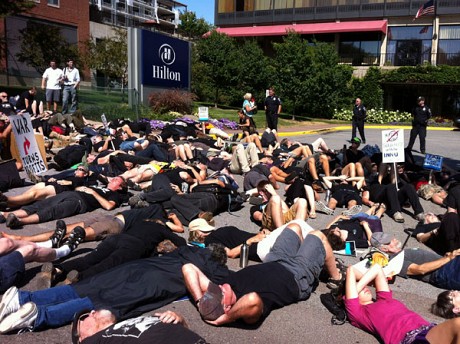
Contradictions between the powerful and everyone else are heightened in places like North Carolina, especially when contrasted to liberal enclaves like Vermont… However, the difference between the right wing state and the liberal one is often much smaller than one might think.
By Ron Jacobs | The Rag Blog | August 27, 2012
BURLINGTON, Vermont — Leaving Asheville, North Carolina, the place I called home from summer 2005 through summer 2012, always provides me with a mixture of regret and relief. I love the beer, music, scenery and my friends there, but the fact that it is in the U.S. South — with its generally reactionary politics — always leaves a bitter taste.
Asheville itself is a city whose relationship to its home state is much like the relationship Austin has to Texas. It is a liberal to progressive enclave in a wasteland of Bible Belt intolerance and anti-worker policies designed to keep the workforce in a state of perpetual desperation. Low wages, no unions and bosses who can fire folks almost at will seem to be the order of the day in states like North Carolina.
The high unemployment rates in the state keep the marginally employed and those just a paycheck away from that status in a situation not much different from the slavery once commonplace there.
A friend of mine plays in a number of symphony orchestras in the region. Every summer she performs in a few pops concerts that serve as fundraisers for these ensembles. The most recent one was in a town about 50 miles east of Asheville. She described the scene to me over beer and pizza.
I pulled into the parking lot after getting lost on the back roads. The lot was filled with BMWs, Mercedes SUVs, Lexuses, and Escalades. Standing around in small groups underneath tents covered in corporate logos and set up to keep the sun away were groups of mostly older people.
The women wore light clothing that they probably paid too much for. The men, almost to a T, were dressed in white polo shirts, deck shoes, and pink Bermuda shorts. Many of the automobiles sported Romney bumper stickers and, as I walked toward the performers’ entrance to the stage area, I couldn’t help noticing the number of audience members sporting Romney campaign buttons.
The show was your standard fare: Sousa and other patriotic nonsense, show tunes and a couple edited versions of popular classical tunes. The patriotic tunes received the most applause, of course. When I got back to my car there was a Romney campaign leaflet stuck under the windshield wiper.
Contradictions between the powerful and everyone else are heightened in places like North Carolina, especially when contrasted to liberal enclaves like Vermont (where I currently reside), and the hope of progressive change seems minimal. However, the difference between the right wing state and the liberal one is often much smaller than one might think.
After I bought my airline tickets to Asheville I found out that the Northeast Governors Association (and Eastern Canadian PMs) would be holding their conference in downtown Burlington the same weekend. Like its larger parent, the U.S. Governor’s Association Conference, the northeastern conference is a weekend of political backslapping, conspiring and feasting with lots of corporate sponsorship.
The context of this year’s conference is the ongoing campaign by the energy corporation HydroQuebec to dam up Quebec’s rivers, destroy the pristine wilderness they flow through, and displace the people and wildlife living there. Another part of the context is the desire of the oil industry to ship oil from the tar sand fields in Canada through the New England states.
To top off their arrogance, Quebec Premier Charest, whose refusal to back off of tuition hikes and other changes to Quebec’s higher education system have sparked a strike and massive protest, was feted.
So, protests were planned.

Since I could not afford to change my travel dates I wished my comrades well. Imagine my surprise upon returning to Burlington and finding out that Burlington police had attacked protesters with rubber and other “non-lethal” weapons for attempting to block roads around the conference site.
Of course, in the wake of the police attack, politicians and police administrators were quick to blame the protesters for their “aggressive” tactics. Response from some segments of the community was swift. University of Vermont literature professor Nancy Welch wrote in a Facebook post regarding the police attack:
What Burlington Police Chief Michael Schirling leaves out of his defense of the police assault on protestors outside the Northeast Governors Conference is that the “confrontation” and “conflict” the protestors engaged in was nonviolent.
Just as the men and women who sat in at Greensboro lunch counters and marched on Montgomery in the Civil Rights era had a conflict with Jim Crow and sought to confront it, so do the people who marched Sunday have a conflict with heads of state who push such environmentally and socially devastating projects as Tar Sands and the F-35 bombers while defunding family planning clinics, public services, and state universities.
The protestors’ confrontation took the classic Civil Rights-era forms: lying down in front of the hotel the governors were huddled up in; standing in front of the bus that was to whisk the governors away to dinner. It is sobering that police chose to respond in Bull Connor fashion by unleashing violence. Even more sobering is that our Democratic mayor and governor are championing them.
The fallout continues. The newly elected Democratic mayor of Burlington is now calling for a conversation between the city, the police and citizens. At the same time, some kind of investigation is supposedly being arranged. The likelihood is that little will change and the police will be able to do what they please when situations like that which occurred the weekend of July 29th happen again.
Earlier in this piece I wrote that political environments like that found in North Carolina tend to heighten the contradictions between the rulers and the ruled. So do actions like those undertaken by Burlington police outside the Northeast Governor’s Conference. One can only anticipate with trepidation what contradictions law enforcement in Charlotte, N.C. and Tampa, Florida will heighten when the U.S. Republicans and Democrats hold their conventions in the coming days.
[Rag Blog contributor Ron Jacobs is the author of The Way The Wind Blew: A History of the Weather Underground. He recently released a collection of essays and musings titled Tripping Through the American Night. His latest novel, The Co-Conspirator’s Tale, is published by Fomite. His first novel, Short Order Frame Up, is published by Mainstay Press. Ron Jacobs can be reached at ronj1955@gmail.com. Find more articles by Ron Jacobs on The Rag Blog.]
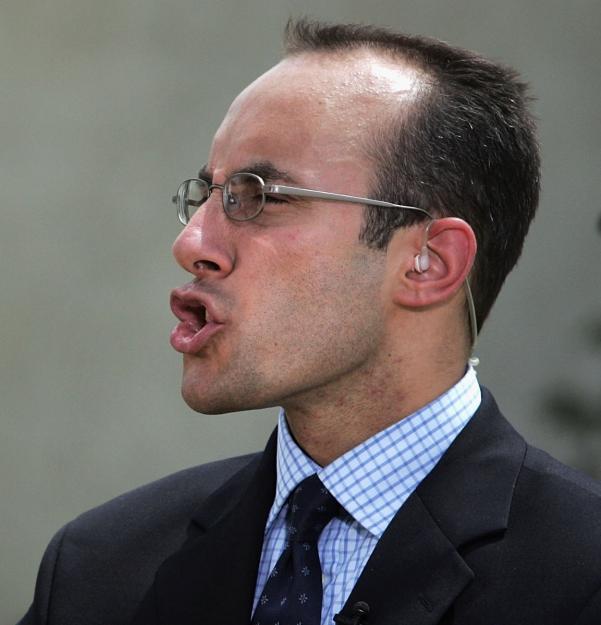
Dan Senor, who supplied Republicans with spin in furtherance of the wars in Iraq, Afghanistan, and hawkish pro-Israeli forces, is the chief spokesman for a neocon circle advising Romney.
By Tom Hayden | The Rag Blog | August 27, 2012
The neoconservatives have consolidated their plan for control of U.S. foreign policy with the vice-presidential nomination of Paul Ryan.
Ryan is being briefed by Dan Senor, described mildly in The New York Times as “an expert on Israel and the Middle East.” Senor, however, is anything but expert. He was the spokesperson, or spin doctor, for the initial Coalition Provisional Authority, which occupied Iraq in 2003 with promises about democracy blooming after weapons of mass destruction were removed.
Not since Vietnam had state propaganda so completely dominated the narrative, in keeping with the Pentagon/neocon view that “the liberal media” caused the fall of Saigon.
Ever since, Senor, often with “fat briefing books under his arm,” has supplied Republicans with spin in furtherance of the wars in Iraq, Afghanistan, and hawkish pro-Israeli forces represented by Sheldon Adelson. It was Senor who traveled with Romney to London, Israel, and Poland on his recent foreign policy tour, and it was Senor who told the traveling media that Romney would support an Israeli strike on Iran.
Senor has achieved more respectability than Bush or Dick Cheney in Washington power circles, apparently by indefatigably showing up with briefing books, by his marriage to former CNN anchor Campbell Brown, his ties to wealthy hedge-fund investors, and political connections across the Beltway.
He is the chief spokesman for a neocon circle advising Romney, one including more controversial hardliners such as Bush’s UN ambassador John Bolton. Senor’s sister, Wendy Singer, is the AIPAC representative in Israel.
Ryan’s famous budget-slashing plan for the U.S., approved twice in the House of Representatives, does not include a nickel reduction in the Pentagon budget. And while Ryan has given little-reported foreign policy speeches extolling “American exceptionalism” to the applause of neoconservatives, he has carved his reputation as a deficit-fighter on domestic budgetary issues.
Since foreign policy is likely to be a marginal issue in the campaign, a Romney-Ryan victory would mean a smooth pathway to restoration for the neocons who dominated the Bush foreign policy. Their core constituencies of fundamentalist Christians and Jews would benefit despite lack of majority support for their militarist agendas. If they go to war, it will be without a public mandate. Adding Ryan to the ticket will appeal to the constituency of Ron Paul libertarians while masking their big government militarism.
The Obama Democrats would be on solid ground arguing that Romney-Ryan represent a return to the Bush era not only on economic issues but on foreign policy as well. A Democratic attack on “the same people that caused the Great Recession” could be supplemented by a parallel warning against “the same people who fabricated our way into Iraq.” But it remains to be seen whether Obama-Biden or their Democratic surrogates will attack the neocon resurgence on any such grounds.
It is not in the Republican campaign’s interest to strongly highlight foreign policy differences with Obama. By their historic nature, the neoconservatives are elitists who tend to infiltrate foreign policy infrastructures, a pattern that began when they were followers of the venerable Trotskyist Max Shachtman as long ago as the 1930s.
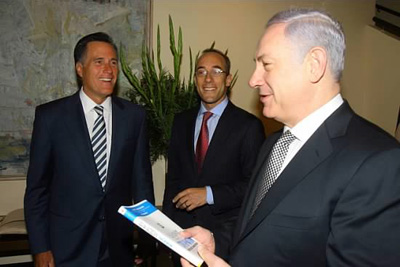
They evolved to become pro-Israel Democrats in the 1960s when they migrated into the Republican Party in response to the New Left and civil rights movements. There they made a home for themselves as fierce anti-Communists and pro-Zionists despite the blunt anti-Semitism of Richard Nixon and the Fundamentalist Christian script for the Second Coming in which the Jews either convert or disappear.
They played an instrumental role in the Central American wars before their direct engagement in the Iraq War and the Bush presidency.
Their primary target today is regime change in Iran. Their primary allies are Netanyahu and Adelson. The strategy requires occasional saber rattling and Obama-bashing, but primarily waged off camera and with discretion.
Just as the Romney-Ryan campaign is a Trojan horse for the Tea Party, it also provides protective cover for the return of the neocons. Fighting Obama on deficit reductions is fine with the neocons as long as they win — and war budgets are off the table.
[Tom Hayden is a former California state senator and leader of Sixties peace, justice, and environmental movements. He currently teaches at Pitzer College in Los Angeles. His latest book is The Long Sixties. This article was also published at Tom Hayden’s Peace Exchange Bulletin. Read more of Tom Hayden’s writing on The Rag Blog.]

By Kate Braun | The Rag Blog | August 27, 2012
“If they say the moon is blue / We must believe that it is true” — 1500’s proverb
Lady Moon is in Pisces, a Mutable Feminine Water sign, for this Full Moon, and the day, Friday, Frigga’s day, is adding to the abounding feminine energies. The second Full Moon in the month of August, it is called a Blue Moon because of the rarity of seeing two full moons in one calendar month. There is no particular metaphysical significance to a Blue Moon, no reason to give it more emphasis than any other Full Moon.
Named the Piscary or Wort Moon, this Full Moon is a good time to celebrate your accomplishments since the most recent New Moon, a good time to move energy forward toward goals to be achieved by the next New Moon, a good time to keep positive energy moving through and around you.
Feminine energies are nurturing, loving, supporting, encouraging, respecting. I recommend that your magickal workings focus on these positive qualities. Prepare yourself in advance by deciding what topics you find it best to focus your intent upon. The possibilities include: artistic endeavors, health and fitness, knowledge, change and decisions, money, motivation, protection, self-improvement.
Sea water is an important part of Full Moon magick. Sea salt dissolved in tap water is an acceptable substitute. The sea salt should be thoroughly dissolved and the water should then be charged in advance of your celebration.
The simplest way to charge water is to put it in a glass container and let the container of water sit in sunlight or moonlight for 8–12 hours. If your water is being charged outside, be sure to cover the container to keep bugs/leaves/dust out. If it is not convenient to charge the water outside, you may place the container in advance of your celebration on a window ledge for the appropriate time.
One use of the charged water is to invoke Matron Goddesses such as Aphrodite and Cerridwen to assist you in your efforts. You may do this by sprinkling some charged water to the East, South, West, and North, calling on the Matron Goddess of your choice at each direction.
Pour some charged water over your bare feet if you are able to celebrate outdoors under the light of the Full Moon. If you celebrate indoors, spritz yourself from head to toe with charged water, being sure to include the soles of your bare feet. Put charged water into an atomizer or mister for this purpose.
Any leftover charged water should not be saved but returned to the earth. Using it to water houseplants, shrubbery, or trees is said to give extra positive energy to the plant.
[Kate Braun‘s website is www.tarotbykatebraun.com. She can be reached at kate_braun2000@yahoo.com. Read more of Kate Braun’s writing on The Rag Blog.]
Thorne Webb Dreyer, Editor





