
Type rest of the post here
Source /
Trickle-down depression:
Productivity gains are no longer shared
By Ted McLaughlin / The Rag Blog / September 12, 2011
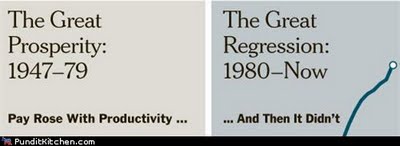
From the end of World War II through 1979 the gains in productivity in the United States were shared between workers and owners — and both benefited as wages rose along with company profits. It was recognized that both capital and labor were important in maintaining a healthy company, and a healthy economy. But with the election of Ronald Reagan in 1980 a different economic theory was put into effect — “trickle-down” economics.
Trickle-down economics was actually not a new theory. It was just a new name for an old economic theory — unregulated capitalism. It was a return to the economic ideas of the 1920’s and before. Workers were no longer rewarded for an increase in productivity. Instead, all of the gains from the increased productivity went to the owners. Once again the 19th century idea of economics took root, which said that capital was the only important thing and labor was little more than a necessary evil (which reduced profits).
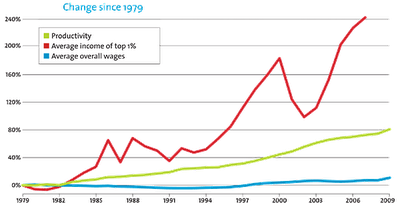
As the chart above shows, this resulted in a stagnation of wages in this country. This stagnation was actually a reduction in wages, since the price of nearly everything has risen since 1980 making the buying power of the stagnant wages much less than it had been in 1979. But while the buying power of workers was falling, the profits of corporate owners (the richest 1%) were skyrocketing — an increase of over 240% since 1980.
It was no longer considered good enough to make adequate, reasonable, or even very good profits. The profits had to be massive, and they were created by refusing to let workers share in the productivity gains.
Now one might wonder how the workers let this happen? Why didn’t they just organize and strike for their fair share as they had done in the past? The answer is they couldn’t — because of two things. The first of these is the weakening of unions by the federal and state governments. This started in the Reagan administration (with the busting of the air traffic controllers’ union) and continues to this day. State “right to work” laws (a misnomer for the right to bust unions) have also played their part in the weakening of unions.
The second powerful tool used by capitalists to keep workers from getting their share of productivity gains is outsourcing. If workers unionized and tried to strike (or threatened to strike), the corporate powers countered this with the threat to outsource the jobs to another country (where they could legally abuse workers with poverty-level wages and no benefits).
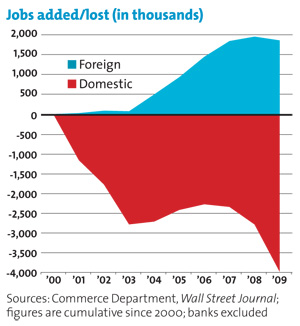
And this was no idle threat. They began to outsource American jobs and that outsourcing is increasing every year (encouraged by government subsidies and tax breaks to companies that outsource). As the chart above shows, it has now reached the point where American companies are creating more jobs in other countries than they create in the United States.
This hoarding of productivity has resulted in a vast inequality in wealth and income in this country. In 2007, the top 1% of Americans owned about 34% of the nation’s wealth, and the top 10 percent controlled more than 70% of the wealth. Meanwhile, the bottom 50% of the population had only 2.5% of the nation’s wealth. And since 2007 this inequal distribution of wealth has gotten much worse.
There was only one place this unregulated capitalism could ultimately lead to — the same place it lead to the last time it was tried. The Great Depression. This time it has led to what is currently being called the Great Recession (which is actually a second Great Depression). It seems that the American people and their leaders have an innate inability to learn from history, causing us to repeat our mistakes — even the bad ones.
[Ted McLaughlin also posts at jobsanger. Read more articles by Ted McLaughlin on The Rag Blog.]
Former NASA scientist Jim Hansen has argued that if tar sands development continues and the massive Keystone XL tar sands pipeline is built, “it is essentially ‘game over’ for climate change.” Jay Jurie tells of the history of the extraction of crude oil from tar sands and its effects on the environment, and he reports on the proposed massive pipeline from Alberta, Canada, who stands to gain from it, the dangers involved, and the militant movement to stop it.

We’re 10 years past the twin towers attack and still fighting wars in its name. When will we open our eyes?
By Tom Hayden / The Rag Blog / September 11, 2011
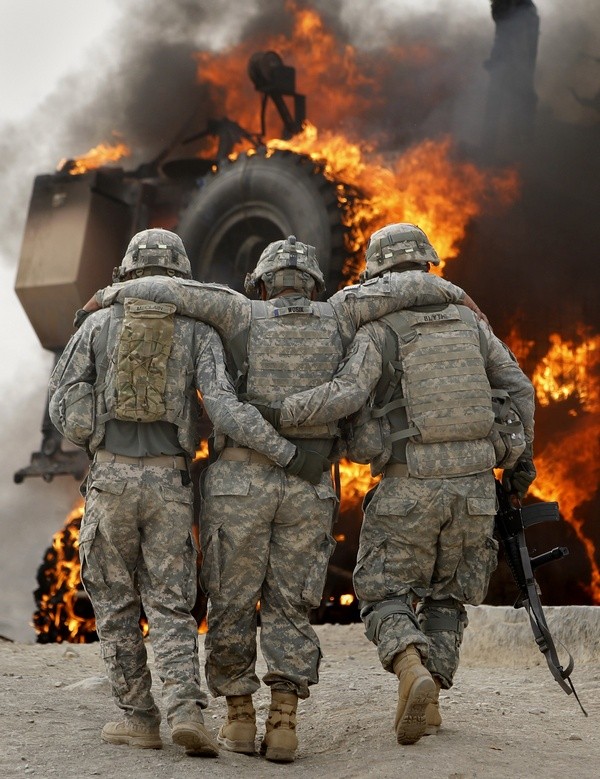
The numbers we almost never see: A total of 6,197 Americans were killed, as of mid-August, in the wars fought avenging 9/11, a day when 2,996 Americans died. The total wounded has been 45,338. The active-duty military-suicide rate for the last decade is at a record high of 2,276.
After witnessing the first jetliner crash into the Twin Towers on that Sept. 11 morning, the wife and 7-year-old daughter of a friend of mine fled to their nearby Manhattan loft and ran to the roof to look around. From there, they saw the second plane explode in a rolling ball of flaming fuel across the rooftops. It felt like the heat of a fiery furnace.
Not long after, the girl was struck with blindness. She rarely left her room. Her parents worked with therapists for months, trying various techniques including touch and visualization, before the young girl finally recovered her sight.
“The interesting new development,” my friend reports, “is that she no longer remembers very much, which she told me when I asked her if she would be willing to speak with you.”
That’s what happened to America itself 10 years ago this Sunday on 9/11, though it might be charged that many of us were blinded by privilege and hubris long before.
But 9/11 produced a spasm of blind rage arising from a preexisting blindness to the way much of the world sees us. That in turn led to the invasions of Afghanistan, Iraq, Afghanistan again, Pakistan, Yemen and Somalia — in all, a dozen “shadow wars,” according to The New York Times. In Bob Woodward’s crucial book, Obama’s Wars, there were already secret and lethal counterterrorism operations active in more than 60 countries as of 2009.
From Pentagon think tanks came a new military doctrine of the “Long War,” a counterinsurgency vision arising from the failed Phoenix program of the Vietnam era, projecting U.S. open combat and secret wars over a span of 50 to 80 years, or 20 future presidential terms.
The taxpayer costs of this Long War, also shadowy, would be in the many trillions of dollars and paid for not from current budgets, but by generations born after the 2000 election of George W. Bush. The deficit spending on the Long War would invisibly force the budgetary crisis now squeezing our states, cities, and most Americans.
Besides the future being mortgaged in this way, civil liberties were thought to require a shrinking proper to a state of permanent and secretive war, and so the Patriot Act was promulgated. All this happened after 9/11 through democratic default and denial. Who knows what future might have followed if Al Gore, with a half-million popular-vote margin over George Bush, had prevailed in the U.S. Supreme Court instead of losing by the vote of a single justice?
In any event, only a single member of Congress — Rep. Barbara Lee, D-Oakland — voted against Bush’s initial Sept. 14, 2001, request for emergency powers (war authorization) to deal with the aftermath of the attacks. Only a single senator — Sen. Russ Feingold, D-Wis. — voted against the Patriot Act.
Were we not blinded by what happened on 9/11? Are we still? Let’s look at the numbers we almost never see.
Fog of war
As to American casualties, the figure now is beyond twice those who died in New York, Pennsylvania, and Washington, D.C., on 9/11. The casualties are rarely totaled, but they are broken down into three categories by the Pentagon and Congressional Research Service.
There is Operation Enduring Freedom, which includes Afghanistan and Pakistan but, in keeping with the Long War definition, also covers Kazakhstan, Kyrgyzstan, Pakistan, Tajikistan, Turkmenistan, and Uzbekistan. Second, there is Operation Iraqi Freedom and its successor, Operation New Dawn, the name adopted after September 2010 for the 47,000 U.S. advisers, trainers and counterterrorism units still in Iraq. The scope of these latter operations includes Bahrain, Jordan, Kuwait, Oman, Qatar, Saudi Arabia, Turkey and the United Arab Emirates.
These territories include not only Muslim majorities but also, according to former Centcom Commander Tommy Franks, 68 percent of the world’s proven oil reserves and the passageway for 43 percent of petroleum exports, another American geo-interest that was heavily denied in official explanations. (See Michael Klare’s Blood and Oil and Antonia Juhasz’s The Bush Agenda for more on this.)
A combined 6,197 Americans were killed in these wars as of Aug. 16, 2011, in the name of avenging 9/11, a day when 2,996 Americans died. The total American wounded has been 45,338, and is rising at a rapid rate. The total number rushed by Medivac out of these violent zones was 56,432. That’s a total of 107,996 Americans. And the active-duty military-suicide rate for the decade is at a record high of 2,276, not counting veterans or those who have tried unsuccessfully to take their own lives.
Sticker shock of war
Among the most bizarre symptoms of the blindness is the tendency of most deficit hawks to become big spenders on Iraq and Afghanistan, at least until lately. The direct costs of the war, which is to say those unfunded costs in each year’s budget, now come to $1.23 trillion, or $444.6 billion for Afghanistan and $791.4 billion for Iraq, according to the National Priorities Project.
But that’s another sleight-of-hand, when one considers the so-called indirect costs like long-term veterans’ care. Leading economists Joseph Stiglitz and Linda Bilmes recently testified to Congress that their previous estimate of $4-6 trillion in ultimate costs was conservative. The president himself expressed “sticker shock,” according to Woodward’s book, when presented with cost projections during his internal review of 2009.
The Long War casts a shadow not only over our economy and future budgets, but our unborn children’s future as well. This is no accident, but the result of deliberate lies, obfuscations, and scandalous accounting techniques. We are victims of an information warfare strategy waged deliberately by the Pentagon.
As Gen. Stanley McChrystal said much too candidly in February 2010, “This is not a physical war of how many people you kill or how much ground you capture, how many bridges you blow up. This is all in the minds of the participants.” David Kilcullen, once the top counterinsurgency adviser to Gen. David Petraeus, defines “international information operations as part of counterinsurgency.”
Quoted in Counterinsurgency in 2010, Kilcullen said this military officer’s goal is to achieve a “unity of perception management measures targeting the increasingly influential spectators’ gallery of the international community.”
This new “war of perceptions,” relying on naked media manipulation such as the treatment of media commentators as “message amplifiers” but also high-technology information warfare, only highlights the vast importance of the ongoing WikiLeaks whistle-blowing campaign against the global secrecy establishment.
Consider just what we have learned about Iraq and Afghanistan because of WikiLeaks: tens of thousands of civilian casualties in Iraq never before disclosed; instructions to U.S. troops not to investigate torture when conducted by U.S. allies; the existence of Task Force 373, carrying out night raids in Afghanistan; the CIA’s secret army of 3,000 mercenaries; private parties by DynCorp featuring trafficked boys as entertainment; and an Afghan vice president carrying $52 million in a suitcase.
The efforts of the White House to prosecute Julian Assange and persecute Pfc. Bradley Manning in military prison should be of deep concern to anyone believing in the public’s right to know.
The news that this is not a physical war but mainly one of perceptions will not be received well among American military families or Afghan children, which is why a responsible citizen must rebel first and foremost against The Official Story. That simple act of resistance necessarily leads to study as part of critical practice, which is as essential to the recovery of a democratic self and democratic society.
Read, for example, this early martial line of Rudyard Kipling, the English poet of the white man’s burden: “When you’re left wounded on Afghanistan’s plains and the women come out to cut up what remains/ just roll to your rifle and blow out your brains/And go to your God like a soldier.” Years later, after Kipling’s beloved son was killed in World War I and his remains never recovered, the poet wrote: “If any question why we died / Tell them because our fathers lied.”
A hope for peace
The military occupation of our minds will continue until many more Americans become familiar with the strategies and doctrines in play during the Long War. Not enough Americans in the peace movement are literate about counterinsurgency, counterterrorism, and the debates about “the clash of civilizations” — i.e., the West versus the Muslim world.
The writings of Andrew Bacevich, a Vietnam veteran and retired Army lieutenant colonel whose own son was killed in Iraq in 2007, is one place to begin. Bacevich, a professor at Boston University, has written The New American Militarism and edited The Long War, both worth absorbing.
For the military point of view, there is the 2007 Army-Marine Counterinsurgency Field Manual developed by Gen. Petraeus, with its stunning resurrection of the Phoenix model from Vietnam, in which thousands of Vietnamese were tortured or killed before media outcry and Senate hearings shut it down.
Not enough is being written about how to end the wars in Iraq, Afghanistan, and Pakistan, but experts with much to say are the University of Michigan’s Scott Atran (Talking to the Enemy) and former UK envoy Sherard Cowper Coles (Cables from Kabul). Also there is my own 2007 book, Ending the War in Iraq, which sketches a strategy of grass-roots pressure against the pillars of the policy (the pillars necessary for the war are public opinion, trillions of dollars, thousands of available troops, and global alliances; as those fall, the war must be resolved by diplomacy).
The more we know about the Long War doctrine, the more we understand the need for a long peace movement. The pillars of the peace movement, in my experience and reading, are the networks of local progressives in hundreds of communities across the United States. Most of them are citizen volunteers, always immersed in the crises of the moment, nowadays the economic recession and unemployment. Look at them from the bottom up, and not the top down, and you will see:
This peace bloc deserves more. It won’t happen overnight, but gradually we are wearing down the pillars of the war. In February of this year, Rep. Barbara Lee passed a unanimous resolution at the Democratic National Committee calling for a rapid withdrawal from Afghanistan and transfer of funds to job creation. The White House approved of the resolution.
Then 205 House members, including a majority of Democrats, voted for a resolution that almost passed calling for the same rapid withdrawal. Even the AFL-CIO executive board, despite a long history of militarism, adopted a policy opposing Afghanistan.
The president himself is quoted in Obama’s Wars as opposing his military advisors, demanding an exit strategy, and musing that he “can’t lose the whole Democratic Party.” In the end, the president decided to withdraw 33,000 American troops from Afghanistan by next summer, and continue “steady” withdrawals of the rest (68,000) from combat roles by 2014.
Mind the gap
Obama’s withdrawal decision upset the military but also most peace advocates he presumably wanted to win back. The differences revealed a serious gap in the inside-outside strategy applied by many progressives.
After a week of hard debate over the president’s plan, for example, Sen. John Kerry invited Tim Carpenter, leader of the heavily grass-roots Progressive Democrats of America, into his office for a chat. Kerry had slowly reversed his pro-war position on Afghanistan, and said he thought Carpenter would be pleased with the then-secret Obama decision on troop withdrawals.
From Kerry’s insider view, the number 33,000 was a very heavy lift, supported mainly by Vice President Joe Biden but not the national security mandarins. From Carpenter’s point of view, 33,000 would seem a disappointing too little, too late. While it was definite progress toward a phased withdrawal, bridging the differences between the Democratic liberal establishment and the idealistic progressive networks will remain an ordeal through the 2012 elections.
These elections present an historic opportunity to awaken from the blindness inflicted by 9/11. Diminishing the U.S. combat role by escalating the drone wars and Special Operations could repeat the failure of Richard Nixon in Vietnam. Continued spending on the Long War could repeat the disaster of Lyndon Johnson. A gradual winding down may not reap the budget benefits or political reward Obama needs in time.
With peace voters making a critical difference in numerous electoral battlegrounds, however, Obama might speed up the “ebbing,” plausibly announce a peace dividend in the trillions of dollars, and transfer those funds to energy conservation and America’s state and local crises. His answer to the deficit crisis will have to include a sharp reduction in war funding, and his answer to the Tea Party Republicans will have to be a Peace Party.
[Tom Hayden is a former California state senator and leader of Sixties peace, justice, and environmental movements. He currently teaches at Pitzer College in Los Angeles. His latest book is The Long Sixties. This article was also published by the Sacramento News & Review and at Tom Hayden’s Peace and Justice Resource Center. Read more of Tom Hayden’s writing on The Rag Blog.]
Author and noted scholar Mike Davis suggests that, 10 years ago, Lower Manhattan became the “Sarajevo of the War on Terrorism.” As with the assassination of the Archduke and his wife in 1914, a “small network of peripheral but well-connected conspirators, ennobled in their own eyes by the bitter grievances of their region, attacked a major symbol of the responsible empire.” In both cases the outrages were designed to detonate “larger, cataclysmic conflicts,” and they were “successful beyond the all imagining.”
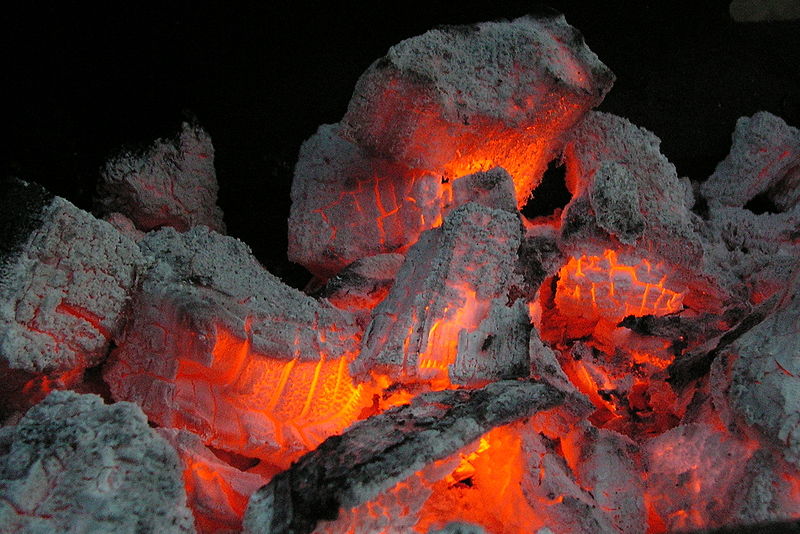
By Mike Davis / The Rag Blog / September 8, 2011
Ten years ago, Lower Manhattan became the Sarajevo of the War on Terrorism. Although conscience recoils against making an equation between the assassination of a single Archduke and his wife (28 June 1914) and the slaughter of almost 3,000 New Yorkers, the analogy otherwise is eerily apt.
In both cases, a small network of peripheral but well-connected conspirators, ennobled in their own eyes by the bitter grievances of their region, attacked a major symbol of the responsible empire. The outrages were deliberately aimed to detonate larger, cataclysmic conflicts, and in this respect, were successful beyond the all imagining.
However the magnitudes of the resulting explosions were not simple functions of the events that detonated them. For example, in Europe between 1890 and 1940, more than two dozen heads of state were assassinated, including the kings of Italy, Greece, Yugoslavia, and Bulgaria, an empress of Austria, two presidents of France, two Spanish prime ministers, and so on. Apart from the murder of Franz Ferdinand and his wife in Sarajevo none of these events instigated a war.
Likewise, a single suicide bomber in a truck killed 241 U.S. marines and sailors at their barracks at the Beirut Airport in 1983. (Fifty eight French paratroopers were killed by another bomb the same day.) A Democratic president might have been pressured to go to war against the Shiite and Druze militias, but President Reagan distracted the public with an invasion of tiny Grenada, and then quietly withdrew the rest of his Marines.
If Sarajevo and the World Trade Center, by contrast, unleashed global carnage and chaos, it was because of the de facto collusion between the attackers and the attacked.
I’m not referring to mythical British plots in Balkans or CIA agents blowing up the Twin Towers, but simply to the well-known facts that the Imperial German General Staff had already decided in 1912 to exploit the first opportunity to make war, and that powerful neoliberals in Bush’s White House were lobbying for the overthrow of the regimes in Baghdad and Tehran even before the last hanging chad had been counted in Florida.
Both regimes were in search of a casus belli that would legitimate military intervention and silence domestic opposition. Prussian militarism, of course, was punctually accommodated by the Black Hand (an anarcho-nationalist group secretly supported by the Serbian Army), while Al Qaeda ‘s sublime horror show in lower Manhattan consecrated the divine right of the White House to torture, secretly imprison, or kill by remote control.
At the time, it seemed almost as if the Republicans had staged a coup d’etat against the Constitution. Yet the Bush administration could point to a whole catalogue of precedents. To put it bluntly, every single chapter in the history of U.S. global power has opened with the same sentence: “innocent Americans were treacherously attacked…”
Remember the Maine? Or the Lusitania (1198 dead)? Or the Panay, Pearl Harbor, the crossing of the Yalu, and the Gulf of Tonkin? The besieged legation in Peking, Aguilnaldo’s alleged attack on U.S. sentries outside Manila; Al Raisuli’s brazen kidnappings; Pancho Villa’s raid on sleepy Columbus, New Mexico; the rapine of National City Bank in Port-au-Prince; the storming of the Pueblo and the Mayaquez, the humiliated hostages in Tehran; the imperiled students in Grenada…
This list barely scratches the surface: the synchronization of outrage and intervention in U.S. history is relentless.
In the name of “innocent Americans,” the USA annexed Hawaii and Puerto Rico; colonized the Philippines; punished nationalism in North Africa and China; invaded Mexico (twice), sent a generation to the killing fields of France (and imprisoned dissent at home); massacred patriots in Haiti, the Dominican Republic, and Nicaragua; annihilated Japanese cities; committed genocide in Korea and Indochina; buttressed military dictatorship in Latin America; and became Israel’s partner in the mass murder of Arab civilians.
Someday — perhaps sooner than we think — a new Edward Gibbon in China or India will surely sit down to write The History of the Decline and Fall of the American Empire. (Hopefully it will be but one volume in a larger, more progressive oeuvre — The Renaissance of the Asia, perhaps — and not an obituary for a human future sucked into America’s sinking void.)
I think she’ll probably catalogue self-righteous American “innocence” as a particularly toxic tributary of national decline, with President Obama as its highest incarnation.
Indeed, from the perspective of the future what will be deemed the greater crime: to have created the Guantanamo nightmare in the first place, or to have preserved it in contempt of global popular opinion and one’s own campaign promises?
Obama, who was elected to bring the troops home, close the gulags, and restore the Bill of Rights, has in fact become the chief curator of the Bush legacy: a born-again convert to special ops, killer drones, immense intelligence budgets, Orwellian surveillance technology, secret jails, and the super-hero cult of General Petraeus
Our “anti-war” president, in fact, may be taking U.S. power deeper into the darkness than any of us dare to imagine. And the more fervently Obama embraces his role as commander in chief of the Delta Force and Navy Seals, the less likely it becomes that future Democrats will dare to reform the Patriot Act or challenge the presidential prerogative to murder and incarcerate America’s enemies in secret.
Enmired in wars with phantoms, Washington has been blindsided by every major trend of the last decade. It has completely misread the real yearnings of the Arab street and the significance of mainstream Islamic populism, ignored the emergence of Turkey and Brazil as independent powers, forgotten Africa, and lost much of its leverage with Germany as well as with Israel’s increasingly arrogant reactionaries. Most important, Washington has failed to develop any coherent policy framework for its relationship to the PRC, its main creditor and most important rival.
From a Chinese standpoint (assumedly the perspective of our future Gibbon), the United States is showing incipient symptoms of being a failed state. When Xinhua scolds the U.S. Congress for being “dangerously irresponsible” in debt negotiations, or when senior leaders openly worry about the stability of American political and economic institutions, the shoe is truly on the other foot. Especially when standing in the wings, bibles in hand, are the mad spawn of 9/11 — the Republican presidential candidates.
[Mike Davis is a Distinguished Professor in the Department of Creative Writing at the University of California, Riverside. An urban theorist, historian, and social activist, Davis is the author of City of Quartz: Excavating the Future in Los Angeles and In Praise of Barbarians: Essays against Empire. Read more articles by Mike Davis on The Rag Blog.]

Former NASA scientist Jim Hansen has argued that if tar sands development continues and the pipeline is built, it is essentially ‘game over’ for climate change.
By Jay D. Jurie / The Rag Blog / September 8, 2011
On July 25, 2010, a pipeline linking Sarnia, Ontario to an oil refinery at Griffith, Indiana, spilled more than 800,000 gallons of tar sands crude oil into the Kalamazoo River near Marshall, Michigan. According to environmental reporter Kari Lydersen, this spill was ranked by the EPA as the single largest ever in the Midwestern U.S.
Tar sands crude, composed of tar, silica, clay, and other earthen materials, must be diluted with a natural gas-based solvent so it will become sufficiently viscous to flow through a pipe. In this way, natural gas produced by the environmentally-damaging process known as “hydrofracking” may be linked with tar sands development.
As reported by Lydersen, when the Kalamazoo River spill occurred, this “diluted bitumen” or “dilbit” released benzene into the atmosphere, requiring nearby homes to be evacuated, some permanently. Because the “dilbit” resembles a light form of tar more than crude oil, it is nowhere near as responsive to traditional mitigation and restoration measures.
Having missed an EPA deadline, clean-up efforts by pipeline owner Enbridge, Inc., on 200 acres near Marshall continue more than a year after the spill.
This sort of scenario may be in store for a much larger swath of the Central Plains states and Texas if the Keystone Extra Large (XL) 36″ diameter pipeline with a capacity of 500,000 gallons per day is approved later this year by President Barack Obama.
Snaking its way from Hardisty, Alberta, through a corner of Saskatchewan Province into Montana, the pipeline would pass through South Dakota, Nebraska, and Kansas before arriving at terminals in Port Arthur, on the Texas Gulf Coast. Nebraska’s Republican Governor Dave Heineman is among those who have asked President Obama to veto the pipeline, as it would be built over the Ogallala Aquifer, a major plains water source.
Historically known as tar sands, industry now prefers the comparatively sanitized term oil sands. Huge deposits of this naturally-occurring bituminous material are located in the northeastern boreal forest and peat bogs of Canada’s Alberta Province. Most are found along the Athabasca River and in the nearby Peace River and Cold Lake deposits. Estimates of the potential oil reserves range from equal to eight times those of Saudi Arabia.
Unlike conventional Saudi-style petroleum that can be pumped to the surface through wells, tar sands must be extracted through strip mining. Since these deposits are found underneath about 54,000 square miles of Alberta, this process potentially exposes a huge amount of land and water to substantial and lasting environmental damage.
As with mountain-top removal, “remediation” in the best post-mining scenario is only an approximation of the original topography and ground cover. Covering some 120 square miles, Syncrude Corp. operates the single largest mine of any sort in the world. This mine and others have already turned sizable chunks of Alberta into toxic, oily moonscapes.
Through the various phases of mining and processing, tar sands production releases considerably more greenhouses gases than does conventional petroleum production. Due to operations presently under way, Canada has already raised its gas emissions substantially, and is consequently out of compliance with the Kyoto Protocol, to which it is a signatory.
Under the conservative Stephen Harper government, this may help explain why Canada refused to support an extension of the protocol in June of this year. Petroleum exports are not only important to Canadian corporate interests, but U.S. Energy Information Administration data shows that in terms of either crude or total petroleum, Canada has become the single largest supplier of oil to the U.S., ahead of Saudi Arabia and Mexico.
Demand for tar sands oil is not driven exclusively by market forces, but is actively promoted by those who have a self-interest in keeping western society on the “hard energy path” for as long as it remains profitable. Tar sands producers include Albian Sands, composed of Shell Canada, Chevron, and Marathon Oil, and Suncor, which involves Shell, ConocoPhillips, Petro-Canada, and Husky.
Another major player is Syncrude, Corp., a seven-partner consortium that includes Suncor, Canadian Oil Sands, Ltd., Nippon Oil, Japan’s major oil firm, Sinopec, representing Chinese interests, Imperial Oil, which is a subsidiary of ExxonMobil, and Murphy Oil, which is associated with Wal-Mart.
Involvement of Japanese and Chinese interests with tar sands mining may tie directly into the Keystone XL pipeline. Whereas most of the tar sands crude refined in the Midwest is destined for the U.S. market, according to Texans Against Tar Sands, much of the crude flowing through the Keystone XL pipeline will go to foreign-owned refineries on the Gulf Coast for export.
Others involved include the Koch Brothers. Environmental writer David Sassoon has pointed out that Koch Industries, through its subsidiary Flint Hills Resources Canada, Ltd., imports about 250,000 barrels of tar sands oil per day to the Pine Bend Refinery it owns near St. Paul, Minnesota. Pine Bend processes approximately 25% of the tar sands crude the U.S. currently receives from Alberta. According to Sassoon, Koch Industries is poised to become a major beneficiary of the Keystone XL pipeline if it is completed.
ConocoPhillips and TransCanada are partners in the construction of the Keystone XL pipeline. Estimates for the construction cost of the pipeline range from 7 to 13 billion dollars. Political observer Joe Jordan and others have pointed out the influential role Paul Elliott, TransCanada’s main Washington, DC, lobbyist, played in Hillary Clinton’s 2008 presidential bid.
In December 2009 Elliott was named as a director of the Canadian American Business Council, which also included ExxonMobil and Shell. On August 26, 2011, under now-Secretary of State Hillary Clinton, the U.S. State Department found that the proposed Keystone XL pipeline would have a “minimal” environmental impact.
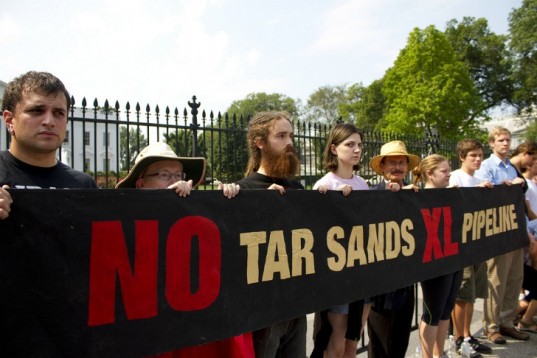
Construction of the Keystone XL pipeline would more firmly place the U.S on the “hard” path. Not only would this keep consumers enslaved to Big Oil, but in the long run a dependence on conventional fuels, including tar sands, is unsustainable. Rag Blog contributor Roger Baker has frequently warned of the crisis posed by “peak oil,” whereby continued dependence on a dwindling resource is a recipe for economic and environmental disaster. Funding and support would be diminished for the “soft” path of renewable energy, green economy expansion, mass public transportation, and urban redesign.
Most readers of The Rag Blog are doubtless aware of the civil disobedience organized by the environmental group 350.org in front of the White House. At the end of two weeks of protest, 1,252 people had been arrested in opposition to the pipeline and over 600,000 had signed a petition against pipeline construction. It is anticipated there will be further protests as the proposal continues to work its way through the approval process.
Coupled with the insistence that tar sands mining and the pipeline be halted and the “soft” path taken, a campaign for the entire energy sector to be placed under public ownership and democratic control must be launched and aggressively waged.
In the U.S. today there are abundant examples of successful energy production and distribution in the form of “municipal power.” These public utilities offer a relevant model for energy policy as a whole, though decentralization and democratic control need to be enhanced.
Our shared resources and the future of the planet are far too vital for the private market to irresponsibly squander for the sake of short-term profits.
This article is dedicated to Ted Gleichman, a friend from Portland, Oregon, among those arrested, and to all the “Keystone 1252.”
Sources: “Athabasca Oil Sands” entry, Wikipedia; Enbridge.com; Energy Information Administration, “Crude Oil and Total Petroleum Imports Top 15 Countries,” U.S. Department of Energy, August 30, 2011; Ted Glick, “The Tar Sands Action (smile),” Portside.com, September 5, 2011; Joe Jordan, “The Pipeline, Hillary Clinton, and Nebraska Politics,” Nebraska.watchdog.org, December 15, 2010; David Ljunggren, “Canada Reveals It Expects U.S. Will Back Pipeline,” Reuters, September 1, 2011; Amory B. Lovins, Soft Energy Paths: Toward a Durable Peace, NY: Harper Colophon, 1977; Kari Lydersen, “A Year After Pipeline Spill, Tar Sands Oil Still Plagues a Michigan Community,” Onearth.org, July 25, 2011; Elizabeth McGowan, “NASA’s Hansen Explains Decision to Join Keystone Pipeline Protests,” Solveclimatenews.com, August 29, 2011; “Oil Sands” entry, Wikipedia; David Sassoon, “Koch Brothers Positioned to Be Big Winners if Keystone XL Pipeline is Approved, Solveclimatenews.com, February 10, 2011; Suncor.com; Texans Against Tar Sands, Facebook group; 350.org; TransCanada.com; Eve Troeh, “Keystone or Bust,” Marketplace, Publicradio.org, July 26, 2011.
[Jay D. Jurie, a veteran of SDS at the University of Colorado at Boulder, now teaches public administration and urban planning and lives near Orlando, Florida. Read more articles by Jay D. Jurie on The Rag Blog.]

The angels are the ones who are doing more than just their jobs.
By Sarito Carol Neiman / The Rag Blog / September 7, 2011
[Shredding the Envelope (“Ruminations on news, taboos, and space beyond time”) is Sarito Carol Neiman’s (occasionally) regular column for The Rag Blog. This is the second in a series. Read Part I here.]
My brother called them “angels” in his email dispatches from the surgery waiting room. By this, I know now that he meant the ones who look you in the eye, who respond to your questions directly and without evasion. Without hollow boilerplate responses, meant to reassure those anxiously awaiting some news or a verdict that nobody yet has.
The angels are the ones who are doing more than just their jobs.
Being a guy, and more specifically a guy who loves understanding the workings of things, my brother was also impressed by the airport-like, huge computer display on the wall of the waiting room that showed which operating room was occupied by which surgeon, how much longer it was expected to be in use… it functioned as a reassurance in itself, like the clock displays on the crosstown Manhattan L line that tell you how many minutes away a train is from where you’re standing.
He and my sister… and whoever else might have been there from the family (who will no doubt forgive me for not remembering just now)… could watch, as the slot representing Dad kept getting extended. From the initial four to a total of seven hours, by the time it was all said and done.
Scott & White has a reputation for being one of the best in Texas. High-tech, computerized in all its dimensions, there is a mini-version of air traffic control opposite each nursing station, where selected vital signs of each patient in each room are on live display, broadcast from a little monitor each of them wears (or not, as needed, I assume) in a pocket sewn into their gowns, with its wires and sensors silently attached to their bodies and capturing heartbeat, respirations, temperature. When a nurse comes into the room, tasks completed and supplementary notes are entered via keyboard and screen attached to the wall next to the door, not on the iconic hospital “clipboard.”
All very reassuring, even laudable. But for the patients themselves, and their families, it’s the angels who count.
I have met many, so far, in the course of this journey. I’d say the majority of them have been “new”… interns, nurses in training, residents. (Maybe “the system” tends to beat angelhood out of people who are in it too long. I sense I should camouflage their names to protect their innocence.)
R, whose extraordinary sensitivity and respect toward Dad, on what had started as a really difficult day, seemed to help him tap into a new reservoir of strength within himself to turn things around by the end of the day.
B, whose eagerness to learn and clear enthusiasm for finding out what was broken and fixing it was so infectious, it earned him immediate forgivenesss for stepping on Dad’s toe the first time he approached his chair. When he came in the next day, clearly with an “assignment” to ask the patient a couple of questions, I saw B’s future as a great among angels reflected in my Dad’s honest, simple responses.
Dad is generally the sort of guy who will say “I’m fine” while bleeding to death from a gunshot wound. He’s also very perceptive. If he figures you don’t REALLY want to know, he will say, “I’m fine.”
B stood exactly in front of Dad, looked him in the eye, and said:
B: “Do you have any questions at all about your treatment that haven’t been answered?”
Dad: “I don’t know what’s wrong with me.”
B: [Clear, simple response to describe Dad’s condition, and the surgery he had just undergone, and why. A nod from Dad. Understood, at last, beyond whatever descriptions he had been given, and had only abstractly/theoretically comprehended, before he went under the knife.] “Is there anything else you want to know?”
Dad: “Why am I not getting better?”
To which B responded that it takes time, it had been a huge ordeal, and actually Dad was doing remarkably well under the circumstances, better even than might be expected. Other people had said the same words, but B really knew those words were true. For the first time, Dad had been told the reality as certainly as it could be known, by a person so transparently honest and sincere that he could take a deep breath and move on to crossing the next river.
There are angels among the oldtimers, as well. Notably “Ida sweet as apple cidah” as Dad introduced her to me (referencing an old song he knows), an ageless woman with a huge presence that just lights up the room when she walks in. I don’t feel the need to protect her innocence, because her face tells you she’s seen it all – and I’m pretty sure the gods of the nursing angels have her under their fiercest protection, or she wouldn’t still be around. Just as she has all “her” patients under her protection, to the extent she’s able.
Or T, who hasn’t yet seen it all but has seen a lot for someone as young as she is, and who doesn’t have such a big sunny presence as Ida but is more the silent and subtle breeze who comes and goes without creating a disturbance, and whose eye never misses the smallest detail of expression on a face indicating that something might be amiss. She catches things even before they happen, an invaluable gift.
Most angels seem to live toward the middle of the healthcare food chain – they are the nurses, or the interns and residents who haven’t yet been professionalized into wearing the straightjacket of “lawsuit aversion” so many doctors seem to have around them, like an invisible shield against genuine human contact.
On the bottom of the food chain are those who are just passing through a minimum-wage job until they can find something better. There are notable, and wonderful exceptions to the “check it off the list” insensitivity of many aides in the modern, large-hospital system. Those exceptions, in my experience of them, are very special angels indeed. Just really, really good folks who love taking care of people and their environments, and making both the person and the environment as comfortable as possible. We should pay them what they deserve, so they can keep doing that priceless work without having to take a second job to support their families.
I feel a third part to this series coming on. And that is to take a look at what are the “anti-angel” forces at work in the system. What they are made of, both on a “systemic” and a human level. It’s going to need a bit of research on the system level (nothing fancy) and maybe a bit more distance on the human level than I can manage right now.
Right now, I need to get back to my Dad’s room in the hospital, and make sure he has something to eat that he enjoys for “dinner” (in real life outside the hospital, dinner for my Dad is usually a light snack. Hospital “nutrition departments” don’t operate in that mode.) And that he’s settled in comfortably for the night.
I’ll be back.
[Sarito Carol Neiman (then just “Carol”) was a founding editor of The Rag in 1966 Austin, and later edited New Left Notes, the national newspaper of Students for a Democratic Society (SDS). With then-husband Greg Calvert, Neiman co-authored one of the seminal books of the New Left era, A Disrupted History: The New Left and the New Capitalism and later compiled and edited the contemporary Buddhist mystic Osho’s posthumous Authobiography of a Spiritually Incorrect Mystic. Neiman, also an actress and stage director, currently lives in Junction, Texas. Read more articles by Sarito Carol Neiman on The Rag Blog]
Part 3: The 1827-1836 years under Mexican rule/2
By Bob Feldman / The Rag Blog / September 7, 2011
[This is the second segment of Part 3 of Bob Feldman’s new Rag Blog series on the hidden history of Texas.]
After Mexican President and General Santa Anna ordered his brother-in-law — Mexican General Martin Perfecto de Cos — to move more than 700 government troops into Texas in September 1835, the predominantly Anglo rebels opened fire on some of these Mexican Army troops in October 1835 in Gonzales, Texas.
And “by early November 1835, the rebellion had defeated Mexican forces everywhere except in San Antonio,” according to Randolph Campbell’s Gone To Texas. The following month, on Dec. 5, 1835, the armed Texas rebels also defeated Mexican General Cos’s troops in San Antonio and thus gained control of that city.
In early 1836 Santa Anna gathered an army of 6,000 Mexican troops and ordered 3,000 of these troops to march toward San Antonio in late February 1836. In response, the Anglo rebel leaders ordered San Antonio evacuated — except for the armed men under William Travis’s command (later joined by additional volunteers) that included at least eight armed men with Spanish surnames and a few non-combatant civilian family members and African-American slaves.
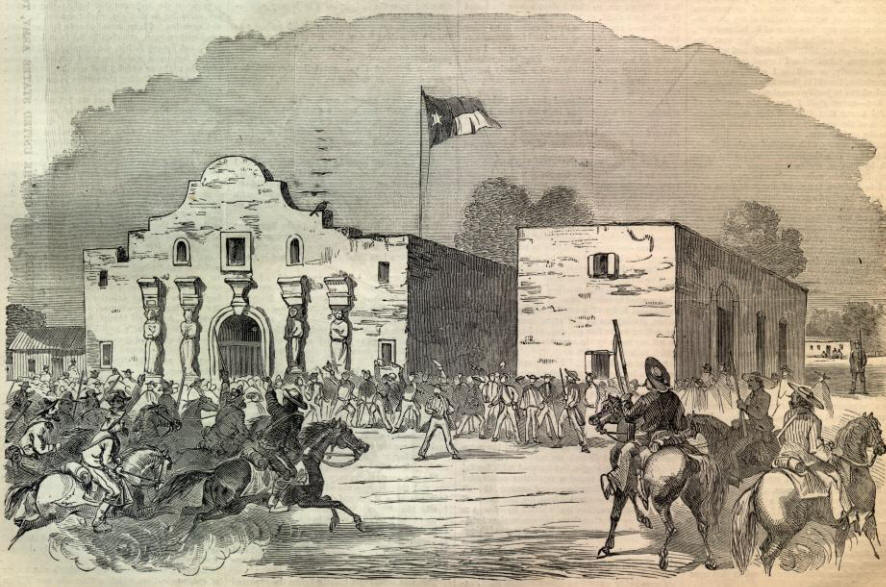
The armed men and additional volunteers under Travis’s command — and the noncombatant civilians who were not evacuated — stayed behind in an abandoned Franciscan mission, The Alamo, that had been converted into a fort.
Some facts about what occurred at the Alamo remain in dispute, but the following appears to be accurate. For 10 days, Santa Anna’s troops besieged the Alamo and demanded that the armed men inside, most of whom were Anglo rebels, surrender unconditionally. But when Travis and his armed group refused to surrender, Mexican President Santa Anna ordered his troops to attack the Alamo on March 6, 1836.
As a result, 600 Mexican troops were killed and all of the estimated 189 armed combatants who remained in the Alamo at that time were killed by the Mexican troops. A few noncombatant civilians inside the Alamo survived the battle, as did the few men under Travis’s command who had left the Alamo as couriers between late February and March 6, 1836.
After the battle at the Alamo Texas rebel groups began to take up the battle cry, “Remember the Alamo!” in their subsequent armed clashes with Mexican federal government troops. Meanwhile, a convention of rebels at Washington-on-the-Brazos had, on March 2, 1836, declared Texas to be the independent “Republic of Texas,” with David G. Burnet, a land speculator with the Galveston Bay & Texas Land Company, as its first president.
Coincidentally, both the commander of the white Anglo rebel troops in the Alamo, William Travis, and one of the most famous defenders of the Alamo, Jim Bowie, were apparently either involved in the slave trade or at least owned slaves (as did former Tennessee Governor Sam Houston, one of the leaders of the Anglo settler revolt of 1835-1836 that led to the creation of the independent Republic of Texas).
As Alwyn Barr wrote in an essay, titled “Black Texans During the Civil War,” that appeared in a 2003 book called Invisible Texans: Women and Minorities in Texas edited by Donald Willett and Stephen Curley:
Anglo-American immigrants from the United States brought with them Black slaves, whose numbers had risen to about 5,000 when Texans revolted against Mexico in 1836… James Bowie and James Fannin had smuggled slaves into Texas, while Sam Houston and William B. Travis both owned bondsmen. Slaves represented at least 15 percent of the population in the new Republic of Texas.
So, not surprisingly, the March 1836 Constitution of the new independent Republic of Texas was a pro-slavery document that legalized slavery in Texas and reversed the legal ban on the importation of slaves into Texas which the Mexican Congress had enacted in 1830. As Gone To Texas observed:
Section 9 of the General Provisions… guaranteed that people held as slaves in Texas would remain in servitude and that future emigrants to the republic could bring slaves with them. Furthermore, no free black could live in Texas without the approval of [the Republic of Texas’s] congress, and any slave freed without the approval of congress had to leave the republic. Most of the leaders of the Texas Revolution were southerners and the new republic would protect their “Peculiar Institution”…
After the fall of the Alamo, the armed conflict between the separatist Texas rebels and the Mexican government’s troops only lasted another six weeks. In late March 1836, a unit of 365 Texas rebels (under James Fannin’s command) was surrounded by a much larger number of Mexican Army cavalry troops (under Mexican General Jose de Urrea) near Goliad, Texas. Then, in accordance with Mexico’s recently-passed “piracy” law, Santa Anna ordered all 365 Texas rebels executed on March 27, 1836, following the surrender of Fannin and his unit to General Urrea’s cavalry.
But on April 21, 1836, 800 armed Texas rebels, under former Tennessee Governor Sam Houston’s command, attacked 1,400 troops of Santa Anna’s Mexican Army near the San Jacinto River, killing 630 of Santa Anna’s troops and capturing another 733. And the following day Houston’s Texas separatist troops captured Mexican President Santa Anna, himself.
While he was held as a prisoner by Texas rebel troops, Santa Anna was forced to sign the Treaty of Velasco on May 14, 1836, in which he agreed to withdraw all Mexican troops to the other side of the Rio Grande. In addition, the Rio Grande was made the independent Republic of Texas’s new southern boundary — although when it was part of the Mexican state of Coahuila y Texas, the southern boundary of Texas was actually considered further north on the Nueces River.
Not surprisingly, the Treaty of Velasco that Santa Anna was forced to sign while imprisoned was subsequently repudiated by the Mexican government and by Santa Anna (after he was finally released nine months later and sent back to Veracruz, Mexico on a U.S. warship by U.S. President Andrew Jackson). The Mexican government refused to recognize the independence of Texas and the separatist Republic of Texas or to agree that Texas’s land was no longer a part of Mexico’s territory until 1848.
Following the signing of the Treaty of Velasco in May 1836 and the withdrawal of Mexican troops, the Anglo settler-colonist leaders of the 1835-36 separatist “Texas Revolution” almost immediately tried to persuade the U.S. government to annex their newly independent “Republic of Texas.” So, not surprisingly, Northern opponents of slavery, like Benjamin Lundy and U.S. Congressional Representative John Quincy Adams, insisted that the Texas “revolution had resulted from a conspiracy to add more slave territory to the Union,” according to Gone To Texas.
[Bob Feldman is an East Coast-based writer-activist and a former member of the Columbia SDS Steering Committee of the late 1960s. Read more articles by Bob Feldman on The Rag Blog.]
Keystone XL: A Pipeline to Big Oil Profits
By Jay D. Jurie / The Rag Blog /
On July 25, 2010, a pipeline linking Sarnia, Ontario to an oil refinery at Griffith, Indiana, spilled more than 800,000 gallons of tar sands crude oil into the Kalamazoo River near Marshall, Michigan. According to environmental reporter Kari Lydersen, this spill was ranked by the EPA as the single largest ever in the Midwestern U.S.
Tar sands crude, composed of tar, silica, clay, and other earthen materials, must be diluted with a natural gas-based solvent so it will become sufficiently viscous to flow through a pipe. In this way, natural gas produced by the environmentally-damaging process known as “hydrofracking” may be linked with tar sands development. As reported by Lydersen, when the Kalamazoo River spill occurred, this “diluted bitumen” or “dilbit” released benzene into the atmosphere, requiring nearby homes to be evacuated, some permanently. Because the “dilbit” resembles a light form of tar more than crude oil, it is nowhere near as responsive to traditional mitigation and restoration measures. Having missed an EPA deadline, clean-up efforts by pipeline owner Enbridge, Inc., on 200 acres near Marshall continue more than a year after the spill.
This sort of scenario may be in store for a much larger swath of the Central Plains states and Texas if the Keystone Extra Large (XL) 36″ diameter pipeline with a capacity of 500,000 gallons per day is approved later this year by President Barack Obama. Snaking its way from Hardisty, Alberta, through a corner of Saskatchewan Province into Montana, the pipeline would pass through South Dakota, Nebraska, and Kansas before arriving at terminals in Port Arthur, on the Texas Gulf Coast. Nebraska’s Republican Governor Dave Heineman is among those who have asked President Obama to veto the pipeline, as it would be built over the Ogallala Aquifer, a major plains water source.
Historically known as tar sands, industry now prefers the comparatively sanitized term oil sands. Huge deposits of this naturally-occurring bituminous material are located in the northeastern boreal forest and peat bogs of Canada’s Alberta Province. Most are found along the Athabasca River and in the nearby Peace River and Cold Lake deposits. Estimates of the potential oil reserves range from equal to eight times those of Saudi Arabia.
Unlike conventional Saudi-style petroleum that can be pumped to the surface through wells, tar sands must be extracted through strip mining. Since these deposits are found underneath about 54,000 square miles of Alberta, this process potentially exposes a huge amount of land and water to substantial and lasting environmental damage. As with mountain-top removal, “remediation” in the best post-mining scenario is only an approximation of the original topography and ground cover. Covering some 120 square miles, Syncrude Corp. operates the single largest mine of any sort in the world. This mine and others have already turned sizable chunks of Alberta into toxic, oily moonscapes.
Through the various phases of mining and processing, tar sands production releases considerably more greenhouses gases than does conventional petroleum. Due to operations presently under way, Canada has already raised its gas emissions substantially, and is consequently out of compliance with the Kyoto Protocol, to which it is signatory. Under the conservative Stephen Harper government, this may help explain why Canada refused to support an extension of the protocol in June of this year. Petroleum exports are not only important to Canadian corporate interests. U.S. Energy Information Administration data shows that in terms of either crude or total petroleum, Canada has become the single largest supplier of oil to the U.S., ahead of Saudi Arabia and Mexico.
Demand for tar sands oil is not driven exclusively by market forces, but is actively promoted by those who have a self-interest in keeping western society on the “hard energy path” for as long as it remains profitable. Tar sands producers include Albian Sands, composed of Shell Canada, Chevron, and Marathon Oil, and Suncor, which involves Shell, ConocoPhillips, Petro-Canada, and Husky. Another major player is Syncrude, Corp., a seven-partner consortium that includes Suncor, Canadian Oil Sands, Ltd., Nippon Oil, Japan’s major oil firm, Sinopec, representing Chinese interests, Imperial Oil, which is a subsidiary of ExxonMobil, and Murphy Oil, which is associated with Wal-Mart.
Involvement of Japanese and Chinese interests with tar sands mining may tie directly into the Keystone XL pipeline. Whereas most of the tar sands crude refined in the Midwest are destined for the U.S. market, according to Texans Against Tar Sands, much of the crude flowing through the Keystone XL pipeline will go to foreign-owned refineries on the Gulf Coast for export.
Others involved include the Koch Brothers. Environmental writer David Sassoon has pointed out that Koch Industries, through its subsidiary Flint Hills Resources Canada, Ltd., imports about 250,000 barrels of tar sands oil per day to the Pine Bend Refinery it owns near St. Paul, Minnesota. Pine Bend processes approximately 25% of the tar sands crude the U.S. currently receives from Alberta. According to Sassoon, Koch Industries is poised to become a major beneficiary of the Keystone XL pipeline if it is completed.
ConocoPhillips and TransCanada are partners in the construction of the Keystone XL pipeline. Estimates for the construction cost of the pipeline range from 7 to 13 billion dollars. Political observor Joe Jordan, and others, have pointed out the influential role Paul Elliott, TransCanada’s main Washington, DC, lobbyist, played in Hillary Clinton’s 2008 presidential bid. In December 2009 Elliott was named as a director of the Canadian American Business Council, which also included ExxonMobil and Shell. On August 26, 2011, under now-Secretary of State Hillary Clinton, the U.S. State Department found that the proposed Keystone XL pipeline would have a “minimal” environmental impact.
Former NASA scientist Jim Hansen has argued that if tar sands development continues and the pipeline is built, it is essentially “game over” for climate change and efforts to slow global warming. Reflecting the choice between “hard” vs. “soft” energy paths first described by Amory Lovins in the 1970s, Hansen remarked that “…if the United States is buying the dirtiest stuff [tar sands], it also surely will be going after oil in the deepest ocean, the Arctic, and shale deposits; and harvesting coal via mountaintop removal and long-wall mining.”
Construction of the Keystone XL pipeline would more firmly place the U.S on the “hard” path. Not only would this keep consumers enslaved to Big Oil, but in the long run a dependence on conventional fuels, including tar sands, is unsustainable. Rag Blog contributor Roger Baker has frequently warned of the crisis posed by “peak oil,” whereby continued dependence on a dwindling resource is a recipe for economic and environmental disaster. Funding and support would be diminished for the “soft” path of renewable energy, green economy expansion, mass public transportation, and urban redesign.
Most readers of The Rag Blog are doubtless aware of the civil disobedience organized by the environmental group 350.org in front of the White House. At the end of two weeks of protest, 1252 people had been arrested in opposition to the pipeline and over 600,000 had signed a petition against pipeline construction. It is anticipated there will be further protests as the proposal continues to work its way through the approval process.
Coupled with the insistence that tar sands mining and the pipeline be halted and the “soft” path taken, a campaign for the entire energy sector to be placed under public ownership and democratic control must be launched and aggressively waged. In the U.S. today there are abundant examples of successful energy production and distribution in the form of “municipal power.” These public utilities offer a relevant model for energy policy as a whole, though decentralization and democratic control need to be enhanced.
Our shared resources and the future of the planet are far too vital for the private market to irresponsibly squander for the sake of short-term profits.
This article is dedicated to Ted Gleichman, a friend from Portland, Oregon, among those arrested, and to all the “Keystone 1252.”
Sources: “Athabasca Oil Sands” entry, Wikipedia; Enbridge.com; Energy Information Administration, “Crude Oil and Total Petroleum Imports Top 15 Countries,” U.S. Department of Energy, August 30, 2011; Ted Glick, “The Tar Sands Action (smile),” Portside.com, September 5, 2011; Joe Jordan, “The Pipeline, Hillary Clinton, and Nebraska Politics,” Nebraska.watchdog.org, December 15, 2010; David Ljunggren, “Canada Reveals It Expects U.S. Will Back Pipeline,” Reuters, September 1, 2011; Amory B. Lovins, Soft Energy Paths: Toward a Durable Peace, NY: Harper Colophon, 1977; Kari Lydersen, “A Year After Pipeline Spill, Tar Sands Oil Still Plagues a Michigan Community,” Oneearth.org, July 25, 2011; Elizabeth McGowan, “NASA’s Hansen Explains Decision to Join Keystone Pipeline Protests,” Solveclimatenews.com, August 29, 2011; “Oil Sands” entry, Wikipedia; David Sassoon, “Koch Brothers Positioned to Be Big Winners if Keystone XL Pipeline is Approved, Solveclimatenews.com, February 10, 2011; Suncor.com; Texans Against Tar Sands, Facebook group; 350.org; TransCanada.com; Eve Troeh, “Keystone or Bust,” Marketplace, Publicradio.org, July 26, 2011.
[Jay D. Jurie was a student at the University of Colorado at Boulder, a member of SDS, and one of the “Boulder 18” arrested as a result of the ROTC demonstrations. Jay now teaches public administration and urban planning and lives near Orlando, Florida. Read more articles by Jay D. Jurie on The Rag Blog.]
Type rest of the post here
Source /
The Embers of September
By Mike Davis / The Rag Blog /
Ten years ago, Lower Manhattan became the Sarajevo of the War on Terrorism. Although conscience recoils against making an equation between the assassination of a single Archduke and his wife (28 June 1914) and the slaughter of almost 3,000 New Yorkers, the analogy otherwise is eerily apt.
In both cases, a small network of peripheral but well-connected conspirators, ennobled in their own eyes by the bitter grievances of their region, attacked a major symbol of the responsible empire. The outrages were deliberately aimed to detonate larger, cataclysmic conflicts, and in this respect, were successful beyond the all imagining.
However the magnitudes of the resulting explosions were not simple functions of the events that detonated them. For example, in Europe between 1890 and 1940, more than two dozen heads of state were assassinated, including the kings of Italy, Greece, Yugoslavia, and Bulgaria, an empress of Austria, two presidents of France, two Spanish prime ministers, and so on. Apart from the murder of Franz Ferdinand and his wife in Sarajevo none of these events instigated a war.
Likewise, a single suicide bomber in a truck killed 241 U.S. marines and sailors at their barracks at the Beirut Airport in 1983. (Fifty eight French paratroopers were killed by another bomb the same day.) A Democratic president might have been pressured to go to war against the Shiite and Druze militias, but President Reagan distracted the public with an invasion of tiny Grenada, and then quietly withdrew the rest of his Marines.
If Sarajevo and the World Trade Center, by contrast, unleashed global carnage and chaos, it was because of the de facto collusion between the attackers and the attacked.
I’m not referring to mythical British plots in Balkans or CIA agents blowing up the Twin Towers, but simply to the well-known facts that the Imperial German General Staff had already decided in 1912 to exploit the first opportunity to make war, and that powerful neoliberals in Bush’s White House were lobbying for the overthrow of the regimes in Baghdad and Tehran even before the last hanging chad had been counted in Florida.
Both regimes were in search of a casus belli that would legitimate military intervention and silence domestic opposition. Prussian militarism, of course, was punctually accommodated by the Black Hand (an anarcho-nationalist group secretly supported by the Serbian Army), while Al Qaeda ‘s sublime horror show in lower Manhattan consecrated the divine right of the White House to torture, secretly imprison, or kill by remote control.
At the time, it seemed almost as if the Republicans had staged a coup d’etat against the Constitution. Yet the Bush administration could point to a whole catalogue of precedents. To put it bluntly, every single chapter in the history of U.S. global power has opened with the same sentence: “innocent Americans were treacherously attacked…”
Remember the Maine? Or the Lusitania (1198 dead)? Or the Panay, Pearl Harbor, the crossing of the Yalu, and the Gulf of Tonkin? The besieged legation in Peking, Aguilnaldo’s alleged attack on U.S. sentries outside Manila; Al Raisuli’s brazen kidnappings; Pancho Villa’s raid on sleepy Columbus, New Mexico; the rapine of National City Bank in Port-au-Prince; the storming of the Pueblo and the Mayaquez, the humiliated hostages in Tehran; the imperiled students in Grenada…
This list barely scratches the surface: the synchronization of outrage and intervention in U.S. history is relentless.
In the name of “innocent Americans,” the USA annexed Hawaii and Puerto Rico; colonized the Philippines; punished nationalism in North Africa and China; invaded Mexico (twice), sent a generation to the killing fields of France (and imprisoned dissent at home); massacred patriots in Haiti, the Dominican Republic, and Nicaragua; annihilated Japanese cities; committed genocide in Korea and Indochina; buttressed military dictatorship in Latin America; and became Israel’s partner in the mass murder of Arab civilians.
Someday — perhaps sooner than we think — a new Edward Gibbon in China or India will surely sit down to write The History of the Decline and Fall of the American Empire. (Hopefully it will be but one volume in a larger, more progressive oeuvre — The Renaissance of the Asia, perhaps — and not an obituary for a human future sucked into America’s sinking void.)
I think she’ll probably catalogue self-righteous American “innocence” as a particularly toxic tributary of national decline, with President Obama as its highest incarnation.
Indeed, from the perspective of the future what will be deemed the greater crime: to have created the Guantanamo nightmare in the first place, or to have preserved it in contempt of global popular opinion and one’s own campaign promises?
Obama, who was elected to bring the troops home, close the gulags, and restore the Bill of Rights, has in fact become the chief curator of the Bush legacy: a born-again convert to special ops, killer drones, immense intelligence budgets, Orwellian surveillance technology, secret jails, and the super-hero cult of General Petraeus
Our “anti-war” president, in fact, may be taking U.S. power deeper into the darkness than any of us dare to imagine. And the more fervently Obama embraces his role as commander in chief of the Delta Force and Navy Seals, the less likely it becomes that future Democrats will dare to reform the Patriot Act or challenge the presidential prerogative to murder and incarcerate America’s enemies in secret.
Enmired in wars with phantoms, Washington has been blindsided by every major trend of the last decade. It has completely misread the real yearnings of the Arab street and the significance of mainstream Islamic populism, ignored the emergence of Turkey and Brazil as independent powers, forgotten Africa, and lost much of its leverage with Germany as well with Israel’s increasingly arrogant reactionaries. Most important, Washington has failed to develop any coherent policy framework for its relationship to the PRC, its main creditor and most important rival.
From a Chinese standpoint (assumedly the perspective of our future Gibbon), the United States is showing incipient symptoms of being a failed state. When Xinhua scolds the U.S. Congress for being “dangerously irresponsible” in debt negotiations, or when senior leaders openly worry about the stability of American political and economic institutions, the shoe is truly on the other foot. Especially when standing in the wings, bibles in hand, are the mad spawn of 9/11 — the Republican presidential candidates.
[Mike Davis is a Distinguished Professor in the Department of Creative Writing at the University of California, Riverside. An urban theorist and a social activist, Davis is the author of City of Quartz: Excavating the Future in Los Angeles. Read more articles by Mike Davis on The Rag Blog.]
Shredding the envelope:
Healthcare on the Ground – Part II
[Shredding the Envelope (“Ruminations on news, taboos, and space beyond time.”) is Sarito Carol Neiman’s (occasionally) regular column for The Rag Blog. This is part one of three. Read Part I here.]
My brother called them “angels” in his email dispatches from the surgery waiting room. By this, I know now that he meant the ones who look you in the eye, who respond to your questions directly and without evasion. Without hollow boilerplate responses, meant to reassure those anxiously awaiting some news or a verdict that nobody yet has.
The angels are the ones who are doing more than just their jobs.
Being a guy, and more specifically a guy who loves understanding the workings of things, my brother was also impressed by the airport-like, huge computer display on the wall of the waiting room that showed which operating room was occupied by which surgeon, how much longer it was expected to be in use… it functioned as a reassurance in itself, like the clock displays on the crosstown Manhattan L line that tell you how many minutes away a train is from where you’re standing.
He and my sister… and whoever else might have been there from the family (who will no doubt forgive me for not remembering just now)… could watch, as the slot representing Dad kept getting extended. From the initial four to a total of seven hours, by the time it was all said and done.
Scott & White has a reputation for being one of the best in Texas. High-tech, computerized in all its dimensions, there is a mini-version of air traffic control opposite each nursing station, where selected vital signs of each patient in each room are on live display, broadcast from a little monitor each of them wears (or not, as needed, I assume) in a pocket sewn into their gowns, with its wires and sensors silently attached to their bodies and capturing heartbeat, respirations, temperature.
When a nurse comes into the room, tasks completed and supplementary notes are entered via keyboard and screen attached to the wall next to the door, not on the iconic hospital “clipboard.”
All very reassuring, even laudable. But for the patients themselves, and their families, it’s the angels who count.
I have met many, so far, in the course of this journey. I’d say the majority of them have been “new”… interns, nurses in training, residents. (Maybe “the system” tends to beat angelhood out of people who are in it too long. I sense I should camouflage their names to protect their innocence.)
R, whose extraordinary sensitivity and respect toward Dad, on what had started as a really difficult day, seemed to help him tap into a new reservoir of strength within himself to turn things around by the end of the day.
B, whose eagerness to learn and clear enthusiasm for finding out what was broken and fixing it was so infectious, it earned him immediate forgivenesss for stepping on Dad’s toe the first time he approached his chair. When he came in the next day, clearly with an “assignment” to ask the patient a couple of questions, I saw B’s future as a great among angels reflected in my Dad’s honest, simple responses.
Dad is generally the sort of guy who will say “I’m fine” while bleeding to death from a gunshot wound. He’s also very perceptive. If he figures you don’t REALLY want to know, he will say, “I’m fine.”
B. stood exactly in front of Dad, looked him in the eye, and said:
B: “Do you have any questions at all about your treatment that haven’t been answered?”
Dad: “I don’t know what’s wrong with me.”
B: [Clear, simple response to describe Dad’s condition, and the surgery he had just undergone, and why. A nod from Dad. Understood, at last, beyond whatever descriptions he had been given, and had only abstractly/theoretically comprehended, before he went under the knife.] Is there anything else you want to know?
Dad: Why am I not getting better?
To which B responded that it takes time, it had been a huge ordeal, and actually Dad was doing remarkably well under the circumstances, better even than might be expected. Other people had said the same words, but B. really knew those words were true. For the first time, Dad had been told the reality as certainly as it could be known, by a person so transparently honest and sincere that he could take a deep breath and move on to crossing the next river.
There are angels among the oldtimers, as well. Notably “Ida sweet as apple cidah” as Dad introduced her to me (referencing an old song he knows), an ageless woman with a huge presence that just lights up the room when she walks in.
I don’t feel the need to protect her innocence, because her face tells you she’s seen it all — and I’m pretty sure the gods of the nursing angels have her under their fiercest protection, or she wouldn’t still be around. Just as she has all “her” patients under her protection, to the extent she’s able.
Or T, who hasn’t yet seen it all but has seen a lot for someone as young as she is, and who doesn’t have such a big sunny presence as Ida but is more the silent and subtle breeze who comes and goes without creating a disturbance, and whose eye never misses the smallest detail of expression on a face indicating that something might be amiss. She catches things even before they happen, an invaluable gift.
Most angels seem to live toward the middle of the healthcare food chain — they are the nurses, or the interns and residents who haven’t yet been professionalized into wearing the straightjacket of “lawsuit aversion” so many doctors seem to have around them, like an invisible shield against genuine human contact.
On the bottom of the food chain are those who are just passing through a minimum-wage job until they can find something better. There are notable, and wonderful exceptions to the “check it off the list” insensitivity of many aides in the modern, large-hospital system. Those exceptions, in my experience of them, are very special angels indeed. Just really, really good folks who love taking care of people and their environments, and making both the person and the environment as comfortable as possible. We should pay them what they deserve, so they can keep doing that priceless work without having to take a second job to support their families.
I feel a third part to this series coming on. And that is to take a look at what are the “anti-angel” forces at work in the system. What they are made of, both on a “systemic” and a human level. It’s going to need a bit of research on the system level (nothing fancy) and maybe a bit more distance on the human level than I can manage right now.
Right now, I need to get back to my Dad’s room in the hospital, and make sure he has something to eat that he enjoys for “dinner” (in real life outside the hospital, dinner for my Dad is usually a light snack. Hospital “nutrition departments” don’t operate in that mode.) And that he’s settled in comfortably for the night.
I’ll be back.
[Sarito Carol Neiman (then just “Carol”) was a founding editor of The Rag in 1966 Austin, and later edited New Left Notes, the national newspaper of Students for a Democratic Society (SDS). With then-husband Greg Calvert, Neiman co-authored one of the seminal books of the New Left era, A Disrupted History: The New Left and the New Capitalism and later compiled and edited the contemporary Buddhist mystic Osho’s posthumous Authobiography of a Spiritually Incorrect Mystic. Neiman, also an actress and stage director, currently lives in Junction, Texas. Read more articles by Sarito Carol Neiman on The Rag Blog]
Thorne Webb Dreyer, Editor





