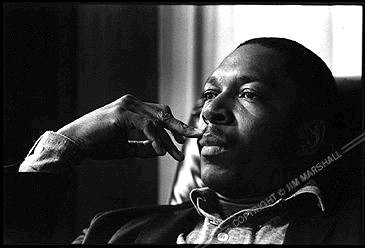
Image from John Gushie.


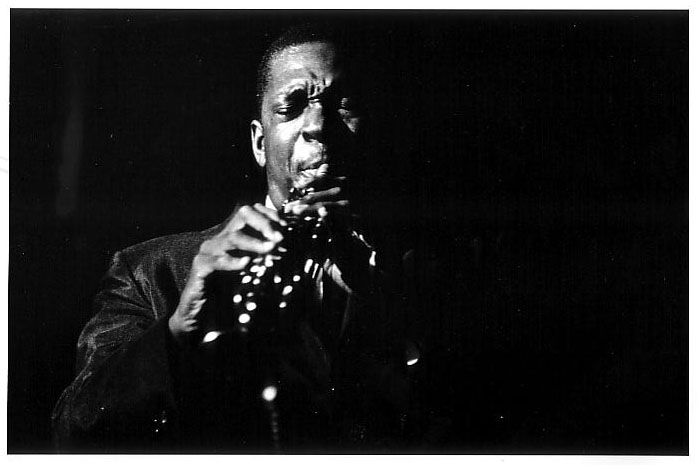
ohn Coltrane
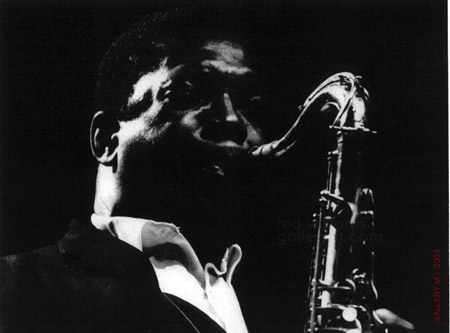
Chicago 1965
Gelatin Silver
by Ted Williams


image from Seattle Blogs


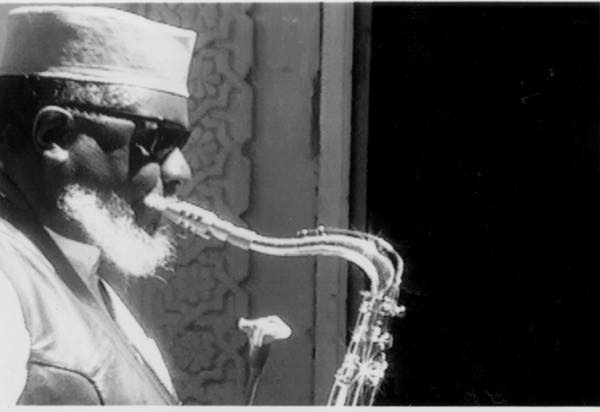
Pharoah Sanders. Photo from Axiom Images.


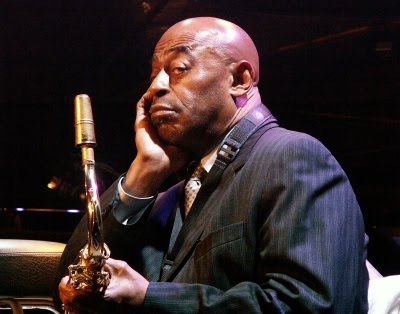
Archie Schepp. Image from 123Nonstop


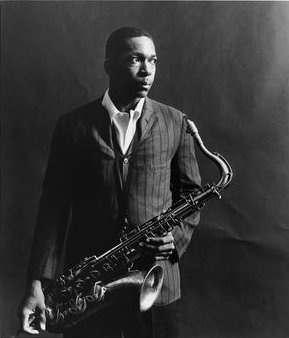
John coltrane quartet. Photo by Herb Snitzer / jazz.com


JohnColtrane.com

“You can play a shoestring if you’re sincere.”
– John Coltrane

`A force which is truly for good’ — John Coltrane and the jazz revolution

By Terry Townsend / October 6, 2010

John William Coltrane (abbreviated as “Trane” by his fans) was born on September 23, 1926. Since his untimely death on July 17, 1967, saxophone colossus Coltrane has become an icon of African-American pride, achievement and uncompromising determination. He led a revolution in music that mirrored the turbulent growth of black militancy and revolutionary ideas within the urban black community. Today, Trane continues to inspire.

Coltrane has often been likened to Malcolm X. U.S. jazz writer and socialist Frank Kofsky, in his classic 1970 book Black Nationalism and the Revolution in Music (Pathfinder Press, New York), wrote:

Both men perceived the reality about [the USA] — a reality you could only know if you were Black and had worked your way up and through the tangled jungle of jazz clubs, narcotics, alcohol, mobsters …

Both men called upon their followers to break out of accustomed ways of thinking and feeling, and they themselves were willing to lead the way by challenging all the conventional assumptions and discarding those that failed to meet the rigorous test of reality — even if, in doing so, they were forced to sacrifice their own material security.

Both men could have assured themselves of lives of relative comfort and wellbeing merely by making a few seemingly minor compromises; yet both refused to exchange a mess of consumer-goods pottage for the right to seek after and enunciate the truth as best they could.

It is no accident that references to Coltrane appeared in the films of Spike Lee — most prominently in Mo’ Better Blues but also in Malcolm X. That film features the haunting composition “Alabama” — written by Coltrane after reading a speech by Martin Luther King eulogizing four black children blown up in a racist attack on a church in 1963.

African-American culture often reflects the political and ideological moods and aspirations of the community from which it springs. It sometimes anticipates them. Coltrane’s music evolved during a political upsurge of the African-American people.

Through the late 1950s and into the ’60s, the momentum of the civil rights movement gathered pace. In the cities, the militant ideas of black nationalism and black power were embraced by larger and larger numbers of African Americans. Black youth were fired up by the struggles of their compatriots in the South and the liberation movements in Africa and the Third World.

A significant number discovered the works of Lenin, Mao, Castro, Nkrumah, Fanon, and Ho Chi Minh. This powerful movement for freedom combined with, and inspired, the huge anti-Vietnam War movement and women’s liberation movement to spark a massive youth radicalization that shook U.S. society.

There was also a vigorous cultural radicalization. Many African Americans explored art, music, culture, and religious and philosophical ideas from Africa and Asia that they felt were more in tune with their aspirations and desires. Others set about rediscovering their African heritage and history. It was a period of turbulence, impatience, excitement, frustration, and determination to create a better society.

John Coltrane provided the jazz soundtrack of the ’60s. Anybody who has attempted to come to terms with Coltrane’s music is immediately struck by its brooding impatience, absence of compromise, and sense of a tenacious quest for an undefined goal.

Coltrane’s musical quest began in earnest when he joined Miles Davis in 1955, played for a period with Thelonious Monk in 1957, and rejoined Miles in 1959. In this period, it was clear Coltrane was champing at the bit to break free of the constraints of the now accepted conventions of the previously avant-guard form of jazz, be bop (which itself had developed in the early 1940s among mostly African American musicians as a rebellion against the commercial homogenization of big band “swing” jazz).

His celebrated “sheets of sound” were first heard as his sax solos raced faster and faster, cramming notes into each other to create harmonies of fascinating complexity. His surging solos built around recurring motifs are prominent on Mile Davis’ forever fabulous Kind Of Blue. His recording debut as leader in 1959 with Giant Steps, soon followed by My Favorite Things, found him beginning to explore improvisational freedom.

By 1961, the classic Coltrane quartet was in place — McCoy Tyner on piano, Elvin Jones on drums, and Jimmy Garrison on bass. With this band Trane created some of his greatest work. From 1961 to 1965, they explored new terrain in improvisation as they attempted to extend beyond the limits of bop. They investigated adventurous new polyrhythms and tempos borrowed from African, Arab, and Indian music.

Taking up soprano saxophone allowed Trane to focus on “Eastern” tonalities. He studied sitar and began writing to the great Indian sitarist Ravi Shankar. He experimented with drone instruments and chants. He investigated the use of unusual combinations of instruments to replicate the sound and texture of African and Indian music.

Yet as he experimented, he continued pushing and accentuating his characteristic dense, surging, complex sax lines. Albums such as Coltrane, John Coltrane Quartet Plays and A Love Supreme are great examples of this period.

By 1966, Coltrane’s ceaseless search for musical “progress” led to the demise of his classic quartet with the departure of Jones and Tyner. As far as they had traveled with Trane, they were not prepared to follow their leader further into the uncharted waters he was now exploring.

Respected Australian jazz critic Gail Brennan aptly described the music that followed the quartet’s disintegration, until Coltrane’s premature death from liver cancer at the age of 40, in OK Music magazine: “Some, but not all of the music of Coltrane’s last period pushes emotion, energy, sheer momentum and rhythmic, textural and harmonic complexity to the point where it seems that it can only seize up or explode’.”

Coltrane had been increasingly drawn towards the emerging generation of radical young black musicians who were abandoning the accepted rules of be bop and hard bop jazz to play “free jazz’.” Coltrane was soon seen as the leader of this iconoclastic movement, the first among equals of players like Albert Ayler, Ornette Coleman, Pharaoh Sanders, Archie Shepp, Eric Dolphy, and Cecil Taylor. Sanders, Shepp, and Dolphy played with Coltrane’s band prior to Jones’ and Tyner’s departure.

Coltrane never explicitly embraced black political black militancy or radical politics but was uncompromisingly in the vanguard of the cultural and spiritual radicalization that was political black nationalism’s constant companion. He buried himself in books on Indian, Asian, and African philosophies and African history — topics which recur regularly in the titles of his songs. His music was a source of black pride and consciousness.

Yet Coltrane was not opposed to radical politics nor was he apolitical. Many of his later musical collaborators were convinced radicals. Free jazz was considered to be the musical equivalent of the radical black politics. Archie Shepp said in 1968: “We are only an extension of that entire civil rights-Black Muslim-black nationalist movement that is taking place in America. That is fundamental to the music.” His saxophone, Shepp added, was “like a machine gun in the hands of the Viet Cong.”

It was not unusual for Coltrane’s performances to attract political crowds. According to one patron at New York’s Half Note club, young blacks would shout “Freedom Now!” as Trane’s long solos reached their climax.

Coltrane was an admirer of Malcolm X. He agreed to play benefit concerts for civil rights organizations, and many compositions were dedicated to Martin Luther King and the civil rights movement. He opposed the Vietnam War.

In 1966, Coltrane told Frank Kofsky:

Music is an expression of higher ideals… brotherhood is there; and I believe with brotherhood, there would be no poverty… there would be no war… I know that there are bad forces, forces put here that bring suffering to others and misery to the world, but I want to be a force which is truly for good.

John Coltrane was responsible for some of the most beautiful, controversial, and challenging music ever created, as is well illustrated by two brilliant albums. Bye Bye Blackbird is a live concert recording made in Europe in mid-1962 consisting of two fantastic, surging 20-minute work-outs. First Meditations was recorded in late 1965 in the twilight of Coltrane’s classic quartet. While it precedes much of his most extreme work, its mystical, turbulent power is hypnotic.

If you have not listened to John Coltrane, these albums are as good a place to start as any. But be warned: experiencing the magic and tumult of Coltrane’s later music is not for the faint-hearted, but it is a challenge well worth meeting.

The militant and the mystic

John Coltrane’s music evolved as black America moved from the optimism sparked by the political and social gains of the mass civil rights movement in the late 1950s and early 1960s, through the mid-’60s explosion in black pride and militancy, to the late ’60s era of “black power’.”

From the mid-’60s, the optimism began to falter. The promise of equality evaporated as the cities and ghettos became increasingly run-down and the reality that the U.S. system was racist to the core became obvious. The militant ideas of “black nationalism,” black power, and socialism were embraced by large numbers of African-Americans as they sought solutions outside the system.

Coltrane’s music was the jazz soundtrack of black radicalization. Coltrane’s classic quartet — with McCoy Tyner on piano, Elvin Jones on drums, and Jimmy Garrison on bass — from 1961 to 1965 was in the vanguard.

But by 1966, Jones and Tyner were not prepared to follow their leader further into uncharted waters. Coltrane increasingly was drawn towards a younger generation of radical young black musicians who were abandoning the accepted rules of jazz to play avant-garde or “free jazz’.”

Archie Shepp and Pharoah Sanders soon became Coltrane’s most regular and important collaborators — at live gigs and on records — until his untimely death in 1967. As these brilliant ’60s reissues prove, they were capable of startling work in their own right.

Between them, Shepp and Sanders personified the two allied streams of black radicalism in jazz in the late ’60s — the political and the spiritual. As U.S. socialist Frank Kofsky pointed out in 1970, both trends reflected the black ghettos’ “vote of `no confidence’ in Western civilisation and the American Dream’.”

Politically, black youth were fired up by the civil rights struggles in the Southern states, the liberation movements in Africa and Asia, and the struggle to end the Vietnam War. The ideas of Marx, Lenin, Mao, Castro, Ho Chi Minh, Kwame Nkrumah, Franz Fanon, and especially Malcolm X were popular. Revolution was openly espoused.

There was also a vigorous cultural radicalization. African Americans explored art, music, and religious and philosophical ideas from Africa and Asia. They set about rediscovering African history. It was a period of turbulence, impatience, excitement, frustration, and determination to create a better society.

Shepp embraced political black nationalism and Marxism while Sanders, like Coltrane, was uncompromisingly in the vanguard of the cultural and spiritual radicalization.

Fire Music, released in 1965, was Shepp’s second Impulse album. Every track radiates warmth and determination. It has a horn-laden big band feel without any of the staidness that tag implies. While challenging many preconceived notions of jazz, it is thoroughly accessible. Shepp’s tenor sax exudes a rich, hoarse tone that can move from “down and dirty’,” to plaintive, to insistent in a single tune.

The album conforms to Shepp’s 1968 statement that free-jazz musicians were “an extension of that entire civil rights-Black Muslim-black nationalist movement.”

Fire Music opens with “Hambone’,” a tribute to African-American folk music — gospel and blues, and a touch of r&b. The simple melodies contrast with soaring solos and complex rhythms. The album also closes with a mind-boggling live version. “Los Olvidados (the forgotten ones)” is about the frustration Shepp felt when employed as a counselor with a government-funded program aimed at reducing “juvenile delinquency” in New York. The program was under-resourced and was simply a band-aid which, said Shepp, allowed the wealthy and powerful to “assuage their own guilt about the forgotten ones’.”

“Malcolm, Malcolm, Semper Malcolm” is a moving, moody eulogy to the radical black leader Malcolm X, who was assassinated that same year. Shepp, with sax and poem, conveys respect, love and anger while David Izenzon’s beautiful bowed bass “sings” along. It was first composed as part of “The Funeral’,” a longer composition dedicated to murdered Southern U.S. civil rights leader Medgar Evers.

“I call it ‘Malcolm forever’ because [although Malcolm] was killed, the significance of what he was will grow. He was the first cat to give actual expression to much of the hostility most American Negroes feel. A further significance of Malcolm was that toward the end of his life, he was evolving into a sound political realist’,” Shepp explained.

Pharoah Sanders’ radical egalitarian cosmic mysticism, which also characterized Coltrane’s last years, is central to Tauhid (1967) and Karma (1969). Sanders seems to begin where Coltrane left off. Like many other African Americans, he sought to go beyond the hypocrisy of mainstream white Christianity and philosophy to find a creed that was inclusive, non-discriminatory, and tolerant. Finding none, he invented his own.

Karma best illustrates Sanders’ utopian outlook. “The Creator Has a Master Plan’,” a majestic 32-minute opus not unlike Coltrane’s seminal “A Love Supreme,” is both deeply melodic and “caconophonic’.”

Sanders lures the unsuspecting listener with a beautifully conventional introduction which gently leads to his trademark wild and wonderful screams, squalls, squeaks, and growls, all the time softened by the soothing background pulse of bells, shaker, and percussion. Sanders’ world view is summed up by the chant that pervades “Creator”: “Peace and happiness for every man, through all the land.”

Tauhid concentrates on the historical and spiritual heritage of African Americans. “Upper and Lower Egypt” is the product of Sanders’ long research into the history and religions of Egypt. Using the unusual-in-jazz piccolo, Sanders glides through the Lower Nile, moving deeper into Africa. Once in the upper reaches, the mood changes with energetic, chant-like cadences that make the hairs rise on the back of your neck.

Archie Shepp’s political radicalism led to a falling out with Impulse, and he found it extremely difficult to persuade other U.S. record companies to record him. Instead, Shepp taught music at the University of Massachusetts after 1978. Sanders, his radicalism being far less threatening, continued to record and perform. Neither compromised.

What makes these artists great — as all the albums mentioned above reveal — is not simply their immense musical ability, but the fact that they drip with passion, honesty and commitment. Check them out.

Source / International Journal of Socialist Renewal

The John Coltrane Quartet (John Coltrane, McCoy Tyner, Jimmy Garrison, Elvin Jones) on the 1963 TV program, Jazz Casual, playing “Alabama”, written by Coltrane after reading a speech by Martin Luther King eulogising four black children blown up in a racist attack on a church in 1963.

Thanks to Carl Davidson / CCDS / The Rag Blog

Posted in RagBlog | Leave a comment

Carl Davidson : Mondragon Diaries V: Innovation and Transformation

Image from Mondragon website.

Mondragon Diaries, Day Five
Innovation and transformation
towards a third wave future


By Carl Davidson / The Rag Blog / October 6, 2010

“The world has not been given to us simply to contemplate it, but to transform it. And this transformation is accomplished not only with our manual work, but first with ideas and action plans.” — Father Jose Maria Arizmendiarrieta, founder of the Mondragon Coops

[This is the fourth of a five-part series by Carl Davidson about the Mondragon Cooperative Corporation, a 50-year-old network of nearly 120 factories and agencies, involving nearly 100,000 workers — centered in the the Basque Country but now spanning the globe. Go here for the series so far.]

BASQUE COUNTRY, Spain — Today the Mondragon valley is misty and grey, with small clouds drifting close to the valley floor between the mountain peaks. It’s somewhat otherworldly, I think to myself on the bus ride up the slopes, almost like a scene from “The Lord of the Rings.”

Today is also our last day, and we’re full of mixed feelings. Melancholy that our week-long seminar is coming to a close and that the new friends we’ve made will scatter. But there’s also excitement that we’ll soon be back home and able to share it all with our communities.

Our first stop is another component allied with Mongragon University called SAIOLAN. It’s an incubator project for helping to launch new coops and high-tech businesses.

We’re greeted in a classroom by a young woman from Mexico, Isabel Uriberen Tesia, who is also our presenter. She wastes no time bringing up her powerpoint on the screen and getting into the topic.

“Our aim is generating employment, creating new jobs,” she says. “our purpose is to do this by developing new business projects and training new entrepreneurs.”

A few years back, as the economic crisis was developing, nearly 60 percent of the students graduating in the Basque Country were having a hard time finding employment. The government, the MCC coops, and other businesses, as well as the students themselves, all turned to SAIOLAN to help launch new enterprises that could put young people to work.

“There are five levels in the training of entrepreneurs,” Isabel explained. “First is motivation. Second is finding opportunities. Third is defining a suitable project for the student, in tune with his or her interests and ideas. Once you get past these three, the next two, planning the startup and launching what you have developed, also involves finding resources, such as grants and loans, that can get the new businesses operating.”

What kind of businesses were being started? One involved processing plants for cleaning waste water in a new and better way, another was called “micro-manufacturing,” producing very small components accurately, quite a few were new software products. One from FAGOR, the large home appliance worker-cooperative, involved finding new uses for stainless steel, including exterior products, like one-piece transit stop structures.

Some in our group were concerned that many of the new startups were simply new businesses rather than also coops. This was 80 percent, or 138 out of 172 new small enterprises over the last few years, with 2,281 new employees. SAIOLAN didn’t seem worried. “It’s their choice,” was the explanation. “Some of them will later transform into coops, and in any case, it’s good to create new employment for our entire Basque community, not just the minority in cooperatives.”

We got deeper into the subject in our next session. It was further up the mountainside at Otlalora, and we had as our resource person Jesus Herrasti, one of the senior MCC leaders, the head of the “Innovation Group,” who had been with Mondragon for 48 years.


After laying out some of the basic features of innovation — infrastructure, science, technology, strategic planning — Herrasti made it much more real by talking about a fundamental conflict facing all manufacturing businesses, not just MCC.

Take FAGOR, our home appliance manufacturing coop. It’s a mature business. We can continue to compete by making some additional improvements in quality, or cutting our profit margins. But in the end, it’s going to be very hard to compete with similar products produced in Asia. We should keep at it as long as we can operate in the black and our worker-owners can maintain their standards, but where, really, is our new growth potential?

He named three broad areas — renewable energy, health and eldercare, and information technology. It got even more interesting to me as he became more specific about new product lines — fuel cells, wind turbines, photovoltaics, embedded software, wireless, ambient intelligence, and bioprocessing in supercomputers. He was presenting the shift from second wave manufacturing to the high-design and high-touch products of a third wave future in a knowledge economy, and he had 200 people working full time on coming up with new ideas and plans.

I asked a question.

Have you had any inquiries from those countries trying to define a new 21st century socialism, in whatever way, such as Venezuela, Cuba, China, Vietnam, or even South Africa, on how they might use Mondragon’s ideas and services? Do you think you have something to offer here?

“Yes and no,” was the cautious answer.

We get queries from all of them. We’ve been to China and other places, and there is some genuine interest, to a point. But since spreading knowledge and worker’s power at the workplace also often runs against the clinging to control by bureaucrats, socialist or otherwise, the interest often comes to a dead end. But it’s not always the case, and we keep working on doing what we can.

He went on to discuss the problems of cultural differences.

We Basques are often risk-adverse when it comes to business, unlike Americans. We often avoid risks when we shouldn’t. On another hand, when we talk with Mexican workers about taking over and owning the firms we start there for themselves, and where they elected the leadership, they simply don’t believe us. They want to know where “the trick” is hidden, since businesses, in their culture, are always owned by bosses, never by workers. There is no trust, at least trust with us, that it can be otherwise.

So what are the basic things needed to start worker-cooperatives in our countries, asked one of our group?

First the workers themselves must FEEL THE NEED. Without that, it’s hard to get anywhere. Second there must be a culture of TRUST, since you are sharing money, sharing risks, and supporting new leaders. Third, is to BE REALISTIC. You need successes, especially in the beginning. Too many early mistakes, and you are finished. Finally, you need friends and collaborators — but pick them carefully!

This had us inspired and buzzing all through lunch, another amazing sampling of Basque cuisine. I had steamed artichokes with a delicious sauce and braised pork, finished off with dark strong coffee and ice cream with slivers of dark chocolate.

The afternoon session featured a presentation of one of the students in MUNDUKIDE, a small overseas assistance program with the people of Mozambique, Brazil, Cub, and a few other countries. One discussion was largely about microloans, which weren’t working very well, and another about road-building, which was rather successful.

Our final session was with Fred Freundlich, the American professor, who was a veteran of the movements against plant closings in the U.S. a few decades back, who now was a faculty member at Mondragon University. Since he understood both our realities and those at MCC, he could handle any outstanding questions.

There were a lot of them. The first was how much was MCC’s success a result of factors unique to the Basque Country. “It’s somewhat important, but not decisive,” Fred answered.

One very important factor was it started at just the right time. If it had started 10 years earlier, conditions may have been too harsh. But the first coops were launched at a time when people really needed a lot of things, and finally had a little savings to spend. Many businesses grew in this period. If it started 10 years later, MCC may have had much stronger competition, and may not have gotten off the ground so well.

I asked what was the response of the socialist and communist groups in the Basque County and Spain to MCC? “Mixed and confused,” was the answer. Some thought it utopian. Others dismissed it as a diversion, as making workers into capitalists. “But they still keep sending delegations for visits, and going away impressed,” Fred noted. The Basque left was also fragmented over violence, when ETA, the Basque armed resistance group, assassinated a former leader of one of the MCC coops who was also a socialist official.

After a thoughtful pause, Fred made a point that applied to the U.S. Left as well. “There’s two trends in the left,” he explained. “Those who think long and hard about business and what to do with it. And those who mainly like to discuss left ideas.” The implication was that the two trends most often didn’t overlap, even if it was wise to do so, both tactically and strategically.

Mikel brought the session to an end by asking us all for our new ideas on how we might implement what we had learned, and possible projects for doing so. There were all sorts of plans in the works on the part of our group, from networking food coops, to producing new green products, to making a new film about Mondragon for a U.S audience.

We clearly all had our imaginations fired up by the experience. Mikel gave us each a certificate for completing a 40-hour study seminar, which was a lovely touch. But the truth was that most of us would need no reminder hanging on our walls. What we had learned here had changed us, in some ways deeply, and we would be looking at people and projects in new ways for some time to come.

[Carl Davidson is a national co-chair of the Committees of Correspondence for Democracy and Socialism, a national board member of Solidarity Economy Network, and a local Beaver County, PA member of Steelworkers Associates. His website is Keep on Keepin’ On, where this series also appears. Davidson is also available to speak on the topic. Contact him at carld717@gmail.com. For more info on these tours, go here.]

Also see:

The Rag Blog

Posted in RagBlog | Tagged , , , , , , | Leave a comment

Robert Jensen : The Cooperative Alternative

Art by Joseph Bau / Fearless Fathers.

The cooperative movement:
Doing business as if people mattered

By Robert Jensen / The Rag Blog / October 6, 2010

There’s no shortage of political blather in this year’s mid-term election campaigns, but most of us yearn for substantive discussion of the serious problems we face. What should the politicians be discussing? The University of Texas at Austin asked faculty members who teach about politics “to analyze, examine and provide their perspectives” on key political issues for the university’s website, with new essays posted each weekday throughout the campaign season.

I contributed three short essays that raise critical questions about economics, empire, and energy that are routinely ignored by most politicians. Here is one of them.

When politicians talk economics these days, they argue a lot about the budget deficit. That’s crucial to our economic future, but in the contemporary workplace there’s an equally threatening problem — the democracy deficit.

In an economy dominated by corporations, most people spend their work lives in hierarchical settings in which they have no chance to participate in the decisions that most affect their lives. The typical business structure is, in fact, authoritarian — owners and managers give orders, and workers follow them. Those in charge would like us to believe that’s the only way to organize an economy, but the cooperative movement has a different vision.

Cooperative businesses that are owned and operated by workers offer an exciting alternative to the top-down organization of most businesses. In a time of crisis, when we desperately need new ways of thinking about how to organize our economic activity, cooperatives deserve more attention.

First, the many successful cooperatives remind us that we ordinary people are quite capable of running our own lives. While we endorse democracy in the political arena, many assume it’s impossible at work. Cooperatives prove that wrong, not only by producing goods and services but by enriching the lives of the workers through a commitment to shared decision-making and responsibility.

Second, cooperatives think not only about profits but about the health of the community and natural world; they’re more socially and ecologically responsible. This is reflected in cooperatives’ concern for the “triple bottom line” — not only profits, but people and the planet.

The U.S. government’s response to the financial meltdown has included some disastrous decisions (bailing out banks to protect wealthy shareholders instead of nationalizing banks to protect ordinary people) and some policies that have helped but are inadequate (the stimulus program). But the underlying problem is that policymakers assume that there is no alternative to a corporate-dominated system, leading to “solutions” that leave us stuck with failed business-as-usual approaches.

It’s crazy to trust in economic structures that have brought us to the brink of economic collapse. But even in more “prosperous” times, modern corporations undermine democracy, weaken real community, and degrade the ecosystem. New thinking is urgently needed. Politicians who talk about an “ownership society” typically promote individual ownership of a tiny sliver of an economy still dominated by authoritarian corporate giants. An ownership society defined by cooperative institutions would be a game-changer.

None of this is hypothetical — there are hundreds of flourishing cooperative businesses in the United States. The United States Federation of Worker Cooperatives, provides excellent information and inspiring stories. In Austin, a cooperative-incubator group, Third Coast Workers for Cooperation, offers training and support for people interested in creating democratic workplaces.

Putting our faith in institutions that have become too big to fail has failed. Institutions that are too greedy to defend can’t be defended. Cooperative businesses aren’t a magical solution to the critical economic problems we face, but a national economic policy that used fiscal and tax policies to support cooperatives would be an important step on a different path.

[Robert Jensen is a journalism professor at the University of Texas at Austin and board member of the Third Coast Activist Resource Center in Austin. He is the author of All My Bones Shake: Seeking a Progressive Path to the Prophetic Voice, (Soft Skull Press, 2009); Getting Off: Pornography and the End of Masculinity (South End Press, 2007); The Heart of Whiteness: Confronting Race, Racism and White Privilege(City Lights, 2005); Citizens of the Empire: The Struggle to Claim Our Humanity (City Lights, 2004); and Writing Dissent: Taking Radical Ideas from the Margins to the Mainstream (Peter Lang, 2002). Jensen is also co-producer of the documentary film Abe Osheroff: One Foot in the Grave, the Other Still Dancing, which chronicles the life and philosophy of the longtime radical activist. Robert Jensen can be reached at rjensen@uts.cc.utexas.edu.]

  • Also see Carl Davidson’s “Mondragon Diaries” series on The Rag Blog — about the 50-year old Mondragon Cooperative based in the Basque Country of Spain.

The Rag Blog

Posted in Rag Bloggers | Tagged , , , , , | Leave a comment

Sherman DeBrosse : The Puzzle of 2010

Image from StudentHacks.

The puzzle of 2010:
What’s going on with the electorate?

By Sherman DeBrosse / The Rag Blog / October 5, 2010

This year’s election is marked by a great deal of puzzling behavior. Media people report on the peculiar and shocking things that occur, but they can neither judge nor explain them. Here are some questions that this writer has.

1. Only two years after an economic Pearl Harbor, the majority of voters seem determined to restore the economic and financial policies that wiped out jobs and trillions in savings. The financial system almost melted down; now they want to restore the conditions that made this possible.

2. Most of those who say they will vote Republican insist that the Republicans will not go back to the George W. Bush playbook. They insist on this even after the Republicans tell them this is what they will do and the House Republicans issue a 46-page statement pledging to dismantle financial regulations, extend the tax cuts for the rich, and re-enact other Bush policies.

3. Once the party of “law n’ order,” the Republicans now support Sharron Angle and some others who threaten to take up arms against the federal government if they do not get their way. Not only is sedition ok, but the party of Lincoln also supports nullification efforts in seventeen states. These notions are a threat to the federal union itself, but they seem to arouse little alarm.

4. Many Tea Bag candidates join Sharron Angle in saying it is “hard to justify Social Security” and that Medicare should be phased out. Tea Baggers must think that threats to these benefits will effect people younger than them, but not themselves.

5. Tea Baggers and other Republicans have been demonizing public employees and demanding deep cuts in public employee pensions. Three states have cut the benefits of people already employed, Republicans in other states are talking about big cuts. Yet, public employees and retirees do not seem to be up in arms.

6. In 2008, many independent voters voted for Barack Obama. Now many of them join Republicans in believing he is a Muslim and were born in Kenya. Some of the same people were troubled by the comments of his United Church of Christ pastor, Dr. Jeremiah Wright.

7. The Congressional Budget Office reported that the stimulus plan created 3,300,000 jobs, but a vast number of Americans believe the Republican claim that the stimulus actually destroyed jobs. A common commercial used by House Republican candidates is that the stimulus package actually increased unemployment by 36%.

No facts are presented to back this dishonest and absurd claim, but it is believed. In the third district of Pennsylvania, a car salesman named Mike Kelley seems to be winning the race for Congress with this claim. Maybe this is because we have all learned from experience that car salesmen can be trusted almost all the time.

8. Women plan a major role as Tea Bagger candidates and activists and even claim the title of “feminist” even though their party tried to block legislation assuring equal pay for women and is committed to ending the reproductive rights of women.

All of this defies rational analysis. This is a year of craziness and irrational politics, and not all of these questions can be subjected to rational analysis. Self interest explains some Tea Bagger behavior, but other factors are involved.

Tea Baggers don’t want to help others

By any account, the Tea Baggers make a lot of irrational claims, but at root most of them are operating out of self-interest. Most of them are older than 45 and are more prosperous than the average American. A disproportionate number seem to have Medicare Advantage, and they thought that health care reform would threaten Medicare and Medicare Advantage.

As it turned out, the Congressional Budget Office reported that the reform package extended the life of Medicare. It also made Medicare Advantage more affordable, and this year the average premium goes up only 1%.

The Tea Baggers want to hold on to what they have and fear that Medicare reform and the stimulus will mean higher taxes down the road and that inflation might diminish their savings. This is at least understandable; they’ve got theirs and object to government helping the unemployed and the poor.

To the extent that they are motivated by deep seeded racism and Social Darwinism, we can understand where some of the absurd claims come from.

What is harder to explain is why so many of the unemployed, partially employed, and people threatened with unemployment are so determined to vote Republican? They saw the Republicans block the extension of unemployment benefits. Everyone knows there will not be another stimulus package under a Republican House, and though the GOP now talks about $20 billion credit for small business, it would have been hard not to observe that the Republicans blocked this seven times — the latest occasion being this past month.

Back to the Gipper. Image from LA Times.

Why voters have repaired to Reaganite orthodoxy

Cultural considerations explain the depth of Tea Bagger hatred for Obama, and they also explain why so many people, whose self interest would best be served by Democrats, have joined the crusade to restore Republican control of Congress. When people are in deep fear and threatened with serious loss, some must find emotionally satisfying solutions to their problems by resorting to the default ideas presented by the culture.

Hence, many people support going back to George W. Bush economics because they embody the main tenets of the market culture that dominated the United States for the last three decades. Americans found the market capitalism ideology of the Ronald Reagan period to be reassuring a guarantee that the American Dream was still open to them. It is an optimistic ideology that is hard to abandon; and it requires total faith.

It is no wonder people shocked by plummeting housing process, unemployment, lost savings would rush back to economic orthodoxy. It alone still held out the certainty of better times, prosperity, and above all emotional security and stasis.

Republicans must deny the depth of the crises of 2007-2008

To cling to Reagan era orthodoxy after 2007-2008, one has to minimize the financial and economic crash of 2007-2008. Republicans cannot say this directly, but they must behave as though the problems of 2007 and 2008 were mere flukes. To admit how deep the financial economic crises really were is to admit that market capitalism failed. Any reality-based outlook promises far less emotional security and fails to offer the certainty many people need. .

Republican arguments depend upon maintaining that the recession was not deep and the financial crisis could have been easily repaired or even was self-correcting. With the premise that little happened in 2007 and 2008, it is possible to claim that the stimulus brought about the unemployment. The argument is, “They spent all that money, and unemployment is even greater.”

Now we are hearing Republicans lump together TARP and stimulus as “TARP/stimulus” and blame both on Obama, even though George W. Bush signed the TARP. On the September 26 Sunday talk shows, the frequently repeated Republican talking point was that TARP was not necessary to save the banks, and not one Republican said it was a Republican measure backed by Mitch McConnell and Speaker-to-Be John Boehner Now they denounce the TARP and blame the Democrats for it.

It may well be that some sort of cognitive dissonance is responsible for the House Republicans saying they want to repeal the entire financial reform bill. Their ideology is based on the idea that only unregulated capitalism will establish prosperity. If they admit that the financial system almost self-destructed, Republicans would be admitting that something was very wrong with the heart of their ideology.

Unregulated capitalism is even more sacred to them than tax breaks for the rich. They may sincerely believe the banks did not need help in 2007-2008, and that the TARP and financial reform are unnecessary.

But one cannot help wondering if a few Republican leaders understand that the continued prosperity of the financial sector requires no restraints on financial gambling and the unspoken guarantee that the federal government will continue to prop up failing banks, a strategy that began with Ronald Reagan.

Stripping away financial reform serves the needs of the blind ideologues as well as the cynical fellows who understand what their masters on Wall Street need.

Ideas have consequences

Even bad ideas have consequences. Hermann Goering and Joseph Goebbels said that people will believe anything that is repeated often enough. That is true, and it explains why voters believe so many big lies these days. But the belief is even deeper and widespread when the lie fits a mindset that has been dominant for decades.

Republican propaganda neatly fits the market capitalism ideology that has been dominant since the Eighties. Democrats, on the other hand, have not offered a consistent narrative since the New Deal Coalition fell apart in the late 1960s. Moreover, they seem clueless when it comes to message control and the impact of cognitive science on politics. Political narratives are not built over night, and the Democrats now seem almost defenseless.

For two decades after World War II, Americans believed in regulated capitalism and using state power to help others and improve community. Equality was a goal, and taking responsibility for others was thought to be a worthy value. Writing about this time in the UK and the U.S., Terry Eagleton said, “Unrestrained market forces were as frowned upon as unrestrained whiskey drinking in a convent school.”

The eviscerated society

By the Eighties, this mindset was in disrepute. The state was now seen as the creator of many problems, and it was believed that market forces should not be restrained. Instead, the economy should only be regulated by self-interest. There was a move away from the public toward the private and the privatization of public functions. Even some National Parks are now run by private interests, and their book stores carry literature saying the world was created less than 5,000 years ago.

Government, Edmund Burke thought, needed to engage the sympathies and loyalties of the people. In the so-called “conservative” market ideology, government was to be suspected. No wonder we now find that it has a lawless dimension, with some ranting about nullification and taking up arms against government — the so-called “second Amendment option.“ Similarly, the drive to slash public pensions is lawless to the extent that it destroys people’s contractual rights.

Rants about taking up arms against government and nullifying federal laws are attacks on the concept of a national community. They were once confined to what has been called the lunatic fringe, but they are now commonplace. This is no accident.

Market ideology devalues community; it is the individual against the state and others. No wonder people are not alarmed by all this noise. Similarly, talk about putting land mines along the New Mexico border or about the laziness of the unemployed are offenses against the public marketplace of ideas, upon which democracy depends. But there is no room for the marketplace of ideas in the market ideology.

There has been very little fallout about 21 months of Republican obstructionism, blocking judicial and other appointments with holds, and the remorseless use of filibuster threats. Now, Eric Cantor and others are threatening to shut down Congress if they cannot end Health Care reform by defunding it.

Fifteen years ago, Republicans offended voters by shutting down government. The obstruction and threatened shut-down are assaults on the concept of community, something beyond the scope of the dominant market ideology. Today the attitude is that it is acceptable to do whatever is necessary to get what you want, regardless to the damage it does to our political system.

In 2011, respect for community might be so lacking that a shut-down of government might be applauded. Newt Gingrich and Dick Morris are betting that this will be the case as they urge the Republicans to confront President Barack Obama with a shutdown.

Now, we have what the late Tony Judt called an “eviscerated society.” Mutual respect and obligations are gone. Ugly sentiments that we thought had been overcome are on the rise with hatred of Hispanics, Islamophobia, and all the wild claims about Obama’s religion and place of birth — scarcely disguised racist arguments.

There is an obsession with greed, materialism, and self-interest. Anyone who thinks in terms of collective responsibility is called a communist or socialist by people who could not define those terms. Symptoms of the new world view are a decline in social mobility, greater poverty, broken infrastructure, and many more broken people as seen in rising alcoholism, mental illness, and homelessness.

This materialistic, market ideology requires Social Darwinism, the belief that the rich deserve all good things because they are the best product of social evolution. Of course, people at the bottom of their societies deserve their grim circumstances. Now, Social Darwinism underpins economic globalism. Sometimes. as now, Social Darwinism feeds on and fuels racism and xenophobia.

We need a humanistic culture to produce responsible citizens and a society that seeks a measure of equality and justice. The problem is within the individual psyche, where there is a clash between narcissism and greed battling against love, respect, and compassion. We want to think that the former qualities are there, and studies of primates produce enough evidence to help us hope that this is so.

The schools cannot be relied upon to inculcate humanistic values because they are busy teaching students to master enough skills to pass tests and become useful cogs in the capitalist structure. Most colleges and universities have downgraded the subjects that traditionally promoted humane values, and many younger faculties have accepted postmodern outlooks that deny that there are universal humane values.

People have traditionally looked to religion for language to express moral concerns, but the United States is now seeing a decline in religious outlooks that value community, peace, and economic justice. On the rise are religious groups that seem to limit their moral concerns to rigid stances on reproductive issues and sexual orientation; on the other hand they repeatedly support the dominant market ideology and its companion foreign policy outlook that is built on faith in American exceptionalism.

The Democrats need a new narrative. Image from Right Democrat.

Democrats must find a new narrative

Democrats have no time to waste in explaining to voters that they must select between different visions of society — one based on greed and benefits for the few, and one that aspires to create opportunities and well-being for everyone. If we elect Republicans, we are gambling on another banking system failure and another deep recession.

Things might get better despite the Republicans. Copper sales are rising quickly; tool and die shops are doing business; and inventories are very low. There is an outside chance that the Obama stimulus, health care, and approach to the banking crisis will begin to produce more results soon.

The banks are sitting on $ 1.2 trillion they might begin to spend, and the industrial firms have $1.8 to begin spending. It would be ironic but not totally unexpected that Obama’s policies will produce a recovery for which Republicans will promptly claim credit.

In the longer run, however, the Republican approach is bound to bring about another Wall Street collapse and deep recession. If they are in power when that happens, they will find it necessary to slash Social Security and Medicare in order to preserve benefits for the rich and continue to follow an aggressive foreign policy.

Democrats need to begin by defending what they have accomplished. The Democrats cannot run away from what the laws they havepassed. They should show voters the good points, which are many, and blame the flaws on the need to water down legislation to attract conservative votes. If they refuse to defend their work, they will help the Republicans make this election a referendum on their undefended policies.

Even more important, the Democrats must continually point out how conservative policies brought about the twin crises of 2007-2008 and how current Republican program will fail to help the jobless and will set the scene for future financial and economic disasters.

[Sherman DeBrosse is a retired history professor. He also blogs at Sherm Says and on DailyKos.]

The Rag Blog

Posted in Rag Bloggers | Tagged , , , , | 1 Comment

Ed Felien : Jon Stewart, Meet George W. Bush


In defense of the Left,
with love to Jon Stewart

In trying to appear a moderate, Stewart criticized the right for its attacks on Obama and the left for accusing Bush of being a war criminal and comparing him to Hitler.

By Ed Felien / The Rag Blog / October 5, 2010

In a stroke of comedic genius Jon Stewart has called for a “Rally for Sanity” to “Take it down a notch” at the Washington Monument on October 30.

It’s part an answer to Glen Beck’s rally to Restore Honor and part Rock the Vote to motivate his younger demographic to get out and vote on November 2. Stewart is portraying the rally and himself as an island of sanity in an insane season when Obama is seen by the Right as a Kenyan Mau-Mau anti-colonialist, socialist, Muslim hell-bent on America’s destruction.

One of the suggested signs for demonstrators at Stewart’s rally would be, “I Disagree With You, But I’m Pretty Sure You’re Not Hitler.”

In trying to appear a moderate, Stewart criticized the right for its attacks on Obama and the left for accusing Bush of being a war criminal and comparing him to Hitler.

Are there parallels between Hitler and Bush? Is Bush a war criminal?

There are parallels in American history, but the scope and intensity of the repression that Bush initiated and justified by 9/11 went further than any previous President in wartime.

He did not just suspend the right of habeas corpus, the right to a fair trial, and the right to confront your accusers, he kidnapped U. S. citizens and foreign nationals off the streets and locked them up in concentration camps and subjected them to torture. The difference between Bush and Hitler in this is quantitative not qualitative; that is, they both did it but Hitler did a lot more of it.

They both ruled by terror. Bush modeled his government on George Orwell’s 1984: War is Peace; the war on terror was really a war OF terror; The Department of Homeland Security (with its permanent orange level of terror alert) created insecurity.

Bush spied on citizens and wiretapped their phones without any legal or ethical justification. He asserted a doctrine of preemptive war that meant he could attack anyone or any country that he felt might become a threat to U. S. vital interests. He declared that his administration was not bound by international law or treaties.

If someone in the government disagreed with him, their careers were destroyed; former Ambassador Joseph Wilson wrote an op-ed piece for The New York Times that pointed out the lies in the State of the Union Address that were used to justify the invasion of Iraq, and Bush officials ended his wife’s career as a CIA analyst. Dissent is the lifeblood of democracy and Bush crushed it.

The Nazi Party in Germany was a variant of the European fascist movement. Benito Mussolini was the first successful fascist leader. He led his Black Shirts in a march on Rome in 1922 that changed Italian politics. In an act of sincere flattery, Hitler imitated it by staging an unsuccessful beer hall putsch in Munich the following year.

Mussolini said, “Corporato il stati.” The corporation is the state. Hitler believed capitalists should be “masters in their own house.” Bush has taken fascism a step further. Mussolini and Hitler merely supported big business while they were pursuing other national objectives, but Bush allowed his family business to direct government policy. In his case, the corporation really did become the state.

The Bush family fortune for four generations has been tied to the business of war. Ever since Great Grandfather Sam Bush sat on Wilson’s War Industries Board in World War I and made parts for Remington revolvers, the Bush family has benefited from war.

Sam’s son Prescott wanted to make serious money when he graduated from Yale, so he and some of his buddies went to work for Brown Brothers Harriman. Peace had broken out in the 1920s, and the only hope for war profiteers was in the re-arming of Germany (in violation of the Versailles Treaty).

He became Manager of the Union Banking Corporation to trade with Nazi financier Fritz Thyssen. They sold bonds to help finance the re-arming of Germany. They bought a steamship line to ship Remington arms to Germany through a dummy corporation in Holland. He also managed a Silesian coal field that used slave labor from the neighboring Auschwitz Concentration Camp. According to Dutch intelligence sources he took direct management of some of the slave labor camps in Poland to aid Nazi armament industries.

Prescott Bush continued working for these interests for almost a year after the U. S. had declared war on Germany. It was not until October of 1942, when the U. S. seized the assets of Union Bank, the steamship line, the Seamless Steel Equipment (suppliers of steel, wire and explosives to the Nazis) and the Silesian-American Company (the coal mining company), that Prescott stopped supplying the Nazi war machine. Of course, at that point he switched sides and started supplying the Allies.

In 1929 Harriman & Company bought Dresser Industries (manufacturers of oil pipeline equipment) and Prescott Bush became a Director. He continued to run Dresser Industries from the board for the rest of his life. His son, George H. W. Bush, went to work there after graduating from Yale. Dresser was quite successful in selling oil pipeline and drilling equipment. It had a virtual worldwide monopoly. The oil drilling equipment in Iraq belonged to Dresser (through their French subsidiary) in violation of U. N. and U. S. sanctions.

Using lies and distortions, George W. Bush used the tragedy of 9/11 to justify invading Iraq. He wanted control of the oil for his family business. Dick Cheney has always been the chief thug and frontman for the Bush family. When H. W. George was President, Cheney was Secretary of Defense. When Bush lost, Cheney became CEO of Halliburton.

While CEO he bought Dresser Industries from the Bush family (the details were worked out on a hunting trip) for $8 billion. No cash changed hands and Halliburton was only worth $8 billion at the time, so the Bush family must own controlling interest in Halliburton.

When George W. Bush became President he made Cheney his vice president, and with old family friend Rumsfeld as secretary of defense, they were able to steer multi-billion-dollar no-bid contracts to Halliburton. With the U. S. and Bush in control of the Iraq government, they were able to steal 25 percent of the world’s known oil resources for the family business.

When George W. Bush was President and head of the family business, we had the perfect merger of state and corporation, the final stage of fascism only dreamt of by Mussolini.

Was Bush a fascist? Was he a Nazi?

Certainly grandfather Prescott was an active and effective collaborator with the Nazis. But it wasn’t just the money. Prescott and his father-in-law, George Walker (for whom George I and George II are middle-named), sponsored the Third International Congress of Eugenics on Long Island in the early 1930s, and many of the proposals about forced sterilization and elimination of the feebleminded that were discussed at the conference were later implemented by Nazi Germany.

But is it fair that the sins of the grandfather should be visited upon the children? No. Even if he carries the name(s), even if he inherits the family business and fortune, even if he inherits the political base of fascist elements that were driven from Europe at the end of World War II and became the virulent anti-Communist wing of the Republican Party, he still deserves to be judged on his own actions.

Did he repudiate his family’s past connections to Nazi Germany? No.

Did he suppress civil liberties? Yes.

Did he rule by terror? Yes.

Did he embark on total war? Yes.

Did he allow his family business interests to direct government policy? Yes.

Finally, the shelling of Fallujah, the brutal murder of defenseless Iraqi civilians, has as its only parallel the Nazi atrocities at Guernica and Lidice.

Was Bush a Nazi?

We can be certain that history will judge Bush to have been corrupt, arrogant, dictatorial, and brutal. Whether the atrocities he committed place him in the same rank as Hitler is a judgment for later generations, but we would be blind not to see that he is in the same group.

He stands indicted as a petty tyrant, a small fascist who ran the biggest superpower the world had ever seen. The damage he did to the rule of law, to the public treasury, to the national character at home and the horror and suffering he inflicted on innocent people abroad are crimes against humanity. To remain silent is to be an accomplice.

Jon Stewart has a powerful and eloquent voice and a genius for a comedic irony. He could benefit from reading history a little more closely.

[Ed Felien is publisher and editor of Southside Pride, a South Minneapolis monthly.]

The Rag Blog

Posted in Rag Bloggers | Tagged , , , , , , , , | 1 Comment

Marc Estrin : Holocaust Thinking in America II: How the Nazis Did It


Holocaust thinking in America II:
How the Nazis did it

By Marc Estrin / The Rag Blog / October 5, 2010

[Part two of three. Read part one here.]

I know one is not allowed to use the word “nazism” in any discussion of current practices, that the holocaust is unique, etc., etc. — but if you don’t see the similarities between the structures put into place in Germany in the mid- and late-1930s and those evolving here, now, well then, you don’t see structural similarities.


National Socialist strategy

What were the moves the Nazis evolved to “overcome animal pity” with regard to Jewish victims?

Step 1. Defining the enemy. Jewishness was clearly and legally defined as part of a problem. Thus the Jews were made “other” to the rest of the population.

Step 2. Eliminating the enemy from the economy. Jews were not allowed to work in state-affiliated institutions. Jewish stores were boycotted and vandalized. “Otherness” was thereby increased, as the Jews were forced from the normal productive economy, and were now an ever-increasing problem — and not just by definition.

Step 3. Ostracism by custom and law. Many other discriminatory laws were put into place. No Jews allowed, here or there, this place or that.

Step 4. Removal from view. Ghettos were created to wall the problem off from the rest of the population. Jews thus became less visible. When they began to disappear, there was often little to notice. As intolerable conditions developed in the ghettos, inhuman measures were justified as humane. Jews were killed in “acts of mercy” — in order to “spare them the agony of famine.” In deliberately intolerable conditions, the stage was set for even more radical steps.

Step 5. Transport to slave labor camps, using these “outsiders” to support the economy.

Step 6. Transport to death camps. The “Final Solution.”

Tactics: Ostracism as a policy in Nazi Germany

To better make some later comparisons, let me provide more detail about Step 3 above: “other discriminatory laws.”

In his hair-raising book, Nazi Justiz (Praeger 1995), Richard Miller describes the gradual, multifaceted ways in which Jews were turned from productive members of society into a kind of “living dead” who were permitted to wander through society, but forbidden to take part in it. The mass killings in the camps was only a late development, the logical “final” successor of many incremental “solutions” inflicted along the way on an increasingly desperate people.

Miller concentrates on Germany in the 30s, after the rise of Hitler, but before the war, all changes affecting Jews were done “legally,” “democratically,” with support from the media and the German people. In this “time of peace,” a variety of local and national laws were passed, with due deliberation, in no way a result of military desperation. Across the country, jot by innovative jot, legal and social restrictions fell into place which sealed the victims’ fate.

The movement began with “unofficial” boycotting of Jewish businesses or professionals. Boycotts spread to those who patronized Jews in any way, thus taking goods and wages away from good German citizens. Having a street conversation with a Jew could lead to charges of “race pollution” and “civic disloyalty,” and perhaps to being paraded through town, with a sign around one’s neck. Such “unofficial” boycotts were peppered with equally “unofficial” violence, of which Kristallnacht was the most coordinated example. Naturally, there was no police protection.

Having recognized a “mandate” from the people, governments began to act. A pastiche of creatively sadistic local law and ever more inclusive national law took control of Jewish life, and eventually obviated the need for “unofficial” populist action.

Place by place, Jews were not allowed in parks, theaters, libraries, museums, sports stadia, beaches, athletic and social clubs. They could not be guests in hotels, or get service at restaurants. One profession after another banned Jews from being licensed. Jews would no longer be granted permits to open retail stores, or be allowed into blue or white collar unions or the jobs they controlled.

They couldn’t be patent agents or lawyers, tax consultants or swimming instructors, lifeguards, jockeys, actors, lottery salesmen, stock brokers, antique dealers, archivists. They couldn’t rent out park chairs, or distribute motion pictures, or deal in art or literary works. They were prevented from dealing in currency, engineering construction projects, selling guns.

No Jew could be a detective, private guard, accountant, or work in a credit agency. No Jew could be a tourist guide, a peddler, auctioneer, or real estate agent, or manage a factory, house, estate, or land. Needless to say, all the new business and newly opened job opportunities went to Aryans, vastly increasing the popularity of the Nazi regime. Jobs, jobs, jobs. And housing.

In areas where Jews were not yet banned, other ways were found to shut them down. Before real estate licenses were outlawed for Jews, tax authorities refused to deal with Jewish agents, leaving few property owners interested in hiring them. Sugar was cut off to Jewish bakers and candy-makers, effectively destroying their businesses.

Legal Jewish newsstands would be refused newspapers; Jewish textile managers could no longer get raw materials. Jewish businesses could not put ads in commercial directories, newspapers, on billboards or the radio. Eventually all employment was restricted except particularly disagreeable tasks: cleaning public toilets and sewage plants, jobs at rag and bone works were considered possibly “suitable” for Jews. Outside of such work, Jews had to somehow fend for themselves.

How could even that be made more difficult? Travel bans and invalidation of passports were obvious. But how about no parking for Jews? Special license plates to identify Jewish cars for special harassment. Soon enough, prohibition of drivers licenses, and then restriction from public transportation.

Impoverished Jews could not rent their homes, sublet, or sell. Retirement benefits and contracted pensions were canceled, as were all insurance policies. Jewish students were not allowed to take finals, and so couldn’t complete their schooling. All student loans had to be repaid within two weeks, regardless of contractual payment schedules; those in default were subject to police action.

Jewish streets were not cleaned, nor were other municipal services available. German police, when present at all, were an occupying army, and beatings and attacks were common. Many main sections of towns became off-limits to Jews, and any remnants of Jewish culture came under attack: Jewish art and music were censored as “decadent,” and even jazz was attacked as “a barbarian invasion supported by Jews.”

Because Jews were to be restricted from so many areas, they needed to be easily identified. Rush-hour passengers were not about to tolerate checking IDs of every boarding passenger. Eventually the yellow star was required, with strict punishment for any Jew who did not wear one in public. Jews were forbidden to name their children with “Aryan sounding names,” and had to adopt the middle names “Israel” or “Sarah,” and use these names when identifying themselves.

Germany has long been known as a land of “law and order.” But Jews could not use the justice system to thwart clearly illegal onslaughts. All courts were packed with government appointees to enforce, not judge, official policy. The object of the law was to protect the state, not the individual citizen. If Jews were a menace to the state, then all laws oppressing them, were both legal and just.

Furthermore, laws were seen as implying “direction,” and were not confined to their original settings. For instance the Law for the Restoration of the Professional Civil Service spoke only of dismissing Jewish government employees. Martin Heidegger however, as rector of the University of Freiburg, ended fellowship payments to Jewish students under the guiding spirit of that decree.

Courts built rulings on Nazi party resolutions, and took their philosophical guidance from Hitler speeches. In 1934 Goering complained that defendants still had so many rights that convictions were being impeded. Naturally, Jewish defendants were at an extreme disadvantage.

Jewish lawyers were barred from court; Aryan lawyers could not serve Jews. Consequently, Jews had to represent themselves against highly trained adversaries. Judges were instructed to view Jewish witnesses “with extreme caution,” and no verdict was to be passed when a sentence would have to be based entirely on Jewish testimony.

Just in case there were any legislative objection to these judicial proceedings, Hitler pushed through the “Enabling Act” which allowed his handpicked cabinet to make laws having the same validity as any passed by the Reichstag, even ones disregarding the Constitution. The circle was closed, complete and tight. The living dead would soon become the dead — period.

Next week: You don’t need a weatherman to tell which way the wind blows — here and now in America.

[Marc Estrin is a writer and activist, living in Burlington, Vermont. His novels, Insect Dreams, The Half Life of Gregor Samsa, The Education of Arnold Hitler, Golem Song, and The Lamentations of Julius Marantz have won critical acclaim. His memoir, Rehearsing With Gods: Photographs and Essays on the Bread & Puppet Theater (with Ron Simon, photographer) won a 2004 theater book of the year award. He is currently working on a novel about the dead Tchaikovsky.]

Also see:

The Rag Blog

Posted in Rag Bloggers | Tagged , , , , , , , | 2 Comments

Suzy Khimm : Gerrymander This, Tom DeLay

Cartoon from The Hill, 2007.

Tom DeLay’s legacy:
Don’t mess with Texas Democrats

DeLay may have done more to fuel the Texas Democratic comeback than anyone else. ‘It took somebody that really played the villain role,’ says [Matt] Angle.

By Suzy Khimm / October 5, 2010

[The following article appears in the September-October issue of Mother Jones .]

You could say that Matt Angle has something of a vendetta. He worked for Rep. Martin Frost — once the most powerful Texas Democrat in the U.S. House — for the bulk of his adult life, starting as an intern in 1981 and rising to become the lawmaker’s chief of staff. Angle even met his wife, Dolly, while working in Frost’s office.

Then one day about six years ago, both Angle and his boss found themselves out of work, courtesy of then-House majority leader Tom DeLay. The Texas Republican, known as “The Hammer,” had orchestrated a Machiavellian scheme to redraw the state’s congressional districts and banish Democrats from power. In 2004, Frost was one of four Texas Dems in the House picked off as a result.

Redistricting typically happens every 10 years, to capture the population changes recorded by the U.S. Census. In most of the country, state lawmakers ultimately decide how congressional district boundaries in their state are drawn.

DeLay’s plan entailed engineering a Republican takeover of the Texas statehouse by strategically funneling money into key legislative races using his political action committee, Texans for a Republican Majority (TRMPAC). Having won a majority in Austin in 2002, DeLay’s allies managed to ram through a redistricting plan in 2003, even though it was a non-Census year, alleging that the plan based on the 2000 Census results had unfairly favored the Democrats.

DeLay ultimately went down for his efforts — resigning from Congress in 2006 under indictment for illegally using corporate contributions to fund TRMPAC — but his scheme capped his party’s 40-year ascendancy in Texas, where the GOP has seized every lever of power in a state that was solidly blue for the prior century.

“A political crime had occurred,” Angle says gravely, arguing that the 2003 redistricting particularly disenfranchised minority voters — the heart of the Democratic base in Texas. So the 52-year-old operative has spent the past six years working to avenge DeLay’s power grab, devoting himself to helping Texas Democrats recapture the statehouse and governorship in time for the 2011 round of redistricting.

Matt Angle. Image from Washington Post.

To this end, Angle has co-opted elements of DeLay’s playbook, creating a small but well-funded network of political organizations to channel money — all legitimate, he hastens to point out — into statehouse races. The ultimate goal? To turn the reddest of red states blue.

Nationally, Democrats are executing similar strategies to win back majorities in swing states like Tennessee, Michigan, Missouri, and Oklahoma — majorities that, along with key governorships, give them the power to help redraw the map. But in Texas, success would be especially sweet — and now, their resources of cash, organizing, and optimism replenished, Texas Dems are presenting the biggest challenge the state’s GOP has faced in decades. Down 14 seats in 2004, they are currently within 3 of capturing a majority in the statehouse. They even have a shot at unseating GOP Gov. Rick Perry.

Much of this wouldn’t have been possible without Angle — and without the late Fred Baron, a Texas lawyer whose hefty donations to Democratic causes led some to dub him “the Texas George Soros.” Together, they created a state-based organization with a single clear mission: Help Democrats take Austin in five years.

Angle’s Texas Democratic Trust toils in the unsexy, nuts-and-bolts work of elections: developing 12 million voter files to target likely supporters, crafting sharper opposition research, and paying the salaries of Democratic Party staff members.

Primarily bankrolled by Baron — who donated some $5 million — the Trust has raised nearly $12 million since its founding in 2005. State Rep. Jim Dunnam, the House Democratic Leader, remembers meeting with Baron shortly after the group launched. “He came in and said, ‘Y’all don’t worry — we’ll make sure the bill gets paid.'”

The Trust has since poured $1.3 million into Dunnam’s House Democratic Campaign Committee and $4.6 million into the Texas Democratic Party itself. The results speak for themselves: In 2006, Texas Democrats elected six new state reps and successfully protected the seats of all of their incumbents.

By 2008, they had picked up five more state House seats and made gains in the state Senate — and four of the state’s most populous counties swung blue in the presidential race for the first time since 1964.

Though his rich backers and insider status have allowed him to loom large, Angle has hardly been alone in helping Texas Democrats find their way out of the wilderness.

Annie’s List, which supports pro-choice Democratic women, has provided financing and staff support to two-thirds of the Texas Democratic lawmakers who’ve won since 2004. In the current election cycle, the state’s major progressive groups have thrown their resources behind at least seven Democratic challengers in swing districts.

Bolstered by such efforts, the Texas Democratic Party has gained new credibility after years of being written off. Its recent gains have even fueled speculation about when (not if) the state will flip blue in a presidential contest — perhaps as early as 2016, if you listen to the hopeful.

“If you had said before that Texas can be in play in five or six or seven years, they would have laughed you out of the room,” says Harold Cook, a political consultant who’s worked with Angle. “We’ve beaten them back.”

In retrospect, DeLay may have done more to fuel the Texas Democratic comeback than anyone else. “It took somebody that really played the villain role,” says Angle, pointing out that DeLay’s power grab motivated Texas Democrats to get their acts together.

It was a lesson Angle first learned in the years after the 1994 Republican takeover of Congress, when he served as executive director of the Democratic Congressional Campaign Committee (DCCC). “The thing that helped the Democrats was that [GOP House Speaker Newt] Gingrich made himself into the villain that they needed,” Angle says.

Working with the DCCC also helped connect Angle with the elite circle of Texas donors who’ve backed the Trust and its sister organizations: the Lone Star Project, an opposition research outfit originally launched to investigate DeLay, and an affiliated political action committee.

In addition to Baron and his wife, who’s donated more than $800,000 to the Trust since her husband’s death in 2008, Angle has tapped other high-powered contributors, including the cofounder of the Container Store.

Texas Republicans have seized upon Angle’s wealthy financiers to paint the Texas Democrats as an elite party backed by trial lawyers like Baron, who is best known for paying for John Edwards’ mistress, Rielle Hunter, to relocate during the presidential campaign.

“It can be an Achilles heel,” admits Mike Lavigne, a former executive director for the Texas Democratic Party. He also cautions that Texas Democrats may have become overly reliant on Angle’s well-funded operation. “The state party needs to be self-sufficient — they need to have the ability to raise money.”

Win or lose, the Trust’s five-year mission comes to an end following the midterms, and the state Democratic party is scrambling to prepare for the day when the money spigot runs dry. The party’s been working to make up the difference with small donors, says chairman Boyd Richie, though he admits, “We’re not 100 percent there yet.”

But for Texas Dems, there are more immediate concerns. They face the same political headwinds that have dampened Democratic expectations nationwide. If the party fails to win the governorship or boost its seat count, it could again find itself without a say as the GOP draws district lines in 2011.

As Angle and his allies work to erase DeLay’s gerrymandering legacy, they’ve been able to take some consolation in the fact that the highlight of the Hammer’s post-Congress career has consisted of an ill-fated appearance on Dancing With the Stars. But his ultimate comeuppance may arrive at the polls in November.

[Suzy Khimm is a reporter in the Washington bureau of Mother Jones. E-mail her with tips and ideas at skhimm@motherjones.com.]

Source / Mother Jones

The Rag Blog

Posted in RagBlog | Tagged , , , , , | 1 Comment

Rebellious Pixels : Right Wing Radio Duck (Video)

This is a re-imagined Donald Duck cartoon remix constructed from dozens of classic Walt Disney cartoons from the 1930s to 1960s. Donald’s life is turned upside-down by the current economic crisis and he finds himself unemployed and falling behind on his house payments. As his frustration turns into despair Donald discovers a seemingly sympathetic voice coming from his radio named Glenn Beck. — Will Shetterly / Boing Boing

Thanks to Carlos Lowry / The Rag Blog

Posted in RagBlog | Tagged , , , , | 3 Comments

Jonah Raskin : The California Cannabis Countdown

Supporters of Proposition 19 rally in Bay Area. Photo by Bill St. Clair / SF Weekly.

California counting down to November 2:
Marijuana initiative leading in polls

By Jonah Raskin / The Rag Blog / October 3, 2010

Thousands and thousands of words have been published in newspapers, magazines, and blogs — and broadcast on TV and radio stations — all over the word about Proposition 19 that would make it legal in California for an adult over the age of 21 to possess one ounce of weed, and to grow it for personal use in a 25 square-foot area.

The latest polls show 19 winning, not by a wide margin, but still by a comfortable margin. The polls have fluctuated all summer long and they may continue to fluctuate until Election Day, Tuesday, November 2, which is also the traditional Day of the Dead in Mexico.

I am planning to vote for 19, though I know that it is far from perfect, and though I know that even if it passes it will not end once and for all the prohibition against pot that has been in effect on a national level ever since the 1937 Marihuana Tax Act. (Yes, in those days the word was spelled with an “h,” as in the word “hell,” and not with a “j,” as in the slang word “joint.”)

Opponents of 19 include groups such as, not surprisingly, the California Beer and Beverage Distributors, and the California Cannabis Association, a group of medical marijuana dispensaries — despite the fact that the dispensaries have benefited financially, and indeed owe their very existence to the movement to legalize marijuana.

Moreover, no major politician in office or running for office has come out in favor of 19 — not Gov. Arnold Schwarzenegger, or ex-Governor Jerry Brown who is running for governor once again. His opponent is against it and so are the candidates running for the U.S. Senate.

Proposition 19 supporters rally in Irvine, California. Photo from ZUMA Press / Newscom / Christian Science Monitor.

What is obvious is that on the issue of the legalization of pot politicians are not on the same page as the voters. Hell, they aren’t even in the same book as the citizens of California, or in the same century. On the whole, they are hypocrites and cowards; some of them, such as Schwarzenegger, have even smoked marijuana and are still against it. The same holds true for the mayor of New York who has admitted to smoking pot and enjoying it — and is against legalization.

In the great desert inhabited by former California politicians, only Tom Hayden has come out clearly, forcefully, eloquently, and unambiguously for 19.

“I support the November ballot initiative because our country’s long drug war is a disaster and there is an alternative for our health, safety and democratic process,” Hayden said. “We need to consider carefully,” he added, “why the drug crisis is embedded in U.S. military campaigns — from the Golden Triangle in the Vietnam War era, to cocaine and the Columbia counterinsurgency and now to the current Afghanistan war, where 10,000 Europeans over-dosed on Afghan heroin during last year alone.”

Hayden does what few politicians do; he connects the war on drugs, including the war on marijuana, which has been waged now for about 100 years, to a global crisis. Indeed, while marijuana grows in our own backyards, and on native soil all over the United States, the politics and the economics of marijuana are connected to the whole world. The local is global and the global is local.

Yes, I am voting for Proposition 19 for most if not for all of the political reasons that Hayden gives. I am also voting for it for personal reasons. I have smoked marijuana for much of my life; I started in 1967 in New York. A Columbia Law School student who is now a judge turned me on for the first time.

For a decade in the 1970’s and 1980’s, I lived among the commercial pot growers of Northern California and wrote about them and their cash crop for High Times, the L.A. Weekly, and other publications. I also took my idea for a marijuana movie to Hollywood in 1980, and saw it eventually turned into a film called Homegrown.

I do not now nor have I ever considered myself a head or a stoner, but marijuana has wound itself around my life and around the lives of my friends, many of whom smoked it recreationally in the 1960’s and 1970’s, and who smoke it today for aches and pains, insomnia and arthritis, as well as to stimulate the appetite and just for pure pleasure. Who said that good old-fashioned getting high had to be a bad thing?

Deputies raid medical marijuana growers in California. Image from True/Slant.

Meanwhile, as the campaign for and against 19 goes on, as editorials are written and as advocates make speeches and hand out leaflets, the war on marijuana continues all over California. That is sad. That is tragic.

This year at least four marijuana cultivators have been shot and killed in California by deputies during raids on pot gardens. 2010 has been the most violent year that I know of in the war on marijuana. Many of the growers are armed. They have guns. That is true. But no grower has fired on a deputy. In fact, it has long been a rule of thumb among pot growers not to fire on deputies.

Besides, as most marijuana smokers know, smoking pot does not make users violent. It tends to calm smokers. Almost all of the pot farmers I know are also pot smokers and nonviolent individuals. Who are the violent ones? Look at the statistics. Look at the facts. It isn’t the deputies who are wounded and dying. It’s the growers.

Last month while visiting a woman who grows marijuana in the mountains — and who was arrested last week in a raid and all her plants confiscated — I asked her if she saw herself as a victim caught up in a war. We were sitting in the sun gazing down at plants that are now in the police locker.

“Is this a war?” I asked her and she just laughed. “Marijuana is not truly a drug,” she told me. “Drug implies a laboratory and scientists. What’s going on here is a plant war. It’s preposterous to make a plant illegal, and it’s obnoxious to stipulate that plants are illegal.” Then she asked rhetorically, “Are you going to put Mother Nature in jail for growing it as it does in the wild?”

Last week, she spent a night in jail sleeping on a cold cement floor with a dozen or so of her neighbors who were also arrested and their crops confiscated. Now, she’s back on her mountain, her garden stripped of her plants.

Proposition 19 can’t help her, but if it passes it might help some marijuana growers and some marijuana smokers. It might keep a few Americans like her out of jail. That would be a good thing, a kind thing, an act of forgiveness, and a saving grace in a legal system that has been barbaric and cruel for far too long.

[Jonah Raskin is the author of Field Days: A Year of Farming, Eating and Drinking Wine in California and a professor at Sonoma State University.]

Posted in Rag Bloggers | Tagged , , , , , | 6 Comments

Harvey Wasserman : Founding Fathers Would Make Glenn Beck See Red

John Wayne and Thomas Jefferson make surprise appearance at 2009 Waco Tea Party rally. Photo by Jay Janner / Austin American-Statesman / Collective Vision.

Hey Tea/GOP:
Our Founding Fathers were a bunch of

free-loving deistic hemp-growers

By Harvey Wasserman / The Rag Blog / October 2, 2010

This is a Greco-Roman nation, gathered in a Hodenosaunee longhouse.

As they wrap themselves in the Constitution they mean to shred, that is the self-evident Truth the Tea/GOP Party ultimately cannot face.

Our legal godfathers — the ones Glenn Beck loves to conjure — were deistic liberal humanists whose core beliefs he hates.

They dumped that tea because they despised the corporation that owned it and the idea of empire it (and today’s corporate-military right) stood for.

The very first phrase of this nation’s defining document, the Bill of Rights, says:

“Judaeo-Christian? Not a chance.”

The grassroots farmers that made the Revolution were free-thinking hemp growers. Their favorite scribe, Tom Paine, was the son of a Quaker whose Age of Reason assaulted the church with unsurpassed fury. Today’s Tea/GOP would have it burned.

Our greatest genius, Ben Franklin, was a proud and joyous sexual adventurer. His very presence today would induce howls of (envious) outrage from the religious right.

It was Franklin who most loved Native America. He introduced himself to the French as “an American savage.” He stamped the Hodenosaunee (Iroquois) gifts of personal freedom and a democratic confederation into the soul of the new nation.

More formally, our tradition of direct voting, still alive in many New England towns, where the Revolution was born, was conceived in Athens, 508 BC. The Republic (“if you can keep it,” as Franklin warned) came from Rome, 509 BC.

The federal structure adopted in Philadelphia in the summer of 1787, was — with Franklin’s mentoring — based on the Iroquois Confederacy. That union was born at latest 1540 AD. It sustained a functioning democracy for at least 250 years, still longer than the U.S. has been in existence.

The matriarchal Hodenosaunee were defined by a love of nature and communal land stewardship. Open dialog was as easily accepted as abortion and homosexuality. Along with so many other lethal diseases, Original Sin was an unwanted import.

It is the humanistic liberalism of America’s Founders that STILL enrages today’s neo-Puritan Tea/GOP. The Jefferson they love to claim fathered at least five children with his slave Sally Hemings, 30 years his junior. Some were conceived while he lived “alone” in the White House.

He and Franklin and Madison and Paine had no time for the Christian faith. It’s by their intelligent design that Jesus appears nowhere in the Constitution. Their liberal Deism said a Creator got the universe going, installed the laws of nature, endowed humans with free will (and inalienable rights), then left.

Franklin’s disdain for church services spices his autobiography. Jefferson clipped all references to a divinity for Jesus out of his personal Bible. Paine’s Age of Reason still enrages the official church. Madison’s First Amendment enshrines disdain for an official religion. Unitarianism in all its liberal diversity was shared by presidents two through six, including two Adamses, Jefferson, Madison, and Monroe.

Their system of checks and balances was based on the Socratic proposition that with the freedom to dialog, human reason will prevail. Thus the First Amendment’s very first phrase exalts freedom from Religion, ie separation of church and state, a phrase coined by Jefferson, demanded by the new nation as a whole.

Like virtually all other American farmers, Washington and Jefferson raised serious quantities of hemp, and made good money from it. Franklin owned a paper mill that ran on it. All may well have smoked its psycho-active cousin, now known as marijuana. If you told them the nation they founded would make this versatile herb illegal, they would laugh at you.

They’d be equally horrified to hear the Foxist Tea/GOP claiming them as icons in a sectarian crusade for repression and empire.

Today’s religious right is an unholy fusion of theocratic authoritarianism — which our Founders hated above all — and corporate tyranny, whose tea they pitched in Boston harbor.

Along with George III, there’s nothing they loathed more than the anti-human hypocrisy we hear from the Foxist Legion.

Likewise, Beck, Pailn, Limbaugh, O’Reilly, and their ilk would have shrieked with rage at the actual Franklin and Paine, Jefferson and Madison, not to mention the populist farmers and sailors, workers and women who fought and died for the Revolution we all Revere (yes, him too!).

So next time those Tea/GOP phonies gaze off in the distance to claim kinship with the Founders, remind everyone you know who really did win that Revolution and write that Bill of Rights.

Those hemp-growing, tree-hugging, corporate-hating deistic free loving and free thinking present-at-the-creation Americans believed above all that the Truth would keep us free.

Now more than ever, it’s our patriotic duty to prove them right.

[Harvey Wasserman’s Solartopia! Our Green-Powered Earth is at http://www.solartopia.org/, along with Passions of the Potsmoking Patriots by “Thomas Paine.”]

The Rag Blog

Posted in Rag Bloggers | Tagged , , , , , | 3 Comments

Larry Ray : Our Schools, Their Madrassas

Graphic by Larry Ray / The Rag Blog.

Letters to Charlie:
Our schools, their Madrassas

By Larry Ray / The Rag Blog / October 1, 2010

Letters to Charlie is a collection of emails to a long time friend. He worked hard and did very well. To many of his wealthy conservative friends, Charlie is an anomalous dreaded liberal. He forwards many of their hateful and distorted right-wing emails to me and I frequently send Charlie my free-flow take on them. Education was the topic for a recent series… Islamic Madrassas versus American schools.

Imagine if all the glistening red white and blue was stripped from the history of America that is, or was, taught in our public schools. Americans just do not want to talk about or remember the darker history of this great country. But a mere 46 years ago black Americans were denied basic rights and could not drink from the same water fountains designated for use by white people. The same went for transportation, eating in restaurants, staying in hotels or motels, or voting without intimidation or paying a “poll tax.”

1964 is not that long ago, Charlie. There was even great doubt that JFK could be elected as president because he was, gasp, a Catholic! Senator Joe McCarthy’s Commie blacklist hearings and the actual existence of an “un-American activities committee” are well within your memory and mine.

The history of the American development of oil production in Saudi Arabia and the Middle East is a sorry tale of arrogance and complete disrespect for customs and religion in that region. Ancient tribal areas had been carved up into countries with boundaries drawn by colonial imperialists…

Great Britain and the USA have a shameful history of using our Christian badge of correctness to disregard any other religions as misguided and wrong. We still do that. Imagine Islamic missionaries roaming the cities and towns in rural America seeking to convert Christians.

Our public schools were wisely and purposefully made to be secular and apart from religious control or curriculum. There is no mention of setting up schools in the Constitution. We are constitutionally bound to respect and practice freedom of religion in America. That, however, mostly translates to freedom to be Christian of some stripe or another. Jews continue to fight antisemitism and did not easily build their Synagogues and other places of gathering without lots of ugliness. Muslims are having an even tougher time of it here being accepted as American citizens.

We invaded Iraq and blew up its already minimal, but functioning, infrastructure. People who suddenly lose their electricity, water, and sewer service and who have family members rounded up and even killed get pretty mad and disgusted. Americans would react the same way if some massive power invaded us for no apparent reason and crippled our basic infrastructure.

Our massively superior military took over large parts of Iraq, kicked in doors of the homes of ordinary people, wildly looking for a relatively small number of Islamic extremists. Young American soldiers by and large speak and understand only American English, so just like in Vietnam, the Iraqi’s became the “foreigners.” Our ignorance of historic Sunni-Shiia religious sectarian hatreds just added to needless stirring up of an old hornet’s nest.

Cumulative ancient local hatreds easily shifted to the American invaders. What had been a few extremist individuals, dedicated Islamic jihadists, became an easily organized resistance against the American invaders, and attracted extremists from other countries. Martyred suicide attacks by one sect against another expanded to larger and larger suicide attacks against the American invaders.

Now, a trillion dollars later with 4,500 dead American kids, and tens of thousands wounded, and hundreds of thousands of innocent Iraqis dead, we are still applauding our gift of bringing the first real Democracy to the Middle East. Except that has not happened.

“Freely Elected” candidates in Iraq are in a 50-50 standoff, each hewing to their tribal and sectarian power bases to get all they can for their side. Screw democracy. Screw America. Sharing is not part of the vocabulary in the ancient, tribal Middle East.

How much hatred does it take to pull off something as horrible and seemingly impossible as the 9-11 attacks? This relative handful of religious zealots not only triggered a fierce response by the American military, they also made it easy for this infuriated Christian nation to throw all Muslims into one big bad category.

So, what does a 234-year-old America teach in our secular schools? What do they teach in their ancient Islamic Madrassas? Should there be a threatening gulf between the two ways of educating our young?

You and I have traveled widely and lived in other countries, and have a sense of global diversity and inequity, Charlie. Most Americans never go abroad in their lifetimes, and for the past 40 years American students have not been taught much world or American history in public schools. A huge percentage of Americans have no sense at all of history, geography, or civics. We have been irresponsible in our materialism and now are pitifully lagging behind other developed nations in so many basic areas of education, health care, social responsibility, and even happiness.

And as if this was not enough, America, the land of the free, is now imprisoning itself with polarization, laziness, obesity, greed, denial, and indifference. Our roads, dams, and bridges are old and in disrepair, but there is a loud cry for no new taxes. And a loud conservative minority would do away with a strong, centralized federal government.

In past national times of crisis in America the young have taken up the banner of change and helped move this country forward. I don’t see America’s under-educated, over indulged, and seeming directionless young people being able to or even wanting to step up and face the challenge.

[Retired journalist Larry Ray is a Texas native and former Austin television news anchor. He also posts at The iHandbill.]

The Rag Blog

Posted in Rag Bloggers | Tagged , , , , , | 2 Comments

Carl Davidson : Mondragon Diaries IV: Banking on the Future

Arrasate-Mondragon in the Basque Country of Spain. Image from SolidarityEconomy.net.

Mondragon Diaries, Day Four
Worker coops, worker banks, worker skills:
Weathering today’s crises


By Carl Davidson / The Rag Blog / October 1, 2010

[This is the fourth of a five-part series by Carl Davidson about the Mondragon Cooperative Corporation, a 50-year-old network of nearly 120 factories and agencies, involving nearly 100,000 workers — centered in the the Basque Country but now spanning the globe. Go here for the series so far.]

BASQUE COUNTRY, Spain — Most new small businesses fail. That’s a fact, whether they are in the Basque Country or in the U.S. Or anywhere else. Yet the Mondragon Coops, which all started as small worker-owned businesses, have hardly ever failed. Why? The key is in Father Jose Maria Arizmendi’s original founding conception of cooperatives as the interlocking of school, factory, and credit union.

This was the thought I was rolling over in my mind as our bus again climbed the slopes on the Arrasate-Mondragon valley, this morning with grey skies and a light drizzle. We were headed for an administrative office of Caja Laboral, the worker-owned banking network of the MCC Coops. The ride wasn’t far, and we were soon whisked into a small auditorium. Our mentor, Mikel, introduced the staff member who would introduce us to the world of banking, and Mondragon’s modification of one corner of that reality.

Some people might question why workers for social change would want to be involved with banks at all. But certain kinds of credit and finance are important components of any society — capitalist, socialist, or somewhere in between.

Father’s Arizmendi’s conclusion that two of the many reasons cooperative movements failed in the past was the lack of reliable credit and the lack of innovation and new ideas. Hence the reason he started with a school, but was soon to add a small credit union formed from the small deposits of his parishioners and their neighbors. To start a factory, you had to borrow some money, and borrowing the money of people close to you at low cost was the best way to go.

By 1959, the small credit union had grown and transformed into Caja Laboral. Today it is one of the major banks in Spain, with assets of 21 billion euros and 1.5 billion in equity. It has 18.6 billion in customer deposits, offset by 16.4 billion in credit loans. It has 1,2 million clients, only 120 of which are the MCC coops.

It has 2,000 people working for it, and all are worker-owners. Actually, the bank is owned 55% by the MCC coops and 45% by the staff workers. But the rule they have adopted is that the factory coops pick eight of the board members, while the staff workers elect four. Since Caja Laboral, is a coop of coops, it is what MCC calls a “second degree” coop. Other second degree coops are their schools, medical clinics, and insurance agencies.

“We are rated the best bank in Spain in customer satisfaction,” says our presenter. “One reason is that we are worker-owners ourselves, and not socially distant from them. We work closely with our clients. We are prudent and conservative

Mikel gave a wry laugh from the back of the room, and interjected: “Except for the Lehman Brothers fiasco…” It turns out Caja Laboral had taken a hit of 160 million euros it had tied up in Lehman Brothers securities when the Wall Street investment bank collapsed at the beginning of the financial crisis two years back. Not only had MCC’s bank been hurt, but

“Yes,” said our presenter. “But we followed our rule of transparency. You and everyone else knew it the same day, and we announced it to the press the next morning.”

This opened up a discussion among all of us on the proper role of banking and credit unions, including cooperative ones. It’s not a subject progressive activists are all that familiar with, but we had it anyway.

First it was clear that Caja Laboral‘s big sin in the Lehman Brothers case was believing in the validity of the AAA ratings of its securities, set by U.S. Government agencies, which turned out to be a sham. Second, it was also clear from the numbers presented that Caja Laboral was really something on the order of a strong and relatively cash-rich savings and loan operation and consumer services bank. Its managers didn’t get rich, but had incomes within the same narrow and modest salary spread as all MCC coop members. Its profits were plowed back in to building new coops.

It was not in the same league as the giant Wall Street speculators in derivatives, with their billion dollar bonuses, who were trying to gain wealth not by creating new wealth, but by pure gambling with other people’s money.

Most of us concluded that Caja Laboral was a sound and necessary part of MCC and its growth, but the arguments continued out the door and on the bus ride further up the mountainside to our next talk at the Otalora conference center.

Here we had a new topic, the training of governing boards of the coops. It did no good to elect workers to coop governing boards, and then just let them sink or swim. A skills transfer and training program was in order.

Our presenter was Juan Ignacio Aitpunea. He was a well-seasoned and tough-minded older Basque worker with strong cooperative values in his heart.

“We use a Basque word, ORDEZKARI, for our program,” he started off. “It means ‘representative,’ because that’s the task of the boards, to represent the workers. Our boards are elected to four-year terms, but we stagger them. Every two years, only 50% change, but with 120 coops, that means we have about 1,000 new board members to train every two years.

“We do it in steps. In the first six months, we get the new people to do self-evaluations, to find out their competencies, or the lack of them, so we know what to stress over the next year or so.

What were the skills needed?

“First,” Juan continued, “you have to know the basics, the laws on cooperatives and the functions of coop leaders. Second, you need common skills — teamwork, how to communicate, how to lead, how to make timely decisions. Third, you have to know how to design and work through a followup plan.”

All this was crucial because the governing board not only shaped policy, it hired and fired managers. Worker-owners, by their nature, cannot be fired. Over 50 years there was only one case, where a small group got caught embezzling.

Juan went into more detail on this, but our crew had other questions: how were people nominated, and what was involved in running?

First, if there are two vacancies, there must be at least three candidates, he explained. Any worker could volunteer to run, but he or she had to get signatures of 10% of the workforce. Next, the workplace’s social council, which serves some of the functions of a trade union, could suggest a candidate. Finally the old board could name one new candidate itself. But an initial vote was taken so each of the final minimum of three candidates to get a 50% minimum, then the vote was held to determine the final two.

“We need this to make sure board members have a wide respect throughout the workplace,” Juan added. “This is especially important in hard times, like now, when hard decisions often have to be made.” This meant firing the temp workers or cutting salaries to deal with the downturns.

“Leading is not just about friendship, or making friends. This is not mainly a place for that. But it is a great school where you can learn what it means to be responsible. You may also make a few new friends. In fact, in tough times, that’s when you can make the best and truest friends.”

Juan also stressed the need for diversity and the need to bring forward younger leaders. “When you get old like me, you get too used to having your own way. A time comes when you need to let new people in, but still find other ways to make a contribution.”

Mondragon University. Image from Universidad.es.

Our last stop of the day was Mondragon University. It was formed as a second degree coop by joining the engineering school, the business studies program, and the humanities and pedagogy teaching coop. It currently has about 3,600 full time students. Tuition is about 5,000 euros a year, considered moderate for a European university. Most of the students are from middle-income families in the area or from the workers in the coops.

Fred Freundlich was our faculty presenter, an American who had been in the coop movement in the U.S. in the 1980s, but had lived in the Basque County for a good number of years. He gave frank and critical answers to our questions.

I raised my hand, and asked: “Suppose I’m a young worker in one of the local industrial coops, and I decide I want to become part of the management. How does MU help me? Do they?”

The short answer was, “Yes.” But Fred added that management usually required a college degree, and you didn’t necessarily need to get it from MU. If you had a good resume and vita from elsewhere, you’d still be considered. On the other hand, if your coop saw that you were eager to gain new skills, they would give you a good deal of support, including financial, and going through MU for your degree would be a plus.”

Others raised the general question of activism among youth.

Frankly, Basque youth aren’t all that active inside the coops. They’re into third world global justice issues, environmentalism in general, and Basque nationalism. About the coop managers, I’d say a strong minority, maybe 30 percent, have solid cooperative values at heart, another minority pays lip service to them, and the rest are somewhere in between. We clearly need a new surge of activism to spread cooperativism beyond the factories, but my guess is only about 30 percent of the workers today are activists on the matter. You really need to talk more with Mikel, who’s really a leader on this topic.

Mikel went up front and drew us a wave-like graph, showing an initial surge in the early MCC decades, then a leveling off, then a dip at the beginning of the crisis, and now a small upward turn.

“This is the beginning of a rich discussion, how we need to redefine and reinvent ourselves for the 21st century? But the bus is waiting to take us to dinner in San Sebastian. We can return to it tomorrow.”

[Carl Davidson is a national co-chair of the Committees of Correspondence for Democracy and Socialism, a national board member of Solidarity Economy Network, and a local Beaver County, PA member of Steelworkers Associates. His website is Keep on Keepin’ On, where this series also appears. Davidson is also available to speak on the topic. Contact him at carld717@gmail.com. For more info on these tours, go here.]

Also see:

The Rag Blog

Posted in Rag Bloggers | Tagged , , , , , , , , | Leave a comment