
https://www.theragblog.com/


Thorne Webb Dreyer, Editor

RECENT POSTS
A wonderful tribute to the brilliant scientist, thinker, and peace activist — and target of the Nazis — from novelist Estrin.
By Greg Moses / The Rag Blog / March 22, 2010
To really understand the day that the Democrats won the national health care bill for America you really needed to be at the Austin Rodeo. Sure, there are days when Rodeo-style patriotism could set your jaw muscles to steel, and there are weeks when what it means to be Texan is a (cough, cough) world-historical embarrassment.
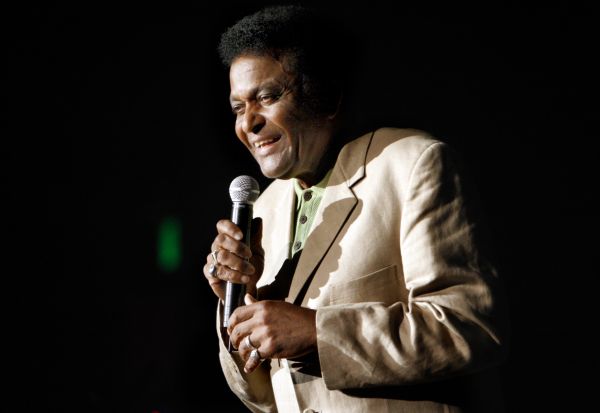
But Sunday afternoon when Charley Pride sang his soaring eagle song from that spinning round stage at the rodeo arena, there wasn’t a heart in the house that wasn’t melted into some life-breathing hope that all of us around that dirt-floored arena had something really deep in common.
No doubt I’ve seen some world-class rodeo shows by George Jones and Willie Nelson in that dusty place. But without subtracting anything from the great native sons, allow me to muse something about the magical and reverent bond that Charley Pride forged with the rodeo audience on Sunday afternoon.
Some of what happened had to do with organic Texas connections. Charley’s band is mostly from Texas; he wore a fat ring gifted to him by Waylon. He remembered out loud how he caught an early career break in by singing opening acts for Ernest Tubb and the Texas Troubadours. Charley and Texas are welded together.
And some of Charley Pride’s art has to do with the way he references his skin color at these 99-percent-white gigs. There’s the story he tells about being named an honorary Norwegian by his fans at the Norsk Hostfest of Minot, North Dakota, an honor he cherishes, “although I haven’t quite made the transition completely” he winks as he holds up the back of one hand and rubs it with an instructive circular motion.
But none of these things would make a diff if it weren’t for the way Charley Pride sings. Much like my first experience with George Jones, there is something you get from the man in person that cannot be recorded. I don’t know why or how that happens, but it’s one reason why you still need a Live Music Capital of the World. Something you know about an artist only after you watch the eyes of the audience twinkle back.
It was the white-haired man in the cowboy hat up in section BB that really broke through for me, the way he carried his six or seven decades with dignity. And the way his lips moved to every word of his favorite Charley Pride song. Good Lord, he musta sung that song a thousand times in honky-tonks and pickup trucks under the Texas big sky, through who knows what heartaches.
The whole experience, as you can see, put me out onto the thin branch of a long limb. But there I was feeling more at home than I usually feel anyway, transfixed in a waking dream of possibility.
With that kind of spiritual preparation I just didn’t have any cynical energy to spend on Sunday night as I watched President Barack Obama take the last few steps to the East Room podium with that little springy step, that slight back-and-forth thing he did with his head, I don’t know, like he was about to treat everyone to an unobstructed slam dunk?
While I’m out on this limb where Charley Pride left me, I don’t for a minute think there will be any alternative to lots of hard work for lots of people for lots of years. I agree with the President when he says nothing was finished Sunday night. But something was started. And now that it has been started, I believe it’s something that we could have not done another hour without.
Like 1932 or 1964, the year 2010 has become a new year for the common life of the American people. And for reasons having nothing to do with Charley Pride, or Barack Obama, or even Majority Whip James E. Clyburn, like 1861, this will be a year to decide whether a common life is worth fighting for.
Already, the Texas Governor has issued a midnight statement about how he’s going to lead his state out from under the power of federal “excess” and “overreach.” After everything that happened on Sunday, I don’t think so much about how awfully hard it’s going to be to dissent from the Governor’s leadership in the coming year.
With Pride, Obama, and Clyburn, I’m beginning to see through the eyes of a new eagle. What could be more fun than the really hard work of America, far as the eye can fly?
[Greg Moses is editor of the Texas Civil Rights Review and author of Revolution of Conscience: Martin Luther King, Jr. and the Philosophy of Nonviolence. He can be reached at gmosesx@gmail.com.]

By Leonardo Boff / The Rag Blog / March 22, 2010
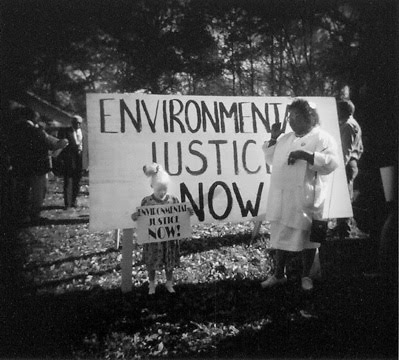
Among the many problems that afflict humanity, two are particularly grave: social injustice and ecological injustice. Both must be jointly dealt with if we want to put humanity and planet Earth on a secure path.
Social injustice is an old matter that derives from an economic model that, besides plundering nature, generates more poverty than it can handle and solve. It implies, on the one hand, great accumulation of goods and services, at the expense, on the other hand, of enormous poverty and misery.
The facts speak for themselves: there are one thousand million people who live on the edge of survival, on just one dollar per day, and 2, 600 million people (40% of humanity) who live on less than two dollars daily. The consequences are perverse. Suffice it to mention one fact: there are between 350 to 500 million cases of malaria, with one million avoidable victims annually.
This counter-reality has been kept invisible for a long time, in order to hide the failure of the capitalist economic model, made to create wealth for a few and not for the well-being of the whole of humanity.
The second injustice, the ecological, is linked to the first. The devastation of nature and current global warming affect all countries, without regard for national boundaries or their levels of wealth or poverty.
Of course, the rich have better means of adapting and mitigating the negative effects of climate change. In the face of extreme events, they have refrigerators or heaters and can build defenses against the floods that destroy whole regions. But the poor have no means of defending themselves. They suffer the consequences of a problem they did not create.
Fred Pierce, author of The Population Earthquake, wrote in The New Scientist, November 2009:
…the 500 million wealthiest people (7% of world population) are responsible for 50% of the gas emissions that produce global warming, while the poorest 50% (3,400 million of the population) are responsible for only 7% of the emissions.
This ecological injustice cannot be kept invisible as easily as the other type, because the signs are everywhere. Nor can it be solved only by the rich, because it is global and the rich are also affected. The solution must be born from the collaboration of everyone, in a differentiated way: the rich, being the more responsible in both past and present, must contribute much more with investments and transferal of technologies, and the poor have the right to an ecologically sustainable development, that will lift them out of misery.
Can the present generations be asked to follow such values if they have never lived globally before? How can we carry out this change, that must be done urgently and quickly?
Perhaps only after a great catastrophe that afflicted millions and millions of people could this radical change happen, because of the survival instinct. This metaphor occurs to me: if our country were invaded and threatened with destruction by some external power, we all would unite, beyond our differences. As in a war economy, all would be cooperative and solidarian; they would accept shortages and sacrifices in order to save motherland and life. Now the Motherland is the threatened Life and Earth. We must do everything to save them.
Original in Portuguese; translated into Spanish by Servicios Koinonia; translated into English by Refugio del Rio Grande, Texas.
[A Brazilian theologian, philosopher, educator, and author of more than 60 books, Leonardo Bofff lives in Jardim Araras, an ecological wilderness area in the municipality of Petrópolis, Rio de Janeiro. Boff is Professor Emeritus of Ethics, Philosophy of Religion, and Ecology at the State University of Rio de Janeiro. A former Franciscan priest with a doctorate from the University of Munich, Boff was an early advocate of liberation theology. In 1991, after a series of clashes with the Vatican, Boff renounced his activities as a priest and “promoted himself to the state of laity.”]
By Thomas McKelvey Cleaver / The Rag Blog / March 22, 2010
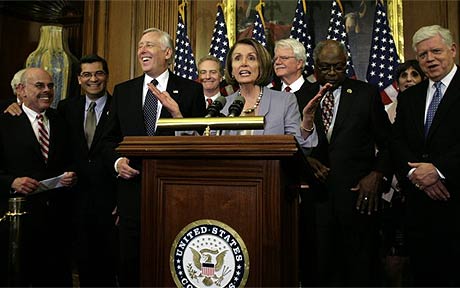
After the historic passage of health care in the House of Representatives last night, President Obama said that the issue of health care was personal to every American.
It certainly is.
For me, it means I get to live longer than the next six years.
Back in 2007, the doctors found I had the potential for prostate cancer. The news came at the worst possible time. I used to have the gold-plated health insurance of the Writers Guild of America, but that was long gone (when you’re over 40 and you didn’t make them a bazillion dollars, your likelihood of further employment changes for the worse), and it really wouldn’t matter since what exists today for the Guild is a small piece of Swiss cheese that the mice had a serious go at, compared to what used to be.
When they said the “c” word, and I was among the 45 million Americans lacking health insurance, my first thought was why didn’t I just go die — it would be easier. Fortunately, I mentioned the possible diagnosis to friends, who it turned out had faced the same thing, and I discovered prostate cancer — if caught soon enough — is eminently treatable.
A doctor at the Los Angeles Free Clinic, where I went to get a PSA test, asked me if I had ever been in the service. Turns out, the answer was yes. He told me to go tell the Veteran’s Administration I had a possible diagnosis of cancer, and they’d take me in right away.
He was right. Over the past three years, the VA has looked out for me. Turns out that year in Southeast Asia did have some worthwhile value after all. And it’s a good thing, because I got a job where I would not have been able to use the health insurance the company offered, since I now had a “preexisting condition.”
As it turns out, after all their tests,I have prostatitis, not cancer (not yet anyway), and they want to treat it so as to lower the possibility of cancer. That involves medicine that decreases the size of my enlarged prostate.
We tried Finasteride, and it just made me sick. No go. The alternatives are Flomax or Avodart. At present, neither one is on the list of drugs the VA can give (though they can get a special dispensation), though they are easily available if you’re on Medicare, through Medicare Part D. Only the drugs cost over $100 month if you get them from Canada, and a good double that here.
Even with Medicare insurance, they’re not cheap in any way. Way too expensive for me, and then there was the problem that about three years into the treatment — assuming it worked — I’d hit the “doughnut hole” where I’d have to pay the full price I couldn’t afford, just as my body really needed the drugs. Going off them would result in writing “Fade to Black” in about two or three years. Two or three painful years.
And now, thanks to this awful bill that doesn’t do all the wonderful things we Lefties were willing to sacrifice it for, that’s not my future. Thanks to this bill, the VA will be able to get me those drugs at VA prices, paid by Medicare, without ever worrying about the “doughnut hole.” I’ll be able to afford to stay alive. Danny, the youngest kitty who came in my life last fall with a life expectancy of around 15 years, who I promised to take care of for all of his life, gets the promise kept.
Not only that, but my wife, who as a self-employed person with the problems most women over 50 face, who couldn’t get health insurance even if she could afford it because all those conditions women over 50 face due to the accident of their birth as women — which are called “preexisting conditions” by the insurance companies — will now be able to buy in to Medicare four years early.
She won’t have to ever spend another six weeks fighting bronchitis and “toughing it out” without antibiotics — as she has been doing these past six weeks — because she’ll now be able to see a doctor and get the necessary prescription. At a price she can afford for both.
Yes indeed, this “awful bill” that sold out the left in America sure is horrible.
I just keep remembering that when Social Security passed in 1935, it only covered jobs traditionally filled by white males (and not all of them), but when I got my Social Security Card 52 years ago, everybody was covered. And Medicare in 1964 was a shadow of what it is today (which is hopefully a shadow of what it will be as we amend this new system to end up with “Medicare for all”).
In the meantime, I like the fact that I’ve now got a good shot at hitting the longevity numbers eight generations of Cleaver males before me (excluding the one immediately before me, who walked around with a piece of uranium the size of his thumb in his pants pocket for six weeks in 1955) have had. With a vegan diet, a 161 cholesterol, and a blood pressure of 132 over 63, I’ll be kicking the wingnuts for a long time to come.
Thank you, you stupid spineless worthless Democrats, for standing up when it counted.

By Ted McLaughlin / The Rag Blog / March 21, 2010
When our forefathers created this great nation, one of the ills they desperately wanted to correct was to insure that government could no longer put people in prison and keep them there for extended periods of time without a trial.
This was a tactic many governments had used to stifle free speech and punish people who they didn’t like. Because this is anathema in a free country, the writers of the Constitution included safeguards like habeas corpus to rein in those kind of governmental powers.
Sometimes in our history, we have not lived up to that ideal of justice. For instance, almost everyone now believes it was wrong for the U.S. government to imprison American citizens of Japanese descent during the Second World War. These people had committed no crime and posed no real danger to this country. Their incarceration was due to a racist and irrational fear.
We are now doing it again. We have been holding and torturing people (although I hope the torture has now been stopped) in Guantanamo Bay for many years without giving them a trial. This started under the administration of George Bush, when he decided he could imprison Muslims without reason or trial just by labeling them enemy combatants or terrorists, and keep them in prison for as long as he wanted.
To his shame, President Obama has continued this unconstitutional practice. He is now considering moving these prisoners out of Guantanamo Bay and into either another prison in Bagram in Afghanistan or a facility here in the United States. He is trying to do this to keep his promise to close the facility in Guantanamo Bay. Personally, I think this looks far more like a shell game than an effort to keep a promise.
What difference does it make whether these people are imprisoned in Guantanamo Bay, Afghanistan, or the United States? They are still being imprisoned with no charges and no trial, and are not allowed to present a defense or make a plea to be released. This is exactly the kind of thing our forefathers tried their best to prevent.
Now I know some will say these are prisoners of war and should be held until the war ends. The fact that not all of them were soldiers captured by our own troops belies this. Not to mention the fact that many have been released already. Others say they are terrorists and we will put ourselves in danger by releasing them. But a nation governed by the rule of law does not put people in prison because they may be scary people.
If scaring people was all it took to put people behind bars without a trial and deny them the right to defend themselves, then thousands of scary Americans should be behind bars right now. Frankly, Glenn Beck, Rush Limbaugh, Michele Bachmann, the KKK, the John Birch Society, the teabaggers, and anti-choice people who believe murder is a legal political act scare me far more than any so-called terrorist.
But I’ll just have to wait until these people, vile though they may be, actually break a law. Because that’s the way things are done in a country governed by the rule of law. We only arrest lawbreakers and then we give them a fair trial. And that’s exactly what should happen to those that have been imprisoned in Guantanamo Bay.
Every prisoner in Guantanamo Bay should be given a constitutionally-fair trial if there is evidence that they have broken a law. If there is no evidence (or the evidence was gained through torture), then they should be released. Justice should always outweigh politics, and no person should be kept in prison for purely political reasons.
It comes down to something as simple as doing the right and just thing.
[Rag Blog contributor Ted McLaughlin also posts at jobsanger.]
Jefferson remains a threat in the eyes of interested parties because his vision for democracy required more than consumerism and optional participation in periodic voting days.
By Matthew Crow / March 21, 2010
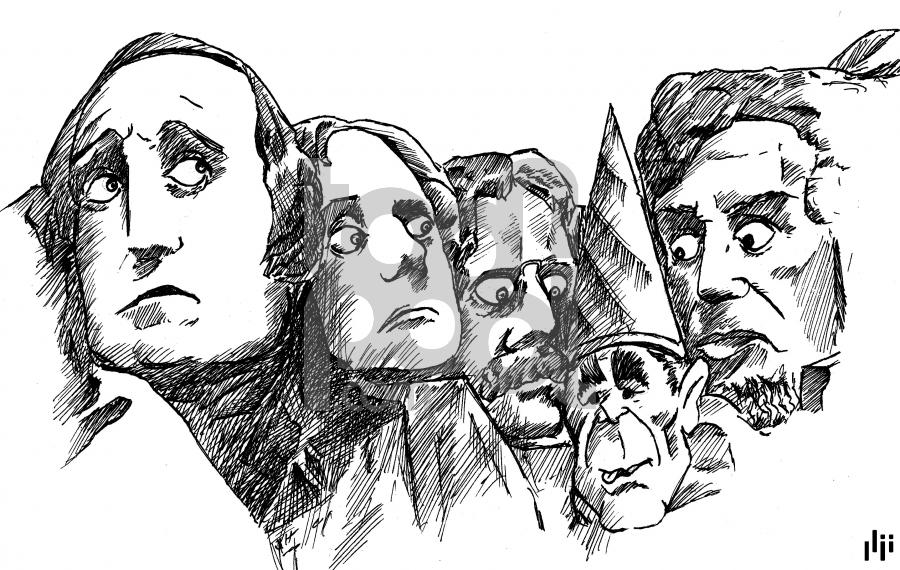
Who’s afraid of Thomas Jefferson? Lots and lots of people, apparently. Jefferson argued that unless there was a just distribution of goods and institutional structures for every citizen to actively participate in public decision making, the country would be headed “downhill” in the wake of the American Revolution.
After decades of oversimplified, if understandable, disputes among historians and the public about the importance of studying the figures who we traditionally call “Founding Fathers,” the Texas Board of Education has turned the world upside down.
In their revision of a report by social studies teachers, board members recently decided to cut Thomas Jefferson from the list of historical figures whose thought influenced or expressed political revolution in the eighteenth and nineteenth centuries. By doing so, the board has solved the widespread perception of a democratic deficit in Western countries today with an educational scheme that won’t suffer the people to actively ask what calling ourselves a democratic society might demand of us as citizens.
At the time of this writing, the plan of the board is to replace Jefferson with John Calvin, Thomas Aquinas, and William Blackstone. Especially in light of the prevalence of religious fervor today and the consequent growth of writing religious history, Calvin is actually the most timely and interesting suggestion. He should have been on the list anyway, provided we include outbursts of revolutionary politics before the eighteenth and nineteenth centuries, like the Dutch Revolt, the English Civil War, and the Glorious Revolution of 1688.
Aquinas, a Catholic cosmologist and political philosopher who lived in the thirteenth century, while certainly an important part of the history of natural law ideas, was simply not the source of the arguments about natural rights that emerged out of the American and French Revolutions at the end of the 1700s. Americans of the time, by and large, would hardly have had, nor wanted to have had, recourse to the writings of a medieval Dominican friar.
Blackstone, the great English jurist, systematized the development of parliamentary sovereignty in the constitution of the British Empire in his massive Commentaries on the Laws of England, published in four volumes between 1765 and 1769.
A powerful critic of colonial claims to enjoy the rights of Englishmen, he would no doubt be shocked to find himself remembered in the tender young minds of the Lone Star State for supporting and influencing revolutionary claims against the authority of law and government, concerned as he was to use both natural and common law arguments to curtail claims of customary and natural rights.
Greater familiarity with British constitutionalism would be a favorable improvement in historical education. But a fountain of revolutionary fervor Blackstone was not, nor would his Commentaries be my first choice for high school summer reading.
At least some of the move on the part of the Texas Board of Education has to be understood in light of neoconservative ambivalence about the Enlightenment and its legacy. The bulwark of Western claims to reason and individual liberty that buttressed the moral argument for the Iraq War, Enlightenment secularism also serves as the scapegoat for the perceived loss of European cultural identity amidst the influx of North African and Middle Eastern immigrants, or for the loss of supposedly traditional, “Judeo-Christian” values in the United States.
Quite rightly, those seeking to walk back the American constitutional commitment to a “wall of separation between church and state” understand that they need to do something with the figure of Thomas Jefferson.
Given the fact that arguments for a divinely sanctioned natural law background to the U.S. Constitution continually rely on Jefferson’s “Nature and Nature’s God” in the Declaration of Independence as evidence, erasing Jefferson for the sake of combating secularism may prove problematic down the road. Nevertheless, conservative members of the board who supported the recent revisions correctly point out that Jefferson was not at the constitutional convention, nor does his later interpretation of the First Amendment as separating church from state appear in the actual text of the U.S. Constitution or the Bill of Rights.
To this, one is compelled to point out that contemporaries of the Founding Fathers were deeply aware of the fact that God does not appear in the U.S. Constitution, either. The preamble begins “We the People,” not “Our Father…”
But religion, as is often the case, is only half the story. If those who aim to include thinkers outside of what we usually recognize as the Enlightenment in the story of modern thought were serious, they would have naturally been drawn to Thomas More, a critical player in any history of the modern state, church-state relations, individual conscience, or political philosophy.
Of course, a humanist whose major work Utopia questioned the logic of private property would hardly be a safe figure for students, especially when, as one of the reformers successfully proposed, the word capitalism needs to be replaced by the phrase “free-enterprise system.” After all, it was feared by some board members that capitalism, especially these days, has such a negative connotation.
The conservative project to appropriate the narrative of the American Revolution and the world in which it took place is an attempt to censure the active, collective memory of democratic life, a memory of which the corporate-financed Tea Parties of our current world are at once both tragedy and farce.
Nowhere is this more on display than in eliminating the description of America as a democracy in favor of “constitutional republic.” While that might be more accurate in ways that the board members could not have intended, what they are doing is trying to write any substantive meaning of the word democracy out of our understanding of who we are and what we have been doing here.
Some historians have been justifiably — and in some sense correctly — trying to get us past a celebratory, optimistic Jeffersonian narrative of American history. But if the recent events in Texas show us anything, it is that historical narratives are constantly being remade by their inheritors, and for this reason tending to these narratives and their discontents will need to be a vital endeavor for all citizens, historians included.
Writing Jefferson out of American history is the political equivalent of telling the public at large that their highest civic responsibility is to not worry and continue shopping, just as then President Bush told the nation shortly after the terrorist attacks of 2001.
Undoubtedly, Jefferson was deeply flawed and troubled human being, and it is his failures, mistakes, and downright barbarism as much as his language, ideals, and civic-mindedness that warrant attention today. And yet Jefferson remains a threat in the eyes of interested parties because his vision for democracy required more than consumerism and optional participation in periodic voting days.
It was no accident that he fixed on education as a central part of such a vision, and did so in a spirit totally antithetical to the actions of the Texas school board. In an effort that warrants our remembrance and care more today than ever, Jefferson wanted education to foster critical attention to history and politics, so that in a true democracy we the people could prepare ourselves for our awesome responsibility.
[Matthew Crow is a PhD candidate at UCLA and a contributor to the History News Service.]
Source / History News Network
Thanks to Steve Russell / The Rag Blog
By David MacBryde / The Rag Blog / March 21, 2010
BERLIN — The Rag Blog has posted a number of articles about health care in other parts of the world, like Victoria Foe’s feature exposing myths about the Canadian system, and my earlier article about health care in Germany.
Now I’d like to offer a little background and two comments, a personal and a philosophical one.
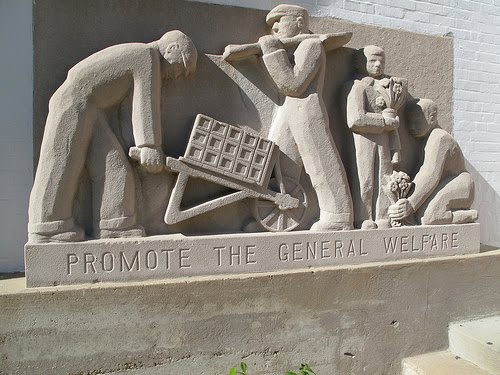
American Voices Abroad (AVA)-Berlin occasionally convenes “ Café Americain,” a political salon. Recently we read and discussed the U.S. Constitution, line by line. A core stated purpose in founding the United States of America was “to promote the general welfare.”
Question: How and by whom does that get defined? It can be a difficult process, and has changed over time. Originally, at the time the constitution was written, Indians, slaves, and women had no vote in defining that.
Since then the constitution has been improved some.
When I was a kid in the 1950’s “the general welfare” seemed to be defined simply as, “What is good for GM is good for the USA” — in a corporate led economic boom, with “everything getting better for everybody.”
But that boom has been over for a long time now.
GM drove over a cliff. And recently in a spectacular way, with “innovative investment grade products,” the capital market made what were not — shall we say — efficient investment decisions, misallocating vast sums.
The issue of “the general welfare,” of how and by whom that gets defined, has become dramatic indeed. The effort to reform health care in the U.S. certainly provides insight into that process. The process has been messy, and some have compared it to making sausage.
(I will note that I once helped make sausage, literally. One of my best friends when I was a kid invited me to his home when the family pig was turned into sausage. The family knew how to do that well. I found it rather grisly, but do not, just now, want to philosophize about the pros and cons of eating meat or being a vegetarian.)
Now, living in Germany and looking at the health care efforts here and in the USA, I will make a philosophical point. While there are intense issues here, there is a general cultural agreement that promoting a good health care system is an important part of promoting the general welfare — that there are “common goods” that are worth maintaining and improving upon. And there are processes here to work on that.
A technical term in philosophy is “ontology” — which humorously put, is the study of what “is” is. What “is” reality? What kinds of “reality” “are” there? What entities exist or can be said to exist. Moving further, are there “common goods,” or “the general welfare,” and by whom and how are decisions made about “common goods” and “the general welfare”?
What do you think?
I will raise this issue again in a different context by early May when in Berlin there will be a celebration at the historical inner city Tempelhoff airport. Air traffic has been moved to another airport on the edge of town, and the Tempelhoff airfield will be opened to public use. There are some similarities between Tempelhoff airport in Berlin and the Mueller Airport area in Austin, Texas.
Historically, the Tempelhoff airfield has defined a large part of Berlin, especially during the “Berlin Airlift.” Now the closing of that field for air traffic has opened it for flights of fantasy about future use.
Practical decisions will be made, over a long period of time. Here those decisions will be made in the context of promoting the general welfare and urban living conditions in Berlin going on into the 21st century.
I will try to report on future developments concerning those efforts.
In the meantime, below is a letter that members of AVA-Berlin wrote about supporting the health care fight in the U.S.
[Editor’s note: as we publish this, Congress appears to be in the process of passing President Obama’s compromise health care bill.]
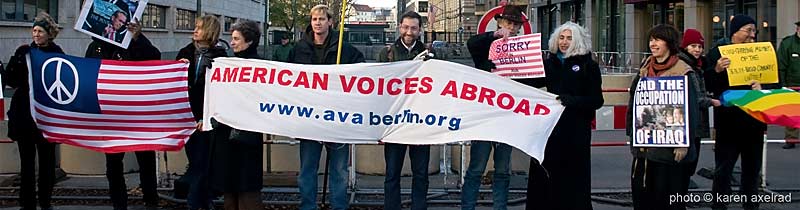
Dear AVA-Berliners,
The health care reform bill is still alive and headed for a vote within the next week or so. Although not as far-reaching as many of us had hoped, the bill has real merit. It is expected to cover 34 million uninsured, to eliminate pre-existing condition clauses, close the gap in the Medicare drug program, and eventually control the spiraling costs of health care spending. It will also provide a basis for future changes and improvements.
Passing a health care bill will also affirm and strengthen the Obama administration against a powerful right wing backlash. If health care doesn’t pass, the administration is unlikely to be able to be effective in other critical areas such as environmental protection, energy policy and foreign relations, to name but a few.
Many Democrats are moving into the Yes column for this bill, but unfortunately many are afraid that a vote for a health care bill will damage their re-election chances. In the next few days, their offices will be virtually under siege from those who listen to Beck, Hannity, etc. If you would like to counter this onslaught with a powerful positive message to your Senators and Representatives — emphasizing that health care reform is so important to you that you are calling from Germany — links to phone numbers are provided below.
Links to numbers
If you have a flat rate for calls to the U.S., great! If not, use one of the special prefixes to make an inexpensive call to the U.S. And remember, this e-mail can be passed along to family and friends, to remind everyone who cares about the state of health care in the U.S. to stand up for it now.
You can check here for up-to-the-minute rates. And again, we urge you to call your people in Congress even if they have a good voting record.
To call your Senators, use www.senate.gov/ , select your state (the state to which you send your absentee vote) and go from there. For your Representative, use www.house.gov/Welcome.shtml , Click on Find Your Representative (by zip code) or Write Your Representative in the top left hand corner.
Carolyn Prescott, member
Ann Wertheimer, chair
American Voices Abroad – Berlin
[David MacBryde worked for The Rag, Austin’s Sixties underground newspaper. He sends us the occasional dispatch from Berlin where he now lives.]
By Larry Piltz / The Rag Blog / March 19, 2010
Million Musicians March for Peace in Austin, Texas, Saturday, March 20, 2010. Music/Rally at the Capitol, 12 Noon. Parade from Capitol through downtown Austin, 2 p.m. Music/Rally at Austin City Hall, 2:30-4 p.m. Be an Instrument for Peace.
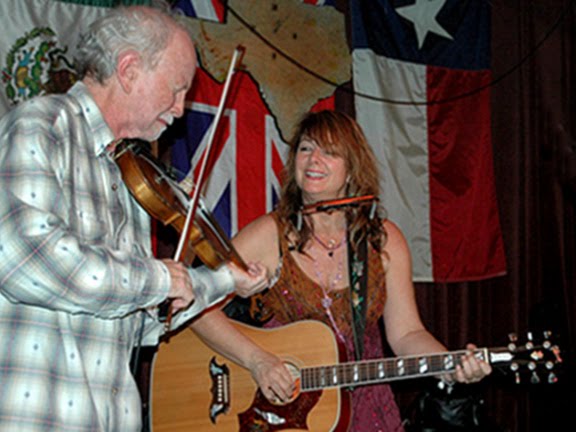
Richard Bowden ain’t fiddlin’ at windmills.
He’s not tilting either. He knows very well what he’s doing and why, and will tell you his purpose straight up. It’s to keep the hope for and goal of actual peace at the forefront of the hearts and minds of the people of Austin, and of people around the world, the billions who yearn for peace and desperately need peace in order to have safe, happy, productive, and healthy lives, or to even have lives at all.
Richard, a well-known and admired Texas fiddler, whose pickin’ partners make up a who’s who of major artists, instinctively understands that war robs people of the good things in life, that it steals time and resources from families and communities, and that it takes loved ones away permanently, suddenly, or changes them in ways that further strain the bonds of humanity.
Richard has also observed — witnessing commercial journalism’s utter default to deceitful jingoism in its coverage of the run-up to the Iraq War debacle — that people are being led to war with no real reason or evidence for it, and with no real counterbalancing voices or information. Who would tell the people?
Basically no one, Richard figured. But what could he do? He wasn’t a committed political activist. He’s only a musician, after all…
Actually, it was the moment my Mom called me to tell me me that the twin towers had been destroyed by terrorists that I realized we were in trouble. I said, “Uh oh, Mom. They’re going to try to take our democracy away.” She sounded surprised and said, “Who, the terrorists?” I said, “No, Mom, the government.”
When I saw my prediction coming true I knew it was my responsibility to do something, just as if I were a German citizen in the early 1930’s. I wrote lots of emails to the newspaper, to friends, etc… At some point I realized that my strongest tool for reaching lots of people with challenging information was as a musician, with all my contacts and p.r. skills, and my ability to put on an event.
Then he thought about Face the Music Festival, a gathering of musicians and poets he’d helped to organize in 2002 to heighten public awareness about the draconian drug law enforcement that had resulted in the deaths of an innocent teen and a deputy sheriff within a year’s time in separate Austin-area SWAT-style drug raids.
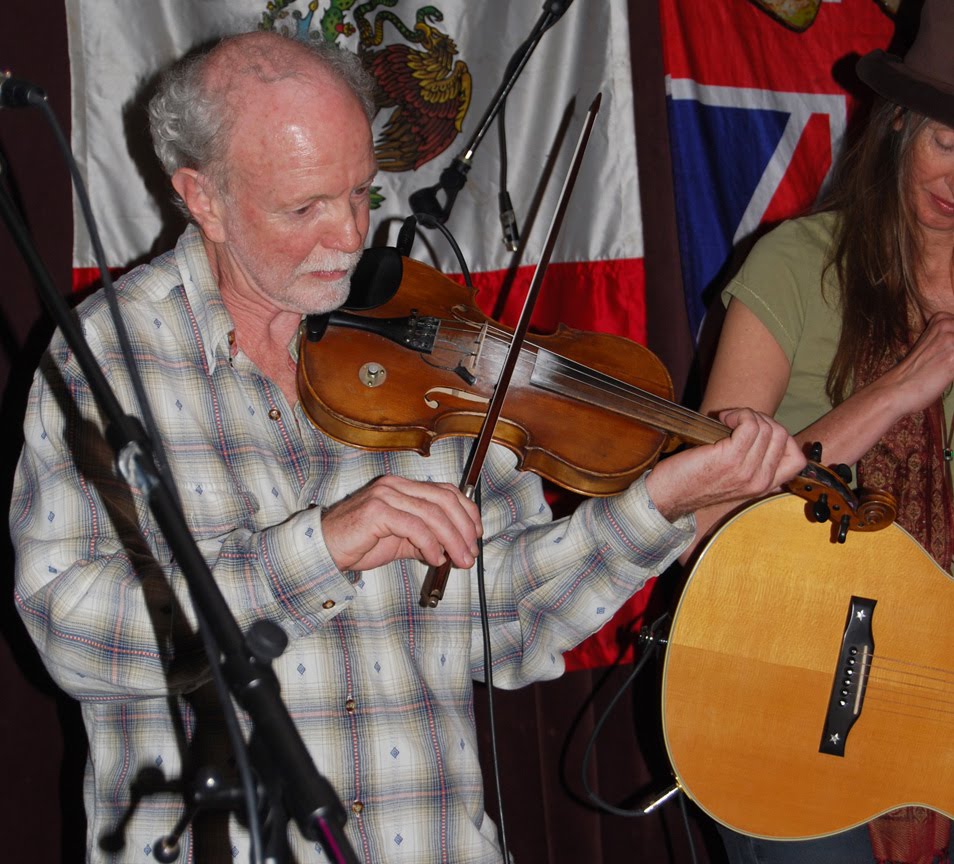
Richard teamed with Drug Policy Forum of Texas and the ACLU — which provided speakers at the festival — and invited musicians and poets to help attract people to the otherwise educational event. Long story short, soon thereafter the violent middle-of the-night neighborhood drug raids ceased, and Richard had become a political organizer. (Though he always says, “I’m just a fiddle player. Everybody can be an instrument for peace.”)
This is why he founded Austin’s Million Musicians March for Peace: To get the word out. To break through the conjoined barriers of information lockdown and apathy. In his words:
It was back during the time when everybody was scared to criticize the so-called war on terror for fear of being seen as unpatriotic, and I wanted to get people talking. We had to break the silence. This really was a job for musicians. It’s always the musicians and artists who speak a truth first, before the general population. The artists give “permission” to the general population to try new things.
Why a musicians’ march? You start with what you know. “We should all contribute what we’re good at.”
Richard’s first foray into musical political activism had garnered positive results. Why stop when you’re on a (drum) roll?
In 2006 I was invited by Austin Against War to attend a planning meeting for the march they had organized for three years in a row since ’03, the Iraq invasion. I took Bill Oliver, a fellow musician, with me. I figured it would be a huge group: the Austin peace movement! I was surprised to just see four or five people sitting around a table in a gloomy church basement. They wanted to see if I knew a musician who would play at City Hall when the march arrived.
I looked at my calendar and realized it was the Saturday of SXSW. I said, hey, lets turn the march into a musical parade for peace and invite every musician we can find to join us… The organizers asked, “Do you really think musicians would want to do that?” I looked at Bill. We nodded our heads…”They’ll do it!”
We had two weeks to organize the whole thing, mostly me and Bill and Frank Meyer. We worked ourselves silly, but we pulled it off… hundreds of musicians showed up, including some of my musical heroes… in a downpouring rain!
So began the MMM, and it would be timed annually with Austin’s international giant musician magnet, South by Southwest (SXSW). The word would go out, from charismatic speakers and artists at the Texas State Capitol, from what might be the world’s largest marching band, playing and dancing along the Congress Avenue parade route, including musicians from many countries, and from speakers and robust performances at Austin’s City Hall on Lake Lady Bird, out to the entire world.
Thousands of SXSW musicians and music apprecianados would become familiar with MMM, and many would spread the gospel. And who knows: someday MMM’s might spring up in cities across the country — across the world — to help galvanize already existing world opinion for actual peace in our time.
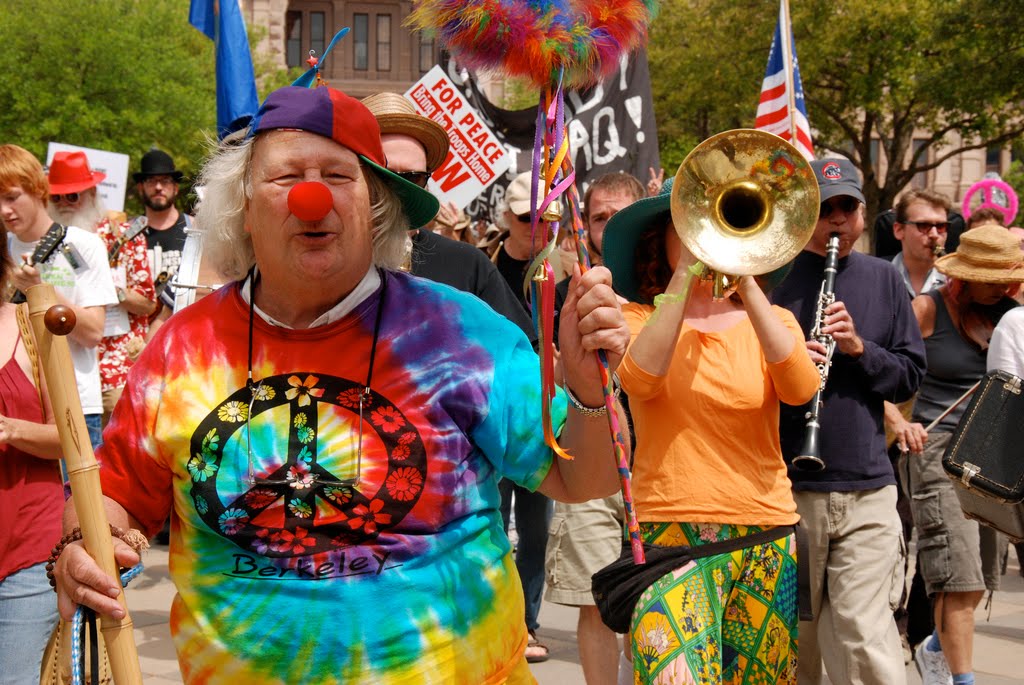
As hundreds of locals, tourists, musicians and industry types attending South by Southwest — the massive technology, film and music fest — packed the streets of downtown Austin Saturday afternoon, March 21, the Million Musicians March for Peace — with hippie legend Wavy Gravy leading the way — snaked by in a rhythmic procession, creating its own lively soundtrack as it passed…
Marching behind a banner that said, “Be an Instrument for Peace,” more than 200 singing, chanting and dancing marchers followed a second-line type brass band from the Texas State Capitol through the busy streets of downtown Austin — up Congress Ave. past the crowds queued up for a premiere at the Paramount Theater, then delighting the throngs along Sixth Street’s music row, and on to City Hall for a rally and concert…
About that event, Richard Bowden told The Rag Blog, “Of all the events worldwide in remembrance of the sixth anniversary of the Iraq disaster, the Million Musicians March for Peace was the only one led by musicians. He added, “I am so glad to be in Austin where we can do something like this.”
The 2008 MMM was massive, with more than 1,000 musicians and activists snaking through downtown Austin. Dreyer wrote:
Musicians, some on foot and others performing from floats, makeshift trains and art cars, played tubas and trumpets and bagpipes and drums. Groups of strolling guitarists strummed and sang, “We ain’t gonna study war no more.” Waves of demonstrators stretched for blocks — young people and old, students and Iraq vets and old hippies, with dogs and children, carried banners, waved signs and danced in the streets. One young man carried a placard proclaiming “The Beginning is Near!”
Meanwhile Richard Bowden has as usual organized this year’s MMM in the finest traditional style of fiddlers everywhere: Play your music, support the creativity and often madcap brilliance of your fellow musicians, and take the melodic lead at just the right times and in just the right ways. But above all have fun.
Sundays at Cafe Caffeine on West Mary Street became one happy energetic rehearsal for the big day (Saturday, March 20, from noon to 4 p.m., beginning at the State Capitol).
“If it’s not fun, I’m going home.” That’s Richard’s motto. But don’t worry. It’s always fun. For more details about this year’s event, go to the Million Musicians March and Instruments for Peace websites.
The march is led by the Jericho Brass Band, a classic “second line” band first organized by Mark Rubin and friends… remembering that the walls of Jericho were brought down by the sound of trumpets!
This year, there will also be a big post parade party at Cafe Caffeine the next day, Sunday, March 21, from 2-7 p.m. with many of the musicians from MMM performing.
For all its local Austin zeitgeist and flavor, however, the MMM hasn’t happened in a historical vacuum. Troubadours through the ages spread the news from town to town, and roving poets and theater groups told stories of what was really going on behind public facades. Raving poet-prophets have always tried to alert people to looming calamities caused by bad political and religious leadership. Maybe if Jeremiah and Isaiah had had horn sections (and better agents) things could have turned out ok!
Producer Gia’na Garel, former co-host of Air America‘s “On the Real” (with Chuck D of Public Enemy), provides an elegant reminder of this history:
During every major revolution in modern history — there was a backbeat…The French sang and chanted through the streets with no less fervor backing their active revolt than did the Haitians or the Americans or later the civil rights era activists who learned to pump harder beats along with their fists. The very voice of activism is undercut with a pulse — a vibration — that catches us up and galvanizes the masses, as easily as it does one individual listening to their lone drumbeat.
It’s the synergism of lone drumbeats that makes the music, that makes the group, with each lone drummer carrying the beat. Ed Ward, former Austin American-Statesman music critic and Rolling Stone contributor, who’s lived and worked in Europe for many years and now lives in Montpelier, France, candidly talks about one aspect of the axis of individual artist and activism:
My guess is that most people don’t know the political stances of most musicians because the musicians don’t usually talk about that subject. Many musicians are smart enough to know that their opinions are essentially not very well thought out, and so they decline… The exceptions are usually people who have started in the folk tradition, where, thanks to the examples of Woody Guthrie and Bob Dylan, there’s a long lineage of people who’ve mixed purely artistic output with committed political output.
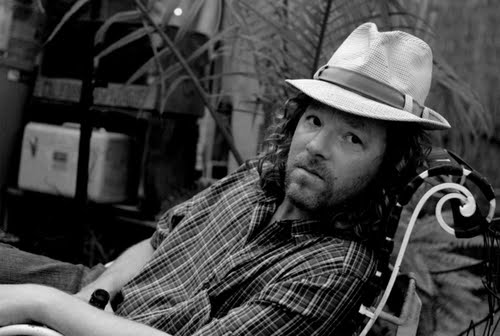
Massey made a gradual transition to political songs, but the decision to do so wasn’t easy. “It was a tough decision, something I had to think pretty hard about,” says Massey. “I have about an equal number of new political songs and more traditional songs that are more about people and places. It’s certainly more challenging to take the political route; I’ve already heard from longtime fans that I should keep politics out of my music.”
Massey writes about his decision in “American Prayer”:
I’m advised to rein my words in tight/to take my tunes and go quietly in the night/I hope you’ll help us all to speak our minds/because the voices of the people are being left behind/tell them that we’re tragic when you get up there/and that we need some magic, my American prayer.
Massey collaborated with MMM founder Bowden on “a political record I made a few years ago.”
My involvement in the march was a natural extension of that as the record was all pro-peace. Through working on the march, I’ve become increasingly aware of the peace community in Austin which is affirming to my pacifist tendencies… I’m proud to be a part of such a vast group of people. I’m proud of everyone who participates.
Massey, besides being a wonderful songwriter and musician, exemplifies the merging of musician and activist, and the larger merging of musician/activist with community/audience, an accelerating trend as mass communication binds like-minded people closer in more cohesive groups.
We become less isolated and more naturally inclined to form groups, based on our interests and our beliefs. We naturally gravitate toward each other, beginning at least a partial unwinding of an almost century-long trend toward dispersal and separation. It’s a democratization of information — and groups that make better use of their cohesiveness and the flexibility that instant communications allows will usually be more successful than those that don’t.
This is where partnership between artist and community/audience becomes especially important. This is one reason the MMM is such an interesting phenomenon. It has great potential to bring common purpose and coordinated action in the social and political realm.
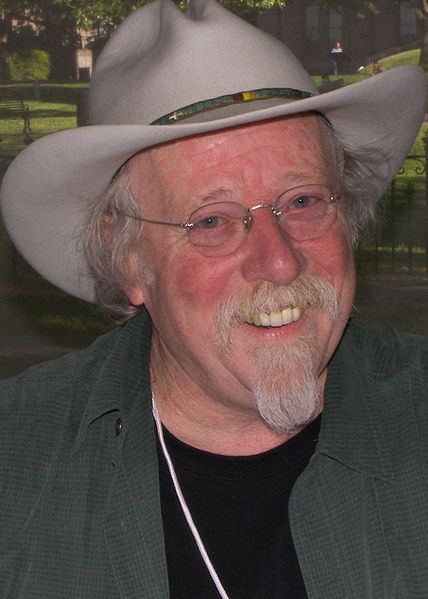
In the olden days artists would publish a manifesto clearly stating their mission as well as the causes they supported. I did something like this for eight years with my quarterly tabloid, Hoka Hey!, which focused on American Indian concerns.”
This seems to be a more simpatico state to which artists and their audiences are now gradually returning, an evolution in reverse to a more workable framework for allowing personal input and power into our lives and communities, local and otherwise.
We know who we are, who our natural allies are, and therefore can better act in concert for the greater good. In this way, we may be beginning a process of potentially returning to a more decentralized state of governance as well, with the artist-audience relationship being both bellwether and building block.
Bridger continues:
I’ve been involved with American Indians since the beginnings of my four decade career, so I haven’t even considered them a “cause”; instead, my involvement with Indians is as intrinsic to my personal journey as is my music or my career as a visual artist or playwright. It is all integrated into “who” I am.
Bridger seamlessly describes the unity ultimately inherent in all human relationships, not only with each other individuals but also within chosen groups — and also in our relationship with our treasure of a world.
Which brings us all the way back to a certain march for peace, with musicians, and families, and friends, and a beautiful day rain or shine.
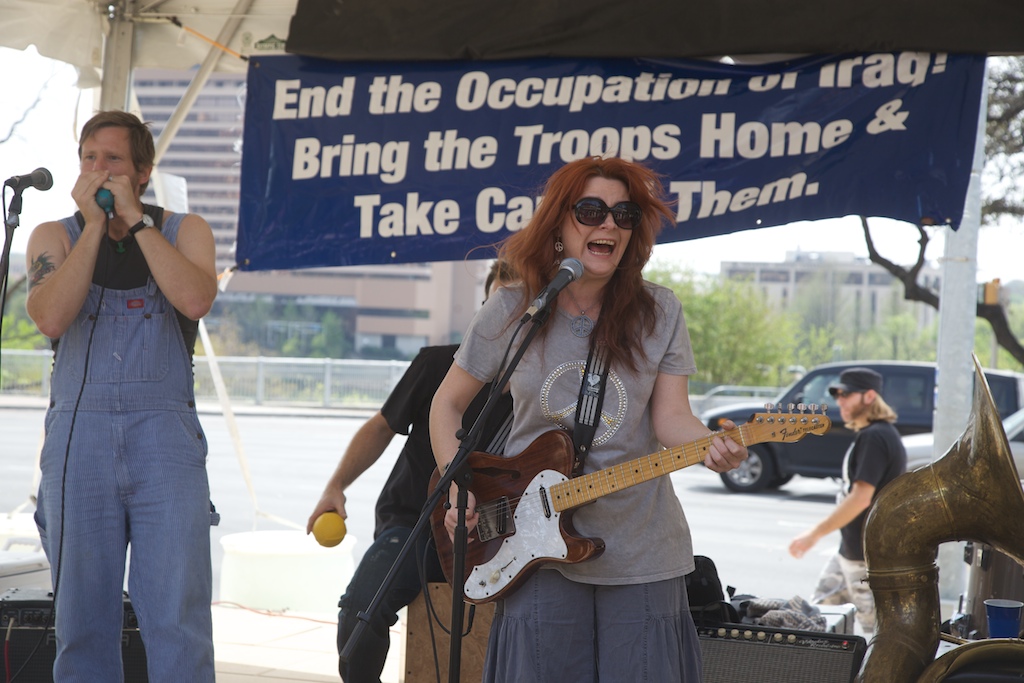
Steven [Harper] and I marched in the first one in the rain. There were a few less than a million. We walked alongside Billy Bragg, who in his own career has influenced a heck of a lot of people politically. The night before, we had heard him sing songs by Woody Guthrie, who had led his own movement for peace and justice.
Lydia was 15 at the time, and she marched, too. Hopefully, it will get bigger and better publicized every year, but yeah I’d definitely do it again. It kind of reminded me of one of those New Orleans funerals with the tubas and jazz players.
In Richard Bowden’s words:
WHY do we do it? Because it’s the seventh anniversary of the Iraq occupation: To remember the millions of innocent victims, and the trillions in growing U.S. debt, and warn of spreading, endless war. Because Austin is uniquely suited to using popular culture to encourage a popular movement for peace. To promote independent information media. Because knowledge IS power. Because everyone has valuable talents and skills: “Everyone can be an instrument for peace.”
And, finally, we’ll help you launch your own march with an email-reply poem from Thom Moon/ Thom the World Poet, M.C. at Cafe Caffeine Sundays, in answer to the question:
Why march?
well, we do not!
we walk /dance/jog /strut together –
poets,musicians,artists
down Austin streets
between Capitol performances and city Hall shows
with great joy and jubilation
Forms are improvised as we glow-
1. all are welcomed
2. every “march” is different
3. what happens this march is only partially planned
This is the best poetry on march 20 at noon
so i join the lines as they free verse swing through SXSW laminates
between APD and citizenry-for peace!
Usual petitions/placards/posters-unusually talented musicians
harmonics as role modeling-rhythm meets rhyme in public and at large
Where else can poets go except where following the Muse?
Each year ,a different eclectic mix of Austinites ask for peace
and the media/public response is positive
So every sunday we rehearse spontaneity
adding to the glow of the flow-seeking volunteers
making Paradise possible, practical and pragmatic
We are all volunteers
We are artists,poets,musicians
We are on a steep learning curve
What happens next is unknown
This is why we meet, greet and enjoy each other’s company
Every sunday at cafe caffeine 909 west mary 2pm to 4.30pm
and @the Capitol saturday march 20 at high noon
Be there! Poetry meets music meets people for peace!
Yes,please!
MILLION MUSICIANS MARCH 4 PEACE”
Those participating in this year’s Million Musicians March for Peace include:
Guy Forsyth, Carolyn Wonderland, Shelley King, Leeann Atherton, Barbara K [Kooyman], The Jericho Brass Band, Oliver Steck, Ryan Gould, Samantha Vanderslice, Bill Oliver, Daniel Cioper, Frank Meyer, Mo McMorrow, Jim & Sherry Patton, Karen Abrahams, Will T. Massey, Jon Emory, Thom Moon Bird, Nick Travis, Kathy Rowell, Brenda Freed & Michael D’Eath (Him an Her), Cleve Hattersly, John Jordan, Bill Johns, Edgar Pace, Bob Slaughter, Datri Bean, Minor Mishap Marching Band, Bruce Salmon, David Garza, Regan Brown, Dana McBride, Krishna Lee, Bear Beam, J.D. Finley, P.J “Cowboy Poet” Liles, Joe Carr,and Richard Bowden.

After Armageddon
After Armageddon,
when all the self-righteous have been Raptured up
by their vengeful, self-absorbed God,
things can get back to normal around here.
Tribes will meet again by the rivers,
at solstice or equinox,
to trade, to laugh, to court, to mourn,
to dance the long dance.
Herds and flocks and packs of beasts, birds, and butterflies
will move freely again on the land, tracing ancient migrations,
patterning the earth with a web of wonder and
finding no fences.
Forests will rise again, ancient and deep,
with only the regular, spaced rows of once-manicured orchards
to recall Man’s hand
amidst their wild profusion.
Cement will crack, iron will rust,
and all our pointed strivings lie in dust,
another cycle monumental in our eyes,
yet barely touching Mother-Goddess’ crust.
After Armageddon,
things can get back to normal around here.
Mariann G. Wizard
1/31/2010
Posted March 18, 2010 / The Rag Blog
By Harvey Wasserman / The Rag Blog / March 18, 2010
The nuclear power industry is sending a clear and forceful message to the citizens of Vermont: “Drop Dead.”
The greeting applies to Ohio, New York, California and a nation under assault from a “renaissance” so far hyped with more than $640 million in corporate cash.
The Vermont attack includes:
As angry citizens in Vermont and downwind New Hampshire and Massachusetts are told their worries have no place in a reactor renaissance, the message to “drop dead” has spread.
In Ohio, the infamous Davis-Besse reactor has turned up — again — with potentially catastrophic defects. In 2002 Davis-Besse came within a fraction of an inch of a catastrophic melt-down when boric acid ate nearly all the way through the reactor pressure vessel. Now assemblies that guide rods into the reactor core are again cracking. Davis-Besse’s owner, First Energy, is ignoring demands from terrified downwinders that the nuke be permanently shut.
In New York, Entergy’s Indian Point is leaking inside and out. Entergy continues to resist public demands for shut-down or a definitive clean-up.
In California, Pacific Gas and Electric is pushing hard to extend the operating license for its Diablo Canyon reactor, ignoring public demands for a three-year project to map earthquake faults that run within three miles of the plant.
Federal agents have confirmed that a suspected al Qaeda operative worked at six U.S. nukes sites. Former CIA official Charles F. Faddis warns that America’s 104 operating reactors are dangerously vulnerable to terror attack.
None of which seems to phase an industry and administration that want the public to pay for still more.
Politically, economically, ecologically, and in terms of the public health, the message from the “nuclear renaissance” to the American people is perfectly clear: “Drop Dead.”
[Harvey Wasserman’s Solartopia: Our Green-Powered Earth is at www.harveywasserman.com, along with Harvey Wasserman’s History of the United States.]
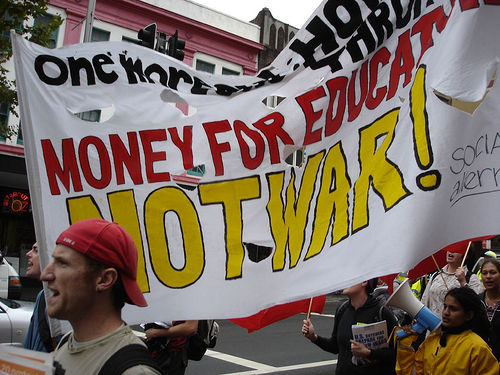
The project of privatizing the educational system, by starving the public system, has been paralleled by a fundamental feature of American government, the existence of a Permanent War Economy.
By Harry Targ / The Rag Blog / March 18, 2010
The Tippecanoe School Corporation in Indiana, which educates over 11,000 students in 17 schools, is being forced to cut its budget by $8 million by year’s end. This means firing over 150 teachers and staff. In addition, during the next round of contract talks teachers will be asked to take a cut in salary and benefits. Supplies and expenses for the classroom and for travel will be cut. Of course, increasing class size is in the mix as well.
In addition, the state higher education system has been ordered to cut millions of dollars in expenditures, including freezing and reducing salaries, eliminating new hires, and increasing class size. Purdue University has to cut $30 million over the next two years while the size of undergraduate classes explodes and applications for graduate school skyrocket. And of course the economic crisis in education, K through college, is occurring in almost every state in the country.
Robert Reich, Professor of Public Policy at the University of California, summarized the crisis very well when he reminded readers that states cannot run deficits to cover educational costs. (In Indiana, recent “reforms” have shifted educational costs from property taxes to the sales tax. In a recession spending and sales taxes go down and so do financial resources for education.)
He added that
Across America, schools are laying off thousands of teachers. Classrooms that had contained 20 to 25 students are now crammed with 30 or more. School years have been shortened. Some school districts are moving to four-day school weeks. After-school programs have been canceled; music and art classes, terminated. Even history is being chucked. Pre-K programs have been shut down. Community colleges are reducing their course offerings and admitting fewer students. Public universities, like the one I teach at, have raised tuitions and fees.
While we all know this, it is imperative that we revisit the crisis in education and its connections to history, economics, and budget priorities. For example, New York Times columnist and economist, Paul Krugman recently reminded us that a critical component of Reaganomics, and what the world has since called “neoliberalism,” is the privatization of any and all public institutions.
Every instrumentality of the state should be used to smash the state, except for its support functions for finance capital and the military. By cutting government spending, the Reagan administration began the historic process of “starving the beast.” Downsize public institutions so they can no longer deliver.
As Krugman put it:
Rather than proposing unpopular spending cuts, Republicans would push through popular tax cuts, with the deliberate intention of worsening the government’s fiscal position. Spending cuts could then be sold as a necessity rather than a choice, the only way to eliminate an unsustainable budget deficit.
In the field of education, the “starve the beast” privatizers advocated for charter schools, arguing that the private sector can educate the young better than the public sector. As Diane Ravitch, author of The Death and Life of the Great American School System: How Testing and Choice Are Undermining Education, has pointed out, despite statistical manipulation there is no evidence that private schools perform any better than the underfunded and downsized public schools.
The “starve the beast” approach also developed a rationale for declining public school performance to justify further privatization. The problem with public education, they claimed, was the teachers. And of course not all teachers were performing badly in their jobs. No it was the teachers in unions that were dragging down our educational system.
The project of privatizing the educational system, by starving the public system, has been paralleled by a fundamental feature of American government, the existence of a Permanent War Economy. Ever since the Korean War every administration has put military spending as the first national priority, such that over much of this period half of every tax dollar went to military spending.
What this looks like in the state of Indiana and Tippecanoe County (and you can find out comparable data for your own community by accessing the National Priorities Project) includes the following:
Taxpayers in Indiana will pay $10.7 billion for total defense spending in FY2010. For the same amount of money, the following could have been provided:
In Lafayette, Indiana, the population hub servicing most of the Tippecanoe School Corporation children, $85.8 million in local taxes going to military spending in 2010 could provide the following:
A call for “money for education and not for war” is critical to improve the lives of young people today and tomorrow. Diane Ravitch puts it succinctly:
I have not changed my fundamental belief that all children should have a great education that includes not just basic skills, but history, literature, geography, civics, the arts, science, foreign languages, and physical education.
[Harry Tarq is a professor in American Studies who lives in West Lafayette, Indiana. He blogs at Diary of a Heartland Radical.]
Thorne Webb Dreyer, Editor




