
Dr. Stephen R. Keister : Health Care, Congress and the Inquisition


It’s pure torture:
Reviewing the House Health Care plan

By Dr. Stephen R. Keister / The Rag Blog / November 15, 2009

See ‘Healthcare-NOW on the House Health Care bill,’ Below.

In his excellent review in TheRag Blog, Alex Knight discussed Silvia Federici’s new book Calaban and the Witch: Women, the Body and Primitive Accumulation.

Caliban and the Witch is a study of women accused of witchcraft, and their ultimate fate of being burned at the stake, in Europe and America during the 16th and 17th Centuries. It details the collusion between state and church in relegating women to a secondary place in society. The author notes:

“Frederici goes on to show how female sexuality, which was seen as a source of women’s potential power over men, became an object of suspicion and came under sharp attack by the authorities. The assault manifested in new laws that took away women’s control over the reproductive process, such as the banning of birth control measures, the replacement of midwives by male doctors, and the outlawing of abortion and infanticide. Federici calls this an attempt to turn the female body into ‘a machine for the reproduction of labor,’ such that women’s only purpose in life was supposedly to produce children.’”

In my morning newspaper an Associated Press dispatch:

“WASHINGTON — The call came in from Rome, just as House Speaker Nancy Pelosi and her top lieutenants were scrambling to round up scarce votes to pass their sweeping health overhaul. Cardinal Theodore E. McCarrick, the former archbishop of Washington, was on the line for Pelosi, calling to discuss adding strict abortion restrictions to the House bill. It was just one element of an intensive lobbying effort orchestrated by the nation’s Catholic bishops, who have emerged as a formidable force in the health care negotiations. They used their clout with millions of Catholics and worked behind the scenes in Congress to make sure the abortion curbs were included in the legislation — and they are now pressing to keep them there.”

Thus, the last minute motion by Rep. Bart Stupak that places a strict anti-abortion clause in the House health care bill. Rep. Stupak, as revealed by Rachael Maddow. is a member of The Family, a group of extreme right wing fundamentalist protestants that inhabit 311 C Street and many other residential facilities in and around Washington, D.C.

(Be sure and read Jeff Sharlet’s The Family: The Secret Fundamentalism at the Heart of American Power, and Sherman DeBrosse’s Rag Blog article on this subject.)

The Stupak Amendment goes much further than the long standing Hyde Amendment which forbids federal funds to cover abortions. This one “mandates that no federal funds can be used to pay for an abortion or ‘cover any health care plan’ that includes coverage of abortion, except in cases where the mother’s life is in danger or the pregnancy was the result of rape or incest. Rachael Morris, writing in Mother Jones, continues:

“The first part of the amendment isn’t new. The 1976 Hyde Amendment already prevents the use of federal dollars to pay for most abortions. Where pro-lifers won big was on the second part which would significantly limit the availability of private insurance plans to cover the procedure. That’s because Stupak’s amendment doesn’t just apply to the public option. The House health care bill will also provide subsidies to help people and small businesses purchase plans at an exchange. This represents a lucrative new market for insurers: anyone earning less than $88,000 for a family of four qualifies for assistance, as well as certain small companies. But to gain access to these new customers, insurers will have to drop abortion from their plans.”

In short this indicates that even if you pay for the plan with your own money, abortion coverage will be excluded.

Another excellent piece on the subject was Barbara J. Berg’s Rag Blog article entitled “The House Health Care bill: Compromising away women’s rights”.

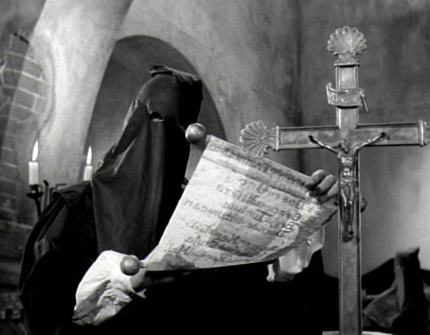
An already farcical “health care” bill has been made even more absurd by the forces that oppose a woman’s right to chose. Again we are faced here — in a nation founded on the belief that there shall be no established state religion — with forces wishing to impose medieval theological values on our society. Will the next step be a return of the Inquisition?

A personal note. I am an 88-year old secularist who feels, as my friends know, that one’s religion should have nothing to do with friendship. I prefer to judge a person by his/her ethical character and intellect. I find religious proselytizing to be objectionable, whether it be from Christian, Buddhist, Jew or atheist. I ask of others that they not try to force their beliefs upon me as I will not force mine upon them. That is not to say that I do not enjoy listening to, or joining in, an intelligent discussion of theology, just as I am content to listen to physicists discuss the theory of thermodynamics. We can always learn, and some of my best informal teachers have been Jesuits or Rabbis.

Not only does the Pelosi health care bill face self immolation with the introduction of theological fiat, but it has deserted the concept of a public option for all. The Socialist Worker from Nov. 3, 2009, points out that

“According to a Congressional Budget Office study of the House bill, only 6 million Americans would be enrolled in the public option by the time it is fully phased in, in 2019. That’s just 2% of the 282 million Americans younger than 65 (who are not covered by Medicare). The CBO explains that the low numbers are in large part because the plan would typically have premiums that are somewhat higher than the average premiums for the private plans.”

In other words, as pointed out in The Nation, the rates would not be tied to Medicare rates but tied to those of the big insurance companies. That is a big victory for the insurance industry and it will undermine the ability of the public option to compete and create pressure for reduced costs. Also, the bill eliminates the state single payer option, that is alive and well in Pennsylvania for instance, while forcing most people to buy private insurance.

Force them to buy insurance! As The New York Times points out:

“A survey by the Commonwealth Fund found that 73% of the adults who tried to buy insurance on the open market over a three-year period never bought a plan — because they could not afford it, could not find a plan that met their needs, or were turned down. Pending legislation would help some of them by preventing rejections or high charges based on health status and by setting minimum benefit requirements. But many people who might find the premiums too high will face an agonizing choice: buy insurance or pay a penalty of hundreds or even thousands of dollars per family if they still decide to forego insurance.”

Never has there been a greater boon to the profits of the insurance industry than the House health care bill, and one can be assured there will be little effort in the Senate to correct this. In my previous columns in The Rag Blog I have referred to an article by Karl Manheim, a professor at Loyola Law School in Los Angeles questioning the constitutionality of legislating the mandatory purchase of health insurance.

The advocates of the bill keep making the point that the insurance carriers will be required to insure those with preexisting conditions. Great, we insure those folks — but in view of the fact that the prime purpose of the health insurance industry is profit for the executives and stockholders, and not patient care, the insurance industry will merely raise rates for the current subscribers. In the House bill there are absolutely no price controls on the insurance industry.

Another cry I hear comes from the elderly, who fear that the legislation will take money “from my Medicare.” I have found this difficult to understand; however, recently while watching the series of ads on TV I have come to the realization that these poor folks are discussing Medicare Advantage plans — private insurance plans that incorporate the name of Medicare, but which actually are not administered by the Medicare program.

These plans were a creation of the Bush administration, circa 2003, to privatize Medicare (since they had failed in privatizing social security), and thus, under the first rule of neoliberal economics, to deplete the Medicare trust fund. In short, the elderly are conned into signing up for these programs, they sign their Medicare rights over to a private insurance company, and are covered by the rules and regulations of that specific insurance company.

The private insurance companies are currently being paid, for each subscriber, the estimated amount that it would require to attend to that person under Medicare per se, plus an extra 17%. The current house legislation now anticipates reducing that 17% overpayment in an effort to preserve Medicare in the future.

By a slight of hand the insurance carriers convince the subscribers that they are receiving an enhanced program, while indeed, the purpose, once again, is to increase insurance company profits. An example: these plans promise “dental care,” perhaps a yearly dental examination or cleaning. Watch what happens when a $1000 gold tooth capping is suggested!

The carrier allows choice of physician, but from a group of physicians on their panel. Many physicians refuse Medicare advantage patients, because of the low fees paid initially (the remainder is compensated by a higher co-payment than under Medicare, payed by the subscriber). Or if the doctor accidentally treats a patient from a specific Advantage program, and receives payment, he is thereafter, without signing a contract, considered under contractual obligation to that insurance company.

Under regular Medicare I can go to the Mayo Clinic if desired, and without question; However, if the Medicare advantage subscriber mentions the Mayo Clinic he will probably be told that it is “out of area” and cannot be paid. A local contracting substitute will be approved. One will encounter the same problem in requesting specialist consultation.

The Advantage program permits only specified “specialists,” and only those referred by the primary physician who is possibly being rewarded by the insurance carrier at year’s end, for avoiding specialist consultations. Under regular Medicare I can see any specialist I desire, though I might have to wait for an appointment. A Google search will show a significant number of Medicare fraud cases against the Advantage carriers.

As noted in Market Watch, “Following a series of Medicare Advantage sales scandals, seven companies — United health Care, Humana, WellCare, Universal American Financial, Coventry Health Care, Sterling Life Insurance, and Blue Cross Blue Shield of Tennessee –voluntarily suspended their marketing of private fee-for-service programs.” We might note that they are back in business…

Another big issue with The Republicans is “medical liability.” As a physician, I agree that this must be addressed; however, I am not sure that it should be included in a health care bill. I think Congress should take a close look at the Canadian system of handling malpractice claims on a national basis. Both physicians and trial lawyers seem to find it equitable.

Also, I find little in the summaries of the House Bill regarding the specifics of physician payment. As pointed out by both the American College of Physicians and Physicians for a National Health program, the United States is in severe need of more primary care doctors, internists, family practitioners and pediatricians. This matter is not addressed nor is reasonable payment for these specialties given in depth consideration.

In short, a current review of the House legislation offers little encouragement. It fails to address the matter of 45,000 deaths a year from lack of medical attention, or the high rate of child poverty and excessive death rate for children — especially as contrasted with the Western European nations. It does not address the matter of long term care as opposed to that provided in Western Europe. To date it would appear that those Americans who looked for something really better have been sold out to the great corporations once again.

Finally, to those who feel that this is a first step, the political reality of the Obama administration’s handling of the economy, of much of our foreign policy, of civil rights, of gay issues, does not bode well for a more liberal consensus in the congress in the near future. It would seem that presently the White House is playing directly into the hands of the tea-baggers.

[Dr. Stephen R. Keister lives in Erie, Pennsylvania. He is a retired physician who is active in health care reform. His writing appears regularly on The Rag Blog.]

Healthcare-NOW on the House Health care bill

It simply throws more money into a dysfunctional and unsustainable system, with only a few improvements at the edges, and it augments the central role of the investor-owned insurance industry.

On Saturday, November 7, 2009, the House passed H.R. 3962, the Affordable Health Care for America Act, to much celebration by the Democratic party. Healthcare-NOW!’s view, however, is that the House bill is a gift to the insurance industry at the further expense of the people of this nation.

The bill’s advocates claim it will cover an additional 36 million people, subsidize the cost of insurance for families up to 400% above the poverty level, increase Medicaid coverage to 150% above the poverty level, close the Medicare donut hole by 2019, place a surcharge on individuals making more than $500,000 and couples making more than $1,000,000, will end rescissions and pre-existing conditions.

What the Democrats fail to mention is the bill leaves millions of people uninsured, allows medical bankruptcies to persist, criminalizes and fines the uninsured, increases the number of underinsured, does nothing to contain the sky rocketing costs, blocks women from their reproductive rights, transfers massive public funds to private insurance companies strengthening their control over care, protects pharmaceutical companies’ superprofits at patient expense, fails to reclaim the 31% of waste in our system, expands Medicaid without regard to the state budget crises, discriminates based on immigration status and age, and sets up several levels of care covering less for those without the ability to pay. Those who have coverage will increasingly find care unaffordable and will go without. The whole system will inevitably fail from being fiscally unsustainable.

So is the House bill better than nothing?

“I don’t think so,” writes Marcia Angell, M.D. , former editor of the New England Journal of Medicine. “It simply throws more money into a dysfunctional and unsustainable system, with only a few improvements at the edges, and it augments the central role of the investor-owned insurance industry. The danger is that as costs continue to rise and coverage becomes less comprehensive, people will conclude that we’ve tried health reform and it didn’t work. But the real problem will be that we didn’t really try it. I would rather see us do nothing now, and have a better chance of trying again later and then doing it right.”

Given that the bill does nothing to contain or reduce rising costs or end the private health insurance industry’s dominance, we hoped that the Progressive Caucus would stand strong. But they did not. All but two of H.R. 676’s cosponsors voted for H.R. 3962 — Rep. Eric Massa [D-NY] and Rep. Kucinich [D-OH].

Rep. Massa stated, “At the highest level, this bill will enshrine in law the monopolistic powers of the private health insurance industry, period. There’s really no other way to look at it.”

Despite telling single-payer advocates that Congressman Weiner’s single-payer amendment could not go to vote because it would open the floodgates for regressive amendments on abortion and immigrant access, the Democratic leadership allowed votes on both. Prior to the vote on H.R. 3962, the Stupak Amendment passed that will prevent women receiving tax subsidies from using their own money to purchase private insurance that covers abortion and in many cases will prevent low-income women from accessing abortion entirely.

“The House of Representatives has dealt the worst blow to women’s fundamental right to self-determination in order to buy a few votes for reform of the profit-driven health insurance industry,” writes Terry O’Neill, President of National Organization for Women. “We must protect the rights we fought for in Roe v. Wade. We cannot and will not support a health care bill that strips millions of women of their existing access to abortion.”

Healthcare-NOW! fought to win a fair and open debate on healthcare reform including the merits of a single-payer system. This has not yet happened, but the advocacy for this system has greatly impacted the debate in meaningful ways.

We need to continue to build the grassroots movement for single-payer, not-for-profit, national healthcare. We look forward to much brain-storming at our upcoming national strategy conference in St. Louis this weekend, and the opportunity to move forward with renewed energy, creative ideas, and resolve.

Meanwhile, we have the opportunity NOW to continue to support the Sanders’ Single-Payer Amendment to be introduced in the U.S. Senate, Congressman Kucinich’s efforts to get the state single-payer amendment back in when the House and Senate bills are reconciled, and the efforts of the Mobilization for Health Care for All.

Healthcare-NOW

The Rag Blog

Posted in Rag Bloggers | Tagged , , , , , | 1 Comment

Bitter Tears : The Untold Story of Johnny Cash

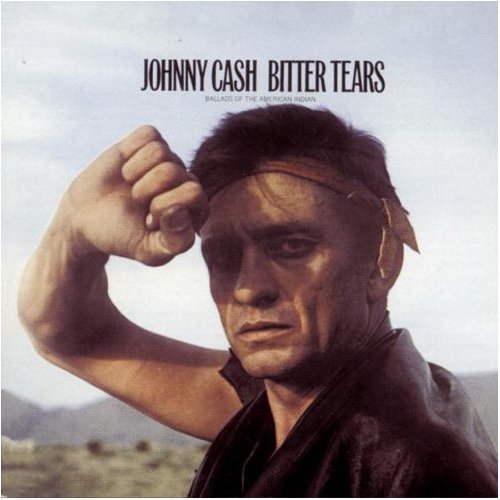
Top, Cash’s album, “Bitter Tears,” met with opposition from the music industry. Below, Pima Indian Ira Hayes, celebrated by Johnny Cash, helped raise the flag at Iwo Jima, an act caught in the famous photograph by Joe Rosenthal. Hayes died a broken man at 33. Oil print by Pima Indian and former Marine, Urshel Taylor.

The bitter tears of Johnny Cash:

Protest singer and Native American activist,
And his feud with the music industry

By Antonino D’Ambrosio / November 15, 2009

In July 1972, musician Johnny Cash sat opposite President Richard Nixon in the White House’s Blue Room. As a horde of media huddled a few feet away, the country music superstar had come to discuss prison reform with the self-anointed leader of America’s “silent majority.” “Johnny, would you be willing to play a few songs for us,” Nixon asked Cash. “I like Merle Haggard’s ‘Okie From Muskogee’ and Guy Drake’s ‘Welfare Cadillac.'” The architect of the GOP’s Southern strategy was asking for two famous expressions of white working-class resentment.

“I don’t know those songs,” replied Cash, “but I got a few of my own I can play for you.” Dressed in his trademark black suit, his jet-black hair a little longer than usual, Cash draped the strap of his Martin guitar over his right shoulder and played three songs, all of them decidedly to the left of “Okie From Muskogee.” With the nation still mired in Vietnam, Cash had far more than prison reform on his mind.

Nixon listened with a frozen smile to the singer’s rendition of the explicitly antiwar “What Is Truth?” and “Man in Black” (“Each week we lose a hundred fine young men”) and to a folk protest song about the plight of Native Americans called “The Ballad of Ira Hayes.” It was a daring confrontation with a president who was popular with Cash’s fans and about to sweep to a crushing reelection victory, but a glimpse of how Cash saw himself — a foe of hypocrisy, an ally of the downtrodden. An American protest singer, in short, as much as a country music legend.

Years later, “Man in Black” is remembered as a sartorial statement, and “What Is Truth?” as a period piece, if at all. Of the three songs that Cash played for Nixon, the most enduring, and the truest to his vision, was “The Ballad of Ira Hayes.” The song was based on the tragic tale of the Pima Indian war hero who was immortalized in the Iwo Jima flag-raising photo, and in Washington’s Iwo Jima monument, but who died a lonely death brought on by the toxic mixture of alcohol and indifference and alcoholism. The song became part of an album of protest music that his record label didn’t want to promote and that radio stations didn’t want to play, but that Cash would always count among his personal favorites.

The story of Cash and “Ira Hayes” began a decade before the meeting with Nixon. On the night of May 10, 1962, Cash made a much-anticipated New York debut at Carnegie Hall. But instead of impressing the cognoscenti, Cash, who had begun struggling with drug addiction, bombed. His voice was hoarse and hard to hear, and he left the stage in what he described as a “deep depression.” Afterward, he consoled himself by heading downtown with a folksinger friend to hear some music at Greenwich Village’s Gaslight Café.

Protest balladeer Peter La Farge introduced Cash to his “The Ballad of Ira Hayes.”

Onstage was protest balladeer Peter La Farge, performing “The Ballad of Ira Hayes.” A former rodeo cowboy, playwright, actor and Navy intelligence operative, La Farge was also the son of longtime Native activist and novelist Oliver La Farge, who had won a Pulitzer Prize for his 1930 Navajo love story, “Laughing Boy.”

The younger La Farge had carved out an intriguing niche in the New York folk revival scene by devoting himself to a single issue. “Pete was doing something special and important,” recalls folksinger Pete Seeger. “His heart was so devoted to the Native American cause at a time that no one was really saying anything about it. I think he went deeper than anyone before or since.”

Cash never pretended that music could stay immune from social, but he tried his best to “not mix in politics.” Instead he talked about the things that unite us like the dignity of honest work. “If you were a baker,” he told writer Christopher Wren in 1970, “and you baked a loaf of bread and it fed somebody, then your life has been worthwhile. And if you were a weaver, and you wove some cloth and your cloth kept somebody warm, your life has been worthwhile.”

Raised in rural poverty on the margins of America, Cash empathized with outsiders like convicts, the poor and Native Americans. But his identification with Indians was especially deep — even delusional. During the depths of his early ’60s drug abuse, he convinced himself, and told others, that he was Native American himself, with both Cherokee and Mohawk blood. (He would later recant this claim.)

At the Gaslight, once he had listened to “Ira Hayes’ and La Farge’s other Indian protest tunes, including “As Long as the Grass Shall Grow” and “Custer,” Cash was hooked. “Johnny wanted more than the hillbilly jangle,” Peter La Farge would write later about meeting Cash at the Gaslight. “He was hungry for the depth and truth heard only in the folk field (at least until Johnny came along).

The secret is simple, Johnny has the heart of a folksinger in the purest sense.” In fact, Cash had written an Indian folk protest ballad of his own in 1957. “I wrote ‘Old Apache Squaw,'” Cash later explained to Seeger. “Then I forgot the so-called protest song for a while. No one else seemed to speak up for the Indian with any volume or voice [until Peter La Farge].”

Cash, like many in the 1960s, could see that everything that was certain, rigid and hard was breaking apart. Social movements were blossoming. But the thunderous American choir that was singing “We Shall Overcome” and “We Shall All Be Free” drowned out the cry of the loose-knit Native movement. As Martin Luther King and other leaders steered their people toward legislative victories that would further integrate them into a society they were locked out of, the rising tide of Native youth activists wanted something different.

“In my mind, Native people could not have a civil rights movement,” American Indian Movement activist and musician John Trudell says. “The civil rights issue was between the blacks and the whites and I never viewed it as a civil rights issue for us. They’ve been trying to trick us into accepting civil rights but America has a legal responsibility to fulfill those treaty law agreements. If you’re looking at civil rights, you’re basically saying ‘all right treat us like the way you treat the rest of your citizens’. I don’t look at that as a climb up.”

Rather than pursue assimilation into the American system, Native American activists wanted to maintain their slipping grip on sovereignty and the little land they still possessed.

By the early ’60s, the burgeoning National Indian Youth Council (NIYC) was attempting to stake its own claim for their equal share of justice. With the expansion of fishing treaty violations and the breach of two major land treaties that led to the loss of thousands of acres of tribal land in upstate New York for the Tuscarora and Allegany Seneca (the story behind La Farge’s “As Long as the Grass Shall Grow”), the NIYC, led by Native activists like Hank Adams, responded by adapting the sit-in protest. Rechristened as the “fish-in,” the NIYC disputed the denial of treaty rights by fishing in defiance of state law. Fish-ins were held in New York and the Pacific Northwest.

The fish-in tactic worked in helping build some public support, but it did little to stop the treaty violations. Instead, the U.S. government ramped up its efforts to crush any momentum the Native movement was building. Oftentimes their tactics were brutal and violent. “This was the time of Selma and there was a lot of unrest in the nation,” remembers Bill Frank Jr. of Washington state’s Nisqually tribe. “Congress had funded some big law enforcement programs and they got all kinds of training and riot gear-shields, helmets. And they got fancy new boats. These guys had a budget. This was a war.”

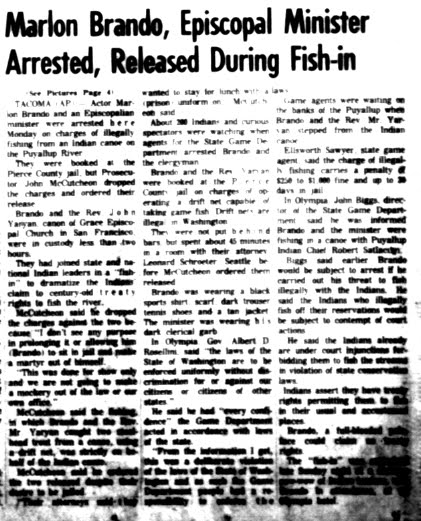
By 1964, the Native American cause had attracted the interest of another celebrity. On March 2 the NIYC gained national attention as actor Marlon Brando joined a Washington state fish-in. Already an outspoken supporter of the civil rights movement, Brando’s very public support and subsequent arrest for catching salmon “illegally” in Puyallup River helped to boost the Native movement.

Brando’s involvement with the Native cause had begun when he contacted D’Arcy McNickle after reading the Flathead Indian’s book “The Surrounded,” a powerful novel depicting reservation life in 1936. Brando’s involvement in Native issues led to government surveillance that lasted decades. His FBI file, bursting with memos detailing possible means of silencing the actor, quickly grew to more than 100 pages.

Marlon Brando arrested at fish-in in support of Native American treaty rights. Clip from Bellingham Herald, March 2, 1964

Three days after Brando’s arrest in Washington, Cash, fresh off the biggest chart success of his career, the single “Ring of Fire,” and having just finished recording a very commercial album called “I Walk the Line,” began recording another, very different album.

When Cash left Sun Studios for Columbia in the late 1950s, he believed his rising star would give him the creative capital to produce and record something a little outside the pop and country mainstream — albums of folk music and live prison concerts. He was alternating folky albums like “Blood Sweat and Tears,” a celebration of the working man, with commercial discs laden with radio-ready singles. “Ring of Fire,” which had reached No. 1 on the country charts and had crossed over to pop, had bought him the permission of Columbia to make an album of what he called “Indian protest songs.”

In the two years since Cash had first met La Farge and listened to “The Ballad of Ira Hayes,” Cash had educated himself about Native American issues. “John had really researched a lot of the history,” Cash’s longtime emcee Johnny Western recalled. “It started with Ira Hayes.”

As Cash explained, “I dove into primary and secondary sources, immersing myself in the tragic stories of the Cherokee and the Apache, among others, until I was almost as raw as Peter. By the time I actually recorded the album I carried a heavy load of sadness and outrage.”

But Cash felt a special kinship with Ira Hayes. Both men had served in the military as a way to escape their lives of rural poverty longing to create new opportunities. Plus, both suffered from addiction problems; Cash and his pills and Hayes with alcohol. He decided to anchor the album with “The Ballad of Ira Hayes.” And since the song had provided the spark for Cash’s vision, it just felt right that he should learn more about the song’s subject.

Cash contacted Ira Hayes’ mother and then visited her and her family at the Pima reservation in Arizona. Before Cash left the Pima Reservation, Hayes’ mother presented him with a gift, a smooth black translucent stone. The Pima call it an “Apache tear.” The legend behind the opaque volcanic black glass is rooted in the last U.S. cavalry attack on Native people, which took place on Apaches in the state of Arizona.

After the slaughter, the soldiers refused to allow the Apache women to put the dead up on stilts, a sacred Apache tradition. Legend says that overcome by intense grief, Apache women shed tears for the first time ever, and the tears that fell to the earth turned black. Cash, moved by the gift, polished the stone and mounted it on a gold chain.

With the Apache tear draped around his neck, Cash cut his protest album. He recorded five of La Farge’s songs, two of his own, and one he’d co-written with Johnny Horton. All were Native American themed. “When we went back into the studio to record what became ‘Bitter Tears,'” Cash bassist Marshall Grant says, “we could see that John really had a special feeling for this record and these songs.”

Yet the album’s first single, “Ira Hayes,” went nowhere. Few radio stations would play the song. Was the length of the song, four minutes and seven seconds, the problem? Radio stations liked three-minute tracks. Or maybe disc jockeys wanted Cash to “entertain, not educate,” as one Columbia exec put it.

“I know that a lot of people into Johnny Cash weren’t into ‘Bitter Tears,’ ” explains Dick Weissman, a folksinger, ex-member of the Journeymen and friend of La Farge. “They wanted a ‘Ballad of Teenage Queen’ not ‘The Ballad of Ira Hayes.’ They wanted ‘Folsom Prison.’ They didn’t want songs about how American’s mistreated Indians.”

The stations wouldn’t play the song and Columbia Records refused to promote it. According to John Hammond, the legendary producer and Cash champion who worked at Columbia, executives at the label just didn’t think it had commercial potential. Billboard, the music industry trade magazine, wouldn’t review it, even though Cash was at the height of his fame, and had just scored another No. 1 country single with “Understand Your Man” and No. 1 country album with “I Walk the Line.”

One editor of a country music magazine demanded that Cash resign from the Country Music Association because “you and your crowd are just too intelligent to associate with plain country folks, country artists and country DJs.” Johnny Western, a DJ, singer and actor who for many years was part of Cash’s road show, recalls a conversation with “a very popular and powerful DJ.” According to Western, the DJ was “connected to many of the music associations and other influential recording industry groups. He had always been incredibly supportive of John.”

Western and the DJ started discussing Cash’s new album and the “Ira Hayes” single. “He asked me why John did this record. I told him that John and all of us had a great feeling for the American Indian cause. He responded that he felt that the music, in his mind, was un-American and that he would never play the record on air and had strongly advised other DJs and radio stations to do the same. Just ignore it until John came back to his senses, is what he told me.”

“When John was attacked for ‘Ira Hayes’ and then ‘Bitter Tears,'” explains Marshall Grant, “it just ripped him apart. Hayes was forced to drink by the abuse and treatment of white people who used and abandoned him. To us, it meant Hayes was being tortured and that’s the story we told and it’s true.”

When “Bitter Tears” and its single did not get the attention he felt they deserved, Cash insisted on having the last word. He composed a letter to the entire record industry and placed it in Billboard as a full-page ad on Aug. 22, 1964.

“D.J.’s — station managers — owners, etc.,” demanded Cash, “Where are your guts?” He referred to his own supposed half Cherokee and Mohawk heritage and spoke of the record as unvarnished truth. “These lyrics take us back to the truth… you’re right! Teenage girls and Beatle record buyers don’t want to hear this sad story of Ira Hayes… This song is not of an unsung hero.” Cash slammed the record industry for its cowardice, “Regardless of the trade charts — the categorizing, classifying and restrictions of air play, this not a country song, not as it is being sold. It is a fine reason though for the gutless [Cash’s emphasis] to give it a thumbs down.”

Cash demanded that the industry explain its resistance to his single. “I had to fight back when I realized that so many stations are afraid of Ira Hayes. Just one question: WHY???” And then Cash answered for them. “‘Ira Hayes’ is strong medicine … So is Rochester, Harlem, Birmingham and Vietnam.”

As Cash later explained, “I talked about them wanting to wallow in meaninglessness and their lack of vision for our music. Predictably enough, it got me off the air in more places than it got me on.” In reality, however, as Cash noted in his letter, “Ira Hayes” was already outselling many country hits. Ultimately, thanks in part to aggressive promotion by Cash, who personally promoted the song to disc jockeys he knew, “Ira Hayes” reached No. 3 on the country singles charts, and “Bitter Tears” peaked at 2 on the album charts.

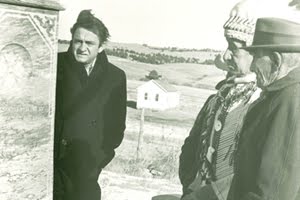
Johnny Cash touring Wounded Knee with the descendants of those who survived the 1890 massacre in December of 1968. Courtesy of John L. Smith / from Salon.com.

Later, long after “Bitter Tears,” and after he’d won his battle with drugs, Cash would dial back his claims of Indian ancestry. But he never wavered from his support for the Native cause. He went on to perform benefit shows on reservations — including the Sioux reservation at Wounded Knee in 1968, five years before the armed standoff there between the FBI and the American Indian Movement — to help raise money for schools, hospitals and other critical resources denied by the government.

In 1980, Cash told a reporter: “We went to Wounded Knee before Wounded Knee II [the 1973 standoff] to do a show to raise money to build a school on the Rosebud Indian Reservation” and do a movie for “Public Broadcasting System called ‘Trail of Tears.'” He joined with fellow musicians Kris Kristofferson, Willie Nelson and Robbie Robertson to call for the release of jailed AIM leader Leonard Peltier.

Since Cash first recorded “The Ballad of Ira Hayes” in 1964, many musicians have recorded their own versions. Kris Kristofferson is one of those musicians. He summed up the spirit behind Cash’s now nearly forgotten protest album in his eulogy for Cash, who died in 2003. Cash, he said, was a “holy terror… a dark and dangerous force of nature that also stood for mercy and justice for his fellow human beings.”

Four years before his famous concert at Folsom Prison, four years before the American Indian Movement formed, and at the pinnacle of his commercial success, Cash insisted on producing an uncommercial, deeply personal protest record that was as close as he could come to truth. He would always cherish it. “I’m still particularly proud of ‘Bitter Tears,'” Cash would say near the end of his life, while talking about the topical music he recorded in the 1960s. “Apart from the Vietnam War being over, I don’t see much reason to change my position today. The old are still neglected, the poor are still poor, the young are still dying before their time, and we’re not making any moves to make things right. There’s still plenty of darkness to carry off.”

[Antonino D’Ambrosio is the author of A Heartbeat and a Guitar: Johnny Cash and the Making of Bitter Tears. This article was first published by Salon.com on Nov. 8, 2009. Research assistance was provided by the Investigative Fund of the Nation Institute.]

Source / Salon.com

Johnny Cash: ‘The Ballad of Ira Hayes’

Also see:

Thanks to Thomas Cleaver / The Rag Blog

Posted in RagBlog | Tagged , , , , , , , , , , , | 9 Comments

Furor in Colombia : The Yanks are Still Coming

Venezuela Pres. Hugo Chavez addresses rally in Caracas, Friday, Nov. 13, 2009, protesting U.S.-Columbia military agrement. Photo by Fernando LLano / AP.

The U.S. Invasion of Colombia:
Touching all the bases

By Marion Delgado / The Rag Blog / November 15, 2009

CARTEGENA DES INDIES, Colombia — The furor over a newly-signed agreement between the U.S. and Colombian governments continues, with denunciation of what was signed on Oct. 30 from all sides.

I must say “what was signed” because as of now it is being called many different things. There is a category four bullshit storm blowing across most of South America. “What it is” seems as much in doubt as “what is in it.” At various times it is described as a U.S. pact, an agreement, the pact, security pact, or as an addendum to an existing agreement; each description is then negated by a critic or a supporter and a substitute term inserted.

Last August, U.S. Secretary of State Hilary Clinton said, “The United States does not have and does not seek bases inside Colombia.” Maintaining that line this week, State Department spokesman Ian Kelly told reporters the agreement “doesn’t provide us with any kind of bases in Colombia. It provides us with an opportunity to cooperate with Colombia in some issues related to counternarcotics and interoperability in that regard.”

However, that doesn’t quite jibe with a U.S. Defense Department document that stated the U.S. military will not only have access to Colombian military bases, but also be able to use major international civilian airports. While we will attach to existing bases, we will build our own sections. This is already started with a $46 million dollar expansion of a runway at Palanquero Air Base in Puerto Salgar, Cundinamarca. June 15th the U.S. State Department authorized a contract worth almost a half million dollars to expand warehouses at Tolemaida.

According to reported provisions, U.S. military personnel and defense contractors will also enjoy diplomatic immunity in Colombia. But President Alvaro Uribe’s conservative government says there will be “no impunity” for any crimes committed by the U.S. military, insisting the agreement commits Washington to investigate and punish such cases. “The agreement includes such important things [as]… no U.S. jurisdiction or courts martial in Colombia, or that Colombia may participate in investigations conducted against American officials,” added Colombian Foreign Minister Jaime Bermudez.

Immunity for U.S. soldiers in Colombia raises hackles because a U.S. soldier and contractor reportedly raped a 12-year-old Colombian girl inside Tolemaida military base in 2006, dumping her outside the gates in the morning. The two alleged rapists remain free and returned to the U.S. without facing any charges. U.S. soldiers in Colombia reportedly committed 37 acts of sexual abuse from 2006 to 2007.

U.S. Ambassador to Colombia William Brownfield, one of the signatories, said the pact “updates” and “modernizes” agreements already in place between the two countries, signed in 1952, 1962, and 1974. The new 10-year deal allows the U.S. military to use seven bases in strategically located Colombia, which shares borders with Venezuela, Ecuador, Brazil, Peru, and Panama, and boasts both Pacific and Caribbean-Atlantic ports.

The agreement caused early concern not only among neighboring countries, but among inhabitants of Colombia, because its details were not known, nor was the Colombian Congress consulted. An August meeting of concerned South American countries called the previous U.S.-Colombia agreement “extra-regional interference” and an act of imperialism. The Colombian government refused to give details of the agreement because it was not signed yet and because it was “a reserved matter according its sovereignty.”

After the signing, Bermudez said the exact text of the agreement would be announced in one week, in a letter to foreign ministers of the nations concerned. Well, that was last week’s news; it didn’t happen. Now Bermudez promises to release it to the countries “involved,” this week.

As of November 9, 2009, four Colombian bases had been confirmed as part of the new deal. They are:

  1. Apiay Air Force, assigned to Colombian Air Force Aerial Combat Command 2 also hosts members of the Colombian Army and Colombian Navy; it is located near the city of Villavicencio, Departmento (state) Meta, in central Colombia;
  2. Malambo Naval Airbase, near Puerto Salgar, Departamento Atlántico, on the Caribbean Coast; South of the city of Baranquilla in Departmento Atlantico;
  3. Palanquero Air Base in, Departamento Cundinamarca; half way between Bogotá and Medellín; and
  4. The Pacific Naval Base at Bahía Malaga, Departamento Valle del Cauca, equidistant from the borders of both Panama and Ecuador. It is home to the Colombian Pacific fleet.

Three bases yet to be confirmed but strongly suspected by this writer to be included are:

  1. Tolemaida, the Army training base at Nilo, Departamento Cudinamarca. You can Google-Earth it and take a look for yourselves 4 degrees 14’ 38” N and 74 degrees 38’ 43” W;
  2. Larandia Air Force Base, located in Caquetá, southern Colombia, shared by the Colombian National Army, the Colombian National Police (DAS), and the Colombian Air Force; and
  3. The naval base in Cartagena, Departmento Bolívar, home to the Armada Republica de Colombiana (ARC) Atlantic fleet.

The U.S. and Uribe both say the agreement will help Colombia deal more effectively with drug gangs and left wing rebel groups. One problem with that is that Hugo Chavez’ neighboring Venezuela and the Revolutionary Armed Forces of Colombia (FARC) are characterized (FARC by the U.S. government; the Venezuelan government in Congress; and both, routinely, by Uribe’s government) as both terrorists and drug dealers.

The FARC has responded to the newly-inked agreement. In a communiqué to Colombian military of honor and the people in general, FARC urges them to defend Colombia’s sovereignty and Latin American dignity, both “deeply tarnished with disgrace, blood, corruption and servility by President Alvaro Uribe.”

The group says that, without even blushing, since he lacks any dignity, Uribe accepted the installation by the Empire of seven military bases in Colombia in an act of high treason, “a poisoned dagger plunged into the body of the Latin American Homeland, with its tip hurting the very heart of [the continent].”

The guerrillas add that the only objective of the agreement is to thwart the democratic, pro-integration process of the peoples who, led by the Bolivarian Alliance of the Peoples of Our Americas (ALBA), have continued the unfinished liberation project started by Simon Bolivar, South America’s Liberator.

Asi es en Colombia hoy…

Also see:

The Rag Blog

Posted in Rag Bloggers | Tagged , , , , | 1 Comment

Graphic

Posted in RagBlog | Leave a comment

Ven. Sevan Ross : A Buddhist’s View of Wage Theft

Ven. Sevan Ross, on right, with Unitarian Universalist minister James Ford. Photo from Monkey Mind.

A Buddhist’s view of wage theft
Right Livelihood and paying people what’s right

As long as we regard each other not as humans but as the “other,” we will suffer profound abuses in the workplace.

By Ven. Sevan Ross / November 14, 2009

When I was a boy and asked my coal miner father one time too many for money, he got me a job as a “myrtle plugger.” I sat all day in a field of ground cover with a special tool and “plugged” one plant at a time from the ground into a “flat” — a large wooden box. Each plant took up a four-square-inch space. I saw immediately that I could fit between 50 and 60 plants into the box. Upon filling a flat I was to take it to the Yard Boss who was to “count” it and give me a fresh one to fill. I was to be paid five cents per flat. This was child labor, and it was in the early 1960s in Pennsylvania.

When I took up my first flat, the Yard Boss reached into the box and used his hand to squeeze my plants together to one side. They now filled 40 percent of the flat. He smiled, winked, grunted, and handed it back to me.

This was wage theft, and although I was only 10 years old, I knew it. I quit that “job” at the end of my first week. My father simply said, “Now you know what a union is for.”

I was too young to understand what my father meant, but I was developed enough to see that the yard boss did not see me as human in some important way. He regarded me as the “other” — as a tool like any other tool, to be used as needed for as long I held up to his purpose.

Many years later I heard a talk given during my priest training in which Yasutani Roshi, a well-known Japanese Zen Master, said these words: “The fundamental problem for all humanity is that you believe that you are there and I am here.” This sums up how Buddhism casts a critical eye on the behavior of people — especially in commercial enterprises.

As long as we regard each other not as humans but as the “other,” we will suffer profound abuses in the workplace. Employers will steal their workers’ wages, either overtly or covertly. And all the while they will deny both to themselves and others that this is the case. After all, they are only employees. I — or we — happen to be management, and as such are responsible for the survival and the thriving of the organization. Except that the workers are the organization and a theft against them is one against the group — and me too.

I’m sure that the Yard Boss was being stolen from in some way by his betters back in that myrtle field. He could not have invented the workplace abuse of a child all on his own. I’ll bet it went all the way to the top. After all, what happens at the top flows directly to the bottom in organizations. If “the other” is how we see individuals, we will guarantee they will see us this way also.

So from a Buddhist perspective it is not quite enough to say that we each are our brother’s keeper. We need to feel instead that we actually are our brother. And from this, fair treatment flows naturally. There is then what we Buddhists call Right Livelihood — mutually productive work, with everyone being treated fairly, everyone being treated Right.

[Ven. Sevan Ross was ordained in 1992 as a Zen Buddhist priest by Roshi Bodhin Kjolhede, director of the Rochester Zen Center. Sevan has been training in Zen since 1976 and has served on the resident staff of the Rochester Zen Center for eight years where he served as both administrator of the Center and as Head of Zendo (head priest in charge of training under the Roshi).]

Source / Interfaith Worker Justice

Thanks to Danny Postel / The Rag Blog

Posted in RagBlog | Tagged , , | 6 Comments

Republicans : Hypocrisy as a Pre-Existing Condition

Republican Chairman Michael Steele says abortion coverage has been removed from the party’s insurance policy.

Republican Party insurance policy
Has covered abortion for eighteen years

By Ted McLaughlin / The Rag Blog / November 14, 2009

A few days ago, 176 Republicans joined a few blue dog Democrats in voting to attach the odious Stupak amendment to the Health Care Reform Bill passed by the House of Representatives. This horrid amendment made sure that poor and working class women would not be able to include the payment for voluntary abortions in their health insurance.

Of course, almost all of those voting for the amendment were men, who will never have to make the awful choice of having an abortion or an unwanted baby (which probably can’t be cared for financially). This doesn’t surprise me, because most Republicans believe women should be second-class citizens, and their bodies should be controlled by men.

That would be enough hypocrisy for a party that claims to believe in equality and freedom, but the Republicans have taken their hypocrisy to a new level — a level I wouldn’t have believed possible until now.

Politico has reported now that the health insurance policy provided by the Republicans Party actually includes payment for voluntary abortions. That’s right, while they are telling the rest of America that abortions are an evil sin and should be outlawed, they are providing insurance that will pay for abortions for their own employees — even though their party platform calls abortion “a fundamental assault on innocent human life.” Is this not the epitome of hypocrisy?

Now some of you may be thinking this is a new policy and the Republicans didn’t know what was in it yet. Wrong!!! They have had this same policy since 1991 — that’s eighteen years.

And the Cigna Company, who supplies the policy, said the provisions of the policy were explained to the Republicans when they bought it (and you would think at least a few of them would have read the policy by now). Republicans were given the chance to opt out of any provisions they didn’t want in the policy, and they chose for 18 years to include the abortion provision.

Personally, I don’t see how anyone could have a health insurance policy and not know what it covers and doesn’t cover. I know when I worked for the state and received employer-provided insurance, every employee was notified of the health insurance benefits (and given a copy of exactly what the insurance would and wouldn’t pay for). Are we supposed to believe the Republican Party (or Cigna) didn’t do that for their employees?

But that’s exactly what the Republicans want everyone to believe — that they didn’t even know the benefits provided in their own insurance policy. Evidently no one in the party has the ability to read.

They are also saying that there is no proof that anyone ever had an abortion that was paid for by the insurance policy. Really? In eighteen years? Is that even near the realm of believability?

Spokesmen for the party say now that RNC Chairman Michael Steele has made sure the clause has been eliminated from the insurance policy. Can we believe that? After all, they’ve been talking out of both sides of their mouth for at least the last eighteen years. This whole mess just emphasizes the fact they they consider themselves to be above the rules they want to lay down for the rest of us.

By the way, the Democratic Party’s insurance policy contains the same provision. But most Democrats support choice and opposed the Stupak amendment. And their party platform says the party “unequivocally supports Roe v. Wade and a woman’s right to choose a safe and legal abortion, regardless of ability to pay.” No hypocrisy there.

How can anyone still vote Republican? They just can’t be trusted.

[Rag Blog contributor Ted McLaughlin also posts at jobsanger.]

The Rag Blog

Posted in Rag Bloggers | Tagged , , | 2 Comments

Curbing John O’Neill : The Pipeline and the Saudi-Al Qaeda Connection

The late John P. O’Neill, former assistant director of the FBI, saw threat of bin Laden early on. O’Neill’s attempts to investigate connections with Saudis were thwarted.

John O’Neill, the Trans Afghanistan Pipeline:
The Saudis, the Bushes and bin Laden


By Sherman DeBrosse / The Rag Blog / November 13, 2009

The terrorist attack on the United States that occurred on September 11, 2001, was successful in part because of flaws in this nation’s counterinsurgency efforts. There was a deliberate policy of avoiding careful scrutiny of what Saudis were doing in the United States.

Saudi ties to Al Qaeda were not examined closely. Friendship with Saudi Arabia was considered crucial for a number of reasons. One important priority was obtaining Saudi help in advancing an American controlled pipeline to bring Caspian natural gas to Pakistan and India.

Al Qaeda and the Trans Afghanistan Pipeline

The U.S. had obtained a report written by Mohammed Atef, head of military operations for Al Qaeda. It stated that the terrorist organization was alarmed by secret Taliban negotiations with the American oil companies who wanted to build the Trans Afghanistan Pipeline, fearing it would increase U.S. influence in Afghanistan. The August 1998 bombing of the two embassies in Africa was most probably an effort to end the Taliban-U.S. talks about the pipeline. It was clear that Al Qaeda had great influence within the Taliban and that it was working against an American-controlled pipeline.

This made it essential that the U.S. obtain the help of the Saudis, who were pumping money into Afghanistan. Saudi Arabia was in a position to help the United States bring about the Trans Afghanistan Pipeline, The Saudis had a standing interest in moving oil across Afghanistan going back to their funding of the Taliban in the 1970s and 1980s. They were doing this even before the U.S.

Later, the American companies used the Saudi intelligence people to begin talks with the Taliban. Enron served as a consultant for Unocal. Price Turki, head of Saudi intelligence, made several trips to Afghanistan on behalf of the energy firms. He was close to the Bin Laden family and it is said that he promised them the construction contract in return for a kickback for the Saudi royal family. Some link his firing to the breakdown of pipeline talks in August, 2001.

Red Herring magazine reported that George W. Bush and his father were not in agreement on the importance of keeping close ties to Saudi Arabia and that they argued about this at Kennebunkport. After this, the Boston Herald, prompted by friends of the young president, ran an expose of the ties of some White House officials to Saudi Arabia and called it an “obscene conflict of interest.” The expose was part of a debate going on at the highest levels of government. There were also leaks from the White House about Saudi ties to terrorism.

Cheney succeeded in changing the president’s view of the Saudis perhaps by pointing out all his family’s ties to the Saudi royal house. King Abdullah’s visit to the Bushes demonstrates that a shift had occurred. The angered Israelis started leaking information on Saudi ties to terrorism.

George W. Bush with Saudi King Faisal.

‘Hands-off’ investigating the Saudis

Since the administration of George H.W. Bush, there had been a policy of not looking closely into the activities of Saudis in the United States. In 1998, Clinton backed away from that policy; he permitted the FBI to examine the activities of Saudis in the U.S. and Saudi ties to Al Qaeda. The Bush administration reverted to the “hands off” policy and strengthened it. An American intelligence source told the Guardian that the “hands off” order was necessary to prevent it from becoming public that some Saudis were paying protection money to bin Laden.

According to Greg Palast, an American journalist working in London, “A group of well-placed sources — not-all-too-savory-spooks and arms dealers — told my BBC team that before September 11 the U.S. government had turned away evidence of Saudi billionaires funding Osama bin Laden’s network.” He continued, “we got our hands on documents that backed up the story that FBI and CIA investigations had been slowed by the Clinton administration, then killed by Bush Jr. when those inquiries might upset Saudi interests.” Another reason was allegedly “Arbusto” and ”Carlyle,” terms that refer to the Bush’s business ties with Saudis.

John Loftus, a former federal prosecutor who claims to have sources within the intelligence community, claimed that Vice President Cheney ordered the FBI and intelligence agencies not to investigate Al Qaeda from January to August because these probes might endanger efforts to negotiate a pipeline deal with Afghanistan. Loftus also reported that Enron was involved in these investigations. Unfortunately, we only have the former prosecutor’s word for all this. We do know that after the brief U.S. War in Afghanistan the pipeline project was again alive and well and slated to terminate at a Pakistan city not too far from an Enron power plant in India that was in desperate need of cheap fuel.

The Guardian obtained FBI documents that indicated there were restrictions on investigating possible terrorist plots. Shown on the BBC television program NewsNight, the file was coded “199,” which was a designation for national security cases. The material indicated the FBI could not investigate two of bin Laden’s relatives who lived in Falls Church, Virginia. Abdullah and Omar bin Laden were associated with a suspected terrorist organization, the World Assembly of Muslim Youth (WAMY) which had an office there. Abdullah was the director of the U.S. branch of WAMY.

Two of the September 11 hijackers used a false address several blocks away from the office. The public statements of two Chicago-based FBI men indicate that from the late 1990s on there was a policy of not opening criminal investigations of potential Islamic terrorists or the financial networks that supported them. It seems clear that the White House had put counterterrorism planning on the back burner.

John P. O’Neill’s Frustrations

The late John P. O’Neill was the most active FBI agent in investigating Al Qaeda. He eventually rose to the rank of assistant director. Earlier than almost anyone else, he saw Osama bin Laden for what he was — a great threat to the security of the United States. He was obsessed with Bin Laden and told anyone who would listen about the terrorist and his vile network.

In 1997, O’Neill was special agent in charge of national security programs in the New York office. Working around the clock, he coordinated the effort to catch Ramzi Yousef. When ABC News interviewed Osama bin Laden, the producer formulated questions based on discussions with O’Neill. His messy personal life and tendency to bend the rules slowed his advancement. O’Neill could be brutally honest and his direct ways alienated people. When returning from an unsuccessful trip to Saudi Arabia with Director Louis Freeh, he said, “ They didn’t give us anything. They were just shining sunshine up your ass.”’ The director had said it was a successful operation, and did not speak to O’Neill for the next twelve hours of flight.

O’ Neill was aware of the Mohammed Atef document, which made it clear that Al Qaeda did not want a U.S.-dominated dual pipeline crossing Afghanistan. He thought concerns about oil led the administration to prevent investigations of Saudi activities in the U.S. John O’Neill resigned shortly after an article criticizing him appeared in the New York Times. He had already been removed from the fast career advancement track, and he thought that interim director Tom Pickard planted the article because incoming director Robert Mueller wanted to replace O’Neill with a minion of the Bushes. O’Neill became director of security at the World Trade Center and died trying to save lives on September 11. The truth of O’Neill’s claims about the Bush administration’s quashing of anti-terrorist activities may have gone to the grave with him.

John O’Neill’s knowledge of the Mohammed Atef document would have led him to see the connection between oil and terrorism and to focus on the Saudi-Taliban-Al Qaeda connection. He later confided to French investigators that concern for oil was behind the Bush Administration’s reluctance to do much about possible terrorism.

His investigations were continually shut down, and he began seeking information from French intelligence by using two reporters, Jean-Charles Brisard and Guillaume Dasquie. Both journalist cutouts were experts on oil and terrorism and were consultants for French intelligence. They later wrote The Forbidden Truth. Perhaps the French government permitted O’Neill to learn more because it had been cut out of the Caspian oil deals. O’Neill and another dissenter Robert Baer of the CIA would be forced into retirement in part due to their efforts to probe Saudi ties to terrorists. Much relevant information in Baer’s book, See No Evil, was blacked out by the CIA.

From 1995, the FBI and CIA operated a computer program called “Alex” that tracked Al Qaeda communications. O’Neill was the chief CIA link to the program and Michael Scheuer, was the key CIA figure in “Station Alex” at Langley. They soon learned that Al Qaeda was involved in the diamond trade, drug and arms smuggling, and teen sex businesses. Scheuer and his CIA people, in the words of an O’Neill associate “despised the FBI and they despised John O’Neill.” A CIA officer added that the working relationship with the flashy O’Neill was often very poor.

Osama bin Laden’s father, Mohammed bin Laden, with Faisal al-Saud, the Saudi king in the middle of the 20th century. Photo from CNN.

When O’Neill began to learn too much about Al Qaeda, his access to Alex information was lifted. O’Neill took to asking French intelligence to monitor Al Qaeda telephone calls. Scheuer resigned when he decided that the Bush administration was not doing enough about Al Qaeda. Soon the Bush Administration shut down Alex, just as it closed its military counterpart, “Able Danger.”

O’Neill had learned that his own agency continually stymied his investigative leads and he had taken to relying on the DEA and French intelligence for help. His frustrations began to mount when he was sent to Aden in 2000 to investigate the attack on the USS Cole. He received little cooperation there from local authorities and was ordered out of Yemen by the U.S. Ambassador Barbara Bodine, who gave him the cold shoulder from the outset. Bodine wanted him to dismiss his bodyguard even though O’Neill thought Mossad might move against him because he was open to the possibility that Israel was behind the Cole incident.

O’Neill foolishly spoke openly about Abu Nidal, leader of Black September, probably being a Mossad operative. She did not back him when the Yemeni authorities refused to let him interview the people who saw the explosion, to see the hat of one of the alleged attackers, or to sample sludge in the area. He wanted an explosives analysis done on the mud beneath the ship and a DNA study of hat of one of the two alleged bombers. One former FBI agent believes O’Neill was removed out of fear that he would discover that the ship had been hit by an Israeli missile. In 2001, he wanted to return to Yemen but Bodine would not give him a clearance. In February, 2001, the Yemeni Minister of the Interior announced that he had found no evidence linking the attack to Al Qaeda.

It was natural for O’Neill to rely upon the French because they had the best information in the West on Arab terrorists. They had concluded that an Arab team of 10 under a Yemeni was trained to assault a ship in 1999 at Al Qaeda’s Darounta, Afghanistan base. However, the team did not use its training and was not responsible for the Cole bombing. O’Neill probably learned this from them.

The French looked into two of their nationals who were at the Darouta training camp and found that these people worked with Muslim rebels in Bosnia. The insurgency was largely supported by western intelligence agencies and many of the funds came from the Riggs Bank account of the Bosnian Defense Fund, which was operated by American Neo-Conservatives. Much of their money came from the Middle East, including the Saudi and Egyptian governments. Some of these funds spilled over to Al Qaeda, which had operative in Bosnia working with the Islamic insurgency.

Secretary of the Treasury Paul O’Neill took steps to dry up Al Qaeda funds and was putting pressure on Middle Eastern governments to provide information on how money from that region reached Al Qaeda. It is likely that these investigative activities generated enough opposition to result in his ouster. David D. Aufhauser, Treasury’s General Counsel, soon followed O’Neill into the private sector. He has spearheaded the effort to look into Al Qaeda financing.

In 2000, John O’Neill joined 150 other FBI agents in attending a retirement seminar in Orlando. His briefcase was stolen there, and it contained classified e-mail and a report on anti-terrorist activities. Ninety minutes after he missed the briefcase, it turned up in another hotel. A cigar cutter, a lighter and pen were missing, but the sensitive material was there. It had to be assumed that this information could have been copied.

The bureau investigated the matter and cleared O’Neill of all charges of negligence. It also said the documents had not been touched, but it is hard to imagine how that could have been established. Still, his reputation had been badly tarnished. The loss of the briefcase was used to force him to go through with retirement, and the story was later leaked when there was a chance that he would replace Richard Clarke as the new Bush administration’s chief anti-terrorism advisor. Clarke and O’Neill were friends and allies, and Clarke wanted O’Neill to be his replacement. The FBI refused to investigate the leak, despite a request to do so from the bureau chief in New York City. As it turned out, Clarke remained at the NSC but with a less important title.

The briefcase also had information that showed that O’Neill knew about Michael Dick’s investigation of Israeli agents, working for a moving company in New York and New Jersey. Dick was also aware of the Israeli agents who came to the United States under the cover of marketing art. They were shriveling all sorts of federal facilities, especially those of the DEA. They were also spying on DEA agents and FBI agents. The “Israeli artists” also followed Arabs who would later be accused of involvement in the 9/11 plot.

By 2000, he was busy trying to find Al Qaeda sleeper cells in the United States, but he was soon taken out of action and assigned to deskwork. Janet Parker, a Seattle veterinarian and O’Neill friend, said that O’ Neill’s superior, Tom Picard, prevented O’Neill from getting a wire tap on Shadrack Manyathella, who was tied to probably double agent Ali Mohammed and Mohammed Atta, possible ring leader of 9/11. Parker and O’Neill were keeping track of one cell through her foster daughter, who had previous ties with the terrorists.

John O’Neill resigned soon after the second Bush took power. O’Neill told two respected French investigators, “All of the answers, all of the clues allowing us to dismantle Osama bin Laden’s organization, can be found in Saudi Arabia. ” O’Neill was extremely frustrated by the Bush administration’s approach to terrorism, claiming the administration had also made it more difficult to investigate Saudis.

O’Neill retired on August 22, after thirty years of service. He immediately took up his duties as head of security at the World Trade Center on behalf of Kroll Associates and occupied his office on the 34th floor of the North Tower. While trying to rescue people in the South Tire, he lost his life. In November 2001, weapons inspector Richard Butler told TV investigator Paula Zahn, “The most explosive charge, Paula, is that the Bush administration — the present one, just shortly after assuming office slowed down FBI investigations of al Qaeda and terrorism in Afghanistan in order to do a deal with the Taliban on oil — an oil pipeline across Afghanistan.”

It is now nine years later, and the American mainstream media still has not investigated what Butler called “the most explosive charge.” Were there, and are there restraints on the way intelligence people and the FBI deal with Saudi and Pakistani ties to terrorists? If we knew more about how important the gas pipeline is to the .US., we might be in a better position to understand why so many people in power insist on escalating the present war in Afghanistan.

[Sherman DeBrosse is a retired history teacher. Sherm spent seven years writing an analytical chronicle of what the Republicans have been up to since the 1970s. The New Republican Coalition : Its Rise and Impact, The Seventies to Present (Publish America) can be acquired by calling 301-695-1707. On line, go here.]

Also see:

The Rag Blog

Posted in Rag Bloggers | Tagged , , , , , , , , , | Leave a comment

Nuke ‘Renaissance’ : Same Old, Same Old


Not looking so good:
Much-hyped nuclear renaissance

‘If history repeats itself as farce, then the nuclear power industry represents the most incompetent jester of all time…’

By Harvey Wasserman / The Rag Blog / November 12, 2009

The much-hyped “renaissance” of atomic power has taken three devastating hits with potentially fatal consequences.

The usually supine Nuclear Regulatory Commission has told Toshiba’s Westinghouse Corporation that its “standardized” AP-1000 design might not withstand hurricanes, tornadoes or earthquakes.

Regulators in France, Finland, and the UK have raised safety concerns about AREVA’s flagship EPR reactor. The front group for France’s national nuclear power industry, AREVA’s vanguard project in Finland, is at least three years behind schedule and at least $3 billion over budget.

And the Obama Administration indicates it will end efforts to license the proposed radioactive waste repository at Yucca Mountain, Nevada. After more than fifty years of trying, the nuclear industry has not a single prospective central dump site.

“If history repeats itself as farce, then the nuclear power industry represents the most incompetent jester of all time,” says Michael Mariotte of the Nuclear Information and Resource Service. It “seems intent on repeating every possible mistake of its failed past—from promoting inadequate, ever-changing reactor designs to blowing through even the largest imaginable budgets. If the computer industry followed the practices of the nuclear industry, we’d still be waiting for the first digital device that could fit in a space smaller than a warehouse and cost less than a family’s annual income.”

Nuclear sites throughout the world sit on or near earthquake faults. Ohio’s Perry reactor was damaged by a tremor in 1986, just before it went on line. In 1991 Hurricane Andrew did $100 million in damage to Florida’s Turkey Point, causing a critical loss of off-site communication. In 2007 a massive earthquake shook Japan’s Kashiwazaki, shutting seven reactors.

And radioactive waste continues to build up at sites throughout the world, including some 50,000 metric tons here in the U.S.

The vote of no confidence from regulators in three European countries has stunned AREVA, not to mention its potential customers, including the United Arab Emirates. “It hasn’t helped at all,” says one key source. “One of the key arguments has been that the EPR is safer than all the others.”

That AREVA would sell reactors to the UAE at all has raised widespread fears that atomic Bombs will soon proliferate throughout the Middle East. Both India and Pakistan got radioactive weapons materials from their commercial reactors.

AREVA’s design safety fiasco follows a Pink Panther-style stumble in October, when federal and state officials bailed on a massive media celebration planned for the Cadarache nuclear facility’s 50th anniversary. As much as 39 pounds of plutonium dust is now believed to contaminate the historic research center, enough to make numerous Nagasaki-sized Bombs.

According to the Financial Times, “the discovery that France’s Atomic Energy Commission (CEA) had wildly under-estimated the quantity of plutonium dust that would accumulate — and then delayed notifying the Nuclear Safety Authority — has led the latter to hand its findings to the public prosecutor, who will decide if there should be an investigation into the CEA’s management… This is a severe blow to the credibility of the CEA, flagship of French nuclear research, and to Cadarache, soon to be the site of the world’s first fusion reactor.”

The uproar, writes Peggy Hollinger, has “cast a shadow over the Nuclear Safety Authority’s behaviour since it became independent of the government.”

Finnish regulators have also gone to virtual war with AREVA over the catastrophic Olkiluoto project. In a conversation with me in southern Ohio this summer CEO Anne Lauvergeon blamed AREVA’s problems on the Finns. But similar complaints are now coming from French regulators over AREVA’s parallel project at Flamanville, in northern France.

AREVA has also run afoul of British regulators, who say its massive incursions into the UK’s nuclear industry have raised serious safety concerns.

Meanwhile the U.S. Nuclear Regulatory Commission’s critique of the Westinghouse AP-1000 reactor has shattered the industry’s expensive image of a “renaissance” that is “ready to go.” As the machine of apparent choice at vanguard sites throughout the U.S., the industry has touted the AP-1000 as a standardized “cookie-cutter” design that might make reactor construction and operations easier to manage. Regulators in Florida and Georgia have already imposed massive consumer rate hikes to pay for proposed AP-1000 reactors. An army of high-priced lobbyists is pushing hard for huge subsidies and loan guarantees to go into the Climate Bill.

Wall Street has made it clear it will not finance (or insure) new reactor construction unless backed by the federal treasury. Congressional critics warn half the reactor construction loans are likely to go into default. “This only underscores Moody’s assessment that new reactors are ‘bet the farm’ investments,” says Michele Boyd of Physicians for Social Responsibility. “So why is the federal government going to back these projects with U.S. taxpayer dollars?”

Now these critiques from the American NRC and regulators in Britain, France and Finland confirm that no safe standardized design exists, either here or in France, and that the industry could be years away from finalizing one that can be successfully deployed.

The same applies to radioactive waste. The Obama Administration now seems poised to finalize its promise that “all license defense activities will be terminated” on the proposed Yucca Mountain dump. Distinguished by its $10 billion price tag and the visible earthquake fault running through it (not to mention the dormant volcanoes that surround it and the water perched at its peak), Yucca is bitterly opposed by some 80% of Nevada’s citizenry.

After a hugely subsidized half-century of futility, the U.S. reactor industry has not a single named prospect for a centralized commercial waste dump. The “solution” (about 32 minutes in), as put forth by Stewart Brand and other industry advocates, seems to be focused on leaving high level radioactive waste at the sites and letting future generations deal with it. In the years since the Shippingport (PA) reactor opened in 1957, the industry’s go-to device is a concrete “dry cask” with vent holes and armed guards.

Meanwhile, despite repeated industry denials, the bad news about the health impacts of reactor radiation pours in. “Downwind or near eight reactors that closed in the 1980s and 1990s,” says New York-based expert Joe Mangano, “there were immediate and sharp declines in infant deaths, birth defects, and child cancer incidence age 0-4” when the reactors shut. “The highest thyroid cancer rates in the U.S. are in a 90 mile radius of eastern PA/New Jersey/southern NY, an area with 16 reactors at seven plants, which is the greatest density in the U.S.”

The near-simultaneous demise of Yucca Mountain with the regulatory credibility of the AP-1000 and AREVA EPR, along with the attacks by Moody’s and other financial critics, might come as a death blow to any such technology in a sane society. But the financial reach of the atomic lobby remains powerful in Congress and the White House.

At this point, the only certainty about the future of reactor construction is that still more shoes will drop on an industry whose decomposed credibility has become legend.

[Harvey Wasserman is author of Solartopia! Our Green-Powered Earth and Senior Editor of freepress.org, where this article also appears.]

The Rag Blog

Posted in Rag Bloggers | Tagged , , | 1 Comment

Israel and Iran : A Countdown to Tragedy?

During Iranian street demonstrations this summer a protester displays a photo of Mohammed Mossadegh, deposed by the Americans and the British in 1953 and replaced with the much-hated Shah Reza Pahlavi. Photo posted on Daily Kos, June 19, 2009.

Who is the existential threat?
Israel and Iran: Countdown to tragedy

By Steve Weissman / The Rag Blog / November 11, 2009

The countdown to open conflict between Israel and Iran has the feel of classic tragedy. Everyone will lose, no one will win. The only question is how many will needlessly die before the final curtain falls.

The Iranian leaders see the story through the prism of their own history. They are heirs of an ancient civilization, humiliated in 1953 when the Americans and British overthrew Mohammed Mossadegh and imposed the rule of Shah Reza Pahlavi. Only with Ayatollah Khomeini’s Islamic Revolution in 1979 did the people of Iran regain control of their land, and only now are they taking their rightful place as a world player and regional power.

With this view of the world, the Iranians sometimes appear to outsiders to have a chip on their shoulder, always demanding to be treated as equals, as if certain they will be treated otherwise. Too often American officials like Hillary Clinton fulfill Iranian expectations, talking of them in the media as if they were school children.

No one on the outside yet knows if the Iranians stopped trying to develop nuclear weapons in the fall of 2003, as the U.S. U.S. National Intelligence Estimate (NIE) reported two years ago. But even if they did stop, their lack of transparency often makes others fear the worst.

Are the Iranians simply channeling the Iraqi despot Saddam Hussein, who lost his country and his life because he never dared let his Iranian foes know that he did not have weapons of mass destruction or any ongoing program to build them?

Jews, whether in Israel or beyond, have our own historical chip on the shoulder. Every year, religious Jews observe a fast day called Tisha B’Av, which commemorates the destruction of the First and Second Temples, as well as subsequent tragedies like the expulsion of Jews from Catholic Spain in 1492 and the European Holocaust.

At home, my family ate the meat and potatoes before we had the soup. The tradition came from Russia and the Ukraine, where terrified Jews wanted to have something solid in their stomachs in case they had to flee from attacking Cossacks.

Living and reliving this tragic history leaves its mark. As the American writer Henry Miller observed in his Tropic of Cancer,

For the Jew, the world is a cage filled with wild beasts. The door is locked and he is there without whip or revolver. His courage is so great that he does not even smell the dung in the corner. The spectators applaud but he does not hear. The drama, he thinks, is going on inside the cage. The cage, he thinks, is the world.

Prime Minister Binyamin Netanyahu and many other Israelis remain trapped in the cage, sincerely believing that a nuclear Iran would threaten their very existence. Defense Minister Ehud Barak has escaped the cage. As he told the Hebrew-language daily Yedioth Ahronoth, “I am not among those who believe Iran is an existential issue for Israel.”

“Destruction of the Temple of Jerusalem ” (1867). Painting by Francesco Hayez. Observed yearly by religious Jews on the fast day called Tisha B’Av.

“Israel is strong,” he added. “I don’t see anyone who could pose an existential threat.”

A highly decorated military office and former head of the Israeli Defense Forces, Barak is absolutely right. According to the Center for Strategic and International Studies, Israel has a nuclear arsenal of anywhere from 70 to 400 nuclear weapons. Iran currently has none.

The Iranians could conceivably quit the Nuclear Non-Proliferation Treaty (NPT), which Israel has steadfastly refused to join. They could refuse inspections by the International Atomic Energy Agency (IAEA), as Israel refuses to do. Iran could then produce highly enriched weapons-grade uranium and reprocess plutonium from spent fuel rods from whatever nuclear reactors they have in operation.

But even if the Iranians did all this, they could not produce more than a small handful of weapons during the next five to ten years. During that time, the Israelis would have created new weapons and acquired new and more sophisticated aircraft, missiles, and submarines.

This enormous advantage would give the Israelis a powerful incentive to stage a preemptive first strike that would keep Iran from striking back. So, by the numbers, the Israelis pose an existential threat to Iran, not the other way around.

Even if Iran had nukes, they would pose far less of a threat to Israel or anyone else than Soviet missiles posed to the United States and Europe during the Cold War. At the time, Gen. Thomas Power and others talked of removing this truly existential threat with a surprise first strike. Happily, cooler heads prevailed.

Today, too many American leaders are thoughtlessly repeating talk of Iran’s existential threat to Israel and the need for a preemptive military strike on Iran, only “as a last resort,” of course.

As Senator Lindsay Graham told Fox News, “if we use military action against Iran, we should not only go after their nuclear facilities, we should destroy their ability to make conventional war. They should have no planes that can fly and no ships that can float.”

Such reckless talk only opens the door to another no-win tragedy.

[A veteran of the Berkeley Free Speech Movement and the New Left monthly Ramparts, Steve Weissman lived for many years in London, working as a magazine writer and television producer. A former senior editor at Truthout, he now lives and works in France.]

The Rag Blog

Posted in Rag Bloggers | Tagged , , , , | 9 Comments

Special Delivery : Ft. Hood GI Gives Letter to Obama

Pfc. Michael Kern. Photo from Cynthia Thomas / Under the Hood Cafe.

Stopping by the barracks:
GI Michael Kern hands Obama IVAW letter

What happened at Fort Hood has made it abundantly clear that the military mental health system, and our soldiers, are broken.

By Victor Agosto / The Rag Blog / November 11, 2009

President Obama visited Fort Hood today [Tuesday, Nov. 10, 2009]. He dropped by Michael Kern’s barracks. Michael handed President Obama a letter, saying, “Sir, IVAW has some concerns we’d like for you to address.” Obama then dropped his hand and went on to speak to the next soldier. The secret service then took possession of the letter:

President Obama:

In your recent comments on the Fort Hood tragedy, you stated “These are men and women who have made the selfless and courageous decision to risk and at times give their lives to protect the rest of us on a daily basis. It’s difficult enough when we lose these brave Americans in battles overseas. It is horrifying that they should come under fire at an Army base on American soil.” Sir, we have been losing these brave Americans on American soil for years, due to the mental health problems that come after deployment, which include post-traumatic stress disorder, and often, suicide.

You also said that “We will continue to support the community with the full resources of the federal government.” Sir, we appreciate that — but what we need is not more FBI or Homeland Security personnel swarming Fort Hood. What we need is full mental healthcare for all soldiers serving in the Army. What happened at Fort Hood has made it abundantly clear that the military mental health system, and our soldiers, are broken.

You said “We will make sure that we will get answers to every single question about this terrible incident.” Sir, one of the answers is self evident: that a strained military cannot continue without better mental healthcare for all soldiers.

You stated that “As Commander-in-Chief, there’s no greater honor but also no greater responsibility for me than to make sure that the extraordinary men and women in uniform are properly cared for.” Sir, we urge you to carry out your promise and ensure that our servicemembers indeed have access to quality mental health care. The Army has only 408 psychiatrists — military, civilian and contractors — serving about 553,000 active-duty troops around the world. This is far too few, and the providers that exist are often not competent professionals, as this incident shows. Military wages cannot attract the quality psychiatrists we need to care for these returning soldiers.

We ask that:

  1. Each soldier about to be deployed and returning from deployment be assigned a mental health provider who will reach out to them, rather than requiring them to initiate the search for help.
  2. Ensure that the stigma of seeking care for mental health issues is removed for soldiers at all levels-from junior enlisted to senior enlisted and officers alike.
  3. Ensure that if mental health care is not available from military facilities, soldiers can seek mental health care with civilian providers of their choice
  4. Ensure that soldiers are prevented from deploying with mental health problems and issues.
  5. Stop multiple redeployments of the same troops.
  6. Ensure full background checks for all mental health providers and periodic check ups for them to decompress from the stresses they shoulder from the soldiers they counsel to the workload they endure.

Sir, we hope that you will make the decision not to deploy one single Fort Hood troop without ensuring that all have had access to fair and impartial mental health screening and treatment.

You have stated on a number of occasions, starting during your campaign, how important our military and veterans are to this nation. The best way to safeguard the soldiers of this nation is to provide ALL soldiers with immediate, personal and professional mental health resources.

Iraq Veterans Against the War

Also see:

The Rag Blog

Posted in Rag Bloggers | Tagged , , , , , , , , | 3 Comments

Peter Matthiessen : The Tragedy of Leonard Peltier


The Tragedy of Leonard Peltier
Vs. the United States of America

…this man’s life leaks away behind grim concrete walls for the unworthy purpose of saving face for the FBI and a U.S. Attorney’s Office…

By Peter Matthiessen / November 11, 2009

On July 27, 2009, I drove west from New York to the old riverside town of Lewisburg in central Pennsylvania, the site of the federal penitentiary where early the next morning I would make an appeal to the parole board on behalf of the American Indian Movement (AIM) activist Leonard Peltier in his first parole hearing in fifteen years.

On this soft summer evening, a quiet gathering of Peltier supporters from all over the country had convened in a small park near the Susquehanna River. Despite his long history of defeats in court, these Indians and whites sharing a makeshift picnic at wood tables under the trees were optimistic about a favorable outcome. Surely a new era of justice for minorities and poor people had begun with the Obama administration, and anyway, wasn’t Leonard’s freedom all but assured by the Parole Act of 2005, which mandated release for inmates who had spent thirty or more years in prison?

Leonard Peltier, an Ojibwa-Lakota from Turtle Mountain, North Dakota, was one of the three young Indians who were among the participants in a shoot-out with the FBI at Oglala on South Dakota’s Pine Ridge Reservation on a hot dusty day in June 1975. They were later charged with the deaths of FBI agents Jack Coler and Ron Williams.

Ostensibly searching for a suspect in a recent robbery case, the agents had been warned by tribal police not to enter the property where the AIM Indians had their camp. Their intrusion apparently provoked a warning that led to an exchange of gunfire. Understandably outraged by the deaths of Coler and Williams and in particular by the fact that an unknown “shooter” had finished off both wounded men at point-blank range, their fellow agents would also suffer intense frustration and embarrassment when a dozen or more of the Indians involved, using a brushy culvert under a side road, escaped a tight cordon of hundreds of agents, Indian and state police, national guardsmen, and vigilantes who had the area surrounded.

More galling still, Bob Robideau and Dino Butler, two of the three AIM suspects in the killings arrested during the FBI’s huge “ResMurs” (Reservation Murders) investigation, were acquitted a year later in Cedar Rapids, Iowa, on a plea of self-defense, as the third and last suspect, Leonard Peltier, would certainly have been as well, had he not fled to Canada. He was arrested there in February 1976, extradited back to the US, and tried separately.

Though originally indicted with the others on identical evidence, he was barred by a hostile new judge, Paul Benson, from presenting the same argument based on self-defense that had led to Robideau and Butler’s acquittal. Furiously prosecuted as the lone killer and convicted for both deaths on disputed evidence, Peltier was sentenced in February 1977 in Fargo, North Dakota, to two consecutive life terms in federal prison.

The following year, when Peltier’s conviction was appealed, 8th Circuit Court of Appeals Judge Donald Ross denounced the coercion of witnesses and manipulation of evidence in his case as “a clear abuse of the investigative process by the FBI”; the US Attorney’s Office, too, would be sharply criticized for withholding exculpatory evidence.

In October 1984, in an evidentiary hearing in Bismarck, North Dakota, ordered by the appellate court to review the possibility of a new trial, the prosecutor, U.S. Attorney Lynn Crooks, had to concede that the FBI’s own laboratory had failed to verify the claimed ballistics link between Peltier and the murder weapon that was used to nail down his conviction—a shell casing of disputed provenance that Crooks had called “perhaps the most important piece of evidence in this case.” Even so, Judge Benson refused to reconsider the conviction.

The following year when the decision was appealed again, Crooks finally admitted that the identity of “the shooter” had never been proven and was in fact unknown to the prosecution even when it was twisting the evidence to ensure Peltier’s conviction and make certain that its third and last suspect—by its own description, “the only one we got” — was imprisoned for life. Yet the appellate court, while noting that so much tainted evidence had deprived the defendant of his constitutional right to due process of law, found “no compelling legal justification” for ordering a new trial.

In a TV interview after his retirement in 1989, Judge Gerald Heaney, who had signed that astonishing decision, called it “the most difficult I had to make in twenty-two years on the bench.” The following year, in the National Law Journal, this troubled jurist held the FBI “equally responsible” for the deaths of its two agents; in a letter to Senator Daniel Inouye of Hawaii, he urged commutation of Peltier’s sentence.

Questioned on the same 1989 TV show about the perjured affidavits extracted by FBI agents from a frightened alcoholic, U.S. Attorney Crooks declared: “I don’t really know and I don’t really care if they were false. I don’t agree that we did anything wrong, but I can tell you, it don’t bother my conscience one whit if we did.” Properly outraged by this arrogant refusal to repudiate U.S. government use of fabricated evidence, Senator Inouye, as a former U.S. attorney, called Crooks “a disgrace to the profession.”

I first interviewed Leonard Peltier in Marion Penitentiary in 1981, and that same year, with his original codefendant Bob Robideau, I inspected the Jumping Bull Ranch at Oglala where the shoot-out had taken place. Later, after reading many if not most of the pertinent documents, including the FBI field reports and the transcripts of both trials, I returned to Oglala to interview local people and study the scene again.

Like the FBI, I would hear all sorts of rumors about the many young Indians involved without learning which one had fired the fatal shots; however there seemed to me no doubt whatever that Leonard Peltier had been railroaded into prison.

Unfortunately my long book making that case [In the Spirit of Crazy Horse (Viking, 1983)] was quickly suppressed by libel suits brought by South Dakota’s attorney general, William Janklow, and an FBI agent named David Price. Eight years would pass before both suits were summarily dismissed and the book was back in circulation. Meanwhile Peltier’s long fight for a fair trial had won his endorsement as a political prisoner by Amnesty International, and his thousands of supporters throughout the world included the Dalai Lama, Nelson Mandela, Desmond Tutu, and the great majority of his own people in the more than 250 Indian nations that had formally demanded his release.

In Peltier’s first parole hearing in 1996, the examiner filed an internal recommendation in Peltier’s favor. (The U.S. Parole Commission, like the U.S. Attorney’s Office and the FBI, is under the aegis of the Justice Department: its examiner informs himself about the case, questions both sides, and appraises the new evidence, if any.) Yet in actions so belated and irregular as to raise suspicion of undue influence, the commission replaced that first examiner with one more to its liking and denied parole.

By then, the few bold lawmakers who had called for investigations had retreated or retired, and Peltier’s best hope was executive clemency. To that end, I wangled my way into the Oval Office and pressed my book about the case into President Clinton’s hands. In January 2001, during Clinton’s last week in office, as FBI lobbyists — the Association of Retired FBI Agents and No Parole for Peltier — marched in front of the White House, I joined attorney Bruce Ellison and filmmaker Jon Kilik in a long meeting with the presidential and White House counsels in which we argued that granting clemency to an American Indian who could offer nothing in return was a bold symbolic step that could only enhance the President’s last-minute efforts to prop up his legacy.

The lawyers seemed impressed and hopes were high, but when the clemency list appeared on the Saturday morning of Inauguration Day, Peltier’s name was missing. The phone call I dreaded was put through from Leavenworth Prison in early afternoon. “They didn’t give it to me,” mumbled a stunned voice I scarcely recognized — the first time in twenty years of visits, letters, and telephone conversations that Leonard Peltier’s strong spirit sounded broken. With all court appeals exhausted and no hope of mercy from the incoming Republican administration, this aging prisoner was condemned to wait for his next parole hearing in 2009.

In the park in Lewisburg, people agreed that had the shoot-out victims not been “FBIs,” Leonard might never have been convicted; at the very least, he would have been paroled many years before. Someone in the park recalled the fear and disruption on the reservations caused by the FBI’s huge ResMurs investigation (which was widely perceived as the latest chapter in the long history of oppression and revenge against “the redskins who killed Custer” that had led up to the shoot-out).

The killing that day in June 1975 of a young member of the AIM by a marksman’s bullet in the forehead had gone all but unmentioned, someone said, let alone investigated by “the Injustice Department,” doubtless because “Injuns don’t count.” How about Bob Robideau’s statement to an FBI man that he had been “the shooter”? Would the Parole Commission take that into account? And was it suspicious that Robideau had been found dead last February in Barcelona? (The official autopsy concluded that he had struck his head in a fall while suffering a seizure.)

With Peltier’s attorney Eric Seitz and the two other parole advocates — Dr. Thom White Wolf Fassett, a Seneca elder and United Methodist adviser to Congress on Indian affairs, and an Ojibwa woman named Cindy Maleterre representing Peltier’s Turtle Mountain Reservation — I went early the next morning to the prison, passing supporters waving “Free Peltier” signs at the entrance road.

In the hearing room the first to speak were the two sons of the late agent Jack Coler. After testifying to their family’s great loss, they suggested that if this man facing them today were to take responsibility and express remorse for those brutal murders he so stubbornly denies having committed, the Coler family might not protest his parole. But the three FBI spokesmen and the assistant U.S. attorney who spoke next were content to repeat the same vilifications and distortions of the facts that won a conviction back in 1977. Locked long ago into their ResMurs myth, they insisted that Peltier was still a danger to the public and cited those provisions in the Parole Act specifying that parole may be denied if the subject’s release might “depreciate the seriousness of the offense” or “promote disrespect for the law.”

In response to the charge that Peltier has evaded his responsibility for those murders, Eric Seitz countered that the FBI and the U.S. Attorney’s Office have evaded responsibility for their own illegal tactics in his prosecution. Otherwise Seitz made no attempt to retry a long historic case in a few minutes, emphasizing instead the prisoner’s exemplary behavior record, serious health problems, and other strong qualifications for parole under the commission’s geriatric and medical criteria. He reminded Examiner Scott Kubic that in a few weeks, on September 12, when Peltier would turn sixty-five, he would also become eligible for home detention under the new Second Chance program for elderly inmates designed to ease overcrowding in the U.S. prisons.

Thom White Wolf testified that Peltier’s incarceration for nearly thirty-three years has been viewed both nationally and internationally as a gross injustice and a major embarrassment to our country, with a negative effect on the world’s view of how the U.S. government treats its native population.

When my turn came, I spoke to the points made in this article, adding how much this inmate had matured over the three decades of our acquaintance, not only as an articulate spokesman for his people but as an artist, self-taught in the prisons, whose work is admired through-out the U.S. And Cindy Maleterre assured the examiner that the prisoner’s Ojibwa-Dakota people at Turtle Mountain — including grandchildren he has never seen — had already taken care of the parole requirements of social support, adequate housing, and steady employment (as an arts-and-crafts teacher and alcoholism counselor on the reservation), and were planning to welcome him home with a great feast.

That afternoon we left the prison with the feeling that Examiner Kubic had listened carefully and would recommend parole — a guarded optimism we conveyed to the flag-waving supporters awaiting our report on the public road. But no one forgot how the examiner’s finding in Peltier’s favor fifteen years before had been aborted; in the next weeks, as so often in the past, the prisoner would have to suffer the suspense of desperate hope.

On Friday, August 20, federal inmate #89637-132 received terse notice that his petition for parole had been denied: not until his “15-year Reconsideration Hearing in July 2024,” he was informed, would he become eligible to be turned down again. In the unlikely event that he lives long enough to attend that hearing, Inmate Peltier will be eighty years old.

In his angry response, Attorney Seitz accused the commission of “adopting the position of the FBI that anyone who may be implicated in the killings of its agents should never be paroled and should be left to die in prison.” I entirely agree with Seitz and share his anger. For the prisoner and his supporters, the Lewisburg hearing had been hollow, with a predetermined outcome: The United States v. Leonard Peltier had always been a matter less of justice than of retribution.

Americans — those in public office especially — should inform themselves about this painful case and demand an unbiased investigation that might start with one simple question: If, in the thirty-three years since his trial, reputable evidence has ever emerged that Leonard Peltier was the lone killer and deserves to be in prison for life, why hasn’t the Justice Department produced it?

Without public protest, Peltier will not be granted a fair hearing since his prosecutors know that in the absence of honest evidence, “the only one we got” would be set free. Instead, this man’s life leaks away behind grim concrete walls for the unworthy purpose of saving face for the FBI and a U.S. Attorney’s Office that together botched the famous ResMurs case and mean to see somebody pay. And who better for this fate than a “radical” AIM Indian who dared stand up to “legally constituted authority” in defense of his humiliated people, as he was doing with such tragic consequences on that long-ago June day?

In reviewing this case with an open mind, as surely he must in fulfilling his oath of office, Attorney General Eric Holder (the assistant attorney general in 2001) might reflect on his own role in the clemency bestowed by Clinton on Marc Rich, the notorious “fugitive felon.” He might consider, too, Rich’s consequent evasion of even a single day in prison in the harsh light of the eleven thousand days already served by a penniless American Indian who remains innocent before the law, having never been proven guilty.

[Peter Matthiessen won the 2008 National Book Award for his novel Shadow Country. His recent books include End of the Earth: Voyage to Antarctica and The Birds of Heaven: Travels with Cranes (November 2009). This article first appeared in The New York Review of Books (Volume 56, Number 18, dated November 19, 2009).]

Source / New York Review of Books / Upaya Newsletter

  • Go here for other Rag Blog articles about Leonard Peltier.

The Rag Blog

Posted in RagBlog | Tagged , , , , , | 2 Comments

Mariann G. Wizard : Ft. Holabird Haiku

Still life of toy soldiers. Photo by Margaret Bourke-White, Jan 01, 1937 / Time and Life Pictures / Getty Images


Ft. Holabird Haiku

See the soldiers, row on row,
green leaves on trees —
beware defoliant!

Vietnam had soldiers too,
green boys in trees
whose limbs are now burnt black.

In the spring their leaves renew;
people’s roots bring
fresh life to scarred branches.

Mariann G. Wizard
Pacific Grove, CA, 1970

Posted Veterans Day, 2009 / The Rag Blog

Wizard Sez: “For a non-profit group to support this Veterans Day you may not know about yet, check out the Vietnam Agent Orange Relief & Responsibility Campaign. Help veterans here and civilians in Vietnam — including children — still suffering the aftereffects of US defoliation chemicals.”

The Rag Blog

Posted in Rag Bloggers | Tagged , , , , | 3 Comments