Democrats in Texas : Lone Star State Turning Blue?

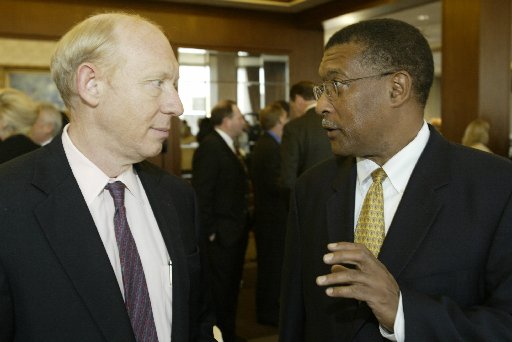
The Democrats: Houston mayor Bill White, left, is expected to make a run for the Senate and Gene Locke is a leading candidate to succeed him as mayor of Houston. Another top mayoral candidate is openly gay City Controller Annise Parker. Photo by Kevin Fujii / Houston Chronicle.

The red and the blue in the Lone Star State:
High hopes for Texas Dems

By The Economist / July 10, 2009

The elected sheriff of Dallas County is a lesbian Latina. The leading candidates to become mayor of Houston in November include a black man and a gay white woman. The speaker of the House of Representatives is the first Jew to hold the job in 164 years of statehood and only the second speaker to be elected from an urban district in modern times.

In this year’s legislative session, bills to compel women to undergo an ultrasound examination before having an abortion (to bring home to them what they are about to do) and to allow the carrying of guns on campus both fell by the wayside; a bill to increase compensation for people wrongly convicted sailed through. Lakewood, in Houston, the biggest church not just in Texas but in America, claims to welcome gays. As Dorothy in “The Wizard of Oz” might have said, we’re not in Texas any more.

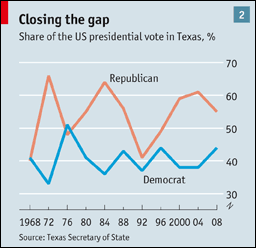
Or at least, not in Texas as we have recently come to know it. A Democratic-voting Texas would be nothing new, but political memories are short, and the blunders of the Bush presidency have coloured global perceptions of what Texas is like. It mostly voted Democratic in presidential elections until 1968, when, alone among the former Confederate states, it went for Hubert Humphrey, and 1976, when it voted for Jimmy Carter. Many of those voters were highly conservative “Dixiecrats” and later flipped to the Republicans. But there has always been a strong radical streak too. William Jennings Bryan was hugely popular in Texas. Jim Hightower, a former Texas agriculture commissioner and the perennial voice of Texas populism, says that “Texas has always been a purple state”—up for grabs by either the red Republicans or the blue Democrats.

It had a Democratic governor, in the feisty and liberal shape of Ann Richards, until as recently as 1995; but since that year, which saw George Bush’s ascent to the governor’s mansion, the Republicans have been firmly in control, and no Democrat has won statewide office. Since 2003 the Republicans have controlled the House as well as the Senate, monopolising every lever of power in the state. Now the pendulum is swinging back.

With no prospect of a local son to vote for in future elections (a Bush has been on the ballot paper for six of the past eight presidential votes), the Republicans have lost one big advantage. In the 2008 election the Democrats did much better all over the state. They won the presidential vote in all the big cities except Fort Worth (see map). They made big inroads into the Republicans’ dominance of the suburbs, where American elections are lost and won these days. Overall they took 44% of the vote, up from 38% in 2004, even though Barack Obama barely campaigned in Texas.

They secured a blocking minority, 12 seats out of 31, in the heavily gerrymandered state Senate, and almost took control of the Texas House of Representatives: the Republicans now hold it by just 76 seats to 74. The conservative speaker was promptly ousted and replaced by Joe Straus, who depended for his election on a sizeable block of Democratic votes.

The mild-mannered and charming Mr Straus has turned out to be a bipartisan and moderate figure, though he insists that he made no promises to the Democrats who backed him. But this year’s legislative session showed the Democrats flexing their muscles in the House, blocking a bill on voter identification that they said discriminated against their supporters.

The rise of the Democrats poses a dilemma for Republicans in Texas, just as it does nationally. And just as the national party seems to be lapsing into fratricide, so a vicious internal war has broken out over the governorship. Rick Perry is running for a third full term in the job, but the main challenge he faces is not from the Democrats who, oddly, have come up with a remarkably unconvincing candidate: Tom Schieffer, who used to be Mr Bush’s business partner and who is famous mainly because his brother is a TV presenter. The real rival is within, in the shape of Kay Bailey Hutchison, probably the most popular politician in the state. Mrs Hutchison has served as one of Texas’s two senators in Washington, DC, since 1993, and was last re-elected in 2006 with 62% of the vote.


Internecine warfare

Mr Perry has a strong economic record to run on, but because his toughest fight is against a fellow Republican, this has already turned into a battle for the souls of the 600,000 conservative sorts who vote in the Republican primary, due to be held next March. Mr Perry has lurched to the right to woo this atypical electorate.

Thus, he has backed allowing “Choose Life” to be an official Texas car licence-plate motto. This hurts Mrs Hutchison, who is in trouble with social conservatives for having once voted against overturning Roe v Wade, the Supreme Court decision that protects the right to abortion. He has also refused to take up a big chunk of the stimulus funds offered to Texas to help pay unemployment benefit, on the ground that this would create a long-lasting obligation.

No one doubts that Mrs Hutchison would beat Mr Perry or anyone else in Texas in a general election, but recent polls have her lagging behind Mr Perry in the primary. If she does formally enter the race, as expected, she will have to face being branded as a baby-killer and a creature of spendthrift Washington, DC.

Mrs Hutchison insists that “it’s very important that we don’t build a party around an issue [abortion] that is so personal, on which even families disagree.” She is surely right, but primary voters may not see it that way. This race matters hugely to Texas: it is a moment when the state’s Republicans will have to decide which wing of the party they are on.

The Democrats, meanwhile, are pinning their hopes for the 2010 election on securing a majority in the state House of Representatives and on winning a US Senate seat (which may come up sooner if Mrs Hutchison resigns to concentrate on her race for governor). Their chances in the House are good: as the recession starts to bite in Texas, later than elsewhere in the country, support for the Democrats is likely to rise. On the other hand Barack Obama will not be at the head of the ticket in 2010, as he was in 2008—though in Texas he was never quite the draw he was on the coasts.

The steady rise in the Hispanic population, coupled with a slow but continuous increase in Latinos’ tendency to vote, bodes well for the Democrats. George Bush did an impressive job courting the Hispanic vote, but the Republican Party threw that advantage away by rejecting his plans for immigration reform in 2006-07. In the 2008 presidential election Texas Latinos voted Democrat by 63% to 37%. Mr Obama’s nomination of the first Hispanic Supreme Court justice is unlikely to hurt, and nor will his commitment to immigration reform. As Hispanics increasingly spread out across the state they will start to tip the balance in many suburban counties, which is where the big political battles in America are being fought.

In the Senate race the Democrats’ probable candidate will be Bill White, the current mayor of Houston. He has done an excellent job balancing the needs of business with those of his core voters, and he will have a lot of money behind him.

Texas had become used to being at the centre of events, having supplied the president, the vice-president or at least the treasury secretary for all but a handful of the past 50 years. Now it does not even have a senator in the majority party, meaning that Texas has no voice in any of the big deliberations in Washington, DC. That will help the Democrats too.

But it does seem fair to ask what Texas Democrats actually stand for. They say they want more money spent on health and education, but pretty much every politician in Texas says the same, and the party’s leadership shows no appetite for delivering this by taxing Texans more heavily. Hardly anyone seeks to abolish the death penalty, even though, in most years, Texas executes as many people as the rest of America put together. Gun control and recognition of gay marriage are off the table. Everyone has jumped on the renewable-energy bandwagon.

It would, in short, be possible to imagine Texas slipping back to the Democrats without much happening in consequence, except for two considerations. The first is that, should Texas go Democratic at the presidential level, the Republicans nationally would be in deep trouble: with its 34 electoral-college votes, Texas is the only big state they have regularly won in recent presidential elections. The second consideration is the Hispanics. As they become ever more powerful in an ever stronger Democratic Party, there is every chance that they will turn against a model that has left far too many of them behind.

Source / The Economist

Thanks to Vik Verma / The Rag Blog

Posted in RagBlog | Tagged , , , | 6 Comments

James Retherford : Who Watches the Watchman? The Espionage Octopus


Part III
Who Watches the Watchman?

COINTELPRO and the Federal Government’s
Clandestine Attack on the U.S. Constitution

Using FBI and CIA intelligence reports, the federal government compiled a Rabble Rouser Index of activists. By 1973 the National Security Council compiled a ‘watch list’ of 300,000 domestic dissidents with alleged subversive foreign connections.

By James Retherford / The Rag Blog / July 10, 2009

[A version of this series was originally researched and written six years ago. It describes in chilling detail how the U.S. government surreptitiously conspired to maintain lockdown social control of American citizens in the period up to and including post-Watergate. Go here for the introduction to and first two parts of “Who Watches the Watchman.”]

The Federal Bureau of Investigation did not work alone in creating its modern-day conspiratorial shadow government.

The Central Intelligence Agency in 1967 launched Operation CHAOS, a far-reaching and illegal program targeting American dissidents. The National Security Agency, a virtually “invisible” intelligence-gathering agency with a huge budget and workforce, in 1969 expanded what became Operation MINARET, a program for electronically eavesdropping on overseas communications.

In addition, various military intelligence agencies participated in spying not only on dissident military personnel but also on American civilians. Army Intelligence developed its own 100,000-name “enemies” list. Finally, the FBI and other federal agencies developed close working and information sharing relationships with the Internal Revenue Service and the U.S. Postal Service; the bureau’s postal connection facilitated mail spying while IRS connection was used effectively to investigate the finances of targeted groups and individuals. In time the IRS compiled an 11,000-name investigation list at the bureau’s behest.

Over the years these large intelligence-gathering agencies had developed internecine rivalries prompted at least in part by the profession’s apparently pathological aversion to sharing the fruits of their labor with anyone else, including, in some cases, the Justice Department and the president. Following Eisenhower’s 1956 example, succeeding administrations called upon the National Security Council to bring together the nation’s spy agencies into a joint covert domestic operation. Using FBI and CIA intelligence reports, the federal government compiled a Rabble Rouser Index of activists. By 1973 the National Security Council compiled a “watch list” of 300,000 domestic dissidents with alleged subversive foreign connections. More than 26,000 activists were targeted under Nixon’s presidential order for detention in the event of some unspecified “national emergency.”

According to David Kaplan, director of the Center for Investigative Reporting

Until 1974, the CIA conducted a widespread, illegal spying operation within the United States. According to Congressional reports, the names of 300,000 U.S. citizens were cross-indexed within agency files, and thousands of Americans were placed on “watch lists” to have their mail opened and telegrams read. The Pentagon’s intelligence operations spilled into a highly questionable area during the 1960s and early 1970s. The U.S. Army Intelligence Command, among others, ran a far-reaching domestic spying program that, at its height, fielded over 1,500 plainclothes agents from 350 offices to spy on anti-war and civil rights groups. The Army’s program was, in the words of a Congressional subcommittee, “both massive and unrestrained,” and compiled an estimated 100,00 dossiers on U.S. citizens. The Secretary of the Army subsequently ordered those files destroyed, although, like the CIA, there are now indications that such activities may have continued.

The FBI, CIA, NSA, and other governmental agencies, despite many obvious instances in which agents operated with obvious disregard for state and federal laws, nonetheless felt inhibited from engaging in certain types of direct action which, if detected, could bring serious political damage to the agencies themselves and quite possibly to the White House. The simple solution was to create so-called extra-jurisdictional agencies that could operate independent of federal control to carry out the agenda of domestic “counterintelligence.” In 1956 the Law Enforcement Intelligence Unit (LEIU) was the first such semiofficial agency to set up shop with the CIA providing funding, training, surveillance equipment, and a national computer database.


The FBI and various military intelligence commands worked in much the same way with local police departments to create funding conduits via the Law Enforcement Assistance Agency (LEAA) which supplied money, arms, and equipment to paramilitary vigilante groups. For example the 113th Military Intelligence Group provided money and arms to the Chicago Police Department’s “Red Squad.” These resources were, in turn, channeled to the Legion of Justice paramilitary group noted for violent attacks on the underground press and on New Left activists as well as for the break-in and theft of Chicago Seven conspiracy trial defense files.

In San Diego, where the Republicans initially planned to convene their 1972 national convention, one covert action campaign culminated in the January 6, 1972, assassination attempt on anti-convention organizer Peter Bohmer by the so-called “Secret Army Organization” of rightwing militia, a group formed, subsidized, armed, and protected by the FBI.

[James Retherford knows firsthand what it was like to be targeted by COINTELPRO. A founder and editor of The Spectator in Bloomington, Indiana, in 1966, Retherford is a director of the New Journalism Project, the nonprofit organization that publishes The Rag Blog.]

Please see

Also see James Retherford : Brandon Darby, The Texas 2, and the FBI’s Runaway Informants by James Retherford / The Rag Blog / May 26, 2009

And for more background on the history of informants in Texas, read The Spies of Texas by Thorne Dreyer / The Texas Observer / Nov. 17, 2006.

The Rag Blog

Posted in Rag Bloggers | Tagged , , , , , , , , | 2 Comments

ASCAP : Ring-a-Ding-Ding! Ka-Ching.

Graphic by Larry Ray / The Rag Blog.

ASCAP wants to be paid when your phone rings

…these are the same folks who crisscrossed America threatening and intimidating small business owners for having a radio playing in their small shop, diner or bar, demanding they pay an annual fee.

By Larry Ray / The Rag Blog / July 9, 2009

When I first read about being forced to pay every time your cell phone’s ringtone plays I thought it was a prank or hoax email. It wasn’t. If you don’t know what ASCAP is then turn off your cell phone and read this.

The American Society of Composers, Authors, and Publishers was born in 1913 following passage of the Copyright Law of 1909. The law was enacted, the old tale goes, after songwriter Stephen Foster died penniless while sheet music publishers became wealthy selling his music. ASCAP set up a royalty rate structure and under New York law became an unincorporated membership association. Licensing contracts with composer and publisher members give ASCAP the power to “collect and distribute money and police infringements.”

By the 1990’s ASCAP had membership of some 30,000 writers and around 14,000 music publishers who retained their individual copyrights. ASCAP’s contracted powers grew exponentially as hand cranked Victrolas gave way to movies with sound, radio, TV and an explosion of elevator music, video, jukeboxes, tape decks right up to today’s iPods, the internet and and downloadable music.

BMI is also part of the alphabet soup. Broadcast Music Incorporated collects fees from radio and TV stations for the music they play and was formed in the 1940’s when broadcasters began to feel ASCAP was more and more engaging in monopolistic practices, price fixing, and other unsavory practices.

So, with that bit of background, let’s look at just one of the inevitable excesses ASCAP has indulged in based upon it’s interpretation of licensing practices that are, “the only practical way to give effect to the right of public performance which the Copyright Law intends creators to have.”

It is a tough call as to whether it was music industry greed or just plain stupidity that led ASCAP to actually go after Girl Scouts singing songs around a campfire. In 1996, ASCAP, ever seeking more licensing and musical moolah, cast a wide net covering hotels, restaurants, funeral homes, even resorts demanding payment for the right to “perform” licensed or recorded music.

Under copyright law, “where a substantial number of persons outside a normal circle of a family and its social acquaintances are gathered,” that qualifies as a public performance. Summer camp is sort of like a resort, they reasoned, so the suits around the table opened negotiations with the American Camping Association asking $1,200 annually each from the 288 camps in the association. They finally settled for a nag of $257 per camp. But when the public learned that the Girl Scouts were among the camps being dunned and would have to pony up their Girl Scout Cookie money to sing around a campfire, ASCAP took a PR beating and called off the whole camping caper.

Now, just a couple of weeks ago, ASCAP decided every time that snip of music you bought for a ringtone blares forth on your cell phone that constitutes a performance, violating copyright law meaning you must pay up! ASCAP is in a big legal skunk peeing contest with major mobile cell phone carriers like AT&T and Verizon.

Customers who have legally bought ringtones have already boosted the music industry’s bottom line by millions of dollars. But now ASCAP’s lawyers are dialing for more dollars. Existing law from the much earlier Sony Betamax ruling says companies are not liable for how their technology is used. It would seem like ASCAP doesn’t have a case at all.

But these are the same folks who crisscrossed America threatening and intimidating small business owners for having a radio playing in their small shop, diner or bar, demanding they pay an annual fee. Those found playing a radio or recorded music were hounded month after month not unlike mafia shakedown goons seeking protection money. ASCAP agents didn’t burn down the businesses who refused to pay for playing a radio but hounded them mercilessly.

I doubt many of us are keeping up with briefs filed in court by ASCAP, but THIS ONE in their battle with AT&T pretty well shows where this may all be headed, and the outcome of their insatiable greed may just be coming to a cell phone near you.

Imagine! You, an ASCAP performer!

[Retired journalist Larry Ray is a Texas native and former Austin television news anchor. He also posts at The iHandbill.]

The Rag Blog

Posted in Rag Bloggers | Tagged , , | 1 Comment

Organic Alternative and the Whole Foods Fraud


The organic monopoly and the myth of ‘natural’ foods:

How industry giants are undermining the organic movement

On non-meat products, the term natural is typically pure propaganda. Companies (like Whole Foods Market or UNFI) are simply telling us what we want to hear, so that we pay an organic or premium price for a conventional product.

By Ronnie Cummins / July 9, 2009

The organic alternative: A matter of survival

After four decades of hard work, the organic community has built up a $25 billion “certified organic” food, farming, and green products sector. This consumer-driven movement, under steady attack by the biotech and Big Food lobby, with little or no help from government, has managed to create a healthy and sustainable alternative to America’s disastrous, chemical and energy-intensive system of industrial agriculture.

Conscious of the health hazards of Big Food Inc., and the mortal threat of climate change and Peak Oil, a critical mass of organic consumers are now demanding food and other products that are certified organic, as well as locally or regionally produced, minimally processed, and packaged.

The Organic Alternative, in turn, is bolstered by an additional $50 billion in annual spending by consumers on products marketed as “natural,” or “sustainable.” This rapidly expanding organic/green products sector — organic (4% of total retail sales) and natural (8%) — now constitutes more than 12% of total retail grocery sales, with an annual growth rate of 10-15%. Even taking into account what appears to be a permanent economic recession and a lower rate of growth than that seen over the past 20 years, the organic and natural market will likely constitute 31-56% of grocery sales in 2020.

If the Organic Alternative continues to grow, and if consumers demand that all so-called “natural” products move in a genuine, third party-certified “transition to organic” direction, the U.S. will be well on its way to solving three of the nation’s most pressing problems: climate change, deteriorating public health, and Peak Oil.

Sales statistics and polls underline the positive fact that a vast army of organic consumers, more than 75 million Americans, despite an economic recession, are willing to pay a premium price for organic and green products. These consumers are willing to pay a premium because they firmly believe that organic and natural products are healthier, climate stabilizing, environmentally sustainable, humane for animals, and well as more equitable for family farmers, farmworkers, and workers throughout the supply chain.

Many of the most committed organic consumers are conscious of the fact that organic food and other products are actually “cheaper” in real terms than conventional food and other items-since industrial agriculture’s so-called “cheap” products carry hidden costs, including billions of dollars in annual tax subsidies, and hundreds of billions of dollars in damage to our health, the environment, and climate.

Strengthening the argument for organic food and farming, scientists now tell us that it will take a massive conversion to organic agriculture (as well as renewable energy, sustainable housing and transportation) to drastically reduce climate-destabilizing greenhouse gases in the atmosphere to 350 parts per million and to cope with the advent of “Peak Oil,” the impending decline in petroleum and natural gas supplies.

Organic food and a healthy diet and lifestyle are obviously key factors in preventing chronic disease, restoring public health, and reducing out-of-control health care costs. While in 1970, U.S. health care spending appeared somewhat sustainable, totaling $75 billion, the Centers for Medicare and Medicaid Services project that by 2016, health care spending will soar to over $4.1 trillion, or $12,782 per resident.

Millions of health-minded Americans, especially parents of young children, now understand that cheap, non-organic, industrial food is hazardous. Not only does chemical and energy-intensive factory farming destroy the environment, impoverish rural communities, exploit farm workers, inflict unnecessary cruelty on farm animals, and contaminate the water supply; but the end product itself is inevitably contaminated.

Plane spreads pesticides, adding to the contamination of non-organic food.

Routinely contained in nearly every bite or swallow of non-organic industrial food are pesticides, antibiotics and other animal drug residues, pathogens, feces, hormone disrupting chemicals, toxic sludge, slaughterhouse waste, genetically modified organisms, chemical additives and preservatives, irradiation-derived radiolytic chemical by-products, and a host of other hazardous allergens and toxins.

Eighty million cases of food poisoning every year in the US, an impending swine/bird flu pandemic (directly attributable to factory farms), and an epidemic of food-related cancers, heart attacks, and obesity make for a compelling case for the Organic Alternative.

Likewise millions of green-minded consumers understand that industrial agriculture poses a terminal threat to the environment and climate stability. A highly conscious and passionate segment of the population are beginning to understand that converting to non-chemical, energy-efficient, carbon-sequestering organic farming practices, and drastically reducing food miles by relocalizing the food chain, are essential preconditions for stabilizing our out-of-control climate and preparing our families and communities for Peak Oil and future energy shortages.

Decades of research confirm that organic agriculture produces crop yields that are comparable (under normal weather conditions) or even 50-70% superior (during droughts or excessive rain) to chemical farming. Nutritional studies show that organic crops are qualitatively higher in vitamin content and trace minerals, and that fresh unprocessed organic foods boost the immune system and reduce cancer risks.

And, of course climate scientists emphasize that organic agriculture substantially reduces greenhouse pollution. Organic farms use, on the average, 50% or less petroleum inputs than chemical farms, while generating drastically less greenhouse gases such as methane and nitrous oxide. Moreover diverse, multi-crop organic farms sequester enormous amounts of CO2 in the soil. Agronomists point out that a return to traditional organic farming practices across the globe could reduce greenhouse gas pollution by 40%.

In other words, America and the world desperately need an Organic Revolution in food and farming, not only to salvage public health and improve nutrition, but also in order to literally survive in the onrushing era of Peak Oil and climate change.


Scientists, as well as common sense, warn us that a public health Doomsday Clock is ticking. Within a decade, diet and environment-related diseases, including obesity, diabetes, heart disease, and cancer-heavily subsidized under our Big Pharma/chemical/genetically engineered/factory farm system-will likely bankrupt Medicare and the entire U.S. health care system.

Likewise, climate chaos and oil shortages, unless we act quickly, will soon severely disrupt industrial agriculture and long-distance food transportation, leading to massive crop failures, food shortages, famine, war, and pestilence. Even more alarming, accelerating levels of greenhouse gases (especially from cars, coal, cattle, and related rainforest and wetlands destruction) will soon push global warming to a tipping point that will melt the polar icecaps and unleash a cataclysmic discharge of climate-destabilizing methane, fragilely sequestered in the frozen arctic tundra.

If we care about our children and the future generations, we obviously must reverse global warming, stabilize the climate, and prepare for petroleum shortages and vastly higher oil prices. The only way to do this is to reduce greenhouse gas pollution by 90% by 2050, by shifting away from petroleum and coal-based energy to radical energy conservation and making a transition to renewable solar and wind power-not only in transportation, housing, and industry, but in farming, food processing, and food distribution as well.

In the food sector, we cannot continue to hand over 88% of our consumer dollars to out-of-control, chemical-intensive, energy-intensive, greenhouse gas polluting corporations and “profit at any cost” retail chains such as Wal-Mart. The growth of the Organic Alternative is literally a matter of survival. The question then becomes how (and how quickly) can we move healthy, organic, and “natural” products from a 12% market share, to becoming the dominant force in American food and farming. This is a major undertaking, one that will require a major transformation in public consciousness and policy, but it is doable, and absolutely necessary.

But before we overthrow Monsanto, Wal-Mart, and Food Inc., we need to put our own house in order. Before we set our sights on making organic and “transition to organic” the norm, rather than the alternative, we need to take a closer, more critical look at the $50 billion annual natural food and products industry.

How natural is the so-called natural food in our local Whole Foods Market, coop, or grocery store? Is the “natural” sector moving our nation toward an organic future, or has it degenerated into a “green washed” marketing tool, disguising unhealthy and unsustainable food and farming practices as alternatives. Is “natural” just a marketing ploy to sell conventional-unhealthy, energy-intensive, and non-sustainable food and products at a premium price?

The myth of natural food, farming, and products

Walk down the aisles of any Whole Foods Market (WFM) or browse the wholesale catalogue of industry giant United Natural Foods (UNFI) and look closely. What do you see? Row after row of attractively displayed, but mostly non-organic “natural” (i.e. conventional) foods and products. By marketing sleight of hand, these conventional foods, vitamins, private label “365” items, and personal care products become “natural” or “almost organic” (and overpriced) in the Whole Foods setting.

Whole Foods: Row after row of ‘natural’ foods.

The overwhelming majority of WFM products, even their best-selling private label, “365” house brand, are not organic, but rather the products of chemical-intensive and energy-intensive farm and food production factories. Test these so-called natural products in a lab and what will you find: pesticide residues, Genetically Modified Organisms, and a long list of problematic and/or carcinogenic synthetic chemicals and additives.

Trace these products back to the farm or factory and what will you find: climate destabilizing chemical fertilizers, pesticides, fungicides, herbicides, and sewage sludge-not to mention exploited farm workers and workers in the food processing industry. Of course there are many products in WFM (and in UNFI’s catalogue} that bear the label “USDA Organic.” But the overwhelming majority of their products, even their best selling private label, “365,” are not.

What does certified organic or “USDA Organic” mean? This means these products are certified 95-100% organic. Certified organic means the farmer or producer has undergone a regular inspection of its farm, facilities, ingredients, and practices by an independent Third Party certifier, accredited by the USDA National Organic Program (NOP).

The producer has followed strict NOP regulations and maintained detailed records. Synthetic pesticides, animal drugs, sewage sludge, GMOs, irradiation, and chemical fertilizers are prohibited. Farm animals, soil, and crops have been managed organically; food can only be processed with certain methods; only allowed ingredients can be used.

On the other hand, what does “natural” really mean, in terms of farming practices, ingredients, and its impact on the environment and climate? To put it bluntly, “natural,” in the overwhelming majority of cases is meaningless, even though most consumers do not fully understand this. Natural, in other words, means conventional, with a green veneer.

Natural products are routinely produced using pesticides, chemical fertilizer, hormones, genetic engineering, and sewage sludge. Natural or conventional products-whether produce, dairy, or canned or frozen goods are typically produced on large industrial farms or in processing plants that are highly polluting, chemical-intensive and energy-intensive.

“Natural,” “all-natural,” and “sustainable,” products in most cases are neither backed up by rules and regulations, nor a Third Party certifier. Natural and sustainable are typically label claims that are neither policed nor monitored. (For an evaluation of eco-labels see the Consumers Union website). The USDA’s Food Safety and Inspection Service provides loose, non-enforced guidelines for the use of the term “natural” on meat–basically the products cannot contain artificial flavors, coloring, or preservatives and cannot be more than minimally processed.
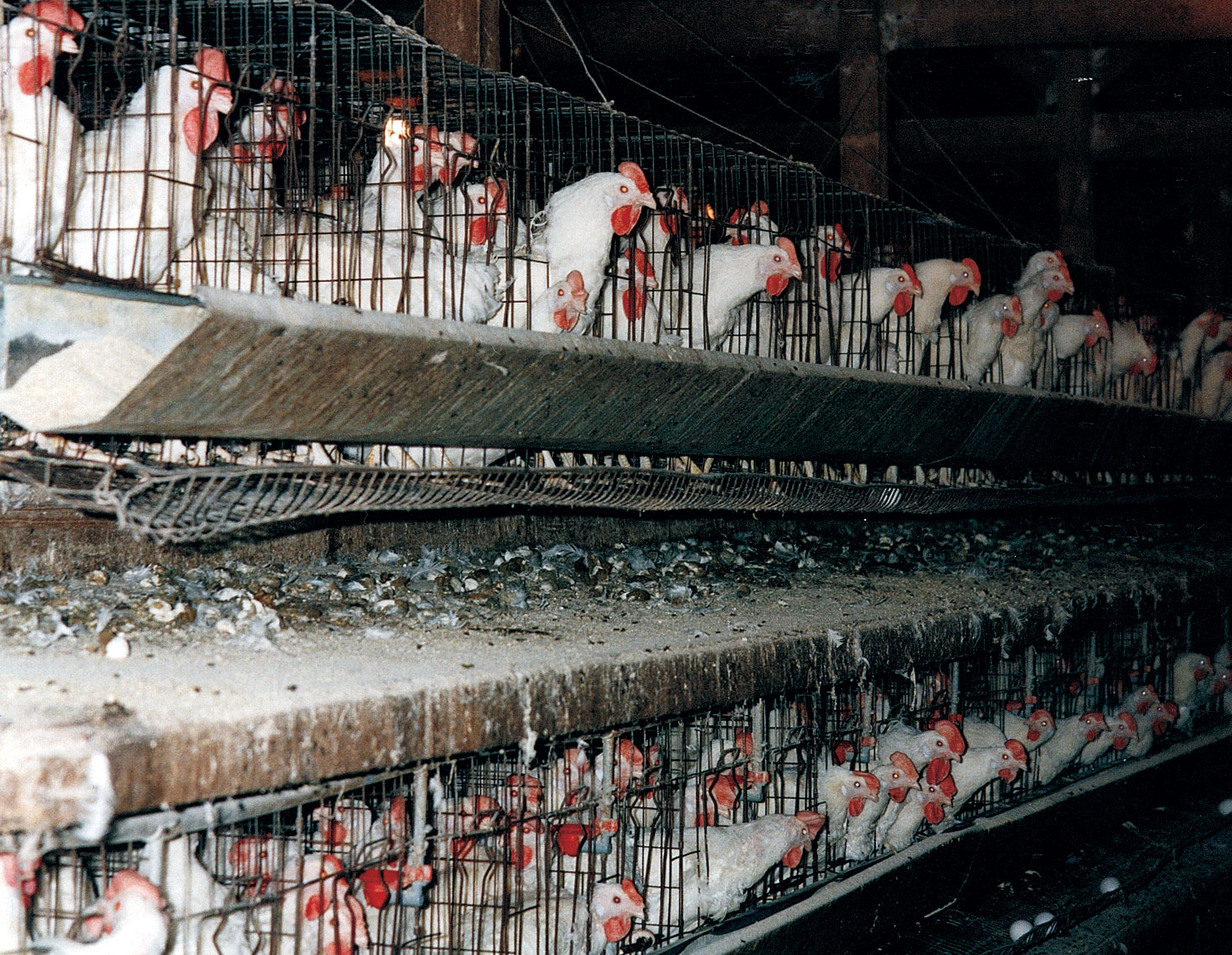
Cruel and unusual.

On non-meat products, the term natural is typically pure propaganda. Companies (like Whole Foods Market or UNFI) are simply telling us what we want to hear, so that we pay an organic or premium price for a conventional product. Perhaps this wouldn’t matter that much if we were living in normal times, with a relatively healthy population, environment, and climate. Conventional products sold as natural or “nearly organic” would be a simple matter of chicanery or consumer fraud. But we are not living in normal times.

Pressuring natural and conventional products and producers to make the transition to organic is a matter of life or death. And standing in the way of making this great transition are not only Fortune 500 food and beverage corporations, Monsanto, and corporate agribusiness, as we would expect, but the wholesale and retail giants in the organic and natural products sector, UNFI (United Natural Foods) and Whole Foods Market (WFM).

UNFI and Whole Foods: Profits at any cost

UNFI and Whole Foods Market are the acknowledged market and wholesale distribution leaders in the $70 billion organic and natural foods and products sector. Companies or brands that want to distribute their products on more than just a local or regional basis must deal with the near-monopoly wholesaler, UNFI, and giant retailer WFM. Meanwhile retailers in markets dominated by Whole Foods have little choice but to emulate the business practices of WFM — i.e. sell as many conventional foods, green washed as “natural,” as possible.

Unfortunately neither UNFI and Whole Foods are putting out the essential message to their millions of customers that expanding organics is literally a matter of life or death for public health, climate, and the environment. Neither is leading the charge to double or triple organic food and farming sales by exposing the myth of natural foods, giving preference to organic producers and products, and pressuring natural brands and companies to make the transition to organic. Neither are the industry giants lobbying the government to stop nickel and dime-ing organics and get serious about making a societal transition to organic food and farming.

Organic Carrots. Photo © Rebekah Burgess / Dreamstime.com / Organic Feast.

The reason for this is simple: it is far easier and more profitable for UNFI and WFM to sell conventional or so-called natural foods at a premium price, than it is to pay a premium price for organics and educate consumers as to why “cheap” conventional/natural food is really more expensive than organic, given the astronomical hidden costs (health, pollution, climate destabilization) of conventional agriculture and food processing.

UNFI has cemented this “WFM/Conventional as Natural” paradigm by emulating conventional grocery store practices: giving WFM preferential prices over smaller stores and coops —many of whom are trying their best to sell as many certified organic and local organic products as possible. Compounding this undermining of organics is the increasing practice among large organic companies of dropping organic ingredients in favor of conventional ingredients, while maintaining their preferential shelf space in WFM or UNFI-supplied stores.

In other words the most ethical and organic (often smaller) grocers and producers are being discriminated against. WFM also demands, and in most cases receives, a large quantity of free products from producers in exchange for being distributed in WFM markets.

The unfortunate consequence of all this is that it’s very difficult for an independently-owned grocer or a coop trying to sell mostly organic products to compete with, or even survive in the same market as WFM, given the natural products “Sweetheart Deal” between UNFI and WFM.

As a consequence more and more independently owned “natural” grocery stores and coops are emulating the WFM model, while a number of brand name, formerly organic, companies are moving away from organic ingredients (Silk soy milk, Horizon, Hain, and Peace Cereal for example) or organic practices (the infamous intensive confinement dairy feedlots of Horizon and Aurora) altogether, while maintaining a misleading green profile in the UNFI/WFM marketplace.

Other companies, in the multi-billion dollar body care sector for example, are simply labeling their conventional/natural products as “organic” or trade-marking the word “organic” or “organics” as part of their brand name.

The bottom line is that we must put our money and our principles where our values lie. Buy Certified Organic, not so-called natural products, today and everyday. And tell your retail grocer or coop how you feel. Please join thousands of other Organic Consumers and send a message to Whole Foods and UNFI today.

[Ronnie Cummins is National Director of the Organic Consumers Association.]

Source / CommonDreams

The Rag Blog

Posted in RagBlog | Tagged , , , , , | 6 Comments

‘Dollar Bill’ Jefferson and the Case of the Cold Cash

Government exhibit 20-45C. This photo was presented July 8, 2009, as court evidence in the trial of Rep. William Jefferson, D-La. It was provided by the U.S. Attorney’s office and shows an FBI agent holding contents seized on Aug. 3, 2005 from Jefferson’s freezer. Photo from U.S. Atty’s Office / AP.

The prosecution of William Jefferson:
More to this story than meets the ice?

The elaborate sting to get Jefferson and the unprecedented decision to raid his office and create an uproar in Congress are puzzling unless we assume something bigger was involved than his peddling influence and passing bribes to African leaders.

By Sherman DeBrosse / The Rag Blog / July 9, 2009

The current proceedings against former Representative William Jefferson of New Orleans remind us that his was not the only case involving alleged bribery of Nigerian officials. There was another case that involved a great deal more money that never received much scrutiny. Comparing the cases might be instructive.

Everyone knows about the $90,000 found in William Jefferson’s freezer. It was the source of endless jokes as well as many claims that he was pocketing all that money. One could more easily imagine a scenario in which he might have taken $10,000 as a commission and intended to use the $90,000 to influence Nigerian officials on behalf of a northern Virginia investor and a small software company in Kentucky. He was videotaped receiving a briefcase full of marked hundred dollar bills. In 2005, the Congressman told an undercover FBI agent that the Nigerian Vice President Atiku Abubakar would help the firm acquire a communications contract.

It is also known that the French government has been looking into charges that M.W. Kellogg of the UK funneled between $132 and $180 million in kickbacks to Nigerian government officials in return for a $2 billion contract to build facilities to liquefy gas. Eventually, the liquefacation facilities there will involve $6 billion in construction. The UK firm was owned by Halliburton, which was led by Richard Cheney when the contracts were let. Le Figaro reported on December 20, 2003, that the French considered indicting Cheney.

The charge under French law would be wasting the assets of a corporation. They were also investigating Technip, a French firm. Albert Stanley, whom Cheney made head of M.W. Kellogg-UK, admitted that money was passed through a London lawyer who worked for Kellogg and was also financial advisor to the late Nigerian dictator, General Sami Abacha.

Even if Cheney and Halliburton did not bribe the bloody Abacha regime, they had many dealings with those thugs. Some of us recall how reports of ties to this regime helped unseat Senator Carol Moseley-Braun.

Given what was occurring in France, the SEC opened a pro-forma investigation that seems to have gone nowhere. Britain’s export credit agency barely gave the matter a cursory examination. Now, the SEC is looking into claims that Siemens, the German engineering firm, has been bribing Atiku Abubakar. Jefferson’s attorneys have been seeking testimony from Abubakar, but the SEC investigation will probably prevent his cooperation. The company reported having a bribery budget in excess of $40 million.

The French findings and the $180 million must have been considered small potatoes because our government did little to look into the doings of the British Halliburton subsidiary. But there was an elaborate sting operation, complete with miles of tape and film footage, to nail a black Congressman from New Orleans who was accused of funneling bribery money to Nigeria. There were reports that “Dollar Bill” had handled an additional $400,000 in bribe money for governments in West Africa.

In 2006, 19 heavily armed FBI agents raided the offices of Congressman William Jefferson on Capitol Hill. This was the first search of a Congressional office in history; they were disregarding a lot of history and constitutional law to get at something

There is a sharp contrast between the full court press launched against Jefferson and the neglect of the Halliburton/Nigerian LNG case. The federal authorities showed very little interest in the latter. There was some coverage in the press but no one has pulled the whole story together. Now, there is a new administration in Washington and little is being done about this case

The prosecution of Jefferson proceeds and is even attended by unusual moves on the part of the prosecution to force a guilty plea. This may be because their star witness seems to be refusing to testify. However, there are many hours of tape between them that will probably be played. The defense is requesting the right to play some tapes that the prosecution declined to use.

There has been speculation that the two Nigerian cases might be connected, or that the Jefferson case is tied to bribes U.S. oil companies sent to Nigerian politicians. The theory is that Jefferson kept information on the oil deals, or perhaps Halliburton’s deal with Nigeria, in his Congressional office as insurance in his own case. Certainly, he was well enough connected to obtain that information, and the Harvard-educated lawyer was smart enough to use it. He knew for some time that he was under investigation, so he had every reason to put evidence that incriminated him into the shredder. On the other hand, there was every reason to keep information that could be used as bargaining chips.

If Mr. Jefferson is indeed guilty as charged, he should be prosecuted. But it is still troubling that so little effort was expended to look into Halliburton’s possible involvement in the bribery of Nigerian officials. The elaborate sting to get Jefferson and the unprecedented decision to raid his office and create an uproar in Congress are puzzling unless we assume something bigger was involved than his peddling influence and passing bribes to African leaders.

[Sherman DeBrosse, the pseudonym for a retired history professor, is a regular contributor to The Rag Blog and also blogs at Sherm Says and on DailyKos.]

The Rag Blog

Posted in Rag Bloggers | Tagged , , , , , | 4 Comments

California Pay to Play : Marijuana Futures!

California Governor Arnold Schwarzenegger ‘is known to have extensive first-hand knowledge about the many uses’ of marijuana, is shown taking a break following a workout in the film ‘Pumping Iron.’

California should pay its people in pot

The state could grow its own leafy payroll. Some marijuana will be immediately available from the confiscated stashes that have traditionally been consumed by arresting officers.

By Thomas Paine / The Rag Blog / July 9, 2009
[As told to Harvey Wasserman]

California’s state finances have gone to pot, and that’s what it should use to pay its employees.

Right now the state is issuing IOUs to those who work for it. Sacramento says they are worth the paper they’re printed on, but most Californians know that’s true only if they are used to roll joints.

The state’s key available assets are in its farms and fields… and in its prisons and legal system.

Medical marijuana is legal in California. Estimates put last year’s traffic in prescription-approved pot at around a billion dollars. If the state were properly organized to tax that and non-medical marijuana — whose dollar volume is many times greater — it might actually have enough money to pay its employees.

By legalizing marijuana, California could immediately free tens of thousands of prisoners at a savings of tens of millions of dollars. Those quick savings could be a down payment on the salaries of its employees (and cover the unemployment benefits that will be due prison builders and guards who will be laid off).

But they, in turn, could go to work GROWING marijuana. With its huge agricultural resources, California could immediately become the world hub of the legal marijuana trade. (Mendocino and other counties are already vying for this title).

It could also pay its employees if not in dollars, then in pot. Here’s how:

Once the legislature decides to legalize marijuana, the state could go into the business of growing its own. (The offices of the Department of Agriculture are not that far from the Bureau of Prisons.)

Various California cities, including Oakland, are already raising pot to keep prices down for the legal medical trade. So official expertise is readily available. Like the current and previous two Presidents of the United States, the current Governor of California is known to have extensive first-hand knowledge about the many uses of this precious weed.

Thus the state could grow its own leafy payroll. Some marijuana will be immediately available from the confiscated stashes that have traditionally been consumed by arresting officers.

But there will obviously be a gap between the moment of legalization and the moment the first officially grown buds are ready to pick.

So while California waits, it can issue marijuana futures as pay instead of IOUs. The futures would include a special dispensation to sell the existing stashes many of the state employees may already be holding (of course, no state employee would break the law, so these will all be MEDICAL stashes).

Being the first state to legalize, California pot would skyrocket in value. Once the actual buds arrive from the government, state employees would be free to sell their redeemed futures in other states, which will then face a dilemma.

In these hard times, the tourist dollars from those “Okies in reverse” fanning out with their pot to sell will be hard to turn down. So will the potential tax revenues. So the other 49 states will be forced to choose between seeing those hard-earned pot proceeds headed to the Pacific in the pockets of previously impoverished California state employees — or legalizing it, taxing it, freeing their own prisoners, and growing it at home.

Tom Joad will have returned to roost, driving the ghost of a Volkwagen bus.

A dozen states have already legalized medical marijuana, Many are having state budgetary problems of their own.

But California is the only one now issuing IOUs to state employees. Its topography, resident expertise and gubernatorial brain cell history make it an ideal candidate for what is bound to come, sooner or later. Why not now?

Yippie!

[“Thomas Paine’s” Passions of the Potsmoking Patriots is at harveywasserman.com.]

The Rag Blog

Posted in Rag Bloggers | Tagged , , , , | 2 Comments

John McMillian : Mac the Knife: The Passing of a War Criminal

Robert S. McNamara, U.S. Secretary of Defense for Presidents Kennedy and Johnson, speaks at Harvard on March 3, 2004. J. Errol Morris’ Academy Award-winning documentary, ‘The Fog of War,’ plays on the monitor as McNamara (left) and Ernest May address the audience. Photo by Stephanie Mitchell / Harvard News Office.

Mac the Knife

Robert McNamara — debonair, genial and still very lucid at age 87 — sat… before 700 members of the Harvard community, who… ‘received him with courteous applause…’

By John McMillian / The Rag Blog / July 8, 2009

[Much has already been written about the legacy of Robert McNamara, Secretary of Defense under two presidents and the primary architect of the War in Vietnam, who died this past Monday, July 6. But John McMillian sent us the following remembrance, adapted from a piece he originally wrote for the March 9, 2004, Harvard Crimson, and we think Rag Blog readers will find it especially incisive. John McMillian was an editor of The New Left Revisited and The Radical Reader.]

Growing up, I’ve often lamented that I missed out on the zeitgeist of the 1960s. For better or worse, I think I might have enjoyed the frothy exuberance and moral drama. As an undergraduate in the early 1990s, I even once wrote a fairly maudlin poem that listed all of the things I’d like to have done if I had been alive then. It included such items as looking forward to the next Beatles album, sneaking a sophomore out of her dormitory window after curfew, sitting around the television with my family when Neil Armstrong walked on the moon… and heckling Robert S. McNamara.

I might have had a chance to finally do the latter when the former secretary of defense appeared at the Kennedy School of Government on March 3, 2004, to discuss film clips from Errol Morris’ documentary, The Fog of War. Unfortunately, I arrived just a moment too late to get a seat in the auditorium; the most I could do was watch the video feed from the overflow room. This made the whole occasion seem even more surreal. Robert McNamara — debonair, genial and still very lucid at age 87 — sat just a room away, before 700 members of the Harvard community, who, The Crimson reported, “received him with courteous applause.”

That was a mistake.

Robert McNamara was a war criminal. We need not quibble about this. By his own, well-publicized admission, during World War II both he and General Curtis E. LeMay “were behaving as war criminals” when they incinerated hundreds of thousands of Japanese civilians in massive firebombing raids. If not for the Allied victory, an international war crimes tribunal might have recommended that McNamara be blindfolded and shot. Instead, he got a promotion.

During the eight years that McNamara served as secretary of defense, he helped mastermind the killing of hundreds of thousands of Vietnamese, many of them civilians. Fragmentation bombs, napalm and the chemical weapon Agent Orange were all used to devastating effect. By the time the war ended, at least 2 million Vietnamese had been slaughtered. As McNamara helpfully reminded the Kennedy School crowd, if the U.S. population had suffered an equivalent percentage of losses during that war, 27 million Americans would have been killed. According to the Nuremberg Principles, war crimes include the “wanton destruction of cities, towns or villages, or devastation not justified by military necessity.”

Unlike other famous war criminals, McNamara never tried to deny that he knew about the carnage that was happening under his watch. In a 1967 memo to President Lyndon B. Johnson, he betrayed his discomfiture with his own policy recommendations when he said “there may be a limit beyond which… much of the world may not permit us to go.” With chilling understatement, he continued: “The picture of the world’s greatest superpower killing or seriously injuring 1,000 noncombatants a week, while trying to pound a tiny, backward nation into submission on an issue whose merits are hotly disputed, is not a pretty one.”

How, then, did McNamara rationalize his actions? “I just felt that I was serving at the request of the president, who had been elected by the American people,” he says in The Fog of War. “And it was my responsibility to help him carry out the office as he believed was in the interest of our people.”

McNamara continued to just follow orders even after he’d privately concluded that the Vietnam War could not be won. He also lied repeatedly to Congress about the war. Owing to some absurd genteel code (apparently known only to himself), McNamara argued later that it’s “irresponsible for an ex-Secretary of Defense to comment… about a president who is in the midst of war… ” But even this is a prevarication. At the Kennedy School, McNamara made no secret of his disapproval of President Bush’s foreign policy, and he told Toronto’s Globe and Mail that, “It’s just wrong what we’re doing [in Iraq]. It’s morally wrong, it’s politically wrong, it’s economically wrong.” If ex-Secretary of Defense McNamara could criticize President Bush then, why couldn’t he have spoken out against the Vietnam War in 1968, when doing so might have saved hundreds of thousands of lives?

Journalist Mickey Kaus once asked, “Has any single American of [the 20th] century done more harm than Robert McNamara?” It’s a good question. Although most of us hold it as an article of faith that war criminals ought to be punished, people generally have a hard time holding their own leaders to the same standards of accountability they demand from others. McNamara literally spent his retirement skiing in Aspen and vacationing in Martha’s Vineyard. It would have been more appropriate for him to have been locked away, and shame on the Harvard community for not telling him so.

Please see Exclusive: Robert McNamara deceived LBJ on Gulf of Tonkin, documents show by Gareth Porter / The Raw Story / July 8, 2009

And McNamara’s Ghosts in Afghanistan by Tom Hayden / The Huffington Post / July 8, 2009

The Rag Blog

Posted in Rag Bloggers | Tagged , , , , , | Leave a comment

Scott Ritter on ‘Victory’ in Iraq

Iraqi national police stand guard at a checkpoint in central Baghdad two days before U.S. troops withdraw from the city, as a sandstorm blankets Iraq’s capital. Photo: Hadi Mizban/AP.

So This Is What Victory Looks Like?
By Scott Ritter / July 7, 2009

Fireworks lit up the Baghdad sky on the evening of June 30th, signaling the advent of “National Sovereignty Day.” Iraqi Prime Minister Nouri al-Maliki declared the new holiday to commemorate the withdrawal of American combat troops from the Iraqi capital and all other major urban centers, although thousands of “advisers” would remain in the cities, embedded with Iraqi forces. The celebration transpired inside a city that has been radically transformed over the past six years. Even with American combat forces ostensibly withdrawn, Baghdad remains one of the most militarized urban areas in the world. It wasn’t always so. When I was in Baghdad during the 1990s, I was struck by the lack of an overt military presence for a nation purported to be governed by one of the world’s worst militaristic dictatorships.

Of course, in the city areas housing Saddam Hussein, his family and inner circle, and the seat of government, one would see green-clad soldiers of the Special Republican Guard standing watch over the gates controlling access into and out of these islands of power and privilege. But in the rest of the city—the vast majority of the city—there was no military presence. Traffic police stood on little islands in the middle of busy intersections, keeping the bustle of a modern city moving along at a brisk pace. There were soldiers in uniform around, but they carried no weapons, being on leave from their duties in Iraq’s conscript military. Just like their fellow servicemen in other cities around the world, they would enjoy a day or two walking the streets and markets of Baghdad, taking in the sights and sounds, grabbing a glass of tea, a quick meal and the sight of pretty girls neatly attired in Western-style dress.

Let there be no doubt, Iraq was a police state, and the streets of the city were also filled with agents and informers of the regime, quick to detect any hint of rebellion or insurrection. Telephone calls were listened in on and conversations illicitly recorded in the hope of finding evidence of dissent. And when dissent was found, the forces of repression would mobilize quickly to crush it—secret police and paramilitary forces for small incidents, and the battalions of Special Republican Guard for larger threats. But Baghdad, like Mosul and other major cities, was also a place where someone—whether resident, visitor or even U.N. weapons inspector—could leave his or her home or workplace in the evening and travel freely without fear of endless roadblocks, checkpoints, car bombs and firefights.

One could take in a street market in what was then known as Saddam City (today we call it Sadr City), the Shiite-dominated neighborhood in the northeast corner of Baghdad. Or grab a kebab in Karrada, a Sunni-dominated neighborhood in the center of town. Or visit the shopping districts of Monsouriyah, or tour the gold-domed mosques in Khadamiyah (Shiite) or across the Tigris River in Adamiyah (Sunni). The quality of the Baghdad-Iraq experience fluctuated given the state of the economy (U.N. sanctions crippled Iraq from 1991 until 1996, when the controversial oil-for-food program breathed new life into what had become a stagnant existence). But whether the shelves in a given shop were full or empty, one thing remained constant—Baghdad and the other major cities of Iraq functioned in a manner more in keeping with the open societies of Europe, and less like the municipality under siege that exists today.

Baghdad survives now as a city defined not by its thousands of years of history, but rather segregation brought on by policies of deliberate ethnic cleansing. The city is now a checkerboard of neighborhoods walled off from one another by giant concrete-block dividers installed by American troops in an effort to keep Iraqis from killing one another, a phenomenon born from ethnic and religious differences which have violently come to a head in the aftermath of the U.S.-led invasion and occupation of Iraq in 2003. Once we get beyond the pageantry and spectacle of the deception that is taking place in Baghdad and other Iraqi cities “formerly” occupied by U.S. troops, the pretense of progress is difficult to sustain.

Iraqi soldiers, primarily Shiite troops loyal to the Shiite-dominated government of Prime Minister al-Maliki, are everywhere. They man checkpoints and mini-garrisons throughout the city and constantly patrol streets and neighborhoods which function less as communities and more like tiny feudal fiefdoms. Militias, like street gangs in Western ghettos, lurk inside every walled-off zone, sometimes working with the Iraqi military, sometimes working against it. To attempt to move from zone to zone today is an exercise in futility and frustration, as well as a flagrant temptation of fate. Sunni and Shiite, Arabs and Kurds, Christians and Muslims—all used to be able to mingle freely in the streets of Baghdad. Today these diverse elements are segregated from one another, their daily existence dictated by a kill-or-be-killed mentality that manifests itself in violence and a growing diaspora of Iraqi refugees no longer able to sustain life in a city they once called home.

Many in the West continue to delude themselves into seeing progress—and therefore “victory”—when in fact the situation in Iraq has only regressed. It is in vogue for Western journalists, pundits and government officials to compare and contrast conditions in Baghdad today with those that existed in 2007, when the U.S. began its “surge” of military forces into the urban areas of Iraq in an effort to quell violence that had reached epidemic proportions. There is no debate over the fact that the level of violence in Baghdad and elsewhere throughout Iraq has dropped dramatically since the surge was instituted. But the cost paid by Iraqi society, shredded by ethnic cleansing and segregation, raises the question of whether or not the alleged “cure” is any better than the “disease” it purports to address. One thing is certain: Iraq remains a very sick patient. The U.S., in designing a surge that addressed only the most visible symptoms of the problems which ravage Iraq in the post-Saddam era, has created a false sense of accomplishment when in fact the underlying conditions that caused the violence prior to the surge still exist. It’s like a cancer temporarily stunned into remission by a drug that weakened the body and now is being withdrawn without actually curing anything. The Shiite-Sunni schism has only worsened, and there is increasing risk that the Arab-Kurd disagreement over oil rights will escalate from a war of words into something more violent.

The absolute failure of the surge is even more evident when one considers conditions inside Iraq before the U.S. invasion in 2003. There is simply no serious benchmark by which one can make a viable argument for improvement. Even the Bush administration stopped the pretense that we had brought democracy to the country. Stability is now the term of choice, and when one compares the situation in Iraq circa February 2003 to today, the facts scream out loud and clear that Iraq is far more unstable in its present condition than when governed by Saddam Hussein.

Take oil, the commodity that was going to pay for the invasion and guarantee the political and economic future of Iraq. Not only is the Iraqi government divided on how to move forward with a new legal framework designed to encourage foreign investment in Iraq’s oil sector, but the billions of dollars already spent on Iraq’s oil industry since the U.S. invasion have actually produced less oil per day than when Saddam was in power—and one must keep in mind that Saddam’s Iraq suffered under crushing economic sanctions.

The number of Iraqi refugees has more than quadrupled since the invasion. Some 500,000 Iraqis had fled the abuses of the Saddam regime, while today more than 2 million Iraqis have been compelled to leave the country as a direct result of the U.S.-led invasion and subsequent occupation. Another 2 million have been forced from their homes and are internally displaced.

Unemployment is rampant. Iraq’s health care system is in tatters, as is its education system. But apparently these figures are meaningless in the face of the one major statistic the Twitter-crazed Western media seems to have fallen in love with: There are nearly 18 million cell phones in use in Iraq today, up from a mere 80,000 when Saddam Hussein governed. The fact that most of these phones operate with intermittent or nonexistent service is irrelevant. Iraq has cell phone coverage. God Bless America.

It is wishful thinking to believe that the Iraqi military and paramilitary forces under the government of Prime Minister al-Maliki will be able to hold the ruins of Iraqi society together without major U.S. intervention. The sad reality is not only that Baghdad is a far more militarized city today than at any time under Saddam Hussein, but the United States has assumed the role of Saddam’s Special Republican Guard. American soldiers are now an iron fist lurking on the edges of the city, waiting to be called in to crush any sign of rebellion or insurrection. That our role has so readily transformed from liberator to occupier should come as a surprise to no one.

In 1999 I warned Americans that a war between Iraq and the United States would appear on the surface to be deceptively easy. I predicted that a force of no more than 250,000 troops (we actually did it with less—about 200,000 troops deployed either in Iraq or in theater) would require less than a month (the U.S.-led attack began on March 19, and Baghdad was occupied on April 9), and would result in relatively few casualties (139 American military personnel died in action from March 20 through May 1, 2003). The easy part, I noted, would be getting rid of Saddam Hussein. The hard part would be securing victory in the aftermath of Saddam’s demise. And this task, I warned, would be made even harder, indeed virtually impossible, by the fact that the U.S.-led invasion would lack any justification under international law, especially if a case for war were to be cobbled together using U.N. weapons inspections and Iraqi WMD as an excuse. The U.S. did invade, and the rest is history.

The incompetence, corruption and futility of the U.S. occupation of Iraq are matters of record. America has failed in Iraq, a fact many Americans recognized when they voted for change in 2008 by electing Barack Obama over John McCain. And yet today these same Americans appear to be as self-deceiving as those who supported George W. Bush’s attempts to spin the tragedy of the American experience in Iraq as something noble and worthy of support. To date, the war in Iraq has cost more than 4,300 American service members their lives. Tens of thousands more have been physically wounded or permanently scarred by the psychological horror of participating in the Iraqi conflict. We’ve stopped seriously trying to count the number of Iraqi dead, with estimates ranging from 100,000 to more than a million.

Even before the U.S. “withdrawal” from Baghdad, acts of violence in that city and elsewhere were on the rise. There is little doubt that the many Iraqi enemies of the government of al-Maliki will soon try to flex their muscle. Iraqi-on-Iraqi violence is all but assured. Some Iraqi military units will, at least initially, perform well; others will not. Neighborhoods once secured by U.S. occupiers will fall out of the control of central Iraqi authority. The more the Iraqi military tries to suppress this dissent, the more the dissent will grow. Though major U.S. combat forces are currently out of Baghdad, there is little doubt that there will soon be a call for their return, in force, either to respond to an ambush of a U.S. convoy supplying the American Embassy enclave in central Baghdad or to bail out the Iraqi military when it fumbles its effort to suppress the opponents of the government.

Iraq, for President Obama and his military leaders, is a lose-lose situation. There is no path toward military victory there today. With American forces out of the major urban areas of Iraq, the next step for Obama is to complete the planned withdrawal on schedule, with most U.S. forces leaving Iraq in 2010. This will be impossible to accomplish if America finds itself sucked back into the urban centers of the country to maintain the false perception of stability created through the surge.

The biggest challenge in Iraq facing the Obama administration is not to fall victim to the need to be seen as victorious. Victory today can be measured only in terms of mitigating the consequences of failure. There will be no “Battleship Missouri moment,” with the forces of a defeated Iraqi insurgency lined up to formally surrender. Instead, America will have to deal with the reality that, no matter how we spin facts, President Bush’s ill-advised Iraqi adventure has ended in defeat. Whether this defeat is memorialized with imagery reminiscent of the U.S. retreat from Saigon, with helicopters pulling the last occupiers from the roofs of the American Embassy in Baghdad (unlikely), or repeats the pathos of the Russian retreat from Afghanistan, with a convoy of American troops crossing over into Kuwait in orderly fashion (more likely), there is no victory to be had in the classic sense.

In one of the last patrols conducted by U.S. forces before the formal withdrawal from Baghdad, four American soldiers lost their lives. The patrol itself was wholly symbolic—a show of force and will at a time when every military reason for the patrol had ceased to exist—a tragic yet fitting analogy for the entire U.S. military presence in Iraq. No more American troops need to die, or be physically or psychologically maimed, participating in futile “last patrols” designed to salvage the reputations of politicians. There are those who will argue for sustaining the failed military misadventure in Iraq out of a misplaced sense of national pride and honor. President Obama must confront his own ego and hubris and accept the fact that in order to secure a lasting legacy as a peacemaker he will need to ride out the short-term criticism.

Source / TruthDig

The Rag Blog

Posted in RagBlog | Tagged , , , , | Leave a comment

Another Good Reason to Ban War: Troops’ Children Suffer


Mental Health Problems Growing for Troops’ Kids
July 7, 2009

Children of U.S. military troops sought outpatient mental health care 2 million times last year, double the number at the start of the Iraq war, and there was also an alarming spike in the number of military kids actually hospitalized for mental health reasons.

Internal Pentagon documents show the increases, which come as the services struggle with wars in Iraq and Afghanistan and a shortage of therapists.

From 2007 to 2008, some 20 percent more children of active duty troops were hospitalized for mental health services, the documents show. Since the 2003 invasion of Iraq, inpatient visits among military children have increased 50 percent.

The total number of outpatient mental health visits for children of men and women on active duty doubled from 1 million in 2003 to 2 million in 2008. During the same period, the yearly bed days for military children 14 and under increased from 35,000 to 55,000, the documents show.

Overall, the number of children and spouses of active duty personnel and Guard and Reserve troops seeking mental health care has been steadily increasing as the military struggles with wars in Iraq and Afghanistan. Last year’s increase in child hospitalizations coincided with the ”surge” of tens of thousands of additional U.S. troops into Iraq to stabilize the country.

However, reasons for the treatment increases are not clear from the documents. Besides the impact of service members’ repeated tours in overseas war zones — and the severe economic recession that has affected all American families — the military has been encouraging troops’ family members to seek mental health help when needed.

The military plans additional research.

Still, the statistics seem to reinforce the concerns of military leaders and private family organizations about the strains of the wars. Along with issues of separation, some families must deal with injuries or the deaths of loved ones.

Military families move, on average, nearly every three years, which adds additional stress.

”Army families are stretched, and they are stressed,” Sheila Casey, wife of Gen. George W. Casey Jr., the U.S. Army chief of staff, told a congressional panel last month. ”And I have often referred to them as the most brittle part of the force.”

Evidence of domestic violence and child neglect among military families, as well as an increase in suicide, alcohol abuse and cases of post-traumatic stress, are all troubling signs, Mrs. Casey told a Senate Armed Services subcommittee. She and other military spouses testified that gaining access to mental health care is a problem.

At summer camps organized by the National Military Family Association for about 10,000 children, most of them kids of deployed soldiers, there have been more anecdotal reports this year of young people taking medication, and showing signs of severe homesickness, anxiety, or depression, said Patricia Barron, who runs the association’s youth initiatives.

Barron, a military spouse, said her organization is participating in a study on deployments and families. She said much is still unknown about the effects.

”If it continues to happen, you have to wonder how this is affecting them,” Barron said. ”In the long run, you have to wonder if there isn’t going to be detrimental effects that might hang on for a long period of time.”

The shortage of mental health professionals isn’t just isolated to the military. But the problem is more pronounced because of the increase in demand, both on the home front and in the war zones.

About 20 percent to 30 percent of service members returning from war report some form of psychological distress.

There are efforts under way to encourage the military, the Department of Veterans Affairs and state and local agencies to share mental health resources. Also, there have been incentives offered to encourage military spouses to enter easily transferrable fields such as health care.

In recent years, there’s been an increase in funding in areas such as education, housing and child care devoted to improving the quality of life for military families. First lady Michelle Obama has said helping military families is a priority.

* * * * *

On the Net:

National Military Family Association: www.nmfa.org

Military Home Front: www.militaryhomefront.dod.mil

Source / AP / New York Times

The Rag Blog

Posted in RagBlog | Tagged , , , | 3 Comments

The Future of France : Still ‘Liberty? Equality? Fraternity?’

Future of France: This?

Or this? Photo by Michel Euler / AP.

Liberty? Equality? Fraternity?
Is this the Future of France?

On the surface France this summer seems like a relatively tranquil society, but under the surface there are disquieting signs of trouble and unrest. They could easily become more apparent as the global economic crisis deepens.

By Jonah Raskin / The Rag Blog / July 7, 2009

TOULOUSE, France — On July 4 at a Saturday night party near Toulouse, France, a 31-year-old French writer named Julian insisted on telling me his view of France. His English was not perfect, but it was good enough to say what he wanted to say and what he wanted to say was emphatic and unambiguous. “It’s all shit,” he told me. “The future is now and there is no future for us. None at all.”

His is a point of view I have heard before in France over the last 50 or so years that I have visited here. It is a feeling that is especially prevalent now in France and among the young because young people are hard-hit by unemployment and because they detest the government of Sarkozy. Julian’s girl friend, who has a Ph.D. in biology and has been unable find a work, is bitter and resentful.

“The people who get jobs now get them because of family connections and not because they have experience or qualification,” she said. “The corruption is an atrocity.” A few days later at a lunch in Aix-en-Provence I met a middle-aged woman named Isabelle who works for the French National Assembly and who has expertise in the field of labor law. I mentioned the views I had heard on July 4 and asked if they were exceptional. “Many people are angry now in France,” she said. “It is not a good time to be young, to be looking for work and for a future.”

On the surface France this summer seems like a relatively tranquil society, but under the surface there are disquieting signs of trouble and unrest. They could easily become more apparent as the global economic crisis deepens.

France is of course not as large or as populous a country as the United States and its contradictions are not as earth-shaking as those in the U.S. but it is still a country of immense contradictions and those contradictions make France a complex place. Outside every school in France, one sees emblazened the words of the French Revolution, “Liberty, Equality and Fraternity.” And almost everywhere one looks — in schools, in the work place and elsewhere — one sees the absence of “Liberty, Equality, and Fraternity.” The gap between the ideals and the realities can make France seem like a place of pure hypocrisy, especially to the young, and it is not surprising that they have been protesting.

This past spring Paris students went on strike to express their opposition to the Sarkozy government’s plans to make education more accountable to the marketplace. To Julian, to his girlfriend and to many of the young French men and women I have met here, France seems to have already become a corporate society in which old, traditional ways are quickly vanishing. Indeed France feels more and more like everyplace else, with fast food, internet cafes, grafitti, tattoos, and big cars. It is more like the United States now probably than at any other time in its history. Michael Jackson’s death — and his life and his career — have been the biggest news event this summer in France, bigger even than the Tour de France, the famed bicycle race.

But there is another side to the story than the Americanization of France. France is still uniquely French, with its own language, food, culture and traditions, and there are French citizens who still genuinely believe in “Liberty, Equality, Fraternity.” France is very much a part of Europe, determined to go its own way in the world, and to uphold its regional ways and regionalism, from Brittany to Provence. And if the French admire the United States it is often for aspects of America that are not part of mainstream culture such as jazz, film noir and the Beat Generation writers. Moreover, the French have a remarkable ability to absorb cultures from around the world and to retain their own national character. Where else in the world would one find a restaurant; for example named “La Madeline de Proust?” Where else would people get the literary reference?

After a day with Julian in Toulouse visiting libraries, bookstores, churches and an old building that was the headquarters for the Gestapo in World War II — and that now houses the tax office — I apologetically said that I still had illusions about France. The previous day I had visited Albert Camus’s grave. Instead of placing flowers there I picked the flowers of the lavender that were blooming. I allowed myself to think that Camus would have approved of an American — who once thought of himself as an existentialist and who still admired the French existentialistd for their anti-fascism — picking flowers from his grave. Julian looked at me and smiled. “I am glad that someone still has illusions about France,” he said. “Someone has to believe in the France of Camus and Sartre and DeBeauvoir. We’re going to need those beliefs if we’re going to survive the rough times ahead.”

[Jonah Raskin is the author of Field Days and The Mythology of Imperialism.]

The Rag Blog

Posted in Rag Bloggers | Tagged , , | 1 Comment

Honduras : Angry Protests as Coup Blocks Zayala Return With Violence

Supporters of Honduras’ ousted President Manuel Zelaya march near the presidential residence in Tegucigalpa, Monday July 6, 2009. Honduras’ interim government closed its main airport to all flights on Monday after blocking the runway to prevent the return of ousted President Manuel Zelaya. Photo by Esteban Felix / AP.

One demonstrator, a 19-year-old man, was killed, although some sources report as many as four deaths… Witnesses say military snipers perched on the control tower and other buildings were responsible for the bloodshed, the worst so far in protests against the coup.

By David Holmes Morris / The Rag Blog / July 7, 2009

After a tense and confusing weekend at the airport, demonstrators gathered near the presidential palace in Tegucigalpa on Monday, July 6, to continue voicing opposition to the coup d’état that had deposed President Manuel Zelaya a week earlier.

Zelaya had pledged to return to Honduras but soldiers and police kept Zelaya’s plane from landing at the Toncontín Airport on Sunday afternoon by parking military trucks on the runway and by threatening an attack by an air force plane that followed it closely as it approached the airport. The president’s plane, which also carried Miguel D’Escoto Brockmann, president of the United Nations General Assembly, and a number of journalists, flew to Managua instead and shortly afterward to El Salvador.

In what some describe as the largest political demonstration in the history of the country, thousands of demonstrators had marched to the airport on Saturday to greet Zelaya, whose planned return on Thursday had been postponed until Saturday and then Sunday. The de facto government had said they would arrest Zelaya as soon as he entered Honduran territory.

The coup government had tried to prevent Hondurans living outside the capital from joining the demonstration by stopping busses, beating and arresting the passengers and, in at least one reported case, shooting out the tires with machine guns.

The reported 2,000 police and military at the airport on Sunday had been swept aside without incident several times by the mass of demonstrators, who greatly outnumbered them. But a clash with the military occurred when demonstrators near the end of the runway rushed toward the soldiers and trucks blocking it as Zelaya’s plane circled overhead. One demonstrator, a 19-year-old man, was killed, although some sources report as many as four deaths, and an undetermined number were wounded. Witnesses say military snipers perched on the control tower and other buildings were responsible for the bloodshed, the worst so far in protests against the coup.

It is not known how many demonstrators were arrested.

Later in the afternoon, the government announced the curfew declared a week ago would begin at 6:30 instead of the usual 10:00, giving demonstrators little time to reach safety. The original hours were restored the next day.

“If the United States can live together with those who perpetrate coups, democracy is finished,” Zelaya declared to reporters on the plane. “I ask the powers with economic and commercial influence to take action when attacks based on barbarism and terror are launched against legitimate governments, as in Honduras.”

In El Salvador, Zelaya met with that country’s president, Mauricio Funes, as well as Presidents Cristina Fernández de Kirchner of Argentina, Rafael Correa of Ecuador, and Fernando Lugo of Paraguay, and also with José Miguel Insulza, secretary general of the Organization of American States.

The coup government has sought to gain support within Honduras by spreading fear of attacks by foreign elements inside the country and at its borders. The pro-coup paper La Prensa reported on its front page that Tegucigalpa has been suddenly invaded by foreign terrorists, most of them Nicaraguans, Venezuelans and Cubans, bent on destroying the country’s institutions and sowing chaos. They have supposedly bombed several government building within the past week. The head of the Honduran Human Rights Committee says the government has launched a “ferocious campaign of xenophobic repression” against foreigners living in Honduras, particularly Nicaraguans and Venezuelans.

And de facto president Roberto Micheletti has been quoted as saying the Nicaraguan military was gathering at the border with Honduras in preparation for an invasion, a charge Nicaraguan President Daniel Ortega has flatly denied.

Meanwhile, nineteen members of the legislature are not convinced. Thirteen representatives who belong to Zelaya’s own Partido Liberal and six who belong to other parties have reportedly issued a statement opposing the coup and asking for Zelaya’s reinstatement. And Porfirio Lobo Sosa, presidential candidate for the conservative Partido Nacional, has also publicly condemned the coup.

The Organization of American States has rejected the Micheletti government’s withdrawal of Honduras from that organization on the grounds that it is not a legitimate government and has no authority represent the country.

[San Antonio native David Holmes Morris is an army veteran, a language major, a retired printer, a sometime journalist, and a gay liberationist.]

Also see: Haiti and Honduras: Considering Two ‘Coups d’État’ by David Holmes Morris / The Rag Blog / July 2, 2009

And see all Rag Blog coverage of the coup in Honduras here.

The Rag Blog

Posted in Rag Bloggers | Tagged , , , , | Leave a comment

Steve Weissman : The U.S. Role in Iran’s ‘Green Revolution’

Photo from BrooWaha.com.

Iran: Seen to Be Meddling

Our multimedia meddlers sought… to help mobilize the millions of Iranians who had already turned against the regime of Ahmadinejad and were questioning the theocratic rule of the ayatollahs.

By Steve Weissman / July 7, 2009

Between threats from hard-line ayatollahs to execute protest leaders and the media frenzy over the death of Michael Jackson, Iran’s “Green Revolution” appears to have stalled. But, it’s far from over.

Unless President Obama or Congress cut off their funding, our official radio and TV services, the shadowy National Endowment for Democracy and the State Department’s “democracy-promoters” will all keep fighting to the last Iranian, while the CIA and Pentagon continue sending their state-sponsored terrorists into Iran. Then, as likely as not, the meddlers will hand off to the “bomb Iran” crowd, whose solidarity with the Iranian protesters extends to blowing them to smithereens.

Covert action does not go away just because TV cameras turn away. And neither should its critics, who need to explain more clearly what Washington and its allies have been doing in Iran. For most people, one question stands out: How could outsiders possibly call millions of gutsy Iranians onto the streets?

The answer is basic. Outsiders could do nothing if not for the very real discontent within Iran and the courage of Iranians to protest. Even in its heyday, the CIA had trouble making something out of nothing, though it came close in Iran in 1953 when it paid protesters to take to the streets against the nationalist Prime Minister Mohammad Mossaddeq. That was truly a rent-a-mob.

Now in the digital age, our multimedia meddlers sought instead to help mobilize the millions of Iranians who had already turned against the regime of Ahmadinejad and were questioning the theocratic rule of the ayatollahs. Much of this target audience fell among the young urban middle class, who were savvy about online, mobile and digital media. To these people, Washington provided what Peter Ackerman and Ramin Ahmadi called “a clear strategic vision and steady leadership.”

This strategic vision and leadership included several elements, some of which I highlighted in earlier columns: Training sessions and field manuals on nonviolent tactics. A vast infusion of new media, especially Twitter and Facebook. And the coordinated messaging of the big western bullhorn, especially the BBC’s Farsi language services, Radio Free Europe/Radio Liberty’s Radio Farda, and Voice of America’s Persian Service, which before the election, according to CNN, “bought extra satellite paths into Iran to avoid any government jamming.”

Expatriate Iranian satellite TV, mostly from the Los Angeles area, would add to the cheerleading, as would most of the commercial mass media.

With all this in place, Washington had to answer a truly divisive question. Should the meddlers support Iranian opposition groups who wanted to boycott their country’s presidential elections? Or should they covertly back former prime minister Mir Hossein Mousavi, who had taken part in the creation of Lebanon’s Hezbollah and the killing of Iranian dissidents? In democracy-promotion American style, Washington gets to pick which “democrats” to promote. The nod went to Mousavi.

A week before the election, Voice of America’s (VOA) Persian Service reported that a hard-line ayatollah had issued a fatwa authorizing election supervisors to change votes to make sure that Ahmadinejad won. Whether the fatwa ever existed remains a mystery. But the extensive coverage that VOA gave the story laid the groundwork for the “Green Revolution” that was to follow.

Mousavi gave the signal to start. Hours before the voting ended, he loudly declared himself “definitely the winner,” suggested that the government was trying to steal the election, and opened the door to major protests. This was the script, to which Mousavi stuck in the days that followed.

The Iranian government responded that Ahmadinejad had won an overwhelming majority, and the battle lines were drawn. Foreign scholars might debate whether Ahmadinejad or Mousavi won and by how much, providing ammunition for pundits on all sides. But to Mousavi and the Western meddlers, as to Ahmadinejad and the supreme leader, Ayatollah Ali Khamenei, the actual vote no longer mattered, if it ever did.

The big Western bullhorn quickly spread Mousavi’s claims all over Iran and the world, as did the new media, churning out tens of thousands of messages saying that the government had stolen the election and calling for huge protests in the streets. Facebook and Twitter offered an added advantage. Anyone could anonymously post messages, and who would know whether they came from Tehran, Dubai, Jerusalem or Washington?

With continuing support from both the Western bullhorn and the new media that Washington had worked so hard to promote, the “Green Revolution” took to the streets. Naturally, the protests took on an ebb and flow of their own that no one could predict or control. They are now in an ebb, but the protesters will return in time, likely with industrial action and a general strike that Western meddlers will continue to support.

But, we have an alternative. Just think how much more credibility the protesters would have with their own people if, before the next round, Washington publicly pulled the plug on all our many bureaucracies that intervene so blatantly in other countries.

President Obama has famously said that he did not want “to be seen to be meddling” in Iran’s election. He would do better if, as he tried to do with torture, he made absolutely clear to Americans and the world that we should not and will not meddle, whether seen or not.

[A veteran of the Berkeley Free Speech Movement and the New Left monthly Ramparts, Steve Weissman lived for many years in London, working as a magazine writer and television producer. He now lives and works in France.]

Source / truthout

For previous articles by Steve Weissman on The Rag Blog, including earlier posts on this subject, go here.

The Rag Blog

Posted in RagBlog | Tagged , , , , , , | 1 Comment