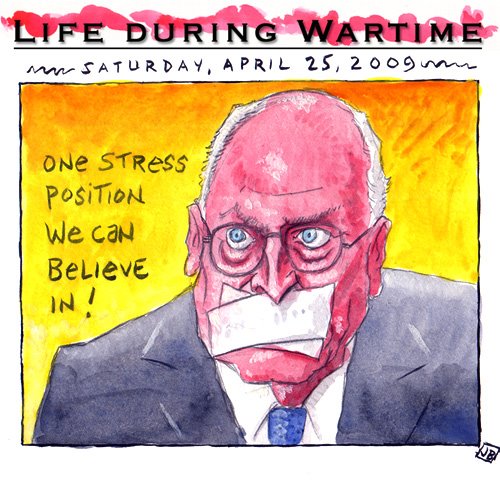
Cartoon by Charlie Loving / The Rag Blog
Cartoon by Charlie Loving / The Rag Blog

The following column by John Zorabedian on the mushrooming and quite frightening growth of “conspiracism” was passed along to us by Carl Davidson. It was first published on Examiner.com on April 11, 2009. After that, we post a related feature by Zorabedian, from April 9, 2009, on Austin conspiracy meister Alex Jones, that is followed by some vitriolic reactions from Jones fans — and then a video trailer of Alex Jones’ film, “The Obama Deception.”
Thorne Dreyer / The Rag Blog / April 26, 2009
‘The conspiracy theorists, notably radio host and filmmaker Alex Jones, propose that President Obama is the frontman for a shadowy group of financiers who are pulling the strings, preparing to enslave the population through domestic surveillance and military-style policing, in the name of protecting their global empire — a New World Order.’
By John Zorabedian / April 11, 2009
See ‘Alex Jones exploits fear and populism, stokes paranoia and rage,’ By John Zorabedian, and a Video trailer from ‘The Obama Deception‘ by Alex Jones, Below.
Populist sentiment has reached feverish levels in recent months, as the economy melted down and the culprits, Wall Street bankers, walked away with millions in bonuses. The response to the global financial crisis has only added fuel to the fire, raising fears of one world government among a subculture of conspiracists and right-wing populists.
The conspiracy theorists, notably radio host and filmmaker Alex Jones, propose that President Obama is the frontman for a shadowy group of financiers who are pulling the strings, preparing to enslave the population through domestic surveillance and military-style policing, in the name of protecting their global empire — a New World Order.
But although Jones claims in his film The Obama Deception that the new president has long been groomed for his role as demagogue and enforcer of the new regime, the consiracy theory has had a long life of its own. Obama is a convenient vessel for their beliefs about our government.
The conspiracist, who is a believer in secret plots by select elites, oftentimes Jews, is a political type that has a long tradition in the United States. According to Chip Berlet of Political Research Associates, a think tank that studies right-wing social movements, conspiracism “is woven deeply into US culture and the process appears not just on the political right but in center and left constituencies as well.”
Berlet’s research underscores the importance of underlying emotions among the population — the scapegoating of minorities and fears of social and economic unrest — for conspiracy theories to take hold in the popular imagination. What adds to a conspiracy’s appeal is the apparent basis in fact of many of the conspiracists assertions.
The conspiracist “makes irrational leaps of logic in analyzing factual evidence in order to ‘prove’ connections, blames social conflicts on demonized scapegoats, and constructs a closed metaphysical worldview that is highly resistant to criticism,” Berlet explains.
For an example of how Jones’s websites distort facts to make these conspiracy theories seem like valid arguments, see my post Infowars.com claims Obama uses “mind control,” scientists say hogwash.
What makes these theories and fears so compelling to so many people is what also makes them dangerous to a rational society and potentially leads to violence. Berlet writes: “When conspiracist scapegoating occurs, the results can devastate a society, disrupting rational political discourse and creating targets who are harassed and even murdered.”
Mass movements
Something else, though, is stirring in our political discourse that resembles a mass movement. It consist of disaffected conservatives, many of whom feel abondoned by the Republican Party, some loyal to Rep. Ron Paul, others devoted followers of right-wing talk hosts like Glenn Beck and Rush Limbaugh, and others devoted to “nonpartisans” like Alex Jones.
Through meet-ups and social networking around events like the Tax Day Tea Parties being organized around the country, these groups, with members who, in some cases, share the worldview of the conspiracists and doomsday Rapturists, are forming a mass movement similar in its base of support to the militia movement of the 1990s.
Mass movements have also produced many positive, progressive changes in our society — the civil rights movement, to name just one. But mass movements also attract and give force to people whose normally antisocial tendencies produce something more fanatical and driven overall by hatred and fear.
The social theorist Eric Hoffer, in his 1951 book “The True Believer: Thoughts on the Nature of Mass Movements,” explains that the fanatic joins a mass movement to escape his own inadequacy and frustration. Through hatred of outsiders, secret elites, minorites, Jews and one’s own failures, a mass movement coalesces.
Hoffer writes: “[T]he chief preoccupation of an active mass movement is to instill in its followers a facility for united action and self-sacrifice … by stripping each human entity of its distinctness and autonomy and turning it into an an anonymous particle with no will and no judgment of its own.”
The movement is not only unified in its drive and purpose, but it is homogenous in its convictions and intolerant of dissent or criticism of itself or its leaders.
Source / Examiner.com / Posted April 11, 2009

Alex Jones exploits fear and populism, stokes paranoia and rage
By John Zorabedian / April 9, 2009
Radio host Alex Jones has one thing in common with his nemesis President Barack Obama; both men are masters of viral web 2.0 propaganda. Jones’s documentary-style film The Obama Deception has burned up the internet since it dropped on March 15, and no one can tell how many millions will see the video as it spreads by email and blogs across the globe.
Jones’s popularity among followers of his websites is undisputable, and he has spawned an army of attackers who fan out across the web and push his line, much like Obama’s supporters did during his long campaign for the presidency.
Jones’s PrisonPlanet.com and related websites like Infowars.com post articles, blogs and videos for the media consuming public. These popular sites inspire mimickers who defend Jones and his theories to the hilt.
What exactly is the content of this message that inspires such ardent followers? For both President Obama and Jones, it is some kind of combined effect of their sheer media presence that is almost unidentifiable by the pieces of their media works alone. But some examples will help paint a picture.
The trailer for The Obama Deception shown below shows us how the tone of Jones’s voice gives weight to his words. When combined with crafty imagery, music and spliced together clips of video, Jones builds up extraordinary tension.
Watching this effective piece of filmmaking, it is hard not to have an emotional response–is it fear, hatred, anger, sadness, anxiety that we feel?
Jones’s style is not unlike right-wing tlak show hosts Rush Limbaugh or
Glenn Beck, who exploit similar emotions in their appeals to traditional values and outrage over moral failures. But Jones is not a conservative, and he does another thing well that resembles Obama’s success as well–he plays both sides of the debate to get everyone thinking the same thing.Jones uses the film to rail against Wall Street, global finance and the wars in Afghanistan and Iraq to get everyone agreeing with something–things are really bad and the world is a terrible, dangerous place ruled by horrible men.
In this construct, President Obama is the perfect lynchpin to set off a firestorm of righteous, fearful anger. A black man from Chicago with a Muslim name and a Harvard Law degree, who came from nowhere to win the presidency in a year of chaotic disorde rin the financial markets, a new president who has had to rapidly acclimate himself and insinuate himself into the small cadre of powerful people who are running the show.
Obama’s European and Middle Eastern trip, like his last trip abroad, have had a dual effect. His supporters believe in him thoroughly, and his detractors find cause to dislike his every move.
Update: My humble effort to point out how Jones inspires fear and rage among his supporters spurred a torrent of comments from Jones fans, directed to this article by message boards on Infowars.com.
Rather than refute their claims to the contrary, I invite you to read their comments and assess the nature of their rhetoric and purpose of their comments for yourself.
Here are a few of the choicest ones (I have added emphasis where I believe it is useful):
TdoubleU says:
What you wrote about Alex will exploit fear populism, stokes of paranoia and rage towards you!
April 11, 2:08 PMPedro says:
I wish Alex Jones didnt have the job he has But unfortunately for us The globalist are Indeed Taking over and His network is tip of the Spear To kill this diabolical scum taking over.
April 10, 10:19 PMSovereignty Soldier says:
Are we fuming? Hell yeah. We are being forced into world government, we are being forced to lower our standard of living, we are being brainwashed from birth with propaganda. What the hell do you think we should feel. What am I supposed to leave my daughter? A world of slavery to pay debt to crooked bankers? Socialism? How about a world of eugenicists trying to kill her or sterilize her? What the hell is wrong with you journalists? Don’t you realize your gonna be victimized too. You are being used until no longer needed, then your a useless eater like us.
April 10, 9:39 PMSovereignty Soldier says:
Wow, alot of my fellow Americans are awake here. Good! RIP corporate media, go away, we hate you and your lies. Can you feel anger and hate directed to you. Independent and foreign press is the wave of the future. Hope you lose your “journalism” job, your home, and your ability to feed yourself you globalist traitor!
April 10, 5:47 PMfukyu says:
it amazes me this guy was ignorant enough to say alex promotes fear and rage when the rage comes from the acts of our so called “president” and the fear that we all feel comes from the direction this country has gone in the last 9 years. and to top it all off this guy brings up the fact that our president is supposedly black(for all u idiots out there hes only 6.3% black,50% white n 43.7% muslim if u dont believe it do his geneology) and “he came out of nowhere”….you mean nowhere like being groomed for his position by kissinger for the last 20+ years……..i was just as happy everyone else was when america was actually able to elect what the people thought was an african american president…but then come to find out he is neither african nor american leaves a pretty bitter taste……alex jones always promotes peaceful solutions…journalists should do actual research before spouting defamatory statements…….oh wait i forgot you’re not a journalist,you’re a propagandist………..so i guess the NWO doesnt exist when they are announcing it all over the main stream media, WTC building 7 collapsed due to a fire on several floors when the 50+ story tower in beijing which was completely engulfed in flames didnt, and 12.8 trillion dollars was not funneled out of the economy into off shore banks(make sure u tell bloomberg….or does bloomberg not exist either)
April 10, 2:59 PMLogicRealityTruth says:
RE: Matt said it very will above.Alex, by telling us that scary things are being done in our good name, is not the cause of our fear.
That’s like calling Paul Revere a “fear-mongerer”.
“nah, the brittish aren’t coming, you’re just a paranoid conspiracy nut!”
Oh, and to BB, Alex lives very modestly for the amount of profit he actual brings in. He then cycles that money into making better films and expanding the reach of them. He makes more documentaries and gives them to the world for free!
I deeply respect Alex’s integrity as a peaceful humanitarian.
If you hear Alex talk about violence, it’s when he predicts that the NWO will force us to defend ourselves, which according to our Nation’s founding documents and principles, we most certainly WILL DEFEND OURSELVES.
April 10, 2:16 PMrick smith says:
Hay John the d_ck,
Have you noticed that most comments are AGAINST you and your trash writeding. Your nobody!! Your a CON– Alex is a true patriot.John go F__k Your self.
April 10, 2:12 PMShannon says:
You come to Me carrying the heads of Kings threatening my people with death and slavery. You insult my Queen. This is Sparta (kick in the stomach to the messenger, soldiers kill the escorts and down into the bottomless pit they go) Does anybody remember the movie 300?
April 10, 1:47 PMJan says:
You better believe I’m angry. I’m angry that people like you – who consider themselves “journalists” – slander and malign others because you don’t agree. I’m angry that America has been hijacked and you’re helping them. I’m angry because I know that nothing will be done to change it – also you are not helping. God help you take the blinders off your eyes and look into the Hell that America has been thrown into because unethical “elected” officials. WAKE UP!
April 10, 12:38 PMSource Examiner.com
Trailer — ‘The Obama Deception’ by Alex Jones

The implications of a global flu pandemic superimposed upon the USA at this point in our history are staggering.
By Larry Ray / The Rag Blog / April 26, 2009
As President Obama’s first 100 days draw to a close, another potentially deadly challenge has been added to the myriad complex problems he has been thoughtfully working his way through. Identified as “Swine Flu” or the N1H1 flu virus, it has a potential to become a global flu pandemic.
Starting out already waist-deep in the mess passed along by Mssrs. Bush and Cheney including wars in the Middle East, America’s battered international image, and an economic nightmare, Mr. Obama has nonetheless gotten high marks for his leadership and action. But the implications of a global flu pandemic superimposed upon the USA at this point in our history are staggering.
I read John M. Barry’s “The Great Influenza” a few years ago. Barry meticulously details the “Spanish Flu” of 1918. His finely researched narrative left me astounded at the far-reaching damage a ravaging pandemic can cause. It is generally agreed that a flu outbreak on a Kansas farm originating from farm animals infected soldiers in Kansas who quickly spread the disease to other soldiers headed for the WWI front in Europe.
It became known as the Spanish Flu because Spain was one of the only countries left with a free press and they reported on the panic with detailed accounts of how those infected bled from the nose and ears and turned blue from lack of oxygen. Helpless victims suffered aches saying they felt like their bones being broken. Death came quickly. The rampaging pandemic killed more people in one year than the plagues of the Middle Ages killed in a century. A third of the world’s population were infected and worldwide deaths are estimated at between 50 and 100 million.
In the United States, as troops mustered in huge cantonment camps across the nation preparing to ship out to the war in Europe, President Woodrow Wilson, a conservative Democrat and religious fundamentalist, clamped down on press freedom. Citing patriotism and the need to keep Americans on a righteous and patriotic path, he personally prevented even a mention of the raging flu. A public health official in Philadelphia even allowed young soldiers to mingle with the public during a parade. The bureaucrat noted that, “It is not patriotic to establish guidelines to protect the civilian public.” Whole ships, loaded with sick and contagious troops were sent on to Europe rather than admit openly that there was a problem. They were aptly called “death ships” with most of the troops dead or wretchedly ill as they arrived in European ports.
The mass movement of people to and across Europe hastened the spread of the virulent flu. In the USA, people were most infectious to others during the days before they experienced any symptoms themselves. Conservatively, some 10% of those who came down with the flu died. In the fall and winter of 1918 more people died from influenza than from any other pandemic before or since.
This Sunday afternoon, unlike Woodrow Wilson, the White House declared a “public health emergency” and the center for disease control announced, “We expect to see more cases of swine flu. As we continue to look for cases, I expect we’re going to find them.”
Politics remain at play as the seriousness of the current swine flu outbreak is assessed. The World Health Organization is taking its characteristic cautious stance calling the present flu outbreak in Mexico that has already killed 80 and infected another 1,800, “a public health emergency of international concern.” The W.H.O. is holding off till Tuesday to announce if it will raise the threat level. Dr. Keiji Fukuda, deputy director general of the W.H.O. is reported to have said, “Raising the threat to level 4 “would be a very serious signal that countries ought to be dusting off pandemic plans.”
So, here we are at the early, early stages of a strain of flu that seems to have developed in pigs and birds, mutated into a unique virus that is now being transmitted directly from human to human. Mexico seems to be the originating point. Already milder cases are being reported and identified across America and cases are now being reported in Canada.
We have learned a great deal about combating pandemics, and have new medicines and vaccines that were nonexistent in 1918. But it is sobering to realize that by the early 1990s, 75 years of research had failed to answer a most basic question about the 1918 pandemic: why was it so fatal? In recent years we have made some progress, but there are still lots of unanswered questions.
Today human fear and uncertainty remain pretty basic. A growing number of Americans are already barely living on the edge following loss of jobs, homes, savings, and face health care that is out of reach because of lack of insurance. America’s vulnerability to a sweeping killer flu pandemic is doubly frightening today because so many families are already terribly weakened from the results of another endemic disease . . . greed.
Fat greed that grew and mutated while the host banks and financial giants flourished. Then just like in some farmyard in Mexico the greed genes intermingled, mutated and became toxic. We are already fighting the results of a pandemic of unregulated greed. Now real swine instead of figurative pigs once again spawn a physically life-sapping virus.
If ever there was a need for cool, serious and effective leadership and consensus, it is today. This also is a chance for detached conservative Republicans to get over their loss at the polls, and instead of throwing tepid tea parties, to come together and join in positive action to see America safely through what could be even tougher times ahead.
Swine flu is non partisan.
[Retired journalist Larry Ray is a Texas native and former Austin television news anchor. He also posts at The iHandbill.]
Source / Daily Kos
Thanks to Keith Joseph / The Rag Blog

A Victim of War Crimes Perpetrated by His Fellow Americans: Free John Walker Lindh!
By Dave Lindorff / April 24, 2009
Enough is enough. It’s time to free John Walker Lindh, poster boy for George Bush’s, Dick Cheney’s and John Ashcroft’s “War on Terror,” and quite likely first victim of these men’s secret campaign of torture.
Lindh is in the seventh year of a 20-year sentence for “carrying a weapon” in Afghanistan and for “providing assistance” to an enemy of the United States. The first charge is ridiculously minor (after all, it’s what almost everyone in Texas does everyday). The second is actually a violation of a law intended for use against US companies that trade with proscribed countries on a government “no trade” list like Cuba or North Korea. Ordinarily, violation results in a fine for the executives involved.
As I wrote in an article in the Nation back in 2005, Lindh was put away for so long on these minor charges not because he was a traitor or terrorist, but because he was living proof, back at the time of his trial in 2002, that the US had begun a program of brutal torture in the so-called “War on Terror.”
Lindh, in fact, was never really an enemy of the US. Son of middle-class white parents in suburban San Francisco, he had developed an interest in Islam which, following his graduation from high school, he decided to pursue by traveling to Pakistan. In 2001, still just 18, he began studying at a madrassa, or religious school. There he learned about the struggle of the Taliban in neighboring Afghanistan to free that nation of the influence of warlords who had collaborated with a brutal Soviet occupation. Attracted by what he saw as the nobility of that struggle, and with a youthful sense of adventure, Lindh volunteered. In August of 2001, at a time that Bush administration officials were negotiating about a possible oil pipeline deal with Afghanistan’s Taliban government, and talking about providing funds for a program to get farmers to shift away from opium cultivation to more useful cash crops—a time, that is, when the Taliban were not considered America’s enemy—Lindh crossed the border and started training to be a fighter.
A month later, of course, the World Trade Center in New York, and the Pentagon in Washington, were struck, and the US launched a war against both Al Qaeda and the Taliban in Afghanistan. Lindh, who was still just in training, found himself suddenly in the wilds of the Hindu Kush, with American planes bombing and with US Special Forces troops firing at him and his companions. Whether he wanted to be there or not, he was in no position at that point to change sides. You don’t just walk away from a group like the Taliban—especially if you are an American to begin with, and you’re deep in the bush.
Eventually, a malnourished, dehydrated, and wounded (in the leg) Lindh was taken prisoner along with a group of Taliban fighters by American forces.
At that point, when the Americans discovered they had an American among their captives, Lindh’s situation worsened dramatically. Stripped naked and duct-taped, blindfolded, to a gurney, he was then placed inside an unheated metal shipping container. Left there for days in the cold and dark, Lindh was removed once daily and interrogated. His interrogators allegedly tortured him, as well as threatening him repeatedly with death. His pleas to see an attorney were mocked, and word that his parents had already arranged for representation was withheld from him (a situation that led a government lawyer involved in his case to protest and ultimately resign).
At some point during this abuse, Lindh caved in to his fears of death at the hands of his captors and signed a “confession” to being a traitor to America. At that point he was flown back to the US, where Attorney General Ashcroft touted him as the “American Taliban,” initially vowing to try him for treason (which carries a death sentence).
What changed things dramatically, as I reported in 2005, was a decision by Federal District Judge T.S. Ellis to permit Lindh and his defense team—over strenuous government objections-to challenge that confession letter by introducing evidence that Lindh had signed it while being subjected to torture at Bagram Airbase in Afghanistan. The judge ruled that Lindh would be able to call witnesses from Guantanamo and from among the soldiers where he had been held in Afghanistan. Suddenly, the Justice Department, in the person of Michael Chertoff, then head of the Justice Department’s criminal division and in charge of terrorism prosecutions, offered a one-day-only, take-it-or-leave-it plea deal. Chertoff (acting with an alacrity that stands in marked contrast to his sluggish response time several years later when faced, as secretary of homeland security, with the Katrina disaster in New Orleans) offered to drop the serious charges in return for a guilty plea to the two minor charges, but only if—and this is the key—Lindh would cancel the scheduled evidentiary hearing into torture [emphasis added]. Under the offered deal, Lindh would also have to sign a letter stating that he had “not been intentionally mistreated” by his American captors, and waiving any right to claim such mistreatment or torture any time in the future. Lindh agreed, but following sentencing, Chertoff also added a gag order, technically a “special administrative measure,” barring Lindh from even talking about his experience for the duration of his sentence.
It is now clear why Chertoff went to such hurried great lengths to completely silence Lindh. His wasn’t just the first trial in the “War on Terror.” Lindh was the first victim of the secret Bush/Cheney torture program.
Now that we have the trail of memoranda that set that wretched torture campaign in motion, it’s time for the Obama Justice Department to free Lindh. If President Obama and Attorney General Eric Holder think Alaska Sen. Ted Stevens suffered from malicious prosecution and were willing to drop charges against him, they certainly should toss out the case against Lindh, who besides being innocent of the original serious charges leveled against him, was a victim of war crimes perpetrated by his own fellow Americans, and authorized by his own government. His arrest, conviction and sentencing are a travesty of justice, and perhaps, given that torture is a criminal offense in the US Code, even constitute a crime of cover-up.
Free John Walker Lindh!
[Dave Lindorff is a Philadelphia-based journalist and columnist. His latest book is “The Case for Impeachment” (St. Martin’s Press, 2006 and now available in paperback). He can be reached at dlindorff@mindspring.com.]
Source / CounterPunch

The tea baggers versus Obama formulation should be seen as opportunistic political theater that avoids a serious examination of the important issues.
By Roger Baker / The Rag Blog / April 25, 2009
Should we diss the tea-baggers?
Maybe in a thoughtful well-delineated sort of way, but not in a right-versus-left emotional way.
This is an interesting issue because it’s sort of like 1933 with severe economic crisis and a fearful angry populace looking for answers and scapegoats. The kind of situation that breeds extreme political movements and bad solutions.
I think the tea bag thing was a sort of Libertarian-initiated objection to Obama’s spending. The tea bags are a taxing rebellion by those who don’t expect to benefit much. It was opportunistically promoted by Fox news and right wing Republicans.
The left wants to interpret tea baggers as an early stage of Fascism, which it could indeed become. But, IMO, that is a simplistic interpretation that encourages needless class division for the following reason.
The Obama administration is so far siding with the banks; using taxpayer money to bail them out while the banks maintain financial control. Heads they win tails we lose. A situation so ovbiously unfair that EVERYONE should be holding tea bag-like demos opposing the vast majority of out tax obligation money so far going to prop up a sick and dysfunctional banker-ocracy.
The tea baggers are saying that the government is largely squandering our money as usual on future tax obligations where we take the hit without many results. Which seems legitimate to me.
The left should say, yes, that is true, but the proper solution is to form a united front, a broad reform coalition, against the banks and their army of lobbyists. Let the banks and their attached social class fail. They gambled and lost, so what now?
Now set up a parallel government financing system to do the things we really need to do like universal health care, local food production, restructuring society away from carbon fuel addiction, etc.
The tea baggers versus Obama formulation should be seen as opportunistic political theater that avoids a serious examination of the important issues.
A lot of this strong political energy should be harnessed into a broad political reform movement directed against the central issue of big banker-led corporate domination that leads to most of our other problems.
FDR sided with the people and against the banks. So why can’t Obama do that too?
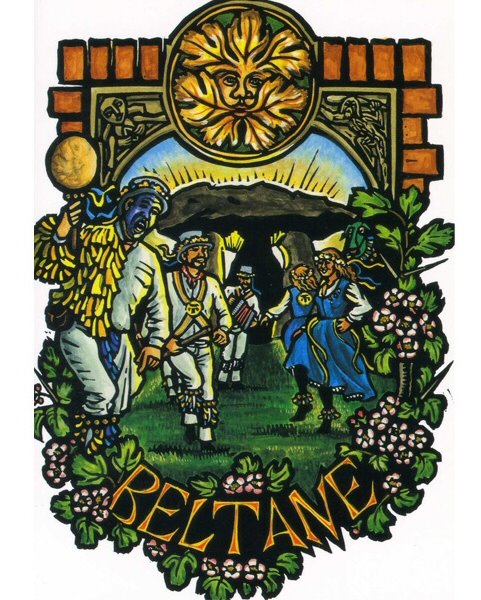
Beltane Seasonal Message
By Kate Braun / The Rag Blog / April 25, 2009
Thursday, April 30, 2009, is Beltane, a “cross-quarter” celebration on the Wheel of Life. Solstices and equinoxes are quarterly events; the cross-quarter events mark the midpoints between them. Beltane falls between the Vernal Equinox and the Summer Solstice. Another name for this festival is May Day. If it is more convenient for you to plan your celebration for Friday, May 1, that is also a good date. If at all possible, plan to celebrate outdoors.
Beltane is a fire festival, a fertility festival, a time to take action on the activities and projects you planned at your Vernal Equinox celebration. Decorations and activities at Beltane honor the union of God and Goddess; it is the last of the three spring fertility festivals of Imbolc/Candlemas and Ostara/Vernal Equinox. Braiding, plaiting, weaving in a May Pole dance all represent the union that will generate “a good harvest” in every sense of that phrase.
All colors are appropriate to wear and to use in your decorations. Any fire is appropriate, be it in the charcoal grill, as many candles on the table, or a bonfire in a field. It is good to add blessing, prosperity, fertility, and/or protection incense to your fire (or in a separate cauldron if you are lighting only candles). You and your guests should process or dance through the smoke, waving it towards each other. Include household pets in this blessing.
If you have a large group, select a man and woman to represent Robin Hood and Maid Marian. Crown them with wreaths of fresh (not artificial) greenery and/or braided ribbons. At Robin’s invocation, Maid Marian blesses all living beings that walk/dance through the smoke. Then, she and Robin Hood kiss, symbolizing the Blessed Union.
Feast on sweets of all kinds, dairy foods, all red fruits, green salads, all breads and cereals. Make toasts with red or pink wine punch. Be sure to recognize all household guardians, brownies, and garden sprites. Serve them small tidbits from the table and decorate a living tree or shrub with bells, wind chimes, and pretty ribbons. Keep in mind that red carnations will attract to your garden faeries who enjoy healing animals, clover is wildly attractive to faeries, rosemary protects the property from baneful faeries, and lobelia attracts winged faeries.
This is a joyful time. Ring bells, blow horns, make a Joyful Noise!
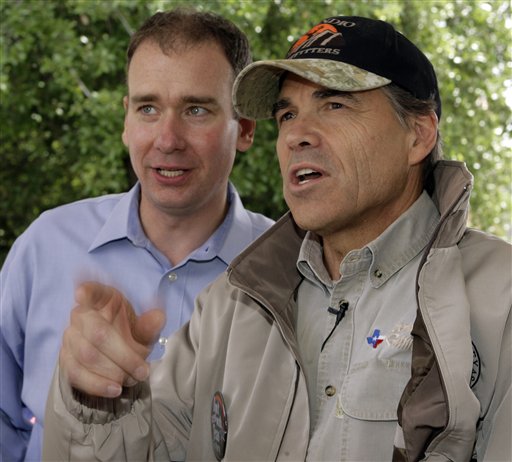
The Governor of Texas is one bad haircut away from Blagojevichian levels of gubernatorial gooberness.
By Jim Hightower / April 25, 2009.
Texas politics has long been a source of great amusement for the people of our state, but it’s often a source of bafflement for people beyond our borders. So, sometimes there’s a need to explain what’s going on here, and this is one of those times. In this case, the explanation is simple: Our governor is a goober.
Texans have known this for some time, but Rick Perry — whose chief claim to fame had been that he has a spectacular head of hair — was unknown outside the state, so he was our little secret. Now, however, Perry’s gooberness has gone viral. He’s a YouTube phenomenon and a new darling of the GOP kingmaker, Rush Limbaugh.
He broke into national consciousness on April 15, when he spoke at one of the many “teabag” rallies that Republican operatives set up around the country to protest Barack Obama’s deficit spending. Appearing in Austin before a boisterous crowd of about a thousand people who were fuming about everything from gun control to the Wall Street bailout, the governor opened with this shot: “I’m sure you’re not just a bunch of right-wing extremists. But if you are, I’m with you.”
Then came the thought that earned him YouTuber-of-the-Day and a favorable mention from Lord Limbaugh: Texas just, By God, might secede from the union if Washington keeps messing with us.
No doubt many people in the other 49 states burst into applause at this notion, but it caused quite a bit of consternation among home folks, who rather like being both Texans and Americans. Was he serious? Apparently so. When reporters asked afterward about the legality of such a rash move, Perry pointed out that Texas had entered the union under a unique agreement that gave us the right “to leave if we decided to do that.” Good line, but utterly untrue. No such agreement ever existed.
Facts aside, what’s going through Perry’s perfectly coiffed head is that polls presently show him losing his re-election bid in next year’s Republican primary. Thus, he’s scrambling to excite the most rabid of the Texas GOP fringe by posing as a courageous defender of Texas sovereignty against meddlers from Washington. His chief target is $555 million in federal money that would come to our state under Obama’s economic stimulus program. This is desperately needed money that would go straight into our nearly broke unemployment compensation fund, but he asserts that he will reject it, claiming that the federal dollars come with strings attached.
The “strings” are actually simple and sensible threads of reform that would help the hard-hit workaday people of our state. For example, the federal stimulus program requires that part-time workers also be eligible for unemployment comp. In today’s harsh economy, when part-time work is all that many people can get, they ought to be covered, too. But common sense has never met Perry, much less befriended him, so he continues to posture: “We think it’s time to draw the line in the sand and tell Washington that no longer are we going to accept their oppressive hand in the state of Texas,” he recently spewed.
Yes, comandante, but what about that other $16 billion or so in Obama’s stimulus money that you are going accept? For example, while you slap away funds to help working folks, you’re eagerly reaching out with your other hand to grab $1.2 billion of those filthy federal dollars to put into your pet project of saddling Texans with a network of privatized toll roads. If it’s a matter of principle, why not reject all federal money? Indeed, you used to be a cotton farmer who benefited from Washington’s crop subsidy programs — how oppressive was that for you?
OK, our governor has not quite attained the Blagojevichian level of gubernatorial gooberness, but he’s a striver, and he’s only one bad haircut away from getting to the top. Illinois, we feel your pain.
Copyright 2009 Creators Syndicate Inc.
[Texan Jim Hightower is a national radio commentator, writer, public speaker, and author of the new book, Swim Against the Current: Even a Dead Fish Can Go With the Flow(Wiley, March 2008). He publishes the monthly “Hightower Lowdown,” co-edited by Phillip Frazer.]
Source / AlterNet
Thanks to David Hamilton / The Rag Blog

What I found striking in this volume is the extent to which advances in behavioral science and pedagogical experience have played almost no role in the evolution of corrections: Sentencing policies and prison conditions stem from basic, often religious and primitive, attitudes and beliefs.
By Eve Pell / April 24, 2009
[Cruel and Unusual: The Culture of Punishment in America, Dr. Anne-Marie Cusac; Yale University Press, 336 pp; $27.50]
When I was involved in prison reform in the early 1970s, my colleagues and I were shocked that our state, California, held so many prisoners, 22,000. Now, 35 years later, California’s prison population has ballooned to 165,000. Since 1973, the U.S. imprisonment rate has multiplied more than five times; we hold the dubious distinction of being the most imprisoning nation in the world.
Why does our nation, with 5 percent of the world’s people, have 25 percent of its prisoners, about 2 million? Why do we keep at least 25,000, maybe double that, in long-term isolation, a situation known to cause insanity, when other nations have more effective and humane methods of managing violence? Why do we inflict intense physical pain, sometimes to the point of death, with tasers, stun belts and restraint chairs at a time when violent crime is not on the increase?
Anne-Marie Cusac, an award-winning reporter (and published poet) with years of covering criminal justice issues, tackles these questions in her book, Cruel and Unusual: The Culture of Punishment in America. In just-the-facts, dispassionate style, she traces the methods our society has used to discipline offenders and nonconformists, from 17th century floggings and stocks in the public square to 21st century super-maxes designed to deprive inmates of human contact. She chronicles the motivations driving such vengeful practices, from Protestant Christian beliefs in the devil and the sinful nature of man to public fear of crime whipped up by television cop shows and exploited by politicians.
Cusac, who teaches communications at Roosevelt University in Chicago, also traces the history of American attitudes toward punishment from colonial days and the Rev. Jonathan Edwards in 1740 to modern-day Christian conservatives and the tortures at Abu Ghraib. (“All are by nature the children of wrath and heirs of hell…” preached Edwards, insisting that the wills of young “vipers” must be beaten down and broken.) Using a wide lens, she examines the intentional infliction of pain as a means to discipline and reform those who are deemed in need of chastisement, from lashings with cat-o’-nine-tails and boring holes in tongues with a hot iron, as was done in the Massachusetts colony, to hooding and beating inmates, or shackling them to restraint poles in freezing cold or searing heat, as happened recently in some U. S. prisons. The same philosophy extends to families: I was astonished to find that one can order spanking rods—a Speak Softly Spanking Stick, for instance—on the Internet, for administering biblically sanctioned punishment to one’s child.
Cusac links changes in attitudes toward punishment to changes in American culture. After the American Revolution, for example, the former colonists mitigated the harsh penalties imposed under monarchical rule, finding lesser punishments more in line with their new democracy. She describes the evolution of reformist and anti-reformist movements as they swept across the nation and conflicted with one another.
What I found striking in this volume is the extent to which advances in behavioral science and pedagogical experience have played almost no role in the evolution of corrections: Sentencing policies and prison conditions stem from basic, often religious and primitive, attitudes and beliefs. The role prisons should play in our society is answered, most often, by the response to this question: Should offenders have their wills broken by pain and suffering, or do they retain some capacity for rehabilitation? As Cusac shows, we lean far more toward the former.
In some schools of thought over the years, human beings were considered capable of redemption; in others, human nature was considered sinful and meriting only punishment. There were brief periods when, under the sway of Enlightenment principles, reformers like Benjamin Rush opposed physical punishment and the death penalty in favor of hard labor and solitary confinement—then viewed as a less punitive means of helping criminals to reform. But over time, as punishment migrated from the public square to walled-off prison cells, these “reforms” morphed into abuses—what Cusac calls “punishment creep,” perhaps because prisons were hidden from public view.
In the 19th century, liberationist movements evoked conflicting ideas: Abolitionists organized to stop the whipping and bondage of slavery, while pro-slavers favored the use of pain to maintain domination. In the Navy before 1850, officers used flogging to maintain discipline; later on, reformers organized to make flogging aboard ships unlawful.
Throughout the book, prevailing philosophies of punishment seesaw back and forth as intellectual, political and religious tides wax and wane. Emerging science sometimes plays a role in the debates; backlashes to prevailing philosophies result in hardening or softening of attitudes. (Though attitudes seem to harden much more easily than they soften.) Cusac summarizes the work of scholars, commentators and law enforcement officials in order to arrive at generalizations describing different eras.
But, perhaps because the ebb and flow of ideas is itself untidy and irregular, in some chapters the book skips and hops unevenly from one thing to another. Cusac quotes Source 1 saying A, Source 2 saying B, Source 3 saying something else. I wanted a firmer hand on the tiller in such places. A chapter that aims to show how the urge to punish surged in the 1970s cites Time and Newsweek on the wickedness of Generation Xers; gives blow-by-blow accounts of the plots of “Rosemary’s Baby, “The Exorcist” and “Carrie,” movies that portray a powerful devil; and describes the conservative backlash against the liberal movements of the ’60s like feminism and gay liberation. With “evil” alive and abroad in the land, societal problems are blamed not on racism or poverty, but rather on bad individuals and drug “fiends,” an underclass whose personal vices lead to crime. This climate of opinion provides fodder for neoconservatives to justify longer sentences, harsher prison conditions and larger expenditures for new prisons. It may be that Cusac’s pop history is on the money, but it seemed a little glib and I wasn’t quite convinced.
But there is no discounting the lasting influence of the vengeful Protestant ethos. This attitude lives on, epitomized by the little-known Christian Reconstructionist movement, which advocates a theocracy in which sins like blasphemy merit death by stoning or burning alive. Cusac links this movement to Oklahoma Sen. Tom Coburn, who has said that he favors the death penalty for doctors who perform abortions.
My criticisms of her work are relatively minor: In writing about the short-lived movement for prison reform of the early 1970s, Cusac misstates the title of Jessica Mitford’s exposé of prisons, calling it “Kind and Unusual Punishment.” The correct title is “Kind and Usual Punishment,” Mitford’s ironic take on the corrections industry and its failings. More generally, when Cusac relies on selections from many diverse sources, the resulting argument feels a bit mushy. By contrast, where she relies on her own years of reporting, the book takes on real power. Her linkage of the abuses of Abu Ghraib to American correctional practices is a case in point—the atrocities at Abu Ghraib, even threatening inmates with dogs, had happened in American prisons. “George Bush said he was exporting democracy to Iraq,” she writes, “but he seems to have exported a much uglier aspect of American public policy—some of the most sadistic practices employed in the U.S. prison system.”
Her chronicling of severe injury and death to inmates from new technology shocks the conscience—stun belts, tasers, restraint chairs, supermax isolation … she cites names and circumstances of outrage after outrage. Back in the 1970s, when I was a newbie reporter writing about brutality behind bars, I thought that if the public only knew that terrible cruelty was taking place, there would be an outcry and corrections officials would have to change their ways. I don’t think that anymore. There is no powerful constituency, no high-paid K Street lobby, no fat source of campaign funding from those who want to reform our prisons. And though Cusac says her book demonstrates the hazards of ignoring the current situation, it is difficult for me to see how it will help to bring about much-needed change. People don’t care enough about the thousands of inmates in solitary slowly going insane, week in and week out. In fact, a politician who is seen as being soft on criminals stands to lose big—remember Michael Dukakis and Willie Horton?
But I am encouraged by Sen. Jim Webb, D-Va., who recently spoke out against our useless, expensive and counterproductive incarceration establishment. As he says, it is a system of “chaos and mismanagement” that wastes billions of dollars as it creates “violence, physical abuse and hate.” Anne-Marie Cusac’s book helps to explain how we got to this awful pass.
Source / truthdig
Find Cruel and Unusual: The Culture of Punishment in America at Amazon.com.
Thanks to Jeffrey Segal / The Rag Blog

A food revolution in the making from Victory Gardens to White House Lawn
By Michael Pollan / April 20, 2009
Last month, First Lady Michelle Obama broke ground for a new vegetable garden on the South lawn of the White House. It’s the first time food will be grown at the President’s residence since Eleanor Roosevelt planted her Victory Garden during World War II. Back then, as part of the war effort, the government rationed many foods and the shortage of labor and transportation fuel made it difficult for farmers to harvest and deliver fruits and vegetables to market. The First Lady’s Victory Garden set an example for the entire nation: they too could produce their own fruits and vegetables. Nearly 20 million Americans answered the call. They planted gardens in backyards, empty lots, and even on city rooftops. Neighbors pooled their resources, planted different types of produce, and formed cooperatives–all in the name of patriotism.
By the time the war ended, home gardeners were producing 40 percent of the United States’ produce. They aided the war effort by creating local food networks that provided much needed produce in their own communities, but their effect on the social fabric of the nation was greater still. Urban and suburban farmers were considered morale boosters who had found a great sense of empowerment through their own dedication to a common cause.
Today, home gardening is on the rise, but most Americans still know very little about where their food comes from, and even less about how the changes in temperature and precipitation associated with global warming may alter national food production. If you break down the fossil fuel consumption of the American economy by sector, agriculture consumes 19 percent of the total, second only to transportation. Unfortunately, there hasn’t been a concentrated effort to mitigate its impact on the climate. If we want to make significant progress in reducing global warming we will need to wean the American food system off its heavy 20th-century diet of fossil fuel and put it back on a diet of contemporary solar energy.
Resolarizing the food economy can support diversified farming and shorten the distance from farm to fork, shrinking the amount of fossil fuel in the American diet. A decentralized food system offers many other significant benefits: Food eaten closer to where it is grown is fresher and requires less processing, making it more nutritious, and whatever may be lost in efficiency by localizing food production is gained in resilience; regional food systems can better withstand all kinds of shocks.
Here are few examples of how we could start:
· Provide grants to towns and cities to build year-round indoor farmers’ markets.
· Make food-safety regulations sensitive to scale and marketplace, so that small producers selling direct off the farm or at a farmers’ market are not regulated as onerously as a multinational food manufacturer.
· Urge The U.S.D.A. to establish a Local Meat-Inspectors Corps to serve and support the local food processors that remain.
· Establish a Strategic Grain Reserve to prevent huge swings in commodity prices.
· Create incentives for hospitals and universities receiving federal funds to buy fresh local produce which would vastly expand regional agriculture and improve the diet of the millions of people these institutions feed.
This isn’t just about government reform. Organizations, businesses, and even individuals like you can help advance these key initiatives and support both the revival of food local food economies and the health of our nation.
Next month the Natural Resources Defense Council will honor individuals who have demonstrated leadership and innovation in the field of sustainable food in its first annual Growing Green Awards. As the Chair of the selection committee, I’m excited to be part of this initiative and join NRDC in recognizing the extraordinary contributions this years honorees have made in the areas of ecologically-integrated farming, climate and water stewardship, farmland preservation, and social responsibility. The Growing Green Awards is an opportunity to highlight the contribution individuals can make in creating a more sustainable future through better food production practices that improve the health of people and the planet.
Read the rest at the Source / OnEarth
Many thanks to Janet Gilles / The Rag Blog

“Clean Coal Dirty Lie” is a sign held by a depiction of a bee, meant to represent an Appalachian person, in the Beehive Design Collective’s newest collage drawing project: “The True Cost of Coal: Mountaintop Removal and the Fight For Our Future.”
There was much happening on the quad in celebration of Earth day on Wednesday. But somewhere off the quad, the distant sound of bees could be heard. A buzzing could be heard all over campus coming from the activity room of the Bowling and Billiards Center.
While there were not actually any bees in the Bowling and Billiards center, the Beehive Design Collective were creating quite the buzz. With original activist artwork and a presentation related to their newest project, the Bees brought social and environmental activism in the form of giant mural collages.
The Beehive Collective is a group of traveling artists and activists. They go from location to location spreading the messages behind their “anti-copyright” images. This group of 16 Bees work collectively, “as horizontal and non hierarchically as possible,” Tyler Bee said while giving a brief introduction about the Beehive Collective organization.
The Beehive Collective is a not for profit organization. Their collages tell stories that can serve as “an activist’s cheat sheet,” Tyler Bee said.
They take their artwork all over to tell their stories. They take the collages to organic fairs, protests, schools and many other locations, spreading the messages behind each meticulously created collage. Normally, there would be a whole swarm of “bees” with Tyler at an event like the one in the BBC, but for this particular presentation he was alone.
Based out of Machias, Maine, The Beehive Collective spends months, or more often years, creating gigantic murals of our smaller drawings.
“[We] collage and quilt smaller drawings together,” Tyler Bee said. “All the little stories, little projects, little communities all do their parts to create this bigger picture,” Tyler Bee continued, “[We try to] make sense of smaller stories to make a larger narrative.” This is how the Bees’ artwork relates to the world, on a theoretical level.
But, the Bees’ artwork relates to the world on a literal level as well. Past Beehive Collective collages deal with important topics such as globalization, corporate colonization and human rights, to name a few. And with their latest piece, environmental justice can be added to the list of important issues the Beehive collective’s artwork deals with.
In the collages there are no humans depicted, the only living beings in the Bees’ artwork are plants and animals. The Bees use different animals to represent people. They ask groups of people which animal they identify most with, and then use that animal in their drawings to stand in for those people.
“[This way we] avoid really stupid stereotypes of people,” Tyler Bee said, and also this is to serve as a reminder that humans are animals as well.
“The True Cost of Coal” is still unfinished, but even in its work-in-progress form it still struck awe into audience members.
“[The piece is] Really, really cool” Kyle Riley, a freshman history major, said.
The Bees’ latest project and the object of Wednesday’s presentation contained an extraordinary amount of detail. The approximately 5 foot by 12 foot canvas the piece was printed on contained countless individual scenes which each had its own little story.
Each of these scenes was interwoven and flowed seamlessly into the next scene. This makes it so one could find themselves looking at the other end of the collage just after starting to look at the fir end.
“It’s refreshing to get some insight on this issue,” Paul Nolley, a sophomore political science major, said.
Tyler Bee demonstrated how a piece of Beehive Collective artwork can serve as an “activist’s cheat sheet” with the presentation he gave. He told the story of America and its relation to coal.
The collage is separated into five sections, and when it is folded so that only the outside two sections are showing, there is a pleasant picture of the world before coal burning began. Then, the picture “opens up to show how mountain top removal mining rips the environment apart.”
Mountain top removal mining is the modern “mechanized” method of mining coal.
“If the mountain is a layer cake, the coal is the frosting in between layers,” Tyler said.
The mountain is blown up and the coal is scooped out by a machine called a dragline. After each layer of coal is removed, the next layer of rock is blown up and dumped into the valleys in between the mountains.
“There are [at least] 500 mountains no longer in existence [in Appalachia because of mountain top removal mining]” Tyler Bee said.
Mountain top removal mining reduces the amount of manpower needed. Approximately 200 miners are needed using traditional, less environmentally damaging deep mining techniques. But with mountain top removal mining, only 12 people are needed to do the work that previously would have taken 200. Therefore, Tyler Bee said, when coal companies say “coal means jobs for America,” it is a lie.
Mountain top removal is only the tip of the iceberg when it comes to discussing the true cost of coal. Burning coal is just as environmentally degrading, if not more.
“If the world stopped burning coal, this would be 80 percent of the solution to climate change,” Tyler Bee said.
Source / Daily Vidette at Illinois State University
Thorne Webb Dreyer, Editor