The Audacity of Obama : Centrist Appointments a Smoke Screen

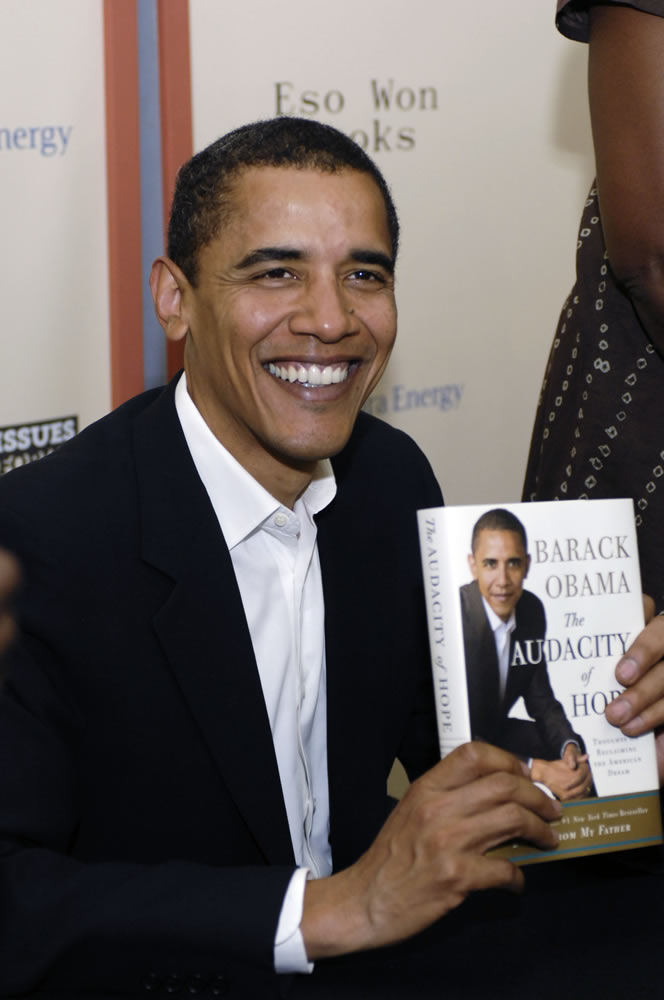
Barack Obama at a book signing in 2006. “The writing style of Audacity of Hope reveals how complex and perceptive Obama is.”

These various initiatives, which will collectively set the nation on a path towards energy independence, ending the war and redistributing financial resources downward, are presented as unconnected pieces of legislation but actually they are interlocking components of Obama’s coherent multi-layered agenda.

By Jeff Jones / The Rag Blog / November 29, 2008

Also see Obama Chooses an Unlikely Team of Hawks by Peter Beinart, Below.

I agree with Mark Rudd’s perceptive article Let’s Get Smart About Obama in The Rag Blog.

The writing style of Audacity of Hope reveals how complex and perceptive Obama is: he is hyper-literate, almost Ciceronian, and unlike most of his speeches, amazingly precise. He expresses what he thinks and feels without resorting to binary thinking. He does not interpret reality in black and white terms: he is the nation’s first post-modern president.

All of this leads me to the same conclusion reached by Mark Rudd: this guy is really SMART. He is setting Hillary Clinton up to be the public face of his effort to end the Iraq war. He is going to sucessfully extort green concessions from Detroit. He will convince Congress to pass a major stimulus package that will lay the foundation for the development of an alternative energy manufacturing industry. He will do something to help reduce housing foreclosures. He will let the Bush tax cuts for the wealthy expire.

These various initiatives, which will collectively set the nation on a path towards energy independence, ending the war and redistributing financial resources downward, are presented as unconnected pieces of legislation but actually they are interlocking components of Obama’s coherent multi-layered agenda. His centrist appointments are a smokescreen; they co-opt the moderate center, but he’s still the commander in chief. Even Lenin would be impressed!

Please see Mark Rudd : Let’s Get Smart About Obama by Mark Rudd / The Rag Blog / Nov. 28, 2008

Obama Chooses an Unlikely Team of Hawks
By Peter Beinart / November 26, 2008

In liberal blogland, reports that Barack Obama will probably choose Hillary Clinton as Secretary of State and retired general James Jones as National Security Adviser and retain Robert Gates as Secretary of Defense have prompted a chorus of groans. “I feel incredibly frustrated,” wrote Chris Bowers on OpenLeft.com.

“Progressives are being entirely left out.”

A word of advice: cheer up. It’s precisely because Obama intends to pursue a genuinely progressive foreign policy that he’s surrounding himself with people who can guard his right flank at home. When George W. Bush wanted to sell the Iraq war, he trotted out Colin Powell–because Powell was nobody’s idea of a hawk. Now Obama may be preparing to do the reverse. To give himself cover for a withdrawal from Iraq and a diplomatic push with Iran, he’s surrounding himself with people like Gates, Clinton and Jones, who can’t be lampooned as doves.

To grasp the logic of this strategy, start with the fact that Obama’s likely national-security picks don’t actually disagree very much with the foreign policy he laid out during the campaign. Jones is on record calling the Iraq war a “debacle” and urging that the detention center at Guantánamo Bay be closed “tomorrow.” Gates has also reportedly pushed for closing Gitmo and for faster withdrawals from Iraq.

He has called a military strike against Iran a “strategic calamity,” urged diplomacy with Tehran’s mullahs and denounced the “creeping militarization” of U.S. foreign policy. (You don’t hear that from a Defense Secretary every day.) For her part, Hillary Clinton during the presidential campaign embraced an Iraq-withdrawal position virtually identical to Obama’s. And although they fought a sound-bite war over sitting down with the leaders of countries like Iran, the two candidates’ actual Iran policies were pretty much the same. Both wanted intensive diplomacy; both wanted to start it at lower levels and work up from there.

On key policy issues, Jones, Gates and Clinton aren’t significantly more hawkish than Obama. What they are is more hawkish symbolically. Gates is a Republican; Jones is a Marine general who once worked for John McCain; Clinton, as Senator from New York, has gained credibility with hawkish pro-Israel groups. In other words, what distinguishes Gates, Jones and Clinton isn’t their desire to shift Obama’s policies to the right; it’s their ability to persuade the right to give Obama’s policies a chance.

Obama knows that although Iraq has tarnished the GOP foreign policy brand, Democrats remain vulnerable. When the moderate Democratic group Third Way asked voters in September whom they trusted more on national security, Democrats trailed by 14 points. (The gap has widened substantially since late 2006.) On the question of “ensuring a strong military,” they trailed by 30 points–an astonishing figure, given that it is a Republican President who has stretched the Army to its breaking point.

Politically, therefore, Obama is playing with fire. If he accelerates troop withdrawals and violence in Iraq flares up again, the GOP will pounce. If he cuts a nuclear deal with Iran, it will probably do the same, accusing him of putting his faith in an inspection agreement that Tehran will never obey. And if he pushes hard for a peace deal between Israel and the Palestinians, right-leaning Jewish groups may cry foul. That’s the beauty of his emerging national-security team. Even Republicans will find it hard to call Gates and Jones latter-day Neville Chamberlains, and even many Likudniks will think twice before claiming that Hillary Clinton is in league with Hamas. (For cover on Israel, Obama will also be able to trot out Rahm Emanuel, whose father was born in Jerusalem, and, quite possibly, long-serving Middle East envoy Dennis Ross, who is tight with the pro-Israel lobby.)

Obama understands that foreign policy is, in international-relations-speak, a two-sided game. To get your way, you not only have to convince other governments; you also have to convince the folks back home. Bill Clinton negotiated the Kyoto Protocol on global warming with well over 100 other countries but couldn’t get it through the 100-member U.S. Senate. He crafted a nuclear agreement with North Korea but saw it sabotaged by a Republican Congress that wouldn’t provide sufficient money to carry it out. Obama knows that while it’s a tough world out there, it’s tough here as well. In Gates, Jones and Clinton, he’s found people who can do more than sell his foreign policy to Iranians, Iraqis and Israelis; they can sell it to Americans too.

[Beinart is a senior fellow at the Council on Foreign Relations.]

Source / Time

Thanks to Thomas Cleaver / The Rag Blog

Posted in Rag Bloggers | Tagged , , , | 3 Comments

Palestine: On the Eve of Destruction

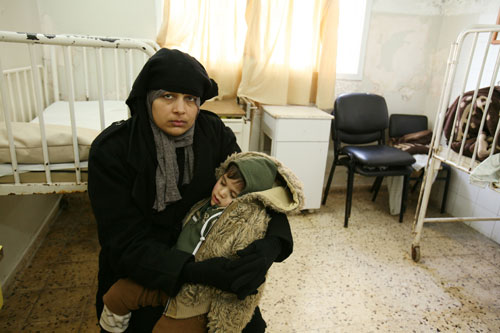
Mahmoud, 4, is held by his mother at Al Nasser Hospital in the Rimal area of Gaza City. The room is cold due to the fuel blockade. Mahmoud is receiving oxygen at the hospital for an immune disorder, but his health is deteriorating, as the sanctions have prevented his getting essential medicines and milk. Photo: UNICEF.

Is Anyone Listening? Gaza’s Death Throes
By Sonja Karkar / November 28, 2008

What kind of government in the 21st century can deny another people basic human rights – that is, the right to food, water, shelter, security and dignity?

What kind of government imposes draconian sanctions on another people for democratically electing a government not to its liking?

What kind of government seals a heavily populated territory of 1.5 million people so that no person can enter or leave without permission, fishermen cannot fish in their own waters, and world food aid cannot be delivered to the starving population?

What kind of government shuts off fuel, water and electricity and then rains down on the people, bombs and artillery fire?

The answer is – no government of integrity.

And yet, government after government in Israel continues to demand recognition and accolades as a first world democracy superior to all others, despite Israel’s flouting of international law, its human rights abuses and the criminality and corruption of Israeli leaders. Worse still, the world has acquiesced and has welcomed every Israeli administration into its fold as a favoured guest.

This should give everyone pause to revisit our noble declarations of independence and human rights, ethics, morality, religious beliefs, civil liberties and the rule of law. Are they just for show or do they really mean something? Are they intended only for some people or for all people?

Israel’s President Shimon Peres is just one of the many leaders who have furthered Israel’s aggressive policies and programs and yet he has been honoured with a knighthood from the Queen and is likely to be honoured with a lecture series named after him at Oxford University’s Balliol College. Dubious honours indeed, for a man who helped to forcibly expel 750,000 Palestinians from their homeland in the 1948 war.

Today, we are witnessing in Gaza the kind of ghetto the world thought it would never see again and the comparison was conjured up early this year by Israel’s deputy defence minister Matan Vilnai when he threatened “a bigger holocaust (shoah)” against the Palestinians in Gaza. Later, he explained away his use of the word as meaning “disaster”, when in fact it has emotional connotations well known to everyone. Either way, the threat was ominous enough.

The slow death that is being visited on the Palestinians in Gaza is finding its first victims in more than 400 critically ill patients who are being prevented from leaving Gaza for urgent medical attention in Israeli or Arab hospitals. Thousands of other patients are being turned away from hospitals suffering from a severe shortage of 300 different kinds of medicines.

The hospitals have been deprived of medicines and equipment for so long now, that the trickle of supplies finally being allowed through, can no longer meet the minimum daily needs of the Palestinian civilian population. Similarly, the energy fuel being shipped in, is barely enough to operate the Gaza power plant for one day.

This drip-feeding of aid was suggested by Israeli Prime Ministerial adviser Dov Weisglas who said in February 2006: “The idea is to put the Palestinians on a diet, but not make them die of hunger.”

Such a malevolent policy has led to a steady increase in malnutrition as people are being starved of their staples of life. Not only have the flourmills been forced to shut down because fuel and power have run out, but now all wheat supplies have been exhausted. Out of the 72 bakeries operating in the Gaza Strip, 29 have completely stopped baking bread and others are expected to follow. This means that even the most staple of all foods – bread – will soon not be available for a hungry population.

A Red Cross report describes the effects of the siege as “devastating”. Seventy per cent of the population is suffering from food insecurity while the suspension of food aid distribution to some 750,000 refugees in the pitiful camps in Gaza since 4 November, has further devastated Palestinians with no recourse to other alternatives.

The United Nations, Amnesty International and Human Rights Watch have all called Israel’s blockade ”cruel”. Former president Jimmy Carter makes no apology for describing the situation as “a heinous atrocity” amounting to a war crime.

In Britain, Oxfam’s CEO Barbara Stocking has strongly criticised the Foreign Secretary David Miliband for not mentioning the “human desperation” in Gaza on his recent trip to Israel and Palestine.

Israel’s tactics though may be unravelling.

So draconian has been Israel’s closure of Gaza, the world’s biggest media organisations including the New York Times are outraged that their journalists have been banned from entering the Gaza Strip and have protested in writing to Israel’s Prime Minister Ehud Olmert.

Christian leaders have also been excluded from Gaza. Last week, Israel prevented Archbishop Franco, the Papal Nuncio in Israel, from celebrating mass to mark the beginning of Advent in the holy weeks leading up to Christmas.

And in the occupied West Bank, Israeli Minister Ehud Barak has approved the building of hundreds more illegal settlement units with a flagrant disregard of the peace process agreements, further frustrating the current US administration eager to produce a solution before the end of its term.

What is truly astonishing is the world’s silence in the face of all this. The shameful rush to grant Israel every honour and recognition so that it will be saved from the historical ignominy of having orchestrated the destruction of Palestinian society, is nothing short of unconscionable.

[Sonja Karkar is the founder and president of Women for Palestine and one of the founders and co-convener of Australians for Palestine in Melbourne, Australia. She is also the editor of www.australiansforpalestine.com and contributes articles on Palestine regularly to various publications. She can be contacted at Source / CounterPunch

The Rag Blog

Posted in RagBlog | Tagged , , | Leave a comment

James Retherford : Steven Heller, The New York Times, and our Little ‘Blog of Record’

New York Times writer Steven Heller, himself a legend in the realm of cutting edge graphic design.

Our little blog’s expansion in reach and impact continues to impress (at least it impresses us!).

Our hits have increased in less then a year from 50 on a good day to around 1,000. Maybe not up there with the really big boys but — what’s important to us — we’ve gained a significant and loyal following, are attracting contributors of quality from all over the world and are being taken seriously across the web. Our stories are reposted widely and The Rag Blog is linked to from an impressive number and range of internet locations. Just one example, The Progressive Magazine’s home page has been including Carl Davidson’s Rag Blog article on Obama and the left as one of its four featured “Links from the Editors.”

On Thanksgiving, the arts pages of the New York Times had a piece on the death of New Left artist and activist Frank Cieciorka that quoted from and linked to The Rag Blog. Good to see that we’re considered a “blog of record” by the newspaper of same.

Our James Retherford comments on writer Steven Heller — himself something of an icon in the worlds of graphic design and criticism — and his Times article. Jim, a veteran of the sixties underground press is a writer and graphic designer who has also taught graphic design.

Thorne Dreyer / The Rag Blog / November 29, 2008

‘I am greatly impressed by the indication that The Rag Blog is reaching an audience among New York creative intellectuals. I am equally impressed at how much Heller continues to pay attention to progressive undercurrents far afield from his New York City base.’
By James Retherford / The Rag Blog / November 29, 2008

Steven Heller — the writer of the New York Times Frank Cieciorka obituary in which The Rag Blog is cited — is a typography and design authority I have trusted for many many years. More than that, he is a very big force in the graphics design world — an extraordinary combination of designer, historian, and educator.

With wit, ironic detachment, firm historical grounding, Heller has deconstructed and demythologized the symbols of commerce and power in many books (beginning with Man Bites Man w/ foreword by Tom Wolfe, 1981), a vast number of magazine articles (including contributions to Mother Jones and Emigre), and major exhibits — notably “Political Art” (American Institute of Graphic Arts) and “Art Against War” (Parsons School of Design). His most recent book is Iron Fists: Branding the 20th-Century Totalitarian State (Phaidon, 2008).

He currently is co-chair of the MFA Designer as Author program at NYC’s School of Visual Arts.

Heller was a senior art director at The New York Times and was a regular contributor to the incomparably quirky and iconic typography trade quarterly, U&lc, founded by the late great Herb Lubalin of Avant Garde font and magazine fame. From 1973 to its print demise in 1999, U&lc rocked the design world with bold, brash, and pungent visual offerings featuring type designs marketed by the International Typeface Corporation (ITC), the publication’s parent company. If the graphic design profession had its Mad Magazine, this was it! Don’t even think about asking me for a loan of any of my 15-20 years of vintage black and white U&lc back issues.

(Personal note: Years ago, a musician/drug abuser friend of mine was being offered a “career intervention” at a Houston advertising agency and came to me for advice on how to demonstrate his readiness to accept the new challenge. My first piece of advice: get a free subscription to U&lc and have it sent to his new office before he arrived to start the job. Fait accompli!)

Heller’s insight and historical perspective figured prominently as I worked with department chair Luis Guerra in the early 1980s to develop a new “History of Visual Communication” course for the Austin Community College Commercial Art program.

His scholarship also has contributed greatly to my own quirky enthusiasm for typographical minutiae.

I am greatly impressed by the indication that The Rag Blog is reaching an audience among New York creative intellectuals. I am equally impressed at how much Heller continues to pay attention to progressive undercurrents far afield from his New York City base.

Please see Frank Cieciorka, Designer for the Left, Is Dead at 69 by Steven Heller / The New York Times / Nov. 27, 2008

And Legendary Artist of the New Left : Frank Cieciorka Dead at 69 / The Rag Blog / Nov. 25, 2008

The Rag Blog

Posted in Rag Bloggers | Tagged , , | 1 Comment

Pollan on the Politics of Food

Michael Pollan. Photo: Ken Light.

Michael Pollan’s Food for Thought
By Michael Winship / November 27, 2008

The writer and activist Michael Pollan has no interest in becoming Barack Obama’s Secretary of Agriculture, thank you very much, even though there are a lot of people who think he’d be perfect for the job.

Pollan disagrees. Laughing, he told my colleague Bill Moyers on the latest edition of public television’s Bill Moyers Journal, “I have an understanding of my strengths and limitations… I don’t want this job,” then turned serious as he added, “What Obama needs to do, if he indeed wants to make change in this area — and that isn’t clear yet that he does, at least in his first term — I think we need a food policy czar in the White House because the challenge is not just what we do with agriculture, it’s connecting the dots between agriculture and public health, between agriculture and energy and climate change, agriculture and education.”

There’s been an Internet-fueled citizen’s movement to draft Pollan for the cabinet post. As the author of countless articles and such books as The Omnivore’s Dilemma: A Natural History of Four Meals and In Defense of Food: An Eater’s Manifesto, his thorough reporting, literally getting his hands dirty working on American farms and writing about it, has made him one of our country’s greatest experts on how and what we eat.

In an open letter to whoever would become our next president — or “Farmer in Chief,” as he put it in the October 12th New York Times Magazine — Pollan wrote, “It may surprise you to learn that among the issues that will occupy much of your time in the coming years is one you barely mentioned during the campaign: food. Food policy is not something American presidents have had to give much thought to, at least since the Nixon administration — the last time high food prices presented a serious political peril…

“But with a suddenness that has taken us all by surprise, the era of cheap and abundant food appears to be drawing to a close. What this means is that you, like so many other leaders through history, will find yourself confronting the fact — so easy to overlook these past few years — that the health of a nation’s food system is a critical issue of national security. Food is about to demand your attention.”

In 2007, before the financial meltdown had even struck, some 32 million Americans — at least one in nine households — had trouble putting enough food on the table. Now, according to the Wall Street Journal, food banks across the country are struggling to meet a surge of people uncertain about their next meal. They’ve seen a 20% increase in demand — middle class families, they say, account for most of the growth.

And the day before our annual Thanksgiving binge, the Washington Post reported, “The number of Americans on food stamps is poised to exceed 30 million for the first time this month, surpassing the historic high set in 2005 after Hurricane Katrina.”

Contrast this with the big bucks being shelled out in the recent $307 billion farm bill, much of it going to massive agribusinesses — “A welfare program,” as Time Magazine described it, “for the megafarms that use the most fuel, water, and pesticides; emit the most greenhouse gases; grow the most fattening crops; hire the most illegals and depopulate rural America.”

In a press conference on Tuesday, President-elect Obama cited a report released this week by the Government Accountability Office: “From 2003 to 2006, millionaire farmers received $49 million in crop subsidies even though they were earning more than the $2.5 million cutoff to qualify for such subsidies,” he said. “If this is true, it is a prime example of the kind of waste I intend to end as president.”

All well and good, but as a senator, Barack Obama supported that monster farm bill (although he was absent for the actual roll call). He also supported the production of ethanol (a politically expedient move when the Iowa Democratic caucuses were at stake), even though using corn for fuel rather than food raises the price of grain and results in huge emissions of greenhouse gases.

Thus, where food and agriculture are concerned, connecting the dots, as Michael Pollan told Bill Moyers, is a tortuous journey involving internecine politics, international diplomacy, big business, every branch of government and every issue from morbid obesity to homeland security.

Pollan is hopeful that Obama will take advantage of his oratorical skills and bully pulpit to set an example for the American people, perhaps even suggesting “meatless Mondays” for the country — which, according to Pollan, would have the ecological effect of taking 30-40 million cars off the road for a year — and encouraging home gardening and eating locally; supporting the small farmers who grow fresh food nearby — without chemicals or subsidies.

“I think we have to figure out different solutions in different places, and it’s not all or nothing,” he said. “We need to let a thousand flowers bloom. We need to try many things in many places, and figure out what works…

“Vote with your fork, for a different kind of food. Go to the farmer’s market. Get out of the supermarket… Plant a garden… Declare your independence from the culture of fast food.”

Regardless of who Obama chooses as his Ag Secretary, it will be interesting to see if the new president sees fit to make Pollan an unofficial advisor on food issues, an influential voice in his — you should excuse the expression — kitchen cabinet.

[Michael Winship is senior writer of the weekly public affairs program Bill Moyers Journal, which airs Friday night on PBS. Check local airtimes or comment at The Moyers Blog at www.pbs.org/moyers.]

Source / Common Dreams

The Rag Blog

Posted in RagBlog | Tagged , , , , | Leave a comment

Deepak Chopra to Obama : Mumbai an Opportunity

Deepak Chopra. Graphic from Salon.

Deepak Chopra argues for a cool-headed response, saying that this is “Obama’s opportunity to actually harness the help of the Muslims.”

Mumbai Attacks: ‘If You Go After the Wrong People, You Convert Moderates into Extremists’
November 28, 2008

See Video, Below.

The Indian city of Mumbai exploded into chaos early Thursday morning as gunmen launched a series of attacks across the country’s commercial capital, killing scores of people and taking hostages in two luxury hotels frequented by Westerners.

CNN’s Larry King spoke with author Deepak Chopra about the situation.

Larry King: Where were you born in India, Deepak?

Deepak Chopra: I was born in Delhi, but I have been in these hotels many, many times. I have stayed there, so I know the scene; I know the restaurants. I have been trying to get in touch with my friends and relatives, some of whom I have spoken to, some of whom I can’t speak to. The lines are jammed. We’re texting each other.

A friend of mine from Egypt was in the restaurant at the Taj hotel when the firing started, and somehow she managed to avoid the fray, hid in a basement and is now holed up in a room which is right next to the Taj hotel and is waiting to be told what to do.

The situation is complex, Larry, because it could inflame to proportions that we cannot even imagine. It has to be contained. We now recognize that this is a global problem, with only a global effort can solve this.

And you know, one of the things that I think is happening is that these militant terrorist groups are actually terrified that [President-elect Barack] Obama’s gestures to the rest of the Muslim world may actually overturn the tables on them by alienating them from the rest of the Muslim world, so they’re reacting to this.

You know, this is Obama’s opportunity to actually harness the help of the Muslims.

You know, there’s 1.8 billion Muslims in the world. That’s 25 percent of the population of the world. It’s the fastest-growing religion in the world. We cannot, if we do not appease and actually recruit the help of this Muslim world, we’re going to have a problem on our hands.

And we cannot go after the wrong people, as we did after 9/11, because then the whole collateral damage that occurs actually aggravates the situation.

In India, this is particularly inflammatory, because there’s a rise of Hindu fundamentalism. We saw what that did in Gujarat, where, you know, Muslims were scorched and they were killed, and there was almost a genocide of the Muslims.

India has 150 million Muslims. That’s more Muslims in India than in Pakistan. So this is an opportunity right now for India and Pakistan to recognize this is their common problem. It’s not a Muslim problem right now; it’s a global problem.

King: Do you think that this is just the beginning, that there’s a potential impact, or more?

Chopra: There is a potential impact of a lot more carnage. But it can be contained. And right now, one of the questions [is, given] that there are militant groups that cross international boundaries, is who is financing this? Where is the money coming from? We have to ask very serious, honest questions. What role do we have in this? Are our petrodollars funding both sides of this war on terrorism? Why are we not asking the Saudis where that money is going that we give them? Is it going through this supply chain to Pakistan?

It’s not enough for Pakistan to condemn it. Pakistan should cooperate with India in uprooting this. They should be part of the surgery that is going to happen.

It’s not enough for Indians to blame Pakistanis. Indians should actually ask the Pakistanis to help them.

And it’s not enough for us to worry about Westerners being killed and Americans being killed. Every life is precious over there. We have got to get rid of this idea that this is an American problem or a Western problem. It’s a global problem, and we need a global solution, and we need the help of all the Muslims, 25 percent of the world’s population, to help us uproot this problem.

King: What does India immediately do?

Chopra: India at this moment has to contain any reactive violence from the fundamentalist Hindus, which is very likely and possible. So India has to condemn that by not blaming local Muslims. They have to identify the exact groups.

And the world has to be very careful that they don’t go after the wrong people. Because if you go after the wrong people, you convert moderates into extremists. It happens every time, and retribution against innocent people just because they have the same religion actually aggravates and perpetuates the problem.

King: Are you pessimistic?

Chopra: I think Mr. Obama has a real opportunity here, but a challenging opportunity, a creative opportunity.

Get rid of the phrase “war on terrorism.” Ask for a creative solution in which we all participate.

King: Is it because the war on terrorism really can never be won…?

Chopra: Because it’s an oxymoron. It’s an oxymoron, Larry, a war on war, a war on terrorism.

You know, terrorists call mechanized death from 35,000 feet above sea level with a press of a button also terror. We don’t call it that, because our soldiers are wearing uniforms. They don’t see what is happening, and innocent people are being killed. So, you know, terror is a term that you apply to the other.

Source / CNN / AlterNet

Here is a transcript of remarks by Deepak Chopra in an additional CNN interview.

Chopra: What we have seen in Mumbai has been brewing for a long time, and the war on terrorism and the attack on Iraq compounded the situation. What we call “collateral damage” and going after the wrong people actually turns moderates into extremists, and that inflammation then gets organized and appears as this disaster in Bombay. Now the worst thing that could happen is there’s a backlash on the Muslims from the fundamental Hindus in India, which then will perpetuate the problem. Inflammation will create more inflammation.

CNN: Let me jump in on that because you’re presuming something very important, which is that it’s Muslims who have carried out these attacks and, in some cases, with Washington in their sights.

Chopra: Ultimately the message is always toward Washington because it’s also the perception that Washington, in their way, directly or indirectly funds both sides of the war on terror. They fund our side, then our petrol dollars going to Saudi Arabia through Pakistan and ultimately these terrorist groups, which are very organized. You know Jonathan, it takes a lot of money to do this. It takes a lot of organization to do this. Where’s the money coming from, you know? The money is coming from the vested interests. I’m not talking about conspiracy theories, but what happens is, our policies, our foreign policies, actually perpetuate this problem. Because, you know, 25% of the world’s population is Muslim and they’re the fastest growing segment of the population of the world. The more we alienate the Muslim population, the more the moderates are likely to become extremists.

Source / Information Clearing House

Thanks to Carl Davidson / The Rag Blog

Posted in RagBlog | Tagged , , , , , , , | 1 Comment

One Family Is Changing the Face of Christmas

Colin Beavan plays with his daughter Isabella
at Washington Square Park near their home.
Photo: Paul Dunn/YES! Magazine

Christmas with No Presents
By Colin Beavan / November 26, 2008

One family’s daring experiment: Christmas without all the stuff.

If Christmas is about presents, then in 2007, my little family and I had no Christmas. I mean, we had the caroling and the uncle playing the piano and the cousins running around with my three-year-old, Isabella, and the grandfather coaxing her to sit on his lap and the good food.

We had, in other words, an amazingly good time.

What we didn’t have, though, was the average American’s $800 hole in our bank accounts, gouged out by Christmas-present spending. Nor did we have the credit card debt still unpaid by June. Nor the forcing of smiles for gifts we didn’t really want. Nor the buying of extra luggage to bring home those unwanted gifts. Nor the stressful rush of last-minute crowds at the mall.

Without presents, you see, we didn’t have the sensation that I, at least, normally associated with Christmas—the stress. And without stress or presents, it’s not Christmas, right? But of course it was. It was the best of Christmas, the part that, research shows, makes people happiest. It was all the upside without the downside.

Let me back up.

From November 2006 to November 2007, I and my little family—one wife, one toddler, one dog—embarked on a lifestyle experiment in which we tried to live with the lowest possible environmental impact (you can read about it on my blog NoImpactMan.com). Among other measures, the experiment included not making trash, not using any form of carbon-producing transportation, and not buying anything new.

This may sound like a lot of meaningless self-deprivation, but the question we wanted to answer was this: Does consuming fewer resources actually feel like deprivation, or is it possible that consuming less opens up another way of life that provides more enduring satisfaction? Or put another way, could we find a win-win way of life that might be happier both for us and for the planet?

Sometimes the answer was no. It may be better for the planet if we all decided not to buy big hunks of metal otherwise known as washing machines, but—believe me—washing my family’s clothes by hand did not make me happier.

Beavan drives the family vehicle.
Photo: Paul Dunn for YES! Magazine

On the other hand, eating local and riding bikes instead of driving cars allowed us to lose the spare tires around our guts, cure ourselves of longstanding skin problems and insomnia and become generally healthier. And not using electricity to power entertainment devices drew us closer together as a family and made us spend more time with friends.

Our experiences illustrated that some uses of planetary resources improve quality of life and some may not. Indeed, we could go a long way toward dealing with the crisis in our planetary habitat if we found a way to avoid those uses that don’t improve our lives—like the packaging that comprises 40 percent of trash in landfills, for example.

But as Christmas 2007 approached, the more pressing question for us was, did the season’s huge consumption of resources add to the Christmas experience or detract from it? Since one-sixth of all American retail sales (and as a consequence, a hefty proportion of our national planetary resource use) occurs during the holiday season, it’s a question worth asking.

Despite the fact that people spend relatively large portions of their income on gifts, as well as time shopping for and wrapping them, such behavior apparently contributes little to holiday joy.

I’ve already told you enough to let you guess how my little family’s experience played out, but you may be surprised to learn that our findings are backed up by bona fide psychological research: Even though oodles of presents at Christmas is the dominant American paradigm, it turns out that people who spend less and have less spent on them at Christmas actually enjoy the season more.

This, anyway, is the conclusion of a paper published in the Journal of Happiness Studies by researchers Tim Kasser of Knox College and Kennon M. Sheldon of the University of Missouri-Columbia. After studying the Christmas experiences of 117 individuals, they found that people who emphasized time spent with families and meaningful religious or spiritual activities had merrier Christmases.

“Despite the fact that people spend relatively large portions of their income on gifts, as well as time shopping for and wrapping them,” the researchers said, “such behavior apparently contributes little to holiday joy.” In fact, subjects who gave or received presents that represented a substantial percentage of their income, Kasser and Sheldon found, actually experienced less Christmas joy.

The Story of Stuff


A fun and fact-filled look at the underside of our production and consumption patterns.

WATCH THE FILM & LEARN 10 LITTLE AND BIG THINGS YOU CAN DO

Of course, this makes perfect sense. We all know in our hearts that treasuring meaningful experiences and spending time in valued relationships — at Christmas or any other part of the year — make us happier than getting more stuff.

But try telling that to the grandparents at Christmas time!

Try living out these lofty principles when the rest of your family and friends are swapping presents at the same rate as ever. You may find “bah humbugs” shouted in your direction more than once. That’s problematic, particularly if you’re hoping to inspire more sustainable lifestyle choices in other people. Nobody will be convinced by dogmatism or Grinch-like behavior.

The trick to a happy, sustainable, non-consumptive Christmas was not, we discovered, to ignore the expectations of the people we celebrated with. We didn’t want our loved ones to feel bad. Those who expected presents should get them, we decided. Gifts, after all, are associated with the exchange of love.

For us, the answer was to buy presents that did not require the exploitation of large amounts of planetary resources. My mother was very happy with the two massages she got. My father and his wife enjoyed the gift certificate to the fine dining, local-food restaurant in their neighborhood. Friends appreciated the theater tickets we bought them. And unlike those unwanted trinkets one sometimes buys for the “person who has everything,” our sustainable gifts, we felt, actually improved the recipients’ lives.

Still, my wife, Michelle, worried very much that it would be hard for Isabella if all the cousins had presents to open, but she didn’t. Try saying, “The research says you’ll be happier with less,” to a three-year-old. So Isabella’s Aunt Maureen contributed toys that her children had outgrown, and we wrapped them for Isabella.

When present-opening time came, Isabella didn’t care whether the present she was opening was for her or not. She didn’t even want the presents. She just wanted to open them. She didn’t want something to have later. She wanted to participate now. And when her Uncle Joe started playing the piano and singing, she got bored with the present opening anyway and went to sit with him on the piano bench.

Much to our surprise, she didn’t even want to take her cousins’ old toys home when the Christmas vacation was over. She’d already had her presents. What was important to her was what turned out to be important to us: the singing, the charades, the laughter, the time spent with family, and of course, the celebration.

Colin Beavan wrote this article as part of Sustainable Happiness, the Winter 2009 issue of YES! Magazine. Colin’s book about his No Impact Man experiment will be published by Farrar, Straus & Giroux in September 2009. Visit his blog at NoImpactMan.com.]

Source / Yes! Magazine

The Rag Blog

Posted in RagBlog | Tagged , | Leave a comment

Mark Rudd : Let’s Get Smart About Obama

In structuring his presidential campaign, Obama adapted methods he learned as a community organizer in the streets of Chicago.

‘He has a narrow mandate for change, without any direction specified. What he’s doing now is moving on the most popular issues — the environment, health care, and the economy.’

By Mark Rudd / The Rag Blog / November 28, 2008

If you’re anything like me, your inbox fills up daily with the cries and complaints of lefties. Just the mere mention of the names Hillary Clinton and Lawrence Summers alone conjure up a litany of horrendous right-wingers appointed to top level positions.

Betrayal is the name of the game.

But wait a second. Let’s talk about a few things:

* Obama is a very strategic thinker. He knew precisely what it would take to get elected and didn’t blow it. He used community organizing methods to mobilize a base consisting of many people who had never voted before or who regularly don’t vote. Few other candidates in my lifetime have taken this road, which is contrary to conventional political wisdom. (Paul Wellstone was a wonderful exception to the rule.) But he also knew that what he said had to basically play to the center to not be run over by the press, the Republicans, scare centrist and cross-over voters away. He made it.

So he has a narrow mandate for change, without any direction specified. What he’s doing now is moving on the most popular issues — the environment, health care, and the economy. He’ll be progressive on the environment because that has broad popular support; health care will be extended to children, then made universal, but the medical, pharmaceutical, and insurance corporations will stay in place, perhaps yielding some power; the economic agenda will stress stimulation from the bottom sometimes and handouts to the top at other times. It will be pragmatic — Summers is talking about the growth in income disparity as a significant problem. On foreign policy and the wars and the use of the military there will be no change at all. That’s what keeping Gates at the Pentagon and Clinton at State and not prosecuting the torturers is saying.

And never, never threaten the military budget. That will unite a huge majority of congress against him.

And I agree with this strategy. Anything else will court sure defeat. Move on the stuff you can to a small but significant extent, gain support and confidence. Leave the military alone because they’re way too powerful. For now, until enough momentum is raised. By the second or third year of this recession, when stimulus is needed at the bottom, people may begin to discuss cutting the military budget if security is being increased through diplomacy and application of nascent international law.

* Obama plays basketball. I’m not much of an athlete, barely know the game, but one thing I do know is that you have to be able to look like you’re doing one thing but do another. That’s why all these conservative appointments are important: the strategy is feint to the right, move left. Any other strategy invites sure defeat. It would be stupid to do otherwise in this environment.

* Look to the second level appointments. There’s a whole govt. in waiting that Podesta has at the Center for American Progress. They’re mostly progressives, I’m told (except in military and foreign policy). Cheney was extremely effective at controlling policy by putting his people in at second-level positions.

* Read Obama’s first book, “Dreams from My Father.” The second section is the story of his three years doing community organizing in Chicago. It’s some of the best writing on organizing I’ve ever seen. That’s all it’s about, the core of the book. Obama learned many lessons of strategy and patience. Then read the first section, on his family and growing up in Hawaii and Indonesia. No other president has ever had such intimate experience with class and race. The final section is about his trip to Kenya. No other president has ever had an understanding of not only race, but colonialism and neo-colonialism, even using the terms. It’s the whole story he tells of his African family and especially his father, a victim of neo-colonialism. As was his step-father in Indonesia.

This is no stupid guy. I haven’t read The Audacity of Hope yet, but I plan to soon. I am ashamed that it took me so long to read Obama’s books. Had any of the stupid Republicans read his books, they never could have said, “We don’t know who this guy is.” You know every thought he’s ever had.

Our job now is to organize both inside and outside the Demo party. There’s already a big battle in the Demo party at every level. Here in the New Mexico State Legislature, the progressives are challenging the conservative Dems for leadership; the same is true in Congress. If you can’t stand to work in the party, work on putting mass pressure on issues such as healthcare and jobs and the war from outside.

Here’s my mantra: “Let’s put this country on our shoulders and get to work.”

The Rag Blog

Posted in Rag Bloggers | Tagged , , , , , , , | 13 Comments

Dude. 2,700-Year-Old Marijuana Stash Found in China.

Marijuana: A Tribute.

‘The 789 grams of dried cannabis was buried alongside a light-haired, blue-eyed Caucasian man, likely a shaman of the Gushi culture, near Turpan in northwestern China.’
By The Canadian Press / November 27, 2008

OTTAWA – Researchers say they have located the world’s oldest stash of marijuana, in a tomb in a remote part of China.

The cache of cannabis is about 2,700 years old and was clearly “cultivated for psychoactive purposes,” rather than as fibre for clothing or as food, says a research paper in the Journal of Experimental Botany.

The 789 grams of dried cannabis was buried alongside a light-haired, blue-eyed Caucasian man, likely a shaman of the Gushi culture, near Turpan in northwestern China.

The extremely dry conditions and alkaline soil acted as preservatives, allowing a team of scientists to carefully analyze the stash, which still looked green though it had lost its distinctive odour.

“To our knowledge, these investigations provide the oldest documentation of cannabis as a pharmacologically active agent,” says the newly published paper, whose lead author was American neurologist Dr. Ethan B. Russo.

Remnants of cannabis have been found in ancient Egypt and other sites, and the substance has been referred to by authors such as the Greek historian Herodotus. But the tomb stash is the oldest so far that could be thoroughly tested for its properties.

The 18 researchers, most of them based in China, subjected the cannabis to a battery of tests, including carbon dating and genetic analysis. Scientists also tried to germinate 100 of the seeds found in the cache, without success.

The marijuana was found to have a relatively high content of THC, the main active ingredient in cannabis, but the sample was too old to determine a precise percentage.

Researchers also could not determine whether the cannabis was smoked or ingested, as there were no pipes or other clues in the tomb of the shaman, who was about 45 years old.

The large cache was contained in a leather basket and in a wooden bowl, and was likely meant to be used by the shaman in the afterlife.

“This materially is unequivocally cannabis, and no material has previously had this degree of analysis possible,” Russo said in an interview from Missoula, Mont.

“It was common practice in burials to provide materials needed for the afterlife. No hemp or seeds were provided for fabric or food. Rather, cannabis as medicine or for visionary purposes was supplied.”

The tomb also contained bridles, archery equipment and a harp, confirming the man’s high social standing.

Russo is a full-time consultant with GW Pharmaceuticals, which makes Sativex, a cannabis-based medicine approved in Canada for pain linked to multiple sclerosis and cancer.

The company operates a cannabis-testing laboratory at a secret location in southern England to monitor crop quality for producing Sativex, and allowed Russo use of the facility for tests on 11 grams of the tomb cannabis.

Researchers needed about 10 months to cut red tape barring the transfer of the cannabis to England from China, Russo said.

The inter-disciplinary study was published this week by the British-based botany journal, which uses independent reviewers to ensure the accuracy and objectivity of all submitted papers.

The substance has been found in two of the 500 Gushi tombs excavated so far in northwestern China, indicating that cannabis was either restricted for use by a few individuals or was administered as a medicine to others through shamans, Russo said.

“It certainly does indicate that cannabis has been used by man for a variety of purposes for thousands of years.”

Russo, who had a neurology practice for 20 years, has previously published studies examining the history of cannabis.

“I hope we can avoid some of the political liabilities of the issue,” he said, referring to his latest paper.

The region of China where the tomb is located, Xinjiang, is considered an original source of many cannabis strains worldwide.

Source / Toronto Sun

Thanks to Larry Piltz / The Rag Blog

Posted in RagBlog | Tagged , , , | 1 Comment

Texas Toll Road Soup : The Environment, Federal Funding and Peak Oil

U.S. 281 N Toll Road near San Antonio.

‘”It’s been obvious to us from day one that TxDOT was willing to do and say anything to get a toll road on U.S. 281,” said Terri Hall of Texans Uniting for Reform and Freedom.’

By Roger Baker / The Rag Blog / November 28, 2008

Four points about TXDot and the Texas toll road mess.

1.) First of all, everyone who follows Texas road politics knows that the environmental studies done by The Texas Department of Transportation (TxDOT) are shoddy. They always conclude that whatever roads TxDOT wants are needed and will have a minimal environmental impact.

Federal officials now seem to agree that TxDOT’s studies have been substandard, after a citizen lawsuit forced the issue and after incriminating internal emails were revealed. The feds are now making the San Antonio’s TxDOT district do their federally required studies over again. The project, the US 281 toll road, would of course stimulate proposed development over the Aquifer where SA gets its drinking water. This “mistake” cost TxDOT $8 million and a delay of three years, so they fired somebody at the bottom. Here is the full story on that.

“It’s been obvious to us from day one that TxDOT was willing to do and say anything to get a toll road on U.S. 281,” said Terri Hall of Texans Uniting for Reform and Freedom. “I don’t think one biologist should take the fall. It should be management that pays the price.”

Another hugely important fact, which is off-limits for TxDOT’s environmental studies, is that the greenhouse gas emissions closely associated with sprawl development stimulated by new roads are causing irreversible climate change.

According to top climate scientists , this is a critical problem demanding immediate action.

2.) In the case of US 290 E, it has now been revealed that the consulting group that did the Traffic and Revenue studies for this road has quit the traffic forecasting business. Here are the details.

“…URS has established an international reputation as one of the leading consultants in toll financing. URS reports are fully acceptable to the financial community and rating agencies. In illustration of this, URS staff periodically gives seminars on toll road traffic and revenue forecasting to staffs of the three rating agencies… URS’s greatest strength in traffic and revenue work was in the US south. The collapse of political support for toll financing in Texas may have been a factor in the closure of their T&R work…”

These forecasts are work that the bond rating agencies rely on to justify the road’s ability to repay toll road bond debt. By not insuring its toll road bonds, the public would have to take the financial hit because the bond houses often respond to default by lowering the bond ratings for those local governments that participated in the bond sales. This is done in order to force the public to bail out the bond lenders.

The CTRMA (Central Texas Regional Mobility Authority) is refusing to reveal the US 290 E T&R studies on the grounds that the studies are still incomplete, in some sense, and therefore can be withheld by the CTRMA until just before the bond sales. The CTRMA’s refusal to reveal this data indicates that the numbers probably don’t look very good. More evidence is the fact that the US 290 E bonds are considered too expensive (meaning too risky) to be insured.

Meanwhile the CTRMA’s bond counsel, J.P. Morgan Chase Securities is advising CAMPO to change its toll road financing policies through the CTRMA, but they are doing this consulting without any written contract, according to CTRMA director Heiligenstein.

This fundamental change in CAMPO’s road funding policy to allow the transfer of funds within an undisclosed $1.5 billion toll road “system,” would violate the rules that were promised to the public and were unanimously adopted by CAMPO in Oct. 2007.

This change is being posted for a CAMPO vote next week. See agenda item 8 on CAMPO’s Dec. 1 2008 agenda.

3.) The FHWA issued a stinging rebuke to TxDOT last year, and withdrew potential federal approval for its TIFIA loan on SH 121. This is the category for federal loans that the CTRMA is depending on for roughly a third of its toll road financing. (Without the TIFIA loans, the financing for the CTRMA’s toll roads pretty much falls apart.)

The letter announces:

— withdrawal of the special exceptions program (SEP-15) waiver granted to expedite SH121 and two other unnamed highway projects for accelerated environmental clearance

— withdrawal of approvals for TIFIA federal loan and Private Activity Bonds support

— a request for reimbursement of the US Government for its expenses in incurred in considering and evaluating the TIFIA loan associated with SH121

— no future federal funds for SH121

— additional oversight and approval requirements for future Texas applications so long as Texas breach of federal law is not remedied

— more “far reaching compliance measures” if Texas violates federal law again…”

4.) The private bond money on which the CTRMA was depending for about another third of its of its toll road funding has virtually disappeared. Things have changed a whole lot in the last few months. We’re not operating under the Bush/Greenspan bubble with easy credit for long-range debt anymore. Yet this is the type of private funding that TxDOT, and now the CTRMA, were counting on to cover their huge funding shortfalls. Here and here are links that underline the fact that borrowing long-range funds for toll roads has now gotten extremely difficult:

Likely, Obama and the Democratic Congress will favor new transportation money to repair neglected US infrastructure, but it will likely come with new strings attached; being targeted for repair of existing facilities rather than building uninsured new toll roads. TxDOT is acting fast to try to capture what it can of these funds:

“Texas Department of Transportation officials have notified the state’s Metropolitan Planning Organizations to begin identifying ‘ready to go’ projects that could qualify for a new $700 billion federal stimulus proposed this week by President-elect Barack Obama. The package is intended to boost employment by rebuilding infrastructure, modernizing schools, and strengthening the alternative energy industry…”

Meanwhile the 40 year toll road bonds are nearly certain to default. This is because world oil production is peaking with no affordable near-term energy or technology to replace oil. If electric cars should become widely available, they are unlikely to be cheap, would require a lot of new electrical power capacity, and both US consumers and the government are heavily in debt. If you are short of transportation money, urban rail in combination with smart growth policies are a much wiser option than new and widened roads.

World crude oil production practically stopped growing in 2005. Since then, steadily increasing world demand bid the oil price up to $147 a few months ago. Such high oil prices are like a tax on everything involving transportation. This burden has now triggered a severe world recession. Whenever the world economy recovers, oil prices will soar again as the world bids for a limited oil supply:

The peak oil crisis: the Crash of 2008

“…Despite the dramatic drop in oil prices during the last three months, recent developments have only made the supply and demand situation worse. Oil consumption in the U.S. has fallen by 1.8 million barrels a day (b/d) or nearly 9 percent as compared to last year due to a combination of high prices, a slowing economy, and the shortages resulting from the hurricanes that tore up Gulf coast production and refining last month. During September, however, Chinese imports increased by 2 million b/d as Beijing took advantage of the low prices to start building its strategic reserves -so much for falling American demand. The major oil forecasting agencies are now saying that the increase in worldwide demand for oil will slow from rates seen in recent years, but that worldwide oil consumption is still forecast to increase this year and next…”

The Rag Blog

Posted in Rag Bloggers | Tagged , , , , , , | 2 Comments

Type your summary here


Type rest of the post here

Source

The Rag Blog


Posted in RagBlog | Leave a comment

SOFA* Finally Gets Through Iraqi Parliament


Iraqi parliament approves landmark US military pact
By Salam Faraj / November 27, 2008

BAGHDAD – Iraq’s parliament on Thursday approved a landmark military pact that will see all US troops withdraw by the end of 2011, eight years after the invasion that toppled Saddam Hussein and plunged the country into chaos.

After 11 months of hard-nosed negotiations with Washington and a flurry of domestic political horse-trading leading up to the vote, the pact was approved by 149 members of the 198 who attended the session of the 275-member assembly.

The final count of the votes was provided by the office of Deputy Parliamentary Speaker Khaled al-Attiya, which corrected an earlier count announced during the parliamentary session itself.

Prime Minister Nuri al-Maliki’s Shiite-led government succeeded in corralling a majority to support the historic agreement, including the main blocs representing the country’s Sunni and Kurdish minorities.

“Today if this passes it will be a victory for democracy because the opposition have done their part and the supporters have done their part,” government spokesman Ali al-Dabbagh said ahead of the vote.

“It is good to see that representatives have reached a national consensus.”

The agreement was approved by the cabinet a week ago and is now virtually guaranteed to be ratified by Iraq’s presidential council.

The United States hailed the passing of the agreement, saying it would “formalise a strong and equal partnership” in a statement from Ambassador Ryan Crocker and General Ray Odierno, the top commander of US troops in Iraq.

“(The agreement) provides the means to secure the significant security gains we have achieved together and to deter future aggression,” they said. “We congratulate the government of Iraq and its elected representatives.”

The measure would govern some 150,000 US troops stationed in over 400 bases when their UN mandate expires at the end of the year, giving the Iraqi government veto power over virtually all of their operations.

It marks a coming-of-age for Maliki’s government, which drove a hard bargain with Washington, securing a number of concessions over nearly a year of tough negotiations.

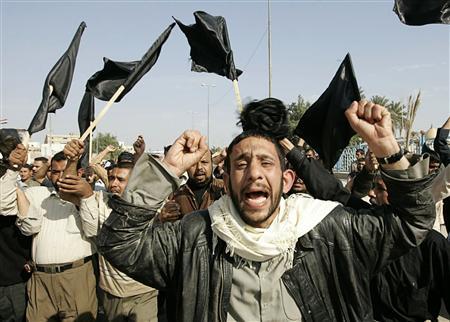
The accord has still drawn fire from certain quarters, including followers of the hardline Shiite cleric Moqtada al-Sadr, who reject any agreement with the United States and who protested at the accord in Baghdad last Friday.

As the voting on the pact began several Sadrist MPs pounded tables in a bid to hinder the vote, chanting “Yes, yes to Iraq… No, no, to the occupation,” but the 30-member bloc failed to defeat the agreement.

The vote came after a flurry of last-minute negotiations in which the main Sunni parties secured a package of political reforms from the government and a commitment to hold a referendum on the pact in the middle of next year.

Should the Iraqi government decide to cancel the pact after the referendum it would have to give Washington one year’s notice, meaning that troops would be allowed to remain in the country only until the middle of 2010.

The pact was made possible in part by dramatic improvements in security over the past year, with US and Iraqi forces largely containing the violence and the chaos that erupted in the wake of the 2003 US-led invasion and Saddam’s ouster.

But moments before the vote two people were killed and more than two dozen wounded in separate suicide bombings in northern Iraq targeting local security forces, underscoring the lingering violence in the country.

In the first attack south of the city of Mosul, a suicide car bomb rammed into a police patrol, killing two civilians and wounding 25 others, including 15 policemen, police said.

In the second, a bomber strapped with explosives wounded four people when the attacker targeted a police patrol in the centre of Mosul — which the US military considers the last urban bastion of Al-Qaeda in Iraq.

Iraq won a number of concessions in the agreement, including a hard timeline for withdrawal, the right to search US military cargo and the right to try US soldiers for crimes committed while they are off their bases and off-duty.

The agreement also requires that US troops obtain Iraqi permission for all military operations, and that they hand over the files of all detainees in US custody to the Iraqi authorities, who will decide their fate.

The pact also forbids US troops from using Iraq as a launch-pad or transit point for attacking another country, which may reassure Syria and Iran, according to the official Arabic version of the pact, translated by AFP.

Source / ABS/CBN News / Agence France-Presse

The Rag Blog

* SOFA = Status of Forces Agreement

Posted in RagBlog | Tagged , , | Leave a comment

Thanksgiving: No Reason for Indians to Celebrate

See video “Thanksgiving: A Native American View” below.

Native Blood: The Myth of Thanksgiving
By Mike Ely

It is a deep thing that people still celebrate the survival of the early colonists at Plymouth — by giving thanks to the Christian God who supposedly protected and championed the European invasion. The real meaning of all that, then and now, needs to be continually excavated. The myths and lies that surround the past are constantly draped over the horrors and tortures of our present.

I originally wrote this article a decade ago, and it has showed up in different places and publications usually around the holiday. Pass it on.

Every schoolchild in the U.S. has been taught that the Pilgrims of the Plymouth Colony invited the local Indians to a major harvest feast after surviving their first bitter year in New England. But the real history of Thanksgiving is a story of the murder of indigenous people and the theft of their land by European colonialists–and of the ruthless ways of capitalism.

illustration of a native american

Mike Ely’s articles is available as an MP3 recording. Click on the picture above.

In mid-winter 1620 the English ship Mayflower landed on the North American coast, delivering 102 exiles. The original Native people of this stretch of shoreline had already been killed off. In 1614 a British expedition had landed there. When they left they took 24 Indians as slaves and left smallpox behind. Three years of plague wiped out between 90 and 96 percent of the inhabitants of the coast, destroying most villages completely.

The Europeans landed and built their colony called “the Plymouth Plantation” near the deserted ruins of the Indian village of Pawtuxet. They ate from abandoned cornfields grown wild. Only one Pawtuxet named Squanto had survived–he had spent the last years as a slave to the English and Spanish in Europe. Squanto spoke the colonists’ language and taught them how to plant corn and how to catch fish until the first harvest. Squanto also helped the colonists negotiate a peace treaty with the nearby Wampanoag tribe, led by the chief Massasoit.

These were very lucky breaks for the colonists. The first Virginia settlement had been wiped out before they could establish themselves. Thanks to the good will of the Wampanoag, the settlers not only survived their first year but had an alliance with the Wampanoags that would give them almost two decades of peace.

John Winthrop, a founder of the Massahusetts Bay colony considered this wave of illness and death to be a divine miracle. He wrote to a friend in England, “But for the natives in these parts, God hath so pursued them, as for 300 miles space the greatest part of them are swept away by smallpox which still continues among them. So as God hath thereby cleared our title to this place, those who remain in these parts, being in all not 50, have put themselves under our protection.”

The deadly impact of European diseases and the good will of the Wampanoag allowed the settlers to survive their first year.

In celebration of their good fortune, the colony’s governor, William Bradford, declared a three-day feast of thanksgiving after that first harvest of 1621.

How the Puritans Stole the Land

But the peace that produced the Thanksgiving Feast of 1621 meant that the Puritans would have 15 years to establish a firm foothold on the coast. Until 1629 there were no more than 300 settlers in New England, scattered in small and isolated settlements. But their survival inspired a wave of Puritan invasion that soon established growing Massachusetts towns north of Plymouth: Boston and Salem. For 10 years, boatloads of new settlers came.

Early North America as Native peoples and Europe settlers collide

And as the number of Europeans increased, they proved not nearly so generous as the Wampanoags.

On arrival, the Puritans and other religious sects discussed “who legally owns all this land.” They had to decide this, not just because of Anglo-Saxon traditions, but because their particular way of farming was based on individual–not communal or tribal–ownership. This debate over land ownership reveals that bourgeois “rule of law” does not mean “protect the rights of the masses of people.”

Some settlers argued that the land belonged to the Indians. These forces were excommunicated and expelled. Massachusetts Governor Winthrop declared the Indians had not “subdued” the land, and therefore all uncultivated lands should, according to English Common Law, be considered “public domain.” This meant they belonged to the king. In short, the colonists decided they did not need to consult the Indians when they seized new lands, they only had to consult the representative of the crown (meaning the local governor).

The colonists embraced a line from Psalms 2:8. “Ask of me, and I shall give thee, the heathen for thine inheritance, and the uttermost parts of the earth for thy possession.” Since then, European settler states have similarly declared god their real estate agent: from the Boers seizing South Africa to the Zionists seizing Palestine.

The European immigrants took land and enslaved Indians to help them farm it. By 1637 there were about 2,000 British settlers. They pushed out from the coast and decided to remove the inhabitants.

The Shining City on the Hill

Where did the Plymouth and Massachusetts colonies of Puritan and “separatist” pilgrims come from and what were they really all about?

Governor Winthrop, a founder of the Massachusetts colony, said, “We shall be as a City upon a Hill, the eyes of all people are upon us.” The Mayflower Puritans had been driven out of England as subversives. The Puritans saw this religious colony as a model of a social and political order that they believed all of Europe should adopt.

The Puritan movement was part of a sweeping revolt within English society against the ruling feudal order of wealthy lords. Only a few decades after the establishment of Plymouth, the Puritan Revolution came to power in England. They killed the king, won a civil war, set up a short-lived republic, and brutally conquered the neighboring people of Ireland to create a larger national market.

The famous Puritan intolerance was part of a determined attempt to challenge the decadence and wastefulness of the rich aristocratic landlords of England. The Puritans wanted to use the power of state punishment to uproot old and still dominant ways of thinking and behaving.

The new ideas of the Puritans served the needs of merchant capitalist accumulation. The extreme discipline, thrift and modesty the Puritans demanded of each other corresponded to a new and emerging form of ownership and production. Their so-called “Protestant Ethic” was an early form of the capitalist ethic. From the beginning, the Puritan colonies intended to grow through capitalist trade–trading fish and fur with England while they traded pots, knives, axes, alcohol and other English goods with the Indians.

The New England were ruled by a government in which only the male heads of families had a voice. Women, Indians, slaves, servants, youth were neither heard nor represented. In the Puritan schoolbooks, the old law “honor thy father and thy mother” was interpreted to mean honoring “All our Superiors, whether in Family, School, Church, and Commonwealth.” And, the real truth was that the colonies were fundamentally controlled by the most powerful merchants.

The Puritan fathers believed they were the Chosen People of an infinite god and that this justified anything they did. They were Calvinists who believed that the vast majority of humanity was predestined to damnation. This meant that while they were firm in fighting for their own capitalist right to accumulate and prosper, they were quick to oppress the masses of people in Ireland, Scotland and North America, once they seized the power to set up their new bourgeois order. Those who rejected the narrow religious rules of the colonies were often simply expelled “out into the wilderness.”

The Massachusetts colony (north of Plymouth) was founded when Puritan stockholders had gotten control of an English trading company. The king had given this company the right to govern its own internal affairs, and in 1629 the stockholders simply voted to transfer the company to North American shores–making this colony literally a self-governing company of stockholders!

In U.S. schools, students are taught that the Mayflower compact of Plymouth contained the seeds of “modern democracy” and “rule of law.” But by looking at the actual history of the Puritans, we can see that this so-called “modern democracy” was (and still is) a capitalist democracy based on all kinds of oppression and serving the class interests of the ruling capitalists.

In short, the Puritan movement developed as an early revolutionary challenge to the old feudal order in England. They were the soul of primitive capitalist accumulation. And transferred to the shores of North America, they immediately revealed how heartless and oppressive that capitalist soul is.

The Birth of “The American Way of War”

In the Connecticut Valley, the powerful Pequot tribe had not entered an alliance with the British (as had the Narragansett, the Wampanoag, and the Massachusetts peoples). At first they were far from the centers of colonization. Then, in 1633, the British stole the land where the city of Hartford now sits–land which the Pequot had recently conquered from another tribe. That same year two British slave raiders were killed. The colonists demanded that the Indians who killed the slavers be turned over. The Pequot refused.

European colonists attack the Pequot village.

The Puritan preachers said, from Romans 13:2, “Whosoever therefore resisteth the power, resisteth the ordinance of God: and they that resist shall receive to themselves damnation.” The colonial governments gathered an armed force of 240 under the command of John Mason. They were joined by a thousand Narragansett warriors. The historian Francis Jennings writes: “Mason proposed to avoid attacking Pequot warriors which would have overtaxed his unseasoned, unreliable troops. Battle, as such, was not his purpose. Battle is only one of the ways to destroy an enemy’s will to fight. Massacre can accomplish the same end with less risk, and Mason had determined that massacre would be his objective.”

The colonist army surrounded a fortified Pequot village on the Mystic River. At sunrise, as the inhabitants slept, the Puritan soldiers set the village on fire.

William Bradford, Governor of Plymouth, wrote: “Those that escaped the fire were slain with the sword; some hewed to pieces, others run through with their rapiers, so that they were quickly dispatched and very few escaped. It was conceived they thus destroyed about 400 at this time. It was a fearful sight to see them thus frying in the fire…horrible was the stink and scent thereof, but the victory seemed a sweet sacrifice, and they gave the prayers thereof to God, who had wrought so wonderfully for them.”

Mason himself wrote: “It may be demanded…Should not Christians have more mercy and compassion? But…sometimes the Scripture declareth women and children must perish with their parents…. We had sufficient light from the word of God for our proceedings.”

Three hundred and fifty years later the Puritan phrase “a shining city on the hill” became a favorite quote of conservative speechwriters.

Discovering the Profits of Slavery

This so-called “Pequot war” was a one-sided murder and slaving expedition. Over 180 captives were taken. After consulting the bible again, in Leviticus 24:44, the colonial authorities found justification to kill most of the Pequot men and enslave the captured women and their children. Only 500 Pequot remained alive and free. In 1975 the official number of Pequot living in Connecticut was 21.

Some of the war captives were given to the Narragansett and Massachusetts allies of the British. Even before the arrival of Europeans, Native peoples of North America had widely practiced taking war captives from other tribes as hostages and slaves.

The remaining captives were sold to British plantation colonies in the West Indies to be worked to death in a new form of slavery that served the emerging capitalist world market. And with that, the merchants of Boston made a historic discovery: the profits they made from the sale of human beings virtually paid for the cost of seizing them.

One account says that enslaving Indians quickly became a “mania with speculators.” These early merchant capitalists of Massachusetts started to make genocide pay for itself. The slave trade, first in captured Indians and soon in kidnapped Africans, quickly became a backbone of New England merchant capitalism.

Thanksgiving in the Manhattan Colony

In 1641 the Dutch governor Kieft of Manhattan offered the first “scalp bounty”–his government paid money for the scalp of each Indian brought to them. A couple years later, Kieft ordered the massacre of the Wappingers, a friendly tribe. Eighty were killed and their severed heads were kicked like soccer balls down the streets of Manhattan. One captive was castrated, skinned alive and forced to eat his own flesh while the Dutch governor watched and laughed. Then Kieft hired the notorious Underhill who had commanded in the Pequot war to carry out a similar massacre near Stamford, Connecticut. The village was set fire, and 500 Indian residents were put to the sword.

A day of thanksgiving was proclaimed in the churches of Manhattan. As we will see, the European colonists declared Thanksgiving Days to celebrate mass murder more often than they did for harvest and friendship.

The Conquest of New England

By the 1670s there were about 30,000 to 40,000 white inhabitants in the United New England Colonies–6,000 to 8,000 able to bear arms. With the Pequot destroyed, the Massachusetts and Plymouth colonists turned on the Wampanoag, the tribe that had saved them in 1620 and probably joined them for the original Thanksgiving Day.

In 1675 a Christian Wampanoag was killed while spying for the Puritans. The Plymouth authorities arrested and executed three Wampanoag without consulting the tribal chief, King Philip.

As Mao Tsetung says: “Where there is oppression there is resistance.” The Wampanoag went to war.

The Indians applied some military lessons they had learned: they waged a guerrilla war which overran isolated European settlements and were often able to inflict casualties on the Puritan soldiers. The colonists again attacked and massacred the main Indian populations.

When this war ended, 600 European men, one-eleventh of the adult men of the New England Colonies, had been killed in battle. Hundreds of homes and 13 settlements had been wiped out. But the colonists won.

In their victory, the settlers launched an all-out genocide against the remaining Native people. The Massachusetts government offered 20 shillings bounty for every Indian scalp, and 40 shillings for every prisoner who could be sold into slavery. Soldiers were allowed to enslave any Indian woman or child under 14 they could capture. The “Praying Indians” who had converted to Christianity and fought on the side of the European troops were accused of shooting into the treetops during battles with “hostiles.” They were enslaved or killed. Other “peaceful” Indians of Dartmouth and Dover were invited to negotiate or seek refuge at trading posts–and were sold onto slave ships.

It is not known how many Indians were sold into slavery, but in this campaign, 500 enslaved Indians were shipped from Plymouth alone. Of the 12,000 Indians in the surrounding tribes, probably about half died from battle, massacre and starvation.

After King Philip’s War, there were almost no Indians left free in the northern British colonies. A colonist wrote from Manhattan’s New York colony: “There is now but few Indians upon the island and those few no ways hurtful. It is to be admired how strangely they have decreased by the hand of God, since the English first settled in these parts.”

In Massachusetts, the colonists declared a “day of public thanksgiving” in 1676, saying, “there now scarce remains a name or family of them [the Indians] but are either slain, captivated or fled.”

Fifty-five years after the original Thanksgiving Day, the Puritans had destroyed the generous Wampanoag and all other neighboring tribes. The Wampanoag chief King Philip was beheaded. His head was stuck on a pole in Plymouth, where the skull still hung on display 24 years later.

The descendants of these Native peoples are found wherever the Puritan merchant capitalists found markets for slaves: the West Indies, the Azures, Algiers, Spain and England. The grandson of Massasoit, the Pilgrim’s original protector, was sold into slavery in Bermuda.

Runaways and Rebels

But even the destruction of Indian tribal life and the enslavement of survivors brought no peace. Indians continued to resist in every available way. Their oppressors lived in terror of a revolt. And they searched for ways to end the resistance. The historian MacLeod writes: “The first `reservations’ were designed for the `wild’ Irish of Ulster in 1609. And the first Indian reservation agent in America, Gookin of Massachusetts, like many other American immigrants had seen service in Ireland under Cromwell.”

The enslaved Indians refused to work and ran away. The Massachusetts government tried to control runaways by marking enslaved Indians: brands were burnt into their skin, and symbols were tattooed into their foreheads and cheeks.

A Massachusetts law of 1695 gave colonists permission to kill Indians at will, declaring it was “lawful for any person, whether English or Indian, that shall find any Indians traveling or skulking in any of the towns or roads (within specified limits), to command them under their guard and examination, or to kill them as they may or can.”

The northern colonists enacted more and more laws for controlling the people. A law in Albany forbade any African or Indian slave from driving a cart within the city. Curfews were set up; Africans and Indians were forbidden to have evening get-togethers. On Block Island, Indians were given 10 lashes for being out after nine o’clock. In 1692 Massachusetts made it a serious crime for any white person to marry an African, an Indian or a mulatto. In 1706 they tried to stop the importation of Indian slaves from other colonies, fearing a slave revolt.

Celebrate?

Looking at this history raises a question: Why should anyone celebrate the survival of the earliest Puritans with a Thanksgiving Day? Certainly the Native peoples of those times had no reason to celebrate.

The ruling powers of the United States organized people to celebrate Thanksgiving Day because it is in their interest. That’s why they created it. The first national celebration of Thanksgiving was called for by George Washington. And the celebration was made a regular legal holiday later by Abraham Lincoln during the civil war (right as he sent troops to suppress the Sioux of Minnesota).

Washington and Lincoln were two presidents deeply involved in trying to forge a unified bourgeois nation-state out of the European settlers in the United States. And the Thanksgiving story was a useful myth in their efforts at U.S. nation-building. It celebrates the “bounty of the American way of life,” while covering up the brutal nature of this society.

[Mike Ely is a participant in the Kasama Project, where several of his other historical writings are available.]

Source / Links: International Journal of Socialist Renewal

Thanksgiving: A Native American View

Many thanks to Diane Stirling-Stevens / The Rag Blog

Posted in RagBlog | Tagged , | 2 Comments