Dr. Stephen R. Keister : On Aging

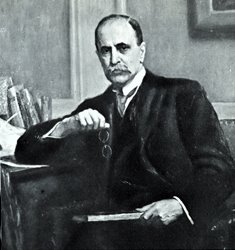
Sir William Osler: “Pneumonia is the old man’s friend.”

‘In the United States, for oh so many years we have merely warehoused the disabled, senile and near senile elderly, in nursing homes of variable competence.’
By Dr. Stephen R. Keister
/ The Rag Blog / November 19, 2008

I do not imagine that my thoughts will engender accolades from many readers; however, I honestly desire to share some inner thoughts. At the age of 87, with a mind remaining fairly alert, but with a gradually failing body, one is bound at times to become introspective. In today’s world, with the impending equivalent of The Great Depression of 1929, one develops an increased concern and urgency regarding ones impending fate. Have you looked at your IRA or brokerage account recently?

I may tread on some cultural precepts or religious teachings, but so be it. My attitude is that of the secular humanist; although some of my friends are quite “religious,” a fact, that among intelligent individuals, causes no concern or impaired relationship. We share ethical and moral values (“moral” in the broad sense as per Matthew 5-7), and make no effort to dispute our theological differences, as civilized, thinking individuals. Further, we agree on many concepts in which disagreement would be anticipated.

I am influenced largely by the thinking of Rene Descartes: “I think therefore I am,” and memories of Sir William Osler’s statement, made in the early part of the 20th Century, when he was professor of medicine at Johns Hopkins, and prior to the antibiotic era; “Pneumonia is the old man’s friend.” I am influenced by, in my days of active practice, attending a patient in a nursing home, and seeing gray haired individuals, diapered, sitting in wheelchairs, blankly watching a television screen. I would finish my rounds, depart and think to myself, “can this be me someday”?

We have a gradually increasing number of the elderly in our population, as do the Western European nations. I do note in scanning the European press that the individual countries, as well as the EU as a unit, are starting to make the care of the aging a priority issue. In the International Herald Tribune of April 13, 2007, there is an article entitled “In Europe, care for the elderly is being transformed.” The United States is in arrears as would be expected after the past eight years of the Bush administration’s neo-liberal economics which according to script has ignored social programs, poverty, and care of the helpless. I would trust that the Obama administration would face this issue early by appointing an active, dedicated under-secretary on aging in HHS.

In the United States, for oh so many years we have merely warehoused the disabled, senile and near senile elderly, in nursing homes of variable competence. The costs to individuals, families, states, have ranged up to $3000-$4000 monthly. To allow an individual with a blank mind, or totally despondent, not wishing to live, to sit all day in front of a TV set is not realistic or kind. This is a matter that is rapidly going to become a major issue as the various fundings fade and the disposition of these poor folks becomes an overwhelming issue. I would not be arrogant enough to presume to know the final solution. However, we are faced by some basic ethical as well as financial challenges.

The State of Oregon, and I believe, more recently, Washington, as well as various European nations, have shown the moral and intellectual courage to permit individuals to determine their own fates rather than be tied to laws engendered by medieval theological rite. We need as well to have the elderly population educated in depth about the need for advanced directives, i.e. living wills. We can have overwhelming ad campaigns for Viagra, or for fuel consuming automobiles, abounding in our society; hence, why not a major educational push to educate the public as to the fact that one need not put up with interminable dialysis, or be kept for days, brain dead, on artificial ventilation?

I feel that Dr. Osler was correct in his observation, but that point in time has passed, and life has become very much more complicated thanks to medical ‘science’. Yet, two out of three folks I talk to know little or nothing about advance directives. The nation needs to move on this. As I recall, the majority of Medicare funding goes to support those in the last month or two of life.

I can see families facing bankruptcy in the next year or two in an effort to pay the nursing home. Perhaps we should consider government subsidized home care which can be much less expensive than inpatient care in a profit making facility. For example, hereabouts a “non-profit” retirement community has increased its monthly fee by 7% (roughly $200), in spite of being aware that their residents savings accounts are rapidly being depleted, The corporate managers are well aware that the residents are not well enough informed, or motivated, and are too passive to respond to such a swindle. I am aware, as well, that this problem is being faced by the local religiously sponsored homes, Catholic, Presbyterian, or Episcopalian in an effort, perhaps futile, to reach an accommodation with the declining economy.

I note as well that the elderly who signed up for the severely flawed “Medicare Prescription Plan” are once again going to be taken to the cleaners. As per ARA. Nov. 14, 2008, their deductibles and co-payments are going to rise as of January 1, 2009. Further, according to an analysis of Medicare data by Alvalere Health, the largest drug plans will raise their premiums by an average of 31% and some by more than 60%. Seniors who signed up for Humana’s standard plan, a policy marketed as the low price leader in 2006, will pay $40.83 monthly next year up from $9.51 in 2006. Once again the matter of profits exceeds that of ethics or morality. Congress must modify this plan to work for the Medicare beneficiary rather than for the profits of the insurance and pharmaceutical industries, and at the same time do away with the “Medicare Advantage Plans,” the Bush administration’s subtle way to privatize and gradually do away with Medicare as a program.

Finally, to take the burden off future generations this country must get in step with Western Europe in quality and extent of health care for all. According to the Commonwealth Fund our health care rates 26th in the world and as of Nov. 13 UPI.com reports that, according to the Commonwealth Fund, U.S. patients, compared to seven other countries, suffer the highest number of medical errors. 44% of chronically ill patients did not get recommended care, fill a prescription, or see a doctor when sick because of costs. 41% of U.S. patients spent more than $1000 in the past year on out of pocket costs, compared to 4% in Britain or 8% in the Netherlands. We must make sure our elected representatives are not taking baksheesh from the pharmaceutical and insurance industries and support single payer, universal health care devoid of insurance company participation. The nation and your family depend on you not sitting idly on your butt. Call, E-mail, demonstrate!

In the overall aspect of cost containment regarding elder-care and health care costs, one would take a hard look at the multiplicity of tax-free, “non-profit” facilities and institutions involved. The Congress should be aware of their costs, their overhead, their depreciation, executive and other managerial salaries, bonuses, and perks, including executive seminars at fine golf resorts. One may
note that in financial reports, when available, one does not see the word “profit,” but instead “surplus” or a variety of terms. I find that the general public, especially the elderly, confuse the term “non-profit” with something akin to a legitimate charitable institution, which it may well be. However, a retirement home should not be confused with Doctors Without Borders, Catholic Charities or The Friends Service Committee.

I grow weary and frequently feel that eternal sleep might be a viable option, but there is so darned much needs to be done!

The Rag Blog

Posted in Rag Bloggers | Tagged , , , , , | 2 Comments

Ritmo : Inhumane Texas Detention Center Should be a Crime. Cheney or No Cheney.

Federal detention center in Raymondville, Texas.

‘Willacy County is home to the largest of a new generation of detention camps where thousands of undocumented immigrants live in massive tents with poor food, non-existent health care, facing months if not years deprived of their basic liberty.’
By Will Bunch / November 19, 2008

“I call it ‘Ritmo’ — like Gitmo, but it’s in Raymondville,” said Jodi Goodwin, an immigration lawyer from nearby Harlingen.

Washington Post, Feb. 2, 2007

OK, first of all, the bad news. Dick Cheney is not going to jail, not any time soon, at least, and not because of the bizarre report that the vice president of the United States has been indicted in a small, obscure county deep in the heart of South Texas in a scandal over federal prison and detention abuses there. Aside from the obvious fact that a Willacy County, Texas, grand jury lacks authority over federal actions, the indictment of Cheney, former Attorney General Alberto Gonzales and other is not even signed by a judge, and the result of a wacky — controversial wouldn’t do the man justice — renegade lame duck DA.

It’s almost not even worth noting that Cheney’s alleged tie — investing his millions in Vanguard mutual funds that are major owners of publicly traded federal prison contractors — is weak beyond belief; by the grand jury’s reasoning, one could surmise that others with Vanguard 401K plans (example: journalists at the Philadelphia Daily News and Inquirer!) could be charged as well.

That’s a shame, because a) as noted here many times, Cheney’s role in authorizing torture and other unlawful practices in the Bush administration deserves a real criminal probe and b) the strange false-alarm over this vice presidential indictment will probably obscure the fact that what has been taking place in Raymondville, Texas, during Bush and Cheney’s time in office is a crime — maybe statutory, maybe not, but definitely a moral one.

Willacy County, scene of today’s indictments, is also home to the largest of a new generation of detention camps where thousands of undocumented immigrants — the vast majority of whom have committed no crime other than seeking America’s promise of a new life, without proper papers — are now detained in conditions that could be described ironically as hot, flat, and crowded — living in massive tents with poor food, non-existent health care and facing months if not years deprived of their basic liberty.

It wasn’t always that way. For years, American policy was to catch and release undocumented immigrants, but that all changed with the GOP’s politically charged crackdown on illegal immigration, which led in 2005 to a new policy of detaining undocumented non-Mexicans until they receive a deportation hearing and are usually booted from the country. The new policy meant doling out millions to politically connected prison firms and contractors (including the formerly Cheney-run Hallibuton) to hastily build these detention centers, including $65 million for the one in poverty-stricken Willacy County, some 260 miles south of Austin, that isn’t even a structure but, as most simply call it, “Tent City.”

Remember, these immigrants — the majority at “Ritmo” hail from El Salvador, torn apart by years of civil strife — have committed no crime beyond seeking to enter America without paperwork, and yet the Willacy County facility is in many ways quite simply a prison, like Gitmo, stark and surrounded by barbed wire. Here’s how “Tent City” was described by the American Civil Liberties Union:

The Willacy County Detention Facility is the largest immigration detention facility in the country. The facility is made up of ten large tents, each of which is designed to house 200 people. The tents are windowless and lights are on around-the-clock, making it difficult to sleep. No partitions exist to separate the showers, toilets, sinks, and eating areas, and detainees report that they are occasionally forced to eat with their hands because no utensils are provided.

The Washington Post article fills in more details:

Because lights are on around the clock, a visitor finds many occupants buried in their blankets throughout the day. The stillness and torpor of the pod’s communal room, where 50 to 60 people dwell, are noticeable.

Goodwin described a group of women who huddled in a recreation yard on a recent 40-degree day with a 25-mph wind. “They had no blanket, no sweat shirt, no jacket,” she said. “Officers were wearing earmuffs, and detainees were outside for an hour with short-sleeved polyester uniforms and shower shoes and not necessarily socks.”

Perhaps more troubling, lawyers said, large numbers of immigrants have been transferred from Boston, New York, New Jersey and Florida, far from their families and lawyers. Because some immigration judges do not permit hearings by teleconference, detainees are essentially deprived of counsel.

There have been other problems inside “Tent City” — mealworms were found inside some of the food there last year, for example, and another study found a stunning lack of available healthcare at Willacy — but by now you probably get the idea. In many ways, this immigrant detention program is a metaphor for what we’ve seen time and time again during the Cheney-Bush years, a rushed and ill-conceived federal action (despite the harsh impact on those captured, the program’s effect on solving the undocumented immigration problem is fairly minimal) that’s meant big bucks for a few connected contractors, with little or no thought toward its degrading impact on real human beings, or on how America is perceived by the rest of the world.

Now, a nation that famously asked for the world’s tired, poor, hungry and sick is taking refugees from a war-torn and poverty stricken corner of our own continent, and making them more hungry and depriving them of sleep before sending then away. How sad. That’s not just an indictment of Dick Cheney, though. That’s an indictment for all of us who allowed a harsh tent city called “Ritmo” to rise on our watch.

Source / Philly.com

Also see Cheney and Gonzales Indicted in Texas : Abuse of Federal Prisoners / The Rag Blog / Nov. 18, 2008

Thanks to S. M. Welhelm / The Rag Blog

Posted in RagBlog | Tagged , , , , , , , | Leave a comment

Guantanamo Irregularities Yield Broken Men


Cal study finds ex-Guantanamo prisoners broken
By Bob Egelko / November 17, 2008

The first extensive study of prisoners released from the U.S. detention center at Guantanamo Bay, Cuba, finds that many of them are physically and psychologically traumatized, debt-ridden and shunned in their communities as terrorist suspects.

“I’ve lost my property. I’ve lost my job. I’ve lost my will,” said an Afghan man, one of 62 former inmates in nine countries interviewed anonymously by UC Berkeley researchers for a newly released report.

Another man, jobless and destitute, said his family kicked him out after he returned, and his wife went to live with her relatives. “I have a plastic bag holding my belongings that I carry with me all the time,” he said. “And I sleep every night in a different mosque.”

The report, “Guantanamo and its Aftermath,” also found that two-thirds of former prisoners interviewed between July 2007 and July 2008 suffered from psychological problems, including nightmares, angry outbursts, withdrawal and depression.

Many also reported recurring or constant pain from their treatment in captivity. Six men said that for them, the treatment included being suspended from the ceiling in chains at a U.S. air base.

Investigation urged

The authors called for a commission to investigate conditions at Guantanamo and other prisons where terrorist suspects are held and, if warranted, recommend criminal investigations “at all levels of the civilian and military command.”

“We cannot sweep this dark chapter in our nation’s history under the rug by simply closing the Guantanamo prison camp,” said Eric Stover, director of UC Berkeley’s Human Rights Center. “The new administration must investigate what went wrong and who should be held accountable.”

Other co-authors are Laurel Fletcher, director of UC Berkeley’s International Human Rights Law Clinic, and Vincent Warren, executive director of the Center for Constitutional Rights, a nonprofit legal group representing some Guantanamo inmates.

President-elect Barack Obama has said he plans to close Guantanamo. During the campaign, he criticized the military commissions that President Bush established to try a small number of prisoners at the base and said he preferred regular civilian or military courts, where defendants have more rights. But Obama has not yet announced his plans for the trials or for the majority of inmates who are being held without charges.

Asked for comment on the report, Navy Cmdr. Jeffrey Gordon, the government’s spokesman on Guantanamo, said, “Our policy is, and always has been, to treat detainees humanely.”

A few former inmates, their lawyers and interrogators have given personal accounts of Guantanamo and other prisons in memoirs and court affidavits. The 136-page UC Berkeley report is the first to examine the fate of large numbers of released prisoners.

The report acknowledged that the inmates’ narratives often lack independent confirmation. But it said they can be considered credible because they’re consistent with other accounts – by other former prisoners, and by 50 past and present U.S. officials, lawyers and others with firsthand knowledge of Guantanamo who were interviewed for the survey.

The 62 men in the study spent an average of three years at Guantanamo. Most were classified as enemy combatants before being released without charges, like two-thirds of the 775 men who have been held at the naval base. Of the 255 remaining prisoners, 23 have been charged with war crimes.

More than one-third of the 62 said they had been turned over to U.S. authorities in Pakistan for a bounty; one man described standing outside an airplane with other detainees, hooded and shackled, and hearing an American voice tell the Pakistanis, “Each person is $5,000.”

Others said they had been arrested on flimsy grounds – for carrying guns that they used for personal protection, for possessing binoculars that one man used for hunting birds, or for failing to pay bribes to local officials.

According to the men’s accounts, their most brutal treatment occurred at a U.S. air base in Bagram, Afghanistan, where half of them were held before being flown to Guantanamo. The men said American guards regularly beat them, left them in freezing temperatures with thin blankets, used dogs to terrorize them, and, in the cases of six men, hung them from ceilings by chains for hours.

At Guantanamo, 24 of the 55 men who were willing to discuss their interrogations reported no problems, and a few described their questioners as “very nice.” But others said they had been shackled in contorted positions and subjected to extreme heat or cold, both during interrogation and afterward.

Chained and cold

Eight men said their worst ordeal was being chained to the floor in a refrigerated isolation room, unable to move without being cut by the shackles. The report quoted a former U.S. military guard as saying prisoners were sometimes kept in such rooms in cramped positions for more than 10 hours.

Other men described sexual humiliation and barrages of loud music and strobe lights for extensive periods.

The cumulative effect of such treatment over time, combined with the prospect of indefinite confinement, would “in some cases clearly rise to the level of torture,” the report said.

Warren, the Center for Constitutional Rights director and attorney, said the nation owes the men an apology, compensation and a chance to clear their names.

Read the report

To read “Guantanamo and its Aftermath,” go to: links.sfgate.com/ZFJQ

Source /

The Rag Blog

Posted in RagBlog | Tagged , , | 1 Comment

Type your summary here


Type rest of the post here

Source

The Rag Blog


Posted in RagBlog | Leave a comment

‘Don’t Ask, Don’t Tell’ Will Enter Obama’s Agenda

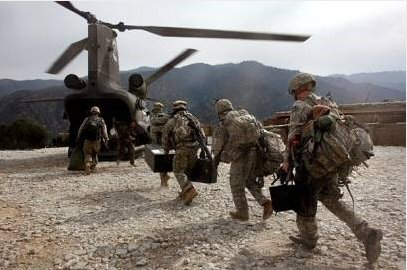
More than 100 retired generals and admirals have signed a letter calling for the repeal of the “don’t ask, don’t tell” policy on gays in the military. They said it’s time that homosexuals be allowed to serve openly in the armed forces. Here, U.S. soldiers board a helicopter in Afghanistan in October. Photo: John Moore, Getty Images.

Ex-Military Leaders Say End Rule on Gays
By Brian Witte / November 18, 2008

ANNAPOLIS, Md. – More than 100 retired generals and admirals called Monday for repeal of the military’s “don’t ask, don’t tell” policy on gays so they can serve openly, according to a statement obtained by The Associated Press.

The move by the military veterans confronts the incoming administration of President-elect Barack Obama with a thorny political and cultural issue that dogged former President Bill Clinton early in his administration.

“As is the case with Great Britain, Israel, and other nations that allow gays and lesbians to serve openly, our service members are professionals who are able to work together effectively despite differences in race, gender, religion, and sexuality,” the officers wrote.

While Obama has expressed support for repeal, he said during the presidential campaign that he would not do so on his own — an indication that he would tread carefully to prevent the issue from becoming a drag on his agenda. Obama said he would instead work with military leaders to build consensus on removing the ban on openly gay service members.

“Although I have consistently said I would repeal ‘don’t ask, don’t tell,’ I believe that the way to do it is make sure that we are working through a process, getting the Joint Chiefs of Staff clear in terms of what our priorities are going to be,” Obama said in a September interview with the Philadelphia Gay News.

Tommy Vietor, a spokesman for Obama’s transition team, declined comment.

The issue of gays in the military became a flash point early in the Clinton administration as Clinton tried to fulfill a campaign promise to end the military’s ban on gays. His efforts created the current compromise policy — ending the ban but prohibiting active-duty service members from openly acknowledging they are gay.

But it came at a political cost. The resulting debate divided service members and veterans, put Democrats on the defensive and provided cannon fodder for social conservatives and Republican critics who questioned Clinton’s patriotism and standing with the military.

Retired Adm. Charles Larson, a four-star admiral and two-time superintendent of the U.S. Naval Academy who signed the statement with 104 other retired admirals and generals, said in an interview that he believed Clinton’s approach was flawed because he rushed to change military culture.

Larson said he hoped Obama would take more time to work with the Pentagon. Joining Larson among the signatories was Clifford Alexander, Army secretary under former President Jimmy Carter.

“There are a lot of issues they’ll have to work out, and I think they’ll have to prioritize,” Larson said, noting that the new administration will immediately face combat-readiness issues and budget concerns. “But I hope this would be one of the priority issues in the personnel area.”

The list of 104 former officers who signed the statement appears to signal growing support for resolving the status of gays in the military. Last year, 28 former generals and admirals signed a similar statement.

Larson, who has a gay daughter he says has broadened his thinking on the subject, believes a generational shift in attitudes toward homosexuality has created a climate where a repeal is not only workable, but also an important step for keeping talented personnel in the military.

“I know a lot of young people now — even people in the area of having commands of ships and squadrons — and they are much more tolerant, and they believe, as I do, that we have enough regulations on the books to enforce proper standards of human behavior,” Larson said.

The officers’ statement points to data showing there are about 1 million gay and lesbian veterans in the United States, and about 65,000 gays and lesbians currently serving in the military.

The military discharged about 12,340 people between 1994 and 2007 for violating the “don’t ask, don’t tell” policy, according to the Servicemembers Legal Defense Network, a military watchdog group. The number peaked in 2001 at 1,273, but began dropping off sharply after the Sept. 11 attacks.

Last year, 627 military personnel were discharged under the policy.

Political observers say that even though the issue may not be as controversial as it was when Clinton addressed it, it’s impossible to forget what happened then.

Larry Sabato, a political scientist at the University of Virginia, said Obama is unlikely to tackle the issue early on. Sabato said he expects Obama to focus on economic recovery and avoid risking the spark of a distracting “brush fire” controversy at the outset.

“I can’t imagine that he will do this right in the beginning, given the Clinton precedent,” Sabato said.

Aaron Belkin, who has studied the “don’t ask, don’t tell” policy as director of the Palm Center at the University of California at Santa Barbara and organized the officers’ statement, said how Obama addresses the issue will be the first test for the new president on gay rights.

“Everyone is going to be interested to see how he responds,” Belkin said.

Source / America On Line

The Rag Blog

Posted in RagBlog | Tagged , , | Leave a comment

Fatty Foods : All the Skinny


‘Obesity, though some would prefer to call it eating disorders, is a big growth area, not just for the unwitting sufferers, but also for some food companies which contribute so greatly to the problem.’
By Asinus Asinum Fricat / November 18, 2008

A couple of days ago I wrote this diary and copped quite a few unkind comments, mostly from misinformed posters and a handful of hardcore denialists. Yet the problems persist, and shooting the messenger rarely helps. But I’m a tough cookie, comfortable in the knowledge of what I know and write about and in this diary I’m basically tackling the same issues albeit from a different angle: “Big Pharma” and the multinational junk & processed foods companies (“Big Food”) which, worldwide, make gigantic profits on the back of unsuspecting consumers, specifically marketing non-nutritious food appealing to children and adults alike via disingenuous advertising.

Obesity, though some would prefer to call it eating disorders, is a big growth area, not just for the unwitting sufferers, but also for some food companies which contribute so greatly to the problem. “Big Pharma” which works in tandem with “Big Food” would love to “terminate” its main source of competition: the natural products industry and the organic movement.

First let me remind you that Barack Obama’s election means that it is Big Pharma that stands to take a hit, according to The Boston Consulting Group. Its analysis concludes that Obama’s plan to let the federal government negotiate Medicare drug prices could cut industry revenues by a whopping $10 billion to $30 billion. That’s good news for those suffering from a plethora of illnesses. I’m not sure how his administration will handle Big Food but one thing is certain: like the banks it badly needs to get regulated particularly in the area of food additives, supersaturated produce with empty calories in the form of white flour, sugar, high-fructose corn syrup, transgenic (synthetic) fats, labeling and unscrupulously aggressive marketing.

There are over 320,000 food items on the market, and many food companies produce both “good” and “bad” food. If you thought that the following “modern” foods were harmless, think again: juices, yogurts, cheese sticks, corn flakes, pastries, chocolate & energy bars are all loaded with sweeteners and additives.

Soft drinks: (get rid of them) research indicates that if you drink as little as 2 sodas or colas a day, it promotes diabetes and weight gain. Informed nutritionists have known this for years, which is that taking in empty calories from sugar and high fructose corn syrup is not only wasteful, but can be harmful to the digestive system. HFCS is also found in condiments like ketchup, fruit juices and chocolate bars.

The dangers of hydrogenated oils and partially hydrogenated oils are also developed from otherwise harmless, natural elements. To make them hydrogenated, oils are heated in the presence of hydrogen and metal catalysts. This process helps prolong shelf life but simultaneously creates transfats, which only have to be disclosed on the label if the food contains more than 0.5 grams per serving. To avoid listing transfats, or to claim “transfat free” on their label, sneaky food manufacturers simply adjust the serving size until the transfat content falls under 0.5 grams per serving. Voila! The Harvard School of Public Health has estimated that at least 30,000 people, and more probably 100,000 people die every year in the US from cardiovascular disease caused by consuming hydrogenated oils, as opposed to natural vegetable oil.

Remember when some physicians told you about this new wonder drugs that can take off weight without even thinking? One such drug is Sanofi-Aventis’ (SNY) rimonabant, which is marketed as Acomplia in the EU. No such “luck” in the US though, it was rightly rejected for its suicidal tendencies. The medicine supposedly suppresses the receptors in the brain that cause people to crave fatty foods. The other drug is GlaxoSmithkline’s (GSK) Alli, which is now available over the counter.

Alli is essentially the over-the-counter version of Xenical, (generic name is orlistat) a prescription medicine already available. Xenical works by blocking the amount of fat absorbed through the digestive system.

At the time of the Alli’s launch last year, GSK estimated it would eventually sell between five million and six million kits annually, translating to at least $1.5 billion in annual retail. A 60-capsule kit costs about $50 while a 90-capsule pack costs about $60. Does it work? Not enough to spark a run on Brazilian bikini but if you agree to a commitment to living your life in a new way as you must learn to change your eating and activity habits, then it’s for you. But why spend that kind of money when you have to completely change your lifestyle and do all the proverbial heavy lifting? Those taking Alli, btw, have to put up with some diarrhea and flatulence.

And now on the legal front: on 17 April 2008, GSK, along with the American Dietetic Association and the Obesity Society (both regarded by many as fronts for the Big Pharma) petitioned the FDA to try to prevent any dietary supplement product making weight loss claims. The company wants weight loss claims to be re-classified as disease claims, therefore making them the sole domain of treatments with licensed pharmaceuticals. And since GSK’s Alli product is the only weight loss drug that is on the over-the-counter market it doesn’t take a rocket scientist to see their reasoning.

A lawsuit aimed at getting soft drinks firms out of US schools on obesity grounds is now ready to go, says one of the leading lawyers involved to BeverageDaily.com, as new research suggests obesity litigation will become the next “tobacco”.

When it comes to using litigation as a strategy to combat obesity, food manufacturers should be most wary of lawsuits based on consumer protection acts, according to a new report that examines the application of tobacco litigation methods to obesity lawsuits.

The report uses the history of tobacco litigation as a model to evaluate potential legislation against the food industry, which the authors claim is another industry that poses a threat to public health.

Published in this month’s issue of the American Journal of Preventive Medicine, the study says

that although national legislation against the food industry would be a “preferable” strategy to protect public health, lessons from the tobacco wars suggest that effective national legislation is currently unlikely.

One of the reasons for this is that the industry has a strong influence on the process, say authors Jess Alderman and Richard Daynard. Like tobacco, the food industry routinely- and often invisibly- seeks to influence both legislators and health professionals to support its agenda while ignoring its potential impact on public health”.

And when it comes to individual personal injury lawsuits against food companies, these also could carry a slim chance of success, although the companies involved are likely to fight litigation at every step.

“Losing such a lawsuit could open the floodgates of litigation by encouraging millions of obese Americans to file similar cases, so it would be advantageous for the food industry to delay or defend every such lawsuit to the fullest extent.”

However, as was demonstrated in the EU recently, lawsuits based on consumer protection acts are likely to be much more effective, as these avoid complicated causation issues and focus instead on deceptive marketing tactics and could fall under consumer protection statutes, together with false advertising, misleading claims and unfairly taking advantage of vulnerable consumers.

Indeed, back in 2005 an American consumer launched a lawsuit aimed at food companies including Kraft Foods, General Mills and Kellogg, alleging that “low sugar” labels on cereals were deceptive as the companies replace the sugar with other carbohydrates, thus offering no significant nutritional advantage. The suit claims that these cereals are misleading because they aren’t any healthier than cereals with regular levels of sugar, according to the Wall Street Journal.

The food industry in general is coming under increasing pressure from food lobby groups and some parents, to “clean up its act” and offer healthier alternatives to help combat the obesity epidemic facing the world. Sugary cereals are frequently cited by these groups as guilty culprits, encouraging children to eat empty calories instead of nutritional whole foods. Will Obama appoint a food “czar”, someone who can and will take on Big Food?

High fruit and vegetable prices may be linked to childhood obesity, says the US Department of Agriculture (USDA), although it suggests that further research is needed in order to confirm the “casual relationship” identified by its recent study.

The USDA’s Economic Research Service (ERS) findings are based on an examination of the diets and weight of around 7,000 children between kindergarten and third grade.

“Children who lived in metropolitan areas where fruits and vegetables were relatively expensive gained significantly more weight than children who lived where fruit and vegetables were cheaper,” said the USDA, adding that the children who participated in the study had a similar way and standard of living

Data from the Bureau of Labor cites that both American children and parents are spending increased time commuting from work, school and activities. Eating takes place en route from one venue or another, making sitting down to a home-cooked, carefully balanced meal even less of a reality for families. The absence of regulated family eating schedules was cited as one of the main causes of poor dietary habits. But other major concerns cited by respondents should serve as a warning to food makers that they are not about to be let off the hook just yet.

“Children’s eating habits are suffering due to the lack of structured meal time, and this is as big a challenge as the lack of balanced meals,” said Amanda Archibald, analyst and registered dietitian for Mintel. “Compressed schedules and cramped time availability for both children and parents may play a more important role than previously thought in making healthy food choices.”

According to Mintel’s Menu Insights, a menu-tracking system, more than 47 percent of children’s menu items were fried. Chicken fingers led the way on the top 5 children’s menu dishes list, followed by grilled cheese sandwiches, burgers, macaroni and cheese, and hot dogs.

Mintel’s report also cites that overall restaurant portions have also steadily increased over time.

And recently, a number of academic studies presented at the AACR International Conference on Frontiers in Cancer Prevention Research reveal growing evidence that overall cancer incidence and mortality resulting from overweight and obesity is also increasing, something which places more pressure on the food industry, and presents regulators with another headache.

If you’d like to read about Big Pharma cloak & dagger scare tactics, look no further than here.

Source / La Vida Locavore

Thanks to Diane Stirling-Stevens / The Rag Blog

Posted in RagBlog | Tagged , , , , , , | 2 Comments

Human Rights Watch Wants Obama to Ban Torture


Activists Seek Executive Order Banning Torture
By Wolfgang Kerler / November 17, 2008

NEW YORK – Shutting down the infamous detention centre at Guantanamo Bay is just one of a series of measures to reform U.S. counterterrorism practices being urged by the watchdog organisation Human Rights Watch (HRW).

In a report released Sunday, the New York-based HRW urged President-elect Barack Obama to quickly repudiate the abusive policies put in place by the George W. Bush administration in its “global war on terror”.

“The Obama administration is going to have a difficult task to restore America’s standing in the world,” Joanne Mariner, terrorism and counterterrorism programme director at HRW, told IPS. “The Bush administration’s counterterrorism policies deeply damaged the reputation of the United States.”

HRW’s 11-step action plan — entitled “Fighting Terrorism Fairly and Effectively: Recommendations for President-elect Obama” — suggests how the U.S. could again become a credible leader in the fight for the global implementation of human rights.

“But it depends on how dramatically the Obama administration makes a clear break with the past,” Mariner added.

According to HRW, some 250 terrorist suspects are still being held as “enemy combatants” at the military detention centre at Guantanamo Bay opened in 2002. Most of the detainees have now been in custody for nearly seven years, without charge.

As president, Obama should close the detention facility — a step he has already pledged to take — and establish a task force to review all the detainees’ cases to determine whether they should be charged and brought to trial or released.

Also among the 11 steps is the abolition of military commissions to try suspected foreign terrorists. HRW argues that these commissions lack “basic fair trial guarantees” and that federal criminal courts were the “best-equipped” and “time tested” venues to handle terrorism cases.

Similarly, plans to legalise the indefinite preventive detention of suspected terrorists – based on “predictions of future dangerousness” — should be rejected by Obama, HRW says.

Justifying detention without charge by classifying people as “enemy combatants” in the “war on terror”, as has happened to suspects arrested in locations like Bosnia, Thailand and along the U.S.-Mexico border, should also be stopped.

HRW also condemned the use of torture and inhumane interrogation techniques by U.S. armed forces and intelligence agencies — “including stripping detainees naked, subjecting them to extremes of heat, cold, and noise, and depriving them of sleep for long periods”.

To ban these practices, which have led to the deaths of some detainees, Obama should quickly issue an executive order and repudiate legal memos issued by the Bush Justice Department and presidential directives under the outgoing administration that permit torture and other abuses.

HRW called on the new administration to redress victims of abusive counterterrorism policies — something which has not happened so far as the victims have effectively been shut out of U.S. courts.

Above all, past abuses should be investigated, documented and publicly reported by a non-partisan commission with subpoena power, and former government officials who were responsible for some of the crimes should not be given immunity from prosecution, the group said.

Last week, Rep. Rush Holt, a Democrat from New Jersey who chairs an intelligence oversight panel, issued a statement saying that “while an executive order [to ban torture] will not remove the need for legislation on the issue,” if Obama did so, it would “begin to restore our moral leadership on the issue”.

Holt also expressed support for the National Religious Campaign Against Torture (NRCAT), a coalition of religious groups from all over the country that is lobbying to eliminate the use of torture as a part of U.S. policy.

On Nov. 12, NRCAT held a nationwide action day with more than 50 delegations of religious leaders holding meetings with members of Congress. Thirty religious groups participated in a demonstration in front of the White House, where President Bush is spending his final days in office.

While she agreed on the need to fight terrorism, Mariner of HRW rejected many of the measures taken after the 9/11 terror attacks, emphasising that “the Bush administration entirely disregarded even basic principles of the rule of law.”

“The government addressed terrorism in an extremely counterproductive way,” Mariner said.

Instead of diminishing the terrorist threat, reports of human rights violations at Guantanamo Bay, Abu Ghraib prison in Iraq and elsewhere fuelled the recruitment of supporters for militant groups, which argued the U.S. was in fact leading a “war on Islam”.

Asked whether she believes Obama will heed the recommendations of HRW, Mariner stressed that by voting against the Military Commissions Act of 2006 to authorise trials by military courts, “Obama has already stood up against these abuses.”

The president-elect also explicitly pledged to close Guantanamo during his campaign.

“So we are confident that consistent with his message of change, his actions and his criticism, he is going to repudiate the abusive counterterrorism policies of the Bush administration,” Mariner said.

Source / IPS News

The Rag Blog

Posted in RagBlog | Tagged , , , , | Leave a comment

Junior Termed a ‘Vigilante’: Sounds Right to Us

Lest we forget, we must continue to apply pressure to the incoming US administration to recognise that what occurred in the lead-up to and prosecution of the invasion of Iraq was a violation of international law and should be treated as such. The current US government is headed by war criminals who should be charged and prosecuted.

Richard Jehn / The Rag Blog

A British soldier patrols the northern suburbs of the southern Iraqi city of Basra. Photograph: Dave Clark/AFP/Getty images.

Top judge: US and UK acted as ‘vigilantes’ in Iraq invasion
By Richard Norton-Taylor / November 18 2008

Former senior law lord condemns ‘serious violation of international law’

One of Britain’s most authoritative judicial figures last night delivered a blistering attack on the invasion of Iraq, describing it as a serious violation of international law, and accusing Britain and the US of acting like a “world vigilante”.

Lord Bingham, in his first major speech since retiring as the senior law lord, rejected the then attorney general’s defence of the 2003 invasion as fundamentally flawed.

Contradicting head-on Lord Goldsmith’s advice that the invasion was lawful, Bingham stated: “It was not plain that Iraq had failed to comply in a manner justifying resort to force and there were no strong factual grounds or hard evidence to show that it had.” Adding his weight to the body of international legal opinion opposed to the invasion, Bingham said that to argue, as the British government had done, that Britain and the US could unilaterally decide that Iraq had broken UN resolutions “passes belief”.

Governments were bound by international law as much as by their domestic laws, he said. “The current ministerial code,” he added “binding on British ministers, requires them as an overarching duty to ‘comply with the law, including international law and treaty obligations’.”

The Conservatives and Liberal Democrats continue to press for an independent inquiry into the circumstances around the invasion. The government says an inquiry would be harmful while British troops are in Iraq. Ministers say most of the remaining 4,000 will leave by mid-2009.

Addressing the British Institute of International and Comparative Law last night, Bingham said: “If I am right that the invasion of Iraq by the US, the UK, and some other states was unauthorised by the security council there was, of course, a serious violation of international law and the rule of law.

“For the effect of acting unilaterally was to undermine the foundation on which the post-1945 consensus had been constructed: the prohibition of force (save in self-defence, or perhaps, to avert an impending humanitarian catastrophe) unless formally authorised by the nations of the world empowered to make collective decisions in the security council …”

The moment a state treated the rules of international law as binding on others but not on itself, the compact on which the law rested was broken, Bingham argued. Quoting a comment made by a leading academic lawyer, he added: “It is, as has been said, ‘the difference between the role of world policeman and world vigilante’.”

Bingham said he had very recently provided an advance copy of his speech to Goldsmith and to Jack Straw, foreign secretary at the time of the invasion of Iraq. He told his audience he should make it plain they challenged his conclusions.

Both men emphasised that point last night by intervening to defend their views as consistent with those held at the time of the invasion. Goldsmith said in a statement: “I stand by my advice of March 2003 that it was legal for Britain to take military action in Iraq. I would not have given that advice if it were not genuinely my view. Lord Bingham is entitled to his own legal perspective five years after the event.” Goldsmith defended what is known as the “revival argument” – namely that Saddam Hussein had failed to comply with previous UN resolutions which could now take effect. Goldsmith added that Tony Blair had told him it was his “unequivocal view” that Iraq was in breach of its UN obligations to give up weapons of mass destruction.

Straw said last night that he shared Goldsmith’s view. He continued: “However controversial the view that military action was justified in international law it was our attorney general’s view that it was lawful and that view was widely shared across the world.”

Bingham also criticised the post-invasion record of Britain as “an occupying power in Iraq”. It is “sullied by a number of incidents, most notably the shameful beating to death of Mr Baha Mousa [a hotel receptionist] in Basra [in 2003]”, he said.

Such breaches of the law, however, were not the result of deliberate government policy and the rights of victims had been recognised, Bingham observed.

He contrasted that with the “unilateral decisions of the US government” on issues such as the detention conditions in Guantánamo Bay, Cuba.

After referring to mistreatment of Iraqi detainees in Abu Ghraib, Bingham added: “Particularly disturbing to proponents of the rule of law is the cynical lack of concern for international legality among some top officials in the Bush administration.”

Source / Guardian

The Rag Blog

Posted in RagBlog | Tagged , , , | 1 Comment

Cheney and Gonzales Indicted in Texas : Abuse of Federal Prisoners

Dick (look out, he’s got a gun) Cheney, photographed in Sydney, Australia, February, 2007.

‘The indictment criticizes Cheney’s investment in the Vanguard Group, which holds interests in the private prison companies running the federal detention centers.’
November 18, 2008

McALLEN, Texas — A South Texas grand jury has indicted Vice President Dick Cheney and former Attorney General Alberto Gonzales on charges related to the alleged abuse of prisoners in Willacy County’s federal detention centers.

The indictment criticizes Cheney’s investment in the Vanguard Group, which holds interests in the private prison companies running the federal detention centers. It accuses Cheney of a conflict of interest and “at least misdemeanor assaults” on detainees by working through the prison companies.

Gonzales is accused of using his position while in office to stop an investigation into abuses at the federal detention centers.

Another indictment charges state Sen. Eddie Lucio Jr. with profiting from his public office by accepting honoraria from prison management companies.

The indictments were first reported by KRGV-TV.

Source / AP / Houston Chronicle

The Rag Blog

Posted in RagBlog | Tagged , , , | 3 Comments

Type your summary here


Type rest of the post here

Source

The Rag Blog

Posted in RagBlog | Leave a comment

Book Banning in Round Rock : Ta Ta to TTYL


Teen novel removed from middle school library in Texas town.
By Bob Banta / November 18, 2008

A teen novel that stirred controversy when the parent of a Round Rock student complained that it is obscene was removed from the district’s middle school libraries today.

The novel entitled “TTYL” by Lauren Myracle is a narrative in the format of instant messages exchanged among a group of teenage girls. TTYL is shorthand for “talk to you later.”

Round Rock Superintendent Jesus Chavez, sent a letter to Wes and Sherry Jennings on Tuesday saying he had determined that “while the book may be appropriate for some students, it is not appropriate for all of our students in the middle school and should not be made generally available in a middle school library open to all middle school students.”

“If parents wish their individual students to have access to the book, there are ample alternatives for the book to be made available to students at parent discretion,” the superintendent said in his letter.

Sherry Jennings, mother of a Ridgeview Middle School student, filed a complaint at the beginning of this school year after her daughter checked the novel out of the Ridgeview library.

Jennings said Tuesday, “We are extremely pleased that the superintendent is interested in quality education for our children and that he realizes that maturity-wise they are not ready for these types of books.”

Jennings said she objected not only to vulgar language in the book “but also to the sexual content of the entire book.”

Jennings said she and her husband are satisfied with Chavez’s response and plan no further action. She added that she appreciated the help of parents and others who supported her complaint about TTYL.

“We had 1,600 people sign a petition backing us, and about 10 people were very helpful in supporting us through this situation,” Jennings said.

Jennings was scheduled to appear before the school board to argue her complaint on Thursday after previous meetings with school officials proved unsatisfactory to her. Chavez said in the letter to her and her husband that since the book has been removed, the hearing before school trustees will be cancelled.

In late October, a nine-member committee appointed by Chavez decided by a 5 to 4 vote to keep the book on school library shelves. The committee included central administration officials, parents, teachers, and a high school student council member.

On Oct. 9, a six-member Ridgeview panel concluded the book should remain in the Ridgeview library despite the complaint.

Source / homeroom, an education blog / statesman.com

Find TTYL on Amazon.com. That’ll show ’em.

Thanks to Jim Baldauf / The Rag Blog

Posted in RagBlog | Tagged , , , , | 3 Comments

Robert Jensen : Real Hope: Facing Difficult Truths About an Uncertain Future

Photo: ‘Contemplating an Uncertain Future’ by Phil Bebbington.

‘If there is to be a decent future for humanity — indeed, any future at all — we must face painful realities with intellectual honesty and moral strength.’
By Robert Jensen
/ The Rag Blog / November 18, 2008

Expressions of hope are only as truly hopeful as the honesty of the assessment of reality from which they emerge. Conjuring up hope rooted in a denial of reality can only deepen despair in the long run.

That’s why much of the political rhetoric of the past two years may prove not only illusory but counterproductive. So, with much talk of change and hope in the air, now is the time to articulate an authentic sense of hope, one that is realistic. If there is to be a decent future for humanity — indeed, any future at all — we must face painful realities with intellectual honesty and moral strength. We can celebrate the victories we achieve along the way but it’s just as crucial that we stay focused on what remains to be understood and accomplished.

In that hopeful spirit I offer these observations with the goal of generating productive discussion among organizers and activists who oppose the hierarchy and injustice inherent in patriarchy, white supremacy, imperial nationalism, and an increasingly predatory capitalism, and who are concerned about the fragile state of an ecosystem that has been seriously compromised by human action.

–Within my lifetime (the next 25 years or so), we will see dramatic changes in this country and the world that likely are the beginning of a systemic collapse, economically and ecologically. This collapse is already underway in some parts of the world, producing suffering beyond description for the most vulnerable on the planet. But we can expect this eventually to extend in more dramatic fashion to the entire planet, probably within the lifetime of our children (the next 50 to 75 years). Definitive predictions are impossible, but it is reasonable to assume that the destructive forces set in motion by the hierarchal systems that define our world are close to, or perhaps already beyond, the point of no return.

–This country’s political and cultural institutions are not equipped to deal with this coming collapse, and there is very little chance that political organizing rooted in the necessary radical analysis, in the time available, can alter that to any significant degree. We are not prepared for the coming shift out of the current high-energy/high-technology phase, and nothing in recent institutional responses (or non-responses) to the clear signs of this suggests we will be prepared in time.

–These claims often are, and will continue to be, dismissed by many as doomsday thinking, which should not surprise us; it is painful to face these realities. But we cannot expect to prosper by ignoring reality. While there is much grief in confronting this, any hope we have for that decent future demands that we face the grief.

–Given this likely trajectory of the coming decades, more of our political organizing should focus on what comes after this collapse (recognizing that a “collapse” will not be a neatly defined process that unfolds in a clear and bounded time frame). What are the ways of thinking and the social organizations we will need? What sense of self-and-others will help us cope with a dramatically different world? For most people, nothing in our everyday lives is preparing us for this different reality, and it’s long past time we started thinking collectively about this. What ideas and skills — what conception of what it means to be a person, what practical knowledge for living — will be necessary?

–Focusing on these questions doesn’t mean we should abandon work on existing campaigns that address war, poverty, sexual violence, racism, or any of the other existing inequalities and injuries that rightly demand our attention. To give up on those projects in the face of widespread suffering in the here-and-now would be to abandon our humanity. But all of those activities should be planned and executed with this larger framework and longer trajectory in mind. The ongoing social-justice work will inform our thinking on these questions, but significant energy should be shifted to long-term projects.

–None of this should be confused with the apocalyptic thinking that posits, or even celebrates, the end of the world. Instead, these questions are central to the careful planning we will need if there is to be hope for that decent future. Such a future is not guaranteed, and we have to face the possibility that humans may not have the capacity to create it. But we define ourselves by our commitment to the work that makes it possible to imagine that future.

All of this is in flux and open to constant rethinking. Like most of the important choices we must make, we are working not from definitive data but from our best guesses, hunches, informed speculation. While we can’t predict the future with certainty, we still must choose. To assume existing high-energy/high-technology systems will continue indefinitely, simply because many of us in the First World have become accustomed to material comfort and would like this to continue, is delusional.

We can make this work joyful, as long as we are willing to face the grief. It is possible to face harsh realities and remain hopeful. Indeed, embracing the joy fully requires that we face the grief, just as embracing hope requires that we face reality.

Robert Jensen is a journalism professor at the University of Texas at Austin and board member of the Third Coast Activist Resource Center. His latest book, All My Bones Shake, will be published in 2009 by Soft Skull Press. Jensen can be reached at rjensen@uts.cc.utexas.edu and his articles can be found online here. This article was also posted at Blog for Our Future.

The Rag Blog

Posted in Rag Bloggers | Tagged , , , , | 2 Comments