The Problem Is US Interventionist Foreign Policy


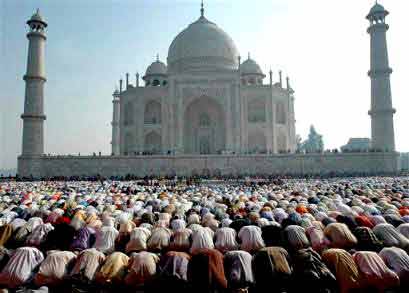
Interventionism, Not Muslims, Is the Problem
By Jacob G. Hornberger / October 27, 2008

One of the popular post-9/11 sentiments has been the one that holds that Muslims are bent on conquering the world. The notion is that Muslims hate Christianity and Western freedom and values and that such hatred is rooted in the Koran and stretches back centuries. Thus, the United States has been drawn, reluctantly, into a war against Muslims. That’s why U.S. forces are in Iraq and Afghanistan, the argument goes — to defend our freedoms by killing Muslims over there before they get over here and kill us.

I sometimes wonder whether the people who have this mindset have reflected on the ramifications of their belief.

For example, if Muslims in general are at war with the United States, then why shouldn’t Americans be out killing Muslims here in the United States? After all, when a nation is at war, isn’t it permissible to kill the enemy? Isn’t that what war is all about?

The reason that proponents of this view don’t start killing Muslims here in the United States is very simple: Deep down, they know that the killers will be indicted by their very own government for murder. They will then be prosecuted, convicted, and sentenced to serve time in a federal penitentiary for murder.

Let’s carry the ramifications overseas.

If the United States is at war against Muslims, then why not start with ousting the Muslim regime in Iraq and installing a Christian or Jewish regime in its place? Yes, I said Iraq. Believe it or not, the U.S. invasion of that country succeeded in installing an Islamic regime, a regime which, by the way, has closely aligned itself with the radical Islamic regime in Iran.

A second-choice candidate for invasion, occupation, and regime change would be Kuwait, another country run by an Islamic regime. Since Saddam Hussein’s forces were easily able to conquer the country, it should be a piece of cake for U.S. forces.

A problem arises however. Once the United States effects regime change in Iraq and Kuwait, installing Christian or Jewish regimes, what about the millions of Muslims in those two countries? Sure, their governments would no longer be Islamic but what about the millions of people living there? Wouldn’t they still be the enemy to Christians and the West? Wouldn’t they still be bent on world conquest? What should be done with them? Perpetual incarceration in concentration camps? Mass executions of all Muslims?

And what about Saudi Arabia, Jordan, Egypt, and all the other countries in which people are predominantly Muslim. You know — the Islamic countries that are the recipients of billions of dollars in U.S. foreign aid. Does the U.S. government invade those countries too, effect regime change, and incarcerate or execute the millions of Muslims living there?

During the Cold War, people used to say the same thing about the communists that we’re now hearing about the Muslims. The communists were coming to get us, and some Americans were even looking under their beds for communists. In fact, 58,000 American men were sacrificed in Southeast Asia because U.S. officials claimed that Vietnam was the central front in the war on communism. With a military loss in Vietnam, the dominoes would start falling, they told us, with the final domino being the United States.

Yet, the U.S. did lose in Vietnam, and yet the dominoes didn’t fall. It turned out that those 58,000 American men died for nothing. Today, U.S. officials even travel to Vietnam as tourists. Americans are freely trading with the people who were supposedly going to invade the United States and take over the IRS and the public schools.

Ironically, throughout the Cold War there was nary a mention of the Islamic threat to the West, even though proponents of that view today claim that the Muslim threat stretches back many centuries. In fact, the irony of ironies is that during the Cold War the U.S. government even entered into partnerships with Muslims, including Osama bin Laden, Saddam Hussein, and various Islamic regimes in the Middle East. No one accused U.S. officials of treason for entering into agreements with the enemy.

It’s true that Muslims have fundamental differences with Christians and the West, and vice versa. But those types of differences ordinarily do not cause people to kill people who have different values. Most Muslims are no different from Americans in the sense that they simply wish to live their lives in peace, practice their faith, raise their families, and be left alone. They don’t like it when some foreign government tries to interfere with their way of life, just as Americans don’t like it when some foreign government does that to them.

What all too many Americans, unfortunately, will not permit themselves to see is that that is precisely what the U.S. government did in the Middle East, especially when the Soviet communist bugaboo evaporated in 1989. As a result of U.S. interventionism in the Middle East, especially the interventionism that resulted in large number of deaths (e.g., the sanctions and the no-fly zones), what began as differences in values rose to the level of anger and rage that induced some people to seek vengeance through violence.

Thus, rather than ceasing its policy of interventionism after 9/11, which is what the U.S. government should have done even while pursuing the perpetrators through criminal-justice means, it did the very worst thing possible — it continued and even expanded its policy of interventionism in the hope of killing those whose differences with America’s values had risen to the level of rage as a result of U.S. interventionism. Not surprisingly, that only fueled more anger and rage.

So, what should the U.S. government do now? It should do what it should have done after 9/11: Exit Afghanistan and Iraq and the entire Middle East. Bring all the troops home.

Would this quell the anger and rage against the United States? Not all of it but certainly much of it. As I said above, most people simply want to live their lives in peace.

After all, look at Vietnam, where the U.S. government killed more than a million people. Once U.S. forces exited the country, the Vietnamese left the United States alone.

While there is the ever-present risk that there will still be some people who will still want vengeance, their numbers will be relatively small. While they will constitute an ever-present threat of terrorism, that’s the price that must be paid for past interventions. What’s important to note is that continued interventionism can never solve that problem — it can only make it worse.

When governments go awry, it is up to the citizenry to straighten out their course. The problem is not Muslims or Islam. The problem is the U.S. government and, specifically, its foreign policy of interventionism. Bringing an end to that policy will restore a sense of peace and harmony not only to the American people but also the people of the world.

Source / Future of Freedom Foundation

The Rag Blog

Posted in RagBlog | Tagged , , | 1 Comment

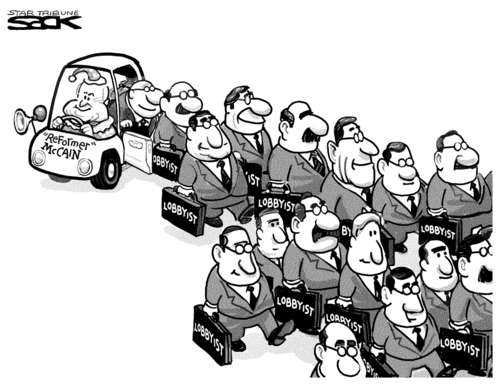
Lobbyists : The Boys on McCain’s Bus


‘A gang of lobbyist-insiders — at odds with his supposed devotion to maverick change — runs McCain’s Washington-based campaign.’
By Sherman De Brosse / The Rag Blog / October 28, 2008

This is the fifth in a series by Rag Blog contributor Sherman De Brosse, a retired history professor, on John McCain, his shady involvements, past and present, and his wrong-headed and ill-informed political positions.

Trying to rehabilitate his reputation after the “Keating Five” Scandal, John McCain assiduously projected an image of integrity and a myth of greatness. In fact, he continued to run errands for contributors.

Recently, McCain denied ever meeting Lowell “Bud” Paxson, even though there was a 2002 court deposition proving they had met. This is important because in 1999, McCain, then chairman of the Senate Commerce Committee, pressed the FCC hard to let Paxson Communications purchase a Pittsburgh television station. The FCC claimed McCain’s request seemed like a threat and believed he had crossed the line separating propriety and impropriety. The firm had donated $20,000 to McCain. The firm had provided McCain transportation on a company jet on several occasions.

Very briefly, the press raised questions about his relationship with a pretty young Paxson lobbyist, Vicki Iseman, who was often in his company in 2000. The head of the New York Times Washington bureau stood behind the story and said it was based on a lot of hard work and “multiple sources.” When the story about a possible fling came out, McCain acted strangely, avoiding reporters and some thought inadvertently playing the role of the guilty man. He and his campaign issued contradictory statements — a few marked by his characteristic petulance, and the matter of using improper tactics to help a contributor was never cleared up. The press quickly backed off of the entire story when McCain denied there was a sexual relationship and Republicans used it as an example of media bias.

When confronted with information about his conduct in the Paxson case, McCain said he was just prodding bureaucrats and then produced documents to show he had done the same thing in other cases involving large contributors. What chutzpah!

John McCain had very close ties to Cablevision, which gave $200,000 to his Reform Institute. In 1999 he did not recuse himself when Cablevision business was before his committee. Later, Chairman McCain wrote to the Federal Communications Commission urging them to permit the firm to repackage their offerings . When information surfaced about his tight relationship with Cablevision, he resigned as president of the Reform Institute. Recently, Verizon went to great effort to locate a special cell reception tower at McCain’s ranch at no expense to him. Then A,T& T did likewise.

In 1999, McCain staff twice intervened to help wealthy contributor and close personal friend Donald Diamond obtain land from closed Army base Fort Ord in California. That deal allowed him to turn a $20 million profit, and another arrangement in 2005, again with McCain help, promises to be more profitable. This involves as many as 12,000 homes and benefits more than one McCain backer. Two former McCain staffers were hired as lobbyists in this complex deal to get him aboard. Twice in the 1990s, McCain introduced land legislation to help Diamond, and a third measure is now before the Senate.

In 2001, questions were raised about legislation he backed for the cruise industry and the large contributions it gave him. There are also questions about his close ties to the cable TV industry.

On October 18, Howard Fineman of Newseek referred to the “gang of lobbyist-insiders, whose identity is glaringly — almost comically — at odds with his supposed devotion to maverick change, [that] runs McCain’s Washington-based campaign.”

Recently, it was learned that John McCain had more lobbyists working for his 2008 campaign than any other presidential candidate. It is absolutely infested with them, many from industries McCain was supposed to have regulated. A gang of lobbyist-insiders, whose identity is glaringly — almost comically — at odds with his supposed devotion to maverick change, runs McCain’s Washington-based campaign.

Even after six were forced to leave the campaign due to their ties to unsavory regimes, there are 59 who do nothing but raise money. One of them is Ralph Reed, who was shown to be taking advantage of Native American clients in hearings McCain chaired! Over time, 133 lobbyists have worked for the Straight talk Express. This is understandable as McCain has accepted more money from lobbyists than any other candidate in the 2008 primaries and general election.

Others do other things in the campaign. Rick Davis is campaign manager, and Charlie Black is senior political advisor. Davis has played a big role representing Indian casinos before McCain’s committee. Among Black’s clients were AT &T, Rupert Murdoch, and Blackwater. Twenty-one McCain people also represented AT&T. Black had also been paid to assist Ahmed Chalabi, whose distortions helped get the US to invade Iraq. Could this be connected to McCain’s view that American troops must soldier on there, possibly indefinitely?

Two lobbyists were closely tied to the mortgage industry, which could explain why McCain has been so very friendly to the same industry. Randy Scheunemann, McCain’s foreign policy analyst, has represented the Republic of Georgia, and spoke on McCain’s behalf on this issue as recently as August 17. This could explain why McCain is so hawkish about the Russo-Georgian struggle. He speaks as though he is already president, keeping force and all other options on the table. Lobbyist Bill Timmons, head of McCain’s presidential transition operation, had been Saddam Hussein’s chief lobbyist in the US after the first Gulf War.

None of this information is to suggest Mc Cain is a crook. He is obviously very closely tied to the lobbyists and special interests that he frequently complains about. There is no doubt that he has a history of going to bat for them — sometimes appearing to go to far. He has repeatedly promised never to do anything that gives the appearance of impropriety, but his track record is just the opposite.

He probably is not a crook, and deserves great praise for his service in the Vietnam War. But he is only mortal and has a bad track record for consistency and truth telling, despite all his self-praise about honesty.

Any reasonable person would have problems with McCain’s claims to being a “maverick” after he made peace with “the agents of intolerance” and accepted their candidate for vice president. But if any doubts remain, surrounding himself with lobbyists should permanently erase the image of “maverick.” He was a tool of lobbyists in Charles Keating’s day, and remains one today.

See other Rag Blog articles by Sherman DeBrosse on John McCain and Sarah Palin.

The Rag Blog

Posted in Rag Bloggers | Tagged , , , | 1 Comment

Creationism in Schools : Texas is Doomed!!


‘The latest shooting-itself-in-the-foot-moment for the Lone Star State is based on a panel to create its state science curriculum.’
By Phil Platt / October 27, 2008

I simply cannot understand how Texas manages to exist day after day. The rampant insanity of the government in that state makes it seem likely that Texas will simply fly off the face of the Earth and spin into the Sun.

The latest shooting-itself-in-the-foot-moment for the Lone Star State is based on a panel to create its state science curriculum (oh, you already know where this is going, dontcha now?). Out of the six seats on the panel, three are going to creationists! And not just any run-of-the-mill creationists, but one of them is Stephen C. Meyer, director of the Discovery Institute.

TI will pause a moment while the air leaks back into your room.

Ready? OK then, let me say this again: Texas has placed a creationist who runs the Discovery institute — a hotbed of creationist deceptions — on a panel that will decide what “science” the children of Texas will learn.

And who will lead this panel of three reality-based scientists and three people dedicated to destroying reality? Why, it’s our old friend Donald McLeroy! Remember him? He’s a creationist. He hates science. He thinks abstinence-only education works (if you want teen girls to get STDs and get pregnant, then you’d be right). And he’s proven that he has no business being within three hundred yards of any sort of educational process.

So if you live in Texas, what can you do? First, educate yourself: read what others have to say on this topic, including Texas Citizens for Science, PZ Myers, the Houston Chronicle, and even Little Green Footballs (a website with which I agree on almost no other topic).

Then, write letters. Tell your friends. Send them here, or to those other links. Go to the Texas Citizens for Science site. If you have a blog, write about this, because when exposed to light this creationist ideologues tend to wither from embarrassment.

Unfortunately, McLeroy was appointed by Texas Governor Rick Perry, and the next election for governor isn’t until 2010. But don’t forget: Perry is the guy who put an anti-science, inexperienced man in charge of Texas education, a man who has proven beyond any doubt whatsoever that not only is he wrong for the job, but that he will destroy science education in Texas… and Texas is a state that drives textbook sales throughout the country. This affects all of us. One man — one creationist — can unduly influence the entire country. And this must be stopped.

Source / Discover

The Rag Blog

Posted in RagBlog | Tagged , , | 1 Comment

Progressive Taxation and the Sad Saga of Joe the Plumber

Illustration by Tom Bachtell / New Yorker.

It all started with Adam Smith
by Steve Coll / October 27, 2008

The rise and fall of Joe the Plumber as a symbol of the American self-made man’s resistance to progressive taxation began on October 12th, outside Toledo, Ohio. As Senator Barack Obama campaigned for the Presidency in a neighborhood of modest homes, a man named Samuel J. (Joe) Wurzelbacher approached. He said that he was getting ready to buy a company that earned about a quarter of a million dollars a year, and he asked if his taxes would rise under Obama’s economic plan. The Senator acknowledged that they might. “Nobody likes high taxes,” Obama said. “Of course not.” Still, he explained:

I do believe that for folks like me who’ve worked hard but frankly also been lucky, I don’t mind paying just a little bit more than the waitress who I just met over there. . . . She can barely make the rent. . . . And I think that when you spread the wealth around, it’s good for everybody.

The principle that Obama evinced, which most economists would regard as unexceptionable, can be traced to Adam Smith. In “The Wealth of Nations” (1776), his seminal treatise on capitalism, Smith wrote:

The necessaries of life occasion the great expense of the poor. . . . The luxuries and vanities of life occasion the principal expense of the rich, and a magnificent house embellishes and sets off to the best advantage all the other luxuries and vanities which they possess. . . . It is not very unreasonable that the rich should contribute to the public expense, not only in proportion to their revenue, but something more than in that proportion.

Smith’s notion of reasonableness did not anticipate the Fox News Channel, however. Last Tuesday, Wurzelbacher appeared on that network, where he denounced Obama’s comments as “socialist.” He said that Obama “scared me,” because he “wants to distribute wealth.” Wurzelbacher also granted an interview to the advocacy group Family Security Matters, whose advisory board includes the conservative talk-radio hosts Laura Ingraham and Monica Crowley. By means unknown, Joe’s story of ambition and resentment reached the campaign of Senator John McCain.

Early in last Wednesday’s televised debate, McCain brought up Joe’s supposed worries about Obama’s proposed tax rates for wealthy Americans and set off one of those cascading episodes of goofiness that sometimes overtake people who are tired. During a prolonged colloquy in which “Joe the Plumber” was invoked more than two dozen times, McCain accused Obama of waging “class warfare.” Each office-seeker spoke to Joe, “if you’re out there,” as if he were a lost child. At one point, McCain referred to Wurzelbacher as “my old buddy Joe, Joe the Plumber,” sounding as if he might launch into song.

McCain’s reification of Joe’s working-class-rooted virtue portended Dreiserian revelations, and, sure enough, reporters quickly discovered that Wurzelbacher was not everything he seemed. He lacked a license to perform plumbing or contracting work; a lien had been filed against him for nonpayment of taxes; and he told Katie Couric, of CBS News, that in truth he is not at present expecting to enter the high tax bracket he had mentioned to Obama. Wurzelbacher’s prospects for participating in Sarah Palin’s 2012 Joe Six-Pack tour may also have been dented when, speaking to Couric, he described Obama’s remarks on tax policy as a “tap dance . . . almost as good as Sammy Davis, Jr.”

Of the several morals lurking in this postmodern fable, the least surprising is the reminder that McCain’s campaign believes that it cannot afford to be heavily burdened by facts while constructing attacks against Obama’s candidacy. Also familiar is the example of McCain’s sloppy decision-making. The Ordinary Joe charade was transparently conceived to poke at Obama’s vulnerability with white, independent voters in culturally conservative industrial states. Unfortunately for McCain and his staff, they apparently did not think to vet an important new anecdote that they planned to spring upon a national television audience at a decisive moment of the campaign.

That oversight has rebounded on McCain, of course, but, more important, his phony war on taxes has diminished the last phase of the campaign. In the maw of the worst banking and financial crisis since the Great Depression, McCain has repeatedly dumbed down the debate on economic policy. His focus on pork-barrel spending and the top marginal tax rates of the richest Americans has obscured the seriousness of the crisis, whose causes have nothing to do with either of those issues. Some economists expect the country’s unemployment rate to rise from its current level, of about six per cent, to as high as ten per cent, which would be the highest in a generation; more than a million American families have already had their homes foreclosed upon during the past two years, and in August foreclosure filings reached a record high. McCain, perhaps because he honed his policy instincts during the Reagan era, when marginal tax rates were a big deal, or perhaps because he just doesn’t know what else to talk about, has deflected debate from the difficult, complicated choices that must be made by the next President, such as what sort of economic stimulus plan to enact, and in what stages; which policies might keep the most families in their houses at the least cost; how to restructure market regulation to bring credit-default swaps and other derivatives under government oversight; and how to coördinate global reform of financial and trade imbalances.

McCain is right in detecting signs of growing class resentment; some of the angry are turning up at McCain-Palin rallies, where the mood has been not so much socialist as national-socialist. The cause of this resentment is not difficult to explain, and it has nothing to do with Obama’s modest tax proposals. Income inequality—the gap between the richest and the rest—increased dramatically during the Bush Administration. The main reason was that the rich became very, very rich, while middle- and working-class families saw their incomes stagnate or decline. Long before the Wall Street meltdown, rising gas prices and health-care bills pinched even those American households with incomes that rank squarely in the middle classes.

That is where the great majority of actual plumbers live, of course; they don’t make a quarter of a million dollars a year. In 2007, their average annual income was forty-seven thousand dollars, and that figure was buoyed by the recent housing boom. The Bureau of Labor Statistics publishes an income roll call of other occupations with which McCain, once a modestly paid military officer, has evidently lost touch: kindergarten teachers, $47,750; firefighters, $44,130; roofers, $36,340; dental assistants, $32,280; security guards, $24,480; home health aides, $20,850.

At the very bottom of the income ladder, the inflation-adjusted minimum wage—despite two increases in the past two years—remains essentially the same as it was when George W. Bush took office. That wage amounts to less than fifteen thousand dollars a year, before taxes—and, yes, there are taxes to be paid even at that level. The number of Americans living in poverty has grown by more than five million since 2000. And there’s no way to say that ain’t so.

Source / The New Yorker

The Rag Blog

Posted in RagBlog | Tagged , , , , , | 1 Comment

Dubya : Texas Tried to Warn Us


Ann Richards: ‘If you ask George Bush what time it is, he’ll say, “I think Americans have the right to bear arms.”‘
By Larry Ray / The Rag Blog / October 28, 2008

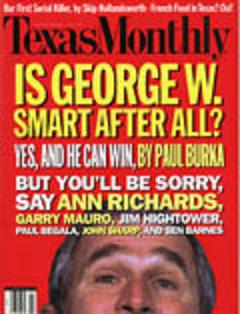
I think the best state magazine in America is Texas Monthly. As a native Texan living away from South Texas for decades, my annual subscription to TM has been a lifeline to my deep Texas roots. The July, 2000 issue should have been required reading for all registered voters in America. The cover, seen at left, asked the question about the then Texas Governor, “Is George W. Smart After All?”

Senior Executive Editor, Paul Burka’s article was titled, “Yes, And He Can Win'” A follow-on article, “But You’ll Be Sorry!” contained personal observations about Bush from six noted Texas politicians and political analysts. Former Texas Governor, Ann “Ma” Richards, who was beaten by the young George W. in 1994, wrote,

“To his credit, George Bush is a disciplined campaigner. He stays on message . . . He seemingly does not tire of saying the same thing over and over and over again. If you ask me what time it is, I’m likely to tell you about the history of timekeeping and clock making . . . . If you ask George Bush what time it is, he’ll say, ‘I think Americans have the right to bear arms.’”

Jim Hightower, former agricultural commissioner, predicted Bush would lose, listing his observations about the cocky young candidate.

“One, the smirk. This is not a facial tic. This is from within. It reflects a spoiled brat’s sense of entitlement and a mean streak that we’ve seen flare up. I think that Bush’s sense of privilege is going to grow real tiresome real fast. The more you get to know him, the less you get to like him.”

Hightower continued this pure Texas diatribe,

“Two, deep down, this guy is shallow. His one hundred experts and fundraisers and media handlers and powderers and puffers have done a good job so far of keeping his shallowness under cover.”

“Three, he is a corporate wet dream, a loyal performer for the fat cats who’ve put money in him. If the voters and the media focus on the favors he has done for rich people, they’ll see Bush for what he really is: a hired hand for corporate interests. That’s not what the general public wants its president to be.”

Hightower had Bush nailed, but his prediction was wrong. Americans, elected W. anyway by the thinnest of voter margins, finally decided by the Supreme Court.

Prophetic stuff. Problem is that it has taken eight years for too many Americans to finally discover all this for themselves. John McCain is frantically trying to replace George Bush in a last minute game of political Whack-a-Mole. McCain keeps popping up, learning new lines, yelling, “My friends!” throwing out last-minute non-Bush economic promises. But what about the hapless hockey mom, who would be next in line as president? Even NASCAR GOP abductees must be thinking that over.

[Retired journalist Larry Ray is a Texas native and former Austin news anchor. He also posts at The iHandbill.]

The Rag Blog

Posted in Rag Bloggers | Tagged , , , | 2 Comments

Salary Bonuses Constitute 10% of the Bailout

Demonstrators protesting in New York before the $700bn Wall Street bail-out earlier this month. Photograph: Nicholas Roberts/AFP/Getty images

Wall Street banks in $70bn staff payout
By Simon Bowers

Pay and bonus deals equivalent to 10% of US government bail-out package

Financial workers at Wall Street’s top banks are to receive pay deals worth more than $70bn (£40bn), a substantial proportion of which is expected to be paid in discretionary bonuses, for their work so far this year – despite plunging the global financial system into its worst crisis since the 1929 stock market crash, the Guardian has learned.

Staff at six banks including Goldman Sachs and Citigroup are in line to pick up the payouts despite being the beneficiaries of a $700bn bail-out from the US government that has already prompted criticism. The government’s cash has been poured in on the condition that excessive executive pay would be curbed.

Pay plans for bankers have been disclosed in recent corporate statements. Pressure on the US firms to review preparations for annual bonuses increased yesterday when Germany’s Deutsche Bank said many of its leading traders would join Josef Ackermann, its chief executive, in waiving millions of euros in annual payouts.

The sums that continue to be spent by Wall Street firms on payroll, payoffs and, most controversially, bonuses appear to bear no relation to the losses incurred by investors in the banks. Shares in Citigroup and Goldman Sachs have declined by more than 45% since the start of the year. Merrill Lynch and Morgan Stanley have fallen by more than 60%. JP MorganChase fell 6.4% and Lehman Brothers has collapsed.

At one point last week the Morgan Stanley $10.7bn pay pot for the year to date was greater than the entire stock market value of the business. In effect, staff, on receiving their remuneration, could club together and buy the bank.

In the first nine months of the year Citigroup, which employs thousands of staff in the UK, accrued $25.9bn for salaries and bonuses, an increase on the previous year of 4%. Earlier this week the bank accepted a $25bn investment by the US government as part of its bail-out plan.

At Goldman Sachs the figure was $11.4bn, Morgan Stanley $10.73bn, JP Morgan $6.53bn and Merrill Lynch $11.7bn. At Merrill, which was on the point of going bust last month before being taken over by Bank of America, the total accrued in the last quarter grew 76% to $3.49bn. At Morgan Stanley, the amount put aside for staff compensation also grew in the last quarter to the end of August by 3% to $3.7bn.

Days before it collapsed into bankruptcy protection a month ago Lehman Brothers revealed $6.12bn of staff pay plans in its corporate filings. These payouts, the bank insisted, were justified despite net revenue collapsing from $14.9bn to a net outgoing of $64m.

None of the banks the Guardian contacted wished to comment on the record about their pay plans. But behind the scenes, one source said: “For a normal person the salaries are very high and the bonuses seem even higher. But in this world you get a top bonus for top performance, a medium bonus for mediocre performance and a much smaller bonus if you don’t do so well.”

Many critics of investment banks have questioned why firms continue to siphon off billions of dollars of bank earnings into bonus pools rather than using the funds to shore up the capital position of the crisis-stricken institutions. One source said: “That’s a fair question – and it may well be that by the end of the year the banks start review the situation.”

Much of the anger about investment banking bonuses has focused on boardroom executives such as former Lehman boss Dick Fuld, who was paid $485m in salary, bonuses and options between 2000 and 2007.

Last year Merrill Lynch’s chairman Stan O’Neal retired after announcing losses of $8bn, taking a final pay deal worth $161m. Citigroup boss Chuck Prince left last year with a $38m in bonuses, shares and options after multibillion-dollar write-downs. In Britain, Bob Diamond, Barclays president, is one of the few investment bankers whose pay is public. Last year he received a salary of £250,000, but his total pay, including bonuses, reached £36m.

Source / The Guardian / Posted October 18, 2008

And a former Goldman Sachs Republican hotshot got the job to stabilize the financial markets:

Neel Kashkari. Photo: Haraz N. Ghanbari/AP.

Who will spend our $700 billion? Meet 35-year-old Neel Kashkari
By Michael Rainey / October 8, 2008

His name is not exactly familiar and his official title is a bit much — Interim Assistant Secretary of the Treasury for Financial Stability and Assistant Secretary of the Treasury for International Economics and Development — but 35-year-old Neel Kashkari is now one of the most powerful people in the global economy. As the head of the new Office of Financial Stability, it’s his job to start spending the $700 billion Congress approved to stabilize the financial system.

As some commentators enjoy pointing out, Kashkari is a former rocket scientist, having earned Bachelor’s and Master’s degree in engineering from the University of Illinois and worked as a mechanical engineer at TRW, where he developed latches for the the Next Generation Space Telescope. He left engineering for finance, parlaying an MBA from Wharton into a gig at Goldman Sachs (NYSE: GS), where he rose to Vice President, specializing in information technology investment banking.

So there’s little doubt that he’s a smart and hard-working guy. And in the current administration, that’s a great accomplishment.

But the question isn’t whether Kashkari is smart. The question is whether he has any idea how to use all that money to stabilize the global financial markets. And a quote from Kashkari I dug up does not inspire confidence. In September, at the right-wing American Enterprise Institute, Kashkari reportedly declared, “I’m a free-market Republican.”

It’s no surprise, of course, that a Bush administration official would describe himself as a free-market Republican. But it does suggest that Kashkari may have trouble figuring out how to restore confidence in those supposedly free markets.

It’s important to remember that unregulated free markets in debt instruments is how we got into this mess in the first place. And more generally, it’s pretty clear that the free-market ideology espoused by the Republican party (and embraced by many Democrats too) bears much of the blame for our current economic situation.

Whatever the solution may be, it certainly involves violating free-market principles over and over again. Insolvent banks cannot fail. Worthless assets must be bought and sold. And the government must lead the way.

I’m sure Kashkari is plenty smart enough to create new programs to accomplish these goals. But I’m not sure that he and the people he works for will be willing to violate their own political principles to get the job done in the most effective way. Kashkari was involved in the HOPE NOW Alliance, the Bush administration’s response to the subprime mortgage crisis. By most accounts, HOPE NOW has been a failure, largely because it serves corporate interests more than the needs of subprime mortgage holders. It seems that when pro-business political ideology meets real practical needs, ideology wins out.

Let’s hope Kashkari meets with great success. I just wish other senior managers with a little bit more experience — and a more complex understanding of the politics of the situation — were along for the ride.

Source / BloggingStocks

The Rag Blog

Posted in RagBlog | Tagged , , | 5 Comments

Fallujah: Another Failure of Bush’s Iraq Promises

Iraqi workers place concrete for a small clarifier tank for a waste water treatment plant as part of a U.S. Army Corps of Engineers project to rebuild the Fallujah sewer system. U.S. Army Corps of Engineers photo by Travis Edwards.

$100-million Iraq sewer project a failure, report says
By Julian E. Barnes / October 27, 2008

Sewage still runs in the streets of Fallouja, where a new waste collection and treatment system isn’t connected to homes. The report blames military action, changes to plans and skyrocketing expenses.

Reporting from Washington — In one of the most misguided reconstruction projects attempted in Iraq, the U.S. spent nearly $100 million to build a sewage treatment system for the city of Fallouja, according to a government audit report released today.

Sewage continues to run in the streets, and the Special Inspector General for Iraq Reconstruction found that the system may never be properly connected to individual homes, lacks the necessary fuel to operate and is unlikely to ever cover the full city.

In hopes of promoting reconciliation among Iraqi sects, the United States gave the initial order for the sewage treatment system in the summer of 2004, while Sunni-majority Fallouja was under the control of an insurgency. It was not until November of that year that the Marines, in heavy fighting, retook the city.

“It has been said before that reconstruction should have been delayed until military action was completed in this country,” Brian Flynn, the assistant inspector general, said Sunday in an interview from Baghdad. “And this is the most extreme example of reconstruction attempted during hostile operations.”

After the Marines took the city, they kept a tight control on people coming and going. That made rebuilding difficult. Trucks filled with gravel and sand for the project, which comprised a treatment plant, main pipelines and pump stations, had to be laboriously emptied, searched and refilled as the military tried to halt the smuggling of weapons into Fallouja.

But the city still remained violent and dangerous, and trenches dug for the sewer project offered hiding places for bombs.

“The Marines experienced problems with the construction underway,” Flynn said. “Everybody was mutually causing problems for each other.”

In July this year, Ryan Crocker, the U.S. ambassador to Iraq, asked the special inspector general to investigate why the sewer project had “gone so far off track.”

Auditors found that in addition to the security problems it faced, the project was derailed after it was twice redesigned, costs skyrocketed and the U.S. government was paralyzed by “indecision” about what to do.

Once scheduled for completion in January 2006, the project, which had a budget of $32.5-million, now is supposed to be finished in April, while costs have shot up to $98 million.

It was originally to cover all 24,400 dwellings in Fallouja, but will serve only 9,300 houses, about 38% of the city, at a cost of more than $10,000 a home. But despite all the money allocated, no funds have been set aside to connect the homes to the sewer system.

“There is no benefit of this system now,” Flynn said.

The Iraqi government was supposed to pay for the individual connections but now wants homeowners to bear the cost. But the auditors’ report found that homeowners might knock holes through manhole walls and rig their own connections to the sewer, damaging the entire system.

The project did create jobs for residents of Fallouja. The initial contractor, FluorAmec of Greenville, S.C., was removed from the project after a year. That company was replaced with a string of local contractors.

Flynn said it was amazing that as much work on the system got done — thanks, he said, largely to the Army Corps of Engineers.

But he added that the project is in danger. The sewer system needs between 4,800 and 6,000 gallons of fuel a day to run, but fuel is in short supply. If the system, if it becomes operational, were to shut down, sewage would back up into homes within a day.

The full report is available at the special inspector general’s website.

Source / Los Angeles Times

The Rag Blog

Posted in RagBlog | Tagged , | Leave a comment

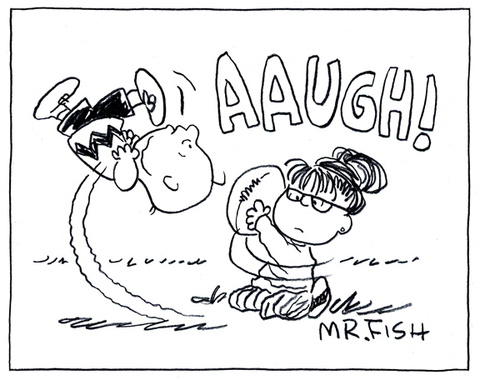
That’s the Ball Game

Thanks to Harry Edwards / The Rag Blog

Posted in RagBlog | Tagged , , | 1 Comment

Earth’s Oceans Are Deeply Troubled

Reefs including the Great Barrier Reef off Australia could begin to break up within a few decades, research suggests. Photograph: Cathie Page

Climate deal may be too late to save coral reefs, scientists warn
By David Adam / October 27, 2008

A new global deal on climate change will come too late to save most of the world’s coral reefs, according to a US study that suggests major ecological damage to the oceans is now inevitable.

Emissions of carbon dioxide are making seawater so acidic that reefs including the Great Barrier Reef off Australia could begin to break up within a few decades, research by the Carnegie Institution at Stanford University in California suggests. Even ambitious targets to stabilise greenhouse gas levels in the atmosphere, as championed by Britain and Europe to stave off dangerous climate change, still place more than 90% of coral reefs in jeopardy.

Oceanographers Long Cao and Ken Caldeira looked at how carbon dioxide dissolves in the sea as human emissions increase. About a third of carbon pollution is soaked up in this way, where it reacts with seawater to form carbonic acid. Experts say human activity over the last two centuries has produced enough acid to lower the average pH of global ocean surface waters by about 0.1 units.

Such acidification spells problems for coral reefs, which rely on calcium minerals called aragonite to build and maintain their exoskeletons.

“We can’t say for sure that [the reefs] will disappear but … the likelihood they will be able to persist is pretty small,” said Caldeira.

The new study was prompted by questions by a US congressional committee on how possible carbon stabilisation targets would affect coral loss.

Carbon dioxide in the atmosphere has risen from 280 parts per million (ppm) before the industrial revolution to more than 380ppm now. Campaigners and politicians in Europe and the UK say a new global climate deal, which is expected to be agreed next year, must aim to limit CO2 to 450ppm, though scientists say that is unlikely and the world is heading for 550ppm or even 650ppm.

The research suggests that stabilising world carbon levels at 450ppm would still dump so much carbon dioxide in the oceans that only 8% of coral reefs would be surrounded by water with enough aragonite to maintain their structure. Some 7% of the ocean below 60 degrees south will see a shortage of aragonite, while parts of the high latitude ocean could see a pH drop of 0.2 units.

At 550ppm CO2 in the atmosphere, no coral reef would have access to enough of the mineral. Even stabilising CO2 at current levels would still leave some 60% of coral bathed in seawater with low aragonite levels.

The increased amounts of carbon dioxide going into the ocean will also affect other marine life, such as shellfish, that need the calcium mineral to build carbonate shells.

Writing in the journal Geophysical Research Letters, the scientists say the risk posed by carbon pollution to coral and marine life could justify a carbon stabilisation goal “lower than what might be chosen based on climate considerations alone”.

The UK’s Royal Society is preparing to issue a warning to policymakers on the issue, together with dozens of other international science academies.

Caldeira said the affected reefs would not disappear straight away, but that the change in water chemistry would leave them vulnerable to attack, bleaching or disease.

He said: “We’re losing the Arctic ice, it looks like we’re going to lose the coral reefs and we could lose much of the rainforest. I find it disconcerting that these ecosystems that have been around on Earth for a long, long time are no longer able to survive.”

Source / Guardian

The Rag Blog

Posted in RagBlog | Tagged , , | 1 Comment

Rabbi Arthur Waskow : Is it Wrong to be Muslim in America?


‘Fear and even hatred of Islam is a part of the actual America at this moment of our history.’
By Rabbi Arthur Waskow / The Rag Blog / October 27, 2008

Said Colin Powell in a recent major interview, “The correct answer is, he [Obama] is not a Muslim. He’s a Christian. He’s always been a Christian. But the really right answer is: ‘What if he is?’ Is there something wrong with being a Muslim in this country? The answer is no. That’s not America.”

Of course Colin Powell is only partly right. Fear and even hatred of Islam is a part of the actual America at this moment of our history. It is also true that in part of America there is a real effort of Muslims, Jews, and Christians to learn from each other, make peace with each other and beyond each other, make peace between humankind and the rest of the web of life upon our planet.

In the warp and woof of all our communities, whether defined, by “religion” or by “nation,” there are some streaks of blood woven in the fabric. And — there are some streaks of respect and compassion and celebration of the One Who encompasses all “others.” Indeed, celebration of the One Whose infinitude can be reflected only through the diversity of our unique traditions. Whose Infinity can be honored only by honoring our differences.

Two parts of America. And, as usual, a third and larger part — uncertain, silent, more willing to honor sameness than difference, yet open to seeing “sameness” in Muslims and Jews and Christians and Buddhists.

Powell was appealing within and beyond the actual America to that patriotic vision of America that sings, “O beautiful for patriots’ dream that sees beyond the years/ Thine alabaster cities gleam — undimmed by human tears.” Now why did it take Colin Powell to say this? Why were not a slew of Senators, Presidential candidates, university presidents, heads of churches and synagogues, saying it?

Both a sweet and a sour way of answering that question occur to me.

Sour: Was it because he’s a retired general who actually led a war against a Muslim nation, and a former Secretary of State who justified a war against a Muslim nation? — so nobody could accuse him of being a “raghead-lover”? Because he’s not running for elected office in a country where many voters think Muslims are traitors?

Sweet: Is he actually in the process of doing tshuvah (“turning,” repentance)? Has he come to the conclusion that his complicity in the second of those wars was a profound ethical as well as practical mistake, and is he doing at least some repair of the bloodshed that flowed from that mistake — some effort to prevent the blood that could yet flow from more fear and hatred of Islam?

There are related “Why’s” we need to ask. Why didn’t either Senator McCain or Senator Obama carry their campaigns into a mosque, after speaking at many synagogues and churches?

Why did Obama’s campaign feel they needed to apologize for sending a speaker to a meeting where one of the sponsors was CAIR — the Council on American-Islamic Relations? Evidently because CAIR is listed by the Ashford-Gonzales-Mukasy Department of Justice as an “unindicted co-conspirator” in a case where a Muslim charity is accused of channeling money to an organization which is accused of assisting some terrorists.

Let us examine this “unindicted co-conspirator” business. The most clever — and most disgusting — thing about the label is that the Department of Justice can affix the label totally on its own. By definition, they have not even presented evidence to a grand jury that would justify indicting the organization on “probable cause,” let alone taking the case to a jury that could convict or acquit. Indeed, since CAIR is not a defendant, it cannot even be acquitted — although that did in fact happen to most of the people and groups whose actual indictment they got hooked onto. In that case, the government had years to amass the evidence they claimed showed support for terrorism. But a jury in Texas — hardly a hotbed of pro-Muslim sentiment — acquitted the defendants on almost all the charges, and was divided on a small number of them.

Indeed, an examination of CAIR’S website and a review of speakers at its national and local functions show that it condemns terrorism and participates with vigor in the normal processes of American democracy.

But the partially hung jury gave the government the opening to bring the case for retrial, and to keep alive the unsubstantiated smear against CAIR.

This is “Middle East McCarthyism.” A candidate as brave and as principled as Colin Powell is evidently trying to be, in his present reincarnation, would have denounced it. But a candidate who is himself thought by 13% of Americans to be a secret Muslim, and therefore to be a traitor, evidently felt he could not be that brave and principled.

The atmosphere of fear and hatred toward Islam has actually increased in the US during the last few years. Why? Partly because it has been deliberately stimulated. But partly because of what psychologists call “cognitive dissonance.” Most people who do something that runs against ordinary rules of decent behavior want to believe there is some extremely important reason to do it. So if you spend almost a trillion dollars and send thousands of Americans to their deaths and thousands more to lose their legs, arms, eyes, genitals, minds, and souls — all in order to kill Muslims who are not terrorists, do not have weapons of mass destruction, and are citizens of a weak and defenseless nation — it becomes imperative to see Muslims and Islam — without distinctions — as extremely dangerous. Not quite human. Not real Americans. Not one more thread in the lovely multi-colored fabric of American democracy.

And of course the fear and rage had a root in the actions of a small number of terrorists who did claim Islam as their justification, even though the mainstream organizations and leaders of Islam and the vast majority of Muslims in the world condemned the terrorist attack.

But this disorganized fear and rage would have remained disorganized, inchoate, ineffective, if some organizations had not whipped it up.

Enter a DVD called “Obsession,” which a month ago was mailed as a free embedded ad to the readers of more than a dozen major newspapers. At the time I briefly remarked upon its distortions and promised you a more through assessment. Then big chunks of the American and world economy fell apart, and my attention turned to what our ancient traditions teach about a flourishing abundance — and its choke-off.

Yet these two phenomena are not totally disconnected. Organized hatred of Islam might have even worse results if we were to fall further into economic crisis. During the Great Depression, clever organizers tried to turn fear and anger away from the “malefactors of great wealth” and “economic royalists” (as Franklin Roosevelt called them) to focus instead on Jewish targets. That effort mushroomed in America. In Germany, it took over.

Today, in Europe and America it is much less likely that Jews would be the targets of a populace frightened and enraged by economic disaster, or the targets of organizations hoping to deflect anger from the hyper-wealthy.

Muslims might become the target of opportunity.

And just as anti-Jewish rage in the 1930s was a danger not only to Jews but also to all who affirmed a free democracy and sought to reempower the poor and the middle class, so widespread rage against Muslims today would be a danger not only to Muslims.

“Obsession” is an attempt to make not a band of terrorists but all Islam the enemy. Bad enough in itself; even worse that it was deliberately sent to millions of homes through newspapers in the major “swing states” of presidential politics. It was an attempt to transform religious fear and ignorance into religious hatred, and hatred into an election tool.

I suppose the people who did this hoped that if they could change some votes in those key states they could save America and the world from leaders who were thoughtlessly “soft on terrorism” or “blind to the threat of Islam.” They may even have thought not that their ends justified their means but that their ends and means were in ethical coherence. But those who stirred racial hatred in the 1950s and ’60s thought they were saving America from the disaster of cultural “mongrelization” in a soup of racial inferiority. And the McCarthyists of the 1950s thought their stirring fear and hatred of “subversives” was saving America from the disaster of Communist espionage and take-over. And those who imprisoned Japanese-Americans in the 1940s thought they were saving America from the disaster of widespread sabotage. (All of these folks probably hoped to increase their own power as byproduct; but who doesn’t?)

Indeed, their means and their ends did cohere. Repression born of fear will breed more repression born of hatred. There are two grounds to challenge their practices: the ground of caring for truth, and the ground of caring for love.

Truth first:

“Obsession” begins with images of buildings, cars, and American flags burning, bombs exploding. Over them run words that say the film is not about Islam as a whole but about some violent “radical” branches of Islam. The words are visible; but no voice says them. They are hard to absorb while the eye is following fire and maimed bodies. In my experience as a watcher, the words serve not as an authentic framing for what happens in the film, but as an excuse for what in fact becomes an attack on Islam as a whole. (About halfway through the film, the commentators stop referring to “radical Islam” and start referring simply to “Islam.”)

The film never shows the millions of Muslims, leaders and grass-roots, who spoke their grief and horror at the World Trade Center murders. It does not show the meetings of Muslim scholars and teachers who issued fatwas (decrees) against killing civilians, or the work of Muslim organizations that not only called for dialogue but took part in it and patiently sent teachers to explain Islam to Jews and Christians. It does not show the work of Muslim charities trying to meet the needs of desperately poor families, of sick children, in countries as far-flung as Pakistan and Palestine.

When the film does show Muslims at prayer, it delivers the message that Muslims who become murderers are the same as those who pray — rather than counterposing the hundreds of millions who pray with the hundreds who kill.

On the other side of the same coin, the film ignores violence perpetrated in the names of religious and nationalist ideals when they are committed by Jews, Christians, Hindus, Communists, patriotic Americans. I do not mean only such acts as blowing up the Federal building in Oklahoma City or killing 29 Muslims prostrate in prayer in the Tomb of Abraham or murdering hundreds of Irish folk because they espouse one wrong flavor or another of Christianity.

I mean also this: Killing thousands of civilians is mass murder whether it is done by turning a truck or a plane with no national flag upon it into a bomb (“terrorism”), or dropping bombs from airplanes with a national flag proudly painted on them (“war”). For an American president who proclaims himself a born-again Christian and depends on the political heft of millions of born-again Christians to kill at least 300,000 Iraqis smells to me as much of religious terrorism as does the murder of 3,000 people in the World Trade Center by a band that proclaimed itself devout Muslims.

“Obsession” does not address this tug toward violence as it infects all our communities. It pretends that only Islam is infected, and all Islam at that.

And by doing this, it distracts us from addressing the real changes we need to make to wash away the bloody streaks in each and all of our traditions.

It also distracts us from addressing the real local needs and frustrations and oppressions that actually provide the heat that boils over into violence. It treats varied movements and disorganized upsurges that use violence as if they were all part of the same “international Muslim conspiracy” (I am deliberately echoing a slogan from the 19th and 20th centuries directed against Jews) — even when some of the attackers are Christians or secularists, even when most of the attacks are rooted in nationalism rather than Islam, even when some of the attacks are against foreign occupation troops rather than civilians, even when angry bands of unemployed, disaffected and uprooted young men who happen to come from Muslim families but have little interest in Islam smash and burn local stores as have their non-Muslim peers.

Just as Cold War ideology on both sides “justified” blood baths in Ukraine, Hungary, and Czechoslovakia as necessary to defeat the “capitalist conspiracy” without regard to the local needs and issues of the real live people, and “justified” blood baths in Guatemala, Nicaragua, Chile, Vietnam, and Cambodia as necessary to defeat the “communist conspiracy” without regard to the local needs and issues of the real live people, so “Obsession”‘s ideology will make it impossible to address real needs, and beckons us all toward new bloodbaths in the place of necessary change.

Is there any truth at all in “Obsession”? Yes. We do need to be concerned about terrorism from any source, and even more so when it comes garbed in God. But there is too much falsity surrounding that spark of truth for us to trust “Obsession” as a teaching.

What to do?

Speak out against the obsessive fear of Islam. Speak out to highlight the most important line in Colin Powell’s interview. Speak out to political candidates, urging them to speak in all sorts of houses of worship if they speak in any. Speak out to the publishers of the newspapers that carried “Obsession” as an ad, asking them whether a DVD about the “International Jewish Conspiracy” would have found so quick acceptance, no matter how much the money offered their shrinking bank accounts. Speak out to their editors and columnists as well, asking them to critically analyze the film. Since the producers of “Obsession” have announced a follow-up film called “Relentless,” be proactive in addressing the future as well as the past.

Above all, do not leave the defense of Islam’s dignity and honor to Muslims alone. Christians and Jews must make clear that their own celebration of the One affirms the diversity that alone can express the Infinite.

Ideally, speak out both in our different voices separately and in our different voices as a chorus: through interfaith committees where the medium becomes the message — where calls for honoring all our traditions in the public sphere are modeled by honoring each other’s wisdoms in our direct contact with each other. (For a multireligious effort to address “Obsession” see the work of Hate Hurts America at www.obsessionwithhate.com )

And listen — to the real sorrows and angers of different communities in the world, Arab and Muslim and Hispanic and African and Mountain White in the American West and Appalachia. Listen with the ears of our hearts before responding, and then respond. Through action.

The speaking out and the listening, even beyond our concern with truth, must flow from our concern for love. For the love that all our traditions teach: love your neighbor as yourself. For the deep and loving understanding that the Quran teaches: God brought into the world different cultures and communities not for us to hate and despise each other but to lovingly know and deeply experience each other in our diversity.

With blessings of shalom, salaam, peace —

Rabbi Arthur Waskow participates in an interreligious Sukkot/Ramadan celebration in 2006.

Rabbi Arthur Waskow, Ph. D., is a leader of the movement for Jewish renewal. He founded (in 1983) and directs The Shalom Center, a prophetic voice in Jewish, multireligious, and American life that brings Jewish and other spiritual thought and practice to bear on seeking peace, pursuing justice, healing the earth, and celebrating community. He edits and writes for its weekly on-line Shalom Report.

A life-long activist for peace and justice, Rabbi Waskow was involved in the civil rights movement and the movement against the War in Vietnam in the 1960’s and beyond. He posts to Progressives for Obama.

The Rag Blog

Posted in Rag Bloggers | Tagged , , , , , , , | 2 Comments

Is Surfing the Internet Altering your Brain?

A functional MRI brain scan shows how searching the Internet dramatically engages brain neural networks (in red). The image on the left displays brain activity while reading a book; the image on the right displays activity while engaging in an Internet search. Image: UCLA / Reuters.

‘We’re seeing an evolutionary change. The people in the next generation who are really going to have the edge are the ones who master the technological skills and also face-to-face skills.’
By Belinda Goldsmith / October 27, 2008

CANBERRA — The Internet is not just changing the way people live but altering the way our brains work with a neuroscientist arguing this is an evolutionary change which will put the tech-savvy at the top of the new social order.

Gary Small, a neuroscientist at UCLA in California who specializes in brain function, has found through studies that Internet searching and text messaging has made brains more adept at filtering information and making snap decisions.

But while technology can accelerate learning and boost creativity it can have drawbacks as it can create Internet addicts whose only friends are virtual and has sparked a dramatic rise in Attention Deficit Disorder diagnoses.

Small, however, argues that the people who will come out on top in the next generation will be those with a mixture of technological and social skills.

“We’re seeing an evolutionary change. The people in the next generation who are really going to have the edge are the ones who master the technological skills and also face-to-face skills,” Small told Reuters in a telephone interview.

“They will know when the best response to an email or Instant Message is to talk rather than sit and continue to email.”

In his newly released fourth book “iBrain: Surviving the Technological Alteration of the Modern Mind,” Small looks at how technology has altered the way young minds develop, function and interpret information.

Small, the director of the Memory & Aging Research Center at the Semel Institute for Neuroscience & Human Behavior and the Center on Aging at UCLA, said the brain was very sensitive to the changes in the environment such as those brought by technology.

He said a study of 24 adults as they used the Web found that experienced Internet users showed double the activity in areas of the brain that control decision-making and complex reasoning as Internet beginners.

“The brain is very specialized in its circuitry and if you repeat mental tasks over and over it will strengthen certain neural circuits and ignore others,” said Small.

“We are changing the environment. The average young person now spends nine hours a day exposing their brain to technology. Evolution is an advancement from moment to moment and what we are seeing is technology affecting our evolution.”

Small said this multi-tasking could cause problems.

He said the tech-savvy generation, whom he calls “digital natives,” are always scanning for the next bit of new information which can create stress and even damage neural networks.

“There is also the big problem of neglecting human contact skills and losing the ability to read emotional expressions and body language,” he said.

“But you can take steps to address this. It means taking time to cut back on technology, like having a family dinner, to find a balance. It is important to understand how technology is affecting our lives and our brains and take control of it.”

Source / Reuters

The Rag Blog

Posted in RagBlog | Tagged , , , | 1 Comment

No Fairy Tale : Palin’s Cinderella Moment


‘This is just so over-her-head amateurish.’
By Paul Robbins
/ The Rag Blog / October 27, 2008

I watched the TV News of Sarah Palin speaking in Tampa Sunday. My jaw dropped as I heard the quote.

Those [$150,000] clothes, they are not my property. Just like the lighting and the staging and everything else that the RNC purchased, I’m not taking them with me.

O……Kay. They’re just acting costumes?! Props?! It’s all for show?! My God, it is like she is admitting in public that the whole Vice-President role in the election is just an act, like some skit in “Saturday Night Live”?! This is just so over-her-head amateurish.

She continued that when the campaign is over:

I am back to wearing my own clothes from my favorite consignment shop in Anchorage, Alaska.

This is Palin’s Cinderella Moment.

Hmmm. What if, by some fluke, she wins? Will she still dress down in second-hand Levis and mended sweaters?

Also apparently part of the act was paying $22,800 for a make-up artist for two weeks of work (in addition to $13,200 for “communications consulting.”)

Sarah was also boasting of her humility by wearing a:

$35 wedding ring from Hawaii that I bought myself and ’cause I always thought with my ring it’s not what it’s made of, it’s what it represents, and 20 years later, happy to wear it.

The real story is a little different.

Palin and her husband were probably not flush when they were first married. But they appear to have done fairly well for themselves. Last year, the couple made about $230,000.

Their net wealth exceeds a million dollars, and includes:

• $125,000 for her Governor’s salary;
• $17,000 for per diem payments to allow Palin to live at home while being Governor;
• $43,490 to cover travel costs for her husband and children;
• $93,000 for Todd Palin’s oil production salary and fishing revenue;
• a half-million dollar home on a lake with a family-owned airplane at the dock;
• land investments (it appears the Palin’s dabble in speculation);
• at least partial ownership of 2 vacation retreats (one of which might be inferred as said speculation).

And you also have to consider that Alaska itself is an economic anomaly. Its standard of living is subsidized by low taxes and Big Oil. Sarah Palin did not create this situation, but the state economy she had flourished in is supported by it.

Alaska is literally the highest ranking state in per capita federal taxes received to support the state, and third highest in ratio of federal taxes received to federal taxes paid out.

And its local and state taxes are the lowest in the country due to severance taxes on resources, mostly oil and gas production.

Even income is subsidized by dividends from investments made with $40 billion of oil and gas revenues managed by the Alaska Permanent Fund. (I guess those hockey moms in Ohio should get themselves some oil wells and invest prudently like Alaskans did. Then they wouldn’t be scraping by purchasing clothes in consignment shops.)

What will be interesting is that when Palin turns back into a humble Governor and Tina Fey finds her next role, Sarah may launch a new career.

She may run for reelection, of course. But her approval ratings are down even in her home state. She has just been through a scandal about abuse of power, and similar scrutiny may occur with other issues.

So I think she will branch out. Why shrink back from the unexpected national fame she has been blessed with? There is Cinderella, The Book. Cinderella, The Movie. Hey, maybe she’ll even finally go on Letterman? What are the odds FOX will audition her own show?

Palin said she was going to give the clothes to charity when this election is over. But my guess is there will be ways for her to get them back. And as anyone who buys a $150,000 wardrobe knows, these costumes are part of the show, “just like the lighting and the staging and everything else.”

The Rag Blog

Posted in Rag Bloggers | Tagged , , , | 1 Comment