Weathering the Coming Crisis
By Diane Stirling-Stevens / The Rag Blog / September 25, 2008
Before I share the articles, I’m listing what we are either doing or suggest could be done to further protest this unnecessary bail-out that serves only to benefit the crooks, swindlers, and wealthy. I’m also listing some of the things we’ve done (before all of this) to minimize any impact something like this would have on us.
Frankly, I can’t believe this was a ‘sudden surprise’ to our government. If we could ‘smell’ this back in late 2003/early 2004 when we noticed homes were suddenly being ‘jacked up’ in price; when we saw gasoline prices start to rise (and not come back down), and noticed tourism in our area had slacked off considerably, we felt there might just be a ‘storm’ coming on.
In 2003 one of my son’s and his wife paid a pretty high price for a home in Palm Desert, CA. Having lived in California for 17 years, we were pretty accustomed to homes being over-priced. I was puzzled when I learned how my son was able to finance the home when his credit rating wasn’t that good, and their income hadn’t been that great. He described this ‘creative financing’ and I know I worried about how they’d had their down-payment financed as well as the actual mortgage. The first loan was for the down-payment; closing costs – all fees; they paid NOTHING at all. Luckily my son was pretty open about his finances with me, so in early 2004 when I saw the home prices in their area jump sharply, I suggested they get an equity loan; pay off that initial loan that had been the down-payment/fees/etc., and take the difference and put into CD’s. They got the loan; did exactly that, and now they only had their mortgage payment which was at a reasonable rate, and of course within their budget. I then encouraged my daughter-in-law to change her status as an employee, and contract out her services since her current employer was under-paying her and providing no benefits of any kind. Once that was accomplished, they had a higher net take-home; my son then decided to also quit his job – opened his own business, and now they both have their own businesses and in fact employ a small staff as well. As I look back, I’m happy they got just ahead of the mess (unfortunately my youngest son did not – he fell smack into the sub-prime mess, and is feeling the pain of it now). So, they are coping by taking in his wife’s brother; wife, and young baby – they lost their home in the sub-prime situation, as well as went bankrupt and lost their vehicle. Now that they’ve moved in and we’ve all pitched in to get them back to ‘square one’, we feel relieved that things can start to settle down in their household.
So, as part of what I’ve been doing to help my own family and a few neighbors, I thought in addition to the 2 articles I think you might want to read through, I’d share some of what is now helping those people who’ve been coming to our door with questions. Before we left for the Grand Canyon, I checked with each family and they’re doing much better – no one is ‘flush’ with money, but at least they’re not in a negative position at this time. Anyway, here are some of the ideas I’ve shared, and some of my thoughts about how you might want to manage any protest or distribute information to others you think might want to express their complaints about what is taking place in this request for $700,000,000,000.
#1 – Immediately change your W4 to 8 dependents (minimum); this will put immediate money into your paycheck – reduce what’s going to the tax-man. You can always revise it late-December, to reflect what you’ll ultimately file on your income tax. Anything over 9 dependents puts the IRS on the ‘red alert’.
#2 – List your house for sale at twice the price you think it’s worth; pump up that value so it appears in your local newspaper and of course refuse all offers that aren’t exactly what your asking price is – note you will consider a lease/option sale or a land contract which will muddy up any offer that you might actually get. Be sure not to make it an exclusive listing agreement. You don’t have to be SERIOUS ABOUT SELLING, just keep that price so high no one will want to buy it, and it will help you (and your neighbors) insure the value of the property values in your area.
#3 – Don’t buy another share of any stock; be sure your savings and CD’s are insured, and start putting cash into the freezer section of your refrigerator (as we’ve done – we have 4 months expenses there right now).
#4 – Eliminate direct deposits to your accounts; cash your checks – make no deposits, and buy money orders to pay any bills so the banks have no control over your accounts (and don’t know what you’ve got other than what you leave in your account as a cushion for emergencies).
#5 – Stop using your debit card.
#6 – Do your best to pay off your credit card so they can’t charge any interest (we’ve been doing this for 3 years now).
#7 – Check with family and friends about any potential needed purchases; see if you can swap and barter to minimize buying anything other than your very basic needs.
#8 – Stock up on your canned goods and dried foods/dehydrated foods – get at least 3 months of food in the house as we now have (or more if you’ve got the storage space).
#9 – Cancel all subscriptions to magazines you don’t really need; cancel all unnecessary services, and make every effort to trim out your expenses just in case they start increasing costs on utilities; taxes (state, property, sales), and other ways to ‘tax us’ because no doubt with money in tight supply, they’ll have to reach out to the consuming customer, and put the burden on us even more.
#10 – Start your own e-mail circulation with any ideas you have, and include all ideas that you think are viable and valuable, to create a net-work that shares the success of your protest efforts, but don’t talk on the phone about what you’re doing or in any way suggest or advocate any kind of protest that would violate the law or cause trouble for you or your friends/family.
#11 – We’ve all agreed in our family to not celebrate any holiday (including Halloween) so there are no cards being sent; no holiday foods or gifts, so we can contribute to the already projected slow holiday sales. Get creative with that – don’t even succumb to buying for birthdays or anniversaries – find other ways to celebrate that don’t involve feeding the retail industry.
#12 – Obviously sign any and all protest petitions; draft letters and offer to print and copy protest letters for those who can’t easily write them themselves, and flood the offices of not only your congressman, senator, representative, but the banks; your stock-broker’s office, and all of those offices that are associated with this mess (don’t sign them, just mail them).
#13 – Car pool as much as possible so you don’t support the price of gasoline. Take 2 or 3 friends with you shopping for groceries; combine your errands with shopping, and make every effort to show a decline in the use of gasoline since oil has already jumped $25/barrel and is predicted to go even higher.
#14 – Obviously, do your best to keep your temperatures in your homes as low as you can as the winter months set in for those of you in the snow-belt; utilize all the tricks most of us know who’ve had to weather the winter cold so you can minimize your fuel and utility bills.
#15 – Create a neighborhood and family bartering system; instead of having that garage sale, ‘barter’ as much as possible for the next 6 months until we have a new administration actually in office.
#16 – Don’t make a new car purchase – keep your current automobile serviced and slow down the sales of cars (which, according to my son who has a dealership is already happening).
#17 – Defer all home improvements; try not to draw on any line of credit you might have.
#18 – Try to put all your savings into a credit union if possible.
#19 – If you need a short-term bridging loan, try to loan within your family (if you’re comfortable with that), so no bank or lending institution is getting your interest money.
#20 – If you have any rooms you can rent for a nominal sum, and are willing to offer shelter to someone who might be having a tough time, do so. Two of my son’s are doing this with family members who have been struggling.
#21 – Set up a buying group where you can buy in bulk to save money.
#22 – Have ‘dinner gatherings’ where you each feed a few others at your table; in a round-robin fashion, you can help cut costs in your family and neighborhood.
Another KEY item that some people don’t know about, but you can incorporate yourself as an INDIVIDUAL (it’s easier if you have both your spouse and you incorporate – or even include your children if you want). If you follow the guidelines (and they’re really quite simple), you can complete the paper-work, then you can obtain all the advantages that go along with it.
Also, I’m sure you know that IF YOU DO NOT OWE TAXES TO THE IRS, you do NOT have to file a tax return. You need to be sure you DO NOT OWE ANY TAX, so this is something you must carefully figure out before you elect to choose this option. If you reduce your tax with-holding by changing your W4, be certain you’ve calculated this all out completely so there’s no potential problem by you owing the IRS. Between the information on the I-net and at your local library, you can probably determine all of this yourself. If you’ve got a friend who’s a tax accountant, buy them a beer and pick their brains at the same time.
Also since being an employee now seems to have no real advantages; no one is getting their health care as part of their benefits (or few); most are not getting a decent retirement program, it’s better to negotiate as a 1099 contract worker so you have a better control of your tax obligation, and have deductible self-employment expenses as well. I started doing this in 1980 (before I incorporated myself); in 1983 I completed the paperwork as a corporation, and until we both retired in 2003, this is how we handled our income program. I helped 2 of my 4 children with this concept, and both have enjoyed the fact they have a GROSS INCOME check in their hands, rather than a check that has had a myriad of deductions. Also, way too many people are allowing their checks to be reduced by paying income tax with-holding and often think it’s nice to get that ‘refund’ in the mail, but it’s actually better to minimize the refund and maximize the cash you have so you can put that money to work for you in an insured CD (you earn 3 or 4 percent throughout the year rather than earning absolutely nothing on that money for that year and for the weeks after the year’s end when you wait to get your tax forms, and wait to have the money refunded to you).
So, all-in-all, if you make a thorough review of your habits and expenses and see that you’re spending in ways that are not absolutely frugal and prudent, start doing so. If you think you’re ready to check into the options of becoming a contractor and/or decide to incorporate, you will probably enjoy an increase in net income. I think sometimes we get too comfortable; we spend as if there is going to be a regular supply of cash, and we need to start living as if there isn’t going to be.
Don’t fall for any gimmicks or solicitations that offer you some kind of ‘deal’ to get through this trying time that you know little or nothing about; surely there will be scams flying all over the place (including television ads). I’ve already had 2 e-mails in the last 10 days, with ‘bright ideas’ on how to grab my money and manage it ‘better’ for me, and of course I delete the crap.
Don’t let the fear they’re trying to trump up in us all, get to you – beware of those who try to get you to over-react. If you think my suggestions are trying to do that, they’re not – they are just prudent measures we’ve used during previous down-turns in our lives, and we’ve always done very well ‘riding it out’.
Be sure to get your children and grand-kids updated and informed about the economic problem that’s facing millions, and illustrate the positive side of what it means to change your life-style, and make it clear it’s good to be tested and to show strength and ingenuity at a time like this. Remind them not to listen to ‘their friends’ or not to be swayed by what others are doing, but educate them about why it’s necessary to do what you’re doing.
I’ve had a few times in my life when there was little money (and it didn’t always have to do with a national economic issue), so I had my children start drawing the checks for the expenses so they’d get a feel of what it costs to live and run a household. I would sign the checks and we’d all sit around and discuss the expenses; the source of income, and why we had to adjust our budget and habits to cope with the situation. I know it certainly worked with my children; they were capable of understanding the problems a parent faces by the time they were in their early teens and I never had to apologize to them or explain a darned thing because they were actively involved with the family finances in every way.
I’m sure you’ve got your own ideas and have suggestions you can share – now is the time to put those ideas into action and reach out to those who trust you, and who you trust as well.
Now, this is the article and the links you might also like to read and check out for yourself.
It’s 2:40 in the morning here, and I just felt I had to get some of my thoughts to you after watching these long hours of debate and discussion on the C-Span networks. Oh yes, C-Span seems to be the best source for getting the most current information about this bail-out (and there are no commercials).
Also, there are a number of blogs that have the link so you can sign the petition AGAINST approving this bail-out. One of them is Heartland Heretic. Another is On Transmigration. I’ve corresponded with the authors of these 2 blogs for many months; they are diligent citizens and are always on top of current issues. Both have made very recent posts so you won’t find the link ‘buried’; it will be right near the top of their blog site.
Now the article follows that I think will interest you.

Online Bailout Outrage Jumps to Streets, and Into Lawmakers’ Inboxes
By Sarah Lai Stirland / September 24, 2008
An e-mail that began as a rallying cry from a lone journalist to an influential circle of friends to protest the U.S. government bailout of Wall Street has ignited a national day of street protests. Some demonstrators plan to dump their rubbish in front of the bronze bull sculpture near Wall Street in downtown Manhattan Thursday.
“People are going to bring their own personal junk that they think is worth as much as the junk financial instruments that the government is proposing to buy from the Wall Street banks,” says Andrew Boyd, an activist and freelance online-video artist for nonprofit groups in Manhattan. “We’re hoping that people show up with their 8-track cassette collections, their old Spice Girl CDs, their surf boards that got bit by sharks and old Enron stock certificates.”
Boyd is just one of thousands of Americans from all over the political spectrum who the Bush Administration has angered with its vague proposal to hand $700 billion over to Treasury Secretary Henry Paulson to restore U.S. financial markets’ health. That anger has manifested itself online through e-mail, web sites and other online chatter, with one site, BuyMyShitPile.com, going rapidly viral this week. The site, a parody of the dire financial situation, is what is inspiring the self-organizing group of activists to show up in downtown Manhattan Thursday evening with all their junk. They hope to make their simmering fury palpable to Wall Streeters getting off work.
“Why should people who made financially imprudent decisions be rewarded?” asks Boyd, who is best known for founding the political protest theater group Billionaires For Bush. “It’s our hard-earned tax dollars, and we’re being asked to bail these guys out at the same time as this locks out all the things that we want for the future.”
Boyd’s is one of many voices of frustration. Other people’s anger spilled out online, which in turn, is fueling the planned protests’ momentum.
Arun Gupta, a 43-year-old freelance journalist in Manhattan, is someone else who was so upset by unfolding events that he was moved to action.
“I’ve been spending a lot of time reading about the intensifying crisis and the bailout plan,” he says. “The more I read, the more outraged and flabbergasted I was: It became clear to me that this was the financial equivalent of the Sept. 11 attacks.”
He was so upset that he banged out a passionately worded 629-word e-mail on his laptop Sunday afternoon urging his friends — and anyone else who would listen — to show up at the southern tip of Manhattan late Thursday afternoon to demonstrate. He says that he’s never organized a protest before in his life.
“This week the White House is going to try to push through the biggest robbery in world history with nary a stitch of debate, to bail out the Wall Street bastards who created this economic apocalypse in the first place,” he wrote. “This is the financial equivalent of September 11. They think, just like with the Patriot Act, they can use the shock to force through the “therapy,” and we’ll just roll over!”
He added:
Think about it: They said providing health care for 9 million children, perhaps costing $6 billion a year, was too expensive, but there’s evidently no sum of money large enough that will sate the Wall Street pigs. If this passes, forget about any money for environmental protection, to counter global warming, for education, for national healthcare, to rebuild our decaying infrastructure, for alternative energy.
This is a historic moment. We need to act now while we can influence the debate. Let’s demonstrate this Thursday at 4 pm in Wall Street (see below).
The e-mail ricocheted through the electronic ecosystem faster than the implosion of Wall Street itself, tapping into and riding the frisson of resentment among Americans at this monumental financial foul-up.
“I wrote up an e-mail Sunday night, and I sat on it.” he says. “I was a bit hesitant because I’m not an organizer, I’m a journalist, but I also think that things have to be done in the world.”
He said that he sent it out to best-selling author Naomi Klein, who posted it to her website, and sent it out to her e-mail list. Then TrueMajority, a 700,000 member activist group headed by Ben and Jerry’s co-founder Ben Cohen, sent out an action alert the next day.
TrueMajority is making a “protest kit” available on its web site with instructions for groups who are interested on how to organize a rally. One of the instructions is to bring cell phones to the protest, and to have protesters simultaneously call their members of Congress. The site has also put up a web page that enables people to find an event near them by ZIP code.
“This was a convergence of everyone having the same thought at the same time,” says Matt Holland, TrueMajority’s online director.
He says everybody he knew had received Gupta’s e-mail at least three times from different people. It’s also been widely circulated on blogs.
Holland says that Gupta’s language just taps into “the strength of the emotion” that many Americans are feeling right now. TrueMajority’s members themselves have made 20,000 phone calls to Congress, he says. Members report the calls that they made through the group’s website.
“Everybody is just incredibly pissed off about this, and if there is a place and time for them to express themselves, they’re going to do it,” he says.
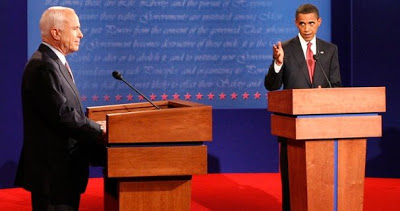
Congressional lawmakers have expressed frustration and skepticism over Treasury’s proposal, although they won a concession about CEO pay Wednesday afternoon. President Bush is scheduled to address the nation about the bailout plan 9 p.m. Eastern time Wednesday, and John McCain has asked Barack Obama to agree to cancel Friday’s presidential debate so that they could both work with the administration to hammer out an agreement.
In the meantime, a proposal to add several restrictions on the package from Sen. Bernie Sanders (I-Vermont) has gained traction online. He’s asked Americans to sign onto the petition, and he intends to present it to Paulson. The senator’s office reported Wednesday that 8,000 people signed the petition within the first 24 hours. Another sign that the petition gained widespread notice: “Bernie Sanders,” was one of the most-searched-for terms on Google Tuesday.
Also on Tuesday, a long list of economists from the nation’s top universities sent a letter to congressional leaders voicing their concerns about the too-speedy passage of any bailout package.
They said that they were most concerned about the plan’s fundamental fairness and its ambiguity.
Source / Wired
And there is also this remarkable interview from Democracy Now with Naomi Klein:
Naomi Klein: “Now Is the Time to Resist Wall Street’s Shock Doctrine”
While the collapse of this country’s financial system continues to send shock waves around the world, we speak to the bestselling author of The Shock Doctrine. Naomi Klein says the public should be wary of the Bush administration trying to use the crisis to push through more of the radical pro-corporate policies that helped cause it in the first place.
Guest: Naomi Klein, award-winning journalist, syndicated columnist and author of the bestseller, The Shock Doctrine: The Rise of Disaster Capitalism.
AMY GOODMAN: While the collapse of this country’s financial system continues to send shock waves around the world, I’m joined on the telephone by bestselling author of The Shock Doctrine, Naomi Klein. Her latest article for the Huffington Post is called “Now Is the Time to Resist Wall Street’s Shock Doctrine.” Naomi Klein, welcome to Democracy Now!
NAOMI KLEIN: Thanks, Amy. Great to talk with you.
AMY GOODMAN: Explain. What do you mean?
NAOMI KLEIN: Well, the thesis of my book, what I mean by the “shock doctrine,” is that it is in times of crisis, it is in times when people are panicked, when we’ve seen again and again the right push through radical pro-corporate policies, what they call “free market reforms,” precisely because it is in a crisis where the space for debate rapidly closes, and you can invoke this state of emergency to say we have no choice.
And I think we’re seeing a very dramatic example of this tactic right now with this really extortionist kind of tactics playing out in Washington. You know, “Sign this blank check, or we’re all going down, or Main Street is going down, or taxpayers—you know, the sky will fall in on them.”
I’m also arguing that this is only stage one of the shock doctrine. They’re getting this—they’re lobbying for this huge bailout, obviously, but this bailout is a kind of a time bomb, because it’s all these bad debts, and they are going to explode on the next administration. I mean, we know that the Bush administration has already left the next administration with huge debt and deficit problems. They’ve just exploded those, expanded them. And what that means is that whoever the next president is is going to be inheriting this economic crisis that is being exacerbated by this bailout.
So, in the case of McCain, I think—if he’s the president, then I think we know what he’ll do, because we know he wants to privatize Social Security, which is something that Wall Street’s been wanting for a long time, another bubble. We know he has said in the next—in the first 100 days of his administration he’ll look at every program and either reform it or shut it down. This is really a recipe for economic shock therapy. So, while you have all of these trivial issues being discussed in the election season, I think what we could—what we’re really—you know, under the surface, they’re actually being quite clear. They’re going to take—if they take power, it will be in the midst of an economic emergency. They’ll invoke that emergency to push through very, very radical changes. So, you know, what I’ve been saying is, this is not four more years of Bush; it’s much, much worse in the case of another Republican administration.
But there’s huge problems for Democrats, as well, if they win this election, because, you know, we need to only think back to the situation in which Clinton took power, where he ran an election on an economic populist platform, promising to renegotiate NAFTA. Then there was an economic crisis. Clinton came under intense lobbying by people like Robert Rubin, who’s also advising Obama right now, and by the time he took office, he had embraced economic austerity.
So, people need to understand these tactics, need to put pressure on the candidates, the parties, and reject this tactic. And I’ve actually been really heartened, Amy, that people are onto these shock tactics and aren’t falling for it. And, you know, to the extent that we’re seeing a little bit of spine from the Democrats, it is only, as Chris Dodd said, because they are hearing it from their constituents. So people need to keep up this pressure right now.
AMY GOODMAN: Naomi Klein, one of the things you write about in this piece in Huffington Post is the wish list that comes from former Republican House Speaker Newt Gingrich—
NAOMI KLEIN: Yes.
AMY GOODMAN: —laying out policy prescriptions for Congress.
NAOMI KLEIN: Yeah. I mean, there is pressure being put on Congress from Democrats who—you know, we’ve heard the proposals to cap executive pay and to have a moratorium on foreclosures. It’s coming not from all Democrats, but from some. But there’s something going on on the Republican side, where you have people like Newt Gingrich, and you also have the Republican Study Committee, which is a group of very influential Republican lawmakers who are saying that they’re opposed to the bailout, and they also have their wish list. And I think it is that it’s not that they’re going to oppose a bailout completely; it’s that they want economic changes, right-wing, pro-corporate economic changes, attached to a bailout. So, Newt Gingrich has his list. He’s got eighteen demands. But I think even more important than that is the Republican Study Committee, and I raise this because they’ve just issued their ransom list. It starts with suspending the capital gains tax, privatizing Fannie Mae and Freddie Mac, suspending mark-to-market accounting, which is the rule that requires companies to assess their assets at current market values.
So, what’s so stunning about this, Amy, is that here you have a crisis that everyone seems to agree is borne of deregulation, and they’re actually calling for more deregulation. We have a situation where the debt is exploding on American taxpayers, and they want to suspend corporate profits—sorry, corporate taxes, which is actually what might defray some of those costs from regular taxpayers. So it’s an incredible display of opportunism. And this is what I mean by stage two of the shock doctrine. The first stage is just the bailout, but the second stage are all of these radical reforms that are going to be invoked in the name of the crisis that the bailout is creating, whether it’s pushed through right now or whether it’s pushed through later.
But what’s important—you know, Amy, in the book, I talk about—I start the book with a quote from Milton Friedman that has really made the rounds a lot lately, which is that—and this is a Friedman quote—that “only a crisis, actual or perceived, produces real change. And when the crisis occurs, the change depends on the ideas that are lying around.” And then he goes on to say, “That, I believe, is our basic function: to keep the ideas ready until the politically impossible becomes politically inevitable.” So I think it’s really important for people to look at the ideas that are lying around.
There’s enormous corporate lobbying going on to, for instance, eliminate the post-Enron collapse regulations, to actually say that the way to save the American economy—you know, you heard Henry Paulson equating—still equating the interests of the financial sector with the interests of everyone else. We know that’s simply not true. But it’s that—precisely that logic that then is used to say, OK, these are the—this is what the financial community, this is what the corporate world needs in order to revive the economy: they need less regulation, they need less taxation.
So, we should be really, really wary of this claim that we’re hearing that free market ideology is dead, that this marks the end of, you know, of capitalism. You know, I’m sorry, that is not the case. It may be going dormant for a little while to rationalize these massive bailouts, but it will come roaring back, and the crisis that is being deepened right now through these bailouts will be invoked for even more radical deregulation, privatization, tax cuts and so on.
AMY GOODMAN: It seems clearly, Naomi Klein, what’s needed, a key ingredient here, is speed.
NAOMI KLEIN: Yeah.
AMY GOODMAN: You see this happen right after 9/11 with the USA PATRIOT Act being pushed through. You saw it with the vote in October of 2002 for the invasion of Iraq. It’s speed and the idea of an imminent threat.
NAOMI KLEIN: Absolutely.
AMY GOODMAN: And then, of course, this week it’s not only about passing this legislation, but it is passing it by Friday.
NAOMI KLEIN: Absolutely. You know, and a lot of people have even described this Paulson plan as an economic PATRIOT Act. You know, one of the mistakes that I think they made, honestly, Amy, is how short it is. It’s just three pages, which means—you know, usually these pieces of legislation are much longer, so people don’t even bother reading them in that moment of extortion—you know, “Pass it now, or else…or else the sky falls in.” So, you know, in this case, I think they made a miscalculation. You know, there was an interesting article in Time that just came out, where they actually say that they have been working—you know, this is a quote—it says, “[Paulson] and his team [have] been working on [this] proposal for more than six months.” So, it’s quite surprising that it is as pared down as it is. It’s three pages. And the craziest thing has happened: people have read it. Regular people have read it. It doesn’t take that much time. And, you know, you read Section 8, which is just so stunning, just so bold in its demand for total and complete impunity. And that’s really what’s getting in their way, is people are reading this text, and they’re frankly shocked by it.
You know, we heard Henry Paulson say that he thought it would have been presumptuous to put in clauses calling for regulation. This is absolute nonsense. Section 2 of the same document talks about how they have the right to hire contractors to administer this huge operation, and we know that that means contracting with some of the very firms who are going to be bailed out. And then it says that it would be—they would be contracting them without regard to any other provision of law regarding public contracts. Amy, that is just as—that’s Iraq levels of impunity, or even more. I mean, basically what they are saying is that we want to be able to contract with companies but exempt those companies from the existing laws that bar conflict of interest, that have whistleblowing laws. I mean, the laws exist on the books, and they are actively excluding these contracts from those laws. So the idea that they didn’t want to be presumptuous is complete nonsense. They are being extremely presumptuous, because they are actively excluding these contractors, these would-be contractors, from existing oversight. We have to be very clear about this.
AMY GOODMAN: It’s interesting who Treasury Secretary Henry Paulson is, served as an assistant to Richard Nixon’s assistant, John Ehrlichman, and moved right from there to Goldman Sachs, then became head of it when, well, the now-Senator and then-Governor Corzine left Goldman Sachs.
NAOMI KLEIN: You know, Amy, I don’t think we can stress this enough. Henry Paulson is one of the key people, the top people, responsible for creating the crisis that he is now claiming he will solve, you know, and this is—if we think about the 9/11 analogy and, you know, the state of shock that Americans were in after 9/11 and the emergence of Rudy Giuliani as the savior—and, you know, people have so much regret about that. And in the book, I write about this as the state of regression that we go into when we’re frightened. And I think Henry Paulson has really been cast in this role as an economic Rudy Giuliani, saving the day, impartial, bipartisan, a strong leader.
I found this article in BusinessWeek that ran when Paulson was appointed to the Treasury, and I just want to read you one sentence, because I think it’s all we need to know about Henry Paulson. This is from BusinessWeek, when he got the appointment as Treasury Secretary in 2006. The headline of the article is “Mr. Risk Goes to Washington.” It says, “Think of Paulson as Mr. Risk. He’s one of the key architects of a more daring Wall Street, where securities firms are taking greater and greater chances in [their] pursuit of profits. By some key measures, the securities industry is more leveraged now than it was at the height of the 1990s boom.”
Then it goes on to say that when Paulson took over Goldman Sachs in 1999, they had $20 billion in debts. When he—in these high-risk gambles. When he left, they had $100 billion, which means he took their risk level from $20 billion to $100 billion. So it is absolutely no exaggeration to say that Henry Paulson, far from speaking for Main Street, is actually bailing out his colleagues for some of the very debts that he himself accumulated. This is an extraordinary conflict of interest.
AMY GOODMAN: And then, of course, there’s the question of his own interests in Goldman Sachs today.
NAOMI KLEIN: Well, you know, allegedly, he divested from the company, so I can’t comment on that, but I think there’s some good investigation to be done.
AMY GOODMAN: Naomi Klein, I want to thank you for being with us, award-winning journalist, syndicated columnist, author of the bestselling book The Shock Doctrine: The Rise of Disaster Capitalism.
Source / Democracy Now!
The Rag Blog