The paper, which quickly became Detroit’s cutting-edge news source, is the longest-running underground newspaper from the Vietnam era.
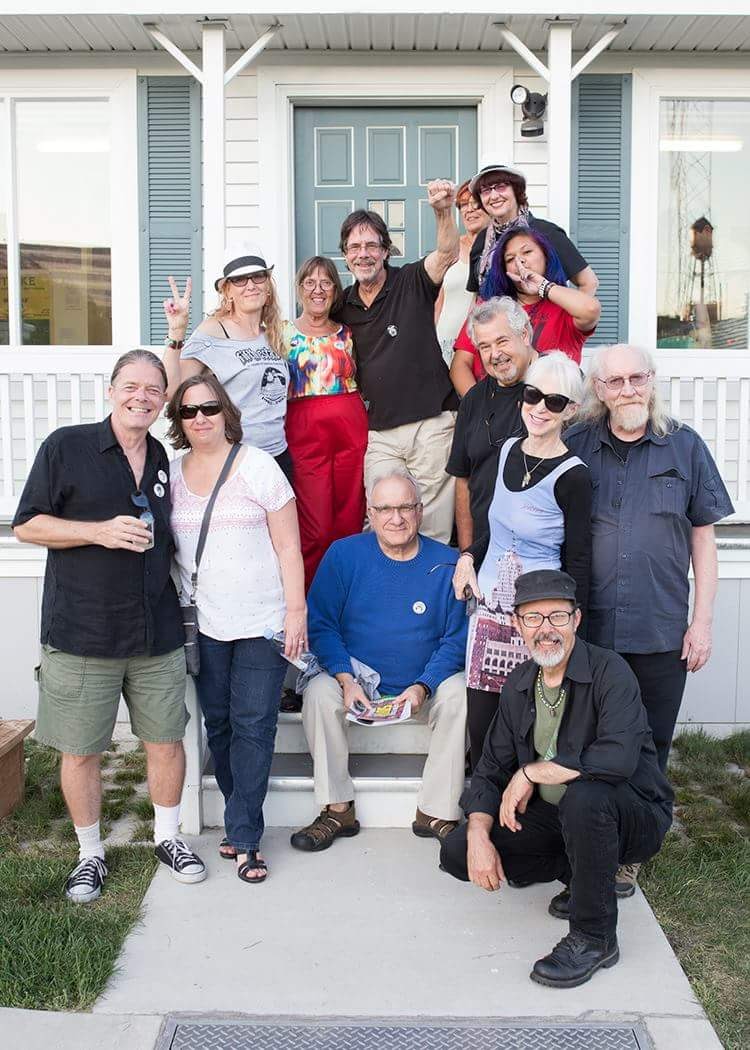
Former Fifth Estate staffers, supporters, and reunion organizers. In the back with raised fist is Peter Werbe; to his left is Leni Sinclair and to his right, Laura Grimshaw; and seated, in blue sweater, is the paper’s founder, Harvey Ovshinsky.
[This is the second of a three-part series written for The Rag Blog by underground press historian Ken Wachsberger. Part I was about the 50th reunion of the Berkeley Barb.]
The Fifth Estate was founded by Detroit-area high school graduate and now award-winning filmmaker Harvey Ovshinsky after an inspirational summer work adventure with the Los Angeles Free Press.
It didn’t take long for the paper to become Detroit’s cutting-edge news source on issues surrounding the local antiwar and Civil Rights movements, feminist and LGBT issues, the emerging youth counterculture, and dissident GIs, all issues that the mainstream press was ignoring or relegating to insignificant locations of back pages.
Continue reading