

The Rag Blog
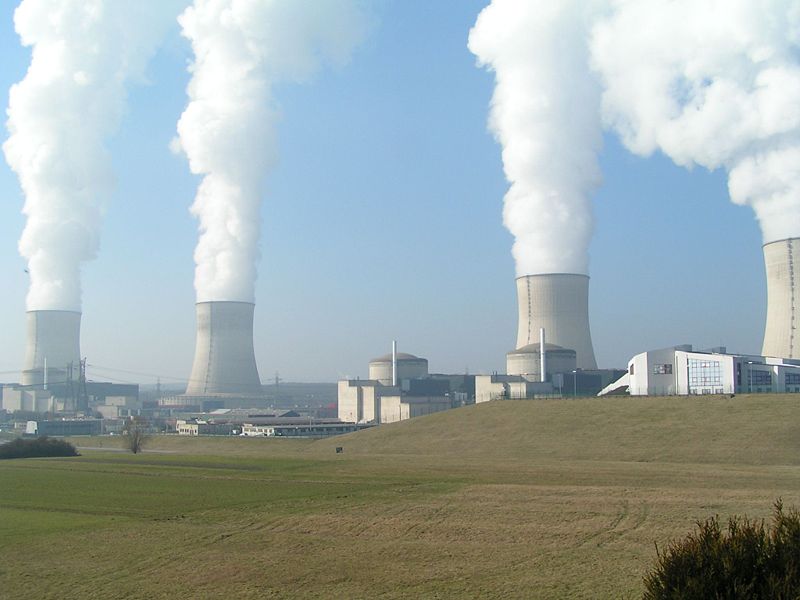
As gasoline prices rise along with global temperatures, the nuclear energy bandwagon is gaining momentum, and welcoming aboard Americans of all political stripes. In the past month alone, President Bush, preparing for climate change talks at the G8 summit, urged the world to “waken up to the beauty of nuclear power”, while Republican presidential candidate Sen. John McCain, in one of his June speeches on energy policy, called for the construction of 45 new U.S. nuclear power plants by 2030, 100 over the longer term. Democratic presidential candidate Sen. Barack Obama and Al Gore have both confirmed that they see nuclear power as a necessary part of the nation’s future “energy mix”—a view also shared by House Speaker Nancy Pelosi, a growing number of congressional Democrats, as well as a handful of environmentalists who support the nuclear option as an imperfect but unavoidable alternative to global warming and response to peak oil.
This lesser-evil argument appears to be swaying public opinion: While most polls show Americans about evenly divided on building more nuclear plants, 61 percent say they would support “increased use of nuclear power as a source of energy in order to prevent global warming.” There are even signs of the arrival of “nuke chic”—most appealing, perhaps, among those too young to remember when the threat of nuclear annihilation was the planet’s inconvenient truth. A 2005 Wired magazine article promoting “clean, green atomic energy” described nuclear power opponents as “the granola crowd,” and asked, “Wouldn’t it be a blast to barrel down the freeway in a hydrogen Hummer with a clean conscience as your copilot?” And in 2006 Elle magazine included nuclear energy in its list of the top ten “cool, new things.”
Big energy companies, of course, are only too happy to ride the nuclear juggernaut, especially when it is fueled by substantial government subsidies. In a country that hasn’t broken ground on a new nuclear plant since the 1979 near-meltdown at Three Mile Island, on June 30 the US government’s Energy Information Administration listed 19 license applications to build commercial nuclear reactors under review or anticipated by the Nuclear Regulatory Commission. The number is expected to exceed 30 by the end of next year. The NRC has hired 400 new staff to deal with the flood of applications, and “streamlined” the process for siting, licensing, and constructing new nuclear plants. And as the United States once again goes nuclear, it looks for inspiration to the longstanding poster child for atomic energy: France.
Suddenly, the French are very à la mode among nuclear-friendly politicians. Just five years ago, John McCain was berating France for its opposition to the Iraq War. (In February 2003, he told CBS News that the French “remind me of an aging movie actress in the 1940s who’s still trying to dine out on her looks but doesn’t have the face for it…. You cannot be a great nation unless you have a great purpose.”) But his February 2008 visit to France was described by Time as “McCain’s Paris Romance.” It isn’t just the rise of Sarkozy l’Américain that’s wringing praise from former munchers of freedom fries. It’s the nukes. “The French are able to generate 80 percent of their electricity with nuclear power,” McCain said after the trip. “There’s no reason why America shouldn’t.” South Carolina Senator Lindsay Graham, who accompanied McCain to France, declared: “Surely we can be as bold as the French. They know what they’re doing. They have a very mature nuclear program.” Even George W. Bush has pointed to France as a model for our energy future.
But events this month show that life as a nuclear-powered nation is far from la vie en rose. In mid July, the French Nuclear Safety Authority (ASN) announced a leak from a cracked pipe at a nuclear fuel plant in the southeastern Drôme region. It said the leak was small and had not contaminated groundwater. Such was not the case, however, on July 7, when about 75 kilograms (165 pounds) of untreated liquid uranium were spilled at the Tricastin nuclear plant in the Vaucluse, north of Avignon. As the French began to repair to the countryside for their storied six-week summer vacations, those in this corner of Provence were being told not to drink the water—or swim or fish in it. One swimmer at a local lake told the Guardian that people had been ordered out of the water “as if there had been sharks in it.”
The incident was given a low rating in terms of risk, but the French nuclear watchdog group CRIIRAD (Commission for Independent Research and Information on Radioactivity) reported that the amount of radioactivity released into the environment was 100 times higher than the site’s limit for an entire year. The Tricastin facility was temporarily shut down, the water ban remains in effect, and the French government has begun testing the water around all 59 of its nuclear plants.
Such dramatic events were bound to make headlines, and even had some media predicting a chill in France’s long love affair with l’énergie nucléaire, which it embraced during the energy crisis of the 1970s and never let go of. But in fact, the idea of France as a model of safe, affordable nuclear energy is largely a myth, and the current situation hardly an aberration. Incidences of radioactive contamination are common in France, which has had no more success than any other country in solving the intractable problem of radioactive waste. At the Tricastin site, for example, about 770 tons of nuclear waste have been buried for the past 30 years, and four smaller incidents took place in 2007 alone, according to CRIIRAD.
Nuclear contamination even threatens the twin sacraments of French life, wine and cheese. In May 2006, Greenpeace reported that low-level radioactive waste from a nuclear dumpsite had been found in the groundwater near the Champagne vineyards of eastern France. A report released earlier the same month on contamination from an older nuclear waste facility in La Hague, Normandy showed radioactivity more than seven times the European safety limit in local underground aquifers, which are used by farmers for their dairy cattle in a region renowned for its Brie and Camembert.
The La Hague facility is particularly important to current debates over the future of nuclear power. It is the world’s largest nuclear fuel “reprocessing” plant, where spent nuclear fuel is broken down and parts of it recovered for use in new fuel. Reprocessing is widely touted as a solution to the problem of managing the high-level radioactive waste from spent fuel rods, which remains dangerous for about 240,000 years (Depleted uranium, the byproduct of the enrichment process, is even more robustly radioactive, with a half-life of 4.5 billion years.).
The problem is that reprocessing yields nearly pure plutonium, a substance even more deadly and more volatile—and far more easily utilized by terrorists. In 2003, Greenpeace staged an event for the media in the middle of a town in Burgundy, in which it intercepted trucks carrying what was supposed to be a top-secret shipment of reprocessed plutonium from La Hague. High-level waste is shipped overland to La Hague from all over Europe, and the plant itself, which stores large amounts of highly radioactive nuclear material awaiting reprocessing or transport, would be an especially devastating target for a terrorist attack. (Surface-to-air missiles were briefly stationed around La Hague following 9/11.)
Even under ordinary conditions, La Hague—like its more notorious British counterpart, Sellafield— releases low-level radioactive waste into the air and sea. Several studies have found elevated levels of childhood leukemia around the Normandy site.
Such is the world that American nuclear proponents apparently have in mind: a landscape dotted with nuclear plants, traversed by trucks carrying nuclear fuel and waste. And France is more than ready to export all of this. Areva—the French state-owned nuclear giant responsible for the waste sites in Normandy and Champagne, as well the two plants that had leaks this month—is positioned to take full advantage of the US nuclear revival.
This is much in keeping with the strategy of President Nicolas Sarkozy, who has made it clear that he wants France to become an ever-bigger exporter of both nuclear-generated electricity and nuclear technology. Since his election, he has signed cooperation agreements on civilian nuclear energy with Algeria, Jordan, Libya, Morocco, Tunisia, and the United Arab Emirates. In a speech given just days before the Provence nuclear spill, Sarkozy said: “More than ever, nuclear is an industry for the future and an indispensable energy source….We can be electricity exporters when we have neither oil nor gas. This is an historic chance for development.” The head of French Greenpeace’s nuclear campaign recently accused Sarkozy of behaving “like a traveling salesman for Areva.”
This year alone, Areva has won several major contracts to supply fuel to current US nuclear facilities, and signed on to build a $2 billion uranium enrichment plant in Idaho. (Sen. Larry Craig (R-Id.) subsequently flew over for what he called a “nuclear tour de France.”) In addition, Areva, which also has US contracts for nuclear waste disposal and reprocessing, is already participating in George Bush’s 2006 Global Nuclear Energy Partnership (GNEP), a potentially disastrous plan that includes building fuel reprocessing facilities similar to La Hague at sites in the United States. As in France, reprocessing is promoted as a panacea for high-level nuclear waste, which still has no long-term US disposal site. (The other increasingly popular approach is to simply pass the buck to future generation by advocating “interim storage.”)
Areva has also formed a partnership with Baltimore-based Constellation Energy to build new nuclear power plants in the United States. Their joint company, UniStar, has already filed a licensing application for a plant at Calvert Cliffs, on the Chesapeake Bay in Maryland, projected to open in 2015; it is expected to file soon for another at Nine Mile Point in upstate New York. The new US plants are slated to be the country’s first EPRs (Evolutionary Power Reactors), a design developed by Areva and promoted as a new generation of safer, more cost-effective reactors. But the first prototype EPR, being built by Areva in Finland, is two years behind schedule and at least $1 billion over budget, and construction of the second, in Normandy, has been plagued by a series of defects.
Plans for Areva’s US plants are moving forward nonetheless, with help from US taxpayers and friends in high places. Dick Cheney’s 2001 Energy Task Force gave a big push to nuclear energy, and the new energy legislation that followed in 2005 contained $12 billion in subsidies to the nuclear industry—even more than it gave to the oil and gas or coal companies. A 2007 investigation by MSNBC showed a major jump in Areva’s lobbying expenditures and campaign contributions while the bill was under consideration, as well as close connections with three key players: then-Secretary of Energy Spencer Abraham became chairman of Areva’s US subsidiary when he left the Bush Administration in 2006. The task force’s Executive Director, Andrew Lundquist, also served briefly on Areva’s US board. And a former Areva lobbyist, Alex Flint, helped shepherd the energy bill through Congress while serving a stint as staff director on the Senate Energy Committee, which was then chaired by Pete Domenici (R-N.M.). Nuclear power’s biggest booster in Congress, Domenici, is also the only American who has received the French Nuclear Energy Society’s highest award.
Areva’s new American partner, Constellation Energy, had also been invited to meet with Cheney’s task force, and the two companies announced their joint venture less than six weeks after the passage of the 2005 energy bill with its whopping nuclear subsidies. Announcing that they had begun to procure the materials to construct the first plants, Constellation’s Michael Wallace acknowledged: “The Bush Administration and Congress have made this commitment possible by developing, passing and carrying out the Energy Policy Act of 2005.”
In other words, despite the host of assurances about safety and cost-effectiveness, the nuclear industry couldn’t survive for a moment in the free-market without handouts from American taxpayers—some of which, in the case of the government-owned Areva, will go into the French treasury. The libertarian Cato Institute, attacking the 2005 energy bill, called nuclear power “purely…a creature of government,” saying it was still viewed by private investors as “the pariah of the energy industry.”
Such obstacles aren’t likely to derail America’s rush toward nuclear power, nor are the cautionary tales currently playing out in Normandy and Provence. Legislation passed in 2007 included additional subsidies for the industry, increasing government loan guarantees for new nuclear reactor construction and uranium enrichment to more than $20 billion. While an attempt by John McCain to embed still more nuclear subsidies into a climate change bill failed last year, that battle isn’t over yet. And with McCain, a major nuclear cheerleader, and Barack Obama a cautious supporter with large campaign contributions from the industry, the future doesn’t look promising for nuclear energy opponents.
Already, the United States has nearly twice as many nuclear plants than France—104, compared with their 59. But it’s a matter of proportion: The US is more than 15 times the size of France, and has about 5 times its population. The US gets only about 20 percent of our electricity from nuclear energy, and if we wanted to, we could still learn to live without it; we haven’t yet reached the tipping point. The City of Light, by comparison, wouldn’t survive a single night without nuclear power.
Ironically, as Americans are drinking the nuclear Kool-Aid, there are signs that the French may be losing their appetite for the fare in the atomic café. Anti-nuclear protests seem to be on the rise in France, against both new nuclear plants and the high-risk transportation of radioactive fuel and waste. A recent European Commission study found that two-thirds of the French want to decrease the share of their energy that comes from nuclear power. And last year, following the so-called Grenelle de l’Environnement—a series of discussions among government, industry, unions, and nonprofit groups that yielded a set of environmental goals—Nicolas Sarkozy announced that France would aim to decrease its reliance on nuclear-generated electricity—to no more than 60 percent.
James Ridgeway is Mother Jones’ senior Washington correspondent.
Source / Mother Jones

TALLINN, Estonia – When I arrived in Estonia last week — a former Soviet republic that lies just south of Finland — everyone had an opinion on Barack Obama’s speech in Berlin. The headline of the British Daily Telegraph we picked up in Finland blared “New Walls Must Not Divide Us,” with half-page photos of the American presidential candidate silhouetted against a sea of 200,000 people.
One of the first people I met in Tallinn, the capital of Estonia, was Abdul Turay, the editor in chief of The Baltic Times, an English-language weekly that covers Estonia, Latvia and Lithuania, the three Baltic nations. Granted, he’s not a typical resident for this country of largely fair-haired, light-skinned people: Turay is a black Briton whose parents come from the West African nations of Liberia and Sierra Leone. And he is Muslim. While Estonia has no mosques, he notes with pride that the Quran has just been translated into Estonian, and to the publisher’s surprise, it’s been an instant best-seller here.
I asked Turay what Obama’s candidacy means to him. “It’ll open doors for me personally if he becomes president,” he said. “It’s a momentous thing to have a black president, given America’s history. Some people say it’s not a big deal, but it is a very big deal. The U.S. is a model for the world. If people see a black man can be president of the U.S., maybe they will see me differently. If he’s special, I’m special.”
As for Obama’s politics, Turay says he doesn’t actually think Obama’s foreign policy will be that different from fellow presidential candidate John McCain’s. He said he was surprised after reading Obama’s first book, “Dreams From My Father”: “He’s almost talking about black nationalism. He’s very liberal. He’s very much a black politician, whereas today he’s a politician who happens to be black.” I asked him to explain. “I think that’s a question for Barack Obama, not me,” he said.
Turay marvels at the importance of the U.S. elections here: “There’s more interest in the American election than in the Lithuanian election, which is right next door. It’s a global election.”
Estonia may be a world away from the United States, but it is intimately tied to U.S. foreign policy. When the U.S. went looking for other countries to join the coalition to attack Iraq and Afghanistan, to give the occupations international legitimacy, Estonia was a charter member—along with numerous other former Soviet bloc countries of Eastern Europe. President Bush went to Estonia in 2006 to thank them. In 2004, none other than Sens. McCain and Hillary Clinton visited the Baltic nation together as part of a congressional delegation. The story goes that Clinton challenged McCain to a vodka-drinking contest, an Estonian tradition. McCain accepted. When a Clinton aide was asked about it, he replied, “What happens in Estonia, stays in Estonia.”
Many feel the Baltic nations’ participation in the occupations was quid pro quo for their membership in NATO. Estonia has paid a price, as its soldiers have lost their lives in both Iraq and Afghanistan—the latter a place where Estonian soldiers have died before, as conscripts of the Soviet army when it invaded Afghanistan in 1979.
A decade later, Estonia was the scene of a nonviolent revolution. Singing has long been a national pastime, and song festivals, in which thousands come together to sing, are a tradition. In April 1988, this gathering turned into a vehicle for mass mobilization. In the Estonian capital, with the country’s banned blue, black and white flag unfurled on the back of a motorbike, hundreds of thousands began singing the forbidden national anthem. The movement gained momentum throughout the three Baltic nations. In August 1989, 2 million people joined hands in a Baltic chain spanning hundreds of miles, from Tallinn to Riga to Vilnius, the capitals of Estonia, Latvia and Lithuania, respectively. Estonia and its Baltic neighbors won their independence in 1991, as the Soviet Union collapsed.
Now, Turay observes, “Estonia looks to America.” With Berlin’s wall now gone, Turay hopes other walls will soon fall, too. “If the president of America is a black person, other countries will realize that we have people who look like the president who are doing something important. … I think it will happen everywhere.”
© 2008 Amy Goodman
Amy Goodman is the host of “Democracy Now!,” a daily international TV/radio news hour airing on more than 700 stations in North America.
Source / truthdig

Tours We’d Rather Not Take
By Richard Connelly / July 30, 2008
Officials at LBJ Hospital [in Houston] are giving tours of a giant asshole.
Officially called “The Colossal Colon,” the “8-foot-tall, 20-foot-long colon is designed to help hospital guests learn about colorectal disease,” according to the Texas Medical Center.
Other names for the giant colon include “Dallas Cowboy Fan,” “My Ex-Husband” and “That Cop With The Radar Gun.”
Source / Houston Press
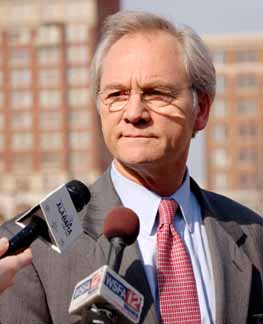
Yesterday, the House Judiciary Committee voted to hold Karl Rove in contempt of Congress, moving us one step closer to the truth, one step closer to restoring justice, and one step closer to preserving our democracy. It’s a huge step forward, and I’m so thankful that the committee voted for contempt.
But now is not the time to celebrate — now is the time to take action. The House Judiciary Committee is on the record, but now we need the full House of Representatives to vote to hold Karl Rove in contempt as well.
So I’ve launched an online advocacy campaign at www.ContemptForRove.com where people can forward an email to their Members of Congress, urging them to take action — and I’m asking you to join me. I need your help to speak out and urge the full House to do the right thing. Your action is critical. Timing is everything.
Please visit ContemptForRove.com right now to forward an email to your Member of Congress today.
While I served as Governor of Alabama from 1999-2003 and thereafter, Karl Rove and his right-wing political cronies targeted me through a malicious, unfounded, politically-motivated prosecution. I served 9 months in federal prison before the appeals court released me. And now, Karl Rove refuses to testify before Congress about his role in this whole nefarious scheme.
That’s outrageous. By ignoring a Congressional subpoena, Karl Rove has spit in the face of Congress and the American people. As Americans, we deserve to know the truth about how our Department of Justice was used by Karl Rove and his rogue band of political operatives as a political tool to win elections. Only Congress has the power to find the truth.
If Congress lets this politicization of the Department of Justice go unchecked and unpunished, then it could well become part of America’s political culture and happen again in the future. Congress needs to keep digging until they get to the truth. Our democracy and system of justice have to be restored. The American people need to have confidence that this kind of outrageous abuse of power is at least less likely to happen in the future.
That truth-finding starts by having Karl Rove under oath before the Judiciary Committee. We the People must insist that Congress do its job and hold Karl Rove in contempt for failing to obey a subpoena. The house of cards will start to fall soon thereafter.
What would happen to the unemployed steel worker, the housewife, or the taxi cab driver who ignored a subpoena? I give you one guess: They would be behind bars. Karl Rove is not above the law, and Congress needs to make that plain and clear to Karl Rove and to everybody else.
Our democracy will cease to exist as we know it if the government is allowed to use its power to prosecute their political opponents. This fight is not about me but about saving our democracy and restoring justice in America.
That’s why I’m asking you to write Congress today and urge them to act. When Congress holds Rove in contempt, the truth will begin to become exposed. This ball of string will come unraveled. The truth will be known.
I am in this fight not only for my own freedom but also to ensure that Karl Rove is held accountable for his sins.
Together, we can fight to get the full truth from Karl Rove and restore integrity to our system of justice. America deserves nothing less.
Don Siegelman was the Governor of Alabama from 1999 to 2003. Siegelman is the only person in the history of Alabama to be elected to serve in all four of the top statewide elected offices: Secretary of State, Attorney General, Lieutenant Governor and Governor. He served in Alabama politics for 26 years, winning his first election for the governorship with 57% of the vote, including over 90% of the African-American electorate.
Source / The Huffington Post
Also see Could Alabama Gov. Siegelman Bring Down the House of Cards? / The Rag Blog / July 15, 2008

PASADENA, California — At least one of many large, lake-like features on Saturn’s moon Titan contains liquid hydrocarbons, making it the only body in the solar system besides Earth known to have liquid on its surface, NASA said Wednesday.
Scientists positively identified the presence of ethane, according to a statement from NASA’s Jet Propulsion Laboratory in Pasadena, which manages the international Cassini spacecraft mission exploring Saturn, its rings and moons.
Cassini has made more than 40 close flybys of Titan, a giant planet-sized satellite of the ringed world.
Scientists had theorized that Titan might have oceans of methane, ethane and other hydrocarbons, but Cassini found hundreds of dark, lake-like features instead, and it wasn’t known at first whether they were liquid or dark, solid material, JPL’s statement said. iReport.com: Share your images of Saturn
“This is the first observation that really pins down that Titan has a surface lake filled with liquid,” Bob Brown, team leader of Cassini’s visual and mapping instrument, said in the statement.
The instrument was used during a December flyby to observe a feature dubbed Ontario Lacus, in the south polar region, that is about 7,800 square miles, slightly larger than North America’s Lake Ontario.
Cassini reached Saturn in mid-2004 and at the end of that year launched a probe named Huygens that parachuted to the surface of Titan the following January.
The mission is a project of NASA, the European Space Agency and the Italian Space Agency.
Source / CNN
Thanks to Shane O’Neal / The Rag Blog
Like the largesse he spread so bountifully to members of Congress and the White House staff – countless fancy meals, skybox tickets to basketball games and U2 concerts, golfing sprees in Scotland – Jack Abramoff is the gift that keeps on giving.
The notorious lobbyist and his cohorts (including conservatives Tom DeLay, Grover Norquist and Ralph Reed) shook down Native American tribal councils and other clients for tens of millions of dollars, buying influence via a coalition of equally corrupt government officials and cronies dedicated to dismantling government by selling it off, making massive profits as they tore the principles of a representative democracy to shreds.
A report earlier this summer from the House Committee on Oversight and Government Reform builds on an earlier committee investigation that detailed some 485 contacts between Abramoff and the Bush administration. According to the new report, “Senior White House officials told the Committee that White House officials held Mr. Abramoff and members of his lobbying team in high regard and solicited recommendations from Mr. Abramoff and his colleagues on policy matters.”
Now Abramoff’s doing time in Maryland. He’s at a minimum-security federal prison, serving five years and ten months for unrelated, fraudulent business practices involving a fake wire transfer he and a partner fabricated to secure a loan to buy SunCruz Casinos. SunCruz, a line of Florida cruise ships, ferried high and low rollers into international waters to gamble. (The original owner of SunCruz Casinos, Konstantinos “Gus” Boulis, was gunned down, Mafia-style, in February 2001). But come September, Abramoff will be sentenced for his larger-than-life role in one of the biggest scandals in American history – a collection of outrages that has already sent one member of Congress to jail, others into retirement and dozens of accomplices running for cover.
Over the last couple of years, he has been singing to the authorities, which is why he has been kept in a detention facility close to DC and the reason his sentencing for tax evasion, the defrauding of Indians and the bribing of Washington officials has been delayed. The FBI is thought to be using Abramoff’s testimony to build an ever-expanding case that may continue to shake those who live within the Beltway bubble for months and years to come.
Bill Moyers Journal is airing an updated edition of “Capitol Crimes,” a special that was first produced for public television two years ago, relating the entire sordid story of the Abramoff scandals. Produced by Sherry Jones, the rebroadcast comes at a moment of renewed interest. Not only is Abramoff’s sentencing imminent, but the most important national elections in decades are little more than three months away amid continuing, seemingly daily revelations of further, profligate abuses of power.
Monday saw the publication of a 140-page report from the Justice Department’s Office of the Inspector General and Office of Professional Responsibility, confirming that, as The Washington Post recounted, “For nearly two years, a young political aide sought to cultivate a ‘farm system’ for Republicans at the Justice Department, hiring scores of prosecutors and immigration judges who espoused conservative priorities and Christian lifestyle choices.
“That aide, Monica M. Goodling, exercised what amounted to veto power over a wide range of critical jobs, asking candidates for their views on abortion and same-sex marriage and maneuvering around senior officials who outranked her, including the department’s second-in-command…. [The report] concluded yesterday that Goodling and others had broken civil service laws, run afoul of department policy and engaged in ‘misconduct,’ a finding that could expose them to further scrutiny and sanctions.”
With the next day’s sunrise came the indictment of Alaska Republican Senator Ted Stevens, the first sitting US senator to face criminal charges in 15 years. Apparently, the senator was playing the home version of “The Price Is Right,” for among the gifts a grand jury says were illegally rewarded him by the oil company VECO were a Viking gas grill, a tool cabinet and a wraparound deck for his mountainside house in Anchorage. In fact, VECO allegedly gave the place an entire new first floor, with two bedrooms and a bath. How neighborly.
(By the way, just to round the circle, Senator Stevens received $1,000 in campaign contributions from Jack Abramoff directly, which subsequently he donated to the Alaskan chapter of the Red Cross, and $16,500 from Native American tribes and others represented by Abramoff, which Stevens gave to other charities.)
Coincidentally, this week also marks the publication of a new book, “The Wrecking Crew: How Conservatives Rule,” written by Thomas Frank, the author of “What’s the Matter with Kansas?” In an essay in the August issue of Harper’s magazine, adapted from the book, Frank adroitly weaves the actions of Abramoff and his pals into a vastly larger ideological framework.
“Fantastic misgovernment is not an accident,” he writes, “nor is it the work of a few bad individuals. It is the consequence of triumph by a particular philosophy of government, by a movement that understands the liberal state as a perversion and considers the market the ideal nexus of human society. This movement is friendly to industry not just by force of campaign contributions but by conviction; it believes in entrepreneurship not merely in commerce but in politics; and the inevitable results of its ascendance are, first, the capture of the state by business and, second, what follows from that: incompetence, graft, and all the other wretched flotsam that we’ve come to expect from Washington.
“… The conservatism that speaks to us through its actions in Washington is institutionally opposed to those baseline good intentions we learned about in elementary school. Its leaders laugh off the idea of the public interest as airy-fairy nonsense; they caution against bringing top-notch talent into government service; they declare war on public workers. They have made a cult of outsourcing and privatizing, they have wrecked established federal operations because they disagree with them, and they have deliberately piled up an Everest of debt in order to force the government into crisis. The ruination they have wrought has been thorough; it has been a professional job. Repairing it will require years of political action.” Have we the stamina, commitment – or even the attention span – to take such action?
Abramoff may be cooling his heels in minimum security, but his pals DeLay, Norquist and Reed appear on television and radio shows whose hosts treat them as political savants with nary a nod to their past nefarious association with Abramoff. Few in the audience seem to notice or care. Former House Majority Leader DeLay is awaiting trial on money laundering charges. The incorrigible Ralph Reed, who played Christian pastors in Texas for suckers in enlisting their unwitting help for Abramoff’s gambling clients, even has a political potboiler of a novel out – “Dark Horse.” The novel is the story of a failed Democratic presidential candidate who finds God, then runs as an independent, funded, presumably, by the supreme being’s political action committee.
“Do we Americans really want good government?” That’s a question asked not by Thomas Frank, but by the muckraking journalist Lincoln Steffens, writing more than a century ago in his book, “The Shame of the Cities.” He wrote, “We are a free and sovereign people, we govern ourselves and the government is ours. But that is the point. We are responsible, not our leaders, since we follow them. We let them divert our loyalty from the United States to some ‘party’; we let them boss the party and turn our municipal democracies into autocracies and our republican nation into a plutocracy. We cheat our government and we let our leaders loot it, and we let them wheedle and bribe our sovereignty from us.”
From more than a hundred years’ distance, Steffens would recognize Abramoff and company for what they are. And we for who we are; a nation too easily distracted and looking the other way as everything rightfully ours is taken.
Bill Moyers is managing editor and Michael Winship is senior writer of the weekly public affairs program, Bill Moyers Journal, which airs Friday nights on PBS. Check local airtimes or comment at The Moyers Blog.
Source / truthout
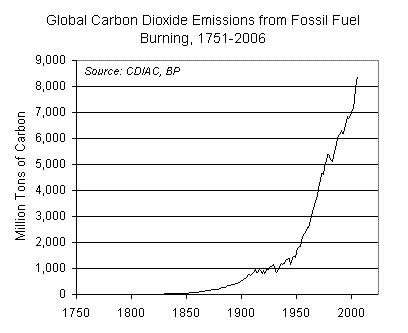
Democrats: White House must publish ‘chilling’ climate change document
By Elana Schor
The row over US inaction on carbon emissions reached new heights yesterday after the White House allowed Congress to look at last year’s government proposal to officially deem climate change a threat to public health – a plan that aides to George Bush refused to acknowledge or read.
The climate plan was finished in December by the US Environmental Protection Agency (EPA) in response to a supreme court ruling that required the Bush administration to state whether carbon emissions should be regulated to protect public health.
The EPA concluded that regulation was needed, but whistleblowers have revealed that the White House ordered the agency to scrap its proposal. Democratic attempts to investigate the backroom dealings were stymied until this week, when senators were finally permitted a look at the plan.
The chairman of the Senate environment committee, California Democrat Barbara Boxer, released a summary of the proposal to reporters. Boxer was allowed to take notes on the plan but not given a copy.
“Based on the evidence before him, the [EPA] administrator believes it is reasonable to conclude current and future emissions of greenhouse gases will contribute to future climate change,” the proposal stated.
“The US has a long and populous coastline,” the EPA continued. “Sea level rise will continue and exacerbate storm surge flooding and coastline erosion … in areas where heat waves already occur, they are expected to be more intense, more frequent, and longer-lasting.”
The EPA proposal also predicted that warming temperatures would lead to more wildfires in western US states and “additional strain” on already overtaxed water resources in the dry south-east and western regions.
Democrats asked the EPA administrator, Stephen Johnson, to testify next week at a hearing exploring allegations of White House obstruction on climate change. But Johnson refused, citing executive privilege and forcing the cancellation of the hearing.
“The American people are poorly served by an administration whose head of environmental protection cannot appear before a Senate committee and honestly discuss what he did and why he did it,” senior Democrat Patrick Leahy said.
The next step may be holding Johnson in contempt of Congress, which would effectively move the dispute into the judicial system. White House chief of staff Josh Bolten and former Bush counsellor Karl Rove were found in contempt last year after refusing to cooperate with a different investigation, but their case has yet to move forward.
Boxer decried the White House’s decision not to release the full EPA proposal to the public.
“It is clear. It is chilling. It is detailed,” she said to colleagues yesterday. “That information belongs to the American people and we must get it to them. Then they will decide whether we should act to prevent this coming crisis or sit on our hands.”
The EPA attempted to downplay the controversy in a statement to the Washington Post that called the proposal “a pre-decisional draft document” and “nothing new”.
Source / The Guardian / Posted July 25, 2008

VA Gets 55,000 Plus Suicide Calls: A Suicide Hotline Is Turning Into A Life Line For Veterans In Crisis
By Pia Malbran / July 28, 2008
More than 55,000 people – including about 22,000 who identified themselves as veterans – have called the Department of Veterans Affairs’ suicide hotline during its first year in operation and CBS News has learned that many of the calls, in recent months, have come from the mid to south central part of the country.
According to the VA’s own count, during a three month time period between March and May of this year, the regions where the highest number of calls originated include the states of Texas, Tennessee, Illinois and Florida among other surrounding areas. (California and Florida have the nation’s largest veteran populations.)
Other data, obtained by CBS News, shows that during the first six months of the hotline’s operation, the state of Texas had more callers than any other state with 2,102 out of 21,439 calls. California came in second with 2,088 calls, then Florida (1,250 calls) and Massachusetts (1,051 calls.)
Calls to the VA’s hotline more than doubled this calendar year going from a total of about 21,000 in January to more than 55,000 by the end of June, averaging about 250 calls a day.
Out of 55,469 calls that the VA’s suicide hotline has received in the last year, 22,044 callers identify themselves as veterans. Callers can remain anonymous if they choose. About 3,000 (2,966) identified themselves as a family member or friend of a vet. Six hundred (621) said they were on active-duty. The VA rescued 1,221 callers with emergency responders while 2,911 received help in what the VA calls a “warm transfer.” More than 4,500 (4,592) callers were referred to a VA suicide prevention coordinator in their local area. The VA says they don’t know of any individuals who committed suicide after using the 1-800-number. A spokesperson for the VA told CBS News that “there are none that we are aware of that have occurred when they called the hotline.”
Janet Kemp, the VA coordinator in charge of the hotline, told The Associated Press (AP) that the hotline is geared prevent deaths and help vets who may not get the help they need in time. “They have indicated to us that they are in extreme danger, either they have guns in their hand or they’re standing on a bridge, or they’ve already swallowed pills,” Kemp said, according to the AP.
The VA launched its suicide prevention hotline last July. It teamed up with the government’s mental health agency, the Substance Abuse and Mental Health Services Administration (SAMHA), which had a pre-exiting 24-hour, toll-free number that had been around since 2005. The VA created an option on that national hotline dedicated specifically for those who have served in the military.
When veterans, their family members or friends call 1-800-273-TALK (8255), a voice recorder instructs them to press “1” to reach the VA hotline. The calls are then routed to a call center in Canandaigua, New York where mental health professionals, who work with the VA, answer phones.
A recent RAND Corporation study found that nearly 20 percent, or about 300,000 veterans out of the approximately 1.64 million who served in Iraq and Afghanistan, currently suffer from major depression or post traumatic stress disorder. A news report last November by CBS News Chief Investigative Correspondent Armen Keteyian discovered that in 2005 more than 6,200 veterans had committed suicide at a rate twice that of non-veterans. A series of internal VA emails, which were exposed earlier this year, confirmed CBS’ findings as well as revealed that about 1,000 vets seeking care from the VA attempt suicide every month for a total of about 12,000 a year.
The VA is making several efforts to improve the hotline. The agency just started a three-month pilot project to test several public service announcements in Washington, D.C. advertising the 1-800-number. They created a television PSA featuring actor Gary Sinise who famously portrayed a disabled veteran in the 1994 movie Forrest Gump. If the ads go well in the D.C. area, the VA will then consider advertising in other states across the country.
“The need for this is clear, and I hope this program will be taken nationwide soon,” said Congressman Harry Mitchell, a democrat from Arizona, who was instrumental in pushing the VA to beef up its suicide outreach. “We can’t just wait for veterans to come to us, we need to bring the VA to our veterans,” he added.
The VA also told The Associated Press that there is a plan to hire 212 more people to answer phones and, according to the AP, counselors can quickly match callers with their medical records and then connect them directly with local VA hospitals for follow-up and care.
Source / CBS News
Russia takes control of Turkmen (world?) gas
By M K Bhadrakumar
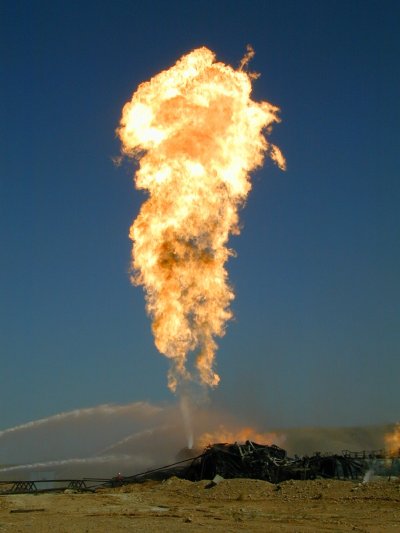
From the details coming out of Ashgabat in Turkmenistan and Moscow over the weekend, it is apparent that the great game over Caspian energy has taken a dramatic turn. In the geopolitics of energy security, nothing like this has happened before. The United States has suffered a huge defeat in the race for Caspian gas. The question now is how much longer Washington could afford to keep Iran out of the energy market.
Gazprom, Russia’s energy leviathan, signed two major agreements in Ashgabat on Friday outlining a new scheme for purchase of Turkmen gas. The first one elaborates the price formation principles that will be guiding the Russian gas purchase from Turkmenistan during the next 20-year period. The second agreement is a unique one, making Gazprom the donor for local Turkmen energy projects. In essence, the two agreements ensure that Russia will keep control over Turkmen gas exports.
The new pricing principle lays out that starting from next year, Russia has agreed to pay to Turkmenistan a base gas purchasing price that is a mix of the average wholesale price in Europe and Ukraine. In effect, as compared to the current price of US$140 per thousand cubic meters of Turkmen gas, from 2009 onward Russia will be paying $225-295 under the new formula. This works out to an additional annual payment of something like $9.4 billion to $12.4 billion. But the transition to market principles of pricing will take place within the framework of a long-term contract running up to the year 2028.
The second agreement stipulates that Gazprom will finance and build gas transportation facilities and develop gas fields in Turkmenistan. Experts have estimated that Gazprom will finance Turkmen projects costing $4-6 billion. Gazprom chief Alexei Miller said, “We have reached agreement regarding Gazprom financing and building the new main gas pipelines from the east of the country, developing gas fields and boosting the capacity of the Turkmen sector of the Caspian gas pipeline to 30 billion cubic meters.” Interestingly, Gazprom will provide financing in the form of 0% credits for these local projects. The net gain for Turkmenistan is estimated to be in the region of $240-480 million.
From all appearance, Gazprom, which was headed by Russian President Dmitry Medvedev for eight years from 2000 to May 2008, has taken an audacious initiative. It could only have happened thanks to a strategic decision taken at the highest level in the Kremlin. In fact, Medvedev had traveled to Ashgabat on July 4-5 en route to the Group of Eight summit meeting in Hokkaido, Japan.
Curiously, the agreements reached in Ashgabat on Friday are unlikely to enable Gazprom to make revenue from reselling Turkmen gas. Quite possibly, Gazprom may now have to concede similar terms to Kazakhstan and Uzbekistan, the two other major gas producing countries in Central Asia. In other words, plain money-making was not the motivation for Gazprom. The Kremlin has a grand strategy.
Coincidence or not, Russian Deputy Prime Minister Igor Sechin traveled to Beijing at the weekend to launch with his Chinese counterpart, Vice Premier Wang Oishan, an energy initiative – a so-called “energy negotiation mechanism”. The first round of negotiations within this framework took place on Saturday in Beijing. There has been an inexplicable media blackout of the event, but Beijing finally decided to break the news. The government-owned China Daily admitted on Monday, “Both China and Russia kept silent on the details of the consensus they reached on energy cooperation in the first round of their negotiation in Beijing on the weekend.”
Without getting into details, China Daily merely took note of the talks as “a good beginning” and commented, “It seems that a shift of Russia’s energy export policy is under way. Russia might turn its eyes from the Western countries to the Asia-Pacific region … The cooperation in the energy sector is an issue of great significance for Sino-Russian relations … the political and geographic closeness of the two countries would put their energy cooperation under a safe umbrella and make it a win-win deal. China-Russia ties are at their best times … The two sides settled their lingering border disputes, held joint military exercises, and enjoyed rapidly increasing bilateral trade.”
It is unclear whether Gazprom’s agreements in Ashgabat and Sechin’s talks in Beijing were inter-related. Conceivably, they overlapped in so far as China had signed a long-term agreement with Turkmenistan whereby the latter would supply 30 billion cubic meters of gas to China annually for the 30-year period starting from 2009. The construction work on the gas pipeline leading from Turkmenistan to China’s Xinjiang Autonomous region has already begun. China had agreed on the price for Turkmen gas at $195 per thousand cubic meters. Now, the agreement in Ashgabat on Friday puts Gazprom in the driving seat for handling all of Turkmenistan’s gas exports, including to China.
Russia and China have a heavy agenda to discuss in energy cooperation far beyond the price of Turkmen gas supplies. But suffice it to say that Gazprom’s new stature as the sole buyer of Turkmen gas strengthens Russia’s hands in setting the price in the world gas (and oil) market. And that has implications for China. Moscow would be keen to ensure that Russian and Chinese interests are harmonized in Central Asia.
Besides, Russia is taking a renewed interest in the idea of a “gas cartel”. Medvedev referred to the idea during the visit of Venezuelan President Hugo Chavez to Moscow last week. The Russian newspaper Nezavisimaya Gazeta reported on Friday that “Moscow finds the idea of coordination of gas production and pricing policy with other gas exporters to be too tempting to abandon”. The daily quoted Miller as saying, “This forum of gas exporters will set up the global gas balance. It will give answers to the questions concerning when, where and how much gas should be produced.”
Until fairly recently Moscow was sensitive about the European Union’s opposition to the idea of a gas cartel. (Washington has openly warned that it would legislate against countries that lined up behind a gas cartel). But high gas prices have weakened the European Union’s negotiating position.
The agreements with Turkmenistan further consolidate Russia’s control of Central Asia’s gas exports. Gazprom recently offered to buy all of Azerbaijan’s gas at European prices. (Medvedev visited Baku on July 3-4.) Baku will study with keen interest the agreements signed in Ashgabat on Friday. The overall implications of these Russian moves are very serious for the US and EU campaign to get the Nabucco gas pipeline project going.
Nabucco, which would run from Turkey to Austria via Bulgaria, Rumania and Hungary, was hoping to tap Turkmen gas by linking Turkmenistan and Azerbaijan via a pipeline across the Caspian Sea that would be connected to the pipeline networks through the Caucasus to Turkey already existing, such as the Baku-Tbilisi-Ceyhan pipeline.
But with access denied to Turkmen gas, Nabucco’s viability becomes doubtful. And, without Nabucco, the entire US strategy of reducing Europe’s dependence on Russian energy supplies makes no sense. Therefore, Washington is faced with Hobson’s choice. Friday’s agreements in Ashgabat mean that Nabucco’s realization will now critically depend on gas supplies from the Middle East – Iran, in particular. Turkey is pursuing the idea of Iran supplying gas to Europe and has offered to mediate in the US-Iran standoff.
The geopolitics of energy makes strange bedfellows. Russia will be watching with anxiety the Turkish-Iranian-US tango. An understanding with Iran on gas pricing, production and market-sharing is vital for the success of Russia’s overall gas export strategy. But Tehran visualizes the Nabucco as its passport for integration with Europe. Again, Russia’s control of Turkmen gas cannot be to Tehran’s liking. Tehran had keenly pursed with Ashgabat the idea of evacuation of Turkmen gas to the world market via Iranian territory.
There must be deep frustration in Washington. In sum, Russia has greatly strengthened its standing as the principal gas supplier to Europe. It not only controls Central Asia’s gas exports but has ensured that gas from the region passes across Russia and not through the alternative trans-Caspian pipelines mooted by the US and EU. Also, a defining moment has come. The era of cheap gas is ending. Other gas exporters will cite the precedent of the price for Turkmen gas. European companies cannot match Gazprom’s muscle. Azerbaijan becomes a test case. Equally, Russia places itself in a commanding position to influence the price of gas in the world market. A gas cartel is surely in the making. The geopolitical implications are simply profound for the US.
Moreover, Russian oil and gas companies are now spreading their wings into Latin America, which has been the US’s traditional backyard. During Chavez’s visit to Moscow on July 22, three Russian energy companies – Gazprom, LUKoil and TNK-BP – signed agreements with the Venezuelan state-owned petroleum company PDVSA. They will replace the American oil giants ExxonMobil and ConocoPhillips in Venezuela.
At the signing ceremony, Medvedev said, “We have not only approved these agreements but have also decided to supervise their implementation.” Chavez responded, “I look forward to seeing all of you in Venezuela.”
Ambassador M K Bhadrakumar was a career diplomat in the Indian Foreign Service. His assignments included the Soviet Union, South Korea, Sri Lanka, Germany, Afghanistan, Pakistan, Uzbekistan, Kuwait and Turkey.
Copyright 2008 Asia Times Online (Holdings) Ltd.
Source / Asia Times Online

Ease Pot Restrictions, Lawmakers Urge
July 30, 2008
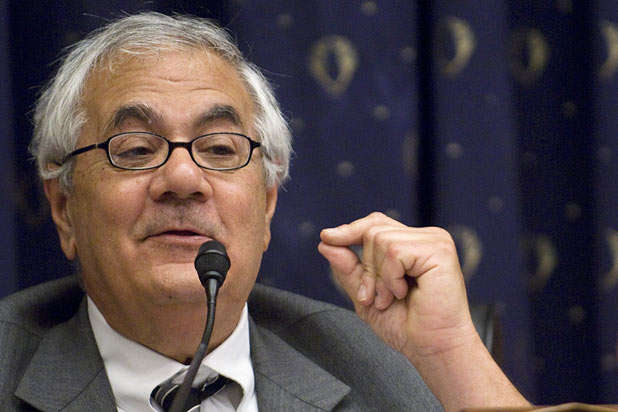
The U.S. should stop arresting responsible marijuana users, Rep. Barney Frank said Wednesday, announcing a proposal to end federal penalties for Americans carrying fewer than 100 grams, almost a quarter-pound, of the substance.
Current laws targeting marijuana users place undue burdens on law enforcement resources, punish ill Americans whose doctors have prescribed the substance and unfairly affect African-Americans, said Frank, flanked by legislators and representatives from advocacy groups.
“The vast amount of human activity ought to be none of the government’s business,” Frank said on Capitol Hill. “I don’t think it is the government’s business to tell you how to spend your leisure time.”
The Massachusetts Democrat and his supporters emphasized that only the use — and not the abuse — of marijuana would be decriminalized if the resolution resulted in legislation.
The Drug Enforcement Administration says people charged with simple possession are rarely incarcerated. The agency and the White House Office of National Drug Control Policy have long opposed marijuana legalization, for medical purposes or otherwise.
Marijuana is a Schedule I controlled substance, meaning it has a high potential for abuse and no accepted medical use, according to the drug control office.
“Smoked marijuana has not withstood the rigors of science — it is not medicine and it is not safe,” the DEA states on its Web site. “Legalization of marijuana, no matter how it begins, will come at the expense of our children and public safety. It will create dependency and treatment issues, and open the door to use of other drugs, impaired health, delinquent behavior, and drugged drivers.”
Allen St. Pierre, spokesman for the National Organization for the Reform of Marijuana Laws, likened Frank’s proposal — co-sponsored by Rep. Ron Paul, R-Texas — to current laws dealing with alcohol consumption. Alcohol use is permitted, and the government focuses its law enforcement efforts on those who abuse alcohol or drive under its influence, he said.
“We do not arrest and jail responsible alcohol drinkers,” he said.
St. Pierre said there are tens of millions of marijuana smokers in the United States, including himself, and hundreds of thousands are arrested each year for medical or personal use.
There have been 20 million marijuana-related arrests since 1965, he said, and 11 million since 1990, and “every 38 seconds, a marijuana smoker is arrested.”
Rob Kampia, director of the Marijuana Policy Project, said marijuana arrests outnumber arrests for “all violent crimes combined,” meaning police are spending inordinate amounts of time chasing nonviolent criminals.
“Ending arrests is the key to marijuana policy reform,” he said.
Reps. William Lacy Clay, D-Missouri, and Barbara Lee, D-California, said that in addition to targeting nonviolent offenders, U.S. marijuana laws unfairly target African-Americans.
Clay said he did not condone drug use but opposes using tax dollars to pursue what he feels is an arcane holdover from “a phony war on drugs that is filling up our prisons, especially with people of color.”
Too many drug enforcement resources are being dedicated to incarcerating nonviolent drugs users, and not enough is being done to stop the trafficking of narcotics into the United States, he said.
Being arrested is not the American marijuana smoker’s only concern, said Bill Piper of the Drug Policy Alliance Network. Those found guilty of marijuana use can lose their jobs, financial aid for college, their food stamp and welfare benefits, or their low-cost housing.
The U.S. stance on marijuana, Piper said, “is one of the most destructive criminal justice policies in America today.”
Calling the U.S. policy “inhumane” and “immoral,” Lee said she has many constituents who are harassed or arrested for using or cultivating marijuana for medical purposes. California allows medical marijuana use, but the federal government does not, she explained.
House Resolution 5843, titled the Personal Use of Marijuana by Responsible Adults Act of 2008, would express support for “a very small number of individuals” suffering from chronic pain or illness to smoke marijuana with impunity.
According to NORML, marijuana can be used to treat a range of illnesses, including glaucoma, asthma, multiple sclerosis, HIV/AIDS and seizures.
Frank, who is chairman of the Financial Services Committee, said that about a dozen states have approved some degree of medical marijuana use and that the federal government should stop devoting resources to arresting people who are complying with their states’ laws.
In a shot at Republicans, Frank said it was strange that those who support limited government want to criminalize marijuana.
Asked whether the resolution’s passage would change his personal behavior, Frank quipped, “I do obey every law I vote for” but quickly said he did not use marijuana, nor does he encourage it.
“I smoke cigars. I don’t think other people should do that. If young people ask me, I would advise them not to do it,” he said.
If HR 5843 were passed, the House would support marijuana smokers possessing up to 100 grams — about 3½ ounces — of cannabis without being arrested. It would also give its blessing to the “nonprofit transfer” of up to an ounce of marijuana.
The resolution would not address laws forbidding growing, importing or exporting marijuana, or selling it for profit. The resolution also would not speak to state laws regarding marijuana use.
© 2008 Cable News Network.
Source / America On Line
Thorne Webb Dreyer, Editor





FILM : Crosby, Stills, Nash, Young and the Protest Song
‘CSNY: Déjà Vu’: A Political Concert Documentary
By Jennifer Maerz / July 30, 2008
Bob Dylan’s “John Brown” is one of the most moving antiwar songs ever recorded. The track avoids sloganeering, resonating an anti–Vietnam War sentiment with a straightforward, human, and very sad story: A mother proudly sends her son off to war, only to receive home a young man missing his hand and an understanding of what he’d been fighting for. Taking on the voice of the soldier, Dylan sings, “And I could not help but think, through the…stink, that I was just a puppet in a play.” The song works so well because the storytelling is subtle; the political message, dagger-sharp.
Of course Dylan wasn’t the only songwriter to give the early antiwar movement a poignant chorus. Crosby, Stills, Nash, and Young stood on those same frontlines, writing songs like 1970’s “Ohio” that put a protest against the Kent State massacre on commercial radio. This week, as the Neil Young–directed political concert documentary CSNY: Déjà Vu hits theaters, we see this ’70s supergroup attempt again to turn the political into the personal, and the personal into a four-part-harmony pop song. But like the response the band has received to this ambitious outing, the film’s results are mixed.
The documentary works when it uses CSNY’s catalog as an excuse to explore personal war stories or concertgoers’ feelings about the place of performers with strong political beliefs. But when Young’s storytelling gets lost in the reductive sermons of a song like “Let’s Impeach the President”—played often throughout the film—it’s hard to see CSNY: Déjà Vu as having any more impact than a giant bumper sticker.
Which raises the question: Who are the best leaders for a war protest? Soldiers, with their battlefield experience, or famous singers, with their public exposure? It’s a tough question to figure out, and, to Young’s credit, CSNY: Déjà Vu doesn’t make the answers very easy. Instead he attempts to bring a chorus of opinions into one movie, a tactic that both empowers and distracts from his vision.
The movie, which Young directed under the name Bernard Shakey, focuses on the 2006 CSNY Freedom of Speech Tour. The band hit the road during midterm elections to perform their classic hits alongside Young’s new protest songs from his Living With War disc. Along with footage of live concerts and recording sessions, the documentary involves the work of television news producer Mike Cerre, who was “embedded” on the tour as he had been with troops in Iraq. Cerre captured the reactions to CSNY’s anti-Bush message from fans, radio DJs, and war veterans, among others. Among the most interesting responses are those of the red-state audiences. You’d think any CSNY fan willing to see the band live would also embrace its peace anthems, but surprisingly the group’s audience includes a very vocal conservative contingent. At one Atlanta show, fans protested with boos, middle fingers, and quips that “Neil Young can stick it up his ass” when CSNY sang Living With War’s didactic impeachment anthem. The song is grating, yes, but it’s shocking that people would walk out in droves, especially during a tour called “Freedom of Speech.”
While the extreme reactions of music fans, critics, and radio personalities are entertaining, the film picks up momentum when it moves beyond CSNY. The fallen-soldier story that worked in the lyrics to Dylan’s “John Brown” works 10 times more powerfully on a movie screen. Young includes thoughtful interviews with the troops, from a deserter who had been hiding out in Canada to musician and former Marine Josh Hisle, who jams with Young in a hotel room. The movie also plays up the déjà-vu theme often, best exemplified in scenes from the Vets 4 Vets support group’s meetings with men and women who had served in Vietnam and Iraq.
No one could accuse Neil Young of jumping on a protest bandwagon for attention, regardless of the cringe factor of some of his recent lyrics. The peace signs on the 62-year-old’s guitar strap are more than just nostalgic symbols. He runs a massive “Living With War” Web site, designed to look like a cross between CNN and USA Today, which catalogs articles about the soldiers in Iraq and Afghanistan, hosts protest songs and videos sent in by the public, and counts down the number of days until Bush is out of office. It also streams, at top volume, “Let’s Impeach the President” (part of the reason it’s hard to remain on the site for very long).
After watching Young’s documentary and poking around his site, I admire the musician’s stamina in supporting soldiers, and at the same time promoting a genuine antiwar belief system. At this point in his career, Young doesn’t even try to disentangle the personal from the political, but he also doesn’t do it with Bono’s ego.
I’ve seen CSNY: Déjà Vu twice, and in the end it’s the personal stories that are hard to shake. If there’s one thing the Vietnam War protest anthems taught us, it’s that you can ignore news feeds and statistics; real insight into bloodshed and the loss of a loved one is the strongest message of all.
Source / Seattle Weekly
The Rag Blog