Barack Obama on FISA, Telecoms

Today, in response to those of us who have strongly disagreed with his position on the FISA legislation, Barack Obama posted the following message on mybarackobama.com.

My position on FISA
By Barack Obama / July 4, 2008

I want to take this opportunity to speak directly to those of you who oppose my decision to support the FISA compromise.

This was not an easy call for me. I know that the FISA bill that passed the House is far from perfect. I wouldn’t have drafted the legislation like this, and it does not resolve all of the concerns that we have about President Bush’s abuse of executive power. It grants retroactive immunity to telecommunications companies that may have violated the law by cooperating with the Bush administration’s program of warrantless wiretapping. This potentially weakens the deterrent effect of the law and removes an important tool for the American people to demand accountability for past abuses. That’s why I support striking Title II from the bill, and will work with Chris Dodd, Jeff Bingaman and others in an effort to remove this provision in the Senate.

But I also believe that the compromise bill is far better than the Protect America Act that I voted against last year. The exclusivity provision makes it clear to any president or telecommunications company that no law supersedes the authority of the FISA court. In a dangerous world, government must have the authority to collect the intelligence we need to protect the American people. But in a free society, that authority cannot be unlimited. As I’ve said many times, an independent monitor must watch the watchers to prevent abuses and to protect the civil liberties of the American people. This compromise law assures that the FISA court has that responsibility.

The Inspectors General report also provides a real mechanism for accountability and should not be discounted. It will allow a close look at past misconduct without hurdles that would exist in federal court because of classification issues. The recent investigation (PDF) uncovering the illegal politicization of Justice Department hiring sets a strong example of the accountability that can come from a tough and thorough IG report.

The ability to monitor and track individuals who want to attack the United States is a vital counter-terrorism tool, and I’m persuaded that it is necessary to keep the American people safe — particularly since certain electronic surveillance orders will begin to expire later this summer. Given the choice between voting for an improved yet imperfect bill, and losing important surveillance tools, I’ve chosen to support the current compromise. I do so with the firm intention — once I’m sworn in as president — to have my Attorney General conduct a comprehensive review of all our surveillance programs, and to make further recommendations on any steps needed to preserve civil liberties and to prevent executive branch abuse in the future.

Now, I understand why some of you feel differently about the current bill, and I’m happy to take my lumps on this side and elsewhere. For the truth is that your organizing, your activism and your passion is an important reason why this bill is better than previous versions. No tool has been more important in focusing peoples’ attention on the abuses of executive power in this administration than the active and sustained engagement of American citizens. That holds true — not just on wiretapping, but on a range of issues where Washington has let the American people down.

I learned long ago, when working as an organizer on the South Side of Chicago, that when citizens join their voices together, they can hold their leaders accountable. I’m not exempt from that. I’m certainly not perfect, and expect to be held accountable too. I cannot promise to agree with you on every issue. But I do promise to listen to your concerns, take them seriously, and seek to earn your ongoing support to change the country. That is why we have built the largest grassroots campaign in the history of presidential politics, and that is the kind of White House that I intend to run as president of the United States — a White House that takes the Constitution seriously, conducts the peoples’ business out in the open, welcomes and listens to dissenting views, and asks you to play your part in shaping our country’s destiny.

Democracy cannot exist without strong differences. And going forward, some of you may decide that my FISA position is a deal breaker. That’s ok. But I think it is worth pointing out that our agreement on the vast majority of issues that matter outweighs the differences we may have. After all, the choice in this election could not be clearer. Whether it is the economy, foreign policy, or the Supreme Court, my opponent has embraced the failed course of the last eight years, while I want to take this country in a new direction. Make no mistake: if John McCain is elected, the fundamental direction of this country that we love will not change. But if we come together, we have an historic opportunity to chart a new course, a better course.

So I appreciate the feedback through my.barackobama.com, and I look forward to continuing the conversation in the months and years to come. Together, we have a lot of work to do.

Source. / The Huffington Post

The Rag Blog

Posted in RagBlog | Tagged , , , , , , , | Leave a comment

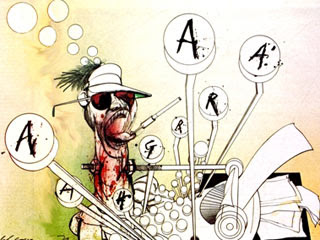
FILM : Gonzo: The Life and Work of Dr. Hunter S. Thompson


Bedtime for “Gonzo”
By Andrew O’Hehir / July 4, 2008

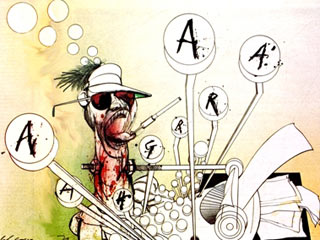
Gonzo journalism pioneer Hunter S. Thompson and documentary filmmaker Alex Gibney don’t seem like the most natural pairing, at least at first. Gibney’s films, including the Oscar-winning “Taxi to the Dark Side” (which has produced an ugly dispute between Gibney and the film’s distributor) and the Oscar-nominated “Enron: The Smartest Guys in the Room,” essentially present old-school investigative journalism, filtered through a pop sensibility. Gibney himself has compared his research-intensive work to archaeology, and I doubt anyone has ever described Thompson’s work in those terms.

Without question one of the most influential journalists of the past 50 years, Thompson was both immensely talented and immensely undisciplined. His bookend masterpieces “Fear and Loathing in Las Vegas” and “Fear and Loathing: On the Campaign Trail ’72,” permanently changed the relationship between the reporter, the self and the subject in American journalism. Even in his best work, Thompson walked a thin line between honesty and fatal self-indulgence, and over the last 30 years of his life he gradually slid into booze-hound, gun-crazed, paranoid self-caricature, closer to the Uncle Duke of “Doonesbury” than to the lacerating wit who ripped through the mendacious superficiality of American political and civic life.

Gibney’s immensely funny and sad new motion picture “Gonzo: The Life and Work of Dr. Hunter S. Thompson” — the “Dr.” was a mail-order divinity degree — is principally intended to rehabilitate Thompson and introduce his work to a new audience. The primary focus of Gibney’s mixture of interviews, archival footage and imaginative re-creation is the years from 1965 to 1975, when Thompson rose from obscurity to become a highly paid Rolling Stone correspondent and counterculture hero and wrote almost all his best stuff. Yet even at the end of his life, as Gibney reminds us, Uncle Duke had his moments of seeing through the charade and glimpsing the machinery grinding away beneath it.

In the fall of 2001, when the towers fell in Lower Manhattan, Thompson was writing an online sports column for ESPN. Of course he couldn’t be expected to stay on topic, and while his column published on Sept. 12 is full of inaccuracies — he estimated that more than 20,000 people were killed in the attacks — it has weathered better than most of the mystified, pseudo-patriotic drivel written in the immediate aftermath of the disaster. Gibney has Johnny Depp, who appears throughout the film as a narrator cum Thompson impersonator, read excerpts in an early scene:

The towers are gone now, reduced to bloody rubble, along with all hopes for Peace in Our Time, in the United States or any other country. Make no mistake about it: We are At War now — with somebody — and we will stay At War with that mysterious Enemy for the rest of our lives … It will be a Religious War, a sort of Christian Jihad, fueled by religious hatred and led by merciless fanatics on both sides. It will be guerrilla warfare on a global scale, with no front lines and no identifiable enemy.

We are going to punish somebody for this attack, but just who or what will be blown to smithereens for it is hard to say. Maybe Afghanistan, maybe Pakistan or Iraq, or possibly all three at once. Who knows? Not even the Generals in what remains of the Pentagon or the New York papers calling for WAR seem to know who did it or where to look for them.

This is going to be a very expensive war, and Victory is not guaranteed — for anyone, and certainly not for anyone as baffled as George W. Bush. All he knows is that his father started the war a long time ago, and that he, the goofy child-President, has been chosen by Fate and the global Oil industry to finish it Now. He will declare a National Security Emergency and clamp down Hard on Everybody, no matter where they live or why. If the guilty won’t hold up their hands and confess, he and the Generals will ferret them out by force.

I think that stands among the most lucid and penetrating passages of Thompson’s entire career. If he had been able to write and think that clearly most of the time — possibly by staying off the Scotch and the coke for longer than a day at a time — he might not have ended up shooting himself at his Colorado home in February 2005. (Some 9/11 conspiracy theorists have contended that Thompson was working on an exposé about the World Trade Center attack and was murdered to hush him up. Thankfully, Gibney does not go there.)

It probably took someone as professional and level-headed as Gibney to get this movie made at all. He got full cooperation from Thompson’s widow, ex-wife and son and unearthed treasures from the author’s collection of audiotapes and home movies. We see early and late Thompson TV appearances, and interviews with Hells Angels, former presidents and candidates, political friends and foes, reporting colleagues and rivals. It’s an amazing all-star cast, from Jimmy Carter and George McGovern (perhaps the only two politicians to evade Thompson’s wrath) to Rolling Stone publisher Jann Wenner, unlikely drinking buddy Pat Buchanan, and “New Journalism” competitor Tom Wolfe.

There are snippets about Thompson’s unhappy early life in Kentucky and his semi-depraved later life in Rocky Mountain isolation (in a 2003 interview with Salon, he called himself “an elderly dope fiend living out in the wilderness”). But most of Gibney’s material is meant to celebrate the meteoric and unlikely rise of a logorrheic autodidact who made his own flaws and excesses part of every story he wrote and who loved America so passionately that he felt the need at every opportunity to “piss down the throats of these Nazis” who ran the place.

Between 1965 and 1975, Thompson published his breakthrough book “Hell’s Angels: The Strange and Terrible Saga of the Outlaw Motorcycle Gangs,” a mordantly funny and insightful work that nearly got him killed; a derisive article about the Haight-Ashbury that made the San Francisco neighborhood internationally famous; the article “The Kentucky Derby Is Decadent and Depraved,” with which the gonzo tradition was born; the mind-bending memoir-novel “Fear and Loathing in Las Vegas,” which probably did more to make drug abuse seem cool than anyone or anything else since Ken Kesey, Timothy Leary and the Merry Pranksters (coincidentally or not, the subjects of an upcoming Alex Gibney film); and the epoch-making “Fear and Loathing: On the Campaign Trail ’72,” a book that reshaped political journalism in its own image. As Gibney captures hilariously in the film, in 1970 Thompson also ran and nearly won a patently ridiculous “Freak Power” campaign for sheriff in Pitkin County, Colo., where he lived.

Especially in the ’70s and ’80s, Thompson spawned legions of journalistic imitators, and it was almost always a bad idea. (The same could be said about Stanley Booth’s book “The True Adventures of the Rolling Stones,” probably the best thing ever written about 1960s rock ‘n’ roll culture — and a massively terrible example for younger rock journalists.) Most of that emulation was a matter of run-on sentences and substance abuse, when what today’s journalism really needs is a fraction of Thompson’s unjaded ferocity and righteous anger. As Gibney has said, Raoul Duke’s spirit seems to live on largely among comedians like Jon Stewart, Stephen Colbert and Bill Maher, not among the so-called professionals.

I recently joined Alex Gibney for breakfast at the Regency Hotel in Manhattan, one of those media-centric whoremonger power lounges that would have fascinated and appalled Hunter Thompson, and where he might have needed “two bags of grass, seventy-five pellets of mescaline, five sheets of high-powered blotter acid, a salt shaker half full of cocaine, and a whole galaxy of multi-colored uppers, downers, screamers [and] laughers” just to start the day. We had none of those things, sad to tell, and I had to begin by quizzing Gibney a little about his teapot-tempest dispute with ThinkFilm, the distributor of “Taxi to the Dark Side,” which recently prompted a front-page story in the New York Times. Listen to the interview here.
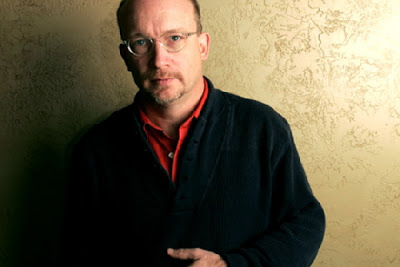
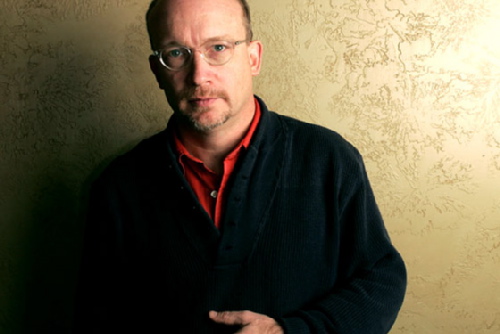
Alex Gibney, director of “Gonzo: The Life and Work of Dr. Hunter S. Thompson.”

I don’t want to eat up too much of our time talking about your last film instead of your new one, but “Taxi to the Dark Side” has been in the news lately. So let’s review: You won the Oscar for best documentary, but then the film failed to return the dividends that everyone involved was hoping for. You ended up grossing less than $300,000, which I’m sure was a big disappointment. And now you’re in arbitration with ThinkFilm, trying to get the distribution rights back and also some payment for damages. You’re actually arguing that they mishandled the film to the point of fraud?
Well, I would divide it into two parts. I think they did a reasonable job up to the point we won the Oscar. And the whole strategy, which was a sensible strategy for a film about such a difficult and dark topic, was to win awards and capitalize on those awards, which give people permission to go see the film. But after we won the Oscar, nothing happened. In fact, the Web site was taken down and we didn’t know why. We were mystified, and then over time we learned that they hadn’t paid any of the vendors. They hadn’t paid the labs, so they couldn’t manufacture more prints. They hadn’t paid the Web site people, so the site was taken down. All the publicists didn’t get paid; one single mom was owed $100,000. Clearly, they weren’t putting anything in advertising. One week when the movie was playing in New York at the Quad Cinema, I looked in the New Yorker, New York magazine and Time Out. Never mind the fact that there weren’t any ads. There weren’t even any listings.

So the only way that you knew about the movie is if you happened to walk by the marquee, and generally speaking, that’s not a good strategy — to rely on foot traffic for advertising. Our view is that ThinkFilm didn’t disclose their financial condition to us, and they certainly didn’t disclose it to us as we’re coming in to Oscar time. I don’t want to get too much into the weeds with this, but [ThinkFilm president] Mark Urman was quoted saying how he tried extra hard to move the film to HBO at great cost to Think. How was it at great cost to them? HBO paid them a large sum of money in order to delay the DVD release, and ThinkFilm demanded that they be paid instantly. Like, they had to be wired the money within hours of signing the contract, probably so they could use it for another film.

So it was very disappointing. You know, I respect Mark’s taste in films, but he should have said to his financiers, “Look, you’re gonna have to pay all the people we owe all this money to.” It was embarrassing, because there were a lot of people who gave breaks to the film because they believed so strongly in the message. To see them get stiffed, that was a bitter pill to swallow. We are trying to compensate some of the vendors. It’s ThinkFilm that owes them money, and we’re trying to help them out. So the idea that we’re somehow being greedy is ridiculous. We’re looking for a businesslike relationship, and we don’t feel like we got it.

This whole affair seems like unfortunate testimony to the problems the whole independent film business is having right now. We’ve got an Oscar-winning independent filmmaker and a respected indie distributor, most likely with similar political and artistic visions of the world, at each other’s throats.

Well, Hunter Thompson put it in perspective. Let’s see if I can get this right. He said the entertainment business is a cruel and shallow money trench, a long plastic hallway where pimps and thieves run free and good men die like dogs. There was also, said Hunter, a negative side.

Yeah, let’s turn to Thompson and “Gonzo,” which you premiered at Sundance to a very strong response, and which opens in a whole bunch of cities on the Fourth of July. Is it a patriotic film?

Absolutely. We’re celebrating American independence.

For people who know your work, not just “Taxi to the Dark Side” but your hit film from a few years ago, “Enron: The Smartest Guys in the Room,” this might seem like a departure. It’s lighter subject matter, at least in some ways.

Well, look, someone in Australia described “Enron” as a comedy that turns to farce and ends in horror. Because it was a story about fraud and illusion, it had a certain amount of laughs in it, even though it ends rather darkly. I think of “Gonzo” as a dark comedy. There’s certainly a lot of political content, but there are also a lot of laughs in there. I needed those, and Hunter — I think his great talent was to take this anger he had and to turn it into comedy. That was his weapon.

Yeah, it’s a dark comedy about somebody who was clearly a revolutionary writer and journalist and also somebody who wound up…

Blowing his brains out.

Yeah, a dysfunctional alcoholic, drug addict and suicide. What drew you to Thompson in the first place? Were you a fan?

I was a fan, but let’s say I wasn’t one of those people that read every semicolon. I read “Vegas.” I read “Campaign Trail.” And I read the reprint of “The Derby.” But I hadn’t dug into Thompson in a long time. I had read a lot of his later stuff and I was always amused by Garry Trudeau’s version in “Doonesbury.” I followed the exploits of the good doctor from time to time, but this movie gave me the opportunity to kind of dig in.

As Frank Rich pointed out in a piece not long after Hunter committed suicide — you remember that guy Jeff Gannon, the sometime male prostitute who was somehow, mysteriously, given a White House press badge? Whenever Scott McClellan or anyone else would get into trouble, Gannon would wave his hand and say, “I think it’s terrible. These people are running down this administration. They’re trying to do such good.” They were getting actors to pose as journalists, and at a time like that, you need somebody who’s going to ruthlessly start goring some sacred cows.

I definitely felt, when I watched the film, that Thompson provides an instructive example to today’s journalists. Maybe both a positive and a negative example.

A lot of positive and a lot of negative. You can’t really imitate Hunter. He was unique, but there were times when he got it dead-on. What was it Frank Mankiewicz [who directed George McGovern’s 1972 campaign] said in the film? Hunter’s coverage of the ’72 campaign was the least factual, but most accurate coverage.

Yeah. At his best, he was able to do that. Highly personal commentary that captured the spirit of things better than objective reporting.

Sometimes even flying into fantasy is useful. Ed Muskie was a peculiar guy, and he had this kind of stone face that would occasionally erupt into rage, or in one famous incident, crying. Hunter’s way of dealing with that was not simply to say “Mr. Muskie, with his long, drawn-out face,” but was to imagine that somehow Ed Muskie was hooked on this strange Congolese hallucinogen called Ibogaine. He had all the hallmarks of Ibogaine addiction! Rage, a stone face, you know. They said he was deep into it. And then some people in the media picked it up and actually treated it as a story, and I think if you read it in the original, it’s pretty clear it’s a tall tale in the Mark Twain tradition.

As Hunter says in the movie, when somebody’s asking him about it, “Well, I didn’t say he was taking anything. I said there was a rumor in Milwaukee that he was taking something, and that was true. Of course, I started the rumor in Milwaukee.” So he was playing with all sorts of conventions and having a good time.

Yeah, it was almost like the Onion before its day. Newsweek or Time picked up the story and ran it as if it was for real. And suddenly Ed Muskie was a drug addict.

Right. “It’s trouble on the Congo for the senator from Maine!”

Your approach to storytelling, to documentary film, is closely based on hard-hitting investigative journalism. It’s really different from Thompson’s approach, which is highly personal and deliberately outrageous.

It is different, but it’s liberating to think about. And there are moments, I would argue, when my work exhibits, in a formal way, the playfulness of Hunter. In “Enron,” there is a moment when we’re talking about the enormous risks these guys were taking. And then we cut to this skydiver falling through space. Well, that’s not Ken Lay! That guy doesn’t work for Enron! We had fun with all these wacky Motocross and extreme-sports things that they were doing. We used bits from horror movies as a playful way of saying, of expressing, what is supposed to be expressed in monotone, third-person narration that dutifully explains the facts. Sometimes if you cut to a guy in the basement of some horror film, pulling these levers, that says more about what these loonies at Enron were saying or doing than describing the details of mark-to-market accounting.

In the Thompson film we also tried to have fun with the tall-tale thing, in a formal way. We found this audiotape of Hunter and [longtime sidekick] Oscar Acosta at a taco stand, where they ask this woman, “We’re looking for the American dream. We don’t know where it is.” And she says, “Well, I think it’s over by the psychiatrist’s office on State Street.” We have the original audiotape, which is fantastic. It was a great find. It’s published in the “Vegas” book verbatim, which I didn’t even realize. He was tripping, but that was true. But the way we filmed it was, we got some actors and we made it look like a home movie. At first, it plausibly could be. Then suddenly the scene opens up and you’re seeing the taco stand from three or four different angles — inside, outside — and it’s clearly a movie, it’s fiction.

Early on in the film, you see this photo of Hunter pointing a gun at a typewriter. We zoom in to his hand holding the gun, and then suddenly the hand becomes real and the gun shoots. It was a way of saying we’re going to have some fun, a little bit like Thompson did. I approach this stuff by playing with the form, but being straight about the facts.

Here’s one question that I come away with after seeing this film: How much of Thompson’s wild-man persona was an act, and how much was it real? You know, he writes about staying up all night in a San Francisco motel, doing crank and typing out the manuscript of “Fear and Loathing: On the Campaign Trail ’72.” How much is he kind of fronting and playing with that, and how much is he recording what really happened?

It’s hard to answer that. I mean, I think he was doing speed in tremendous amounts and going on these binges, but earlier on it was more of an act and less of the real McCoy. He kind of descended into his own character later in life. He was doing all the drugs and all the alcohol all the time, and it started to slow him down. Rather than pretending that he was always on speed, maybe he was on speed a lot of the time. He used to have this big pill bottle. Tim Crouse [Thompson’s Rolling Stone reporting partner] talks about how he would gently say, like a father figure, “Don’t go for too many of those gray ones, Tim. Those are for people like me, not for you.”

So there’s no question that he was doing the drugs, but I think there was an act to it, too. He was creating a kind of action-hero figure for himself, and he was pretty serious about the writing. If you look at his output from ’65 to ’75, it’s extraordinary. Somebody who was high all the time just can’t crank it out like that.

You know, when I went back to Thompson’s work after seeing your film, I read “Campaign Trail” for a piece I was writing about this year’s campaign. And one thing that surprised me is that, on the one hand, he’s totally spoofing the traditions of campaign journalism and ridiculing his fellow reporters, and on the other hand, he’s capable of some remarkable feats of completely mainstream reporting.

Like at the Democratic convention.

Right, that’s played completely straight. And sometimes he’ll startle you with the things he pulls off. You remember the episode in 1968, when he somehow gets himself into the back seat of a limousine with Richard Nixon and they talk about football the whole way?

Sure, and that was a great credit to Hunter. Unlike a lot of the bloviators on TV today, Hunter was always interested in talking to people outside his tribe, to anybody really. So he pestered Pat Buchanan to get a ride with Nixon, he got in the limo, and for an hour he talks football with Nixon.

And as much as Thompson clearly hated Nixon, he gives him credit: Well, he did know a lot about football!

He describes these little details that Nixon clearly knew about the game, where certain pro players came from, and where they had gone to college. He was impressed.

Speaking of Pat Buchanan: He’s in your film, and you might not automatically think of him as one of Thompson’s friends. They were diametrically opposed, at least politically, but it’s clear that Buchanan respected and liked him.

No question. He loved Hunter. They used to battle it out late at night over a bottle of Wild Turkey.

I bet Buchanan could put it away, too.

I think he could. They would get hammered together and scream at each other about the Cold War. Buchanan’s a smart guy, and I think he really was amused by Hunter. He loved him. He also points out that while Hunter was of the left, if you want to put it that way, he leveled some of his hardest hits on liberals, people like Hubert Humphrey and Ed Muskie. He was a pomposity deflater. He went after everybody. Well, he was pretty gentle on George McGovern. Buchanan really liked the way Hunter captured how ridiculous the whole process is. People who are inside the process really do, at heart, understand what a ridiculous thing this political pageant is.

You’re right in saying that Thompson arguably had a lot more distaste for mainstream liberals than, in some cases, for right-wingers. He hated Hubert Humphrey so much. Many Democrats felt very wounded by that. You know, Humphrey was a civil rights leader in the Senate, a loyal party soldier. And you have Thompson writing that he was addicted to some exotic kind of speed.

Wallet, he called it. He said they should stuff Hubert Humphrey in a bottle and let him float out in the Pacific Ocean on the Japan Current.

Thompson never stipulated whether there was any truth to that one, but it probably belongs in the same category…

As the stuff he wrote about Muskie. Again, though, it kind of captured something. If you see Humphrey, he’s kind of artificially perky all the time.

I felt like we badly needed Hunter this year. I don’t know what he would have made out of Clinton vs. Obama, or exactly what outrageous lies he’d be spreading about John McCain. But they’d be merciless.

I agree, but we needed the early Hunter, not the late Hunter. A guy operating at the peak of his powers.

That’s right. Your movie is clearly an appreciation, but it’s not a hagiography. You depict the decline in his later years, and it’s not pretty. Was it the drinking and drugs finally catching up with him, or do you think those things were symptomatic of something else?

At the end of the day, the drinking really did him in. Whether it was the image that he had become obsessed with — everyone was counting on him to be this gonzo character — or whether he was afraid he was going to lose his muse if the drugs and drinking stopped, I’m not sure. Because I do think the drugs early on kind of loosened him up. You can see the writing change after the drugs start — in an interesting way, in a good way. But at the end of the day, he couldn’t kick the booze. It was destroying him. His health got worse and worse and worse, and he wasn’t ready for that. It wasn’t pretty at all.

I can come up with all these rationalizations for him. People are amused by you for keeping it up, for getting up at one o’clock in the afternoon or whatever with your tumbler of Chivas Regal and your little packet of cocaine. It is amusing, but living that life every day takes its toll.

One of the most upsetting things in your film is this moment when you see the wheels fall off for Thompson. It happens when he goes to Zaire to cover the Ali-Foreman fight in 1974. Such a delicious subject for Hunter Thompson, such a strange cultural event and enormous athletic event. The conflict between the wily veteran and the young giant, with an ending that shocked the world. A fight that itself became the subject of a great documentary.

“When We Were Kings.” Which we quote in the film.

And he never wrote anything about it, not a word. What the hell happened?

Well, I think he’d already become something else, you know. It was like when we hear athletes talk about themselves in the third person. Hunter had become more important than the story. He was clearly high as a kite, snorting coke the whole time. They had these huge duffle bags full of marijuana. While the fight was going on, he playfully emptied one into the pool and just watched the dope go through the drains while he was sipping his Scotch. So he was high, way high, and there was a mixture of narcissism and a growing disability, where he was just having too much fun not doing his work.

But I also think something weird happened there, and this is just a guess. But by all accounts, he loved Muhammad Ali, and he was a guy who wore his heart on his sleeve. He was thinking, you know, about all these people he had backed, all the noble losers who had lost. And coming into the fight. everybody said Foreman was just going to take Ali apart. Here was a guy who was so big, and so brutal. He had demolished Joe Frazier. So maybe Hunter decided that this is not going to be any kind of fight and so screw it.

And after the fight happened, it must have had a peculiar effect on his psyche. It’s like, once you stop believing, and then what you formerly believed in wins — it’s like being a Red Sox fan for 20 years and thinking, Oh, I’m so tired of this now. And then you start rooting for the Yankees, just so that they’ll win. Right? And then the Red Sox beat the Yankees? Well, you can’t take any pleasure in that anymore. It’s kind of debilitating. It shows a loss of faith, and I think Hunter had that. There was a moment when he just lost faith, and that was hard for him to reckon with.

So he got fucked up there. And then he didn’t recover from that, I think. Not only did he not file anything — I mean, zippo — but I think he had also undermined his own sense of commitment to the other side of the American psyche. To the sense of possibility, rather than the fear and loathing.

[“Gonzo: The Life and Work of Dr. Hunter S. Thompson” opens July 4 in New York, Atlanta, Baltimore, Boston, Chicago, Dallas, Denver, Houston, Los Angeles, Minneapolis, Philadelphia, Portland, Ore., San Francisco, Seattle, Washington and Austin, Texas; July 11 in Cleveland, Detroit, Santa Cruz, Calif., Santa Fe, N.M., St. Louis, Columbus, Ohio and San Antonio, Texas; and July 18 in Bend, Ore., Chapel Hill, N.C., Charlotte, N.C., Durham, N.C., Eugene, Ore., Indianapolis, Kansas City, Madison, Wis., Nashville, New Haven, Conn., North Falmouth, Mass., and Dayton, Ohio, with more cities to follow.]

Source. / salon.com

The Rag Blog

Posted in RagBlog | Tagged , , , , , , , , | Leave a comment

World Petroleum Congress : Pointing the Finger


OPEC: It’s the speculators!
By Roger Baker / The Rag Blog / July 4, 2008

The world economy depends on cheap oil. So when it disappears it is
understandable that there is dissension and finger pointing among the
sellers.

Nevertheless, when the guys selling you the fluid to which you are
addicted tells you to back off, it is wise to listen. OPEC is trying
to promote the idea that speculators are driving up oil prices.

The OPEC desire to shift the focus to speculation as a reason for high
oil price ignores the fact that OPEC is running out of capacity at the
same time as world oil demand keeps rising along with population and
the growing Chinese economy. In other words the producer nations are trying to trick the oil consumer nations into relying on them to sell oil forever, by saying the apparent oil shortage causing a price rise is imaginary.

But we’re wise to OPEC’s lies. Speculation could never be a factor
without smart rich investors predicting even worse oil shortages and
buying up oil futures in preparation as world oil production peaks and
declines. Financial speculation is a financial symptom of a much worse problem; permanent oil shortages.

Worried oil chiefs fail to find consensus
By Adam Plowright / July 3,2008

One of the energy industry’s biggest gatherings ended Thursday in the shadow of record crude prices, with concern growing about a third oil shock but with little consensus about what to do about it.

Divisions between consumer and producer countries on who is to blame for 140-dollar oil appeared to sharpen at the World Petroleum Congress, which brought together political and corporate oil bosses for four days of talks.

Saudi Arabia, the world’s leading oil exporter, expressed concern on Thursday about new records for benchmark crude of 146 dollars a barrel and again said it was committed to dialogue between consumers and producers.

But those discussions show no sign of finding a solution to market tension, with both sides citing different reasons: consumers underline supply shortage fears while producers blame financial speculators and the falling dollar.

“We are concerned about high prices,” Saudi Arabian Oil Minister Ali al-Nuaimi said on the sidelines of the meeting here, adding that Saudi “King Abdullah is leading the effort” for dialogue.

Top officials from consumer and producer countries met in Jeddah, Saudi Arabia on June 22 for talks on the problem of the runaway oil market, but prices have risen since then.

Benchmark prices of oil in New York and London set new record highs around 146 dollars a barrel on Thursday and the head of Russian energy giant Gazprom forecast they would “very soon” rise to 250 dollars.

Since the beginning of this week, as an estimated 3,000 delegates gathered here, prices have hit almost daily new records, with comments by Iran’s oil minister that the country would react “fiercely” to an attack stoking tension.

In one of the final speeches, Nuaimi defended the industry against attacks from “politically popular” environmentalists, saying alternative energy sources could never replace carbon-based fuels.

“The fact is carbon-based fossil fuels still are the cheapest, most efficient and most reliable energy sources for our mobile society,” Ali al-Nuaimi said.

“Nevertheless, it is politically popular these days to extol the virtues of so-called alternative fuels because of their lower carbon emissions.”

Despite booming conditions in the industry, there was a notable lack of optimism, with those old enough to remember previous oil shocks recalling the busts that followed afterwards.

The executive director of the International Energy Agency, Nobuo Tanaka, reminded everyone on Tuesday that “with oil prices hitting 140 dollars, we are clearly in the third oil shock.”

The head of Brazilian oil group Petrobas, which hopes to become a new powerhouse after announcing huge oil discoveries, said Thursday that no-one should expect a return to low oil prices, however.

“For the future we should not expect a dramatic fall in price,” said Sergio Gabrielli, who explained this was because of rising production costs that would underpin the market.

The head of French group Total, Christophe de Margerie, had said earlier in the week that 80 dollars a barrel was likely to be a ceiling for prices for this reason.

There was also open disagreement between the Organisation of Petroleum Exporting Countries and the International Energy Agency, which represents the interests of rich, consumer nations.

In a look at the medium-term outlook for the industry, the IEA predicted a tight market for the next five years on Tuesday and warned of looming tensions from 2010 as demand for oil from Asia and the Middle East continues to grow.

It also went to great lengths to refute the notion that speculators were to blame.

“Seventy percent of crude contracts on the Nymex are held by speculators… Some form of regulation is needed,” OPEC secretary general Abdallah El-Badri replied on Wednesday, referring to the US commodity futures exchange.

“The market has no shortage of physical crude.”

He also called on the United States to stop “harassing OPEC countries.”

OPEC president Chakib Khelil also called on the US to stop the fall of the dollar to stabilise oil prices and knocked back suggestions the cartel should increase production.

Source. / AFP / Yahoo News

The Rag Blog

Posted in Rag Bloggers | Tagged , , , | Leave a comment

A Little Kick-Ass, Unpoetic Poem from Juan Cole

Photo: Jackie Blight

Your Fourth of July and My Fourth of July
By Juan Cole / July 4, 2008

Your Fourth of July is blood for oil.

My Fourth of July is the pure sunbeam of peace.

Yours is the imperial presidency and “so what?” to public opinion.

Mine is “deriving their just powers from the consent of the governed”

Yours is profiling and discrimination.

Mine is “all men are endowed by their Creator with certain inalienable rights.”

Yours is “My country right or wrong.”

Mine is avoiding “Offences against the Law of Nations”

Yours is the veto of child health care and rejection of Kyoto,

Mine is an America that cares about the wellbeing of our children.

Yours is a monarchical presidency above the law.

Mine is, with Tom Paine, “in free countries the law ought to be king; and there ought to be no other.”

Yours is aggressive invasions of countries that did not attack us first.

Mine is “and hold them, as we hold the rest of mankind, Enemies in War, in Peace Friends.”

Yours is water-boarding and electrocution.

Mine is the prohibition on cruel and unusual punishment.

Yours is the stench of a million moldering corpses, military rule over 27 million, and the creation of oceans of misery.

Mine is “life, liberty and the pursuit of happiness.”

Yours is off-shore drilling, coddling polluters, ‘heckuva job Brownie.’

Mine is a stewardship of America the beautiful for succeeding generations.

Yours is the privatization of war and the deployment of whole divisions of “contractors . . .

Mine is an America where privates do not risk their lives for a tenth of what a mercenary is paid by the Pentagon.

Yours is the erection of protest zones as zoos for citizens.

Mine is, “or the right of the people peaceably to assemble, and to petition the Government for a redress of grievances.”

Yours is the swagger of the flight jacket and the bombs raining down.

Mine is the schooling of the next global generation.

Mine is America, the pure sunbeam of peace.

—–
With apologies to Kahlil Gibran.

Source / Informed Comment

The Rag Blog

Posted in RagBlog | Tagged | Leave a comment

Fourth of July Fireworks

Celestial Stripe. This image of a delicate ribbon of gas, taken by NASA’s Hubble Space Telescope, reveals a very thin section of a supernova remnant caused by a stellar explosion that occurred more than 1,000 years ago. Photo courtesy of NASA/ESA/Hubble Heritage Team.

Celestial Stars and Stripe Revealed in Hubble Image
Irene Klotz / July 3, 2008

About 700 years before the birth of America, a dying star exploded, creating a shock wave that blasted through space at nearly 20 million m.p.h. for the next thousand years.

Initially, the burst of light was so bright that it could be seen in daylight on Earth, nearly 7,000 light-years away in a constellation known as Lupus.

Radio telescopes picked up its trail in the 1960s with the discovery of a nearly circular ring of material in the general area of where the supernova had occurred. It wasn’t until 1976 that astronomers had a powerful enough observatory in the southern hemisphere and the good luck to pick up another visual.

On the northwest edge of the radio ring, the shock wave had reached a part of space sprinkled with hydrogen atoms, causing them to radiate in visual light.

“It’s kind of like a sonic boom,” said astronomer Frank Winkler with Middlebury College in Vermont. “Your ears clearly detect that as a change in pressure. In the case of the supernova, this shock wave has been propagating outward from the site of the explosion for a little more than 1,000 years now.

“One of really interesting things that happens is that behind the shock wave, some of these hydrogen atoms, which are essentially bare nuclei, are really fast-moving — a few thousand kilometers per second — so if you have a collision between one of these and an unsuspecting neutral hydrogen atom that suddenly finds itself right behind the shock wave, they can trade electrons,” he said. “The fast-moving one gloms on to the other’s electron and that leads to the emission of a photon.”

The Hubble Space Telescope picked up the trail 30 years later with a series of observations, culminating in the release this week of a picture to mark Independence Day.

The celestial version of the stars and (a) stripe show orange-hued points of light that are background galaxies and white dots which are background and foreground stars in our own Milky Way.

The bold red ribbon of light is a tiny portion of the tenuous hydrogen gas being heated by the supernova blast wave. The bright spots are areas where the shock wave is edge-on to our line of sight. Hydrogen’s glow is mostly in a deeper red hue so the Hubble team shaded it a bit more orange to make it easier to see.

The supernova, known as SN 1006, is 60 light-years in diameter and still growing at a rate of about 6 million m.p.h.

Source. / Discovery News

The Rag Blog

Posted in RagBlog | Tagged , , , | Leave a comment

Corporate Amerikkka – Killing Off the Web


Google Ordered to Share YouTube Logs
By Anick Jesdanun / July 3, 2008

NEW YORK – Dismissing privacy concerns, a federal judge overseeing a $1 billion copyright-infringement lawsuit against YouTube has ordered the popular online video-sharing service to disclose who watches which video clips and when.

U.S. District Judge Louis L. Stanton authorized full access to the YouTube logs after Viacom Inc. and other copyright holders argued that they needed the data to show whether their copyright-protected videos are more heavily watched than amateur clips.

The data would not be publicly released but disclosed only to the plaintiffs, and it would include less specific identifiers than a user’s real name or e-mail address.

Lawyers for Google Inc., which owns YouTube, said producing 12 terabytes of data – equivalent to the text of roughly 12 million books – would be expensive, time-consuming and a threat to users’ privacy.

The database includes information on when each video gets played, which can be used to determine how often a clip is viewed. Attached to each entry is each viewer’s unique login ID and the Internet Protocol, or IP, address for that viewer’s computer.

Stanton ruled this week that the plaintiffs had a legitimate need for the information and that the privacy concerns are speculative.

Stanton rejected a request from the plaintiffs for Google to disclose the source code – the technical secret sauce – powering its market-leading search engine, saying there’s no evidence Google manipulated its search algorithms to treat copyright-infringing videos differently.

The court has yet to rule on Google’s requests to question comedians Jon Stewart and Stephen Colbert of Viacom’s Comedy Central.

Viacom is seeking at least $1 billion in damages from Google, saying YouTube has built a business by using the Internet to “willfully infringe” copyrights on Viacom shows, which include Comedy Central’s “The Daily Show with Jon Stewart” and Nickelodeon’s “SpongeBob SquarePants” cartoon.

The lawsuit was combined with a similar case filed by a British soccer league and other parties.

Together, the plaintiffs are trying to prove that YouTube has known of copyright infringement and can do more to stop it, a finding that could dissolve the immunity protections that service providers have when they merely host content submitted by their users.

Though Google said giving the plaintiffs access to YouTube viewer data would threaten users’ privacy, Stanton referred to Google’s own blog entry in which the company argued that the IP address alone cannot identify a specific individual.

In a statement, Google said it was “disappointed the court granted Viacom’s overreaching demand for viewing history. We are asking Viacom to respect users’ privacy and allow us to anonymize the logs before producing them under the court’s order.”

Google did not say whether it would appeal the ruling or seek to narrow it.

Stanton’s ruling made only passing reference to a 1988 federal law barring the disclosure of specific video materials that subscribers request or obtain.

Kurt Opsahl, a senior staff attorney with the Electronic Frontier Foundation, said Stanton should have considered that law along with constitutional free-speech rights, including a right to read or view materials anonymously.

He said a user’s ID can sometimes include identifying information such as a first initial and last name.

Viacom said it isn’t seeking any user’s identity. The company said any data provided “will be used exclusively for the purpose of proving our case against YouTube and Google (and) will be handled subject to a court protective order and in a highly confidential manner.”

This is not the first time Google has fought the disclosure of user information it had been stockpiling. While gathering evidence for a case involving online pornography, the U.S. Justice Department subpoenaed Google and other search engines for lists of search requests made by their users.

After Google resisted, a federal judge ruled that Google was obliged to turn over only a sample of Web addresses in its search index, not the actual search terms requested.

Copyright 2008 The Associated Press.

Source / America On Line

The Rag Blog

Posted in RagBlog | Tagged , , | Leave a comment

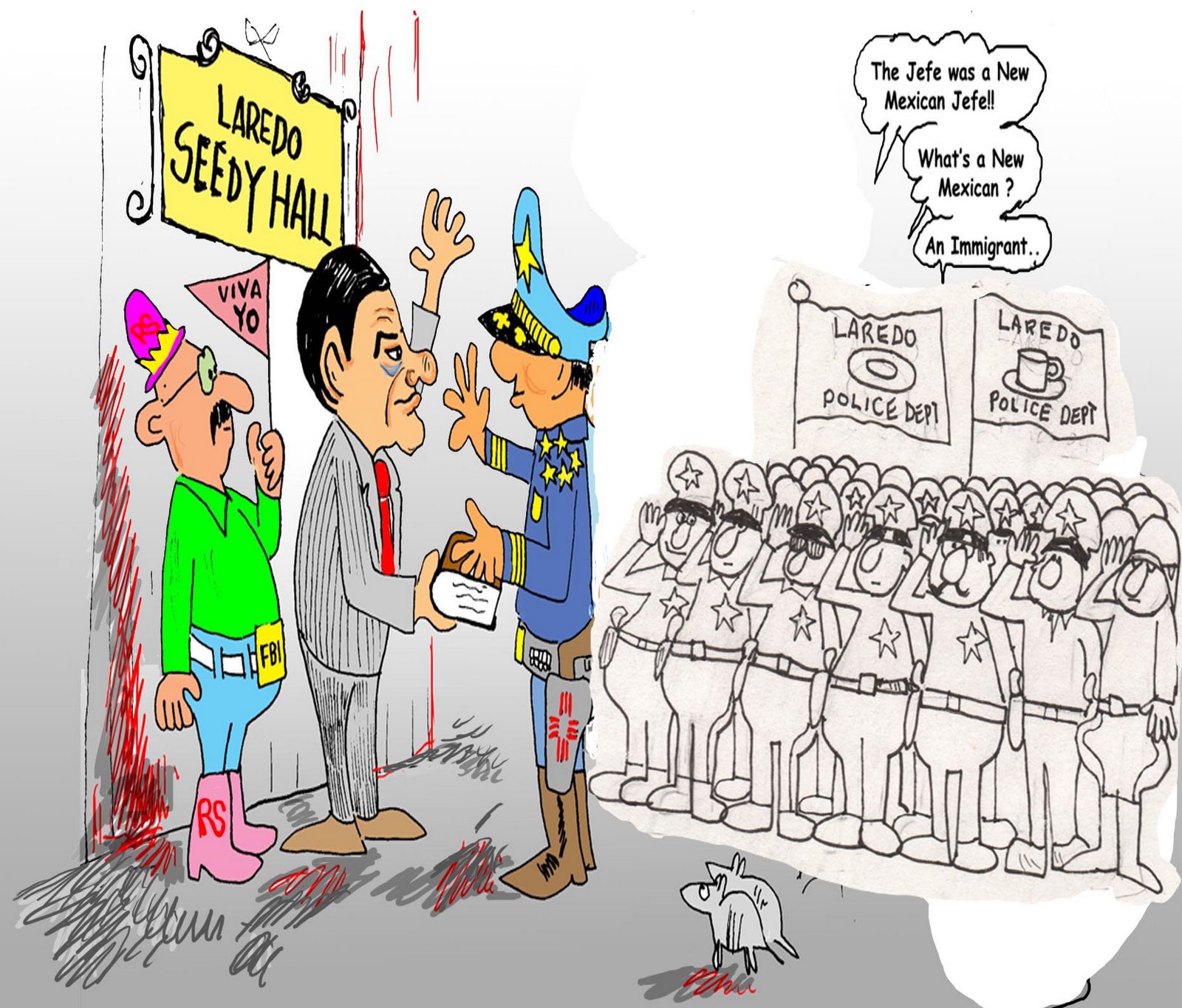
Cartoon Thursday – Charlie Loving

The Rag Blog

Posted in Rag Bloggers | Tagged | Leave a comment

Barack Obama and the Tradition of Community Organizing

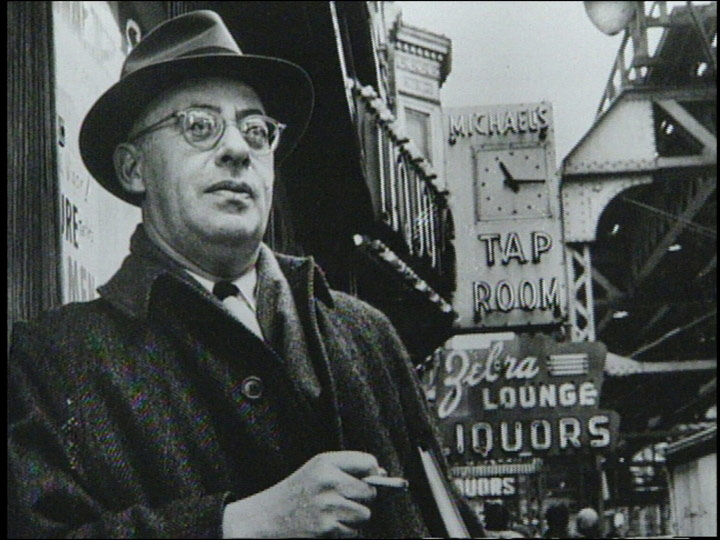
Saul Alinsky, a major architect of the community organizing concept. Photo from cover of Let Them Call Me Rebel: Saul Alinsky, His Life and Legacy by Sanford D. Horwitt.

The following article by Peter Drier from Dissent online discusses the history of community organizing and how Barack Obama fits into that tradition. It fleshes out Obama’s community organizing background, how that has influenced his campaign and how it might inform his presidency.

Thorne Dreyer

Will Obama Inspire a New Generation of Organizers?
By Peter Dreier

Americans are used to voting for presidential candidates with backgrounds as lawyers, military officers, farmers, businessmen, and career politicians, but this is the first time we’ve been asked to vote for someone who has been a community organizer. Of course, Barack Obama has also been a lawyer, a law professor, and an elected official, but throughout this campaign he has frequently referred to the three years he spent as a community organizer in Chicago in the mid-1980s as “the best education I ever had.”

This experience has influenced his presidential campaign. It may also tell us something about how, if elected, he’ll govern. But, perhaps most important, there has not been a candidate since Bobby Kennedy and Eugene McCarthy who has inspired so many young people to become involved in public service and grassroots activism.

Through his constant references to his own organizing experience, and his persistent praise for organizers at every campaign stop, Obama is helping recruit a new wave of idealistic young Americans who want to bring about change. According to surveys and exit polls, interest in politics and voter turnout among the millennial generation (18-29) has increased dramatically this year. But Obama isn’t just catalyzing young people to vote or volunteer for his campaign. Professors report that a growing number of college students are taking courses in community organizing and social activism. According to community organizing groups, unions and environmental groups, the number of young people seeking jobs as organizers has spiked in the past year in the wake of Obama’s candidacy.

Whether or not he wins the race for the White House, Obama, through his own example, has already dramatically increased the visibility of grassroots organizing as a career path, as well as a way to give ordinary people a sense of their own collective power to improve their lives and bring about social change.

Obama’s Organizing Experience

In 1985, at age 23, Obama was hired by the Developing Communities Project, a coalition of churches on Chicago’s South Side, to help empower residents to win improved playgrounds, after-school programs, job training, housing, and other concerns affecting a neighborhood hurt by large-scale layoffs from the nearby steel mills and neglect by banks, retail stores, and the local government. He knocked on doors and talked to people in their kitchens, living rooms, and churches about the problems they faced and why they needed to get involved to change things.

As an organizer, Obama learned the skills of motivating and mobilizing people who had little faith in their ability to make politicians, corporations, and other powerful institutions accountable. Obama taught low-income people how to analyze power relations, gain confidence in their own leadership abilities, and work together.

For example, he organized tenants in the troubled Altgelt Gardens public housing project to push the city to remove dangerous asbestos in their apartments, a campaign that he acknowledges resulted in only a partial victory. After Obama helped organize a large mass meeting of angry tenants, the city government started to test and seal asbestos in some apartments, but ran out of money to complete the task.

Obama often refers to the valuable lessons he learned working “in the streets” of Chicago. “I’ve won some good fights and I’ve also lost some fights,” he said in a speech during the primary season, “because good intentions are not enough, when not fortified with political will and political power.” (Recently, right wing publications, radio talk shows, and bloggers, such as the National Review and the American Thinker, have sought to discredit Obama as a “radical” by linking him to ACORN and other community organizing groups.)

The American Organizing Tradition

The roots of community organizing go back to the nation’s founding, starting with the Sons of Liberty and the Boston Tea Party. Visiting the U.S. in the 1830s, Frenchman Alexis de Tocqueville, author of Democracy in America, was impressed by the outpouring of local voluntary organizations that brought Americans together to solve problems, provide a sense of community and public purpose, and tame the hyper-individualism that Tocqueville considered a threat to democracy. Every fight for social reform since then—from the abolition movement to the labor movement’s fight against sweatshops in the early 1900s to the civil rights movement of the 1960s to the environment and feminist movements of the past 40 years—has reflected elements of the self-help spirit that Tocqueville observed.

Historians trace modern community organizing to Jane Addams, who founded Hull House in Chicago in the late 1800s and inspired the settlement house movement. These activists—upper-class philanthropists, middle-class reformers, and working-class radicals—organized immigrants to clean up sweatshops and tenement slums, improve sanitation and public health, and battle against child labor and crime.

In the 1930s, another Chicagoan, Saul Alinsky, took community organizing to the next level. He sought to create community-based “people’s organizations” to organize residents the way unions organized workers. He drew on existing groups—particularly churches, block clubs, sports leagues, and unions—to form the Back of the Yards Neighborhood Council in an effort to get the city to improve services to a working-class neighborhood adjacent to meatpacking factories. Alinsky’s books, Reveille for Radicals (1945) and Rules for Radicals (1971), became the bible for several generations of activists. including the civil rights movement, the environmental movement, and many other reformers.

There are currently at least 20,000 paid organizers in the United States,according to Walter Davis, executive director of the National Organizers Alliance. (Nobody knows for sure, since “organizer” is not an occupation listed by the Census Bureau). They work for unions, community groups, environmental organizations, women’s and civil rights groups, tenants organizations, and school reform efforts. Unlike traditional social workers, organizers’ orientation is not to “service” people as if they were clients, but to encourage people to develop their own abilities to mobilize others. They identify people with leadership potential, recruit and train them, and help them build grassroots organizations that can win victories that improve their communities and workplaces. According to organizer Ernesto Cortes, they help people turn their “hot” anger into “cold” anger—that is, disciplined and strategic action.

The past several decades has seen an explosion of community organizing in every American city. There are now thousands of local groups that mobilize people around a wide variety of problems. With the help of trained organizers, neighbors have come together to pressure local governments to install stop signs at dangerous intersections, force slumlords to fix up their properties, challenge banks to end mortgage discrimination (redlining) and predatory lending, improve conditions in local parks and playgrounds, increase funding for public schools, clean up toxic sites, stop police harassment, and open community health clinics. A key tenet of community organizing is developing face to face contact so people forge commitments to work together around shared values. (The Internet has become a useful tool to connect people in cyberspace and then bring them together in person).

For years, critics viewed community organizing as too fragmented and isolated, unable to translate local victories into a wider movement for social justice. During the past decade, however, community organizing groups forged links with labor unions, environmental organizations, immigrant rights groups, women’s groups, and others to build a stronger multi-issue progressive movement. For example, the Los Angeles Alliance for a New Economy (LAANE) has created a powerful coalition of unions, environmental groups, community organizers, clergy, and immigrant rights groups to change business and development practices in the nation’s second-largest city. At the national level, the Apollo Alliance – a coalition of unions, community groups, and environmental groups like the Sierra Club – is pushing for a major federal investment in “green” jobs and energy-efficient technologies.

Although most community organizing groups are rooted in local neighborhoods, often drawing on religious congregations and block clubs, there are now several national organizing networks with local affiliates, enabling groups to address problems at the local, state, and national level, sometimes even simultaneously. These groups include ACORN, the Industrial Areas Foundation (IAF), People in Communities Organized (PICO), the Center for Community Change, National People’s Action, Direct Action Research and Training (DART), and the Gamaliel Foundation (the network affiliated with the Developing Communities Project that hired Obama). These networks as well as a growing number of training centers for community organizers—such as the Midwest Academy in Chicago, the Highlander Center in Tennessee, and a few dozen universities that offer courses in community and labor organizing—have helped recruit and train thousands of people into the organizing world and strengthened the community organizing movement’s political power.

The “living wage” movement is an example of both coalition-building and linking local and national organizing campaigns. In 1994, BUILD—a partnership of a community organization and a local union—got Baltimore to enact the first local law, requiring companies that have municipal contracts and subsidies to pay its employees a “living wage” (a few dollars above the federal minimum wage). Since then, more than 200 cities have adopted similar laws, helping lift many working families out of poverty. Most of their victories grew out of coalitions between community organizing groups, labor unions, and faith-based groups. These coalitions have gotten more than 20 states to raise their minimum wages above the federal level. These efforts helped build political momentum for Congress’ vote last year to raise the federal minimum wage for the first time in a decade.

Organizing and the Obama Campaign

Although he didn’t make community organizing a lifetime career—he left Chicago to attend Harvard Law School—Obama often says that his organizing experience has shaped his approach to politics. After law school, Obama returned to Chicago to practice and teach law. But in the mid-1990s, he also began contemplating running for office. In 1995, he told a Chicago newspaper, “What if a politician were to see his job as that of an organizer—as part teacher and part advocate, one who does not sell voters short but who educates them about the real choices before them?” Since embarking on a political career, Obama hasn’t forgotten the lessons that he learned on the streets of Chicago.

This is reflected in his campaign for president. Community organizers distinguish themselves from traditional political campaign operatives who approach voters as customers through direct mail, telemarketing, and canvassing. Most political campaigns immediately put volunteers to work on the “grunt” work of the campaign—making phone calls, handing out leaflets, or walking door to door. According to Temo Figueroa — Obama’s national field director and a long-time union organizer—the Obama campaign has been different. “When I came on board what attracted me was his history as an organizer,” says Figueroa, who was working as AFSCME’s assistant political director. “At the time I wasn’t sure I was joining the winning team. Most of us thought we were jumping on the little engine that could. We were believers. We wanted something bigger than ourselves. A movement.”

Obama enlisted Marshall Ganz, a Harvard professor who is one of the country’s leading organizing theorists and practitioners, to help train organizers and volunteers as a key component of his presidential campaign. Ganz was instrumental in shaping the volunteer training experience.

Many Obama campaign volunteers went through several days of intense training sessions called “Camp Obama.” The sessions were led by Ganz and other experienced organizers, including Mike Kruglik, one of Obama’s organizing mentors in Chicago. Potential field organizers were given an overview of the history of grassroots organizing techniques and the key lessons of campaigns that have succeeded and failed.

“Organizing combines the language of the heart as well as the head,” Ganz says, reflecting on his experiences as an organizer with SNCC in the civil rights movement and as a key architect of the United Farmworkers’ early successes. Not surprisingly, compared with other political operations, Obama’s campaign has embodied many of the characteristics of a social movement—a redemptive calling for a better society, coupling individual and social transformation. This is due not only to Obama’s rhetorical style but also to his campaign’s enlistment of hundreds of seasoned organizers from unions, community groups, churches, peace, and environmental groups. They, in turn, have mobilized thousands of volunteers—many of them neophytes in electoral politics—into tightly knit, highly motivated and efficient teams. This summer, the campaign created an “Obama Organizing Fellows” program to recruit college students to become campaign staffers.

This organizing effort has mobilized many first-time voters, including an unprecedented number of young people and African Americans during the primary season. Now that Obama is the presumed Democratic nominee, he faces pressure to resort to more traditional electoral strategies, but so far Obama and top campaign officials have continued to emphasize grassroots organizing. It is evident in Obama’s speeches, his continued use of the UFW slogan, “Yes, we can/Si se puede,” his emphasis on “hope” and “change,” and the growing number of experienced organizers drawn into the campaign.

Obama’s stump speeches typically include references to America’s organizing tradition. “Nothing in this country worthwhile has ever happened except when somebody somewhere was willing to hope,” Obama explained. “That is how workers won the right to organize against violence and intimidation. That’s how women won the right to vote. That’s how young people traveled south to march and to sit in and to be beaten, and some went to jail and some died for freedom’s cause.” Change comes about, Obama said, by “imagining, and then fighting for, and then working for, what did not seem possible before.”

In town forums and living-room meetings, Obama says that “real change” only comes about from the “bottom up,” but that as president, he can give voice to those organizing in their workplaces, communities, and congregations around a positive vision for change. “That’s leadership,” he says.

Organizer-in-Chief?

If elected president, will Obama’s organizing background shape his approach to governing?

Obama can certainly learn valuable lessons from President Franklin Roosevelt, who recognized that his ability to push New Deal legislation through Congress depended on the pressure generated by protestors and organizers. He once told a group of activists who sought his support for legislation, “You’ve convinced me. Now go out and make me do it.”

As depression conditions worsened, and as grassroots worker and community protests escalated throughout the country, Roosevelt became more vocal, using his bully pulpit—in speeches and radio addresses—to promote New Deal ideas. Labor and community organizers felt confident in proclaiming, “FDR wants you to join the union.” With Roosevelt setting the tone, and with allies in Congress like Senator Robert Wagner, grassroots activists won legislation guaranteeing workers’ right to organize, the minimum wage, family assistance for mothers, and the 40-hour week.

After his election in 1960, President John Kennedy encouraged baby boomers to ask what they could do for their country. At the time, JFK meant joining the Peace Corps and the VISTA (Volunteers in Service to America) program. He could not have anticipated the wave of protest and activism—around civil rights, Vietnam, and later feminism and the environment—that animated the sixties and seventies.

President Lyndon Johnson was initially no ally of the civil rights movement. However, the willingness of activists to put their bodies on the line against fists and fire hoses, along with their efforts to register voters against overwhelming opposition, pricked Americans’ conscience. LBJ recognized that the nation’s mood was changing. The civil rights activism transformed Johnson from a reluctant advocate to a powerful ally. LBJ’s “Great Society” program—although criticized as too tame by United Auto Workers leader Walter Reuther and other progressives—provided some community organizing positions with anti-poverty agencies, job training groups, and legal services organizations in urban and rural areas. Many of today’s veteran activists got their first taste of grassroots organizing in the anti-poverty, civil rights, and farmworker movements.

Now comes Obama, a one-time organizer, who consistently reminds Americans of the importance of grassroots organizing. If he’s elected president, he knows that he will have to find a balance between working inside the Beltway and encouraging Americans to organize and mobilize. He understands that his ability to reform health care, tackle global warming, and restore job security and decent wages will depend, in large measure, on whether he can use his bully pulpit to mobilize public opinion and encourage Americans to battle powerful corporate interests and members of Congress who resist change.

For example, talking about the need to forge a new energy policy, Obama explained, “I know how hard it will be to bring about change. Exxon Mobil made $11 billion this past quarter. They don’t want to give up their profits easily.” Another major test will be whether he can help push the Employee Free Choice Act (EFCA)—a significant reform of America’s outdated and business-oriented labor laws—through Congress against almost unified business opposition. If passed, EFCA will help trigger a new wave of organizing that will require enlisting thousands of young organizers into the labor movement.

If Obama wins the White House, progressives within his inner circle will look for opportunities to encourage his organizing instincts to shape how he governs the nation, whom he appoints to key positions, and which policies to prioritize. Meanwhile, a new generation of volunteer activists and paid organizers will be looking to join President Obama’s progressive crusade to change America. But if it appears that is veering too far to the political center, they will—inspired in part by Obama’s own example, and perhaps with his covert support—mobilize to push him (and Congress) to live up to his progressive promise.

[Peter Dreier is professor of politics and director of the Urban & Environmental Policy program at Occidental College, where he teaches a course on community organizing. He is coauthor of The Next Los Angeles: The Struggle for a Livable City, Place Matters: Metropolitics for the 21st Century, and several other books.]

Source. / Dissent

The Rag Blog

Posted in RagBlog | Tagged , , , , , | Leave a comment

That’s Not Our Policy; That’s Not What We’re About


Ex-Agent Says CIA Ignored Iran Facts
By Joby Warrick / July 1, 2008

A former CIA operative who says he tried to warn the agency about faulty intelligence on Iraqi weapons programs now contends that CIA officials also ignored evidence that Iran had suspended work on a nuclear bomb.

The onetime undercover agent, who has been barred by the CIA from using his real name, filed a motion in federal court late Friday asking the government to declassify legal documents describing what he says was a deliberate suppression of findings on Iran that were contrary to agency views at the time.

The former operative alleged in a 2004 lawsuit that the CIA fired him after he repeatedly clashed with senior managers over his attempts to file reports that challenged the conventional wisdom about weapons of mass destruction in the Middle East. Key details of his claim have not been made public because they describe events the CIA deems secret.
ad_icon

The consensus view on Iran’s nuclear program shifted dramatically last December with the release of a landmark intelligence report that concluded that Iran halted work on nuclear weapons design in 2003. The publication of the National Intelligence Estimate on Iran undermined the CIA’s rationale for censoring the former officer’s lawsuit, said his attorney, Roy Krieger.

“On five occasions he was ordered to either falsify his reporting on WMD in the Near East, or not to file his reports at all,” Krieger said in an interview.

In court documents and in statements by his attorney, the former officer contends that his 22-year CIA career collapsed after he questioned CIA doctrine about the nuclear programs of Iraq and Iran. As a native of the Middle East and a fluent speaker of both Farsi and Arabic, he had been assigned undercover work in the Persian Gulf region, where he successfully recruited an informant with access to

sensitive information about Iran’s nuclear program, Krieger said.

The informant provided secret evidence that Tehran had halted its research into designing and building a nuclear weapon. Yet, when the operative sought to file reports on the findings, his attempts were “thwarted by CIA employees,” according to court papers. Later he was told to “remove himself from any further handling” of the informant, the documents say.

In the months after the conflict, the operative became the target of two internal investigations, one of them alleging an improper sexual relationship with a female informant, and the other alleging financial improprieties. Krieger said his client cooperated with investigators in both cases and the allegations of wrongdoing were never substantiated. Krieger contends in court documents that the investigations were a “pretext to discredit.”

Krieger maintains that his client is being further punished by the agency’s decision prohibiting him from fully regaining his identity. “He is not even allowed to attend court hearings about his own case,” Krieger said.

CIA spokesman Paul Gimigliano declined to comment on the specifics of the case but flatly rejected the allegation that the agency had suppressed reports. “It would be wrong to suggest that agency managers direct their officers to falsify the intelligence they collect or to suppress it for political reasons,” he said. “That’s not our policy. That’s not what we’re about.”

Source / The Washington Post

The Rag Blog

Posted in RagBlog | Tagged , , | Leave a comment

Fort Hood’s top NCO says he doesn’t want to fight

Command Sgt. Maj. Neil L. Ciotola, 1st Cavalry Division command sergeant major, participates in the casing of his division’s colors with Maj. Gen. Peter Chiarelli, 1st Cav. commanding general, during a Transition of Authority ceremony at the parade grounds
in Baghdad.

“We, the Army, have been rode hard and put up wet,”
July 1, 2008

KILLEEN, Texas — A three-decade Army veteran called a “steel spine” by the defense secretary says he and most other soldiers would prefer never to deploy and fight again because they are tired, undermanned and under-equipped.

said Command Sgt. Maj. Neil L. Ciotola, Fort Hood’s senior noncommissioned officer. “We’re catching ourselves coming and going. … In all honesty, ladies and gentlemen, I and the majority of us in uniform, and those that repeatedly support us are tired.”

Ciotola spoke at the Central Texas-Fort Hood Chapter of the Association of the United States Army where he was given an award for leadership Monday night.

Ciotola, who led III Corps in Iraq from late 2006 to early this year with Lt. Gen. Raymond T. Odierno, was called Multinational Corps’ “steel spine” during its 14 months in Iraq by Defense Secretary Robert Gates in February.

Ciotola said tens of thousands in uniform feel like he does about never wanting to deploy and fight again. Too many have “seen too much of death, sacrifice that cannot be measured on any scale, evil that cannot be comprehended by those who have not looked it in the eye.”

“Yet I willingly embrace the reality we still have confronting us; this is a long war, an era of persistent conflict and much is expected of us, both in and out of uniform,” Ciotola said, the Killeen Daily Herald reported in Tuesday editions.

Officials are well aware of the Army’s shortfalls: the lack of equipment, troops and recovery time before the next deployment, he said.

But America at large has failed to realize that the Army is resolute and not willing to throw in the towel, he said.

“Yet there is reason to allow one’s chest to swell with pride, reason to revel in all that we’re confronted with,” Ciotola said. “Yup — we’re tired; we’re undermanned, under-equipped … but again, we are resolute.”

Ciotola said families and community leaders also shoulder the burden of the war. They “sustain us, comfort us, encourage us,” he said.

Source. / Houston Chronicle

Thanks to Greg Olds / The Rag Blog

Posted in RagBlog | Tagged , , , | Leave a comment

Shade Tree

when you come to my house

you are allowed to plant a tree

and after you leave

I will water it along

and nurture it well

as it reaches toward the light

and keep it safe from harm

even if you don’t return

but if you ever do

we will sit beside your tree

and celebrate life

in all its many forms

and watch your tree grow

and shelter under its boughs

Shade Tree

Larry Piltz
May 26, 2008

Indian Cove / Austin, Texas

The Rag Blog / Posted July 3, 2008

Posted in Rag Bloggers | Tagged , | Leave a comment

Telling Doctors What To Think


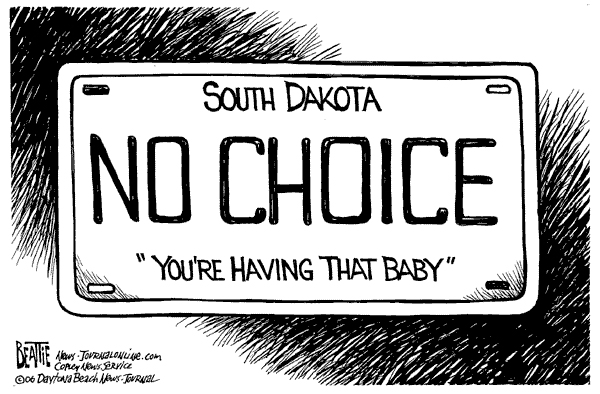
South Dakota’s unbelievable new abortion law
By Emily Bazelon / July 2, 2008

In 2005, South Dakota passed an unprecedented abortion law. The statute purports to be about ensuring that patients give informed consent. Planned Parenthood characterizes it differently: as an intrusion on the doctor-patient relationship, forcing doctors to give inaccurate medical facts and to be the state’s ideological mouthpiece. Now, following a ruling by the U.S. Court of Appeals for the 8th Circuit, the law is about to go into effect for the first time. And the question is how it will change the experience of going to get an abortion—and whether it will open a new front in the abortion wars by encouraging other states to follow suit.

The South Dakota law requires doctors to give patients who come for an abortion a written statement telling them that “the abortion will terminate the life of a whole, separate, unique, living human being,” and that they have “an existing relationship with that unborn human being” that is constitutionally protected. (What does the constitutionally protected part mean? Who knows.) In addition, doctors are ordered to describe “all known medical risks of the procedure and statistically significant risk factors,” including “depression and related psychological distress” and “increased risk of suicide ideation and suicide.”

The idea behind the statute is that if you force women to confront the implications of an abortion, they’ll be less likely to go through with it. That’s what the “whole, separate, unique, living human being” language is about. In Roe v. Wade, the Supreme Court ruled that a fetus is not a person, in the legal sense of the word, which is to say it doesn’t have the same rights. So South Dakota couldn’t order doctors to tell women that to have an abortion is to kill a person. But human being is a different term that’s up for grabs, the drafters of the legislation decided.

This was the insight of a smart New Jersey lawyer named Harold Cassidy, who has represented women who’ve accused abortion providers of malpractice, and who helped draft South Dakota’s statute. Cassidy also helped persuade state lawmakers that women might be scared out of having abortions if doctors were forced to enumerate the procedure’s medical risks. This is where the idea of linking abortion to depression and increased risk of suicide comes in. Never mind that the weight of the medical evidence tilts heavily against the increased-suicide tie or that there’s more evidence of a link between depression and unintended pregnancy—or simply giving birth—than between depression and abortion, according to most of the literature.

If you care about doctors’ freedom of speech, or their responsibility to give accurate information to patients, the South Dakota statute looks pretty alarming. And yet by a vote of seven judges to four, the U.S. Court of Appeals for the 8th Circuit managed to weave its way around these concerns last week. After sitting on the case for more than a year, the court instructed abortion clinics (actually, clinic, since there’s only one in South Dakota) to put the law into effect in mid-July.

In a majority opinion by Judge Raymond Gruender, the court ruled only on the “human being” part of the statute—a challenge to the suicide provision is still pending before a lower court. (Planned Parenthood decided it could live with the depression provision because the law doesn’t claim that abortion increases that risk.) Planned Parenthood argued that the state is legislating morality because to call a fetus a “whole, separate, unique, living human being” is an ideological statement, not a medical one. The Supreme Court has told the states that it’s not for them to resolve when life begins—and it should certainly follow from this that they can’t force any such resolution on doctors. As the 8th Circuit dissent by Judge Diana Murphy points out, the question “in some sense encompass[es] the whole philosophical debate about abortion.”

But none of this swayed the majority. They bought the state’s argument that the statute circumvents ideology by defining “human being,” elsewhere in the statute, as “an individual living member of the species Homo sapiens, including the unborn human being during the entire embryonic and fetal ages from fertilization to full gestation.” Presto, said the majority—with that definition, the “truthfulness and relevance” of the provision “generates little dispute.” Yes, this logic is as tautological as it sounds. The legislature basically defined “human being” to include unborn human beings.

The idea that a fetus is whole and separate will probably be news to a lot of women who have carried one. But what’s more distressing, because the majority’s reasoning is so strained, is the assertion that by defining a phrase one way, a state can erase its ambiguity and the variety of perceptions people bring to it. It’s one thing to say—as the case law the majority relies on here does—that a statutory definition binds judges and their interpretation of language. It’s another entirely to say that when doctors tell women they are carrying a human being, that women will think, Oh, right, that means only the long, convoluted thing that the state says it does. Most patients won’t think that, because they won’t necessarily define “human being” the way the statute does. As Yale law professor Robert Post says in a 2007 article (PDF) in the University of Illinois Law Review, “If South Dakota were to enact a statute requiring physicians to inform abortion patients that they were destroying the ‘soul’ of their unborn progeny, and if it were explicitly to provide in the statute that ‘soul’ is defined as ‘human DNA,’ the evasion would be obvious.” Instead, South Dakota has co-opted human being and attached its own meaning to it.

The 8th Circuit’s decision to uphold the South Dakota law, even though it compels doctors to say things they don’t believe, is in part the fault of Justice Anthony Kennedy. In his 2007 decision banning a method of late-term abortion, Kennedy worried a lot about women who regret having abortions. With paternalistic abandon, he wrote about their “distress” in terms of their “lack of information” about abortion. Kennedy was talking, in graphic specifics, about lack of information on the way a so-called partial-birth abortion unfolds. Whether or not he’s right, these details have nothing to do with philosophical musings about whether the fetus is a human being. But that didn’t stop the 8th Circuit from quoting him at length in the very different context of the South Dakota law.

The fraught claim that abortion harms women, which I’ve written about before, was languishing in legal Nowheresville until Kennedy unexpectedly raised it up and blessed it. Now that notion, and the small minority of women who attest to it, are a handy new tool for abortion opponents. The 8th Circuit includes six other states—Arkansas, Iowa, Minnesota, Missouri, Nebraska, and North Dakota. Laws that compel doctors’ speech, as this one does, would now be legal in all those places, should state legislators adopt them. And if states in other regions want to try passing such laws, they’ll have a great precedent to cite to the other circuit courts.

In the meantime, Planned Parenthood’s lawyers and the state’s lone abortion clinic in Sioux Falls have two more weeks to figure out what its doctors can legally and ethically say to the women they treat. “Our doctors are now being asked to say things they do not believe are true,” says Sarah Stoesz, the head of Planned Parenthood in South Dakota, North Dakota, and Minnesota. Whatever you think about abortion, how is that a good thing?

Source. / Slate.com

The Rag Blog

Posted in RagBlog | Tagged , , , , | Leave a comment