Hot Shots and Classic Takes


Thanks to Kathy Doyle / The Rag Blog / Posted July 2, 2008

Posted in RagBlog | Tagged , | Leave a comment

What Scott McClellan (and Jay Rockefeller) Didn’t Tell Us


The Story Behind George Bush’s Lies
By Richard W. Behan / July 1, 2008

Long accused of signature dishonesty, the Bush Administration now stands twice indicted, by Scott McClellan’s book and by two damning reports from Jay Rockefeller’s Senate Select Committee on Intelligence—the “Phase II” documents. These sources confirm beyond any doubt the Bush Administration, with propaganda and outright lies, deliberately misled the U.S. Congress into authorizing war.

That is the truth, but not the whole truth, and the backstory is no less appalling.

As much as seven months before the terrorist attacks of September 11, 2001, the Administration was deeply involved in planning and mobilizing for the invasion and military occupation of both Iraq and Afghanistan. None of the activity was remotely related to Osama bin Laden or counterterrorism of any stripe.

This is the fundamental truth, it is beyond dispute, and it is fully documented.

The incursions into Afghanistan and Iraq were premeditated, hegemonic wars of conquest and territorial occupation, to gain the geostrategic control of Middle Eastern energy resources. Bald acts of unprovoked military aggression, they are direct violations of the charter of the United Nations. The wars are therefore international crimes, but they were not undertaken until the horror of September 11, 2001 provided a spectacular smokescreen. A fraudulent label–the “war on terror”—was concocted to disguise the premeditated violence, and it was quickly unleashed.

The facts

Iraq

Beginning in 1992 and spanning the two Bush Administrations, repeated written proposals to invade Iraq were prepared and issued. Four men who served in both Administrations—Richard Cheney, Lewis “Scooter” Libby, Paul Wolfowitz, and Zalmay Khalilzad—were the source of the first proposal (expressly seeking “…access to vital raw materials, primarily Persian Gulf oil”) and direct participants in the iterations to follow. Herein is the story of the origin and development of the Project for the New American Century and its tragic ideology of American global hegemony.

(For an excellent treatment of this history, see “Empire Builders: Neoconservatives and Their Blueprint for U.S. Power,” in the Christian Science Monitor, June, 2005.)

On January 20, 2001, 29 members of the Project for the New American Century joined the incoming Bush Administration at the highest levels—notably including Richard Cheney as Vice President, Libby as his Chief of Staff, Donald Rumsfeld as Secretary of Defense, and Wolfowitz as Rumsfeld’s Deputy. The PNAC triumphed when the National Security Council ten days later, on January 30, legitimized the invasion of Iraq.

(Read an account of the meeting in Ron Suskind’s book, The Price of Loyalty: the White House and the Education of Paul O’Neill.)

Four days later, on February 3, 2001 the Security Council received a top-secret memorandum from a “high level official.” The memo “…directed the NSC staff to cooperate fully with [Richard Cheney’s] Energy Task Force as it considered the ‘melding’ of two seemingly unrelated areas of policy: ‘the review of operational policies toward rogue states’ such as Iraq, and ‘actions regarding the capture of new and existing oil and gas fields.’”

(Quoted from Jane Mayer, “Contract Sport,” in The New Yorker, February 16, 2004.)

By early March, 2001, Cheney’s Energy Task Force was studying maps of the Iraqi oil fields, refineries, pipelines, and tanker terminals, and lists of the foreign oil companies—none of which were American or British majors—negotiating with the Hussein regime for exploration and development rights.

(See the maps and the lists.)

At least a year before the invasion, the State Department was designing the deconstruction of Iraq’s nationalized oil industry.

(Source: Gregg Mutitt, Crude Designs: the Ripoff of Iraq’s Oil Wealth, The Platform Group, UK.)

Paul Bremer’s Coalition Provisional Authority, with the invited participation of American and British oil companies, drafted a “hydrocarbon law” for Iraq, codifying the State Department’s design.

(See Gregg Mutitt and Erik Leaver, “Slick Connections: U.S. Influence on Iraqi Oil,” in Foreign Policy in Focus, July 18, 2007.)

In January of 2007 President Bush, in announcing the troop surge, demanded as a mandatory “benchmark” the enactment of the hydrocarbon law by the Iraqi Parliament.

(See a at transcript of the speech.)

Exxon/Mobil, Conoco/Phillips, Royal Dutch/Shell, and BP/Amoco are now poised to profit immensely from 81% of Iraq’s undeveloped crude when the hydrocarbon law is passed.

(Source: Joshua Holland, “Bush’s Petro-Cartel Almost Has Iraq’s Oil,” published on the website of AlterNet, October 16, 2006.)

Meanwhile, the UK Independent reported on June 21, 2008 the imminent signing of three $500 million contracts with Exxon/Mobil, Royal Dutch/Shell, and BP/Amoco by the Iraqi Oil Ministry. These are repair and technical “service contracts” covering some of Iraq’s largest oilfields. The companies can elect to be paid in crude oil.

(See “Big Oil Returns to Iraq,” by Patrick Cockburn, the UK Independent, June 21, 2008.)

Afghanistan

Upon taking office, the Bush Administration brushed off explicit warnings about al Qaeda and Osama bin Laden. Counterterrorism was nowhere on the new Administration’s agenda. (Read Richard Clarke, Against All Enemies: Inside America’s War on Terror.)

Instead, throughout the spring and summer of 2001 the Bush Administration, on behalf of the Unocal Corporation, was negotiating with the Taliban for pipeline rights-of-way across Afghanistan. A rich package of foreign aid was offered, but the negotiations failed.

(See Wayne Madsen, “Afghanistan, the Taliban, and the Bush Oil Team,” CounterPunch, November 1, 2004, and Paul Sperry, Crude Politics: How Bush’s Oil Cronies Hijacked the War on Terrorism.)

Finally, after threatening the Taliban—“Accept our offer of a carpet of gold or we bury you under a carpet of bombs”—the Bush Administration notified Pakistan and India it would attack Afghanistan “before the end of October.” This took place five weeks prior to the events of 9/11.

(Sources: Anon., “Afghanistan: A Timeline of Oil and Violence,” , and Larry Chin, “Parts I and II: Players on a rigged chessboard: Bridas, Unocal, and the Afghanistan pipeline,” Online Journal, March, 2002.)

On October 7, 2001 the “carpet of bombs” was delivered to Afghanistan as threatened and on schedule. Mr. Hamid Karzai, a former Unocal consultant, was soon installed as President of the country. The first U.S. ambassador was John J. Maresca, a Unocal vice president. He was succeeded by Zalmay Khalilzad, another former consultant for Unocal. (See “Oil War III: the Engineering of Oil Profits Through War and Arbitrary Monetary Standards,”; and “Afghanistan: A Timeline of Oil and Violence,” cited above.)

On February 8, 2002, four months after the carpet of bombs, Presidents Hamid Karzai and Perves Musharraf sign an agreement for a pipeline across Afghanistan and Pakistan.

(See “U.S. Afghan Aid Package Fuels Pipeline Politics,” in Asia Times Online, May 29, 2002; and Crude Politics cited above.)

Within a year an oil industry trade journal reports the Bush Administration is standing ready with financing to build the pipeline and to protect it with a permanent military presence. (See Alexander’s Gas and Oil Connections, February 23, 2003.)

On June 22, 2008 the Toronto Sun reported the signing of a “major deal” by Afghanistan to build an $8 billion, 1,680km pipeline, called “TAPI.” (The Turkmenistan-Afghanistan-Pakistan-India pipeline.) Construction will begin “…once Taliban forces are cleared from the pipeline route by U.S., Canadian, and NATO forces.” (See Eric Margolis, “These Wars Are About Oil, Not Democracy,” Toronto Sun, June 22, 2008.)

The objectives of the “war on terror,” were twofold, we were told: to apprehend Osama bin Laden in Afghanistan and to effect a change of regime in Iraq.

But the trademark deceit of the Bush Administration was involved here, too. Osama bin Laden could have been brought to justice easily and without armed conflict, and regime change in Iraq could have been achieved with equal facility.

Awaiting on his desk when George Bush took office was a standing offer from the Taliban to surrender Osama bin Laden. (This had been negotiated by the Clinton Administration after the bombing of the U.S.S. Cole.) Intent on the invasion and military occupation of Afghanistan, however, the Bush Administration rejected the handover three times before 9/11 and twice thereafter. (The tragic speculation: with bin Laden in custody early in 2001, could 9/11 have been avoided?)

(Sources: Anon., “Bush Rejects Taliban Offer to Hand bin Laden Over,” UK Guardian Unlimited, October 14, 2001; Andrew Buncombe, “Bush Rejects Taliban Offer to Surrender bin Laden,” the UK Independent, October 15, 2001; Alexander Cockburn and Jeffrey St. Clair, “How Bush Was Offered bin Laden and Blew It,” CounterPunch, November 1, 2004.).

Saddam Hussein, hoping to forestall warfare, yielded a series of increasingly attractive concessions to the Bush Administration, finally offering to leave his country for exile in Egypt. Intent as well on the invasion and military occupation of Iraq, the Administration ignored the offer.

(Sources: George Monbiot, “Dreamers and Idiots: Britain and the US did everything to avoid a peaceful solution in Iraq and Afghanistan,” The UK Guardian, November 11, 2003,; and Anon., “Llego el momento de deshacerse de Saddam,” El Pais (Spain), September 26, 2007. This is a transcript of a conversation between George Bush, Condoleezza Rice, and Spanish Prime Minister Jose Maria Anzar in Crawford, Texas, February 22, 2003. The President acknowledges the prospective exile, but vigorously rejects it, declaring, “We will be in Baghdad at the end of March.”)

The truth

Plainly there is a huge disconnect between the incursions into Afghanistan and Iraq and the terrorist attacks of 9/11. But the Bush Administration knowingly and dishonestly joined them into the fraudulent conflation known as the “war on terror.”

This is not a “war on terror.” Afghanistan and Iraq today are occupied countries, administered by puppet governments and dotted with permanent military bases securing the energy assets. Not a by-product of the Bush Administration’s warmaking, this was its purpose.

The Congress is at least vaguely aware. The Defense Authorization Act of 2008 included a Section 1222, prohibiting expenditures for the “permanent stationing of United States Armed Forces in Iraq,” or “to exercise United States control of the oil resources of Iraq.”

President Bush nullified Section 1222 with a signing statement.

Richard W. Behan lives and writes on Lopez Island, off the northwest coast of Washington state. He has published on various websites over two dozen articles exposing and criticizing the criminal wars of the Bush Administration. The work is summarized in an electronic book, The Fraudulent War, available in PDF format

Source. / truthout

Thanks to David Hamilton / The Rag Blog

Posted in RagBlog | Tagged , , , , , , , | Leave a comment

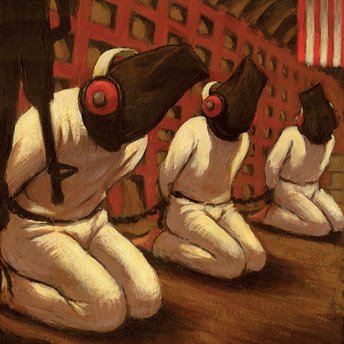
Gitmo Torture Methods Cribbed From Chinese Communists

Image by Matt Groller / Rolling Stone.

“Coercive management techniques” copied verbatim
By Scott Shane / July 2, 2008

WASHINGTON — The military trainers who came to Guantánamo Bay in December 2002 based an entire interrogation class on a chart showing the effects of “coercive management techniques” for possible use on prisoners, including “sleep deprivation,” “prolonged constraint,” and “exposure.”

What the trainers did not say, and may not have known, was that their chart had been copied verbatim from a 1957 Air Force study of Chinese Communist techniques used during the Korean War to obtain confessions, many of them false, from American prisoners.

The recycled chart is the latest and most vivid evidence of the way Communist interrogation methods that the United States long described as torture became the basis for interrogations both by the military at the base at Guantánamo Bay, Cuba, and by the Central Intelligence Agency.

Some methods were used against a small number of prisoners at Guantánamo before 2005, when Congress banned the use of coercion by the military. The C.I.A. is still authorized by President Bush to use a number of secret “alternative” interrogation methods.

Several Guantánamo documents, including the chart outlining coercive methods, were made public at a Senate Armed Services Committee hearing June 17 that examined how such tactics came to be employed.

But committee investigators were not aware of the chart’s source in the half-century-old journal article, a connection pointed out to The New York Times by an independent expert on interrogation who spoke on condition of anonymity.

The 1957 article from which the chart was copied was entitled “Communist Attempts to Elicit False Confessions From Air Force Prisoners of War” and written by Alfred D. Biderman, a sociologist then working for the Air Force, who died in 2003. Mr. Biderman had interviewed American prisoners returning from North Korea, some of whom had been filmed by their Chinese interrogators confessing to germ warfare and other atrocities.

Those orchestrated confessions led to allegations that the American prisoners had been “brainwashed,” and provoked the military to revamp its training to give some military personnel a taste of the enemies’ harsh methods to inoculate them against quick capitulation if captured.

In 2002, the training program, known as SERE, for Survival, Evasion, Resistance, Escape, became a source of interrogation methods both for the C.I.A. and the military. In what critics describe as a remarkable case of historical amnesia, officials who drew on the SERE program appear to have been unaware that it had been created as a result of concern about false confessions by American prisoners.

Senator Carl Levin, Democrat of Michigan and chairman of the Senate Armed Services Committee, said after reviewing the 1957 article that “every American would be shocked” by the origin of the training document.

“What makes this document doubly stunning is that these were techniques to get false confessions,” Mr. Levin said. “People say we need intelligence, and we do. But we don’t need false intelligence.”

A Defense Department spokesman, Lt. Col Patrick Ryder, said he could not comment on the Guantánamo training chart. “I can’t speculate on previous decisions that may have been made prior to current D.O.D. policy on interrogations,” Colonel Ryder said. “I can tell you that current D.O.D. policy is clear — we treat all detainees humanely.”

Mr. Biderman’s 1957 article described “one form of torture” used by the Chinese as forcing American prisoners to stand “for exceedingly long periods,” sometimes in conditions of “extreme cold.” Such passive methods, he wrote, were more common than outright physical violence. Prolonged standing and exposure to cold have both been used by American military and C.I.A. interrogators against terrorist suspects.

The chart also listed other techniques used by the Chinese, including “Semi-Starvation,” “Exploitation of Wounds,” and “Filthy, Infested Surroundings,” and with their effects: “Makes Victim Dependent on Interrogator,” “Weakens Mental and Physical Ability to Resist,” and “Reduces Prisoner to ‘Animal Level’ Concerns.”

The only change made in the chart presented at Guantánamo was to drop its original title: “Communist Coercive Methods for Eliciting Individual Compliance.”

The documents released last month include an e-mail message from two SERE trainers reporting on a trip to Guantánamo from Dec. 29, 2002, to Jan. 4, 2003. Their purpose, the message said, was to present to interrogators “the theory and application of the physical pressures utilized during our training.”

The sessions included “an in-depth class on Biderman’s Principles,” the message said, referring to the chart from Mr. Biderman’s 1957 article. Versions of the same chart, often identified as “Biderman’s Chart of Coercion,” have circulated on anti-cult sites on the Web, where the methods are used to describe how cults control their members.

Dr. Robert Jay Lifton, a psychiatrist who also studied the returning prisoners of war and wrote an accompanying article in the same 1957 issue of The Bulletin of the New York Academy of Medicine, said in an interview that he was disturbed to learn that the Chinese methods had been recycled and taught at Guantánamo.

“It saddens me,” said Dr. Lifton, who wrote a 1961 book on what the Chinese called “thought reform” and became known in popular American parlance as brainwashing. He called the use of the Chinese techniques by American interrogators at Guantánamo a “180-degree turn.”

The harshest known interrogation at Guantánamo was that of Mohammed al-Qahtani, a member of Al Qaeda suspected of being the intended 20th hijacker in the Sept. 11 attacks. Mr. Qahtani’s interrogation involved sleep deprivation, stress positions, exposure to cold and other methods also used by the Chinese.

Terror charges against Mr. Qahtani were dropped unexpectedly in May. Officials said the charges could be reinstated later and declined to say whether the decision was influenced by concern about Mr. Qahtani’s treatment.

Mr. Bush has defended the use the interrogation methods, saying they helped provide critical intelligence and prevented new terrorist attacks. But the issue continues to complicate the long-delayed prosecutions now proceeding at Guantánamo.

Abd al-Rahim al-Nashiri, a Qaeda member accused of playing a major role in the bombing of the American destroyer Cole in Yemen in 2000, was charged with murder and other crimes on Monday. In previous hearings, Mr. Nashiri, who was subjected to waterboarding, has said he confessed to participating in the bombing falsely only because he was tortured.

Source. / New York Times

The Rag Blog

Posted in RagBlog | Tagged , , , , , , | 1 Comment

Anti-science conservatives must be stopped


Americans must not allow global warming deniers to block the policies needed to avert catastrophic climate change. Our future is at stake.
By Joseph Romm / Jun. 30, 2008

Conservatives put on a spectacular display of scientific ignorance this month in the U.S. Senate. During the debate on the Lieberman-Warner Climate Security Act, which would regulate carbon dioxide by setting a cap on emissions and allowing emitters to trade carbon allowances, most Republican senators questioned the reality of human-caused climate change or ignored the climate threat entirely and repeated the talking point that the bill would raise gasoline and electricity prices. It was as if they had been locked in an isolation booth for the past decade. Let’s go to the highlights.

* Sen. James Inhofe, R-Okla.: “The vast majority of scientists do not believe that anthropogenic greenhouse gas emissions are a major contributor to climate change.”

* Sen. Jon Kyl, R-Ariz.: This bill means “people must turn off air-conditioning in the summer.”

* Sen. Saxby Chambliss, R-Ga.: “This bill will attack citizens at the pump” and “increase job losses.”

* Sen. Jeff Sessions, R-Ala.: This bill will “leave us less competitive in the world marketplace.”

* Sen. John Thune, R-S.D.: This bill “could bankrupt U.S. air carriers.”

* Sen. Kit Bond, R-Mo.: “Nobody in their right mind” believes we can get half our power from wind and solar or drive a “fleet of golf carts.”

* Sen. Wayne Allard, R-Colo.: “It’s unclear as to what the long-range trend is as far as the temperature of the Earth is concerned.”

Conservatives sure are good at staying on message, even one that has no basis in fact. None of their scientific or technological claims is true and most of the economic claims are a wild exaggeration based on studies funded by fossil fuel companies. This may be a defining moment for humanity according to the world’s increasingly desperate climate scientists, but to many conservatives it’s apparently just another moment to score political points at the expense of future generations.

It’s a terrifying thought. If the science of the last few years and the painful reality of a changing climate haven’t persuaded the conservative movement of the dire nature of human-caused global warming, I can’t imagine what chain of catastrophes would. We’ve already had record-breaking droughts, heat waves, wildfires, deluges, super storms and flooding at home and abroad — just as climate science predicted. And we’ve had far more loss of ice from Greenland, Antarctica and the Arctic Sea than anyone expected.

A National Journal poll in June found that only 26 percent of GOP Congress members believe “it’s been proven beyond a reasonable doubt that the earth is warming because of man-made pollution.” That matches their constituents — only 27 percent of Republicans say the earth is warming because of human activity. Needless to say, if you don’t believe humans are the cause of global warming, you’re not going to believe that humans are the solution to global warming.

The global warming deniers and delayers managed to squash the Lieberman-Warner bill, although its authors promise it will be back next year. Even so, the policies needed to avert catastrophic climate change require so much effort and so much political consensus that conservatives can probably block them. The truth is, the bill would not have put the nation on a path to avert catastrophe. The science has already moved far past the legislation. We can no longer base our efforts to tackle climate change on hopes of reducing our own emissions at some point in the future or on letting others reduce emissions for us.

Progressives should stop playing the conservatives’ game and promote a radical redesign to climate policy focused on aggressive deployment of renewable energy and energy efficiency. Right now, progressives and moderates in and out of Congress are pushing an economy-wide cap on greenhouse gas emissions, which creates a market-based price for carbon, which in turn increases the cost of all carbon-based fuels, including oil. Not only does this give conservatives a powerful talking point against the legislation, it doesn’t do much to reduce emissions in the transportation sector. You need an absurdly high price for carbon to have even a modest impact on oil consumption.

To avert disaster, we need to cut carbon emissions in the transportation sector some 60-80 percent by 2050. How high would the price of gasoline have to be? It would have to exceed $10 a gallon. Yet a serious price for a carbon emission allowance of even $400 per metric ton (which is three times the current price for carbon in the European Trading Scheme) would raise the price of gasoline only $1 a gallon. That price for carbon and that boost in gasoline prices is almost certainly a non-starter in this country.

If I were writing climate legislation, I would leave transportation out of the cap and trade system. Why legislate what is inevitable anyway? The price of petroleum, gasoline, diesel fuel and jet fuel are going to soar in the coming years because we haven’t had intelligent energy policy for decades. Let our previous stupidity and myopia drive the price higher for the foreseeable future.

To inaugurate real change, policymakers need to put together an aggressive “energy independence” package as part of the climate bill. The package should be focused on tougher fuel economy standards, a low-carbon-fuels standard and an aggressive push to adopt plug-in hybrids.

In fact, the overall message of the climate bill needs to change. The public needs to realize that higher fossil fuel prices are inevitable unless we take an aggressive government-led action to deploy clean energy technologies. We need to understand that even the Bush administration’s own Energy Department says drilling for oil offshore or in Alaska will never have a significant impact on gasoline prices. The supply is too little, the global-demand rise is too inexorable. If the public doesn’t understand this, it’s hard to see how it will get behind the necessary action in the face of all of the obfuscation and demagoguing by conservatives.

After all, why would conservatives abandon what they believe is a politically winning position? Why would they anger the energy companies that give them large political contributions to uphold anti-climate actions? Given how many more pressing issues the public is focused on — the economy, housing, education, food costs, gasoline prices, Iraq, terrorism, healthcare — I wouldn’t expect conservatives to pay a significant price at the polls until the reality of climate change is too painful to bear and to obvious to obfuscate.

Conservatives can probably enjoy another decade or so of disregarding the climate science and demagoguing climate legislation. Yes, the weather will become increasingly extreme as we slip closer to permanent changes in the climate. But most of what happens next decade will just be a more frequent and intense version of what happened in the last decade.

Unfortunately for the planet, the next decade is pretty much going to be the last one to reverse course the “easy” way. By easy, I mean deploying clean energy technology at an aggressive pace with a negligible net economic cost, 0.1 percent of GDP per year or less. It’s a strategy that can be deployed largely by the private sector with the help of well-designed government programs and regulatory reforms.

If conservatives block serious action until the 2020s, then the nation and the world will begin a desperate race to avert catastrophe. By then, the world’s carbon dioxide emissions and concentrations will be so high that the relatively easy market-based technology strategy will not be able to stop us from crossing the point of no return, when major amplifying feedbacks kick in and undermine all efforts to avert catastrophe. The most important feedback is probably the melting of the permafrost and tundra, which could release 1,000 billion tons of carbon — more than the entire atmosphere contains today — much of it in the form of methane, which is 20 times more potent at trapping heat than carbon dioxide.

I call the period from 2025 to 2050 “Planetary Purgatory.” Assuming conservatives block a major reversal in U.S. policies in the next decade, by the 2020s, everyone will know the grim fate that awaits the next 50 generations, including widespread desertification, the loss of the inland glaciers that provide water to a billion people, sea level rise of 80 feet or more at a rate that might hit 6 inches a decade and extinction of most species on land and sea. Maybe then, as the miseries of global warming overtake everyday life, a backlash against conservatives will begin to rise, one that will ultimately relegate that political movement to the dustbin of history

Because if we don’t turn the political tide against James Inhofe and his gang of deniers now, we will be forced to act out of desperation soon enough. If we delay serious action to 2025, we would then need to cut global emissions by 75 percent in a quarter-century or less. And that would require a massive, sustained government intervention into every aspect of our lives on a scale that far surpasses what this country did during World War II. I can’t see how the conservative movement as it now exists could possibly survive having been responsible for ushering in decades if not centuries of untold misery and intrusive government.

What’s particularly ironic is that a key reason conservatives don’t accept climate science and instead oppose serious action is that they hate the solution — government regulations and a government-led effort to accelerate clean energy technologies. In dismissing threats about global warming, George Will wrote, “The fears invariably seem to require more government subservience to environmentalists and more government supervision of our lives.”

In his column on the Lieberman-Warner bill, Charles Krauthammer warned that on the basis of “speculation, environmental activists, attended by compliant scientists and opportunistic politicians, are advocating radical economic and social regulation … that will tell you how much you can travel, what kind of light you will read by, and at what temperature you may set your bedroom thermostat.”

Note to Krauthammer: Have you ever met a scientist? “Compliant” is the last word anyone would use to describe them.

Without a trace of self-awareness, Krauthammer continues: “There’s no greater social power than the power to ration. And, other than rationing food, there is no greater instrument of social control than rationing energy, the currency of just about everything one does and uses in an advanced society.”

Krauthammer and the conservatives have it backward. The solution to global warming doesn’t require rationing energy or anything else. It requires a government-industry partnership to accelerate existing and near-term clean energy technologies into the market. That strategy preserves the energy abundance that has made modern civilization and sustained economic development possible.

But if we hold off today on government action, we will almost guarantee the need for extreme and intrusive government action in the future. Only Big Government can relocate tens of millions of citizens, build massive levees and mandate harsh and rapid reductions in certain kinds of energy. Peak oil prices, which we haven’t prepared for, will make today’s gas prices look like a Costco bargain. On a planet reeling from global warming and desertification, we will have billions more people to feed. We will be rationing food, all right. And water. And arable land. Most of our meaningless national political fights will be replaced by a very meaningful global fight for survival.

Conservatives can’t stop the impending catastrophe with anti-government rhetoric. But they can prevent progressives and moderates from stopping it by blocking aggressive climate legislation. Progressives and moderates will need all their political skill and tenacity to overcome the obstructionism of the anti-science, anti-technology conservatives. This is unlike any previous political fight; it is a fight to save the health and well-being of the next 50 generations, a fight to preserve our way of life. Losing is not an option.

Source. / salon.com

The Rag Blog

Posted in RagBlog | Tagged , , , , , , | Leave a comment

Moral Depravity in Very High Places


Averting our gaze from U.S. cruelty
By Linda McQuaig / July 1, 2008

Does the president of the United States have the right to order a detainee buried alive?

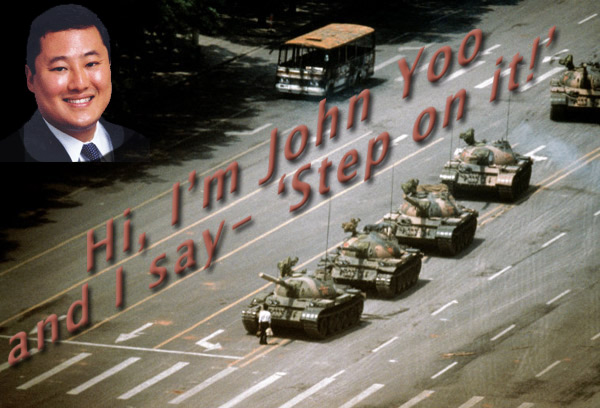
Oddly, this grotesque question was posed at a U.S. Congressional hearing last week. Even odder was the answer – from John Yoo, former deputy assistant attorney general in the Bush administration, now a law professor at the University of California.

“I don’t think that I’ve ever given the advice that the president could bury somebody alive,” Yoo told a judiciary subcommittee hearing into detainee interrogations.

Well, I guess that’s comforting to know. But it was striking to watch Yoo evade answering whether he considered there was any treatment so vicious and inhuman that it would be beyond the president’s power to inflict it on a detainee, in the interests of national defence.

Apparently there isn’t. In a public debate in 2005, Yoo was asked if he thought it would be lawful for the president to authorize crushing the testicles of a detainee’s child.

It would seem like a simple “no” would suffice. But here’s how Yoo responded: “I think it depends on why the president thinks he needs to do that.”

Asked about that line last week during his Congressional testimony, Yoo didn’t deny saying it, but protested that it was taken “out of context.” Does that mean there’s a context in which a top legal adviser might advise the president that that’s okay?

After 7 1/2 years of George W. Bush, much of the media and political establishment – which have never shown much interest in holding Bush to account – now appear anxious to simply move on. They seem determined to leave unexamined the full cruelty and mendacity of the Bush administration, with its unlawful wars and blatant violations of the Geneva Conventions.

Moving on is a great idea – once there’s been some accountability, with a full public recognition of wrongdoing, and a commitment to bring about change. Otherwise, nothing will have been learned.

The comments of Yoo, who authored top-level internal memos justifying torture and virtually unlimited presidential power, suggest a moral depravity in very high places.

That depravity led to the horrific abuses at Abu Ghraib and at other U.S. prisons in Iraq, Afghanistan, Guantanamo Bay and “black sites” around the world.

The dean of the Massachusetts School of Law, Lawrence Velvel, argues that Bush and top administration officials, including Yoo, should be tried for war crimes. His law school is holding a conference in September to map out ways to try to pursue these prosecutions “if need be, to the ends of the Earth.”

Meanwhile, here in Canada, it seems we’re supposed to avert our gaze. Strong critiques of Bush are slapped down for being “anti-American.”

Certainly, the Harper government, while quick to spot anti-democratic behaviour in Zimbabwe, is blind to it south of the border. Not only has Ottawa failed to join European nations in protesting Guantanamo Bay – and refused to do anything to help the Canadian imprisoned there – it actively co-operates with the United States on security matters and has sent thousands of Canadian troops to Afghanistan to fight in the front lines of Bush’s “war on terror.”

All this is presented as helping our neighbour, and building democracy in Afghanistan. Another way to look at it is that we’re lending support to an administration whose moral compass doesn’t seem to rule out burying people alive or crushing the testicles of children.

Source / The Toronto Star

The Rag Blog

Posted in RagBlog | Tagged , , | Leave a comment

Arianna Huffington : Watch Out For Right Turn

The supposed innovation of Karl Rove was to have George Bush concentrate on activating his base rather than playing to the center during his presidential campaigns.

That strategy won the last two elections even with a moron heading the ticket.

David Hamilton / The Rag Blog / July 1, 2008

Memo to Obama:
Moving to the Middle is for Losers

By Arianna Huffington / July 1, 2008

Last Friday afternoon, the guests taking part in Sunday’s roundtable discussion on This Week had a pre-show call with George Stephanopoulos. One of the topics he raised was Obama’s perceived move to the center, and what it means. Thus began my weekend obsession. If you were within shouting distance of me, odds are we talked about it. I talked about it over lunch with HuffPost’s DC team, over dinner with friends, with the doorman at the hotel, and the driver on the way to the airport.

As part of this process, I looked at the Obama campaign not through the prism of my own progressive views and beliefs but through the prism of a cold-eyed campaign strategist who has no principles except winning. From that point of view, and taking nothing else into consideration, I can unequivocally say: the Obama campaign is making a very serious mistake. Tacking to the center is a losing strategy. And don’t let the latest head-to-head poll numbers lull you the way they lulled Hillary Clinton in December.

Running to the middle in an attempt to attract undecided swing voters didn’t work for Al Gore in 2000. It didn’t work for John Kerry in 2004. And it didn’t work when Mark Penn (obsessed with his “microtrends” and missing the megatrend) convinced Hillary Clinton to do it in 2008.

Fixating on — and pandering to — this fickle crowd is all about messaging tailored to avoid offending rather than to inspire and galvanize. And isn’t galvanizing the electorate to demand fundamental change the raison d’etre of the Obama campaign in the first place? This is how David Axelrod put it at the end of February, contrasting the tired Washington model of “I’ll do these things for you” with Obama’s “Let’s do these things together”:

“This has been the premise of Barack’s politics all his life, going back to his days as a community organizer,” Axelrod told me. “He has really lived and breathed it, which is why it comes across so authentically. Of course, the time also has to be right for the man and the moment to come together. And, after all the country has been through over the last seven years, the times are definitely right for the message that the only way to get real change is to activate the American people to demand it.”

Watering down that brand is the political equivalent of New Coke. Call it Obama Zero.

In 2004, the Kerry campaign’s obsession with undecided voters — voters so easily swayed that 46 percent of them found credible the Swift Boaters’ charges that Kerry might have faked his war wounds to earn a Purple Heart — allowed the race to devolve from a referendum on the future of the country into a petty squabble over whether Kerry had bled enough to warrant his medals.

Throughout the primary, Obama referred to himself as an “unlikely candidate.” Which he certainly was — and still is. And one of the things that turned him from “unlikely” upstart to presidential frontrunner is his ability to expand the electorate by convincing unlikely voters — some of the 83 million eligible voters who didn’t turn out in 2004 — to engage in the system.

So why start playing to the political fence sitters — staking out newly nuanced positions on FISA, gun control laws, expansion of the death penalty, and NAFTA?

In an interview with Nina Easton in Fortune Magazine, Obama was asked about having called NAFTA “a big mistake” and “devastating.” Obama’s reply: “Sometimes during campaigns the rhetoric gets overheated and amplified.”

Overheated? So when he was campaigning in the Midwest, many parts of which have been, yes, devastated by economic changes since the passage of NAFTA, and he pledged to make use of a six-month opt-out clause in the trade agreement, that was “overheated?” Or was that one “amplified?”

Because if that’s the case, it would be helpful going forward if Obama would let us know which of his powerful rhetoric is “overheated” and/or “amplified,” so voters will know not to get their hopes too high.

When Obama kneecaps his own rhetoric and dilutes his positioning as a different kind of politician, he is also giving his opponent a huge opening to reassert the McCain as Maverick brand. We know that McCain has completely abandoned any legitimate claim on his maverick image, but the echoes of that reputation are still very much with us — especially among many in the media who would love nothing more than to be able to once again portray McCain as the real leader they fell in love with in 2000. And the new Straight Talk Express plane has been modeled on its namesake bus, decked out to better recreate the seduction.

The transition between the primaries and the general election — and from insurgent to frontrunner — is tricky. Even a confident campaign can be knocked off course. So this is when Obama most needs to remember what got him to this point — and stick with it.

In a Los Angeles Times article detailing Obama’s attempts at “shifting toward the center,” Matt Bennett of the centrist think tank Third Way says that Obama is a “good politician. He’s doing all he can to make sure people know he would govern as a post-partisan moderate.”

But isn’t being a “good politician” as it’s meant here exactly what Obama defined himself as being against? Instead of Third Way think tankers, Obama should listen to this guy:

“What’s stopped us is the failure of leadership, the smallness of our politics — the ease with which we’re distracted by the petty and trivial, our chronic avoidance of tough decisions, our preference for scoring cheap political points instead of rolling up our sleeves and building a working consensus to tackle big problems…. The time for that politics is over. It’s time to turn the page.”
That was Barack Obama in February of 2007, announcing his run for the White House. “I know I haven’t spent a lot of time learning the ways of Washington,” he said that day, “but I’ve been there long enough to know that the ways of Washington must change.”

Was that just “overheated and amplified” rhetoric?

The Obama brand has always been about inspiration, a new kind of politics, the audacity of hope, and “change we can believe in.” I like that brand. More importantly, voters — especially unlikely voters — like that brand.

Pulling it off the shelf and replacing it with a political product geared to pleasing America’s vacillating swing voters — the ones who will be most susceptible to the fear-mongering avalanche that has already begun — would be a fatal blunder.

Realpolitik is one thing. Realstupidpolitik is quite another.

Source. / The Huffington Post

The Rag Blog

Posted in RagBlog | Tagged , , , | Leave a comment

Vets Speak Out About Wesley Clark and John McCain

Army Gen. Wesley Clark, Ret, former Supreme Allied Commander Europe of NATO.

The treatment of Clark’s lucid remarks made in the last few days by the ever-rabid media has been absolute and complete. Anyone who reads a transcript of Clark’s remarks could not possibly come away with the conclusion that he was attacking Crazy Train’s military record.

Clark was merely stating what ought to be obvious to just about all of us. Having been shot down over Nam and imprisoned for several years does not qualify a man to be president. Personally I don’t think it qualifies him to be a hero but I won’t argue that point — that’s my own opinion.

Veterans are speaking out against the bullshit.

Harry Edwards / The Rag Blog / July 1, 2008

Veterans Respond to General Clark’s Comments
by Brandon Friedman / June 30, 2008

We’ve heard from the pundits, the “strategists,” and the politicians all day long on Wesley Clark’s recent comments.

That said, I’ve been terribly disappointed by the Democratic “strategists” who’ve fallen all over themselves in order to talk about how sacred military service is–specifically John McCain’s–and how awful General Wesley Clark’s comments were, even though not one “strategist” that I’ve listened to today has ever served a minute in uniform. These ignorant, knee-jerking consultants on TV have been in an apparent race to concede ultimate authority on military matters to John McCain and the Republican Party since Sunday night. It’s disgusting. And these concessions have been so over-the-top destructive to our long-term plans for running the country, that I’m not even sure where to begin.

The bottom line is this: If Democrats tuck tail and run from Republicans in this instance, we run the risk of ceding authority on military issues to John McCain for the rest of the campaign. Whether you like Clark or not, everyone has an interest in defending him vigorously in this case. We cannot allow the Right and the media to get away with trashing the first guy to come out in prime time to slam McCain’s military “expertise.” If our organizations don’t defend Clark as being right in this case, we give in to the idea that Republicans are the parents in terms of national defense, and Democrats are the children–something those on the Right will be more than happy to reinforce.

This idea that we can’t question someone’s expertise on military matters simply because they served could very easily become the next “whoever is against the war is unpatriotic” mantra. And that’s not something I’m prepared to accept.

That said, one group we really haven’t heard much from today is the group that’s actually served in Iraq and Afghanistan. But that changes now.

Here are a handful of the messages we’ve received at VoteVets.org since this morning. Judge for yourselves what the troops who are left-of-center think about this whole deal.

General Clark was right. Service as Commander-in-Chief of the Armed Forces is only one of the roles of a president. General Clark did not attack Senator McCain’s ability to be president, he simply pointed out that his military service does not inherently qualify him for that role.

Chris LeJeune
Salt Lake City, UT
Iraq Veteran
Army
2003-04

General Clark is right. We should honor the service of any veteran who has suffered in war, but I don’t think that in itself qualifies one to be the Commander-in-Chief. And that’s the point General Clark was making. He wasn’t attacking Senator McCain personally, and anyone who says otherwise is being disingenuous.

Patrick Almand
Dallas, TX
Iraq Veteran
Army
2004-05

General Clark is on point in his comments about Senator McCain. There are many fine leaders in the military. Some–like Senator McCain–have persevered through the most terrible of circumstances. They are all heroes, but they do not necessarily possess the skills to lead the free world. If Senator McCain really wants to show his Commander-in-Chief credentials, perhaps he should start advocating for a sound national security strategy, rather than marching in the proverbial formation of eight years of failed Bush administration policy.

Richard Smith
Huntsville, AL
Afghanistan Veteran
Army
2007-08

Combat veterans understand that General Clark did not denigrate Senator McCain’s honorable service to this nation. In fact, it’s Senator McCain’s lack of support for the troops–like his opposition to the new GI Bill until recently–which dishonors and dismisses the selfless sacrifices made by our brave men and women in uniform. General Clark understands these things and is never hesitant to speak out about them. General Clark has our back and I have his.

Ernesto Estrada
San Francisco, CA
Iraq Veteran
Marine Corps
2003

General Clark’s criticism is accurate and well-founded. No one is disputing the fact that Senator McCain served his nation with honor, and I am forever grateful for his sacrifice. That being said, the question at hand is whether the senator’s military service alone qualifies him to serve as Commander-in-Chief. Despite Senator McCain’s horrific experiences in Vietnam, during his tenure in the Senate, he has been a staunch advocate of the disastrous war in Iraq and the Bush administration’s failed foreign policy. Senator McCain did not support the Webb-Hagel G.I. Bill or the dwell-time amendment, either of which would have reduced some measure of the emotional and financial stress on active duty service members and veterans. General Clark was not attacking John McCain’s military service–he was questioning whether he learned anything from that experience.

Casey Howard
Colorado Springs, CO
Iraq Veteran
Army
2005-06

In no way has General Clark questioned the honorable service or the patriotism of Captain McCain. Rather, he questioned the judgment of Senator McCain who has foolishly endorsed the failed neo-conservative foreign policy of the Bush administration.

Peter Granato
Washington, DC
Iraq Veteran
Army
2003-04

General Clark needs to be making these comments. Its the only way to get through the free pass the media is giving John McCain because of his honorable service as a POW.

Elliot Anderson
Las Vegas, NV
Afghanistan Veteran
Marine Corps
2004-05

General Clark and John McCain are both equally honorable patriots. However, if we can’t have an honest and open debate about policy and military experiences, then the significance of this campaign will be greatly diminished. This is something on which John McCain has based his entire campaign and, therefore, General Clark was totally justified in pointing it out.

David Brignac
Baton Rouge, LA
Afghanistan Veteran
Army
2006-07

As a third-generation Army veteran, I’ve been fortunate to know many admirable men and women with service in the Armed Forces, but I’m also rational enough to understand that military service alone is not a qualification to be President of the United States . Having the foresight to avoid unnecessary wars and the compassion to fund health care and education for returning veterans is also essential; unfortunately, Senator McCain seems to focus solely on sending troops to war while ignoring other problems facing our nation. With American jobs going overseas, home values plummeting, and our nation’s educational and health care programs under-funded, we need a national strategy focused on resolving our problems both home and abroad. While John McCain’s Veteran and POW status makes him a hero to me and many others, his background in no way qualifies him to tackle the challenges facing our country.

Aaron Bailey
Ann Arbor, MI
Afghanistan Veteran
Army
2007

To attack General Clark for stating what should be obvious — that military service alone does not automatically qualify one to be Commander in Chief or President — is ridiculous. Some of our most successful presidents have not served in the armed forces. President Bush did fly a plane in the military — and his record as Commander-in-Chief has been disastrous. While everyone should respect the service and sacrifice of John McCain (which General Clark did), this respect must not be a gag on honest questions or open debate.

Kayla Williams,
Author of Love My Rifle More than You
Broadlands, VA
Iraq Veteran
Army
2003-04

General Clark’s comments were taken completely out of context by the media. He never questioned McCain’s service to the nation. He only repeated the words of the reporter asking the questions. General Clark is one of the most qualified voices in the debate over U.S. foreign policy, and it would be a huge loss for the pro-military crowd if his voice were silenced over this nonsense.

Peter O’Brien
Boston, MA
Iraq and Afghanistan Veteran
Army
2001-03

General Clark is right. Gen. Clark has seen combat as a company commander in Vietnam as well as the commanding General in Kosovo. If anyone knows that military service alone does not qualify one to be the President of the United States, General Clark is it.

Brian McGough
Broadlands, VA
Iraq, and Afghanistan Veteran
Army
2001-03

My fiance and I both served with the 1st Brigade Combat Team, 101st Airborne Division (Air Assault). He was infantry and served two tours in Iraq, I was a public affairs specialist (journalist, photographer). Like many, we both saw a lot of death and destruction. As a result, we are both strong opponents of Senator John McCain, as are many of our fellow veterans. We were so relieved to see General Clark say publicly what so many of us who served in uniform have been thinking. Not only do we fundamentally oppose Senator McCain’s view on the war, but we are appalled by his constant commitment to voting against, or abstaining from voting, bills that would improve the welfare of service members and veterans.

No one disputes that Senator McCain served honorably in the Navy and is to be commended for his actions. He is truly an American war hero. But these events occurred 40 years ago and the circumstances under which he served in Vietnam (both in the country and under military regulations) are very different from those faced by service members serving in Iraq and Afghanistan today. Americans should be looking at his current record–and not lingering on his past one to see just how much he understands about this war and how committed he is to this country’s troops.

Linsay Rousseau Burnett and Robert Huddleston
Clarksville, TN
Iraq Veterans
Army
2003-04 and 2005-06

General Wesley Clark is the leader of veterans in the progressive movement. As such, he will defend himself and other, like-minded veterans will defend him–publicly. All parties interested in having the support of the military support should take note.

Source. / Daily Kos

Wesley Clark On Face The Nation June.29, 2008

Also see Defending Wes Clark by Lt. General Robert G. Gard Jr. (USA, Ret.) / The Huffington Post

The Rag Blog

Posted in RagBlog | Tagged , , , , , , , | Leave a comment

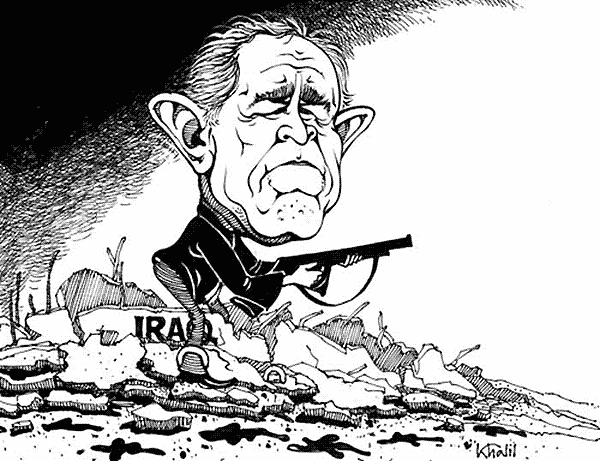
Drawn and Quartered

Khalil Rahman. / The Daily Naya Diganta / Dhaka, Bangladesh

The Rag Blog / Posted July 1, 2008

Posted in RagBlog | Tagged , , , , , , | 1 Comment

Tutu Visits Scene of Massacre; Calls For End to Blockade

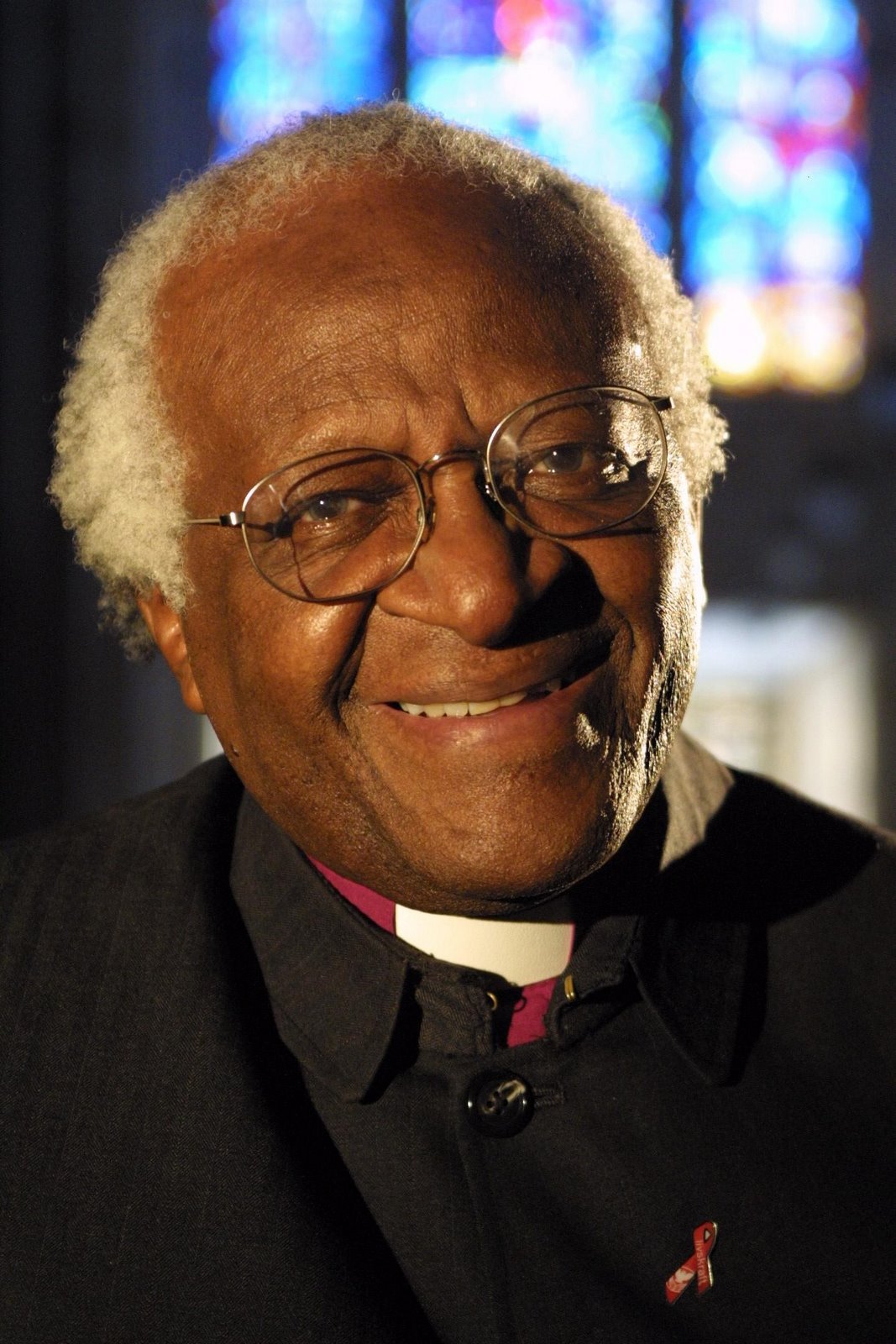
Archbishop Desmond Tutu

To try this out I googled “Desmond Tutu Gaza” and sure enough I got not one U.S. media hit. Democracy Now! radio had something but no newspaper at all. I went to the New York Times web site and got nothing.

This is all over the British and Israeli press.

Alan Pogue / The Rag Blog / July 1, 2008

Tutu’s Trip to Gaza Censored by U.S. Media
By Mike Whitney

“There can be no justice, no peace, no stability, not for Israel, not for the Palestinians, without accountability for human rights violations.”

Archbishop Desmond Tutu

Why was Desmond Tutu’s trip to Gaza censored by the U.S. media?

When Nobel Laureate and world renowned peacemaker Desmond Tutu goes to Gaza to visit the site of an Israeli massacre; that’s news, right? So why is it impossible to find any account of his trip in America’s leading newspapers? Is it because any information that is incompatible with the territorial ambitions of the Israeli leadership is simply “disappeared” into the media-ether?

Archbishop Tutu was a leader in the struggle against apartheid in South Africa. He is neaither a terrorist nor an anti-Semite. His work as a human rights activist spans 4 decades. Like former president Jimmy Carter he was shunned by the Israeli government and refused entry into Gaza.

Why?

Two days earlier author and university professor Norman Finkelstein was refused entry into Israel even though he’s Jewish and had parents who survived the Holocaust. Isn’t that enough to gain entry or must one accept the prevailing doctrine of the far-right extremists in the Olmert government who think that it’s okay to deprive Palestinians of their rights whenever they see fit?

Bishop Tutu had to go through Eqypt to get to Beit Hanoun; the town where 18 members of the al-Athamna family–including 14 women and children–were killed by Israeli artillery fire in November 2006. Tutu said that hearing “from the survivors of the massacre” had left him in a “state of shock”.

Christine Chinkin, professor of international law at the London School of Economics, told the UK Guardian that her preliminary assessment of the attack was that it was a breach of international law.

“Firing in a way that cannot distinguish between civilians and combatants is clearly a violation of international humanitarian law,” she said. “I don’t think that the idea of a technical mistake takes away from the initial responsibility of the action of firing where civilian casualties are clearly foreseeable … it has to be foreseeable when you give yourself such a small margin that any error has the potential to lead to civilian casualties.” (UK Guardian)

Chinkin is right, of course. It was a massacre and should be thoroughly investigated by the international community. The responsible parties need to be held accountable.

According to the UK Telegraph, “No soldiers were ever charged in connection with the incident. Israel blocked attempts by the UN’s Human Rights Council to investigate the shelling, saying that members of the body were “biased”.

So now the members of the UN’s Human Rights Council can’t be trusted either?!?

Tutu ended his three day mission by calling for an end to the blockade of food, medical supplies and economic assistance to the Gaza Strip and by condemning the “culture of impunity” in which one nation arbitrarily imprisons one and a half million civilians who are left to languish in abject poverty and hopelessness.

“We saw a forlorn, deserted, desolate and eerie place,” Tutu said “The entire situation is abominable. We believe that ordinary Israeli citizens would not support this blockade, this siege, if they knew what it really meant to ordinary people like themselves.”

Tutu is right. This is not the work of the Israeli public, which (according to a recent poll in the Jewish newspaper Ha’aretz) 65% want direct negotiations with Hamas. This is the work of fanatics at the top-rung of the political system who—much like the Bush administration—operate without any regard for the will their people and without any concern about the vast human suffering they are creating.

Tutu met with the Palestinian prime minister Ismail Haniyeh on Tuesday and told him that, while he was opposed to the Israeli occupation, he condemned the rocket fire by militants from Gaza.

“True security, peace, will not come from the barrel of a gun,” he said. “It will come through negotiation; negotiation not with your friends, peace can come only when enemies sit down and talk. It happened in South Africa. It has happened more recently in Northern Ireland. It will happen here too.”
(UK Guardian)

Tutu went to Gaza for peace and not one newspaper in the United States covered the story. Apparently, the “culture of impunity” extends to America’s media as well as the Israeli leaders who killed the 18 Palestinians at Beit Hanoun.

Source. / Information Clearing House

The Rag Blog

Posted in RagBlog | Tagged , , , , , , , , , | Leave a comment

Iraq Electrocutions : Shoddy Work by KBR?

At a 173rd Airborne base in Shin Kay, Afghanistan, in 2005, an outdoor, 200-ampere breaker panel, above, was uncovered and wired from the top. Photo courtesy NYT.

After Deaths, U.S. Inspects
Electric Work Done in Iraq
By James Risen / July 1, 2008

WASHINGTON — The Pentagon has ordered electrical inspections of all buildings in Iraq maintained by KBR, a major military contractor, after the electrocutions of several United States service members.

Gen. David H. Petraeus, the American commander in Iraq, told Congress of the new inspections while also disclosing that at least 13 Americans had been electrocuted in Iraq since the war began. Previously, the Pentagon said that 12 had been electrocuted. In addition to those killed, many more service members have received painful shocks, Army officials say.

General Petraeus’s written statement was made public on Monday afternoon by Senator Bob Casey, Democrat of Pennsylvania. The statement said that of the 13 Americans electrocuted, 10 were in the Army, 1 in the Marines, and 2 were contractors.

Staff Sgt. Ryan Maseth, a Green Beret from Pennsylvania, died Jan. 2 when he stepped into a shower and was electrocuted at his base in Baghdad. His death prompted investigations this spring by Congress and the Pentagon’s inspector general into evidence that poor electrical work at facilities used by American personnel had led to other electrocutions.

Officials now acknowledge that Army experts warned as early as 2004 that poor electrical work by contractors was creating dangerous conditions for American soldiers. But those warnings were largely ignored.

Since the American invasion of Iraq in 2003, tens of thousands of American troops have been housed in older Iraqi buildings. KBR and other companies have been paid millions of dollars to repair and upgrade the buildings, including their electrical systems.

In February 2007, nearly a year before Sergeant Maseth was killed, KBR issued a technical report to the Defense Contract Management Agency citing safety concerns about the grounding and wiring in the building in the Radwaniya Palace complex in Baghdad being used as housing for Sergeant Maseth’s unit in the Army’s Fifth Special Forces Group.

For the next year, neither KBR nor the Pentagon made repairs.

Sergeant Maseth’s family has filed a wrongful death suit against KBR. Last week the family filed a motion in Federal District Court in Pittsburgh that included a new statement from another Green Beret, Sgt. Justin Hummer of the 10th Special Forces Group, saying that he suffered electrical shocks four or five times in 2007 in the same shower where Sergeant Maseth died.

Another soldier, Specialist Stephan Michael Pabst, of the 19th Special Forces Group, has also provided a statement in the case stating that he suffered electrical shocks while living in the same complex late last year. He said he had issued a repair order to KBR, but the contractor never adequately fixed the problem, and he continued to suffer shocks in his shower.

“The Pentagon has a compelling obligation to tell the American people what happened with these deaths, and what they are doing to prevent this from happening again,” Senator Casey said Monday in an interview.

Source. / New York Times

Thanks to Michael Moore / The Rag Blog

Posted in RagBlog | Tagged , , , , | Leave a comment

Medical Study on Psilocybin : Lasting Positive Effects

‘Shrooms.

Heck, they could have just asked us…

Magic Mushrooms produce long-term
sense of well-being

By John Lazarou / July 1, 2008

In a follow-up to research showing that psilocybin, a substance contained in “sacred mushrooms,” produces substantial spiritual effects, a Johns Hopkins team reports that those beneficial effects appear to last more than a year.

Writing in the Journal of Psychopharmacology, the Johns Hopkins researchers note that most of the 36 volunteer subjects given psilocybin, under controlled conditions in a Hopkins study published in 2006, continued to say 14 months later that the experience increased their sense of well-being or life satisfaction.

“Most of the volunteers looked back on their experience up to 14 months later and rated it as the most, or one of the five most, personally meaningful and spiritually significant of their lives,” says lead investigator Roland Griffiths, Ph.D., a professor in the Johns Hopkins departments of Psychiatry and Behavioral Sciences and Neuroscience.

In a related paper, also published in the Journal of Psychopharmacology, researchers offer recommendations for conducting this type of research.

The guidelines caution against giving hallucinogens to people at risk for psychosis or certain other serious mental disorders. Detailed guidance is also provided for preparing participants and providing psychological support during and after the hallucinogen experience. These “best practices” contribute both to safety and to the standardization called for in human research.

“With appropriately screened and prepared individuals, under supportive conditions and with adequate supervision, hallucinogens can be given with a level of safety that compares favorably with many human research and medical procedures,” says that paper’s lead author, Mathew W. Johnson, Ph.D., a psychopharmacologist and instructor in the Johns Hopkins Department of Psychiatry and Behavioral Sciences.

The two reports follow a 2006 study published in another journal, Psychopharmacology, in which 60 percent of a group of 36 healthy, well-educated volunteers with active spiritual lives reported having a “full mystical experience” after taking psilocybin.

Psilocybin, a plant alkaloid, exerts its influence on some of the same brain receptors that respond to the neurotransmitter serotonin. Mushrooms containing psilocybin have been used in some cultures for hundreds of years or more for religious, divinatory and healing purposes.

Fourteen months later, Griffiths re-administered the questionnaires used in the first study — along with a specially designed set of follow up questions — to all 36 subjects. Results showed that about the same proportion of the volunteers ranked their experience in the study as the single most, or one of the five most, personally meaningful or spiritually significant events of their lives and regarded it as having increased their sense of well-being or life satisfaction.

“This is a truly remarkable finding,” Griffiths says. “Rarely in psychological research do we see such persistently positive reports from a single event in the laboratory. This gives credence to the claims that the mystical-type experiences some people have during hallucinogen sessions may help patients suffering from cancer-related anxiety or depression and may serve as a potential treatment for drug dependence. We’re eager to move ahead with that research.”

Griffiths also notes that, “while some of our subjects reported strong fear or anxiety for a portion of their day-long psilocybin sessions, none reported any lingering harmful effects, and we didn’t observe any clinical evidence of harm.”

The research team cautions that if hallucinogens are used in less well supervised settings, the possible fear or anxiety responses could lead to harmful behaviors.

These studies were funded by grants from NIDA, the Council on Spiritual Practices, and the Heffter Research Institute.

Additional researchers who contributed to this work include Matthew W. Johnson, Ph.D. and Una D. McCann, M.D. of the Department of Psychiatry and Behavioral Sciences, Johns Hopkins University School of Medicine; psychologist William A. Richards of the Johns Hopkins Bayview Medical Center; and Robert Jesse of the Council on Spiritual Practices, San Francisco.

Source. / EurekAlert!

Thanks to Jim Baldauf / The Rag Blog

Posted in RagBlog | Tagged , , , , , , , , | Leave a comment

Referring to the US Economy ….

Did you see the new dollar bill they just released in commemoration of our $4+ gasoline?


Thanks to Mariann Wizard / The Rag Blog

Posted in RagBlog | Tagged , , , | Leave a comment