Indiana : The Ball’s in Your Court


Homesick Texan on Chicanos and Mexican-hating Hoosiers (Oh, and the presidential match-up)
By Steve Russell / The Rag Blog / May 2, 2008

If it was not already clear to me, the place I lived most of my adult life, Texas, has that feel of home.

The deal below from Huffington Post I can relate to, though, because I’ve been here for seven years. These people have very positive aspects, but they are not exactly my people the way Texans or even Oklahomans are.

I’ve got to give Sen. Clinton a point here.

Maybe she should not have gone on O’Reilly’s show. He’s a pig, period. But he asked her flat out “Would you crack down on illegal aliens.”

She said flat “No.” and then tried to say why.

You’d have to be in Indiana to understand how radically (and uncharacteristically) she refused to pander there.

There is a very strong “hate the Mexicans” streak here in Indiana.

It is something I cannot abide and not just because I don’t care for racism. Going back to when we were all undergraduates, Chicanos (a word you don’t hear in Indiana) were part of the progressive coalition that changed the face of Austin. The Chicano vote made my first career. I suffered with Gonzalo Barrientos when he got racially ambushed in his first attempt to run for the Lege (as did many of you).

It ain’t abstract to me. A blanket attack on persons of Mexican descent is personal to me on a level that even liberal Hoosiers don’t seem tounderstand.

I salute Hillary for choosing up sides against that brand of politics. We long ago defeated it in Austin, and it does not float in Bloomington, where we elected a mayor named Fernandez–but it’s a big deal in the rest of Southern Indiana.

Every time I hear a public expression of anti-Mexican sentiment I am reminded that I’m from Texas and I want to come home.

Four Reasons Why Hoosiers Should Pass the Ball to Obama
By Mike Bonifer / May 2, 2008

My ‘rock road’ cred:

Though I have lived in California for over half my life, I grew up in Indiana, on a farm five miles southwest of Ireland, Indiana, in the southern part of the state. My mom, Fern still lives on the farm. My brothers and cousins are capable of giving me endless grief about what a delicate flower I’ve become (some will tell you I’ve always been) how I’d much rather shoot skeet than deer, how I will goof around with a turtle I find in a field when I should be digging post holes, what a chickenshit I am on the four-wheelers, or how I refuse to drink Pucker — whatever the hell that stuff is. But we will always love each other no matter what, and Indiana, and our farm in particular, is still the land to which my life is rooted.

The smell of new-mown hay, the moonlight on the Wabash, Larry Bird and Oscar Robertson, the taste of real produce grown near Vincennes, the Little Five, Mellencamp’s music, and open-wheeled racing give me pangs of nostalgia to this day.

I am writing this partially in support of Senator Obama, but just as much as an homage to all my deer-hunting, Pucker drinking, four-wheel riding Hoosier homies, many of whom are blood.

Here are four reasons as solid as a John Wooden basketball drill why you should be the ones to put an exclamation point on the Obama campaign by passing him the ball next Tuesday.

Reason One: Caginess. As any Hoosier can tell you, a cager is a basketball player. What they do not tell you, or let on very often, is that Hoosiers are cagey folks. They may come off like rubes to you and smell faintly of something that was not bought in a store, but they cannot be outfoxed. When the NCAA appropriated “March Madness” Sweet Sixteen and “Final Four” from Indiana’s high school basketball tournament for its own use, the city of Indianapolis ended up as the location of the NCAA’s new national headquarters, and all the revenue and jobs it generated for the state.

Obama’s a cager and he is cagey, too. He has not been thrown off his game by Hillary’s Kitchen Sink offense, or by a hot-dogging teammate like Jeremiah Wright who’s taking ridiculous shots from behind the arc when he should be running the offense and playing his role. And he certainly has the game to stuff a two-hand set-shooter like “Branch” McCain, good as the Ol’ Branchster might have been in his day.

Reason Two: Growth Determines Harvest. As any Hoosier can tell you, if you are going to be productive in the fall, you’ve got to work hard and have some luck with the weather in the spring and early summer. Hillary was busy counting her chickens before they hatched on Super Tuesday while Obama was busy lining up caucuses and building his organization. Because he has been so productive early in the growing season, Obama not only has the lead right now, he is the candidate best prepared to reap a bumper crop of votes come November. All he needs is nice steady shower of Hoosier support on May 6.

Reason Three: Patience. As any Hoosier can also tell you, things can take awhile. A quilt gets made one stitch at a time. If you get in a hurry about getting the cow back into the barn, the cow will not go back into the barn. Somewhere on his journey, Obama learned a similar kind of patience. He knows that lasting solutions do not have quick fixes, that they can take awhile. Hoosiers laugh at the idea that a single sandbag like the Clinton-McCain gas relief plan can stop the flood of money going to Arab Emirates and the oil companies. A vote for Obama is a vote acknowledging that Hoosier-style patience and hard work are what it’s going to take to get the economy back on track.

Reason Four: Calmness at Crunch Time. As any Hoosier can tell you, when the game was on the line, Bird was unflappable. He wanted the ball in his hands, and every man, woman and child of us wanted him to have it.

The Clintons are formidable players, make no mistake about that. They are not the kind of players anybody wants to play against, you’d much rather have them on your team. They set a vicious pick. They hustle and scrap hard, and they hold you by the jersey and throw elbows when they think the ref isn’t looking. They are tireless and do not have any quit in their constitutions. Like the Van Arsdale twins they can confuse you as to which of them is which with the old ‘knee-pad switch’ trick.

But when the game is on the line, as it is with this election, we want the ball in Obama’s hands. He has Bird’s unflappable calm, and like Bird, the bigger the game, the more difficult the circumstances, the better he plays. Give Barrack the ball on Tuesday. It will be one hell of an assist.

Source. / The Huffington Post

The Rag Blog

Posted in Rag Bloggers | Tagged , , , , , | Leave a comment

McCain’s Health Care Balancing Act


Wealth Transfer From Voters to Corporations
By R.J. Eskow / May 1, 2008

Health policy proposals can reflect many different ideologies or political philosophies, but John McCain’s plan isn’t so much ideological as utilitarian. There has been a lot of excellent analysis of it in recent days, but one critical aspect has somehow been overlooked: The McCain plan, if enacted, would result in an enormous transfer of wealth from the general public to large American businesses.

In that sense, it reflects a lot of what passes for “conservative” ideology nowadays. There is no underlying belief system, just a mixed bag of policies – some “pro-big government” and some “anti big-government” – that share only the ability to enrich the large corporate donors that finance Republican campaigns.

So Republican political platforms are often little more than ideological smokescreens for policies that benefit these special interests. That’s why large corporate donors support think tanks that do nothing but cook up these kinds of proposals. The “maverick” McCain is now a strict adherent of this pseudo-conservative line, and his health plan reflects that. It’s pro-free-market where that benefits his party’s backers, and anti-free-market where necessary to provide the bill with enough political cover to be palatable.

(I don’t usually sound so populist when reviewing health policies. But it’s good to look at what a plan would actually do if enacted, rather than what its backers say it would do, and this is what was most striking.)

How would this transfer of wealth take place under the McCain plan? First, its important to note that most under-65 Americans with health coverage receive that coverage through their employers. The employers who provide health benefits aren’t small businesses – they’re medium to large companies. While these companies receive a tax break for providing coverage, it isn’t enough to cover their costs.

What would the McCain plan do for them? First, it would destroy the employer-based system by eliminating tax breaks for companies that offer health care. As a result, nobody would have employer coverage anymore. Since businesses are paying far more in premiums than they’re been getting in tax breaks, they’ll save an enormous amount of money. But unlike Sen. Ron Wyden’s plan, for example, the McCain plan would not require these employers to give this sudden windfall back to their employees as salary increases. America’s businesses would enjoy a huge reduction in expense without being asked to give anything back.

In return, individuals and families would be given tax breaks to go out and buy their own health coverage, but without the buying power of larger employers. So here’s what’s likely to happen in the real world under the McCain plan, based on what we’ve learned so far:

1. If a family gets a $5,000 tax break but the typical family premium is $12,000, they’ll either pay $7,000 out of pocket or go without coverage.

2. People with pre-existing conditions won’t be able to get private coverage.

3. McCain will encourage the states to take on people with pre-existing conditions by creating “high-risk pools.”

4. But high-risk pools at the state level haven’t worked very well. So people with pre-existing conditions will either go without insurance, remain uninsured, or state taxes will skyrocket to cover their costs. That means even more money out-of-pocket for individuals, in the form of higher state taxes.

5. Cost controls on premiums are sketchy. That means the $12,000 average premium will probably go up, too.

The end result? More out-of-pocket expenses for individuals, terrible difficulties obtaining coverage if you have a pre-existing condition, and an enormous financial break for larger American businesses.

This plan is more likely to pass than previous Republican proposals, since it includes high-minded suggestions like that state-based “Guaranteed Access Plan” for high-risk people. But if you’ve seen how expensive and unwieldy state risk pools can be, how difficult they are to join (six-month waiting periods, etc.), and the limits to their coverage, you know it’s a plan that provides very little for “the least of us.” Not only that, but by insisting that these high-risk state plans work with insurers, McCain would ensure even more transfer of public revenue to the private sector.

“Guaranteed access” and the other, more palatable plan provisions are left vague, while the windfall effect for business is immediate and specific. The plan would, in the words of Popeye’s pal Wimpy, “gladly pay you Tuesday for a hamburger today.”

That’s enough to persuade The Politico and other observers that McCain is “moving to the middle on health care.” And since politics is a game of expectations, that may be enough. But underneath the centrist rhetoric, the McCain plan will gladly help voters “Tuesday” while it empties out their pockets to give corporate interests a big hamburger today.

Source. / The Huffington Post

The Rag Blog

Posted in RagBlog | Tagged , , , , | Leave a comment

Quote of the Day – Totalitarianism

“When any person is intentionally deprived of his constitutional rights those responsible have committed no ordinary offense. A crime of this nature, if subtly encouraged by failure to condemn and punish, certainly leads down the road to totalitarianism.”

J.Edgar Hoover 1952

Posted in RagBlog | Tagged | Leave a comment

"No Borders!" : May Day in Austin

MDS/Austin and the Rhizome Collective (with papier mache figures) were among dozens of groups participating in Austin May Day activities. Photo by Alice Embree / The Rag Blog.

Hundreds march in Austin for Immigrants’ Rights
By Thorne Dreyer
/ The Rag Blog / May 2, 2008

AUSTIN, Texas — Activists in Austin filled several city blocks in a lively May Day march for immigrants rights on Thursday, May 1, International Workers Day.

An ethnically diverse crowd that grew to about 700 gathered at Austin City Hall for a rally at 4:30 p.m., then marched to the Travis County Jail to protest increased county cooperation with immigration officials. (Immigration and Custom Enforcement [ICE] now has its own office at the county jail.)

They marched past the Governor’s Mansion – Gov. Rick Perry is a vocal advocate of building border walls – and finally to the Texas state capitol building for speechs and musical entertainment.

Carrying banners proclaiming “Todos Son Illegales” and “Unidos Sin Fronteras,” they weaved through downtown Austin, across Lady Bird Lake on Ann Richards Bridge. They marched past legendary music venue Threadgill’s, singing and chanting “No more borders!” and “Sí se puede!”

Organized by the Austin Immigrants’ Rights Coalition (AIRC), the event was considered a success though there were significantly fewer participants than at a similar demonstration in 2007 when several thousand marchers hit the Austin streets. This would appear to mirror a national trend.

Caroline Keating-Guerra of the AIRC, said she was happy with the size of the crowd. “I don’t think it’s any indication that the movement has died down,”

“Our local issue here is the way in which federal immigration policies have been affecting us at a local level, with immigration and customs enforcement in our jails,” Guerra told an Austin radio station.

Leslie Cunningham, of coalition member Texas Labor Against the War, cited as a cause for the smaller turnout the increasingly negative climate for immigrants in this country, and a greater fear of deportation.

Speakers at the rally included Sister Guadalupe of Cristo Rey Church in East Austin, Iraq veteran Hart Viges, high school student Madeleine Santibanez who talked about the recent deportation of her mother, and Maria Martinez of the Workers Defense Project/Proyecto Defensa Laboral, a local Austin group that fights for the rights of immigrant workers.

There were rallies for immigrants throughout the United States Thursday. According to the Chicago Tribune, “Turnout has fallen sharply since the first nationwide rallies in 2006, when more than 1 million people — at least 400,000 in Chicago alone — clogged streets and brought downtown traffic to a standstill. About 15,000 people rallied in Chicago in one of the largest demonstrations of the day.”

Meanwhile, hundreds of thousands of workers across the world took part in celebrations and protests to mark International Workers’ Day on Thursday.

The Rag Blog

Posted in Rag Bloggers | Tagged , , , , | Leave a comment

Debating the Sunni-Shia Rift

Bad rap? Imam Sayyed Hassan al-Qazwini says the Western media focuses only on radicals. Photo courtesy of Adrian Haddad

Is the Sunni-Shiite rift mostly politics and media hype?
By Nicholas Blanford / May 1, 2008

A panel discussion Tuesday in Doha, Qatar, was dominated by the perception that the Western media hypes up tensions by focusing too much on the minority of radicals.

Doha, Qatar – As imam of the largest mosque in North America, Sayyed Hassan al-Qazwini feels the frustration of trying to convey a moderate image of Islam to a Western media seemingly fixated on extremists.

“When I speak, or other moderate Muslim scholars speak, we will not find any outlet for our words,” he says. “But if a grocer in Karachi goes out on the streets and calls for jihad [holy war] against America, he will find many media outlets there ready to cover his insanity.”

A televised public debate Tuesday in this tiny Gulf state was dominated by the perception that it is extremists – whether Islamic militants or anti-Islamic commentators in the West – coupled with a “sensationalist” Western media that set the parameters for defining Islam’s global image.

Mr. Qazwini, the Iraqi-born imam of the Islamic Center of America in Detroit, was one of four panelists debating the motion “This house believes the Sunni-Shiite conflict is damaging Islam’s reputation as a religion of peace.” The event was part of the prominent Doha Debate series, hosted and funded by the Qatar Foundation, an educational nonprofit organization, and broadcast by BBC World.

In a series of separate interviews with the panelists before the televised debate, however, it was evident that all four essentially agreed that the current tensions between Sunnis and Shiites is guided by political forces, rather than religious differences.

Sunnis and Shiites, after all, have learned to “grudgingly” tolerate each other for centuries, despite doctrinal differences, says Hisham Hellyer of the Oxford Center for Islamic Studies and an adviser to the British government on Islamic extremism, who opposed the motion with Qazwini.

“Those differences have never turned into religious wars like we saw in Europe. They never turned into inquisitions, genocides, or anything like that,” he says.

The distinctions between Sunnis and Shiites simply were not an issue during the height of Arab nationalism in the 1950s and 1960s, says Juan Cole, a professor of history at the University of Michigan and author of the influential Informed Comment blog, who defended the motion.

Read all of it here. / The Christian Science Monitor

The Rag Blog

Posted in RagBlog | Tagged , , | Leave a comment

Today is No Pants Day!

Illustration by Kevin Peake

Pants: Just say no!
By Susie C. / May 2, 2008

Well, every day is like No Pants Day for me — I’m a blogger! So why not join me in leg liberation? Just say no to pants

No Pants Day: it’s the stuff of legends (wrapped in mystery and shrouded in enigma). The first Friday of every May, they take to the streets, all kinds of too much pasty flesh clad only in boxers and briefs, slips and bloomers. It is both a terrible and beautiful display, depending on the flesh. (But above all else, it is brilliant: no one can refuse to serve you if you’re still wearing shirt and shoes!)

It’s commonly held that the holiday originated at the University of Texas at Austin in the mid-80s; however, this was before the age of the Internet, so there’s little to no physical evidence of its early existence. The goal? “When large groups of people parade around in public without their pants, amazing things are bound to happen. At the very least, you’ll take your drab, wretched life a little less seriously, at least for one day.”

Those early Austiners probably had no idea of the cultural touchstone they’d unearthed. Over the last decade, NPD has become an international sensation, with events popping up from San Francisco to Helsinki. And more recently, Improv Everywhere co-opted the pants-free style for their annual No Pants Subway Ride in New York City (but make no mistake: this is the original).

This year, Austin, Boston, Boise, Seattle and South Charleston, WV all have events planned (and it’s likely that more flash-mobbish showings of pantless support will be happening throughout the day across the country).

So do your part to end the oppressive reign of corduroy, khaki and denim! But no cheating: shorts, skirts, dresses and kilts are still considered burdensome leg coverings and should not be worn. And please think long and hard before you bust out the thong — there is no coming back from that.

Source. / Collegiate.com

Salute Your Undershorts:
The secret Hollywood history behind No Pants Day
By Josh Rosenblatt / May 2, 2008

Conventional wisdom has it that No Pants Day (which takes place this Friday, May 2) had its beginnings in Austin in the mid-1980s and is little more than a good-natured lark free of any political or social intent – just a bunch of breezy young adults with nothing better to do than wander the streets in their underwear, scaring children and dogs. But the truth is actually much more sinister.

New research has revealed that Trouser-Free Day was actually started in Hollywood in 1928 by a secret cabal of gin-soaked movie producers, writers, and actors interested as much in flaunting societal convention and toppling democracy as they were in making movies, a group that included such closet anarchists and degenerates as Norma Shearer, Conrad Veldt, Samuel Goldwyn, Adolph Zukor, Lillian Gish, Will Rogers, the entire cast of King Vidor’s The Big Parade, and Wallace Beery (who, honoring the wishes of the other members of the group, kept his pants on). Rumor has it the party was the height of Roaring Twenties liberal immorality and political rabble-rousing (though no rabble were actually invited), capped off by a naked Buster Keaton reading aloud from Das Kapital and guzzling mulled wine while standing on Mary Pickford’s shoulders.

Needless to say, the influence of Hollywood’s Trouser-Free Day on the movies was immediate and pervasive, sullying a once-pure medium with dirty thoughts. Because of those first pantsless ne’er-do-wells, our decent, old-fashioned multiplexes are now packed with the most brazen and unnatural kind of lower-body nudity.

Here are some of the most prominent, and most shameless, moments in the long, dark history of pants-free filmmaking; they are all shining examples of the moral emptiness of our cinematic taste-makers and the continuing influence of socialist ideology and the underwear lobby on our teetering culture.

Greetings, Herr Duck (1934):

Following the success of the early Trouser-Free Day parties, honorary group member Walt Disney announces that several of his new animated characters will go without pants, including Donald Duck, Chip & Dale, and the entire cast of the rarely seen pre-World War II short film “Our Friend, the Nazi Propaganda Machine.” Disney Studios mascot Mickey Mouse, who was originally drawn naked, is later clothed by animators when Disney realizes his star creation had been circumcised and was, therefore, possibly a Jew.

HUAC (1947):

The first draft of screenwriter Lester Cole’s script for Objective, Burma! features Errol Flynn leading a group of American soldiers on a mission behind enemy lines wearing little more than olive-green jockey shorts. Though Flynn is lauded for his performance (and his legs), Cole is promptly arrested on suspicion of Communist sympathies, convicted, and jailed as one of the Hollywood 10 by the House Un-American Activities Committee. Cole maintains his innocence until his death in 1985, proclaiming in a 1978 interview with Life magazine, “I just thought Errol looked better in underpants.”

The Seventh Seal (1957):

Ingmar Bergman, Swedish director and devout immoralist, thumbs his nose at tradition by putting Death in a robe in his famed 1957 comedy. Bergman claims ignorance when confronted by Pope Pius XII with a quote from the New Testament: “And yea and lo, I say unto you Death shall come at night wearing a pair of brown corduroys” (Mark 7:153b). Shocked by the resulting public outcry, Bergman assures his wary producers that Death will be clad in “stylish shorts” for the film’s sequel.

Risky Business (1983):

Before becoming an American hero in 1986 by starring in Top Gun and then again in 2005 by schtupping Katie Holmes, Tom Cruise engages in car theft, the solicitation of prostitutes, elevated-train intercourse, parental hi-fi stereo-equalizer manipulation, and other acts of casual debauchery, all the result of his wearing little more than a pair of white briefs, proving once and for all that pantslessness is next to Godlessness and that Bob Seger belongs in prison.

Forgetting Sarah Marshall (2008):

Producer Judd Apatow’s one-man crusade to eliminate pants entirely from Hollywood reaches its nadir, with star Jason Segel fully exposing himself onscreen for no less than 90 seconds. At one of the film’s early screenings, shots of Segel’s genitalia lead to a riot in the theatre and the fainting-related injuries of at least two elderly women, inspiring one newspaper columnist to compare the movie to Stravinsky’s The Rite of Spring and Orson Welles’ radio production of The War of the Worlds for sheer cultural impact. That columnist is promptly fired by his newspaper, The Poughkeepsie Morning Tattler, for unforgivable idiocy and later takes a job in television.

Source. / Austin Chronicle

The Rag Blog

Posted in RagBlog | Tagged , , , , | Leave a comment

American Society : Dick and Jane in Plastic Playland


Children’s play equipment and the decline of the American yard.
By Tom Vanderbilt / April 2, 2008

The next time you drive down a street in suburban or exurban America, pay careful attention to the yards. Lurking somewhere, either peeping out from the back or nakedly displayed right in front, some form of children’s play equipment, typically in plastic and typically in some bright primary color, will probably be splayed on the grass.

I’d like to raise just one question about this picture of domestic bliss: How often do you actually see a child playing on, or near, one of these devices?

On a recent weekend trip through a posh Connecticut suburb, the kind with moss-covered stone walls and dense canopies of mature trees, I was dismayed to find the sylvan harmony of the scene constantly disrupted by garish blights, from wavy slides to inflatable contraptions of the kind once relegated to seasonal carnivals. It was as if a McDonald’s PlayPlace—some alien, mother-ship PlayPlace—was spawning its miniaturized brood across the landscape (and simultaneously vaporizing the kids).

The Web site of Little Tikes—which boasts an American flag banner noting that some of its polycarbonate products are “Made in the USA” and then, just below, slightly less triumphantly, “or Made in the USA with US and Imported Parts”—offers a representative field guide to this kiddie sprawl, listing such injection-molded contraptions as the “Endless Adventures Slide & Hide Tower” and the “6-in-1 Town Center.”

The phrase “fun that lasts” pops up often on the Little Tikes Web site, as if the manufacturer were trying to allay the suspicion of the purchasing parent that the giant red, yellow, and blue elephant he or she is buying will soon be nothing more than a mowing obstacle. For parents were once children, and they know the iron law: The more time spent in assembling a toy, the less it will actually be used. (A corollary: The packaging is inevitably more interesting than what’s inside.) My sister-in-law reports that each year, her upstate New York town’s annual “cleanup” day produces a massive haul of slides, swings, tubes, and tunnels, all of which seemingly have half-lives of one weekend and swiftly find themselves headed for the landfill.

The environmental implications alone—each piece of equipment must represent a lifetime’s worth of plastic shopping bags—are reason enough to eschew this stuff. Then there are the aesthetics. On this, I’m hardly alone in my displeasure. In her account of the perils of suburban gardening, Paths of Desire, Dominique Browning recounts how a new neighbor installed an enormous swing-set with a plastic slide facing her house: “Obviously, I had developed an exaggerated aversion to the plastic; I’m the first to admit it. But brightly colored plastic (and who decided kids enjoy these colors anyway?) in the garden is one of my peeves.” Or, as one blogger more bluntly put it, “The only thing worse than a neighbor with fifteen different pieces of play junk in his front yard is a neighbor with fifteen different pieces of insanely brightly colored play junk in his front yard.”

Before you dismiss such complaints as mere aesthetic snobbery, consider another of Browning’s pet peeves: “Why [does] every yard have to replicate the same debris, swing after swing, marching down the backs of the houses?” Her question highlights a few larger problems with this seemingly benign landscape element. The first is the decline of the playground. In her book American Playgrounds, Susan Solomon notes how the fear of injuries and their litigious consequences forced the closing, or banal “post-and-platform” retrofitting, of many playgrounds. Gone are the kinds of things that defined my own childhood: terrifying metal “monkey bars” pitched over a pit of hard gravel or the towering, twisting, all-metal “tornado slide,” as we called it, which was at once the most exhilarating and the most dangerous thing in my young life.

But, injuries aside, a larger specter began to haunt playgrounds, Solomon notes: “Told incessantly to be mindful of lurking dangers and the people who might inhabit the outdoors, [paranoid] parents often defer trips to public spaces. Going to a playground becomes too exhausting for a parent to contemplate.” And so instead of a communal play space, each yard becomes a (rarely used) playground unto itself.

It’s not just fear that underlies the American tendency toward elaborate play furniture. One parent-blogger recounted how his wife had purchased a massive water slide from Sam’s Club. This led him to reflect that, once upon a time, only one house on each block had “the cool thing.” “Today,” he writes, “I live in a neighborhood where, if one kid gets a toy, everybody else eventually ends up with the same thing, albeit bigger and more ghastly looking.”

Yes, it’s the aspirational spending race brought to the lawn. Of course, it was already there, in the execrable outrages committed in the name of “outdoor living,” the kind routinely chronicled in the pre-recessionary Weekend section of the Wall Street Journal (the Masters and Johnson of bourgeois anxiety): the grotesque waterfalls coursing over volcanic rock from Hawaii, the waterproof plasma televisions hovering over the pool, the backyard pizza ovens. But this impulse has spread to the short-pants set. How else to explain the ridiculous ensembles found at the higher end of the children’s play equipment market? At Posh Tots, for example, one can purchase, for $122,000, a “Tumble Outpost” filled with ropes and swings and ladders, the kind that would sustain an entire playground but is meant for private consumption. Or feast your eyes on the capacious “luxury playhouses,” like the “pint-sized plantation” known as “Oakmont Manor.”

I have come to think of all these things, in both their lack of use and aesthetic alien-ness, as being symptomatic of the decline of the American lawn. I don’t mean grass per se but, rather, the whole relationship of the house to its exterior; the meaning of the outdoor space as a pastoral enclave in a larger natural setting; the civility and beauty brought by the carefully considered arrangement of plants, trees, and shrubs—the sort of things one used to see in the so-called “garden suburbs.”

U.S. Census Bureau data tell us that as American house sizes have grown (despite shrinking family sizes), the size of lots has actually shrunk. It is now not uncommon to see massive houses crowding to the very edge of their property line. Whatever lot is left is typically barren grass with a few random shrubs installed by landscapers (the lawn version of a bad hair-plug job). The scalped appearance of these lots is usually not accidental—developers often find it easier to cut down mature trees than to work around them.

And so then one sees it: the asymmetrical, triple-garage-fronted, architecturally confused house, towering over a lawn that’s utterly stark—as if surrounding a prison so escapees can be seen—except for the assemblage of plastic junk and recreation equipment scattered here and there. Which is not being used, of course, because the entire family is inside the giant house, where the sounds of Nintendo echo off the high walls of the great room. The bright plastic begins to look like a memorial to the noble, dated idea of children playing outdoors. As historian Kenneth Jackson notes in his book Crabgrass Frontier, the shift to largely indoor living, accompanied by the much-reported decline of gardening and encouraged by everything from air conditioning (often now needed because houses seem to lack shade cover from trees) to front porches being replaced by garages, has left yards—when they even exist—curiously empty. “There are few places as desolate and lonely as a suburban street on a hot afternoon,” he writes.

The unused plastic playthings and private playgrounds scattered in the barren yard speak not only to vanishing outdoor play but to a larger cultural disconnect from nature, from one’s own environment. But there is a simple solution for this. Instead of buying cheap, potentially toxic plastic water slides and the like, plant a garden. Plant a tree. Plant something. It may not impress your neighbor, but it will last longer, it will look better, and it will have a better effect on the environment than plastic slides. And there is another benefit. In his book Second Nature, Michael Pollan writes touchingly about a hedge of lilac and forsythia at his childhood home on Long Island, N.Y. To the adult eye, the hedges were simply flush against the fence. But he had his own secret garden, a space between the hedge and the fence. “To a four-year-old, though, the space made by the vaulting branches of a forsythia is as grand as the inside of a cathedral, and there is room enough for a world between a lilac and a wall.” He didn’t need a plastic playhouse or an obscene mini-McMansion to find space to play. The natural world, when it is embraced, not only provides the opportunity for play—I imagine many of you, like me, have fond childhood memories of a swing hanging from a tree, or a tree house, or jumping in leaves, or running through the sprinkler as it watered the tomatoes—but connects us all to something larger and more lasting.

[Tom Vanderbilt is the Brooklyn-based author of Survival City: Adventures Among the Ruins of Atomic America and writes for many publications including the New York Times, Nest, the London Review of Books, and I.D.]

Source. / Slate

The Rag Blog

Posted in RagBlog | Tagged , | Leave a comment

Supremes Revive Goldie Oldie


Thanks to Harry Edwards / The Rag Blog

Posted in RagBlog | Tagged , , , | Leave a comment

M. Wizard and T. Dreyer on Alleged Child Abuse at Eldorado Compound


Religious freedom is not a cloak for abuse.
By Mariann Wizard / The Rag Blog / May 1, 2008

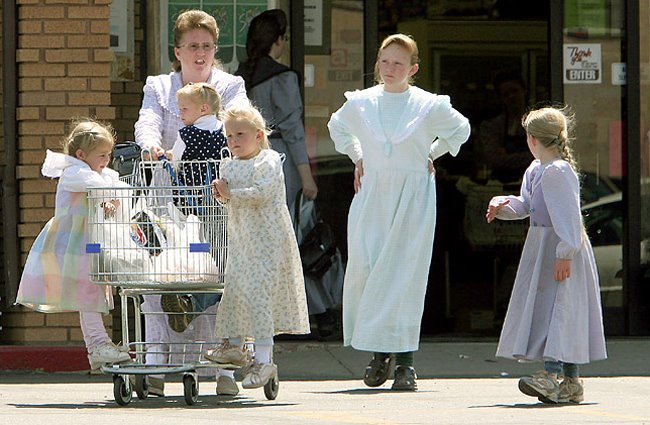
Just wondering; what are people thinking now about this stalwart group of religious freedom pioneers? Yesterday’s news that the little boys of the group seem to have had an inordinate number of broken bones, even for active little boys, also made me quite nauseated. Is this how abusers are created??

RELIGIOUS FREEDOM IS NOT A CLOAK FOR ABUSE, but it has been used as such, MAINLY BY RIGHT-WING NUT-CASES, since way before Hitler’s day.

The article further alleges that employees in the sect’s “defense” industries work for extremely long pay, and that much of the companies’ earnings go to the FLDS church each month. David Hamilton had wondered in The Rag Blog last week if part of the official investigation of the sect stemmed from antipathy to their communal lifestyle. I am reminded, Bro. David, that pre-capitalist economic systems involved a kind of primitive communism; only, as soon as any SURPLUS VALUE appeared, so did feudal serfdom. If those cats in El Dorado are practicing a “communal lifestyle”; I would suggest it may have more in common with the medieval kind than the Cuban model…

(“Sharing husbands,” indeed — NO, honey, that is NOT what they are doing; each man gets SEVERAL WIVES to wait on him hip and elbow, is how polygamy works. The women share housework and child rearing. [INCOMING JOKE WARNING — ALERT — JOKE WARNING — TAKE COVER!!] PolyANDRY, where each woman has several men to support her; now that is a system we should investigate!!)

The government’s tactics set a frightening precedent.
By Thorne Dreyer / The Rag Blog / May 1, 2008

One thing I’d say, Mariann, is that they’re trying to cover their asses.

Today’s Austin American-Statesman quoted Dr. David Teuscher, a Beaumont orthopedic surgeon, who said that 41 of 464 children with a fractured bone “could have been the elementary school around the corner.”

“It is really not an extremely high number,” he said, “We see children all the time who do crazy things and break their bones.”

The ranch’s on-site physician said, “Probably over 90 percent of the injuries are forearm fractures from ground-level or low-level falls.”

I don’t know who’s right, Mariann, but I do know that there have been a lot of unproven assertions here. And it would be hard to deny that, legally, this was a fishing expedition, based upon one, apparently bogus, phoned in accusation.

And that there is a concerted public relations effort to justify it after the fact.

There would still seem to be nothing that would have justified wholesale removal of children from the site and then from their mothers, something that is usually a move of last resort. Nothing that could not have been investigated on-site rather than turning first to the extreme tactic of mass removal.

Nobody’s calling these people a “stalwart group of religious pioneers.” At least no one I know. To me, this has to be a terrible, stifling way to live and to bring up children, and the idea of planned marriage, even when the bride is of age, is anathema to me.

But we cannot let our distaste for — or unproven accusations about — a certain subculture color our thinking, allow us to overlook a highly questionable assault on that subculture based on no evidence whatsoever — at least no evidence of which I am aware.

There certainly could have been better, legal, ways to deal with suspicions of abuse. The tactics they chose set a frightening precedent.

In another circumstance the same kind of tactics could have been — still could be –used against us or other unpopular groups whose lifestyles may differ from the norm, from the generally-accepted.

And other comments from Rag Bloggers:

Insinuation is supposed to make you nauseated. This is an “if, then” proposition. If there was abuse then that would be terrible. The Austin American-Statesman wrote a very critical article (May 1st.) on CPS (Child Protective Services) commissioner Carey Cockerell’s canned speech to the state senate committee. Carey would not elaborate, senators were not allowed to ask questions, he would not talk to reporters.

Two doctors said that the number of broken bones is what one would expect out of a population of 400+, nothing unusual in itself. The bone doctors went on to explain what types of fractures are normal and certain age categories and others types which would unusual. Carey knows he is in trouble and so must keep up the drum beat of accusations. If one only reads the headline and the sub header then the article looks as if the abuse was fact but if one reads the entire article then Carey looks like he is grasping at straws.

Meanwhile mothers have their children spread 500 miles apart. Maybe Carey will pay their travel expenses?

Alan Pogue

One thing that probably cannot be denied is that prosecutors tend to maintain a rigidity about guilt in relationship to who they are prosecuting, regardless of exculpatory evidence. The broken bones might be a ridiculous example of supposed evidence of abuse.

It’s interesting to me how so many “authorities” jump onto the governmental bandwagon carrying condemnations of this or that, such as drug abuse or the Branch Davidians, while the history of governmental honesty, reasonableness, or fairness is lacking.

From my perspective, the govt is acting in the way we used to allege Communists did. I’ll be happy to change my mind with some evidence.

As the Dulles brothers said, let’s protect United Fruit, change the regime, and help the new president implement a campaign of terror. Good ole Ike said, Right on!

Don Laird

Previous discussion of the raid at Eldorado on The Rag Blog.

The Rag Blog

Posted in Rag Bloggers | Tagged , , , | 1 Comment

The Amerikkkan Bureaucracy Churns Tediously


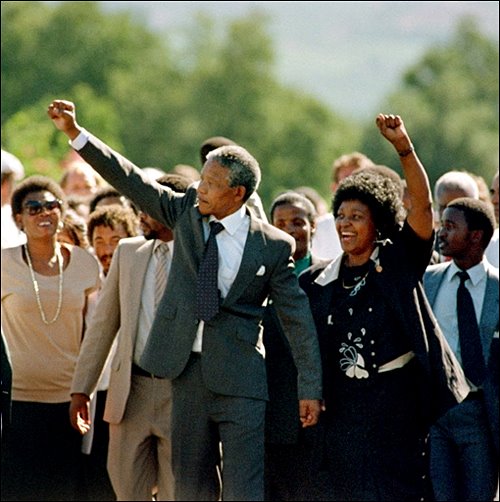
U.S. has Mandela on terrorist list
By Mimi Hall

WASHINGTON — Nobel Peace Prize winner and international symbol of freedom Nelson Mandela is flagged on U.S. terrorist watch lists and needs special permission to visit the USA. Secretary of State Condoleezza Rice calls the situation “embarrassing,” and some members of Congress vow to fix it.

The requirement applies to former South African leader Mandela and other members of South Africa’s governing African National Congress (ANC), the once-banned anti-Apartheid organization. In the 1970s and ’80s, the ANC was officially designated a terrorist group by the country’s ruling white minority. Other countries, including the United States, followed suit.

Because of this, Rice told a Senate committee recently, her department has to issue waivers for ANC members to travel to the USA.

“This is a country with which we now have excellent relations, South Africa, but it’s frankly a rather embarrassing matter that I still have to waive in my own counterpart, the foreign minister of South Africa, not to mention the great leader Nelson Mandela,” Rice said.

Rep. Howard Berman, D-Calif., chairman of the House International Relations Committee, is pushing a bill that would remove current and former ANC leaders from the watch lists. Supporters hope to get it passed before Mandela’s 90th birthday July 18.

“What an indignity,” Berman said. “The ANC set an important example: It successfully made the change from armed struggle to peace. We should celebrate the transformation.”

In 1990, Mandela was freed after 27 years in prison for crimes committed during the struggle against Apartheid, a repressive regime that subjugated black South Africans. In 1994, he was elected South Africa’s first black president.

Sen. Judd Gregg, R-N.H., called ANC members’ inclusion on watch lists a “bureaucratic snafu” and pledged to fix the problem.

Members of other groups deemed a terrorist threat, such as Hamas, also are on the watch lists.

Homeland Security Secretary Michael Chertoff says “common sense” suggests Mandela should be removed. He says the issue “raises a troubling and difficult debate about what groups are considered terrorists and which are not.”

When ANC members apply for visas to the USA, they are flagged for questioning and need a waiver to be allowed in the country. In 2002, former ANC chairman Tokyo Sexwale was denied a visa. In 2007, Barbara Masekela, South Africa’s ambassador to the United States from 2002 to 2006, was denied a visa to visit her ailing cousin and didn’t get a waiver until after the cousin had died, Berman’s legislation says.

Source / USA Today

The Rag Blog

Posted in RagBlog | Tagged , | Leave a comment

Can We Stop the Destruction?


Fantasy or Reality – Is There a Way Back?
By Siv O’Neall / May 1, 2008

The world is standing on its head. Logic and reason are gone. Humpty Dumpty had a big fall and is sliding downhill faster than has ever been seen in the times of so-called civilized life on earth.

Humane priorities are ignored by the dirt-covered oligarchs who decide over the future of our all but condemned planet. The best people with a sound intellect and an intact sense of compassion can do nothing in this up-side down world but write and speak about what ought to be done to save the people, to save the planet. Nothing makes sense any more. Biotechnical corporations are poisoning the planet, the arms industry is supplying the means for the extermination of millions of harmless people every year. Money is directed to warfare and other lethal pursuits and the huge fortunes amassed by the oligarchs is sterile money that doesn’t contribute in any way to the solution of the global problems that are destroying the planet.

Living a good life, a life of loving and caring, of imagination and artistic creation, is not seen as being of any value. Only profit has some value. Make profit and you are entitled to the good life. So say the profiteers. What good life? Living enclosed in your palace and constantly fearing that you are going to lose your millions on the stock exchange.

Nature is being destroyed by human greed. A human life is having an ever decreasing value. Propaganda has replaced information, education is being starved, history is being rewritten. Lies are taught as truth. Slogans are delivered where a serious program is wanting.

So what will our future be like?

Prices of essential commodities are rising at an alarming speed and what are the ruling elites doing? They are not just ruining the ecosystems of the earth with biotech products that will render the earth sterile. To make matters even worse, seemingly to make impossible a return to the days when nature had a say in the running of agriculture and the feeding of billions of people, the most fertile lands all over the planet are now used up for the production of ethanol. Huge cultures for the production of biofuel now replace the natural rice and wheat and soya and corn and legumes and other vegetables that could easily feed the population of the earth, and more! Anything goes, so long as the wealthy can go on living their lives of careless squandering of the earth’s resources.

Food for the hungry is not essential any more. Let the poor people die of disease and starvation. So much the better for the ones who survive. There will be more room for high living before the deluge is coming, as it most surely is. More room for luxury hotels, huge airports, limos and SUVs, more room for segregated residential luxury areas surrounded by walls and with armed guards at the entrance gates.

There will be more fear, more armed protection by individuals and by countries, more violence when the few remaining half starving people attack the people next door who happen to have more edibles and so have to be conquered. The rising prices of basic foods and the reduced availability of anything edible will lead to unending wars between tribes and countries.

But the oligarchs in their palaces think nothing of it.

They deem themselves protected against any attacks behind their fortressed walls. The rise in commodity prices doesn’t affect them. They have hoarded more money than they can ever spend. All they are concerned with is the instability of the market. Speculation at the world’s finance centers has gone so far that the speculators, the bankers and economists don’t understand any more what is going on. The financial market is close to chaos.

The rivers and lakes are getting more and more polluted. The glaciers in the world are melting at an increasing speed. Some of the largest rivers in the world take their sources from those glaciers and they will be deprived of all-year-round water, water that is essential to agriculture and to all forms of life.

But the oligarchs in their palaces think nothing of it.

Fantasy or future reality?

The oligarchs still have a good supply of caviar and champagne. They have a good supply of nuclear missiles in case the remaining half-starving paupers should come and knock on their gates. They are militarizing space so as to feel undefeatable, the kings of the Universe. They are now among the very few people who have survived the destruction of the earth, the water and the air, destruction that they knowingly caused and didn’t think twice about. The ocean has risen so that all the coastland and most big cities along the coast have disappeared into the sea.

But the fear remains. The oligarchs are comfortable in their palaces, but the fear doesn’t leave them alone. They are constantly fearing that an enemy is going to invade their fortresses, even though they have no idea who the enemy is going to be. But rumor has it that there are still some terrorists living in the mountains in what used to be Afghanistan and Pakistan. There are still some people alive in India and in China and they might well come over and attack the few people left in the Western world. Australia and Africa are laid waste from drought and nothing living exists there any more. Africa was torn apart by civil wars due to lack of food long before the last human died from dehydration and starvation.

A big surprise is waiting in the wings

But hey, wait, there are lots of people left on one continent. In South America, there are millions of indigenous people still alive who learned from their ancestors how to deal wisely with nature. They were not doomed to disappearance by the false promises of biotech seeds and products, they went on replanting the seeds that their ancestors had been planting for thousands of years. They had not cut down the life-saving forests to plant corn and soy beans for ethanol fuel. The continent had remained a place where human beings could still exist, even though glaciers were melting and water was scarce. The crops they grew needed very little water and also biotechnical fertilizers and herbicides had never been used. These poor farmers had never been able to afford the biotech products and now they were the only healthy farming communities left on Earth.

Final question

Will there be a way the earth can return to anything like its former and long-gone wealth of agricultural products? Healthy forests, unpolluted water, a return to a normal life where sensible people have turned their backs on the war without an end. Can we stop the destruction caused by carbon dioxide and pollution from deadly chemicals. Can we ever go back?

© Copyright 2008 by AxisofLogic.com

Siv O’Neall is an Axis of Logic columnist, based in France. She can be reached at siv@axisoflogic.com.

Source / Axis of Logic

The Rag Blog

Posted in RagBlog | Tagged , , | Leave a comment

How We Love Our Children


A Fagin Nation
By Jerome Doolittle / May 1, 2008

One of the many things we believe about ourselves that just ain’t so is that Americans, God love us, are absolutely crazy about children. Dote on them. Pamper them. Protect them from all perils, foreign and domestic. Wouldn’t harm a hair on their adorable little heads.

This is absurdity on the order of believing that we are a peace-loving nation, except for those unfortunately numerous occasions when charity obliges us to inflict democracy on less blessèd countries.

The truth is that, taken by and large, we hate, fear and lust after children unless they happen to be our own— and sometimes even then. We refuse them decent educations, sexualize them endlessly in our media, jail and even execute them, deny them medical care, plunge them into lifelong debt as soon as they have enough money to be worth stealing, and send them off to endless wars whose only apparent purpose is to act as psychic Viagra for aging Bushes, Cheneys, Rumsfelds and similar swine in the loyal opposition.

Do I exaggerate? Let’s look at some numbers. Here’s UNICEF’s report on “Child Well-Being in Rich Countries.” It starts out by saying:

The true measure of a nation’s standing is how well it attends to its children — their health and safety, their material security, their education and socialization, and their sense of being loved, valued, and included in the families and societies into which they are born.

Of the twenty nations studied, the United States is nineteenth. Only the United Kingdom is more neglectful and cruel towards its children than are we.

Source / Bad Attitudes

The Rag Blog

Posted in RagBlog | Tagged | Leave a comment