Lamar W. Hankins : Guantánamo Turns Us All Into Monsters

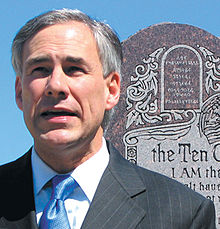
Photo by AP. Image from Salon.

The nation’s shame:
Guantánamo turns us all into monsters

The President says the right things, but he doesn’t seem to have the political will to release those wrongly imprisoned in Guantánamo.

By Lamar W. Hankins | The Rag Blog | May 13, 2013

There should be no question that George W. Bush is the first to charge for the shame of Guantánamo. But now President Obama, the Congress, and the nation share that shame.

Just as the nation bought the Bush-Cheney-Rumsfeld-Rice-Powell lies that took us to war in Iraq, so the nation bought their claims that every person imprisoned at Guantánamo was the worst of the worst. We now know that was a lie, too.

Of the 166 men now being held at Guantánamo, 86 have been cleared of wrongdoing. There is no reason to hold them except for Congressional action to make their releases difficult and the recalcitrance of a president whose moral convictions have evaporated like steam from boiling water. No cases illustrate the shame and moral bankruptcy of U.S. actions better than the cases of Shakir Aamer and Sami al-Hajj.

Aamer was a humanitarian worker, born in Saudi Arabia, educated in the United States, and a resident of Britain, along with his British family. He was taken into custody by American agents who bought him from people who were responding to American-distributed leaflets that offered bounties for any foreigner that Pakistanis or Afghans turned over. Aamer was sold to the Americans.

He had been living in Afghanistan with his young family, building girls’ schools and digging wells as a charity worker. He was then tortured in prisons in Kandahar and Bagram before being shipped to Guantánamo, where he has been imprisoned for over 11 years, though both the Americans and the British acknowledge that he has done nothing wrong and the British government wants him repatriated. But neither the Bush nor Obama administrations have made that happen.

Aamer is one of the over 130 Guantánamo prisoners now on a hunger strike. His back has been injured by his being repeatedly thrown to the ground in a process known as “earthing,” extremely rough treatment, administered regularly to the prisoners along with other torture. He has been cruelly force-fed.

In a letter to his wife, he wrote:

I am dying here every day, mentally and physically. This is happening to all of us. We have been ignored, locked up in the middle of the ocean for years. Rather than humiliate myself, having to beg for water, I would rather hurry up the process that is going to happen anyway. I would like to die quietly, by myself. I was once 250 pounds. I dropped to 150 pounds in the first hunger strike. I want to make it easy on everyone. I want no feeding, no forced tubes, no “help,” no “intensive assisted feeding.”

This is my legal right. The British government refuses to help me. What is the point of my wife being British? I thought Britain stood for justice, but they abandoned us, people who have lived in Britain for years, and who have British wives and children. I hold the British government responsible for my death, as I do the Americans.

Sami al-Hajj, a Sudanese citizen, was the only journalist held at Guantánamo. In 2001, while working as a cameraman for the Al Jazeera news network on his way to work for the network in Afghanistan, he was arrested by the Pakistani army and turned over to the Americans, and then shipped to Guantánamo. He was imprisoned there for more than six years without any charges of wrongdoing.

In early 2007, al-Hajj began a hunger strike that lasted 438 days until his release in May 2008. He described the procedure used to force-feed. Guantánamo medical staff intentionally use a too-large tube, which is threaded through the nose, down the esophagus and into the stomach. The size of the tube makes the process more painful than it would otherwise be, though it is unpleasant even when it is done properly as a voluntary medical treatment.

When the “feeding” is completed, al-Hajj says that the tubing is jerked out of the nose, another unnecessarily painful procedure and one that does not follow normal medical protocols for tube feeding. Often, the tubing, which is then used on the next prisoner without sanitizing or even cleaning, is contaminated with blood.

Lt. Col. Barry Wingard, an attorney for one of the hunger protesters, describes the force-feeding process this way:

The tube makes his eyes water excessively and blood begins to trickle from the nose. Once the tube passes his throat the gag reflex kicks in. Warm liquid is poured into the body for 45 minutes to two hours. He feels like his body is going to convulse and often vomits.

Now that he is free from Guantánamo, al-Hajj is working again for Al Jazeera, now as a journalist in charge of their human rights division. Based on what Guantánamo officials have told him, he believes the purpose of this mistreatment is to break the hunger strike. As law professor Marjorie Cohn has written, “the United Nations Human Rights Council concluded that force-feeding amounts to torture. The American Medical Association says that force-feeding violates medical ethics.”

Cohn reports that those “who are refusing food have been stripped of all possessions, including a sleeping mat and soap, and are made to sleep on concrete floors in freezing solitary cells.” Asa Hutchison, a former Republican congressman and member of The Constitution Project’s Task Force on Detainee Treatment, has joined in a report that concluded the treatment and indefinite detention of the Guantanamo detainees is “abhorrent and intolerable.” Yet President Obama has ordered it to continue.

When I read recently of the woman in Cleveland who had been held captive for over 10 years, I couldn’t help thinking of al-Hajj and the remaining innocent Guantánamo prisoners. A forensic psychologist expert in such matters described the ordeal of long-term kidnappings. “These are some of the most catastrophic kinds of experiences a human being can be subjected to.”

He described the people who engage in such kidnappings as having “longstanding fantasies of capturing, controlling, abusing and dominating” their victims. He said, “Total control over another human being is what stimulates them.”

Nothing could describe the motivation of the architects and operators of Guantánamo better than these words. Guantánamo was set up to afford total control of prisoners held there. The stories of those who are innocent (as well as those who did fight for al Queda) make clear that their experiences at Guantánamo have been catastrophic psychologically, emotionally, and physically.

Among those who want to keep Guantánamo intact are a large majority of the Congress, which passed the 2012 National Defense Authorization Act (NDAA), which the President signed. The NDAA in part is intended to hinder the release of innocents we have incarcerated for over a decade.

Laura Pitter, writing in Foreign Policy magazine, has explained congressional efforts to keep Obama from closing Guantánamo and described a way for the President to overcome those roadblocks:

In 2011 and again in 2012, Congress enacted some restrictions on the transfer of detainees from the facility, but those restrictions are not insurmountable. They require receiving countries to take certain steps to ensure that those being transferred do not engage in terrorist activity and that the secretary of defense certify such steps have taken place.

If, however, the secretary of defense cannot, for one reason or another, certify those steps have been taken, he can waive the certification requirement in lieu of “alternative actions” — a term which has no clear legal or procedural definition. The only guidelines are that they “substantially mitigate” the risk that the detainee being transferred may engage in terrorism.

Clearly then, the administration’s ability to transfer detainees out of Guantanamo exists now, even with congressional restrictions. And with Obama again reiterating that keeping Guantanamo open harms U.S. security, the certification — and even more so the waiver — process seems to offer a clear path forward to emptying the facility of more than half its prisoners, if not closing it down.

Recently, President Barack Obama said that he’d do more to make good on his failed first-term campaign promise to close Guantánamo.

Guantanamo is not necessary to keep America safe. It is expensive. It is inefficient. It hurts us, in terms of our international standing. It lessens cooperation with our allies on counter-terrorism efforts. It is a recruitment tool for extremists. It needs to be closed.

The President says the right things, but he doesn’t seem to have the political will to release those wrongly imprisoned in Guantánamo. The American people must let him know that the incarceration of human beings under these conditions is a denial of the values stated in our Constitution and Declaration of Independence, of the human rights recognized by the Magna Carta 800 years ago, and of international treaties in which we are participants.

Imprisoning these men is a repudiation of the foundations of this republic, violates our laws, and turns us all into monsters.

[Lamar W. Hankins, a former San Marcos, Texas, city attorney, is also a columnist for the San Marcos Mercury. This article © Freethought San Marcos, Lamar W. Hankins. Read more articles by Lamar W. Hankins on The Rag Blog.]

The Rag Blog

Posted in Rag Bloggers | Tagged , , , , , , , | Leave a comment

The Pacifica Foundation, founded in 1946, pioneered listener-sponsored radio in this country and WBAI became a Pacifica station in 1960. But the station went off the air at midnight. “I knew that there was a world of people” who would listen to late-night radio, Fass told us — “for companionship, for education” — so he talked them into letting him do an all-night shift.

As Rag Blog editor and Rag Radio host, I was honored to participate in a panel with the filmmakers after the Austin screening. I spent time in New York in the ’60s and worked with Houston’s Pacifica station, KPFT, in the ’70s — and I can offer personal witness to Bob Fass’s incredible contribution to progressive radio in this country.

Type your summary here

Type rest of the post here

Source /

The Rag Blog

Posted in RagBlog | Leave a comment

REPORT / Mariann G. Wizard : ‘La Vida Coca’ in Bolivia and Peru

Pre-Incan metal vessels in the Larco Museum, Lima, for storing coca leaves. Human-faced pots from some early Andean cultures (not shown) have distended cheek pouches, where coca leaves are held during use. The central figure above is using coca in the Amazonian/Caribbean way. There the Kogi, Arhuaco, and Wiwa people use a hollow gourd (poporo) associated with virility to consume coca. Women of these tribes are prohibited from coca use. All photos by Mariann G. Wizard / The Rag Blog, unless otherwise credited.

La Vida Coca /1: 
Currents in traditional coca 
use in Bolivia and Peru

Although its use continued, coca production had been ‘stripped of its original cultural and social meaning’ by the subjugation of indigenous practice to the whims of European and North American commodity culture.

By Mariann G. Wizard | The Rag Blog | May 9, 2013

Part one of three.

I recently visited Peru and Bolivia for the first time, in the company of intrepid adventurer and fellow former Ragstaffer Richard Lee. It was all his idea, a journey we talked about for a couple of years. Both South American nations are huge, with enormous wild and rugged areas; are rich in geographical, botanical, and cultural wonders; and are repositories of a wealth of ancient and modern histories unfamiliar to many outsiders.

We both like straying off the beaten path. A guide book or “canned” tour is merely a point of reference. While ruins and relics may be spectacular, inspiring, and mysterious, we prefer checking out current life and culture, moving slow, meeting people, and making new friends. Although my trip lasted two months, and Richard’s even longer, it would take years to see all of the “must see” places the tour books extol.

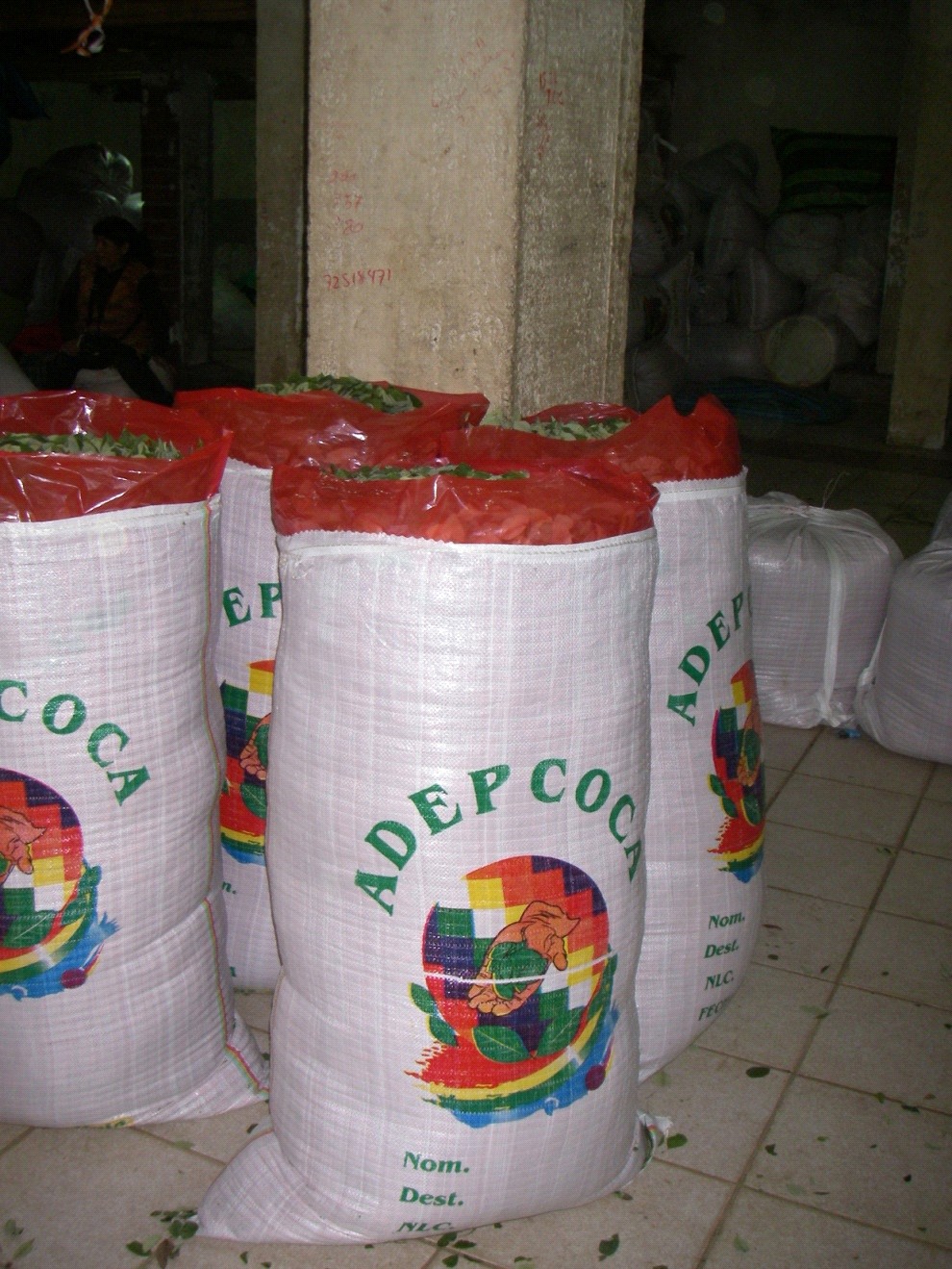
Gradually, with experience, a sharper focus and questions may emerge. While Bolivia and Peru are each unique in hundreds of ways, they have something in common that is quite exotic to North Americans: traditional cultivation and use of coca (Erythroxylon spp). Coca, native to South America, has been used for thousands of years medicinally, ritually, and socially, and grown on several continents. Today Colombia, Peru, and Bolivia produce more than 98% of the world’s coca.

Inca and pre-Incan cultures such as the Moche thought coca was a divine plant and sometimes reserved it for royalty. When the Inca fell to the Conquistadores, the Spanish at first tried to stamp out coca as a pagan practice. But they quickly learned to exploit its energizing qualities. Workers with a ready supply of coca didn’t have to stop for lunch. So coca, monopolized by the conquerors, was “tolerated” for increased productivity, although Catholic missionaries continued to try to stop or limit its spiritual use.

Coca plants were grown by pre-Incan cultures 5000 years ago. These are at Huaca Pucllana, an active archaeological site in the heart of modern Miraflores, Lima, Peru.

According to Wikipedia, coca was traditionally used

as a stimulant to overcome fatigue, hunger, and thirst… particularly effective against altitude sickness. It also is used as an anesthetic and analgesic [for] pain of headache, rheumatism, wounds and sores, etc. Before stronger anesthetics were available, it also was used for broken bones, childbirth, and during trephining [sic] operations on the skull.

The high calcium content in coca explains why people used it for bone fractures. Because coca constricts blood vessels, it also serves to oppose bleeding, and coca seeds were used for nosebleeds. Indigenous use of coca has also been reported… for malaria, ulcers, asthma, to improve digestion, to guard against bowel laxity, as an aphrodisiac, and [was] credited with improving longevity.[1]

In some coca-using cultures, the herb was specifically linked to sexuality, procreation, and virility.

Richard, an avid horticulturalist, wanted to learn about coca growing. I write professionally about herbal medicines and welcome opportunities to encounter them “in the field.” As we traveled south, and up, to the dizzying Andean altiplano, we started to feed our interests with knowledge.

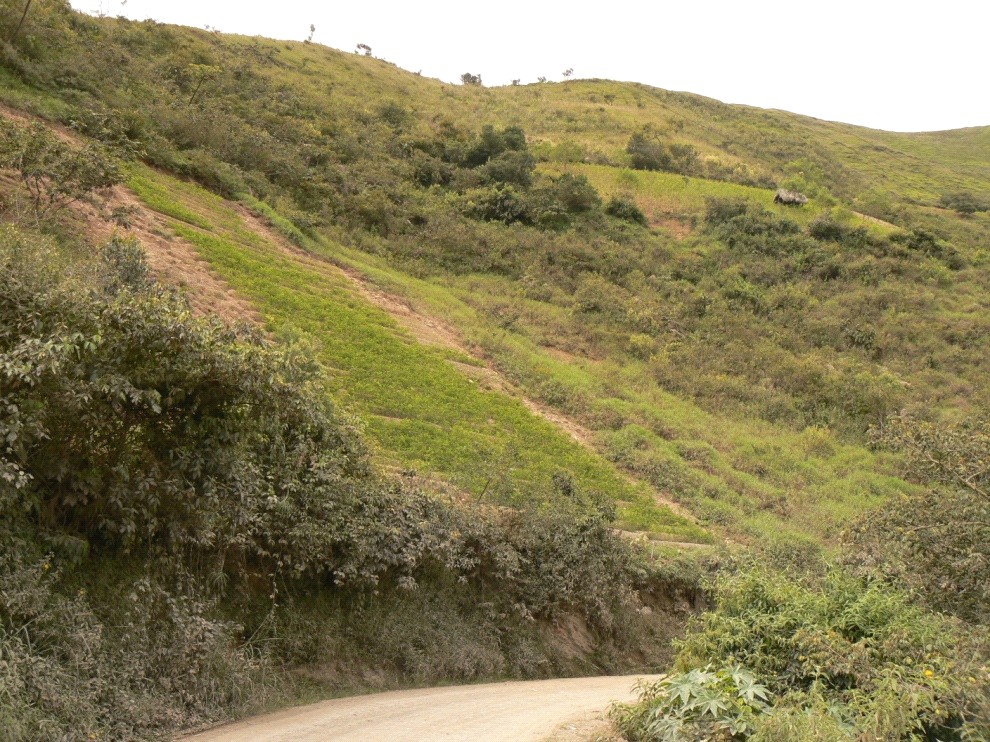
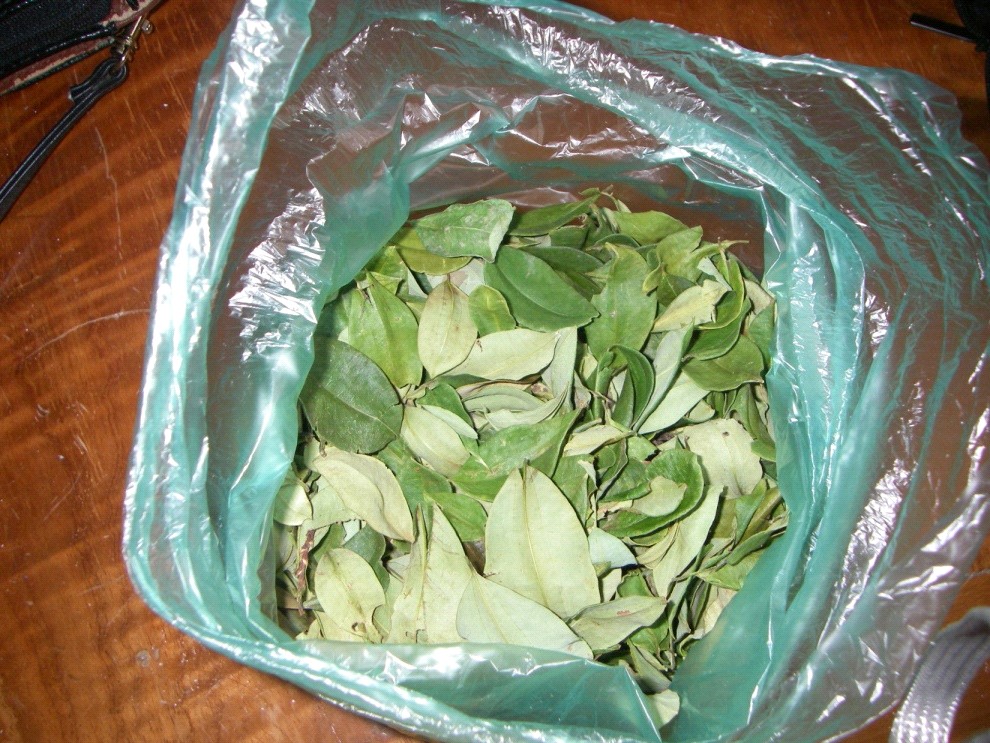
Coca leaves (hojas) and seeds contain alkaloids and other compounds that exert physical and mental effects when consumed. Coca is intensively cultivated and harvested by hand, usually on well-drained, sunny mountainsides. It prefers somewhat alkaline soil. There are said to be over 250 Erythroxylon species; four are widely grown. Many, if not all, contain cocaine, an alkaloid that is coca’s best-known ingredient.[2] The reported usual cocaine alkaloid content of coca leaf is between 0.1 and 0.8%.

Wikipedia says,

[P]lants thrive best in hot, damp and humid locations, such as the clearings of forests; but the leaves most preferred are obtained in drier areas, on the hillsides. The leaves are gathered from plants varying in age from one and a half to upwards of forty years, but only the new fresh growth is harvested. [Leaves] are… ready for plucking when they break on being bent. The first and most abundant harvest is in March after the rainy season, the second is at the end of June, and the third in October or November.”[3]

Coca is a low-growing deciduous shrub. These plants are thriving in a traditional steeply terraced field.

Despite its South American origin, coca and its alkaloids have profoundly affected North American and European culture. Again from Wikipedia:

Coca was first introduced to Europe in the 16th century, but did not become popular until the mid-19th century, with the publication of an influential paper… praising its stimulating effects on cognition. This led to [the] invention of coca wine and the first production of pure cocaine.”[4]

In the U.S., cocaine was associated with the Jazz Age and known as a “rich man’s drug.”

But another item originally derived from coca became the one symbol of North America, and specifically the U.S., known around the world: the Coca-Cola® soft drink, brand, and logos. Coke® and other kola (aka cola; Cola vera) drinks originally used coca as a flavoring and energizing ingredient; today’s Coke still uses denatured coca leaves. The Stepan Company (Maywood, NJ), the top legal buyer of Bolivian coca, imports and denatures it. Coke owns Inka Cola®, formerly its main competitor in Peru, and Coke products are ubiquitous in both countries.

Coca Colla energy drink. Photo from Prensa Libre.com.

“Denaturing” means removing the cocaine. That is sold to Mallinckrodt (St. Louis, MO), the only pharmaceutical manufacturer in the U.S. licensed to purify “coke” for medical use. The only naturally occurring local anesthetic in use today, it was first isolated and purified in 1859. Approved uses include as anesthesia in eye surgery and as a precursor to synthetic prescription and over-the-counter painkillers: novocaine, lidocaine; essentially anything ending with “caine.”

In addition to its medical value, cocaine is an attractive drug of abuse, providing an all-too-fleeting feeling of focused energy and power. Cheap South American coke and its derivative, even cheaper smokeable free-base or “crack” cocaine, flooded U.S. and European markets in the late 1960s, a ruinous flood that, with disco music, peaked in the 80s.

Coke and crack are still used, but methamphetamine is so much cheaper now (as well as heroin, other opiates, and prescription painkillers) that “Bolivian marching powder” has lost market share. The epidemic and resulting intensification of the so-called “war on drugs” left deep scars in many urban communities, put an end to the idyllic dreams of 60s social reformers and much of the U.S. Bill of Rights, bent law enforcement priorities, fed corruption both public and private, and helped fund repressive warfare in more than one foreign nation.

Efforts to control and eradicate coca had begun much earlier. The Convention for Limiting the Manufacture and Regulating the Distribution of Narcotic Drugs, an international drug control treaty, took effect in July 1933. It established two groups of forbidden drugs.

Group I included morphine and its salts, including morphine diacetate (heroin) and preparations made directly from raw or medicinal opium poppy (Papaver somniferum) containing more than 20% morphine; cocaine and its salts, including preparations made from coca leaf containing more than 0.1% cocaine[5], all esters of ecgonine and their salts; dihydrohydrooxycodeinone, dihydrocodeinone, dihydromorphinone, acetyldihydrocodeinone or acetyldemethylodihydrothebaine, dihydromorphine, their esters, and the salts of any of these substances and their esters; morphine-N-oxide, also morphine-N-oxide derivatives and other pentavalent nitrogen morphine derivatives; ecgonine[6] and thebaine and their salts; benzylmorphine and other ethers and salts of morphine, except methylmorphine (codeine); and ethylmorphine and its salts [Italics added].

Group II, more loosely regulated, included methylmorphine (codeine) and ethylmorphine, and their salts.[7]

These rudimentary groups foreshadowed the drug scheduling system still used today. The 1931 Convention was broadened considerably by later treaties and eventually superseded by the 1961 Single Convention on Narcotic Drugs, adding cannabis (Cannabis sativa) to the prohibited “narcotics.” International law has been further expanded and amended since. Of course the U.S. has enacted its own drug legislation and has pushed prohibition hard in other nations, especially those it “aids.”

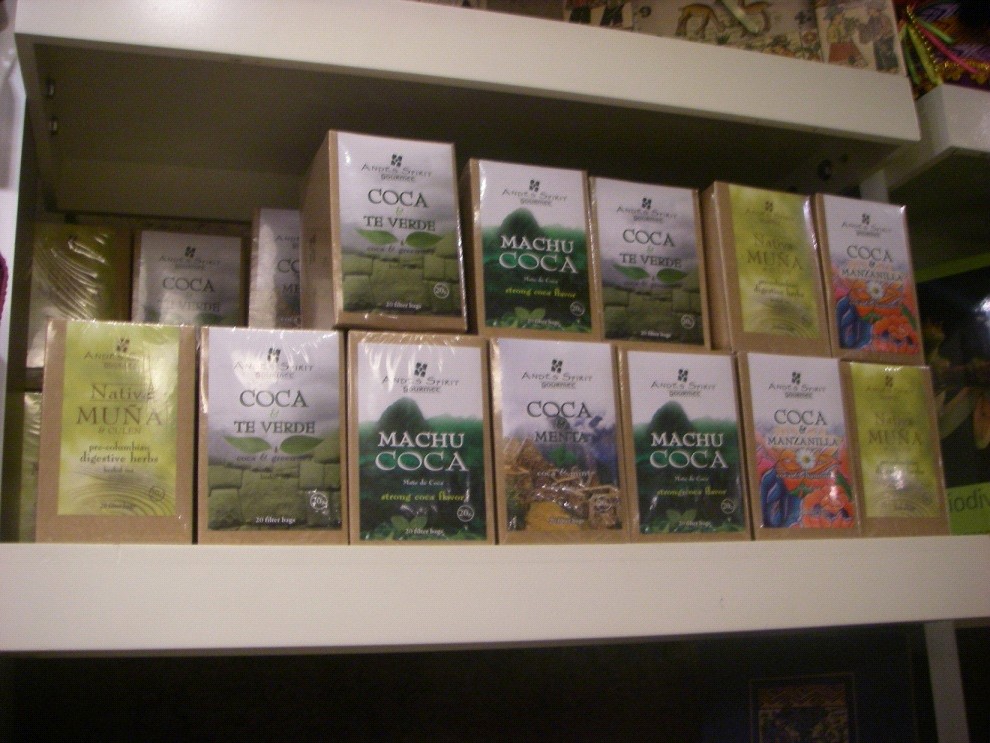
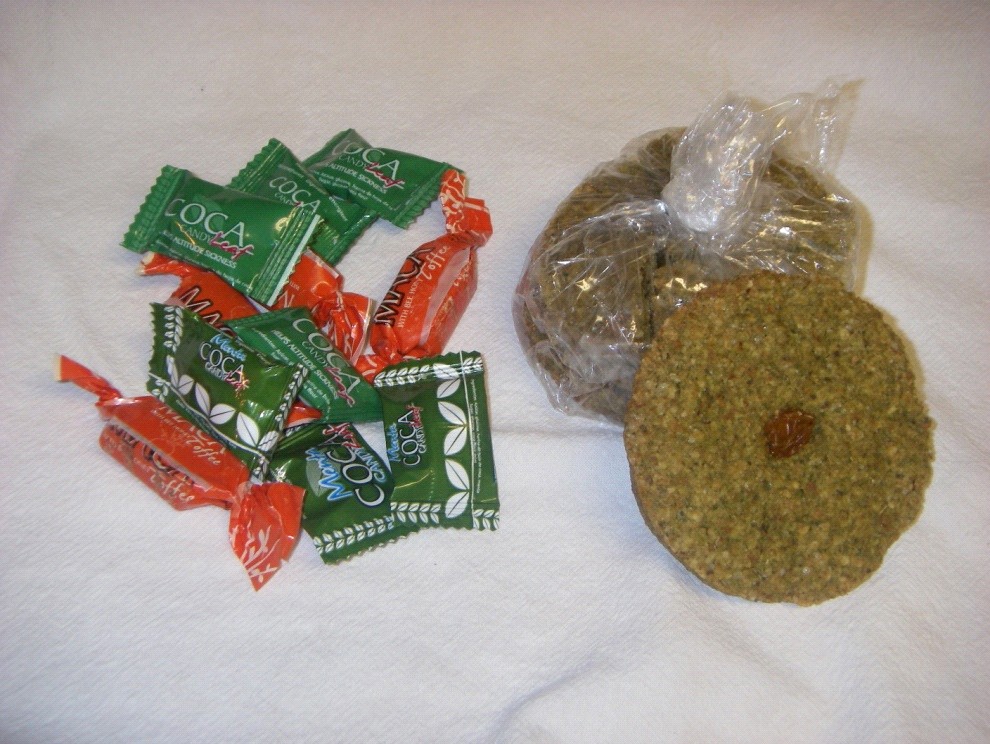
Coca and coca products, used in the Andes for thousands of years and today by farmers, market women, hard-driving taxistas, tourists suffering from altitude sickness, and those with gastric distress, anxiety, high blood pressure, and other medical conditions, was thus prohibited by international law. Although its use continued, coca production had been “stripped of its original cultural and social meaning”[8] by the subjugation of indigenous practice to the whims of European and North American commodity culture.

The history of the U.S. drug war, specifically against coca cultivation in Colombia and Bolivia, is far beyond the reach of this report. It is well summed-up, however, in this assessment:

Attempts to reduce the supply of coca/cocaine oscillate between efforts to eradicate crops on the one hand, and crop substitution on the other… Experts have been unanimous in their condemnation of crop eradication as a viable strategy in isolation for the simple fact that the aggregated coca acreage has not been decreasing because crops have been displaced rather than eradicated.

And not only have such policies failed, but they have been accompanied by substantial ecological damage; virgin areas have been deforested and the environment has been polluted with long-lasting herbicides. But, above all, attempts at eradication have deprived poor peasants and their families of their main source of income.[9]

Crop substitution has had some limited successes. In mountainous Bolivia, coffee (Coffea robusta) was chosen for improvement and propagation. Long scorned as an inferior product, new cultivars, techniques, and training have made Bolivian coffee a star among aficionados.[10] However, unstable prices prevent it from persuading most coca growers to make the switch. Neither eradication nor substitution have ever had the full support of indigenous farmers where they have been tried.

Nor Yungas is home to wild, shade-grown, hand-harvested coffee, among the best in the world. These beans have another month or two to go before they’re ready — harvest generally coincides with la Semana Santa, Holy Week.

Peru and Bolivia did not accept coca’s narcotic designation, repeatedly protesting in international forums. In 1994, the International Narcotics Control Board (INCB), the independent, quasi-judicial organ that implements UN drug conventions, said in its Annual Report, “mate de coca… considered harmless and legal in several countries in South America, is an illegal activity under the provisions of both the 1961 Convention and the 1988 Convention, though that was not the intention of the plenipotentiary conferences that adopted those conventions (Italics added).”[11]

But nothing changed legally.

Bolivian coca growers, or cocaleros, began in the mid-1980s to be a political and cultural force. Not coincidentally, in 1985 an energetic young man named Evo Morales was elected general secretary of a local cocalero union; by 1988 he was executive secretary of the Six Federations of the Tropics of Cochabamba.

Around then the Bolivian government, aided by the U.S., began an aerial spraying program to wipe out coca. Morales quickly became a leader among opponents of the program. As a result, he was frequently jailed and, in 1989, beaten nearly to death, dumped unconscious in some bushes and luckily found by colleagues. By 1996, he was president of the Tropics Federation (he retains this office today).[12]

Morales later led a 600 km march from Cochabamba to La Paz. Supporters gave the marchers drink, food, clothes, and shoes. They were greeted with cheers in the capital and the government agreed to negotiate with them. After they went home, the government sent forces to harass them.

According to Morales, in 1997 a U.S. Drug Enforcement Administration (DEA) helicopter strafed farmers with automatic rifle fire, killing five of his supporters. He also recounted being grazed by assassins’ bullets in 2000. But Morales found a growing international audience for his positions, traveling abroad to gain support and to educate people on the differences between coca leaves and cocaine.

He says, “I am not a drug trafficker. I am a coca grower. I cultivate coca leaf, a natural product. I do not refine cocaine, and neither cocaine nor drugs have ever been part of Andean culture.”[13]

After going through several political formations and fighting official suppression, Morales and his compatriots made a deal with a defunct yet still registered party, the Movement for Socialism (MAS). They could take over the party if they would keep its acronym, name, and colors. The former right wing MAS became the left coca activist party, the Movement for Socialism — Political Instrument for the Sovereignty of the Peoples. The new MAS is “an indigenous-based political party that calls for nationalization of industry, legalization of the coca leaf… and fairer distribution of… resources.”[14]

At a gathering of farmers in 2005 celebrating MAS’ 10th anniversary, Morales declared the party ready to take power.[15] He was proven correct, winning over 53% of the vote in that year’s Presidential election. Fending off attempts to remove him from office, he was re-elected in a 2009 landslide. Everywhere we went in northwestern Bolivia, graffiti on walls proclaimed, “¡VIVA MAS! ¡VIVA EVO!”[16]

Bolivian President Juan Evo Morales Ayma discussing coca use. Photo from www.parahoreca.com.

In his first term, in 2008, Morales evicted the DEA from Bolivia. When the U.S. ambassador protested, Evo accused him of conspiring against democracy and encouraging civil unrest, and ordered him out, too. The Bolivian ambassador to the U.S. was expelled in retaliation. Diplomatic relations between the two nations were restored in November, 2011, but have not warmed.

Morales still refuses to allow agents of the DEA into the country.[17] On May 1, 2013, he announced the long-threatened expulsion of the U.S. Agency for International Development (USAID), accusing it of funding his opposition. He also took exception to newly-confirmed U.S. Secretary of State John Kerry’s recent characterization of the Western Hemisphere as the “backyard” of the U.S., a characterization most Central and South Americans and Canadians, and many U.S. citizens, must find paternalistic, arrogant, ignorant, and typical of the “Ugly Yanqui” we have come to know and despise.[18]

NEXT: Coca’s changing future; the facts as we found them; our quest begins.

[Rag Blog Contributing Editor Mariann G. Wizard, a Sixties radical activist and contributor to The Rag, Austin’s underground newspaper from the 60s and 70s, is a poet, a professional science writer specializing in natural health therapies, and a regular contributor to The Rag Blog. Read more poetry and articles by Mariann G. Wizard on The Rag Blog.]

Footnotes:
[1] http://en.wikipedia.org/wiki/Coca
[2] Bieri S, Brachet A, Veuthey JL, Christen P. Cocaine distribution in wild Erythroxylum species. J Ethnopharmacol. Feb. 20, 2006;103(3):439-47.
[3] Wikipedia/Coca, op. cit. Harvest times refer to commercial crops. Fresh hojas are picked and used as needed. Leaves are carefully sun dried for storage and shipment. Coca drops its leaves, like other deciduous plants, but every two-three years; new leaves soon emerge.
[4] Ibid.
[5] Remember, coca leaf material generally has a cocaine level of 0.1-0.8%; so, all products made from coca leaves were covered.
[6] Coca’s alkaloids are all derivatives of ecgonine.
[7] http://en.wikipedia.org/wikiConvention_for_Limiting_the_Manufacture_and_Regulating_the_Distribution_of_Narcotic_Drugs
[8] Bastos FI, Caiaffa W, Rossi D, Vila M, Malta M. The children of Mama Coca: coca, cocaine and the fate of harm reduction in South America. Int J Drug Policy. Mar. 2007;18(2):99-106. doi:10.1016/j/drugpo.2006.11.017 – local_links.php
[9] Ibid.
[10] Friedman-Rudovsky J. Bolivian buzz: coca farmers switch to coffee beans. Time. Feb. 29, 2012. http://www.time.com/time/world/article/0,8599,2107750,00.html
[11] Wikipedia/Coca, op. cit.
[12] http://en.wikipedia.org/wiki/Evo_Morales#Early_cocalero_activism:_1978.E2.80.931983
[13] Ibid.
[14] Ibid.
[15] Ibid.
[16] It must be noted that this area is Morales’ political stronghold. Opposition is centered in the eastern lowland province, Santa Cruz, and its capital of the same name, Bolivia’s most populous city. 
[17] Wikipedia/Evo_Morales, op. cit.
[18] Valdez C, Bajak F. Bolivia’s Morales expels USAID for allegedly seeking to undermine government. Associated Press. May 1, 2013. Accessed at http://www.huffingtonpost.com/2013/05/01/bolivia-morales-expels-usaid_n_3193115.html.

The Rag Blog

Posted in Rag Bloggers | Tagged , , , , , , , , , , , , | 1 Comment

PHOTO ESSAY / Otis Ike : The NRA War Party in Houston

Undercover at the NRA: Otis Ike with new friend at the National Rifle Association’s annual convention in Houston, May 3-5, 2013. All photos by Otis Ike  / The Rag Blog.

A Klan rally without hoods:
The NRA War Party in Houston

There were children salivating over automatic weapons in an environment where showboating adults were calling for the overthrow of the President of the United States.

Text and photos by Otis Ike | The Rag Blog | May 9, 2013

See gallery of photos, Below.

HOUSTON — I took these pictures at the NRA convention in Houston last week in disguise: dressed as a gun-loving, deer-hunting, wild-hog-sausage-making American. An absurd undercover assignment.

I want to clarify up front that I have no problem with responsible gun ownership. There were many people at the NRA gun exposition whose interest lay in marksmanship and firearms for use on their farms.

Unfortunately, though, the group of mostly white people that gathered at the George R. Brown Convention Center in downtown Houston, May 3-5, 2013, exhibited a tangible disdain — and even hatred — for the President of the United States.

You could not walk more then 20 feet without seeing a shirt daring Obama to come and take their firearms. Shirts that called Obama a fascist and a racist… and signs in the front of the convention center with the President sporting a Hitler mustache.

This “Zombie” three-dimensional target, that closely resembles President Barack Obama and bleeds when you shoot it, was featured at the NRA’s Houston convention, May 3-5, 2013.

There were children desiring, holding, salivating over automatic weapons in an environment where showboating adults were calling for the overthrow of the President of the United States. And where it really became intolerable for me was when I saw a child holding a bullet-riddled President Obama torso intended for target practice.

Ironically, the George R. Brown Convention Center was prominently staffed by African-Americans and it was haunting to see them crossing paths with people who so deeply hate the President. One of the workers told me, “It’s like being at a Klan rally where they don’t have to wear hoods.”

I believe that the question needs to be asked: “Is the culture of weapons being promulgated by the constituents of the NRA creating an environment that fosters domestic terrorism?”

To be clear, the NRA Convention in Houston, Texas, was a war party. You could sense that gun owners feel like their backs are against a wall due to the growing number of mass shootings in the U.S. combined with pressure from the White House and “liberal” media.

And have no doubt that the NRA is 100% committed to this fight.

[Otis Ike, aka Patrick Bresnan, is a widely-exhibited photographer, a documentary filmmaker, an affordable housing activist, and a builder. From 2003-2007, Ike worked as a fabricator for notable Mission School artists Clare Rojas and Barry McGee (a.k.a. Twist). His architectural work includes disaster relief housing on the Gulf Coast and cottages for the homeless in Austin, Texas. In 2010, Ike was awarded the top grant from the Texas Filmmakers Production Fund. He holds a masters degree in Sustainable Design from the School of Architecture at the University of Texas .]

Otis Ike on assignment: Scenes from the NRA’s annual convention at the George R. Brown Convention Center, Houston, May 3-5, 2013. All photos by Otis Ike / The Rag Blog.

The Rag Blog

Posted in Rag Bloggers | Tagged , , , , , , | 4 Comments


Type your summary here

Type rest of the post here

Source /

The Rag Blog

Posted in RagBlog | Leave a comment

RAG RADIO / Thorne Dreyer : ‘Radio Unnameable’ Legend Bob Fass and Filmmaker Paul Lovelace

Late-night radio revolutionary Bob Fass, left, and filmmaker Paul Lovelace.

Rag Radio podcast: 
Free-form radio legend Bob Fass and
Radio Unnameable‘ filmmaker Paul Lovelace

“I wanna be a neuron — I don’t wanna be the brain. We’re all the brain.” — Bob Fass to his radio audience in the 1960s.

By Thorne Dreyer | The Rag Blog | May 9, 2013

Bob Fass is an American broadcast legend who was a pioneer of free-form radio and who has been on the air at New York’s WBAI for almost 50 years. Fass’s show, Radio Unnameable, provided an early forum for counterculture figures like Paul Krassner, Bob Dylan, and Abbie Hoffman, and helped spawn the Yippies.

Paul Lovelace is the producer and co-director of Radio Unnameable, a remarkable documentary about Fass and his singular legacy.

Bob Fass and Paul Lovelace were our guests on Rag Radio, Friday, May 3, 2013. Rag Radio is a syndicated radio program produced at the studios of KOOP 91.7-FM, a cooperatively-run all-volunteer community radio station in Austin, Texas.

Listen to or download our interview with Bob Fass and Paul Lovelace here:


Bob Fass’s Radio Unnameable — he appropriated the moniker from Samuel Beckett — is credited with revolutionizing late-night radio. The show was first broadcast in 1963 on listener-sponsored Pacifica radio station WBAI-FM in New York City.

Pacifica, founded in 1946, pioneered listener-sponsored radio in this country and WBAI became a Pacifica station in 1960. But they signed off at midnight and, Fass told us, “I knew that there was a world of people who would listen to the radio late at night — for companionship, for education” — so he coaxed management into letting him do an all-night shift.

From the beginning the show featured regular appearances by counterculture figures such as Paul Krassner, Bob Dylan, Abbie Hoffman, Phil Ochs, Timothy Leary, Allen Ginsberg, Kinky Friedman, and Wavy Gravy, and broadcast the first performances of Arlo Guthrie’s “Alice’s Restaurant” and Jerry Jeff Walker’s “Mr. Bojangles.”

Fass’s on-air calls-to-action brought thousands into the streets for countercultural happenings including a Human Fly-In at JFK Airport, a Sweep-In to clean up New York streets, and a Yip-In at Grand Central Station that turned into a police riot. Fass was called a “midwife” to the birth of the ’60s counterculture and his show helped to incubate the theatrical New Left activist group, the Yippies.

Fass told the Rag Radio audience that there was “a whole cultural revolution in New York City,” and “I had the good fortune to be able to put it on the air.” “There was no other place doing what I was doing,” he told us. “If something was gonna happen, [Radio Unnameable] was where it was gonna happen.”

“We were kind of demystifying radio,” he said, “making it somehow less austere and didactic.”

Fass also experimented with form; he might play a record backwards or play two records at once or play the same song multiple times. And he would put as many as 10 callers on the air simultaneously. Jay Sand wrote that Fass “had the same supplies as any other broadcaster — two turntables, a microphone, a stack of records, perhaps a guest in the studio, a friend on the phone… [but] the radio program he created… transcended those common wares.”

Fass developed a very special relationship with his listeners, even giving his loyal audience a name: “Cabal.” He would open the show with the greeting: “Good morning, Cabal.” “I wanna be a neuron,” he once told his audience. “I don’t wanna be the brain. We’re all the brain.”

Fass, who was born June 29, 1933, can still be heard every Thursday night from midnight-3 a.m. on WBAI 99.5-FM in New York.

Good morning, Cabal.

Paul Lovelace is a documentary filmmaker who produced and co-directed (with Jessica Wolfson) Radio Unnameable, a feature-length documentary about Fass and his amazing story.

The film, which was screened in December 2012 by the Austin Film Society — where it was introduced to the audience by songster and former Fass regular Jerry Jeff Walker — is currently showing around the country and the DVD will be released in September. It will also be available on Netflix, YouTube, and other outlets, Lovelace said. Radio Unnameable has screened to widespread kudos and Rotten Tomatoes gives the movie a 100 percent positive rating among critics.

As Rag Blog editor and Rag Radio host, I was honored to participate in a panel with the filmmakers after the Austin screening. I spent time in New York in the ’60s and worked with Houston’s Pacifica station, KPFT, in the ’70s — and I can offer personal witness to Bob Fass’s incredible contribution to progressive radio in this country.

The film features new interviews with Paul Krassner, Arlo Guthrie, Judy Collins, Wavy Gravy, Jerry Jeff Walker, Ed Sanders, David Amram, and others, as well as the insightful and edifying reflections of Fass himself. And, as John Anderson of Variety points out, Fass’s “legacy, and his archives, are as epic as the medium gets,” adding that the film includes “extraordinary archival material and some sparkling footage of New York.”

Lovelace told the Rag Radio audience that more than 60 people worked on cataloging and organizing the archival material which was in a range of media formats including “5,000 or more reel-to-reel audio tapes, just from 1962-1977.” “We immersed ourselves in the material,” he said. “It was a treasure trove.”

Michael Simmons wrote at The Rag Blog that “Fass and ‘Cabal’ changed history and deserve the credit, and Lovelace and Wolfson have provided the first in-depth cinematic look. It resonates like an epic tale with the hero emerging as a long-shot survivor.”

In his review at The New York Times, A. O. Scott wrote that Lovelace and his co-director Jessica Wolfson “pay tribute both to an influential voice in broadcasting and to the times whose ideals and follies he helped articulate,” identifying Bob Fass as “a gentle, soulful voice” who “kept [New Yorkers] from loneliness.”

Paul Lovelace has previously won film festival acclaim for his short films, Robert Christgau: Rock N’ Roll Animal, about the esteemed Village Voice music journalist, and for the 35mm narrative short, The Sonnets. His first documentary feature was The Holy Modal Rounders: Bound to Lose, a portrait of the psychedelic folk duo. Paul also wrote, produced, and edited the PBS documentary, American Roots Music: Chicago.

Michael Simmons sums it all up beautifully:

Radio Unnameable is a roadmap for rebels, those who believe — as the saying goes — that another world is possible. Fass and Lovelace and Wolfson show that political and cultural transformation are often generated in the wee small hours of the morning — that perfect time when the moon shines, the squares sleep, and dreamers share dreams while wide awake.

Rag Radio is hosted and produced by Rag Blog editor and long-time alternative journalist Thorne Dreyer, a pioneer of the Sixties underground press movement.

The show has aired since September 2009 on KOOP 91.7-FM, an all-volunteer cooperatively-run community radio station in Austin, Texas. Rag Radio is broadcast live every Friday from 2-3 p.m. (CDT) on KOOP and is rebroadcast on Sundays at 10 a.m. (EDT) on WFTE, 90.3-FM in Mt. Cobb, PA, and 105.7-FM in Scranton, PA.

The show is streamed live on the web by both stations and, after broadcast, all Rag Radio shows are posted as podcasts at the Internet Archive.

Rag Radio is produced in association with The Rag Blog, a progressive Internet newsmagazine, and the New Journalism Project, a Texas 501(c)(3) nonprofit corporation. Tracey Schulz is the show’s engineer and co-producer.

Rag Radio can be contacted at ragradio@koop.org.

Coming up on Rag Radio:
THIS FRIDAY,
May 10, 2013: Journalism professor and activist Robert Jensen, author of Arguing for Our Lives: A User’s Guide to Constructive Dialog.
Friday, May 17, 2013: Political economist Gar Alperovitz, author of What Then Must We Do?
Friday, May 24, 2013 (RESCHEDULED): Amsterdam-based poet John Sinclair, legendary founder of the White Panther Party and former manager of the MC5.

The Rag Blog

Posted in Rag Bloggers | Tagged , , , , , , , , , , , , , | Leave a comment

Type your summary here

Type rest of the post here

Source The Rag Blog

Posted in RagBlog | Leave a comment

Robert Jensen : The Universe Is an Undifferentiated Whole

In his new “primer on critical thinking,” Arguing for Our Lives, Robert Jensen “connects abstract ideas with the everyday political and spiritual struggles of ordinary people.”

Arguing for our lives:
The universe is an undifferentiated whole

The knowledge we humans can acquire — while impressive in what it allows us to build — is not adequate to manage the complexity of the world.

By Robert Jensen | The Rag Blog | May 8, 2013

UT journalism professor, author, and political activist Robert Jensen will be Thorne Dreyer’s guest on Rag Radio, Friday, May 10, 2013, from 2-3 p.m. (CDT) on KOOP 91.7-FM in Austin, and streamed live to the world. The show will be rebroadcast by WFTE-FM in Mt. Cobb and Scranton, PA, Sunday morning, May 5, at 10 a.m. (EDT), and the podcast will be posted at the Internet Archive.

[The following is adapted from the new book Arguing for Our Lives: A User’s Guide to Constructive Dialogue from City Lights Books.]

“The universe is an undifferentiated whole. About that we can say nothing more.”

This catchy aphorism from political philosopher Bruce Wright may seem nonsensical at first glance, but is worth exploring in the service of deepening our intellectual humility. Facing multiple, cascading ecological crises, we humans need science more than ever — and more than ever we need to understand the limits of science.

Like many, Wright — a professor emeritus of political science from California State University, Fullerton — is concerned about the unintended consequences of science and technology. When we started burning fossil fuels, for example, no one could have predicted global warming. If we try to “solve” the problem of global warming only through faith in increasingly complex technology, we should be prepared for new problems that typically come with such solutions.

The lesson is pretty clear: The knowledge we humans can acquire — while impressive in what it allows us to build — is not adequate to manage the complexity of the world. No matter how smart we are, our ignorance will always outstrip our knowledge, and so we routinely fail to anticipate or control the consequences of our science and technology.

Wright’s aphorism reinforces that point and takes it a step further: It’s not just that scientific analysis can’t tell us everything, but that the analytical process destroys the unity of what we are trying to study. When we analyze, the subject becomes an object, as we break it apart to allow us to poke and probe in the pursuit of that analysis.

To “differentiate,” in this context, means the act of perceiving and assigning distinctions within a system. Thinking of the universe as an undifferentiated whole recognizes its unity, providing a corrective to the method of modern science that breaks things down to manageable components that can be studied. That “reductionism” in science assumes that the behavior of a system can be understood most effectively by observing the behavior of its parts.

At first glance that may seem not only obvious but unavoidable. How else would we ever know anything? We can’t look out at the universe and somehow magically understand how things work — we have to break it down into smaller parts.

Pond in the woods: Understanding the whole.

Imagine a pond in the woods. That ecosystem includes the air, water, and land — the various inanimate objects such as rocks; the plants we see and their root structures underground; the animals and fish that are big enough for us to see and the many other micro-life forms we can’t observe with our eyes; and the weather.

No one person could walk into the scene and offer a detailed account of all that is happening in that ecosystem, let alone explain how it operates. Even a cursory description of the ecosystem requires knowledge of meteorology, botany, zoology, geology, chemistry, physics. To make sense of the complex relationships and interactions among all the players in that one small ecosystem, experts in those disciplines would observe, experiment, and explain their part of it.

Putting all that knowledge together, we can say some important things about the system, but we can’t claim to know how it really works. Not only is there is a unity to the ecosystem that we can’t understand, but our analytic approach destroys the unity we seek to understand.

Does that sound crazy? Consider two obvious limitations of our knowledge claims in science.

First, if we claim to understand the system through its component parts, we have to be able to identify all the relevant parts. How much do we know about the microscopic organisms and their role in that ecosystem? We know the things we have identified, using the tools we have at our disposal. But is that all there is to be identified, that which we can observe?

For all that scientists and farmers know about soil, for example, most of what happens in the soil is at the microscopic level and unknown to us. Second, while that pond ecosystem can be broken down into its component parts and studied, that study cannot include the dynamic interactions between all the parts, which are too complex to track. It’s not a failure of the method, but simply an unavoidable limitation.

In short, the whole is more than the sum of its parts, and considerably more than the sum of the parts we can observe. The process of scientific analysis — of studying the parts to try to understand the whole — is powerful but limited. When we take what we’ve learned about the parts and construct a picture of the whole, we will miss the complex interactions between all those parts, which are crucial in creating the whole.

There’s nothing wrong with using methods that are limited — any method we employ will be limited. Scientists struggling with these problems understand the vexing nature of “complex adaptive systems,” a term that recognizes we are dealing not with static parts but with dynamic networks of interactions and that the behavior of the entities will change based on experience.

But problems arise when people make claims to definitive knowledge and then intervene in the world based on those claims, often with unpleasant results. Unintended consequences do damage that often is beyond repair.

Wright’s aphorism suggests we should not only see a specific ecosystem as a whole, but regard the universe as a whole, as one big system of complex and dynamic interactions. While seemingly fanciful at that level, this idea has been widely discussed at the scale of the planet.

To say that Earth is an undifferentiated whole is to suggest that everything in our world — organic and inorganic — can be understood to form a single self-regulating complex adaptive system. This is the Gaia hypothesis formulated by the environmentalist James Lovelock: The Earth itself is a living thing. Whether or not one goes that far, it focuses our attention on the dynamic, complex, adaptive nature of our world.

Wright’s provocative claim — “About this we can say nothing more” — doesn’t mean that we can say nothing at all about the component parts, only that we can’t pretend to say more than we can really know about the whole. To describe a system as an undifferentiated whole is to mark its integrity as a whole, that must be understood on those terms.

Once we see the world as a living system, our attempt to know it through analysis of the parts is, by definition, always an incomplete project. We can’t really know the whole world; it exceeds our capacity.

That’s not an argument against science, but an argument for humility.

This article was also published at Rabble.ca.

[Robert Jensen is a professor in the School of Journalism at the University of Texas at Austin and board member of the Third Coast Activist Resource Center in Austin. His latest books are Arguing for Our Lives: A User’s Guide to Constructive Dialogue and We Are All Apocalyptic Now: On the Responsibilities of Teaching, Preaching, Reporting, Writing, and Speaking Out. His writing is published extensively in mainstream and alternative media. Robert Jensen can be reached at rjensen@austin.utexas.edu. Read more articles by Robert Jensen on The Rag Blog.]

The Rag Blog

Posted in Rag Bloggers | Tagged , , , , , , | Leave a comment

Michael James : Heading to the Finish Line

photo horse race

Sportsman’s Park, Cicero, Illinois, 1986. Photo by Michael James from his forthcoming book, Michael Gaylord James’ Pictures from the Long Haul.

Sportsman’s Park, Cicero, Illinois, 1986. Photo by Michael James from his forthcoming book, Michael Gaylord James’ Pictures from the Long Haul.

Pictures from the Long Haul:
Heading to the finish line at
Sportsman’s Park in Cicero

Straight up: horses were my first love — before cowboys and Indians, Jackie Robinson and the Brooklyn Dodgers, Wally Parks and the National Hot Rod Association… before Chicago itself.

By Michael James | The Rag Blog | May 7, 2013

[In this series, Michael James is sharing images from his rich past, accompanied by reflections about — and inspired by — those images. This photo will be included in his forthcoming book, Michael Gaylord James’ Pictures from the Long Haul.]

I have a friend named Cheri. Back in 1986 we dated. Her dad was into the ponies and had a race horse named Big Sparkle. We went out to Sportsman’s Park to see number three run. I brought along my friends Jason and his wife Jessie.

Jason used to run track at the University of Illinois. He and Jessie are serious horseplayers. Jason refers to this late racetrack as the “beloved Sportsman’s Park, killed off by the greedy Bidwill family by a metaphorical attempted conversion to auto-racing, after having once served as Al Capone’s local playground.”

When I was a kid I remember my dad saying: “I’m not a gambler” as in betting and playing cards. He did add that he bet on bigger things in life as in joining others to produce plays and go after a radio or TV franchise.

I myself am not much of a gambler. I did win some money in a slot machine driving through Nevada in the 1960’s. And I got roulette-wheel-hot one night out with the stunt men and fellow “fishermen” working on the flick The Guardian in Shreveport. I’ve won friendly bets on football, basketball, and baseball games, never betting against a Chicago team unless it was the Cubs when they played the White Sox.

Several times during the past 25 years I’ve gone to Sportsman or Arlington Park with Jason. I kind of act as his corner man. I’ll find him a nice place to sit, help him spread out his racing forms and other information sheets and notes, make sure he’s got a pen, get him coffee, and generally try to keep him comfortable and focused on the complex handicapping tasks at hand; he grasps them; I do not. I invest in his activities on such race days and actually have won a few hundred smackeroos on occasion.

I met Jason back in the 1960’s. He knew someone who was a neighbor of a famed radical I knew well. As an aside, for a future tale, let me just say that the particular neighbor was once called to U.S. Customs when some other acquaintances shipped him a monkey from India, the cage floor being lined with hashish.

Yes, I know there are ethical issues confronting the horse racing industry. But I do like going to the track; racetrack outings are fun. I like the people, the peeps. I like the scene. I like the rush when you win a few bucks or come close to winning a few bucks.

Most of all I like the horses. Straight up: horses were my first love — before cowboys and Indians, Jackie Robinson and the Brooklyn Dodgers, Wally Parks and the National Hot Rod Association, Bill Veeck and the Chicago White Sox, Joakim Noah and the Chicago Bulls, and before Chicago itself.

My first book was Michael the Colt. I read Sea Star, Misty of Chincoteague and other horse books by Marguerite Henry. I once traveled through Chincoteague when hugging the coast moving north and was surrounded by the “wild ponies.” We broke the rules and petted them.

A great thrill in the 1940’s was the yearly trip to New York City and the rodeo at Madison Square Garden. I got to pet Champion’s colt Star on the New York-New Haven Rodeo Train. My kid brother got to shake the hand of Champion’s rider, Gene Autry.

I loved riding lessons as a kid, though I protested having to use an English saddle. My uncle David in Florida had a horse named Beauty. A horse named Mariah, a pinto, ditched me out on the desert outside of Placitas, New Mexico. I chased her — literally ran after her — for two miles back to my buddy’s crib, swearing and laughing the entire way.

I drew pictures of horses, watched movies with horses in them, liked cowboys on horses and rooted for the Indians on horses. When I was a pre-driving teen I helped a woman named Mary up the road clean out her horses’ stable on Saturday mornings.

My dad was in advertising and he produced the Saturday races on NBC from the Hialeah racetrack in Miami, the first horse races I watched — on TV. Sammy Renick, the famed jockey turned announcer and “pioneer in racing television,” gave our family a boxer puppy. Dad named her Gabby as in Gabriel of Mi-Beau-Mel (his kids —  Michael, Beau and Melody).

In 1947 my kindergarten friend David Soskin’s mom would drive us to their house in a 1936 Ford convertible. We sat in the rumble seat. We hung out by the fence trying to feed hay to the horses in the field next door. When we weren’t hanging out by the pasture we were in the hayloft with bread-on-a-stick trying to catch swallows per the mom’s instructions.

I don’t remember how Big Sparkle did that day at Sportsman’s Park. I do know she was born in Louisiana in 1980, started 82 times, won 20 times, placed 10, showed 14, and won $212,375. On that race day in 1986 Cheri’s dad introduced Ms. Jessie and Jason to Ronnie Ebanks, a Caymanian who was then a jockey but went on to become a leading jockey agent. Jessie liked that. She too is from the Cayman Islands.

Leading up to the Kentucky Derby 2013 I read about jockey Rosie Napravnik who might be the first woman to win the big race, and about Kevin Krigger who would be the first Blackman to win the big one since 1902 (before blacks were jim-crowed out of that racing role). With a dose of Derby fever I called Jason to get in on the action. He said to bring him the moola.

At noon Saturday, May 4, 2013, with son Cadien riding shotgun, I headed down Lake Shore Drive and out North Avenue to meet Jason. He was at the Mudbug, an off track betting location on Weed Street. He said it was mobbed, so I met him in the parking lot at North and Sheffield. I handed him my share of the stakes, $100 bucks.

He explained various betting plans, basically telling me we were rooting for Revolutionary, Normandy Invasion, Mylute, Goldencents, and Its My Lucky Day in all kinds of permutations and combinations. Krigger and Napravnik were each on one of our horses.

I watched the prelims and the race. According to my man Jason, “we did cash a separate bet for a 50-cent pick4 including the winner (Orb at 7-1) which returned just under $90, so the net result was a $55 deficit on both accounts.

Normandy Invasion took the lead into the stretch but may have moved too soon and faded to fourth. The common plodder Golden Soul edged out Revolutionary for second, which cost us a break-even exacta saver bet. Fast pace and slop determined outcome…”

It was not our lucky day on the horses. I do have a $45 rebate coming. So for $55 I hung out with a son, took a spring ride down LSD, visited with an old pal, then headed home for an afternoon of stretching and arm curls in my living room, watching all the Derby TV action, and got to spend a few race-time minutes with my wife Paige who joined in for the rooting, all leading up to the Bulls-Nets-playoff-game-seven an hour and a half later. It was a good day and on the Bulls front it was a lucky day!

Yet a day later, thinking about my relationship with Jason, I realize that I like the role of investor and corner man at the track better than being an investor viewing the action on television. My next bet will be at a racetrack somewhere, probably making Jason comfortable, then down track-side-on-the-rail cheering on some noble beast prancing and dancing, heading home to the finish line.

[Michael James is a former SDS national officer, the founder of Rising Up Angry, co-founder of Chicago’s Heartland Café (1976 and still going), and co-host of the Saturday morning (9-10 a.m. CDT) Live from the Heartland radio show, here and on YouTube. He is reachable by one and all at michael@heartlandcafe.com. Find more articles by Michael James on The Rag Blog.]

The Rag Blog

Posted in Rag Bloggers | Tagged , , , , , , | 1 Comment

Alan Waldman : ‘Fawlty Towers’ is a Dozen Classic Comic Gems

Waldman’s film and TV
treasures you may have missed:

Former Monty Python star John Cleese and wife Connie Booth carefully crafted 12 unforgettable, hilarious episodes.

By Alan Waldman | The Rag Blog | May 7, 2013

[In his weekly column, Alan Waldman reviews some of his favorite films and TV series that readers may have missed, including TV dramas, mysteries, and comedies from Canada, England, Ireland, and Scotland. Most are available on DVD and/or Netflix, and some episodes are on YouTube.]

In a list drawn up by the British Film Institute in 2000, voted by industry professionals, Fawlty Towers was named the best British television series of all time. (Other classic programs on that list that I have so far recommended on The Rag Blog include: Yes Minister/Yes Prime Minister, Blackadder, Cracker, Inspector Morse, and Father Ted.)

Six episodes, all painstakingly written by Monty Python genius John Cleese and his American then-wife Connie Booth, appeared in 1975, followed by another half-dozen jewels in 1979.

Fawlty won two BAFTAs as “Best Situation Comedy,” and Cleese took a BAFTA for “Best Light Entertainment Performance.” Cleese was nominated for 22 major awards, including an Oscar for A Fish Named Wanda and other honors for that film, Monty Python’s Flying Circus, Monty Python and the Holy Grail, Harry Potter and the Chamber of Secrets, Clockwise, The Human Face, Shrek the Third and guest shots on Cheers, 3rd Rock from the Sun and Will & Grace. He won 14 of them.

The series is set in a fictional hotel in the seaside town of Torquay and revolves around angry, rude, snobbish, misanthropic, and put-upon owner/manager Basil Fawlty (Cleese); his bossy wife Sybil (Prunella Scales); chambermaid Polly (Booth) and hapless Spanish waiter-porter Manuel (a truly hilarious Andrew Sachs), and their attempts to run the hotel amidst farcical situations and an array of demanding and eccentric guests.

In 1997, “The Germans” episode was ranked No. 12 on TV Guide‘s “100 Greatest Episodes of All Time” list.

Fawlty Towers cast.

Basil is terrified of Sybil and refers to her with such terms of endearment as “my little piranha fish,” “that golfing puff-adder,” “my little nest of vipers,” “toxic midget,” “my little commandant” and “you rancorous, coiffured old sow.” He once asks a guest: “Did you ever see that film, How to Murder Your Wife? Awfully good. I saw it six times.”

Basil’s verbal and physical outbursts are primarily directed at Manuel, whose limited and confused English vocabulary leads him to many elementary misunderstandings and mistakes. Basil also insults his guests, telling one couple, “May I suggest that you consider moving to a hotel closer to the sea? Or preferably in it.”

Each episode’s opening shot is of the hotel and its “Fawlty Towers” sign, which is often misspelled (“fatty owls,” “flay otters,” “flowery twats,” and “farty towels”).

Cleese got revenge on one critic of the show, TV reviewer Richard Ingrams, by naming a guest who is caught in his room with a blow-up doll after him.

Booth and Cleese spent months perfecting each script, sometimes writing as many as 10 drafts. The production team spent nearly an hour editing each minute of every program, spending up to 25 hours per show. Fawlty Towers came second only to America’s Frasier in The 2006 Ultimate Sitcom poll of comedy writers, and Basil topped 1997’s Britain’s Funniest Comedy Character poll.

In 1977 and 1978 alone, Fawlty was sold to 45 stations in 17 countries and was the BBC’s best selling overseas program for each year. But it was initially a flop in Spain, because of the portrayal of the Spanish waiter Manuel. It was successfully resold, with Manuel’s nationality changed to Italian. (In the Catalan region of Spain, Manuel was Mexican.)

The idea for Fawlty Towers came when the Monty Python cast was taping on location in Torquay and staying at a terrible small hotel run by a person Cleese calls “the rudest man I ever met in my life.” The hotelier threw a timetable at a guest who asked when the next bus would arrive, placed Eric Idle’s briefcase behind a garden wall claiming he suspected it contained a bomb, served Graham Chapman (who ordered a three-egg omlette) an omlette with three fried eggs stacked on top, and criticized American Python Terry Gilliam for his “non-British” table manners (switching hands with fork and knife while eating).

If you are among the handful of unfortunate Americans who have not seen all 12 of these priceless Fawlty Towers episodes, they are all available on Netflix, Netflix Instant, and YouTube.

Let me leave you with three Basil Fawlty lines. He refers to Sybil’s laugh as “someone machine-gunning a seal.” He says “Manuel will show you to your rooms…if you are lucky.” And he states, “I’ll go and have a lie-down. No I won’t; I’ll go and hit some guests.”

[Oregon writer and Houston native Alan Waldman holds a B.A. in theater arts from Brandeis University and has worked as an editor at The Hollywood Reporter and Honolulu magazine. Read more of Alan Waldman’s articles on The Rag Blog.]

The Rag Blog

Posted in Rag Bloggers | Tagged , , , , , , , | Leave a comment

Bob Feldman : The Influence of Texas’ ‘Big Rich,’ 1974-1995

Texas oil patriarch H. L. Hunt. The Hunt family was reputed to be the world’s wealthiest. Image from The Famous People.

The hidden history of Texas

Part 14: 1974-1995/2 — The influence of Texas’ ‘big rich’

By Bob Feldman | The Rag Blog | May 7, 2013

[This is the second section of Part 14 of Bob Feldman’s Rag Blog series on the hidden history of Texas.]

During the 1970s and early 1980s the folks who inherited the oil industry-based wealth of ultra-rich white Texans like Sid Richardson and H. L. Hunt continued to make big money — and to use that big money to exercise a special influence in both Texas state politics and U.S. national politics.

As Bryan Burrough’s The Big Rich observed:

For the state’s actual oilmen, the party that began with the 1973 [Arab oil] embargo, ran for 5 solid years. Drilling boomed. Profits mushroomed. Then, in 1978, things got even better… In just 7 short years prices rose 2,000 percent… By 1976…the children of H.L. Hunt’s two Dallas families and the corporations they controlled, were thriving as never before.

Thanks in large part to rising oil prices, the Hunts were probably the world’s wealthiest family… Their net worth hovered in the $6 billion to $8 billion range, easily topping the next wealthiest American families, the Mellons and Rockefellers…

The most successful Hunt during the 1970s was Ray, who began making over his father’s old Hunt Oil Company much as his Reunion project was changing the face of downtown Dallas… In 3 short years he quadrupled the size of Hunt Oil’s staff, increased its offshore leases from 100,000 to 1 million acres… Ray started a new magazine just for Dallas, D… By 1982 Texas Oil had luxuriated in a solid 10 years of record-high prices…

And, coincidentally, the sixth-largest contributor of campaign funds for one of Texas’s representatives in the U.S. Senate during the 1980s and 1990s, Phil Gramm, came from the Bass Enterprises investment firm that the Bass family relatives of Sid Richardson formed after Richardson’s death, while the seventh-largest contributor of campaign funds for former U.S. Senator Gramm during this period was Ray Hunt’s Hunt Corporation, according to the Center for Public Integrity’s 1996 book, The Buying of the President.

But once the demand and market price for oil began to drop after 1982, many of the independent local oil companies in Texas began to lose money or go out of business; and many could not pay off the loans that major banks in Texas had given them during the boom years of the 1970s and early 1980s. So “in October 1983… First National of Midland collapsed” and “in the next decade 9 of the 10 largest Texas banks would follow suit,” according to The Big Rich.

In 1981, membership in the Texas labor union locals that were affiliated with the Texas AFL-CIO had “peaked at more than 290,000,” according to the www.texasaflcio.org website. But the number of Texas workers who were Texas AFL-CIO-affiliated union members “then dropped dramatically during the oil bust of the 1980s;” and by 1995 membership was just 197,462, according to the Texas AFL-CIO’s website.

By the end of the 1980s many of the deregulated Savings and Loan (S&L) thrift institutions in Texas’s banking industry also had collapsed in a big way, after “real estate developers bought thrifts so they could have a private piggy bank to finance office buildings and condos no one needed,” “con artists set up loan scams and used thrifts to launder money,” and “thrift executives cooked the books and paid themselves high bonuses when their banks were actually losing money,” according to the 1991 edition of Louis Rukeyser’s Business Almanac.

As The Buying of the President observed in 1996, “Texas has the unpleasant distinction of topping the list of states with the most S&L failures with 65,” and “the state was second only to California in terms of the value of assets held by failed thrifts: California thrifts had $18,358 billion in assets compared with Texas’s $18,279 billion.”

And, coincidentally, the U.S. president who signed the S&L industry bail-out bill in 1989, George Herbert Walker Bush, was both a former Texas oil industry and banking executive and the father of Neil Bush — who was sued by federal regulators “for regulation violations that allegedly contributed to the $1 billion collapse of Silverado Banking, a Denver thrift,” according to Louis Rukeyser’s Business Almanac.

Between 1974 and 1995 another son of the U.S. President who launched Gulf War I against Iraq in early 1991 (who, himself, would become the governor of Texas in 1995 and the U.S. President who launched both the endless U.S. war in Afghanistan in October 2001 and the endless U.S. war in Iraq in March 2003) — George W. Bush II — also worked as an executive in Texas’s oil industry.

Before joining with the Bass family’s former money manager and other business partners to purchase the Texas Rangers baseball team in 1989, former Republican Texas Governor Bush was an executive at the Harken Oil and Gas firm that both Harvard University and the ultra-rich Bass family financially backed.

Another ultra-rich Texas billionaire, Ross Perot, was able to exercise a special influence on the direction of U.S. presidential politics during the 1990s — by spending $65 million of his surplus personal wealth to finance his own 1992 campaign to gain control of the White House — for which over 19.7 million U.S. voters cast ballots in November, 1992 (and for which over 7.8 million U.S. voters also cast ballots in November, 1996).

Perot had gained his initial big wealth in 1966 after his private family business, Electronic Data Systems (EDS), suddenly became super-profitable when Texas Blue Shield/Blue Cross — whose computer/data processing department Perot then headed — received a lucrative contract from the U.S. government’s Social Security Administration to develop a computerized system for paying the Medicare bills;” and Perot’s Texas Blue Shield/Blue Cross employer then gave Perot’s private EDS firm “a subcontract to take over their data processing on the new Medicare program using, of course, the system just developed at government expense” (by the same firm whose computer/data processing department Perot headed), according to a November 1971 Ramparts magazine article.

And it was also during the 1974 to 1995 period of Texas history that a Democrat, Ann Richards, was the governor of Texas (between 1991 and 1995), and that more than 70 people were killed on April 19, 1993, following a 51-day siege and an armed attack by U.S. federal government law enforcement agents on the Branch Davidian compound in Waco, Texas.

[Bob Feldman is an East Coast-based writer-activist and a former member of the Columbia SDS Steering Committee of the late 1960s. Read more articles by Bob Feldman on The Rag Blog.]

The Rag Blog

Posted in Rag Bloggers | Tagged , , , , , , , , , , , | Leave a comment

SPORT / Dave Zirin : RGIII Is Trending with Muhammad Ali

Robert Griffin III. Photo courtesy of Muhammad Ali Center. Image from The Nation.

What did RGIII learn at
the Muhammad Ali Center?

The social-media-savvy RGIII tweeted, ‘What Ali stood for and the way he expressed it from the boxing ring to the streets of everyday life would have him trending for weeks.’

By Dave Zirin | The Rag Blog | May 6, 2013

See Thorne Dreyer’s articles about progressive sportswriter Dave Zirin at The Rag Blog, and at Truthout, and listen to our March 22, 2013, Rag Radio interview with Zirin.

It should be enough that Redskins quarterback Robert Griffin III is the most exciting athlete to enter professional sports since Lionel Messi and has restored the thrill of the possible to our football-obsessed community in Washington, DC.

It should be enough at this moment to learn that RGIII is focused solely upon rehabilitating his knee, torn to shreds in last year’s playoffs. But the Heisman Trophy winner, who also found time in college to graduate from Baylor with a degree in political science and a 3.67 GPA, has clearly committed this off-season to exercising his mind as well.

According to his running Twitter commentary, RGIII spent Saturday at the museum that in my view is the Mecca of the intersection of sports and politics: the Muhammad Ali Center in Louisville, Kentucky.

The Muhammad Ali Center is a remarkable testament to the courage of an athlete willing to take unpopular stands because of political principle. The fact that Ali took these stands at the height of his athletic powers when he was between the ages of 22 and 26, clearly had an impact on Mr. Griffin. RGIII’s first tweet said simply that “seeing in depth what Ali did and who he was is so inspiring.”

The quarterback then soaked in just how much Ali suffered for his unpopular stands against racism and the war in Vietnam and put himself in the Champ’s shoes. He wrote, “An athlete like Ali would get destroyed in today’s world even more than in his own time.” The social-media-savvy RGIII then tweeted, “What Ali stood for and the way he expressed it from the boxing ring to the streets of everyday life would have him trending for weeks.”

He then retweeted someone who wrote to him, “Ali transcended sports and sacrificed his most productive boxing years to stand for his beliefs. Name a modern athlete that would.”

From left: Muhammad Ali, Buffy St. Marie, Floyd Red Crow Westerman, Harold Smith, Stevie Wonder, Marlon Brando, Max Gail, Dick Gregory, Richie Havens, and David Amram at a 1978 concert at the end of the Longest Walk, a 3,600-mile protest march from San Francisco to Washington, D.C., in the name of Native-American self-determination. Image from IndiVisible.

I must say that it’s thrilling that Muhammad Ali still has such a strong effect on athletes born a decade after he last set foot in a boxing ring. It’s also quite a statement that Robert Griffin III, who comes from a proud military family, would pay tribute to the most famous war resister in human history. Yes, Ali’s radical stance in 1968 has been smoothed out for mass consumption.

Yes, in today’s myriad Ali tributes, few quote him saying, “I’m not going 10,000 miles from home to help murder and burn another poor nation simply to continue the domination of white slave masters of the darker people the world over… The real enemy of my people is here.”

But the museum, to its credit, does not engage in a whitewash. RGIII was confronted with the actuality of Ali’s ideas and was deeply in awe of his sacrifice.

Lastly, I would point out that in today’s age of social media, an athlete like Ali would get far more support than in 1964. Back then, a small cabal of hard-bitten sportswriters, who were conservative, calloused, and Caucasian, dominated public commentary, and were deeply resentful of the man they called “The Louisville Lip.”

Today, in addition to the hate, there would be a public outpouring of support, which would also shape the coverage. The trend-lines of Ali’s resistance would have ample amplification.

There’s another side of this, however, that could not have escaped RGIII’s precise mind as he considered the concepts of sports and sacrifice: There is no way in heaven or hell Muhammad Ali, who is of African, Native American, and Irish ancestry, would have ever accepted being called a Redskin.

RGIII had to notice that the question of names and what we choose to call ourselves figures strongly at the Ali Center. You learn that Muhammad Ali was born Cassius Marcellus Clay Jr., named not only after his own father but also a famous 19th Century white abolitionist. The political history of that name didn’t stop him from changing it upon joining the Nation of Islam. As he said, “Cassius Clay was my slave name. I don’t use it because I am no longer a slave.”

The museum speaks about the boxers, reporters, and even members of the draft board who called him “Clay” and how he responded with at different times “say my name,” “what’s my name?” and my personal favorite, “what’s my name fool?”

Ali’s belief that a name was something far more precious than just a brand has found echoes across the culture in multiple forms, from Destiny’s Child, to Ravens Coach John Harbaugh’s Super Bowl victory speech, to perhaps the most famous scene in the classic television show The Wire. Names matter. What you call yourself and what others choose to call you is a question of respect.

I wonder if RGIII took notice that the Muhammad Ali Center has a proud history of doing traveling exhibits with the Smithsonian National Museum of the American Indian, including one called “IndiVisble: African-Native American Lives in the Americas.”

The 2012 press release for the exhibit reads, “Prejudice, laws and twists of history have often divided them from others, yet African-Native American people were united in the struggle against slavery and dispossession, and then for self-determination and freedom. For African-Native Americans, their double heritage is truly indivisible.”

I wonder if RGIII would ask himself how that heritage is served by the fans in feather headdresses and war paint, and the stained crimson face on the side of his helmet.

There was much made this week about a poll taken by ESPN, which showed that 79 percent of people in the U.S. find nothing wrong with the Redskins name. RGIII — the athlete, the brand, the corporate pitchman — is someone who could look at that poll and think, “Great. Now I don’t need to say anything.” RGIII, the human being inspired by Muhammad Ali, has to look at those numbers and think, “Whether it’s 79 percent or 97 percent, right is right.”

The Redskins name is racist as all hell, the creation of a segregationist owner and only possible because the people being insulted were subject to genocide: thinning their ranks, political power, and voice. It’s a name RGIII’s boss Dan Snyder will only defend in the most controlled of public settings. It’s a name that Muhammad Ali would have hated because it’s a damn disgrace.

At the end of his Twitter commentary about The Champ, Robert Griffin III wrote, “The Ali Center confirmed my belief that although we, as people around this world, are different, we can all help & learn from each other.”

He’s correct. But a precondition of helping and learning from one another is respect. RGIII is under no obligation to say anything about the Redskins name. But if he learned nothing else from the Muhammad Ali Center, it should be that sometimes you just have to speak out no matter the risk, no matter the trends or trend-lines.

It’s a little known part of The Champ’s history, but In 1978, Muhammad Ali joined Buffy St. Marie, Floyd Red Crow Westerman, Stevie Wonder and the recently departed Richie Havens to rally at the end of the Longest Walk, a 3,600-mile protest march from San Francisco to Washington, DC, in the name of Native American self-determination.

That was Muhammad Ali. He was nobody’s Redskin.

This article was also posted to The Nation blog.

[Dave Zirin is sports editor at The Nation and the author of the new book, Game Over: How Politics Has Turned the Sports World Upside Down (The New Press). Contact him at edgeofsports@gmail.com. Read more articles by Dave Zirin on The Rag Blog.]

The Rag Blog
Posted in Rag Bloggers | Tagged , , , , , , , , , | Leave a comment