
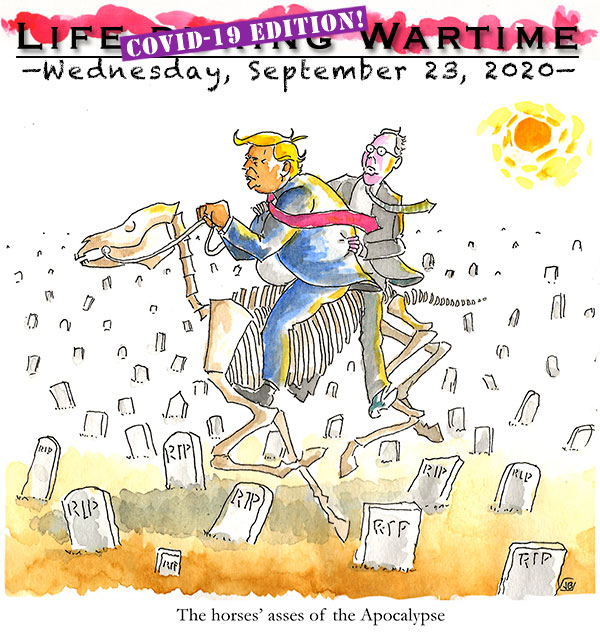
http://www.joshbrownnyc.com/ldw.htm
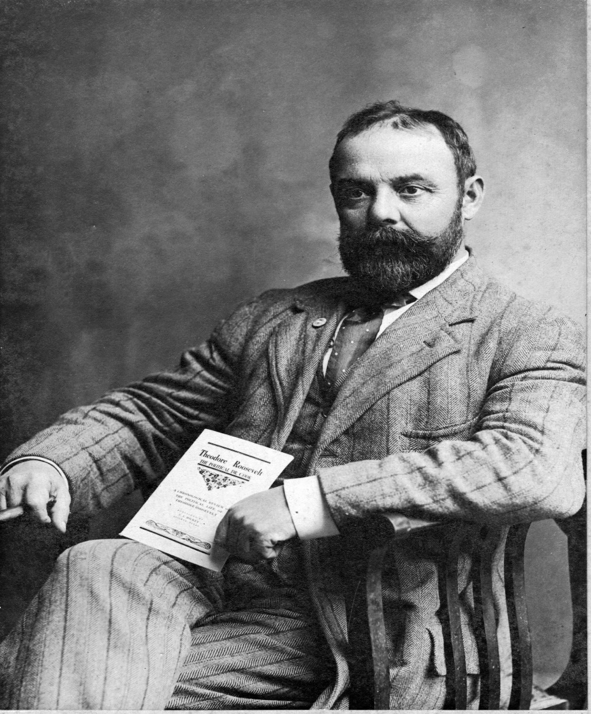
Texas Socialist firebrand Thomas Aloysius Hickey. From the Hickey Papers.
The political atmosphere in Texas after World War I was markedly different. The several years of patriotic fervor that had stemmed from U. S. involvement in the European war had created a very uncomfortable climate for those who had chosen to oppose the American intervention.
Before the World War, the Socialist Party of Texas had grown to a political force which had elected dozens of local office holders in the state as it championed the cause of tenant farmers and industrial workers, but its opposition to the War had resulted in its leaders being jailed, its newspapers being shut down, and its members subject to physical and political attacks.
Thomas A. Hickey, the Texas socialist firebrand who himself had been detained without a warrant in the early months of the War and who had seen his newspaper, The Rebel, the first in the nation to be shut down by the federal Espionage Act in 1917, was determined to revitalize the Socialist movement in Texas, but his efforts to reestablish a couple of new newspapers simply fizzled. The Socialist Party of Texas itself had almost evaporated; its state secretary had been among the arrested, its state chair had resigned, many of its speakers and organizers were imprisoned, and, faced with ongoing government pressure, the bulk of the membership had simply faded away. At its convention in Dallas in October 1919, the Socialist Party of Texas declared itself officially dead.
Continue reading
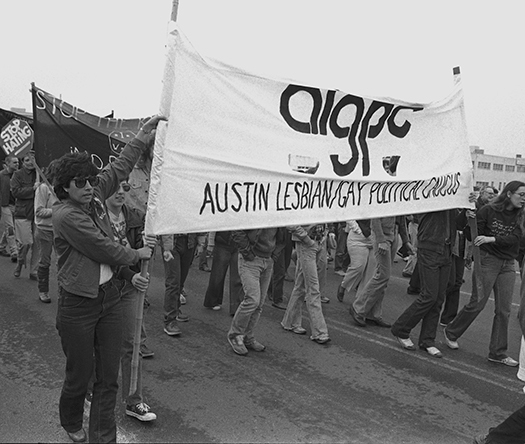
Austin Lesian/Gay Political Caucus at July 1983 march against the KKK.
Photo by Alan Pogue / The Rag Blog.
This article was first posted at La Voz de Esperanza and was cross-posted to The Rag Blog by the author.
AUSTIN — A body — as strong as it can be — is supremely delicate. The skin covering the skull splits easily; a police baton swung at the right angle, with the right force, parts the flesh precisely.
In February of 1983, the KKK decided to take back Texas. They held one event per month including a cross burning on land adjacent to a Black family. They rallied against Black History Month at the state capitol; the historical society displays photos of its construction by Black “prisoners” that docents consider a must-see for thousands of children on field trips. The capitol crowns Congress Avenue which also happened to be the gentry’s preferred location for holding a lynching back in the day.
Continue reading
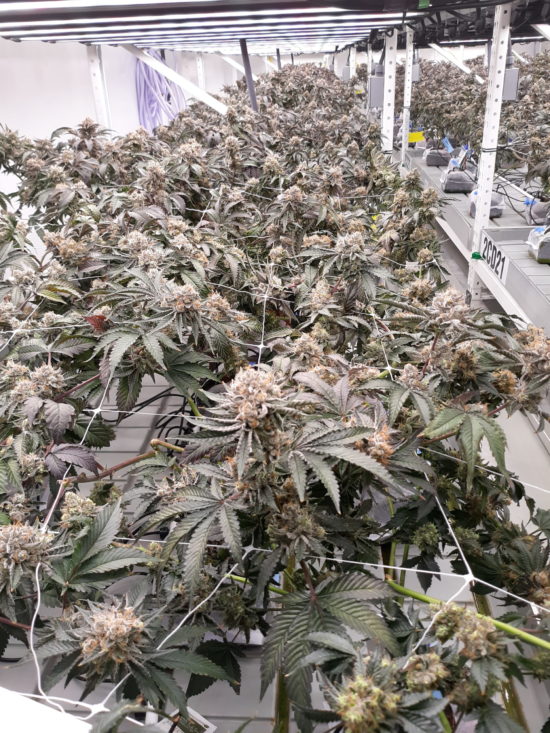
Buds close to harvest time at the MassGrow facility.
ATHOL, Massachusetts — “It’s legal now! Finally!”
That’s what people in many parts of the United States, as well as Canada and other nations, are saying, myself included.
To celebrate the legalization of marijuana in my state, Massachusetts, I recently used my journalist’s credentials to obtain guided tours of two facilities related to this rapidly expanding and multi-million dollar industry. Both are located just a few miles from my home. One is MassGrow, a large cultivation enterprise, and the other is Silver Therapeutics, a small retail store, properly called a dispensary.
Continue reading
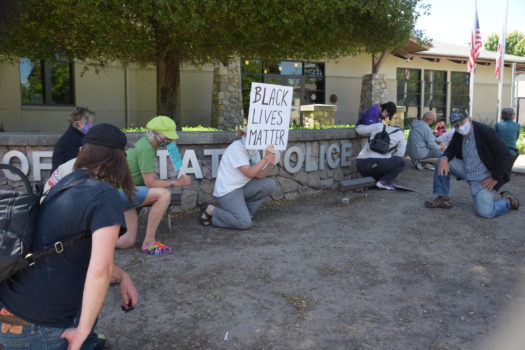
The author, on the far right, takes a knee outside the police station in the town of Cotati, California, where he lives, earlier this year. Photo by Karen Preuss.
Watching the TV news from Kenosha has given me the opportunity to look back at my own life as a kind of antifa activist in the late 1960s.
On December 9, 1969, a month or so before my 28th birthday, I went into the streets of Manhattan with other members of ”the Mad Dogs,” a small group of New York radicals, to protest the murders, five days earlier, of Fred Hampton and Mark Clark, two Black Panthers who were shot and killed during a predawn raid at their Chicago apartment that was carried out by a tactical unit of the Cook County State’s Attorney’s Office in conjunction with the Chicago Police Department and the FBI.
Continue reading
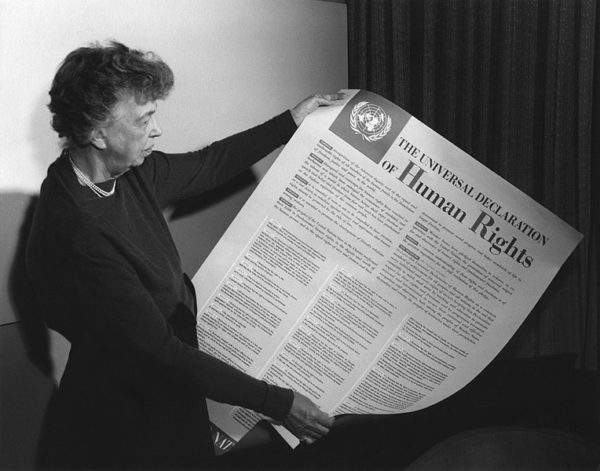
Eleanor Roosevelt holding poster of the Universal Declaration of Human Rights (in English), Lake Success, New York. November 1949. Image from FDR Presidential Library & Museum / Wikimedia Commons.
WEST LAFAYETTE, Indiana — The massive atrocities of World War II led nations to commit themselves permanently to the protection of basic rights for all human beings. Eleanor Roosevelt, the widow of the wartime president, Franklin Roosevelt, worked diligently with leaders from around the world to develop a document, to articulate a set of principles, which would bind humankind to never carry out acts of mass murder again. In addition, the document also committed nations to work to end most forms of pain and suffering.
Over 70 years ago, on December 10, 1948, delegates from the United Nations General Assembly signed the document which they called “The Universal Declaration of Human Rights.” It consisted of a preamble proclaiming that all signatories recognize “the inherent dignity” and “equal and inalienable rights of all members of the human family” as the “foundation of freedom, justice, and peace in the world.” The preamble declared the commitment of the signatories to the creation of a world “…in which human beings shall enjoy freedom of speech and belief and freedom from fear and want…”
Continue reading
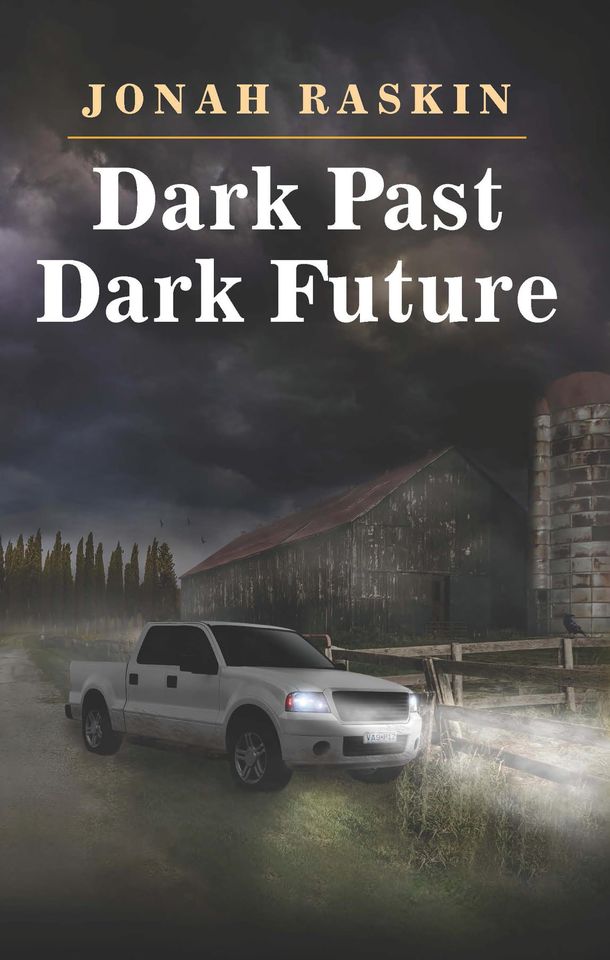
In Jonah Raskin’s new murder mystery Dark Past, Dark Future (2020, McCaa Books) Detective Tioga Vignetta returns bringing to a culmination the trilogy that began with Dark Land, Dark Mirror (2017, McCaa Books).
Raskin, prolific author of numerous works, brings not only his passion for film noir and the works of such authors as Dashiell Hammett and other luminaries of the darkness, but his down and dirty knowledge of the Sonoma Valley. It serves as a springboard for this worthy fictionalized “Valley,” as he brings Tioga into her latest web of danger which is filled with a cast of characters as mysterious and duplicitous as one might hope for and expect — in a world of drugs, ego and, disturbingly, the grim specter of sexual violence.
Raskin shows that when it comes to the past, there’s always more where that came from. Tioga’s multiple cases around the Valley — in the life of a work-a-day ace detective at times violent and banal — bring past and present together in an unexpected mix that tears the veneer of civility off the grandeur of the region and plummets the reader into the seedy underbelly of “Valley” life and the various characters that inhabit its, often, sunlit shadows.
Continue reading
La votación temprana comienza en 43 días en Texas. Si usted ya solicitó una papeleta por correo, es probable que reciba su papeleta en aproximadamente 30 días.
Texas hace que votar por correo sea más difícil que en muchos estados porque debe solicitar una papeleta. Para calificar para votar por correo, debe tener 65 años o más, ser discapacitado, estar en la cárcel o estar fuera del condado al momento de la elección y durante el periodo de votación temprana. Es el votante quien toma la determinación sobre su discapacidad. Si aún no ha solicitado una papeleta por correo, hágalo ahora. Sigue las instrucciones de abajo.
El gobierno de Trump, en alianza con el Director General de Correos DeJoy, ha infundido miedo a muchas de las personas que tenían la intención de votar por correo. Usted puede contrarrestar esa campaña de miedo al estar atento a las fechas límite, enviar su papeleta por correo temprano y conocer las opciones para entregar su papeleta en mano.
Continue reading
AUSTIN — In 43 days early voting begins in Texas. If you requested a ballot by mail, you are likely to receive your ballot in about 30 days.
Texas makes it harder to vote by mail than many states because you must request a ballot. To qualify on your application, you must be 65 or older, disabled, in jail, or out of the county at the time of the election and early voting. It is the voter that makes the determination on disability. If you haven’t yet requested a ballot by mail, don’t wait. Follow the instructions below.
The Trump administration, in league with Postmaster General DeJoy, has instilled fear in many who intended to vote by mail. You can counteract that fear campaign by being vigilant about deadlines, mailing your ballot early, and learning about options for hand delivering a ballot.
Continue reading
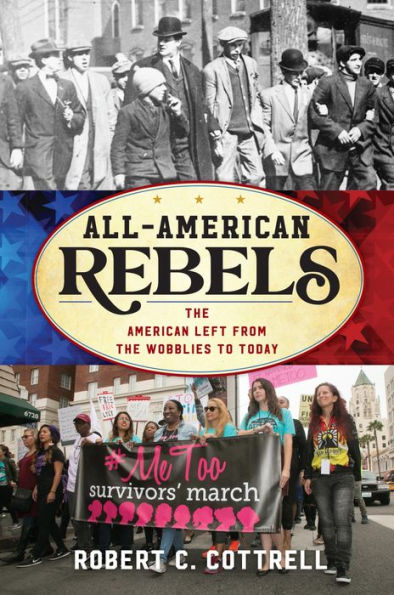
[The following is a response to Jonah Raskin’s August 18, 2020 Rag Blog review of Bob Cottrell’s latest book, All-American Rebels: The American Left from the Wobblies to Today. Read Raskin’s review here.]
I admire Professor Jonah Raskin’s work, especially his studies of Abbie Hoffman and Allen Ginsberg. I also appreciate the seriousness with which he tackles my new book, All-American Rebels: The American Left from the Wobblies to Today. I appreciate the blurb he offered for it: “Essential reading for those who participated in the struggles for equality and justice, and for those who are eager to learn about the history that has often been whitewashed from the official story.” The longer blurb he offered was still more complimentary, but my publisher opted to condense it.
Perhaps Professor Raskin has had a change a heart. While writing, “There’s hardly an important rebel who isn’t mentioned in passing in the pages of Cottrell’s book,” he points to a sin of commission on my part. That involves an inexplicable failure, notwithstanding numerous reads on my part, to list Huey Newton (whom I taught about for forty years), rather than Eldridge Cleaver, as a Black Panther co-founder. Professor Raskin also notes a sin of omission, the leaving out of Allen Young of the Gay Liberation Front. Unfortunately, these are probably not the only acts of commission and omission in a work as synthetic as this one, operating under the word count limitation I was handed.
Continue reading
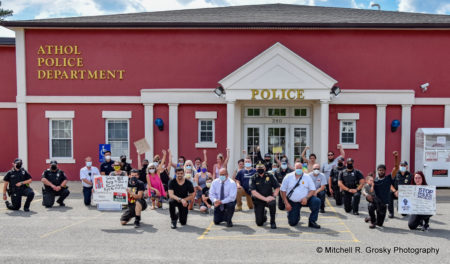
After a brief sidewalk rally with speeches, anti-racism demonstrators in Athol, Mass., walked two blocks through the downtown to kneel in front of the Athol Police Station along with the police chief and several uniformed officers. This took place in early June in the wake of the death of George Floyd. Photo copyright Mitchell R. Grosky Photography.
ATHOL, Massachusetts — A rejuvenated movement for racial justice is sweeping the nation, and it has arrived somewhat surprisingly in the area where I live, a little-known section of North Central Massachusetts where very few people of color reside.
Rallies and vigils to support “Black Lives Matter” and affirm a belief in diversity and racial justice have taken place recently in the towns of Athol (population 11,500) and Orange (population 7,500), where no more than one percent of the people are Black (2010 census).
In Warwick, Massachusetts (population 780), just north of Orange, “Black Lives Matter” signs can be seen outside several homes and in front of the town’s Trinitarian Congregational Church. That church’s minister, Rev. Dan Dibble, was one of many prominent community members attending a recent outdoor rally in Athol that I was pleased to join with several of my friends. Everyone was wearing masks, by the way.
Continue reading
Thorne Webb Dreyer, Editor





