Patricia Vonne Headlines Rag Blog Benefit Sunday at Jovita’s in Austin

CLICK ON IMAGE TO ENLARGE.

Please join us this Sunday at Jovita’s

Please join us Sunday, January 23, from 6:30-10 p.m., at Jovita’s, 1619 South First Street in Austin, for the Rag Blog Benefit featuring Latina rocker Patricia Vonne and singer-songwriter Gina Chavez. For details, click on the image above, or go to the Facebook page for this event.

If you aren’t in Austin, or are unable to attend, please help support The Rag Blog and Rag Radio by making a donation through PayPal by clicking here, or send a check to the New Journalism Project, Inc., P.O. Box 16442, Austin, TX 78761-6442. The New Journalism Project is a Texas 501(c)(3) nonprofit corporation, and donations are tax-deductible.

Patricia Vonne and Gina Chavez will also be Thorne Dreyer’s guests on Rag Radio, Friday, Jan. 21, 2-3 p.m. (CST) on KOOP 91.7 FM in Austin and streamed live on the Internet). For a link to this show after it’s broadcast, or to earlier shows on Rag Radio, go here.

The Rag Blog

Posted in RagBlog | Tagged , , , , , , | 1 Comment

Jim Simons : Sargent Shriver and the Forgotten War Against Poverty

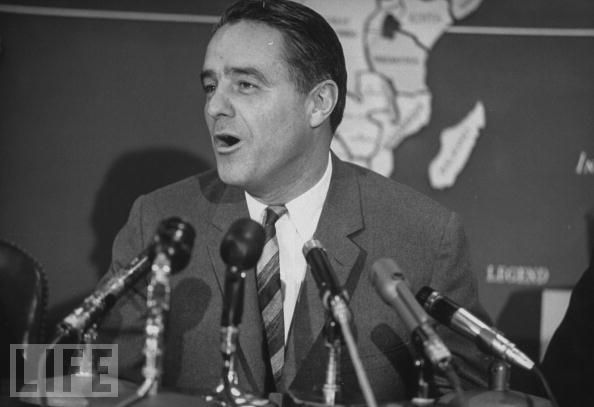
Sargent Shriver. Photo from Time/Life.

Sargent Shriver, warrior against poverty (1915-2011)

R. Sargent Shriver, the exuberant public servant and Kennedy in-law whose career included directing the Peace Corps, fighting the War on Poverty, ambassador to France and, less successfully, running for office, died Tuesday [January 18, 2011]. He was 95. Shriver, who announced in 2003 that he had Alzheimer’s disease, had been hospitalized for several days. [….]

The handsome Shriver was often known first as an in-law — brother-in-law of President John F. Kennedy and, late in life, father-in-law of actor-former California Gov. Arnold Schwarzenegger. But his achievements were historic in their own right and changed millions of lives. [….] President Barack Obama called Shriver “one of the brightest lights of the greatest generation…”

— Jessica Gresko / Associated Press

Sargent Shriver… built the left flank of John Kennedy’s remarkable 1960 presidential run. In so doing he freed President Kennedy to make critical choices in favor of civil rights and economic justice.

— John Nichols / The Nation

Poverty in America:
Sargent Shriver and the forgotten war

By Jim Simons / The Rag Blog / January 20, 2011

I heard a recording the other night of the telephone conversation between LBJ and Sargent Shriver when Shriver was appointed to head the War on Poverty. Johnson said something like, “I want to get on with it and end poverty in America.” He said this as one might say, “I want you to bring me the newspaper,” as though it could and would be done.

Shriver became the Director of the Office of Economic Opportunity (OEO) when it started. There could have been no better person for the job. The legislation (yes, it actually passed Congress) was inspired, so the story went, by Michael Harrington’s milestone book The Other America. There was significant poverty in the world’s richest country at the midpoint of the 20th century and it was inexcusable. It was that simple.

No one lambasted Johnson for being taken in by a socialist. Indeed, Harrington was a democratic socialist as well as being an intellectual and social critic with strong publishing credits. If anyone did yell “socialism,” no one paid any attention. How times have changed.

The War on Poverty initiated a panoply of wide-ranging programs designed to eradicate poverty — Head Start, Legal Services, VISTA, and the big one, the Community Action Program (CAP). CAP put hundreds of local Saul Alinsky’s in the poor communities nationwide, organizing and mobilizing the poor to make fundamental changes designed to bring the people up out of poverty.

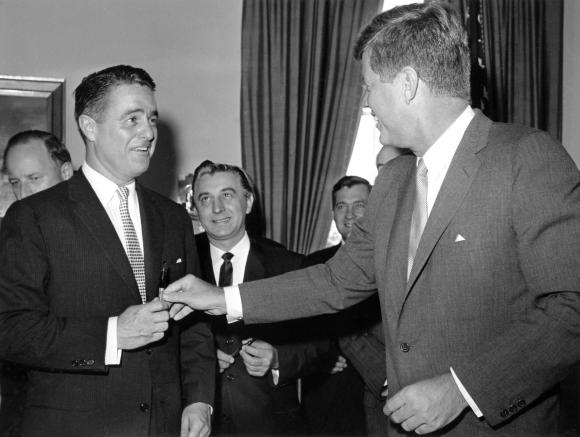
President John F. Kennedy with brother-in-law, Sargent Shriver, then director of the Peace Corps, after signing a bill giving the Peace Corps permanent status, Sept. 22, 1961. Photo from UPI.

Well, that was the theory. Oddly enough it was working to do just that when, finally, the predictable backlash came. Members of the establishment everywhere became riled up about the upset to the social order of their communities. If CAP had not been so effective we might never have heard from these representatives of the local power structures.

As it happened, newspapers editorialized and Congressional hearings were set in motion. Now came the chant of “socialism” and “communism.” OEO and the foment it swelled was every bit as big as the civil rights legislation of the same period. And it was working until backlash shut it down. Whenever there was a confrontation between the organized poor and the power structure, guess who prevailed.

Sargent Shriver died this week and I remembered that I had worked for him at OEO in 1966-1967. I met him once in Washington, D.C. and I believed in his commitment and ability to win the war on poverty. In the summer of 1966 he, or his deputy director, Edgar May, sent Peter Spruance of the OEO Office of Inspection (which May headed) to Austin where the Southwest Regional Office of OEO was. They wanted to find a suitable person to occupy the local Office of Inspection in the regional office.

Spruance, who was a lawyer from California, called Ronnie Dugger, editor of the (then) crusading liberal paper, The Texas Observer. I was working as Assistant City Attorney of Pasadena, the Houston suburb, and hating the job and the town. At this very time I was in Austin trying to find a job or some practice situation so I could live in Austin. I happened to call my friend Dugger and that is when he put me in touch with Spruance who interviewed me. As it is said, the rest was history.

So I was in a unique place and time to witness the winning of early skirmishes by the people and the ultimate losing of the war. The former was thrilling beyond words and I have never felt better about the work I was doing. The latter was among the saddest defeats I’ve ever been dealt, defeats for all of us as the ship went down.

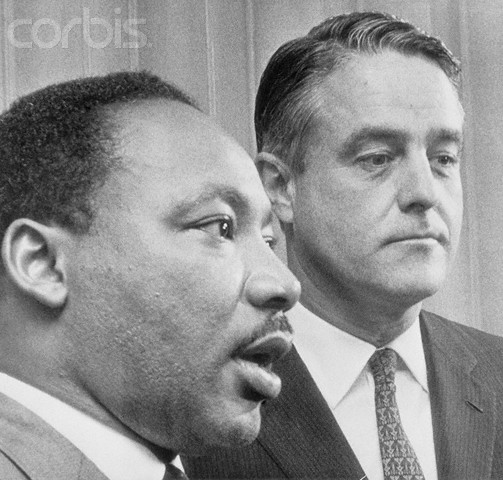
Sargent Shriver, then director of the Office of Economic Opportunity, shown with Dr. Martin Luther King, Oct. 24, 1966. Photo from Bettman / Corbis.

Over my two years at OEO the war in Vietnam was radicalizing me, to be sure. But the demise of the war on poverty set in motion in those years contributed to the process and probably had as much to do with my personal radicalization as did the war in Southeast Asia. They were interrelated wars. After that, I opted to open a basement law office to represent the peace and justice movement that had been waked in the country in the ‘60s. And that too was history.

But I have never forgotten the experience of the war on poverty, or for that matter, Sargent Shriver. I’ve always had immense respect for him. The times conspired to keep him from attaining high political office. I fear we will not see that caliber of person in politics unless the country changes more than now seems possible.

It is a big loss. But what strikes me as saddest of all is that the poor in America have been totally forgotten. No one talks of a war on poverty anymore. Supposedly progressive politicians speak of the middle class, not the poor. Everyone acts as if they don’t exist. There are more people in poverty now than in 1966 and it is getting worse all the time as the elite and the middle-class jockey for position in electoral politics.

When will we face again the challenge of ending poverty in America?

[Jim Simons practiced law in Austin for 40 years, representing many movement activists, including anti-war GIs. Jim served as a counsel for members of the American Indian Movement who were arrested at Wounded Knee in 1974. After he retired he published his memoir Molly Chronicles in 2007].

The Rag Blog

Posted in Rag Bloggers | Tagged , , , , , , | 4 Comments

Lamar W. Hankins : The Bowdlerizing of Huckleberry Finn

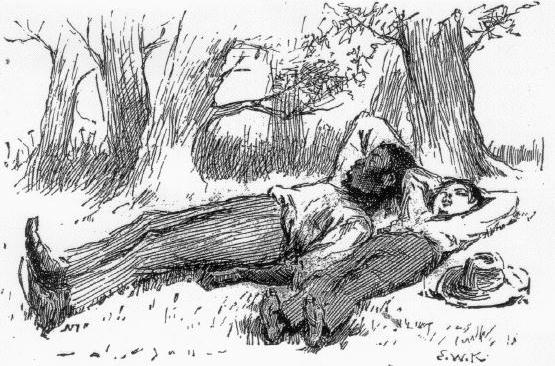
Huck and Jim. Image from Teachers.ash.org.

The bowdlerizing of Huckleberry Finn

By Lamar W. Hankins / The Rag Blog / January 19, 2011

A recent commentary by Leonard Pitts in the Miami Herald explained a significant problem with publication of a new edition of The Adventures of Huckleberry Finn by Mark Twain. The new edition removes all use of the words “nigger” and “Injun,” substituting less offensive words.

In Pitts’s view, the scrubbing of these words robbed the novel of its authenticity by ignoring Twain’s purpose in using the language that he chose and ignoring the social, cultural, and historical context in which the novel takes place.

Pitts explains, “Huck Finn is a funny, subversive story about a runaway white boy who comes to locate the humanity in a runaway black man and, in the process, vindicates his own.” I’ve always had a similar view of the novel, but it never occurred to me until reading Pitts’s words that I had had an experience similar to Huck’s, of becoming aware of another’s humanity, an experience shared by many others and one that may be universal.

I lived in Vidor, Texas, a rural community with a well-deserved reputation for racism, until I was four years old, when my family moved to the oil refinery town of Port Arthur. When I was seven, my parents, both of whom worked at refineries (my father as a machinist, my mother as an RN), hired a black woman to look after me and my younger brother. During the summer that I was 10 years old, I had many serious discussions with her about the ways of the world, especially about race relations and how African-Americans had been treated throughout the South since the beginning of this country.

My guess is that Lutricia Valore was about 25 years old in 1955. We called her by her nickname, Lou. The culture at that time in the south permitted even young children to address black women by their first name or whatever other informal name might apply. Lou cooked our food, cleaned our house, supervised our play, and took care of us when we had an accident or were sick.

She was my first sociology and history teacher. She told me about slavery. About having to sit in the back of the bus. About “separate but equal” schools. About being mistreated and disrespected by many whites. About segregation. About the slums in which she and her two children and husband lived. About the frequent humiliation she felt.

After reading Leonard Pitts’s words, I realized that Lou had transformed herself in my child’s eyes from the hired help to a person with fears, concerns, problems, and joys common to all human beings. She was my caretaker and became my friend. When she told me about how she was treated, I reacted first with disbelief that such a kind, decent person would be treated so badly. Then it made me angry. I wanted to do something about it, not recognizing that 10-year-old children can’t rectify society’s wrongs. I started looking around to see if I could find any of the circumstances she had described. I did not have to look far.

When I observed the city buses going down the street, I saw that all the blacks were in the back and the whites were in the front. When I went to the Weingarten grocery store with my mother, I saw the water fountains, side by side, one marked “Whites only,” and the other marked “Colored.”

In my first public rebellion against the established order, I decided to drink from the “Colored” fountain to see if the water tasted different from that in the “Whites only” fountain. I knew that my action violated accepted custom, but I did it anyway, and no one complained. I continued drinking from that fountain as long as my family shopped at that store. Later, when I rode the city buses to junior high school, I purposely sat in the back.

As a result of what I had learned from Lou, I continued my rebellion through the years by arguing about the nature of slavery with a junior high school history teacher and about job discrimination with a Sunday school teacher who did not want blacks working at the refinery because they would compete with him for jobs, an unrecognized acknowledgment that blacks could be as qualified as he to do the same work.

Huck Finn recognized Jim as a person of value because he came to know him at a basic human level. He saw that Jim had to make decisions about right and wrong, good and bad, fair and unfair, just as he did.

Both Jim and Huck were seeking freedom. To each one, freedom meant something slightly different, just as it means different things for different people all over the globe. And the novel deals with other human problems as well, including lying, deceit, cruelty, moral values, the role of family in a person’s life (Did Huck and Jim become a family?), selfishness, and hypocrisy.

All of these human issues are important for both children and adults to figure out for themselves. If a novel set shortly before the Civil War can help us discuss these issues, it has to be of value. If we take away from it its context, we rob it of some of that value as an educational tool. If some people are offended by the words common to the period and those words are censored, what does that take from the novel? For one thing, it blunts the razor-sharp edge of Twain’s depiction of racism in America.

We haven’t been able to have a broad, serious discussion about race and race relations in the 125 years since Huckleberry Finn was published. After all, we are still arguing about the reasons for the Civil War, in the face of documentary evidence that slavery and race were at its heart.

Now, we learn that a production of the play Joe Turner’s Come and Gone by the late, widely respected African-American playwright August Wilson is being forbidden by the superintendent of schools in Waterbury, Connecticut, because it contains the word “nigger” in several places.

Removing offensive words from the pages of Huckleberry Finn or any other literary work will make that important discussion about race less likely, and if our children read such works in a bowdlerized form, there will be no reason for them to even confront what such language is all about.

[Lamar W. Hankins, a former San Marcos, Texas, city attorney, is also a columnist for the San Marcos Mercury. This article © Freethought San Marcos, Lamar W. Hankins.]

The Rag Blog

Posted in Rag Bloggers | Tagged , , , , , , , , | 4 Comments

Ted McLaughlin : Haley Barbour’s ‘Eye for a Kidney’ Deal

Mississippi Governor Haley Barbour: organ trafficker?

An eye for a kidney?
Haley Barbour’s terrible precedent

By Ted McLaughlin / The Rag Blog / January 19, 2011

See “Haley Barbour breaks the U.S. Organ Transplant Act,” Below.

Mississippi Governor Haley Barbour has received a lot of good press recently for commuting the life sentences of two sisters, Jamie and Gladys Scott (who had been convicted in 1994 of setting up a victim for an armed robbery that netted $11).

One of the sisters needed a kidney transplant, and the other had offered her kidney for the transplant. Barbour said, “The Mississippi Department of Corrections believes the sisters no longer pose a threat to society. Their incarceration is no longer necessary for public safety or rehabilitation, and Jamie Scott’s medical condition creates a substantial cost to the State of Mississippi.”

Let me be clear here — I do not oppose the commutation of the women’s prison sentences. There were many who believed the sentence had been too harsh to begin with, and the women had already served 16 years of that sentence. If the sisters did not pose a threat to society, and there was no need of further “rehabilitation,” then the governor did the right thing by commuting their sentences and freeing them.

And it is also within the powers of the governor to release them to save the state substantial medical bills, even if that seems a rather hard-hearted reason. It is even within the governor’s right to commute the sentences for political reasons — to repair some political damage he caused himself by downplaying the role of the White Citizen’s Councils in fighting against Civil Rights in the 1960s.

But there is something about the governor’s action in commuting these sentences that I find very troubling. He made a it requirement that one of the sisters give up her kidney — the commutation would not have happened without it (and they could be re-incarcerated if the donation failed to take place).

Now I don’t doubt that the sister was happy and very willing to donate a kidney to her sister. It is her right to do so (or not to do it). But she should not have been forced to do so with the threat of a continuing incarceration. By making it a requirement, in effect, the governor sold a commutation — and the price was one kidney. This sets a very bad precedent, and may violate the law. [See story below.]

Is it now a policy of the State of Mississippi that a prisoner can purchase his release by selling (donating) a kidney, or some other body part? It is not outside the realm of possibility that a future ethically-challenged governor (not uncommon for politicians of both parties) could repeat this action to get a kidney (or other body part) from a prisoner for a friend, family member, or high-profile person. After all, the precedent has now been set.

The governor had reasons to commute these sentences if that’s what he wanted to do, but it was just wrong for him to demand the payment of a kidney for the release. And I’m shocked that few people have noticed the ethical and moral problems of the governor’s decision.

Prison is for punishment and rehabilitation. It is not, and should never be, a source of organ donations.

[Rag Blog contributor Ted McLaughlin also posts at jobsanger.]

Jamie and Gladys Scott.

Haley Barbour breaks the U.S. Organ Transplant Act

Gladys and Jaime Scott went to a Mississippi prison for life in 1994 after committing an armed burglary which netted the then teens $11. On December 30, 2010, Mississippi Gov. Haley Barbour suspended the life sentences, but one sister’s release is contingent on her giving a kidney to the other. [….]

While donating a kidney is extremely safe when donors are healthy and a rigorous evaluation has taken place, it does have a small risk of death. Requiring a prisoner to agree to take this risk in return for parole violates international transplant standards and human rights.

The idea that prisoners are able to consent to risky medical treatment in return for benefits is one that ethicists have long questioned. It’s one step removed from the Chinese government practice of selling the organs of executed prisoners and kidneys from live Falun Gong and others in jail. The Chinese have made the practice illegal in response to international pressure, although few experts think it has stopped.

Governor Barbour and the prison board seem unaware that under the 1984 National Organ Transplant Act (NOTA) (42 U.S.C. 274e) it is “unlawful for any person to knowingly acquire, receive, or otherwise transfer any human organ for valuable consideration for use in human transplantation.”

What could be more “valuable consideration” than a get out of jail card? And given the state’s concern about the cost of Jaime’s dialysis they too receive valuable consideration in dumping Jaime and Gladys on Florida for a possible transplant.

Now, according to NOTA, any person who violates the valuable consideration provision “shall be fined not more than $50,000 or imprisoned not more than five years, or both.” The State Attorney General in Mississippi should move immediately to bar the parole if the condition of transplantation is not rescinded.

And the U.S. Attorney General Eric Holder should uphold the National Organ Transplant Act and ensure that if the parole proceeds as planned with organ donation a requirement, it be made clear that any hospital, physician or other individual including Mississippi state officials who participated in the procurement and transplant of the organ will be charged under NOTA. [….]

Frances Kissling / The Huffington Post

The Rag Blog

Posted in Rag Bloggers | Tagged , , , , , | 4 Comments

Thorne Dreyer : Journalist, Author, and ‘Investigative Poet’ John Ross (1938-2011)

The late great John Ross.

Farewell to our great friend John Ross

See “Los Muertos,” a poem by John Ross, Below.

By Thorne Dreyer / The Rag Blog / January 18, 2011

Yesterday I received an email with the following message: “John Ross passed peacefully in the arms of his good friends Arminda and Kevin in Tzipijo, near Lake Patzcuaro, Michoacan, after a two-year lucha against liver cancer.” The message was sent from John’s email address and included the above photo.

John Ross, who styled himself an “investigative poet,” was a long-time contributor to and friend of The Rag Blog. He was a singular talent whose work was always enlightening and entertaining, every post a revelation. No one ever wrote about Mexico like John Ross did… or ever will again.

Ross, whose roots were in the old left politics of New York City and the beat poetry scene of San Francisco, visited Austin last March promoting his latest book, El Monstruo: Dread and Redemption in Mexico City, and reading his poetry at MonkeyWrench and Resistencia bookstores.

Our mutual friend Mike Davis, himself a noted author and educator, wrote about John and El Monstruo: “From a window of the aging Hotel Isabel, where he has lived for almost a quarter of a century, John Ross sings a lusty corrido about a great, betrayed city and its extraordinary procession of rulers, lovers and magicians.”

Indeed, everything John Ross ever wrote was a “lusty corrido,” a vivid grito of protest and celebration.

The Rag Blog last heard from John late last year when he informed us he would be suspending his writing indefinitely due to the rigors of the latest round of chemotherapy to treat his advancing cancer of the liver, which had been in remission but had returned with a vengeance.

In my copy of El Monstruo, John Ross wrote, “To Thorne: Desde el corazon del Monstruo sigues en la lucha!

[Thorne Dreyer, a pioneering ’60s underground journalist, is a director of the New Journalism Project, Inc., editor of The Rag Blog, and host of Rag Radio.]

John Ross dies:
Opposing every war was his obsession

The American rebel journalist, poet, novelist and human shield, John Ross (New York, 1938), deacon of Mexico correspondents, died yesterday at 8:58 a.m. in Santiago Tzipijo, Michoacan, after battling for two years against liver cancer.

A wake is being held on the shores of Lake Patzcuaro. He will be cremated in Urapan and his ashes scattered in Mexico and in several cities in the U.S., according to his wishes.

Ross, whose last book is entitled El Monstruo: Dread and Redemption in Mexico City, arrived at Casa Santiago, on the shores of the lake, on Dec. 31 in a taxi, reports Kevin Quigley, who with his wife is owner of the guest house. Both were compadres of the New Yorker.

Two days earlier, friends of the journalist had retrieved his archives from the room he occupied in the hotel Isabel in Mexico City, where he had lived since the week following the earthquake of 1985. His files are to be temporarily stored at the Cemanahuac Educational Community in Cuernavaca.

John Ross was a man of the Left and one of his great obsessions was the struggle against wars of every type. His great labor as an independent journalist and correspondent was to participate in and cover the political and social events that happened here, to make them known in the United States. “He never quit telling the gringos what was happening in Mexico” …

La Jornada / Mexico City / January 18, 2011
(Translated by Dick J. Reavis / The Rag Blog)


John Ross. Photo from Con Carlitos.


LOS MUERTOS

After they had waited on line

for nearly eight straight hours

to vote for the candidate of their choice,

The Dead were finally informed

that they were no longer inscribed

upon the precinct lists of the Republic.

But we have only come to exercise

our rights as responsible citizens

The Dead complained bitterly

for it seemed to them that the President

in the spirit of national unity

had called upon all the people

to cast their ballots

as is the democratic norm.

The official registrar

who was still quite alive

could only explain

the exclusion of the calacas

with platitudes about Morality.

Oh said The Dead and voted anyway.

But your votes are clearly illegal

winced the official Official,

they can’t be counted in this election.

You have a point The Dead replied,

maybe they won’t be counted now

but surely you will count them later.

© John Ross


When John Ross was 18, he was a young member of the Beat Generation, reading his poetry in Greenwich Village bars with the great bass player Charles Mingus. — Beatitude Poetry

The Rag Blog

Posted in Rag Bloggers | Tagged , , , , , , , , , , | 3 Comments

Frank Bardacke : John Ross Had All the Right Enemies

John Ross, 1938-2011. Photo by Marcia Perskie, courtesy of Michael James, Heartland Cafe, Chicago.

All the right enemies:
Farewell to the utterly unique John Ross

By Frank Bardacke / CounterPunch / January 18, 2011

John’s gone. John Ross. I doubt that we will ever see anyone remotely like him again.

The bare bones, as he would say, are remarkable enough. Born to show business Communists in New York City in 1938, he had minded Billie Holliday’s dog, sold dope to Dizzy Gillespie, and vigiled at the hour of the Rosenberg execution, all before he was 16 years old. An aspiring beat poet, driven by D.H. Lawrence’s images of Mexico, he arrived at the Tarascan highlands of Michoacan at the age of 20, returning to the U.S. six years later in 1964, there to be thrown in the Federal Penitentiary at San Pedro, for refusing induction into the army.

Back on the streets of San Francisco 18 months later, he joined the Progressive Labor Movement, then a combination of old ex-CPers fleeing the debased party and young poets and artists looking for revolutionary action. For a few years he called the hip, crazy, Latino 24th and Mission his “bio-region,” as he ran from the San Francisco police and threw dead rats at slumlords during street rallies of the once powerful Mission Coalition.

When the not so ex-Stalinists drove him and others out of PL (“break the poets’ pencils” was the slogan of the purge) he moved up north to Arcata where he became an early defender of the forest and the self-described town clown and poet in residence. From there it was Tangier and the Maghreb, the Basque country, anti-nuke rallies in Ireland, and then back to San Francisco, where he finally found his calling as a journalist.

“Investigative poet” was the title he preferred, and in 1984, he was dispatched by Pacific News Service to Latin America, where he walked with the Sendero Luminoso, broke bread with the Tupac Amaru, and hung out with cadres of the M-19.

In 1985, after the earthquake, he moved into the Hotel Isabel in the Centro Historico of Mexico City, where for the next 25 years he wrote the very best accounts in English (no one is even a close second) of the tumultuous adventures of Mexican politics.

During the Mexican years, he managed to write nine books in English, a couple more in Spanish, and a batch of poetry chapbooks, all the while he was often on the road, taking a bus to the scene of a peasant rebellion or visiting San Francisco or becoming a human shield in Baghdad, or protecting a Palestinian olive harvest from marauding Israeli settlers.

He died Monday morning, January 17, a victim of liver cancer, at the age of 73, just where he wanted to, in the village of Tepizo, Michoacan, in the care of his dear friends, Kevin and Arminda.

That’s the outline of the story. Then there was John. Even in his seventies, a tall imposing figure with a narrow face, a scruffy goatee and mustache, a Che T-shirt covered by a Mexican vest, a Palestinian battle scarf thrown around his neck, bags of misery and compassion under his eyes, offset by his wonderful toothless smile and the cackling laugh that punctuated his comical riffs on the miserable state of the universe.

He was among the last of the beats, master of the poetic rant, committed to the exemplary public act, always on the side of the poor and defeated. His tormentors defined him. A sadistic prison dentist pulled six of his teeth. The San Francisco Tac Squad twice bludgeoned his head, ruining one eye and damaging the other. The guards of Mexico’s vain, poet-potentate Octavio Paz beat him to the ground in a Mexico City airport, and continued to kick him while he was down. Israeli settlers pummeled him with clubs until he bled, and wrecked his back forever.

John Ross at Day of the Dead celebration. Photo from CounterPunch.

He had his prickly side. He hated pretense, pomposity, and unchecked power wherever he found it. Losing was important to him. Whatever is the dictionary opposite of an opportunist — that’s what John was. He never got along with an editor, and made it a matter of principle to bite the hand that fed him.

It got so bad, he left so few bridges unburnt, that in order to read his wonderful weekly dispatches in the pre-internet years, I had to subscribe to an obscure newsletter, a compilation of Latin American news, and then send more money to get the editors to send along John’s column.

He had his sweet side, too. He was intensely loyal to his friends, generous with all he had, proud of his children, grateful for Elizabeth’s support and collaboration, and wonderful, warm company at an evening meal. When my son, Ted, arrived in Mexico in 1990, John helped him get a job, find a place to live, introduced him around, and became his Sunday companion and confidant, as they huddled in front of John’s 11-inch TV watching the weekly broadcasts of NBA games.

He was a great, true sports fan, especially of basketball. One of the last times I saw him was at a friend’s house in San Francisco, in between radiation treatments, watching a Warriors game on a big screen TV, smoking what he still called the “killer weed.” Joe and I listened to him recount New York Knicks history, the origin of the jump shot, and Kareem’s last game, which somehow led to a long complaint about kidneys for sale in Mexico that had been harvested in China out of the still warm body of some poor, rural immigrant who had been legally executed for jaywalking in Beijing.

The very last time I had the pleasure of his company was at breakfast in Los Angeles when Ted and I saw him off on his last book tour, promoting El Monstruo, his loving history of Mexico City. He was in great form. His cancer was in remission — a “cancer resister,” he called himself — and he entertained us with a preview of his trip: long, tiresome Greyhound rides, uncomfortable couches, talks to tiny groups of the marginalized, the last defenders of lost causes without the money to buy his books. It would be a losing proposition, like so many of his others, all of which secure his place among the angels.

[Frank Bardacke taught at Watsonville Adult School, California’s Central Coast, for 25 years. His history of the United Farm Workers and Cesar Chavez, Trampled in the Vintage, is forthcoming from Verso. He can be reached at bardacke@sbcglobal.com. This article was written for and distributed by CounterPunch.]

Please see:

The Rag Blog

Posted in RagBlog | Tagged , , , , , , , | 1 Comment

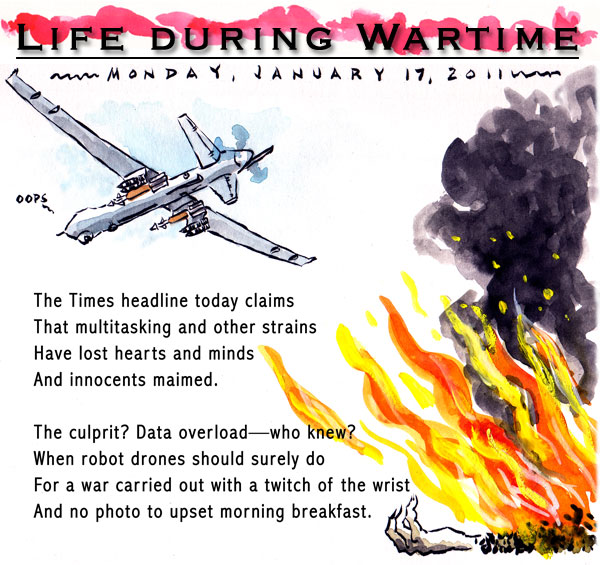
Joshua Brown : Life During Wartime: Data Overload

Political cartoon and verse by Joshua Brown / The Rag Blog / January 17, 2011.
The Rag Blog

Posted in Rag Bloggers | Tagged , , , , | Leave a comment

Ed Felien : Words Have Consequences


Words have consequences:
Political rhetoric and the attempted
assassination of Gabrielle Giffords

By Ed Felien / The Rag Blog / January 17, 2011

Gabrielle Giffords had just won her reelection in a race so tight it took three days to count the votes. Her opponent, Jesse Kelly, a Republican candidate with Tea Party backing, assailed her on health care and immigration. He attacked her for supporting the stimulus package.

Jim Nintzel in the Tucson Weekly quoted him on Feb 18:

“It must stop now,” says Kelly, who promises to not seek any federal earmarks if he defeats Democratic Congresswoman Gabrielle Giffords in November. “This is bribery with taxpayer money, and it’s a disgrace.”

Kelly dismisses any notion that federal spending helps the economy.

“Government is not a job-creator,” Kelly said last week at a debate with his fellow Republican candidates, including state Sen. Jonathan Paton and political newcomers Brian Miller and Andy Goss. “It is a job-crusher.”

But for Don Kelly Construction, the firm where Kelly manages pipeline projects, government funding would appear to create quite a few jobs.

Kelly himself estimates that close to 90 percent of the firm’s work comes from government contracts worth tens of millions of dollars. And around the country, the firm — which is owned by Kelly’s father, Don Kelly — frequently bids on public-works projects funded by both stimulus dollars and federal earmarks.

Kelly was supported in his campaign by ALIPAC (Americans for Legal Immigration PAC). John McCain spokesman Brian Rogers said of the group, “It is backed by white supremacists, neo-Nazis and anti-Semites.”

He was also supported by Sarah Palin. She appeared with him on Fox News and said, “I don’t feel worthy to lace his combat boots.” Giffords’ Congressional District was one of 20 Democratic districts that McCain carried in 2008 where the incumbent voted for health care reform.

On her website Palin said, “We’ll aim for these races and many others. This is just the first salvo in a fight to elect people across the nation who will bring common sense to Washington.” Their districts were on a U. S. map located by crosshairs. After the shooting Palin’s campaign denied the crosshairs were meant to appear as targets, even though she had also said on March 23, “Don’t Retreat, Instead, RELOAD!”

The imagery and the rhetoric is clear, and it’s consistent with Republican rhetoric throughout the 2010 campaign:

Robert Lowry, Republican candidate in Florida, fired at a target with his opponent’s initials written on it.

Representative Allen West’s first choice for chief of staff, Joyce Kaufman, said, “If ballots don’t work, bullets will.”

Sharron Angle talked about 2nd Amendment remedies in her race against Harry Reid in Nevada. Michele Bachman said she wanted her supporters “armed and dangerous.”

John Boehner and Eric Cantor referred to health care reform as “Job Killing Obamacare.”

And Jesse Kelly held a fundraiser in June where he advertised: “Get on Target for Victory in November. Help remove Gabrielle Giffords from office. Shoot a fully automatic M16 with Jesse Kelly.” Minimum donation: $50.

Just last April, former President Bill Clinton recommended that both the media and politicians be responsible with their rhetoric since it falls on the “serious and the delirious alike.”

Henry David Thoreau said, “Most men lead lives of quiet desperation and go to the grave with the song still in them.” The appeal of war is the promise of glory and meaning in men’s eyes: one desperate act and the world crowns you a hero. How tempting then to run to the head of the mob and storm the barricades. All revolutionary camps are a haven for malcontents.

And the Tea Party pretends it is a revolution with earnest patriots dressed in 18th Century tri-cornered hats, manipulated so cleverly by the Koch brothers, the Bush family, and Dick Armey for the benefit of the rich and powerful. It is a fraud perpetrated on the poor.

And Jesse Kelly is a party to the fraud. He campaigns mightily against the Stimulus and the Government, and his family collects millions in federal contracts. He pretends he is a revolutionary at the barricades. According to the Jan. 11 New York Times: “These people who think they are better than us, they look down on us every single day and tell us what kind of health care to buy,” he said at a rally in October. “And if you dare to stand up to the government they call us a mob. We’re about to show them what a mob looks like.”

Jared Loughner was not a mob. He was one pathetic deranged individual, but, because of the heated rhetoric of Jesse Kelly, Sarah Palin, John Boehner, Eric Cantor, Michele Bachman, and others in the Republican Party, he could delude himself into thinking he was (for one shining moment) the leader of a revolution. There probably is a revolution going on out there, but it seems we’re all on the wrong side.

The grand nineteenth century capitalist, Jay Gould, once said, “I can hire one-half the working class to kill the other half.”

How did they succeed in getting us to take up arms against each other and not against them?

[Ed Felien is publisher and editor of Southside Pride, a South Minneapolis monthly.]

The Rag Blog

Posted in Rag Bloggers | Tagged , , , , , | 1 Comment

Danny Schechter : Fascism, and the Past as Prologue

Image from The Silent Majority.

The past as prologue:
What would American fascism look like?

By Danny Schechter / The Rag Blog / January 17, 2011

Fascism is one of those words that sounds like it belongs in the past, conjuring up, as it does, marching jack boots in the streets, charismatic demagogues like Italy’s Mussolini or Spain’s Franco, and armed crackdowns on dissent and freedom of expression.

It is a term we are used to reading in histories about World War II — not in news stories from present day America.

And yet the word, and the dark reality behind it, are creeping into popular contemporary usage.

Radical activists on the left have never been hesitant to label their opponents with this “F word” whenever governments support laws that limit opposition or overdo national security or abuse human rights. Government paranoia turns critics paranoid.

One example is writer Naomi Wolf, who forecast fascism creeping into America during the Bush years accelerated by the erosion of democracy:

It is my argument that, beneath our very noses, George Bush and his administration are using time-tested tactics to close down an open society. It is time for us to be willing to think the unthinkable — as the author and political journalist Joe Conason, has put it, that it can happen here.

Wolf feared Americans couldn’t see the warning signs:

Because Americans like me were born in freedom, we have a hard time even considering that it is possible for us to become as unfree — domestically — as many other nations. Because we no longer learn much about our rights or our system of government — the task of being aware of the constitution has been outsourced from citizens’ ownership to being the domain of professionals such as lawyers and professors — we scarcely recognize the checks and balances that the founders put in place, even as they are being systematically dismantled.

Because we don’t learn much about European history, the setting up of a department of “homeland” security — remember who else was keen on the word “homeland” — didn’t raise the alarm bells it might have.

Now, those bells are being rung by John Hall, an outgoing Democratic Congressman from upstate New York. His fear of fascism has less to do with repressive laws and militarism than the influx of corporate money into politics, swamping it with special interests that buy influence for right wing policies and politicians.

“I learned when I was in social studies class in school that corporate ownership or corporate control of government is called Fascism,” he told the New York Observer. “So that’s really the question — is that the destination if this court decision goes unchecked?”

Reports New York’s Observer,

The court decision he is referring to is Citizens United, the controversial Supreme Court ruling that led to greater corporate spending in the midterm elections, much of it anonymous. In the wake of the decision, Democrats tried to pass the DISCLOSE Act, which would have mandated that corporate donors identify themselves in their advertising, but the measure failed amid GOP opposition. Ads from groups with anonymous donors were particularly prone to misleading or false claims.

Hall said the influx of corporate money in the wake of Citizens United handed the House of Representatives to Republicans “Fascism should more appropriately be called Corporatism because it is a merger of State and corporate power.”

Many in mainstream politics understand that big money can dominate elections although they do not necessarily share Hall’s fears. In California, two well-known female candidates from the corporate world raised millions but still went down in defeat.

So money alone is not the be all and end all of a shift towards a red, white, and blue brand of fascism. Other ingredients are needed and some may be on the way — like an economic collapse, defeat in foreign wars, rise in domestic terrorism and the emergence of a right-wing populist movement that puts order before justice and wants to crush its opponents

Some argue we have just such a movement in the Tea Party although other critics focus on the rise of the Christian right that promotes fundamentalist politics in the name of God.

The Tea Party is not just after Democrats; it has started a campaign against the liberal Methodist Church. It is not internally democratic either with no elected officers or set of by-laws. It seems to be managed and manipulated by shadowy political operatives and PR firms, financed by a few billionaires who support populism to defang it.

Already militias are forming because of fears of immigration, and there is also concern that if unemployment remains high there is likely to be more violence with police forces understaffed because of government cutbacks. Gun sales went up after the recent violent incidents in Arizona.

The erosion of economic stability with the rise of foreclosures and the shredding of social services is already turning a financial crisis into a social one.

We already have a sharp partisan divide and inflation of hateful rhetoric with vicious put-downs of the President and condemnations by members of Congress calling him corrupt, even a traitor.

According to a set of the characteristics of fascist nations, there is “a disdain for the recognition of human rights.” Because of fear of enemies and the need for security, the people in fascist regimes are persuaded that human rights can be ignored in certain cases because of “need.” The people tend to look the other way or even approve of torture, summary executions, assassinations, long incarcerations of prisoners, etc.

“In place of human rights enemies are turned into scapegoats as a Unifying Cause — The people are rallied into a unifying patriotic frenzy over the need to eliminate a perceived common threat or foe: racial ethnic or religious minorities; liberals; communists; socialists, terrorists.”

This process is already far along in the USA.

Among the classical characteristics of fascism is a shutting down of debate and a focus on the state — which in our country is controlled by lobbyists and private interests. Wall Street and the military-industrial complex have far more clout than elected officials.

In the past, during the depression, there was a plot to overthrow Franklin Delano Roosevelt. It was exposed and neutered. Could something like that happen again?

Maybe it doesn’t have to, what with hawks already in control of Congress, major media outlets, the military, and poised to slash the power of unions and curb progressive social programs including public education.

Several writers believe that if and when fascism comes to America it will be packaged in a friendly form tied to benevolent advertising slogans and public interest messaging. It will be sold, 1984-style, as being unavoidable, even cool, and in our best interest.

Louisiana Senator Huey Long, a mesmerizing agitator, once said, “Fascism will come to America in the name of anti-fascism.”

[“News Dissector” Danny Schechter is a journalist, author, Emmy award winning television producer, and independent filmmaker. Schechter directed Plunder: The Crime of Our Time, and a companion book, The Crime of Our Time: Why Wall Street Is Not Too Big to Jail. Contact him at dissector@mediachannel.org.]

The Rag Blog

Posted in Rag Bloggers | Tagged , , , , , | Leave a comment

Bruce Melton, who writes regularly for The Rag Blog on issues of climate change, explains why recent occurrences of especially cold winter weather in no way contradict scientific theories about global warming. “On a warmer planet,” he tells us, “winter weather becomes more volatile. The extremes get more extreme.” In fact, some scientists now say that the chance of having extreme winter weather has increased by a factor of three, due to “feedbacks” from Arctic warming and icemelt.

Posted in RagBlog | Leave a comment

Marc Estrin : The Ethics of Infiltration

Cartoon from Brainstuck.com.

THE ETHICS OF INFILTRATION

By Marc Estrin / The Rag Blog / January 17, 2011

We began two weeks ago with Hallelujah in the mall, and last week contrasted that with theatrical infiltrations less in service to consumer capitalism.

When I began publishing these in various theater journals, I was met with a storm of protesting letters concerning my unethical “manipulation” of the poor bystanders. I wrote a piece in response describing what I thought to be a continuum of manipulations, from those which decreased understanding and degrees of freedom to those which increased them.

It might be good to look at such a continuum in the light of what is going on today. Let’s start with the bad news:

A recent article by George Monbiot reports a training session organized by the right wing libertarian group, American Majority on “How to Manipulate the Medium”:

Here’s what I do. I get on Amazon; I type in “Liberal Books.” I go through and I say “one star, one star, one star.” The flipside is you go to a conservative/libertarian whatever, go to their products and give them five stars… This is where your kids get information: Rotten Tomatoes, Flixster. These are places where you can rate movies. So when you type in “Movies on Healthcare,” I don’t want Michael Moore’s to come up, so I always give it bad ratings. I spend about 30 minutes a day, just click, click, click, click… If there’s a place to comment, a place to rate, a place to share information, you have to do it. That’s how you control the online dialogue and give our ideas a fighting chance.

On a wider scale, we have the current Israeli government support for a special undercover team of workers paid to surf the internet and spread positive news about Israel. The deputy director of the Foreign Ministry’s hasbara (“public diplomacy,” aka propaganda) department has admitted the team will be working undercover:

Our people will not say: “Hello, I am from the hasbara department of the Israeli Foreign Ministry and I want to tell you the following.” Nor will they necessarily identify themselves as Israelis, he said. They will speak as net-surfers and as citizens, and will write responses that will look personal but will be based on a prepared list of messages that the foreign ministry developed.

The new team is expected to increase the ministry’s close coordination with a private advocacy group, giyus.org (Give Israel Your United Support). About 50,000 activists are reported to have downloaded a program called Megaphone that sends an alert to their computers when an article critical of Israel is published. They are then supposed to bombard the site with comments supporting Israel.

A justification for much of this — a story we broke on The Rag Blog — was shamefully enunciated by our own government’s Cass Sunstein — Obama’s Harvard Law School bud, and recently appointed Administrator of the White House Office of Information and Regulatory Affairs.

Writing in a scholarly journal, (J. Political Philosophy, 7 (2009), 202-227), Sunstein proposes the following:

[W]e suggest a distinctive tactic for breaking up the hard core of extremists who supply conspiracy theories: cognitive infiltration of extremist groups, whereby government agents or their allies (acting either virtually or in real space, and either openly or anonymously) will undermine the crippled epistemology of believers by planting doubts about the theories and stylized facts that circulate within such groups, thereby introducing beneficial cognitive diversity.

From cognitive infiltration of websites, groups and meetings, it is a short enough step to the entrapments by agents provocateur we read about so commonly today. The missteps of suckered individuals have enormous life consequences — for them, and for all of us — in the age of Patriot Act paranoia and power.

If these kind of infiltrations populate one end of the continuum, what is the other end – the “good” end?

The most obvious current example lies in the operation of Wikileaks and the brave individuals that feed it sequestered material. A person working in a dishonest, destructive organization has every right to transform him or herself into an infiltrator, making available to Wikileaks or other publicity groups secret material the organization would otherwise have hidden.

As Julian Assange wrote on the Wikileaks homepage, “The goal is justice; the method is transparency.” It is paradoxical that it takes invisible infiltration to create public transparency, but there it is, and the effectiveness of this tactic can no longer be in question. Nor can the public good resulting.

While the theatrical infiltrations I described last week may be trivial compared to these larger examples, both good and bad, they do raise the question of whether all arts — Art itself — does not function as an infiltration.

One innocently goes to a bookstore to buy a book. But the contents of that book, if it be a good one, will infiltrate and infect one’s heartmind. The infiltrating virus will lie within, creating biopsychical response, spiritual molecules unlabeled, unacknowledged, perhaps unknown, but potentially agents provocateur for new thinking and action.

It is with this infiltrating image in mind that my wife, Donna, and I have recently begun a new publication project called Fomite. A fomite is a medium capable of transmitting infectious organisms from one individual to another.

“The activity of art is based on the capacity of people to be infected by the feelings of others.” — Tolstoy, What is Art?

Art, writing, music are the kinds of infiltrations which — if ethically and mindfully done — have the capacity to increase, not decrease, degrees of freedom.

[Marc Estrin is a writer, activist, and cellist, living in Burlington, Vermont. His novels, Insect Dreams, The Half Life of Gregor Samsa, The Education of Arnold Hitler, Golem Song, and The Lamentations of Julius Marantz have won critical acclaim. His memoir, Rehearsing With Gods: Photographs and Essays on the Bread & Puppet Theater (with Ron Simon, photographer) won a 2004 theater book of the year award. He is currently working on a novel about the dead Tchaikovsky.]

Also see:

And see:

The Rag Blog

Posted in Rag Bloggers | Tagged , , , , , , | Leave a comment

The Rag Blog and Rag Radio present acclaimed Latina rocker Patricia Vonne and folk-rock singer-songwriter Gina Chavez at Jovita’s, 1617 South First Street, Austin, Texas, on Sunday, Jan. 23, from 6:30-10 p.m. It’s a benefit for the New Journalism Project, inc., publisher of The Rag Blog, the Austin-based progressive newsmagazine Suggested donation is $10.

Posted in RagBlog | Leave a comment