John Naughton : The WikiLeaks Backlash and the Culture of the Internet

Political cartoon from The Young Diplomat.

Killing the messenger:
The attack on WikiLeaks

It represents the first really sustained confrontation between the established order and the culture of the internet…

By John Naughton / December 6, 2010

“Never waste a good crisis” used to be the catchphrase of the Obama team in the run-up to the presidential election. In that spirit, let us see what we can learn from official reactions to the WikiLeaks revelations.

The most obvious lesson is that it represents the first really sustained confrontation between the established order and the culture of the internet. There have been skirmishes before, but this is the real thing.

And as the backlash unfolds — first with deniable attacks on internet service providers hosting WikiLeaks, later with companies like Amazon and eBay and PayPal suddenly “discovering” that their terms and conditions preclude them from offering services to WikiLeaks, and then with the U.S. government attempting to intimidate Columbia students posting updates about WikiLeaks on Facebook — the intolerance of the old order is emerging from the rosy mist in which it has hitherto been obscured.

The response has been vicious, coordinated and potentially comprehensive, and it contains hard lessons for everyone who cares about democracy and about the future of the net.

There is a delicious irony in the fact that it is now the so-called liberal democracies that are clamouring to shut WikiLeaks down.

Consider, for instance, how the views of the U.S. administration have changed in just a year. On 21 January, secretary of state Hillary Clinton made a landmark speech about internet freedom, in Washington, DC, which many people welcomed and most interpreted as a rebuke to China for its alleged cyberattack on Google. “Information has never been so free,” declared Clinton. “Even in authoritarian countries, information networks are helping people discover new facts and making governments more accountable.”

She went on to relate how, during his visit to China in November 2009, Barack Obama had “defended the right of people to freely access information, and said that the more freely information flows the stronger societies become. He spoke about how access to information helps citizens to hold their governments accountable, generates new ideas, and encourages creativity.” Given what we now know, that Clinton speech reads like a satirical masterpiece.

One thing that might explain the official hysteria about the revelations is the way they expose how political elites in western democracies have been deceiving their electorates.

The leaks make it abundantly clear not just that the U.S.-Anglo-European adventure in Afghanistan is doomed but, more important, that the American, British, and other Nato governments privately admit that too.

The problem is that they cannot face their electorates — who also happen to be the taxpayers funding this folly — and tell them this. The leaked dispatches from the U.S. ambassador to Afghanistan provide vivid confirmation that the Karzai regime is as corrupt and incompetent as the South Vietnamese regime in Saigon was when the U.S. was propping it up in the 1970s. And they also make it clear that the U.S. is as much a captive of that regime as it was in Vietnam.

The WikiLeaks revelations expose the extent to which the U.S. and its allies see no real prospect of turning Afghanistan into a viable state, let alone a functioning democracy. They show that there is no light at the end of this tunnel. But the political establishments in Washington, London, and Brussels cannot bring themselves to admit this.

Afghanistan is, in that sense, a quagmire in the same way that Vietnam was. The only differences are that the war is now being fought by non-conscripted troops and we are not carpet-bombing civilians.

The attack of WikiLeaks also ought to be a wake up call for anyone who has rosy fantasies about whose side cloud computing providers are on. These are firms like Google, Flickr, Facebook, Myspace, and Amazon which host your blog or store your data on their servers somewhere on the internet, or which enable you to rent “virtual” computers — again located somewhere on the net.

The terms and conditions under which they provide both “free” and paid-for services will always give them grounds for dropping your content if they deem it in their interests to do so. The moral is that you should not put your faith in cloud computing — one day it will rain on your parade.

Look at the case of Amazon, which dropped WikiLeaks from its Elastic Compute Cloud the moment the going got rough. It seems that Joe Lieberman, a U.S. senator who suffers from a terminal case of hubris, harassed the company over the matter. Later Lieberman declared grandly that he would be “asking Amazon about the extent of its relationship with WikiLeaks and what it and other web service providers will do in the future to ensure that their services are not used to distribute stolen, classified information.”

This led the New Yorker‘s Amy Davidson to ask whether “Lieberman feels that he, or any senator, can call in the company running the New Yorker‘s printing presses when we are preparing a story that includes leaked classified material, and tell it to stop us.”

What WikiLeaks is really exposing is the extent to which the western democratic system has been hollowed out. In the last decade its political elites have been shown to be incompetent (Ireland, the U.S., and UK in not regulating banks); corrupt (all governments in relation to the arms trade); or recklessly militaristic (the U.S. and UK in Iraq). And yet nowhere have they been called to account in any effective way. Instead they have obfuscated, lied, or blustered their way through. And when, finally, the veil of secrecy is lifted, their reflex reaction is to kill the messenger.

As Simon Jenkins put it recently in the Guardian, “Disclosure is messy and tests moral and legal boundaries. It is often irresponsible and usually embarrassing. But it is all that is left when regulation does nothing, politicians are cowed, lawyers fall silent and audit is polluted. Accountability can only default to disclosure.” What we are hearing from the enraged officialdom of our democracies is mostly the petulant screaming of emperors whose clothes have been shredded by the net.

Which brings us back to the larger significance of this controversy. The political elites of western democracies have discovered that the internet can be a thorn not just in the side of authoritarian regimes, but in their sides too. It has been comical watching them and their agencies stomp about the net like maddened, half-blind giants trying to whack a mole. It has been deeply worrying to watch terrified internet companies — with the exception of Twitter, so far — bending to their will.

But politicians now face an agonizing dilemma. The old, mole-whacking approach won’t work. WikiLeaks does not depend only on web technology. Thousands of copies of those secret cables — and probably of much else besides — are out there, distributed by peer-to-peer technologies like BitTorrent.

Our rulers have a choice to make: either they learn to live in a WikiLeakable world, with all that implies in terms of their future behavior; or they shut down the internet. Over to them.

© Guardian News and Media Limited 2010

[John Naughton is professor of the public understanding of technology at the Open University. This article was originally published in The Guardian, UK, and was distributed by CommonDreams.]

The Rag Blog

Posted in RagBlog | Tagged , , , , , | 2 Comments

Photo from Fibonacci Blue / Flickr.

By Ted McLaughlin / The Rag Blog / December 6, 2010

The picture above is a sign of our times. The right-wingers and teabaggers, which have taken over the Republican Party and driven out any remaining moderates, are doing their best to demonize anyone not on the fringe of the right-wing as socialists, left-wingers, or communists. They would like everyone to believe that the Democratic Party and its leaders such as President Obama, Nancy Pelosi and Harry Reid are so far to the left as to be un-American. That’s utterly ridiculous!

It’s sad that they have been able to marginalize the true left, which the right successfully equated with communism back in the 1930s and nearly eliminated. This left-wing began to make a comeback in the 1960s, but has yet to be fully rehabilitated in the eyes of the American people. While there are more of us each year, we are still a long way from gaining any real power in this country.

The truth is that President Obama, along with Pelosi and Reid, are nowhere near being true leftists. I know because I am an unashamed leftist (actually a real socialist). I wish the Democratic Party and its leaders were leftists — the country would be a lot better off. But there is only one real leftist in Congress (and none in the White House), and that is Senator Bernie Sanders — who is not a member of the Democratic Party.

The Democratic Party is composed mainly of centrists and conservatives (and nearly all of them are corporatists). By branding these centrists as “socialists” the Republicans are trying to move the country away from the middle and further to the right. They know this is largely a centrist country, so they want to move that center to the right and closer to their own fascist views.

But there is no leftist party in the United States. There is only the far-right (Republicans) and the slightly-right (Democrats). Even the conservatives in other countries (like Canada and Great Britain) are much closer to the U.S. Democrats than the fringe-right Republicans. There is no longer a major party that truly represents the left.

If you’ve read this blog for any time, then you’ll know I usually vote for and support Democrats. That’s not because they are leftists like myself (they aren’t), but because the Republicans have gone so far to the right that they are scary (and even a center-right alternative like the Democrats are preferable). That’s just the pitiful state that United States politics is in at this time. Left-wing philosopher and author Noam Chomsky puts it this way:

“I would drop the term left, ’cause, I mean, what is called the left in the media is what used to be called moderate Republicans. The so-called new Democrats are barely—they’re essentially what moderate Republicans were 30, 40 years ago. The Republicans are just brashly and openly the party of private power, private tyranny. They—I mean, they talk about we’re the common man and elites, but so does everyone. But if you look at the policies, that’s what it is. Take, say, Obama. I mean, the core of his funding in the 2000 [sic] election was actually financial institutions. And when groups of investors get together to control the state—what we call an election—they expect to be paid back. And they were.

[…] for roughly 35, 30 years, a little more, wages for the majority, real wages, have pretty much stagnated, working hours have increased. People have been getting by by having two adults working, or women in the workforce at lower wages, and by debt, and by asset inflation, like, say, the housing bubble. Well, that’s just not viable. And meanwhile these same people see that there’s plenty of wealth around, but it’s going into very few pockets. I mean, the top maybe 1 percent or even one-tenth of 1 percent of the population have been making out like bandits. And so we now have this incredible inequality, maybe back to the ’20s, or maybe even a record. And this is part of people’s consciousness. I’m working harder. Things are getting worse. I’m working more hours. Benefits which were never very good have declined. Meanwhile, other people are getting very rich. Something’s wrong. Give me an answer. They were right to ask for an answer. They’re not going to get it from the Democrats, the people who are called the left, because they are the ones who have been denying and implementing policies. They’re not going to say, yeah, that’s true; that’s what happens when we participated in the huge growth of the financial sector, which is of dubious significance for the economy, may be harmful, largely; we did that, and we assisted the policy of hollowing out production, which is a policy of setting working people in competition with each other throughout the world. So what we call our trade policies—a bad term for it. Certainly not free-trade policies. What are called free-trade policies are essentially a program setting working people against each other throughout the world, but protecting the privileged people.”

I would like to be an optimist and say that things will change in this country. That the left-wing will re-emerge in a big way and bring more social justice to the poor, workers, and even the middle class (which Republicans have also abandoned). But it may still be a while. The Republican policies (and to a smaller degree the Democratic policies) are ruining this country. They have already brought us a serious recession and jettisoned over 12 million jobs.

Now they want to continue broadening the class and wealth divide by letting the rich get an ever-increasing share of the country’s total wealth and income. When this gap is large enough and the bottom 95% of the population are virtually paupers, then we’ll see a second Great Depression. Maybe then people will return to the social justice views of the true left — but not before. It took the left to bring this country out of the first Great Depression. I just hope there will be enough remaining for the left to save us from the second one.

The American people have been deluded into thinking the right will save them. They are wrong. And the people will finally fight back when things get bad enough. The economic boot of the rich can only be kept on the necks of the people for so long, and then they will rise up and remove it. It’s just a question of how long it will be and how bad things will get.

[Rag Blog contributor Ted McLaughlin also posts at jobsanger.]

The Rag Blog

Posted in RagBlog | Leave a comment

BOOKS / Harry Targ : David Harvey’s ‘The Enigma of Capital’


What now?
Economic and political crisis in 2010

By Harry Targ / The Rag Blog / December 6, 2010

So where shall we start our revolutionary anti-capitalist movement? Mental conceptions? The relation to nature? Daily life and reproductive practices? Social relations? Technologies and organizational forms? Labour processes? The capture of institutions and their revolutionary transformation?

…the implication of the co-evolutionary theory here proposed is that we can start anywhere and everywhere as long as we do not stay where we start from!… it becomes imperative to envision alliances between a whole range of social forces configured around the different spheres.

— David Harvey, The Enigma of Capital and the Crises of Capitalism, 138

[The Enigma of Capital and the Crises of Capitalism by David Harvey (Oxford University Press, 2010), 304 pp, $24.95.]

Class struggle in an age of economic crisis

In his recent book, The Enigma of Capital and the Crises of Capitalism, David Harvey, Marxist geographer, summarized the economic crises of the 1970s and beyond including growing global monopolistic competition, declining profits in non-financial corporations, and the uneven spread of global capitalism with new fronts in East Asia. As analyzed by Harvey these economic crises stimulated the following responses:

  1. An assault on unions, outsourcing of work, speed-up based on technology, and overall “global wage repressions.”
  2. Deindustrialization in the capitalist core and qualitative shifts in economic activity from industry and service to financial speculation; what is referred to as financialization. New financial schemes such as collateralized debt obligations and derivatives emerged to generate new vehicles for the making of profit.
  3. Overcoming declines in demand by creating a growing system of global and local debt and credit.
  4. “Accumulation by dispossession” including sucking assets from working class people, particularly those of color, and appropriation of land in rural areas of the Global South.

Economic impacts of the crisis of capitalism

Harvey’s narrative suggests that since the 1970s we have seen the transformation of the U.S. capitalist system from one based on the production of commodities for sale to one based on the provisioning of services for lower wages. Even the service economy is being superseded by an economy driven by debt and speculation, from a “real” to a “virtual” economy. Significant changes in the economic life of the United States over the last 40 years include:

  • growing income and wealth inequality
  • substantial increases in the proportion of wealth and income accumulated by the top one percent in the society
  • further consolidation of corporations and banks such that fewer and fewer corporations and banks control more and more of society’s resources
  • economic shifts from investments in production to financial speculation, using opaque institutional forms such as hedge funds and derivatives
  • growing indebtedness-personal, regional, and global
  • the construction of a world based on billions of people living in poverty
  • escalating economic processes that destroy the natural environment.

Returning to the current political crisis

The long-term economic crises discussed above refer to the rapid transformations of the capitalist system: concentrations of capital creating new winners and losers, class struggle, declining rates of profit, and global economic and political competition.

Political crises refer to the reallocations of power in the struggle over the shape of society. Central to the capitalist era is the struggle for power between capital and labor. Often, access to and relative control of the state is central to understanding the constellation of forces existent in any given time.

The discussion above suggests ways in which economic structures and processes have affected the distribution of power in the United States. The analysis gives some sense of the prospects and possibilities of strategies for progressive political change. Understanding the character of political crises requires both structural analyses, covering decades, and contextual analyses about strategies, tactics, personalities, and political activities, whether electoral or not.

Activists and pundits have been combining the two in pre-election debate and post-election assessments. While the two kinds of analyses are inter-connected, they have their own theoretical and practical assumptions which may be very different.

For example, as to structural analyses the era of a permanent war economy, financialization, deindustrialization, and neoliberal globalization have affected politics in the following ways:

  • The power of the organized working class, indeed the entire working class, has declined dramatically.
  • Union strength has declined by one-third since the 1960s, particularly among traditionally higher paid industrial workers.
  • For the working class today insecurity and isolation have replaced the potential of solidarity with others.
  • The most virulent forms of racism have been reenergized, fueling fear and hate.
  • In the age of insecurity in which we live, masses of people are as likely to blame fellow victims for their troubles as those who rule over them.
  • The transfers across generations of the stories about victories achieved over capital have been forgotten.
  • The momentum of parallel civil rights, women’s rights, and environmental rights activism has dissipated as well.
  • New generations of activists organize around identities and single issues at the expense of organizing around bold visions of a new society.
  • The old social democratic vision of a state that provides safety nets for suffering people has been defeated by corruption, incompetence, and sustained efforts by representatives of the ruling class to delegitimize government.
  • While these tendencies listed above have always existed in American history, they are particularly important background features of the economic and political age of the “Reagan Revolution” from 1980 to today.

Contextual analyses add to our understanding of the recent 2010 election:

  • President Obama, in the face of competing pressures from neoliberal financiers and progressive populists, tended to adopt policies of the former rather than the latter which benefited Wall Street but not Main Street.
  • President Obama ignored the calls from a variety of articulate spokespersons to propose and fight for an economic stimulus package, including a massive green jobs agenda, which would have stimulated some economic recovery.
  • President Obama chose a political tactic of “reaching out” to the Republican opposition in the Congress despite the fact that its approach was to resist every effort at compromise.
  • President Obama chose to continue war and intervention over peace.
  • Sectors of the Democratic Party took the erroneous view that the American polity is “center-right” and therefore the best reforms that could be achieved (and accepted) would be tepid ones.
  • The Administration and Congress chose to ignore clear polling data that indicated that most Americans would support single payer health care, the Employee Free Choice Act, a green jobs agenda, and other prominent proposals.
  • President Obama frittered away an enormous outpouring of support for his charisma and lopsided majorities in both houses of Congress. The Congressional leadership refused to challenge the arcane rules that required 60 vote majorities to pass legislation in the Senate.
  • The grassroots organization of young, working class, and minority communities was allowed to dissipate. The mass movement that elected Barack Obama was demobilized.
  • And finally, progressives and socialists were unable to fashion a strategy that on the one hand would maintain critical support for Obama and on the other hand demand that he and his party deliver the progressive agenda at home and abroad that was implied if not directly promised.

These “errors” occurred in the context of a 30 year economic crisis that engendered a qualitative shift in wealth and power. Millions and millions of dollars were spent by think tanks, party leaders, and most important, the media to shape the consciousness of the American people. Despite the thousands of blogs, websites, and electronic media, the ideas of the ruling class about capitalism, about the threats of people of color, and about the government were transmitted 24/7 from Fox to CNN to The New York Times.

Never before have working people had greater access to greater numbers of media with so little diversity of ideas.

What now?

In a clear-headed way, progressives and socialists need to revisit the political and economic history of our times, assessing the distribution of resources and forces for and against social change. Most Marxist narratives of the history of the last 40 or 50 years tell a common story: a story of shifting capital from manufacturing to finance, income and wealth from the bottom to the top, and the marginalizing economically and politically of all whose power is limited in capitalist societies — workers, people of color, women, and immigrants.

When they have risen up angry, political institutions have been forced to respond by ameliorating the worst of people’s pain and suffering. Along the way struggle has taken a variety of forms — electoral, mass mobilizations, local/national/global — and has addressed various issues.

Harvey disaggregates the history of capitalism during its recent phases and articulates a “co-revolutionary theory” for progressives and socialists to respond to the crises of our time. The “co-revolutionary theory” recognizes that the history of capitalism has involved changes in technology, in relations between humans and nature, and in how people relate to each other in institutions, in the work place, and on the street. Also, changes have occurred in cognitive and emotional ways in which people understand the world in which they live. Finally, people’s relationships to politics have changed.

Each of these constitutes a different location for struggle: over control of the workplace, against environmental destruction, against racism or attacks on immigrants for example. Activism might take an electoral form, street heat, or in social relations such as building communities of solidarity.

As Harvey suggests: “An anti-capitalist political movement can start anywhere… The trick is to keep the political movement moving from one moment to another in mutually reinforcing ways.” He claims that this is how capitalism arose out of feudalism and this is how 21st century socialism can emerge out of capitalism. I would argue that what many have called “building a progressive majority” is part of the same trajectory Harvey is suggesting.

Since most progressive and socialist organizations today have limited resources, they need to identify those cites they can most influence, always recognizing the dialectical interconnections among each and that the relative salience and connections between them are ever changing.

Today organizations such as the Committees of Correspondence for Democracy and Socialism (CCDS) should concentrate on labor and jobs, the environment, and militarism and global interventionism. CCDS is particularly equipped to work with others on these projects and to use electronic and communications skills to transform what Harvey calls “mental conceptions of the world, embracing knowledges and cultural understandings and beliefs.”

This essay of necessity began with a grounding in the long history of capitalism and political struggle and its impacts on economic and political life, and ended with “what now?” It is not a simple road map. Rather it is a checklist of what is relevant to understanding structures and processes and contexts to advance discussion and debate. Paraphrasing Marx, people make history but not precisely in ways of their choosing.

[Harry Targ is a professor of political science at Purdue University who lives in West Lafayette, Indiana. He blogs at Diary of a Heartland Radical.]

The Rag Blog

Posted in Rag Bloggers | Tagged , , , , , , , | Leave a comment

Marc Estrin : Our Better Angels May Have Fled


Our better angels may have fled

By Marc Estrin / The Rag Blog / December 6, 2010

“In each event — in the living act, the undoubted deed — there, some unknown but still reasoning thing puts forth the molding of its features from behind the unreasoning mask.” — Capt. Ahab

So they — Pynchon’s “They,” the Blue and Red Meanies, visible and undisclosed — won’t renew unemplyoment benefits, want to kill ’em all, anywhere, with drones or nukes if possible, are prepared to starve out Palestinians and Caterpillar their homes, drown low-lying peasants, and assassinate or execute any whistle blowers so they can do their deeds in secret. Who are these people?

“Greedy” and “mean-spirited” are the mildest adjectives one hears describing the attitudes and projects of heads of state, their underlings, and the CEOs that drive them. And last — but definitely not least — the populations that applaud them.

It might be possible to assume that Mr. (and the occasional Ms.) Big and their followers have human hearts (Cheney’s contraption notwithstanding), love their children as we do, and hope to pass on to them a better world. What is it, then, that drives them to propose and cheer on such callous proposals and systems?

While differing in personal details, it’s likely that each actor is driven by what the Frankfurt School called the “Authoritarian Personality,” whose fundamental trait is the urgent need for, and privileging of, order. Freud, Fromm, and Reich explained the psychodynamics of weak ego structures that underlay the Authoritarian Personality, while Adorno and Horkheimer analyzed the social repression that encourage it and leave its marks on individual souls.

When Alles in Ordnung becomes the highest value, and all else seems threatening, many things follow:

1) Powerful leaders are assumed to be needed to keep society in line, secretly if necessary, and to restrict it to conventional, middle-class values. Exaggerated assertions of toughness and strength become the norm. Trickle-down theories designed to protect the powerful are understood to be in the interest of all. Though greed and lust for power may be involved, they are justified by an appeal to the general good.

2) Democracy becomes a threat and must be limited. In The Crisis of Democracy: Report on the Governed Ability of Democracies To the Trilateral Commission, Samuel Huntington warns about the consequences of an “excess of democracy”:

The arenas where democratic procedures are appropriate are, in short, limited… The effective operation of the democratic political system usually requires some measure of apathy and noninvolvement on the part of some individuals and groups… Marginality on the part of some groups is inherently undemocratic, but it has also been one of the factors which has enabled democracy to function effectively.

The need to control the unpredictability of excess democracy has guided American foreign and economic policy throughout its history. The pattern of marginalizing the general population and supporting rich or dictatorial strongmen is driven as much by a rage for order and fear of chaos as by a simple selfish need to maximize profits — profits.

3.) Individualism becomes suspect, a negative value to be minimized or stamped out. Difference means unpredictability, and thus “bad.” Fear of an unpredictable, uncontrollable Other spawns all the “-isms” which rampage today: racism, sexism, classism, anti-Semitism, xenophobia. Nature itself becomes an enemy Other to be conquered and subdued.

4) Rigid moralism of stereotypical values seems the most secure protection against anarchy. The psychosexual chaos at the core of an authoritarian personality simultaneously fascinates and repels. There is exaggerated concern with and (often hypocritical) denunciation of libidinal art and sexual “goings on.” God hates fags, don’tcha know. Don’t ask, don’t tell, don’t be. At the same time, unconscious emotional impulses are projected outward, and the world is seen as a wild and dangerous place in which worst-case scenarios abound.

5) Fear and guilt about chaotic thoughts within and deeds without is so potentially threatening that psychic numbing becomes a typical response, with emotional dissociation from the consequences of deeds. Knee-jerk patriotism in response to moral questions is an effective defense mechanism. Yellow ribbons blindfold eyes against our corpses. The story of the Enola Gay or 9/11 must not be told. Control of information makes compassion difficult.

6) A culture of punishment follows hard upon. Offenders against official order must be heavily penalized. Dominance and submission become crucial. Pro-life and pro-death penalty attitudes flourish together. Sanctity of life is secondary: the important thing is to punish transgressors. Tender-mindedness is for bleeding heart liberals.

Thus, the Authoritarian Personality — individual and social. While no “angry white male” leader or follower may display every trait, they are all on collective display in the current reactionary zeitgeist. To characterize them as simple greed or mean-spiritedness is to misunderstand their psychic origins, and to limit effective response.

Can there be an effective strategy in response?

Each of the characteristics above can be substantially addressed. In dealing with any particular individual, from talk show caller to senator, a crucial move might be to speak to his or her insecurity and need for order:

1) Powerful Leaders. We can emphasize the collective wisdom and surprising knowledge of larger groups, and the limitations of powerful, but narrow, leadership. We can point to the possibilities of decentralized planning and decision-making. If trickle-up energy can be recognized and honored, trickle-down economics will make less sense.

2) The Threat of Democracy. We can call on any reserve goodwill for the founding ideas of this country. In their research for Habits of the Heart, Robert Bellah’s group of sociologists discovered a pervasive “second language” of civic republicanism and biblical tradition flourishing alongside the seemingly dominant American language of manipulative instrumentalism. World Bank strangulation of the global poor, for example, can show up — at least to the masses — as profound injustice if this second language is brought forward and appealed to. Bellah’s book is an important read for activists thoroughly discouraged.

3) Suspect Individualism and Dangerous Others. “New” and “different” are not negative terms in American culture. Current advertising appeals to it all the time. Ethnic music and restaurants thrive — so why not the folks that originate them? Today’s xenophobia may not be an indelible characteristic of the American psyche, but a relatively superficial effect of economic hard times. Many positive sensibilities are there to be addressed, and one can try to locate blame where it belongs — on the power structures, not on their victims.

4) Rigid Moralism. Puritanism and profligacy have always existed in dubious battle. Hawthorne’s “Maypole of Marymount” teases the most rigid among us, creating chaos within control. Understanding the inner workings of self and others is a possible key to a more peaceful order. Mitch McConnell (married to an Asian-American) may be secretly fascinated with Louisville’s gay pride parade, but he has no conceptual tree on which to hang it. Can we make it okay for him and his to ponder such things, if only as examples of the human condition?

5) Patriotic Psychic Numbing. Now that the information highway has invaded the world, images of Others seep daily into consciousness. For all the “good guy/bad guy” media spin, there may be a perception of common humanity lurking under the thickest hide, kept in place only by fear. Should that hide begin to melt, psychic numbing will disappear with it and blinding patriotism might be open to fascination and even generosity. “They’re just dumb, greedy sonsabitches” sells short even a right-winger’s capacity for wonder.

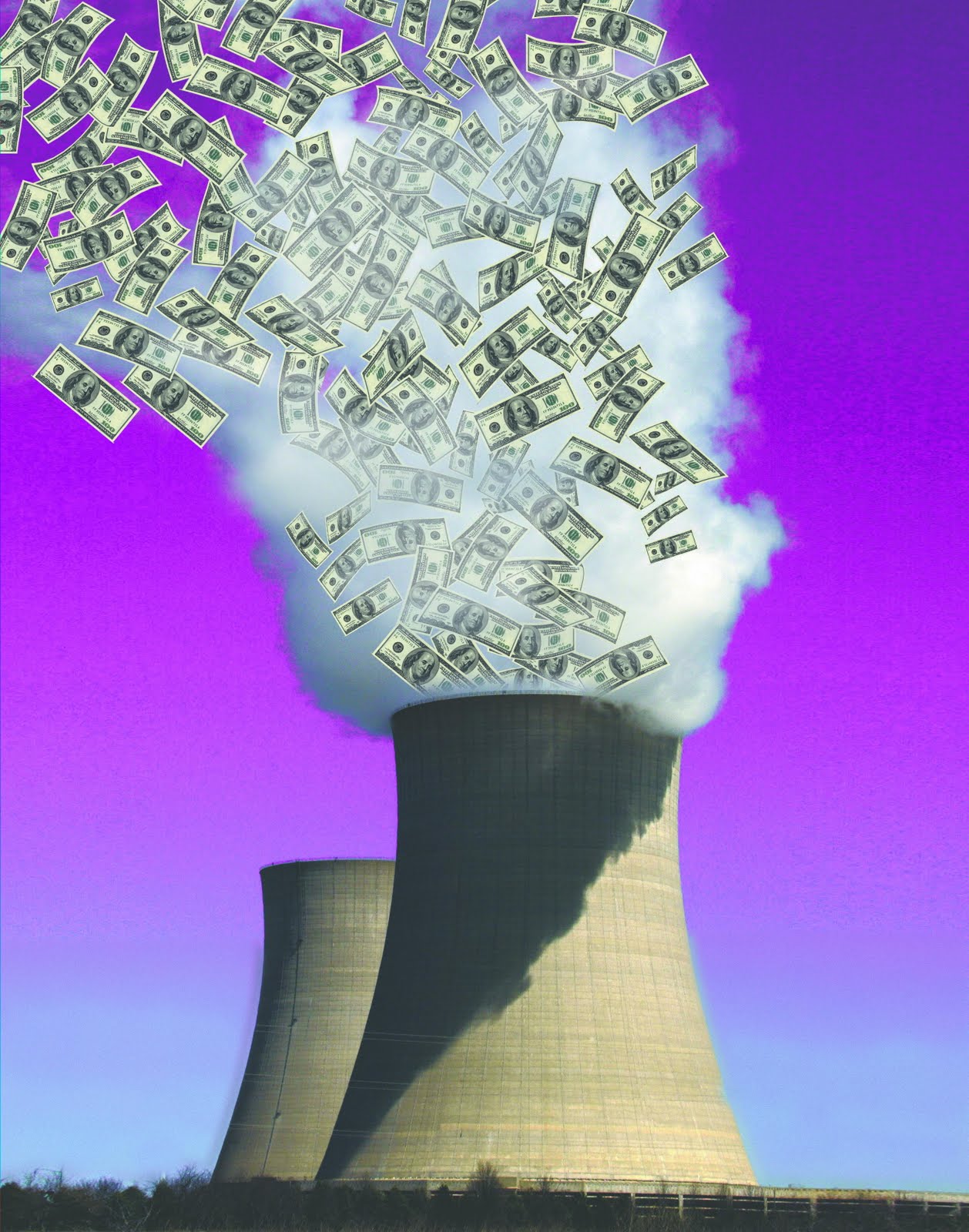
6) The Culture of Punishment. As nuclear power, once projected as “too cheap to meter,” has priced itself out of existence, so must three-strikes prison building make its idiocy felt. When the quick fix fails — as even a casual observer can see it must — Americans will have to confront the contradictions of dominance. And here our egalitarian “second language” can come into play, creaking open through cognitive dissonance. If even Dick Cheney supports his daughter in her lesbianism, can angry, punishing America be all that far behind?

All right. But as Cheney so famously said, “So?”

These approaches to the Authoritarian Personality do seem overly optimistic in the era of our once and future Congresses. And surely social and political structures of domination are firmly in place, prejudicing events and guiding their outcomes. But Melville directs our attention to the glimmer of hope, the “unknown but still reasoning thing” behind the unreasoning mask. Far better, perhaps, to organize toward that glimmer and engage that reason then to lapse into despair, and the powerless calling of names.

But can the vestigial better angels of our nature swell the chorus of a new, more humane union? Or have badder angel systems so suffocated us, for so long, that the better angels have turned their backs, taken their leave, and fled?

Lincoln’s angels must by now confront Walter Benjamin’s Angel:

…an angel who seems about to take leave of something, something at which he is staring. His eyes are wide, his mouth open and his wings outspread. This is what the Angel of History must look like. His face is turned toward the past. What look to us like a chain of occurrences appears to him as one great catastrophe incessantly piling wreck upon wreck and hurling it at his feet. He would very much like to stay, to waken the dead and make whole what has been shattered. But a storm is blowing so strongly from Paradise that his wings are pinned back: he can no longer close them. This storm drives him irresistibly into the future, to which his back is turned, while the pile before him grows. What we call progress — that is the storm.

As the winds increase, I’m not betting on the outcome.

[Marc Estrin is a writer, activist, and cellist, living in Burlington, Vermont. His novels, Insect Dreams, The Half Life of Gregor Samsa, The Education of Arnold Hitler, Golem Song, and The Lamentations of Julius Marantz have won critical acclaim. His memoir, Rehearsing With Gods: Photographs and Essays on the Bread & Puppet Theater (with Ron Simon, photographer) won a 2004 theater book of the year award. He is currently working on a novel about the dead Tchaikovsky.]

The Rag Blog

Posted in Rag Bloggers | Tagged , , | 1 Comment

BOOKS / Danny Schechter : Villains Galore! A Bankster Dozen

Bankster graphic from ANU News.

Villains galore!
Good holiday reads about
the great economic crisis

By Danny Schechter / The Rag Blog / December 4, 2010

Back in 2007, just as the markets began their meltdown, I started writing a book I called Plunder to investigate the then emerging economic calamity. I had a well-known agent representing me, and, at that time, had published 10 books. My agent warned me that I was ahead of the curve but agreed that the subject couldn’t be timelier.

Before we were through, the manuscript went to and was returned by 30 publishers. I was told that there is only one person that a book like mine had to pass muster with, not an economist, not a book editor — but the book buyer who handles business books for Barnes and Noble. If she/she didn’t like it, forget it. (This was before the bottom dropped out of that company that was later nearly sold.)

So much for their business savvy. I guess Plunder was too much of an anti-business book for them then.

At that point, they were looking for “How to Get Rich” books and volumes with investment advice. Since I was not offering either, my warnings of the collapse ahead were off-message. No sale. Finally, a small press, Cosimo Books put it out. Sadly, with no real advertising budget or retail support, it wasn’t going to go anywhere. It was on the money in one sense — published just before Lehman Brothers went down.

Since then, as the crisis was acknowledged and legitimated, the subject was finally validated for the publishing world, perhaps as millions of people began asking, “What the F…? What the hell happened?”

To answer that question, a mighty stream of crisis books was commissioned and soon poured forth. Every publisher wanted one. Some authors blamed psychological factors. Others were technical to a fault and unreadable. Still, others trashed borrowers who bought homes they couldn’t afford. Many framed the problem in terms of Wall Street mistakes and miscalculations, and occasionally greed.

Wrote Satyajit Das, author of Traders, Guns & Money: “The number of books on the Global Financial Crisis (GFC) has reached pandemic proportions — the World Health Organization (WHO) is investigating. With the decorum of vultures at a carcass, publishers are cashing in on the transitory interest of the masses (normally obsessed with war, scandal or reality TV shows) in the arcane minutiae of financial matters.”

Few indicted the system; fewer still focused on intentionality — crime in the suites, the subject I explore in my film Plunder: The Crime Of Our Time and the more detailed companion book The Crime of Our Time (Disinfo).

In the meantime, I tried to keep up with the hype and a flow that is still flowing.

Here are 12 books worth reading:

  1. The Pecora Investigation: Stock Exchange Practices and The Causes of the 1929 Stock Market Crash. This is the just reissued actual text of the U.S. Senate Committee on Banking and Currency in the days before the Congress was bought and sold. Pecora had said “Legal chicanery and pitch darkness were the banker’s stoutest allies.”

    So far, in today’s crisis, there has been only ONE real Senate hearing, by Senator Levin questioning ONE deal by Goldman Sachs who denied everything until the bank reached a $550 MILLION settlement without admitting any wrongdoing. Clearly we still need a new Pecora-like investigation, not a tepid Congressional inquiry commission

  2. Matt Taibbi: Griftopia: Bubble Machines, Vampire Squids and the Long Con that is Breaking America (Spiegel & Grau). As Rolling Stone readers know, Matt is a bold reporter and brilliant stylist turning his rage into brilliant prose and giving no mercy to the Goldman Sachs gang.
  3. Nomi Prims: It Takes A Pillage: Behind the Bailouts, Bonuses and Backroom Deals from Washington to Wall Street. An elegant writer, Nomi knows the financial world up close because she’s “been there and done that” with high paying stints at Bear Stearns and Goldman Sachs. You can see her brilliance in my film, Plunder. Her book goes much deeper.
  4. Les Leopold: The Looting of America: How Wall Street’s Game of Fantasy Finance Destroyed Our Jobs, Pensions and Prosperity — and What We Can Do About It (Chelsea Green). Les is a passionate and compelling writer, teacher and activist. He has been steeped in union politics and knows how to fuse analysis and agitation
  5. Joseph E. Stiglitz: Free Fall: America, Free Markets, and the Sinking of the Global Economy (Norton). Siglitz is the economist’s economist, a Nobel Prize Winner, an insider turned fierce critic of our economic crisis. He has the credentials and THE critique and a much needed global perspective.
  6. Howard Davies: The Financial Crisis: Who is to Blame? (Polity). I picked this book up at my alma mater, the London School of Economics, which Davies now directs. This is straight down the middle without dismissing more radical insights. He even references my critique of media complicity.
  7. Randall Lane: The Zeroes: My Misadventures in the Decade Wall Street Went Insane. A colorful personal account by a gonzo editor who covered the madness for Wall Street pubs. Sample: “Historically, Wall Street has been like one giant extended High School (A boy’s High School). The jocks become trader — large, aggressive men who succeed in the pits based on heft and testosterone. The nerds went into banking, crunching numbers and pumping out spread sheets to determine the efficacy of deals.”
  8. Yves Smith: ECONned: How Unenlightened Self Interest Undermined Democracy, and Corrupted Capitalism (Palgrave Macmillan). Yves is a rock star in the business of critical economics. A financial industry professional, she defected to the “light side” and founded the must read website, NakedCapitalism.com. This book skewers government policy, the economics “profession” and Wall Street fraudsters.
  9. Steig Larsson: The Millennium Trilogy. The late Swedish journalist, turned popular writer, has produced three volumes of best-selling action thrillers with intelligent plots. I cite his work here because he and the character he created, Mikael Blomkvist, were investigative reporters in the financial realm.

    Larsson describes Blomkvist’s contempt for his fellow financial journalists based on morality: “His contempt for his fellow financial journalists was based on something that in his opinion was as plain as morality. The equation was simple. A bank director who blows millions on foolhardy speculations should not keep his job. A managing director who plays shell company games should do time.

    “The job of the financial journalist was to examine the sharks who created interest crises and speculated away the savings of small investors, to scrutinise company boards with the same merciless zeal with which political reporters pursue the tiniest steps out of line of ministers and members of Parliament.”

    His books are more than storytelling. They are also a cry for more truth in media.

  10. And, since I try to practice the investigative protocols of journalism in this sphere, may I call your attention to the republication of one of the greatest American classics of taking on corporate power?

    Ida M. Tarbell may be gone but her work is not forgotten, especially her classic, two volume blistering The History of the Standard Oil Company. I was privileged to write the introduction for the Cosimo edition. She wrote this muckraking blockbuster in 1904 and remains relevant, and an example of the best of us.

  11. For a left critique, try Michael Chossudovsky and Andrew Gayin Marshall, Editors: The Global Economic Crisis: The Great Depression of the XXI Century (Global Research) from the Canadian-based global web site I contribute to.
  12. Barry James Dyke: The Pirates of Manhattan: Systematically Plundering The American Consumer and How To protect Yourself Against It. The one financial book I saw “blurbed” by Jay Leno (Self-published).


So, this is my “cheaper by the dozen” for 2010. I am sure I have overlooked some great work so it is hardly the “end-all” and “be-all.” Many of the new financial books out there are written by journalists for leading newspapers and magazines, as well as mainstream economists, many of whom missed the crisis when they might have warned us about it.

And, while many of us wait for the promised Wikileaks take down of a major bank, many authors and journalists still fail to tackle the really essential issues.

Hopefully, some of the books I am recommending will fill some gaps in your knowledge.

[“News Dissector” Danny Schechter is a journalist, author, Emmy award winning television producer, and independent filmmaker. Schechter directed Plunder: The Crime of Our Time, and a companion book, The Crime of Our Time: Why Wall Street Is Not Too Big to Jail. Contact him at dissector@mediachannel.org.]

Listen to Thorne Dreyer‘s Sept. 28 interview with journalist and filmmaker Danny Schechter on Rag Radio here. To find all shows on the Rag Radio archives, go here.

The Rag Blog

Posted in Rag Bloggers | Tagged , , , , , , , , | Leave a comment

Are the WikiLeaks documents a danger to our security, or do they serve the public’s right to know? Ted says, “I doubt if there’s any established government on earth that can’t access that kind of information, which means the only people these ‘secrets’ are being kept from are the voting public.” The documents may be revealing — and embarrassing — but it is unlikely any of these released cables will hurt the security of the United States.

Posted in RagBlog | Leave a comment

James McEnteer : Proud Heritage of Indians in South Africa

Indians first came to South Africa 150 years ago. Photo from Hindi Blog.

Indian givers:
South Africa isn’t all black and white

By James McEnteer / The Rag Blog / December 3, 2010

KWA-ZULU NATAL, South Africa — South Africans of Indian descent are commemorating the arrival of the first indentured Indian workers here 150 years ago. In November 1860, two ships brought nearly 700 laborers from India to Durban. By 1911 more than 150,000 indentured Indian workers had landed in South Africa. Most came to what is now the province of Kwa-Zulu Natal, where more than half of them worked in the sugar cane fields.

Today about 1.5 million Indians live in South Africa, a small but influential minority comprising about three percent of the country’s population. Indian South Africans have distinguished themselves in many professions, including medicine, academia, and commerce. Some have risen to Cabinet level government positions. Navanethem Pillay, a South African lawyer, university professor and judge of Indian descent has served since 2008 as the United Nations High Commissioner for Human Rights.

Before the British abolished slavery in 1833, some Indians had been sold into slavery along with Malays and Africans, primarily to work harvesting sugar cane in Britain’s tropical colonies. The British had become addicted to the sugar that went so well with the tea from India they had adopted as a comfort ritual on their cold island, a bit of cultural colonial blowback.

Workers contracted to work for five years for whatever employer they were assigned. After five years they could re-indenture or look elsewhere for work. Workers who spent 10 years in the colony had the right to a free passage back to India, or to remain as citizens in the colony.

The British tried to regulate the conditions of indenture, but workers often lived and worked in primitive, brutal circumstances, like slaves. Isolated from legal oversight, employers abused their indentured laborers with impunity. Workers returning to India complained of the overwork, malnourishment, and squalid living conditions they had to endure. A Coolie Commission was appointed in 1872 to protect Indian immigrants, but failed to prevent abuses.

The overtly racist government and society of the time dictated where Indians could live and how they could travel within the country. Despite this discrimination and the limitations on their freedom, more than half of the indentured laborers elected to remain in South Africa. Besides the cane fields of Natal, Indians worked at the port of Durban, in hospitals, in the coal mines, or helping to build the railroads.

A momentous event for the future of Indians in South Africa, and for the future transformation of the entire nation, was the arrival in the country of a young, newly-minted Indian lawyer, Mohandas Gandhi, in 1893. Gandhi had come to represent an Indian firm on a one-year contract. Less than a week into his stay, on a train from Durban to Pretoria to attend court, Gandhi was ordered out of his first-class compartment. When he refused to leave he was ejected from the train at Pietermaritzberg and forced to spend a cold night on a station bench.

Mahatma Gandhi shortly after arriving in South Africa, in 1895. Image from Wikimedia Commons.

In his Autobiography Gandhi describes his conflicting emotions during that long night and his temptation to return immediately to India. Instead he elected to stay, despite being barred from hotels and suffering other acts of discrimination daily, including violence. Gandhi extended his stay to oppose a bill denying Indians the right to vote. He helped found the Natal Indian Congress in 1894 and survived the attack of a white mob in Durban in 1897. When the government passed a law requiring registration of the Indian population in 1906, Gandhi led a mass protest, adopting non-violent resistance for the first time.

That struggle continued for seven years. Thousands of Indians were jailed, including Gandhi. Others were flogged and even shot for striking, refusing to register, or burning their registration cards. The public outcry at the government’s harsh methods of repressing the peaceful Indian protesters eventually forced South African officials to compromise with Gandhi.

Inspired by the success of this Indian movement, Black African leaders formed the African National Congress in 1912 to mount a similar resistance against racist oppression of their own kind. ANC efforts against apartheid, modeled on Gandhi’s non-violent principle of satyagraha, or “the force of truth,” encouraged massive peaceful disobedience of repressive laws. Ultimately, South Africa’s apartheid government yielded to ANC pressure and world sanctions without the massive bloodshed many feared was inevitable.

For these reasons and others, Indian descendants of indentured laborers have the right to be proud of their forebears. ANC political leaders owe Ghandi and other Indian activists thanks for being the catalysts of their own peaceful revolution. All South Africans, regardless of race, should be grateful for the Indian contributions to their current prosperity and cultural panache.

[James McEnteer is the author of Shooting the Truth: the Rise of American Political Documentaries. He lives in Kwa-Zulu Natal, South Africa]

Top, Indians arriving for the first time in Durban, South Africa, exact date unknown. Photo from Wikimedia Commons. Below, indentured Indians, still on the boat. Photo from SAHO.

The Rag Blog

Posted in Rag Bloggers | Tagged , , , , , , | 1 Comment

Bruce Melton : Catastrophic Change and Climate Blindness

Iceberg discharge is accelerating rapidly in Greenland. Photo by Bruce Melton / The Rag Blog.

Climate blindness

By Bruce Melton / The Rag Blog / December 2, 2010

Bruce Melton will be Thorne Dreyer’s guest on Rag Radio, Friday, Dec. 3, 2010, 2-3 p.m. (CST), on KOOP 91.7 FM in Austin. To stream Rag Radio live on the internet, go here. To listen to this interview after it is broadcast — and to other shows on the Rag Radio archives — go here.

[Bruce Melton sketched out some of this material in his November 28, 2010, Rag Blog article on dangerous climate change, “Climate Change and Global Economic Dysfunction.”]

How do we curb emissions with the way our society has evolved? Really. I mean serious curbing; enough to prevent dangerous climate change?

When considering the answer, dangerous climate change must be clearly defined. So, what exactly is dangerous climate change?

There is a disconnection between climate science and the public’s knowledge of climate change. The knowledge gap is becoming obvious to many, but to the climate scientists it is clear: there is a fundamental blindness in the vast majority of our society as to the meaning of man-caused climate change.

The disconnection itself is not easy to see without expert knowledge. The dendrochronologists have a hard enough time understanding the cryologists (tree ring scientists and ice scientists.)

Even so, the amount of important decision-making class of information being discovered is simply staggering. But the means to deliver this knowledge, to mine it out of the academic jargon and deliver it to the people, is just not there. Once this outreach issue is overcome however, and the disconnection is understood, the blindness becomes obvious.

Photo by Bruce Melton / The Rag Blog.

Researchers at Dalhousie University, Halifax, Nova Scotia, Canada, after evaluating a half million water clarity observations taken from the world’s oceans over the last 100 years, have come to the conclusion that ocean primary productivity has declined 40% since 1950. Primary productivity is that nearly planetary-size mass of life that makes up the algae and plankton in our oceans — it is the bottom of the food chain (1).

As our oceans warm, currents slow, nutrients become scarce and fewer of these creatures inhabit ocean water. These tiny and more often than not microscopic life forms use carbon dioxide to create organic material and tiny plankton shells made out of calcium carbonate, just like clams and oysters.

Once the life form that is using this organic and shell material dies, the remains drift to the ocean floor as what is called marine snow. After hundreds of thousands of years, this material accumulates enough to become limestone.

Scanning electron photography, colorized. These images are just a few of thousands of plankton that make up primary productivity in our oceans. Magnification is about 1,000 times. Photo from the Alfred Wagener Institute for Polar and Marine Research.

Primary productivity is responsible for a third to a half of all of the natural carbon dioxide sequestration on Earth, as well as a third to half of the atmospheric oxygen generation on Earth. Many things buffer impacts from the decline of this primary earth system, but tipping points likely exist. Because primary productivity is such a large planetary function, runaway greenhouse gas accumulation in the atmosphere and runaway loss of atmospheric oxygen could be the result.

Such a large change in ocean clarity demonstrated over such a long period as has been found by these Dalhousie researchers is clearly an indicator of great change. These types of earth systems disruptions are happening across the globe with impacts that are changing Earth like it has not changed in tens and even hundreds of millions of years.

From across the globe oceanographers have been grimacing over this year’s coral bleaching event that has likely been worse than during the super El Nino of ’98 — the worst bleaching event ever recorded. Overly warm, or record warm water temperatures are killing coral like mankind has never seen (2).

Large scale reef bleaching at Reunion Island in the western Indian Ocean. This type of bleaching is occurring throughout the Indian Ocean and Caribbean Sea. This year (2010) the bleaching was likely worse than anything ever recorded. Photo by John Pascal / Agence pour la Recherche et la Valorisation Marines (Aram).

The Arctic was declared functionally ice-free last summer for the first time in 14 million years in a paper in Geophysical Research Letters, or at the least, the argument was presented by one of the world’s leading Arctic sea ice scientists from the University of Manitoba in Winnipeg, Canada (3, 4).

Ultra high CO2 levels in prehistory were really only a third as high as we thought. Those 3,000 ppm CO2 concentrations back in the Mesozoic hothouse were in actuality only about 1,000 ppm. This means that our 21st century CO2 projection of the worst-case scenario nearing 1,000 ppm is frighteningly close to anything our planet has seen in the last 400 million years.

When we look back in time this far, and realize that modern atmospheric oxygen and carbon dioxide concentrations on Earth were stabilizing during this period after green plants colonized land, the implications of this finding are profound (5). (And yes, unfortunately we are progressing along the IPCC CO2 worst-case scenario (6).)

The dead trees from the pine beetle pandemic in Yellowstone, part of a warming induced bark beetle pandemic in the Rocky Mountains, responsible for 61 million acres of dead and dieing trees, billions of trees, in an area nearly the size of New England and Pennsylvania combined, are visible on Google.

The pandemic is 10 to 20 times larger than anything ever known, is growing rapidly, and scientists fear it will spread across the entire North American continent because its only enemy is extreme cold that has not been seen in more than a decade (7, 8).

Photo by Bruce Melton / The Rag Blog.

October 2010 was the 308th consecutive month with an average temperature above the 20th century average (9).

The evidence in the academic literature is simply overwhelming. But virulent societal tricks have sequestered much of this knowledge. Virtually none escapes the academic literature. The reasons are many and diverse and range from vested interests and religion to the scientists simply not being trained (or willing) to communicate their discoveries to the public in language that can be understood by non-specialists.

This black knowledge hole however, is but a symptom of the disconnection. If just one fundamental definition was understood, the disconnection could simply vanish.

The public’s misunderstanding of the definition of “dangerous climate change” was emphasized to me when I was made aware of a climate survey in the October issue of Scientific American.

Question #8 of the survey, the last question, read: How much would you be willing to pay to forestall the risk of catastrophic climate change? The response was 79.6 percent for “nothing.” (10).

The word catastrophic is often interchanged with dangerous as an outcome to avoid in climate change scenarios and if anything, a catastrophe would be worse than something that is dangerous. Regardless, the terms are often considered to be of similar outcome and will be used interchangeably in the rest of this article.

Anyone following the climate science polls across the country knows that the last decade has seen an actual decline in the public’s knowledge of climate science. In a series of Gallup polls beginning in 1997, the number of poll respondents who think climate scientists are exaggerating increased more than 50 percent (to 48 percent) from 2006. Sixty-seven percent of poll respondents believe that climate change will not pose a serious threat to them in their lifetimes. This is up 16 percent from 2008 (11).

All of this increased disbelief is happening while the science itself continues to grow more and more robust. A study of nearly 1,400 climate scientists agrees that the man-caused tenets of the IPCC are valid. What’s more, of the two to three percent that do not support man-caused climate change science, 80 percent have published fewer than 20 papers, while the IPCC crowd includes only 10 percent that have published fewer than 20 papers (12).


So seeing 79.6 percent of the public say that they would do “nothing” to prevent catastrophic climate change was not, to me, a red flag. It was the key.

If the Scientific American readership could say something like this, surely they just did not understand the definition of dangerous climate change.

Following up, I found that Scientific American had removed the poll from their website. This was curious. I searched more and found an article on the Scientific American site, by the editors of Scientific American, that explained a few things. It seems that the there is one more thing that makes it difficult for the public to understand climate science.

This one more thing unfortunately, is organized deceit. The Watts Up With That website, a prominent climate change denial portal, decided that it would be a good thing to load up the Scientific American poll with opinions from Watts Up With That visitors. Watts Up created a new web page urging its visitors to complete the Scientific American survey.

Their campaign netted 30.5% of the respondents on the survey, likely skewing the results quite significantly. And in an as yet unexplained coincidence, a website called www.smalldeadanimals.com accounted for 16 percent of the survey respondents. A quick visit to this site shows that it too is obviously full of climate change unbelievers.

Another key finding in the Scientific American editors’ investigation was that the number three ranked referring website was a well known climate science site by Joe Romm called Climate Progress. Referrals from this website accounted for only 2.9 percent of the respondents of the SA survey. This information tells us that this poll was definitely ruined by organized deceit emanating from a prominent climate denier website (13).

The underlying concept however, that the public has a significant misunderstanding of the science, as is shown by the Gallup polls (and many others) is still valid. The key to the blindness must be that, if the definition of “dangerous climate change” was understood, even by the climate deniers, the answer that would have been chosen for question #8 would certainly have been something other than “nothing.”


So then, what do the scientists say is the definition of dangerous climate change? The Intergovernmental Panel on Climate Change (IPCC) specifically does not define dangerous climate change. They say that the definition is a value judgment that should be made by policy makers, not the IPCC. They do suggest however that the definition would include threats to our food supply, or the creation of unsustainable economic conditions.

At the European Climate Forum of the United Nations Framework Convention on Climate Change in Buenos Aires in 2004, the topic of dangerous climate change was the main event. They said that dangerous climate change could include circumstances that could lead to global and unprecedented consequences, extinction of “iconic” species, loss of entire ecosystems, loss of human cultures, water resource threats, and substantial increases in mortality.

They say these dangers could include Arctic sea ice retreat, boreal forest fires, increases in frequency of drought, widespread dangers over a large region, most likely related to food security, water resources, infrastructure, or ecosystems (14).

An abrupt sea level jump would be a dangerous climate change. The last time Earth was as close to being as warm as it is today, 121,000 years ago, sea level jumped 10 feet in 100 years for 300 years in a row (about 10 meters total). The jump was likely because of collapse of the West Antarctic Ice Sheet (WAI), and it has been shown that the WAI is destabilizing now. (15, 16)


A sea level rise of just one foot per decade (30 mm), just an inch and three sixteenths per year, would wreak utter havoc across the planet after just a couple of years. To start with, the United States Geological Survey, Environmental Protection Agency, National Oceanic and Atmospheric Administration, and Department of Transportation say, in a mega report from 2009, that the threshold for regeneration of coastal barrier islands and coastal wetlands is just a quarter of an inch (seven millimeters) per year of sea level rise.

This means that sea level rise of greater than a quarter of an inch per year would either cause the disintegration of our coastal barrier islands and wetlands, or keep them from naturally regenerating after they are gone.

There are 405 barrier islands on the Atlantic and Gulf Coasts of the U.S. totaling over 3,000 miles in length and there are 5.3 million acres of coastal wetlands. All would be destroyed.


This documented rate of sea level rise of an inch and three sixteenths per year is more than four times greater than the barrier island and wetland disintegration threshold. Our coastal defenses against storms would completely disappear, taking their trillions of dollars of weather defenses with them, not to mention the loss of one of the most productive eco regions on the planet (17).

When the beaches go, the refugees begin to flow, millions per year. Then the world’s coastal infrastructure begins to submerge. Nearly half of Earth’s industrial capacity is close to sea level.

Over the last 100 years, sea level has risen only five or six inches. Across the globe 233 million people would be displaced by 10 feet of sea level rise. This is 2.3 million climate refugees per year. The United States Geologic Survey says that a 10-meter sea level rise, something like what happened 121,000 years ago, would flood a quarter of the United States population (about 78 million Americans), and nearly 1 billion people worldwide (870 million) (18, 19, 20).

And what of the 2007 IPCC projection of about a foot of sea level rise this century? They do not take into consideration, and the IPCC scientists persistently and frequently caveat their report in the text and footnotes saying that, because too little is known, dynamical ice sheet disintegrations are not taken into consideration in the projections of sea level rise.

This rapid jump in sea level 121,000 years ago, likely caused by the disintegration of the West Antarctic Ice sheet, is just such a dynamical event that is excluded from consideration of sea level rise by the IPCC.

The Dust Bowl is to weather like megadroughts are to climate change. The dust bowl was but a small blip on the climate change screen, meaning that the 10-year long Dust Bowl was a relatively insignificant event in a discussion of climate. The Dust Bowl was a really long weather event and should be viewed in that context. Weather events are not climate. Climate is the result of weather happening over time periods of generations to centuries.

Megadroughts have reoccurred repeatedly in the prehistoric past with ample evidence that the Great Plains of North America was changed to a sea of shifting sand. They simply dwarf any drought that we as a society have experienced since long before the Industrial Revolution began.

Dangerous climate change includes megadroughts that would simply wipe out agriculture in much of North America. Megadroughts from the past were typically 10 to 30 times as long as the Dust Bowl (100 to 300 plus years) with only half as much precipitation. These extreme climate events have happened because of the “natural” variability of our climate. Warming projected for the future and the latest high-resolution climate models show that perpetual drought will settle over much of North America in a megadrought scenario similar to the past (21).

Dangerous climate change changes Earth’s environment beyond the evolutionary niches of fundamental ecological services like primary productivity. When the bottom of the ocean food chain is compromised, everything on Earth is compromised. The same goes for the Great Plains changing to a sea of shifting sand.

Photo by Bruce Melton / The Rag Blog.

This is the fundamental blindness. Dangerous climate change is dangerous to mankind. It threatens our very existence on this planet. It can happen in a geologic instant. And it is not just a distant “future” climate change that threatens us. This fundamental blindness will not allow us to see the disconnection between the public’s knowledge and the science.

In fact, the disconnection is so large, the blindness so profound, that right now, today, we have already passed beyond the threshold of dangerous climate change. In the 1990s, this threshold was 3 degrees C. of warming or about 550 ppm CO2. The 2001 IPCC report lowered this safe threshold to 450 ppm CO2 or 2 degrees C. warming.

This gets a little complicated now, so stay with me. Before the Industrial Revolution our atmospheric CO2 concentration was 280 ppm. Today it is 387 ppm, and we know that our planet has a tipping point where glaciation begins (or ends) at the poles at 450 ppm CO2 equaling about 2 degrees warming over the preindustrial times. This is one of the fundamental reasons that climate policy treaties like the Kyoto Protocol have defined 2 degrees C. of warming as the threshold for dangerous climate change.

Since the industrial revolution, Earth has warmed 0.76 degrees C. There is also warming in the pipeline of about 0.5 degrees C that is masked in our oceans. It takes a long time for the oceans to warm. Once warmed, the heat that they have been absorbing will stay in our atmosphere. About 90 percent of the 0.5 degrees of warming in the pipeline will occur by 2100.

A significant body of climate scientists have now published academic papers showing that a 350 ppm concentration should be the threshold level for determining dangerous climate change.

What, you say? Our atmospheric CO2 concentration has already passed 350 ppm. Yes it has, and we have another half degree of warming in the pipeline. The trouble is, there is a lot more than half a degree hidden in the sky.

Atmospheric aerosols are masking the warming. They occur mostly in the form of smog, significantly in the form of what is called the Asian Brown Cloud (a massive smog bank that covers much of Asia and can blow far out into the Pacific and can even be recognized in the U.S. when conditions are right.) There is so much smog in the developing world, and it is so good at cooling our atmosphere, that a full 1.0 degree C of warming is hidden because the smog cools Earth (22).

As these developing nations continue to develop, they will likely bring their air pollution under control similarly to what happened in the U.S. after the end of World War II. It was during this period that air pollution due to rapid growth and industrialization created tremendous smog problems across the country.

Environmental regulations were rapidly ramped up the 1970s when the big pollution laws were created which led to significant reductions in air pollution emissions that cause smog. The developing nations across the world, responsible for the 1 degree C. of warming, will likely remove their warming masks by the end of the century. This leaves us with:

Warming already = 0.76 degrees C.
Warming in the pipeline (90%) = 0.45 degrees C.
Hidden warming = 1.00 degrees
Total warming by 2100 = 2.21 degrees C.

One more important CO2 math thing: This 2.2 degrees C. of warming has been based on stabilizing CO2 at 2005 levels of 383 ppm. If CO2 goes higher, and it will not likely stop going higher for several decades, there will be more warming. And at the rate that we are increasing CO2 (remember, faster than the worst-case scenario) there will be a lot more CO2 emitted before we begin to bring things under control.

So if you are beginning to think the 350 ppm CO2 dangerous climate change threshold is a little high, you are not alone. The latest work done on the threshold comes from the University of California, Santa Barbara. This work (Morrigan 2010) suggests that 300 ppm CO2 is more appropriate as a threshold above which we can expect dangerous climate change.

So the short story says we need to actively begin removing carbon dioxide from our atmosphere, not just reducing emissions. Most would say that this is a tall order and we are likely doomed.

Realistically, we have a few years yet. The great thermal mass of the oceans slows climate change by decades to even a generation or more. We have a second chance in effect, at least if the West Antarctic Ice Sheet can hold on. Surprisingly, the costs will likely not be more than one to two percent of GDP. At least, this is what Lord Nicholas Sterns says.

Lord Stern’s groundbreaking 700-page global economic analysis of climate change (2006) not only says that the costs will be relatively benign but adds that there will quite likely be benefits that far outweigh the costs. Lord Stern was the UK’s Chief Economist under Prime Minister Tony Blair.

I am also certain that there are plenty of sequestration technologies in the developing and proving stages that can feasibly do the job, including clean coal… if, we act really soon. Our society has the capacity for tremendously large accomplishments on short order. World War II, The moonshot, The Manhattan Project, the Great Wall of China, the pyramids, and the U.S Interstate Highways System, all are indicators that we can handle large projects quickly, even on borrowed money.

Things are bad now. They are much worse than the public understands because of the disconnected climate blindness and they are getting worse faster than expected. In simple terms, we need to start spending money on our environment like we have recently spent it on institutions that are too big to fail.

[Bruce Melton is a registered professional engineer, environmental researcher, trained outreach specialist, and environmental filmmaker. He has been translating and interpreting scholarly science publications for two decades. His main mission is filming and reporting on the impacts of climate changes happening now, unknown to the greater portion of society. Austin, Texas is his home. His writing and films are on his website.]

References:

1) Primary productivity declined 40% since 1950… Boyce et. al., Global Phytoplankton decline over the past century, Nature, July 2010. Press Release: Phytoplankton in retreat, Dalhouse University.
2)
Worst bleaching event ever recorded…

3) Functionally ice free… Barber et. al., Perennial pack ice in the southern Beaufort Sea was not as it appeared in the summer of 2009, Geophysical Research Letters, December 2009.
http://www.agu.org/journals/ABS/2009/2009GL041434.shtml
News Release: University of Manitoba, Canada.
4)
14 million years… Perovich and Richter-Menge, Loss of Sea Ice in the Arctic, US Army Engineering Research Center, Cold Regions Research and Engineering, 2009.
http://arjournals.annualreviews.org/doi/full/10.1146/annurev.marine.010908.163805
5)
Mesozoic CO2 1,000 ppm, not 3,000 ppm… Breecker, et. al., Atmospheric CO2 concentrations during ancient greenhouse climates were similar to those predicted for A.D. 2100, PNAS, October 2009.
http://www.pnas.org/content/107/2/576.full.pdf+html
6)
Worst-case Scenario… Raupach and Canadell, Carbon and the Anthropocene, Current Opinion in Environmental Sustainability, August 2010.
7)
Beetle kill in the Greater Yellowstone Ecosystem seen from Google… Link
8)
Ten to 20 times greater, concerns of continent wide outbreak… Bentz, et. al., Climate Change and Bark Beetles of the western United States and Canada: Direct and indirect effects, Bioscience, September 2010.
9)
308th consecutive month above average…
http://www.ncdc.noaa.gov/sotc/?report=global
10)
Scientific American Climate Survey results: link
11)
Gallup, Americans Global Warming Concerns Continue to Drop, March 11, 2010… link
12)
Ninety-seven to ninety-eight percent of scientists agree… Anderegg, et. al., Expert Credibility in climate change, PNAS April 2010.
http://www.pnas.org/content/early/2010/06/22/1003187107.full.pdf+html
13)
Scientific American investigation of Watts Up website slam of their survey… http://www.scientificamerican.com/blog/post.cfm?id=do-80-percent-of-scientific-america-2010-11-17
14)
At the European Climate Forum… What is Dangerous Climate Change? Initial Results of a Symposium on Key Vulnerable Regions Climate change and Article 2 of the UNFCCC, Buenos Aires, December 14, 2004.
http://www.european-climate-forum.net/fileadmin/ecf-documents/publications/articles-and-papers/what-is-dangerous-climate-change.pdf
15)
Sea level rise of over 10 feet in 100 years… Blanchon, et. al., Rapid sea level rise and reef back stepping at the close of the last interglacial highstand, Nature, April 2009.
16) West Antarctic Ice Sheet Collapse may have already begun… Katz and Worster, Stability of ice sheet grounding lines, Proceedings of the Royal Society, January 2010.
http://rspa.royalsocietypublishing.org/content/early/2010/01/13/rspa.2009.0434.short?rss=1
17)
Barrier island and coastal wetland regeneration threshold of 7 mm per year…US Geological Survey, Environmental Protection Agency, National Oceanic And Atmospheric Administration and Department of Transportation Report, U.S. Climate Change Science Program Coastal Sensitivity to Sea Level Rise: A Focus on the Mid-Atlantic Region, November 2009.
http://www.climatescience.gov/Library/sap/sap4-1/final-report/
18)
233 million climate change refugees from 10 feet of sea level rise… Risk of Rising Sea Level to Population and Land Area, EOS, Transactions of the American Geophysical Union, February 2007.
http://www.clas.ufl.edu/users/prwaylen/GEO2200ARTICLES/Part2/hydrologic/Sea%20level%20rise.pdf
19)
Ten meters of sea level rise would displace 78 million Americans… http://pubs.usgs.gov/fs/fs2-00/
20)
Nearly one billion people live within 10 meters… United States Geologic Survey, Center of Excellence for Geospatial Information Science (CEGIS) http://cegis.usgs.gov/sea_level_rise.html
21)
Continental scale desertification…

  • deMenocal, et. al., Coherent high and low latitude variability during the Holocene warm period, Science, June 2000.
  • Cook, et. al., Long Term Aridity Changes in the Western United States, Science 306, 1015, 2004.
  • Miao, et. al., High resolution proxy record of Holocene climate from a loess section in Southwest Nebraska, Paleoclimatology, September 2006.
  • Cook, et. al., North American Drought: Reconstructions, Causes, and Consequences, Earth Science Reviews, March 200.
  • Broecker and Kunzig, Fixing Climate, Three Books Publishing, 2008.

22) We have already passed the threshold of dangerous climate change…

The Rag Blog

Posted in Rag Bloggers | Tagged , , , , , | 9 Comments


Climate Blindness

By Bruce Melton

How do we curb emissions with the way our society has evolved? Really. I mean serious curbing; enough to prevent dangerous climate change?

When considering the answer, dangerous climate change must be clearly defined. So, what exactly is dangerous climate change?

There is a disconnection between climate science and the public’s knowledge of climate change. The knowledge gap is becoming obvious to many, but to the climate scientists it is clear: there is a fundamental blindness in the vast majority of our society as to the meaning of man-caused climate change.

The disconnection itself is not easy to see without expert knowledge. The dendrochronologists have a hard enough time understanding the cryologists (tree ring scientists and ice scientists.)

Even so, the amount of important decision-making class of information being discovered is simply staggering. But the means to deliver this knowledge, to mine it out of the academic jargon and deliver it to the people, is just not there. Once this outreach issue is overcome however, and the disconnection is understood, the blindness becomes obvious.

Researchers at Dalhousie University, Halifax, Nova Scotia, Canada, after evaluating a half million water clarity observations taken from the world’s oceans over the last 100 years, have come to the conclusion that ocean primary productivity has declined 40% since 1950. Primary productivity is that nearly planetary-size mass of life that makes up the algae and plankton in our oceans — it is the bottom of the food chain (1).

As our oceans warm, currents slow, nutrients become scarce and fewer of these creatures inhabit ocean water. These tiny and more often than not microscopic life forms use carbon dioxide to create organic material and tiny plankton shells made out of calcium carbonate, just like clams and oysters.

Once the life form that is using this organic and shell material dies, the remains drift to the ocean floor as what is called marine snow. After hundreds of thousands of years, this material accumulates enough to become limestone.

Primary productivity is responsible for a third to a half of all of the natural carbon dioxide sequestration on Earth, as well as a third to half of the atmospheric oxygen generation on Earth. Many things buffer impacts from the decline of this primary earth system, but tipping points likely exist. Because primary productivity is such a large planetary function, runaway greenhouse gas accumulation in the atmosphere and runaway loss of atmospheric oxygen could be the result.

Such a large change in ocean clarity demonstrated over such a long period as has been found by these Dalhousie researchers is clearly an indicator of great change. These types of earth systems disruptions are happening across the globe with impacts that are changing Earth like it has not changed in tens and even hundreds of millions of years.

From across the globe oceanographers have been grimacing over this year’s coral bleaching event that has likely been worse than during the super El Nino of ’98 — the worst bleaching event ever recorded. Overly warm, or record warm water temperatures are killing coral like mankind has never seen (2).

The Arctic was declared functionally ice-free last summer for the first time in 14 million years in a paper in Geophysical Research Letters, or at the least, the argument was presented by one of the world’s leading Arctic sea ice scientists from the University of Manitoba in Winnipeg, Canada (3, 4).

Ultra high CO2 levels in prehistory were really only a third as high as we thought. Those 3,000 ppm CO2 concentrations back in the Mesozoic hothouse were in actuality only about 1,000 ppm. This means that our 21st century CO2 projection of the worst-case scenario nearing 1,000 ppm is frighteningly close to anything our planet has seen in the last 400 million years.

When we look back in time this far, and realize that modern atmospheric oxygen and carbon dioxide concentrations on Earth were stabilizing during this period after green plants colonized land, the implications of this finding are profound (5). (And yes, unfortunately we are progressing along the IPCC CO2 worst-case scenario (6).)

The dead trees from the pine beetle pandemic in Yellowstone, part of a warming induced bark beetle pandemic in the Rocky Mountains, responsible for 61 million acres of dead and dieing trees, billions of trees, in an area nearly the size of New England and Pennsylvania combined, are visible on Google.

The pandemic is 10 to 20 times larger than anything ever known, is growing rapidly, and scientists fear it will spread across the entire North American continent because its only enemy is extreme cold that has not been seen in more than a decade (7, 8).

October 2010 was the 308th consecutive month with an average temperature above the 20th century average (9).

The evidence in the academic literature is simply overwhelming. But virulent societal tricks have sequestered much of this knowledge. Virtually none escapes the academic literature. The reasons are many and diverse and range from vested interests and religion to the scientists simply not being trained (or willing) to communicate their discoveries to the public in language that can be understood by non-specialists.

This black knowledge hole however, is but a symptom of the disconnection. If just one fundamental definition was understood, the disconnection could simply vanish.

The public’s misunderstanding of the definition of “dangerous climate change” was emphasized to me when I was made aware of a climate survey in the October issue of Scientific American.

Question #8 of the survey, the last question, read: How much would you be willing to pay to forestall the risk of catastrophic climate change? The response was 79.6 percent for “nothing.” (10).

The word catastrophic is often interchanged with dangerous as an outcome to avoid in climate change scenarios and if anything, a catastrophe would be worse than something that is dangerous. Regardless, the terms are often considered to be of similar outcome and will be used interchangeably in the rest of this article.

Anyone following the climate science polls across the country knows that the last decade has seen an actual decline in the public’s knowledge of climate science. In a series of Gallup polls beginning in 1997, the number of poll respondents who think climate scientists are exaggerating increased more than 50 percent (to 48 percent) from 2006. Sixty-seven percent of poll respondents believe that climate change will not pose a serious threat to them in their lifetimes. This is up 16 percent from 2008 (11).

All of this increased disbelief is happening while the science itself continues to grow more and more robust. A study of nearly 1,400 climate scientists agrees that the man-caused tenets of the IPCC are valid. What’s more, of the two to three percent that do not support man-caused climate change science, 80 percent have published fewer than 20 papers, while the IPCC crowd includes only 10 percent that have published fewer than 20 papers (12).

So seeing 79.6 percent of the public say that they would do “nothing” to prevent catastrophic climate change was not, to me, a red flag. It was the key.

If the Scientific American readership could say something like this, surely they just did not understand the definition of dangerous climate change.

Following up, I found that Scientific American had removed the poll from their website. This was curious. I searched more and found an article on the Scientific American site, by the editors of Scientific American, that explained a few things. It seems that the there is one more thing that makes it difficult for the public to understand climate science.

This one more thing unfortunately, is organized deceit. The Watts Up With That website, a prominent climate change denial portal, decided that it would be a good thing to load up the Scientific American poll with opinions from Watts Up With That visitors. Watts Up created a new web page urging its visitors to complete the Scientific American survey.

Their campaign netted 30.5% of the respondents on the survey, likely skewing the results quite significantly. And in an as yet unexplained coincidence, a website called www.smalldeadanimals.com accounted for 16 percent of the survey respondents. A quick visit to this site shows that it too is obviously full of climate change unbelievers.

Another key finding in the Scientific American editors’ investigation was that the number three ranked referring website was a well known climate science site by Joe Romm called Climate Progress. Referrals from this website accounted for only 2.9 percent of the respondents of the SA survey. This information tells us that this poll was definitely ruined by organized deceit emanating from a prominent climate denier website (13).

The underlying concept however, that the public has a significant misunderstanding of the science, as is shown by the Gallup polls (and many others) is still valid. The key to the blindness must be that, if the definition of “dangerous climate change” was understood, even by the climate deniers, the answer that would have been chosen for question #8 would certainly have been something other than “nothing.”

So then, what do the scientists say is the definition of dangerous climate change? The Intergovernmental Panel on Climate Change (IPCC) specifically does not define dangerous climate change. They say that the definition is a value judgment that should be made by policy makers, not the IPCC. They do suggest however that the definition would include threats to our food supply, or the creation of unsustainable economic conditions.

At the European Climate Forum of the United Nations Framework Convention on Climate Change in Buenos Aires in 2004, the topic of dangerous climate change was the main event. They said that dangerous climate change could include circumstances that could lead to global and unprecedented consequences, extinction of “iconic” species, loss of entire ecosystems, loss of human cultures, water resource threats, and substantial increases in mortality.

They say these dangers could include Arctic sea ice retreat, boreal forest fires, increases in frequency of drought, widespread dangers over a large region, most likely related to food security, water resources, infrastructure, or ecosystems (14).

An abrupt sea level jump would be a dangerous climate change. The last time Earth was as close to being as warm as it is today, 121,000 years ago, sea level jumped 10 feet in 100 years for 300 years in a row (about 10 meters total). The jump was likely because of collapse of the West Antarctic Ice Sheet (WAI), and it has been shown that the WAI is destabilizing now. (15, 16)

A sea level rise of just one foot per decade (30 mm), just an inch and three sixteenths per year, would wreak utter havoc across the planet after just a couple of years. To start with, the United States Geological Survey, Environmental Protection Agency, National Oceanic and Atmospheric Administration, and Department of Transportation say, in a mega report from 2009, that the threshold for regeneration of coastal barrier islands and coastal wetlands is just a quarter of an inch (seven millimeters) per year of sea level rise.

This means that sea level rise of greater than a quarter of an inch per year would either cause the disintegration of our coastal barrier islands and wetlands, or keep them from naturally regenerating after they are gone.

There are 405 barrier islands on the Atlantic and Gulf Coasts of the U.S. totaling over 3,000 miles in length and there are 5.3 million acres of coastal wetlands. All would be destroyed.

This documented rate of sea level rise of an inch and three sixteenths per year is more than four times greater than the barrier island and wetland disintegration threshold. Our coastal defenses against storms would completely disappear, taking their trillions of dollars of weather defenses with them, not to mention the loss of one of the most productive eco regions on the planet (17).

When the beaches go, the refugees begin to flow, millions per year. Then the world’s coastal infrastructure begins to submerge. Nearly half of Earth’s industrial capacity is close to sea level.

Over the last 100 years, sea level has risen only five or six inches. Across the globe 233 million people would be displaced by 10 feet of sea level rise. This is 2.3 million climate refugees per year. The United States Geologic Survey says that a 10-meter sea level rise, something like what happened 121,000 years ago, would flood a quarter of the United States population (about 78 million Americans), and nearly 1 billion people worldwide (870 million) (18, 19, 20).

And what of the 2007 IPCC projection of about a foot of sea level rise this century? They do not take into consideration, and the IPCC scientists persistently and frequently caveat their report in the text and footnotes saying that, because too little is known, dynamical ice sheet disintegrations are not taken into consideration in the projections of sea level rise.

This rapid jump in sea level 121,000 years ago, likely caused by the disintegration of the West Antarctic Ice sheet, is just such a dynamical event that is excluded from consideration of sea level rise by the IPCC.

The Dust Bowl is to weather like megadroughts are to climate change. The dust bowl was but a small blip on the climate change screen, meaning that the 10-year long Dust Bowl was a relatively insignificant event in a discussion of climate. The Dust Bowl was a really long weather event and should be viewed in that context. Weather events are not climate. Climate is the result of weather happening over time periods of generations to centuries.

Megadroughts have reoccurred repeatedly in the prehistoric past with ample evidence that the Great Plains of North America was changed to a sea of shifting sand. They simply dwarf any drought that we as a society have experienced since long before the Industrial Revolution began.

Dangerous climate change includes megadroughts that would simple wipe out agriculture in much of North America. Megadroughts from the past were typically 10 to 30 times as long as the Dust Bowl (100 to 300 plus years) with only half as much precipitation. These extreme climate events have happened because of the “natural” variability of our climate. Warming projected for the future and the latest high-resolution climate models show that perpetual drought will settle over much of North America in a megadrought scenario similar to the past (21).

Dangerous climate change changes Earth’s environment beyond the evolutionary niches of fundamental ecological services like primary productivity. When the bottom of the ocean food chain is compromised, everything on Earth is compromised. The same goes for the Great Plains changing to a sea of shifting sand.

This is the fundamental blindness. Dangerous climate change is dangerous to mankind. It threatens our very existence on this planet. It can happen in a geologic instant. And it is not just a distant “future” climate change that threatens us. This fundamental blindness will not allow us to see the disconnection between the public’s knowledge and the science.

In fact, the disconnection is so large, the blindness so profound, that right now, today, we have already passed beyond the threshold of dangerous climate change. In the 1990s, this threshold was 3 degrees C. of warming or about 550 ppm CO2. The 2001 IPCC report lowered this safe threshold to 450 ppm CO2 or 2 degrees C. warming.

This gets a little complicated now, so stay with me. Before the Industrial Revolution our atmospheric CO2 concentration was 280 ppm. Today it is 387 ppm, and we know that our planet has a tipping point where glaciation begins (or ends) at the poles at 450 ppm CO2 equaling about 2 degrees warming over the preindustrial times. This is one of the fundamental reasons that climate policy treaties like the Kyoto Protocol have defined 2 degrees C. of warming as the threshold for dangerous climate change.

Since the industrial revolution, Earth has warmed 0.76 degrees C. There is also warming in the pipeline of about 0.5 degrees C that is masked in our oceans. It takes a long time for the oceans to warm. Once warmed, the heat that they have been absorbing will stay in our atmosphere. About 90 percent of the 0.5 degrees of warming in the pipeline will occur by 2100.

A significant body of climate scientists have now published academic papers showing that a 350 ppm concentration should be the threshold level for determining dangerous climate change.

What, you say? Our atmospheric CO2 concentration has already passed 350 ppm. Yes it has, and we have another half degree of warming in the pipeline. The trouble is, there is a lot more than half a degree hidden in the sky.

Atmospheric aerosols are masking the warming. They occur mostly in the form of smog, significantly in the form of what is called the Asian Brown Cloud (a massive smog bank that covers much of Asia and can blow far out into the Pacific and can even be recognized in the U.S. when conditions are right.) There is so much smog in the developing world, and it is so good at cooling our atmosphere, that a full 1.0 degree C of warming is hidden because the smog cools Earth (22).

As these developing nations continue to develop, they will likely bring their air pollution under control similarly to what happened in the U.S. after the end of World War II. It was during this period that air pollution due to rapid growth and industrialization created tremendous smog problems across the country.

Environmental regulations were rapidly ramped up the 1970s when the big pollution laws were created which led to significant reductions in air pollution emissions that cause smog. The developing nations across the world, responsible for the 1 degree C. of warming, will likely remove their warming masks by the end of the century. This leaves us with:

Warming already = 0.76 degrees C.
Warming in the pipeline (90%) = 0.45 degrees C.
Hidden warming = 1.00 degrees
Total warming by 2100 = 2.21 degrees C.

One more important CO2 math thing: This 2.2 degrees C. of warming has been based on stabilizing CO2 at 2005 levels of 383 ppm. If CO2 goes higher, and it will not likely stop going higher for several decades, there will be more warming. And at the rate that we are increasing CO2 (remember, faster than the worst-case scenario) there will be a lot more CO2 emitted before we begin to bring things under control.

So if you are beginning to think the 350 ppm CO2 dangerous climate change threshold is a little high, you are not alone. The latest work done on the threshold comes from the University of California, Santa Barbara. This work (Morrigan 2010) suggests that 300 ppm CO2 is more appropriate as a threshold above which we can expect dangerous climate change.

So the short story says we need to actively begin removing carbon dioxide from our atmosphere, not just reducing emissions. Most would say that this is a tall order and we are likely doomed.

Realistically, we have a few years yet. The great thermal mass of the oceans slows climate change by decades to even a generation or more. We have a second chance in effect, at least if the West Antarctic Ice Sheet can hold on. Surprisingly, the costs will likely not be more than one to two percent of GDP. At least, this is what Lord Nicholas Sterns says.

Lord Stern’s groundbreaking 700-page global economic analysis of climate change (2006) not only says that the costs will be relatively benign but adds that there will quite likely be benefits that far outweigh the costs. Lord Stern was the UK’s Chief Economist under Prime Minister Tony Blair.

I am also certain that there are plenty of sequestration technologies in the developing and proving stages that can feasibly do the job, including clean coal… if, we act really soon. Our society has the capacity for tremendously large accomplishments on short order. World War II, The moonshot, The Manhattan Project, the Great Wall of China, the pyramids, and the U.S Interstate Highways System, all are indicators that we can handle large projects quickly, even on borrowed money.

Things are bad now. They are much worse than the public understands because of the disconnected climate blindness and they are getting worse faster than expected. In simple terms, we need to start spending money on our environment like we have recently spent it on institutions that are too big to fail.

[Bruce Melton is a registered professional engineer, environmental researcher, trained outreach specialist, and environmental filmmaker. He has been translating and interpreting scholarly science publications for two decades. His main mission is filming and reporting on the impacts of climate changes happening now, unknown to the greater portion of society. Austin, Texas is his home. His writing and films are on his website.]

References:

1) Primary productivity declined 40% since 1950… Boyce et. al., Global Phytoplankton decline over the past century, Nature, July 2010. Press Release: Phytoplankton in retreat, Dalhouse University.
2) Worst bleaching event ever recorded…

3) Functionally ice free… Barber et. al., Perennial pack ice in the southern Beaufort Sea was not as it appeared in the summer of 2009, Geophysical Research Letters, December 2009.
http://www.agu.org/journals/ABS/2009/2009GL041434.shtml
News Release: University of Manitoba, Canada.
4) 14 million years… Perovich and Richter-Menge, Loss of Sea Ice in the Arctic, US Army Engineering Research Center, Cold Regions Research and Engineering, 2009.
http://arjournals.annualreviews.org/doi/full/10.1146/annurev.marine.010908.163805
5) Mesozoic CO2 1,000 ppm, not 3,000 ppm… Breecker, et. al., Atmospheric CO2 concentrations during ancient greenhouse climates were similar to those predicted for A.D. 2100, PNAS, October 2009.
http://www.pnas.org/content/107/2/576.full.pdf+html
6) Worst-case Scenario… Raupach and Canadell, Carbon and the Anthropocene, Current Opinion in Environmental Sustainability, August 2010. Source Link
7) Beetle kill in the Greater Yellowstone Ecosystem seen from Google… Link
8) Ten to 20 times greater, concerns of continent wide outbreak… Bentz, et. al., Climate Change and Bark Beetles of the western United States and Canada: Direct and indirect effects, Bioscience, September 2010.
9) 308th consecutive month above average…
http://www.ncdc.noaa.gov/sotc/?report=global
10) Scientific American Climate Survey results: link
11) Gallup, Americans Global Warming Concerns Continue to Drop, March 11, 2010… link
12) Ninety-seven to ninety-eight percent of scientists agree… Anderegg, et. al., Expert Credibility in climate change, PNAS April 2010.
http://www.pnas.org/content/early/2010/06/22/1003187107.full.pdf+html
13) Scientific American investigation of Watts Up website slam of their survey… http://www.scientificamerican.com/blog/post.cfm?id=do-80-percent-of-scientific-america-2010-11-17
14) At the European Climate Forum… What is Dangerous Climate Change? Initial Results of a Symposium on Key Vulnerable Regions Climate change and Article 2 of the UNFCCC, Buenos Aires, December 14, 2004.
http://www.european-climate-forum.net/fileadmin/ecf-documents/publications/articles-and-papers/what-is-dangerous-climate-change.pdf
15) Sea level rise of over 10 feet in 100 years… Blanchon, et. al., Rapid sea level rise and reef back stepping at the close of the last interglacial highstand, Nature, April 2009.
16) West Antarctic Ice Sheet Collapse may have already begun… Katz and Worster, Stability of ice sheet grounding lines, Proceedings of the Royal Society, January 2010.
http://rspa.royalsocietypublishing.org/content/early/2010/01/13/rspa.2009.0434.short?rss=1
17) Barrier island and coastal wetland regeneration threshold of 7 mm per year…US Geological Survey, Environmental Protection Agency, National Oceanic And Atmospheric Administration and Department of Transportation Report, U.S. Climate Change Science Program Coastal Sensitivity to Sea Level Rise: A Focus on the Mid-Atlantic Region, November 2009.
http://www.climatescience.gov/Library/sap/sap4-1/final-report/
18) 233 million climate change refugees from 10 feet of sea level rise… Risk of Rising Sea Level to Population and Land Area, EOS, Transactions of the American Geophysical Union, February 2007.
http://www.clas.ufl.edu/users/prwaylen/GEO2200ARTICLES/Part2/hydrologic/Sea%20level%20rise.pdf
19) Ten meters of sea level rise would displace 78 million Americans… http://pubs.usgs.gov/fs/fs2-00/
20) Nearly one billion people live within 10 meters… United States Geologic Survey, Center of Excellence for Geospatial Information Science (CEGIS) http://cegis.usgs.gov/sea_level_rise.html
21) Continental scale desertification…

  • deMenocal, et. al., Coherent high and low latitude variability during the Holocene warm period, Science, June 2000.
  • Cook, et. al., Long Term Aridity Changes in the Western United States, Science 306, 1015, 2004.
  • Miao, et. al., High resolution proxy record of Holocene climate from a loess section in Southwest Nebraska, Paleoclimatology, September 2006.
  • Cook, et. al., North American Drought: Reconstructions, Causes, and Consequences, Earth Science Reviews, March 200.
  • Broecker and Kunzig, Fixing Climate, Three Books Publishing, 2008.

22) We have already passed the threshold of dangerous climate change…

The Rag Blog

Posted in RagBlog | Leave a comment

Ivan Koop Kuper : Ken Kesey’s Houston Acid Test

The original “Furthur,” the magic bus of Ken Kesey and the Merry Pranksters, on the road. Photo from NoFurthur.

Paying Larry McMurtry a visit:
The Merry Pranksters’ last acid test

By Ivan Koop Kuper / The Rag Blog / December 1, 2010

HOUSTON — In the heat of a July Houston morning in 1964, residents of the quiet Southampton neighborhood woke up to find a strangely painted school bus parked in front of an unassuming two-story brick house in the middle of the block.

The vintage 1939 International Harvester with its passengers of “Merry Pranksters” drove half way across the United States and was now parked in front of the house of novelist and Rice University professor, Larry McMurtry. The Southampton neighbors would learn that the brightly painted bus whose destination plate read “FURTHUR,” with two u’s, was filled with strangely acting and even stranger looking people from California.

The leader of the Merry Pranksters was author Ken Kesey, whose novel, Sometimes a Great Notion, had just been published that summer. Their cross-country road trip to New York City was in part a celebration to commemorate the publication of his second novel, as well as the fulfillment of a request by his publisher for a personal appearance and an excuse to visit the World’s Fair taking place in the borough of Queens.

Fueled by the then-legal hallucinogenic drug LSD, Kesey and the Pranksters stopped in Houston along the way to visit McMurtry, who Kesey knew from their days at Stanford.

McMurtry lived with his 2-year-old son, James, on the oak-lined street near Rice University, where he taught undergraduate English.

Larry McMurtry and son, James, 1964. Photo from The Magic Bus.

McMurtry was also experiencing success in his life during this time. His inaugural novel, Horseman, Pass By, had been adapted into a screenplay and released as the feature-length movie, Hud, staring Paul Newman and Melvyn Douglas, the previous year.

“I remember walking down Quenby Street one afternoon and seeing the school bus parked in front of the McMurtry’s house,” said Kentucky-based artist Joan Wilhoit. “It was very atypical and pretty damn psychedelic with lots of colors. The Pranksters were very accommodating and invited us on the bus. They were very different, sort of proto-hippies, and I remember they painted their sneakers with Day-Glo paint. My parents befriended them and brought old clothes and hand-me-downs to those who needed it. My parents weren’t rude like some of the other neighbors were.”

Wilhoit, who was nine at the time, remembers that not all the neighbors were as welcoming as her parents and that some made sarcastic remarks about the Pranksters.

“’Do you have a bathroom on that bus?’ I remember one our neighbors asking the Pranksters through the school bus window,” the former Houstonian recounted. “I also remember hearing about the ‘naked girl’ and I thought it was the strangest thing how the police were called and how she had to be admitted to a psych ward of some Houston hospital.”

“Stark Naked,” as she was referred to in Tom Wolfe’s Electric Kool-Aid Acid Test, the novel that chronicled the exploits of Kesey and the Pranksters in the 1960s, was a bus passenger apparently “tripping” throughout her bus ride to Houston, who discarded her clothing in favor of a blanket that she wore for the duration of the journey. Upon her arrival in Houston, she experienced an episode of “lysergically-induced” psychosis, and confused McMurtry’s toddler son with her own estranged child, “Frankie.”

“Stark Naked” (aka “The Beauty Witch”) wore nothing but a blanket. Photo from The Magic Bus.

Three years later, the brightly painted bus was parked once again in front of McMurtry’s house on the oak-lined street near Rice Village. Kesey and the Pranksters returned to Houston in March 1967 to visit their old friend and to conduct what is purported to have been the last “acid test.” The social experiment was staged in the dining room of Brown College, a residential facility on the campus of Rice University, with McMurtry acting as faculty sponsor.

“I would have been 14 years old when they returned,” said Pricilla Boston (nee Ebersole), an employee of the department of state health services in Austin and the mother of two teen-aged sons.

I remember getting off the school bus from junior high one afternoon and seeing that the painted bus was parked in front of Mr. McMurtry’s house again. It was immensely colorful and there was no missing it, that’s for sure. All the kids in the neighborhood used to play street games at night a lot and it was almost like there was another set of kids in the neighborhood.

They had a youthful, fun vibe about them. I remember this one skinny guy in particular who would interact with us; he was younger than the others and he showed us the inside of the bus. He once asked us to go home and look in our parents’ medicine cabinet to see if they had any bottles of pills and bring them to him. I was asking myself “Why would he want those?”

Boston recounted following the skinny Prankster’s instructions and looking in her parent’s cabinet. “I don’t remember whether I brought him anything or not,” she said, “I just remember having a sense of what I was doing as being a little bit naughty.”

Although Kesey’s arrival and the ensuing acid test were promoted as a “concert” in the March 9 issue of the Rice Thresher, the campus student newspaper, this non-event turned out to be an acid test in name only. The promise of a reenactment of the “tests” conducted in California between 1965 and 1966 never materialized. Absent was the liquid light show, the live, amplified rock music, the pulsating strobe lights and movie projector images on the walls.

Also conspicuously absent was the mass dispensation and ingestion of psychotropic drugs by the Rice student body and other “assorted weirdos” in attendance. Instead, the Pranksters indulged the more than 200 attendees with a “madcap improvisation” of toy dart-gun fights, human dog piles, deep breathing demonstrations by Kesey himself, and rides on the “magic bus” around the Rice campus.

“The great Kesey affair was an absolute dud,” reported the Houston Post on March 21. “Some of the kids hissed while he [Kesey] read some kind of incantation, and others just left talking about what a drag it was.”

[Ivan Koop Kuper is a graduate student at the University of St. Thomas, Houston, Texas, and maintains a healthy diet of music, media, and popular culture. He can be reached at kuperi@stthom.edu. Find more articles by Ivan Koop Kuper on The Rag Blog]


Merry Pranksters in the news, 1964. Top, in Houston, and below, in Springfield, Ohio.

Prankster Hermit and the original bus. Photo from Lysergic Pranksters in Texas.

Top, Ken Kesey with restored bus, by then renamed “Further” with an “e”. Below, the 1939 International Harvester, before restoration, at the Kesey family farm in Pleasant Hill, Oregon, after being stored in the swamp for 15 years. Photo by Jeff Barnard / AP

The Rag Blog

Posted in Rag Bloggers | Tagged , , , , , , , , , , , | 5 Comments

Mariann G. Wizard : Grinch Winning in ‘War on Christmas’

Santa gets busted. This particular holiday pat-down took place in Akron, Ohio in 1978. But we’re just saying… Image © Bettmann / CORBIS.

Carnivores, male hookers, and the Grinch
make advances in ‘War on Christmas’

By Mariann G. Wizard / The Rag Blog / December 1, 2010

Thanksgiving came early this year, and a lot of non-traditional groups have had more reason than usual to be thankful. Among these, male sex workers are the big winners, but hey, babe, let’s take it slow!

Anti-family carnivorous loners got a boost from none other than advice columnist “Dear Abby,” who has for the last several years been impersonated by one Jeanne Phillips, daughter of the column’s kinder, gentler, founder. Asked by “Turkey Eater in Texas” whether one was under any obligation to respect the wishes of a brother and two nieces for vegan Thanksgiving fare, Phillips gave a resounding slap to family values, advising that the renegade relatives be told to “bring something they will enjoy or make other plans.”

Wonderfully grumpy, especially since including vegan dishes in our holiday fare might be easier than making them “traditionally”: simply leave the milk, butter, cheese, sheep-derived marshmallows, and lard out of the vegetable dishes when preparing them. Put butter and cheese on the table for people to use as they choose. Substitute vegetable oil for the swine fat.

Would it kill you to cut down a bit on the cholesterol during the holidays, Turkey Eater? You can have your turkey and ham on the table; the vegans don’t have to eat it, but omnivores shouldn’t have to clog their arteries, either. And, at the risk of revealing truly radical tendencies, couldn’t somebody make dessert with a non-sugar sweetener? Or will insulin be served with the coffee?

Kickoff of Grinchfest

Of course, Thanksgiving marked the official beginning of the annual “War on Christmas” season of national schizophrenia, when newscasters and columnists decry supposed threats to the pagan/Christian holiday. Grinches will grin to hear that this year network and cable television channels will present 160 holiday specials, not counting holiday episodes of almost every regular series, and ubiquitous holiday greetings from athletes and sportscasters during virtually every sports event from now through the New Year. (Think about all those advertising dollars, kids, and this phony “war” makes a lot more sense, like the once-secret U.S. attack on the “USS Maine”!)

How does this phethora of pablum gratify the anti-Santa contingent, you ask? Well, look at the odds: most of those 160 holiday specials, and most of the series holiday episodes, concern Christmas, not Hannukkah or Diwali or Yule. And in most — really I don’t know of anywhere this isn’t the case — Christmas is threatened, and must be saved by some unlikely hero or heroine: a freaky reindeer, a dog who thinks she’s a reindeer, folks who sing carols when their presents have been stolen.

Hey, it’s just a matter of time until one of these losers loses, and Christmas is defeated once and for all! So far, the closest to a real cartoon victory in the War on Christmas may be Futurama’s Robot Santa episodes, with a wise-cracking metal maniac delivering murder and mayhem to good and bad kids alike.

The huge variety of Christmas foes seen in the annual television glut is worth noting. From Central Park Rangers and low Christmas spirit in Will Farrell’s “Elf,” to miserly Scrooge in the Dickens classic, to Winter itself against misfit toys and talking snowmen; talk about a broad united front! And this year, the still-plummeting economy may at last deprive Santa’s media defenders of their most reliable weapon for saving Christmases Past: unrestrained consumer spending.

The holiday season and the sexually deviant

Now, as promised: the best news this holiday season is surely for the sexually deviant and/or adventuresome among us.

First, everyone has been salivating over the Transportation Safety Authority’s (TSA) official new gropings! I almost ran out and booked the first flight going anywhere! This fellow Tyson in California who got all upset by the prospect of someone touching his “junk” is clearly a terrible prude.

What will happen, you think, when a passenger moans in ecstasy while having her breasts diddled for contraband? Could one be aroused beyond the point of self-control by being felt up in the middle of a busy airport? In photos of the new pat-down procedure, TSA employees are seen kneeling or bending to probe groins and buttocks with rubber-gloved digits. Oh-baby-oh-baby!

Some irate travelers plugged for a national “opt-out” day to slow airport security lines and mess up everyone’s holiday travels, and a part of me wanted to go with that, but another part is like, “No, man, let’s have a big love-in on Concourse 3!”

(Mostly male) pilots have been excused from radiating full-body scanners and pat-downs, through the efforts of their union. (Mostly female) flight attendants have not, and are crying double standard. And they’re partly right, but may not win the point. Pilots, the argument goes, can intentionally crash a plane anytime they want, so are unlikely to carry explosives in their underpants.

The TSA even lets pilots pack heat in the cockpit, as a last defense against in-flight terrorists. Flight attendants aren’t usually in a position to crash a plane, and don’t have permission to carry guns in the air. I figure they’re going to get stuck in the scanner lines with the paying customers.

And male sex workers have the most to be thankful for, following Pope Benedict’s approval of their using condoms to prevent AIDS. The startling announcement was received with wild expressions of renewed religious fervor among Italy’s devout male prostitutes, for whom contraception is usually not an issue.

Here, too, a double standard may appear to apply, as female prostitutes did not receive similar dispensation from His Holiness. Clearly, however, their spiritual interest in preventing AIDS infection from a diseased client is pre-empted by their spiritual duty to bear his child, should God will that they receive that infection instead of, or in addition to, the modern plague.

Can the day be far ahead when the Vatican will allow pedophile priests to use condoms while molesting choir boys, as a “first step in assuming moral responsibility”? But for heterosexual couplings of any age or condition, fuggeddaboudit!


And in a final travel note

If you’re traveling this holiday season, The Rag Blog hopes you’ll remember that everyone else on the highway is a homicidal drunk who is sexting Grandma while speeding blindly up your tailpipe. Don’t trust anybody over or under 30! And if you really pig out, try to spend a few hours after dinner with people who can recognize a heart attack. You can probably help save Christmas without falling under the sleigh.

[Mariann Wizard, a Sixties radical activist and contributor to The Rag, Austin’s underground newspaper from the 60s and 70s, is a poet, a professional science writer specializing in natural health therapies, and a regular contributor to The Rag Blog. And, we might add, a world class cut-up.]

The Rag Blog

Posted in Rag Bloggers | Tagged , , , | 6 Comments

David Bacon : Students ‘Sin Papeles’ Work for DREAM Act

Latino students at the University of Virginia hold a silent march to support the DREAM Act. Photo courtesy Latino Student Alliance / University of Virginia.

Students
sin papeles‘ defy deportation,
urge Congress to support DREAM Act

By David Bacon / The Rag Blog / November 30, 2010

See “DREAM Act supporters arrested at Texas Senator Hutchison’s office,” Below.

OAKLAND, California — This week, if Senator Harry Reid keeps his word, Congress may get a chance to vote on the DREAM Act. First introduced in 2003, the bill would allow undocumented students graduating from a U.S. high school to apply for permanent residence if they complete two years of college or serve two years in the U.S. military. Estimates are that it would enable over 800,000 young people to gain legal status, and eventual citizenship.

A vote in Congress would be a tribute to thousands of these young “sin papeles,” or people without papers . For seven years they’ve marched, sat-in, written letters and mastered every civil rights tactic in the book to get their bill onto the Washington, DC agenda.

Many of them have given new meaning to “coming out” — declaring openly their lack of legal immigration status in media interviews, defying authorities to detain them. Three were arrested last May, when they sat-in at the office of Arizona Senator John McCain, demanding that he support the bill, while defying immigration authorities to come get them. T

hey were, in fact, arrested and held in detention overnight. Then a judge recognized the obvious. These were not “aliens” who might flee if they were released from detention, but political activists who were doing their best not only to stay in the country, but to do so as visibly as possible.

Reid owes his tiny margin of victory in Nevada’s election to an outpouring of Latino votes. Since he announced he’d bring the bill to the floor of Congress, more students have begun a hunger strike at the University of Texas in Austin. They insist they won’t eat until Senator Kay Bailey Hutchinson renounces her opposition to the DREAM Act. First their fast spread to campuses across Texas. Then students in other parts of the country announced they too would act when Reid calls the bill up for a vote.

But the DREAM Act campaigners have done more than get a vote in Washington, no matter how that may turn out. They’ve learned to use their activism to stop deportations. Further, they did this in an era when more people have been deported — 400,000 last year alone — than ever before in this country’s history. To highlight the connection between the bill and their challenge to the rising wave of deportations, four undocumented students walked for weeks from Miami to Washington in protest.

In the process, they learned the lesson the civil rights movement of the 60s’ taught activists of an earlier generation: Congress and Washington’s political class can be forced to respond to social movements outside the capitol. When those movements grow and make themselves felt, they can win legislation, and even more. People in the streets can change the conditions in their own communities. DREAM Act activists, by stopping deportations even in the absence of Congressional action, have made possible what political insiders held to be impossible.

Fredd Reyes. Photo from Facebook.

Fredd Reyes is living proof. This week he came back to North Carolina for Thanksgiving. He was picked up last September as he was studying for exams at Guilford Technical Community College, and taken first to the North Georgia Detention Center, and then to the Stewart Center in Lumpkin, Georgia. Fredd’s parents fled the massacres of Guatemala counter-insurgency war of the 1980s, when President Ronald Reagan gave guns to that country’s military, which they then turned on indigenous communities seeking social justice. Fredd was a toddler then.

DREAM Act students mobilized, and got Fredd sprung loose.

Jennifer Abreu had her Thanksgiving in Kentucky. She came to the U.S. with her parents when she was 13. She graduated from Lafayette High School in Lexington, where she became an activist, performed Brazilian and Colombian dances at fiestas and dreamt of life as a journalist. ICE picked her up, but a campaign by DREAM Act students and their supporters set her free too.

And in San Francisco, activists won freedom for Shing Ma “Steve” Li, a nursing student at San Francisco Community College. Immigration authorities detained him on September 15, igniting a lightening effort to stop his deportation. As the DREAM Act moved closer to a vote in Congress, he also became a living symbol for the national campaign to pass the bill.

Shing Ma “Steve” Li. Photo from America’s Voice.

Li’s predicament was dramatic and unusual. His parents emigrated from China to Peru, where Li was born. They later came to the U.S., where their petition for political asylum was denied. That made Li an undocumented immigrant, although as he went through San Francisco public schools, he had no knowledge of his status.

Last year, however, as the net of immigration enforcement was cast more widely than ever, Li and his mother were arrested. She was bailed out of detention, and now awaits deportation to China. But Steve Li was shipped to a detention center in Florence, Arizona, from which he would have been flown to Peru, where he was born. He has no relatives or family connections there at all.

John Morton, director for Immigration and Customs Enforcement at the Department of Homeland Security, told the media that picking up students for deportation was at the bottom of the government’s priority list. “So why are they nabbing highly-motivated students? Why has Steve been in jail for the past 60 days?” asked Sang Chi, Li’s Asian American studies instructor last year, at a rally on Li’s behalf.

The union for teachers at the community college, AFT Local 2121, became part of a broad effort to win Li’s release before he was put on the plane to South America. The case became a cause célèbre for the Asian Law Caucus, the Chinese Progressive Association, and other organizations in the city’s Asian community. The city Board of Supervisors and the college’s Board of Trustees both passed resolutions opposing the deportation. “We’ve made over 1,000 calls,” Daniel Tay, a fellow nursing student who emigrated from Peru two years ago, told reporter Rupa Dev.

Finally, Senator Diane Feinstein introduced a private bill that would grant Li permanent residence status. Li was then freed by ICE, and returned to San Francisco. His freedom is not permanent, however, but lasts for just 75 days following the end of the current Congressional session.

Private bills granting an individual legal status are rarely passed. Of the 29 introduced by Feinstein since 1997, only four have passed, and in the anti-immigrant climate of the incoming Congress, passage of Li’s bill is unlikely.

For Li and his supporters, however, although they’re grateful that he’s not in Lima, the private bill is not the answer. “As long as I’m here and able to use my voice and help myself and all those people in the same situation, I don’t feel like it’s a countdown,” he told reporter Jessica Kwong. “It’s just one step closer toward the Dream Act.” Recalling the other young people he met in the Arizona detention center, he said, “their stories and faces will be with me for the rest of my life.”

Without passage of the DREAM Act, “thousands of students are threatened with deportation, which is a tremendous waste of resources,” says Kent Wong, vice-president of the California Federation of Teachers, director of the UCLA Center for Labor Research and Education, and one of the national organizers of the DREAM Act campaign.

Many undocumented students, however, can’t get into colleges although they’ve graduated from U.S. high schools with excellent grades, because they’re either barred directly by lack of legal status, or can’t qualify for the financial aid that other students can receive. Undocumented students come overwhelmingly from working-class families.

When it was originally written, the bill would have allowed young people to qualify for legalization with 900 hours of community service, as an alternative to attending college, which many can’t afford. However, when the bill was introduced, the Pentagon pressured to substitute military for community service. Many young activists are torn by this provision.

Conscientious objector Camilo Mejia. Photo from American Documentary.

Camilo Mejia, the first GI who served in Iraq to have publicly resisted the war, was imprisoned for almost a year for refusing to go back. Mejia says the country already uses a “poverty draft” to fill the military with young people who have no jobs and no money for higher education.

In a debate on Democracy Now!, he said, “[The military is] in a position to offer to the vast majority of these 65,000 [immigrant] students who graduate every year, to say, ‘Come over here. We will teach you English. We will give you housing. We’ll give you a steady paycheck. We’ll give you all these things, if you serve in the military.'”

Rishi Singh, of Desis Rising Up and Moving, added “many of our families can’t afford to send us to college. And, you know, for many of our young people, there would be no other choice but to join the military.”

Debating him, undocumented former student Gabriela Pacheco said, “with the conditional residency, you are going to be able to work. Students might be able to find ways to cost and pay for their college and university.”

Mexicanos Sin Fronteras in Chicago argues that

“undocumented youth are in an increasingly desperate situation… With legal status as a goal, many who otherwise might have dropped out of school could be motivated to graduate and enroll in college… Instead let’s educate the youth about the injustice of these imperial wars and the historical government practice of putting the poorest and most disenfranchised youth on the front lines. Let’s encourage and support them in choosing the college option.

Like many DREAM Act supporters, the California Federation of Teachers has called for reinstatement of the community service provision. But it supports the Act regardless. “The Federal Dream Act will establish the important principle that undocumented students can no longer be assigned to a second-class, inferior status and must be treated with respect and dignity,” says a resolution adopted by the union in 2009.

“We have to remember that for every case like Steve Li’s, there are hundreds of other young people who are deported,” emphasizes Local 2121 President Alisa Messer. “These are our students. They’re doing everything we want young people to do. So we have to fight for their ability to get an education, to support their families, and to participate in society. They’re American kids.”

Many immigrant rights activists also view the DREAM Act as an important step towards a more basic reform of the country’s immigration laws. It would not only help students to stay in school, but by giving them legal status, give them the ability to work and use their education after graduation.

Luis Perez, for instance, the son of working-class parents in Los Angeles, will graduate from UCLA’s law school this year and take the bar exam in January. But after that, without legalization, he won’t be able to work. The 1986 Immigration Reform and Control Act says employers may only hire workers who are citizens or who have visas that give them “work authorization.”

The DREAM Act could resolve this problem for undocumented young people graduating from college. But it also highlights the same problem for millions of other undocumented workers who would not be affected by the bill. Twelve million undocumented people live in the U.S., and almost all of them work for a living.

The same wave of enforcement that led to the deportation of 400,000 people last year is also targeting undocumented people in the workplace. Thousands of workers have been fired for lack of legal status, and many have even gone to prison because they invented Social Security numbers in order to get a job. Unscrupulous employers have used their lack of status to threaten and terminate workers who protest illegal conditions or try to organize unions.

Arizona’s law requiring police to stop and hold for deportation any person without legal immigration status is another example of the impact of the immigration enforcement wave — growing cooperation between law enforcement and immigration authorities. That cooperation produced many of the hundreds of thousands of people detained and deported last year alone.

Ending that enforcement program would also require a more extensive immigration reform. So would a real effort to get at the roots of forced migration — the military interventions, trade agreements and pro-corporate policies that uproot communities in other countries, and make migration a matter of survival.

Yet the DREAM Act students have shown that fighting detention and deportation is possible. As they’ve marched and demonstrated, they’ve pointed out over and over that stopping the enforcement wave and changing immigration law are so connected that one can’t be fought without fighting for the other. In the end, the basic requirement for both is the same — a social movement of millions of people, willing to take to the streets and the halls of Congress.

[David Bacon is a writer and photojournalist based in Oakland and Berkeley, California. He is an associate editor at Pacific News Service, and writes for Truthout, The Nation, The American Prospect, The Progressive, and the San Francisco Chronicle, among other publications. His documentary photography has been exhibited widely. His latest book is Illegal People: How Globalization Creates Migration and Criminalizes Immigrants. This article was also published at Truthout.]

Student on hunger strike at UT Pan American in Edinburg, Texas, speaks out in support of the DREAM act. Image from KVEO NBC 23.


Dream Act
supporters arrested
at Texas Senator Hutchison’s office


SAN ANTONIO — More than a dozen UTSA [University of Texas at San Antonio] students are under arrest for trespassing at Sen. Kay Bailey Hutchison’s district office during a protest in support of the Dream Act.

The magistrate’s office had custody of the 16 protesters Tuesday morning. They were booked for criminal trespassing.

They stuck like glue to her office, and they would have stayed there until police took them away. The group included an ex-city council member, a professor and students. They want the senator to support the Dream Act, which paves the way to citizenship for undocumented students.
[….]
Cops first arrested the group of ten that formed a human chain in the hallway, and then made their way to the senator’s office, where six protesters were engaged in a sit-in.

“These students made a major sacrifice,” protester Joel Settles said. “They started the hunger strike 21 days ago.” …

Noelle Gardner / KENS 5

The Rag Blog

Posted in Rag Bloggers | Tagged , , , , , | 3 Comments